Search Results(13801)

2011-12-20
PIER
Vol. 123, 227-241
Deformable, Time-Varying Boundary Problems in Electrodynamics
M. J. Mehler , Constantinos Constantinou and M. J. Neve
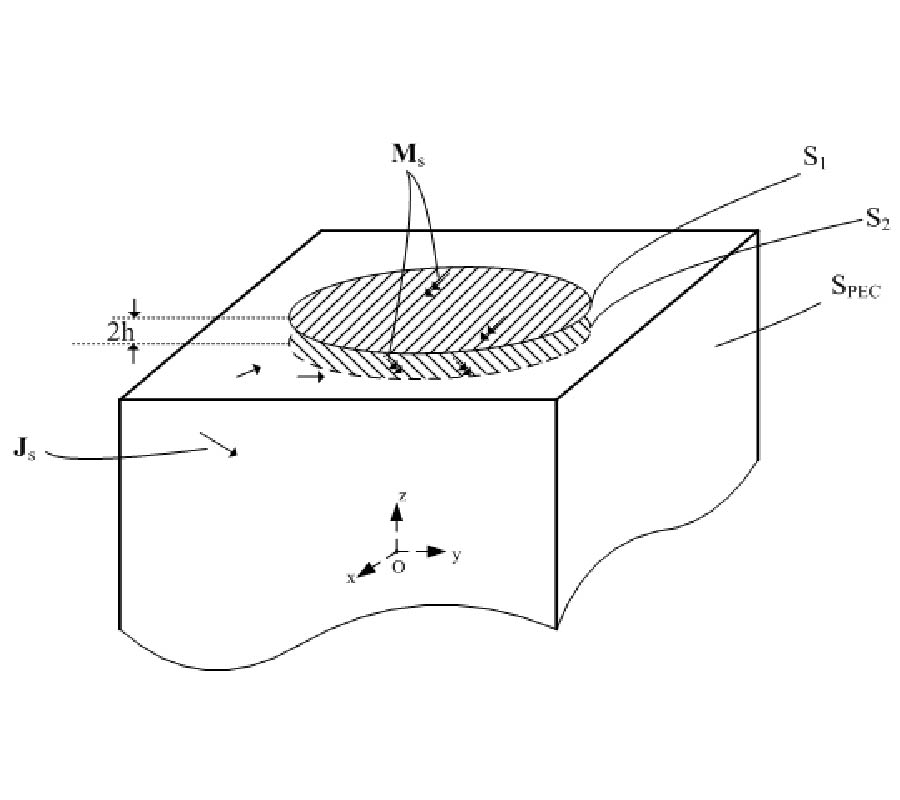
A novel perturbation technique is formulated that enables the efficient calculation of current on surfaces undergoing time-varying mechanical deformations. The technique computes the current on the perturbed surface using as its starting point the solution for a related static case. This is initially derived using a standard analytical or numerical technique. The key advantage of this approach is that only an initial (computationally expensive) electromagnetic characterisation of the static problem is required. The surface current perturbation terms (and hence the radiated fields) are then directly computed from the static problem with a very low computational overhead.
DEFORMABLE, TIME-VARYING BOUNDARY PROBLEMS IN ELECTRODYNAMICS
2011-12-20
PIER
Vol. 123, 205-225
A Hybrid Nfm/MoM Full-Wave Analysis of Layered Prolate Head Model Exposed to Handset Antenna
Lei Zhao and Ke-Li Wu
The electromagnetic radiation of a handset antenna to a human head model is rigorously analyzed by a new hybrid approach. In the analysis, human head is modeled by a double layered prolate spheroid with complex permittivity. A hybrid Null Field Method/Method of Moments (NFM/MoM) approach is proposed for the first time. The method is general and capable of dealing with multiple scatterers and radiators. By means of the hybrid approach, the NFM is used to model the scattering problem of the head model, and the MoM is applied to a handset antenna. The electromagnetic coupling between the head model and an antenna is taken into account by a fast convergent iteration process. Numerical results of electric field near and inside the head model and the input impedance of the antenna are calculated by the proposed hybrid approach and commercial full wave EM software. Very good agreement is obtained, which demonstrates the accuracy and efficiency of the proposed approach.
A HYBRID NFM/MOM FULL-WAVE ANALYSIS OF LAYERED PROLATE HEAD MODEL EXPOSED TO HANDSET ANTENNA
2011-12-20
PIER
Vol. 123, 189-204
Experimental Comparison of Remedial Single-Channel Operations for Redundant Flux-Switching Permanent-Magnet Motor Drive
Wenxiang Zhao , Ming Cheng , Ruiwu Cao and Jinghua Ji
Redundant flux-switching permanent-magnet (R-FSPM) motor is a new fault-tolerant machine having PMs in the stator, offering high efficiency, high reliability, and robust structure. This paper proposes two remedial control strategies for fault-tolerant operations of the R-FSPM motor drive in the single-channel (SC) mode. First, by doubling the healthy-channel currents, the reduced torque due to one channel loss can be remedied, the so-called remedial brushless AC (BLAC) operation mode. Second, by injecting harmonic current (IHC) considering harmonic back-EMF effect, the reduced torque can also be smoothly remedied, the so-called remedial IHC operation mode. Finally, both of the proposed remedial control strategies are verified by co-simulation and experimentation, hence confirming the validity of the proposed fault-tolerant R-FSPM motor drive.
EXPERIMENTAL COMPARISON OF REMEDIAL SINGLE-CHANNEL OPERATIONS FOR REDUNDANT FLUX-SWITCHING PERMANENT-MAGNET MOTOR DRIVE
2011-12-19
PIER Letters
Vol. 28, 139-148
A Compact Zeroth Order Resonating Antenna Using Complementary Split Ring Resonator with Mushroom Type of Structure
Gautam Kumar Singh , Raghvendra Kumar Chaudhary and Kumar Vaibhav Srivastava
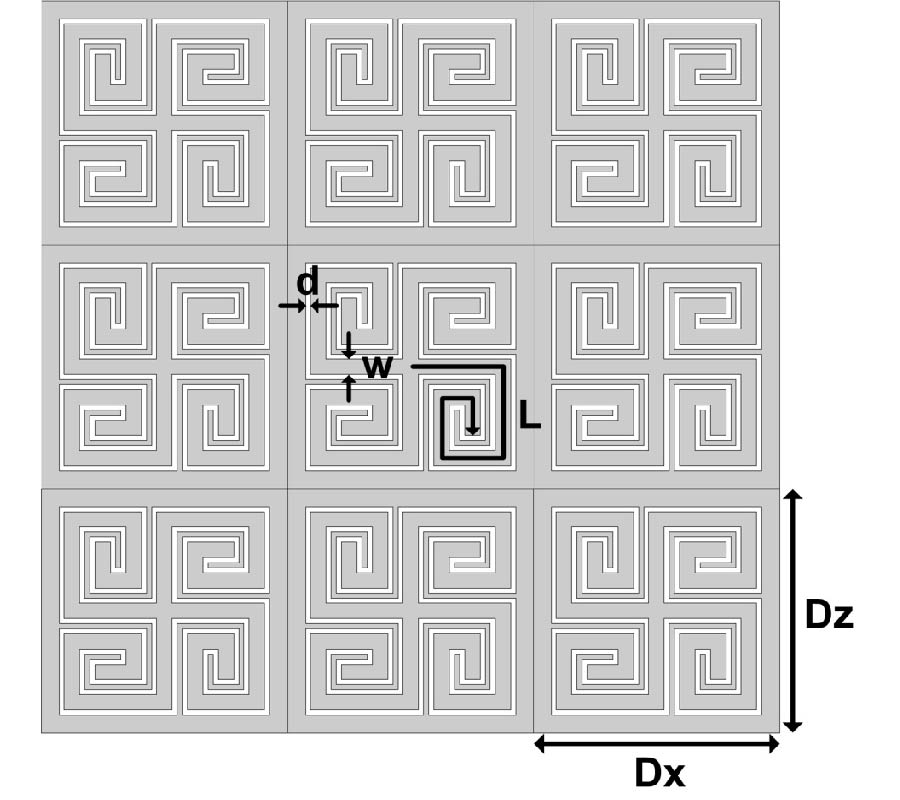
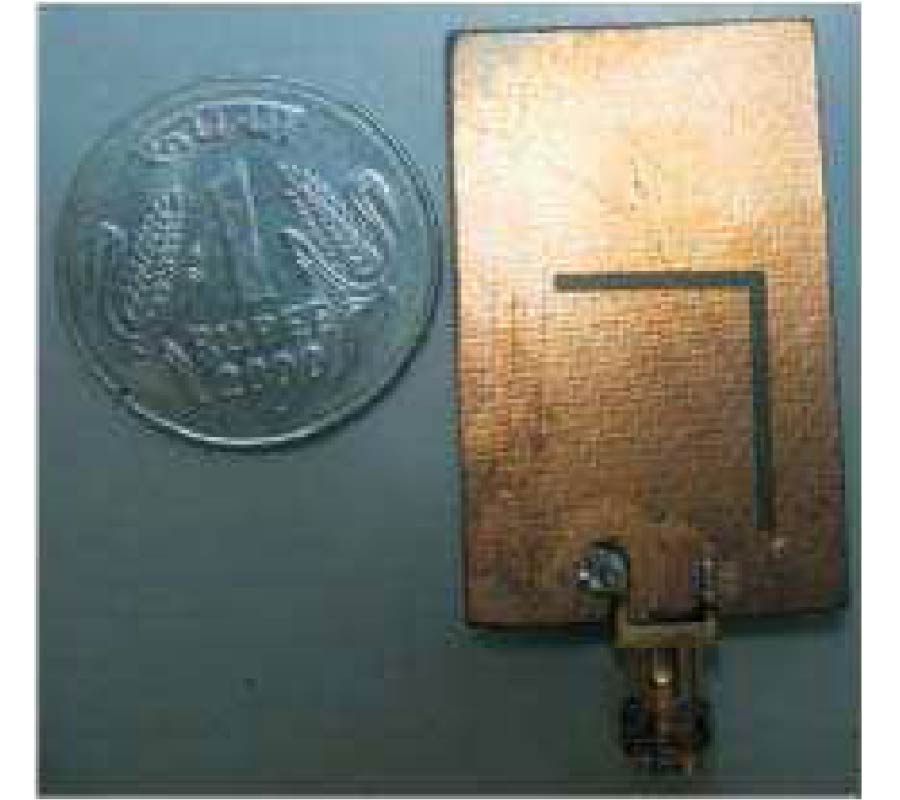
A compact zeroth order resonance (ZOR) antenna based on composite right left handed Transmission Line (CRLH TL) with complementary split ring resonators (CSRR) is presented in this paper. In the proposed antenna, CRLH TL is realized by the conventional mushroom type (CMT) of structure. The unit cell of proposed antenna comprises the CMT structure and CSRR where the CSRR is etched on the patch of the mushroom. Presence of CSRR introduces the lumped components in the shunt arm of the unit cell which results in the reduction of the shunt resonance frequency. The presented antenna consists of 4 unit cells and is excited by the quarter wavelength TL. The simulation and experimental results are in close agreement. The proposed structure has nearly 8.32% footprint area of the conventional half wavelength antenna.
A COMPACT ZEROTH ORDER RESONATING ANTENNA USING COMPLEMENTARY SPLIT RING RESONATOR WITH MUSHROOM TYPE OF STRUCTURE
2011-12-19
PIER M
Vol. 22, 163-178
Design of Dual Pattern Concentric Ring Array Antenna Using Differential Evolution Algorithm with Novel Evolutionary Operators
Ankush Mandal and Swagatam Das
Concentric ring antenna arrays with the ability to produce dual pattern have many applications in communications and radar engineering. In this paper, we represent a new method for design of an optimized reconfigurable concentric ring array with dual pattern of desired specifications. Here, our goal is to find a suitable common element excitation amplitude distribution and two different element excitation phase distributions for two desired radiation patterns. For this purpose, we have proposed a novel objective function which is completely different from the traditional objective functions usually used in antenna design problems. For the optimization procedure, we have developed a modified Differential Evolution (DE) algorithm, denoted as DE_rBM_2SX, which employs new kinds of crossover and mutation operators to overcome some drawbacks of the classical DE on single-objective fitness landscapes. We consider three types of dual pattern - pencil beam+pencil beam, pencil beam+flat-top beam, flat-top beam+flat-top beam. The simulation results obtained by applying our proposed method clearly indicate that our method is very convenient to obtain radiation patterns of desired specifications. We compare results of the modified DE algorithm with those of another state-of-the-art improved variant of DE, called JADE and a state-of-the-art variant of the Particle Swarm Optimization (PSO) algorithm called Comprehensive Learning Particle Swarm Optimizer (CLPSO). Such comparisons reflect that the proposed algorithm is more efficient than JADE or CLPSO in finding optimum configuration of the dual pattern concentric ring array antenna. nullS
DESIGN OF DUAL PATTERN CONCENTRIC RING ARRAY ANTENNA USING DIFFERENTIAL EVOLUTION ALGORITHM WITH NOVEL EVOLUTIONARY OPERATORS
2011-12-19
PIER
Vol. 123, 175-187
A Class of Polarization-Invariant Directional Cloaks by Concatenation via Transformation Optics
Jingzhi Li and Hongyu Liu
This article is devoted to the construction and investigation of a class of polarization-invariant directional cloaks by concatenation of cloaking medium components via transformation optics. It improves the construction of the first polarization-invariant directional cloak, introduced by Agarwal et al. [1]. The main ingredient is to construct a capsuloid transformed metamaterial consisting of an lp-cylindrical transformation map and two half lp--spherical transformation maps. Numerical investigation is carried out to test the performances of the cloaks under different polarized incoming waves. A salient feature of our cloaks is compact-sizedness, namely the geometrical size is no longer dependent on the regularization parameter ρ under the non-uniform map. In particular, we study the cloaking effect with respect to the regularization parameter ρ and the incident direction.
A CLASS OF POLARIZATION-INVARIANT DIRECTIONAL CLOAKS BY CONCATENATION VIA TRANSFORMATION OPTICS
2011-12-19
PIER
Vol. 123, 159-174
Design and Optimization of a Logo-Type Antenna for Multiband Applications
Wei-Chung Weng and Chia-Liang Hung
This study respectively uses two optimizers, iterative Taguchi's method and particle swarm optimization, combined with the method of moments to optimize a logotype planar antenna for multiband applications. The proposed antenna consists of four metal letters, NCNU, which is the abbreviation of the authors' university name. This antenna can be used for university logo or advertisement applications. The antenna also serves as an example to compare the optimization performance of these two optimizers. Optimization results show that Taguchi's method achieves much better optimization performance than particle swarm optimization. This study also investigates the electromagnetic characteristics of the proposed antenna by parametric study using simulation. The presented optimization methods could be applied to designing similar logotype antennas.
DESIGN AND OPTIMIZATION OF A LOGO-TYPE ANTENNA FOR MULTIBAND APPLICATIONS
2011-12-18
PIER
Vol. 123, 143-158
Study of an Extremely Wideband Monopole Antenna with Triple Band-Notched Charactersistics
Jianjun Liu , Karu P. Esselle , Stuart G. Hay and Shun-Shi Zhong
Three notched bands are generated, at selected frequencies, in an extremely wideband base antenna to support multiple communication systems while avoiding inference from other existing narrowband systems. The design of a fully printed extremely wideband antenna and creating triple band-notched functions are addressed in this paper. Measurements demonstrate that the proposed printed base antenna has an extremely wide 2:1 VSWR bandwidth from 0.72 GHz, to 25 GHz with a ratio bandwidth of 34:1. The antenna has a simple structure and can be fabricated at low cost for multi-band and wideband wireless communication devices. Besides, this paper presents a technique to form three notched bands within the operating frequency range of the base antenna. By introducing a half-wavelength U-shaped defected ground structure (DGS) and a pair of quarter-wavelength open arc-shaped slots to the radiating patch, three notched bands are created to prevent interference from WLAN (2.4-2.484 GHz and 5.15-5.85 GHz) systems and downlinks of X-band satellite communication (7.25-7.75 GHz) systems.
STUDY OF AN EXTREMELY WIDEBAND MONOPOLE ANTENNA WITH TRIPLE BAND-NOTCHED CHARACTERSISTICS
2011-12-16
PIER C
Vol. 26, 153-165
A Novel Mgf Based Analysis of Channel Capacity of Generalized-k Fading with Maximal-Ratio Combining Diversity
Vivek K. Dwivedi and Ghanshyam Singh
In this paper, we have analyzed the channel capacity by using the maximal-ratio combing (MRC) diversity scheme for communication systems operating over a composite fading environment modeled by the Generalized-K distribution at the receiver. For the Generalized-K fading channel with arbitrary values for small and large scale fading parameters, we have derived a closed-form expression for the moment generating function (MGF) of the received signal-to-noise ratio (SNR) and utilized it to obtain a novel closed-form expressions for the channel capacity under different adaptive transmission schemes. The result of the proposed methods is compared with other reported literature to support the analysis.
A NOVEL MGF BASED ANALYSIS OF CHANNEL CAPACITY OF GENERALIZED-K FADING WITH MAXIMAL-RATIO COMBINING DIVERSITY
2011-12-15
PIER B
Vol. 37, 191-204
High-q Photonic Crystal Nanobeam Cavity Based on a Silicon Nitride Membrane Incorporating Fabrication Imperfections and a Low-Index Material Layer
Marco Grande , Giovanna Calo , Vincenzo Petruzzelli and Antonella D'Orazio
We detail the optimization of a nanobeam design and show how the fabrication imperfections can affect the optical performance of the device. Then we propose the design of a novel configuration of a photonic crystal nanobeam cavity consisting of a membrane structure obtained by sandwiching a layer of Flowable Oxide (FOx) between two layers of Silicon-Nitride (SiN). Finally, we demonstrate that the presence of a low refractive index layer does not impair the performance of the nanobeam cavity that still exhibits a Q factor and mode volume V of the order of 105 and 0.02 (λ/n)3<\sup>, respectively.
HIGH-Q PHOTONIC CRYSTAL NANOBEAM CAVITY BASED ON A SILICON NITRIDE MEMBRANE INCORPORATING FABRICATION IMPERFECTIONS AND A LOW-INDEX MATERIAL LAYER
2011-12-15
PIER C
Vol. 26, 139-151
Corrugated Substrate Integrated Waveguide (SIW) Antipodal Linearly Tapered Slot Antenna Array Fed by Quasi-Triangular Power Divider
Tarek Djerafi and Ke Wu
In this paper, a new configuration of Tapered Slot Antenna (TSA) with improved radiation pattern is proposed and studied. This antenna is designed in the form of a substrate integrated waveguide (SIW) array with respect to side lobe level constraints. For side lobe reduction, a simple quasi-triangular distribution is proposed and is accomplished uniquely by means of 3 dB power dividers. A 12-way series feed network with T-junction is designed and demonstrated. Radiation features of the antenna array are discussed to illustrate the accomplishment of a low side lobe level (-19 dB) of the array. The proposed antenna demonstrates the ability of the SIW technology to achieve a very low side lobe in a simple, compact and planar structure.
CORRUGATED SUBSTRATE INTEGRATED WAVEGUIDE (SIW) ANTIPODAL LINEARLY TAPERED SLOT ANTENNA ARRAY FED BY QUASI-TRIANGULAR POWER DIVIDER
2011-12-14
PIER B
Vol. 37, 171-189
A Semi-Analytical Method for the Design of Coil-Systems for Homogeneous Magnetostatic Field Generation
Marco A. Azpurua
This paper proposes a simple semi-analytical method for designing coil-systems for homogeneous magnetostatic field generation. The homogeneity of the magnetic field and the average magnitude of the magnetic flux density inside of the volume of interest are the objective functions chosen for the selection of the coil-system geometry (size and location), number of coils and the number of turns of each winding. The spatial distribution of the magnetostatic field is estimated superposing the magnetic induction numerically computed from the analytical expression of the magnetic field generated by each coil, obtained using the Biot-Savart's law and the current filament method. The homogeneous magnetic field is synthesized using an iterative algorithm based on TABU search with geometric constraints, which varies the design parameters of the windings to meet the requirements. The number of turns of each coil and gauge of wire used for the windings is adjusted automatically in order to achieve the target average magnitude of the magnetic induction under the constraints imposed by power consumption. This method was used to design a coil arrangement that can generate up to 10 mT within a volume (0.5 × 0.5 × 1) m with 99% of spatial homogeneity, with square loops of length less than or equal to 1.5 m, and with a power dissipated by Joule effect less than or equal to 1 W per coil. The synthesized magnetic field distribution was validated using Finite Element Method simulation, showing a good correspondence between the objective values and the simulated fields. This method is an alternative to design magnetic field exposure systems over large volumes such as those used in bioelectromagnetics applications.
A SEMI-ANALYTICAL METHOD FOR THE DESIGN OF COIL-SYSTEMS FOR HOMOGENEOUS MAGNETOSTATIC FIELD GENERATION
2011-12-14
PIER C
Vol. 26, 123-137
Planar Reconfigurable Multifunctional Antenna for WLAN/WiMAX/UWB/Pcsdcs/UMTS Applications
Sara Manafi , Saeid Nikmehr and Mohammad Bemani
A wideband slotted multifunctional reconfigurable antenna is proposed for WLAN/WiMAX/UWB/PCS-DCS/UMTS applications. The proposed antenna consists of monopole and spiral sections and microstrip feeding. A microstrip patch on FR4 substrate provides wideband return loss for each application. Total area of the antenna is 34×45 mm2 that satisfies all the requirements for different applications in a low profile structure. Reconfigurable design is used in this antenna using RF MEMS switches. The proposed antenna has a nearly omnidirectional radiation patterns (doughnut shape) in different frequency bands. The notch is embedded in the ground plane to improve the impedance matching, and the dimensions of this notch are optimized. Moreover, the variation of group delay is about ±2 ns in UWB application. Also a prototype of the proposed antenna is fabricated, and the results are compared with those obtained from simulations. Measured return losses are in good agreement with simulated ones. The proposed antenna has the advantages of multifunctional operation, low profile, low cost and omnidirectional pattern.
PLANAR RECONFIGURABLE MULTIFUNCTIONAL ANTENNA FOR WLAN/WIMAX/UWB/PCSDCS/UMTS APPLICATIONS
2011-12-14
PIER M
Vol. 22, 137-148
Simultaneous Microwave Chirped Pulse Generation and Antenna Beam Steering
Mostafa Shabani and Mahmood Akbari
A new structure is suggested for simultaneous microwave chirped pulse generation and array antenna beam steering. It is based on using a multi-channel fiber Bragg grating in a photonic microwave delay-line filter. The paper presents a feasibility study of the idea, discussing the main performance parameters of both signal generation and beam steering functions. Specifically, it focuses on the effects of wavelength tuning, resolution and accuracy. The study shows that custom off-the-shelf components could be used to implement an all optical system capable of generating chirped pulses while steering the radiation pattern of a small sized antenna array. The advantages of the structure for avoiding single sideband modulation difficulties and also for the compensation of the multichannel fiber Bragg grating inaccuracies are also discussed.
SIMULTANEOUS MICROWAVE CHIRPED PULSE GENERATION AND ANTENNA BEAM STEERING
2011-12-14
PIER
Vol. 123, 123-142
Nondestructive Complex Permittivity and Permeability Extraction Using a Two-Layer Dual-Waveguide Probe Measurement Geometry
Michael D. Seal , Milo Hyde IV and Michael John Havrilla
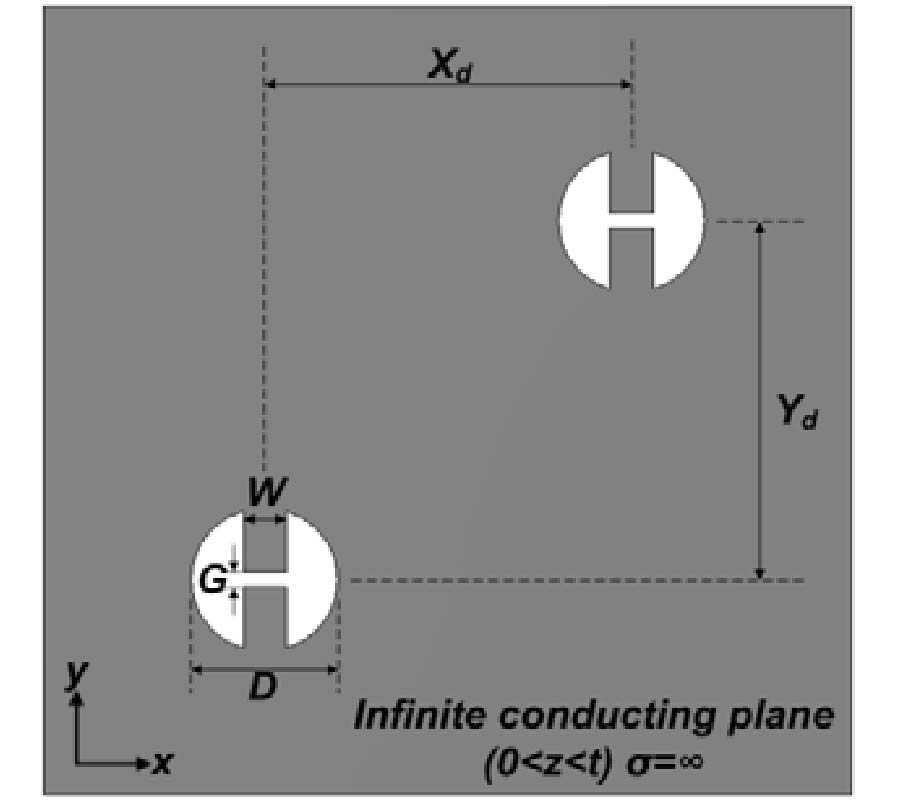
A two-layer dual-waveguide probe measurement geometry is proposed to nondestructively measure the complex permittivity and permeability of planar materials. The new measurement structure consists of two rectangular waveguides attached to a PEC flange plate that is placed against the material under test, followed by a known material layer backed by a PEC. The purpose for this new measurement geometry is to improve the permittivity results obtained using the existing dual-waveguide probe geometries, namely, the PEC-backed and free-space-backed geometries, by permitting a larger electric field into the material under test and increasing the field coupling between the two rectangular waveguide apertures. The theoretical development of the technique is presented extending the existing single-layer PEC-backed method to the proposed two-layer dual-waveguide probe method. The new measurement structure is theoretically analyzed by replacing the waveguide apertures with equivalent magnetic currents as stipulated by Love's equivalence theorem. Making use of the magnetic-current-excited two-layer parallel-plate Green's function and enforcing the continuity of the transverse magnetic fields over the waveguide apertures results in a system of coupled magnetic field integral equations. These coupled magnetic field integral equations are then solved for the theoretical reflection and transmission coefficients using the Method of Moments. The desired complex permittivity and permeability of the material under test are found by minimizing the root-mean-square difference between the theoretical and measured reflection and transmission coefficients, i.e., numerical inversion. Last, experimental results utilizing the new two-layer technique are presented for two magnetic shielding materials and subsequently compared to the existing PEC-backed and free-space-backed dual-waveguide probe geometries.
NONDESTRUCTIVE COMPLEX PERMITTIVITY AND PERMEABILITY EXTRACTION USING A TWO-LAYER DUAL-WAVEGUIDE PROBE MEASUREMENT GEOMETRY
2011-12-14
PIER
Vol. 123, 105-121
Improvement of RCS Prediction Using Modified Angular Division Algorithm
Hyeon-Gyu Park , Kook Park , Hyo-Tae Kim and Kyung-Tae Kim
The shooting and bouncing rays (SBR) method has been widely used to predict the radar cross section (RCS) of electrically large and complex targets. SBR computation time rapidly increases as the size and the complexity of a target increase. The angular division algorithm (ADA) can be applied to reduce the number of intersection tests in SBR, which facilitates faster RCS prediction. However, ADA has an error in its table construction step, resulting in incorrect prediction for multiple scattered fields. In this paper, the error is described, and the modified ADA (MADA) is proposed to correct the error and to enhance accuracy. Numerical results show that MADA can achieve good RCS prediction accuracy.
IMPROVEMENT OF RCS PREDICTION USING MODIFIED ANGULAR DIVISION ALGORITHM
2011-12-13
PIER B
Vol. 37, 143-169
Application of a Hybrid Model for the Susceptibility of Complex Form Metallic Wires Perturbed by EM Near-Field Radiated by Electronic Structures
Elagiri-Ramalingam Rajkumar , Blaise Ravelo , Mohamed Bensetti and Priscila Fernandez-Lopez
A modeling of the metallic wires susceptibility facing to the disturbances caused by electromagnetic (EM) near-field (NF) radiated by electronic structures in radio frequencies (RF) is introduced by using a hybrid method. This latter is based on the use of the given EM-data calculated or determined from the standard computation tools associated with basic analytical methods expressing the coupling voltages at the victim wire extremities and the EM-NF radiations. In difference to the classical methods based on the far-field radiations, the main benefit of this method lies on the possibility to take into account the evanescent waves from the disturbing elements. The basic principle illustrating the hybrid method principle is explained. To verify the relevance of the method proposed, we consider a metallic wire having cm-length above the ground plane disturbed by the EM-near-waves from the electronic circuits in proximity. For that, we model the EM radiation of the disturbing electronic circuits and then, apply the hybrid method to evaluate the coupling voltages induced through the wires. By considering the radiations around hundreds MHz, we demonstrate that the hybrid method proposed enables us to generate voltages in good agreement with the simulations performed with the commercial tools. Two types of realistic configurations are studied. First, with a microstrip loop circuit radiating at about 0.7 GHz, we calculated induced voltages at the extremities of the structures. Then, the same analysis was made with a 3D-model coil self for the large band from 0.1 GHz to 0.5 GHz. The results are in good accordance between the terminal voltages of the wire. The relative error in the second configuration falls less than 10%. This investigation is important for the EM compatibility (EMC) analysis of the radiating coupling between wires and complex electrical and electronic systems disturbed by RF harmonics.
APPLICATION OF A HYBRID MODEL FOR THE SUSCEPTIBILITY OF COMPLEX FORM METALLIC WIRES PERTURBED BY EM NEAR-FIELD RADIATED BY ELECTRONIC STRUCTURES
2011-12-13
PIER
Vol. 123, 83-103
TM-TE Decomposition of Power Losses in Multi-Stranded Litz-Wires Used in Electronic Devices
Claudio Carretero , Jesus Acero and Rafael Alonso
Efficiency often constitutes the main goal in the design of a power system because the minimization of power losses in the magnetic components implies better and safer working conditions. The primary source of losses in a magnetic power component is usually associated with the current driven by the wire, which ranges from low to medium frequencies. New power system tendencies involve increasing working frequencies in order to reduce the size of devices, thus reducing costs. However, optimal design procedures involve increasingly complex solutions for improving system performance. For instance, using litz-type multi-stranded wires which have an internal structure to uniformly share the current between electrically equivalent strands, reducing the total power losses in the windings. The power losses in multi-stranded wires are generally classified into conduction losses and proximity losses due to currents induced by a magnetic field external to the strand. Both sources of loss have usually been analyzed independently, assuming certain conditions in order to simplify the derivation of expressions for calculating the correct values. In this paper, a unified analysis is performed given that both power losses are originated by the electromagnetic fields arising from external sources where the wire is immersed applying the decomposition into transversal magnetic (TM) and transversal electric (TE) components. The classical power losses, the so called conduction and proximity losses, can be calculated considering the TM modes under certain conditions. In addition, a new proximity loss contribution emerges from the TE modes under similar conditions.
TM-TE DECOMPOSITION OF POWER LOSSES IN MULTI-STRANDED LITZ-WIRES USED IN ELECTRONIC DEVICES
2011-12-13
PIER
Vol. 123, 67-81
Electromagnetic Field Transmitted by Dielectric Plano Convex Lens Placed in Chiral Medium
Abdul Ghaffar , Muhammad Yasin Naz and Qaisar Abbas Naqvi
In this paper a theoretical investigation of electromagnetic field transmission through dielectric plano convex lens placed in chiral medium is analyzed. The chiral medium is described electromagnetically by the constitutive relations D = ε(E+γ∇×E) and B = μ(H+γ∇×H). Transmission's coefficients for chiral-dielectric and dielectric-chiral interfaces are derived analytically. The analytical field expressions for right circularly polarized (RCP) and left circularly polarized (LCP) waves are obtained using Maslov's method. Numerical computations are made for the field patterns around the caustic region using Mathcad software to observe the effect of chirality parameter.
ELECTROMAGNETIC FIELD TRANSMITTED BY DIELECTRIC PLANO CONVEX LENS PLACED IN CHIRAL MEDIUM
2011-12-12
PIER B
Vol. 37, 125-141
Characterization of Defect Modes in Onedimensional Ternary Metallo-Dielectric Nanolayered Photonic Crystal
Abdolrasoul Gharaati and Hadis Azarshab
We investigate the characterization of defect modes in one-dimensional ternary symmetric metallo-dielectric photonic crystal (1DTSMDPC) band-gap structures. We consider the defect modes for symmetric model with respect to the defect layer. We demonstrate reflectance with respect to the wavelength and its dependence on different thicknesses and indices of refraction of dielectric defect layer, angle of incidence and number of periods for both transverse electric (TE) and transverse magnetic (TM) waves. Also, we investigate properties of the defect modes for different metals. Our findings show that the photonic crystal (PC) with defect layer, made of two dielectrics and one metallic material, leads to different band-gap structures with respect to one dielectric and one metallic layer. There is at least one defect mode when we use dielectric or metallic defect layer in symmetric structure. And, the number of defect modes will be increased by the enhancement of refractive index and thickness of dielectric defect layer.
CHARACTERIZATION OF DEFECT MODES IN ONEDIMENSIONAL TERNARY METALLO-DIELECTRIC NANOLAYERED PHOTONIC CRYSTAL