Search Results(13800)

2012-01-11
PIER
Vol. 124, 55-70
A Novel Wideband Antenna Array with Tightly Coupled Octagonal Ring Elements
Yikai Chen , Shiwen Yang and Zai-Ping Nie
A novel phased array antenna with wide bandwidth and wide scan angle is presented. The radiating aperture of the phased array consists of periodically and closely spaced octagonal ring elements. Tight capacitive coupling between adjacent elements is realized by interdigitating the end portions of the ring elements. To improve the impedance matching of the individual antenna elements over wide frequency band, a novel impedance matching layer consists of periodic octagonal ring element is subtly designed and placed over the radiating aperture. Both of the radiating elements and impedance matching layer are printed on a flexible membrane substrate with a thickness of 0.04 mm. Measured results of a 16-element linear array demonstrate that good impedance matching over a 4.4:1 bandwidth can be obtained for beam scan angles within ±45° from broadside. As compared to conventional wideband phased array such as tapered slot antenna array, the proposed phased array has the features such as low cost, low profile, light weight, and ease of fabrication.
A NOVEL WIDEBAND ANTENNA ARRAY WITH TIGHTLY COUPLED OCTAGONAL RING ELEMENTS
2012-01-11
PIER
Vol. 124, 35-53
Modified Wavenumber Domain Algorithm for Three-Dimensional Millimeter-Wave Imaging
Shiyong Li , Bailing Ren , Hou-Jun Sun , Weidong Hu and Xin Lv
Millimeter-wave (MMW) imaging techniques have been used for the detection of concealed weapons and contraband carried on personnel at airports and other secure locations. The combination of frequency-modulated continuous-wave (FMCW) technology and MMW imaging techniques should lead to compact, light-weight, and low-cost systems which are especially suitable for security and detection application. However, the long signal duration time leads to the failure of the conventional stop-and-go approximation of the pulsed system. Therefore, the motion within the signal duration time needs to be taken into account. Analytical three-dimensional(3-D) backscattered signal model, without using the stop-and-go approximation, is developed in this paper. Then, a wavenumber domain algorithm, with motion compensation, is presented. In addition, conventional wavenumber domain methods use Stolt interpolation to obtain uniform wavenumber samples and compute the fast Fourier transform (FFT). This paper uses the 3-D nonuniform fast Fourier transform (NUFFT) instead of the Stolt interpolation and FFT. The NUFFT-based method is much faster than the Stolt interpolation-based method. Finally, point target simulations are performed to verify the algorithm.
MODIFIED WAVENUMBER DOMAIN ALGORITHM FOR THREE-DIMENSIONAL MILLIMETER-WAVE IMAGING
2012-01-11
PIER
Vol. 123, 527-541
A Dual-Band Dual-Polarized Microstrip Array Antenna for Base Stations
Khatereh Moradi and Saeid Nikmehr
This paper presents a new dual-band, dual-polarized 1 x 4 antenna array design for telecommunication base station. One of the bands covers global system for mobile communication (GSM) band, while the other covers both digital communication system (DCS) and universal mobile telecommunication system (UMTS) bands. The antenna is based upon an aperture stacked patch layout and incorporates a simple and novel dual-layered feeding technique to achieve dual polarized radiation. For feeding the array elements, a corporate feed network is used. In order to achieve appropriate matching in both bands, a three-section Chebyshev transformer has been designed. The proposed antenna shows good port decoupling, less than -30 dB for dual linear polarization over its operating bands. Peak antenna gains about 11 dBi and 11.6 dBi have been obtained for lower and upper bands, respectively. The effort was directed toward the design of a single standalone dual-polarized antenna to cover all three bands.
A DUAL-BAND DUAL-POLARIZED MICROSTRIP ARRAY ANTENNA FOR BASE STATIONS
2012-01-10
PIER
Vol. 124, 17-34
Design of Dual-Band Bandpass Filters with Controllable Bandwidths Using New Mapping Function
Girdhari Chaudhary , Yongchae Jeong , Kwisoo Kim and Dal Ahn
In this paper, a novel design method for a dual-band bandpass filter (BPF) with arbitrary controllable bandwidths based on a simple frequency mapping function is proposed and its analytical design equations are also derived. The circuit conversion techniques are employed for implementation with distributed transmission line. To validate the proposed dual-band BPF with controllable bandwidths, a low temperature co-fired ceramic (LTCC) transmission line as well as microstrip lines are used, respectively. The two types of design for the dual-band BPF have the same and significantly different fractional bandwidths (FBWs), respectively. The first type of dual-band BPF with same FBWs are implemented at 2.11-2.17 and 3.45-3.55 GHz. The second type of dual-band BPF with different FBWs are implemented at 3.40-3.60 and 5.15-5.25 GHz. The measured and theoretical results show good agreement, significantly validating the proposed frequency mapping function methodology.
DESIGN OF DUAL-BAND BANDPASS FILTERS WITH CONTROLLABLE BANDWIDTHS USING NEW MAPPING FUNCTION
2012-01-09
PIER B
Vol. 38, 39-56
Improved Shift-Operator FDTD Method for Anisotropic Magnetized COLD Plasmas with Arbitrary Magnetic Field Declination
Xiong Yin , Hou Zhang , Hai-Yang Xu and Xian-Feng Zeng
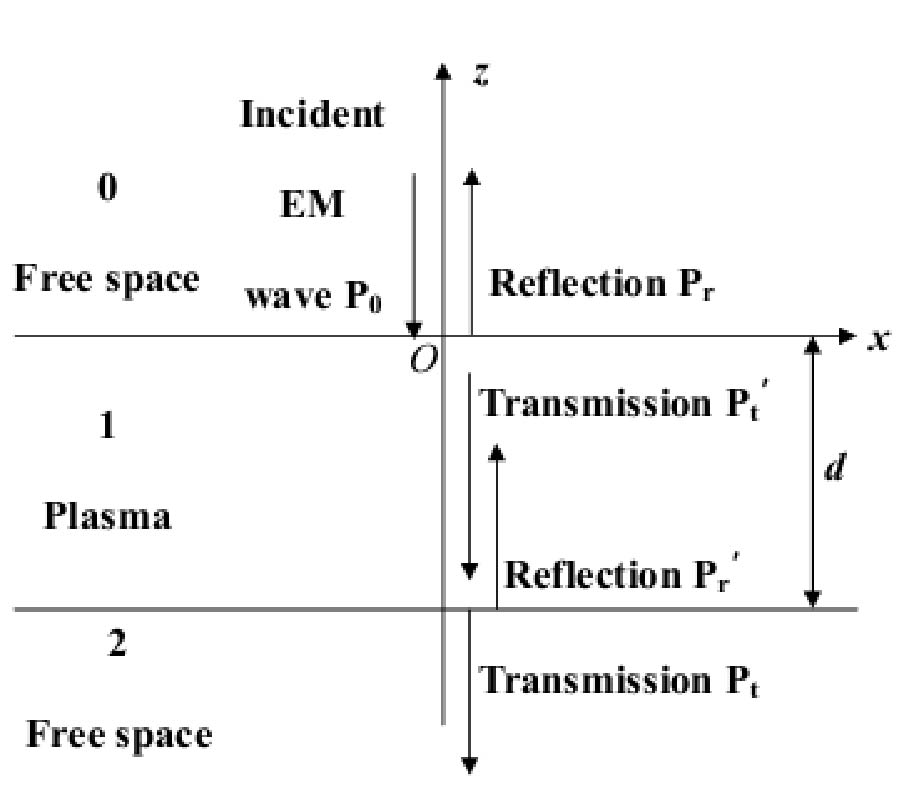
In this paper, a recently improved SO-FDTD (shift-operator finite difference time-domain) method is proposed and applied to the numerical analysis of the anisotropic magnetized plasma with arbitrary magnetic declination. By using the constitutive relation between polarized current density vector J and electric vector E and bringing the shift operators, the difference iteration equations of field components for Maxwell equations are derived in detail. Furthermore, the memory requirement is decreased significantly through incorporating a memory-minimized algorithm into the FDTD iterative cycles. The reflection and transmission coefficients of electromagnetic wave through a magnetized plasma layer are calculated by using this method. It is shown that the new method not only improves accuracy but also produces speed and memory advantages over the SO-FDTD method in kDB coordinates system proposed in the recent reference. In addition, the recursion formulae of the improved SO-FDTD method are deduced and programmed easily and they involve no complex variables, so the computations for the magnetized plasma become very simple.
IMPROVED SHIFT-OPERATOR FDTD METHOD FOR ANISOTROPIC MAGNETIZED COLD PLASMAS WITH ARBITRARY MAGNETIC FIELD DECLINATION
2012-01-09
PIER B
Vol. 38, 23-37
"Natural" Definition of the Modal Impedances in Non-Homogeneous Dielectric Loaded Rectangular Waveguide
Leonardo Zappelli
In this paper, the definition of the modal impedances of the electromagnetic field in a nonhomogeneously filled waveguide is discussed. The presence of TM modal impedances, which are functions of the transverse coordinate, does not permit us to obtain a unique Z matrix of these guides. Hence, the evaluation of the scattering matrix can be involved. The introduction of a {``natural" EM} expansion overcomes this problem leading to the definition of a unique modal impedance and a unique Z matrix. This approach is applied to the simulation of the effect of a block of dielectric in an empty waveguide by ``cascading" the $S$ matrices of the existing junctions. Finally, this {``natural" EM} expansion is applied to the junction between an empty waveguide and a completely filled waveguide, obtaining an equivalent circuit which better represents the physics of this problem, and to the optical fibers.
2012-01-09
PIER C
Vol. 26, 245-257
Robust Adaptive Detection Against Sirv Clutter in the Presence of Steering Vector Mismatches
Xin Dai , Guolong Cui and Lingjiang Kong
This paper mainly deals with the problem of detecting a target against spherically invariant random vector (SIRV) clutter in the presence of steering vector mismatches. Assuming that the mismatch of the steering vector satisfies the conic constraint, the generalized likelihood ratio test (GLRT) is devised, and the geometry description is proposed for the derived solution. Additionally, the fully adaptive GLRT is derived by replacing the exact covariance with fixed point estimate (FPE). Finally, several numerical results are provided and discussed.
ROBUST ADAPTIVE DETECTION AGAINST SIRV CLUTTER IN THE PRESENCE OF STEERING VECTOR MISMATCHES
2012-01-09
PIER
Vol. 124, 1-15
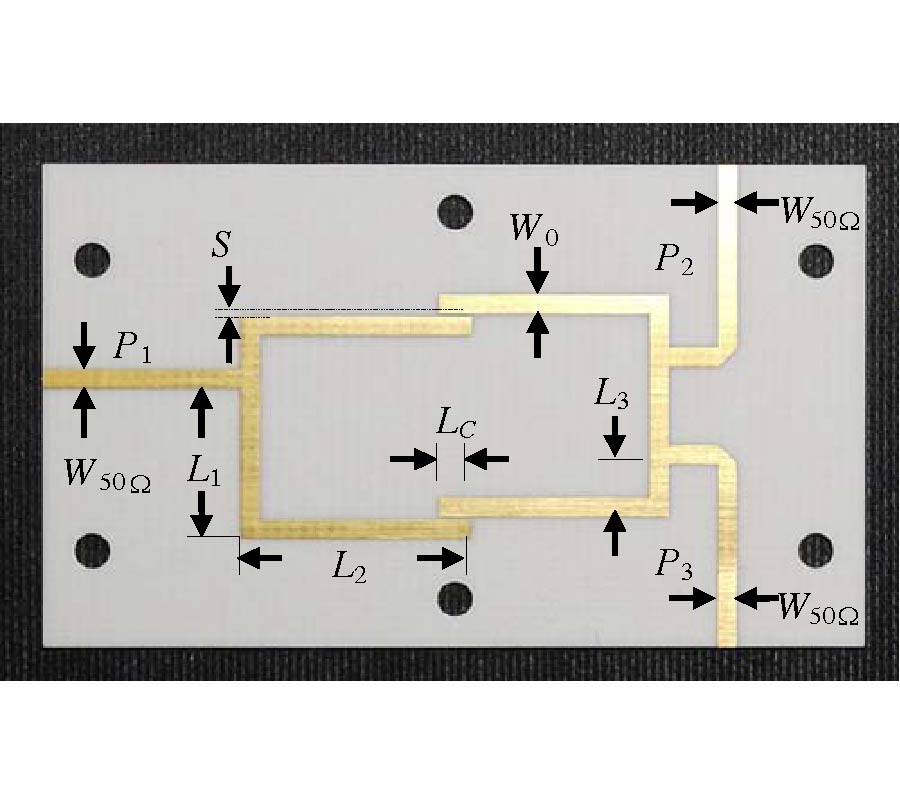
Dual-Wideband Bandpass Filters with Extended Stopband Based on Coupled-Line and Coupled Three-Line Resonators
Jen-Tsai Kuo , Chun-Yu Fan and Shao-Chan Tang
Coupled-line and coupled three-line resonators are proposed to design dual-wideband bandpass filters. Compared with the shorted and open stubs shunt at the same locations of the main line, in addition to saving the circuit area, these resonators provide alternative ways to the design of dual-wideband filters, with larger possible bandwidths and different frequency ratio of the two center passbands. The geometric parameters of the coupled-line and the coupled three-line structures are determined by deriving their equivalent circuits to a shunt open stub in parallel connection with a shunt shorted stub. To extend the upper stopband, a cross-shaped admittance inverter is devised to play the role of the 90-degree transmission line section at the center frequency and to create transmission zeros at the spurious passbands, so that the upper stopband of the filter can be extended. It is a quarter-wave section with two open stubs of unequal lengths shunt at its center. For demonstration, two dual-wideband bandpass filters operating at 900/1575 MHz and 900/2000 MHz are fabricated and measured. Measured results of the experimental circuits show good agreement with simulated responses.
DUAL-WIDEBAND BANDPASS FILTERS WITH EXTENDED STOPBAND BASED ON COUPLED-LINE AND COUPLED THREE-LINE RESONATORS
2012-01-08
PIER B
Vol. 38, 1-22
Computationally Efficient Model for UWB Signal Attenuation Due to Propagation in Tissue for Biomedical Implants
Paul Theilmann , M. Ali Tassoudji , E. Harrison Teague , Donald F. Kimball and Peter M. Asbeck
An analytical model which predicts the attenuation of ultrawide-band (UWB) signals as they traverse various inhomogeneous tissues is presented. The model provides a computationally efficient method of determining the frequency-dependent losses encountered by electromagnetic radio frequency (RF) signals used to communicate with biomedical implants. Classic transmission line theory is employed to generate an analytical representation which models the inhomogeneous tissue using layers of homogeneous material. The proposed model was verified experimentally with tests of both single and multilayer samples. A realistic abdominal implant scenario was also modeled and the predictions were verified using a commercially available 3D electromagnetic (EM) simulator. The results of this study indicate that for deep implants the higher frequency portion of the UWB spectrum is attenuated much more strongly than the lower end of the band. This implies that for robust communication UWB signals targeting biomedical implants should be limited to the lower portion of the spectrum.
COMPUTATIONALLY EFFICIENT MODEL FOR UWB SIGNAL ATTENUATION DUE TO PROPAGATION IN TISSUE FOR BIOMEDICAL IMPLANTS
2012-01-08
PIER B
Vol. 37, 387-401
Experimental Observation of Linear and Nonlinear Pulses in Traveling-Wave Field-Effect Transistors Periodically Loaded with Schottky Varactors
R. Sugai , T. Shima and Koichi Narahara
We characterize the pulse propagation on a traveling-wave field-effect transistor (TWFET) with the drain line periodically loaded with Schottky varactors for short pulse amplification. Owing to the coupling between the gate and drain lines, two propagation modes are developed on a TWFET. It is expected that the pulses carried by one of the two modes are uniquely amplified, whereas those carried by the other mode are attenuated. By properly introducing nonlinearity via the loaded varactors, the proposed TWFET succeeds in the amplification of short pulses by compensating for dispersive distortions. This study verifies the design criteria for the amplification of short pulses in TWFETs through the experimental observation of the properties of the linear and nonlinear pulses on a TWFET.
EXPERIMENTAL OBSERVATION OF LINEAR AND NONLINEAR PULSES IN TRAVELING-WAVE FIELD-EFFECT TRANSISTORS PERIODICALLY LOADED WITH SCHOTTKY VARACTORS
2012-01-08
PIER Letters
Vol. 29, 1-13
Concentric Circular Antenna Array Synthesis Using Comprehensive Learning Particle Swarm Optimizer
Elsayed Ibrahim Elsaidy , Moawad Ibrahim Dessouky , Salah Khamis and Yasser Albagory
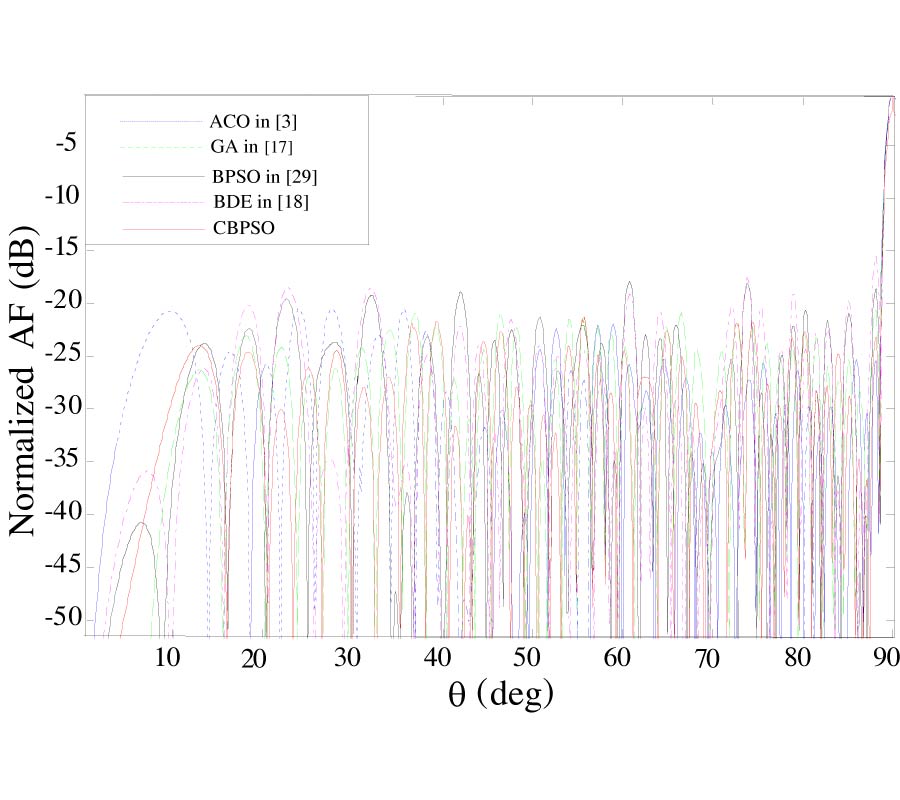
Concentric circular antenna array (CCAA) is synthesized to generate pencil beam with minimum side lobe level (SLL). The comprehensive learning particle swarm optimizer (CLPSO) is used for synthesizing a ten-ring CCAA with central element. This Synthesis is done by finding the optimum current excitation weights and interelement spacing of rings. The computational results show that sidelobe level is reduced to -40.5 dB with narrow beamwith about 4.1o.
CONCENTRIC CIRCULAR ANTENNA ARRAY SYNTHESIS USING COMPREHENSIVE LEARNING PARTICLE SWARM OPTIMIZER
2012-01-08
PIER M
Vol. 23, 65-78
Pipelines Inspection Using Magnetic Induction Tomography Based on a Narrowband Pass Filtering Method
Lu Ma , Hsin-Yu Wei and Manuchehr Soleimani
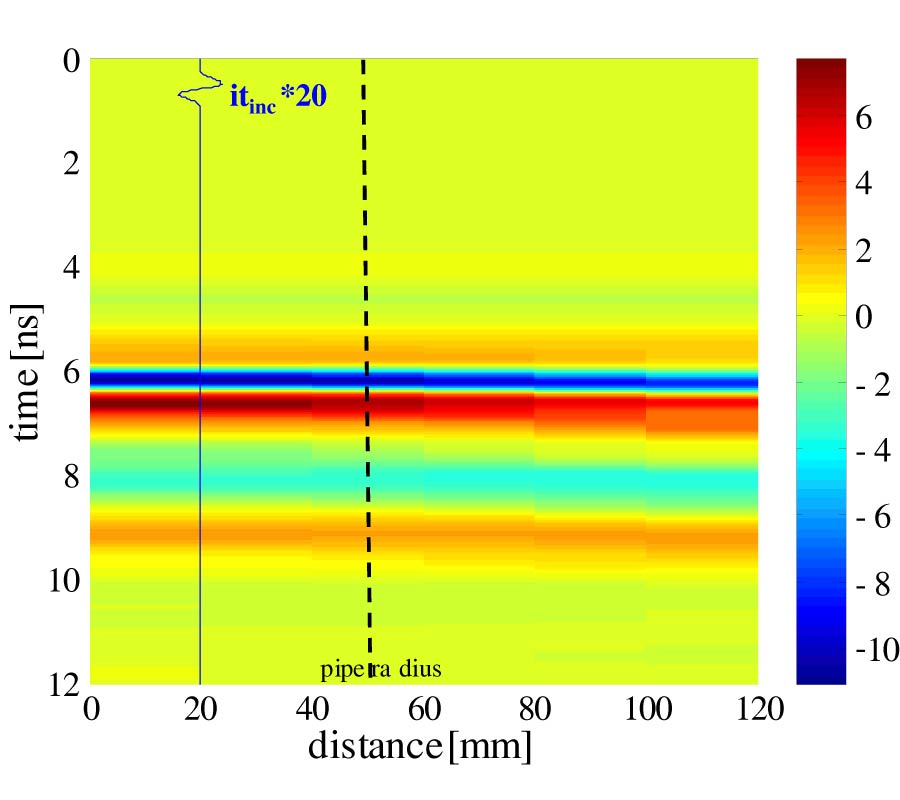
Pipelines are the most common apparatus in industries; therefore, the need for inspection during the manufacturing, construction and the operation stage is inevitable and invaluable. Magnetic Induction Tomography (MIT) is a new type of tomography technique that is sensitive to the electrical conductivity of objects.~It has been shown that the MIT technique is appropriate for imaging materials with high electrical conductivity contrasts; hence, the majority of the MIT systems were designed for detecting metallic objects. In this paper, MIT technique was proposed for pipeline inspection. Structural damages of the outer surface of the pipe were considered in this study. Nonetheless, it is challenging to use the traditional MIT pixel based reconstruction method (PBRM) as a suitable pipelines inspection tool because of the limited resolution. A narrowband pass filtering method (NPFM) of imaging pipe geometry was developed as a suitable image reconstruction method.~The proposed method can overcome the resolution limitations and produce useful information of the pipe structure.~This paper shows the comparative results from the novel NPFM and from traditional PBRM. While the PBRM fails to detect damages in outer structure of the pipe the NPFM successfully indentifies these damages. The method has been verified using experimental data from very challenging test samples. It is well known that using a coil array with an imaging region of 100 mm the PBRM based MIT can retrieve information with accuracy of about 10 mm (about 10%). With proposed NPFM the information on a resolution of 2 mm (which is about 2%) can be detected using the same measurement data.
PIPELINES INSPECTION USING MAGNETIC INDUCTION TOMOGRAPHY BASED ON A NARROWBAND PASS FILTERING METHOD
2012-01-08
PIER M
Vol. 23, 53-63
An Independent Loops Search Algorithm for Solving Inductive Peec Large Problems
Trung-Son Nguyen , Jean-Michel Guichon , Olivier Chadebec , Gerard Meunier and Benjamin Vincent
This paper describes an original approach for determining independent loops needed for mesh-current analysis in order to solve circuit equation system arising in inductive Partial Element Equivalent Circuit (PEEC) approach. Based on the combined used of several simple algorithms, it considerably speed-up the loops search and enables the building of an associated matrix system with an improved condition number. The approach is so well-suited for large degrees of freedom problems, saving significantly memory and decreasing the time of resolution.
AN INDEPENDENT LOOPS SEARCH ALGORITHM FOR SOLVING INDUCTIVE PEEC LARGE PROBLEMS
2012-01-08
PIER M
Vol. 23, 29-51
Graphics Processor Unit (GPU) Acceleration of Finite-Difference Frequency-Domain (Fdfd) Method
Veysel Demir
Recently, many numerical methods that are developed for the solution of electromagnetic problems have greatly benefited from the hardware accelerated scientific computing capability provided by graphics processing units (GPUs) and orders of magnitude speed-up factors have been reported. Among these methods, the finite-difference frequency-domain (FDFD) method as well can be accelerated substantially by utilizing an efficient algorithm customized for GPU computing. In this contribution, an algorithm is presented that treats iterative solution of the FDFD linear equation system similar to solution of three-dimensional Finite-Difference Time-Domain (FDTD) method, which inherently yields itself to high level parallelization. The presented algorithm uses BICGSTAB iterative solver. Integrated with BICGSTAB, an efficient method of performing matrix-vector products for the linear system of FDFD equations is adapted and implemented in Compute Unified Device Architecture (CUDA). It is shown that FDFD can be solved with a speed-up factor of more than 20 on a GPU compared with the solution on a central processing unit (CPU), while memory usage as well can be reduced substantially with the presented algorithm.
GRAPHICS PROCESSOR UNIT (GPU) ACCELERATION OF FINITE-DIFFERENCE FREQUENCY-DOMAIN (FDFD) METHOD
2012-01-06
PIER B
Vol. 37, 365-386
Modeling the Interaction of Terahertz Pulse with Healthy Skin and Basal Cell Carcinoma Using the Unconditionally Stable Fundamental Adi-FDTD Method
Ding Yu Heh and Eng Leong Tan
This paper presents the application of unconditionally stable fundamental finite-difference time-domain (FADI-FDTD) method in modeling the interaction of terahertz pulse with healthy skin and basal cell carcinoma (BCC). The healthy skin and BCC are modeled as Debye dispersive media and the model is incorporated into the FADI-FDTD method. Numerical experiments on delineating the BCC margin from healthy skin are demonstrated using the FADI-FDTD method based on reflected terahertz pulse. Hence, the FADI-FDTD method provides further insight on the different response shown by healthy skin and BCC under terahertz pulse radiation. Such understanding of the interaction of terahert pulse radiation with biological tissue such as human skin is an important step towards the advancement of future terahertz technology on biomedical applications.
MODELING THE INTERACTION OF TERAHERTZ PULSE WITH HEALTHY SKIN AND BASAL CELL CARCINOMA USING THE UNCONDITIONALLY STABLE FUNDAMENTAL ADI-FDTD METHOD
2012-01-06
PIER M
Vol. 23, 13-28
A New Algorithm for Eliminating the Frequency Difference in Phase Noise Measurement of the Microwave Signal
Xiao-Long Chen , Xiang-Feng Zhang and Jia-Li Wang
The frequency difference between signal-under-test and reference signal in phase demodulation will affect the result of the actual phase noise measurement. In order to eliminate the effect, an algorithm for both eliminating the frequency difference and extracting the phase noise of the signal-under-test is presented. Simulation and experiment results show that this algorithm is effective. By using the algorithm in our experiment, the noise floor of the measurement system is improved by 10.1 dB and 9.3 dB, respectively, and the measurement precision is improved from 90.03% to 96.31%. In addition, the use of this algorithm can lower the requirement on the frequency precision of reference source and reduce the cost of measurement system.
A NEW ALGORITHM FOR ELIMINATING THE FREQUENCY DIFFERENCE IN PHASE NOISE MEASUREMENT OF THE MICROWAVE SIGNAL
2012-01-06
PIER
Vol. 123, 509-526
Planar Grating Multiplexers Using Silicon Nanowire Technology: Numerical Simulations and Fabrications
Jun Song , Yuanzhou Li , Xiang Zhou and Xuan Li
Planar waveguide gratings have shown great potential for the application of the wavelength division multiplexing (WDM) functionality in optical communications due to their compactness and high spectral finesse. Planar gratings based on silicon nanowire technology have high light confinements and consequently very high integration density, which is 1--2 orders of magnitude smaller than conventional silica based devices. In the present paper, we will simulate the silicon nanowire based planar grating multiplexer with total-internal-reflection facets using a boundary integral method. The polarization dependent characteristics of the device are analyzed. In addition, the planar grating multiplexer with 1 nm spacing is fabricated and characterized. Compared with measured values, the numerical results show that the sidewall roughness in the grating facets can result in a large insertion loss for the device.
PLANAR GRATING MULTIPLEXERS USING SILICON NANOWIRE TECHNOLOGY: NUMERICAL SIMULATIONS AND FABRICATIONS
2012-01-06
PIER
Vol. 123, 485-508
A Novel Imaging Approach for High Resolution Squinted Spotlight SAR Based on the Deramping-Based Technique and Azimuth Nlcs Principle
Dao Xiang An , Z.-M. Zhou , Xiao-Tao Huang and Tian Jin
The imaging problem of spotlight synthetic aperture radar (SAR) in the presence of azimuth spectrum folding phenomenon can be resolved by adopting the azimuth deramping-based technique and traditional stripmap SAR imaging algorithm, and this method is the so-called two-step processing approach. However, when the spotlight SAR operates on squinted mode, the echo two-dimensional (2D) spectrum is shifted and skewed due to the squint angle. In such case, the original two-step processing approach is not suitable anymore. This paper presents a novel imaging algorithm using the deramping-based technique and azimuth nonlinear chirp scaling (ANLCS) technique. First, the problem of azimuth spectrum folding phenomenon in squinted spotlight SAR is analyzed. Subsequently, based on the analysis results, the linear range walk correction (LRWC) is applied for removing the squint angle impacts on signal azimuth coarse focusing. At last, a modified azimuth NLCS algorithm is proposed for overcoming the depth of focus (DOF) limitation problem that induced by the LRWC preprocessing. Point targets simulation results are presented to validate the effectiveness of the proposed algorithm to process squinted spotlight SAR data with azimuth spectrum folding phenomenon.
A NOVEL IMAGING APPROACH FOR HIGH RESOLUTION SQUINTED SPOTLIGHT SAR BASED ON THE DERAMPING-BASED TECHNIQUE AND AZIMUTH NLCS PRINCIPLE
2012-01-06
PIER
Vol. 123, 467-484
A Novel Estimation Approach of Dynamic and Coupling Baseline for Distributed Satellite SAR
Liang Feng , Huaping Xu , Chun-Sheng Li , Shuang Li and Han Gao
In distributed satellite synthetic aperture radar (DS-SAR), along-track and cross-track baselines couple with each other and change dynamically due to formation flying, which makes it difficult to estimate interferometric baseline accurately. To solve the problem, a novel high-precision baseline estimation approach based on interferometric phase is proposed. By modeling accurate relationship between coupling baselines and two-dimensional (azimuth and range) inteferometric fringe frequency under the ellipsoid earth model, the along-track and cross-track baseline can be estimated separately by interferometric phase decoupling. By selecting several segments from interferometric phase during the whole data-take time and estimating instantaneous baseline of each segment, the dynamic baseline can be obtained via a linear filtering. Besides, to improve the baseline estimation accuracy, Semi-Newton iterative method is applied to acquire high-precision fringe frequency estimation, which can make the baseline estimation achieve centimeter level precision. The simulation validates the approach.
A NOVEL ESTIMATION APPROACH OF DYNAMIC AND COUPLING BASELINE FOR DISTRIBUTED SATELLITE SAR
2012-01-06
PIER
Vol. 123, 447-465
Fourier Based Combined Techniques to Design Novel Sub-Wavelength Optical Integrated Devices
Luis Zavargo-Peche , Alejandro Ortega-Monux , Juan Gonzalo Wanguemert-Perez and Inigo Molina-Fernandez
We present a tool to aid the design of periodical structures, such as subwavelength grating (SWG) structures. It is based on the Fourier Eigenmode Expansion Method and includes the Floquet modes theory. Besides, the most interesting implemented functionalities to ease the design of photonic devices are detailed. The tool capabilities are shown using it to analyse and design {three} different SWG devices.
FOURIER BASED COMBINED TECHNIQUES TO DESIGN NOVEL SUB-WAVELENGTH OPTICAL INTEGRATED DEVICES