Search Results(13802)

2011-04-01
PIER
Vol. 115, 243-257
Negative Refraction in an Anisotropic Metamaterial with a Rotation Angle Between the Principal Axis and the Planar Interface
Song-Hua Liu and Li-Xin Guo
The propagation characteristics of electromagnetic waves at the interface between an isotropic regular medium and an anisotropic metamaterial for arbitrary orientation of principal axis are investigated. In terms of the different sign combinations of the tensor components along principal axes, the anisotropic media are divided into four classes. The existence conditions of negative refraction are discussed in different cases, indicating that the conditions for the existence of negative refraction are closely dependent on the principal components and the rotation angle. Furthermore, the influence of the rotation of the principal axes on the incident angle region is analyzed for each case, and the optimal material parameters are attained for the maximum area of the incident angle region of negative refraction occurrence.
NEGATIVE REFRACTION IN AN ANISOTROPIC METAMATERIAL WITH A ROTATION ANGLE BETWEEN THE PRINCIPAL AXIS AND THE PLANAR INTERFACE
2011-03-31
PIER B
Vol. 29, 209-231
Forward and Backward Waves in High-Frequency Diffraction by an Elongated Spheroid
Ivan Viktorovitch Andronov and Daniel Bouche
The asymptotics of induced current of forward and backward waves on a strongly elongated spheroid is constructed by matching the asymptotic representations to exact solution valid in a vicinity of the rear tip of the spheroid. These asymptotic results are compared with numerical computations.
FORWARD AND BACKWARD WAVES IN HIGH-FREQUENCY DIFFRACTION BY AN ELONGATED SPHEROID
2011-03-31
PIER Letters
Vol. 22, 175-180
Realization of Dual-Band Filter Characteristics by Box Configurations
Wael M. Fathelbab and Mohammad Almalkawi
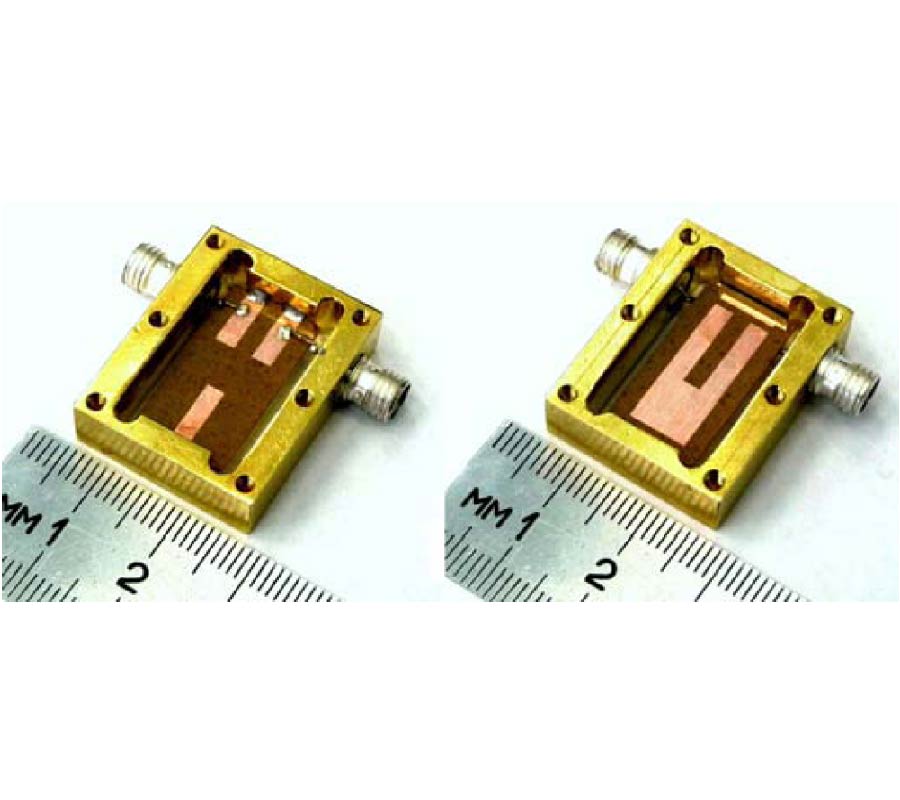
This work demonstrates that the well-known box configuration comprising four inverter-coupled resonators is capable of realizing a dual-band filter characteristic. A dual-band filter is designed at 1 GHz and subsequently implemented as a Combline microstrip filter exhibiting measured frequency characteristics which closely matched the simulations.
REALIZATION OF DUAL-BAND FILTER CHARACTERISTICS BY BOX CONFIGURATIONS
2011-03-31
PIER Letters
Vol. 22, 165-174
Effective Permittivity Tensor for a Metal-Dielectric Superlattice
Benito Zenteno-Mateo , Veronica Cerdan-Ramirez , Benito Flores-Desirena , Mercedes Portillo Sampedro , Estela Juarez-Ruiz and Felipe Perez-Rodriguez
We have derived simple analytical expressions for the frequency-dependent effective permittivity tensor of a one-dimensional metal-dielectric photonic crystal in the long wavelength limit. Our results describe the transition between the regime described by Rytov's formulas and that predicted by Xu et al [5], where the effective plasma frequency is independent of the metallic-layer parameters. The derived expressions can be useful for determining the frequency intervals where such an anisotropic system can exhibit metamaterial behavior.
EFFECTIVE PERMITTIVITY TENSOR FOR A METAL-DIELECTRIC SUPERLATTICE
2011-03-31
PIER
Vol. 115, 223-242
Electrothermal Effects in High Density through Silicon via (Tsv) Arrays
Wen-Sheng Zhao , Xiao-Peng Wang and Wen-Yan Yin
Electrothermal effects in various through silicon via (TSV) arrays are investigated in this paper. An equivalent lumped-element circuit model of a TSV pair is derived. The temperature-dependent TSV capacitance, silicon substrate capacitance and conductance are examined for low-, medium-, and high-resistivity silicon substrates, respectively. The partial-element equivalent-circuit (PEEC) method is employed for calculating per-unit-length (p.u.l.) resistance, inductance, insertion loss and characteristic impedances of copper and polycrystalline silicon (poly-Si) TSV arrays, and their frequency- and temperature-dependent characteristics are treated rigorously. The modified time-domain finite-element method (TD-FEM), in the presence of a set of periodic differential-mode voltage pulses, is also employed for studying transient electrothermal responses of 4- and 5-TSV arrays made of different materials, with their maximum temperatures and thermal crosstalk characterized thoroughly.
ELECTROTHERMAL EFFECTS IN HIGH DENSITY THROUGH SILICON VIA (TSV) ARRAYS
2011-03-30
PIER B
Vol. 29, 191-207
Epsimu, a Tool for Dielectric Properties Measurement of Porous Media: Application in Wet Granular Materials Characterization
Pierre Sabouroux and Doudou Ba
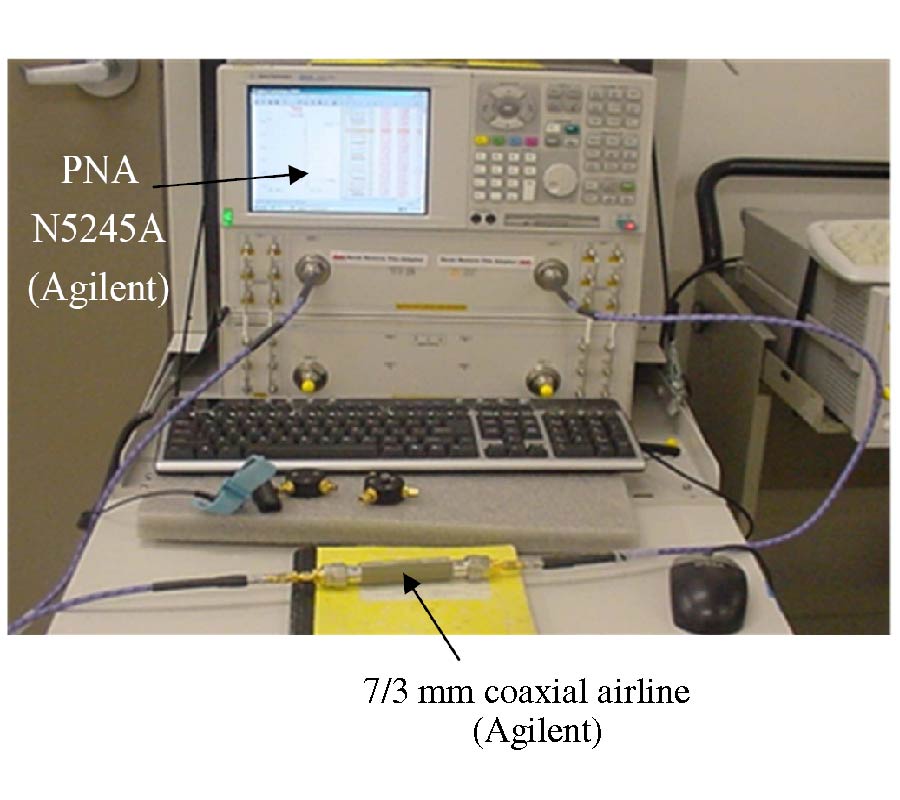
The principal aim of this article is the presentation of EpsiMu, a tool for dielectric properties measurement. This general tool can be used to characterize all types of materials, but in this article we apply it to porous or granular materials. The tool consists of a coaxial cell and dedicated software that allow us to reconstruct the permittivity in almost real-time by a de-embedding process. Dielectric permittivity of soils sample was measured using this microwave tool. So, we can then determine the relationship between the dielectric properties and volumetric water content θ of Fontainebleau sand (center of France) and Dune of Pilat sand (Arcachon Bay area, France). The clay effect on Fontainebleau sand is also studied. We discuss the usefulness of several models that link the permittivity to volumetric water content of soil. It is shown that the soil permittivity model is not directly applicable to Fontainebleau sand and Dune of Pilat sand. We find a good match between our results representing the relative permittivity ε'r veversus the volumetric water content θ and the Complex Refractive Index model (CRIM) between 600 MHz and 1 GHz. Alternative regression formulae are proposed. The implication of the determination of volumetric water content, θ, is discussed. A linear relation between the dielectric loss tangent and volumetric water content θ of soils is established.
EPSIMU, A TOOL FOR DIELECTRIC PROPERTIES MEASUREMENT OF POROUS MEDIA: APPLICATION IN WET GRANULAR MATERIALS CHARACTERIZATION
2011-03-30
PIER B
Vol. 29, 175-190
A Proposed Method for Quantifying Uncertainty in RF Immunity Testing Due to Eut Presence
Eduardo Paez , Ciro Tremola and Marco A. Azpurua
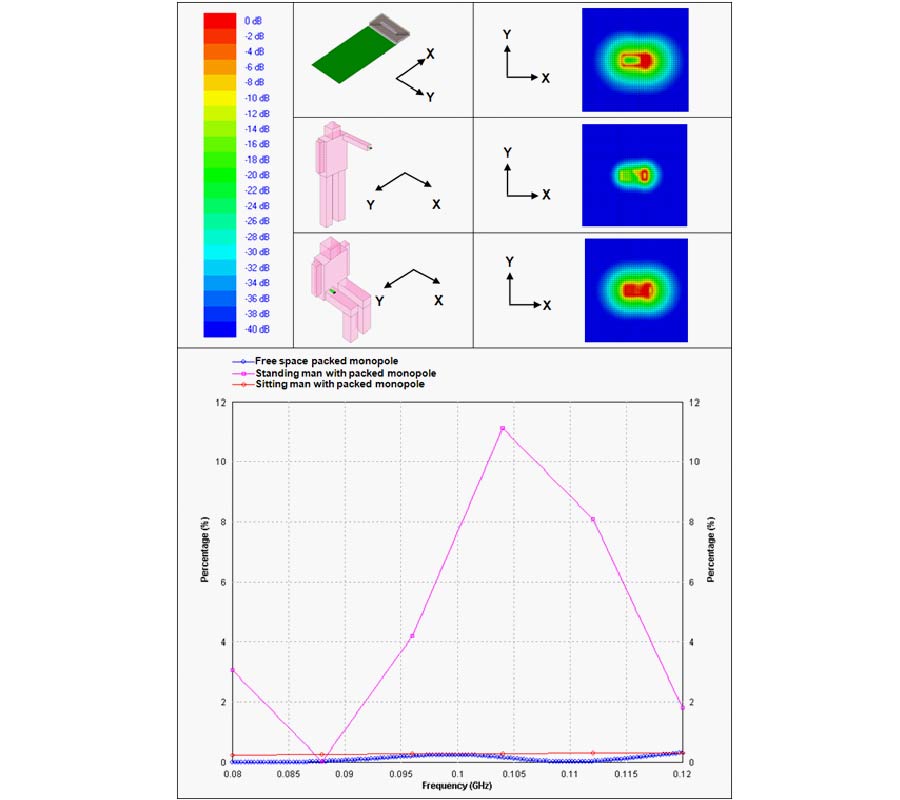
Throughout the performance of a RF immunity test according IEC 61000-4-3 there are several factors that should be taken into account to ensure the quality and to estimate the uncertainty associated to the results. One phenomenon that should be considered to calculate uncertainty is the disturbing effect produced by the EUT over the electric field generated within the calibrated uniform field area; nevertheless the mentioned effect is not easily quantifiable because the measuring process using additional antennas or field probes inside the semianechoic chamber could also alter the electric field distribution. An experimental method for quantifying the mentioned uncertainty contribution is presented. The method is based upon the fact that antenna-EUT coupling and reflection effects could be measured through changes in the input impedance of the field generation antenna. A validation procedure for the proposed method is also described. Hence, a relationship between the reflection coefficient at the antenna input port and the electric field strength is derived. The uncertainty contribution is calculated through the maximum relative change in the E-field intensity magnitude for the frequency range of 80-1000 MHz, considering the worst case for several EUT positions.
A PROPOSED METHOD FOR QUANTIFYING UNCERTAINTY IN RF IMMUNITY TESTING DUE TO EUT PRESENCE
2011-03-30
PIER Letters
Vol. 22, 155-163
Negative Refractive Index Behavior through Magneto-Electric Coupling in Split Ring Resonators
Zine Eddine Djeffal , Hakeim Talleb , David Lautru and Victor Fouad-Hanna
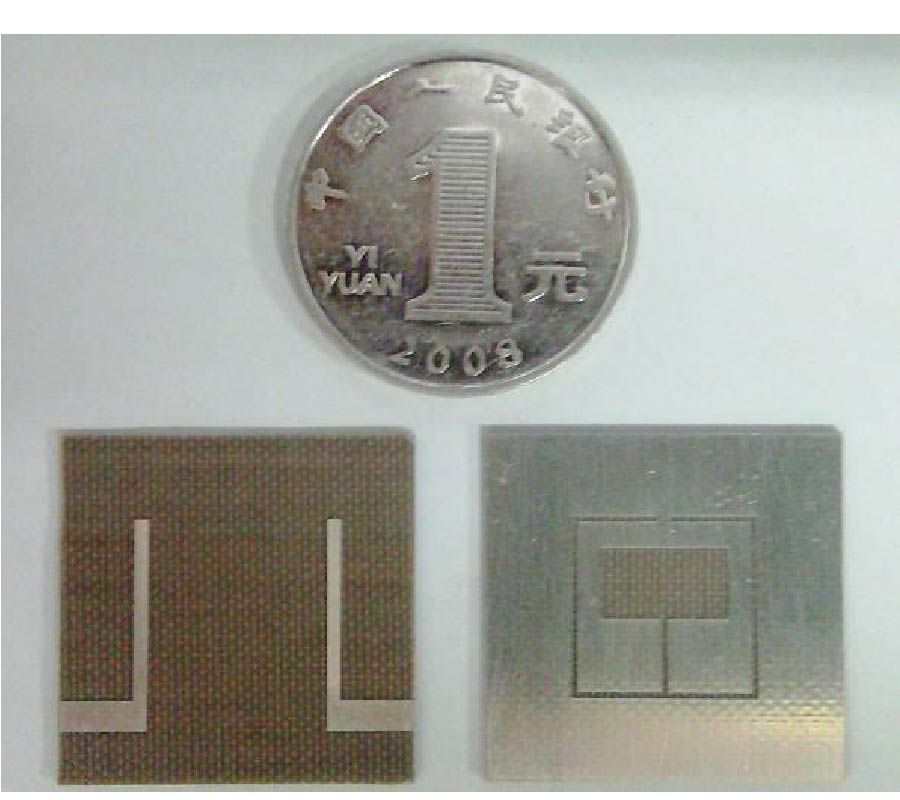
An investigation on the possibility of obtaining a negative refractive index behavior in split ring resonators (SRRs) through magneto-electric coupling is presented. We have performed rigorous electromagnetic simulations using a full-wave 3D simulator, and the obtained results have been verified by our experimental realizations and measurements. The results confirm that the increase of magnetoelectric gyrotropic activity inside a bi-anistropic medium can lead to the establishment of backward-wave propagation.
NEGATIVE REFRACTIVE INDEX BEHAVIOR THROUGH MAGNETO-ELECTRIC COUPLING IN SPLIT RING RESONATORS
2011-03-30
PIER Letters
Vol. 22, 147-154
Three Sections Circular Waveguide Aperture Antenna with Conical Beam
Shishan Qi , Wen Wu and Dagang Fang
A three sections circular waveguide aperture antenna with conical beam is presented. By using two waveguide steps, the aperture distribution of the antenna can be controlled to realize the requirements on the radiation pattern with conical beam including the flare angle, gain and the side lobe level. Through optimized design, the impedance bandwidth of 550MHz with -10 dB return loss, the gain of 8.1 dB and a flare angle of 50 degrees have been achieved at the central frequency 35 GHz. Good agreement has been observed between simulated results and measured ones. The proposed antenna is easy to be fabricated and suitable for many applications.
THREE SECTIONS CIRCULAR WAVEGUIDE APERTURE ANTENNA WITH CONICAL BEAM
2011-03-30
PIER Letters
Vol. 22, 139-146
Triple-Band Open L-Slot Antenna with a Slit and a Strip for WLAN/WiMAX Applications
Kun Song , Ying-Zeng Yin and Bo Chen
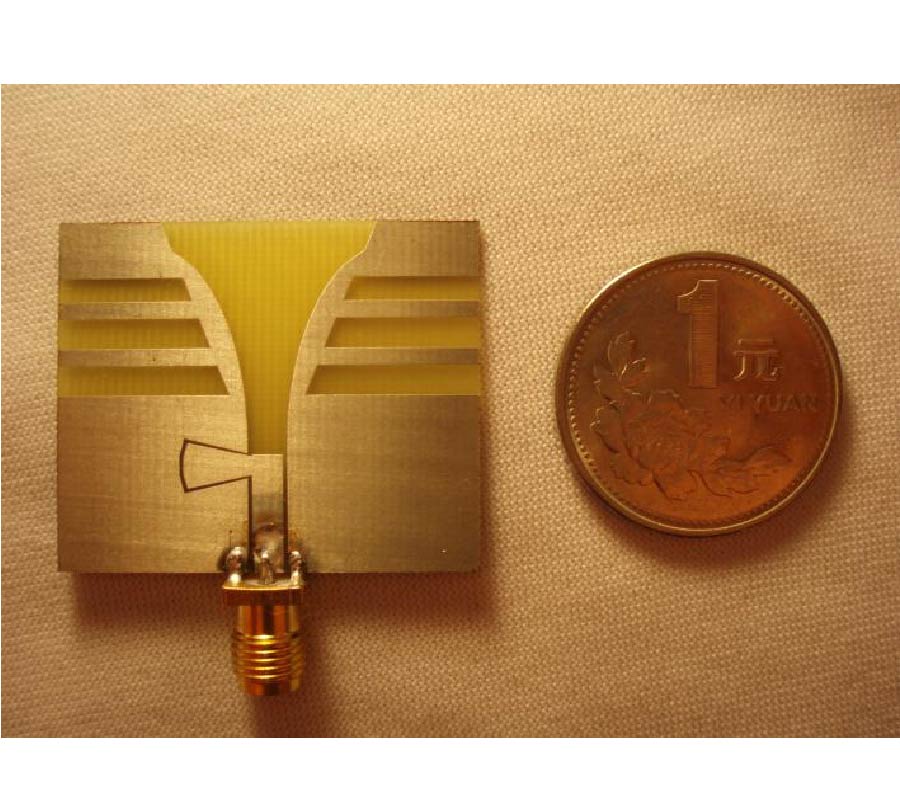
An open L-slot antenna with triple-band operation for WLAN and WiMAX applications has been designed and implemented with a slit and a strip, which can be used to generate two band-rejected characteristics. Both the strip and the slit play a very important role in suppressing the dispensable bands. By adjusting the dimensions of the slit and strip, the proposed antenna shows three separated operation frequencies with a bandwidth of 14% from 2.24 to 2.58 GHz, a bandwidth of 19% from 3.02 to 3.66 GHz, and a bandwidth of 10% from 5.62 to 6.21 GHz, respectively. Detailed designs and experimental results are reported in this paper.
TRIPLE-BAND OPEN L-SLOT ANTENNA WITH A SLIT AND A STRIP FOR WLAN/WIMAX APPLICATIONS
2011-03-30
PIER M
Vol. 17, 253-265
A Fundamental Limit on Subwavelength Guided Waves
Amir Arbabi , E. Arbabi and Safieddin Safavi-Naeini
A fundamental relation between the cross sectional confinement of an arbitrary mode of a general waveguide and its propagation length is found. It is shown that due to material loss of the waveguide, the propagation length shrinks as the confinement of the mode increases. Normalized second central moment of magnetic energy density in the cross section plane of the waveguide is used as a measure of mode size and it is found that for a given mode size, there is a limit for the waveguide propagation length. This limit depends solely on permittivity of the waveguide material and its surrounding medium. As an application, this result provides a lower bound for propagation loss in subwavelength optical confinement in plasmonic waveguides which are of special interest for their nano-meter mode dimensions.
A FUNDAMENTAL LIMIT ON SUBWAVELENGTH GUIDED WAVES
2011-03-30
PIER M
Vol. 17, 237-251
Particle Swarm Optimization of Antenna Arrays with Efficiency Constraints
Konstantinos A. Papadopoulos , C. A. Papagianni , P. K. Gkonis , I. S. Venieris and Dimitra Kaklamani
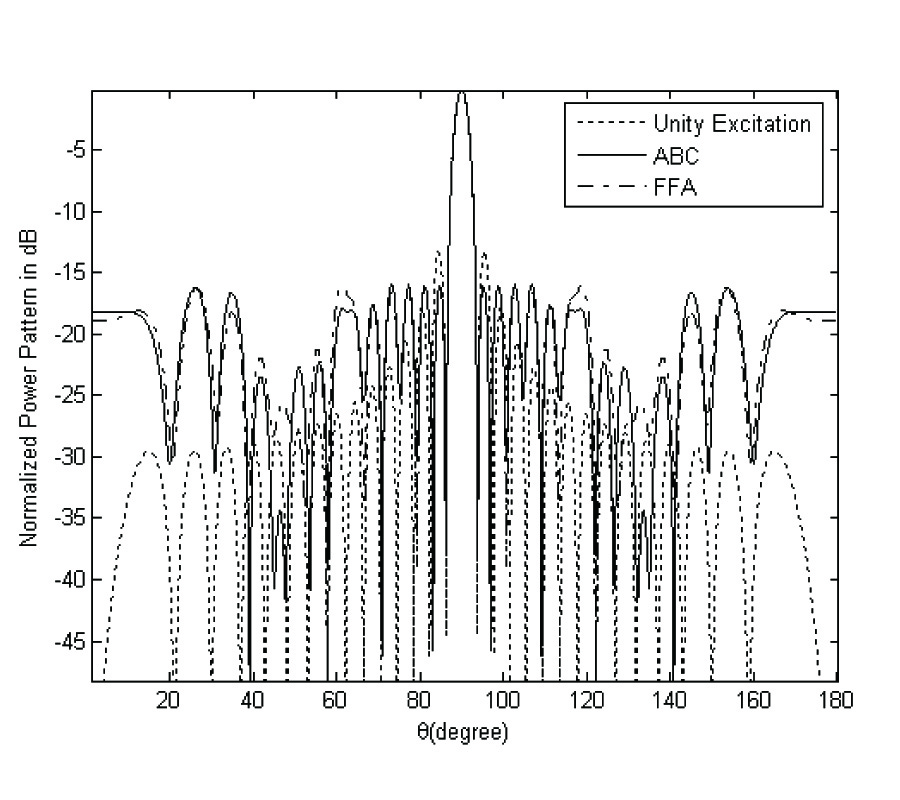
Phased array antennas are a viable solution to a number of problems related to radio communications applications. In this work, the multi-objective stochastic MOPSO algorithm is used to optimize the spatial configuration of a symmetric phased linear array. The defined optimization goals were the suppression of the radiation pattern sidelobes at a specified maximum scan angle as well as the minimization of the induced voltages correlation at the receiver frontend in order to maximize diversity performance. Non-linear constraints were enforced on the solution set, related to the multi-antenna system aperture efficiency and related to the mismatching when the array is scanned. The obtained optimized configurations for an array composed of 16 dipoles resulted in reducing the sidelobes up to 2.5 dB, when scanned 60° away from broadside, compared to a linear array with elements spaced λ/2 apart. Furthermore, the optimized dipole arrays were characterized by a maximum element correlation of 0.12 to 0.43. The performance of obtained configurations was shown to be tolerant to feed phase variations that appear in realistic implementations. The arrays were analyzed employing the Method of Moments (MoM).
PARTICLE SWARM OPTIMIZATION OF ANTENNA ARRAYS WITH EFFICIENCY CONSTRAINTS
2011-03-30
PIER
Vol. 115, 207-221
Symmetric and Asymmetric Double Langmuir Probes Characterization of Radio Frequency Inductivley Coupled Nitrogen Plasma
Muhammad Yasin Naz , Abdul Ghaffar , N. U. Rehman , Muhammad Azam , Shazia Shukrullah , A. Qayyum and Muhammad Zakaullah
The symmetric and asymmetric double Langmuir probe systems with their necessary driving circuits are developed for characterization of low pressure inductively coupled nitrogen plasma, generated and sustained with 13.56 MHz RF source and an automatic impedance matching network. First of all the plasma parameters such as ion saturation current, electron temperature and electron number density are determined with symmetric double probe system at different input RF powers, filling gas pressures and radial distance from the plasma chamber wall. Then the electron temperature and electron energy probability function are determined with asymmetric double probe system at the centre of the discharge plasma chamber by changing the filling gas pressure and input RF power. It is observed that the electron temperature and electron number density increase with the increase in input RF power and radial distance but decreases with the increase in filling gas pressure. The electron energy probability function determined with asymmetric probe system evidently deviates from the Maxwellian, particularly at low filling gas pressures.
SYMMETRIC AND ASYMMETRIC DOUBLE LANGMUIR PROBES CHARACTERIZATION OF RADIO FREQUENCY INDUCTIVLEY COUPLED NITROGEN PLASMA
2011-03-29
PIER B
Vol. 29, 157-174
Near Optimal Robust Adaptive Beamforming Approach Based on Evolutionary Algorithm
Rammohan Mallipeddi , Joni Lie , P. N. Suganthan , Sirajudeen Gulam Razul and Chong Meng S. See
The presence of desired signal in the training data for sample covariance matrix calculation is known to lead to a substantial performance degradation, especially when the desired signal is the dominant signal in the training data. Together with the uncertainty in the look direction, most of the adaptive beamforming solutions are unable to approach the optimal performance. In this paper, we propose an evolutionary algorithm (EA) based robust adaptive beamforming that is able to achieve near optimal performance. The essence of the idea is to shape the array beam response such that it has maximum response in the desired signal's angular range and minimum response in the interferences' angular range. In addition, the approach introduces null-response constraints deduced from the array observation to achieve better interference cancelation performance. As a whole, the proposed optimization is solvable using an improved variant of the differential evolution (DE) algorithm. Numerical simulations are also presented to demonstrate the efficacy of the proposed algorithm.
NEAR OPTIMAL ROBUST ADAPTIVE BEAMFORMING APPROACH BASED ON EVOLUTIONARY ALGORITHM
2011-03-29
PIER Letters
Vol. 22, 129-138
Numerical Study of the Thermal Effects Induced by a RFID Antenna in Vials of Blood Plasma
Ruben Otin
This paper presents a numerical study of the thermal effects induced by a commercial RFID antenna in vials filled with blood plasma. The antenna is located under a conveyor belt which transports cardboard boxes bearing test tubes or pooling bottles. Part of the energy used to read the RFID tags penetrates into the vials and heats the plasma. Our aim is to assess if the RFID technology can alter the quality of the blood plasma by increasing excessively its temperature. To do so, we first compute the specific absorption rate inside the vials with the finite element method. Then, assuming that no heat dissipation process is present, we estimate the number of continuous reading cycles required to increase the plasma temperature 0.1°C in the worst-case scenario. Finally, we compare this number with the number of reading cycles required to obtain all the data from the tags under normal usage conditions.
NUMERICAL STUDY OF THE THERMAL EFFECTS INDUCED BY A RFID ANTENNA IN VIALS OF BLOOD PLASMA
2011-03-29
PIER Letters
Vol. 22, 119-128
Selective Suppression of Electromagnetic Modes in a Rectangular Waveguide by Using Distributed Wall Losses
Chongqing Jiao
An over-mode metal rectangular waveguide is widely used in the generation, propagation, coupling, and transition of microwaves. When applied as the beam-wave interaction circuit of some high power microwave devices, a rectangular waveguide is expected to operate at a single electromagnetic mode. To do that, unwanted modes resulted from spurious oscillations should be suppressed. In this paper, a method of selective suppression of electromagnetic modes in rectangular waveguides by loading distributed losses in some special position of waveguide inner wall is presented. By using the method, the unwanted modes can be attenuated much larger relative to the operating mode. The presented method can be used to improve the stability of rectangular waveguide beam-wave interaction circuit.
SELECTIVE SUPPRESSION OF ELECTROMAGNETIC MODES IN A RECTANGULAR WAVEGUIDE BY USING DISTRIBUTED WALL LOSSES
2011-03-29
PIER Letters
Vol. 22, 109-117
Combined ESPRIT-Rootmusic for DOA-DOD Estimation in Polarimetric Bistatic MIMO Radar
Mohamed Laid Bencheikh and Yide Wang
In this paper, we investigate the exploitation of the polarimetric diversity signal properties in a bistatic polarimetric MIMO radar to improve the performance of joint estimation of direction of arrival (DOA) and direction of departure (DOD) of targets using Combined ESPRIT-RootMUSIC technique. Numerical simulations are carried out to illustrate the performance of the proposed approach.
COMBINED ESPRIT-ROOTMUSIC FOR DOA-DOD ESTIMATION IN POLARIMETRIC BISTATIC MIMO RADAR
2011-03-29
PIER Letters
Vol. 22, 95-108
The Microstructure Design Optimization of Negative Index Metamaterials Using Genetic Algorithm
Yongxiang Zhao , Fei Chen , Haiya Chen , Na Li , Qiang Shen and Lianmeng Zhang
In recent years, metamaterials have been the subject of research interest for many investigators worldwide. However, most of reported metamaterial microstructures are obtained based on human intuition, experience or large numbers of simulation experiments which were time-consuming, ineffective or expensive. In this paper, we propose a novel negative index metamaterial microstructure design methodology that uses a FDTD solver optimized by genetic algorithm (GA) technique in order to achieve a simultaneously negative permeability and permittivity. Firstly, an novel genetic algorithm optimization model for wide frequency band of negative refraction was proposed. Then the effectiveness of the new technique was demonstrated by a microstructure design example that was optimized by GA. By using numerical simulations techniques and S-parameter retrieval method, we found that the GA-designed optimal solution can exhibit a wide LH frequency band with simultaneously negative values of effective permittivity and permeability. Therefore, the design methodology presented in this paper is a very convenient and efficient way to pursue a novel metamaterial microstructure of left-handed materials with desired electromagnetic characteristics.
THE MICROSTRUCTURE DESIGN OPTIMIZATION OF NEGATIVE INDEX METAMATERIALS USING GENETIC ALGORITHM
2011-03-29
PIER C
Vol. 20, 269-287
Tracking Performance of an Adaptive Transmit Beamspace Beamformer in Dynamic MISO Wireless Channels
Syed Shah Irfan Hussain , John Bigham , Clive G. Parini and Muhammad Imran Shiekh
This paper presents the performance of an Adaptive transmit beamspace beamformer (ATBBF) in a dynamic channel for Multiple input single output (MISO) per user wireless system. ATBBF consists of a of several transmit beamformers on the Transmit antenna array (TAA). The antenna weights of each Transmit beamformer (TB) are held constant while input to a TB is weighted by an adaptive beamspace weight. An algorithm that updates beamspace weights of all transmit beamformers of an ATBBF at the base station is described. It updates on the basis of a single feedback from the mobile. The feedback consists of one bit that indicates which of the two normalized perturbed beamspace weights that were time multiplexed onto the pilot signal from the base station delivered more power to the mobile. This algorithm is named Beamspace gradient sign feedback algorithm (BGSF) as its feedback mechanism is similar to that of Gradient sign feedback (GSF) algorithm that updates antenna weights of a TB. Performance metric of ATBBF is derived and analyzed in a dynamic channel undergoing Rayleigh fading. Performance comparison between an ATBBF with BGSF algorithm and a TB with GSF is made in terms of convergence and tracking of various slow and fast fading channels by simulations. Both full dimension (FD) and Reduced dimension (RD) ATBBF are considered. Comparisons show that FD ATBBF gives equivalent performance to that of TB and outperforms RD ATBBF.
TRACKING PERFORMANCE OF AN ADAPTIVE TRANSMIT BEAMSPACE BEAMFORMER IN DYNAMIC MISO WIRELESS CHANNELS
2011-03-29
PIER M
Vol. 17, 225-236
Curved Fiber Scattering
Sharhabeel Alyones and Charles W. Bruce
Extinction and backscattering from thin curved fibers of finite conductivity are computed by solving the Pocklington integro-differential equation using the Moment Method with point matching scheme. For simplicity of interpretation these computations were performed at long wavelengths, in the Drude domain. The effect of the degree of curvature on the cross sections is examined for high and low fiber conductivities, and for two incident geometries: normal and parallel to the plane of the curved fiber. The computations show a narrowing and decreasing cross sections with increased fiber curvature for both low and high conductivities. The normal geometry produces larger cross sections than the parallel case.
CURVED FIBER SCATTERING