Search Results(13802)

2011-03-29
PIER M
Vol. 17, 213-224
Equivalent Circuit Model for Designing Coupled Resonators Photonic Crystal Filters
Zuo-Xing Dai , Jia-Li Wang and Yan Heng
A method for modeling and designing of coupled resonators photonic crystal (PC) filters for wavelength division multiplexing (WDM) systems is presented. This proposed method is based on coupling coefficients of intercoupled resonators and the external quality factors of the input and output resonators based on the circuit approach. A general formulation for extracting the two types of parameters from the physical structure of the PC filters is given. At last, we redesign a third-order Chebyshev filter which has a center frequency of 193.55 THz, a flat bandwidth of 50GHz, and ripples of 0.1 dB in the pass-band. The filter's structure derived from the proposed method is more compact.
EQUIVALENT CIRCUIT MODEL FOR DESIGNING COUPLED RESONATORS PHOTONIC CRYSTAL FILTERS
2011-03-29
PIER
Vol. 115, 191-206
A Novel Moving Target Detection Approach for Dual-Channel SAR System
Bin Tian , Dai-Yin Zhu and Zhao-Da Zhu
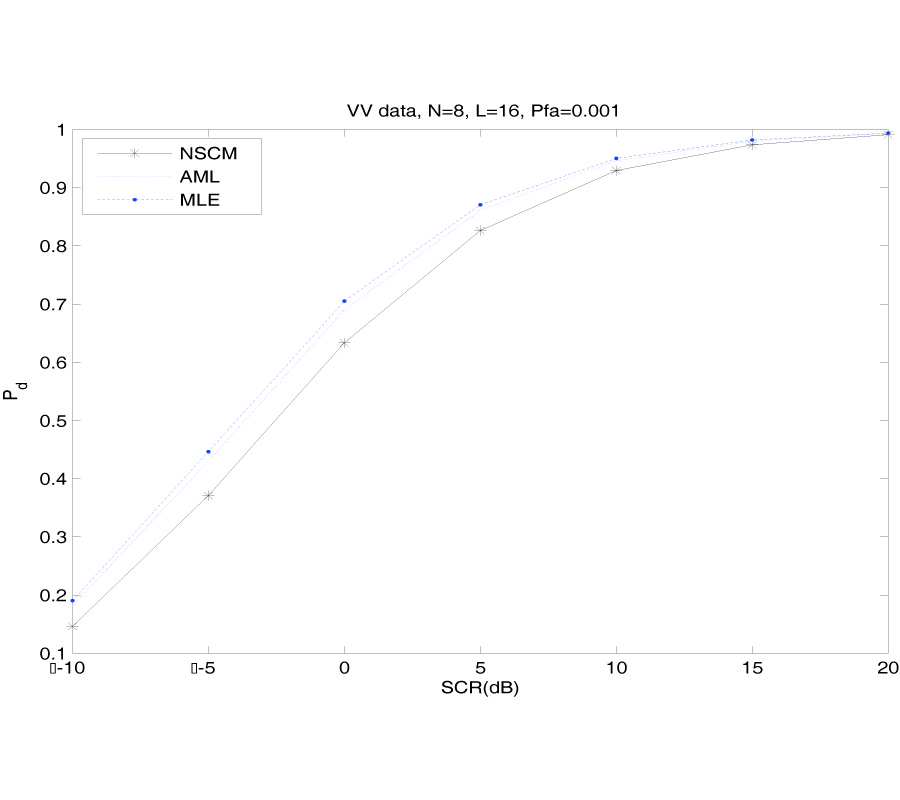
A novel approach to moving target detection is proposed for dual-channel SAR system. This approach is on the basis of eigen-decomposition of the sample covariance matrix and examines the statistic of the second eigenvalue and the Along-Track Interferometric (ATI) phase for ground moving target indication. Based on this statistic, a new Constant False Alarm Rate (CFAR) detector can be designed to solve the problem of GMTI. To detect slow moving targets more accurately, the second eigenvalue and the ATI phase pre-thresholds are implemented before a CFAR detector. Experimental results on measured SAR data are presented to demonstrate that this novel detector has wider range of detection velocity and lower false alarm probability.
A NOVEL MOVING TARGET DETECTION APPROACH FOR DUAL-CHANNEL SAR SYSTEM
2011-03-28
PIER B
Vol. 29, 139-155
Analysis and Design of Cruciform Waveguide Junction with a Conducting Diaphragm and a Dielectric Layer in the Main Arm
Faik Bogdanov , Guram Sh. Kevanishvili , Georgi V. Kekelia and Segiy L. Prosvirnin
This paper proposes a rigorous theory of the H-plane four-port (cruciform) waveguide junction with a conducting diaphragm and a dielectric layer in the main (input) waveguide arm. This theory is based on the mode matching method in conjunction with Fourier transform technique and including the edge conditions in vicinity of the diaphragm edges. The numerical analysis of the cruciform waveguide junction is done, and optimal parameters of inclusions are predicted based on the minima of voltage standing wave ratio (VSWR) in the main arm.
ANALYSIS AND DESIGN OF CRUCIFORM WAVEGUIDE JUNCTION WITH A CONDUCTING DIAPHRAGM AND A DIELECTRIC LAYER IN THE MAIN ARM
2011-03-28
PIER Letters
Vol. 22, 83-93
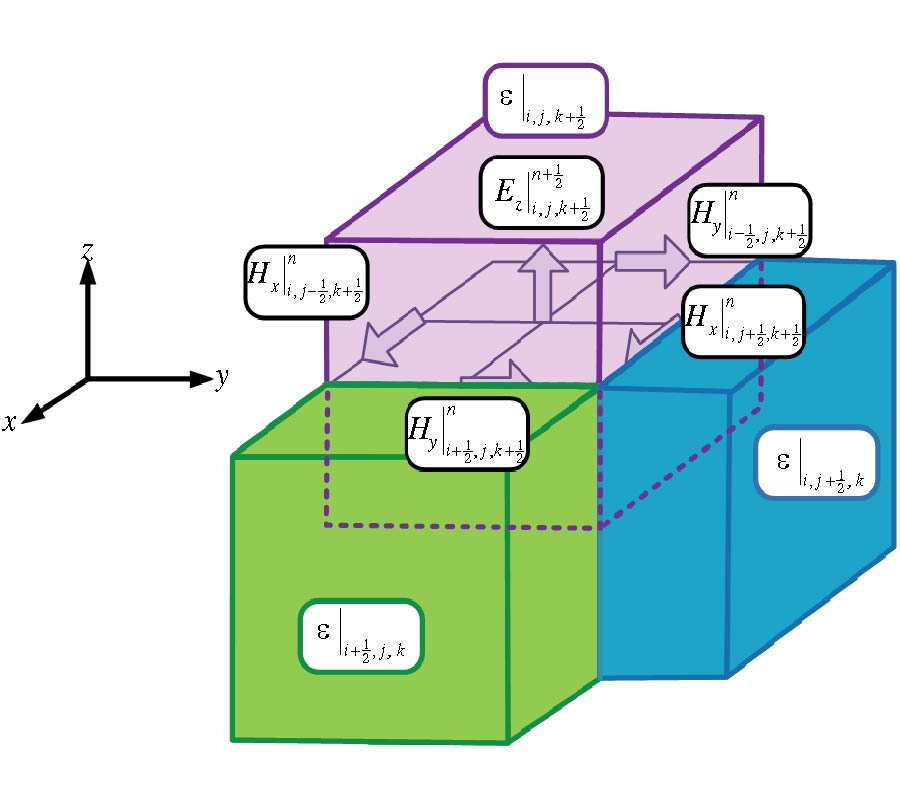
Analysis of Dispersion Relation of Piecewise Linear Recursive Convolution FDTD Method for Space-Varying Plasma
Xia Ai , Yiping Han , Chang You Li and Xiao-Wei Shi
The dispersion relation of piecewise linear recursive convolution finite difference time domain (PLRC-FDTD) method for space-varying plasma is analyzed using a novel equivalent method. The equivalent dispersion and dissipation errors have been taken into account. The efficiency of the novel equivalent method is substantiated by computing the test and reference transmitted electric field. The comparison of the test and reference solutions validates that the equivalent method is an efficient method to analyze the dispersion relation of PLRC-FDTD method used for space-varying plasma.
ANALYSIS OF DISPERSION RELATION OF PIECEWISE LINEAR RECURSIVE CONVOLUTION FDTD METHOD FOR SPACE-VARYING PLASMA
2011-03-28
PIER C
Vol. 20, 255-268
Measurement Method for Sensitivity Analysis of Proximity Sensor and Sensor Antenna Integration in a Handheld Device
Sami Myllymaki , Arttu Huttunen , Heli Jantunen , Markus Berg and Erkki T. Salonen
A method for measuring the sensitivity of a capacitive proximity sensor and an application using the sensor as a proximity detector in mobile phone antennas is presented. 2D sensor data plots were physically more exact for tuning sensor placement. 3D sensor data plots were suitable for sensor intensity comparison, highlighting sensor differences in multiple sensor applications and effects in sensor`s output due to shadowing mechanical objects. The antenna proximity sensor was measured and optimised with sensitivity measurements. In a PIFA application the antenna load could be detected from both sides and from above the antenna on a scale o 4.03•10-14 F to 4.33•10-14 F. The cases present all possible positions of holding a phone used in either the ``calling'' or ``browsing'' mode. The method and the application emphasise the physical sensitivity and electrical fields of the sensor. The characteristics can be further improved by using other sensor types, sensor data fusion and advanced imitation of multisensory spatial interaction by humans and animals.
MEASUREMENT METHOD FOR SENSITIVITY ANALYSIS OF PROXIMITY SENSOR AND SENSOR ANTENNA INTEGRATION IN A HANDHELD DEVICE
2011-03-28
PIER
Vol. 115, 173-189
Application of Chaotic Particle Swarm Optimization Algorithm to Pattern Synthesis of Antenna Arrays
Wei-Bo Wang , Quanyuan Feng and Dong Liu
To deal with pattern synthesis of antenna arrays, a chaotic particle swarm optimization (CPSO) is presented to avoid the premature convergence. By fusing with the ergodic and stochastic chaos, the novel algorithm explores the global optimum with the comprehensive learning strategy. The chaotic searching region can be adjusted adaptively. To evaluate the performance of CPSO, several representative benchmark functions are minimized using various optimization algorithms. Numerical results demonstrate that the proposed approach improves the performance of the algorithm significantly, in terms of both the convergence speed and exploration ability. Moreover, CPSO was applied to array synthesis examples, including the equally spaced linear array, unequally spaced linear array and conformal array, compared with other optimization methods. Experimental results show its high performance in the pattern synthesis with low side lobe, multi-nulls and shaped beam.
APPLICATION OF CHAOTIC PARTICLE SWARM OPTIMIZATION ALGORITHM TO PATTERN SYNTHESIS OF ANTENNA ARRAYS
2011-03-25
PIER B
Vol. 29, 105-138
A Multiplicative Regularized Gauss-Newton Algorithm and Its Application to the Joint Inversion of Induction Logging and Near-Borehole Pressure Measurements
Faruk Omer Alpak , Tarek Habashy , Aria Abubakar , Carlos Torres-Verdin and Kamy Sepehrnoori
Due to the ill-posed nature of nonlinear inverse problems of borehole geophysics, a parameterization approach is necessary when the available measurement data are limited and measurements are only carried out from sparse transmitter-receiver positions (limited data diversity). A potential remedy is the joint inversion of multi-physics measurements. A parametric inversion approach has desirable attributes for multi-physics measurements with different resolutions. It provides a flexible framework to put the sensitivities of multi-physics multi-resolution measurements on equal footing. In addition, the number of unknown model parameters to be inverted is rendered tractable with parameterization. Consequently, a Gauss-Newton based inversion algorithm taking advantage of the Hessian information can be advantageously employed over inversion approaches that rely only on gradient information. We describe a new dual-physics parametric joint-inversion algorithm to estimate near-borehole fluid permeability and porosity distributions of rock formations from fluid-flow and electromagnetic measurements. In order to accommodate the cases in which the measurements are redundant or lack sensitivity with respect to certain model parameters causing nonuniqueness of the inverted solution, the objective functional to be minimized is regularized with a penalty term. One of the central aspects of this approach is the determination of the regularization parameter. The latter must be chosen in such a way that the relative importance of the misfit between measured and predicted data and the penalty term are effectively balanced over the course of minimization. We propose a new method of adaptively choosing the regularization parameter within a Gauss-Newton method based joint-inversion algorithm using a multiplicative regularization strategy. The multiplicative regularization method is tested against additive regularization in joint-inversion problems involving wireline formation tester transient pressure and induction-frequency electromagnetic logging measurements. The multiplicative regularization method delivers improved convergence rates over additive regularization for all investigated problems. Inversions of relatively more noise-contaminated measurements benefit more from multiplicative regularization.
A MULTIPLICATIVE REGULARIZED GAUSS-NEWTON ALGORITHM AND ITS APPLICATION TO THE JOINT INVERSION OF INDUCTION LOGGING AND NEAR-BOREHOLE PRESSURE MEASUREMENTS
2011-03-25
PIER Letters
Vol. 22, 71-81
A Stacked Equilateral Triangular Patch Antenna with Sierpinski Gasket Fractal for WLAN Applications
Jagannath Malik and Machavaram Kartikeyan
In present work, a microstrip Sierpinski modified and fractalized antenna using multilayer structure to achieve dual band behavior for WLAN applications has been proposed. Due to the space-filling properties of fractal geometry, the proposed antenna is smaller in size than the conventional Euclidean-type. An equilateral triangular patch antenna with Sierpinski Gasket fractal shape has been designed and studied. An electromagnetic coupled stacked structure of two different patches operating at two frequencies (2.4 GHz Bluetooth and 5.8 GHz Wireless LAN) has been designed for dual band WLAN applications.
A STACKED EQUILATERAL TRIANGULAR PATCH ANTENNA WITH SIERPINSKI GASKET FRACTAL FOR WLAN APPLICATIONS
2011-03-25
PIER C
Vol. 20, 239-254
Robust MVDR Beamformer for Nulling Level Control via Multi-Parametric Quadratic Programming
Fulai Liu , Jinkuan Wang , C. Y. Sun and Ruiyan Du
MVDR beamformer is one of the well-known adaptive beamforming techniques that offers the ability to resolve signals that are separated by a fraction of an antenna beamwidth. In an ideal scenario, the MVDR beamformer can not only minimize the array output power but also maintain a distortionless mainlobe response toward the desired signal. Unfortunately, the MVDR beamformer may have unacceptably low nulling level, which may lead to signicant performance degradation in the case of unexpected interfering signals. A new robust MVDR beamforming is presented to control the nulling level of adaptive antenna array. In this proposed approach, the beamforming optimization problem is formulated as a multi-parametric quadratic programming (mp-QP) problem such that the optimal weight vector can be easily obtained by real-valued computation. The presented method can guarantee that the nulling level are strictly below the prescribed threshold. Simulation results are presented to verify the efficiency of the proposed method.
ROBUST MVDR BEAMFORMER FOR NULLING LEVEL CONTROL VIA MULTI-PARAMETRIC QUADRATIC PROGRAMMING
2011-03-25
PIER C
Vol. 20, 227-238
A Compact Package with Integrated Patch Antenna for Single-Chip 60-GHz Radios
Lai Lai Wai , Kai Meng Chua , Albert Chee Wai Lu , Mei Sun and Yue-Ping Zhang
This paper presents the development of a standard surface mountable ceramic ball grid array (CBGA) package with an integrated patch antenna in low temperature cofired ceramic (LTCC) technology for emerging single-chip 60-GHz radios. It addresses the challenges of low-loss wire bonding interconnections required between the chip and the antenna as well as the package to allow efficient utilization of available space for miniaturization. The compact package of size 12.5×8×1.265 mm3 achieves good electrical performance. For instance, the package part exhibits insertion loss <0.08 dB, return loss >22 dB, and attenuation rate <0.2 dB/cm below 5 GHz; while the antenna part demonstrates 8-GHz impedance bandwidth and 8±2 dBi peak realized gain at 60 GHz. Simulated and measured results are compared. They agree reasonably well, indicating the feasibility of designing and manufacturing the integrated antenna package in LTCC for millimeter-wave applications.
A COMPACT PACKAGE WITH INTEGRATED PATCH ANTENNA FOR SINGLE-CHIP 60-GHz RADIOS
2011-03-25
PIER M
Vol. 17, 197-211
Fractional Rectangular Waveguide Internally Coated with Chiral Nihility Metamaterial
Arbab Abdur Rahim , Muhammad Junaid Mughal and Qaisar Abbas Naqvi
The fields inside a rectangular waveguide with an internal coating of chiral nihility metamaterial are determined. These fields are then fractionalized utilizing the fractional curl operator to find the fields for the intermediate geometries which are also termed as the fractional order geometries. It is noted that no electric field exists inside the chiral nihility coating backed by perfect electric conductor (PEC) surface. The fractional order geometries are related through the principle of duality. The behavior of the fields with respect to the fractional parameter, α is analyzed.
FRACTIONAL RECTANGULAR WAVEGUIDE INTERNALLY COATED WITH CHIRAL NIHILITY METAMATERIAL
2011-03-25
PIER
Vol. 115, 159-172
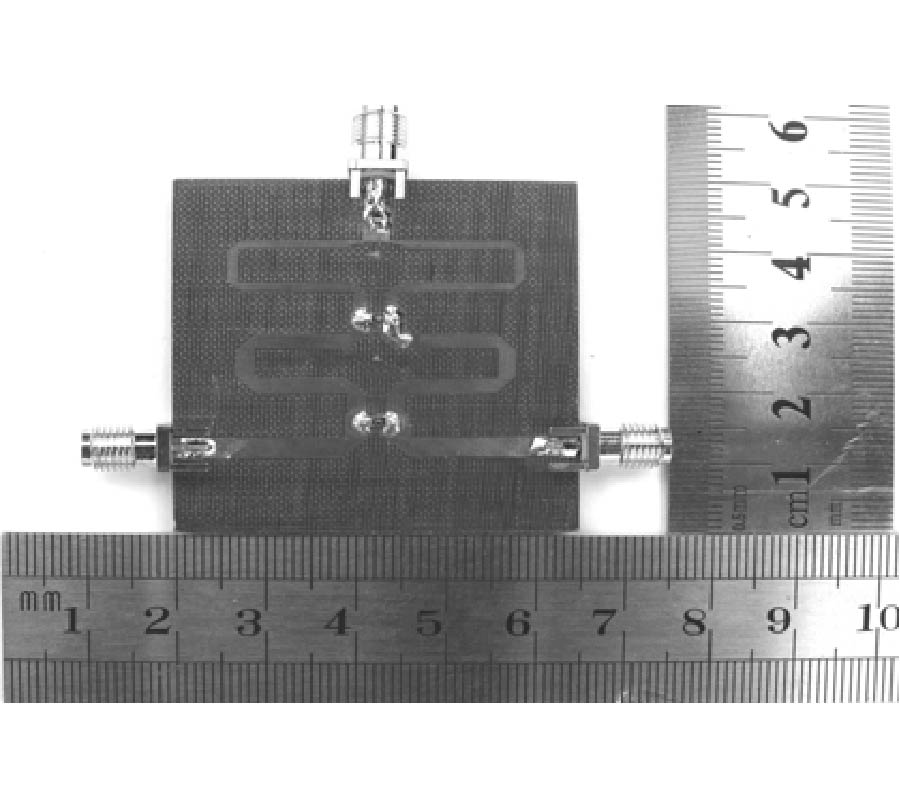
Design and Fabrication of a Compact Quad-Band Bandpass Filter Using Two Different Parallel Positioned Resonators
Cheng-Fu Yang , Yin-Chung Chen , Cheng-Yuan Kung , Jing-Jenn Lin and Tai-Ping Sun
A novel microstrip quad-band bandpass filter was designed and fabricated on an Al2O3 ceramic substrate of 1 mm thick. Two different types of open-loop resonator --- a winding line-shaped resonator (WLR) and a stepped impedance resonator (SIR) --- were positioned in parallel at the two sides of input/output microstrip lines that had the same coupling lengths and coupling gap widths. The proposed filter was based on a WLR with four different resonant frequencies: 1.23 GHz, 2.49 GHz, 3.73 GHz, and 5.41 GHz. By carefully selecting the resonant frequencies of the two resonators to be slightly different, the phase difference for the signals in the two resonators was negative, indicating that energy cancellation occurred, resulting in wide bandwidths and deep transmission zeros. The spurious resonant frequencies of the SIR were designed to be non-integer multiples of the fundamental resonant frequency by adjusting the length, characteristic impedance ratio, and electrical length. The SIR was designed to have three resonant frequencies at around 2.27 GHz, 3.37 GHz, and 4.94 GHz, which had phase differences with the WLR's resonant frequencies of 2.49 GHz, 3.73 GHz, and 5.41 GHz. Finally, a novel quad-band filter with a narrow band in the L2-band (GPS, 1.227 GHz) and three wide bands in the WIMAX (3.5 GHz) and WLAN (2.4 GHz and 5.2 GHz) was achieved.
DESIGN AND FABRICATION OF A COMPACT QUAD-BAND BANDPASS FILTER USING TWO DIFFERENT PARALLEL POSITIONED RESONATORS
2011-03-25
PIER
Vol. 115, 147-157
Organic-Inorganic RF Composites with Enhanced Permittivity by Nanoparticle Additions
Merja Teirikangas , Jari Juuti and Heli Jantunen
Organic-inorganic thermoplastic composites offer a cost-effective material choice with tuneable dielectric properties for various telecom components and applications. Typically such composites require substantial loading of inorganics to obtain a feasible level of permittivity at RF frequencies dramatically decreasing mechanical ruggedness and increasing losses. In this paper we demonstrate utilization of nanoparticle phase in BaSrTiO3-polypropylene-graft-poly (styrene-stat-divenylbenzene) composite to enhance the high frequency properties and overcome the problems associated with high filler loading. The effect of nanosize silicon, silver and Al2O3 additives with different volume fractions in complex permittivity was investigated up to 1 GHz. Significant increase in the effective permittivity of the composites with all the additives was observe, especially in the case of the nanosized silver particles where only 2 vol.% addition was able to enhance εr by 52% without increasing the dielectric losses when compared to the reference sample.
ORGANIC-INORGANIC RF COMPOSITES WITH ENHANCED PERMITTIVITY BY NANOPARTICLE ADDITIONS
2011-03-25
PIER
Vol. 115, 131-146
Scattering Analysis of Periodic Arrays Using Combined Cbf/P-FFT Method
Ke Xiao , Fei Zhao , Shun-Lian Chai , Jun-Jie Mao and Joshua Le-Wei Li
In this paper, an improved CBFM/p-FFT algorithm is presented, which can be applied to solve electromagnetic scattering problems of large-scale periodic composite metallic/dielectric arrays, even when the array has electrically small periodicity or separating distance. Using characteristic basis function method (CBFM), scattering characteristics of any inhomogeneous targets can be represented by special responses derived from a set of incident plane waves (PWs). In order to reserve the dominant scattering characteristics of the targets and remove the redundancy of the overfull responses, a singular value decomposition (SVD) procedure is applied, then, new series of basis functions are built based on the left singular vectors after SVD whose corresponding singular values beyond a predefined threshold. However, the algorithm of CBFM combined with method of moments (MoM) still requires a lot of memory and CPU resources to some large scale problems, so the precorrected-fast Fourier transform (p-FFT) method is applied based on the novel built basis functions, with which, the required memory and solve time for solution can be reduced in an extraordinary extent. For a near correction technique is applied to process the interactions between cells placed within a distance less than a predefined near-far field threshold, arrays with electrically small periodicity can be analyzed accurately. Moreover, the incomplete LU factorization with thresholding (ILUT) preconditioner is applied to improve the condition number of the combined algorithm, which improves the convergence speed greatly.
SCATTERING ANALYSIS OF PERIODIC ARRAYS USING COMBINED CBF/P-FFT METHOD
2011-03-24
PIER B
Vol. 29, 83-103
Derivation of the Effective Nonlinear SchrÖDinger Equations for Dark and Power Law Spatial Plasmon-Polariton Solitons Using Nano Self-Focusing
Sihon H. Crutcher and Abert Osei
An effective Nonlinear Schrödinger Equation for propagation is derived for optical dark and power law spatial solitons at the subwavelength with a surface plasmonic interaction. Starting with Maxwell's Nonlinear Equations a model is proposed for TM polarized type spatial solitons on a metal dielectric interface. Two separate systems are considered in which one metal dielectric interface has a dielectric Kerr medium that has self-defocusing and another similar interface which the dielectric Kerr medium that has self-focusing depending on the modulus of the electric field to some power law variable p. The beam dynamics are analytically studied for these nanowaveguides.
DERIVATION OF THE EFFECTIVE NONLINEAR SCHRÖDINGER EQUATIONS FOR DARK AND POWER LAW SPATIAL PLASMON-POLARITON SOLITONS USING NANO SELF-FOCUSING
2011-03-23
PIER Letters
Vol. 22, 59-69
Improved Composite Right/Left-Handed Cell for Leaky-Wave Antenna
Andrei Anghel and Remus Cacoveanu
An improved composite right/left-handed (CRLH) unit cell optimized for a leaky-wave (LW) antenna is presented. This CRLH cell consists of a series of one transmission line, an interdigital capacitor, another transmission line and a shunt shorted stub. Introducing the transmission lines, the parasitic self-resonances of the capacitor are shifted outside the operational band, the radiation range is extended and the transition frequency at which the balanced cell condition is achieved can be chosen in the design process from a broader range of frequencies. The characteristics and performances of the proposed cell are verified by simulation and by measuring two artificial transmission lines.
IMPROVED COMPOSITE RIGHT/LEFT-HANDED CELL FOR LEAKY-WAVE ANTENNA
2011-03-23
PIER Letters
Vol. 22, 47-58
Effect of the Metal Sheet Thickness on the Frequency Blueshift in Single Layer Composite Materials at Ka Microwave Frequency
Claudio Amabile , Enrico Prati , Filippo Costa and Agostino Monorchio
The frequency shift of the transfer function of single layer composite materials has been analyzed and tested. The effects are studied by means of planar pseudo-elliptical filters in Ka waveguide. The filters, consisting of a frequency selective surface placed perpendicularly to the waveguide axis, have been realized by a high resolution photolithographic technique. Deviations of the experimental transfer functions from the simulation are analyzed with particular emphasis to the effect of metal thickness. The finite thickness of the metal constituting the frequency selective surface causes a shift of the transfer function towards high frequencies (blueshift), attributed to dipole-dipole interaction in the metal layer. Such an effect is only partially predicted by full wave analysis based on finite element method. The increase of the thickness determines a reduction of the attenuation for thickness values between 10 and 100 skin depths.
EFFECT OF THE METAL SHEET THICKNESS ON THE FREQUENCY BLUESHIFT IN SINGLE LAYER COMPOSITE MATERIALS AT KA MICROWAVE FREQUENCY
2011-03-23
PIER Letters
Vol. 22, 39-45
Bandwidth Enhancement Design of Compact UWB Step-Slot Antenna with Rotated Patch
Kun Song , Ying-Zeng Yin , Bo Chen , Shou-Tao Fan and Feng Gao
In this paper, a novel compact microstrip-fed ultra-wideband (UWB) step-slot antenna with a rotated patch is demonstrated and experimentally studied. With an effective combination of the step-slot and rotated patch and proper dimensions, bandwidth enhancement for UWB operation is obtained. From the simulated and measured results, the enhanced impedance bandwidth is brought up to about 117.5% from 2.88 to 11.08 GHz defined by 10 dB return loss. Details of the proposed antenna are described, and experimental results are presented and discussed.
BANDWIDTH ENHANCEMENT DESIGN OF COMPACT UWB STEP-SLOT ANTENNA WITH ROTATED PATCH
2011-03-23
PIER Letters
Vol. 22, 29-38
Self-Focused Pulses in Two-Dimensional Composite Right- and Left-Handed Transmission Lines Periodically Loaded with Schottky Varactors
Jun Ogasawara and Koichi Narahara
We experimentally characterize the pulse propagation in two-dimensional composite right- and left-handed transmission lines periodically loaded with Schottky varactors. A properly designed line structure should produce that nonlinearity rendered by the varactors creating a self-focused pulse on the line and finally collapses, which allows it to be engineered for pulse processing systems. We built a test breadboard line and observed self-focused pulses.
SELF-FOCUSED PULSES IN TWO-DIMENSIONAL COMPOSITE RIGHT- AND LEFT-HANDED TRANSMISSION LINES PERIODICALLY LOADED WITH SCHOTTKY VARACTORS
2011-03-23
PIER Letters
Vol. 22, 19-28
Narrowband Frequency Selective Surface Based on Substrate Integrated Waveguide Technology
Hang Zhou , Shaobo Qu , Zhibin Pei , Jieqiu Zhang , Baoqin Lin , Jiafu Wang , Hua Ma , Chao Gu , Zhuo Xu , Peng Bai and Wei-Dong Peng
In this paper, a novel narrowband frequency selective surface (FSS) with a stable performance based on substrate integrated waveguide technology is presented. The unit cell of the FSS consists of a double-sided metalized substrate with a circular hole and a SIW circular cavity. In this way, incident EM waves enter the circular cavity and excite a TM110 cavity resonance, leading to a narrow pass-band. The high-Q property of the TM110 cavity resonance provides a very good wide-angle and polarization-independent stability. Both the simulation and experimental results show that such narrowband FSS owes its advantages to high selectivity, low profile stable performance with various incident angles and different polarizations, which is suitable for impulse detections, narrow-band communications, electronic countermeasures, etc.
NARROWBAND FREQUENCY SELECTIVE SURFACE BASED ON SUBSTRATE INTEGRATED WAVEGUIDE TECHNOLOGY