Search Results(13802)

2011-04-27
PIER
Vol. 116, 81-106
Consistent Formalism for the Momentum of Electromagnetic Waves in Lossless Dispersive Metamaterials and the Conservation of Momentum
Yingran He , Katus Maski and Sailing He
A new formalism for electromagnetic and mechanical momenta in a metamaterial is developed by means of the technique of wave-packet integrals. The medium has huge mass density and can therefore be regarded as almost stationary upon incident electromagnetic waves. A clear identification of momentum density and momentum flow, including their electromagnetic and mechanical parts, is obtained by employing this formalism in a lossless dispersive metamaterial (including the cases of impedance matching and mismatching with vacuum). It is found that the ratio of the electromagnetic momentum density to the mechanical momentum density depends on the impedance and group velocity of the electromagnetic wave inside the metamaterial. One of the definite results is that both the electromagnetic momentum and the mechanical momentum in the metamaterial are in the same direction as the energy flow, instead of in the direction of the wave vector. The conservation of total momentum is verified. In addition, the law of energy conservation in the process of normal incidence is also verified by using the wave-packet integral of both the electromagnetic energy density and the electromagnetic p
CONSISTENT FORMALISM FOR THE MOMENTUM OF ELECTROMAGNETIC WAVES IN LOSSLESS DISPERSIVE METAMATERIALS AND THE CONSERVATION OF MOMENTUM
2011-04-26
PIER B
Vol. 29, 393-408
Transient Solution for Lossy Transmission Line by Means of Orthogonal Projection Method
Hengxu Ha , Jing Cai , Zhi-Qian Bo and Bo Chen
A novel electromagnetic transient analysis technique by means of the orthogonal projection method for lossy transmission line is proposed. By employing the proposed method, the traveling waves propagating from one terminal to another can be quickly obtained with less amount of computation at considerably large steps. First of all, the differential function to variable time can be approximated to be the convolution with a fixed vector relates to a certain set of orthogonal basis, e.g. Daubechies' basis. The partial differential telegraph equations related to both variable time t and distance x are then transformed to be differential equations only related to x. The solution of such equations can be obtained accordingly. The discrete coefficients of propagation function for lossy line are obtained as well, by which the propagating traveling waves can be calculated precisely at considerably large sampling periods with less amount of computation.
TRANSIENT SOLUTION FOR LOSSY TRANSMISSION LINE BY MEANS OF ORTHOGONAL PROJECTION METHOD
2011-04-26
PIER M
Vol. 18, 73-88
Coupled Waves in the Periodic Composite Magnetic-Semiconducting Media
Muhammad Najam Shaikh and Rashid Ali
The Alfven-spin and helicon-spin waves are analyzed in both sinusoidal periodic and layered periodic structures. These periodic structures are composed of a single composite medium having the properties of both magnetic and semiconducting materials. Numerical analysis of the dispersion relations presented for these periodic structures shows band-gap effects. The idea of these band-gap effects could be utilized in the design of periodic structures operating at microwave frequencies. Extreme cases for the decoupled independent modes in the absence of magnetization or carriers are also discussed.
COUPLED WAVES IN THE PERIODIC COMPOSITE MAGNETIC-SEMICONDUCTING MEDIA
2011-04-26
PIER
Vol. 116, 65-79
Magnetic Resonance Brain Image Classification by an Improved Artificial Bee Colony Algorithm
Yudong Zhang , Lenan Wu and Shuihua Wang
Automated and accurate classification of magnetic resonance (MR) brain images is a hot topic in the field of neuroimaging. Recently many different and innovative methods have been proposed to improve upon this technology. In this study, we presented a hybrid method based on forward neural network (FNN) to classify an MR brain image as normal or abnormal. The method first employed a discrete wavelet transform to extract features from images, and then applied the technique of principle component analysis (PCA) to reduce the size of the features. The reduced features were sent to an FNN, of which the parameters were optimized via an improved artificial bee colony (ABC) algorithm based on both fitness scaling and chaotic theory. We referred to the improved algorithm as scaled chaotic artificial bee colony (SCABC). Moreover, the K-fold stratified cross validation was employed to avoid overfitting. In the experiment, we applied the proposed method on the data set of T2-weighted MRI images consisting of 66 brain images (18 normal and 48 abnormal). The proposed SCABC was compared with traditional training methods such as BP, momentum BP, genetic algorithm, elite genetic algorithm with migration, simulated annealing, and ABC. Each algorithm was run 20 times to reduce randomness. The results show that our SCABC can obtain the least mean MSE and 100% classification accuracy.
MAGNETIC RESONANCE BRAIN IMAGE CLASSIFICATION BY AN IMPROVED ARTIFICIAL BEE COLONY ALGORITHM
2011-04-25
PIER B
Vol. 29, 355-392
Approximate Boundary Relations on Anisotropic Sheets
A. Burak Polat
Approximate boundary relations on general anisotropic sheets of arbitrary shape as well as the special case when they are backed by a perfect electrical conductor are investigated based on a generalization of the procedure introduced by Idemen in 1993 for uniaxially anisotropic planar sheets to general anisotropic and arbitrarily shaped surfaces. The ranges of validity of the approximations in the methodology are also tested numerically for the impedance boundary condition obtained in the case of a PEC backed uniaxially anisotropic sheet.
APPROXIMATE BOUNDARY RELATIONS ON ANISOTROPIC SHEETS
2011-04-22
PIER B
Vol. 29, 339-354
Multiband Fractal-Like Antennas
Rao Shahid Aziz , Majeed Alkanhal and Abdel-Fattah Sheta
In this paper, new multiband fractal-like antennas are proposed. The proposed multiband antenna design is based on a methodology that utilizes the self transformation principle of fractal-like rectangular profiles to generate multiband operation. The proposed monopole-type antennas are built on a partial ground plane and fed through a microstrip feed line. The analytical design procedures are straightforward and can be applied to any practical antenna structure to operate at multiple preselected bands. The developed methodology has been used to design antennas operating at three, four, and five preselected practical bands. Numerical simulations are utilized to verify the simple design procedures of the proposed multiband antenna structures. The triple-band and the quad-band structures have been realized on FR4 substrate to prove the concept. Simulation and experimental results are in good agreement and demonstrate the performance of the design methodology and the proposed antenna structures.
MULTIBAND FRACTAL-LIKE ANTENNAS
2011-04-20
PIER Letters
Vol. 23, 89-98
An Improved Design of Hi-LO Microstrip Lowpass Filter Using Uniplanar Double Spiral Resonant Cells
Ke Lu , Guang-Ming Wang , Ya-Wei Wang and Xiong Yin
A novel microstrip resonator, uniplanar double spiral resonant cell (UDSRC) is analytically investigated to access the controllability of its bandstop property and one hi-lo microstrip lowpass filter using UDSRCs with enhanced frequency selectivity and rejection level is also presented. The equivalent circuit corresponding to each part of UDSRC is initially proposed to describe its special bandstop property with two transmission zeros. Furthermore, analytical theories of each circuit element are introduced and the comparison of the calculated results and the fullwave-simulated ones is done to verify the proposed equivalent circuit and the analytical theories. Both the analytical investigation and parametric analysis indicate that the two transmission zeros can be controlled through tuning the primary geometrical parameters. Thus, the given property is utilized by embedding two different UDSRCs in the feed lines of the reference filter. Both the simulated and measured results indicate that the frequency selectivity and rejection level are improved effectively. The frequency selectivity of the fabricated prototype is about 65.8 dB/GHz while the stopband rejection level is more than 10dB from 2.08 GHz to 6.62 GHz. Compared with the reference filter, the performance is improved greatly while the transversal dimension of the feed line is not increased because UDSRCs are completely embedded in the feed lines.
AN IMPROVED DESIGN OF HI-LO MICROSTRIP LOWPASS FILTER USING UNIPLANAR DOUBLE SPIRAL RESONANT CELLS
2011-04-20
PIER
Vol. 116, 49-63
A Memory Efficient and Fast Sparse Matrix Vector Product on a GPU
Adam Dziekonski , Adam Lamecki and Michal Mrozowski
This paper proposes a new sparse matrix storage format which allows an efficient implementation of a sparse matrix vector product on a Fermi Graphics Processing Unit (GPU). Unlike previous formats it has both low memory footprint and good throughput. The new format, which we call Sliced ELLR-T has been designed specifically for accelerating the iterative solution of a large sparse and complex-valued system of linear equations arising in computational electromagnetics. Numerical tests have shown that the performance of the new implementation reaches 69 GFLOPS in complex single precision arithmetic. Compared to the optimized six core Central Processing Unit (CPU) (Intel Xeon 5680) this performance implies a speedup by a factor of six. In terms of speed the new format is as fast as the best format published so far and at the same time it does not introduce redundant zero elements which have to be stored to ensure fast memory access. Compared to previously published solutions, significantly larger problems can be handled using low cost commodity GPUs with limited amount of on-board memory.
A MEMORY EFFICIENT AND FAST SPARSE MATRIX VECTOR PRODUCT ON A GPU
2011-04-19
PIER Letters
Vol. 23, 75-87
C-Band Pulsed Solid State Power Amplifier for Spaceborne Applications
Jolly Dhar , S. K. Garg , Raj Kumar Arora , B. V. Bakori and S. S. Rana
The basic applications of pulsed solid state power amplifier are for airborne and spaceborne pulsed Radar and these applications have always demanded well performance over different environmental conditions. The success of the electronic systems for these applications relies on the ability to design high performance; reliable and high yield circuits, which will function against the demanded environmental specifications. This paper describes the detailed design and development of a spaceborne C-band pulsed solid state power amplifier to deliver 12-watt output power, 45 dB gain with 22 microsecond pulse width and 8% duty cycle. The salient features of this paper are drain modulated pulse driver circuit design, non-linear design of the power stages and electronic package design. The paper also describes pulsed SSPA configuration, RF section, Electronic Power Converter Module, RF design and other space aspects to realize the pulsed solid state power amplifier. It is fabricated on the three-layer metallized alumina substrate, and integrated with power converter module; and tested under simulated space environment. The test result validates the design specification of the pulsed solid state power amplifier, implemented at miniaturized configuration.
C-BAND PULSED SOLID STATE POWER AMPLIFIER FOR SPACEBORNE APPLICATIONS
2011-04-19
PIER C
Vol. 21, 113-127
Design and Implementation of an X-Band Pulsed Solid-State Power Amplifier with High Power and High Efficiency Using Radial Waveguide Combiner
Hui Chen , Xin-Feng Ji , Lu-Jun Jiang and Yu-Xing Zhang
An X-band active radial-waveguide pulsed power amplifier (PA) with high power and high power added efficiency (PAE) is designed, fabricated, and measured in this paper. A bandwidth of 1000 MHz with peak power level of 53.2 dBm at the frequency 9.85 GHz, under the condition of 4 KHz pulse repeat frequency (PRF) and 10% of duty cycle, has been obtained by five-way radial waveguide power combiner. Key features of this combined device are its maximum PAE (>43.6%) and combining efficiency (>92.8%). From 9.5 to 10.5 GHz, the pulsed solid-state power amplifier (PSSPA) can provide a minimum output power level 51.4 dBm, which operates on the repeat frequency 4 KHz, duty cycle 10%. The gain varied between 41.4 and 43.1 dB at the desired frequency range, with only less than ±0.9-dB gain variation, which displayed a flat gain ripple. The PAE of the active combiner fluctuated between 36.5% and 43.6% as frequency varied from 9.5 to 10.5 GHz.
DESIGN AND IMPLEMENTATION OF AN X-BAND PULSED SOLID-STATE POWER AMPLIFIER WITH HIGH POWER AND HIGH EFFICIENCY USING RADIAL WAVEGUIDE COMBINER
2011-04-19
PIER C
Vol. 21, 99-111
Microstrip Bandpass Filters Using Dual-Mode Resonators with Internal Coupled Lines
Changzhou Hua , Chunhong Chen , Chen Miao and Wen Wu
This paper presents a new dual-mode stub-loaded resonator, which consists of a microstrip resonator with internal coupled lines and an open-circuit stub. Based on the odd- and even-mode equivalent circuits, the resonant characteristics of the proposed microstrip resonator are investigated. It is found that the fundamental even-mode resonant frequency of the proposed resonator can be flexibly controlled while the fundamental odd-mode resonant frequency remains unaffected. Then, based on the proposed resonator, three compact dual-mode bandpass filters, namely filer A, filter B and filter C, are designed, fabricated and measured to validate the design concept. Filters A and B demonstrate opposite asymmetric responses with two transmission poles in the passband and a transmission zero in the stopband. Filter C has three transmission poles in the passband and two transmission zeros respectively in the lower and upper stopbands to enhance selectivity. The experimental results show excellent agreement with the theoretical simulation results.
MICROSTRIP BANDPASS FILTERS USING DUAL-MODE RESONATORS WITH INTERNAL COUPLED LINES
2011-04-19
PIER
Vol. 116, 23-47
Inverse Scattering of Three-Dimensional PEC Objects Using the Level-Set Method
Mohammad Reza Hajihashemi and Magda El-Shenawee
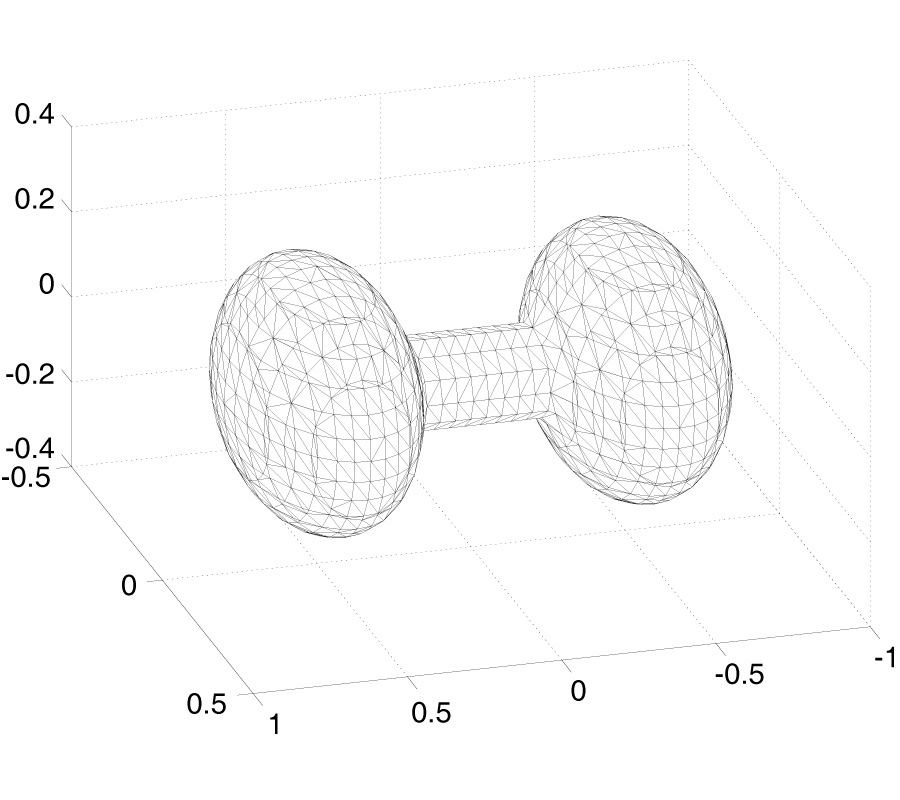
A 3D shape reconstruction algorithm for multiple PEC objects immersed in air is presented. The Hamilton-Jacobi PDE is solved in the entire computational domain with employing the marching cubes method to retrieve the evolving objects. The method of moment surface integral equation is used as the forward solver. An appropriate form of the deformation velocity, based on the forward and adjoint fields, is implemented to minimize the mismatch between the reference and evolving objects. The inversion algorithm showed good shape reconstruction results even using limited view data or noise corrupted data down to SNR of 5 dB.
INVERSE SCATTERING OF THREE-DIMENSIONAL PEC OBJECTS USING THE LEVEL-SET METHOD
2011-04-18
PIER Letters
Vol. 23, 65-74
Miniaturized Size Branch Line Coupler Using Open Stubs with High-Low Impedances
Mohamed Yasir Omer Elhiwairis , Sharul Kamal Bin Abd Rahim , Uche A. Kennedy Okonkwo , Noorlindawaty Bte Md Jizat and Mohd Faizal Bin Jamlos
In this paper a miniaturized branch-line coupler is proposed. The topology of the circuit is designed using novel design of T-model approach with open stubs with high-low impedances, which provides necessary bandwidth for WLAN band at 2.45GHz. The miniaturized branch-line coupler is designed and fabricated with a low-cost FR4 substrate as a platform in producing significantly reduction by more than 64.21% compared to the conventional coupler on inexpensive board. Furthermore, the coupler can equally divide the input signal with 90° phase of difference while maintaining the initial power from the source.
MINIATURIZED SIZE BRANCH LINE COUPLER USING OPEN STUBS WITH HIGH-LOW IMPEDANCES
2011-04-16
PIER
Vol. 116, 1-21
Four-Octave Six-Port Receiver and Its Calibration for Broadband Communications and Software Defined Radios
Cristina de la Morena-Álvarez-Palencia and Mateo Burgos-Garcia
This paper presents a software defined radio six-port receiver for a novel broadband mobile communications system. The prototype covers the frequency range from 0.3 GHz to 6 GHz, and operates with up to 100 MHz-wide channels. The multi-band and multi-mode demodulation capabilities of the six-port architecture have been experimentally demonstrated. The six-port receiver has been satisfactorily proved for high data rates (up to 93.75 Mb/s, limited by the available test instruments). An efficient six-port auto-calibration method suitable for large instantaneous bandwidth systems is presented and validated.
FOUR-OCTAVE SIX-PORT RECEIVER AND ITS CALIBRATION FOR BROADBAND COMMUNICATIONS AND SOFTWARE DEFINED RADIOS
2011-04-15
PIER B
Vol. 29, 311-338
Radar Cross Sections of Sea and Ground Clutter Estimated by Two Scale Model and Small Slope Approximation in HF-VHF Bands
Laurent Vaitilingom and Ali Khenchaf
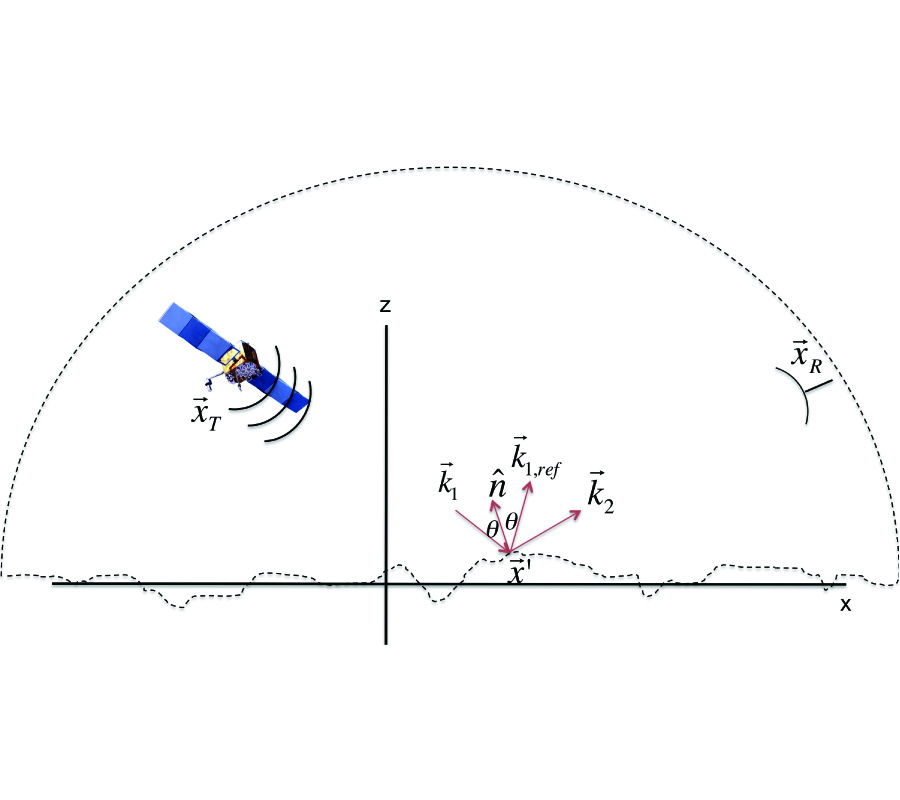
HF-VHF Radars are used in oceanography and sea surveys [1] because they can cover a larger distance than other radars. We can use this kind of radar in sea and ground environments. In these bands, phenomena associated with clutter [2] interfere with radar performance for ship and terrestrial vehicle detection. To improve radar performance, a measure called Radar Cross Section is calculated. We have studied Radar Cross Section in HF-VHF bands with the objective of determining the influence of sea and ground clutter. There are two categories of Radar Cross Section: exact methods [3] and approximate methods [4-8]. We have studied approximate methods because they are faster than exact methods. A common radar configuration is the bistatic configuration where transmitter and receiver are dissociated. The aim of this paper is to study Radar Cross Sections of clutter estimated by approximate models in HF-VHF bands in a bistatic configuration.
RADAR CROSS SECTIONS OF SEA AND GROUND CLUTTER ESTIMATED BY TWO SCALE MODEL AND SMALL SLOPE APPROXIMATION IN HF-VHF BANDS
2011-04-15
PIER M
Vol. 18, 55-72
Analytical Dispersion Characteristic of a Gap-Groove Waveguide
Alessia Polemi , Eva Rajo-Iglesias and Stefano Maci
A new type of waveguide based on the gap waveguide concept is here proposed and called gap-groove waveguide. Its design is based on the realization of a groove on a metal, facing an artificial surface which creates a high impedance surface (HIS) boundary condition. This condition is achieved here by employing a structure of closely packed metallic pins, known as bed of nails. The type of modes that can propagate in the gapgroove waveguide are similar to the ones of a standard waveguide but in this case there is no need of electrical connection. This is a potential advantage, especially when working at high frequencies. The dispersion characteristic of the gap-groove waveguide is derived by solving an eigenvalue problem, settled through a resonance condition at the interface between the groove and the bed of nails. The eigenvalues are associated with the modes propagating in the waveguide, and their dispersion characteristic is analyzed and compared with full wave simulations. A procedure to maximize the bandwidth is also provided, based on an appropriate choice of the geometrical parameters. Furthermore, the field distribution and the modal impedance of the fundamental mode are investigated.
ANALYTICAL DISPERSION CHARACTERISTIC OF A GAP-GROOVE WAVEGUIDE
2011-04-15
PIER
Vol. 115, 509-523
A Compact Microstrip Rat-Race Coupler with Modified Lange and T-Shaped Arms
Guo-Qing Liu , Lin-Sheng Wu and Wen-Yan Yin
A compact microstrip rat-race coupler is proposed with a new phase inverter which is realized by a modified Lange coupling structure with a slotted ground plane and a floating-potential conductor. Based on the evenand odd-mode theory, its parameters are generally synthesized. In order to further miniaturize the rat-race coupler, a T-shaped line is utilized. A prototype operating at 2.0 GHz is designed and fabricated for verification. The circumference of our proposed rat-race coupler is only 0.52λ. Its in-phase and out-of-phase bandwidths are also enhanced, with reasonable agreement obtained between its simulated and measured S-parameters.
A COMPACT MICROSTRIP RAT-RACE COUPLER WITH MODIFIED LANGE AND T-SHAPED ARMS
2011-04-15
PIER
Vol. 115, 495-507
Practicability Analysis and Application of PBG Structures on Cylindrical Conformal Microstrip Antenna and Array
Xin Wang , Min Zhang and Shu-Juan Wang
An antenna and an array with photonic bandgap (PBG) structures, which are cylindrical conformal microstrip antennas, both operating in X-band (10.2 GHz) are proposed. As shown in the simulation, PBG structures could suppress the surface wave propagating on substrate and balance the influence of cylindrical curvature at resonance frequency on antennas. The simulation results indicate that they have a higher gain and better directivity over the conventional antenna without PBG structure. Both of the antenna and the array are designed and manufactured, and the measurement results agree well with the simulations.
PRACTICABILITY ANALYSIS AND APPLICATION OF PBG STRUCTURES ON CYLINDRICAL CONFORMAL MICROSTRIP ANTENNA AND ARRAY
2011-04-15
PIER
Vol. 115, 477-493
Improved Dual Band-Notched UWB Slot Antenna with Controllable Notched Bandwidths
Chun-Mao Li and Liang-Hua Ye
A compact dual band-notched ultra-wideband slot antenna with sharp band-notched characteristics and controllable notched bandwidths is presented. The antenna is formed by a rectangular slot with chamfered corners on a printed circuit board ground plane, a T-shaped stub and two sets of compound band-notched structures. The compound band-notched structures are employed to generate desired lower and upper rejected bands with satisfactory skirt characteristics and sufficient rejection bandwidths. Moreover, the bandwidth of either the lower or upper rejected band can be independently adjusted by changing the size and location of the corresponding band-notched structure. Finally, an UWB slot antenna with two rejected bands at WiMAX/WLAN frequencies is successfully simulated, designed, and measured, showing good impedance matching, stable gain and near omnidirectional radiation patterns.
IMPROVED DUAL BAND-NOTCHED UWB SLOT ANTENNA WITH CONTROLLABLE NOTCHED BANDWIDTHS
2011-04-14
PIER Letters
Vol. 23, 57-63
Compact Dual-Band Bandpass Filter Using Improved Split Ring Resonators Based on Stepped Impedance Resonator
Liang Zhou , Shaobin Liu , Hai Feng Zhang , Xiang-Kun Kong and Ya-Nan Guo
In this letter, a compact planer dual-band bandpass filter(BPF) using novel split-ring resonators (SRRs) is proposed. Compared with conventional SRRs, the stepped impedance split ring resonator (SIR-SRR) has better performance on miniaturization. To verify good characteristics of the novel structure, a new resonator-embedded cross-coupled filter, constructed by a pair of new resonators, is designed. This new filter has good characteristics of compact size and high selectivity. The improved SRR unit cell has a size of 0.108λg×0.108λg (where λg is the guided wavelength) at central frequency (2.25 GHz) of upper passband. Simulated results show that two central frequencies of the filter locate at 1.90 and 2.25 GHz with 3-dB fractional bandwidths of 1.0% and 7.7%, respectively. The lower passband band is generated by inner resonator with a via hole to gound plane, while the upper passband is created by outer resonator. Moreover, a good out-band performance is shown in this letter. Its stop-bands are extended 0-1.85 GHz at lower band and 2.4-5.8 GHz at upper band with a rejection level of about 20-dB. The measured and simulated results are well complied with each other.
COMPACT DUAL-BAND BANDPASS FILTER USING IMPROVED SPLIT RING RESONATORS BASED ON STEPPED IMPEDANCE RESONATOR