Search Results(13802)

2011-05-18
PIER
Vol. 116, 517-532
Design of Different Selectivity Dual-Mode Filters with E-Shaped Resonator
Chao Lei Wei , Bao-Fu Jia , Zhao-Jun Zhu and Ming-Chun Tang
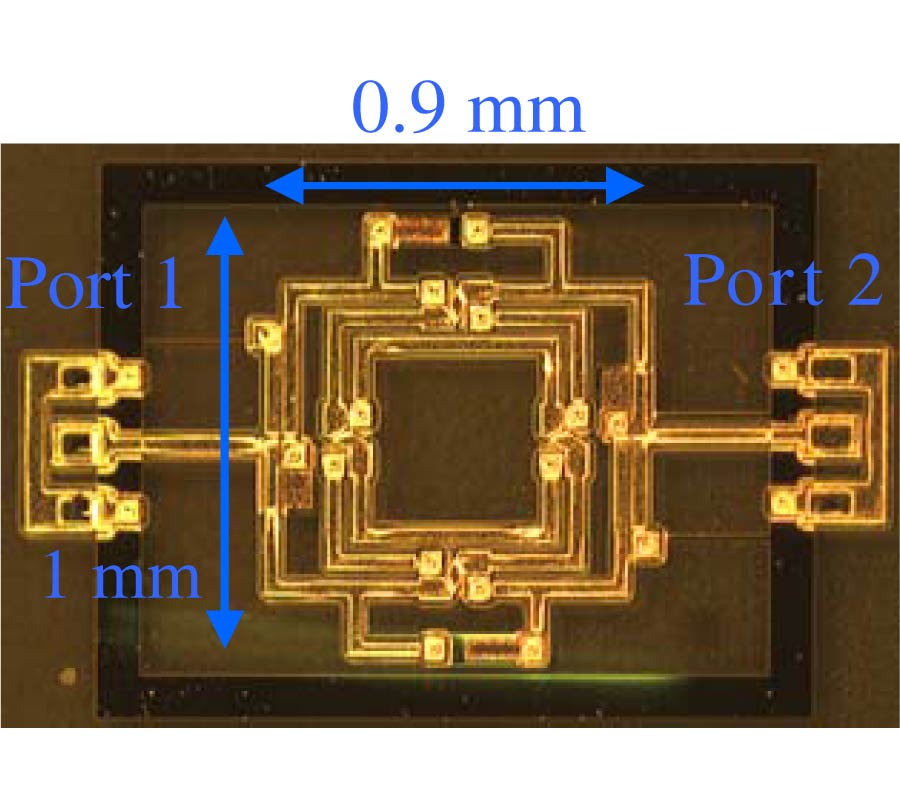
A novel bandpass filter design method of achieving different selectivity based on E-shaped dual-mode resonator is presented. The characteristic of the E-shaped dual-mode resonator is investigated. The technique of utilizing capacitive and inductive input-output cross-coupling to generate two adjustable transmission zeros at stopband is explored intensively. Advantages of this type of filter are not only its dual-mode resonator and miniaturization, but also its controllable transmission zeros. The coupling scheme is presented to model the operations of these filters. Four dual-mode microstrip BPFs have been designed, fabricated, and measured. Both the simulated and measured results are presented. The exemplary filters verify the feasibility of the new design method.
DESIGN OF DIFFERENT SELECTIVITY DUAL-MODE FILTERS WITH E-SHAPED RESONATOR
2011-05-17
PIER B
Vol. 30, 279-292
Numerical Investigation into the Design of Shaped Dielectric Lens Antennas with Improved Angular Characteristics
Artem Boriskin and Ronan Sauleau
The feasibility of designing a compact-size beam-switching dielectric lens antenna (DLA) with improved angular (scanning) characteristics is investigated numerically using inhouse software based on the Muller boundary integral equations and hybrid genetic algorithm. It is demonstrated that joint optimization of the lens shape and feeding array parameters enables one to minimize the directivity degradation for off-axis feeds which is a well-known drawback of conventional extended hemielliptic DLAs fed by focal arrays. The key to success is found in proper shaping the lens profile and using arrays of non-identical feeds.
NUMERICAL INVESTIGATION INTO THE DESIGN OF SHAPED DIELECTRIC LENS ANTENNAS WITH IMPROVED ANGULAR CHARACTERISTICS
2011-05-17
PIER C
Vol. 21, 205-215
Planar W-Band Mixer with a Novel IF-Block
Ming Zhou Zhan , Quansheng Xu , Wei Zhao , Yong Zhang , Rui-Min Xu and Weigan Lin
A planar W-band single balanced mixer is designed and measured in this paper. This mixer is realized by using two novel IF-block, a rat-race ring with the fifth port, two beamlead GaAs Schottky diodes and two RF chokes. The novel IF-block which designed the first time in W-band is employed to provide reflection points for IF signal and to provide low loss path in wide bandwidth for the RF and LO signals. To our knowledge, the mixer shows the best conversion loss at 95\,GHz and the highest 1\,dB power compression (P-1dB) point among the W-band planar hybrid microwave integrated circuit (HMIC) mixers.
PLANAR W-BAND MIXER WITH A NOVEL IF-BLOCK
2011-05-17
PIER M
Vol. 18, 119-130
Three Dimensional Electromagnetic Concentrators with Homogeneous Material Parameters
Tinghua Li , Ming Huang , Jingjing Yang , Shujuan Mu and Yaozhong Lan
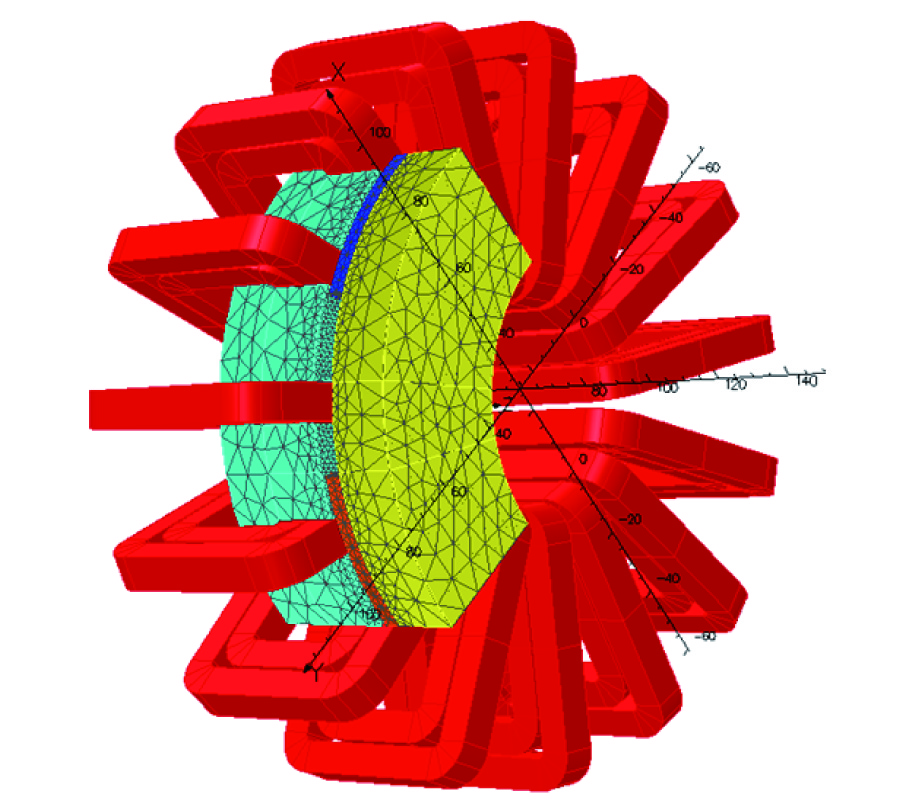
By means of a three-step linear optical transformation method, material parameters of a three-dimensional diamond-shaped electromagnetic concentrator composed of tetrahedral homogeneous blocks has been derived in this paper. The performance of the concentrator has been confirmed by full-wave simulation. The designed concentrator can operate in a wide bandwidth due to the line transformation. It represents an important progress towards the practical realization of the metamaterial-assisted concentrator.
THREE DIMENSIONAL ELECTROMAGNETIC CONCENTRATORS WITH HOMOGENEOUS MATERIAL PARAMETERS
2011-05-17
PIER
Vol. 116, 475-515
Application of the Newton Method to Improve the Accuracy of Toa Estimation with the Beamforming Algorithm and the MUSIC Algorithm
Joon-Ho Lee , Yeong-Seok Jeong , Sung-Woo Cho , Woon-Young Yeo and Kristofer S. J. Pister
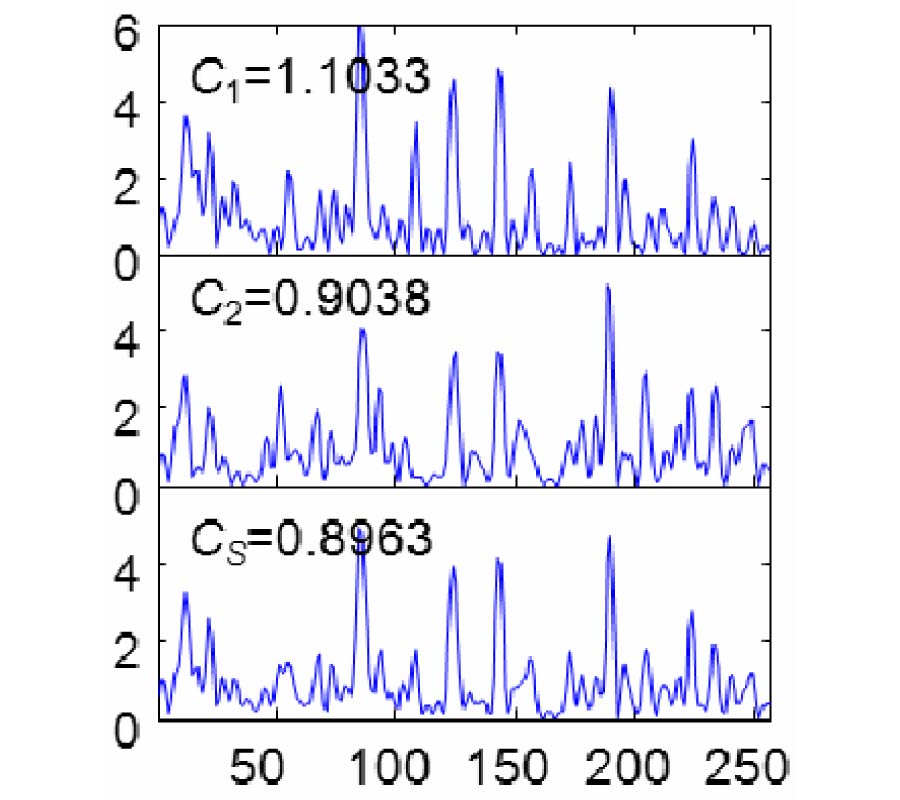
In this paper, a numerical method for improving the performance of the beamforming algorithm and the MUSIC algorithm for TOA (Time-of-Arrival) estimation is presented. It has been shown that the conventional beamforming algorithm and the MUSIC algorithm can be used for time delay estimation. Using the beamforming algorithm and the MUSIC algorithm for TOA estimation, the initial estimate for the TOA is obtained. To improve the accuracy of the TOA estimation, we apply the Newton iteration to the initial estimate. The initial estimates obtained from the beamforming algorithm and the MUSIC algorithm are updated to obtain the final estimates which are more accurate than the initial estimates in terms of the RMSE (Root Mean Square Error). To find the TOA which maximizes the beamforming spectrum or the MUSIC spectrum, we find the TOA at which the derivative of the beamforming spectrum with respect to the delay is zero. To find numerically the TOA at which the derivative of the beamforming spectrum or the MUSIC spectrum is zero, the Newton iteration is adopted. In numerical results, the validity of the proposed scheme is illustrated using various examples.
APPLICATION OF THE NEWTON METHOD TO IMPROVE THE ACCURACY OF TOA ESTIMATION WITH THE BEAMFORMING ALGORITHM AND THE MUSIC ALGORITHM
2011-05-17
PIER
Vol. 116, 457-473
CUDA Implementation in the EM Scattering of a Three-Layer Canopy
Wang-Qiang Jiang , Min Zhang , Hui Chen and Yong-Ge Lu
Calculating the EM scattering fields from a three-layer canopy which comprises of many leaves, trunks and the ground needs intensive computational burden, when the area becomes large and obviously lames the application of the traditional serial algorithm. With the development of graphics hardware, the Graphics Processing Unit (GPU) can be used to calculate the electromagnetic (EM) scattering problems parallelly. In this paper, the Compute Unified Device Architecture (CUDA) is combined with the four-path method and the reciprocity theorem to predict the EM scattering properties from scatterers which are sampled by using Monte-Carlo method in a three-layer canopy model. We get a highest speedup of 294 times in comparison with the original serial algorithm on a Core (TM) i5 CPU with a GTS460 GPU as a coprocessor.
CUDA IMPLEMENTATION IN THE EM SCATTERING OF A THREE-LAYER CANOPY
2011-05-16
PIER B
Vol. 30, 255-277
A Low-Cost Phased Array Antenna Integrated with Phase Shifters Cofabricated on the Laminate
Poonam Goel and Kalarickaparambil Vinoy
This paper presents the design, development and experimental characterization of a monolithic phased array antenna integrated on a microwave laminate. A four-element linear antenna array is realized by cofabricating the corporate feed network, microstrip-CPW transitions, DC blocks, and mesoscale phase shifters on the same substrate. The phase shifters used here are electrostatically actuated and their operation is similar to that of the distributed MEMS transmission line phase shifters. Various components of the array are designed and are individually evaluated before fabricating together. The measured radiation pattern characteristics for this array shows a scan angle of 10° in the X-band. All fabrication processes employed here can be performed at a good printed circuit manufacturing facility. This simple approach of cofabricating various components can be readily extended for large phased arrays required in radar and space communication applications.
A LOW-COST PHASED ARRAY ANTENNA INTEGRATED WITH PHASE SHIFTERS COFABRICATED ON THE LAMINATE
2011-05-16
PIER
Vol. 116, 441-456
Implementation of the FDTD Method Based on Lorentz-Drude Dispersive Model on GPU for Plasmonics Applications
Kim Huat Lee , Iftikhar Ahmed , Rick Siow Mong Goh , Eng Huat Khoo , Er Ping Li and Terence Gih Guang Hung
We present a three-dimensional finite difference time domain (FDTD) method on graphics processing unit (GPU) for plasmonics applications. For the simulation of plasmonics devices, the Lorentz-Drude (LD) dispersive model is incorporated into Maxwell equations, while the auxiliary differential equation (ADE) technique is applied to the LD model. Our numerical experiments based on typical domain sizes as well as plasmonics environment demonstrate that our implementation of the FDTD method on GPU offers significant speed up as compared to the traditional CPU implementations.
IMPLEMENTATION OF THE FDTD METHOD BASED ON LORENTZ-DRUDE DISPERSIVE MODEL ON GPU FOR PLASMONICS APPLICATIONS
2011-05-16
PIER
Vol. 116, 425-439
Efficient Analysis of Scattering from Multiple 3-D Cavities by Means of a FE-BI-DDM Method
Zhiwei Cui , Yiping Han , Chang You Li and Wenjuan Zhao
A finite element-boundary integral-domain decomposition method is presented for analyzing electromagnetic scattering problems involving multiple three-dimensional cavities. Specifically, the edge-based finite element method is applied inside each cavity to derive a linear system of equations associated with unknown fields. The boundary integral equation is then applied on the apertures of all the cavities to truncate the computational domain and to connect the matrix subsystem generated from each cavity. With the help of an iterative domain decomposition method, the coupling system of equations is reduced to a small one which only includes the unknowns on the apertures. To further reduce computational burdens, the multilevel fast multipole algorithm is adopted to solve the reduced system. The numerical results for the near and far fields of several selected multi-cavity problems are presented to demonstrate the validity and capability of the proposed method.
EFFICIENT ANALYSIS OF SCATTERING FROM MULTIPLE 3-D CAVITIES BY MEANS OF A FE-BI-DDM METHOD
2011-05-16
PIER
Vol. 116, 409-423
Dispersion and Losses in Surface Waveguides Containing Double Negative or Chiral Metamaterials
João R. Canto , Carlos Paiva and Afonso Barbosa
In this article the influence of both dispersion and losses on waveguides with metamaterials is investigated. The analysis is focused on surface waveguides (planar interfaces and grounded slabs) containing either double-negative (DNG) or chiral metamaterials. The main goal is to show how the combined effect of material dispersion and losses with the structural dispersion affect the solutions of the modal equations. It is shown that this interplay is essential to obtain a correct modal analysis of these waveguides. Namely, the overall behavior can qualitatively change - so that it is not possible to state that the corresponding lossy case - even when a very small amount of losses is introduced - can be interpreted as a small perturbation of the lossless case.
DISPERSION AND LOSSES IN SURFACE WAVEGUIDES CONTAINING DOUBLE NEGATIVE OR CHIRAL METAMATERIALS
2011-05-13
PIER B
Vol. 30, 239-253
Comparison Between Two Phase-Retrieval Methods for Electromagnetic Source Modeling
Markus Johansson , Andreas Fhager , Hoi-Shun Lui and Mikael Persson
Phase-retrieval from measured phaseless field data is of interest for various applications including electromagnetic dosimetry, electromagnetic compatibility investigations, near-field to far-field transformations and antenna diagnostics. In this study two phaseretrieval methods are compared. The first method, the adjoint field method, employs a gradient-based optimization algorithm based on the adjoint fields. The second method, the phase angle gradient method, uses an optimization algorithm based on the phase angle gradients of a functional. The methods are tested with numerical test cases and the phase angle gradient method is found to retrieve the phase with the best accuracy. Moreover it gives results that agree well with correct phase.
COMPARISON BETWEEN TWO PHASE-RETRIEVAL METHODS FOR ELECTROMAGNETIC SOURCE MODELING
2011-05-12
PIER Letters
Vol. 24, 9-16
Modified Broadband Schiffman Phase Shifter Using Dentate Microstrip and Patterned Ground Plane
Zheng Zhang , Yong-Chang Jiao , Shun-Feng Cao , Xiao-Ming Wang and Fu-Shun Zhang
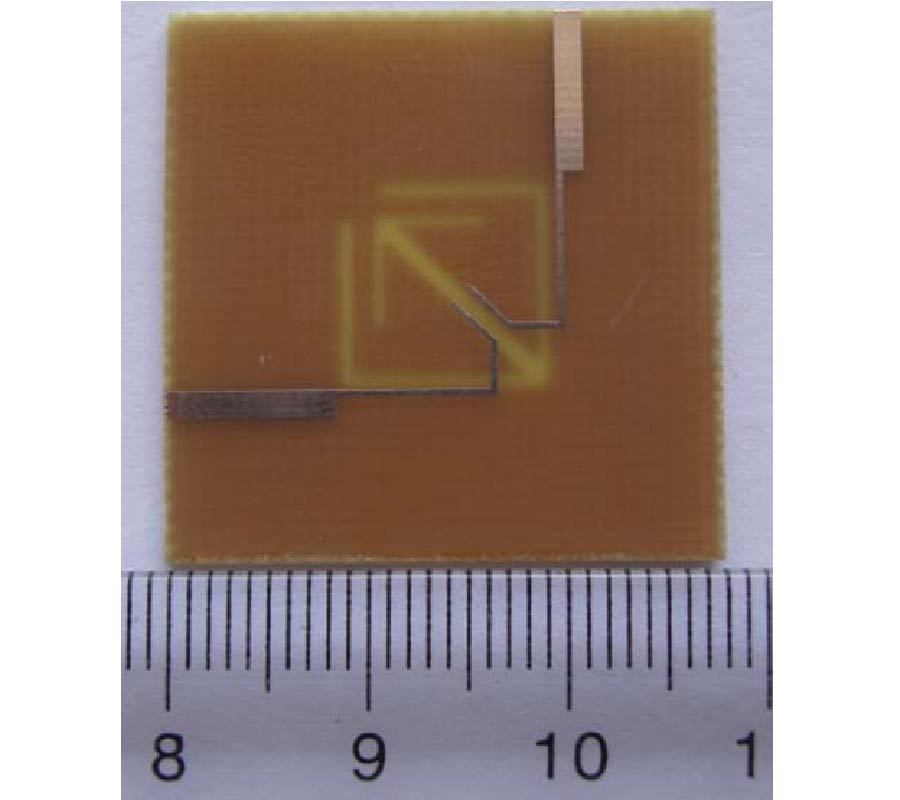
In this letter, a modified broadband 90° phase shifter is proposed. By using a dentate microstrip and a patterned ground plane, an extremely tight coupling can be obtained, and consequently a constant phase shift over a wide bandwidth can be achieved. To verify the proposed idea, a topology is implemented, the measured results of a phase difference of 90 ± 5° in 79.5% bandwidth, better than 10 dB return loss across the whole operating band, are also given. The measurement results agree well with the full-wave electromagnetic simulated responses.
MODIFIED BROADBAND SCHIFFMAN PHASE SHIFTER USING DENTATE MICROSTRIP AND PATTERNED GROUND PLANE
2011-05-12
PIER Letters
Vol. 24, 1-8
Frequency Tunable Antenna for Digital Video Broadcasting Hand-Held Application
Mohamed Abdallah , Franck Colombel , G. Le Ray and Mohamed Himdi
In this paper, we present a frequency tunable antenna suitable for Digital Video Broadcasting Handheld applications. Due to the narrow operating frequency band of the antenna derived from a monopole coupled loop antenna, a tuning system has been proposed to sweep the narrow band on a large frequency range in order to cover the DVB-H frequency bandwidth [470-702] MHz. We provide results of this antenna mounted on a circuit board simulating a terminal handset.
FREQUENCY TUNABLE ANTENNA FOR DIGITAL VIDEO BROADCASTING HAND-HELD APPLICATION
2011-05-12
PIER Letters
Vol. 23, 181-189
Compact UWB Antenna with Dual Band-Notched Characteristics
Feng-Chao Ren , Fu-Shun Zhang , Bo Chen , Gang Zhao and Fan Zhang
A compact ultrawideband (UWB) antenna with 3.5/5.2GHz band-notched characteristics is proposed. The proposed antenna is composed of a half elliptic annulus radiation element fed by microstrip line and a step-shaped ground plane with truncated corners. By inserting closed-looped resonating structure onto the radiation patch and connecting open-looped resonator on the back side with patch via metallic hole, the dual notched frequency bands are achieved. The numerical and experimental results exhibit a wide impedance bandwidth ranging from 3.08 to 11GHz with the dual notched bands around 3.5 and 5.2GHz. Additionally, nearly omni-directional radiation patterns, moderate gain, and small group delay variation are also obtained.
COMPACT UWB ANTENNA WITH DUAL BAND-NOTCHED CHARACTERISTICS
2011-05-12
PIER C
Vol. 21, 191-203
Combining Different in-Plane Photonic Wire Lasers and Coupling the Resulting Field into a Single-Mode Waveguide
Md. Rezaur Raihan , Ziyuan Li , Danyu Liu , Haroldo Hattori and Malin Premaratne
Photonic wire lasers are compact light sources that are fabricated in high-index contrast waveguides (with typical widths of a few hundreds of nanometers). Because of their small footprints, they may become a basic laser component in future-generation of optical integrated circuits. Owing to having low optical volume by design, photonic wire lasers can only produce low output power that may not be adequate in many applications. A solution to this problem is to coherently combine the output power of different photonic wire lasers to produce larger output power. In this article, we analyze different ways to combine light coming out from photonic wire lasers and couple the combined power into a single-mode waveguide.
COMBINING DIFFERENT IN-PLANE PHOTONIC WIRE LASERS AND COUPLING THE RESULTING FIELD INTO A SINGLE-MODE WAVEGUIDE
2011-05-12
PIER M
Vol. 18, 103-117
Radiated EM Fields from a Rotating Current-Carrying Circular Cylinder: 2-Dimensional Numerical Simulation
Mingtsu Ho , Fu-Shun Lai , Yao-Han Chen and Wen-Chiang Lin
The radiated electromagnetic (EM) fields from a rotating current-carrying circular cylinder were numerically simulated in two dimensions using the method of characteristics (MOC), and the numerical results were presented in this paper. To overcome the difficulty of the grid cell distortion caused by the rotating cylinder, the passing center swing back grids (PCSBG) technique is employed in collaboration of MOC in a modified O-type grid system. In order to have clear demonstration of radiated EM fields, the circular cylinder is set to be evenly divided in radial direction into an even number of slices that are made of perfect electric conductor (PEC) and non electric non magnetic material, alternatively. The surface current is assumed to have a Gaussian profile and to flow uniformly along the axial direction on the PEC surface. The radiated electric and magnetic fields around the cylinder were recorded as functions of time and reported along with the corresponding spectra which were obtained through proper Fourier transformation. Several field distributions over the whole computational space are also given.
RADIATED EM FIELDS FROM A ROTATING CURRENT-CARRYING CIRCULAR CYLINDER: 2-DIMENSIONAL NUMERICAL SIMULATION
2011-05-12
PIER
Vol. 116, 395-408
Design and Simulation of L-Shaped Chiral Negative Refractive Index Structure
Jie Li , Fang-Qing Yang and Jian-Feng Dong
A new L-shaped chiral structure working in microwave and optical frequency bands has been designed and simulated. The circular dichroism, ellipticity angle, polarization azimuth rotation angle, and effective parameters of this structure, including relative permittivity, relative permeability, chiral parameter and refractive index, are retrieved from simulated transmission and reflection spectra. The results show that the exceptionally strong optical activity is found for the L-shaped chiral structure. Because of the large chiral parameter of this structure, negative refractive index of one circularly polarized wave can be obtained without simultaneously negative permittivity and negative permeability.
DESIGN AND SIMULATION OF L-SHAPED CHIRAL NEGATIVE REFRACTIVE INDEX STRUCTURE
2011-05-11
PIER B
Vol. 30, 223-238
A Circuit Approach for the Electromagnetic Analysis of Inhomogeneous Cylindrical Structures
Jose Antonio Marinho Brandao Faria
An equivalent circuit, made of the chain connection of a number of T-type twoport networks, is proposed for the very accurate representation of the frequency-domain behavior of radially inhomogeneous solitary cylindrical structures, the individual two-port networks being made of frequency-independent R, L and C lumped elements. The accuracy of the model is dictated by the number of two-port networks, a number that increases with the frequency. The equivalent circuit approach is validated with the help of an application example concerning a special type of inhomogeneous tubular structures where exact closedform field solutions do exist.
A CIRCUIT APPROACH FOR THE ELECTROMAGNETIC ANALYSIS OF INHOMOGENEOUS CYLINDRICAL STRUCTURES
2011-05-11
PIER B
Vol. 30, 201-222
Diurnal and Seasonal Variation of Surface Refractivity Over Nigeria
Benjamin Gbenro Ayantunji , P. N. Okeke and J. O. Urama
The diurnal and seasonal variation of surface refractivity over Nigeria was studied using four years in-situ meteorological data from eight location over Nigeria. At all the stations studied, it was observed that the diurnal refractivity variation was caused majorly by the dry term in the rainy season and the wet term is the major cause of refractivity variation in dry season except Sokoto and Jos. In Sokoto the result was found to be opposite and it is attributed to the fact that in dry season the humidity is almost close to zero while in rainy season the pressure seems to be almost constant but the temperature fluctuates rapidly and consequently the humidity. The variation pattern in Jos is as observed because of the altitude (~1000 m above sea level). At this altitude pressure variation seems to be insignificant. The result also show that the surface refractivity generally have higher value during rainy season than dry season at all location studied. The result also show that the value of surface refractivity increases from arid region in the north to the coastal area in south. The result also show that the diurnal refractivity variation is basically a function of local meteorology and while seasonal variation is caused follows the climatic condition.
DIURNAL AND SEASONAL VARIATION OF SURFACE REFRACTIVITY OVER NIGERIA
2011-05-11
PIER
Vol. 116, 381-393
A Novel Strategy for Topside Ionosphere Sounder Based on Spaceborne MIMO Radar with Fdcd
Jie Chen , Zhuo Li and Chun-Sheng Li
A novel strategy for topside ionosphere sounder based on spaceborne Multiple-Input Multiple-Output (MIMO) radar is proposed, which takes advantage of frequency division and code division (FDCD) as a substitution for swept-frequency regime employed by the current ionosphere explorers, e.g., TOPside Automated Sounder (TOPAS). The azimuth resolution can be improved by 153 times compared with TOPAS by means of frequency division, producing two-dimensional electron density images. The signal-to-noise ratio (SNR) can be enhanced and complete orthogonality among channels at different frequencies can be achieved by code division, which uses Complete Complementary Sequence (CC-S) as phase coding waveform. The simulation results show that root mean square (RMS) of normalized electron density measurements error of novel ionosphere sounder is as low as 1.7%.
A NOVEL STRATEGY FOR TOPSIDE IONOSPHERE SOUNDER BASED ON SPACEBORNE MIMO RADAR WITH FDCD