Search Results(13802)

2011-05-27
PIER M
Vol. 18, 143-157
A Hybrid Higher Order FDTD Scheme for Modeling Radar Cross Section of Electrically Large Targets
Xia Ai , Yiping Han , Zhuyang Chen and Xiao-Wei Shi
This paper proposes a hybrid higher order finite difference time domain (FDTD) scheme that combines the classical FDTD scheme and the higher order FDTD scheme with second order accuracy in time and fourth order accuracy in space for analyzing the three-dimensional electrically large scattering problems. The classical FDTD stencils were used as buffers in the scattered field region to make the higher order FDTD stencils not intrude inside the absorbing boundary condition's regions. The superior performance of the hybrid higher order FDTD scheme has been compared with the classical FDTD one. Numerical results demonstrate that the proposed scheme would improve the accuracy and save the computer resources significantly compared to the classical FDTD scheme involved in the radar cross section (RCS) calculation. The obtained computational efficiency allows this proposed scheme to model the RCS of electrically large targets using the number of higher order FDTD cells which are much less than that of the classical FDTD cells required by three-dimensional FDTD scheme.
A HYBRID HIGHER ORDER FDTD SCHEME FOR MODELING RADAR CROSS SECTION OF ELECTRICALLY LARGE TARGETS
2011-05-27
PIER
Vol. 117, 51-65
The Effects of Compression on Ultra Wideband Radar Signals
Brian McGinley , Martin O'Halloran , Raquel Cruz Conceicao , Garry Higgins , Edward Jones and Martin Glavin
Over the past ten years, Ultra Wideband (UWB) Radar has been widely investigated as a biomedical imaging modality, used to detect early-stage breast cancer and to continuously monitor vital signs using both wearable and contactless devices. The advantages of the technology in terms of low-power requirements and non-ionising radiation are well recognised, with the technology being applied to a range of non-invasive medical applications, from respiration to heart monitoring. Across all these applications, there is a strong necessity to efficiently manage the large quantities of UWB data which will be captured. For wearable devices in particular, the efficient compression of UWB data allows the monitoring system to conserve limited resources such as memory and battery capacity, by reducing data storage and in some cases transmission requirements. In contrast to lossless compression techniques, lossy compression algorithms can achieve higher compression ratios and consequently greater power savings, at the expense of a marginal degradation of the reconstructed signal. This paper compares the lossy JPEG2000 and Set Partitioning In Hierarchical Trees (SPIHT) algorithms for UWB signal compression. This study examines the effects of lossy signal compression on an UWB breast cancer classification algorithm. This particular application was chosen because the classification algorithm relies heavily on shape and surface texture detail embedded in the Radar Target Signature (RTS) of the tumour, and therefore will provide both a robust and easily quantifiable test platform for the compression algorithms. The study will evaluate the performance of the classification algorithm as a function of Compression Ratio (CR) and Percentage Root-mean-square Difference (PRD) between the original and reconstructed UWB signals.
THE EFFECTS OF COMPRESSION ON ULTRA WIDEBAND RADAR SIGNALS
2011-05-25
PIER
Vol. 117, 35-50
A Holly-Leaf-Shaped Monopole Antenna with Low RCS for UWB Application
Hai-Yang Xu , Hou Zhang , Ke Lu and Xian-Feng Zeng
As to low observable platform, one of the major contributing sources of target RCS is the scattering due to onboard antennas. So the research on RCS reduction of the antenna is important. In this paper, a holly-leaf-shaped monopole antenna with low RCS is designed. A square notch is etched to improve impedance matching and expand the bandwidth in the ground. The measured -10 dB bandwidth is from 2.1 to 15.4 GHz (only a little higher than -10 dB around 7.5 GHz). The radiation patterns retain symmetry and are relatively stable at 2.5, 8 and 11 GHz. The monostatic RCS performance in four different incident cases is studied to obtain some helpful conclusions for the RCS reduction of the UWB antenna. The RCS achieves effective reduction in comparison with that of the reference antenna. The largest reduction is 4.1, 19.8, 3.9dBsm in three different incident cases, respectively, while the largest loss of gain is only about -1.3 dB. The antenna suits the occasion of desiring UWB antenna with low RCS.
A HOLLY-LEAF-SHAPED MONOPOLE ANTENNA WITH LOW RCS FOR UWB APPLICATION
2011-05-25
PIER
Vol. 117, 19-33
Iterative Time-Reversal Mirror Method for Imaging the Buried Object Beneath Rough Ground Surface
Xiaozhang Zhu , Zhiqin Zhao , Wei Yang , Yin Zhang , Zai-Ping Nie and Qing Huo Liu
An iterative Time-Reversal Mirror (TRM) method is proposed to Detect and Image the buried target beneath ground surface. Unlike the conventional TRM methods which treat the information of the ground as clutters and directly delete them, the iterative TRM imaging method proposed in this paper utilizes the information of rough ground surface as a useful knowledge. The new approach is consisted of two TRM procedures. In the first TRM procedure, it aims to image the rough surface where the propagation environment for electromagnetic wave is free space. The second TRM procedure aims to image the buried target. In this step, the information of the rough surface estimated by the first TRM procedure will be treated as newly updated propagation environment. Then conventional TRM is applied to image the buried target. By applying this iterative TRM method, the information of the rough ground can be well considered in the whole TRM procedure. Numerical simulations prove that this method performs significantly better image contrast comparing with the results obtained by using conventional TRM. 4-5 dB improvement on the imaging SNR has been achieved. Furthermore, the target can be located more accurately.
ITERATIVE TIME-REVERSAL MIRROR METHOD FOR IMAGING THE BURIED OBJECT BENEATH ROUGH GROUND SURFACE
2011-05-25
PIER
Vol. 117, 1-18
A Late-Time Analysis Procedure for Extracting Weak Resonances. Application to the Schumann Resonances Obtained with the TLM Method
Juan Antonio Morente , Enrique A. Navarro , Jorge Andres Porti , Alfonso Salinas , Juan A. Morente-Molinera , Sergio Toledo-Redondo , Williams J. O'Connor , Bruno P. Besser , Herbert I. M. Lichtenegger , Jesús F. Fornieles and Antonio Méndez
The sequence of Schumann resonances is unique for each celestial body with an ionosphere, since these resonances are determined by the dimensions of the planet/satellite and the corresponding atmospheric conductivity profile. Detecting these frequencies in an atmosphere is a clear proof of electrical activity, since it implies the existence of an electromagnetic energy source, which is essential for their creation and maintenance. In this paper, an analysis procedure for extracting weak resonances from the responses of electromagnetic systems excited by electric discharges is shown. The procedure, based on analysis of the late-time system response, is first checked using an analytical function and later applied to the vertical electric field generated by the computational simulation of Earth's atmosphere using the TLM (Transmission Line Matrix) method in order to extract the weak Schumann resonances contained in this electric field component.
A LATE-TIME ANALYSIS PROCEDURE FOR EXTRACTING WEAK RESONANCES. APPLICATION TO THE SCHUMANN RESONANCES OBTAINED WITH THE TLM METHOD
2011-05-24
PIER B
Vol. 31, 1-14
Optical Performances of Lensless Sub-2micron Pixel for Application in Image Sensors
Rino Marinelli and Elia Palange
In this paper we will report on the optical performances of submicron planar lensless pixels arranged in the 2 x 2 Bayer cell configuration, the basic element of CMOS colour image sensors. The 2D microlens array placed in front of each pixel in commercial devices has been replaced by a 2D array of submicron holes realised on a thin metal film. Each pixel has been designed to present a lightpipe inside its structure acting as an optical waveguide that confines the light up to photodiode surface. This pixel design is fully compatible with large scale industry production since its fabrication involves only standard lithographic and etching procedures. Simulations of the light propagation inside the lensless pixel has been performed by using full 3D electromagnetic analysis. In this way it was possible to determine the optical performances of the Bayer cell in terms of the normalized optical efficiency and crosstalk effects between adjacent pixels that result to be up to 30% and a factor 10, respectively, better than those ones obtained for the microlens counterpart. The significant increase of the achievable values of the normalized optical efficiency and crosstalk can foresee the possibility to reduce the pixel size down to 1 μm, i.e., beyond the limit imposed by the diffraction effects arising in microlens equipped pixel.
OPTICAL PERFORMANCES OF LENSLESS SUB-2MICRON PIXEL FOR APPLICATION IN IMAGE SENSORS
2011-05-24
PIER B
Vol. 30, 371-387
Using Correlation Maps in a Wide-Band Microwave GPR
Andrea Di Donato , Marcello Farina , Antonio Morini , Giuseppe Venanzoni , Davide Mencarelli , Mauro Candeloro and Marco Farina
This paper describes the use of the correlation maps in the Ground Penetrating Radar (GPR) for the detection of near surface objects. This method is based on the definition of bi-dimensional maps that describe the level and the nature of coherence between the received electromagnetic signals. The technique proposed provides the detection of objects, reducing the impact of the clutter and improving the image contrast by an appropriate combination of the information collected in the variance and time coherence of the received signals. The method has been tested in GPR developed by ourselves and described in detail. The implemented GPR system features a high dynamic vector network analyzer (VNA) and a mechanically scanned Vivaldi antenna; the scanning is bi-dimensional, so that A, B and C scans are available.
USING CORRELATION MAPS IN A WIDE-BAND MICROWAVE GPR
2011-05-24
PIER Letters
Vol. 24, 43-50
A High Selectivity Quadruple-Mode BPF with Two Short-Circuited Stub-Loaded SIRs
Liang Zhou , Shaobin Liu , Ya-Nan Guo , Xiang-Kun Kong and Hai Feng Zhang
In this paper, a high selectivity quadruple-mode bandpass filter (BPF) with source-load coupling is proposed. This filter uses two short-circuited stubloaded stepped-impedance resonators (SIRs) which have the same type but different size. Two SIRs can generate four operating modes, which can be approximately adjusted individually. Owing to the special design of the filter, the coupling of two resonators is weak. In each resonator, the even-mode frequency can be flexibly controlled by changing the length of the short stub, whereas the odd-mode one remains stationary. Due to the source-load coupling, two transmission zeros are close to the cut-off frequencies of the passband, which leads to high selectivity. Simulated results show that central frequency is 2.27 GHz with 3-dB fractional bandwidth of 22.9%. The measured and simulated results are well complied with each other.
A HIGH SELECTIVITY QUADRUPLE-MODE BPF WITH TWO SHORT-CIRCUITED STUB-LOADED SIRS
2011-05-24
PIER Letters
Vol. 24, 35-42
A Novel Compact Ultra-Wideband Bandpass Filter with Simultaneous Narrow Notched Band and Out-of-Band Performance Improvement
Jian Zhong Chen , Guo-Chun Wu and Chang-Hong Liang
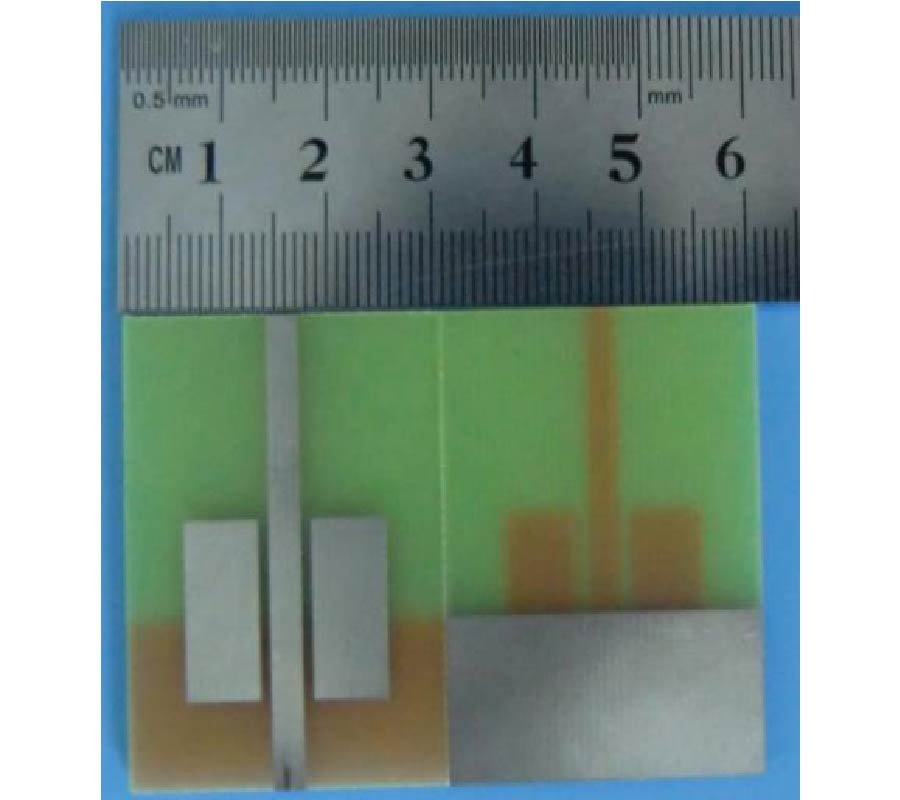
A compact ultra-wideband (UWB) bandpass filter (BPF) with simultaneous narrow notched band and out-of-band performance improvement is presented. The UWB BPF is built up using the hybrid microstrip and coplanar waveguide (CPW) structure. By employing split-ring resonator (SRR) defected on the lower plane, the narrow notched band was introduced. The center and bandwidth of the notched band can be controlled by adjusting the length and width of the SRRs. A novel cross-shape patch is constructed to implement transmission zeros in the upper out-of-band so as to suppress the spurious passband. The measured results show that insertion loss is less than 1.7 dB, the return loss is more than 13 dB and the variation of group delay is less than 0.2 ns. Furthermore, the width of narrow notched band is about 0.15 GHz and the attenuation is more than 18 dB at the center frequency of 5.76 GHz. The upper stopband is up to 15.2 GHz with rejection greater than 20 dB.
A NOVEL COMPACT ULTRA-WIDEBAND BANDPASS FILTER WITH SIMULTANEOUS NARROW NOTCHED BAND AND OUT-OF-BAND PERFORMANCE IMPROVEMENT
2011-05-24
PIER C
Vol. 21, 229-241
A Dual-Band CPW-Fed L-Slot Antenna with Both Linear and Circular Polarizations
Chien-Jen Wang , Yun-Jui Lee and Kun-Chou Lee
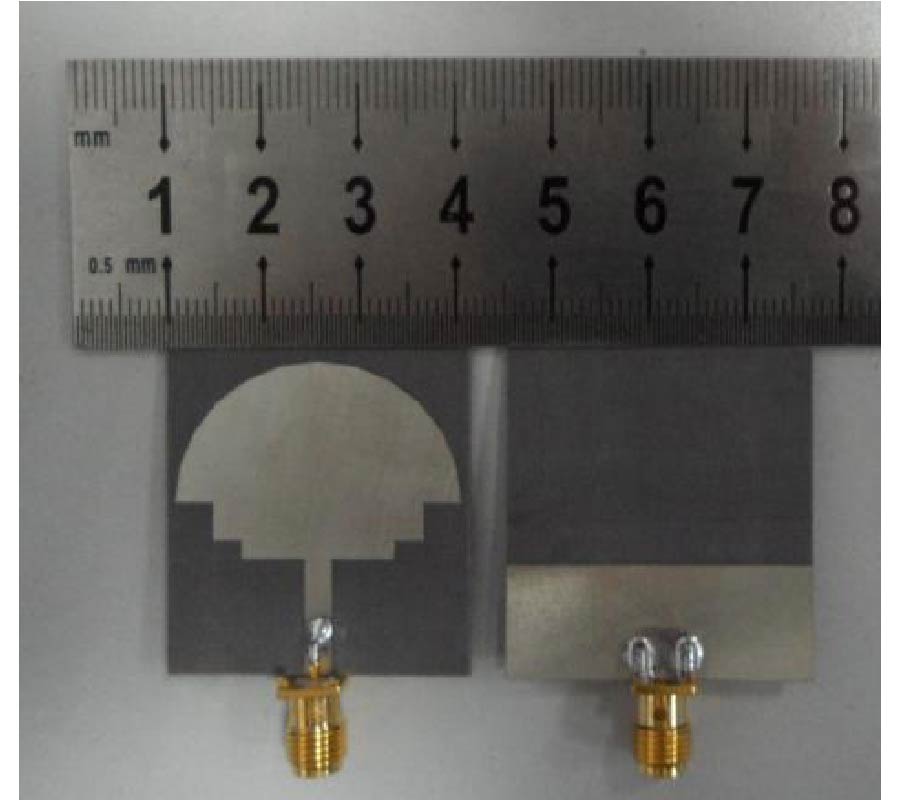
A design procedure for a dual-band CPW-fed linearly and circularly polarized (CP) antenna based on the L-shaped slot antenna is presented in this paper. The slot antenna and the feeding structure are fabricated on the same plane of the substrate so that circuit processes and position alignment can be simplified. By shortening the length of one arm of the L-slot, an additional mode with two orthogonal electrical fields with a phase difference of 90 degree is excited, so that the circularly polarized wave can also be excited. The enhancement of the resonant bandwidth is achieved by utilizing a stub-protruded feedline, adding one finger slit at the other arm slot, and tuning the dimension of the ground plane. A bandwidth of 22.0% (2.23-2.78 GHz) is achieved with an axial ratio < 3 dB for the optimized case.
A DUAL-BAND CPW-FED L-SLOT ANTENNA WITH BOTH LINEAR AND CIRCULAR POLARIZATIONS
2011-05-24
PIER M
Vol. 18, 131-141
A Super-Resolution Near-Field Scattering Centers Extraction Method for Spherical Wavefront Curvature Compensation
Weidong Hu , Rong Liu , Chao Wu and Chengyun Shi
While a radar target is illuminated under the condition of spherical wave, two-dimensional ISAR image can be obtained in near field, and the wavefront curvature must be compensated. A novel two-dimensional mathematical model is set up, and a 2D-ESPRIT super-resolution algorithm based on matrix pencil is applied to estimate the accurate locations of the scattering centers in near field. Numerical simulations are conducted in different distances as well as with different SNRs. It is proved that the method can revise the spherical wavefront curvature with a high accuracy. Finally, near field ISAR imaging experiments were done outdoor, and raw data were processed with this super-resolution method, which verify that 2D-ESPRIT algorithm based on matrix pencil can compensate the spherical wavefront curvature effectively in near field.
A SUPER-RESOLUTION NEAR-FIELD SCATTERING CENTERS EXTRACTION METHOD FOR SPHERICAL WAVEFRONT CURVATURE COMPENSATION
2011-05-24
PIER
Vol. 116, 553-567
A New Wide-Stopband Low-Pass Filter with Generalized Coupled-Line Circuit and Analytical Theory
Yongle Wu , Yuan'an Liu , Shulan Li and Cuiping Yu
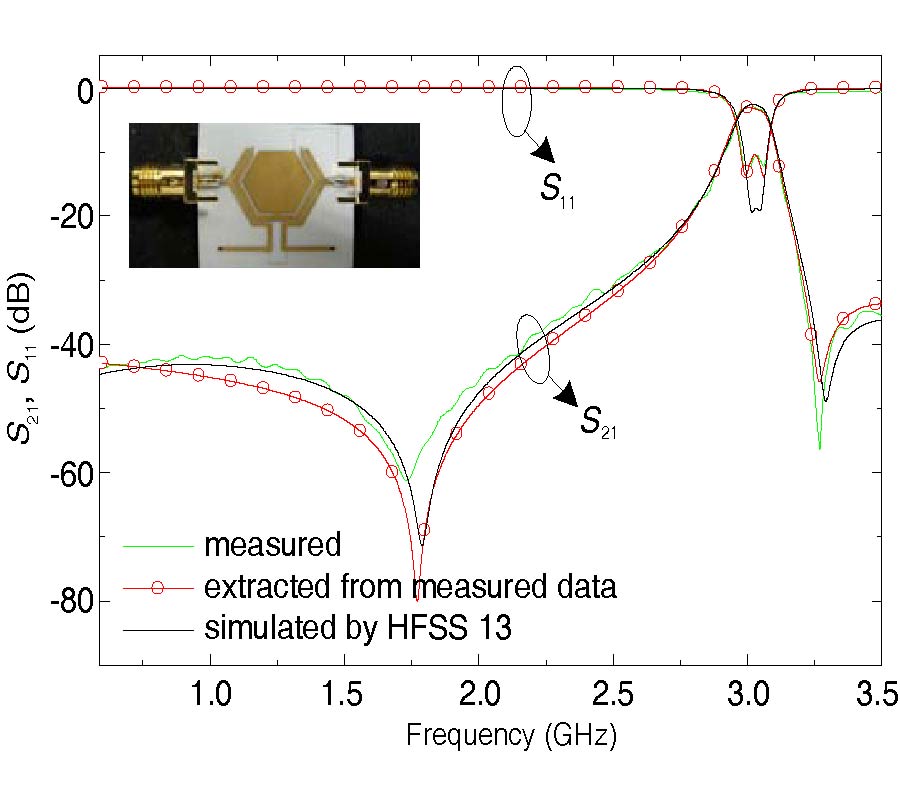
A generalized coupled-line circuit is introduced to construct a wide-stopband low-pass filter in this paper. This circuit configuration includes two-section coupled lines and a connected transmission-line stub. Due to the symmetry of this proposed structure, closed-form equations for scattering parameters are investigated. The transmission zeros and poles locations for different circuit parameters are discussed, and the corresponding design curves are given. For theoretical verifications, four typical numerical examples are designed, calculated and illustrated. Furthermore, two single-stage low-pass filters (LPF 1 and LPF 2) with the 1-dB cutoff frequencies of 0.72 GHz and 1.45 GHz are fabricated and measured. The implemented LPF2 has 19-dB stopband rejection in the range of 2.05 to 6.36 GHz. Finally, two LPF cells (LPF 1 and LPF 2) and an additional connected transmission line are used to construct a new two-stage low-pass filter (LPF 3) with extended stopband. The measured 16-dB stopband of LPF 3 is up to 7.5 GHz while the 1-dB passband range is from DC to 0.67 GHz. The advantages of this proposed low-pass filter are avoiding any lumped elements and compact layout structure.
A NEW WIDE-STOPBAND LOW-PASS FILTER WITH GENERALIZED COUPLED-LINE CIRCUIT AND ANALYTICAL THEORY
2011-05-22
PIER B
Vol. 30, 355-370
Medical Image Fusion Based on Ripplet Transform Type-I
Sudeb Das , Manish Chowdhury and Malay Kumar Kundu
The motivation behind fusing multimodality, multiresolution images is to create a single image with improved interpretability. In this paper, we propose a novel multimodality Medical Image Fusion (MIF) method, based on Ripplet Transform Type-I (RT) for spatially registered, multi-sensor, multi-resolution medical images. RT is a new Multi-scale Geometric Analysis (MGA) tool, capable of resolving two dimensional (2D) singularities and representing image edges more efficiently. The source medical images are first transformed by discrete RT (DRT). Different fusion rules are applied to the different subbands of the transformed images. Then inverse DRT (IDRT) is applied to the fused coefficients to get the fused image. The performance of the proposed scheme is evaluated by various quantitative measures like Mutual Information (MI), Spatial Frequency (SF), and Entropy (EN) etc. Visual and quantitative analysis shows, that the proposed technique performs better compared to fusion scheme based on Contourlet Transform (CNT).
MEDICAL IMAGE FUSION BASED ON RIPPLET TRANSFORM TYPE-I
2011-05-22
PIER B
Vol. 30, 337-353
Resonance Wavelength Dependence and Mode Formation in Gold Nanorod Optical Antennas with Finite Thickness
Tommaso Dattoma , Marco Grande , Roberto Marani , Giuseppe Morea , Valeria Marrocco and Antonella D'Orazio
In this paper we analyze the dependence of the resonance wavelength and mode formation of an optical gold nanorod antenna on its geometrical parameters in the wavelength range 500-1400 nm. In particular, we prove that nanoantennas differ from RF counterparts, since the minima and maxima, i.e., nodes and anti-nodes, of the resonant modes do not go to zero and show very intense peak at the corners due to non-negligible thickness. Moreover, FDTD simulations reveal that the usually considered linear relation between the resonant wavelength and the nanorod length has to be modified when the nanorod thickness is taken into account.
RESONANCE WAVELENGTH DEPENDENCE AND MODE FORMATION IN GOLD NANOROD OPTICAL ANTENNAS WITH FINITE THICKNESS
2011-05-22
PIER C
Vol. 21, 217-228
Adaptive Array Beamforming Using Signal Cyclostationarity and Finite Data
Chia-Cheng Huang and Ju-Hong Lee
This paper considers adaptive array beamforming using signal cyclostationarity. Due to the effect of using finite data samples, there exists an estimation error in computing the weight vector required by performing cyclic beamforming. To deal with this problem, we formulate a cost function consisting of a posteriori information of the received signal and a priori information regarding the probabilistic distribution of the error. By minimizing the cost function, we obtain a weight vector with a diagonal loading data covariance matrix under a white Gaussian estimation error. An analytical solution for determining the loading factor is further derived. Simulation results for showing the effectiveness of the proposed method are provided.
ADAPTIVE ARRAY BEAMFORMING USING SIGNAL CYCLOSTATIONARITY AND FINITE DATA
2011-05-20
PIER Letters
Vol. 24, 27-34
Dual-Band Monopole Antenna with Omega Particles for Wireless Applications
Michel Audrey Abaga Abessolo , Ahmed El Moussaoui and Noura Aknin
A new design of dual-band antenna for DCS/ PCS/ UMTS/ WLAN/ WiMAX applications is proposed. Using two metamaterials omega-shaped structures, a good impedance matching the dual-band mode is obtained. The proposed prototype antenna is fabricated on a 1.5mm thick FR4 epoxy substrate with a relative dielectric permittivity εr= 4.4, and loss tangent tanσ = 0.02. Good monopole-like radiation patterns and antenna gains over the operating bands have also been observed. Effects of each omega particle on the antenna performance and their coupling are all examined and discussed.
DUAL-BAND MONOPOLE ANTENNA WITH OMEGA PARTICLES FOR WIRELESS APPLICATIONS
2011-05-20
PIER
Vol. 116, 533-551
Multi-Channel Spcmb-Tops SAR for High-Resolution Wide-Swath Imaging
Wei Xu , Pingping Huang and Yun-Kai Deng
To improve the impaired azimuth resolution of the novel Terrain Observation by Progressive Scans (TOPS) mode, a new multi-channel single phase center multiple beam (SPCMB) TOPS mode is proposed in this paper for high-resolution wide-swath (HRWS) imaging. However, the progressive azimuth beam scanning leads to the Doppler spectrum aliasing and both beam center time and Doppler centroid varying with the target's azimuth location. Challenges may arise for processing the SPCMB-TOPS SAR data from these problems. In this paper, an efficient full aperture imaging approach is proposed to process the raw data. The sketch of the proposed imaging approach is described in detail. Simulation results of point targets validate the proposed imaging approach.
MULTI-CHANNEL SPCMB-TOPS SAR FOR HIGH-RESOLUTION WIDE-SWATH IMAGING
2011-05-19
PIER B
Vol. 30, 313-335
Mutual Conversion of Tm_mn and Te_mn Waves by Periodic and Aperiodic Waveguide Filters Composed of Dense Metal-Strip Gratings
Vladimir Tuz , Segiy L. Prosvirnin and Vadim Kazanskiy
The mutual conversion of the TMmn and TEmn waves (m, n ≠ 0) in periodic and aperiodic (fractal-like) stratified waveguide structures composed of dense metal-strip gratings is studied. The stopbands and passbands conditions of Bloch waves, the reflection and transmission spectra of the periodic structure are examined versus the gratings parameters. Peculiarities of the wave localization, selfsimilarity and scalability of both reflected and transmitted spectra of the fractal-like structure are investigated. The appearance of additional peak multiplets in stopbands is revealed and a correlation of their properties with the parameter of grating filling is established.
MUTUAL CONVERSION OF TM_MN AND TE_MN WAVES BY PERIODIC AND APERIODIC WAVEGUIDE FILTERS COMPOSED OF DENSE METAL-STRIP GRATINGS
2011-05-19
PIER Letters
Vol. 24, 17-26
Study of a Fluorescent Tube as Plasma Antenna
Vikram Kumar , Mrinal Mishra and N. K. Joshi
The present paper is a work on fluorescent tube performing the function of a monopole plasma antenna. In the construction, the needed power supply to the fluorescent tube is controlled by an IC 555 timer. In the experiments the supply frequency varies from 25 Hz to 200 Hz. By using a vector network analyzer it is shown that the persistence of plasma developed inside the tube persists for longer duration with increase in supply frequency. It is also found that the stability of resonant frequency increases with the increase in frequency of the AC power supply measured up to 200 Hz. Result shows that the effective part of a fluorescent tube functioning as Monopole plasma antenna is about 60% of the total length of the tube.
STUDY OF A FLUORESCENT TUBE AS PLASMA ANTENNA
2011-05-18
PIER B
Vol. 30, 293-311
Analytical Modeling of Quality Factor for Shell Type Microsphere Resonators
R. Talebi , Karim Abbasian and Ali Rostami
In this paper, we have proposed a shell type dielectric microsphere resonator in order to enhance its quality factor. In this work we have assumed that the radius of dielectric microsphere is 12 μm and that the interior metal layer radius is 11.5 μm. We have obtained analytic equations for Vector potentials, characteristic equation, quality factor, resonance frequency and resonance location of TE modes. We have plotted these characteristics by MATLAB software and compared them with the normal microsphere characteristics.
ANALYTICAL MODELING OF QUALITY FACTOR FOR SHELL TYPE MICROSPHERE RESONATORS