Search Results(13802)

2011-06-04
PIER B
Vol. 31, 89-115
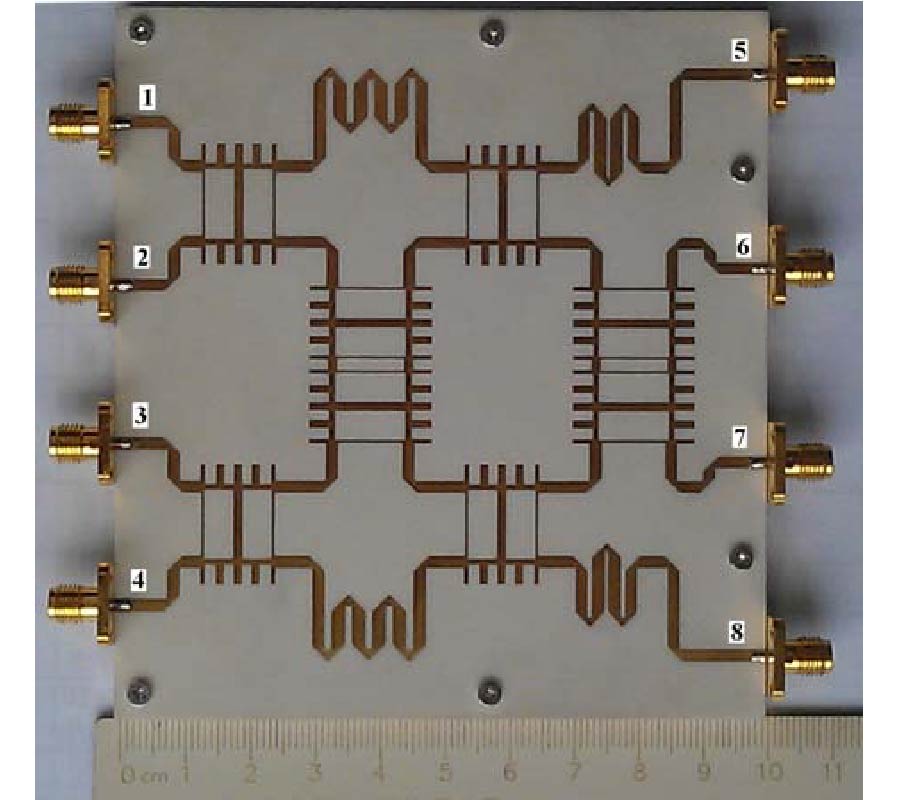
Comparisons of Improvements on Time-Domain Transmission Waveform and Eye Diagram for Flat Spirral Delay Line Between Two Types Guard Traces in High-Speed Digital Circuits
Guang-Hwa Shiue and Jia-Hung Shiu
This paper investigates the use of the guard traces to improve the Time-Domain Transmission (TDT) waveform and eye diagram for a flat spiral delay line. Two types of guard trace are adopted to implement and analysis in microstrip line and stripline structures. One is Two Grounded Vias type Guard Trace (TGVGT) and the other is Open-Stub type Guard Trace (OSGT). The time-domain analysis results by HSPICE and the associated simple circuit modeling is presented. According to the simulation results, the original TDT crosstalk noises can be reduced by about 80% when using TGVGTs or OSGTs in a stripline structure and by about 60% when using TGVGTs in a microstrip line structure. Additionally, the eye diagrams also can obtain improvement. The crosstalk noise cancelation mechanisms of the flat spiral routing scheme on TGVGTs and OSGTs are investigated by graphic method. In addition, how the degradation for the OSGT inserted into the flat spiral delay line in microstrip structure is clearly investigated. A flat spiral delay line inserted into TGVGTs and OSGTs both can obtain good improvements of the TDT waveform and eye diagram in a stripline structure. Moreover, adding OSGTs to the flat spiral routing scheme is easily accomplished due to the open end of OSGTs. Finally, HSPICE simulation and time-domain measurements of crosstalk noises of TDT waveforms, and eye diagrams are use to validate the proposed structure and analysis.
COMPARISONS OF IMPROVEMENTS ON TIME-DOMAIN TRANSMISSION WAVEFORM AND EYE DIAGRAM FOR FLAT SPIRRAL DELAY LINE BETWEEN TWO TYPES GUARD TRACES IN HIGH-SPEED DIGITAL CIRCUITS
2011-06-03
PIER B
Vol. 31, 67-87
Time-Harmonic Current Distribution on Conductor Grid in Horizontally Stratified Multilayer Medium
Petar Sarajcev , Slavko Vujević and Dino Lovrić
This paper presents a novel time-harmonic electromagnetic model for determining the current distribution on conductor grids in horizontally stratified multilayer medium. This model could be seen as a basis of the wider electromagnetic model for the frequency-domain transient analysis of conductor grids in multilayer medium. The total number of layers and the total number of conductors are completely arbitrary. The model is based on applying the finite element technique to an integral equation formulation. Each conductor is subdivided into segments with satisfying the thin-wire approximation. Complete electromagnetic coupling between segments is taken into account. The computation of Sommerfeld integrals is avoided through an effective approximation of the attenuation and propagation effects. Computation procedure for the horizontally stratified multilayer medium is based on the successful application of numerical approximations of two kernel functions of the integral expression for the potential distribution within a single layer, which is caused by a point source of harmonic current. Extension from the point source to a segment of the earthing grid conductors is accomplished through integrating the potential contribution due to the line of harmonic current source along the segments axis.
TIME-HARMONIC CURRENT DISTRIBUTION ON CONDUCTOR GRID IN HORIZONTALLY STRATIFIED MULTILAYER MEDIUM
2011-06-03
PIER B
Vol. 31, 45-66
Optical Antireflection of a Medium by Nanostructural Layers
Alexander Sergeevich Shalin
This work examines reflection of a light from a semi-infinite medium which is modified with an ordered monolayer of spherical nanoparticles placed on or under its surface. We derive analytical expressions for the electric fields within and outside such structures and verify them with help of strict numerical simulations. We show that nanoparticles layer acts as an imaginary zero-thickness surface having complicated non-Fresnel reflection coefficients with wavelength dependent phase shift. It is shown that such monolayers may reduce reflection relative to reflection from a pure substrate surface. We derive and analyse a zero-reflection condition in the simple intuitive form. It is shown that a single layer of nanocavities near the medium-vacuum interface may increase the transparency of a dielectric medium to values close to 100% in a wide wavelength range.
OPTICAL ANTIREFLECTION OF A MEDIUM BY NANOSTRUCTURAL LAYERS
2011-06-03
PIER Letters
Vol. 24, 69-76
Eigenvalue Analysis of Spherical Resonant Cavity Using Radial Basis Functions
Sheng-Jian Lai , Bing-Zhong Wang and Yong Duan
This paper applies a meshless method based on radial basis function (RBF) collocation to solve three-dimensional scalar Helmholtz equation in rectangular coordinates and analyze the eigenvalues of spherical resonant cavity. The boundary conditions of spherical cavity are deduced. The RBF interpolation method and the collocation procedure are applied to the Helmholtz and boundary condition equations, and their discretization matrix formulations are obtained. The eigenvalues of spherical resonant cavity with natural conformal node distribution are computed by the proposed method. Their results are agreement with the analytic solution.
EIGENVALUE ANALYSIS OF SPHERICAL RESONANT CAVITY USING RADIAL BASIS FUNCTIONS
2011-06-03
PIER Letters
Vol. 24, 59-68
Achievable Transverse Cylindrical Electromagnetic Mode
Rui Chen and Xijun Li
The system of Maxwell equations with an initial condition in a vacuum is solved in a cylindrical coordinate system. It derives the cylindrical transverse electromagnetic wave mode in which the electric field and magnetic field are not in phase. Such electromagnetic wave can generate and exist in actual application, and there is no violation of the law of conservation of energy during the electromagnetic field interchanges.
ACHIEVABLE TRANSVERSE CYLINDRICAL ELECTROMAGNETIC MODE
2011-06-03
PIER Letters
Vol. 24, 51-58
Dispersion Characteristics of Partial h-Plane Waveguides
Reza Rezaiesarlak , Esfandiar Mehrshahi and Mahboobeh Gharib
In this paper, dispersion characteristics of the partial H-plane waveguides are theoretically investigated by applying Galerkin's method in Fourier domain. By extracting the dyadic Green's functions of the structure and satisfying the boundary conditions along the longitudinal slit, propagation constant and consequently, the fields in the structure are obtained. It is seen than propagation constant not only depends on the waveguide dimensions, but also on the location and dimension of the slit. A significant feature of the structure is that its first and second propagation modes can be separately controlled which is very useful in designing single-mode and multi-mode filters. Two examples are given which in the first one, the parameters of the structure are assigned in such a way the first and second cut off frequencies are at f=3.1 GHz and f=6.2 GHz respectively, but in the second example, first and second modes are degenerate. The validity of the method is confirmed by comparing our results with ones from others.
DISPERSION CHARACTERISTICS OF PARTIAL H-PLANE WAVEGUIDES
2011-06-02
PIER M
Vol. 18, 171-178
Measurement of Zigbee Wireless Communications in Mode-Stirred and Mode-Tuned Reverberation Chamber
Anthony Centeno and Neil Alford
It is highly desirable to use advanced sensor networks to continuously monitor the structural health of an aircraft. It would be advantageous if the network was wireless to avoid the need for additional wire bundles and associated interconnects but the reliability of a suitable wireless channel in low loss enclosed structures needs to be understood. This paper reports on work undertaken testing the 2.4 GHz ZigBee wireless protocol in a mode stirred and mode tuned reverberation chamber. The results show that even for very low loss enclosures wireless communications is possible but only under very specific conditions. A higher loss chamber has more reliable communication channels, but even with loading there are large variations in packet error rates even between adjacent ZigBee channels.
MEASUREMENT OF ZIGBEE WIRELESS COMMUNICATIONS IN MODE-STIRRED AND MODE-TUNED REVERBERATION CHAMBER
2011-06-01
PIER
Vol. 117, 149-164
Impedance Measurements of Nonuniform Transmission Lines in Time Domain Using an Improved Recursive Multiple Reflection Computation Method
Yu Liu , Ling Tong , Wenxue Zhu , Yu Tian and Bo Gao
In this paper, a recursive computation method is developed to derive the multiple reflections of nonuniform transmission lines. The true impedance profiles of the nonuniform transmission lines are then reconstructed with the help of this method. This method is more efficient than other algorithm. To validate this method, two nonuniform microstrip lines are designed and measured using Agilent vector network analyzer E8363B from 10 MHz to 20 GHz with 10 MHz interval. The reflection coefficients of these nonuniform microstrip lines in time domain are attained from the scattering parameters using inverse Chirp-Z transform. The reconstructed characteristic impedance profiles of the nonuniform lines are compared with those reconstructed by Izydorczyk's algorithm. The agreements of the results illustrate the validity of the recursive multiple reflection computation method in this paper.
IMPEDANCE MEASUREMENTS OF NONUNIFORM TRANSMISSION LINES IN TIME DOMAIN USING AN IMPROVED RECURSIVE MULTIPLE REFLECTION COMPUTATION METHOD
2011-06-01
PIER
Vol. 117, 121-147
Efficient Cluster Identification for Measured Ultra-Wideband Channel Impulse Response in Vehicle Cabin
Bin Li , Zheng Zhou , Dejian Li and Shijun Zhai
Although the automatic and robust cluster identification is crucial for ultra-wideband propagation modeling, the existing schemes may either require interactions with analyst, or fail to produce reasonable clustering results in more universal propagation environments. In this article, we suggest a novel cluster identification algorithm. Rather than assuming the limited exponential power decay characteristics on UWB channels, from a novel perspective cluster identification is formulated as the local discontinuity detection based on wavelet analysis. Firstly, in order to comprehensively reflect the prevailing amplitude changes induced by new clusters, the moving averaging ratio is extracted from the measured UWB channel impulse responses. Subsequently, the appealing local-transient analysis ability of wavelet transform is properly exploited, and a computationally efficient cluster extraction method is developed. Distinguished from the subjective visual inspection and excluding any analyst interaction, the presented scheme can automatically discover multiple clusters. Our algorithm is premised on the general amplitude discontinuity, and hence is applicable to various complicated operation environments. Moreover, the produced clustering results, essentially depicting realistic physical propagations, are also independent of parameter configurations. Experiments on both simulated channels and the measured data in typical vehicle cabin further validate the proposed method.
EFFICIENT CLUSTER IDENTIFICATION FOR MEASURED ULTRA-WIDEBAND CHANNEL IMPULSE RESPONSE IN VEHICLE CABIN
2011-05-30
PIER B
Vol. 31, 29-43
Design of a Reconfigurable Antenna Array with Discrete Phase Shifters Using Differential Evolution Algorithm
Xiangtao Li and Minghao Yin
The reconfigurable design problem is to find the element that will result in a sector pattern main beam with side lobes. The same excitation amplitudes apply to the array with zero-phase that should be in a high directivity, low side lobe pencil shaped main beam. Multi-beam antenna arrays have important applications in communications and radar. This paper presents a new method of designing a reconfigurable antenna array with quantized phase excitations using a new evolutionary algorithm called differential evolution (DE). In order to reduce the effect of mutual coupling among the antenna-array elements, the dynamic range ratio is minimized. Additionally, compared with the continuous realization and subsequent quantization, experimental results indicate better performance of the discrete realization of the phase-excitation value of the proposed algorithm.
DESIGN OF A RECONFIGURABLE ANTENNA ARRAY WITH DISCRETE PHASE SHIFTERS USING DIFFERENTIAL EVOLUTION ALGORITHM
2011-05-30
PIER C
Vol. 22, 23-34
Steerable Antenna Using Algorithm Based on Downhill Simplex Method
Noorsaliza Abdullah and Yoshihiko Kuwahara
Electronically steerable passive array radiator (ESPAR) antennas are expected to gain prominence in the field of wireless communication, because they can be steered toward a desired signal and they can eliminate interference; in addition, they have a very simple architecture that has significantly low power consumption and are inexpensive to manufacture. In this paper, we proposed an ESPAR antenna that has fastest convergence time. The downhill simplex method is used to maximize the correlation coefficient between the received signal and the reference signal. The simulation results indicate that this antenna can be steered toward the desired signal if one signal is used; in addition, it can eliminate interference if two signals, namely, the desired signal and the delayed signal are used by automatically varying the reactance values.
STEERABLE ANTENNA USING ALGORITHM BASED ON DOWNHILL SIMPLEX METHOD
2011-05-30
PIER C
Vol. 22, 11-22
A Terrain Roughness Correction Factor for Hata Path Loss Model at 900 MHz
Mahdi A. Nisirat , Mahamod Ismail , Liyth A. Nissirat and Salim Alkhawaldeh
This paper proposes a new propagation model based on the most widely used Hata model. The proposed model is developed by extrapolating Hata model to be suitable microcells. The main equation of Hata urban model is modified by substituting the suburban correction factor with a terrain roughness parameter. This parameter uses a quadratic regression estimator of the standard deviation, σ, of the terrain irregularities along the measuring path, in west of Amman, Jordan. It is shown that RMSE between the predicted and measured data for the new proposed, is improved by up to 3 dB compared to Hata suburban model in most areas under study. Furthermore, the improvement in RMSE increases as σ increases. These results clarify the robustness of the proposed model.
A TERRAIN ROUGHNESS CORRECTION FACTOR FOR HATA PATH LOSS MODEL AT 900 MHZ
2011-05-30
PIER M
Vol. 18, 159-169
Eddy Current Phenomena in Laminated Structures Due to Travelling Electromagnetic Fields
Saurabh Kumar Mukerji , Daya Shanker Srivastava , Yatendra Pal Singh and Dharam Veer Avasthi
The distribution of fields travelling in the laminated structure with assumed values for the tangential components of the magnetic field intensities on the top and bottom surfaces of the structure, has been obtained using linear electromagnetic field theory. The treatment takes cognizance of interlaminar capacitance inherently present in a laminated structure. Analysis presented in this paper assumes identical field distribution in each lamination and a given current sheet as the source for the travelling electromagnetic fields. It has been concluded that convection currents are developed at the interface between iron and insulator regions.
EDDY CURRENT PHENOMENA IN LAMINATED STRUCTURES DUE TO TRAVELLING ELECTROMAGNETIC FIELDS
2011-05-30
PIER
Vol. 117, 103-119
On the Influence of Coupling AMC Resonances for RCS Reduction in the SHF Band
María Elena de Cos Gómez , Yuri Alvarez-Lopez and Fernando Las Heras Andres
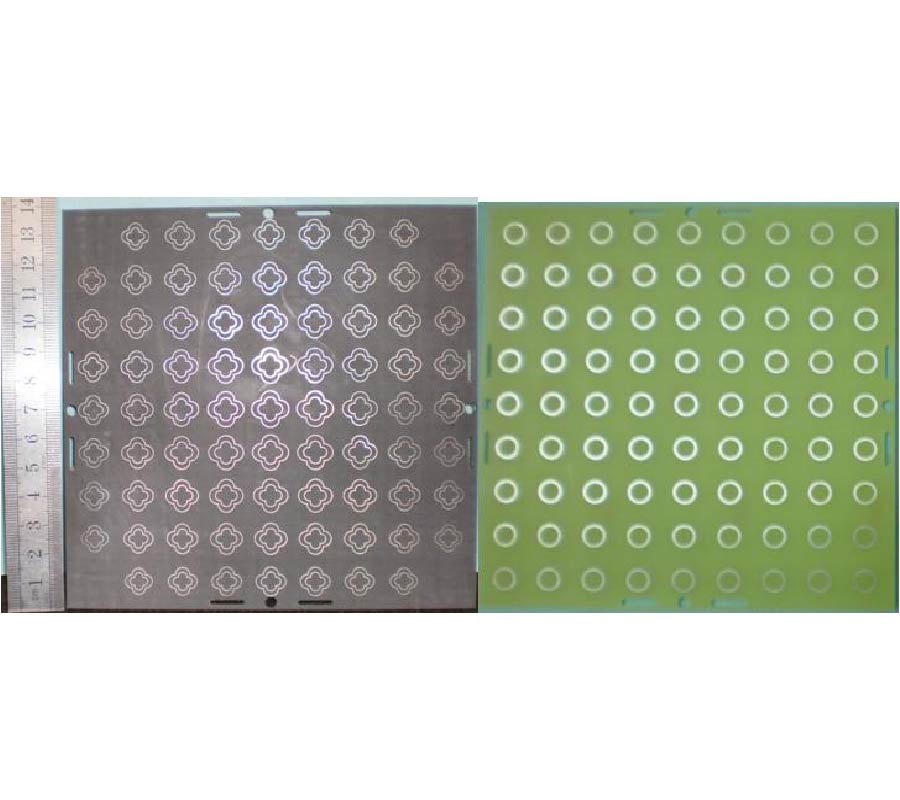
A novel approach to Radar Cross-Section reduction using a thin Artificial Magnetic Conductor (AMC) structure is presented. The novel AMC structure combines two unit-cell metallization sizes and so it presents two resonant frequencies. RCS reduction is based on destructive interference of two partial reflections. Taking as starting point a previous work showing significant RCS reduction based on the combination of two AMC surfaces with overlapped AMC operation bandwidths (so that they have similar reflection coefficient amplitude) without a 180º-phaseshift, the key point of this contribution is to analyze the influence of the degree of the aforementioned overlapping on RCS reduction and to show that this achievement is based on coupling phenomena. A comparison of the achieved RCS reduction when combining two AMCs whose AMC operation bandwidth overlaps, two AMCs with non-overlapped AMC operation bandwidths, and PEC-AMC is presented. Prototypes of these three combinations have been manufactured (having them the same size) and their RCS has been measured in an anechoic chamber.
ON THE INFLUENCE OF COUPLING AMC RESONANCES FOR RCS REDUCTION IN THE SHF BAND
2011-05-30
PIER
Vol. 117, 83-101
Non-Invasive Microwave Radiometric System for Intracranial Applications: A Study Using the Conformal L-Notch Microstrip Patch Antenna
Nikolaos P. Asimakis , Irene Karanasiou and Nikolaos Uzunoglu
Temperature variations in tissues inside the body have been measured using microwave radiometry for more than three decades in a variety of passive body monitoring applications. In this paper we study a non-invasive prototype system for passive intracranial monitoring using microwave radiometry. It comprises one or two (two-element array) L-notch microstrip patch antennas in conjunction with a sensitive multiband receiver for detection. The particular design characteristics of the antenna are its conformality and a special L cut on its upper left edge, features that make it suitable for human biomedical applications and lead to its multiband operation in the frequency range of 2-3 GHz. The theoretical electromagnetic study indicates that the radiometric contact system in question operates well at two frequencies, with satisfying detection depths and adequate portability (small dimensions). In order to verify the findings of these simulations, experimental measurements with phantoms and various setups were carried out, resulting in the definition of the actual temperature detection level and the spatial resolution of the system. Theoretical and experimental results conclude that with the appropriate combination of conformal patch antennas and microwave receiver it is possible to monitor areas of interest inside human head models with a variety of temperature resolutions and detection depths.
NON-INVASIVE MICROWAVE RADIOMETRIC SYSTEM FOR INTRACRANIAL APPLICATIONS: A STUDY USING THE CONFORMAL L-NOTCH MICROSTRIP PATCH ANTENNA
2011-05-30
PIER
Vol. 117, 67-81
Second-Order Scattering Induced Reflection Divergence and Nonlinear Depolarization on Randomly Corrugated Semiconductor Nano-Pillars
Gong-Ru Lin , Fan-Shuen Meng and Yung-Hsiang Lin
Second-order scattering induced reflection divergence and nonlinear depolarization on randomly sub-wavelength corrugated semiconductor nano-pillar surface is observed, which explains the nonlinear transverse electric (TE)/transverse magnetic (TM) mode transformation of the nano-pillar surface reflection with diminishing Brewster angle. The reflected polarization ratios are degraded from 97.5% to 53% and from 96.8% to 40% under TM- and TE-mode incidences by increasing Si nano-pillar height from 30 to 240 nm. A small-perturbation modeling corroborates the scattering induced second-order polarization transformation to depolarize the reflection from highly corrugated Si nano-pillar surface. The lower polarization ratio at TE-mode reflection caused by a severer inhomogeneous Si nano-pillars oriented in parallel with surface normal is concluded. With field polarization ratio under TM-mode incidence, the angular dependent reflectance spectra with a gradually diminished and shifted Brewster angle from 74o to 45o can be simulated. The nano-roughened surface induced second-order scattering model correlates the diminishing Brewster angle with the surface depolarized reflection.
SECOND-ORDER SCATTERING INDUCED REFLECTION DIVERGENCE AND NONLINEAR DEPOLARIZATION ON RANDOMLY CORRUGATED SEMICONDUCTOR NANO-PILLARS
2011-05-29
PIER B
Vol. 31, 15-28
An Inverse Problem Approach for Parameter Estimation of Interior Permanent Magnet Synchronous Motor
Mounir Hadef , Mohamed Rachid Mekideche , Abdesselem Djerdir and Abdellatif Miraoui
The estimation of d- and q-axis parameters is highly desirable, because they are fundamental parameters to many vector control algorithms in the d-q reference frame for fast and accurate responses. Using the finite element method (FEM) for the determination of the interior permanent magnet synchronous motor (IPM) reactance provides an accurate means of determining the field distribution. However, this method might be time consuming. The magnetic circuit modelling approach has been successfully used to model a variety of electrical machine such as IPM motors. This paper deals with the inverse problem methodology for the identification of d- and q-axis synchronous reactance of an IPM motor. The proposed method uses a measured electromotive force (EMF) to compute the objective function. The machine parameters identified by the proposed approach are compared to experimental results.
AN INVERSE PROBLEM APPROACH FOR PARAMETER ESTIMATION OF INTERIOR PERMANENT MAGNET SYNCHRONOUS MOTOR
2011-05-27
PIER C
Vol. 22, 1-9
A Compact Size and Small Frequency Ratio CPW-Fed Circular Slot Antenna for GPS/WLAN Dual-Band and Circular Polarizations
Chia-Yen Wei , Ji-Chyun Liu , Tian-Fu Hung , Sheau-Shong Bor and Chi Chiang Chen
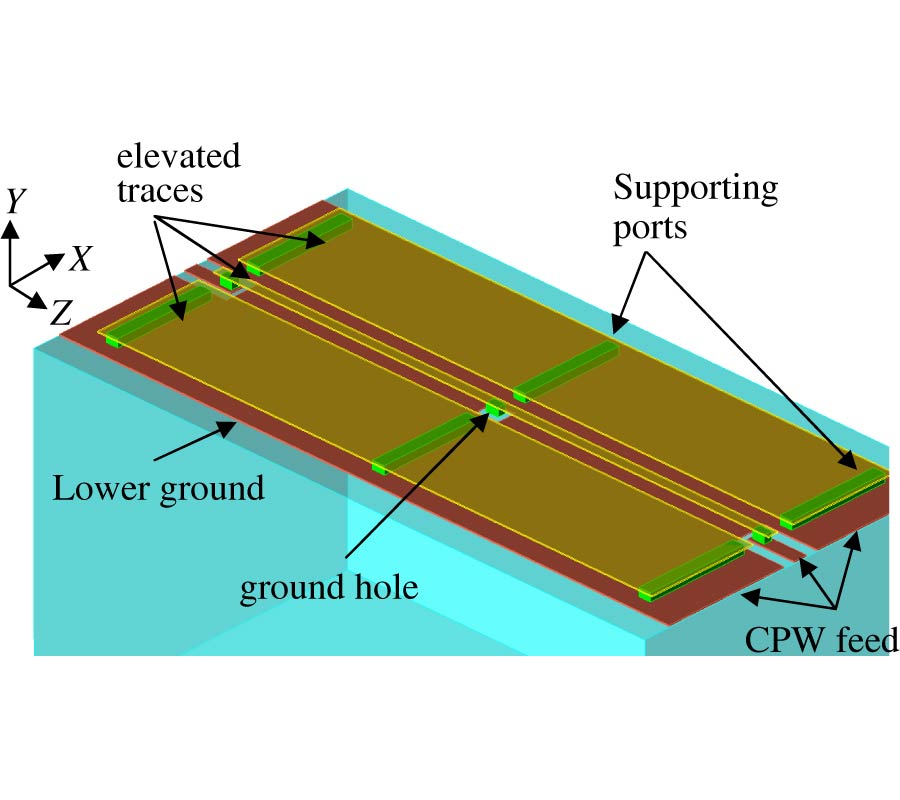
This paper presents a novel dual-band circularly polarized CPW-fed circular slot antenna with two open-ground rings. The proposed antenna is constructed with two opened-ground rings facing in opposite directions and embedded in the circular slot, and the enhanced feed strip of CPW. By way of adjusting the relevant parameters, we can obtain the dual-band at 1.57 GHz and 2.46 GHz respectively. A smaller frequency ratio of 1.56 is presented. The measured -10 dB return loss impedance bandwidth are 380 MHz (24.68%) for 1.57 GHz band and 210 MHz (8.33%) for 2.46 GHz band. The measured -3 dB axial ratio bandwidth for 1.57 GHz and 2.46 GHz bands are 13.38% and 8.13%, the polarization of radiation patterns are RHCP and LHCP for each band and the antenna gain are 3.72 and 3.21 dBic respectively.
A COMPACT SIZE AND SMALL FREQUENCY RATIO CPW-FED CIRCULAR SLOT ANTENNA FOR GPS/WLAN DUAL-BAND AND CIRCULAR POLARIZATIONS
2011-05-27
PIER C
Vol. 21, 257-271
A Fast DOA Estimation Algorithm for Uniform Circular Arrays in the Presence of Unknown Mutual Coupling
Julan Xie , Zi-Shu He and Hui-Yong Li
Based on the beamspace transform and the rank reduction theory (RARE), a fast direction of arrival (DOA) estimation algorithm in the presence of an unknown mutual coupling is proposed for uniform circular arrays (UCAs). Via relying on the circular symmetry and expand the mutual coupling into a limited number of phase modes, the azimuth estimates are able to be obtained without the exact knowledge of mutual coupling. Then, by using the special structure of mutual coupling matrix and the characteristic of mutual coupling coefficients, the elimination of spurious estimates and estimations of the mutual coupling coefficients are able to be handled simultaneously. The Propagator Method (PM) is used to avoid the eigenvalue decomposition and its corresponding RARE matrix allows decreasing the computation cost via using a well known identity for block matrices. Moreover, an implementation of rooting polynomial substitutes the one-dimension search. Therefore, the computation burden is greatly reduced. Numerical examples are presented to demonstrate the effectiveness of the proposed method.
A FAST DOA ESTIMATION ALGORITHM FOR UNIFORM CIRCULAR ARRAYS IN THE PRESENCE OF UNKNOWN MUTUAL COUPLING
2011-05-27
PIER C
Vol. 21, 243-255
Class Identification of Aircrafts by Means of Artificial Neural Networks Trained with Simulated Radar Signatures.
Antonio Jurado-Lucena , Ignacio Montiel-Sanchez , David Escot-Bocanegra , Raul Fernandez-Recio and David Poyatos-Martınez
Non-Cooperative Target Recognition (NCTR) of aircrafts from radar measurements is a formidable problem that has drawn the attention of engineers and scientists over the last years. NCTR techniques typically involve a database with a huge amount of information from different known targets and a reliable identification algorithm able to highlight the likeness between measured and stored data. This paper uses High Resolution Range Profiles produced with a high-frequency software tool to train Arti cial Neural Networks for distinguishing between different classes of aircrafts. Actual data from the ORFEO measurement campaign are used to assess the performance of the trained networks.
CLASS IDENTIFICATION OF AIRCRAFTS BY MEANS OF ARTIFICIAL NEURAL NETWORKS TRAINED WITH SIMULATED RADAR SIGNATURES.