Search Results(13802)

2011-06-15
PIER C
Vol. 22, 85-96
A Novel Small Ultra-Wideband Bandpass Filter Including Narrow Notched Band Utilizing Folded-T-Shaped Stepped Impedance Resonator (SIR)
Milad Mirzaee
A compact microstrip ultra-wideband (UWB) bandpass filter (BPF) including a narrow notched band within the UWB passband is proposed. The proposed filter is constructed by combination of two highly compact wideband bandpass filters (BPFs) with different physical dimensions which are designed on the basis of a folded-T-shaped stepped impedance resonator (SIR) and parallel-coupling feed structure. The wideband BPFs can be designed separately, and the design procedure is described. The narrow notched band with 3.8% 3 dB fractional bandwidth (FBW) from 5.15 to 5.35 GHz (IEEE 802.11a lower band) is created in order to eliminate interference from wireless local area network (WLAN) with the determined UWB passband. The center frequency and bandwidth of the notched band can be controlled by tuning the structural parameters. The full-wave EM simulated and measured results are in good agreement, showing that the proposed filter possesses good characteristics including wide passband, high selectivity, low insertion loss, large notch deep and sharp rejection.
A NOVEL SMALL ULTRA-WIDEBAND BANDPASS FILTER INCLUDING NARROW NOTCHED BAND UTILIZING FOLDED-T-SHAPED STEPPED IMPEDANCE RESONATOR (SIR)
2011-06-15
PIER C
Vol. 22, 73-83
Printed Dipole Antenna with Back to Back Asymmetric Dual-C-Shape Uniform Strips for DTV Applications
I-Tseng Tang , Chi-Min Li and Chih-Yang Lin
A printed dipole antenna with back to back asymmetric dual-C-shape uniform strips capable of generating a wide operating band for digital television (DTV) signal reception in the 470-862 MHz band is presented. This antenna is associated with C-shape strips and asymmetric structure, and it operates band in 455-865 MHz. By proper adjusting some parameters, it is possible to achieve a broadband response. Measured results have been compared with simulation and found in a good agreement. The antenna with back to back asymmetric dual-C-shape uniform strips can generate two adjacent resonant modes to form a wide operating band of larger than 62% in 2.5:1 VSWR bandwidth, which is much wider than that of the corresponding back to back symmetric dual-C-shape strips dipole antenna. The experimental results show that stable radiation pattern is similar to a dipole antenna. The measured peak gains are 3.2 dBi and 2.3 dBi, at 620 MHz and 780 MHz, respectively. The radiation efficiencies are all larger than 60% for an entire DTV band.
PRINTED DIPOLE ANTENNA WITH BACK TO BACK ASYMMETRIC DUAL-C-SHAPE UNIFORM STRIPS FOR DTV APPLICATIONS
2011-06-15
PIER M
Vol. 18, 247-257
Imaging of Separate Scatterers by Means of a Multiscaling Multiregion Inexact-Newton Approach
Giacomo Oliveri , Andrea Randazzo , Matteo Pastorino and Andrea Massa
The integration of the Iterative Multi-Scaling Multi-Region (IMSMR) procedure and the Inexact-Newton method (INM) is proposed within the contrast-field formulation of the inverse scattering problem. Thanks to its features, such an implementation is expected to effectively deal with the reconstruction of separated objects. A selected set of numerical results is presented to assess the potentialities of the IMSMR-INM method also in comparison with previous INM-based inversions.
IMAGING OF SEPARATE SCATTERERS BY MEANS OF A MULTISCALING MULTIREGION INEXACT-NEWTON APPROACH
2011-06-15
PIER M
Vol. 18, 233-246
An Extension of the Kelvin Image Theory to the Conducting Heaviside Ellipsoid
Dragan Redžić , Mohsan S. A. Eldakli and Milan D. Redzic
The Kelvin image theory for a conducting sphere is extended to the case of a conducting oblate spheroid in uniform motion along its axis of revolution (a Heaviside ellipsoid) using the well-known method provided by Special Relativity. The results derived are checked in various ways.
AN EXTENSION OF THE KELVIN IMAGE THEORY TO THE CONDUCTING HEAVISIDE ELLIPSOID
2011-06-15
PIER M
Vol. 18, 221-231
A Second-Order Cone Programming Approach for Robust Downlink Beamforming with Power Control in Cognitive Radio Networks
Fulai Liu , Jinkuan Wang , Ruiyan Du , Lu Peng and Pingping Chen
The downlink beamforiming technology plays a key role in a cognitive radio network (CR-Net). It can be used to reduce transmission power and interference to other users, etc. This paper presents a robust downlink beamforming method with power control for a multiuser multiple-input-single-output (MISO) CR-Net. In this proposed approach, the beamforming optimization problem is formulated as the second-order cone programming (SOCP). The presented method can not only minimize the transmitted power but also guarantee that the received signal-to-interference-plus-noise ratio (SINR) is strictly above the prescribed quality-of-service (Qos)-constrained threshold at each secondary user (SU) and the the interference power (IP) is strictly below the prescribed threshold at the primary user (PU). Simulation results are presented to verify the efficiency of the proposed method.
A SECOND-ORDER CONE PROGRAMMING APPROACH FOR ROBUST DOWNLINK BEAMFORMING WITH POWER CONTROL IN COGNITIVE RADIO NETWORKS
2011-06-15
PIER
Vol. 117, 409-423
Coupling Matrix Decomposition in Designs and Applications of Microwave Filters
Ke Xiao , Liang Feng Ye , Fei Zhao , Shun-Lian Chai and Joshua Le-Wei Li
The relationship between the immittance inverter coefficients and the coupling coefficients is obtained under the non-resonating coupling condition. With the relationship and the determinant properties of the transformation matrix, the coupling matrix could be decomposed to many sub-matrixes for filter designs. The physical significance of the decomposition is discussed. Using this idea, a filter can be decomposed to a number of sub-filters, which could be connected by sections of transmission lines with the same characteristics kept.
COUPLING MATRIX DECOMPOSITION IN DESIGNS AND APPLICATIONS OF MICROWAVE FILTERS
2011-06-15
PIER
Vol. 117, 393-407
A Novel Quasi-Elliptic Waveguide Transmit Reject Filter for Ku-Band Vsat Transceivers
Zhengbin Xu , Jian Guo , Cheng Qian and Wen-Bin Dou
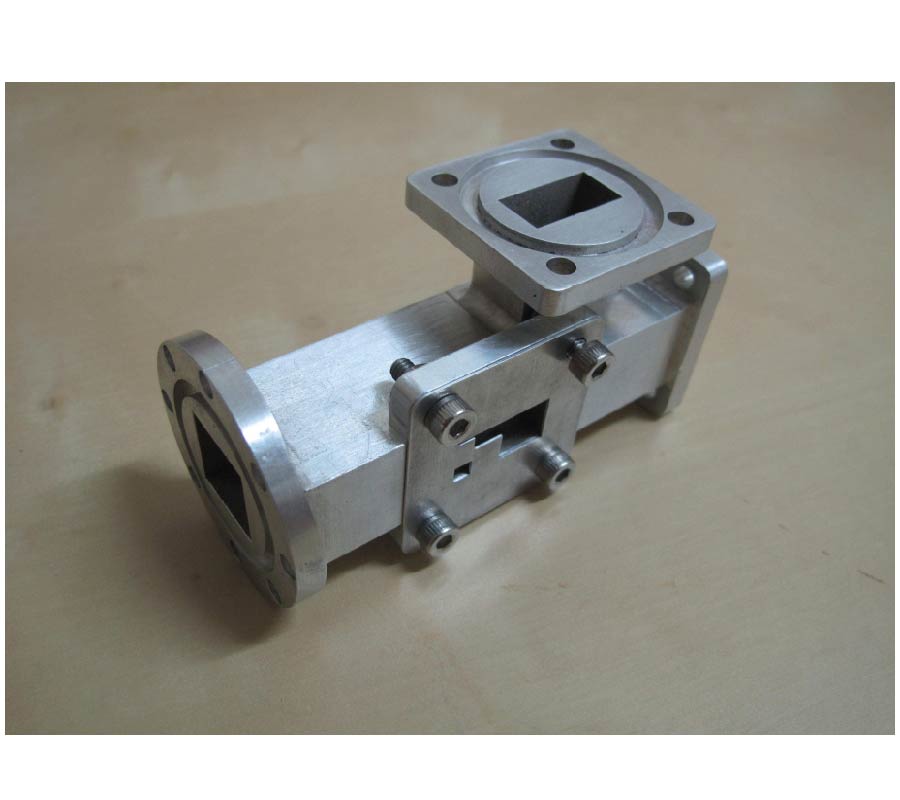
In this paper, a novel compact quasi-elliptic waveguide low-pass transmit reject filter (TRF) by using T-shape units is proposed for Ku-band very small aperture terminal (VSAT) transceivers. The equivalent circuit model of the T-shape unit is investigated and shows a topology similar to that of the elliptic low-pass filter. In order to reduce the difficulty in physical realization, which is commonly encountered with a standard elliptic low-pass filter, an approximate elliptic low-pass filter prototype is presented. Accordingly, a synthesis approach is developed to obtain the initial dimensions of the filter. To optimize the performance of the filter, full-wave electromagnetic simulation is used to fine-tune the dimensions of the filter. An eleven-order Ku-band low-pass TRF is designed and fabricated using a WR-75 waveguide. Measured results show it has a low insertion loss of less than 0.3\,dB in the pass band and a high attenuation slope of 78 dB/GHz. Moreover, the miniaturized size of the filter is only 38 mm × 38 mm × 42 mm (WR-75 flange size is 38 mm × 38 mm).
A NOVEL QUASI-ELLIPTIC WAVEGUIDE TRANSMIT REJECT FILTER FOR KU-BAND VSAT TRANSCEIVERS
2011-06-15
PIER
Vol. 117, 379-392
A Multichanneled Filter in a Photonic Crystal Containing Coupled Defects
Heng-Tung Hsu , Min-Hung Lee , Tzong-Jer Yang , Yu-Chao Wang and Chien-Jang Wu
ℜOptical filtering properties in a multichanneled transmission filter based on one-dimensional photonic crystal containing the coupled defects are theoretically investigated. The resonant transmission peaks are designed to be located within the photonic band gap of a defect-free photonic crystal. The number of peaks is directly equal to the number of the coupled defects. The positions of resonant peaks can be tuned by varying the refractive index of the defect layer. In addition, extremely resonant peaks can be produced by adding the Bragg mirrors at the front and rear sides of the structure.
A MULTICHANNELED FILTER IN A PHOTONIC CRYSTAL CONTAINING COUPLED DEFECTS
2011-06-14
PIER B
Vol. 31, 189-203
Effects of Thermal and Electrical Properties of Thin Metal Film in Photoinductive Field-Mapping Technique for Eddy-Current Probes
Yen-Lin Pan and Cheng-Chi Tai
Photoinductive (PI) field mapping for eddy-current (EC) probes above a thin metal film was performed by multiphysics analysis with two-dimensional finite element method (FEM). The FEM model of PI method was used to observe how metal film properties affect the field-mapping signals of EC probes. The PI signal was tested for effects of resistivity, temperature coefficient of the resistivity, thermal conductivity, heat capacity, and thin film density The applicability of actual thin film materials for mapping the field of EC probe when using PI method was discussed. Field-mapping signals of EC probe coils with tilt angles of 0o, 5o, 10o, 15o, and 20o were also examined with appropriate metal film material. These experiments showed that the higher-resolution field-mapping signals of EC probes can be obtained by given a titanium thin film The resolution of field-mapping signals of EC probes correlated positively with resistivity, heat capacity, and density of thin film and correlated negatively with its thermal conductivity. Improved understanding of distinct field distribution of EC probes enables selection of optimal probes for EC inspection.
EFFECTS OF THERMAL AND ELECTRICAL PROPERTIES OF THIN METAL FILM IN PHOTOINDUCTIVE FIELD-MAPPING TECHNIQUE FOR EDDY-CURRENT PROBES
2011-06-14
PIER B
Vol. 31, 175-188
Investigation on Propagation Characteristics of Super-Gaussian Beam in Highly Nonlocal Medium
Manoj Mishra and Woo-Pyo Hong
We investigate the propagation characteristics of super-Gaussian beam in highly nonlocal nonlinear media. The optical beam propagation has been modeled by well known nonlocal nonlinear Schrődinger equation. The variational method is employed to find the initial beam propagation parameters and then split step Fourier method is used for numerical simulations. A generalized exact analytical solution of the model is obtained and critical power of soliton is determined. The evolution of super-Gaussian beam has shown oscillatory propagation.
INVESTIGATION ON PROPAGATION CHARACTERISTICS OF SUPER-GAUSSIAN BEAM IN HIGHLY NONLOCAL MEDIUM
2011-06-13
PIER B
Vol. 31, 157-173
SAR Distribution in a Bio-Medium in Close Proximity with Rectangular Dielectric Resonator Antenna
Ravi Kumar Gangwar , Surya Singh and Devendra Kumar
In this paper, the simulation and experimental studies of SAR distribution in a bio-medium situated very close to a rectangular dielectric resonator antenna (RDRA) in C-band of microwave frequencies are reported. The simulation study has been carried out using CST Microwave Studio simulation software. The experimental distribution has been obtained using two 50Ω L-shaped and straight probes and Agilent make 3 Hz-50 GHz spectrum analyzer. The experimental results for SAR distribution are compared with simulated results.
SAR DISTRIBUTION IN A BIO-MEDIUM IN CLOSE PROXIMITY WITH RECTANGULAR DIELECTRIC RESONATOR ANTENNA
2011-06-13
PIER B
Vol. 31, 139-156
Antenna Array Beamforming in the Presence of Spatial Information Uncertainties
Ju-Hong Lee , Guo-Wei Jung and Wen-Chieh Tsai
This paper deals with adaptive antenna array beamforming under spatial information uncertainties including steering angle mismatch, random perturbations in array sensor positions, and mutual coupling between antenna array sensors. To make antenna array beamformers robust against the spatial information uncertainties, we present an iterative method to obtain an appropriate estimate of the actual direction vector for each of the desired signals. The proposed method uses only the a posteriori information of the received array data. It invokes an appropriate objective function for estimation and solves the minimization of the objective function by using a gradient based algorithm. The convergence property of the proposed method is investigated. Simulation results are provided for showing the effectiveness of the proposed method.
ANTENNA ARRAY BEAMFORMING IN THE PRESENCE OF SPATIAL INFORMATION UNCERTAINTIES
2011-06-13
PIER M
Vol. 18, 209-219
Analytical Model of a Metasurface Consisting of a Regular Array of Sub-Wavelength Circular Holes in a Metal Sheet
Davide Ramaccia , Filiberto Bilotti and Alessandro Toscano
In this work, a metasurface consisting of an array of circular holes in a metal conducting sheet with a sub-wavelength periodicity is considered. The surface partially reflects the incident field according to the shape and geometrical dimensions of the inclusions and, due to this property, is widely employed in antenna systems to improve the radiation pattern of regular radiators. Since the reflection properties of the metasurface are determined by the current density distribution on the metal, we inspect this distribution and coherently develop a new, easy, and accurate analytical model to describe the grid impedance of the metasurface. In order to validate the model, we compare the reflection coefficient of the array obtained through our approach to the one resulting from full-wave numerical simulations and to other accurateanalytical methods available in the open technical literature.
ANALYTICAL MODEL OF A METASURFACE CONSISTING OF A REGULAR ARRAY OF SUB-WAVELENGTH CIRCULAR HOLES IN A METAL SHEET
2011-06-13
PIER
Vol. 117, 365-378
Improving Silicon Integrated Antennas by Substrate Micromachining: A Study of Etching Patterns
Joan Gemio , Josep Parron , Pedro de Paco , J. Sacristan and Antonio Baldi
One of the main drawbacks of antenna integration on standard CMOS silicon substrates are the low radiation efficiency levels obtained due to the high silicon losses. This paper studies the use of micromachining techniques to remove silicon beneath the antenna as a solution to improve radiation efficiency. Several etching patterns are analyzed for different etching depths through simulations and measurements in order to find out which are the best ones for the micromachining process. Results are verified in two operating scenarios.
IMPROVING SILICON INTEGRATED ANTENNAS BY SUBSTRATE MICROMACHINING: A STUDY OF ETCHING PATTERNS
2011-06-13
PIER
Vol. 117, 357-364
Compact Dual-Band Bandpass Filter Using Folded SIR with Two Stubs for WLAN
Dechen Ma , Zhong Yin Xiao , Liangliang Xiang , Xiaohuan Wu , Chunyan Huang and Xin Kou
A novel compact dual-band bandpass filter using tri-section stepped impedance resonators (SIRs) is presented for Wireless Local Area Network (WLAN). SIRs and one stub between parallel couple line are employed to realize two satisfactory passbands. Meanwhile, one transmission zero is generated between the two passbands to achieve a high out-of-band rejection. Simulated results show that two central frequencies are located at desired 2.4 and 5.2 GHz with 3 dB fractional bandwidths of 6.3% and 3.4% respectively. The measured results are in agreement well with the simulated ones.
COMPACT DUAL-BAND BANDPASS FILTER USING FOLDED SIR WITH TWO STUBS FOR WLAN
2011-06-10
PIER Letters
Vol. 24, 149-158
Full-Wave Analysis and Design of Broadband Turnstile Junctions
Angel-Antonio San-Blas , F. J. Perez , Jordi Gil , Fermin Mira , Vicente Boria and Benito Gimeno Martinez
The efficient design of broadband turnstile junctions compensated with piled-up cylindrical metallic posts is discussed in this contribution. Very high relative bandwidths can be obtained, while maintaining the diameter of the input circular access port lower than the width of the rectangular waveguide ports, thus reducing the number of excited higher order circular waveguide modes. A novel full-wave analysis tool has also been implemented in order to reduce the CPU effort related to the complete design process.
FULL-WAVE ANALYSIS AND DESIGN OF BROADBAND TURNSTILE JUNCTIONS
2011-06-10
PIER Letters
Vol. 24, 139-147
Miniaturized Modified Dipoles Antenna for WLAN Applications
Yuan Yuan Guo , Xiao-Miao Zhang , Gao-Li Ning , Dan Zhao , Xi Wang Dai and Qi Wu
In this paper, a novel double-band integrated antenna for applications in WLAN is presented and studied. Based on the mature dipole theory, radiation elements are printed on the two faces of a low cost FR4 substrate. The two dipoles are designed on the sides of the feedline, which can reduce the impact of each other availably. The distance between the two arms and the width of the arms plays an important role in improving the impedance matching. Furthermore, by folding the arms efficiently, the current distribution of the proposed antenna is extended, and the dimensions of the proposed antenna can be reduced. The size of the designed antenna is just 34mm×24mm×1mm (about 0.27λ×0.19λ×0.008λ, λ is the wavelength relative to the frequency 2.4 GHz). Moreover, the prototype of the antenna is constructed and tested, which shows a good agreement with simulated result. The measured bandwidths, ranging from 2.35 GHz to 2.61 GHz and from 4.7 GHz to 6.0 GHz respectively, are obtained with return loss less than -9.54 dB (about 2:1 VSWR). The proposed antenna covers 2.4/5 GHz WLAN bands, and radiation patterns with good omni- directional radiation in the operating frequency are observed.
MINIATURIZED MODIFIED DIPOLES ANTENNA FOR WLAN APPLICATIONS
2011-06-10
PIER C
Vol. 22, 55-71
A Simple DOA Estimator Using Adjacent Pattern Power Ratio with Switched Beam Antenna
Yohei Ozaki , Jun Ozawa , Eddy Taillefer , Jun Cheng and Yoichiro Watanabe
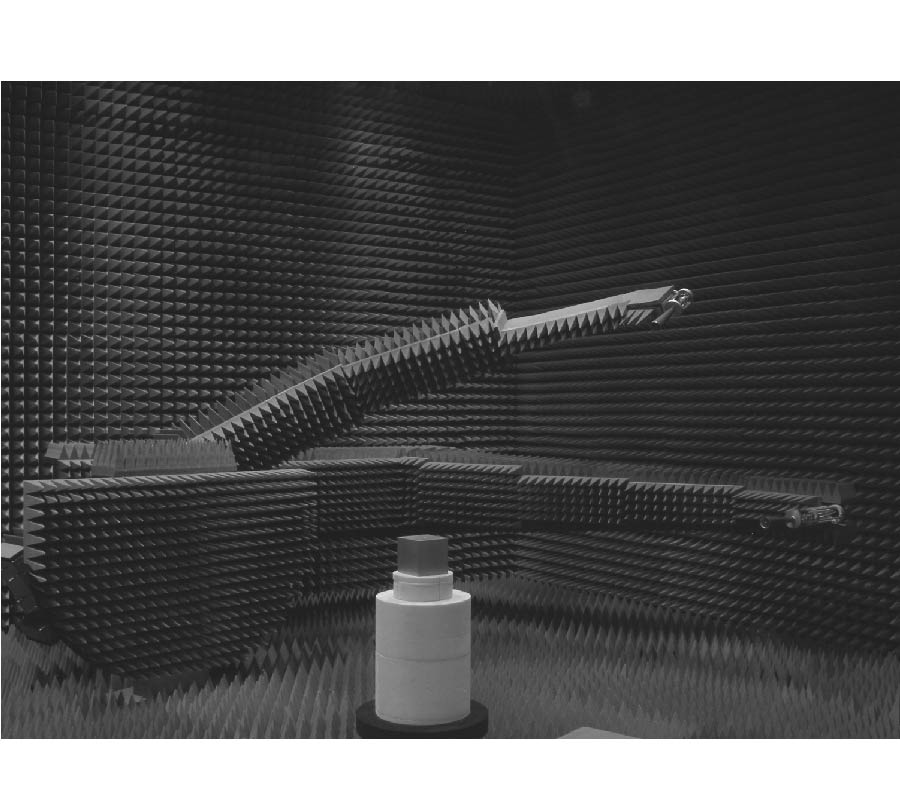
A simple DoA estimator is proposed with a switched beam antenna. The estimator is implemented with an adjacent pattern power ratio algorithm. For a single source signal, the received signal powers are measured while the antenna switches over a set of measured directive beam patterns. The pattern that exhibits the maximum received signal power is chosen. Then, the ratio between the pattern adjacent to the chosen pattern and the chosen pattern, is used to find the DoA by using a lookup table or by performing a linear regression approximation. Compared with conventional DoA estimators with switched beam antenna, the proposed algorithm allows DoA estimation with low computational cost, without sacrificing much the estimation precision. Computer simulations and experiments in an anechoic chamber are carried out to verify the proposed algorithm with a switched beam antenna: the electronically steerable parasitic array radiator (ESPAR) antenna.
A SIMPLE DOA ESTIMATOR USING ADJACENT PATTERN POWER RATIO WITH SWITCHED BEAM ANTENNA
2011-06-10
PIER C
Vol. 22, 47-54
Broadband CPW-Fed Antenna with Band-Rejected Characteristic for WLAN/ WiMAX Operation
An-Feng Sun , Ying-Zeng Yin , Shao-Hong Jing , Yi Yang , Bo-Wen Liu and Zhi Li
A novel single-layer broadband coplanar waveguide-fed antenna with band-rejected characteristic is proposed for WLAN/WiMAX operation. First, the broadband characteristic (2.43-5.97 GHz) is achieved by a CPW-fed patch antenna with a dual-Y slot. Then, a single slit is inserted on the radiating patch or ground plane to introduce a notched band. The proposed antenna has a compact size of 40 × 25 mm2. The broadband characteristic and band-rejected functions of the proposed antennas are implemented and measured. Two types of antennas were studied. Measured notched-band impedance bandwidths (return loss <10 dB) are 370 MHz and 1050 MHz, respectively, which satisfies the requirements for WLAN and WiMAX applications. Detailed design steps and experimental results for the designs are studied and investigated in this paper.
BROADBAND CPW-FED ANTENNA WITH BAND-REJECTED CHARACTERISTIC FOR WLAN/ WIMAX OPERATION
2011-06-10
PIER
Vol. 117, 339-355
On the Analytic-Numeric Treatment of Weakly Singular Integrals on Arbitrary Polygonal Domains
Sergio Lopez-Pena , Athanasios G. Polimeridis and Juan Mosig
An alternative analytical approach to calculate the weakly singular free-space static potential integral associated to uniform sources is presented. Arbitrary oriented flat polygons are considered as integration domains. The technique stands out by its mathematical simplicity and it is based on a novel integral transformation. The presented formula is equivalent to others existing in literature, being also concise and suitable within a singularity subtraction framework. Generalized Cartesian product rules built on the double exponential formula are utilized to integrate numerically the resulting analytical 2D potential integral. As a consequence, drawbacks associated to endpoint singularities in the derivative of the potential are tempered. Numerical examples within a surface integral equation-Method of Moments framework are finally provided.
ON THE ANALYTIC-NUMERIC TREATMENT OF WEAKLY SINGULAR INTEGRALS ON ARBITRARY POLYGONAL DOMAINS