Search Results(13802)

2011-07-06
PIER B
Vol. 32, 39-56
Modelling of a BST-0.5 Idc with Application in Electronically Scanned CRLH LWA
Shahab Ramezanpour , Saeid Nikmehr and Ali Pourziad
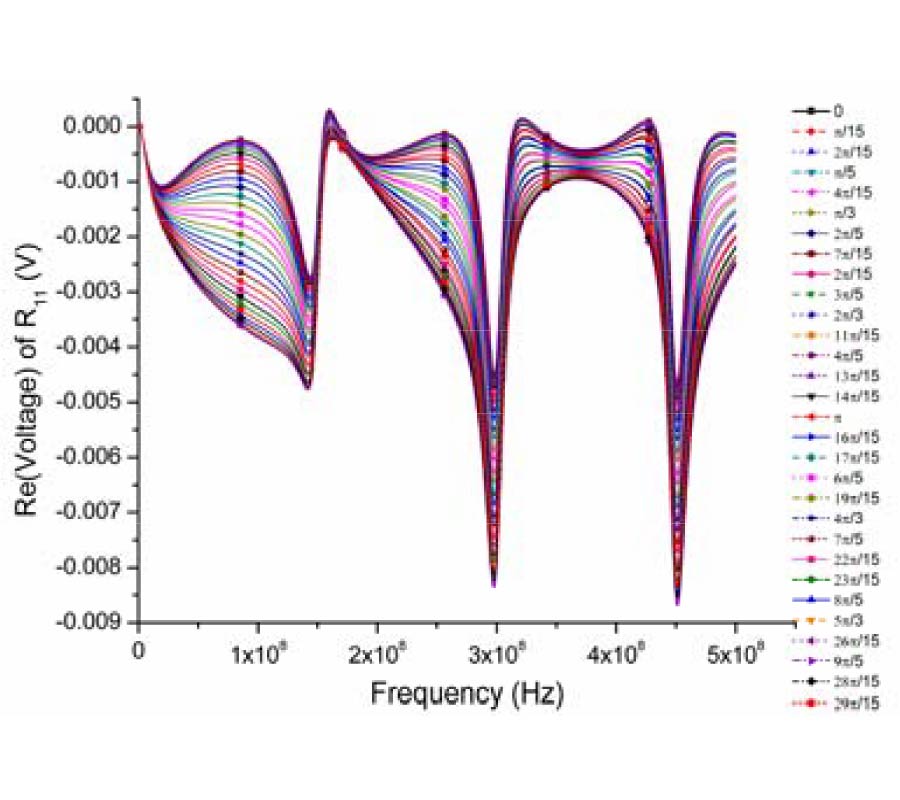
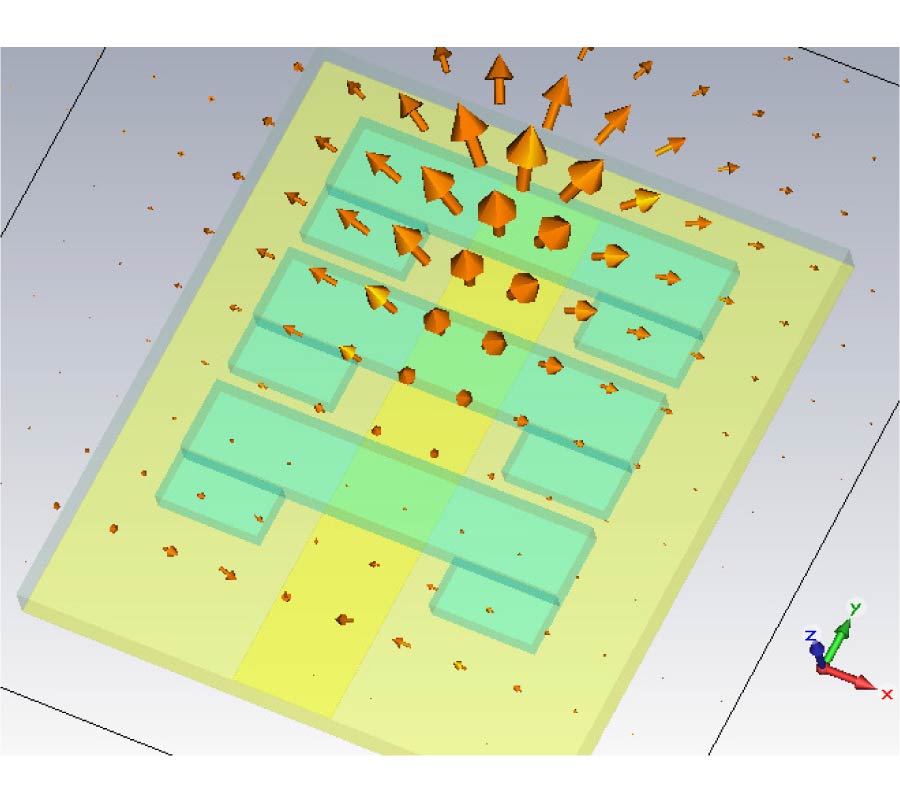
Modeling of a ferroelectric interdigital capacitor (IDC) and its incorporating in composite right/left-handed (CRLH) unit cells is represented. To evaluate the capacitance of a multi-layered IDC structures, conformal mapping and partial capacitance methods are utilized. Furthermore, the partial displacement method is utilized to calculate the electric field distribution and the its relation in the ferroelectric layer to applied voltage is obtained. Using this relation in a phenomenological model, dependency of the relative permittivity of ferroelectric on the applied voltage is obtained. The designed unit cell is comprised of IDCs and spiral inductors. To alter the propagation constant of the unit cell by varying the applied voltage, a thin layer ofBa0.5Sr0.5TiO3 (BST-0.5) ferroelectric is incorporated underneath an IDC, called BST-0.5 varactor. The periodic structure based on the designed unit cell leads to a CRLH LWA. The Tunability of the periodic structure with three unit cell is demonstrated by varying the relative permittivity of the ferroelectric layer.
MODELLING OF A BST-0.5 IDC WITH APPLICATION IN ELECTRONICALLY SCANNED CRLH LWA
2011-07-06
PIER B
Vol. 32, 21-38
Performance of the Adaptive Normalized Matched Filter Detector in Compound-Gaussian Clutter with Inverse Gamma Texture Model
Arezki Younsi and M. Nadour
In the present paper, we deal with the performance analysis of the Adaptive Normalized Matched Filter (ANMF) detector in compound-Gaussian clutter with inverse gamma texture model and unknown covariance matrix. First, the maximum likelihood estimate (MLE) of the covariance matrix for this clutter model is derived. The MLE is then plugged into the ANMF test and compared to the well known normalized sample covariance matrix estimate (NSCM) and the approximate maximum likelihood estimate (AML). The performance in terms of CFAR behavior and detection probability is evaluated in the presence of simulated clutter and real sea clutter data, which is collected by the McMaster IPIX radar.
PERFORMANCE OF THE ADAPTIVE NORMALIZED MATCHED FILTER DETECTOR IN COMPOUND-GAUSSIAN CLUTTER WITH INVERSE GAMMA TEXTURE MODEL
2011-07-06
PIER C
Vol. 22, 211-229
Sectoral m-EBG Antenna with Multipolarization Capabilities for WiMAX Base Stations
Mohamad Hajj , Regis Chantalat , Michele Lalande and Bernard Jecko
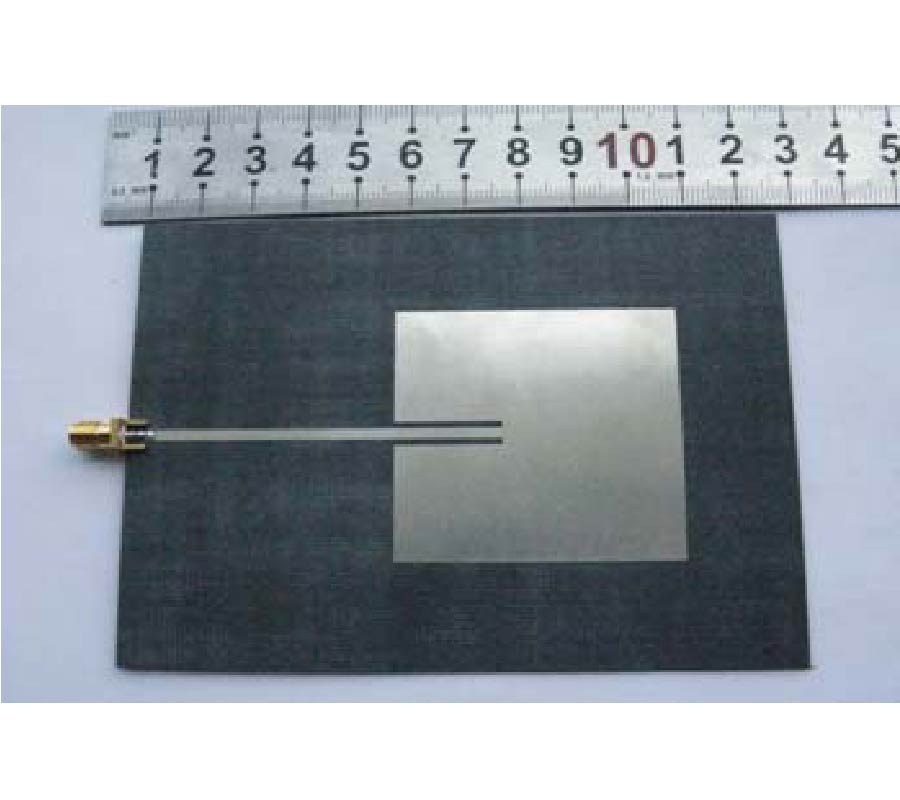
A novel multipolarized sectoral antenna on a metallic electromagnetic band gap (M-EBG) surface is investigated. The M-EBG structure behaves as a partially reflecting surface (PRS) and enhances the directivity of a simple radiating source. The use of metallic structures offers a new approach to industrial partners in order to reduce costs and to facilitate design techniques. By using double layers of M-EBG structure working on orthogonal polarizations as a superstrate with a single patch feeding by two ports, multipolarization operation is achieved. This antenna provides vertical, horizontal, 0°/90°and circular polarizations with a sectoral radiation pattern in the azimuth plane. M-EBG antennas with sectoral pattern are usually designed only for vertical polarization. In order to verify the results a Bipolar M-EBG Sectoral antenna prototype for WIMAX application~[5.15-5.35] GHz is realized and measured. Finally, we study the possibility to generate circular polarization.
SECTORAL M-EBG ANTENNA WITH MULTIPOLARIZATION CAPABILITIES FOR WIMAX BASE STATIONS
2011-07-06
PIER M
Vol. 19, 77-90
Influence of Measured Scattering Parameters on the Convolution Simulation of Nonlinear Loaded High-Speed Microstrip Interconnects
Carlos Manuel Figueroa Cárdenas and Alejandro Duenas Jimenez
The simulation of nonlinear loaded high-speed microstrip interconnects by means of a convolution-based procedure is described when both, analytical and measured scattering parameters are used. Closed-form equations are employed to obtain the analytical scattering parameters. The influence of measured scattering parameters, when these are used instead the analytical ones, is investigated to know how the microstrip interconnect responses are affected. The convolution procedure is complemented by including the transmission line linear equation and the microwave circuit reflection theory. S
INFLUENCE OF MEASURED SCATTERING PARAMETERS ON THE CONVOLUTION SIMULATION OF NONLINEAR LOADED HIGH-SPEED MICROSTRIP INTERCONNECTS
2011-07-06
PIER
Vol. 118, 335-354
Electric Field Discontinuity-Considered Effective-Permittivities and Integration-Tensors for the Three-Dimensional Finite-Difference Time-Domain Method
Yong-Gu Lee
Electric field Discontinuity-Considered Effective-Permittivities and Integration-Tensors (DC-EP&IT) for the three-dimensional Finite-Difference Time-Domain (FDTD) method are derived using a contour-path approach that considers the jump in the electric field at the interface of two dielectric materials. This is a natural but not so obvious extension to the work by Mohammandi et al. [1] from two to three-dimensions. Proposed method is verified by comparing with the exact Mie theory as well as the staircase, volume-averaged and subpixel methods.
ELECTRIC FIELD DISCONTINUITY-CONSIDERED EFFECTIVE-PERMITTIVITIES AND INTEGRATION-TENSORS FOR THE THREE-DIMENSIONAL FINITE-DIFFERENCE TIME-DOMAIN METHOD
2011-07-06
PIER
Vol. 118, 321-334
Design and Optimization of Equal Split Broadband Microstrip Wilkinson Power Divider Using Enhanced Particle Swarm Optimization Algorithm
Dong Wang , Hong Zhang , Tanghong Xu , Hao Wang and Guoguang Zhang
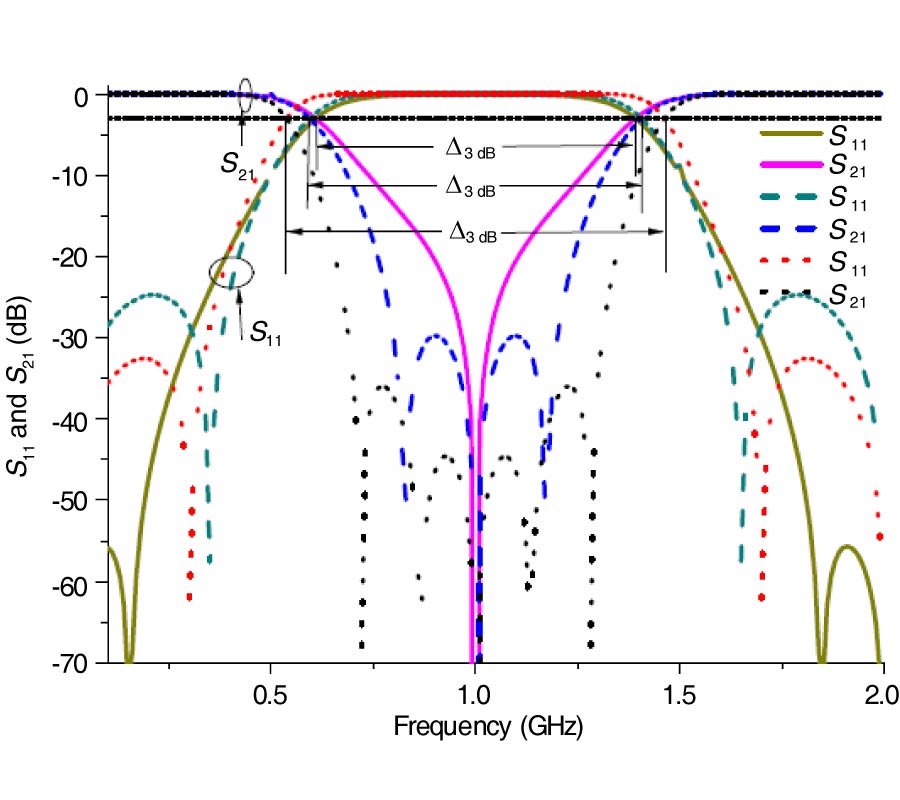
An enhanced particle swarm optimization (EPSO) algorithm is proposed. To improve convergence accuracy and velocity, we introduce a quadratic interpolation method and perturbation to personal best particles in EPSO. Then, a design procedure based on the EPSO is proposed for the design and optimization of equal split broadband microstrip Wilkinson power dividers (MWPDs). A set of numerical examples and fabricated samples are presented to validate the improvement of the proposed EPSO. Even-odd mode analysis is incorporated in the design procedure to calculate the scattering matrix of the MWPD on the basis of the dispersion and dissipation microstrip line model. A fitness function is then constructed according to the scattering parameters. The optimized widths and lengths of microstrip lines and values of isolation resistors are directly obtained by minimizing the fitness function. EPSO is also compared with the genetic algorithm (GA), standard particle swarm optimization (PSO) and improved particle swarm optimization (IPSO).
DESIGN AND OPTIMIZATION OF EQUAL SPLIT BROADBAND MICROSTRIP WILKINSON POWER DIVIDER USING ENHANCED PARTICLE SWARM OPTIMIZATION ALGORITHM
2011-07-06
PIER
Vol. 118, 303-319
ANN-Based Pad Modeling Technique for MOSFET Devices
Xiuping Li , Yushan Li and Junhui Zhao
In this paper, an approach for the pad modeling of the test structure for Metal Oxide Semiconductor Field Effect Transistor (MOSFET) up to 40\,GHz is presented. The approach is based on a combination of the conventional equivalent circuit model and artificial neural network (ANN). The pad capacitances and series resistors are directly obtained from EM (electromagnetic) simulation of the $S$ parameters with different size of pad and operating frequency. The parasitic elements in the test structure can be modeled by using a sub artificial neural network (SANN). So the pad capacitances and series resistors can be regarded as functions of the dimensions of the pad structure and operating frequencies by using SANN. Good agreement between the ANN-based modeling and EM simulation results has been demonstrated. In order to remove the impact of the parasitic elements, the de-embedding procedure for MOSFET device using ANN-based pad model is also demonstrated.
ANN-BASED PAD MODELING TECHNIQUE FOR MOSFET DEVICES
2011-07-05
PIER B
Vol. 32, 1-20
Dynamic Thinning of Antenna Array Using Genetic Algorithm
Rajashree Jain and G. S. Mani
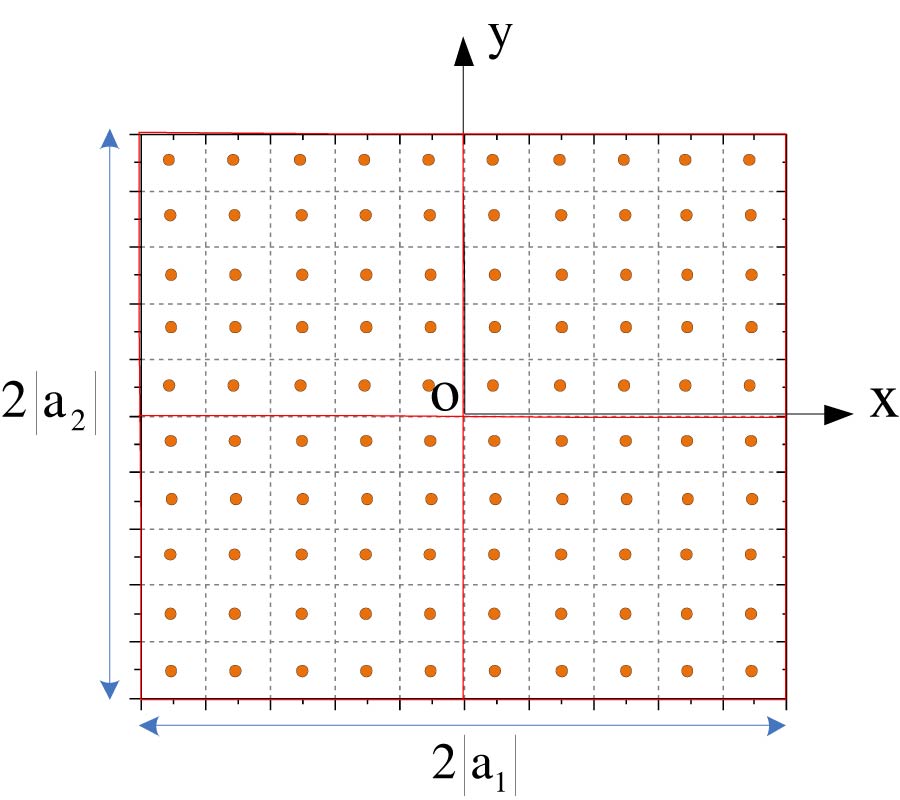
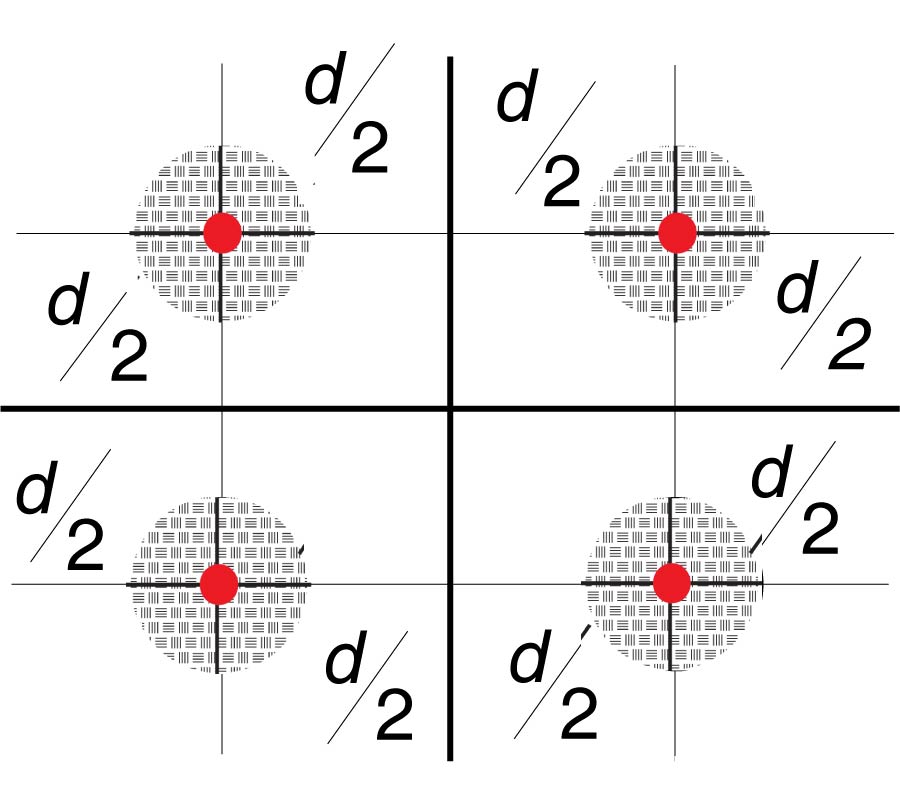
Thinning is a technique by which the total number of active elements in an antenna array is reduced without causing major degradation in system performance. Dynamic thinning is the process of achieving this under real time conditions. Stochastic techniques have been useful in the design of thinned arrays. However while applying the technique to large 2-D arrays, under changing conditions problems arise due to the very large and rugged solution space. Also, evaluation of the objective function in such cases requires large computational resources, thus reducing the rate of convergence. This paper suggests a technique using Genetic Algorithm which is useful for overcoming these problems. After discussing the basic concept involving dynamic thinning and application methodology, simulation results of applying the technique to linear and planar arrays are presented.
DYNAMIC THINNING OF ANTENNA ARRAY USING GENETIC ALGORITHM
2011-07-05
PIER B
Vol. 31, 357-379
Smart Electromagnetic Simulations: Guidelines for Design of Experiments Technique
Houssem Rafik El Hana Bouchekara , Ghassan Dahman and Mouaaz Nahas
Electromagnetic design problems usually involve a large number of varying parameters. A designer can use different kinds of models in order to achieve optimum design. Some models, e.g., finite-element model, can be very precise: however, it requires large computational costs (i.e., CPU time). Therefore, the designer should use a screening process to reduce the number of parameters in order to reduce the required computational time. In this paper, using the Design of Experiments (DOE) approach to reduce the number of parameters is explored. The benefits of this technique are tremendous. For example, once researchers realize how much insight and information can be obtained in a relatively short amount of time from a well-designed experiment, DOE would become a regular part of the way they approach their simulation projects. The main objective of this paper is to apply the DOE technique to electromagnetic simulations of different systems and to explore its effectiveness on a new field, namely the magnetic refrigeration systems. The methodology of the DOE is presented to assess the effects of the different variables and their interaction involved in electromagnetic simulations design and optimization processes.
SMART ELECTROMAGNETIC SIMULATIONS: GUIDELINES FOR DESIGN OF EXPERIMENTS TECHNIQUE
2011-07-05
PIER Letters
Vol. 25, 31-36
A 30 GHz Planar Array Antenna Using Coupled Lens
Angel Colin , David Ortiz , Enrique Villa , Eduardo Artal and Enrique Martínez-Gonzalez
Measurements of the radiation patterns from a planar array of bow-tie slot antennas coupled through an extended hemispherical lens are reported. The design operates over 10% bandwidth centred at 30 GHz with a return loss of 10 dB. A moderate directivity from the integrated lenses of 13 dB with half-power beamwidth (HPBW) of 10º is achieved. The reduced size of this design is suitable for the integration with millimetre wave circuits.
A 30 GHZ PLANAR ARRAY ANTENNA USING COUPLED LENS
2011-07-05
PIER
Vol. 118, 287-301
A Slow Light Fishnet-Like Absorber in the Millimeter-Wave Range
Miguel Navarro-Cia , Victor Torres Landivar , Miguel Beruete and Mario Sorolla Ayza
A novel route to achieve a narrowband free-space electromagnetic absorber in any range of the spectrum based on stacked subwavelength hole arrays is proposed. The absorption is obtained by means of a slow light mode inside a fishnet-like engineered structure and exploiting the unavoidable misalignments and bucklings of the free-standing stack. An incoming pulse becomes permanently trapped in the structure due to the near zero group velocity which causes an enhancement of the radiation-structure interaction that leads to a huge increment of losses arising from the finite conductivity of the metal as well as arrangement tolerances. This approach is studied not only by simulation but also experimentally under normal incidence at millimeter wavelengths. Moreover, a basic grasp about the angular dependence of the structure is given by analyzing the 2D dispersion diagram. It shows that this scheme may also display high absorption under oblique incidence for s-polarization (or TE-polarization), whereas $p$-polarization (TM-polarization) would degrade its performance.
A SLOW LIGHT FISHNET-LIKE ABSORBER IN THE MILLIMETER-WAVE RANGE
2011-07-05
PIER
Vol. 118, 273-286
Impedance-Mismatched Hyperlens with Increasing Layer Thicknesses
Xuan Li , Yuqian Ye and Yi Jin
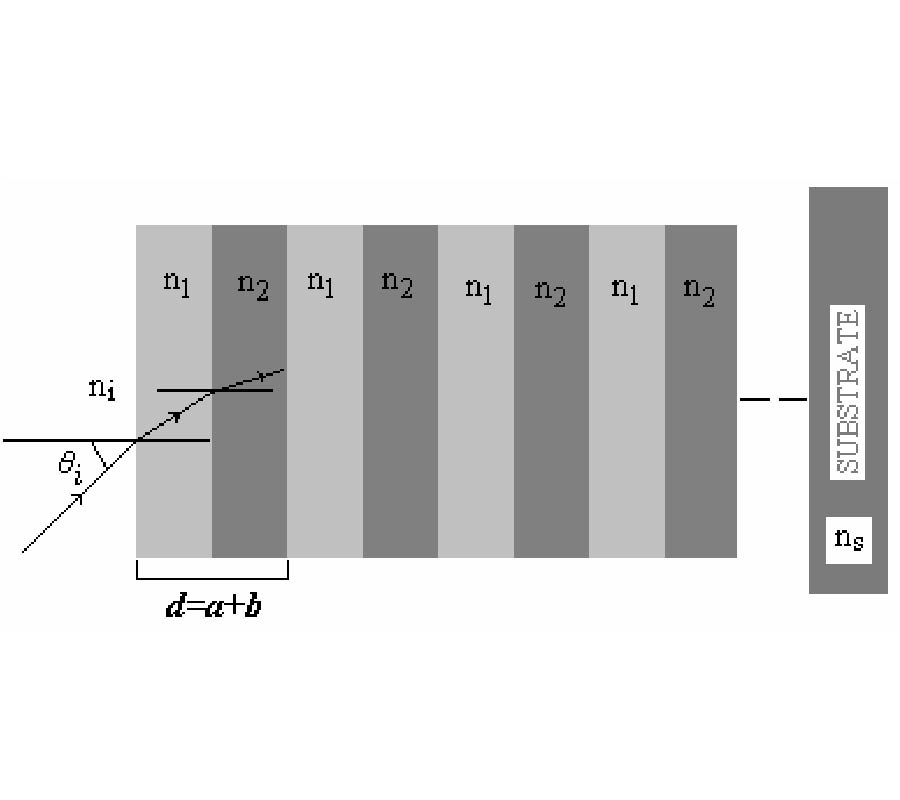
Structure with non-negative effective permittivities in the radial and tangential directions can also perform far-field imaging beyond the diffraction limit since the dispersion curves can be long and flat enough and utilized to transfer the subwavelength information. Thus we propose an impedance-mismatched hyperlens with such a dispersion curve and increasing thicknesses (from the innermost layer to the outermost) to reduce reflection losses due to the impedance difference between the nearby layer pairs. Compared with the hyperlens with same thickness for each period, the resolution ability of the hyperlens with varying thicknesses can be improved dramatically, while the image intensity is weaker. Furthermore, the influence of the layer number on the imaging is also analyzed to improve the performance of the system and an improved hyperlens with repeated thickness setting is also utilized to increase the intensity of the magnified image.
IMPEDANCE-MISMATCHED HYPERLENS WITH INCREASING LAYER THICKNESSES
2011-07-05
PIER
Vol. 118, 253-271
A Compact Dual-Polarized Broadband Antenna with Hybrid Beam-Forming Capabilities
Hong-Li Peng , Wen-Yan Yin , Jun-Fa Mao , Di Huo , Xu Hang and Liang Zhou
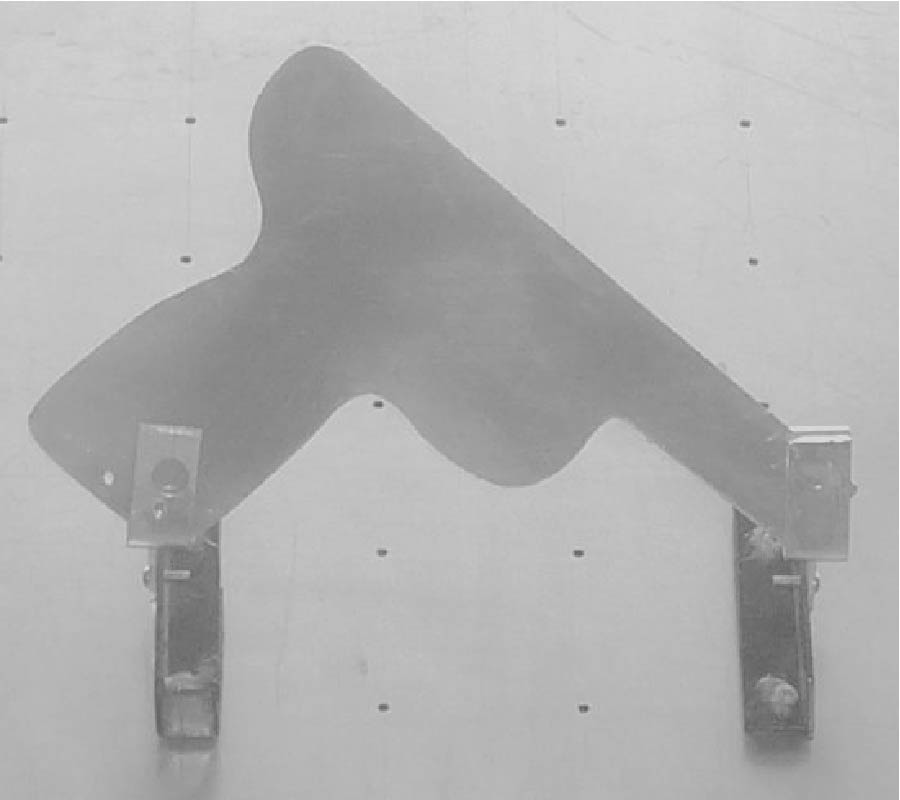
A broadband dual-polarized four-port (DPFP) antenna is presented in this paper, which consists of a radiation element and a feed network. It is very compact in size, with the diameter of 150.0 mm and the height of 47.0 mm, with the following unique properties: (1) it has hybrid beam-forming capability and operates at two modes, which depends on its excitation; (2) its operating frequency range is from 0.96 to1.78 GHz, and the return loss is about 10 dB; (\ref{eq3}) its insertion loss is (3±0.5) dB, with its balanced power splitting over the relative bandwidths of 37% at Mode 1 (180°±5° phase shifting) and 55% at Mode 2 (±5° phase shifting), respectively; (\ref{eq4}) an isolation of 30 dB at Mode 1 is obtained between the dual polarized ports, with the gain of 7.6 dBi and 42° of the 3 dB-bandwidth at 1.25 GHz; and (5) the gain difference between Modes 1 and 2 is about 7 dB, within the angle of -15° ≤ θ ≤ 15° for the same polarization at 1.25 GHz. For the application of DPFP, a hybrid beam forming algorithm is proposed with an angular precision of 3°, as validated by measurement.
A COMPACT DUAL-POLARIZED BROADBAND ANTENNA WITH HYBRID BEAM-FORMING CAPABILITIES
2011-07-04
PIER C
Vol. 22, 195-210
Printed Fork Shaped Dual Band Monopole Antenna for Bluetooth and UWB Applications with 5.5 GHz WLAN Band Notched Characteristics
Sanjeev Kumar Mishra , Rajiv Kumar Gupta , Avinash R. Vaidya and Jayanta Mukherjee
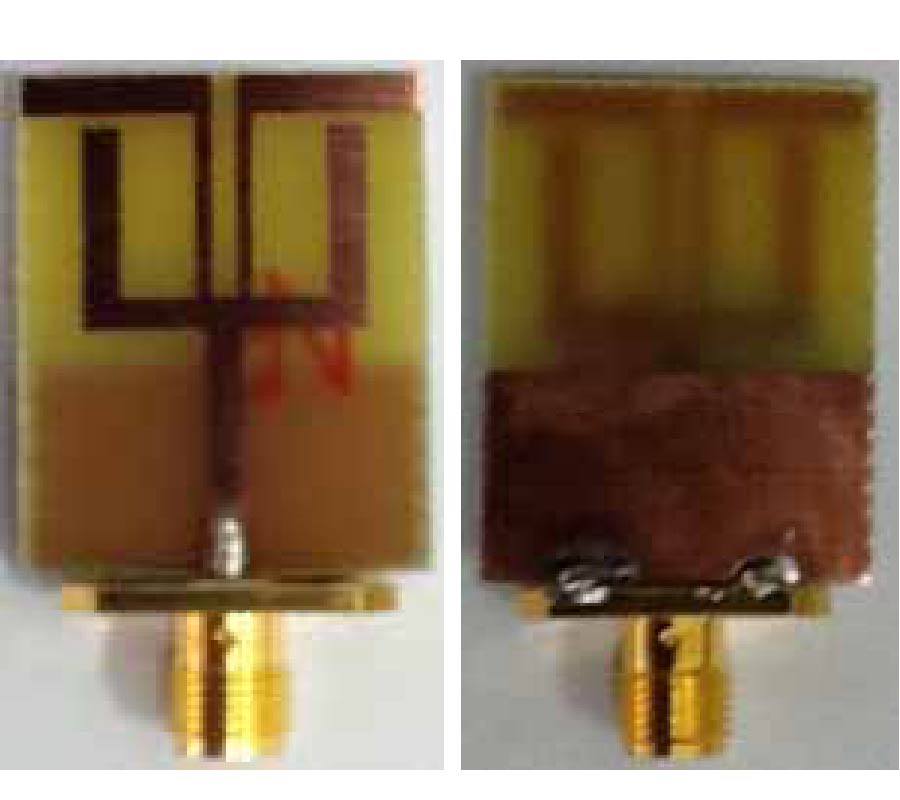
In this article, a compact microstrip-fed printed dual band antenna for Bluetooth (2.4-2.484 GHz) and UWB (3.1-10.6 GHz) applications with WLAN (5.15-5.825 GHz) band-notched characteristics is proposed. It is demonstrated that dual band characteristics with desired bandwidth can be obtained by using a fork shaped radiating patch, whereas, band-notched characteristics can be obtained by etching two L-shaped slots and two symmetrical step slots on the rectangular ground plane. The proposed antenna is simulated, fabricated and tested. The structure is fabricated on a low cost FR4 substrate having dimensions of 50 mm (Lsub) × 24 mm (Wsub) × 1.6 (H) mm and fed by a 50 Ω microstrip line. The proposed antenna has S11 ≤ -10 dB over 2.18-2.59 GHz, Bluetooth band, 3.098-5.15 GHz and 5.948-11.434 GHz, UWB band with WLAN band notch. The structure exhibits nearly omnidirectional radiation patterns, stable gain, and small group delay variation over the desired bands.
PRINTED FORK SHAPED DUAL BAND MONOPOLE ANTENNA FOR BLUETOOTH AND UWB APPLICATIONS WITH 5.5 GHZ WLAN BAND NOTCHED CHARACTERISTICS
2011-07-04
PIER C
Vol. 22, 179-193
Analysis of Electro Static Discharge on GaAs-Based Low Noise Amplifier
Chul-Hee Kim , Soon-Mi Hwang and Jaehoon Choi
This paper studies static effect of communication Low Noise Amplifier (LNA) that utilizes GaAs wafer. It analyzes the Electro-Static Discharge (ESD) effect, which occurs within communication components, such as GaAs LNA, and describes testing standard and methods. In order to find out GaAs LNA's susceptibility to static, two well-recognized communication GaAs LNA IC models were selected to be tested. Commercial program allowed measuring of static energy inserted within LNA's internal circuit by running a simulation about static discharge of GaAs LNA. Then we analyzed malfunctions caused by static and discussed about architectural problem and improvement according to the test and simulation result, from the perspective of GaAs LNA's electro static discharge.
ANALYSIS OF ELECTRO STATIC DISCHARGE ON GAAS-BASED LOW NOISE AMPLIFIER
2011-07-04
PIER M
Vol. 19, 61-75
Comparison of CPML Implementations for the GPU-Accelerated FDTD Solver
Jukka I. Toivanen , Tomasz P. Stefanski , Niels Kuster and Nicolas Chavannes
Three distinctively different implementations of convolutional perfectly matched layer for the FDTD method on CUDA enabled graphics processing units are presented. All implementations store additional variables only inside the convolutional perfectly matched layers, and the computational speeds scale according to the thickness of these layers. The merits of the different approaches are discussed, and a comparison of computational performance is made using complex real-life benchmarks.
COMPARISON OF CPML IMPLEMENTATIONS FOR THE GPU-ACCELERATED FDTD SOLVER
2011-07-03
PIER
Vol. 118, 243-251
Efficient Proper Orthogonal Decomposition for Backscatter Pattern Reconstruction
Chao-Fu Wang
A novel approach is presented for efficiently solving electromagnetic (EM) scattering problems using proper orthogonal decomposition (POD). As a proof of concept and demonstration of how to use the POD to solve EM scattering problems, two ways of implementing the POD procedure have been proposed and realized for calculating EM scattering from PEC targets. Numerical results obtained show that the POD is quite accurate for reconstructing backscatter patterns over wide range of frequencies and angles of interest based on the given snapshots.
EFFICIENT PROPER ORTHOGONAL DECOMPOSITION FOR BACKSCATTER PATTERN RECONSTRUCTION
2011-07-03
PIER
Vol. 118, 223-241
A Higher Order Analysis of a Class of Inhomogeneously Filled Conducting Waveguides
Ehsan Khodapanah and Saeid Nikmehr
A higher order analysis is applied to solve the problem of a class of inhomogeneously-filled conducting waveguides. This includes an arbitrary but smooth hollow conducting waveguides and waveguides filled with layered inhomogeneous materials. The method employs a set of spline-harmonic basis functions and leads to one-dimensional integrals for system matrix elements. This fact along with the higher order nature of the basis functions provides an accurate method for the analysis of the aforementioned waveguides. The accuracy and the convergence behavior of the method are studied through several numerical examples and the results are compared with the exact solutions and with the results of Ansoft HFSS simulator to establish the validity of the proposed method.
A HIGHER ORDER ANALYSIS OF A CLASS OF INHOMOGENEOUSLY FILLED CONDUCTING WAVEGUIDES
2011-07-03
PIER
Vol. 118, 205-221
Synthesis of Unequally Spaced Antenna Arrays by Using Inheritance Learning Particle Swarm Optimization
Dong Liu , Quanyuan Feng , Wei-Bo Wang and Xiao Yu
In this paper, synthesis of unequally spaced linear antenna arrays based on an inheritance learning particle swarm optimization (ILPSO) is presented. In order to improve the optimization efficiency of the PSO algorithm, we propose an inheritance learning strategy that can be applied to different topology of different PSO algorithms. In ILPSO algorithm, each cycle contains several PSO optimization processes, and uniform initial particle positions, part of which inherited from the good results in pre-cycles, are adopted in post-cycles. ILPSO enhances the exploration ability of PSO algorithm significantly, and can escape from the trap of local optimum areas with greater probability. The results demonstrate good performance of the ILPSO in solving a set of eight 30-D benchmark functions when compared to nine other variants of the PSO. The novel proposed algorithm has been applied in 32-element position-only array synthesis with three different constraints, simulation results show that ILPSO obtains better synthesis results reliably and efficiently.
SYNTHESIS OF UNEQUALLY SPACED ANTENNA ARRAYS BY USING INHERITANCE LEARNING PARTICLE SWARM OPTIMIZATION
2011-07-01
PIER B
Vol. 31, 339-356
Electromagnetic Analysis of Coaxial Gyrotron Cavity with the Inner Conductor Having Corrugations of an Arbitrary Shape
Gennadiy Ivanovich Zaginaylov and Irina Vladimirovna Mitina
The mathematical approach for the calculation of the membrane functions of a coaxial gyrotron cavity with an arbitrary corrugated inner rod is proposed. It is utilized mainly for two aims. First, it is shown that for typical parameters of the coaxial gyrotron cavity with the corrugated inner conductor the shape of corrugations only slightly influences the eigenvalues of competing eigen-modes. However, it can significantly influence the density of ohmic losses in the inner conductor. In particular, it is shown that the density of ohmic losses can be reduced almost twice by the proper choice of the corrugation shape. Second, it is shown that the usual idealizations of the corrugated surface of the inner conductor (the surface with rectangular grooves, having rounded edges, is approximated by a surface with wedged groves that have sharp edges) are correct. The physical interpretation of the obtained results and their practical meaning are discussed.
ELECTROMAGNETIC ANALYSIS OF COAXIAL GYROTRON CAVITY WITH THE INNER CONDUCTOR HAVING CORRUGATIONS OF AN ARBITRARY SHAPE