Search Results(13802)

2011-07-21
PIER
Vol. 119, 107-132
A Novel Approach to Target Localization through Unknown Walls for through-the-Wall Radar Imaging
Yong Jia , Lingjiang Kong and Xiaobo Yang
This paper mainly deals with the problem of target localization with unknown wall parameters for through-the-wall radar imaging (TWRI) applications. A novel approach is presented to correct the shift in target position due to the ambiguities of the wall parameters. This approach is based on imaging by using at least two assumed wall relative permittivities. For each assumed relative permittivity, a sequence of target images are obtained using different assumed wall thicknesses, and a linear trajectory is formed via Radon transform. The intersection of these linear trajectories corresponding to different assumed relative permittivities is the estimated target position. Besides, the estimated wall parameters are acquired to form the high-quality image. Simulation and experiment results show that the estimated target positions with the proposed approach are well consistent with the true target locations, and the high-quality images are generated with the estimated wall parameters.
A NOVEL APPROACH TO TARGET LOCALIZATION THROUGH UNKNOWN WALLS FOR THROUGH-THE-WALL RADAR IMAGING
2011-07-21
PIER
Vol. 119, 85-105
Taylor-Orthogonal Basis Functions for the Discretization in Method of Moments of Second Kind Integral Equations in the ScatteringAnalysis of Perfectly Conducting or Dielectric Objects (Invited Paper)
Eduard Ubeda , José M. Tamayo and Juan Rius
We present new implementations in Method of Moments of two types of second kind integral equations: (i) the recently proposed Electric-Magnetic Field Integral Equation (EMFIE), for perfectly conducting objects, and (ii) the Müller formulation, for homogeneous or piecewise homogeneous dielectric objects. We adopt the Taylor-orthogonal basis functions, a recently presented set of facet-oriented basis functions, which, as we show in this paper, arise from the Taylor's expansion of the current at the centroid of the discretization triangles. We show that the Taylor-orthogonal discretization of the EMFIE mitigates the discrepancy in the computed Radar Cross Section observed in conventional divergence-conforming implementations for moderately small, perfectly conducting, sharp-edged objects. Furthermore, we show that the Taylor-discretization of the Müller-formulation represents a valid option for the analysis of sharp-edged homogenous dielectrics, especially with low dielectric contrasts, when compared with other RWG-discretized implementations for dielectrics. Since the divergence-Taylor Orthogonal basis functions are facet-oriented, they appear better suited than other, edge-oriented, discretization schemes for the analysis of piecewise homogenous objects since they simplify notably the discretization at the junctions arising from the intersection of several dielectric regions.
TAYLOR-ORTHOGONAL BASIS FUNCTIONS FOR THE DISCRETIZATION IN METHOD OF MOMENTS OF SECOND KIND INTEGRAL EQUATIONS IN THE SCATTERING
ANALYSIS OF PERFECTLY CONDUCTING OR DIELECTRIC OBJECTS (Invited Paper)
2011-07-21
PIER
Vol. 119, 59-84
A Contribution to Linearity Improvement of a Highly Efficient pA for WiMAX Applications
Latifa El Maazouzi , Angel Mediavilla Sanchez and Paolo Colantonio
This paper describes the design of a highly efficient and linear GaN HEMT power amplifier which may be used in WiMAX application. To improve linearity of highly efficient power amplifiers, a technique using diodes in the gate DC path was applied to TL and 2HT amplifier. This solution using diodes offers a good manner to improve linearity near saturation zone compared to the approach using only a DC gate resistor for TL (tuned load) case as well as for 2HT (second harmonic tuning approach). A 2.5 GHz 2HT power amplifier circuit was built, and measured data confirm the linearity improvement, particularly near saturation zone, as predicted by simulation, maintaining higher power performances. An output power of 36.8 dBm has been measured with an associated power added efficiency of 46.5% and carrier to third order intermodulation (C/I3) of 53.4 dBc. A 2HT PA also exhibits good performances across the full (2.3-2.7) GHz band. An output power ranging from (35-36.9) dBm with an associated gain of $12.9±0.9 and a power added efficiency ranging from (40-46)% are measured across the full (2.3-2.7) GHz band.
A CONTRIBUTION TO LINEARITY IMPROVEMENT OF A HIGHLY EFFICIENT PA FOR WIMAX APPLICATIONS
2011-07-20
PIER B
Vol. 32, 283-297
Optimum High Impedance Surface Configuration for Mutual Coupling Reduction in Small Antenna Arrays
Nicolas Capet , Cedric Martel , Jérôme Sokoloff and Olivier Pascal
In this paper, the electromagnetic properties of two different High Impedance Surfaces (HIS) with or without Electromagnetic Band Gap (EBG) in different configurations are investigated for mutual coupling reduction in small antenna arrays. The resonant mechanisms of these structures are studied using transmission calculations in a parallel plate waveguide. An optimum configuration is then proposed. It is shown that a good isolation performance can be achieved without the need of metallic vias when the structure is embedded in a metallic cavity, which limits significantly the number of HIS cells needed to perform a good isolation and the cost of manufacture.
OPTIMUM HIGH IMPEDANCE SURFACE CONFIGURATION FOR MUTUAL COUPLING REDUCTION IN SMALL ANTENNA ARRAYS
2011-07-20
PIER C
Vol. 22, 259-271
Radiofrequency Performances of Transparent Ultra-Wideband Antennas
Julien Hautcoeur , Franck Colombel , Xavier Castel , Mohamed Himdi and Eduardo Motta Cruz
In this paper, optically transparent ultra-wideband (UWB) monopole antennas in S-band and C-band are presented, compared and discussed. Three transparent UWB antennas elaborated from the AgGL (Silver Grid Layer) material with various levels of transparency (54.5%, 73.4% and 80.3%) and of sheet resistances 0.018 Ω/sq, 0.022 Ω/sq and 0.052 Ω/sq, respectively are tested. The radiofrequency measurements show performances very close to those of a light reflecting reference antenna made of a continuous silver/titanium bilayer (0.0026 Ω/sq sheet resistance). Conversely, the fourth transparent antenna, made of usual transparent conducting oxide/metal multilayer presents significant ohmic losses and weak radiofrequency performances. The gains of the UWB AgGL antennas are similar to that of the reference antenna (~6 dBi max.). Whereas the gain of the transparent multilayer antenna always stays ~2 dB lower than that of the reference. This work demonstrates the relevance of AgGL coating in the fabrication of transparent UWB antennas with high radiation efficiency.
RADIOFREQUENCY PERFORMANCES OF TRANSPARENT ULTRA-WIDEBAND ANTENNAS
2011-07-19
PIER B
Vol. 32, 263-282
Fresnel Lenses Based on Nano Shell-Silver Coated Silica Array for Solar Cells Applications
Taha Ahmed Elwi and Hussain M. Al-Rizzo
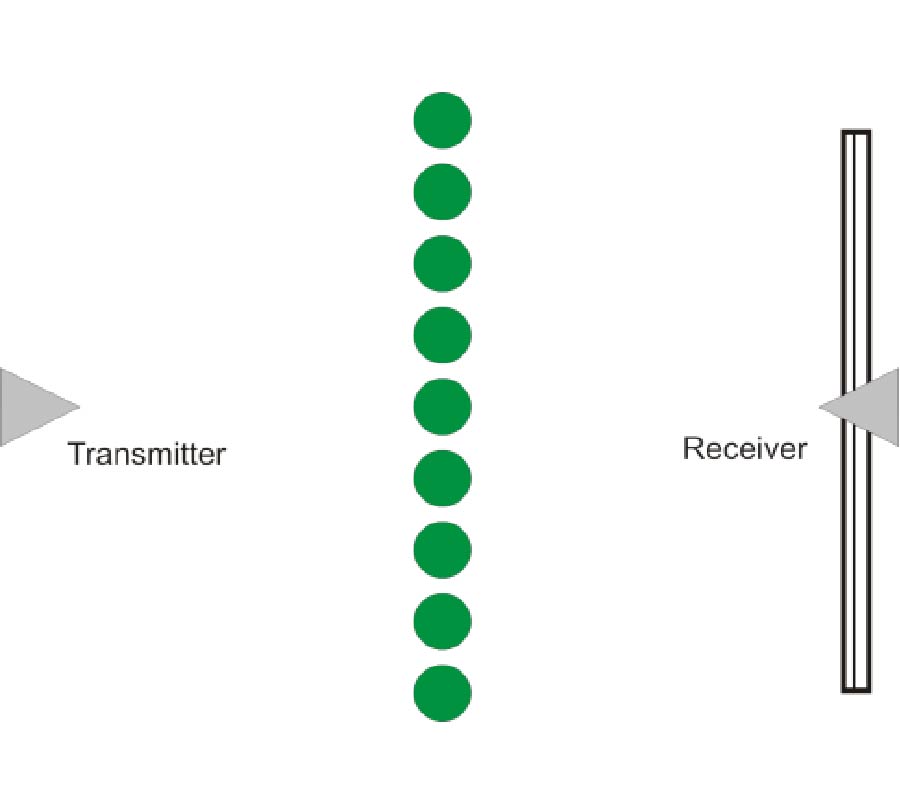
Fresnel lenses are low-cost opcitical elements used for focusing sunlight to solar panels to ensure operation under high-flux density. However, the conventional Fresnel lens has a relatively high material usage and hence contributes to additional efficiency degradation. Moreover, traditional design of Fresnel lenses introduces additional prismatic facets, due to deviations in manufacturing, which reflect the light toward the back focal spot, leading to additional losses. In this paper, Fresnel lenses based on finite arrays of Nano Shell-Silver Coated Silica (NSSCS) are proposed to overcome the aforementioned drawbacks from infrared regime through the visible band to the ultraviolet region. To identify reflection losses, material losses of the NSSCS array and rejection bands due to the NSSCS array arrangement, three unique electromagnetic (EM) approaches are invoked: Frequency Selective Surfaces (FSS) to determine reflection bands, Metamaterial (MTM) to specify material losses and Electromagnetic Band Gap (EBG) to locate the rejection band. The EM characteristics of the NSSCS array are evaluated for wavelengths ranging from 0.3 μm to 300 μm, using CST MicroWave Studio (CST MWS), which is based on the Finite Integration Technique (FIT). It is found that the NSSCS array exhibits excellent transmittance within two bands, one from 545 nm to 857 nm and the other from 444.5 nm to 480 nm, for angles ranging from 0o to 180o along the azimuth and elevation. The effective refractive index (neff spectra showed that the NSSCS array does not provide a negative for its real (neff part over the considered wavelength band. The imaginary part of (neff value is found to be almost insignificant, between 0.857 μm to 1.714 μm and 316 nm to 414 nm and lossy elsewhere. In general, the NSSCS array shows no specific stop band over the considered frequency region. Fresnel lenses based on a 9×9 NSSCS array configuration with planar, concave and convex profiles are presented in this paper. The beam width and power density of the emerged beams are evaluated at different wavelengths for different lens sizes. In general, it is found that the power density spectrum is largely dependent on the imagery part of neff. Nevertheless, the beam width decreases by increasing the lens size, while it decays for wavelengths longer than 500 nm. The concave and convex profiles are introduced to further enhance beam width. The effects of increasing the lens size from 9×9 to 11×11 on the beam width are reported for the concave and convex profiles. It is found that the concave design provides almost a constant beam width at 666.7 nm, 461.5 nm and 316 nm with changing array size, while the convex design does not. Characteristics of the emerged EM beams, in terms of beam waist, depth of focus and phase retardation, are evaluated based on Gaussian optic formalisms for the 9×9 NSSCS array. It is found that the beam waist and the depth of focus for the flat profile vary from 334.03 nm to 387.90 nm and 105.16 nm to 285.65 nm, respectively. The beam waist changes from 365.12 nm to 381.41 nm, while the depth of focus changes from 125.65 nm to 289.45 nm for the convex profile. Finally, the beam waist changes from 313.36 nm to 318.19 nm, and the depth of focus changes from 925.49 nm to 201.45 nm for the concave profile.
FRESNEL LENSES BASED ON NANO SHELL-SILVER COATED SILICA ARRAY FOR SOLAR CELLS APPLICATIONS
2011-07-19
PIER C
Vol. 22, 241-258
Determining Optimal Sensing Time for Multi-Radio Multi-Channel Cognitive Radios
Brownson Obaridoa Obele and Mohsin Iftikhar
Fast and efficient spectrum sensing is vital for multi-radio multi-channel cognitive radio (CR) networks where unlicensed secondary users (SUs) have to sense and opportunistically transmit on multiple spectrum bands without causing any harmful interference to the licensed primary users (PUs) of those spectrum bands. Accordingly, this paper presents a smart, practical and efficient wideband spectrum sensing scheme based on an optimal sensing stop policy that aims to optimize SU throughput while adhering to the PU interference constraints. Unlike existing work, this scheme is smart because in determining the best time for the multi-transmitter SU to stop sensing and start data transmission based on the channels that have been sensed idle, this scheme explicitly takes into consideration the number of transmitters on the SU; so-called N-transmitters constrained SU. Further, we formulate and solve the optimal sensing stopping problem. The numerical and simulation results presented verify the efficiency of the proposed sensing scheme.
DETERMINING OPTIMAL SENSING TIME FOR MULTI-RADIO MULTI-CHANNEL COGNITIVE RADIOS
2011-07-19
PIER
Vol. 119, 35-57
SAR Image Simulation with Application to Target Recognition
Yang-Lang Chang , Cheng-Yen Chiang and Kunshan Chen
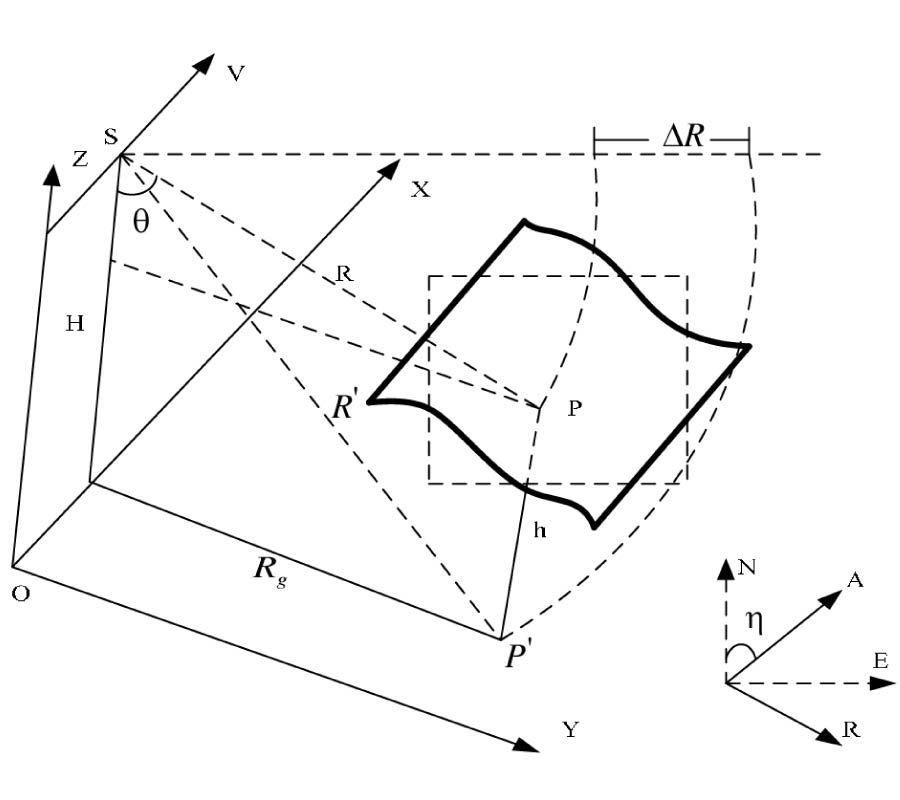
This paper presents a novel synthetic aperture radar (SAR) image simulation approach to target recognition, which consists of two frameworks, referred to as the satellite SAR images simulation and the target recognition and identification. The images simulation makes use of the sensor and target geo-location relative to the Earth, movement of SAR sensor, SAR system parameters, radiometric and geometric characteristics of the target, and target radar cross section (RCS), orbital parameters estimation, SAR echo signal generation and image focusing to build SAR image database. A hybrid algorithm that combines the physical optics, physical diffraction theory, and shooting and bouncing rays was used to compute the RCS of complex radar targets. Such database is vital for aided target recognition and identification system Followed by reformulating the projection kernel in an optimization equation form, the target's reflectivity field can be accurately estimated. Accordingly, the target's features can be effectively enhanced and extracted, and the dominant scattering centers are well separated. Experimental results demonstrate that the simulated database developed in this paper is well suited for target recognition. Performance is extensively tested and evaluated from real images by Radarsat-2 and TerraSAR-X. Effectiveness and efficiency of the proposed method are further confirmed.
SAR IMAGE SIMULATION WITH APPLICATION TO TARGET RECOGNITION
2011-07-19
PIER
Vol. 119, 19-33
Design of Compact Quadruplexer Based on Defected Stepped Impedance Resonators
Jian Zhong Chen , Nan Wang , Kun Deng and Shuai Yang
A novel compact quadruplexer based on defected stepped impedance resonator (DSIR) with high isolation is presented in this paper. The proposed quadruplexer consists of a common input feeding line, four kinds of folded DSIRs and four individual output feeding lines. Considering the loading effect among channel filters, the input DSIRs must be properly located with respect to the common feeding line in order to realize all external quality factors at the same time, so that the loading effect becomes very small. Furthermore, since the compact DSIRs resonate at multiple fundamental frequencies, a high-isolation quadruplexer with size reduction can be obtained. A fabricated prototype of the proposed quadruplexer is developed. The channel performance obtained by measurement and EM simulation are in good agreement.
DESIGN OF COMPACT QUADRUPLEXER BASED ON DEFECTED STEPPED IMPEDANCE RESONATORS
2011-07-18
PIER B
Vol. 32, 243-262
Low-Leakage with Attenuated Material Loss Hybrid Coaxial Cable
David Elbaz and Zeev Zalevsky
We investigate a new mean of decreasing leakage and material loss from coaxial cables using different metallic shield and central conducting part geometries. The suggested model is composed of a central conductor surrounded by 40 metallic wires circularly disposed. The proposed cable is also a hybrid one allowing simultaneous transmission of optical as well as radio frequency (RF) signals. The fabrication techniques for the proposed cable are similar to the one applied in the realization of optical fibers. Besides the fact that the attenuation along the proposed cable is reduced, the most important result of this study is that the interference generated by this source on external cables is also lowered.
LOW-LEAKAGE WITH ATTENUATED MATERIAL LOSS HYBRID COAXIAL CABLE
2011-07-18
PIER B
Vol. 32, 217-242
Unified Efficient Fundamental Adi-FDTD Schemes for Lossy Media
Ding Yu Heh and Eng Leong Tan
This paper presents the unified efficient fundamental alternating-direction-implicit finite-difference time-domain (ADI-FDTD) schemes for lossy media. The schemes presented include averaging, forward-forward, forward-backward and novel exponential time differencing schemes. Unifications of these schemes in both conventional and efficient fundamental forms of source-incorporated ADI-FDTD are provided. In the latter, they are formulated in the simplest, most concise, most efficient, and most fundamental form of ADI-FDTD. The unified update equations and implementation of the efficient fundamental ADI-FDTD schemes are provided. Such efficient fundamental schemes have substantially less right-hand-side update coefficients and field variables compared to the conventional ADI-FDTD schemes. Thus, they feature higher efficiency with reduced memory indexing and arithmetic operations. Other aspects such as field and parameter memory arrays, perfect electric conductor and perfect magnetic conductor implementations are also discussed. Numerical results in the realm of CPU time saving, asymmetry and numerical errors as well as specific absorption rate (SAR) of human skin are presented.
UNIFIED EFFICIENT FUNDAMENTAL ADI-FDTD SCHEMES FOR LOSSY MEDIA
2011-07-18
PIER Letters
Vol. 25, 77-85
A Compact Coplanar Waveguide Fed Wide Tapered Slot Ultra-Wideband Antenna
Peng Fei , Yong-Chang Jiao , Yang Ding and Fu-Shun Zhang
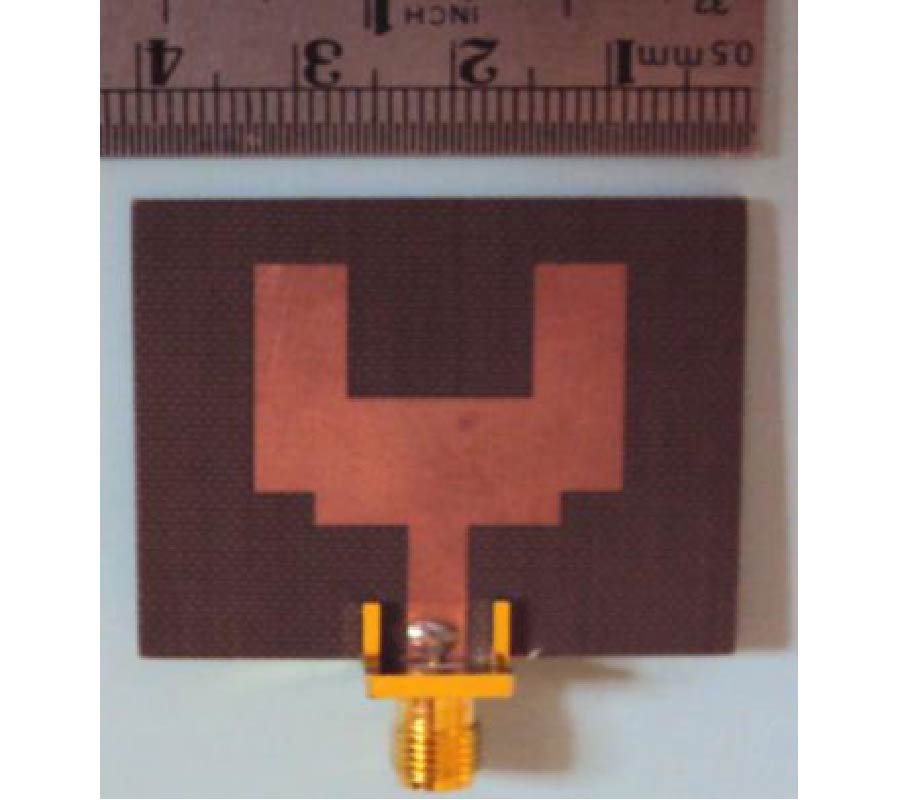
A novel coplanar waveguide (CPW) fed wide tapered slot antenna (WTSA) is presented in this paper. A wideband CPW-to-wide slotline (WSL) transition is employed to feed the antenna. The corrugated edge structure and broken line tapered profile are also applied in this design to achieve wideband performance, as well as maintain compact size. A prototype of the antenna is fabricated. The measured results indicate that the antenna is a good candidate for UWB detection and imaging applications.
A COMPACT COPLANAR WAVEGUIDE FED WIDE TAPERED SLOT ULTRA-WIDEBAND ANTENNA
2011-07-17
PIER B
Vol. 32, 191-216
Description of Electrically Small Resonant Antennas by Electric and Magnetic Dipoles
David Pouhe , Joel A. Tsemo Kamga and Gerhard Moenich
A new kind of field representation on the far field sphere is presented. This representation is based upon the polarisation states of the field. Polarisation states can easily be obtained upon determining the peculiar loci in the field. Depending on the polarisation state of the field, it is demonstrated that, either one of the magnetic or the electric dipole moments is dominant. Subsequently, criteria which may be applied to determine which dipole moment is responsible for the main radiation are derived. This characterization scheme which is a good figure of merit for an antenna designer may be useful in mobile communications especially in identifying possible adverse effects of RF fields on human health. The approach is also helpful for EMC engineers seeking to characterize and identify radiation sources of equipment under test.
DESCRIPTION OF ELECTRICALLY SMALL RESONANT ANTENNAS BY ELECTRIC AND MAGNETIC DIPOLES
2011-07-17
PIER Letters
Vol. 25, 67-75
Dual-Band Low Profile Directional Antenna with High Impedance Surface Reflector
Xin Mu , Wen Jiang , Shu-Xi Gong and Fu-Wei Wang
A compact dual-band high impedance surface (HIS) electromagnetic band-gap (EBG) structure is designed as a reflector for a dual-band coplanar waveguide (CPW)-fed planar monopole antenna. The reflector comprises an array of metal square patches which are etched square ring slots. Details of the HIS structure and dual reflection phase frequency bands characteristics are presented and discussed. The simulated and measured results show that the combination of the HIS reflector and the antenna provides directional properties for both frequency bands. At the same time, compared to the antenna integrated with a metal reflector, the profile of the proposed antenna is reduced by more than 60%; the radiation efficiency is increased by 23% (simulated result); and the front-back ratio is increased by 17 dB and 11 dB at the two operating frequency bands, respectively.
DUAL-BAND LOW PROFILE DIRECTIONAL ANTENNA WITH HIGH IMPEDANCE SURFACE REFLECTOR
2011-07-14
PIER B
Vol. 32, 169-190
Fire Fly and Artificial Bees Colony Algorithm for Synthesis of Scanned and Broadside Linear Array Antenna
Banani Basu and Gautam Mahanti
This paper describes the application of two recently developed metaheuristic algorithms known as fire fly algorithm (FFA) and artificial bees colony (ABC) optimization for the design of linear array of isotropic sources. We present two examples: one for broad side arrays and the other for steerable linear arrays. Three instances are presented under each category consisting of different numbers of array elements and array pattern directions. The main objective of the work is to compute the radiation pattern with minimum side lobe level (SLL) for specified half power beam width (HPBW) and first null beam width (FNBW). HPBW and FNBW of a uniformly excited antenna array with similar size and main beam directions are chosen as the beam width constraints in each case. Algorithms are applied to determine the non-uniform excitation applied to each element. The effectiveness of the proposed algorithms for optimization of antenna problems is examined by all six sets of antenna configurations. Simulation results obtained in each case using both the algorithms are compared in a statistically significant way. Obtained results using fire fly algorithm shows better performances than that of artificial bees colony optimization technique provided that the same number of function evaluations has been considered for both the algorithms.
FIRE FLY AND ARTIFICIAL BEES COLONY ALGORITHM FOR SYNTHESIS OF SCANNED AND BROADSIDE LINEAR ARRAY ANTENNA
2011-07-14
PIER Letters
Vol. 25, 57-66
Highly Selective Suspended Stripline Dual-Mode Filter
Boris Afanasievich Belyaev , Aleksandr Leksikov , Alexey Mikhailovich Serzhantov and Vladimir V. Tyurnev
Miniature bandpass filter constructions based on a novel dual-mode suspended stripline resonator are proposed. Because of a special structure of the resonator, the frequencies of two first oscillation modes may be brought closer together. That allows realizing narrowband filters with the wide upper stopband. The filters have low insertion loss in the passband at small dimensions. Several transmission zeros substantially improve the filter performance. The derived coupling coefficients account for some features in the frequency response of the filter. The second-order and fourth-order filters with transmission zeros have been fabricated and measured.
HIGHLY SELECTIVE SUSPENDED STRIPLINE DUAL-MODE FILTER
2011-07-14
PIER M
Vol. 19, 133-146
Application of Genetic Algorithms to Core Loss Coefficient Extraction
Nihat Ozturk and Emre Celik
Core loss data are usually provided in the form of tables or curves of total loss versus flux density or frequency for electrical machine designers. These tables or curves can be used to extract the loss coefficients of the core loss formulas because accurate calculations of the coefficients have an important issue in electrical machine design. In this study, using original loss data given for M19 steel material, the core loss coefficients are calculated by the genetic algorithm developed in Matlab environment and electromagnetic analysis software (Ansoft Maxwell) is also used to extract the core loss coefficients in order to verify the proposed method. It is found that the exponent of flux density (B) depends on the flux range or the frequency range and these changes in the exponent of B can be correlated to the physical phenomenon of domain wall movement in response to an external field. As a difference from existing studies in literature, this study suggests a new method for extracting the core loss coefficients without any requirement for mathematical operations due to the nature of genetic algorithms and over the range of frequencies between 50-400 Hz and flux densities from 0 to 1.5 T, the new method yields lower errors for the specific core losses than those obtained by the magnetic field analysis software.
APPLICATION OF GENETIC ALGORITHMS TO CORE LOSS COEFFICIENT EXTRACTION
2011-07-14
PIER
Vol. 119, 1-18
Bistatic Image Formation from Shooting and Bouncing Rays Simulated Current Distributions
H. Buddendick and Thomas F. Eibert
Inverse Synthetic Aperture Radar (ISAR) imaging is one of the most sophisticated methods to obtain information about the scattering or radiation properties of a finite sized object. The idea is to process the scattered or radiated fields coherently over a certain frequency bandwidth and over a certain angular range in order to generate the image. In a simulation based approach, this procedure can be considerably simplified, if the source currents are known (either real or equivalent) and if a bistatic image is desired. By inserting the radiation integral into the imaging integral and by interchanging the integration orders, the imaging point spread function can be generated and the image formation is reduced to a convolution of the point spread function with the current distribution. A concise formulation of this well-known methodology is presented together with a discussion of important properties. Various examples of 2D and 3D images for complex metallic objects such as automobiles are shown, which have been obtained from the surface currents of a Shooting and Bouncing Rays (SBR) field solver.
BISTATIC IMAGE FORMATION FROM SHOOTING AND BOUNCING RAYS SIMULATED CURRENT DISTRIBUTIONS
2011-07-14
PIER
Vol. 118, 527-539
A Grating-Based Plasmon Biosensor with High Resolution
Ziqian Luo , Taikei Suyama , Xun Xu and Yoichi Okuno
We present an idea of grating-based plasmon biosensor utilizing phase detection to realize high resolution in finding a refractive index of a material put on the surface of a metal grating. Considering a trade-off between high resolution and experimental practicability, we show a table of recommended setup that covers a wide range of the index. Keeping the diffraction efficiency no less than 10-3 and assuming the resolution in phase detection to be 2.5x10⁻² degrees, we estimate the resolution of the biosensor as 7.5x10⁻⁷ refractive index units. We also discuss the possible improvement to realize a predicted superior limit of resolution around 10-8.
A GRATING-BASED PLASMON BIOSENSOR WITH HIGH RESOLUTION
2011-07-14
PIER
Vol. 118, 505-525
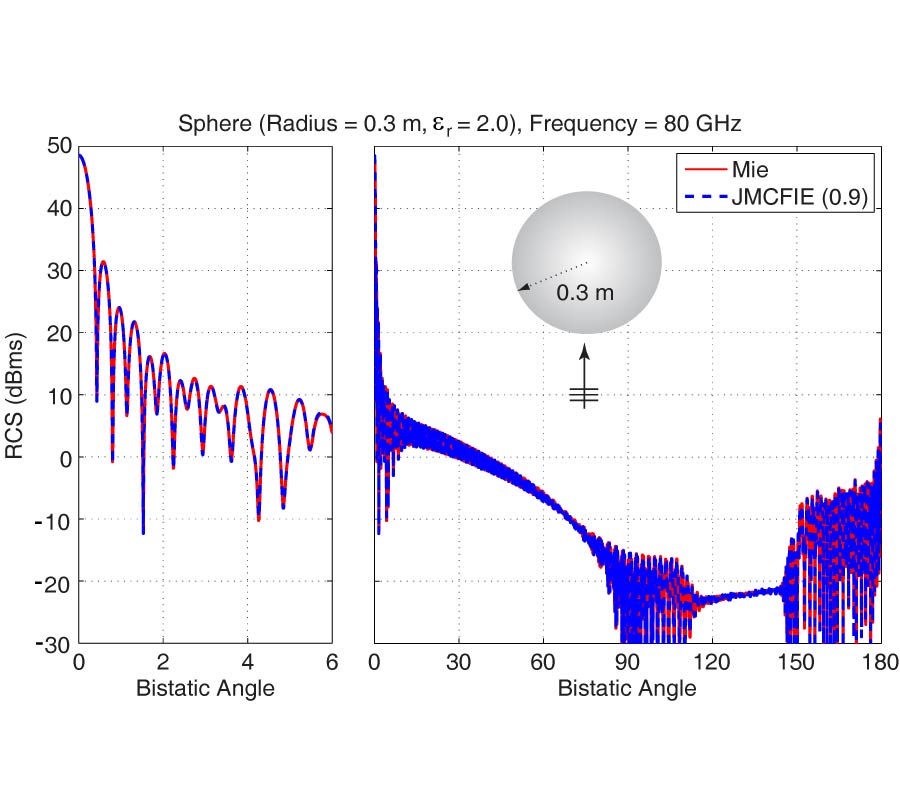
RCS Computation Using a Parallel in-Core and Out-of-Core Direct Solver
Daniel Garcia-Donoro , Ignacio Martinez-Fernandez , Luis E. Garcia-Castillo , Yu Zhang and Tapan Kumar Sarkar
Application to RCS computation of a higher order solver based on the surface integral approach is presented. The solver uses a direct method to solve the corresponding algebraic system of equations. Two versions of the solver are available: in-core and out-of-core. Both are efficiently implemented as parallel codes using Message Passing Interface libraries. Several benchmark structures are analyzed showing the reliability, performance, and versatility to run in a wide variety of computer platforms, of the solver. The results shown are illustrative of what is the maximum frequency of analysis of the structures for a given type of simulation platform.
RCS COMPUTATION USING A PARALLEL IN-CORE AND OUT-OF-CORE DIRECT SOLVER