Search Results(13802)

2011-07-13
PIER M
Vol. 19, 121-132
Some Thoughts on Human Body Effects on Handset Antenna at the FM Band
Antoni Pladevall , Cristina Picher , Aurora Andujar and Jaume Anguera
Human body interaction is an important issue to take into account when designing handset antennas due to the effect that it has on the electromagnetic performance of the antenna. By means of electromagnetic simulation, three different antennas (a 1-meter length monopole and two small handset antennas) in three different situations (free-space, hand holding, and in pocket position) have been analysed at the FM band (88 MHz-108 MHz). Results prove that it is possible to predict the antenna behaviour in terms of quality factor (Q) by assessing the variations of the near electric field and the radiation efficiency in said environments. The estimated Q can be verified by calculating the Q using the input impedance. Results show that human body may improve the efficiency when the antennas become an extension of the human body.
SOME THOUGHTS ON HUMAN BODY EFFECTS ON HANDSET ANTENNA AT THE FM BAND
2011-07-13
PIER
Vol. 118, 487-504
Study of Nonreciprocal Devices Using Three-Strip Ferrite Coupled Line
Wojciech Marynowski and Jerzy Mazur
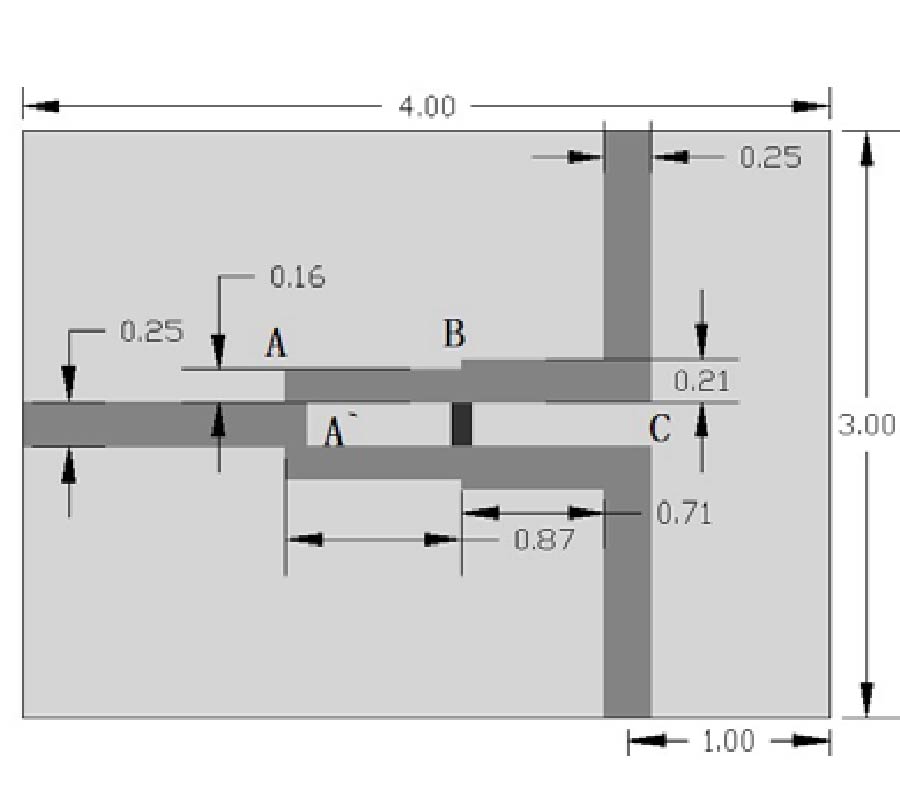
This paper presents the investigations of nonreciprocal devices employing a novel ferrite coupled line junction. The structure is designed using coplanar line technology with the ground half-planes reduced to the strips. The investigated junction is composed of one ferrite section placed in between of two dielectric sections. In the ferrite section the longitudinally magnetized ferrite slab is located at the top or the bottom of the strips and is covered with the dielectric layers. In the dielectric sections the ports of the junctions are located. The wave parameters and field distributions of the modes propagated in the dielectric and ferrite sections are obtained from spectral domain approach. In order to determine the scattering matrix of the junction the mode matching method is utilized. The investigation of the circulator and isolator designed based on the S-matrix of the junction are presented. The obtained results are verified by comparing them with HFSS simulations and own measurements of the fabricated devices. In both cases a very good agreement is observed.
STUDY OF NONRECIPROCAL DEVICES USING THREE-STRIP FERRITE COUPLED LINE
2011-07-13
PIER
Vol. 118, 461-486
A Bimodal Reconstruction Method for Breast Cancer Imaging
Daniel Flores-Tapia , Martin O'Halloran and Stephen Pistorius
Breast Microwave Radar (BMR) has been proposed as an alternative modality for breast imaging. This technology forms a reflectivity map of the breast region by illuminating the scan area using ultra wide band microwave waveforms and recording the reflections from the breast structures. Nevertheless, BMR images require to be interpreted by an experienced practitioner since the location and density of the breast region can make the detection of malignant lesions a difficult task. In this paper, a novel bimodal breast imaging reconstruction method based on the use of BMR and Electrical Impedance Tomography (EIT) is proposed. This technique forms an estimate of the breast region impedance map using its corresponding BMR image. This estimate is used to initialize an EIT reconstruction method based on the monotonicity principle. The proposed method yielded promising results when applied to MRI-derived numeric breast phantoms.
A BIMODAL RECONSTRUCTION METHOD FOR BREAST CANCER IMAGING
2011-07-13
PIER
Vol. 118, 441-459
Attenuation in Extended Structures Coated with Thin Magneto-Dielectric Absorber Layer
Marina Koledintseva , Alexander G. Razmadze , Aleksandr Y. Gafarov , Victor V. Khilkevich , James Drewniak and Takanori Tsutaoka
Thin absorbing layers containing magnetic alloy or ferrite inclusions can be effectively used for attenuating common-mode currents on extended structures, such as power cords, cables, or edge-coupled microstrip lines. An analytical model to evaluate attenuation on the coaxial line with the central conductor coated with a magneto-dielectric layer is proposed and validated by the experiments and numerical modeling. The analytical model is validated using available magneto-dielectric samples of different thicknesses. This model can serve for comparing and predicting the absorptive properties of different samples of magneto-dielectric materials, whose compositions may be unknown, but dielectric and magnetic properties can be determined by independent measurements over the specified frequency ranges. From modeling the absorption in a coaxial line with a wrapped central conductor, it could be concluded whether it is reasonable to use this particular material in such applications as a shield on an Ethernet or other cable, for reducing potential common-mode currents and unwanted radiation in the frequency range of interest.
ATTENUATION IN EXTENDED STRUCTURES COATED WITH THIN MAGNETO-DIELECTRIC ABSORBER LAYER
2011-07-12
PIER B
Vol. 32, 149-167
Studies on the Dynamics of Bilaterally Coupled X-Band Gunn Oscillators
Bishnu Charan Sarkar , Debdeep Sarkar , Suvra Sarkar and Joydeep Chakraborty
The dynamics of a system comprising of two bilaterally coupled Gunn oscillators (BCGOs) has been examined using a circuit theoretic model of the Gunn oscillator (GO). The effects of coupling factors (kij) between i-th and j-th oscillators on the frequency-range of synchronized operation and the magnitude of common frequency of oscillation have been examined semi-analytically and by numerical solution of the system equations. The occurrence of chaotic oscillations at the verge of synchronization bands is observed in numerical simulation. The experimental response of the BCGO operating in the X-band is obtained and the results are found to be qualitatively similar to the analytical and numerical predictions.
STUDIES ON THE DYNAMICS OF BILATERALLY COUPLED X-BAND GUNN OSCILLATORS
2011-07-12
PIER Letters
Vol. 25, 47-55
Compact Dual-Mode DGS Resonators and Filters
Lei Wang and Bo-Ran Guan
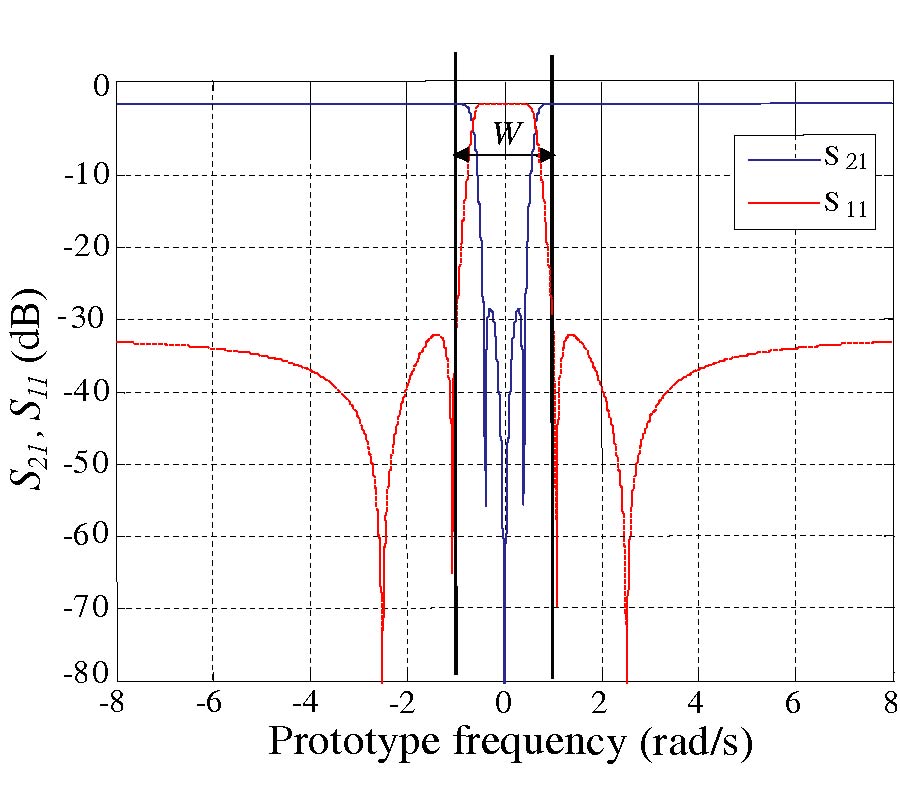
A novel and compact dual-mode defected ground structure (DGS) resonator is presented. Distinct characteristics of the proposed resonator are investigated. Using this type of resonator, a bandpass filter with the center frequency of 2.38 GHz and the fractional bandwidth of 6.7% is simulated and fabricated. The results show that this filter not only has an inherent transmission zero near the passband, but also has a very wide upper stopband with rejection better than 20 dB up to about 12 GHz.
COMPACT DUAL-MODE DGS RESONATORS AND FILTERS
2011-07-12
PIER M
Vol. 19, 105-120
Acceleration Technique of FDTD Model with High Accuracy for Nanostructure Photonics
Yu Liu , Chun Chong Chen , Pei Wang and Hai Ming
To accurately model nanophotonic structures, a conformal dispersive finite difference time domain (FDTD) method based on an effective permittivity technique is presented, which can describe exactly the behaviors of evanescent waves in the vicinity of curved interface. A mismatch between the numerical permittivity and the analytical value introduced by the discretization in FDTD is demonstrated, thus, very fine time-step size is always necessary for nanostructures modelling, which greatly increases the required overheads of CPU time as compared to usual FDTD simulations. To resolve this problem, the performance of parallel FDTD code is investigated on a Gigabit Ethernet, and the acceleration technique for parallel FDTD algorithm is presented, which is developed by means of the replicating computation based on overlapping grids, the OpenMP multithreading technique and the vectorization based on SSE instruction. The comparison of relevant numerical results shows that these methods are able to reduce the expense of the system communications and enhance the utilization ratio of the CPU effectively, which improves greatly the performance of parallel FDTD with high time-consuming.
ACCELERATION TECHNIQUE OF FDTD MODEL WITH HIGH ACCURACY FOR NANOSTRUCTURE PHOTONICS
2011-07-11
PIER B
Vol. 32, 129-147
Theoretical and Experimental Evaluation of Superstrate Effect on Rectangular Patch Resonator Parameters
Nabila Aouabdia , Nour-Eddine Belhadj-Tahar , Georges Alquie and Fatiha Benabdelaziz
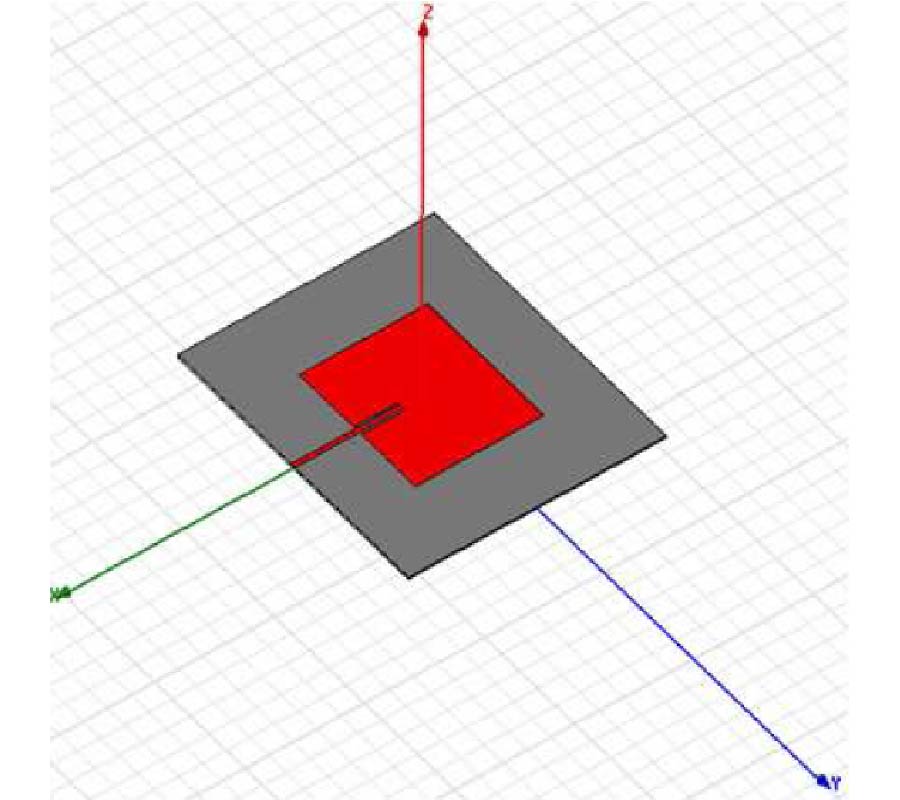
In this paper, modeling and experimentation of a Rectangular Patch Resonator (RPR) covered with a dielectric superstrate are investigated. The RPR criteria are established theoretically and experimentally, to be used in future prospects as an electromagnetic (EM) sensor for the characterization of superstrates. The theoretical model is based on the moment method (MoM) via Galerkin's approach, in which three types of basis and testing functions are used. These functions as well as the spectral dyadic Green function are efficiently implanted with compact structured Fortran 90 codes. The EM commercial HFSS and CST Microwave Studio softwares are used to simulate the proposed RPR prototypes. The accuracy of the obtained results is assessed using four prototypes of RPRs operating around 6 GHz, taking into account only the resonant frequency of the fundamental dominant mode. The theoretical model is compared to simulation and measurement results, and very good agreements are observed.
THEORETICAL AND EXPERIMENTAL EVALUATION OF SUPERSTRATE EFFECT ON RECTANGULAR PATCH RESONATOR PARAMETERS
2011-07-11
PIER B
Vol. 32, 107-127
Tropical Rain Classification and Estimation of Rain from z-R (Reflectivity-Rain Rate) Relationships
Lakshmi Sutha Kumar , Yee Hui Lee , Jun Xiang Yeo and Jin Teong Ong
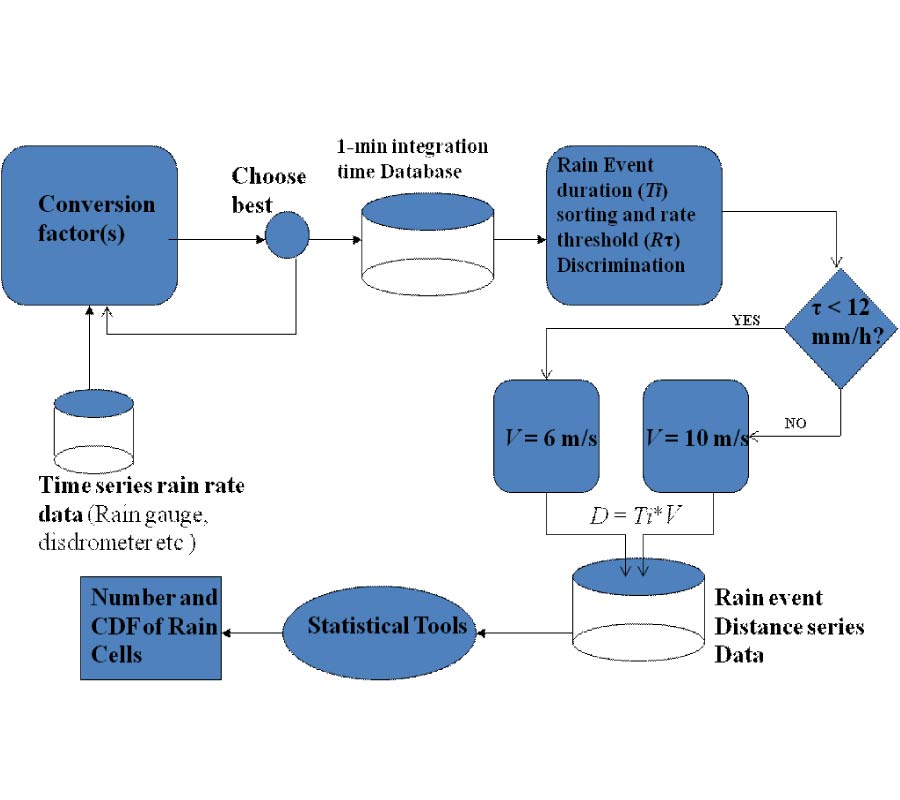
A Z-R relation is derived using a data set which consists of nine rain events selected from Singapore's drop size distribution. Rain events are separated into convective and stratiform types of rain using two methods: the Gamache-Houze method, a simple threshold technique, and the Atlas-Ulbrich method. In the Atlas-Ulbrich method, the variability of the rain integral parameters R, Z, Nw, D0 and gamma model parameter $\mu $ are used for the classification of rain into convective, stratiform and transition. Z-R relations are derived for each type of rain after classification. The changes in the coefficients of the Z-R relations for different rain events are plotted and analyzed. The Z-R relations of the different methods using the Singapore data are compared and analyzed. It is concluded that the coefficient A of the Z-R relation is higher for the convective stage followed by the stratiform and transition stages. The coefficient b values are higher for the transition stage followed by the stratiform and convective stages. Reflectivities are extracted from RADAR data above NTU site for rain events and compared with the reflectivities derived from the distrometer data. Rain rates retrieved from RADAR data using the proposed relations from Singapore's data set are compared with the distrometer rain rates. The RADAR extracted rain rates are found to be constantly lower than the distrometer derived rain rates but matches well.
TROPICAL RAIN CLASSIFICATION AND ESTIMATION OF RAIN FROM Z-R (REFLECTIVITY-RAIN RATE) RELATIONSHIPS
2011-07-11
PIER C
Vol. 22, 231-240
An Omni-Directional and Band-Notched Ultra Wideband Antenna on Double Substrates Crossing
Zhen-Lin Liao , Fu-Shun Zhang , Guitao Xie , Weigang Zhai and Li-Na Chen
A novel Ultra Wideband (UWB) antenna on double substrates crossing is presented in this paper. Based on conical antenna and microstrip patch UWB antenna, the proposed antenna is omni-directional, band-notched and easy to be fabricated. It operates from 2.6 GHz to 12 GHz with low Voltage Standing Wave Ratio (VSWR<2), excluding a notch-band of 5.8 GHz. Except for good performance of VSWR, the proposed antenna keeps its radiating beam at about θ = 45°in E-plane through the whole band. The UWB antenna is fed by a coaxial probe through a SMA connector. The length of the proposed monopole element above the ground is slightly less than λ/4 of the lowest frequency. The simulated and measured results of the VSWR, he gain and the radiation patterns for the proposed antennas are presented and discussed. Good agreement between simulated and measured results is demonstrated.
AN OMNI-DIRECTIONAL AND BAND-NOTCHED ULTRA WIDEBAND ANTENNA ON DOUBLE SUBSTRATES CROSSING
2011-07-11
PIER M
Vol. 19, 91-104
A New Three-Dimensional Conical Ground-Plane Cloak with Homogeneous Materials
Sajjad Taravati and Ali Abdolali
A new three dimensional conical ground plane electromagnetic cloak is proposed and designed based on the coordinate transformation of Maxwell's equations. Material parameters of the conical invisible cloak are derived which have simple form and lesser inhomogeneity compared with other 3-dimensional cloaks. Because of convenient form of the constitutive tensors of the conical cloak, we propose a new strategy for homogeneous approximation of the materials of the cloaks. Numerical simulations confirm that approximation with eight slices, is more than enough and this cloak can hide any object on the ground as well as inhomogeneous ones.
A NEW THREE-DIMENSIONAL CONICAL GROUND-PLANE CLOAK WITH HOMOGENEOUS MATERIALS
2011-07-11
PIER
Vol. 118, 425-440
Comparison of Surface Integral Equations for Left-Handed Materials
Marta Gomez Araujo , Jose Taboada , Javier Rivero and Fernando Obelleiro
A wide analysis of left-handed material (LHM) spheres with different constitutive parameters has been carried out employing different integral-equation formulations based on the Method of Moments. The study is focused on the accuracy assessment of formulations combining normal equations (combined normal formulation, CNF), tangential equations (combined tangential formulation, CTF, and Poggio-Miller-Chang-Harrington-Wu-Tsai formulation, PMCHWT) and both of them (electric and magnetic current combined field integral equation, JMCFIE) when dealing with LHM's. Relevant and informative features as the condition number, the eigenvalues distribution and the iterative response are analyzed. The obtained results show up the suitability of the JMCFIE for this kind of analysis in contrast with the unreliable behavior of the other approaches.
COMPARISON OF SURFACE INTEGRAL EQUATIONS FOR LEFT-HANDED MATERIALS
2011-07-11
PIER
Vol. 118, 415-423
Polarization-Invariant Directional Cloaking by Transformation Optics
Krishna Agarwal , Xudong Chen , Li Hu , Hongyu Liu and Gunther Uhlmann
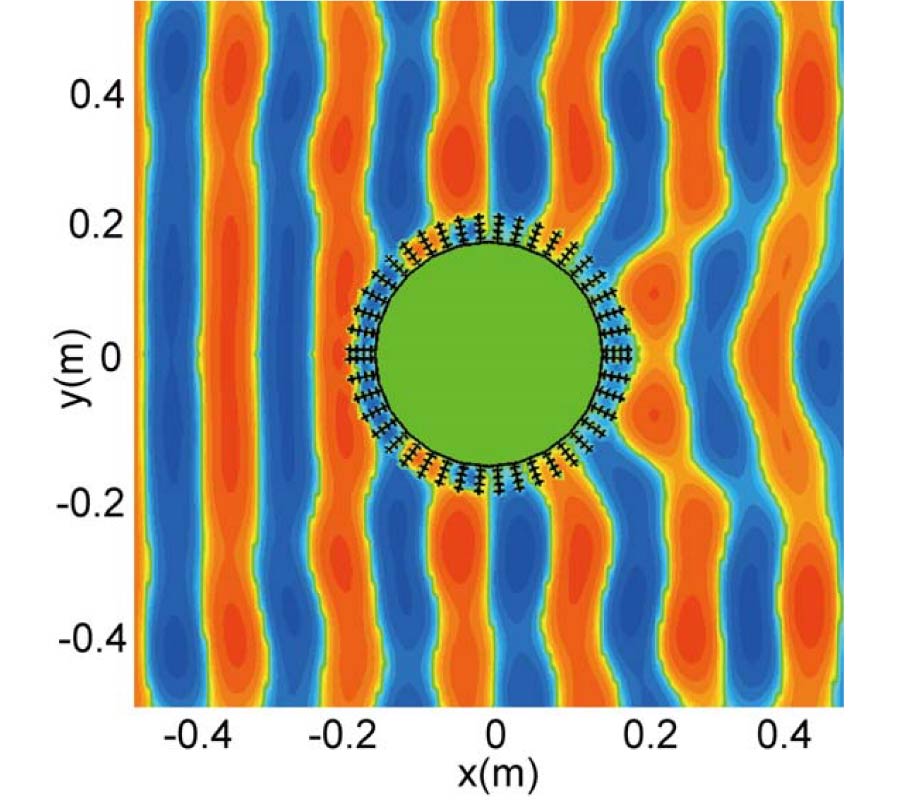
We propose a three-dimensional directional cloak for arbitrarily polarized incoming electromagnetic waves, motivated by the fact that there will be negligible scattering when the direction of impinging wave coincides with the axial direction of a very thin and elongated perfectly electric conducting (PEC) scatterer. The performance of the cloak under different polarizations of incoming waves are numerically investigated. The case in which the direction of incoming wave is perturbed off the ideal direction is also quantitatively studied. Numerical simulations show that the directional cloaking device is able to tolerate a large range of tilted angles of incoming waves.
POLARIZATION-INVARIANT DIRECTIONAL CLOAKING BY TRANSFORMATION OPTICS
2011-07-08
PIER B
Vol. 32, 91-106
An Innovative Radar Imaging System Based on the Capability of an UWB Array to Steer Successively in Different Directions
Laurent Desrumaux , Michele Lalande , Joel Andrieu , Valerie Bertrand and Bernard Jecko
An innovative radar imaging system, based on the capability of a fixed UWB array to radiate short pulses in different directions along time with the principle of electronic beam steering, is presented in this paper. To demonstrate its concept, the analysis presented in this paper is based on simulation results. As function of the use of either only one antenna or several antennas in reception, two radar imaging algorithms have been developed and are detailed in this paper. These algorithms permit to obtain an image of the analyzed scene thanks to the transient beam pattern of the array used in emission. Finally, with a same analyzed scene, these algorithms have been compared with the time reversal method and the back projection algorithm, in association with a SAR imaging system. The conditions of applicability of these methods are also discussed.
AN INNOVATIVE RADAR IMAGING SYSTEM BASED ON THE CAPABILITY OF AN UWB ARRAY TO STEER SUCCESSIVELY IN DIFFERENT DIRECTIONS
2011-07-07
PIER Letters
Vol. 25, 37-46
Robust Adaptive Beamforming Based on Covariance Matrix Reconstruction for Look Direction Mismatch
Rammohan Mallipeddi , Joni Lie , Sirajudeen Gulam Razul , P. N. Suganthan and Chong Meng S. See
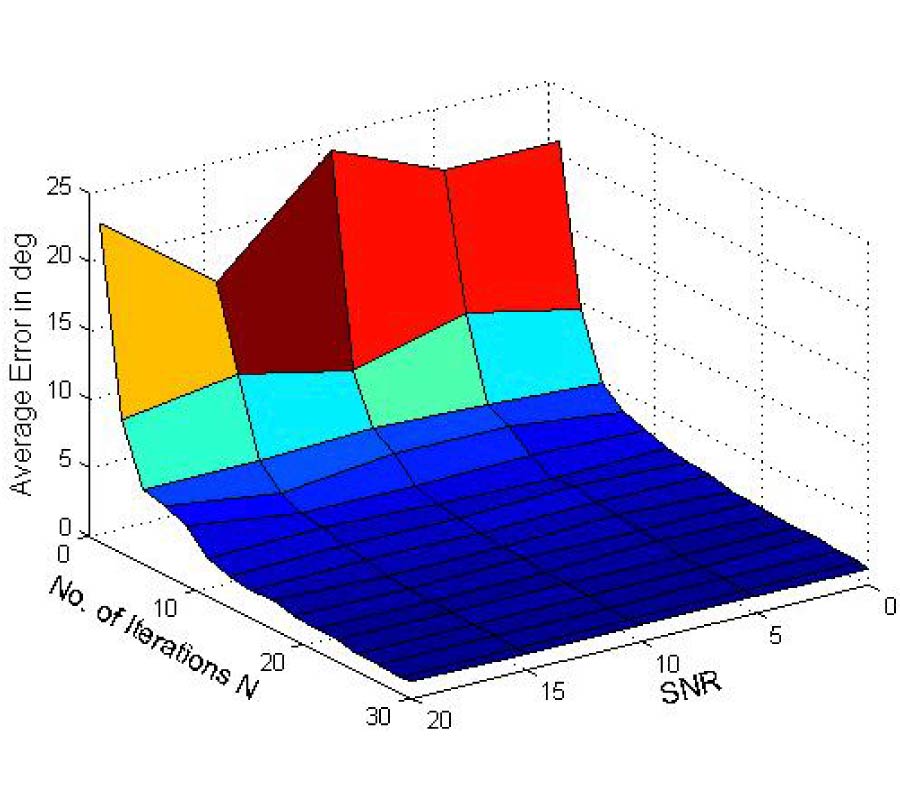
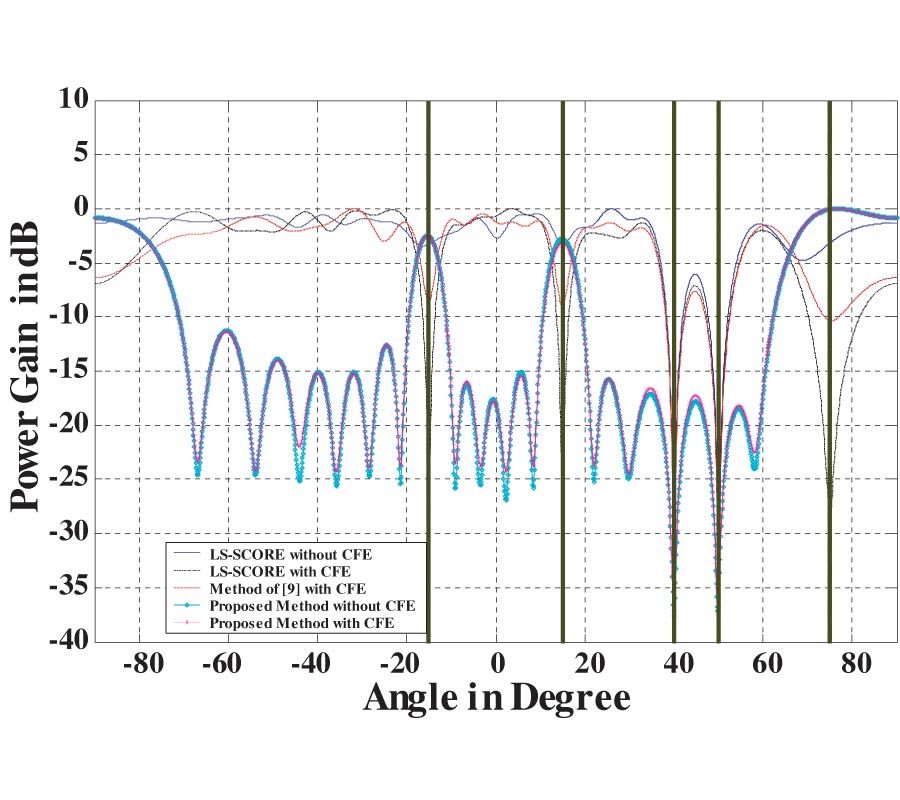
The performance degradation in traditional adaptive beamformers can be attributed to the imprecise knowledge of the array steering vector and inaccurate estimation of the covariance matrix. The inaccurate estimation of the covariance matrix is due to the limited data samples and presence of desired signal components in the training data. The mismatch between the actual and presumed steering vectors can be mainly due to the error in the look direction estimate. In this paper, we propose a novel algorithm to estimate the look direction and to reconstruct the covariance matrix so that near optimal performance without the effect of saturation can be achieved as the input SNR increases. Numerical results also show that all existing beamforming algorithms suffer from saturation effect as the input SNR increases.
ROBUST ADAPTIVE BEAMFORMING BASED ON COVARIANCE MATRIX RECONSTRUCTION FOR LOOK DIRECTION MISMATCH
2011-07-07
PIER
Vol. 118, 397-414
A Quasi Three-Dimensional Ray Tracing Method Based on the Virtual Source Tree in Urban Microcellular Environments
Zhong-Yu Liu and Li-Xin Guo
The increase in mobile communications traffic has led to heightened interest in the use of ray tracing (RT) methods together with digital building databases for obtaining more accurate and efficient propagation prediction in urban microcellular environments. In this paper, a novel quasi three-dimensional (3-D) RT algorithm is presented by taking into account the advantages of both the image theory (IT) and the shooting-and- bouncing ray (SBR) method. It is based on creating a new virtual source tree in which the relationship between neighbor nodes is a left-son-and-right-brother one. Our theoretical results of the signal path loss along the streets are compared with measurements which have been reported for city streets in Tokyo and Ottawa City for various values of the propagation parameters. The good agreement with these measurements indicates that our prediction model works well for such microcellular communication applications. The proposed method can provide the reliable theory basis for radio-wave propagation prediction and network planning in urban microcellular environments.
A QUASI THREE-DIMENSIONAL RAY TRACING METHOD BASED ON THE VIRTUAL SOURCE TREE IN URBAN MICROCELLULAR ENVIRONMENTS
2011-07-07
PIER
Vol. 118, 379-396
Theoretical Investigation of Rectangular Patch Antenna Miniaturization Based on the Dps-Eng BI-Layer Super-Slow TM Wave
Jiang Xiong , Hui Li , Bing-Zhong Wang , Yi Jin and Sailing He
The TM0 surface mode in an infinitely long parallel-plate waveguide filled with a double-positive (DPS) and epsilon-negative (ENG) metamaterial bi-layer is studied. With proper constitutive parameters and thicknesses of the two layers, the slow-wave factor (SWF) for such a parallel-plate waveguide can tend to infinity as the frequency decreases. A 2-D cavity based on the DPS-ENG bi-layer waveguide is constructed and studied to evaluate the radiation ability of its corresponding patch antenna. Based on the cavity model analysis of patch antennas, we show that good efficiency for broadside radiation of such a cavity-based rectangular patch antenna can be achieved when one layer of the cavity is shielded (or partially shielded) by PEC boundaries. Taking practical loss and dispersion into consideration, a miniaturized cavity-based rectangular patch antenna is proposed as an example. With the super-slow TM0 surface mode excited in the bi-layer by a simple coaxial line feeding, the antenna has a dimension of only 0.107λ0×0.129λ0×0.045λ0. The patch antenna produces broadside radiation, and fairly good radiation efficiency is achieved. The PEC-Partially-Shielded-ENG-Cavity based rectangular patch antenna with a further miniaturization but reduced radiation efficiency is also discussed.
THEORETICAL INVESTIGATION OF RECTANGULAR PATCH ANTENNA MINIATURIZATION BASED ON THE DPS-ENG BI-LAYER SUPER-SLOW TM WAVE
2011-07-07
PIER
Vol. 118, 355-377
Field Synthesis in Inhomogeneous Media: Joint Control of Polarization, Uniformity and SAR in MRI b1-Field
Elia Amedeo Attardo , Tommaso Isernia and Giuseppe Vecchi
The homogeneity of the amplitude of one of the polarizations of the RF field B1 is a crucial issue in Magnetic Resonance Imaging (MRI), and several methods have been proposed for enhancing this uniformity (``Shimming''). The existing approaches aim at controlling the homogeneity of B+1 and limiting the Specific Absorption Rate (SAR) of the RF field by independently controlling magnitude and phase of individual excitation currents in MRI scanners, either birdcage or TEM coil system. A novel approach is presented here which allows a joint control of B+1 uniformity, SAR, and purity of polarization of the total RF B1 field. We propose a convex optimization procedure with convex constraints, and special attention has been devoted to the issue of convexity of the proposed functional. The method is applied to MRI brain imaging; numerical tests have been performed on a realistic head model at low, medium, and high RF field in order to assess the effectiveness of the proposed method. We found that maintaining a specific polarization plays an important role also in maintaining the homogeneity of B+1 amplitude.
FIELD SYNTHESIS IN INHOMOGENEOUS MEDIA: JOINT CONTROL OF POLARIZATION, UNIFORMITY AND SAR IN MRI B<sub>1</sub>-FIELD
2011-07-06
PIER B
Vol. 32, 75-90
Waveguides Filled with Bilayers of Double-Negative (DNG) and Double-Positive (Dps) Metamaterials
Eva Cojocaru
Simple normalized dispersion relations for transverse magnetic (TM) and transverse electric (TE) propagating modes in parallel-plate waveguides filled with DPS/DPS or DNG/DNG, and DNG/DPS bilayers are presented. The evanescent TE0 mode of the waveguide filled with a DNG/DPS bilayer is characterized also by a simple normalized dispersion relation. Since an important behavior of the modes in the waveguide filled with a DNG/DPS bilayer is the existence of a turning point (TP) at which the power carried by the respective mode on the propagation direction equals zero and changes the sign, we present also implicit relations for determining the normalized parameters of the TM and TE modes at that TP. We show that the TP begins to exist at certain values of the normalized parameter v2 characterizing the DPS layer. For both the TM and TE modes, the higher is the mode order, the greater is the v2 parameter at which the TP begins to exist, but the behavior of the TP is different for the TM and TE modes.
WAVEGUIDES FILLED WITH BILAYERS OF DOUBLE-NEGATIVE (DNG) AND DOUBLE-POSITIVE (DPS) METAMATERIALS
2011-07-06
PIER B
Vol. 32, 57-73
Bowtie Nanoantennas with Polynomial Sides in the Excitation and Emission Regimes
Karlo Queiroz Da Costa and Victor A. Dmitriev
In this work, we analyze modified bowtie nanoantennas with polynomial sides in the excitation and emission regimes. In the excitation regime, the antennas are illuminated by an incident plane wave, and in the emission regime, the excitation is fulfilled by infinitesimal electric dipole positioned in the gap of the nanoantennas. Several antennas with different sizes and polynomial order were numerically analyzed by method of moments. The results show that these novel antennas possess a controllable resonance by the polynomial order and good characteristics of near field enhancement and confinement for applications in enhancement of spontaneous emission of a single molecule.
BOWTIE NANOANTENNAS WITH POLYNOMIAL SIDES IN THE EXCITATION AND EMISSION REGIMES