Search Results(13802)

2011-07-01
PIER
Vol. 118, 185-203
On the Feasibility of the Linear Sampling Method for 3D GPR Surveys
Ilaria Catapano , Francesco Soldovieri and Lorenzo Crocco
We discuss the applicability of the Linear Sampling Method (LSM) to GPR surveys carried out using array-based configurations. Since the images achieved via LSM are known to get worse when using a small number of antennas and a limited aperture, we introduce an analytic tool to foresee the expected LSM performance for a fixed array size and number of antennas. Notably, such a tool allows us to support (and appraise) the adoption of LSM to data collected with short arrays moved above the investigated domain, which is the configuration most viable in applications.
ON THE FEASIBILITY OF THE LINEAR SAMPLING METHOD FOR 3D GPR SURVEYS
2011-06-30
PIER Letters
Vol. 25, 21-30
Dual Band-Notched Antenna with the Parasitic Strip for UWB
W. X. Liu and Ying-Zeng Yin
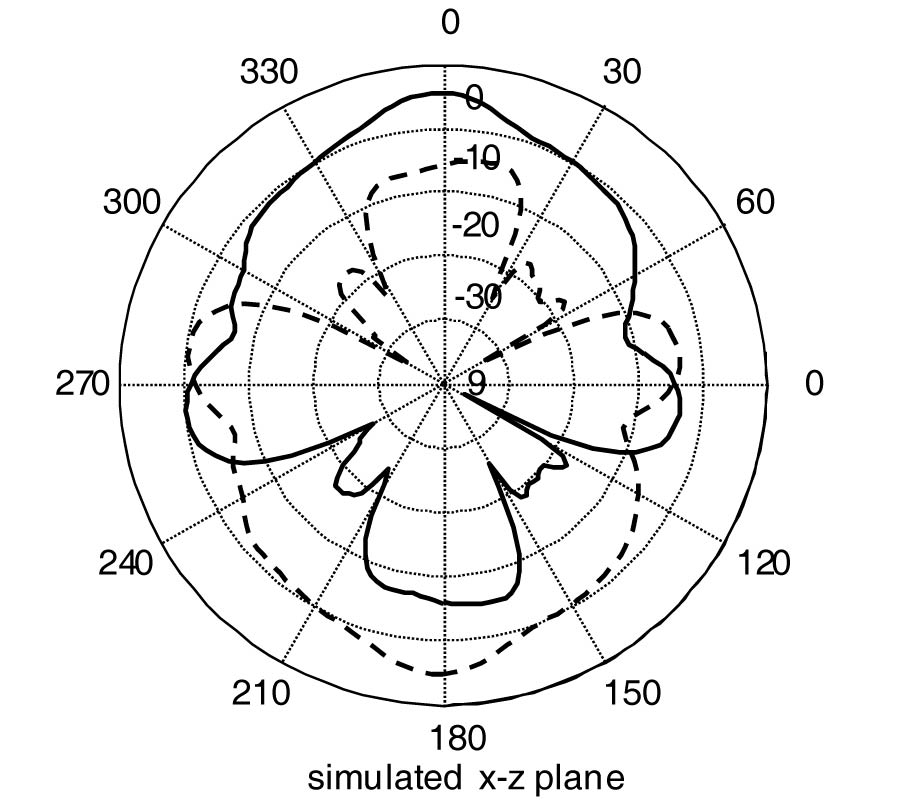
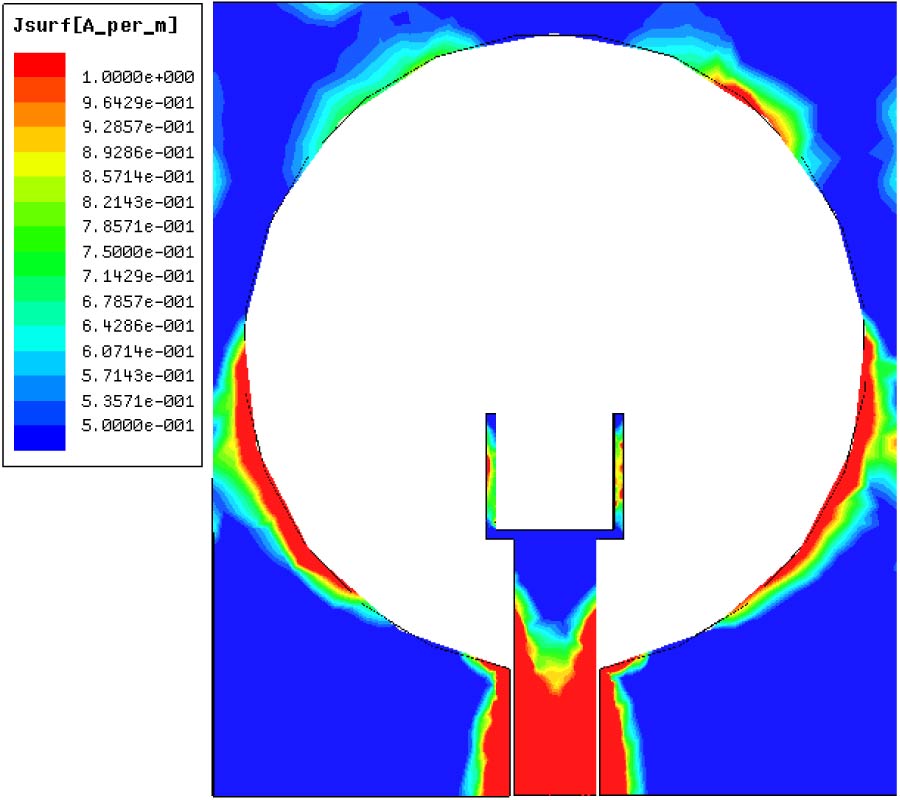
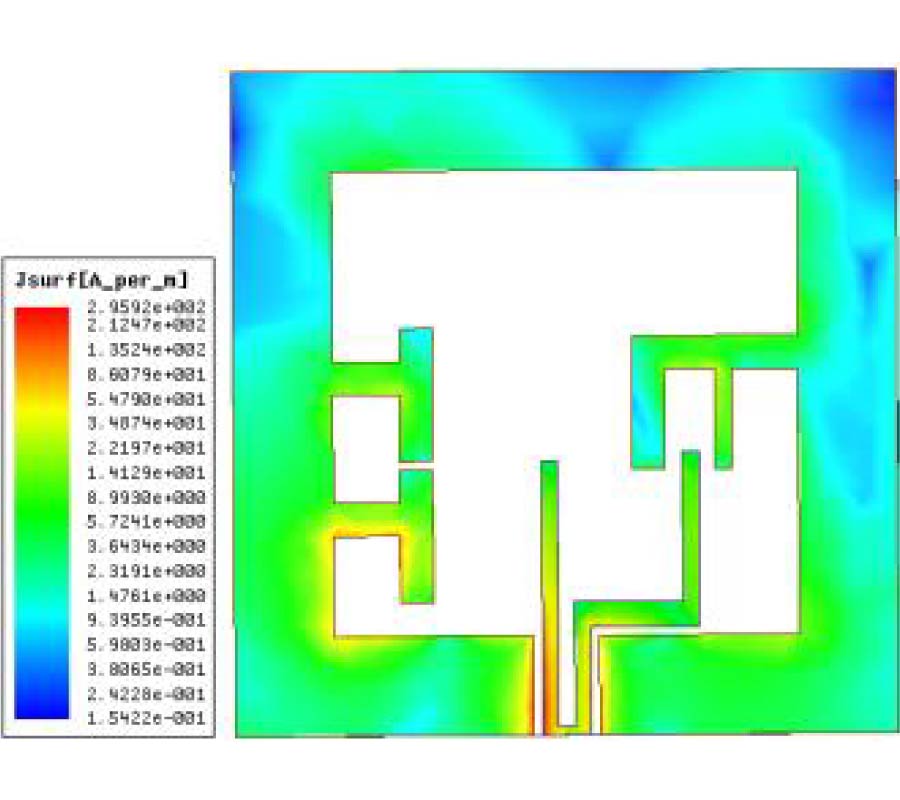
A novel microstrip-fed ultra wideband (UWB) elliptical antenna with dual band-notched characteristics is proposed. Dual band-notched characteristics are achieved by employing a pair of U-shaped slots on the ground plane and a T-shaped parasitic strip on the backside of the substrate. The operation bandwidth of the designed antenna is from 2.9 to 12 GHz for voltage standing wave ratio (VSWR) less than 2, except two frequency stop-bands of 3.2-3.9 GHz for WiMAX system and 4.9-6.1 GHz for WLAN system. Moreover, the proposed antenna provides good radiation patterns across the working bands and a relatively flat gain over the entire frequency band excluding the rejected bands.
DUAL BAND-NOTCHED ANTENNA WITH THE PARASITIC STRIP FOR UWB
2011-06-30
PIER C
Vol. 22, 165-178
Design of Concurrent Low-Noise Amplifier for Multi-Band Applications
Gao-Li Ning , Zhen-Ya Lei , Long-Jun Zhang , Rong Zou and Li Shao
A concurrent multi-band low-noise amplifier (LNA) for both WLAN and WiMAX applications covering 2.4-2.7 GHz, 3.3-3.8 GHz and 5.1-5.9 GHz is mainly investigated. The proposed LNA consists of two cascaded common-source stages and employs stepped-impedance transformers and series and shunt feedback techniques to obtain good return loss, low noise and high linearity simultaneously. Test results show that the LNA features input and output return loss of 12 dB, gain of 21 dB, and noise figure of 2\,dB across the three bands of operation, which are the state of the art among the counterparts.
DESIGN OF CONCURRENT LOW-NOISE AMPLIFIER FOR MULTI-BAND APPLICATIONS
2011-06-30
PIER C
Vol. 22, 151-163
Low Correlation MIMO Antennas with Negative Group Delay
Jae-Young Chung , Taesik Yang and Juhyung Lee
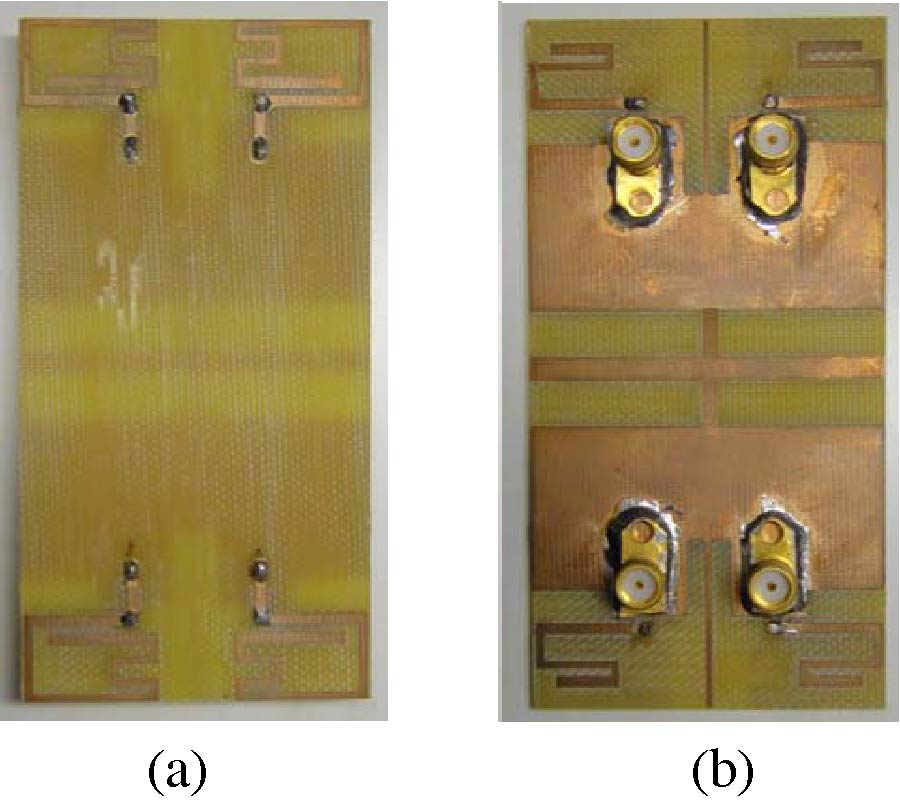
A key feature of upcoming 4G wireless communication systems is multiple-input-multiple-output (MIMO) technology. To make the best use of MIMO, the antenna correlation between adjacent antennas should be low (< 0.5). In this context, we propose a correlation reduction technique suitable for closely spaced antennas (distance, d < λ/40). This technique reduces mutual coupling between antennas and concurrently uncorrelates antennas' radiation characteristics by inducing the negative group delay at the target frequency. The validity of the technique is demonstrated with a USB dongle MIMO antenna designed for LTE 700 MHz band. Measurement results show that the antenna correlation is reduced more than 40% using the proposed technique.
LOW CORRELATION MIMO ANTENNAS WITH NEGATIVE GROUP DELAY
2011-06-30
PIER
Vol. 118, 167-183
Analysis of Reflection Gratings by Means of a Matrix Method Approach
Jorge Frances Monllor , Cristian Neipp , Andres Marquez Ruiz , Augusto Belendez and Inmaculada Pascual
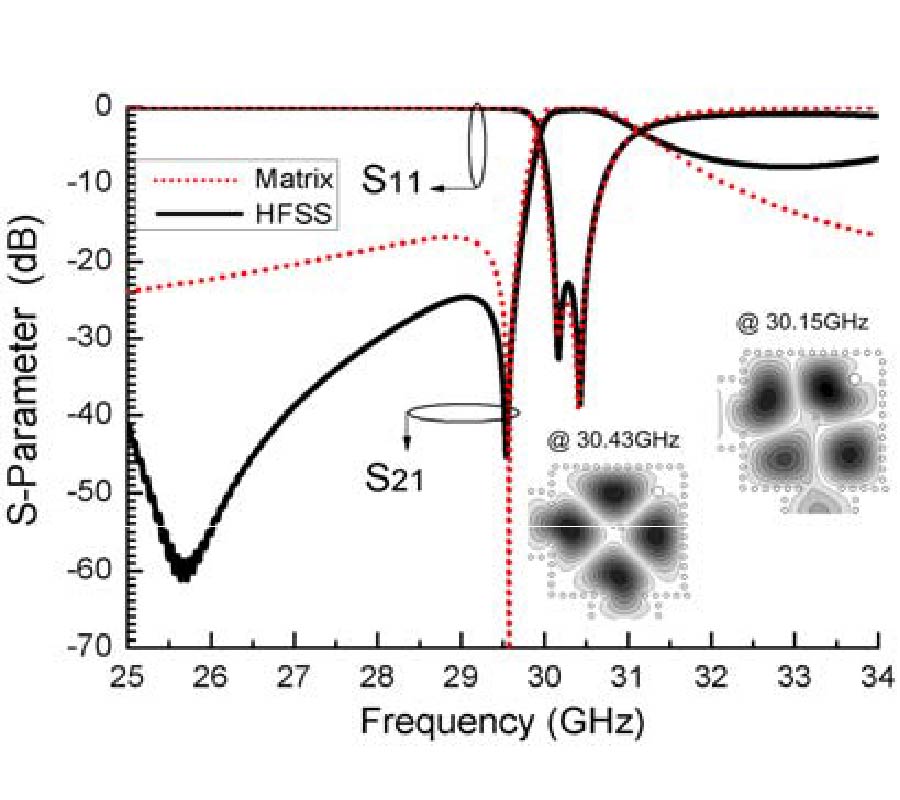
In this work, a matrix method is applied to study the propagation of electromagnetic waves inside a non-slanted reflection grating. The elements of the matrix which characterizes the periodic medium are obtained in terms of Mathieu functions and their derivatives, and the expressions of the efficiencies of reflected and transmitted orders are calculated in terms of the elements of the matrix. In addition the band structure of a general reflection grating is studied with the layer matrix of one single period. The results obtained by this matrix method are firstly compared to the results obtained by Kogelnik's expressions in index-matched media showing good agreement. The comparison is also made for a reflection grating embedded in two media with different refractive indexes, showing good agreement with an FDTD method, but slight differences with respect to Kogelnik's Coupled Wave Theory.
ANALYSIS OF REFLECTION GRATINGS BY MEANS OF A MATRIX METHOD APPROACH
2011-06-30
PIER
Vol. 118, 151-165
Analysis of Dependence of Resonant Tunneling on Static Positive Parameters in a Single-Negative Bilaye
Wei-Hsiao Lin , Chien-Jang Wu , Tzong-Jer Yang and Shoou-Jinn Chang
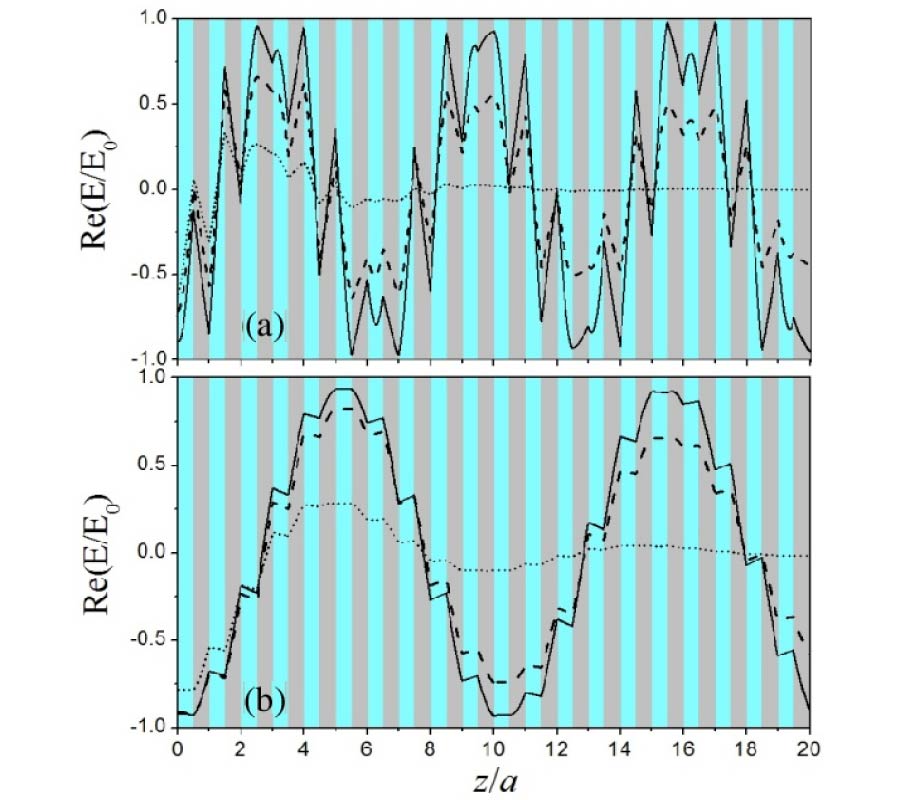
It is known that electromagnetic resonant tunneling phenomenon can be found in the single-negative (SNG) bilayer, a two-layer coating made of the epsilon-negative (ENG) and the mu-negative (MNG) media. In this work, we report that this resonant tunneling is strongly dependent on the static positive parameters in SNG materials. The values of the static permeability in ENG layer and the static permittivity in MNG layer for obtaining the resonant tunneling are theoretically analyzed and discussed for two possible cases of equal- and unequal-thicknesses. Useful design guidelines in selecting positive parameters for the resonant tunneling are obtained. We also investigate the possible influence in the resonant tunneling due to the losses from the ENG and MNG materials. Additionally, we examine the polarization-dependent resonant tunneling, that is, the dependence of angle of incidence is examined.
ANALYSIS OF DEPENDENCE OF RESONANT TUNNELING ON STATIC POSITIVE PARAMETERS IN A SINGLE-NEGATIVE BILAYE
2011-06-29
PIER C
Vol. 22, 137-150
Modified Photoimageable Thick-Film Process for Millimeter-Wave Rectangular Waveguide Applications
Maxime Daigle , Tarek Djerafi and Ke Wu
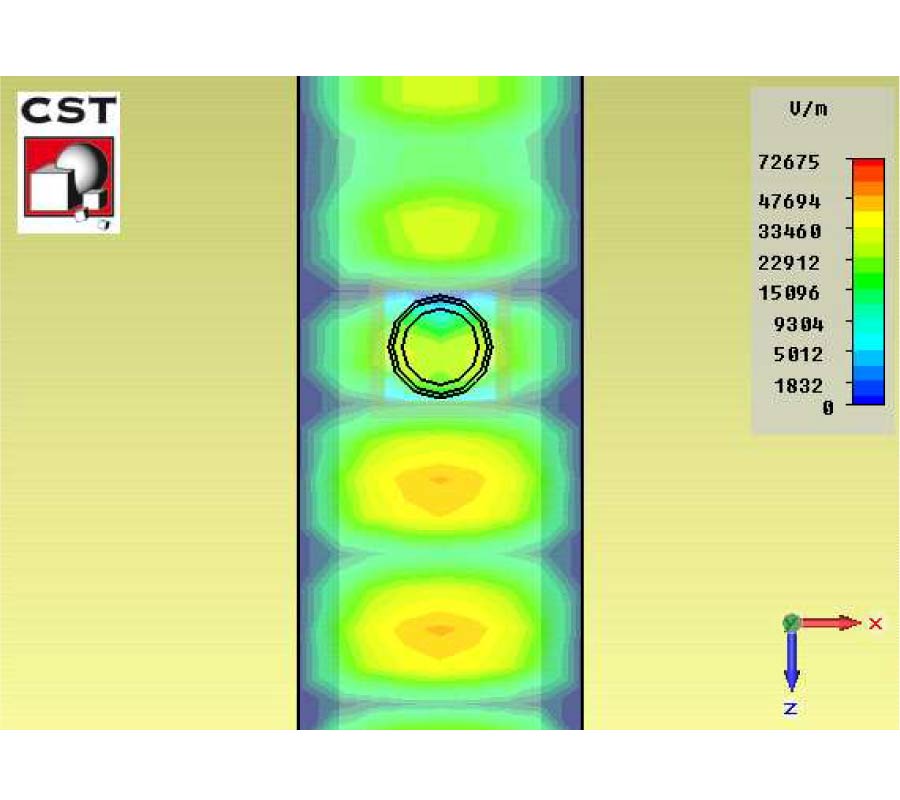
This paper presents the design and fabrication of a class of dielectric filled rectangular waveguides using a multilayer photoimageable thick-film technique. The original fabrication technique is modified to shorten fabrication time and improve waveguide thickness to reduce transmission structure losses. The materials used are first characterized before the wave-guiding properties are extracted. The fabricated waveguides show excellent results in term of loss and a 1% variation in permittivity over a wide frequency range of 10-100 GHz. To demonstrate the practical applications of this modified fabrication technique, 5th and 3rd order band-pass filters are designed and fabricated. The different incertitude on the fabrication issues is studied showing an effect on the bandwidth and central frequency. The measurement results of the fabricated prototypes agree well with the simulated ones. A broadband 3 dB coupler is designed and fabricated covering both V and W bands. The measurements results for this circuit show good performance with 23% of bandwidth and are in good agreement with the simulations.
MODIFIED PHOTOIMAGEABLE THICK-FILM PROCESS FOR MILLIMETER-WAVE RECTANGULAR WAVEGUIDE APPLICATIONS
2011-06-29
PIER M
Vol. 19, 53-59
A New Method Based on the Spectral Analysis to Generate the Frequential Behavior of Magnetic Hysteresis
Abdelmadjid Nouicer , Elamine Nouicer and Mouloud Feliachi
The aim of the paper is to present a simple but well applicable development, to generate the waveform of the magnetic flux density, and so the magnetic hysteresis, for any signal frequency. The proposed approach is based on the knowledge of the signal spectrum for one given frequency. It allows to construct the spectrum for any other frequency. Then, the constructed signal is transformed back to the time domain.
A NEW METHOD BASED ON THE SPECTRAL ANALYSIS TO GENERATE THE FREQUENTIAL BEHAVIOR OF MAGNETIC HYSTERESIS
2011-06-29
PIER M
Vol. 19, 39-52
Thermal Effect Modeling on Passive Circuits with Mlp Neural Network for EMC Application
Mohamed Bensetti , Fabrice Duval and Blaise Ravelo
During the last two decades, several simulation tools have been proposed for the modeling of electronic equipments in function of the physical environmental changes. It was stated that numerous electronic components such as semiconductor devices can be affected by the mechanistic effects, humidity or simply the temperature variations. To study the last effect, based on the multilayer perceptron neural network (MLPNN), a characterization method of the passive electronic device thermal effects is introduced in this paper. The method proposed was realized toward the equivalent circuit identification of the under test device (R, L, C components) measured input impedances. To demonstrate the relevance of the method, numerical computations with MLPNN algorithms implemented into Matlab were performed. First, a capacitor modeling from 30 kHz to 1 GHz for the temperature variation from 25°C to 130°C is presented. It was found that a good agreement between the proposed model and the measurement is observed. Then, a commercial EMI low-pass filter was also characterized in RF frequencies through the S-parameter identification. Finally, further discussion on the potential applications of this work, in particular, in the electromagnetic compatibility (EMC) field is offered in the last part of this paper.
THERMAL EFFECT MODELING ON PASSIVE CIRCUITS WITH MLP NEURAL NETWORK FOR EMC APPLICATION
2011-06-27
PIER B
Vol. 31, 323-337
Gaussian Beam Scattering on Two-Dimensional Periodic Aperture Array
A. V. Gribovsky and Oleg A. Yeliseyev
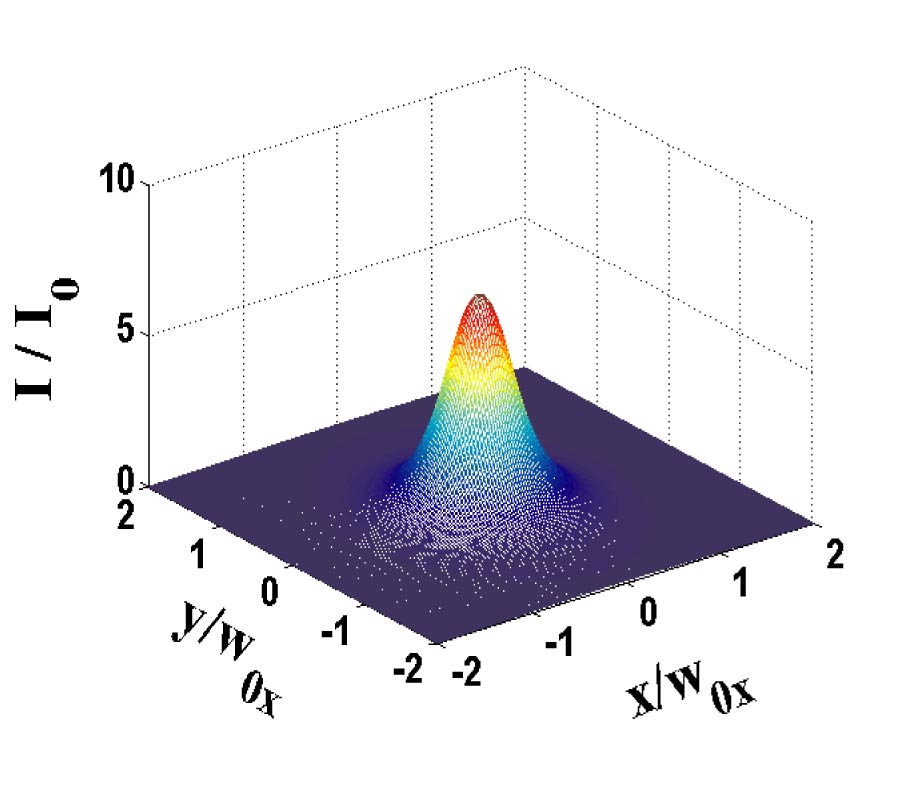
The diffraction problem of three-dimensional Gaussian beam on the aperture array of rectangular holes is solved. A new algorithm for calculating scattered fields of the beam is proposed. The conditions under which the distortion of the reflected field pattern and the narrowing of the transmitted field pattern appear are studied.
GAUSSIAN BEAM SCATTERING ON TWO-DIMENSIONAL PERIODIC APERTURE ARRAY
2011-06-27
PIER
Vol. 118, 135-149
Transient Wave Propagation in a General Dispersive Media Using the Laguerre Functions in a Marching-on-in-Degree (MOD) Methodology
Baek-Ho Jung , Zicong Mei and Tapan Kumar Sarkar
The objective of this paper is to illustrate how the marching-on-in-degree (MOD) method can be used for efficient and accurate solution of transient problems in a general dispersive media using the finite difference time-domain (FDTD) technique. Traditional FDTD methods when solving transient problems in a general dispersive media have disadvantages because they need to approximate the time domain derivatives by finite differences and the time domain convolutions by using finite summations. Here we provide an alternate procedure for transient wave propagation in a general dispersive medium where the two issues related to finite difference approximation in time and the time consuming convolution operations are handled analytically using the properties of the associate Laguerre functions. The basic idea here is that we fit the transient nature of the fields, the permittivity and permeability with a series of orthogonal associate Laguerre basis functions in the time domain. In this way, the time variable can not only be decoupled analytically from the temporal variations but that the final computational form of the equations is transformed from FDTD to a FD formulation in the differential equations after a Galerkin testing. Numerical results are presented for transient wave propagation in general dispersive materials which use for example, a Debye, Drude, or Lorentz models.
TRANSIENT WAVE PROPAGATION IN A GENERAL DISPERSIVE MEDIA USING THE LAGUERRE FUNCTIONS IN A MARCHING-ON-IN-DEGREE (MOD) METHODOLOGY
2011-06-26
PIER B
Vol. 31, 297-321
Resolution Threshold Analysis of MUSIC Algorithm in Radar Range Imaging
Xiang Gu and Yunhua Zhang
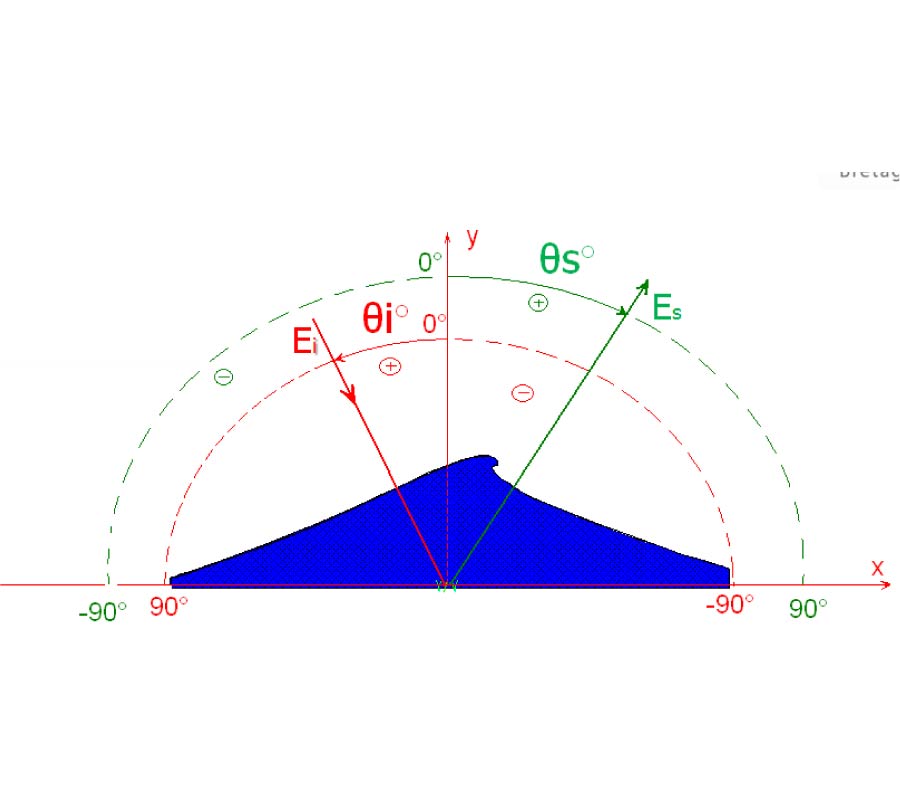
Super-resolution algorithms used in radar imaging, e.g., MUltiple SIgnal Classification (MUSIC), can help us to get much higher resolution image beyond what is limited by the signal's bandwidth. We focus on MUSIC imaging algorithm in the paper and investigate the uniqueness and effectiveness conditions of the MUSIC algorithm when used in 1-D radar range imaging. Unlike conventional radar resolution analysis, we introduced the concept of resolution threshold from Direction of Arrival (DOA) into the MUSIC radar range imaging, we derive an approximate expression of theoretical resolution threshold for 1-D MUSIC imaging algorithm through the approach of asymptotic and statistical analysis to the null spectrum based on the perturbation theory of algebra and matrix theories. Monte Carlo simulations are presented to verify the work.
RESOLUTION THRESHOLD ANALYSIS OF MUSIC ALGORITHM IN RADAR RANGE IMAGING
2011-06-24
PIER B
Vol. 31, 283-296
Plasmonic Effect of Gold Nanospheroid on Spontaneous Emission
Jiunn-Woei Liaw , Chi-San Chen and Jeng-Hong Chen
The plasmonic effects of a gold prolate nanospheroid on the spontaneous emission of an adjacent emitter, regarded as an oscillating electric dipole, at the excitation and emission stages are studied respectively by using the multiple multipole method. The numerical results show that when an irradiating light is at the longitudinal surface plasmon resonance frequency of the nanospheroid and with a polarization parallel to the long axis, the strongest excitation rate occurs at the proximity of the long-axis vertex. In addition, if the emitter is at this region, and its orientation is also parallel to the long axis, the apparent quantum yield of the emission is the maximum, compared to the other locations and orientations. Therefore, for this case the overall enhancement factor of a nanospheroid on an emitter's spontaneous emission is the maximum. In contrast, the emitter's emission could be quenched, if it is near the short-axis vertex.
PLASMONIC EFFECT OF GOLD NANOSPHEROID ON SPONTANEOUS EMISSION
2011-06-24
PIER M
Vol. 19, 25-38
Time-Delay-Based Multi-Target Detection and Power Delivering
Xuan-Ming Zhong , Cheng Liao and Wenbin Lin
The paper presents an approach to locate and concentrate electromagnetic energy on targets based on time delays. An array of antennas is used in the approach, in which one antenna sends ultra-wide-band signals, and all antennas receive the signals backscattered by the targets. The time delays can be obtained by the interrelation of the transmitted and received signals. By controlling the timing of the pulses radiated from the individual antennas, high concentration of electromagnetic energy on the targets' locations can be achieved. The performance of this approach is demonstrated by several numerical simulations.
TIME-DELAY-BASED MULTI-TARGET DETECTION AND POWER DELIVERING
2011-06-24
PIER
Vol. 118, 117-133
On the Dispersion Relations of Tapered Core Optical Fibers with Liquid Crystal Clad
Pankaj Kumar Choudhury and Patrick T. S. Ping
The paper deals with the case of a three-layer liquid crystal tapered optical fiber (LCTOF) for which the dispersion relations are deduced corresponding to the TE and the TM modes. For the LCTOF under consideration, the outermost clad section is made of liquid crystal material with radial anisotropy whereas the core and the inner clad are homogeneous, non-magnetic and isotropic dielectric regions. Rigorous field expressions corresponding to different LCTOF sections are deduced, and the eigenvalue equations are reported followed by the modal behaviour of the guide in respect of the propagation constants and cutoff situations. Apart from that, a glimpse of the power confinement through the TE and the TM excitations in different fiber sections is also touched upon.
ON THE DISPERSION RELATIONS OF TAPERED CORE OPTICAL FIBERS WITH LIQUID CRYSTAL CLAD
2011-06-24
PIER
Vol. 118, 89-116
Oscillator Accurate Linear Analysis and Design. Classic Linear Methods Review and Comments
Vicente Gonzalez-Posadas , Jose Luis Jiménez-Martín , Ángel Parra-Cerrada , Daniel Segovia-Vargas and Luis Enrique Garcia-Munoz
This paper is a deep analysis of oscillator plane reference design methods. It defines applicable conditions and the expected accuracy that can be archived with these methods. Some examples will be shown to illustrate wrong solutions that the use of linear reference plane methods can produce. The wrong solutions will be justified by necessary conditions for proper use of these methods. The strengths and weaknesses of the, widely used, plane reference methods are described in this paper. Several classic topologies of microwave oscillators, as Grounded Collector Tuned Bases (GCTB) and Grounded Bases Tuned Oscillator (GBTO), are used to illustrate these results and the additional required conditions.
OSCILLATOR ACCURATE LINEAR ANALYSIS AND DESIGN. CLASSIC LINEAR METHODS REVIEW AND COMMENTS
2011-06-24
PIER
Vol. 118, 71-87
Frequency Domain Dynamic Thermal Analysis in GaAs Hbt for Power Amplifier Applications
Than Tun Thein , Choi Look Law and Kai Fu
Dynamic temperature distributions in GaAs HBT are numerically analyzed in frequency domain as a function of power dissipation, frequency and space. Complete thermal characteristics, including frequency-dependent thermal impedance and phase lag behavior, are presented. The analysis is also extended for arbitrary periodic or aperiodic pulse heating operation to predict junction temperature of a Power Amplifier (PA) with non-constant envelope input signal. Dynamic junction temperatures of a single finger 2 μm x 20 μm GaAs HBT are predicted for square pulse envelope signal input with power levels varying with up to 10 dB above a nominal average level of 40 mW and with pulse widths ranging from 10 ns to 100 μs. With the input envelope signal amplitude of 10 dB above the average, the analytical results show that junction temperature rises from room temperature of 27oC to 39oC when heated by 10 ns pulse, increase to 36oC by 100ns pulse, 105oC by 1μs pulse and to 198oC by 100 μs pulse. A novel setup is developed for nano-second pulsed measurements, and the analysis is validated through time domain on wafer pulsed measurements at three different power levels: 0 dB, 3 dB, and 6 dB above the average level. Results show that analytical results track well with measured junction temperature within the accuracy of ±5oC over the entire measurement set.
FREQUENCY DOMAIN DYNAMIC THERMAL ANALYSIS IN GAAS HBT FOR POWER AMPLIFIER APPLICATIONS
2011-06-23
PIER B
Vol. 31, 261-281
Analysis and Design of Thin Planar Absorbing Structure Using Jerusalem Cross Slot
Haixia Liu , Bofeng Yao , Long Li and Xiao-Wei Shi
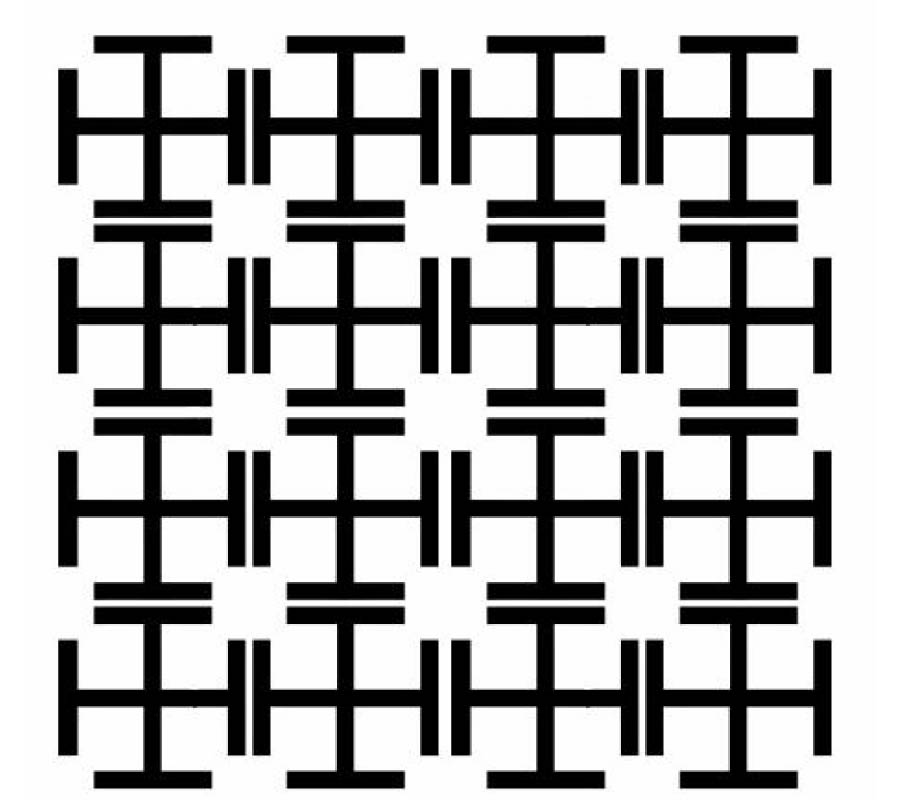
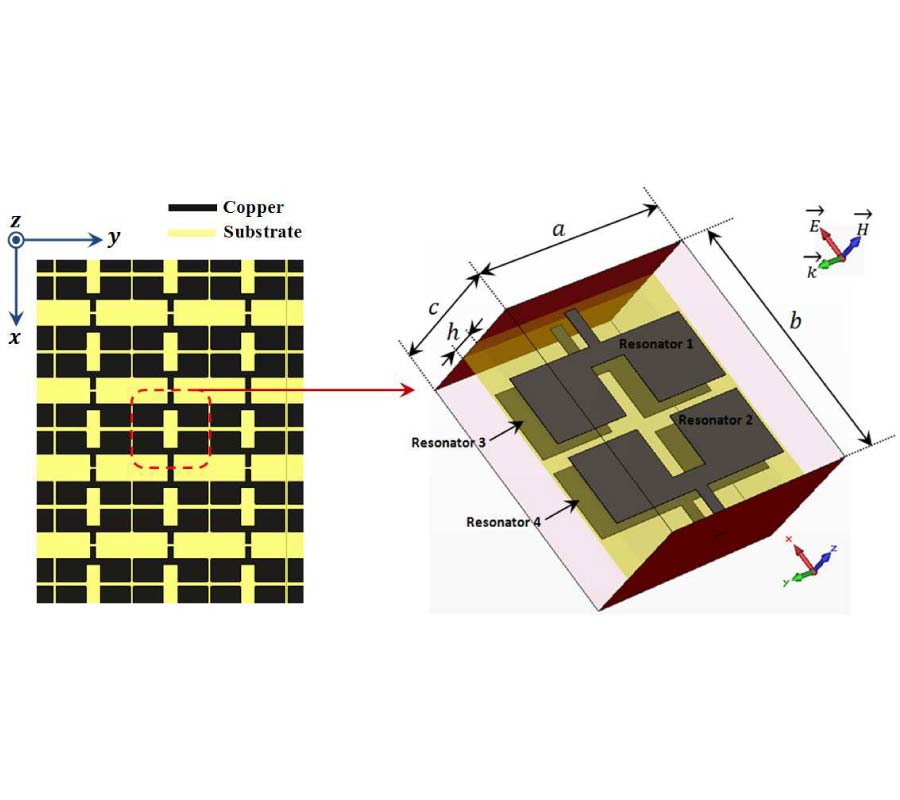
A detailed analysis and design of thin planar absorbing structure using Jerusalem cross slot (JCS) is presented in this paper. Based on uniplanar compact high-impedance surface characteristics, the resistance loss material layer can be directly attached to the surface of JCS structure, thus absorbing electromagnetic waves effectively. The improved design is characterized by its wider bandwidth and adjustable range. The absorption frequency band can be flexibly adjusted by the slot parameters. The influences of various structure parameters of JCS, including incident wave polarization and variation of incident angles on the absorption properties, are analyzed to provide guidance on theoretical design for practical application. The loaded resistance can be adjusted to obtain the optimum absorbing performance. The validation and effectiveness of the proposed design are conducted by using X-band waveguide simulation and measurement.
ANALYSIS AND DESIGN OF THIN PLANAR ABSORBING STRUCTURE USING JERUSALEM CROSS SLOT
2011-06-23
PIER M
Vol. 19, 13-23
Application of the Fractional Fourier Transform to Moving Train Imaging
Lingjuan Yu and Yunhua Zhang
This paper introduces an imaging algorithm with application of fractional Fourier transform (FrFT) for ground moving train imaging by Ku-band ground-based radar. In view of the fact that the train speed is varying when acrossing the radar beam, the multiple Doppler parameters are estimated corresponding to different range positions, i.e., they are estimated from different sections of data in FrFT domain, then the train is imaged section by section, and finally these sectional images are combined to get the full image of the train. Because traditional parameter estimation method by two-dimensionally searching the peaks in FrFT domain is inefficient, we transfer the parameter searching problem into an one-dimensional optimization problem, which can be solved with high efficiency by using the golden section searching method.
APPLICATION OF THE FRACTIONAL FOURIER TRANSFORM TO MOVING TRAIN IMAGING
2011-06-23
PIER
Vol. 118, 57-69
Millimeter Wave Microstrip Mixer Based on Graphene
George Roberto Hotopan , Samuel Ver-Hoeye , Carlos Vazquez-Antuna , Rene Camblor-Diaz , Miguel Fernandez-Garcia , Fernando Las Heras Andres , P. Alvarez and R. Menéndez
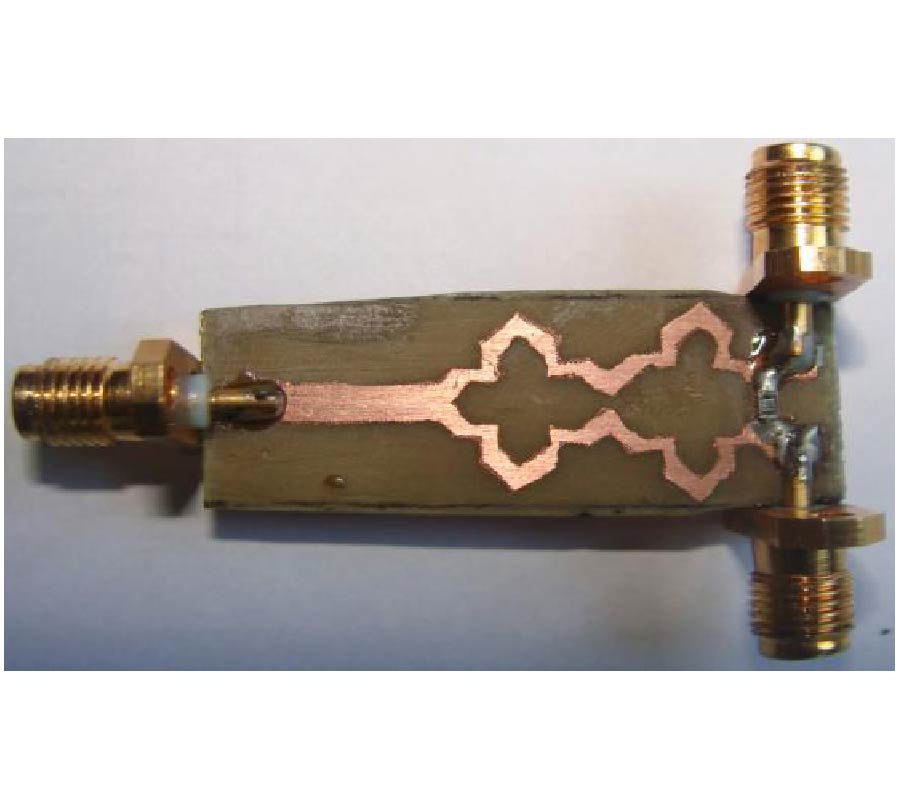
In this work, a millimeter wave microstrip frequency-mixer design based on graphene is presented. The desired frequency mixing behavior is obtained using a nonlinear component consisting in a microstrip line gap covered by a graphene layer. The circuit includes microstrip filters that have been designed to obtain a high isolation between the input and output ports. The nonlinear behavior of the frequency mixer has been experimentally evaluated in the 38.6-40 GHz input signal frequency range, for different values of the input power and local oscillator power.
MILLIMETER WAVE MICROSTRIP MIXER BASED ON GRAPHENE