Search Results(13802)

2011-07-28
PIER
Vol. 119, 207-224
An Advanced Dss-SAR InSAR Terrain Height Estimation Approach Based on Baseline Decoupling
Shuang Li , Huaping Xu and Lvqian Zhang
In the distributed small satellites synthetic aperture radar (DSS-SAR), baseline is usually coupled, that is, along-track baseline and across-track baseline exist simultaneously. However, coupling baseline makes it difficult to distinguish phase differences caused by terrain height and Doppler frequency difference. In SAR interferometry (InSAR) geometric model, across-baseline is necessary to bring interferometric phase to estimate terrain height. Oppositely, along-track baseline will bring extra phase difference and dramatically decrease the accuracy of terrain height estimation. Considering the aforementioned problem, this paper focuses on the study of baseline decoupling of DSS-SAR. We firstly analyze the effect of coupling baseline on terrain height estimation, and then propose the method of baseline decoupling through space projection theory. In order to realize baseline decoupling, equivalent slave satellite, equivalent baseline, and equivalent slant range are defined through projecting slave satellite on range-height plane of master satellite. Furthermore, based on our baseline decoupling, an advanced approach of estimating terrain height is presented, which is more effective than traditional InSAR geometric model. Simulation results illuminate that the baseline decoupling can eliminate along-track baseline effect on terrain height estimation effectively and confirm the validity and efficiency of terrain height estimation approach proposed in this paper.
AN ADVANCED DSS-SAR INSAR TERRAIN HEIGHT ESTIMATION APPROACH BASED ON BASELINE DECOUPLING
2011-07-27
PIER B
Vol. 33, 83-97
Influence of the Pole Number on the Magnetic Noise of Electrical ac Machines
Bertrand Cassoret , Jean-Philippe Lecointe and Jean-Francois Brudny
This paper deals with the influence of the AC machine pole number on vibrations and noise of electromagnetic origin. First, rules of design of AC machines are reminded, pointing out the influence of the pole number. Then, the origin of magnetic vibrations and noise is explained. Analytical mechanical relations are given, allowing to estimate vibrations and noise of a machine. After that, the influence of the pole number is studied: on the machine radius, on the stator deformations, on the mechanical resonance frequencies and on the noise. The conclusions underline that machines with high pole number have stator vibrations of high amplitude. Calculations compare three machines with different pole number and fed at different frequencies. The conclusion is that, at the same speed and working power, machines with high pole number fed at high frequency are noisier than those with low number of poles fed at low frequency. Practical experiments illustrate these theoretical considerations.
INFLUENCE OF THE POLE NUMBER ON THE MAGNETIC NOISE OF ELECTRICAL AC MACHINES
2011-07-27
PIER B
Vol. 33, 69-82
A Simple Solution for the Damped Wave Equation with a Special Class of Boundary Conditions Using the Laplace Transform
Namik Yener
It is proven that for the damped wave equation when the Laplace transforms of boundary value functions ψ(0,t) and (∂ψ(z,t)/∂z)z=0 of the solution ψ(z,t) have no essential singularities and no branch points, the solution can be constructed with relative ease. In such a case while computing the inverse Laplace transform, the integrals along the segments on the real line are shown to always cancel. The integrals along the circles Cε and C'-ε about the point s=-σ/ε determined by the coefficient of the time derivative in the differential equation and point s=0 are shown to vanish unless Laplace transforms of mentioned boundary value functions have poles at these points. If such poles do exist, the problem is nevertheless one of integration along circles about these poles and then setting the radii of these circles equal to zero in the limit.
A SIMPLE SOLUTION FOR THE DAMPED WAVE EQUATION WITH A SPECIAL CLASS OF BOUNDARY CONDITIONS USING THE LAPLACE TRANSFORM
2011-07-27
PIER
Vol. 119, 191-206
Superresolution Enhancement for the Superlens with Anti-Reflection and Phase Control Coatings via Surface Plasmons Modes of Asymmetric Structure
Pengfei Cao , Xiaoping Zhang , Wei-Jie Kong , Lin Cheng and Hao Zhang
The paper discusses the reason why the image resolution can be significantly enhanced by the superlens with anti-reflection and phase control coatings (ARPC-superlens) via analyzing the surface plasmons (SPs) modes. ARPC-superlens is an asymmetric structure with finite thickness, in which we first find that there are two asymmetric SPs modes. By comparing the dispersion curve of SPs of ARPC-superlens and the SPs group velocity with their counterparts in the metric ones, we find that the Up Asymmetric Mode and Down Asymmetric Mode are excited within the ARPC-superlens with asymmetric structure. By simulating the aerial images in different SPs modes, the paper also discusses the optimal ratio between the metal slab and the ARPC coatings thickness. The results demonstrate that the subwavelength resolution of ARPC-superlens in Down Asymmetric Mode has been enhanced, when the metal/ARPC thickness ratio is 2:1.
SUPERRESOLUTION ENHANCEMENT FOR THE SUPERLENS WITH ANTI-REFLECTION AND PHASE CONTROL COATINGS VIA SURFACE PLASMONS MODES OF ASYMMETRIC STRUCTURE
2011-07-26
PIER M
Vol. 19, 161-171
A New Approach to Enhance Incidence Angle Based Spectrum Tuning Capability of One-Dimensional Ternary Photonic Band Gap Structure
Anirudh Banerjee
This paper demonstrates a novel and superior approach to enhance the incident angle based spectrum tuning capability of 1D ternary Photonic Band Gap (PBG) structure. The incidence angle sensitive wavelength band shift of a ternary periodic structure was significantly enhanced when the refractive index of sandwiched layers in each period was changed to 1.5 from 2.04. The ranges of enhancements for TE and TM wavelength band shifts were 0.5-1.5 nm and 5.5-20.5 nm respectively at different angles of incidence of light on the structure. Unlike previous approach, this approach not only enhances the incidence angle based spectrum tuning capability of 1D ternary PBG structure, but, it also ensures that the size of structure does not increase and temperature immunity of the structure does not decrease to enhance spectrum tuning capability.
A NEW APPROACH TO ENHANCE INCIDENCE ANGLE BASED SPECTRUM TUNING CAPABILITY OF ONE-DIMENSIONAL TERNARY PHOTONIC BAND GAP STRUCTURE
2011-07-25
PIER B
Vol. 33, 45-67
Nonlinear Interaction of Electromagnetic Radiation at the Cell Membrane Level: Response to Stochastic Fields
Assunta De Vita , Rocco Paolo Croce , Innocenzo Pinto and Bisceglia Bruno
A general rigorous analytic framework for computing the transmembrane potential shift resulting from the nonlinear voltage-current membrane relationship in response to wideband stochastic electromagnetic radiation is outlined, based on Volterra functional series. The special case of an insulated cylindrical cell with Hodgkin-Huxley membrane in an infinite homogeneous medium is worked out in detail, for the simplest case where the applied electric is normal to the cell axis, and independent from the axial coordinate. Representative computational results for a zero-average stationary band-limited white Gaussian incident field are illustrated and briefly discussed.
NONLINEAR INTERACTION OF ELECTROMAGNETIC RADIATION AT THE CELL MEMBRANE LEVEL: RESPONSE TO STOCHASTIC FIELDS
2011-07-25
PIER
Vol. 119, 171-190
A Novel High-Power Amplifier Using a Generalized Coupled-Line Transformer with Inherent DC-Block Function
Yongle Wu , Yuan'an Liu , Shun Li and Shulan Li
The purpose of this paper is to propose a novel generalized single-band transformer for two arbitrary complex load and source impedances and a novel high-power amplifier using this new transformer. By adding two reactive parts at across terminals, the coupled line with flexible electrical length has practical even- and odd-mode characteristic impedances. Thus, the total circuit layout can be realized on common printed circuit board without any restriction. The synthesis theory of this proposed transformer is complete and analytical. Furthermore, unlike conventional quarter-wavelength transformers, this structure exhibits four main features such as effective matching for extremely low-resistive load impedance, effective matching for extremely high-resistive load impedance, tunable characteristic for equivalent electrical length and inherent DC-block function. For theoretical verification, several impedance transformers, which include some fixed operating-frequency cases and a tunable case, for smaller than 7 Ohm or larger than 1500 Ohm, are presented. As a typical experimental example, this analyzed transformer with inherent DC-block function has been applied in a 4-Watt power amplifier as output matching structure.
A NOVEL HIGH-POWER AMPLIFIER USING A GENERALIZED COUPLED-LINE TRANSFORMER WITH INHERENT DC-BLOCK FUNCTION
2011-07-25
PIER
Vol. 119, 155-170
An Improved Polar Format Algorithm with Performance Analysis for Geosynchronous Circular SAR 2D Imaging
Qi Liu , Wen Hong , Weixian Tan , Yun Lin , Yanping Wang and Yirong Wu
This paper presents an improved polar format algorithm (PFA) for geosynchronous synthetic aperture radar which undergoes a near-circular track (GeoCSAR). GeoCSAR imaging geometry and signal formulation considering orbit perturbations were derived to ensure accurate slant range between antenna and targets. The illuminated area is more than one million square kilometers due to the long slant distance, resulting in large amount of data to be processed and that the scene is a spherical crown rather than a plane. By assuming spherical wavefronts instead of planar wavefronts, improved polar format algorithm (PFA) was proposed to focus GeoCSAR raw data on a spherical reference surface (ground surface), so that the size of focused scene is no longer limited by the range curvature phase error. Thus, this method could deal with large area imaging for GeoCSAR precisely and efficiently. The implementation procedure, computational complexity, phase error and achievable resolution were presented to show the focusing capabilities of this imaging algorithm. Numerical simulation was further performed to validate the feasibility of this imaging algorithm and the correctness of analysis.
AN IMPROVED POLAR FORMAT ALGORITHM WITH PERFORMANCE ANALYSIS FOR GEOSYNCHRONOUS CIRCULAR SAR 2D IMAGING
2011-07-24
PIER B
Vol. 33, 21-44
Scalar Radiative Transfer in Discrete Media with Random Oriented Prolate Spheroids Particles
Lu Bai , Zhen-Sen Wu , Hai-Ying Li and Tuo Li
Monte Carlo scalar radiative transfer simulation of light scattering in plane parallel slab is not a simple problem, especially in the study of angular distribution of light intensity. Approximate phase function such as Henyey-Greenstein is often used to simulate the Mie phase function. But even for sphere particle this function is sometimes a poor approximation of real phase function. For a spheroids particle, the angular scattering characteristics cannot be approximated as H-G phase function with sufficient accuracy. In this paper, we study the transmission characteristics of light in parallel plane layer with randomly oriented prolate spheroids aerosol particles. Instead of using H-G phase function, we use sampling method to simulate real phase function of spheroid directly. A database of phase function with various scattering angle and azimuth angles for given spheroids aerosol particle is developed. The transmission characteristics calculated by scattering phase function sampling method and equivalent volume sphere H-G phase function method are compared. The effect of prolate spheroids particle size and form factor on optical transmission properties is analyzed. It is found that although the construction database of phase function takes a certain amount of computing time, for spheroid particles the sample phase function method, compared with the H-G phase function simulation method, can greatly improve the accuracy of transmittance calculation.
SCALAR RADIATIVE TRANSFER IN DISCRETE MEDIA WITH RANDOM ORIENTED PROLATE SPHEROIDS PARTICLES
2011-07-24
PIER B
Vol. 33, 1-19
A Rigorous Forest Scattering Model Validation through Comparison with Indoor Bistatic Scattering Measurements
Sami Bellez , Helene Roussel , Cyril Dahon and Jean-Michel Geffrin
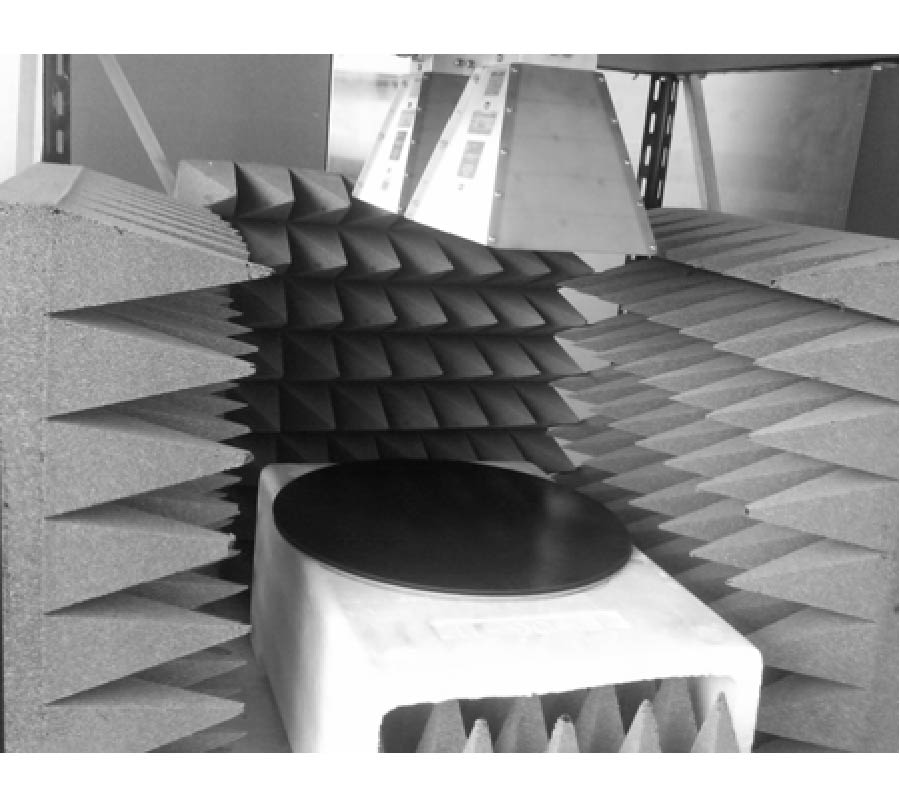
In this paper, we present numerical simulations and indoor bistatic scattering measurements on scaled targets. The targets are vertical and/or tilted dielectric parallelepipeds representing the main forest elements (tree-trunks and primary branches) at VHF and low-UHF frequencies. They are placed above an aluminum circular plate to simulate a flat ground. The measurements have been conducted in the anechoic chamber of the ``Centre Commun de Ressources Micro-ondes'' (CCRM) in Marseille, France. A 3D forest scattering model using a Method of Moments (MoM) is deployed to simulate the electric fields scattered by these targets. Two radar geometric, azimuthal and zenithal, bistatic configurations with special attention to the specular direction have been considered. Simulation results and experimental data are confronted for both {VV-} and {HH-}polarizations in order to evaluate the accuracy of our model. We have obtained a very good agreement between theoretical and experimental scattered fields for both the magnitude and phase.
A RIGOROUS FOREST SCATTERING MODEL VALIDATION THROUGH COMPARISON WITH INDOOR BISTATIC SCATTERING MEASUREMENTS
2011-07-24
PIER B
Vol. 32, 405-423
Design of a Non-Contact Vertical Transition for a 3D mm-Wave Multi-Chip Module Based on Shielded Membrane Supported Interconnects
Novak E. S. Farrington and Stavros Iezekiel
The preliminary design concept, for a low-loss, high-bandwidth electromagnetically coupled vertical transition for use as a via between adjacent levels of a 3D-MCM based on membrane-supported striplines with micro-machined shielding, is presented. The design methodology, modeling using Ansoft HFSS and simulated results are presented and together represent a complete electrical characterization of the vertical transition. The simulated insertion loss of these structures is shown to be as low as 0.12 dB at 60 GHz with a 44 GHz 1 dB bandwidth. Besides studying the vertical transition, the analysis is extended to identify the range of directional coupling which can be achieved using this type of structure, which is shown to be greater than 3 dB. The structures studied rely on a versatile micromachining technique for the fabrication of the micro-shielding which allows for the conformal packaging of lines and devices, with the ultimate aim of realizing 3D system-in-a-package type modules. The concept and proposed fabrication techniques for these modules, including methods of flip-chip MMIC attachment are detailed.
DESIGN OF A NON-CONTACT VERTICAL TRANSITION FOR A 3D MM-WAVE MULTI-CHIP MODULE BASED ON SHIELDED MEMBRANE SUPPORTED INTERCONNECTS
2011-07-24
PIER B
Vol. 32, 389-404
Reduction of Eletromagnetic Field Radiated by Power Electronic Converters
Mohammed Melit , Bachir Nekhoul , Nasserdine Boudjerda , Khalil El Khamlichi Drissi and Kamal Kerroum
This paper is concerned with a modeling technique of electromagnetic radiations of power electronics circuits during a switching operation of a power electronic component. The electromagnetic radiating loops are formed by PCB traces assumed to be perfect conductor. We complete our study by proposing a technique using passive loops to reduce the magnetic field emitted by the power electronic converter. To achieve this, we propose to solve Maxwell's equations by using the FDTD method where open boundaries, dielectric board and ground plane are taken into consideration. A validation of the model used in our work (solving Maxwell equations using FDTD) is realized by comparison with other theoretical concepts.
REDUCTION OF ELETROMAGNETIC FIELD RADIATED BY POWER ELECTRONIC CONVERTERS
2011-07-24
PIER
Vol. 119, 133-153
Calculation of Whole-Body SAR from a 100 MHz Dipole Antenna
Ming Zhang and A. Alden
This paper presents results of a dosimetry study at an FM broadcasting frequency of 100 MHz. The work focused on SAR calculations with high resolution Magnetic Resonance Imaging (MRI)-based full-body models. FDTD computer modeling used a half-wave dipole as the exposure source. Extensive calculations give the variation of SAR with distance and show that whole-body average SAR exhibits a different distance dependency from the incident power density. Body size has a significant effect on SAR. Based on the numerical results, an empirical formula was developed to describe the relationship between antenna input power and distance for the limiting SAR value.
CALCULATION OF WHOLE-BODY SAR FROM A 100 MHZ DIPOLE ANTENNA
2011-07-23
PIER B
Vol. 32, 351-388
Axisymmetric Magnetic Field Calculation with Zonal Harmonic Expansion
Ferenc Gluck
The magnetic field of an axially symmetric coil or magnetic material system can be computed by expansion of the central and remote zonal harmonics, using the Legendre polynomials. This method can be 100-1000 times faster than the more widely known elliptic integral method and is more general than the similar radial series expansion. We present the zonal harmonic method for field, scalar and vector potential calculation of circular current loops, of general axisymmetric coils and magnetic materials, and of special coils with rectangular cross section, with various source representations: currents, magnetic dipoles and equivalent magnetic charges. We discuss in detail the convergence properties of the zonal harmonic expansions, and we show the generalization of the method for special three-dimensional magnetic systems.
AXISYMMETRIC MAGNETIC FIELD CALCULATION WITH ZONAL HARMONIC EXPANSION
2011-07-23
PIER B
Vol. 32, 319-350
Axisymmetric Electric Field Calculation with Zonal Harmonic Expansion
Ferenc Gluck
The electric potential and field of an axially symmetric electric system can be computed by expansion of the central and remote zonal harmonics, using the Legendre polynomials. Garrett showed the usefulness of the zonal harmonic expansion for magnetic field calculations, and the similar radial series expansion has been widely used in electron optics. In this paper, we summarize our experience of using the zonal harmonic expansion for practically interesting axisymmetric electric field computations. This method provides very accurate potential and field values, and it is much faster than calculations with elliptic integrals. We present formulas for the central and remote expansions and for the coefficients of the zonal harmonics (source constants) in the case of general axisymmetric electrodes and dielectrics. We also discuss the general convergence properties of the zonal harmonic series (proof, rate of convergence, and connection with complex series). Practical considerations about the computation method are given at the end. In our appendix, one can find many useful formulas about properties of the Legendre polynomials, various derivatives of the zonal harmonic functions, and a simple numerical integration algorithm.
AXISYMMETRIC ELECTRIC FIELD CALCULATION WITH ZONAL HARMONIC EXPANSION
2011-07-23
PIER Letters
Vol. 25, 87-100
Derivation of Electromagnetic Properties of Child Biological Tissues at Radio Frequencies
Mimoza Ibrani , Luan Ahma , Enver Hamiti and Jetmir Haxhibeqiri
The knowledge of electromagnetic properties of biological tissues is required to assess the radio frequency energy deposition in children exposed to electromagnetic fields. The issue whether children should be considered a dosimetric sensitive group in comparison to adults, to which the confirmation of age-dependence of human tissue electromagnetic properties potentially may contribute remains debatable at scientific forums. This paper derives the formula for calculation of electromagnetic properties (permittivity and conductivity) of children tissues, as a function of height, weight, and age, respectively. By using the proposed formula, we have calculated and presented electromagnetic properties of the muscle, brain (gray matter) and skin for 1-year-old to 10-year-old children for 900 MHz, 1800 MHz and 2.4 GHz, at which frequencies most of radio frequency devices used by children operate. The trend over the age of child electromagnetic properties has been presented, and electromagnetic properties at different frequencies for the same child age have also been compared. For certain tissues, comparison between the children at various age and adult electromagnetic parameters has been given. A database with electromagnetic properties for children, of all ages, tissues and frequencies may be built up with the proposed approach. It will further advance research on the assessment of children exposure to electromagnetic fields. Formula can also be used for the determination of electromagnetic parameters for children with specific height and weight.
DERIVATION OF ELECTROMAGNETIC PROPERTIES OF CHILD BIOLOGICAL TISSUES AT RADIO FREQUENCIES
2011-07-23
PIER C
Vol. 23, 15-25
High Gain Axial-Mode Helical Antenna with Circular Metal Disk
Shu Lin , Li-Na Wang , Wen Bin Zhang , Chang-Fei Zhou , Xing-Qi Zhang and Jin-Xiang Wang
A method to improve the gain of axial-mode helical antenna is proposed. This method involves a parasitical circular metal disk, which is installed on the front of general axial-mode helical antenna and is apart from the helical line. A circular current whose phase lags behind that of helical line current appears, which brings a more concentrated radiation field. Consequently, the antenna gain is improved. Based on the simulation results, an antenna array model fed independently is proposed. This model gives an excellent explanation of the radiation characteristic of helical antenna. Both the simulation and experiment results show that for obtaining the same gain, the antenna length in this new method is only 71% of that in traditional helical antenna. The reduction of antenna length favors the miniaturization of antenna. In addition, this method has little effect on the bandwidth of antenna, so it can be widely used in the design of helical antenna element and array.
HIGH GAIN AXIAL-MODE HELICAL ANTENNA WITH CIRCULAR METAL DISK
2011-07-22
PIER C
Vol. 23, 1-14
Quadri-Folded Substrate Integrated Waveguide Cavity and Its Miniaturized Bandpass Filter Applications
Chuan An Zhang , Yu Jian Cheng and Yong Fan
In this paper, a quadri-folded substrate integrated waveguide (QFSIW) resonant cavity is proposed and investigated for the first time, which is able to reduce the circuit size by 89% compared with the conventional substrate integrated waveguide (SIW) resonant cavity. It has a two-layer configuration and a C-type coupling slot etched on the middle conductor layer. As an example, such a miniaturized resonant cavity is employed in the design of a four-order S-band SIW bandpass filter with the Chebyshev response. Negative couplings are used between two adjacent SIW resonant cavities, which don't influence the whole transmission characteristic of the filter. Experimental results are in good agreement with those from simulations.
QUADRI-FOLDED SUBSTRATE INTEGRATED WAVEGUIDE CAVITY AND ITS MINIATURIZED BANDPASS FILTER APPLICATIONS
2011-07-22
PIER M
Vol. 19, 147-160
Microstrip Patch Antenna with Skew-F Shaped DGS for Dual Band Operation
Ashwini Kumar Arya , Amalendu Patnaik and Machavaram Kartikeyan
The goal of this paper is to use defected ground structure (DGS) in microstrip antennas for dual band operation at microwave frequencies. The soft nature of the DGS facilitates improvement in the performance of microstrip antennas. A design study on microstrip patch antenna with specific DGS slot has been presented in the proposed work. In this paper, a stacked microstrip patch antenna (SMPA) has been designed for broadband behavior, and then skew-F shaped DGS has been integrated with a detailed study of possible DGS slots in a small area for dual band operation. The design and optimization of both the SMPA and DGS structures along with the parametric study were carried out using CST Microwave Studio V.9. Further, the dual band antenna, i.e., the SMPA with skew-F shaped DGS, has been fabricated, and the experimental results have shown a good agreement with the simulation ones.
MICROSTRIP PATCH ANTENNA WITH SKEW-F SHAPED DGS FOR DUAL BAND OPERATION
2011-07-21
PIER B
Vol. 32, 299-317
Comparative Study of Fabry-Perot Resonator Antenna with PMC and PEC Ground Plane
Zhen-Guo Liu and Ting-Hua Liu
In this paper, the transverse equivalent network (TEN) model based on the transmission line theory is employed to analyze and calculate the far-field radiation properties of the Fabry-Perot Resonator (FPR) antenna with perfect magnetic conductor (PMC) ground plane in detail, then the comparative study of the radiation property of FPR antenna with PMC and PEC ground plane is presented. The closed-form expressions for the radiated fields, field peak values, pattern beamwidths and pattern bandwidth of this type of antenna in the E- and H-planes are derived, respectively. The results demonstrate that in theory the radiation property of FPR antenna with two kinds of ground plane is not the same unexpectedly. An interesting characteristic of this type of antenna is that when the PMC acts as the antenna ground plane, the beamwidth and bandwidth of the antenna is increased by a factor of two in general cases, while its peak value of far field is the same as that of the conventional antennas of this class having PEC ground plane. Some results are validated through full-wave simulations of an actual antenna. The original results obtained here lead to a design method for getting the maximum directivity and keeping the bandwidth of this kind of resonant antenna, which is of great significance for antenna designing.
COMPARATIVE STUDY OF FABRY-PEROT RESONATOR ANTENNA WITH PMC AND PEC GROUND PLANE