Search Results(13802)

2011-08-16
PIER C
Vol. 23, 161-173
A Novel Ka-Band Solid-State Power Combining Amplifier
Li Zhao , Jun Xu , Lei Wang and Mao-Yan Wang
This paper presents a high-efficiency Ka-band solid-state power combining amplifier on the basis of a novel waveguide magic tee. By employing 16 low-power amplifier modules and compact waveguide power combining network with a low loss microstrip-to-waveguide transition, the output loss of the combining circuit is minimized, so a high combining efficiency larger than 85% from 34 to 36 GHz is obtained. Modular architecture is adopted in the combiner design. The single amplifier, bias circuit and heat sink are all fabricated separately, which add great flexibility to the system. Modular amplifiers can be premade and reserved in case any malfunctioning amplifier needs to be replaced. In addition, the improved power combining amplifier has the advantages of low loss, high isolation, compact structure, excellent heat-sink, etc.
A NOVEL KA-BAND SOLID-STATE POWER COMBINING AMPLIFIER
2011-08-16
PIER
Vol. 119, 435-447
An Intermodulation Recycling Rectifier for Microwave Power Transmission at 2.45 GHz
Chengyang Yu , Changjun Liu , Biao Zhang , Xing Chen and Kama Huang
The microwave to direct current (MW-DC) conversion efficiency of a rectifier drops significantly in a dual-frequency microwave power transmission (MPT) system. The measured data show that the MW-DC efficiency of a rectifier drops from 67% to 53% when the microwave source is switched from a continuous wave to a dual-tone waveform at the same power level. It is mainly due to the intermodulation effects resulted from a nonlinear component, e.g., the diode, in a rectifier. A novel rectifier is designed to improve the MW-DC efficiency by recycling the intermodulation power besides the harmonic power. With the novel configuration, the maximum MW-DC conversion efficiency of 62% can be achieved for a dual-tone waveform input at 17 dBm. It implies that more than one half of the intermodulation power has been recycled to DC power.
AN INTERMODULATION RECYCLING RECTIFIER FOR MICROWAVE POWER TRANSMISSION AT 2.45 GHz
2011-08-16
PIER
Vol. 119, 423-433
A Low-Profile Unidirectional Cavity-Backed Log-Periodic Slot Antenna
Jun Ou Yang , Song Bo , Jian Zhang and Feng Yang
A low-profile unidirectional cavity-backed coplanar waveguide-fed uniplanar log-periodic slot antenna suitable for the ultra-wideband applications (3-18 GHz) is presented. Due to the inherent balanced structure compared with the unbalanced antennas, such as dipole or loop antenna, the impedance matching and radiation performances of the proposed antenna are quite stable and satisfactory. There is a potential advantage for low profile ultra-wideband unidirectional antennas, and this paper demonstrates a technique for transforming the bidirectional beam into a unidirectional beam by using a special cavity in this ultra-wideband antenna. Meanwhile, the multi-resolution time domain (MRTD) method is applied to analyze this antenna. Experimental results reveal that the cavity has a small affect on the S-parameter of the origin antenna, and remains the perfect reflection property within the desired operation band.
A LOW-PROFILE UNIDIRECTIONAL CAVITY-BACKED LOG-PERIODIC SLOT ANTENNA
2011-08-16
PIER
Vol. 119, 407-421
A Coupled-Line Band-Stop Filter with Three-Section Transmission-Line Stubs and Wide Upper Pass-Band Performance
Yongle Wu and Yuan'an Liu
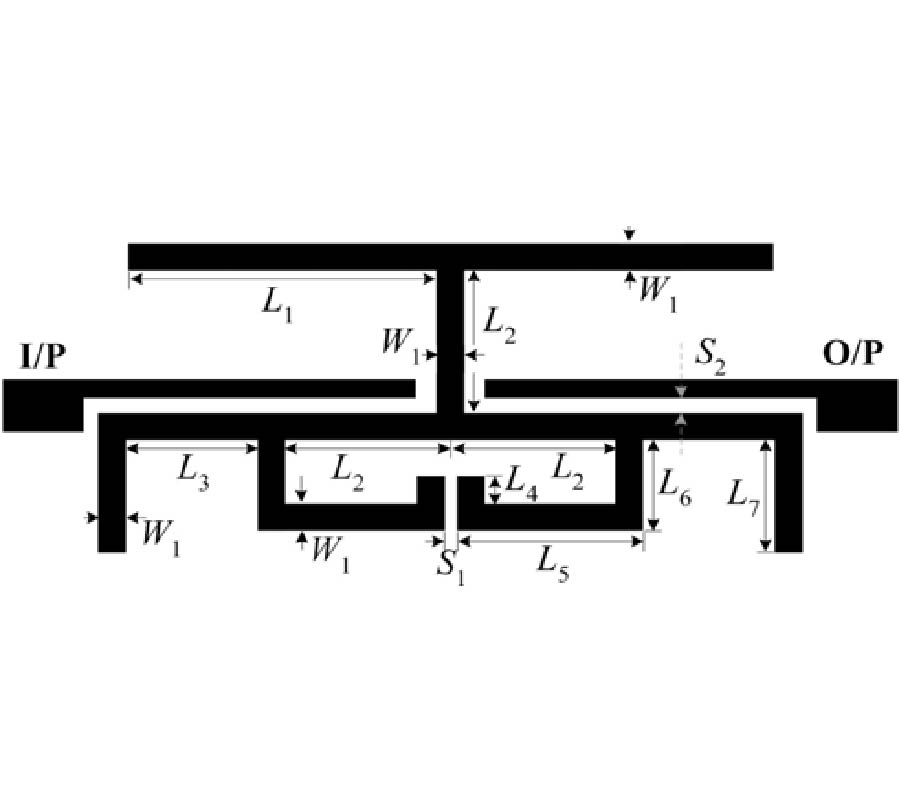
A novel band-stop filter with wide upper pass-band performance is proposed and discussed in this paper. This band-stop filter includes two three-section transmission-line stubs and a parallel coupled-line section. Because three-section transmission-line stubs and coupled-line section are used, this filter not only features good band-stop filtering property, but also has wide upper pass band. In order to verify this new filter circuit structure and its corresponding design theory, three groups of numerical examples are demonstrated. Finally, two practical band-stop filters using common microstrip technology are designed, simulated and measured. The simulated and measured results indicate that both the coupled-line section with weak coupling and two three-section stubs can improve the upper pass-band performance. Furthermore, the measured results of the second fabricated microstrip band-stop filter (Filter B) show that the 20-dB insertion-loss band-stop bandwidth at 0.46 GHz is 90 MHz and the 1.2-dB transmission coefficient upper pass band is from 0.66 GHz to 2.52 GHz. Thus, the highest pass-band frequency is extended to larger than five times of the operating center frequency of stop band.
A COUPLED-LINE BAND-STOP FILTER WITH THREE-SECTION TRANSMISSION-LINE STUBS AND WIDE UPPER PASS-BAND PERFORMANCE
2011-08-16
PIER
Vol. 119, 395-406
Compact Wideband Gysel Power Divider with Arbitrary Power Division Based on Patch Type Structure
Haiwei Zhang , Xiao-Wei Shi , Feng Wei and Le Xu
A novel Gysel power divider based on patch type structure is presented in this paper. The proposed power divider possesses broad bandwidth, small physical occupation and arbitrary power division. More than 30% bandwidth enhancement is achieved based on the -15 dB input return loss criteria, while 55% size reduction is realized compared with conventional Gysel power divider. What's more, flat dividing is obtained in the design without using additional transmission line sections. Based on the novel structure, a design procedure of power dividers with unequal power division ratios is provided without using narrow microstrip line. To verify the design approach, the proposed power dividers with equal and unequal (2:1 and 4:1) power divisions at the centre frequency 1.5 GHz are fabricated and measured. The results demonstrate that the design can fulfil our goals.
COMPACT WIDEBAND GYSEL POWER DIVIDER WITH ARBITRARY POWER DIVISION BASED ON PATCH TYPE STRUCTURE
2011-08-16
PIER
Vol. 119, 381-394
A Differential Evolution Approach for Robust Adaptive Beamforming Based on Joint Estimation of Look Direction and Array Geometry
Rammohan Mallipeddi , Joni Lie , P. N. Suganthan , Sirajudeen Gulam Razul and Chong Meng S. See
The performance of traditional beamformers tends to degrade due to inaccurate estimation of covariance matrix and imprecise knowledge of array steering vector. The inaccurate estimation of covariance matrix can be attributed to limited data samples and the presence of desired signal in the training data. The mismatch between the actual and presumed steering vectors can be due to the error in the position (geometry) and/or in the look direction estimate. In this paper, we propose a differential evolution (DE) based robust adaptive beamforming that is able to achieve near optimal performance even in the presence of geometry error. Initially, we estimate an optimal steering vector by maximizing and minimizing the signal power in and out of the desired signal's angular range, respectively. Then, we estimate the look direction and reconstruct the covariance matrix. Based on the obtained steering vector, estimate for look direction and reconstructed covariance matrix, near optimal output SINR, can be obtained with the increase in the input SNR without observing any saturation even in the presence of geometry error. Numerical simulations are presented to demonstrate the efficacy of the proposed algorithm.
A DIFFERENTIAL EVOLUTION APPROACH FOR ROBUST ADAPTIVE BEAMFORMING BASED ON JOINT ESTIMATION OF LOOK DIRECTION AND ARRAY GEOMETRY
2011-08-16
PIER
Vol. 119, 363-379
A New Look at the Point Target Reference Spectrum for Bistatic SAR
Junjie Wu , Jianyu Yang , Yulin Huang , Zhe Liu and Haiguang Yang
Focusing bistatic synthetic aperture radar (SAR) data in frequency domain requires two-dimensional (2D) point target reference spectrum (PTRS). Loffeld's bistatic formula (LBF) and the Method of Series Reversion (MSR) have been introduced recently to compute PTRS of bistatic SAR. In this paper, firstly we generalize the original LBF (OLBF) by introducing the Doppler contribution functions of transmitter and receiver. Thus, OLBF and its derivatives (e.g., extended LBF) can be viewed as special forms of the generalized LBF with constant Doppler contributions. Based on this, secondly the ideal LBF (ILBF) with no computing error, except the error resulting from the principle of stationary phase, is also presented. The ILBF reveals that the theoretical PTRS of bistatic SAR consists of only two monostatic terms, but it does not include bistatic deformation term in comparison with OLBF. It supplies us with a target when we deduce the PTRS for bistatic SAR. Finally, to get the precise analytical PTRS for general bistatic SAR, an approximated ILBF (AILBF) is proposed. It expresses the Doppler contributions of the transmitter and receiver as power series and can approach the ILBF very well. AILBF can keep the precision as MSR and inherit a simple form from LBF. In addition, error limit for the validity of bistatic PTRS is also given. The results in this paper can be used to develop imaging algorithms for extreme bistatic (e.g., spaceborne/airborne) and high squint (e.g., bistatic forward-looking) cases.
A NEW LOOK AT THE POINT TARGET REFERENCE SPECTRUM FOR BISTATIC SAR
2011-08-15
PIER C
Vol. 23, 151-160
Dual-Mode Split Microstrip Resonator for Compact Narrowband Bandpass Filters
Vladimir V. Tyurnev and Alexey Mikhailovich Serzhantov
A straight split dual-mode microstrip resonator is proposed. The frequencies of the two first oscillation modes in the resonator may be brought closer together by adjusting a split parameter whereas the frequency of the third mode remains approximately equal to the doubled average frequency of the first and the second modes. It is shown that formulas derived within 1D model give qualitatively true relations between the resonant frequencies and the structure parameters of the resonator. Examples of narrowband bandpass filters of the fourth and the sixth order are described. Transmission zeros below and above the passband substantially improve the filter's performance. The simulated frequency response of the three-resonator dual-mode filter is compared with the measured response of the fabricated filter.
DUAL-MODE SPLIT MICROSTRIP RESONATOR FOR COMPACT NARROWBAND BANDPASS FILTERS
2011-08-15
PIER
Vol. 119, 345-361
Modal Analysis of Metal-Stub Photonic Band Gap Structures in a Parallel-Plate Waveguide
Ching Pin Yuan and Tsun-Hun Chang
This work presents a theoretical method to solve metal-stub photonic-band-gap (PBG) problems based on the multiple-scattering and modal analysis methods. The multiple-scattering method is generalized, which replaces the scattering coefficient by a mode-coupling matrix. Corresponding sizes between the full dielectric cylinder and the metal stub could be determined based on modal analysis. The metal stub can generate a similar frequency response to that of the full dielectric cylinder, implying that the metal stub is a good substitute for the dielectric cylinder. An experiment conducted at a low terahertz region verifies the theoretical predictions. This work offers a possibility to design two-dimensional photonic crystals using metal stub by adjusting its height for low terahertz applications.
MODAL ANALYSIS OF METAL-STUB PHOTONIC BAND GAP STRUCTURES IN A PARALLEL-PLATE WAVEGUIDE
2011-08-14
PIER B
Vol. 33, 339-358
Peer-to-Peer Localization in Urban and Indoor Environments
Siwen Chen , Soon Yim Tan and Chee Kiat Seow
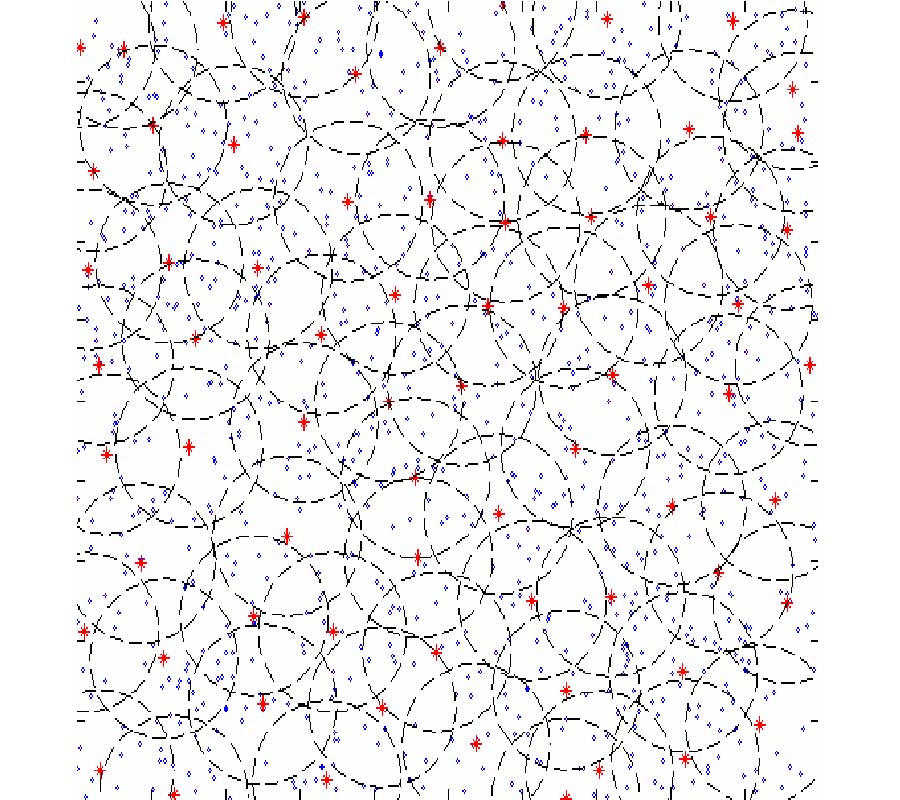
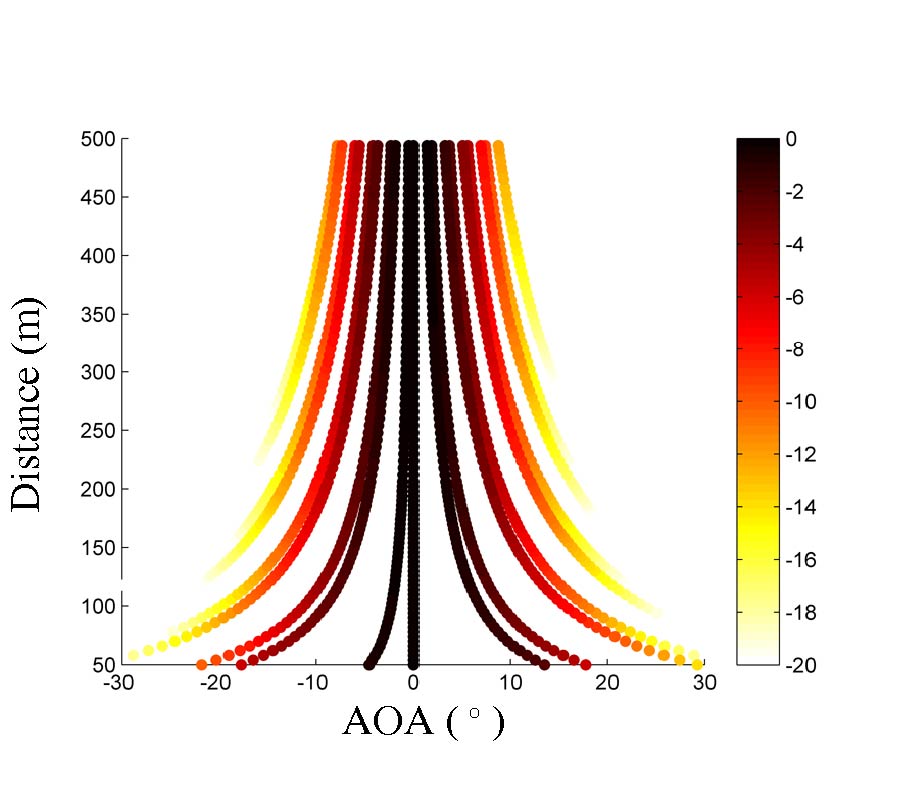
This paper presents a novel peer-to-peer or mobile-to-mobile localization scheme for general indoor and outdoor environments. In this scheme, two mobile nodes at arbitrary locations are able to locate each other without the need of Line-of-Sight (LOS) path between the two mobile device, and without the need for any reference devices such as GPS or land base beacons. Existing peer-to-peer localization techniques make use of Time of Arrival (TOA) and Angle of Arrival (AOA) of LOS and single bounce scattering paths to derive line of possible mobile device positions (LPMDs). The intersections of LPMDs are then used to estimate the unknown mobile device position - referred to as the Line Segment Intersection. However, in a heavy multipath environment with many multiple-bounce scattering paths, existing techniques require weighting factors and threshold values which are specifically chosen for that particular environment in order to select the LPMDs that correspond to LOS and single-bounce scattering paths for localization. Large localization error will occur if multiple-bounce scattering paths' LPMDs are mistakenly used for intersections. In addition, existing techniques also do not work well in a multipath environment with high level of TOA and AOA noises especially when the angles between LPMDs are small. The accuracy of the Line Segment Intersection also deteriorates as the distance traveled by multipath signals become comparable to each other. This renders the weighting and threshold values ineffective. This paper presents a novel Gaussian weighting process to remove the abovementioned limitations. The Gaussian weighting process also dramatically improves the accuracy of the localization. Experimental coupled with simulation results show that our proposed localization scheme outperforms existing Peer-to-peer localization technique by a significant margin of up to 83% and 54% in indoor and urban environments respectively especially under severe multipath propagation conditions and high level of TOA and AOA noises.
PEER-TO-PEER LOCALIZATION IN URBAN AND INDOOR ENVIRONMENTS
2011-08-14
PIER
Vol. 119, 335-343
Hydrostatic Pressure Sensor Based on Mode Interference of a Few Mode Fiber
Daru Chen , Chuang Wu , M. L. V. Tse and Hwa-Yaw Tam
A novel hydrostatic pressure sensor based on a few mode fiber (FMF) is proposed. The FMF-based hydrostatic pressure sensor is simply formed by splicing a segment of FMF to two segments of single mode fibers, where the FMF is used as the sensing element. The mode interference between LP01 mode and LP11 mode of the FMF provides an interference spectrum of the FMF-based hydrostatic pressure sensor which is sensitive to the hydrostatic pressure applied on the FMF. We experimentally show that there is a linear relationship between the hydrostatic pressure and the wavelength shift of the interference spectrum of the FMF-based hydrostatic pressure sensor.
HYDROSTATIC PRESSURE SENSOR BASED ON MODE INTERFERENCE OF A FEW MODE FIBER
2011-08-12
PIER B
Vol. 33, 317-337
The E-Pile+Smcg for Scattering from an Object Below 2D Soil Rough Surface
Wei-Jie Ji and Chuang-Ming Tong
A rigorous fast numerical method called E-PILE+SMCG is introduced and then used in a Monte Carlo study of scattering from a three dimensional perfectly electrical conductor (PEC) object below lossy soil rough surface. This method is the three dimensional (3D) extendability of PILE (Propagation-Inside-Layer Expansion) method which is proposed for two dimensional (2D) scattering problem. The rough surface with Gaussian profile is used to emulate the realistic situation of statistically rough surface, while the tapered incident wave is chosen to reduce the truncation error. The 3D angular correlation function (ACF) and bistatic scattering coefficient (BSC) are studied and applied to the detection of a target embedded in the clutter. The ACF is computed by using numerical method with circular azimuthal angle averaging technique. Because of its success in suppressing the clutter scattering, the technique appears attractive in real life implementation.
THE E-PILE+SMCG FOR SCATTERING FROM AN OBJECT BELOW 2D SOIL ROUGH SURFACE
2011-08-12
PIER Letters
Vol. 25, 175-183
A Numerical Analysis of a Dipole Antenna in the Vicinity of a Homogeneous BI-Isotropic Object
Hui Zhu , Bin-Jie Hu , Xiu Zhang and Jian Bao
A numerical solution for the dipole antenna with a bi-isotropic object in the vicinity is developed. This solution is based on the combined surface integral equation which could deal with homogeneous situation. A fields splitting scheme is deployed to circumvent the difficulties caused by the complexity of constitutive relationships of bi-isotropic materials. With the aids of MoM, a FORTRAN program can be developed. At the end of this paper, some numerical results are presented.
A NUMERICAL ANALYSIS OF A DIPOLE ANTENNA IN THE VICINITY OF A HOMOGENEOUS BI-ISOTROPIC OBJECT
2011-08-12
PIER C
Vol. 23, 137-150
Accurate Modeling of Microstrip Dumbbell Shaped Slot Resoantor (Dssr) for Miniaturized Tunable Resoantor and Band-Pass Filter
Dong-Jin Jung and Kai Chang
In this paper, a novel dumbbell shaped slot resonator (DSSR) is introduced and investigated based on a circuit theory and electromagnetic (EM) simulation. Lumped and distributed equivalent circuit models are then presented for an analysis of the proposed DSSR. The circuit and EM simulated results validate the DSSR's equivalent circuit models and their analysis methodologies. Since the proposed DSSR does not employ ground slots, additional etching process for the ground plane is not necessary. Thus, one can minimize the cost and fabrication errors. For the DSSR's applications, the miniaturized tunable DSSR and band-pass filter (BPF) are designed, simulated, and measured. The tunable DSSR does not require additional lumped DC-block capacitors since DC is isolated due to the coupled gap structures in an input and output. In the BPF design, two DSSRs are simply coupled by input/output ports. Both simulated and measured results of the designed tunable resonator and BPF show good agreement.
ACCURATE MODELING OF MICROSTRIP DUMBBELL SHAPED SLOT RESOANTOR (DSSR) FOR MINIATURIZED TUNABLE RESOANTOR AND BAND-PASS FILTER
2011-08-10
PIER M
Vol. 20, 57-71
Design and Optimization of a Permanent Magnet Rotating Machine for Power Cooling Generation
Houssem Rafik El Hana Bouchekara , Mohammed T. Simsim , Youcef Berrouche and Makbul Anwari
Magnetic refrigeration is an innovative, revolutionary, efficient and environmentally friendly cooling technology which is on the threshold of commercialization. The essential components of magnetic refrigeration system are the magnetic field generator and the magnetocaloric material. The two main goals of this paper are to design and to optimize a permanent magnet magnetic refrigeration machine for power cooling generation, where an initial configuration is studied and based on this study two other configurations are presented. Both electromagnetic and thermal studies are explored. The electromagnetic design part has been accomplished by using the finite elements method and the thermal design part has been achieved using the finite difference method. 57
DESIGN AND OPTIMIZATION OF A PERMANENT MAGNET ROTATING MACHINE FOR POWER COOLING GENERATION
2011-08-10
PIER
Vol. 119, 315-333
Validation of a Numerical Approach to the Analysis of a Live-Line Worker Exposure to the Electric Field
Wojciech Krajewski
The aim of this paper is to validate a proposed simplified boundary-integral approach (that is called here LEM&BEM) for the analysis of electric field in a live-line-working zone. A human body model of a simplified geometry that is applied to the electric field estimation around the live-line worker is also tested. Numerical results of a more accurate numerical approach, laboratory measurements as well as results of measurements taken on a real tower of HV overhead line are employed for this purpose. The numerical analysis of the electric field distribution in the hot-stick working zone on an anchor tower of 400 kV transmission line is presented to demonstrate the effectiveness of the numerical technique under consideration. The author's own software packages has been applied in computations.
VALIDATION OF A NUMERICAL APPROACH TO THE ANALYSIS OF A LIVE-LINE WORKER EXPOSURE TO THE ELECTRIC FIELD
2011-08-09
PIER C
Vol. 23, 123-135
3D FEM Modeling and Technology of Piezoelectric Ring MEMS Antenna
Alessandro Massaro , Roberto Cingolani and Adriana Passaseo
Actually MEMS technology allows to fabricate free standing and bended cantilevers by acting on stress/strain properties and thicknesses of materials. In particular, by means of MEMS technology it is possible to realize ring or spiral layouts with piezoelectric materials. The mechanical movement due to the piezoelectric resonance can be used in order to modulate a signal travelling in the MEMS and radiating in the free space as happens in antennas. In this work we provide an accurate study regarding the design approach of piezoelectric aluminium nitride (AlN) ring antenna. The study is developed by means of a tailored 3D FEM tool which allows to analyze the piezoelectric resonances and to design the ring micro-antenna in the THz range. Finally we provide the technology and we measure the piezoelectric resonances of ring antennas.
3D FEM MODELING AND TECHNOLOGY OF PIEZOELECTRIC RING MEMS ANTENNA
2011-08-08
PIER Letters
Vol. 25, 153-162
Evolving Spiking Neural Network Topologies for Breast Cancer Classification in a Dielectrically Heterogeneous Breast
Martin O'Halloran , Seamus Cawley , Brian McGinley , Raquel Cruz Conceicao , Fearghal Morgan , Edward Jones and Martin Glavin
Several studies have investigated the possibility of using the Radar Target Signature (RTS) of a tumour to classify the tumour as either benign or malignant, since the RTS has been shown to be influenced by the size, shape and surface texture of tumours. The Evolved-Topology Spiking Neural Neural (SNN) presented here extends the use of evolutionary algorithms to determine an optimal number of neurons and interneuron connections, forming a robust and accurate Ultra Wideband Radar (UWB) breast cancer classifier. The classifier is examined using dielectrically realistic numerical breast models, and the performance of the classifier is compared to an existing Fixed-Topology SNN cancer classifier.
EVOLVING SPIKING NEURAL NETWORK TOPOLOGIES FOR BREAST CANCER CLASSIFICATION IN A DIELECTRICALLY HETEROGENEOUS BREAST
2011-08-08
PIER Letters
Vol. 25, 143-151
UWB Printed Slot Antenna with Dual Band-Notched Characteristic
Wei-Mei Li , Tao Ni , Si-Ming Zhang , Jie Huang and Yong-Chang Jiao
This article presents a compact dual band-notched UWB antenna with a pair of L-shaped and modified L-shaped slots on either side of the ground plane for the 3.5/5.5 GHz dual band-notched characteristics. The radiating patch of the proposed antenna has a ladderlike structure symmetrically and fed by a 50-Ω microstrip transmission line. By etching two sets of L-shaped slots on the ground plane, dual band-notched properties in the WiMAX/WLAN bands are achieved, respectively. The proposed antenna has the promising performance including matched impedance, consistent radiation pattern and stable gain.
UWB PRINTED SLOT ANTENNA WITH DUAL BAND-NOTCHED CHARACTERISTIC
2011-08-08
PIER Letters
Vol. 25, 135-141
Compact and High Performance Stepped Truncated-Circular Waveguide Branching Ortho-Mode Transducer (Stcwb-Omt)
Ramesh Gupta , Khagindra K. Sood and Rajeev Jyoti
This paper reports design and development of an innovative compact Stepped Truncated-Circular Waveguide Branching Ortho-Mode Transducer (STCWB-OMT) operating at 4.5-4.8 GHz for horizontal and vertical polarizations. STCWB-OMT is derived by introducing branch waveguide via coupling slot on a stepped truncated-circular waveguide. This configuration possesses inbuilt rectangular-to-circular transition; therefore it does not require any additional square-to-circular transition to combine it with horn antenna. The challenge in the design incorporated is to obtain a mechanically compact design with low mass while compliant with the specified electrical performances; since this device is developed for space-borne application. Achieved return losses at both direct and coupled ports are >17 dB, insertion losses <0.08 dB for both polarizations, isolation is <-60 dB and cross-polarization discrimination >40 dB with the OMT length = 1.98λ atcenter frequency and weight = 250 gm The agreement between measured and computed results provides a validation of the proposed OMT configuration.
COMPACT AND HIGH PERFORMANCE STEPPED TRUNCATED-CIRCULAR WAVEGUIDE BRANCHING ORTHO-MODE TRANSDUCER (STCWB-OMT)