Search Results(13802)

2011-08-19
PIER Letters
Vol. 26, 49-57
Fano Resonances in a Bilayer Structure Composed of Two Kinds of Dispersive Metamaterials
Yanhong Liu , Haitao Jiang , Chunhua Xue , Wei Tan , Hong Chen and Yun Long Shi
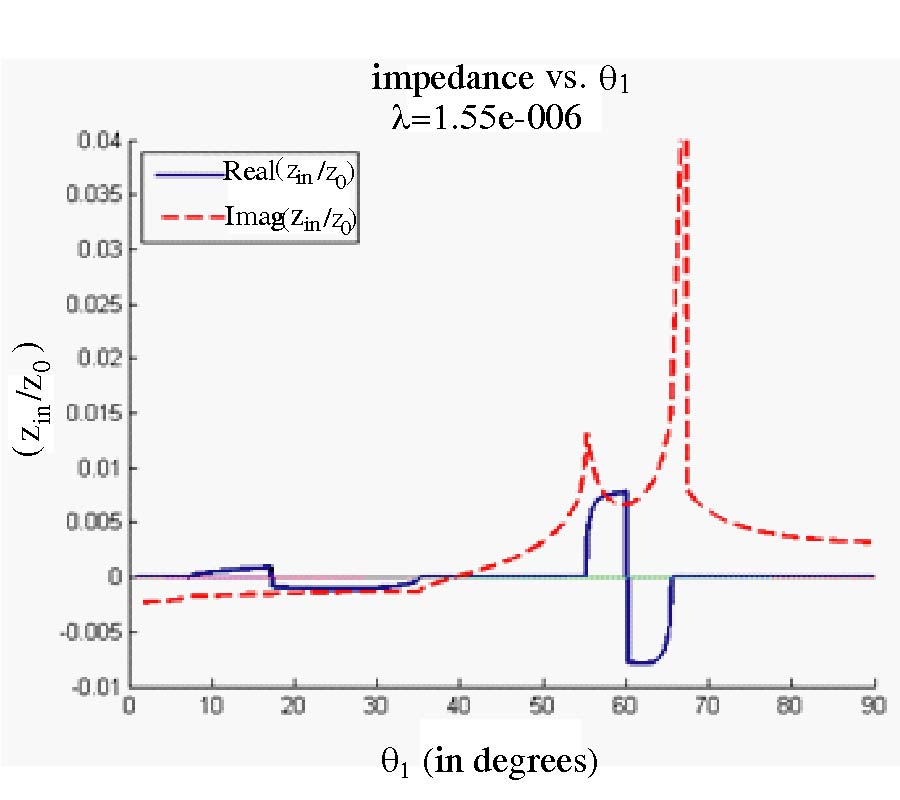
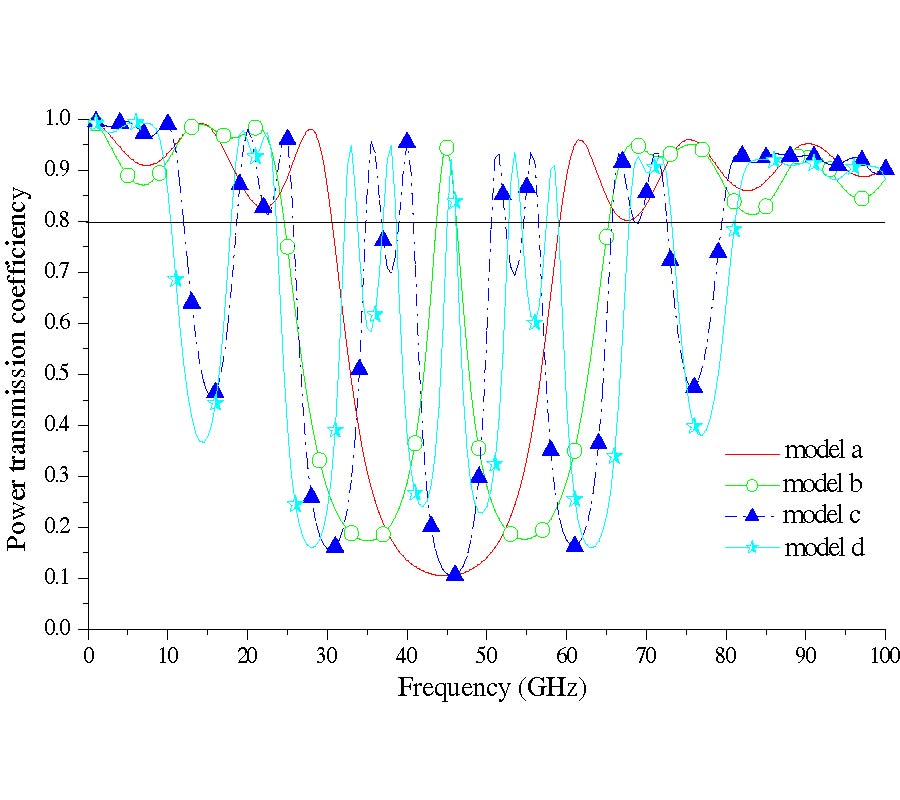
We theoretically find that a bi-layer structure composed of two kinds of dispersive metamaterials can possess an asymmetric reflection spectrum due to Fano-type interference between a discrete reflection resonance and a broadband strong reflection. The discrete reflection resonance appears at the frequency around which the dispersive permeability is near to zero at oblique incidence. Based on analytical and numerical analysis, the asymmetric factor in the Fano-type reflection is found to be linked with the angle of incidence.
FANO RESONANCES IN A BILAYER STRUCTURE COMPOSED OF TWO KINDS OF DISPERSIVE METAMATERIALS
2011-08-19
PIER Letters
Vol. 26, 39-48
Printed Bluetooth and UWB Antenna with Dual Band-Notched Functions
Feng-Chao Ren , Fu-Shun Zhang , Jian Hui Bao , Yong-Chang Jiao and Lei Zhou
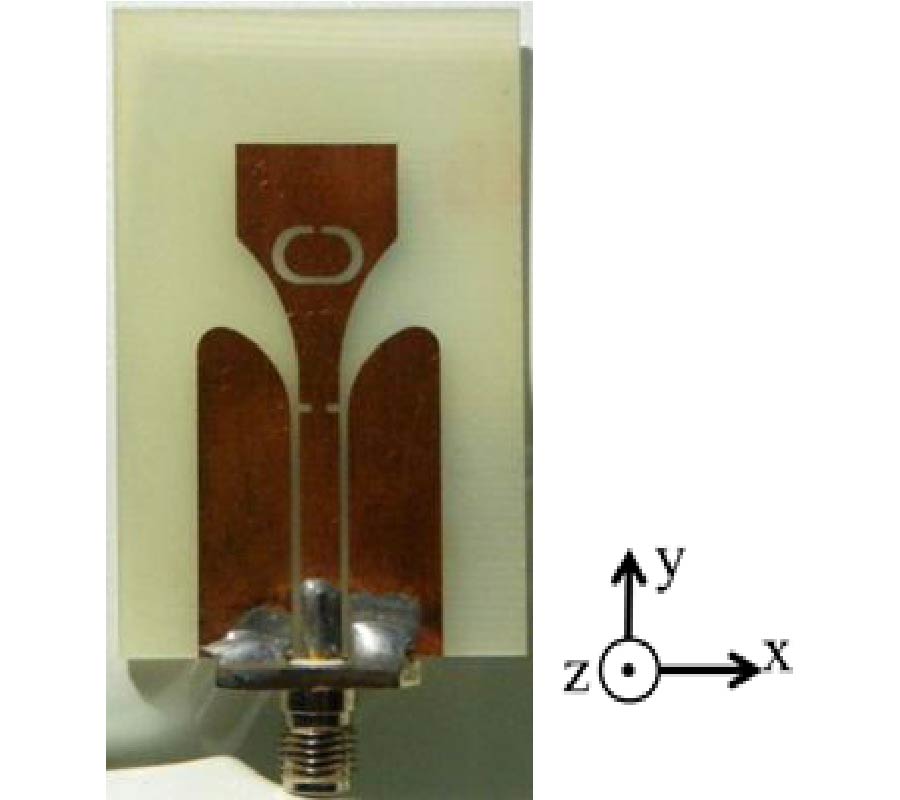
A novel hybrid design of Bluetooth and UWB antenna with dual band-notched functions is proposed. The proposed antenna structure consists of a microstrip-fed main patch and electromagnetically coupled parasitic patch with arc-shaped strips, achieving Bluetooth and UWB performance. Additionally, the split ring resonator (SRR) slot etched on the main patch and the square patch close to microstrip feedline are aimed to obtain dual notched bands. The numerical and experimental results exhibit that the designed antenna operates over the wide frequency band from 3 to more than 12 GHz, while showing the extra resonant mode at 2.4-GHz Bluetooth and the band rejection performance at 3.5-GHz WiMAX and 5.2-GHz WLAN.
PRINTED BLUETOOTH AND UWB ANTENNA WITH DUAL BAND-NOTCHED FUNCTIONS
2011-08-19
PIER M
Vol. 20, 115-126
Fast Computation of Dipole Radiation in Stratified Background Using Graphics Processing Unit
M. Quinto , Salim Boutami and J. Hazart
We present the GPUs computation acceleration for a very recurrent electromagnetic problem which is the calculation of the field radiated by electric dipoles in a multilayer structure (Green's tensor in stratified background), based on the well-known Sommerfeld integrals. Using an optimized parallelization scheme, huge computation acceleration is obtained. Applications of such a work are very broad, especially for the modeling of stratified light emitting devices, or as a building block for the calculation of optical scattering by complex shape structures, when using methods as discrete dipole approximation (DDA) or method of moments (MoM) for example.
FAST COMPUTATION OF DIPOLE RADIATION IN STRATIFIED BACKGROUND USING GRAPHICS PROCESSING UNIT
2011-08-19
PIER M
Vol. 20, 107-113
Electrostatic Analysis of Transmission Lines to Simulate Corona Discharge at High Voltage
Necibe Fusun Oyman Serteller
This paper presents the results of Boundary Element Method (BEM) numerical procedures of voltages distribution between transmission lines in order to investigate the theoretical corona discharges. The algorithm of the voltage distributions are coded in Mathematica studying size of the system under controlling Neumann and Dirichlet boundary conditions. Conducting experimental work at a high voltage (HV) is potentially very dangerous. Therefore, simulation is a vital research approach, and computer modeling offers significant advantages to estimate optimal calculation over established system to prevent dangerous voltage and not to exceed the corona voltage. In this paper, the BEM results are verified with Finite Element Methods (FEM) which is coded in Mathematica too.
ELECTROSTATIC ANALYSIS OF TRANSMISSION LINES TO SIMULATE CORONA DISCHARGE AT HIGH VOLTAGE
2011-08-19
PIER M
Vol. 20, 95-105
Numerical Analysis of Conformal UC-PBG Structures
Haider R. Khaleel , Hussain M. Al-Rizzo and Daniel G. Rucker
In this paper, the performance of conventional Uniplanar Compact Photonic Band Gap (UC-PBG) structures is investigated under different bending extents. The structure under study is operated as an Artificial Magnetic Conductor (AMC) in which performance is mainly characterized by its resonant frequency and bandwidth. Modelling and numerical analysis have been carried out using CST Microwave Studio simulation software which is based on Finite Integration Technique (FIT). Results show that different bending extents affect the AMC's performance which is specified by a shift to higher resonant frequencies and bandwidth degradation when the degree of bending is increased. Furthermore, we point out some important simulation tips to avoid inaccurate and/or invalid results. This type of study is important to evaluate the performance of such structures for conformal applications. To the best of the authors' knowledge, such type of systematic study is being reported for the first time.
NUMERICAL ANALYSIS OF CONFORMAL UC-PBG STRUCTURES
2011-08-19
PIER M
Vol. 20, 81-94
Photonic Band Structures and Enhancement of Omnidirectional Reflection Bands by Using a Ternary 1D Photonic Crystal Including Left-Handed Materials
Abdolrasoul Gharaati and Z. Zare
In this paper, we use the Bloch theorem and transfer matrix method to calculate the dispersion relation of a ternary 1D photonic crystal with left-handed materials. Then, we obtain the total omnidirectional reflection band gaps of this structure. We demonstrate that the omnidirectional reflected frequency bands are enlarged in comparison with ordinary materials with positive index of refraction.
PHOTONIC BAND STRUCTURES AND ENHANCEMENT OF OMNIDIRECTIONAL REFLECTION BANDS BY USING A TERNARY 1D PHOTONIC CRYSTAL INCLUDING LEFT-HANDED MATERIALS
2011-08-19
PIER
Vol. 119, 477-495
A Cylindrical Shaped-Reflector Antenna with a Linear Feed Array for Shaping Complex Beam Patterns
Soon Young Eom , Young-Bae Jung , S. A. Ganin and A. V. Shishlov
In this paper, we present a cylindrical shaped-reflector antenna which is spatially fed by an off-set linear feed array to form complex beam patterns. The linear feed array consists of twelve microstrip patch elements and forms a flat-topped beam pattern with a beam-width of ±45° in the azimuth plane. The vertical curve on the cylindrical reflector with the linear feed array is shaped to form a cosecant beam pattern within the range of -5° to -25° in the elevation plane. By using the proposed design procedure to form complex beam patterns, a hybrid antenna with a cylindrical reflector aperture of 140 cm x 50 is designed to be operated within the IMT 2000 service band, and a prototype antenna is also fabricated. Its electrical performance is measured and compared with simulation results.
A CYLINDRICAL SHAPED-REFLECTOR ANTENNA WITH A LINEAR FEED ARRAY FOR SHAPING COMPLEX BEAM PATTERNS
2011-08-19
PIER
Vol. 119, 461-476
Very Miniature Dual-Band and Dual-Mode Bandpass Filter Designs on an Integrated Passive Device Chip
Chien-Hsun Chen , Chih-Syuan Shih , Tzyy-Sheng Horng and Sung-Mao Wu
This work presents extremely compact dual-mode and dual-band bandpass filter designs based on dual-resonance composite resonators developed by using integrated passive device (IPD) technology on a glass substrate. A dual-mode bandpass filter is also devised using a symmetric composite resonator with a perturbation element of grounding inductor to determine the filter bandwidth. Additionally, a feedback capacitive coupling path on the proposed dual-mode filter is implemented to produce three transmission-zero frequencies in the stopband. Furthermore, the proposed dual-band bandpass filter is designed in a high-density wiring transformer configuration with magnetic and electric mixed coupling. In addition to individually determining the fractional bandwidth of dual passbands, the magnetic and electric mixed coupling provides multiple transmission zeros to enhance the isolation between the two passbands and greatly improve the stopband rejection.
VERY MINIATURE DUAL-BAND AND DUAL-MODE BANDPASS FILTER DESIGNS ON AN INTEGRATED PASSIVE DEVICE CHIP
2011-08-18
PIER B
Vol. 34, 1-13
Speckle Suppression by Integrated Sum of Fully Developed Negatively Correlated Patterns in Coherent Imaging
Wei-Feng Hsu and I.-Lin Chu
A coherent imaging system images a frame or an object onto a changing diffuser and projects the resulting pattern which generally contains speckles. Using a spatial light modulator (SLM) as the changing diffuser, the speckles in the pattern are suppressed without the need for any other mechanisms. With $M$ random phasor arrays being displayed in the SLM during the integration time of a detector, a suppression factor (Cf) of speckles, 1/√M, is achievable in the projected pattern, which is the sum of the intensity of M uncorrelated patterns. This paper shows both theoretically and in simulations that the Cf of the sum pattern was considerably reduced when two elementary patterns with fully developed speckles were negatively correlated. With the correlation coefficients of the elementary patterns found at [-0.3, -0.25], the Cf of the sum of 10 negatively-correlated speckle patterns was 48% lower than the Cf of the sum of 10\,uncorrelated speckle patterns. The negatively correlated patterns can be implemented using spatial light modulators or diffractive optical elements, and are used to suppress speckle noise in digital holography, laser projection display, and holographic display projections with relatively high efficiency.
SPECKLE SUPPRESSION BY INTEGRATED SUM OF FULLY DEVELOPED NEGATIVELY CORRELATED PATTERNS IN COHERENT IMAGING
2011-08-18
PIER B
Vol. 33, 383-407
Genetic Algorithm and Finite Element Analysis for Optimum Design of Slotted Torus Axial-Flux Permanent-Magnet Brushless DC Motor
Amin Mahmoudi , Nasrudin Abd Rahim and Hew Wooi Ping
This paper presents an inside-out axial-flux permanent-magnet brushless DC motor optimized by Finite Element Analysis (FEA) and Genetic Algorithm (GA) that uses sizing equation. The double-sided slotted-stator designed TORUS motor has sinusoidal back EMF waveform and maximum power density. The GA obtained the dimensions that gave the motor its highest power density. Field analysis of the dimensions was then put through FEA, to obtain and re-optimize the motor's characteristics. Possible design parameters were investigated via use of Commercial Vector Field Opera 14.0 software used in three-dimensional FEA simulation and of MATLAB 2010a in GA programming. Techniques such as modifying winding configuration and skewing the permanent magnets were explored to achieve the most-sinusoidal back-EMF waveform and minimized cogging torque. The desired technical specifications were matched by simulation results of the 3D FEA and the GA. The FEA and the GA simulation results comparison of the flux density in different parts of the designed motor at no-load condition agreed well.
GENETIC ALGORITHM AND FINITE ELEMENT ANALYSIS FOR OPTIMUM DESIGN OF SLOTTED TORUS AXIAL-FLUX PERMANENT-MAGNET BRUSHLESS DC MOTOR
2011-08-18
PIER Letters
Vol. 26, 31-37
A Novel Dual-Mode Bandpass Filter Using Stub-Loaded Defected Ground Open-Loop Resonator
Xuehui Guan , Bin Wang , Xiaoyan Wang , Shan Wang and Hai-Wen Liu
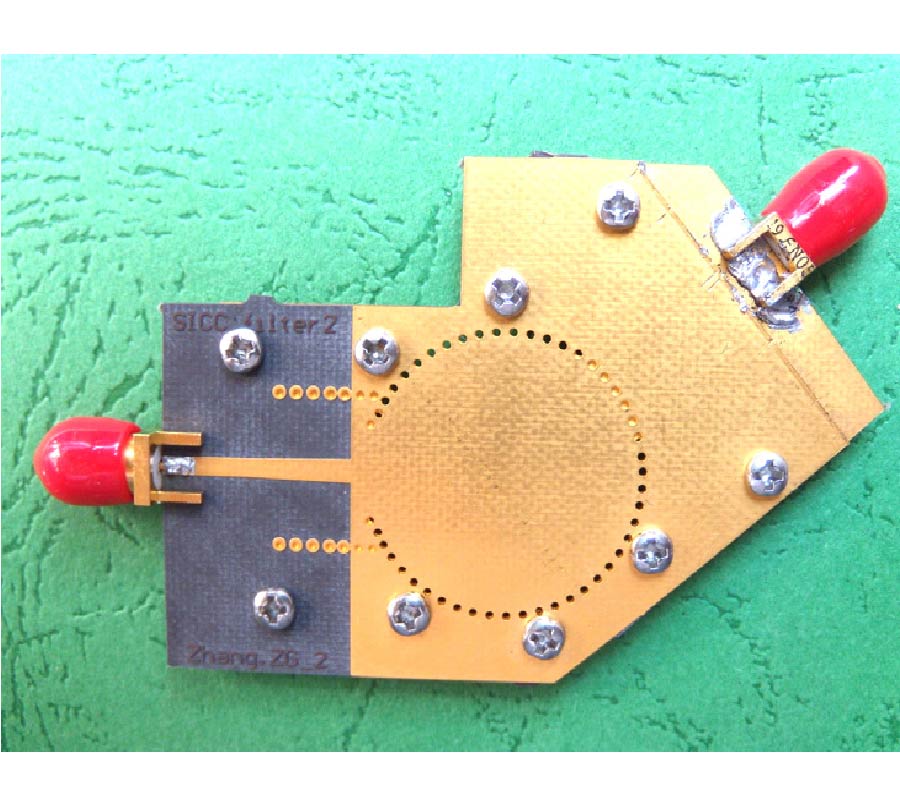
A novel dual-mode bandpass filter (BPF) using stub-loaded defected ground open-loop resonator is proposed in this article. Defected arrow-shaped stub is loaded to a defected ground open-loop resonator, and two non-degenerate modes are excited for dual-mode characteristics. Based on even- and odd-mode theory, dual-mode characteristics of the resonator is analysed. Design equations for the defected-ground resonator are investigated. A two-pole dual-mode bandpass filter operating at 2.4 GHz with fractional bandwidth of 7.97% is designed, fabricated, and measured. Good agreement between simulated and measured results verifies the validity of this design methodology.
A NOVEL DUAL-MODE BANDPASS FILTER USING STUB-LOADED DEFECTED GROUND OPEN-LOOP RESONATOR
2011-08-18
PIER Letters
Vol. 25, 185-195
Transient Electromagnetic Topology and Its Experimental Validation
Haiyan Xie , Jianguo Wang , Dongyang Sun and Ruyu Fan
Transient electromagnetic topology (TEMT) method is presented briefly first and then three typical configurations, namely, a transmission line network, a wire penetrating a cavity aperture and then connecting to a device, and two systems connected by a shielded cable radiated by an electromagnetic pulse, are analyzed by using the TEMT method. The currents induced at the loads obtained by the TEMT method are compared with those from the experiment. The good agreement of the numerical results with the experimental ones validates the TEMT method.
TRANSIENT ELECTROMAGNETIC TOPOLOGY AND ITS EXPERIMENTAL VALIDATION
2011-08-18
PIER
Vol. 119, 449-460
Terahertz Metamaterial Modulators Based on Absorption
Hao Zhou , Fei Ding , Yi Jin and Sailing He
Metamaterial absorbers can perfectly absorb an incident wave in a narrow frequency band. In this paper, metamaterial absorbers are used to construct a terahertz modulator. By controlling the carrier density in the n-doped semiconductor spacer between a patterned metallic superstructure and a metallic ground with different applied voltage bias, the absorption varies sensitively, and the reflected wave amplitude acting as the modulated signal can be strongly modulated. Two types of modulators are investigated, one of which possesses an array of metallic crosses as the superstructure, and the other has a complementary superstructure. Compared with the former, the latter may give a better modulation performance.
TERAHERTZ METAMATERIAL MODULATORS BASED ON ABSORPTION
2011-08-17
PIER Letters
Vol. 26, 21-30
Compact Triple-Frequency Slot Antenna for WLAN/WiMAX Operations
Feng-Chao Ren , Fu-Shun Zhang , Jian Hui Bao , Bo Chen and Yong-Chang Jiao
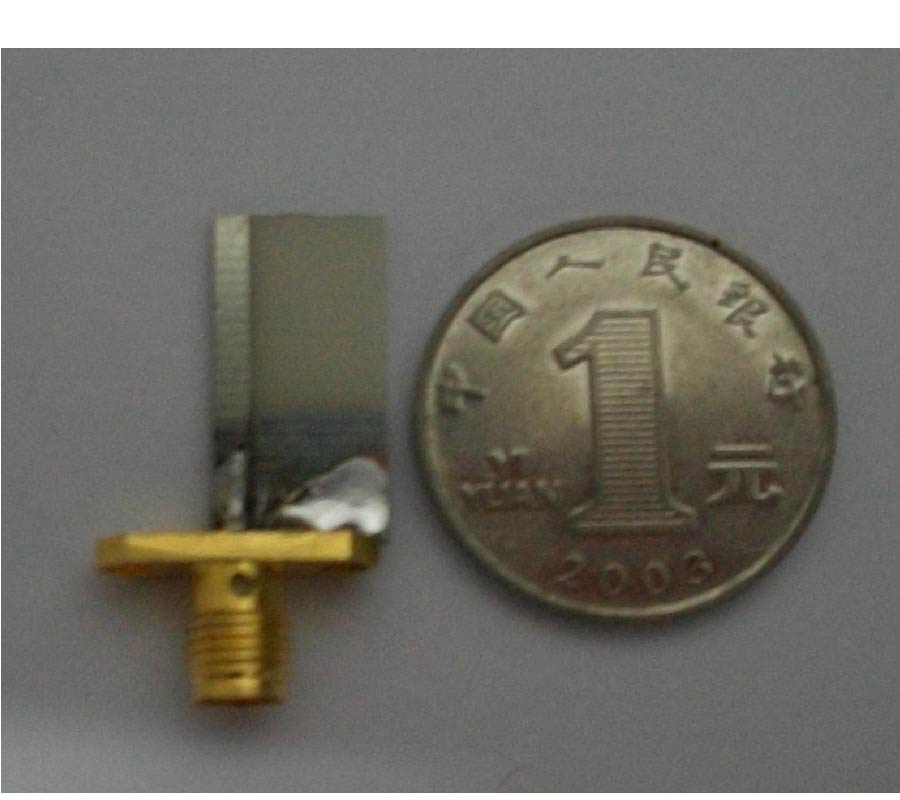
A novel microstrip-fed slot antenna with triple-band operation in compact size is proposed. The proposed antenna structure consists of a L-shaped microstrip feed line and open-ended slot on the ground plane, having small overall size of 14 x 34 mm2. The open-ended slot constructed of crossed double T-shaped slots is aimed to obtain resonant modes at 2.4/3.5 GHz. Meanwhile, with the use of a via-loaded metal patch connected to the edge of ground, the upper resonant frequency point at 5.8 GHz is achieved. The numerical and experimental results exhibit the designed antenna operates over triple frequency ranges, fulfilling the standards of 3.5-GHz WiMAX and 2.4/5.8-GHz WLAN. In addition, acceptable radiation characteristic is obtained over the operating bands.
COMPACT TRIPLE-FREQUENCY SLOT ANTENNA FOR WLAN/WIMAX OPERATIONS
2011-08-17
PIER M
Vol. 20, 73-80
Coplanar Metamaterial Micro-Resonator
Salim Nemer , Bruno Sauviac , Bernard Bayard , Jean Jacques Rousseau , Chadi Nader , Joseph Bechara and Antonio Khoury
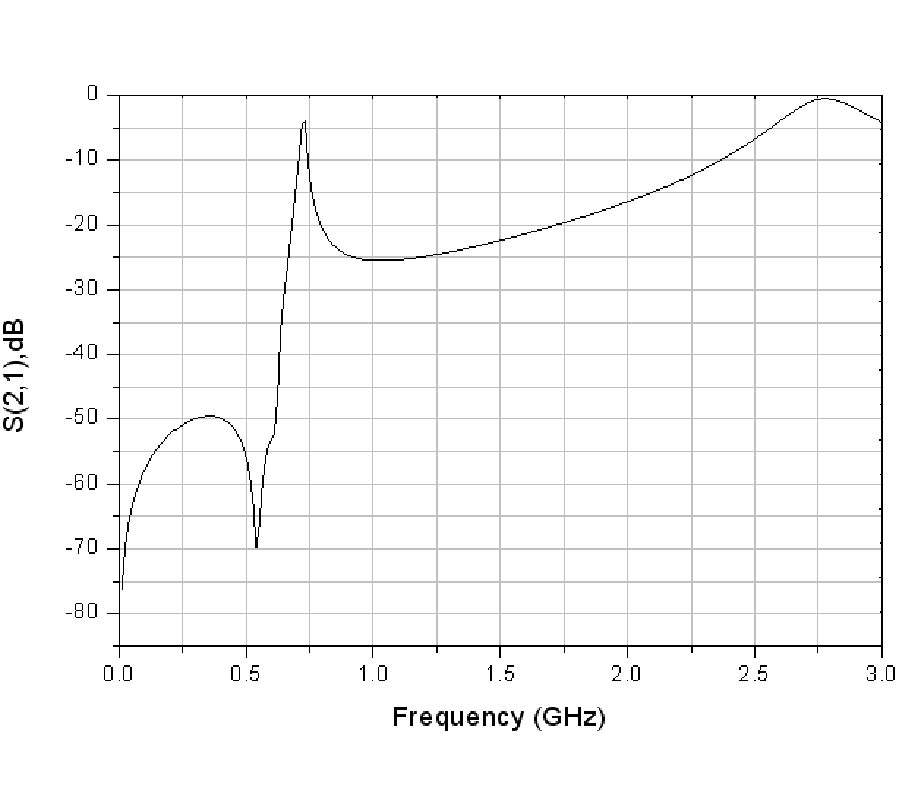
We propose a metamaterial coplanar stop-band filter made of multi-turn rectangular spiral particles. Numerical and experimental results show the feasibility of devices with dimensions more than 10 times smaller than those in the literature and with good performances.
COPLANAR METAMATERIAL MICRO-RESONATOR
2011-08-16
PIER Letters
Vol. 26, 11-20
Eigenmode Decoupling for MIMO Loop-Antenna Based on 180° Coupler
Shaoli Zuo , Ying-Zeng Yin , Zhi-Ya Zhang , Wei-Jun Wu and Jiao-Jiao Xie
A low-cost, high isolation, printed loop-antenna system for multiple-input multiple-output (MIMO) applications in the 2.4 GHz WLAN band is presented. By feeding the orthogonal eigenmodes of the array, port decoupling (S21< -20 dB) with tightly coupled elements (only 0.07λ separation) is obtained. The orthogonal eigenmodes are realized based on 180° coupler. Then decoupled external ports of the feed network may be matched independently by using conventional matching circuits. With this low-cost and high isolation characteristic, it is very suitable for being embedded inside a wireless access point (AP).
EIGENMODE DECOUPLING FOR MIMO LOOP-ANTENNA BASED ON 180° COUPLER
2011-08-16
PIER Letters
Vol. 26, 1-9
Empirical Mixing Model for the Electromagnetic Modelling of on-Chip Interconnects
Sonia M. Holik , John M. Arnold and Timothy David Drysdale
We present an empirical mixing model for rectangular cuboid metal inclusions in a host dielectric, suitable for replacing the detailed structure of a layer of on-chip interconnects with a homogeneous dielectric slab. Such an approximation is required to facilitate the accurate and efficient package-level electromagnetic modelling of complicated miniaturised systems, such as System-in-Package. Without such an approach, the direct inclusion of large areas of on-chip interconnect structures often results in intractable computation times. Our model allows us to predict the reflection (transmission) coefficient of impinging plane waves to within 3.5% (0.2%) error for incident angles up to 30o off-normal, aspect ratios 0.6-3, metal fill factors 0.3-0.6, and host dielectric constants 1-11.7, over the frequency range 1-10 GHz.
EMPIRICAL MIXING MODEL FOR THE ELECTROMAGNETIC MODELLING OF ON-CHIP INTERCONNECTS
2011-08-16
PIER C
Vol. 23, 205-217
Fractal-Shaped Complementary Electric-LC Resonator for Bandstop Filter
He-Xiu Xu , Guang-Ming Wang and Qing Peng
An equivalent circuit model for single negative metamaterial (MTM) transmission line based on microstrip complementary electric inductive-capacitive resonator (CELC) is proposed for the first time. The verified circuit model gives strong support to the interpretation of all exhibited electromagnetic (EM) phenomena. The nonpure magnetic and electric resonances have been demonstrated by constitutive EM parameters. Based on the conclusions that have drawn, a more compact sub-wavelength particle based on Hilbert-shaped CELC (H-CELC) is proposed. The design procedures of the H-CELC-loaded MTM cell are derived based on the circuit model. For application, a bandstop filter covering one of the ISM bands 5.2 GHz by cascading two H-CELC cells is designed, fabricated and measured. Consistent results between simulation and measurement have confirmed the design. The established theory based on the proposed circuit model is of reference value for the design of novel bandstop devices.
FRACTAL-SHAPED COMPLEMENTARY ELECTRIC-LC RESONATOR FOR BANDSTOP FILTER
2011-08-16
PIER C
Vol. 23, 191-203
Design of Novel CPW Cross-Fed Antenna
Shu Lin , Guan-Long Huang , Run-Nan Cai , Xue-Ying Zhang and Xing-Qi Zhang
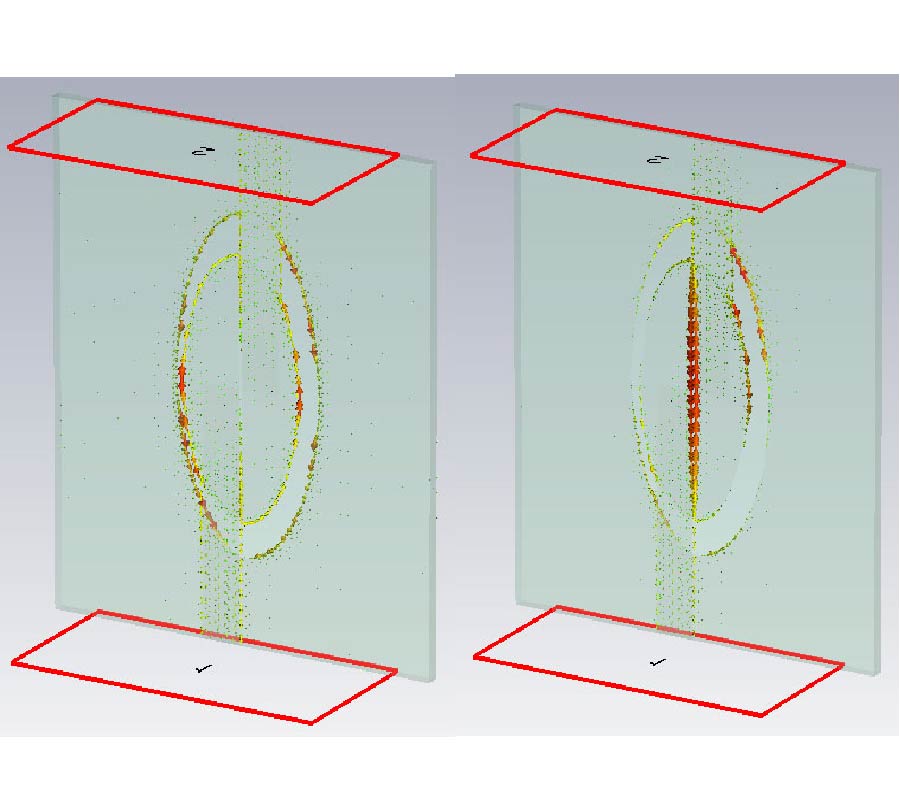
A novel coplannar waveguide (CPW) cross-fed antenna which is wideband, high-gain and omnidirectional is proposed. After simulating the antenna model by CST MICROWAVE STUDIO®, the results show that this antenna not only has compact size, but also can effectively broaden operating band, improve gain and remain omnidirectional. In addition, adjusting antenna elements' dimension and spacing can control the central frequency position of operating band and bandwidth. The simulated results of antenna surface currents can be used to explain the reason of antenna possessing broadband and omnidirectional high-gain characteristics. A CPW cross-fed antenna operating at 2.4 GHz is designed and manufactured for measurement. The prototype is printed on a FR-4 epoxy resin board with 1 mm thickness. The experimental results indicate that the operating band is 2.35-2.85 GHz with reflection coefficient less than -10 dB (relative bandwidth 19.2%), and maximum gain in H-plane can achieve 5.2 dBi. Measured results well match the simulated ones. Moreover, the total antenna size is 187 mm × 22.5 mm (1.5λ×0.18λ), which can make it suitable in WLAN systems.
DESIGN OF NOVEL CPW CROSS-FED ANTENNA
2011-08-16
PIER C
Vol. 23, 175-190
SiGe Hbt Dual-Conversion Weaver-Hartley Downconverters with High Image Rejection
Jin-Siang Syu , Chinchun Meng , Sheng-Wen Yu and Ya-Hui Teng
2.4/5.7-GHz dual-band Weaver-Hartley dual-conversion downconverters are demonstrated using 0.35-μm SiGe heterojunction bipolar transistor (HBT) technology with/without a correlated local oscillator (LO) generator. In the first implementation, the correlated LO generator consists of a divide-by-two frequency divider, a frequency doubler and a single-sideband upconverter and thus LO1(=2.5×LO2) signal is generated. As a result, the downconverter with the correlated LO signals has over 39 dB image-rejection ratios for the first/second image signals (IRR1/IRR2) of the dual-conversion system at both 2.4/5.7-GHz modes while the downconverter without the correlated LO generators has a 6-dB higher conversion gain and IRR1/IRR2 of more than 44 dB with the same dc power consumption (excluding the LO generator). On the other hand, a 10-GHz Weaver-Hartley downconverter is demonstrated with a resonant LC load at the first-stage mixer to improve the conversion gain at high frequencies. The downconverter achieves a conversion gain of 8 dB with IRR1/IRR2 better than 43/40 dB.
SIGE HBT DUAL-CONVERSION WEAVER-HARTLEY DOWNCONVERTERS WITH HIGH IMAGE REJECTION