Search Results(13802)

2011-09-11
PIER B
Vol. 34, 145-171
Numerical Modelling for Ultra Wideband Radar Breast Cancer Detection and Classification
Raquel Cruz Conceicao , Martin O'Halloran , Martin Glavin and Edward Jones
Microwave Imaging is one of the most promising emerging imaging technologies for breast cancer detection, and exploits the dielectric contrast between normal and malignant breast tissue at microwave frequencies. The development of many UWB Radar imaging approaches requires the use of accurate numerical models for the propagation and scattering of microwave signals within the breast. The Finite-Difference Time-Domain (FDTD) method is the most commonly used numerical modelling technique used to model the propagation of Electromagnetic (EM) waves in biological tissue. However, it is critical that an FDTD model accurately represents the dielectric properties of the constituent tissues, including tumour tissues, and the highly correlated distribution of these tissues within the breast. This paper presents a comprehensive review of the latest findings regarding dielectric properties of normal and cancerous breast tissue, and the heterogeneity of normal breast tissue. Furthermore, existing FDTD models of the breast described in the literature are examined.
NUMERICAL MODELLING FOR ULTRA WIDEBAND RADAR BREAST CANCER DETECTION AND CLASSIFICATION
2011-09-10
PIER C
Vol. 24, 123-136
Miniaturized Dual-Mode Resonators with Improved Double Square Loop and Inter-Digital Couple for WLAN Dual-Bands
Ji-Chyun Liu , Kuan-Dih Yeh , Chih-Chi Yen , Chin-Yen Liu , Bing-Hao Zeng and Chih-Chiang Chen
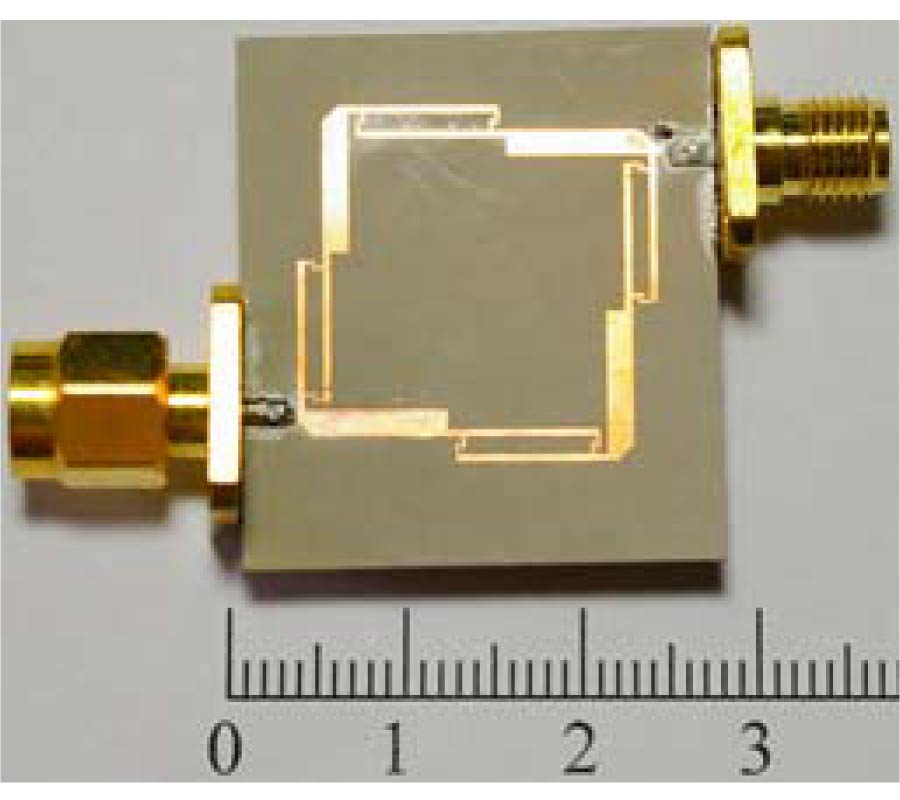
A novel dual-mode double square loop resonator (DMDSLR) for dual-band band-pass filter (BPF) is presented in this paper. The simple meander loop in DMDSLR is studied to improve the performance of the conventional DMDSLR. Significant size reductions over 33% are achieved. In addition, the designed meander-loop DMDSLR filter shows lower insertion loss (2.24 and 2.28 dB), higher rejection level (28/56 dB and 53/36 dB), wider bandwidth (about 8.5% and 28%) at the 2.47 and 5.47 GHz bands, respectively. Two transmission zeros are placed between the two pass-bands and result in a good isolation.
MINIATURIZED DUAL-MODE RESONATORS WITH IMPROVED DOUBLE SQUARE LOOP AND INTER-DIGITAL COUPLE FOR WLAN DUAL-BANDS
2011-09-10
PIER C
Vol. 24, 111-122
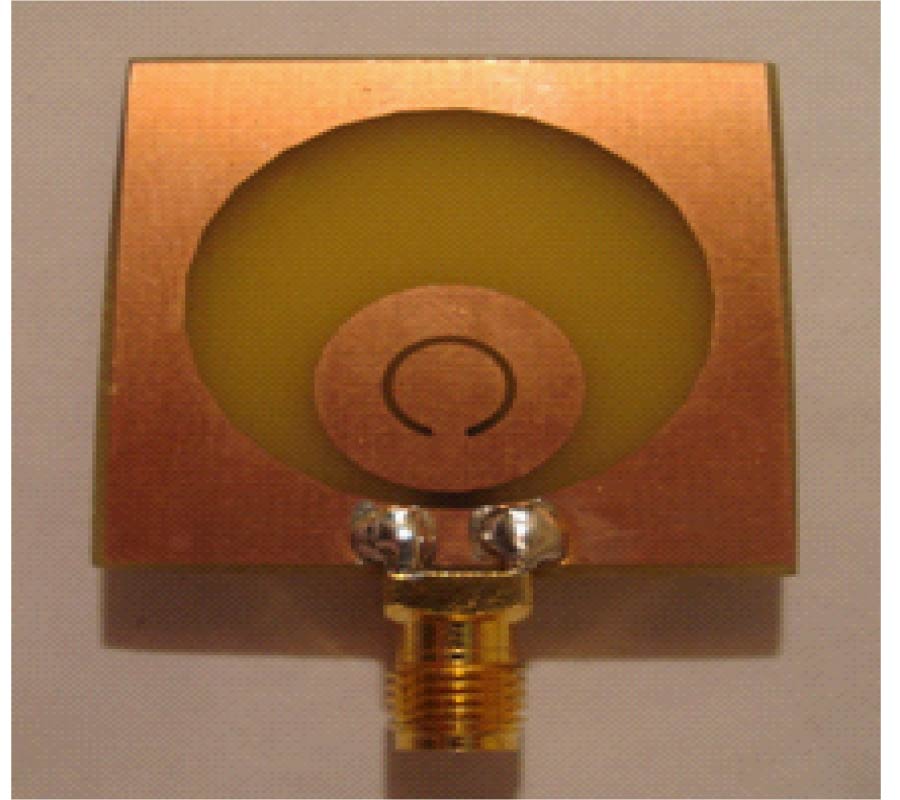
Self-Complementary Circular Disk Antenna for UWB Applications
Khalil Hassan Sayidmarie and Yasser A. Fadhel
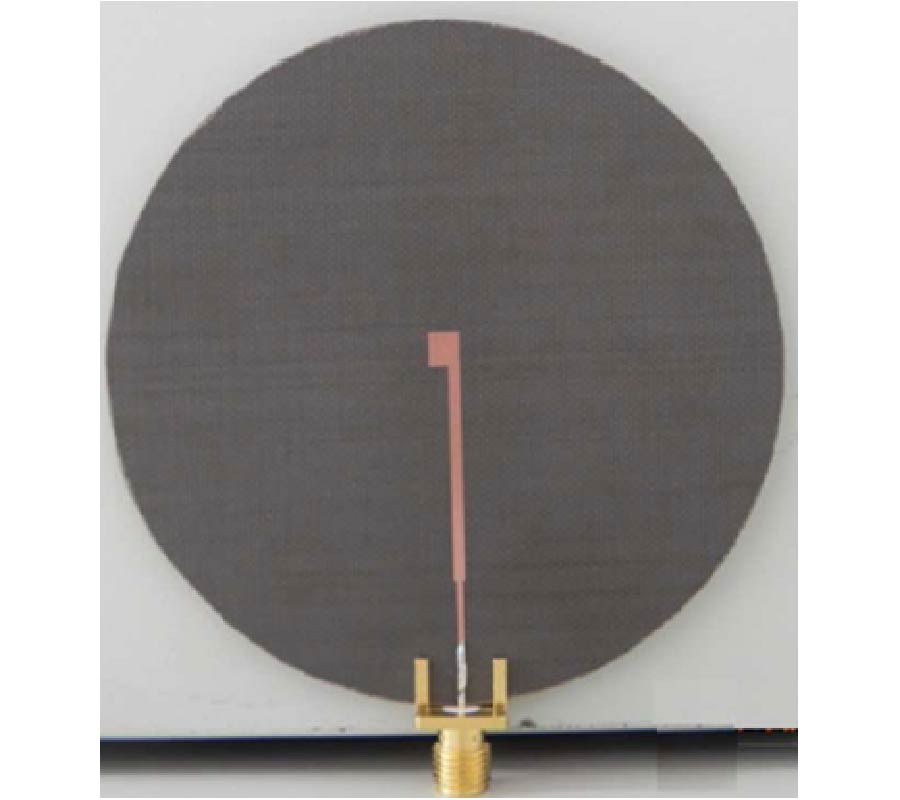
In this paper, the self-complementary principle has been applied to develop the traditional planar monopole antenna into a dipole antenna whose frequency range exceeds UWB requirements. The proposed design has compact, planar, and simple shape arranged in self-complementary manner connected to the (SMA) connector via rectangular microstrip line. The self-complementary structure offers better reduction of the imaginary part of antenna impedance, which allows matching on a wider band of frequencies. The proposed antenna showed -10 dB return loss bandwidth extending from 1.86 GHz up to 17.7 GHz. Moreover, this antenna has a simple shape as compared with complicated and irregular shapes with curves, slots or parasitic elements. The proposed design is validated by experimental measurements. The phase of the return loss is investigated for more insight into antenna matching.
SELF-COMPLEMENTARY CIRCULAR DISK ANTENNA FOR UWB APPLICATIONS
2011-09-09
PIER Letters
Vol. 26, 153-160
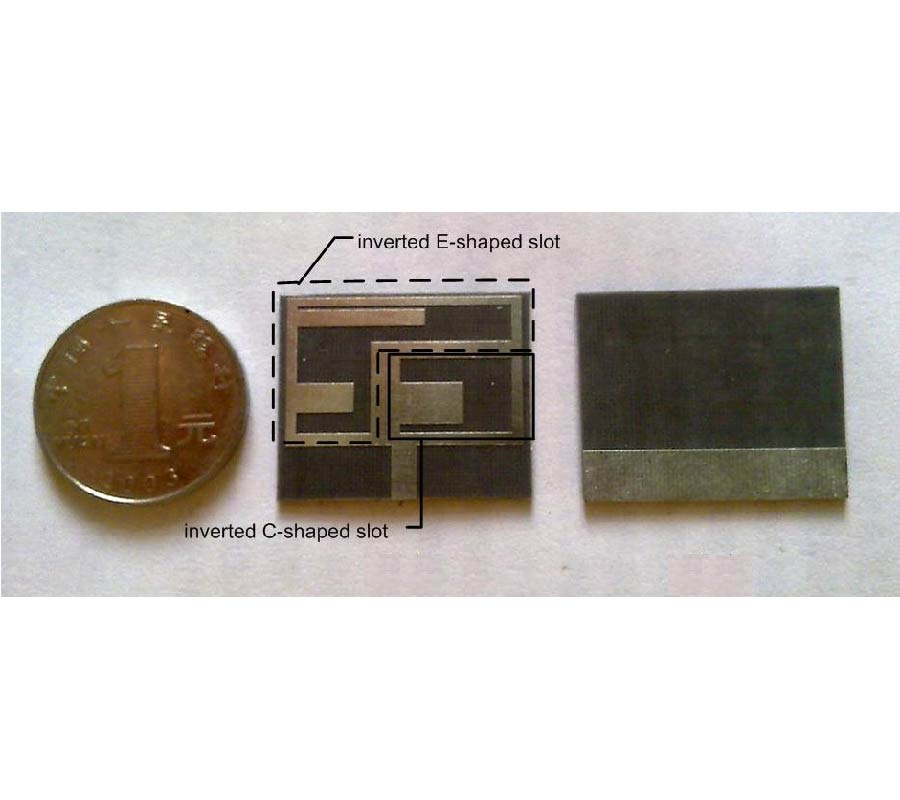
A Compact Dual-Band Patch Antenna for WLAN Applications
Yue Zhuo , Liping Yan , Xiang Zhao and Kama Huang
A compact dual-band patch antenna is proposed and measured in this paper. The proposed antenna employs a U-shaped slot and two mitered corners to achieve two operating frequency bands, 2.30-2.50 GHz and 4.50-6.36 GHz, which meet the specifications of IEEE 802.11b/g/a standard for WLAN applications. Full wave analysis is performed to simulate the characteristics of the proposed antenna using CST microwave studio. Moreover, a fabricated prototype which has compact dimensions of 20.0 mm × 25 mm × 1 mm exhibits agreement between measured and simulated parameters and radiation patterns.
A COMPACT DUAL-BAND PATCH ANTENNA FOR WLAN APPLICATIONS
2011-09-09
PIER
Vol. 120, 293-307
Bending Analysis of a Dual-Core Photonic Crystal Fiber
Daru Chen , Gufeng Hu , Xu An Liu , Baojin Peng and Genzhu Wu
A dual-core photonic crystal fiber (DC-PCF) is proposed, and bending characteristics of the DC-PCF are investigated. Two fiber cores are employed in the cross-section of the DC-PCF, which result in a mode coupling between the two fiber cores when the light propagates inside the DC-PCF. The mode coupling between two fiber cores of the DC-PCF is sensitive to the directional bending of the DC-PCF which essentially provides a method to achieve bending sensing. A DC-PCF-based bending sensor is proposed by injecting a broadband light into one fiber core of the DC-PCF on one side and detecting output spectrum from another fiber core of the DC-PCF on the other side. In our simulations, a parabola curve which shows the relationship between the wavelength shift of the transmission spectrum of the DC-PCF-based bending sensor and the bending curvature of the DC-PCF is presented.
BENDING ANALYSIS OF A DUAL-CORE PHOTONIC CRYSTAL FIBER
2011-09-08
PIER B
Vol. 34, 125-144
Comparison of the Gum and Monte Carlo Methods for the Uncertainty Estimation in Electromagnetic Compatibility Testing
Marco A. Azpurua , Ciro Tremola and Eduardo Paez
The rigorous uncertainty estimation in Electromagnetic Compatibility (EMC) testing is a complex task that has been addressed through a simplified approach that typically assumes that all the contributions are uncorrelated and symmetric, and combine them in a linear or linearized model using the error propagation law. These assumptions may affect the reliability of test results, and therefore, it is advisable to use alternative methods, such as Monte Carlo Method (MCM), for the calculation and validation of measurement uncertainty. This paper presents the results of the estimation of uncertainty for some of the most common EMC tests, such as: the measurement of radiated and conducted emissions according to CISPR 22 and radiated (IEC 61000-4-3) and conducted (IEC 61000-4-6) immunity, using both the conventional techniques of the Guide to the Expression of Uncertainty in Measurement (GUM) and the Monte Carlo Method. The results show no significant differences between the uncertainty estimated using the aforementioned methods, and it was observed that the GUM uncertainty framework slightly overestimates the overall uncertainty for the cases evaluated here. Although the GUM Uncertainty Framework proves to be adequate for the particular EMC tests that were considered, generally the Monte Carlo Method has features that avoid the assumptions and the limitations of the GUM Uncertainty Framework.
COMPARISON OF THE GUM AND MONTE CARLO METHODS FOR THE UNCERTAINTY ESTIMATION IN ELECTROMAGNETIC COMPATIBILITY TESTING
2011-09-08
PIER C
Vol. 24, 97-109
Design of Compact Coupled Microstrip Line Band Pass Filter with Improved Stopband Characteristics
Anjini Kumar Tiwary and Nisha Gupta
A compact symmetrical band-pass filter design using coupled microstrip line is presented in this paper. The microstrip line sections connected to the two input and output ports of the filter structure are printed over the Defected Ground Structure (DGS). The proposed symmetrical structure offers a simple and compact design and exhibits improved stop-band characteristics in comparison to the conventional coupled microstrip line filter structure. The prototype model of the proposed filter structure is developed and tested. The measured results are found to be in good agreement with the simulation results.
DESIGN OF COMPACT COUPLED MICROSTRIP LINE BAND PASS FILTER WITH IMPROVED STOPBAND CHARACTERISTICS
2011-09-08
PIER M
Vol. 20, 231-242
Breast Cancer Detection Based on Differential Ultrawideband Microwave Radar
Dallan Byrne , Martin O'Halloran , Martin Glavin and Edward Jones
Ultrawideband (UWB) microwave imaging is a promising emerging method for the detection of breast cancer. Fibroglandular tissue has been shown to significantly limit the effectiveness of UWB imaging algorithms, particularly in the case of premenopausal women who may present with more dense breast tissue. Rather than trying to create an image of the breast, this study proposes to compare the UWB backscattered signals from successive scans of a dielectrically heterogeneous breast, to identify the presence of cancerous tissue. The temporal changes between signals are processed using Support Vector Machines to determine if a cancerous growth has occurred during the time between scans. Detection rates are compared to the results from a previous study by the authors, where UWB backscatter signals from a single scan were processed for cancer detection.
BREAST CANCER DETECTION BASED ON DIFFERENTIAL ULTRAWIDEBAND MICROWAVE RADAR
2011-09-07
PIER C
Vol. 24, 83-96
A Single-Feed Planar Antenna for Terrestrial DTV Reception in Mobile Communication
Herman Hideyuki Uchida , Hiroyasu Matsui , Osamu Mikami and Toshio Wakabayashi
Japanese terrestrial broadcasting was completely converted to digital television (DTV) broadcasting on 470--710\,MHz as of July 2011. However, fading phenomenon resulting from standing waves is a factor in quality deterioration in TV and mobile communication technologies. Suppression of this is needed for many kinds of technologies. A broadband single-feed planar antenna composed of two antenna components, a Broadband Planar Monopole Antenna (B-PMA) and a Broadband Planar Slot Antenna (B-PSA), is proposed for reducing deterioration of reception due to the fading across the DTV band. Reflection coefficients and radiation patterns analyzed by the Finite Difference Time Domain (FDTD) method and compared with measured results indicate that the proposed antenna is broadband compared with a conventional antenna studied previously. A field experiment is conducted in the DTV band. The results of the field experiment indicate clearly that the proposed antenna efficiently suppresses fading resulting from standing waves across the band.
A SINGLE-FEED PLANAR ANTENNA FOR TERRESTRIAL DTV RECEPTION IN MOBILE COMMUNICATION
2011-09-07
PIER C
Vol. 24, 69-81
Comprehensive Study of Non-Uniform Circular Array Interferometer in a Real Time Broadband 3-Dimensional Direction Finder (2-12 GHz)
Mohammad Ali Ebrahimi-Ganjeh , Mohammad Soltanian , Mehdi Salarpour and Amir Mansour Pezeshk
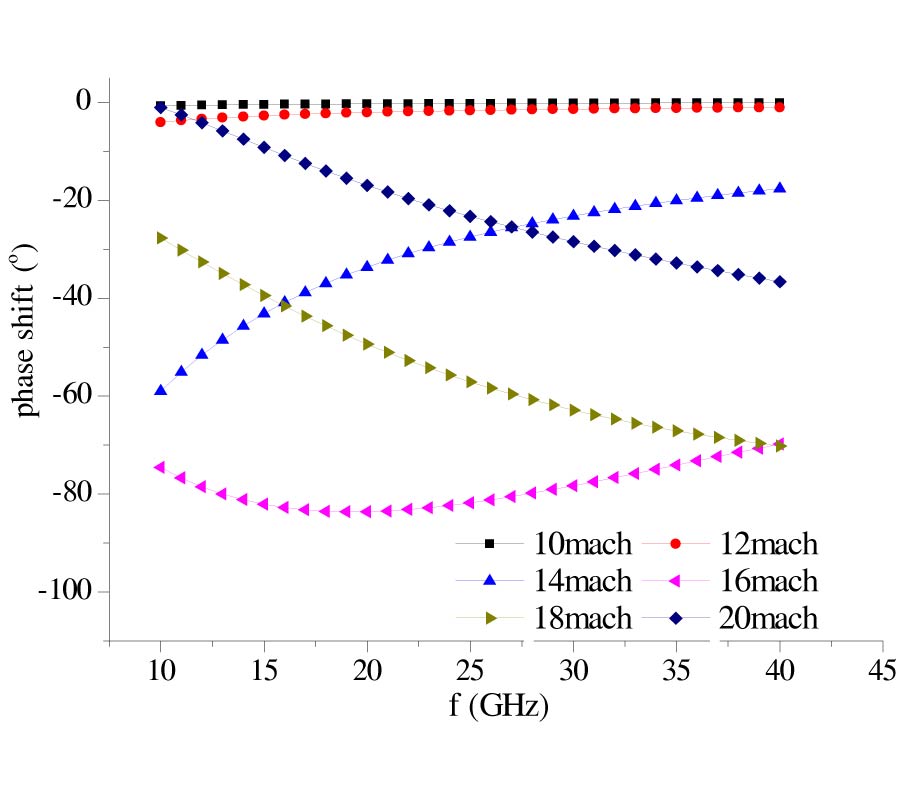
A comprehensive study is performed to investigate the performance of a non-uniform circular array interferometer in a real time 3-dimensional direction finder. The angular range of view is supposed to be 65 degrees vertically and 120 degrees horizontally, which is suitable for airborne applications. Interferometer is designed to work in the S, C and X bands. Regarding optimization process, the interferometer employs an eight element non-uniform circular array along with a phase reference antenna at the center of the array. Several quantities and parameters are studied, e.g., frequency behavior, origins of phase measurement errors, Signal to Noise Ratio (SNR) effect on phase measurement, and the effect of the phase measurement error on direction finding performance. The proposed interferometer is able to tolerate at least 35 degrees of phase measurement error. Radius of the array is determined to be 22 cm in order to have good frequency response in the desired frequency band. Both Generalized Regression Neural Network (GRNN) and Maximum Likelihood (ML) estimation are applied for mapping the phase relationships between antennas to the Direction of Arrival (DoA). The results of two methods are well matched, and therefore validation is performed.
COMPREHENSIVE STUDY OF NON-UNIFORM CIRCULAR ARRAY INTERFEROMETER IN A REAL TIME BROADBAND 3-DIMENSIONAL DIRECTION FINDER (2-12 GHz)
2011-09-07
PIER M
Vol. 20, 219-229
Microwave Transmission of a Hexagonal Array of Triangular Metal Patches
G. Stevens , J. D. Edmunds , Alastair P. Hibbins and John Roy Sambles
The microwave transmission of hexagonal arrays consisting of patches of equilateral aluminium triangles has been experimentally studied as a function of metal occupancy (triangle size). As one would expect, at low frequencies the microwave transmission drops on passing through the connectivity threshold (50%) when the disconnected hexagonal array of metal triangles switches to a disconnected hexagonal array of equilateral holes. However, for higher frequencies resonant phenomena cause a complete reversal in this behaviour such that the transmission, on passing through the connectivity threshold, increases substantially.
MICROWAVE TRANSMISSION OF A HEXAGONAL ARRAY OF TRIANGULAR METAL PATCHES
2011-09-06
PIER Letters
Vol. 26, 143-152
Improvement of Surface Electromagnetic Waves Attenuation with Resistive Loading
Haiyan Chen , Long-Jiang Deng , Pei-Heng Zhou , Jianliang Xie and Zhi-Wei Zhu
Electromagnetic properties of conventional radar absorbing materials (RAM) make it difficult to use them to provide remarkable surface electromagnetic waves (SEMW) attenuation with thin thickness at low radar frequencies such as in the UHF and L bands. In this paper, a composite structure realized by a grounded RAM slab covered by a resistive sheet is proposed. The use of a resistive sheet results in a significant increase of SEMW attenuation performance at low frequency, but almost no increase in its thickness. The electromagnetic scattering properties for a target coated with the RAM with/without covered by a resistive sheet are considered for interpreting the improvement of SEMW attenuation with resistive loading. Using a method-of-moments (MoM) computational scheme, we explore the performance of the proposed composite structure as radar backscattering suppression for a metal slab at low radar frequencies. It is found that the RAM with resistive loading has significantly increased SEMW attenuation at low frequencies, and advances the large incidence angle or grazing angle mono-static radar cross section (RCS) reduction of the coating slab further than the RAM without resistive loading case.
IMPROVEMENT OF SURFACE ELECTROMAGNETIC WAVES ATTENUATION WITH RESISTIVE LOADING
2011-09-06
PIER Letters
Vol. 26, 135-141
Design of an Ultra-Wideband Antenna Using Boolean Differential Evolution Algorithm
Lei Xie and Yong-Chang Jiao
A compact ultra-wideband (UWB) slot antenna based on a mesh-grid structure is designed. A Boolean differential evolution (BDE) algorithm is used to optimize the mesh-grid structure as well as other parameters of the proposed antenna for good impedance matching in the UWB band. The optimized UWB antenna has a compact size of 24.2 × 32.2 mm and is fabricated and measured. According to the measured results, the proposed antenna yields a wide bandwidth, defined by S11 < -10 dB ranging from 2.8 to 11.2 GHz. And it shows that the BDE algorithm is an effective method for antenna design.
DESIGN OF AN ULTRA-WIDEBAND ANTENNA USING BOOLEAN DIFFERENTIAL EVOLUTION ALGORITHM
2011-09-06
PIER Letters
Vol. 26, 125-134
A Compact, Planar Plate-Type Antenna for 2.4/5.2/5.8-GHz Tri-Band WLAN Operation
Cheng-Tse Lee , Saou-Wen Su and Fa-Shian Chang
A novel, tri-band, planar plate-type antenna made of a compact metal plate for wireless local area network (WLAN) applications in the 2.4 GHz (2400-2484 MHz), 5.2 GHz (5150-5350 MHz), and 5.8 GHz (5725-5825 MHz) bands is presented. The antenna was designed in a way that the operating principle includes dipole and loop resonant modes to cover the 2.4/5.2 and 5.8 GHz bands, respectively. The antenna comprises a larger radiating arm and a smaller loop radiating arm, which are connected to each other at the signal ground point. The antenna can easily be fed by using a 50 Ω mini-coaxial cable and shows good radiation performance. Details of the design are described and discussed in the article.
A COMPACT, PLANAR PLATE-TYPE ANTENNA FOR 2.4/5.2/5.8-GHz TRI-BAND WLAN OPERATION
2011-09-06
PIER C
Vol. 24, 57-68
Compact Dual Band Printed 2.5-Shaped Monopole Antenna for WLAN Applications
Stergios Papantonis and Elpida Episkopou
A novel compact printed antenna for dual band applications is presented. The antenna consists of two monopole elements and operates within the ISM 2.4 GHz and 5.2/5.8 GHz frequency bands. The proposed antenna provides a bandwidth of 403 MHz (2.184 GHz-2.587 GHz) in the lower frequency band and 4004 MHz (3.880 GHz-7.884 GHz) in the upper frequency band, respectively. Thus, it can cover multiple standards such as: HIPERLAN, 5.5 GHz WiMAX, and 2.4/5.2/5.8 GHz WLAN. Moreover, the lower resonant frequency of the proposed antenna can be easily tuned within 2.15 GHz to 3.22 GHz with almost no effect on the upper resonance. Additionally, the small ground plane size of the proposed antenna makes it suitable for almost any portable device.
COMPACT DUAL BAND PRINTED 2.5-SHAPED MONOPOLE ANTENNA FOR WLAN APPLICATIONS
2011-09-06
PIER C
Vol. 24, 43-55
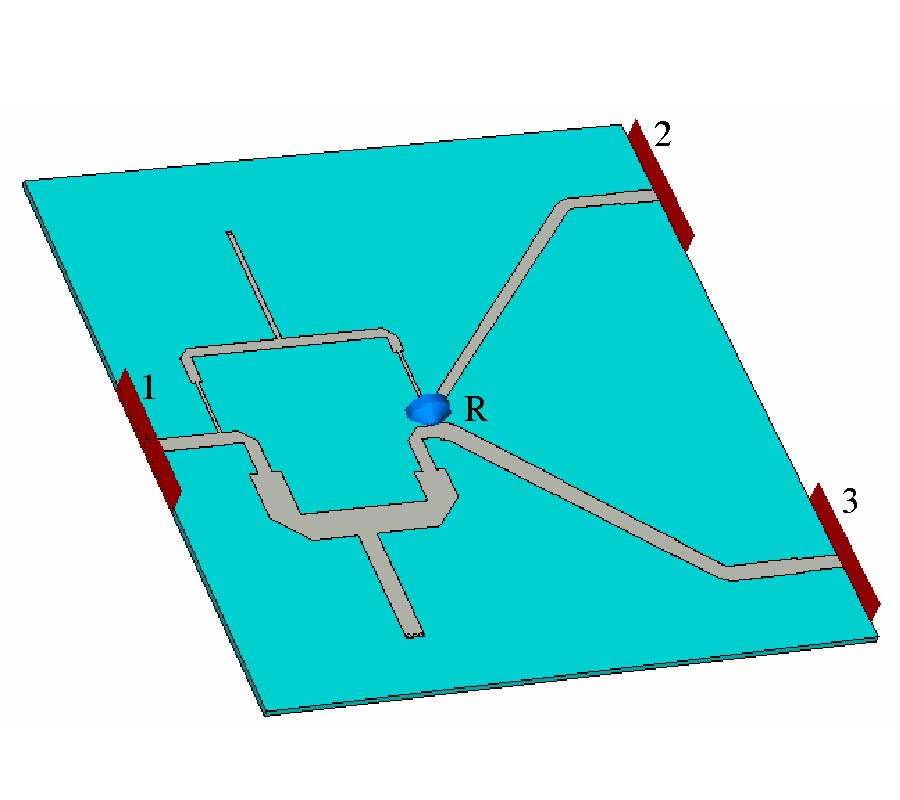
Design and Implementation of a Compact Planar 4 X 4 Microstrip Butler Matrix for Wideband Application
Chunhong Chen , Hongmei Wu and Wen Wu
A compact planar 4 x 4 microstrip Butler matrix is proposed in this paper. It is a wideband beam-forming network with the advantages of compact size, low cost and ease of fabrication. Three-branch line couplers with lumped-distributed elements are adopted to reduce the size, and multi-U-shaped coupled-line Schiffman phase shifters are designed to get good transmission and phase performances. The Butler matrix is fabricated and measured, and a good agreement is found between the simulated and measured results, which makes it very attractive for wideband multi-beam antenna applications.
DESIGN AND IMPLEMENTATION OF A COMPACT PLANAR 4 x 4 MICROSTRIP BUTLER MATRIX FOR WIDEBAND APPLICATION
2011-09-06
PIER
Vol. 120, 263-292
Parallel Implementation of a 3D Subgridding FDTD Algorithm for Large Simulations
Alessandro Vaccari , Antonino Cala' Lesina , L. Cristoforetti and R. Pontalti
In a previous paper, we proposed and tested a robust and efficient three-dimensional (3-D) subgridding algorithm for the FDTD solution method of the Maxwell's curl PDEs system. Its characteristic feature is the straight, non-recursive, embedding of Yee grids - refined by factors of 3, 5, 7 and even larger - within coarser ones. There, the algorithm's implementation was described with the traditional serial programming approach. In the present paper, we propose and test its parallel programming implementation. The goal is to make it suitable and efficient for large scale electromagnetic simulations.
PARALLEL IMPLEMENTATION OF A 3D SUBGRIDDING FDTD ALGORITHM FOR LARGE SIMULATIONS
2011-09-06
PIER
Vol. 120, 249-262
A Multi-Band Meandered Slotted-Groundplane Resonator and Its Application of Low-Pass Filter
Chien-Jen Wang and T. H. Lin
A slotted-ground-plane meandered-slot resonator with multi-resonance characteristics and a compact lowpass filter (LPF) by using the resonator are demonstrated in this paper. The meandered slot provides a wideband resonator with low insertion loss and very sharp cutoff frequency response. Unlike conventional design of cascading bandstop slotted-ground-plane resonators in the literature, the introduced LPF is presented, which consists of a modified-meander slot in the ground plane, a spurred C-like slot, and a uniform microstrip transmission line with constant characteristics impedance. Two rectangular-head slots, giving an increase in the inductance, are added at the two terminals of the meandered slot for purpose of frequency reduction. An arm aperture is embedded to form another resonant path so that an additional transmission zero could be generated. In order to increase rejection capability, the slot width of one section of the meandered-slot resonator is widened. Meanwhile, a C-like slot with a spur slit is also etched inside the meandered slot to improve rejection performance. The measured insertion loss at a passband is below 0.7 dB, and the rejection band over 20 dB is from 2.9 to 12.0 GHz.
A MULTI-BAND MEANDERED SLOTTED-GROUNDPLANE RESONATOR AND ITS APPLICATION OF LOW-PASS FILTER
2011-09-06
PIER
Vol. 120, 235-247
Broadband and High-Gain Planar Vivaldi Antennas Based on Inhomogeneous Anisotropic Zero-Index Metamaterials
Bin Zhou , Hui Li , Xiaying Zou and Tie-Jun Cui
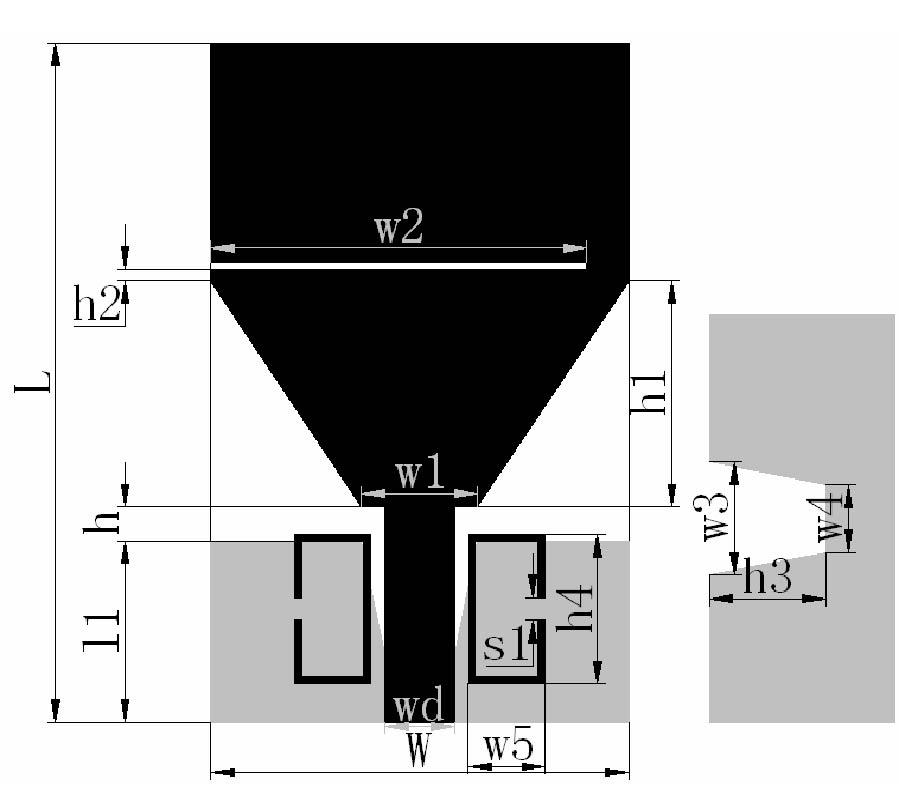
Vivaldi antennas have broad applications in real practice due to the ultra wideband properties. However, their gain and directivity are relatively low. In this paper, a new method is presented to improve the gain and directivity of Vivaldi antennas in a broad band using inhomogeneous and anisotropic (IA) zero-index metamaterials (ZIM). ZIM have the ability to enhance the antenna directivity; anisotropic ZIM with only one component of the permittivity or permeability tensor approaching to zero can make impedance match to improve the radiation efficiency; and IA-ZIM can broaden the frequency bandwidth. Single- and multiple-layered planar IA-ZIM have been analyzed, designed, and fabricated, which can be embedded into the original Vivaldi antenna smoothly and compactly. The IA-ZIM-based Vivaldi antennas have good features of high gain, high directivity, low return loss, and broad bandwidth. Compared to the original Vivaldi antenna, the measurement results show that the gain has been increased by 3 dB and the half-power beam width has been decreased by 20 degrees with the reflection coefficient less than -10 dB from 9.5 GHz to 12.5 GHz after using IA-ZIM.
BROADBAND AND HIGH-GAIN PLANAR VIVALDI ANTENNAS BASED ON INHOMOGENEOUS ANISOTROPIC ZERO-INDEX METAMATERIALS
2011-09-06
PIER
Vol. 120, 215-234
Efficient Time-Domain Analysis of Waveguide Discontinuities Using Higher Order FEM in Frequency Domain
Eve M. Klopf , Sanja B. Manić , Milan M. Ilic and Branislav M. Notaroš
A computational technique is presented for efficient and accurate time-domain analysis of multiport waveguide structures with arbitrary metallic and dielectric discontinuities using a higher order finite element method (FEM) in the frequency domain. It is demonstrated that with a highly efficient and appropriately designed frequency-domain FEM solver, it is possible to obtain extremely fast and accurate time-domain solutions of microwave passive structures performing computations in the frequency domain along with the discrete Fourier transform (DFT) and its inverse (IDFT). The technique is a higher order large domain Galerkin-type FEM for 3-D analysis of waveguide structures with discontinuities implementing curl-conforming hierarchical polynomial vector basis functions in conjunction with Lagrange-type curved hexahedral finite elements and a simple single-mode boundary condition, coupled with standard DFT and IDFT algorithms. The examples demonstrate excellent numerical properties of the technique, which appears to be the first time-from-frequency-domain FEM solver, primarily due to (i) very small total numbers of unknowns in higher order solutions, (ii) great modeling flexibility using large (homogeneous and continuously inhomogeneous) finite elements, and (iii) extremely fast multifrequency FEM analysis (the global FEM matrix is filled only once and then reused for every subsequent frequency point) needed for the inverse Fourier transform.
EFFICIENT TIME-DOMAIN ANALYSIS OF WAVEGUIDE DISCONTINUITIES USING HIGHER ORDER FEM IN FREQUENCY DOMAIN