Search Results(13802)

2011-08-03
PIER M
Vol. 19, 221-237
Analysis on Transmission Efficiency of Wireless Energy Transmission Resonator Based on Magnetic Resonance
Jaewon Choi and Chulhun H. Seo
In this paper, a high-efficiency wireless energy transmission via magnetic resonance is experimentally implemented in a resonator with the various sizes of transmitting and receiving coils and the receiving coil having two shapes of rectangular and circular types. The transmission efficiency is analyzed by varying the transmission distance. The resonance between the transmitting and receiving coils is achieved with lumped capacitors terminating the coils. The transmission efficiency of the resonator consisting of a circular transmitting coil with a diameter of 60 cm and rectangular receiving coil with a one side length of 10 cm is about 80% at the transmission distance of 20 cm. The transmission efficiencies of the wireless energy transmission resonator consisting of a receiving coil with the size of iPhone4 are about 75% and 40% at the transmission distances of 20 cm and 50 cm.
ANALYSIS ON TRANSMISSION EFFICIENCY OF WIRELESS ENERGY TRANSMISSION RESONATOR BASED ON MAGNETIC RESONANCE
2011-08-03
PIER M
Vol. 19, 209-220
CSAR Imaging with Data Extrapolation and Approximate Glrt Techniques
Lingjuan Yu and Yunhua Zhang
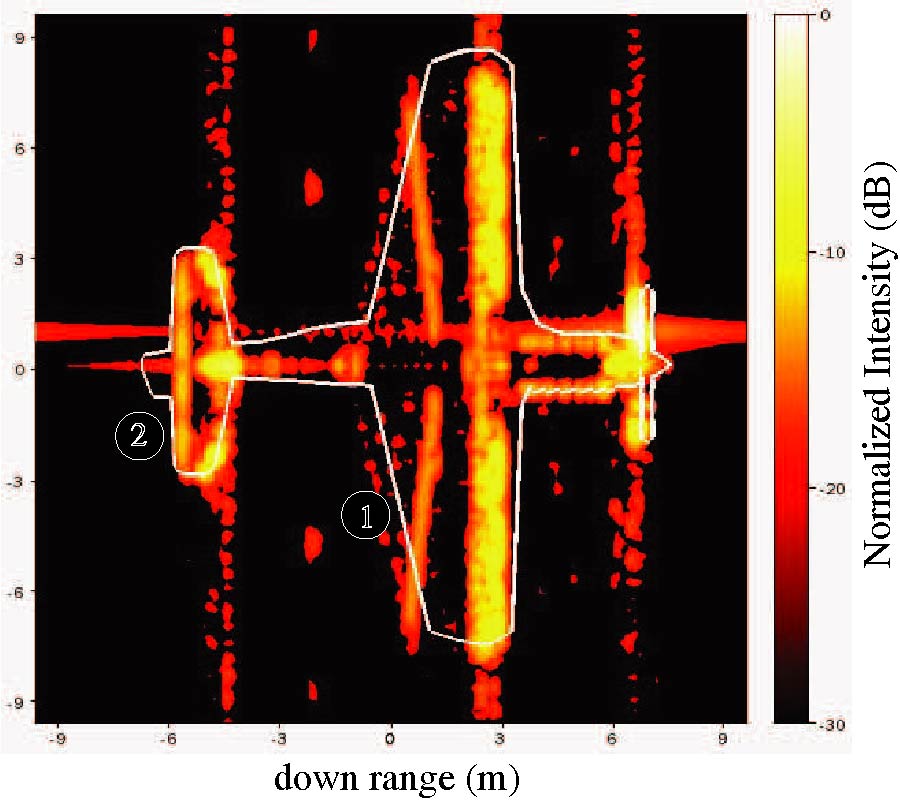
Circular synthetic aperture radar (CSAR) is different from other usual SAR modes, e.g., Stripmap SAR or Spotlight SAR, which takes a circular path rather than a straight path. It can provide not only two-dimensional (2-D) high resolution images but also three-dimensional (3-D) information about the target. In this paper, 2-D CSAR imaging containing 3-D information about the target is discussed. Considering the limited bandwidth of radar system and the limited angular persistence of the reflector's scattering characteristic in a real scene, we combine the data extrapolation technique based on the autoregressive (AR) model with the non-coherent combination of the sub-aperture images based on the approximate Generalized Likelihood Ratio Test (GLRT) technique to get a 2-D CSAR image with resolution improved and with aspect-dependent reflectivity characteristics kept. The GTRI T-72 tank dataset is processed to test the algorithm.
CSAR IMAGING WITH DATA EXTRAPOLATION AND APPROXIMATE GLRT TECHNIQUES
2011-08-02
PIER B
Vol. 33, 239-256
Potential Generated by Rotating Charged Cylinders
Tze-Chuen Toh
The potential field generated by two charged cylindrical perfect electrical conductors sandwiching a dielectric plane of finite thickness, and the influence of the dielectric plane on the field, is analysed. In particular, the field profile is examined when the cylinders are (i) rotating at some constant angular velocities, and (ii) surrounded, respectively, by uniform dielectric tubes of finite thickness.
POTENTIAL GENERATED BY ROTATING CHARGED CYLINDERS
2011-08-02
PIER B
Vol. 33, 221-237
Calculation of the Mutual Inductance and the Magnetic Force Between a Thick Circular Coil of the Rectangular Cross Section and a Thin Wall Solenoid (Integro-Differential Approach)
Slobodan Babic , Cevdet Akyel , Frederic Sirois , Guy Lemarquand , Romain Ravaud and Valerie Lemarquand
Systems that employ stimulating and implantable monitoring devices utilize inductive links, such as external and implanted coils. The calculation of the mutual inductance and the magnetic force between these coils is important for optimizing power transfer. This paper deals with an efficient and new approach for determining the mutual inductance and the magnetic force between two coaxial coils in air. The setup is comprised of a thick circular coil of the rectangular cross section and a thin wall solenoid. We use an integro-differential approach to calculate these electrical parameters. The mutual inductance and the magnetic force are obtained using the complete elliptic integrals of the first and second kind, Heuman's Lambda function and one term that has to be solved numerically. All possible regular and singular cases were solved. The results of the presented work have been verified with the filament method and previously published data. The advantage of these proposed formulas for mutual inductance or for the magnetic force is that they give the solution in the analytical and the semi-analytical form either for regular cases or singular cases. It is not case with already known methods in which it is necessary to take particular care of these cases of consideration.
CALCULATION OF THE MUTUAL INDUCTANCE AND THE MAGNETIC FORCE BETWEEN A THICK CIRCULAR COIL OF THE RECTANGULAR CROSS SECTION AND A THIN WALL SOLENOID (INTEGRO-DIFFERENTIAL APPROACH)
2011-08-02
PIER M
Vol. 19, 197-208
Microwave Absorbing Characteristics of Asphalt Mixes with Carbonyl Iron Powder
Zhenjun Wang , Peng Zhao , Tao Ai , Guanying Yang and Qiong Wang
Power microwave was adopted to heat asphalt mixes with carbonyl iron powder (CIP) by its microwave absorbing characteristics. The Arch reflectivity system was employed for reflectivity tests in the frequency range of 2.0~4.0 GHz, and road properties of the asphalt mixes with different heating techniques were studied. The results indicate that 30 mm thickness of the asphalt mixes with the ratio of CIP absorber to asphalt 0.1 : 1.5, can effectively absorb microwave with a -19.1 dB absorbing peak at 2.45 GHz frequency. Microwave heating rate for asphalt mixes with CIP is 16 times higher than that for ordinary asphalt mixes. Microwave heating can enhance road properties of the asphalt mixes, such as Marshall stability, flow value, dynamic stability and splitting strength at low temperature to a certain extant when the ratio of CIP absorber to asphalt is from 0.1 : 1.5 to 0.3 : 1.5.
MICROWAVE ABSORBING CHARACTERISTICS OF ASPHALT MIXES WITH CARBONYL IRON POWDER
2011-08-02
PIER
Vol. 119, 253-263
A Validation of Conventional Protection Devices in Protecting EMP Threats
Seung Moon Han , Chang-Su Huh and Jin-Su Choi
The performance of complementary ESD/Lightning protection devices being exposed to EMP was studied. We studied protection devices such as GDT (Gas Discharge Tube), TVS (Transient Voltage suppressor), and Varistor. The EMP signal has a very fast rise time of 100 psec and the maximum peak voltage of 2 kV. The GDT could not protect the EMP signal. The varistor showed about 35% of protection ability, and the TVS showed about 50% of protection ability. Thus the GDT is not a proper device to protect EMP. However, all of the protection devices did not show their nonlinear property.
A VALIDATION OF CONVENTIONAL PROTECTION DEVICES IN PROTECTING EMP THREATS
2011-08-01
PIER
Vol. 119, 239-252
Electromagnetic Scattering and Doppler Analysis of Three-Dimensional Breaking Wave Crests at Low-Grazing Angles
Conghui Qi , Zhiqin Zhao , Wei Yang , Zai-Ping Nie and Guoping Chen
The electromagnetic scattering of the synthesized three-dimensional (3-D) breaking wave crests which are formed by azimuthally aligning the individual 2-D breaking wave profiles has been numerically studied at the low-grazing angles (LGA) by using the multilevel fast multipole algorithm (MLFMA) with adaptive higher order hierarchical Legendre basis functions. Different from the specular (or quasi-specular) reflection and Bragg scattering, the ``sea-spike'' phenomenon which is characterized by that horizontally polarization (HH) signals greatly exceed vertically polarization (VV) signals has been demonstrated by analyzing both the backscattering of 3-D LONGTANK series and a plunging breaker. For the time-dependent evolution of the plunging breaker, the Doppler shifts and Doppler splitting effects are investigated by applying the fast Fourier transform (FFT) with a moving Hamming window. The spectrum of HH scattering has the feature of concentration, while the spectrum of VV scattering shows the Doppler splitting effects.
ELECTROMAGNETIC SCATTERING AND DOPPLER ANALYSIS OF THREE-DIMENSIONAL BREAKING WAVE CRESTS AT LOW-GRAZING ANGLES
2011-07-31
PIER M
Vol. 19, 183-195
Focusing Ground Penetrating Radar Images with Vertical Offset Filtering
Allen Benter , Wayne Moore and Michael Antolovich
Existing focusing techniques for Ground Penetrating Radar (GPR) rely on migration of 2D or 3D images to remove clutter originating from objects laterally offset from the antenna. In applications requiring real-time focusing, a method operating on 1D trace data is required. This paper presents a new algorithm for focusing GPR images, the Vertical Offset Filter (VOF), using simulated and real GPR data.
FOCUSING GROUND PENETRATING RADAR IMAGES WITH VERTICAL OFFSET FILTERING
2011-07-30
PIER B
Vol. 33, 203-219
Numerical Optimization of the Method of Auxiliary Sources by Using Level Set Technique
Afif Bouzidi and Taoufik Aguili
It is well-known that the choice of the auxiliary surface and the arrangement of radiation centers play a decisive role for ensuring accuracy and stability of the method of auxiliary sources (MAS). Using level set technique, a numerical scheme is proposed to determine the optimal location and amplitudes of the auxiliary sources for three-dimensional scattering problems.
NUMERICAL OPTIMIZATION OF THE METHOD OF AUXILIARY SOURCES BY USING LEVEL SET TECHNIQUE
2011-07-30
PIER B
Vol. 33, 175-202
A Negative Refractive Index Metamaterial Based on a Cubic Array of Layered Nonmagnetic Spherical Particles
Edward F. Kuester , Nadja Memic , Simone Shen , Aaron D. Scher , Sung Kim , Kendra Kumley and Hung Loui
A low-loss passive metamaterial exhibiting negative refractive index or ``double negative'' electromagnetic properties at microwave frequencies is proposed. The metamaterial is a lattice of spherical particles made up of multiple dielectric materials in concentric layers. Because no magnetic constituents (that tend to have higher losses) are involved, the negative-index behavior is possible with very low values of attenuation. A negative-index metamaterial based on dielectric-coated metal spheres is also proposed, and is predicted to have lower attenuation than other structures based on metallic scatterers. Numerical results and design principles are given.
A NEGATIVE REFRACTIVE INDEX METAMATERIAL BASED ON A CUBIC ARRAY OF LAYERED NONMAGNETIC SPHERICAL PARTICLES
2011-07-30
PIER
Vol. 119, 225-237
Dual-Frequency Electromagnetic Cloaks Enabled by LC-Based Metamaterial Circuits
Jin Shao , Hualiang Zhang , Yuankun Lin and Hao Xin
A dual-frequency cloak based on lumped LC-circuits is proposed. Multiple LC-resonant tanks are employed to satisfy the specific conditions for dual-frequency operations. In this way, the designed cloak features greatly reduce scattering cross sections at the two working frequencies simultaneously. Besides, explicit design equations are derived for the developed circuit systems. Based on these formulas, the range of the realizable frequency ratio of the presented cloak (the ratio between the two operating frequencies) is discussed. To verify the theoretical predictions, full-wave electromagnetic simulations are implemented. Good consistency between the numerical results and the design theories is achieved.
DUAL-FREQUENCY ELECTROMAGNETIC CLOAKS ENABLED BY LC-BASED METAMATERIAL CIRCUITS
2011-07-29
PIER B
Vol. 33, 153-174
Refractivity from Clutter by Variational Adjoint Approach
Xiaofeng Zhao and Sixun Huang
Inferring refractivity profiles from radar sea clutter is a complex nonlinear optimization problem. Previous works treat this problem as a model parameter estimation issue by using some idealized refractivity models, such as the Log linear evaporation duct model, bilinear model, and trilinear model, to describe the synoptic structure of the real atmospheric conditions. However, these idealized models can not describe the exact information of the refractivity profile. Rather than estimating a few model parameters, this paper puts forward possibilities of retrieving the refractivity values at each point over height by variational adjoint approach for RFC measurement geometry. The adjoint model is derived from the parabolic equation for a smooth, perfectly conducting surface and horizontal polarization conditions. An evaporation duct profile collected at East China Sea is provided as the true refractive environment. The performance of this approach is determined via simulations and is evaluated as a function of: 1) the initial guess profile; 2) the measurement noise; and 3) the spatial samples.
REFRACTIVITY FROM CLUTTER BY VARIATIONAL ADJOINT APPROACH
2011-07-29
PIER B
Vol. 33, 135-151
Research on a New Kind of High Directivity End-Fire Antenna Array
Guo-Wei Yao , Zheng-Hui Xue , Wei-Ming Li , Wu Ren and Jia Cao
In this paper, a new kind of end-fire array was built by employing high directivity plate end-fire antenna as the basic element based on electromagnetic surface wave theory. Being different from normal end-fire array, in the new array, high directivity plate end-fire antenna elements were arranged end to end along the end-fire direction, and the interelement spacing and uniform progressive phase were carefully adjusted to achieve high directivity. The simulations and measurements showed that the whole array achieved 19.2 dB directivity with four elements at 14.7 dB directivity each.
RESEARCH ON A NEW KIND OF HIGH DIRECTIVITY END-FIRE ANTENNA ARRAY
2011-07-29
PIER Letters
Vol. 25, 101-107
Dual Rectangular Ring with Open-Ended CPW-Fed Monopole Antenna for WiMAX/WLAN Applications
Bo Li , Ze-Hong Yan and Chen Wang
A coplanar waveguide (CPW)-fed planar monopole antenna with triple-band operation for worldwide interoperability for microwave access (WiMAX) and wireless local area network (WLAN) applications is presented. The antenna comprises dual rectangular ring with open-end. The triple operating bands with 10-dB return-loss bandwidths of about 30.8% ranging from 2.2 to 2.97 GHz, 23.4% ranging from 3.17 to 3.99 GHz, and 25.4% ranging from 4.91 to 6.31 GHz, covering the required bandwidths of 2.4/5.2/5.8 GHz WLAN and 3.5/5.5\,GHz WiMAX standards, are obtained.
DUAL RECTANGULAR RING WITH OPEN-ENDED CPW-FED MONOPOLE ANTENNA FOR WIMAX/WLAN APPLICATIONS
2011-07-29
PIER C
Vol. 23, 55-67
Design of Multiband UWB Filter Based on Reflected Characteristics in Time Domain
VU Ngoc Minh Trang and Yvan Duroc
An automatic process to design a multiband filter in Non-uniform Transmission Line (NTL) form is presented. The proposed approach supports with Time Domain Reflectometry (TDR) technique instead of the traditional methods such as methods based on Inductor-Capacitor filters. The proposed method is described step-by-step and is illustrated by an example emphasizing key points. A critical analysis of this technique is done for emphasizing its limitations. For illustrating the design process, a multiband Ultra Wideband (UWB) filter rejecting two frequency bands is designed.
DESIGN OF MULTIBAND UWB FILTER BASED ON REFLECTED CHARACTERISTICS IN TIME DOMAIN
2011-07-29
PIER M
Vol. 19, 173-181
A Rescue Radar System for the Detection of Victims Trapped Under Rubble Based on the Independent Component Analysis Algorithm
Massimo Donelli
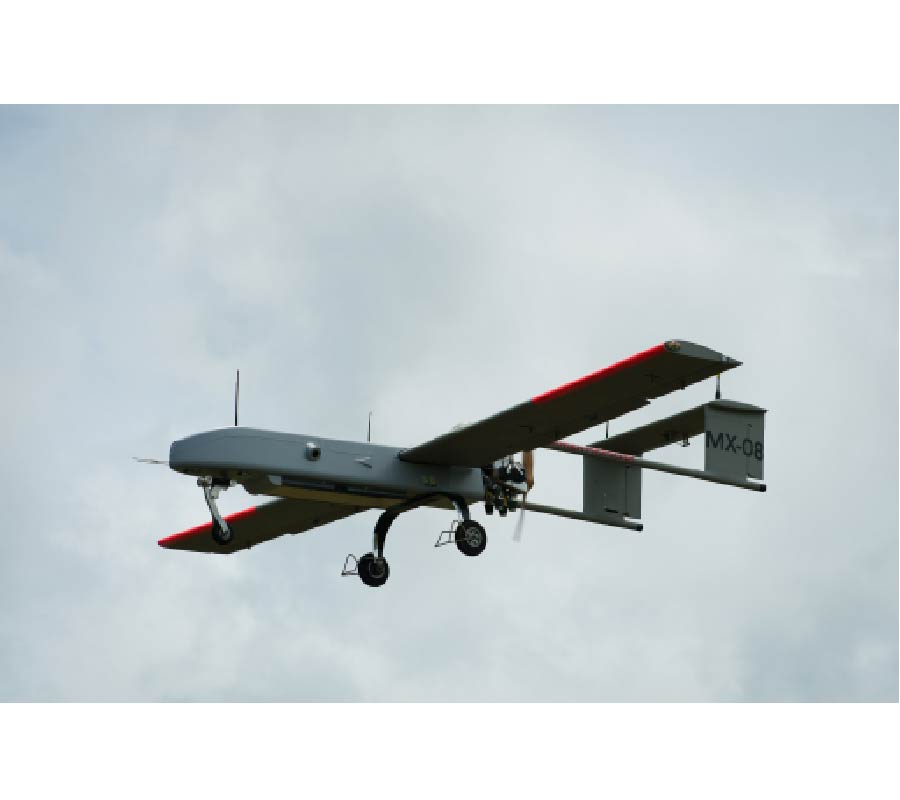
This work presents a light-weight microwave system for the search and rescue of victims trapped under the rubble of collapsed building during an earthquake or other disasters. The proposed system based on a continuous wave X-band radar is able to detect respiratory and heart fluctuations: the information is extracted from the backscattered electromagnetic field exploiting independent component analysis (ICA) algorithm which provides an efficient noise and clutter cleaning. The proposed rescue radar is compact enough to be mounted onboard of a small unmanned aerial vehicle (UAV) in order to reach inaccessible or dangerous areas. The obtained experimental results show that the proposed detection method is able to successfully locate trapped victims with a reasonable degree of accuracy.
A RESCUE RADAR SYSTEM FOR THE DETECTION OF VICTIMS TRAPPED UNDER RUBBLE BASED ON THE INDEPENDENT COMPONENT ANALYSIS ALGORITHM
2011-07-28
PIER B
Vol. 33, 115-134
A Method for Tracking Characteristic Numbers and Vectors
Miloslav Capek , Pavel Hazdra , Pavel Hamouz and Jan Eichler
A new method for tracking characteristic numbers and vectors appearing in the Characteristic Mode Theory is presented in this paper. The challenge here is that the spectral decomposition of the moment impedance-matrix doesn't always produce well ordered eigenmodes. This issue is addressed particularly to finite numerical accuracy and slight nonsymmetry of the frequency-dependent matrix. At specific frequencies, the decomposition problem might be ill-posed and non-uniquely defined as well. Hence an advanced tracking procedure has been developed to deal with noisy modes, non-continuous behavior of eigenvalues, mode swapping etc. Proposed method has been successfully implemented into our in-house Characteristic Mode software tool for the design of microstrip patch antennas and tested for some interesting examples.
A METHOD FOR TRACKING CHARACTERISTIC NUMBERS AND VECTORS
2011-07-28
PIER B
Vol. 33, 99-114
Analysis and Investigation of a Cantor Set Fractal UWB Antenna with a Notch-Band Characteristic
Yingsong Li , Xiao-Dong Yang , Cheng-Yuan Liu and Tao Jiang
A coplanar waveguide (CPW) fed ultra-wideband (UWB) antenna with a notch band characteristic is presented in the paper. The radiation patch of the proposed UWB antenna is designed using cantor set fractal technology. The bandwidth is broadened by setting two symmetrical triangular tapered corners at the bottom of the wide slot of the proposed UWB antenna. The notched band characteristic is achieved by employing a T-shaped tuning stub at the top of the wide slot. The notched band can be controlled by adjusting the length and the width of the T-shaped tuning stub to give tunable notched band function. The proposed cantor set fractal wide slot UWB antenna has been designed in details and optimized. Experimental and numerical results show that the proposed antenna, with compact size of 26×21 mm2, has an impedance bandwidth range from 2.8 GHz to 11 GHz for voltage standing-wave ratio (VSWR) less than 2, except the notch band frequency 5.0 GHz-6.3 GHz for HIPERLAN/2 and IEEE 802.11a (5.1 GHz-5.9 GHz).
ANALYSIS AND INVESTIGATION OF A CANTOR SET FRACTAL UWB ANTENNA WITH A NOTCH-BAND CHARACTERISTIC
2011-07-28
PIER C
Vol. 23, 41-54
Balanced Mixers Using Wideband Symmetric Offset Stack Balun in 0.18 um CMOS
Hwann-Kaeo Chiou and Jui-Yi Lin
This work proposes a symmetrical offset stack coupled lines balun and a dual balun for a single balanced mixer and a star mixer, respectively. To achieve a minimum insertion loss and a maximum bandwidth, the design formulas are derived by properly selecting the width of coupled lines and the offset width between two coupled lines. The measured results of the proposed single and dual baluns achieve the bandwidths of over 110% and 90%, and insertion losses of less than 4.4 dB and 7.4 dB at 38 GHz. These two baluns occupied chip sizes of 0.07 mm2. Two balanced diode mixers are further proposed and implemented in tsmcTM 0.18-μm CMOS processes. These mixers utilize a stack balun feature wide bandwidth with very compact size. The measured results of the single balanced and star mixer achieve over 115% and 100% bandwidth for a conversion loss of <15 dB. The isolations are better than 24 dB from 10 to 65 GHz of the single balance mixer and better than 31 dB from 20 to 65 GHz of the star mixer.
BALANCED MIXERS USING WIDEBAND SYMMETRIC OFFSET STACK BALUN IN 0.18 UM CMOS
2011-07-28
PIER C
Vol. 23, 27-39
Dual Frequency Ring Antennas with Coplanar Capacitive Feed
Veeresh G. Kasabegoudar
In this paper, design of a coplanar capaciπtive coupled probe fed microstrip ring antenna for dual frequency operation is presented. The proposed antenna is excited by a single probe feed connected to a capacitive feed strip placed along one of the radiating edges of the ring antenna. The coplanar capacitive feed strip is modified to obtain the best possible match with the antenna input impedance and to tune out the excessive capacitive reactance due to feed strip. It is also demonstrated that the modified feed strip can be placed either inside or outside the ring and similar radiation characteristics can be obtained at both the resonant frequencies. Ring dimensions decide the resonant frequencies values and their separation. Measured data fairly agree with the simulated characteristics.
DUAL FREQUENCY RING ANTENNAS WITH COPLANAR CAPACITIVE FEED