Search Results(13786)

2023-12-25
PIER M
Vol. 122, 145-153
Power Handling of Slot Loop Frequency Selective Surface Based on Approximate Analytical Method
Kang Luo , Jin Meng , Danni Zhu and Jiangfeng Han
In this paper, the power handling of a slot loop frequency selective surface based on approximate analytical method is proposed. The physical nature of the slot array periodic moment method is derived in detail. It is found that the left and right sides of periodic scatter matrix respectively represent the total tangential magnetic field acting on the left and right magnetic dipole arrays and moving in the direction of the reference array. According to the principle of equivalence, a slot array can be modeled by an array of magnetic currents on each side of the perfect electronic conductor. As a result, the total tangential magnetic field is zero in the sense of physical concept. Furthermore, a simple sinusoidal function is then used to approximate the magnetic current distribution along the slot loop which is similar to that of dipole antenna. By studying the corresponding zero points and extreme point of the magnetic current for the slot loop frequency selective surface element, the transmission coefficients and maximum electronic field are calculated. Examples of rectangle and triangle slot ring frequency selective surface have verified the efficiency and accuracy of the proposed method.
Power Handling of Slot Loop Frequency Selective Surface Based on Approximate Analytical Method
2023-12-25
PIER Letters
Vol. 115, 105-109
Multi-Channel Electromagnetic Filters Based on EIT and Fano Resonances through Parallel Segments and Asymmetric Resonators
Moulay Said Khattab , Tarik Touiss , Ilyass El Kadmiri , Fatima Zahra Elamri and Driss Bria
In this study, we investigate electromagnetically induced transparency (EIT) and Fano resonances, focusing on the propagation of electromagnetic waves in a system of parallel waveguides associated with asymmetric resonators. Our design includes five waveguides and two resonators, generating discrete modes influenced by their respective lengths. The EIT resonance is characterized by a prominent transmission peak flanked by two transmission zeros, while the Fano resonance is characterized by a pronounced transmission peak adjacent to a transmission zero. Using the transfer matrix method (TMM), we calculate transmission and reflection rates. Our results indicate that the EIT resonance appears when the resonator lengths show slight differences, whereas the Fano resonance appears when the resonator lengths are identical. Both resonances are sensitive to resonator lengths and permittivity indices. Consequently, the geometrical parameters of the system must be carefully selected according to the application in question, whether waveguiding or multi-channel electromagnetic filtering.
Multi-channel Electromagnetic Filters Based on EIT and Fano Resonances through Parallel Segments and Asymmetric Resonators
2023-12-25
PIER Letters
Vol. 115, 99-104
A Red Cross Bag MPA with a Very Low SAR and High F/b Ratio for Bio-Medical Applications
Anwer Sabah Mekki , Siba Monther Yousif and Saif Mohammed Baraa
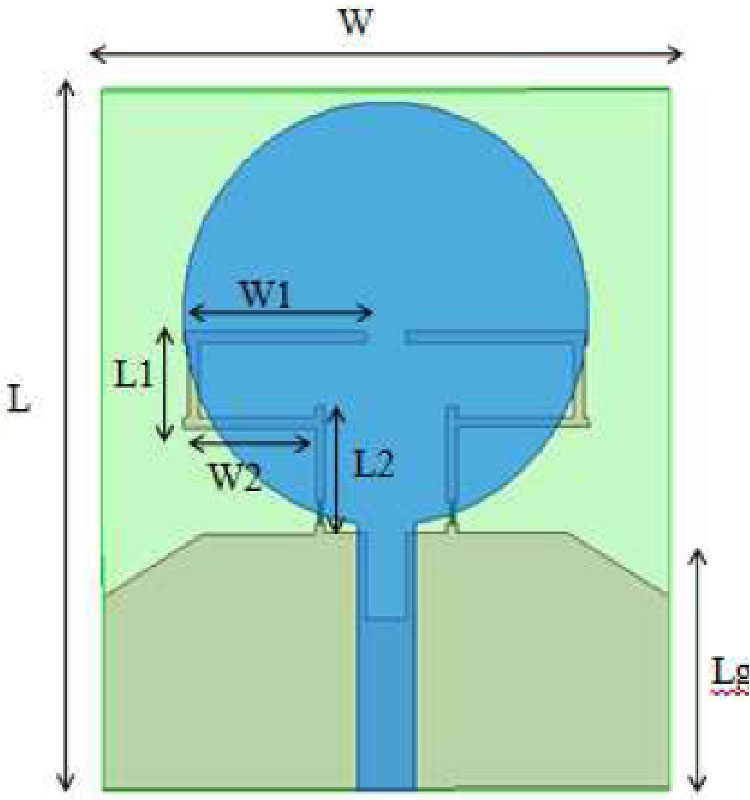
A microstrip patch antenna of red cross bag shape is designed, simulated, and fabricated. The antenna is designed to work at 5.8 GHz for on-body applications. Small size, low specific absorption rate, and high front to back ratio with a low-profile design are achieved. The measured frequency is 5.878 GHz with 25 mm as the largest dimension used, and the matching impedance is -47.06 dB. Other parameters are recorded from the simulator, such as front-to-back ratio which is 37.37 dB and a specific absorption rate of 0.0984 W/kg in 10 gm. Finally, this work is compared with a compact dual-band antenna with paired L-shape slots, a watchstrap integrated wideband antenna, and a dual-band AMC-based MIMO. The proposed red cross bag antenna overcomes the mentioned works in terms of small size, high front-to-back ratio, and low specific absorption rate.
A Red Cross Bag MPA with a Very Low SAR and High F/B Ratio for Bio-medical Applications
2023-12-24
PIER C
Vol. 139, 175-185
A Novel Pentagonal-Shaped Monopole Antenna with a CSRR Metamaterial Loaded Defected Ground for UWB Applications
Chahrazad Bensid , Mohamed Lamine Bouknia , Djamel Sayad , Issa Tamer Elfergani , Hanane Bendjedi , Rami Zegadi , Jonathan Rodriguez , Atul Varshney and Chemseddine Zebiri
This article presents a novel compact ultra-wideband (UWB) planar monopole antenna printed on an FR4 substrate. The antenna consists of a pentagonal radiating element and incorporates loading metamaterial complementary split ring resonator (CSRR) on the ground plane to optimize impedance matching for UWB operation. The overall dimensions of the designed antenna are 17.75×20 mm2. The proposed compact UWB antenna exhibits an operating bandwidth from 3.01 to 12.41 GHz with a -10 dB return loss, and a fractional bandwidth (FBW) of approximately 123%. Additionally, the proposed antenna exhibits a stable radiation pattern with a peak gain of 6.3 dB and a peak radiation efficiency of 98.3%. To validate the simulation results, a prototype has been fabricated and measured, which shows good coherence with the simulation results. In addition, the proposed design is compared with leading antennas for similar applications to demonstrate the suitability of its concept. Moreover, an equivalent circuit model of the CSRR metamaterial cell is developed and validated using ADS software.
A Novel Pentagonal-shaped Monopole Antenna with a CSRR Metamaterial Loaded Defected Ground for UWB Applications
2023-12-24
PIER C
Vol. 139, 167-174
Laser-Based Estimation of the Diffusion Coefficient Profile for the Karman Turbulence Spectrum in Heated Wind Tunnel Jets Using Genetic Algorithm Computation
Jacques Bernard Tissibe , Noé Richard Makon , Maurice Lamara , Elisabeth Ngo Nyobe and Elkana Pemha
Turbulence is a longstanding problem in fluid mechanics for which experimentation remains unavoidable. In contrast to conventional experimental techniques that inevitably require the introduction of probes into the flow, a very convenient technique would be one in which there is no contact between the measuring sensors and the flow. The laser-based diagnostic technique reported in this work is described as an estimation of a large number of parameters defining the diffusion coefficient profile in the heated turbulent wind tunnel jet, which is required in the formula of the Karman turbulence spectrum for the jet under study. For this purpose, some required experiments in the jet are carried out. A laser beam is then sent perpendicular to the jet exhaust, and measurements of the probabilities of the position of the laser beam's impact on a photocell placed outside the jet are performed. Using the Markovian model, the same probabilities are calculated numerically. For these numerical results to agree with the experimental results, a numerical optimal-control strategy is applied. Due to the large number of unknown parameters searched, a genetic algorithm (GA) computation is performed. A good agreement observed between the GA results and those derived from the previously published cold-wire-anemometer data, combined with the use of the Dale-Gladstone law, proves the validity and accuracy of the laser-based genetic measurement technique.
Laser-based Estimation of the Diffusion Coefficient Profile for the Karman Turbulence Spectrum in Heated Wind Tunnel Jets Using Genetic Algorithm Computation
2023-12-24
PIER C
Vol. 139, 159-166
Conformal Flexible Omnidirectional Rectenna Array Designed for Application in IoT Smart Water Meters
Ruinan Fan , Junlin Mi , Jianwei Jing , Liping Yan and Changjun Liu
In this manuscript, we propose a conformable and flexible meander dipole rectenna array for omnidirectionally harvesting ambient RF power for application in Internet of Things (IoT) water meters. The array unit consists of an antenna for RF power harvesting and a Schottky diode for converting the harvested RF power into DC power. The impedance between the antenna and diode is directly conjugated and matched using a meander structure and coupling loop. Traditional matching networks introduce additional losses, while direct conjugate matching maximizes power transmission efficiency and reduces energy losses. The elimination of the matching network simplifies the design of the rectenna, reducing the number of components and the overall size and weight. The rectenna unit is suitable for low-power ambient energy harvesting and operates at 2.45 GHz. The measured RF to DC conversion efficiency of the rectenna unit reaches 50% at 0 dBm. The rectenna array is formed by connecting eight antenna units in parallel, and units are affixed to the four surfaces of the water meter case to achieve omnidirectional RF environmental power harvesting. The output DC power of the array can be up to 1.3 mW at 100 μW/cm2 received power density. An energy management circuit (BQ25504) is designed to efficiently store, distribute, and manage the harvesting of RF power for powering the IoT water meter. Measured results demonstrated that the proposed rectenna array exhibited excellent adaptability and application potential in IoT scenarios.
Conformal Flexible Omnidirectional Rectenna Array Designed for Application in IoT Smart Water Meters
2023-12-24
PIER Letters
Vol. 115, 91-98
A Low Side Lobe Level Parabolic Antenna for Meteorological Applications
András Eszes , Zsolt Szabó , Béla Ladányi-Turóczy and István Kalácska
A novel corrugated subreflector is developed to achieve sufficient side lobe level suppression for antenna systems used in meteorological applications. The subreflector operates at 9.41 GHz, with a 60 MHz bandwidth and an efficiency of more than 70%. Its structure is rotational symmetric and is suitable for parabolic antenna applications. It can be utilized in single-polarized or polarimetric radar systems. The pattern-forming property of the subreflector is achieved with corrugations of different depths. Analytical design formulas have been deduced by solving the aperture integral. The analytical formulas provide the initial geometrical configuration and the reference illumination pattern in the objective function to which full-wave electromagnetic optimizations are performed to obtain the final corrugation depths. The subreflector has been manufactured with CNC machining. The radiation characteristics are measured, and for both polarizations, suppression of -28 dB side lobe level has been achieved with a 1.2 m diameter main reflector.
A Low Side Lobe Level Parabolic Antenna for Meteorological Applications
2023-12-24
PIER Letters
Vol. 115, 81-89
A Novel Stacked Rectangular with Surface Mounted Short Rectangle Dielectric Resonator Antenna in C-Band Applications
Syamala Misala and Satya Anuradha Mosa
A novel stacked rectangular structure with surface-mounted short rectangle dielectric resonator antenna (SRSMSR) with an E-shaped microstrip feed through a wide aperture slot was investigated for C-band operation in wireless communication and tracking radar applications. The developed design uses copper for SMSR to improve return loss up to -46 dB, gain up to 10.7 dB, and an observed impedance bandwidth of 20.6% in the broad frequency range of 5.69 GHz-7.0 GHz. The 3 dB beam width achieved in the E-plane is 89.82˚, while that in the H-plane is 24.31˚.
A Novel Stacked Rectangular with Surface Mounted Short Rectangle Dielectric Resonator Antenna in C-band Applications
2023-12-23
PIER C
Vol. 139, 147-158
Four Element EC Slot MIMO Antenna for WLAN, Wi-Fi and 5G Applications
Sachin S. Khade , Dinesh B. Bhoyar , Ketki Kotpalliwar , Chitra V. Bawankar and Manish S. Kimmatkar
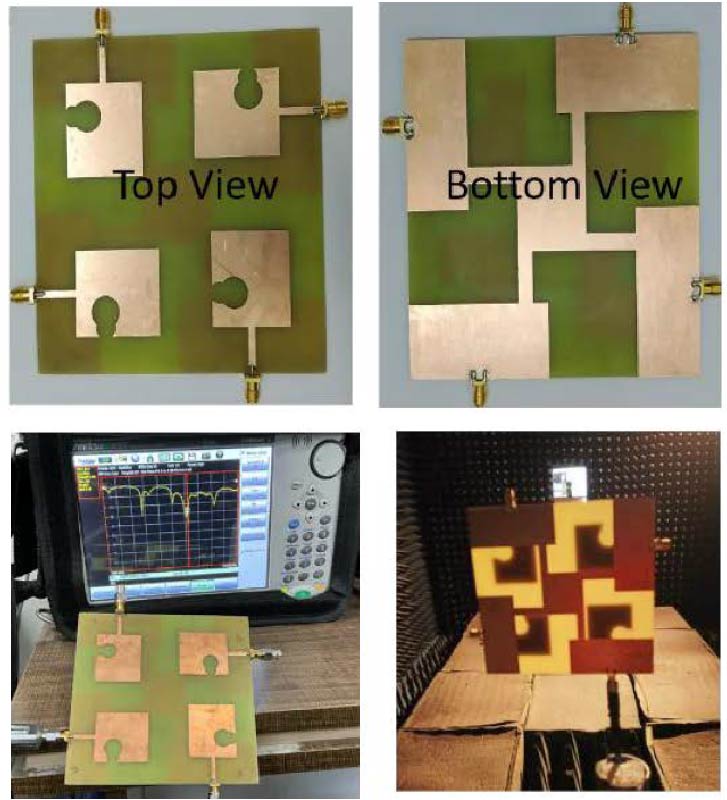
The architecture of antenna is with four elements design for 5G, Wi-Max, Wi-Fi and WLAN applications. The operating range of the antenna covers the frequency band from 4.72 GHz to 5.24 GHz. The antenna has dimensions of 46 x 46 x 1.6 mm3 with four elements. The antenna is designed with a planer monopole having two matching stubs connected at the lower end. All the elements of antenna contain E and C shaped slots and two identical stubs providing capacitive effect. The Gain of the designed antennas ranges from 2.23 dB to 2.73 dB for the desired bands. The designed antenna shows suitability for 4.9 GHz WLAN band, 5 GHz and 5.15 GHz Wi-Fi and Wi-Max bands. Also it covers part of the n79 5G band.
Four Element EC Slot MIMO Antenna for WLAN, Wi-Fi and 5G Applications
2023-12-22
PIER M
Vol. 122, 137-144
Charging Current Characteristics and Effect of Casing Material in Wireless Recharging of Active Implantable Medical Devices Using Transcutaneous Energy Transfer System
Sarath S. Nair , Muniyandi Manivannan , D. S. Nagesh , C. V. Muraleedharan , Roy Joseph and S. Harikrishnan
Batteries inside an active implantable medical device (AIMD) need to be replaced every few years. However, rechargeable batteries can enhance the life of such devices to a large extent. Transcutaneous Energy Transfer System (TETS) is a promising method for recharging these batteries inside medical devices. These devices are generally made of metal casings to avoid fluid ingress and provide better mechanical strength. However, the metal cases when being present in the path of electromagnetic energy induces eddy current thus producing excessive temperature rise due to thermal loss. Thus, the selection of an interface casing material plays a significant role in the performance of the wireless recharging. In this paper, the performance of a transcutaneous energy transfer system for recharging an AIMD with different axial gaps and casing materials is reported. The effect of these variations on the output voltage, recharge current, and efficiency of operation was quantified. It has been found that, with TETS the charging current of 0.3 A to 0.5 A can be obtained to charge the implanted battery within 180 minutes. It was found that the induced voltage in the secondary coil is substantially reduced with the presence of titanium casing compared to epoxy encapsulation. Thermal studies were performed with titanium casing material of various thicknesses. The casing temperature rose to above 70˚C within the first 10 minutes for 0.5 mm thickness and within 50 minutes in the case of 0.25 mm. With epoxy encapsulation, the casing temperature rose to only 30˚C. The charging voltage of 5 V and charging current of more than 0.3 A were obtained with epoxy encapsulation. A polymeric material casing or epoxy encapsulation is the best choice in the interface region to get a high recharging current in the case of wireless recharging of implantable medical devices. With the proposed design modification, wireless energy transfer and recharging implanted batteries shall be done in a more energy-efficient manner with less thermal damage to nearby tissues.
Charging Current Characteristics and Effect of Casing Material in Wireless Recharging of Active Implantable Medical Devices Using Transcutaneous Energy Transfer System
2023-12-21
PIER C
Vol. 139, 139-146
Evaluation of the Reliability of a Magnetic Levitation System by the Intrusive Stochastic Finite Element Method
Zehor Oudni and Thinhinane Mahmoudi
This work concerns the study of the reliability of a magnetic levitation system. A numerical calculation method based on the introduction of a random variable on the physical property of the materials constituting the levitation system is proposed. The latter is called intrusive stochastic finite element method (ISFEM), and the randomness of physical properties is taken care of, thus modeling in uncertain medium is feasible. The electromagnetic problem is treated with 2D hypotheses for modeling in an uncertain environment. This method was developed in 1991 and used for sensitivity and reliability analysis in the mechanical field; it is extended to the study of applications in linear elasticity and in electromagnetism. The random variable is of Gaussian type. The assessment of the reliability of the levitation system is discussed. The results obtained are compared with those found by the Latin hyper cube method. The intrusive stochastic finite element model provides very conclusive results in a very short time compared to those obtained by Latin hyper cube modeling.
Evaluation of the Reliability of a Magnetic Levitation System by the Intrusive Stochastic Finite Element Method
2023-12-21
PIER Letters
Vol. 115, 71-79
Influence of the Spatial Distribution of Molecular Magnetic Moments on the Radiation Characteristics of Rotating Permanent Magnet Antennas
Tiantian Li , Bin Li and Jin Meng
Taking into account the radiation characteristics of rotating permanent magnet antennas, the influence of the spatial distribution of molecular magnetic moments on the radiation characteristics was verified by performing theoretical calculations and simulations. First, the magnetic field distribution of arbitrarily shaped permanent magnets was derived based on the Biot-Savart Law, and the concentration degree of the molecular magnetic moments to the connection of the two magnetic poles and the comprehensive performance evaluation index were defined. The theoretical model to analyze the performance of permanent magnets was also established as above. Second, by controlling volume and rotational inertia to be the same, three types of permanent magnets were calculated. Finally, the optimization design process was proposed. Three preferable solutions were systematically compared and analyzed taking radially magnetized cylindrical permanent magnets as an example. Our work provides valuable insights into the design of mechanical antenna radiation sources.
Influence of the Spatial Distribution of Molecular Magnetic Moments on the Radiation Characteristics of Rotating Permanent Magnet Antennas
2023-12-20
PIER Letters
Vol. 115, 63-70
A Low RCS Design Under a Large Incident Angle for the Curved Surface Edge Considering Edge Effects
Guanya Li
In the context of the backscatter problem caused by edge diffraction on metallic curved surfaces, this study proposes a method to mitigate the scattering effect by loading different metasurface structures in four equally divided regions along the surface edge. Based on the design of the loaded metasurface on the curved surface, the interaction between the reflection field on the surface and the diffracted field is regulated by adjusting two key parameters: the reference phase (φ0) at the edge and the phase difference (φd) in adjacent regions. By controlling these parameters, reduction in the monostatic radar cross-section (RCS) can be achieved when the metasurfaces are loaded onto the curved surface. By controlling the reflection phase of a sandwich-like unit structure subjected to oblique incidence of electromagnetic waves, a metasurface that meets the requirements has been designed. Through a comparison and analysis of the near field and monostatic radar cross-section before and after loading the metasurface, the effectiveness of this design method is confirmed. This method is of great significance to control the electromagnetic scattering caused by edge diffraction.
A Low RCS Design under a Large Incident Angle for the Curved Surface Edge Considering Edge Effects
2023-12-19
PIER M
Vol. 122, 117-136
Advances in Synthesis Strategies for Lanthanide-Based NaYF4 Upconversion Nanocrystals and Their Applications in Ratiometric Thermometry
Raheel Ahmed Janjua , Wenbin Ji , Nayyar Abbas Shah , Julian Evans , Ruili Zhang , Sheng Zhang and Sailing He
nullThe optical characteristics and varied applications of lanthanide-doped NaYF4 upconversion nanocrystals have received considerable interest in recent years, such as in ratiometric thermometry. This review thoroughly examines the various synthesis processes utilized in producing these nanocrystals and their application in temperature sensing. Synthesis of NaYF4 upconversion nanocrystals is a complex procedure that requires careful management of dopant concentrations, crystal phase, size, and shape. The distinctive luminescent characteristics of lanthanide ions, which facilitate the transformation of photons with low energy into emissions with higher energy, render NaYF4 nanocrystals very suitable for ratiometric thermometry applications. We explore the fundamental concepts underlying upconversion luminescence in developing ratio metric temperature sensors. In this discourse, we examine the selection of lanthanide dopants, the mechanics underlying their energy transmission, and the development of customized sensor architectures. This review covers the recent progress and utilization of NaYF4 upconversion nanocrystals in ratiometric thermometry, including diverse areas such as biological temperature detection, environmental surveillance, and material research. We evaluate the obstacles and potential advancements in this domain, specifically emphasizing approaches to improving temperature sensors' precision, responsiveness, and applicability based on upconversion.
Advances in Synthesis Strategies for Lanthanide-based NaYF4 Upconversion Nanocrystals and Their Applications in Ratiometric Thermometry
2023-12-19
PIER M
Vol. 122, 107-116
Design of Spatial Magnetic Field Measurement System and Experimental Study of Near-Field Characteristics in Wireless Power Transfer System
Deyu Zeng , Jianwei Kang , Xiangyang Shi and Yang Shi
Magnetic coupling resonant wireless power transfer (WPT) technology is widely used in a lot of power equipment because of high efficiency and safety. Magnetic field is a key factor to study the energy transmission mechanism, transmission characteristics of WPT system. At present, the research on the WPT system spatial magnetic field mainly focuses on the theoretical research and finite element simulation, with relatively little experimental research. This paper aims to establish an experimental platform for the WPT system, propose and design a magnetic field measurement system suitable for a WPT system, and conduct experimental research on the WPT system magnetic field with the measurement system. The near field region of the magnetic field is divided, and the experimental magnetic field distribution law is obtained using dimensionless and surface fitting methods. Finally, different models are obtained by surface fitting to characterize the distribution law of the experimental magnetic field. The results indicate that the dimensionless magnetic field intensity follows different forms of exponential distribution in different regions. The models are in good agreement with the actual distribution of the magnetic field, which can effectively reflect the changes in actual magnetic field intensity.
Design of Spatial Magnetic Field Measurement System and Experimental Study of Near-field Characteristics in Wireless Power Transfer System
2023-12-19
PIER Letters
Vol. 115, 57-62
A Compact Multi-Band Monopole Antenna for 5G NR Coal Mine Applications
Yanhong Xu , Tingting Bai , Zhiwen Zhang , Anyi Wang , Can Cui and Jianqiang Hou
At present, 5G technology is gradually applied in coal mine applications. Under this circumstance, a microstrip patch antenna based on a multi-branch structure is firstly designed which can operate at the allocated 5G NR (2.51-2.68 GHz, 3.40-3.60 GHz and 4.80-4.90 GHz) for coal mine. Nevertheless, this antenna exhibits a large size, even at the lowest operating frequency (0.41λ×0.41λ at 2.51 GHz). To reduce the size of the antenna, the three branches are separately bent into C, S, and L shapes from left to right, and a size of 0.33λ×0.33λ at 2.51 GHz is realized, i.e., 35% size reduction is achieved. To further achieve a compact size, a new structure is designed. In particular, two inverted J-shaped branches and a rectangular branch acting as radiating portion are respectively arranged and optimized to cover the above three frequency bands where the rectangular branch is located between the two inverted J-shaped branches. To enhance the impedance matching characteristic of the antenna, a T-shaped structure is loaded on the other side of the substrate. The resultant size of this antenna is 0.20λ×0.16λ at 2.51 GHz, which is around 81% and 71% smaller than the first and second designed antennas. The measured results of the antennas are in good agreement with the simulated ones. Therefore, the third antenna is a good candidate for coal mine applications due to its relatively small size, low profile and easy integration with equipment.
A Compact Multi-band Monopole Antenna for 5G NR Coal Mine Applications
2023-12-19
PIER Letters
Vol. 115, 47-55
Frequency-Selective and Broadband Measurements of Radio Frequency Electromagnetic Field Levels in the University Campus
Doruntinё Berisha , Hëna Maloku Berzati , Jeta Dobruna , Zana Limani Fazliu and Mimoza Ibrani
Characterization of radio frequency electromagnetic field exposure levels is considered crucial for green and sustainable wireless-empowered campuses. To investigate the university campus electromagnetic characteristics, we conducted concurrent environment-oriented and human-centric measurement campaigns with broadband and frequency selective methodologies, respectively. The broadband results are derived after processing samples of 6-minute averages of measured electric and magnetic field values, taken at various university indoor and outdoor spots using broadband survey meter. Comparative analysis of broadband measurements shows that campus outdoor electric field levels in the sub 3 GHz band average around 1.67 V/m are at least twice higher than the ones recorded in indoor environments such as dormitories, labs, and classrooms. Students' exposure pattern in the 88 MHz-6 GHz range is derived after post-processing of more than 340 thousand electric field samples which were taken every 5 seconds at various campus environments using narrowband frequency selective measurement equipment. The comparison of cumulative distribution functions per wireless technology and environment shows that Wi-Fi is the main contributor to students' personal exposure levels in indoor environments and exceeds the 2G-5G mobile communication emitted electric fields in campus outdoor environments. The presented results can be used for exposure-aware heterogeneous network planning and optimization in university campuses or comparable environments.
Frequency-selective and Broadband Measurements of Radio Frequency Electromagnetic Field Levels in the University Campus
2023-12-18
PIER Letters
Vol. 115, 39-46
A Quad-Band High-Isolated MIMO Microstrip Antenna for Coal Mine Communication
Yanhong Xu , Peipei Dong , Anyi Wang , Jianqiang Hou and Shanshan Li
In this letter, a quad-band high-isolated MIMO microstrip antenna is designed for coal mine communications, which can operate at DCS1800, UMTS, WiMAX, WiFi, and 5G NR simultaneously. Firstly, the qual-band property is realized by designing a quaddent structure. In particular, three L-shaped branches (separately operating at 2.6 GHz, 3.5 GHz, and 4.8 GHz) are successively loaded on a monopole antenna (operating at 1.9 GHz). In the sequel, by symmetrically placing two quaddent structures with spacing of 0.19λ, a MIMO antenna is designed. At this time, the isolation level of the MIMO antenna can be as high as around 8 dB. To improve the performance of the MIMO antenna, an inverted cross-shaped branch is loaded on and two rectangular slots are etched off the ground successively between the two elements. In this way, an isolation level of over 20 dB can be achieved across the whole operating frequency bands. To verify the performance of the designed antenna, a prototype is fabricated and tested, and good agreement between the simulated and measured results indicates that the proposed antenna can completely cover DCS1800, UMTS, WiMAX, WiFi, and 5G NR (1.67~2.28 GHz, 2.39~2.79 GHz, 3.13~3.74 GHz and 4.69~5.34 GHz) for mining.
A Quad-band High-isolated MIMO Microstrip Antenna for Coal Mine Communication
2023-12-18
PIER B
Vol. 104, 69-89
Design Challenges and Solutions of Multiband MIMO Antenna for 5G/6G Wireless Applications: A Comprehensive Review
Usha Sharma , Garima Srivastava , Mukesh Kumar Khandelwal and Rashmi Roges
A comprehensive review of multiband MIMO antennas designed for wireless applications in the 5th and 6th generation (5G and 6G) networks is presented. The demand for higher data rates and improved spectral efficiency in advanced wireless networks continues growing, and multiband MIMO antenna systems have emerged as a promising solution. This review aims to provide an in-depth analysis of the existing literature on multiband MIMO antennas for 5G and 6G wireless applications. The paper's main objectives are: (1) to emphasize the requisite of MIMO antenna for the sub-6 GHz of 5G/6G wireless communication, (2) to explore and evaluate the various design approaches to target 5G/6G frequencies, (3) To demonstrate various techniques to generate multiband, (4) To highlight the challenges and their potential solutions to design multiband MIMO for 5G/6G. (5) To investigate the methods to attain circular polarization (CP) and pattern diversity for better system performance. The review critically analyzes the latest advancements, challenges, and future research directions for multiband MIMO antennas in the context of 5G and 6G wireless networks. This comprehensive review serves as a valuable resource for researchers, engineers, and practitioners seeking a deeper understanding of multiband MIMO antennas and their potential to support the demands of the ever-evolving wireless communication technology.
Design Challenges and Solutions of Multiband MIMO Antenna for 5G/6G Wireless Applications: A Comprehensive Review
2023-12-17
PIER C
Vol. 139, 129-137
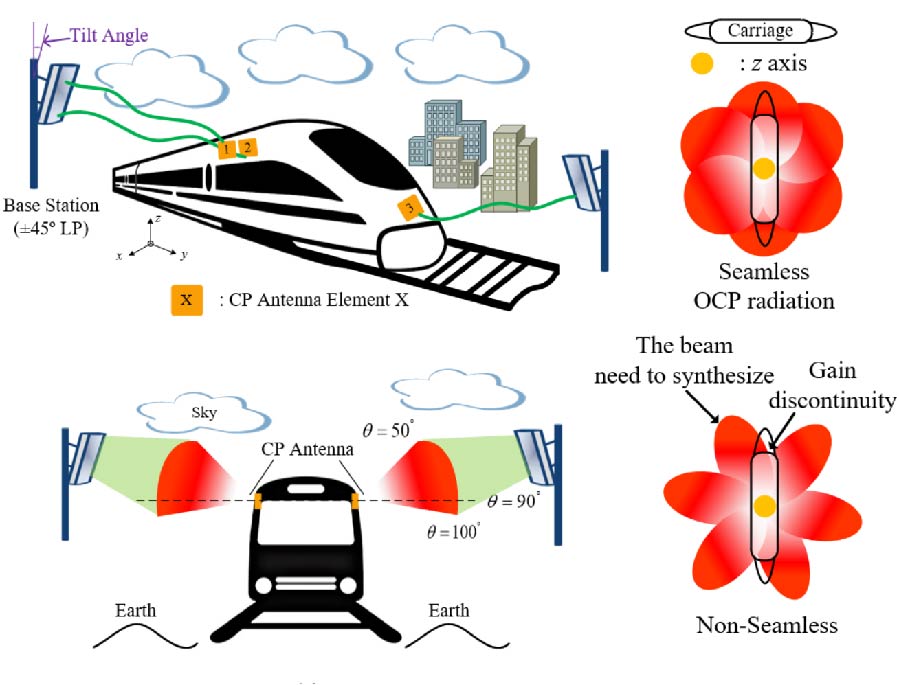
An X-Band Frequency Beam-Scanning Circularly-Polarized Leaky-Wave Antenna with Low Axial Ratio in All Half-Power Beamwidth Ranges
Dezhuang Zhang , Zhongbao Wang , Zhixia Xu , Hongmei Liu , Mingming Gao and Shao-Jun Fang
A novel frequency beam-scanning circularly-polarized leaky-wave antenna with the axial ratio (AR) of less than 3 dB in all the half-power beamwidth ranges based on an H-shaped slow-wave transmission line is proposed for X-band applications. The proposed circularly-polarized leaky-wave antenna is composed of a novel slow-wave transmission line and two rows of elliptical patch structures, leading to wide AR bandwidth, backward-to-forward beam scanning, and stable gain. To verify the proposed antenna, one prototype with a center frequency of 10 GHz is designed and fabricated. Measured results indicate that the main beam scans from -25° to +28° within the operating frequency variation from 8.7 to 11.5 GHz. The 3-dB AR bandwidth and maximum gain are 27.7% and 10.28 dBic, respectively.
An X-Band Frequency Beam-Scanning Circularly-Polarized Leaky-Wave Antenna with Low Axial Ratio in All Half-Power Beamwidth Ranges