Search Results(13786)

2023-12-05
PIER M
Vol. 122, 11-20
Radio Frequency Energy Harvesting Device at ISM Band for Low Power IoT
Jefferson Ribadeneira-Ramírez , Jorge Santamaria , Patricio Romero and Mario Alejandro Paguay
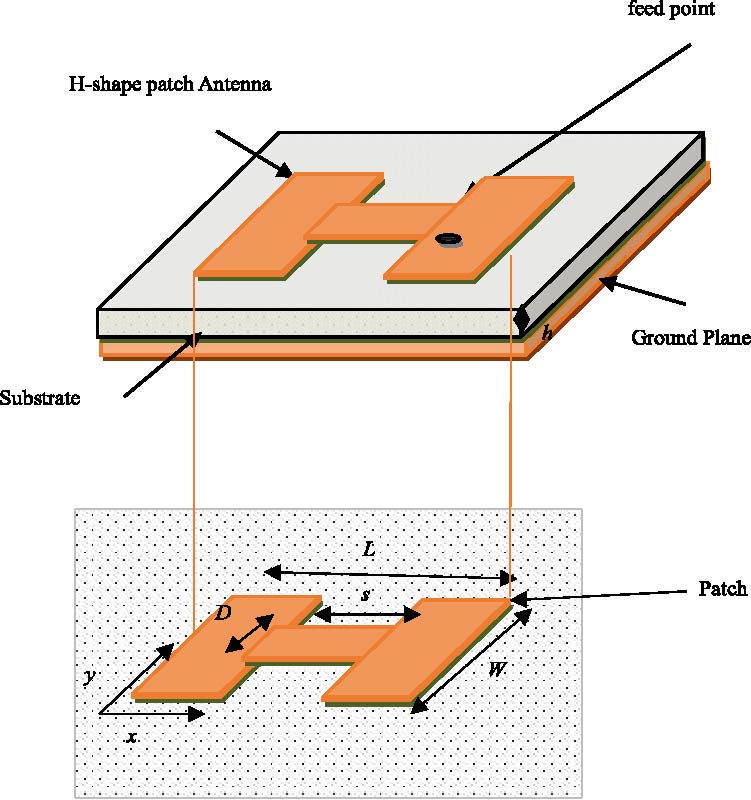
Low Energy (LE) devices for communication systems like Bluetooth, 5G New Radio (NR), etc. are most likely to be powered by a battery, however, the limitation of the utilization time of this power supply entails it to be handled in different way; one of them is using electromagnetic energy harvesting paradigm, which could be capable to supply the energy consumption of this device. In this research it is presented the design and implementation of a device for radio frequency energy harvesting in the Industrial, Scientific and Medical (ISM) band. As first step, field intensity measurements in ``Facultad de Informatica y Electronica'' (FIE) were performed by the utilization of NARDA SRM 3006 radiation meter, with the aim of determining the technology with highest radio frequency (RF) energy within the 2.4 GHz ISM band. After the analysis, the chosen was WiFi technology due to the massive implementation that exists in the surroundings. Therefore, the frequency of 2.45 GHz was selected as the center frequency for the design. The device was implemented using FR4 Epoxy glass material with a dielectric permitivity of 4.4 and a dielectric thickness of 1.6 mm. The device consists of 3 stages: i) Capturing energy using a microstrip patch antenna ii) Rectification using a coupling network followed by a rectifying circuit and iii) Energy storage using the method of harmonic balance and electromagnetic moment. Finally, harvesting measurements were carried out in FIE's laboratory; the RF energy of a WiFi router was harvested and at 10 cm a voltage of 510.6 mV was obtained, this level of voltage was capable of turning on a led diode demonstrating the functioning of the device.
Radio Frequency Energy Harvesting Device at ISM Band for Low Power IoT
2023-12-05
PIER Letters
Vol. 115, 9-14
Rapid Estimation of Shielding Effectiveness in Chest and Abdomen Regions of Electromagnetic Shielding Clothing
Yi Yang , Miaomiao Kang and Xiuchen Wang
The shielding effectiveness (SE) of electromagnetic shielding (EMS) clothing is primarily achieved through experimental testing, but this method comes with drawbacks such as high cost, extended time, and imprecise testing outcomes. In order to quickly and cost-effectively obtain the protective performance of clothing, this article proposes a fast estimation method for the local SE of EMS clothing, which can quickly estimate the SE in the chest and abdomen regions through human body shape parameters. Firstly, an elliptical conical surface model is established for the chest and abdomen regions according to the shape of the human body. Following the principle of calculus, a local SE solution method based on this model is constructed. Additionally, a model correction coefficient that takes into account the impact of holes and seams is offered. Finally, a rapid estimation method is established for the SE of the chest and abdomen regions of the clothing. Experiments are ultimately designed to validate the model. In conclusion, the estimated values of the model are in agreement with the measured values, and it exhibits fast and efficient performance. This paper provides a new way to rapidly estimate the SE of EMS clothing in local areas, and plays an important role in promoting the design, evaluation and related detection of EMS clothing.
Rapid Estimation of Shielding Effectiveness in Chest and Abdomen Regions of Electromagnetic Shielding Clothing
2023-12-05
PIER Letters
Vol. 115, 1-8
Design of Radiation Protection Topology for Pulsed High Currents in Electromagnetic Launcher Based on Decision Variable Analysis
Heyang Wang , Jian Sun , Yuantao Cong , Mingjie Zhong and Binyu Zhu
Aiming to address the problem of radiation interference caused by pulse high current in the electromagnetic launcher's working process, this study presents a model for selecting materials for the protection of radiation sources and designing their topological structure. Initially, an analysis is conducted on the selection of materials and topology for the protective characteristics, considering factors such as protective effectiveness, production cost, structural rigidity, reliability, and mobility. Through shielding process, several factors influencing material selection are identified. Subsequently, weights and excitation functions are assigned to these factors to generate an applicability evaluation function of the protective materials, aligning with the test requirements. Next, three structures are defined for the test environment: inner shield, outer shield, and wrap-around shield, in accordance with the established protection topology. Using ANSYS, a three-dimensional simulation model is constructed, featuring a peak pulse current of 281.98 kA and an armature mass of 10 g. The shielding performance of materials with thicknesses of 3 mm, 5 mm, 7 mm, and 10 mm is analyzed. Simulation results demonstrate that the outer shielding structure and wrap-around shielding structure can achieve a magnetic induction strength of less than 0.5 T at approximately 6 mm thickness, validating the feasibility of the proposed model. This paper presents a method for addressing electromagnetic radiation protection from the electromagnetic launcher, ensuring the safety of personnel near the gas pedal and the stable operation of electronic components. The findings have significant implications for the future application of the system.
Design of Radiation Protection Topology for Pulsed High Currents in Electromagnetic Launcher based on Decision Variable Analysis
2023-12-04
PIER M
Vol. 122, 1-9
Flexible Microstrip Patch Antenna Design on Jeans Substrate Radiating at 2.45 GHz for WBAN Application
Saikumar Mulkalla , Avish Fakirde and Paritosh D. Peshwe
This study presents a compact, low-profile, and flexible fabric antenna specifically designed for on-body Wireless Body Area Networks operating within the Industrial, Scientific, and Medical (ISM) frequency band at a central frequency of 2.45 GHz. The proposed antenna employs a jeans substrate, with a dielectric constant εr = 1.67 and loss tangent tanδ = 0.025, which is 0.5 mm in thickness, allowing for its flexibility. The antenna incorporates slots on the patch and a Defected Ground Structure (DGS), with a total size of 36 × 55 × 0.6 mm3 (0.29λo x 0.45λo x 0.005λo mm3). To assess the antenna's flexibility, bending analysis was performed, while its performance was evaluated using a phantom model that simulates human tissue, comprising skin, fat, and bone, with respective thicknesses of 1 mm, 0.5 mm, and 4 mm. The final model of the antenna operates at a central frequency of 2.45 GHz, with an impressive bandwidth of 0.8 GHz. The proposed design maintains a high level of directivity, gain, and Reflection Coefficient (S11) at the desired frequency, with values of 4.7 dBi, 3.6 dBi, and -41 dB, respectively. The Specific Absorption Rate (SAR) of the final antenna was measured on the above model and found to be 0.114 W/Kg for 1 g of tissue, which is well within the limits established by IEEE and FCC standards. Both the measured and simulated values of return loss and gain suggest that the proposed antenna is eminently suitable for body-worn applications.
Flexible Microstrip Patch Antenna Design on Jeans Substrate Radiating at 2.45 GHz for WBAN Application
2023-12-04
PIER Letters
Vol. 114, 103-109
A Research Based on Transmissive Amplitude-Phase Dual Control About Generating High Quality Vertex Beam
Honggang Hao , Pan Tang , Bao Li and Zhonglyu Cai
Orbital angular moment modes (OAMs) have been proven to be promising resources for increasing communication capacity. To generate wideband and high purity OAM, we have proposed a transmitting metasurface with amplitude-phase dual control. The proposed unit cell is a novel split ring structure with upper and lower grating-like structures. By changing the direction angle and rotation angle of the split ring unit, the cross-polarization phase response and amplitude response of the unit are controlled respectively. The amplitude distribution of the metasurface array is calculated using Chebyshev synthesis method (CSM). We designed metasurface arrays with mode numbers l = 1, 2, 3 and it generated high purity OAM beams in the frequency band of 22--32\,GHz. Compared with traditional phase-control metasurface, amplitude-phase control surface can effectively improve the quality of OAM generation. The results have verified the accuracy of the proposed method, and the proposed method has potential applications in future communication system.
A Research Based on Transmissive Amplitude-phase Dual Control about Generating High Quality Vertex Beam
2023-12-03
PIER C
Vol. 139, 67-77
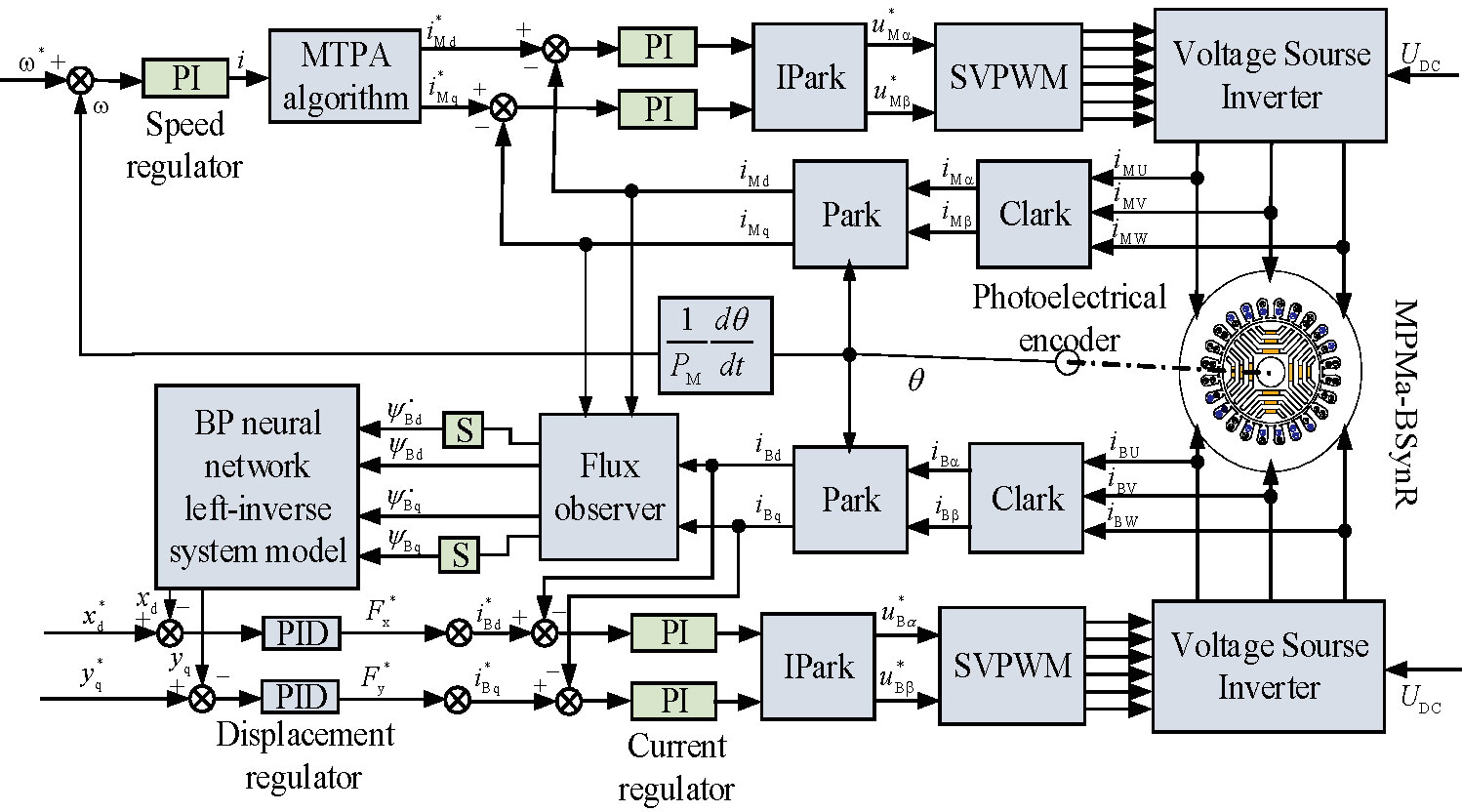
PMSWG Parameter Identification Method Based on Improved Operator Genetic Algorithm
Zhun Cheng , Chao Zhang and Yang Zhang
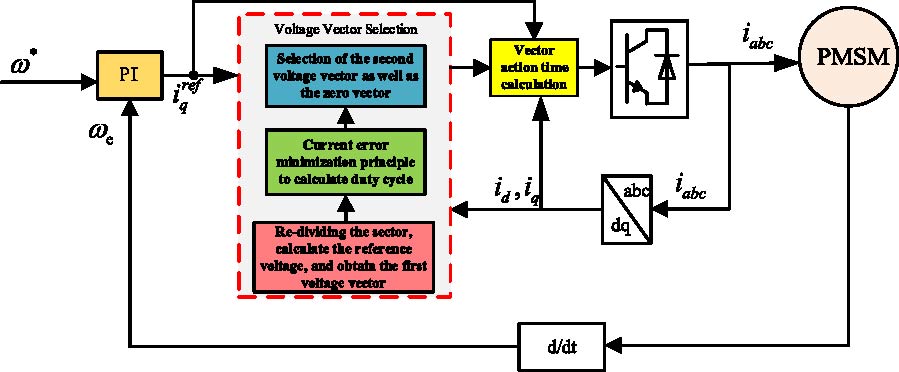
Permanent Magnet Synchronous Wind Generator (PMSWG) parameter identification method with improved operator genetic algorithm is proposed for the influence of perturbations caused by mechanical parameter changes on the dynamic performance of motor speed control system. Firstly, current with id=0 and id≠0 are injected into axis d respectively to design the fitness function. Through quantum coding, the genetic algorithm can obtain better population and fitness in the early stage, and find better solutions in the search space. At the same time, the cross method of two random numbers is used to make the cross variable not restricted in a range, which enhances the global search ability. Finally, the update strategy of hybrid mutation composed of Gaussian mutation and Cauchy mutation is introduced to ensure the global search ability of the algorithm, and the accuracy of the optimization results is improved. Experiments show that the proposed method avoids local optimization and achieves global optimization, which can further improve the convergence speed and identification accuracy of the algorithm.
PMSWG Parameter Identification Method Based on Improved Operator Genetic Algorithm
2023-12-03
PIER C
Vol. 139, 59-66
Frequency Diversity Arc Array with Angular Broadening Null Steering for Sidelobe Suppression
Ying Tian , Wei Xu , Pingping Huang , Weixian Tan and Yaolong Qi
The structure of the frequency diversity arc array (FDAA) is a circular arc, which can achieve fast scanning in all directions and large viewing angles. By selecting the appropriate array elements for FDAA to form an effective working array and designing the symmetrical logarithmic frequency offset, a more aggregated point-like beam pattern is obtained. However, due to the structural characteristics of FDAA, the anti-density weighting phenomenon is generated, which limits the application of FDAA in radar system for target recognition and tracking. In order to solve the problem of high sidelobe of FDAA caused by inverse density weighting, a method of FDAA with angle widening null guidance for sidelobe suppression is proposed in this paper. The linear constraint minimum variance (LCMV) criterion is used to set zero points at a fixed position in the direction of interference, so that the interference is in a null with a certain width. Through Matlab simulation, it is verified that this method has a certain effect on suppressing FDAA sidelobe interference.
Frequency Diversity Arc Array with Angular Broadening Null Steering for Sidelobe Suppression
2023-12-03
PIER Letters
Vol. 114, 97-102
3D Printed Wideband Ring Dielectric Resonator Antenna
Jihad Ben Yamoun and Noura Aknin
In this article we present a ring Dielectric Resonator Antenna (DRA) fabricated on three-dimensional (3D) printed Acrylonitrile Butadiene Styrene (ABS) filament. The 3D printer offers antenna easy to fabricate and the possibility to design new antennas shapes more complex. The simulation performed using CST software 2020 shows that the proposed ring DRA has two resonance frequencies 23.5 GHz and 26.4 GHz with an obtained great gain 9.5 dB and 10.5 dB, respectively. A wideband about 42.4% was measured.
3D Printed Wideband Ring Dielectric Resonator Antenna
2023-12-02
PIER C
Vol. 139, 45-57
A Combinatorial Approach to Quantitative Microwave Imaging for Breast Tumour Profiling Using SVBIM and SpaRSA
Ria Benny , Thathamkulam A. Anjit , Philip Cherian and Palayyan Mythili
A combinatorial quantitative reconstruction method employing Subspace-based Virtual Born Iteration Method (SVBIM) along with a greedy compressive sensing algorithm, Sparse Reconstruction by Separable Approximation (SpaRSA) to solve the ill-posed inverse problem in microwave imaging is proposed in this paper. SVBIM makes use of the contribution of the variational induced current to arrive at a better estimate of the permittivity profile in each iteration. SpaRSA operates in the sparse domain and reduces the computational overload, thereby guiding the inverse problem towards a faster global optimum solution. The merger of these two algorithms helps to reconstruct breast profiles having high-permittivity tumour inclusions (ε = 60) with reduced error. The proposed reconstruction method is capable of extracting the salient information regarding tissue differentiation (permittivity and conductivity) and dielectric distribution of various tumour and fibroglandular inclusions within the object, dimensions, resolution, size, shape and coordinate localization of inclusions. In comparison to various methods reported in literature, the results obtained using the proposed method are highly encouraging. In the presence of 30 dB noise, the above-said imaging technique produces a significantly reduced permittivity error value of 0.47 in the reconstruction of tumour inclusions as against 0.85 and 0.71 in the case of TV norm and Re-weighted Basis Pursuit methods respectively. The experimental validation is carried out using a phantom having three inclusions of sizes 10 mm, 6 mm, and 3 mm. The inclusions have been localized successfully with errors of 0.089, 0.133, and 0.21, respectively.
A Combinatorial Approach to Quantitative Microwave Imaging for Breast Tumour Profiling Using SVBIM and SpaRSA
2023-12-02
PIER M
Vol. 121, 157-167
A Novel Balanced-to-Unbalanced All-Port Reflectionless Filtering Power Divider Without Loading Additional Absorptive Branches at Input and Output Ports
Qi Chen , Huabin Zhang , Zhongbao Wang , Hongmei Liu and Shao-Jun Fang
A novel balanced-to-unbalanced (BTU) all-port reflectionless filtering power divider without loading additional absorptive branches at input and output ports is proposed in this paper. The proposed power divider includes two reflectionless filtering networks, four transmission lines, a phase inverter, and two isolation resistors. Unlike the existing filtering power dividers that require additional absorptive branches to be loaded at each port to achieve reflectionlessness at all ports, the proposed power divider achieves all-port reflectionlessness by embedding only two reflectionless filtering networks in the BTU power dividing circuit. Meanwhile, this reflectionless filtering network also introduces two transmission zeros located at the lower and upper sides of the passband, respectively, for high selectivity. To validate the proposed power divider topology, a 2.0-GHz BTU filtering power divider is designed and fabricated with a 3-dB filtering bandwidth of 40.1%. The 10-dB reflectionless bandwidth for the balanced port is 98.7% from 0.940 to 2.772 GHz and that for the unbalanced ports covers the entire measurement frequency from 0.5 to 3.5 GHz, achieving good all-port reflectionless characteristics.
A Novel Balanced-to-unbalanced All-port Reflectionless Filtering Power Divider without Loading Additional Absorptive Branches at Input and Output Ports
2023-12-02
PIER M
Vol. 121, 147-156
Design, Modeling and Analysis of Low Cross Polarization Level Low Radar Cross Section Conformal Ultra Wideband Absorber Based on Resistive Metasurface
Saurabh Kumar Srivastava , Rahul Dubey and Manoj Kumar Meshram
In this paper, a low cross-polarization level, low radar cross section (RCS), conformal, ultrawideband, polarization-insensitive absorber utilizing sinusoidal periphery annular ring (SPAR) resonator based novel resistive metasurface is presented. The proposed absorber operates with more than 90% absorptivity over the frequency range 7.68 GHz-24.90 GHz encompassing X-, Ku- and major portion of K-bands. The absorber consists of two sinusoidal peripheries annular rings embedded with lumped resistors, placed on top of a 0.1 mm thin low cost FR-4 substrate which is supported by metal backed foam. The sinusoidal periphery on the annular rings improves the absorption bandwidth and miniaturizes the proposed structure. Cross-polarized reflected component from the absorber is also investigated and included in the estimation of absorptivity to validate that the proposed structure functions as an absorber and not as a reflective type polarization converter. An equivalent circuit analysis based on the transmission line model is also presented. Novelty of the proposed article's lies in the design approach for the proposed absorber in which flexibility is incorporated to choose unit cell geometrical parameters as per the limiting frequencies (upper and lower) of desired band along with some miniaturization aspects of the absorbing structure. Furthermore, 10 dB RCS reduction is discussed, and the formula is derived by including cross-polarized reflection component of the incident wave in estimation. The proposed absorber is validated through theoretical, simulation, and experimental studies for planar and conformal applications.
Design, Modeling and Analysis of Low Cross Polarization Level Low Radar Cross Section Conformal Ultra Wideband Absorber based on Resistive Metasurface
2023-12-02
PIER Letters
Vol. 114, 91-95
Study on the Influence of the Inclination Angle of the Insulator on the Deformation and Flashover Behaviour of Water Droplet Under ac Field
Wen Cao , Shenjian Huang , Wei Shen , Zhentao Li , Te Yang and Jun Zhou
The separation of water droplets on the insulator umbrella surface is an important factor that increases the probability of flashover along the surface. Previous studies have only investigated the motion and deformation of water droplets on the horizontal insulator sample surface and their effect on flashover voltage. In actual composite insulators, the umbrella skirt surface is usually inclined at a certain angle. The influence of the umbrella angle on the motion law and flashover voltage of water droplets has not been fully studied in recent research. In this paper, focusing on the separated water droplet on insulator sample surfaces with different inclination angles, the motion modes and flashover characteristics of the water droplet are studied by using multi-physics finite element simulation and AC flashover experiment. The results show that the motion modes of water droplets changes with the inclination angle of the umbrella surface. The water droplet oscillates left and right under the AC electric field when the inclination angle is small. As the inclination angle increases, the oscillating trend of the water droplet weakens. When the inclination angle is large enough, the deformation of the water droplet shows two forms: sliding and stretching. As the inclination angle of the umbrella surface increases, the flashover voltage decreases, and the decreasing trend of the flashover voltage is greater when the inclination angle is larger.
Study on the Influence of the Inclination Angle of the Insulator on the Deformation and Flashover Behaviour of Water Droplet under AC Field
2023-12-01
PIER C
Vol. 139, 31-43
A Small Size Wideband m-Shaped Polygonal Slot Antenna for X-Band Satellite Applications
Mostafa Mahmoud Rabie , Mohamed S. El-Gendy , Angie Reda El Damak , Fawzy Ibrahim and Hadia El-Hennawy
This paper presents a small size M-shaped polygonal slot antenna for X-band satellite telemetry and Synthetic Aperture Radar (SAR) applications. The proposed antenna has been designed on a Roger RT-Duroid 5880 substrate. The reflection coefficient |S11| of the proposed antenna covers the whole X-band from 6.63 GHz to 12.566 GHz. The proposed antenna is circularly polarized with axial ratio (AR) bandwidth that extends from 7.76 GHz to 8.58 GHz. The proposed antenna provides a simultaneous dual circular polarizations (RHCP and LHCP). The gain of the proposed antenna varies between 6.6 dBi and 9.4 dBi. The proposed antenna realizes an efficiency of 92%. The overall size of the proposed antenna is 17 x 16 x 0.508 mm3 (0.56λ0 x 0.53λ0 x 0.016λ0). Therefore, it is suitable to be employed in satellite telemetry application from 7.9 GHz to 8.4 GHz especially for CubeSats that have limited surface area. Apart from that, this antenna finds its applications in SAR on small satellites from 9 GHz to 10 GHz, military, and RFID tag (tracking-equipment). It has been observed that the measurement results match the simulated ones. The proposed antenna design can be practically employed for the previously mentioned applications.
A Small Size Wideband M-shaped Polygonal Slot Antenna for X-band Satellite Applications
2023-11-29
PIER B
Vol. 104, 21-33
The Influence of Contrast and Temporal Expansion on the Marching-on-in-Time Contrast Current Density Volume Integral Equation
Petrus Wilhelmus Nicolaas (Pieter) Van Diepen , Martijn Constant van Beurden and Roeland Johannes Dilz
The contrast current density volume integral equation, discretized with piecewise constant spatial basis and test functions and Dirac-delta temporal test functions and the piecewise polynomial temporal basis functions, results in a causal implicit marching-on-in-time scheme that we refer to as the marching-on-in-time contrast current density volume integral equation (MOT-JVIE). The companion matrix stability analysis of the MOT-JVIE solver shows that for a fixed spatial and temporal step size, the stability is independent of the scatterer's dielectric contrast for quadratic spline temporal basis functions. Whereas, Lagrange and cubic spline exhibit instabilities at higher contrast. We relate this stability performance to the expansion and testing procedure in time. We further illustrate the capabilities of the MOT-JVIE based on quadratic spline temporal basis functions by: comparing the MOT-JVIE solution to time-domain results from literature and frequency-domain results from a commercial combined field integral equation solver. Finally, we present a long time sequence for a high-contrast scatterer discretized with 24,000 spatial unknowns.
The Influence of Contrast and Temporal Expansion on the Marching-on-in-Time Contrast Current Density Volume Integral Equation
2023-11-28
PIER M
Vol. 121, 139-146
Skin Sarcoma Detection by Antenna Resonance Scale
Dozohoua Silue , Fethi Choubani and Mondher Labidi
In this paper, a small antenna is proposed to diagnose skin sarcoma from the embryonic stage to the metastasis stage. The prototype consists of a new antenna structure with a surface of 31.3 x 15.65 mm2 and a 35 μm copper sheet engraved on a 1.6 mm FR-4 substrate. The diagnosis is based on the shift in resonance frequency when the antenna is positioned on malignant tissue. For the simulations, a three-layer body Phantom (skin, fat, and muscle) and a half-sphere tumor Phantom were considered. Simulations of antenna performances showed that for a tumor of 26.17 mm3, the resonance frequency decreases by 7.5 MHz. Measurements made on the prototype of the designed antenna show an adequacy between the results of the measurement and those of the simulation.
Skin Sarcoma Detection by Antenna Resonance Scale
2023-11-28
PIER M
Vol. 121, 107-115
Research on Anti-Offset Performance of the Wireless Power Transfer System with Asymmetric Coupling System
Xiangyang Shi , Jianwei Kang , Deyu Zeng and Yang Shi
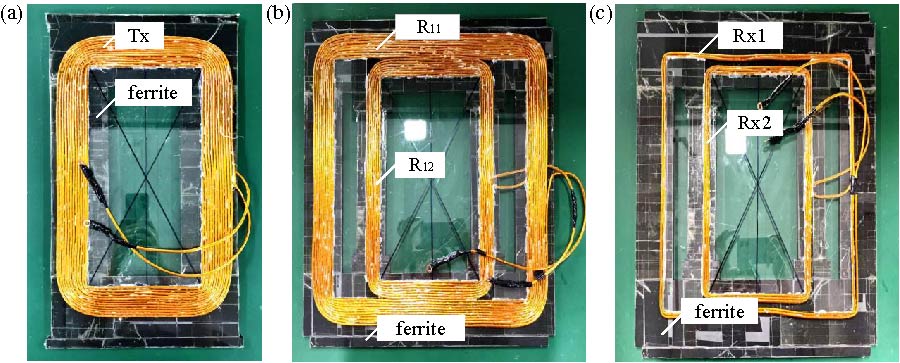
Coupling system is important for a Wireless Power Transfer (WPT) system, and it directly affects the efficiency and reliability of the WPT system. In some special applications, such as implantable medical devices, the size of the receiving coil of the WPT system is strictly limited. Coupling coils of equal size will not meet the application requirements. When being applied in implantable medical devices, equal-size coupling coils suffer from shortcomings such as poor anti-offset performance and cumbersome design process. In view of the above problems, in this paper we design a coupled coil structure asymmetrically, so that parameters such as the outer diameter and the number of turns of the transmitting and receiving coils are no longer equal. In this paper, we first analyze the effect of tightly wound and loosely wound coils on the WPT system when they are used separately as transmitting coils, and find that the two different types of coils have different characteristics of the magnetic induction intensity distribution. Then we use the genetic algorithm to optimize the transmission coil and design a new asymmetric coupling system. Finally, we experimentally demonstrate that the optimized coupled system is able to maintain the stability of the output current and the transmission efficiency within a certain range in the presence of the offset, which indicates that the coupling system has a certain ability of anti-offset.
Research on Anti-offset Performance of the Wireless Power Transfer System with Asymmetric Coupling System
2023-11-28
PIER Letters
Vol. 114, 83-89
Hexa-Band Mobile Antenna with FSS-R-Card Combination for SAR Reduction
Guo Liu , Jie Gu , Zhaozhao Gao , Tao Tang and Xiexun Zhang
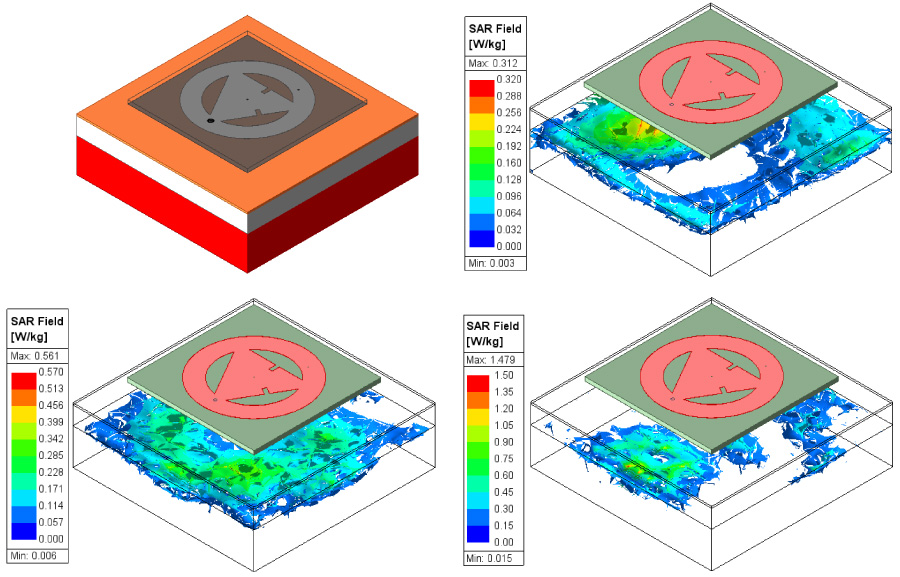
In this paper, a new SAR shield design method based on combining graphene-type absorbing cards with metal sheets via a frequency-selective surface resistive card (FSS-R-card) design is proposed. Based on this method, a low-SAR hexa-band antenna for mobile phone applications is designed. The proposed antenna has a simple structure consisting of two radiation strips and a coupling strip for enhancing the high-frequency bandwidth. The antenna covers multiple frequency bands, namely LTE Band 13 (747-787 MHz); DCS 1800 (1710-1880 MHz); PCS 1900 (1850-1990 MHz); WCDMA (1920-2170 MHz); LTE Band 40 (2300-2400 MHz); and Band 41 (2496-2690 MHz). The FSS-R-card combination acts like a PEC in the low-frequency band and like an R-card in the passband. With this approach, we were able to obtain the optimum results in reducing SAR levels and preserving the antenna efficiency in low bands. The prototype antenna was measured by the SAM head model, and measurement results show that the SAR is reduced up to 51% (at 1.9 GHz) by using the FSS-R-card. The SAR level is under 1.6 W/Kg over the whole band with good efficiency preservation at the low bands.
Hexa-band Mobile Antenna with FSS-R-card Combination for SAR Reduction
2023-11-27
PIER M
Vol. 121, 127-137
A Phase Noise Optimized FMCW Radar System for Data Transmission
Andreas Wanjek , Linus Hampel , Thomas Schäfer and Thomas Zwick
This paper presents a method for using a 120 GHz frequency-modulated continuous wave (FMCW) radar system for communication. The transmitting unit of the FMCW radar partly consists of a phase locked loop (PLL) control. Through modification, the functionality of this structure is extended for data transmission. The two modes of operation, i.e. radar measurement and data transmission, impose different requirements on the design of the PLL, such as the necessary bandwidth. We show how the phase noise and hence the quality of data transmission can be improved by varying the charge pump (CP) current of the PLL. Simulation results and measurements prove the data transmission potential of the presented method for industrial applications in the field of short-range communication.
A Phase Noise Optimized FMCW Radar System for Data Transmission
2023-11-27
PIER M
Vol. 121, 117-125
An Ultra-Wideband and Translucent Metasurface Absorber Based on Water
Chaobiao Chen , Tianhang Chen , Min Huang , Huan Lu and Bin Zheng
Electromagnetic metasurface has become the focus of researchers in the field of electromagnetic absorption in recent years because of its thin thickness, simple structure and high absorption rate. With high real and imaginary parts of the permittivity in the microwave frequency regime, water plays a crucial role in absorbing materials. This work demonstrates a water-based translucent metasurface with 5.2 mm, which is fabricated by 3D printing. By changing the conductivity of water, a metasurface with good absorption performance is obtained, which can realize ultra-wideband absorption in 5.85-23.1 GHz and 5.85-14.8 GHz under the oblique incidence of 40˚. The metasurface has the characteristics of thin thickness, wide-band absorption, and translucency.
An Ultra-wideband and Translucent Metasurface Absorber Based on Water
2023-11-27
PIER Letters
Vol. 114, 75-81
Series-Fed Loop Antenna Arrays with an Expanded Bandwidth of Circular Polarization
Kazuhide Hirose , Susumu Tsubouchi and Hisamatsu Nakano
Three array antennas are analyzed to expand a 3 dB axial ratio bandwidth using the method of moments. First, we design reference and present antennas comprising loop elements with a perturbation segment and quasi-two sources for circular polarization. It is found that the reference and present antennas have an axial ratio bandwidth of 9% and a 3 dB gain drop bandwidth of 31% (35% for the axial ratio bandwidth), respectively. Subsequently, the present antenna is modified using a sequential rotation technique. It is revealed that the modified antenna shows a gain drop bandwidth of 45% (60% for the axial ratio bandwidth). The simulated results are verified with experimental ones.
Series-fed Loop Antenna Arrays with an Expanded Bandwidth of Circular Polarization