Search Results(13786)

2023-11-08
PIER M
Vol. 121, 1-11
Multi-Physics Analysis and Loss Evaluation of High Frequency Transformer with Non-Sinusoidal Excitation
Sherin Joseph , Shajimon Kalayil John , Kudilil Prasad Pinkymol , Jineeth Joseph and Kappamadathil Raman Muraleedharan Nair
High Frequency Transformer (HFT) acts as the key element of a Solid State Transformer (SST), which is a mandatory equipment in smartgrid system. SST replaces power frequency transformer by providing control and communication in power system. The design of an HFT matching the design of conventional distribution transformer is done in this paper. It is done by developing an iterative algorithm using Brute Force technique. The optimum design is selected by taking minimization of total owning cost as objective function. The algorithm takes eight design variables and four design constraints for shortlisting the optimum design. The optimum design developed is validated in finite element analysis software. The multi-physics analysis of the design is done by interconnecting electromagnetic, mechanical, thermal, and power electronics components of the system. The analytical and numerical analysis follow the same pattern by conducting a case study on the design of HFT with ratings 1000 kVA, 11 kV/415 V, three phases.
Multi-physics Analysis and Loss Evaluation of High Frequency Transformer with Non-sinusoidal Excitation
2023-11-07
PIER M
Vol. 120, 179-189
A Wideband High-Gain Antenna Loaded with Triangular Ring Metasurface
Ting Wu , Jia-Wei Wang , Mingjun Wang and Kai Zhang
A broadband high gain antenna based on metasurface is proposed in this paper. The antenna consists of two layers, the lower layer is a square dielectric plate of 64 mm × 64 mm fed by aperture coupling which brings resonance frequencies closer to each other to improve bandwidth. The upper layer is a substrate of the same size, and the substrate is covered with a metasurface composed of 4×4 triangular slots. The impedance bandwidth is expanded by introducing the metasurface from 6.7% of the single-fed antenna to 23.8%, and the overall height of the antenna is 7 mm. The antenna is excited by an aperture coupled structure consisting of a microstrip line on the back and a narrow slot etched on the ground surface. The impedance bandwidth of the proposed antenna is 23.8%, ranging from 4.8 GHz to 6.1 GHz. The peak gain at 5.6 GHz is about 11.2 dB, and the gain is relatively stable throughout the entire operating frequency band. An antenna prototype is made, and the measurement results verify the design's correctness.
A Wideband High-gain Antenna Loaded with Triangular Ring Metasurface
2023-11-07
PIER M
Vol. 120, 167-178
Analytical Neuro-Space Mapping Technology for Heterojunction Bipolar Transistors Modeling
Shuxia Yan , Yuxing Li , Chenglin Li , Fengqi Qian , Xu Wang and Wenyuan Liu
An analytical modeling method for heterojunction bipolar transistor (HBT) is proposed in this paper. The new neuro-space mapping (Neuro-SM) model applied to DC, small signals and large signals simultaneously consists of two mapping networks, which provide the additional degrees of freedom.Sensitivity analysis expressions are derived to accelerate the training process. When the non-linearity of device is high, or the response of the model is complex, the weights in the proposed model are automatically adjusted to address the accuracy limitations. The proposed modeling method is verified by measured HBT examples in DC, smallsignals and largesignals Harmonic Balance (HB) simulation. The modeling experiments of the measured HBT demonstrate that the errors of the proposed Neuro-SM model are less than 2% by matching combined DC, small-signal S-parameters and large-signal HB data, which are less than the errors of the traditional Neuro-SM model and the coarse model. The proposed analytic Neuro-SM model fits the response of the fine model well.
Analytical Neuro-space Mapping Technology for Heterojunction Bipolar Transistors Modeling
2023-11-07
PIER M
Vol. 120, 155-165
DGS Loaded Substrate Integrated Waveguide Dual Mode Cavity Filter
Xiaohei Yan , Wenjing Mu and Minjie Guo
A novel substrate-integrated waveguide (SIW) dual-mode cavity bandpass filter with loaded defected ground structure (DGS) is proposed. The SIW dual-mode cavity operates in two modes, TE110 and TE120, and the field distribution of the TE110 mode is altered by installing a metal perturbation aperture in the middle of the cavity to bring its resonance frequency close to that of the TE120 mode, thus forming a bandpass filter with two resonance points in the passband. A DGS structure is embedded at the ground level of the SIW to introduce a transmission zero in the high-frequency rejection band, thus improving the rejection performance of the filter for the high-frequency rejection band. The simulated and measured results show that the center frequency of the filter is 3.75 GHz; the 3 dB bandwidth is 0.3 GHz; the relative bandwidth is 8%; the return loss is less than -15 dB; and the insertion loss in the passband obtained from the simulation is about -0.35 dB, while that obtained from the measurement is 0.4 dB lower than that of the simulation, and the filter has a transmission zero near the high-frequency stopband of 6 GHz, which enables the high-frequency parasitic passband to move away from the passband of the filter. Except for the passband, all other signals in the Sub-6 GHz band can be effectively suppressed by the filter. This design combines the SIW dual-mode cavity with the DGS structure to design the filter, which can realize the flexible adjustment of bandwidth and transmission zero point, and the design method is simple and innovative. The filter can be applied to the 5G n77 frequency band, which has certain application value.
DGS Loaded Substrate Integrated Waveguide Dual Mode Cavity Filter
2023-11-06
PIER C
Vol. 138, 205-218
Research on Parameter Identification Algorithm of Permanent Magnet Synchronous Motor Considering Dead Time Compensation
Chengmin Wang and Aiyuan Wang
A parameter identification method based on an improved hunter prey algorithm is proposed to address the issues of poor accuracy and speed in traditional permanent magnet synchronous motor parameter identification methods. By using the Fuch infinite folding chaotic strategy to evenly distribute the initial individuals to enrich their diversity and using the golden sine algorithm to optimize the population search path, the algorithm's local development ability and global search ability are improved. The reasons for the dead time effect of the inverter are analyzed, and the input voltage is compensated for through the rotation coordinate method. SIMULINK simulation and physical experiment indicate that the improved algorithm has faster rate of convergence and higher recognition accuracy than the unmodified algorithm, and can effectively identify motor parameters. On this basis, adding dead time compensation effectively eliminates partial harmonics of the phase current and suppresses the occurrence of zero current clamping phenomenon. Compared with the situation without dead time compensation, the identification error of the four parameters has decreased from below 4.23% to below 2.21%.
Research on Parameter Identification Algorithm of Permanent Magnet Synchronous Motor Considering Dead Time Compensation
2023-11-05
PIER Letters
Vol. 113, 53-59
Planar Tunable Negative Group Delay Circuit with Low Reflection Loss
Chithra Liz Palson , Deepti Das Krishna and Babita Roslind Jose
This paper presents the design of a planar tunable Negative Group Delay (NGD) circuit with low reflections. A pulse-shaped stub inscription on the signal strip of a microstrip line generates a negative group delay, which can then be tuned to a desired value by varying the resistance inside the inscription. Poor reflection characteristics are inherent in such circuits, and a conventional solution like a simple impedance matching circuit compromises the overall NGD performance for a reduced reflection loss. Here, we have included a novel impedance-matching network loaded with absorptive elements at the input/output ports to avoid any reflections from the circuit, while maintaining its NGD behavior and compactness. The measured results validate the proposed design with -5 ns GD at 3 GHz with less than -10 dB reflection loss over the whole NGD bandwidth of 228 MHz at 3 GHz.
Planar Tunable Negative Group Delay Circuit with Low Reflection Loss
2023-11-05
PIER B
Vol. 103, 101-118
Quantum Illumination Radar Using Polarization States of Photons in Atmosphere: Quantum Information Approach
Sylvain Borderieux , Arnaud Coatanhay and Ali Khenchaf
The quantum illumination radar uses pairs of entangled photons to enhance the detection sensitivity of a reflecting target. In this paper, we worked on a quantum illumination radar using a pair of entangled photons in polarization in the microwave frequency range in the atmosphere. We studied the quantum information evolution modeling the propagation of a photon in the atmosphere while building two binary decision strategies for the QI radar. We focused on the quantum information evolution showing that the quantum discord representing quantum correlations beyond entanglement could represent an interesting resource to explore for the subject of quantum radar. In addition, we made an approximative estimation of the entanglement survival distance in the atmosphere. Results showed that an optimization should be found to favour the survival of quantum correlations or the signal-to-noise ratios calculated with the binary decision strategy.
Quantum Illumination Radar Using Polarization States of Photons in Atmosphere: Quantum Information Approach
2023-11-04
PIER B
Vol. 103, 75-99
Sensorless Control of Interior Permanent Magnet Synchronous Motor with Triangular Transform Current Self-Demodulation in the Estimating d-q Axis
Dingdou Wen , Xincheng Zhu , Zhun Cheng , Yanqin Zhang and Wenting Zhang
To address the issues of complex current demodulation, large rotor position estimation error, and position estimation error varying with speed in the high-frequency (HF) rotating voltage injection (HRVI) method for interior permanent magnet synchronous motor (IPMSM), a sensorless control of IPMSM with triangular transform (TT) current self-demodulation in the estimating d-q axis is proposed. Firstly, the HF currents estimated on the d and q axes are multiplied, and the resulting signal is constructed through TT to achieve phase shift compensation of positive and negative sequence HF currents. At the same time, a position error signal is constructed. Then, a low-pass filter is used to extract the position error signal and achieve self-demodulation of the current. The experimental results show that this method reduces the average position error by 15.0% under steady-state conditions and reduces the fluctuation range of position error by 17.6% under full load conditions.
Sensorless Control of Interior Permanent Magnet Synchronous Motor with Triangular Transform Current Self-demodulation in the Estimating d-q Axis
2023-11-03
PIER M
Vol. 120, 145-154
Measurement and Prediction of Signal Strength of Wireless Sensor Network
Li Yang Foong , Soo Yong Lim and Kheong Sann Chan
This paper utilizes an efficient prediction model using the concept of ray-tracing based on the Theory of Geometrical Optics (GO) to predict the signal strength between two wireless sensor nodes within an indoor environment, which can provide aid to designers in the implementation of Wireless Sensor Networks (WSNs). WSN is a technology that is widely used for functions such as collecting and processing data, then transmit it wirelessly within the network. WSNs are typically autonomous and self-organizing networks of nodes that communicate wirelessly with each other and collaborate to perform tasks such as data processing, sensing, aggregation, and forwarding. With the increasing prevalence of WSNs in indoor environments, installations of numerous sensor nodes are necessary to collect and transmit data in certain areas, which builds up to a single network. Thus, to ensure the functionality of the WSNs, it is of utmost importance to ensure a reliable connection between the nodes, which is directly affected by its location and placement. The prediction model developed in this work is built using MATLAB software, which is then implemented into a Graphical User Interface (GUI) using MATLAB App Designer, which allows modifications to be made to the prediction model as to fit the user’s environment. The results of our prediction model are compared against experimental ones obtained through physical measurements using wireless communications technologies such as ZigBee and Bluetooth Low Energy (BLE).
Measurement and Prediction of Signal Strength of Wireless Sensor Network
2023-11-02
PIER M
Vol. 120, 135-144
Design and Optimization of 2D Photonic Crystal Based Compact All Optical T Splitter for Photonic Integrated Circuits
Poonam Jindal and Aarti Bansal
An all-optical compact polarization T splitter based on 2-dimensional photonic crystal with uniform structural and bandgap characteristics is proposed in this paper. A square lattice of silicon substrate with embedded air holes is used to create the proposed structure. Linear waveguides with 90˚ bends are created for light propagation by removing a number of holes to build the structure. Plane Wave Expansion and Finite Difference Time Domain methods are employed for simulating the structure. The transmittance of TE polarized mode at 1550 nm is 96%. The structural parameters, such as air hole radius and dielectric constant, are homogeneous throughout the structure, making production easier and reducing fabrication errors. The proposed polarization splitter has a simple design with small footprints and high Q factor to meet the demands of current optical integrated circuits.
Design and Optimization of 2D Photonic Crystal Based Compact All Optical T Splitter for Photonic Integrated Circuits
2023-11-01
PIER Letters
Vol. 113, 43-51
A Scalable PSP RF Model for 0.11 um MOSFETs
Xiaonian Liu and Yansen Liu
An accurate, efficient and scalable SPICE model is essential for modern integrated circuits design, especially for radio frequency (RF) circuit design. A PSP based scalable RF model is extracted and verified in 0.11 μm CMOS manufacturing process. The S parameter measurement system and open-short de-embedding technique is applied. The macro-model equivalent subcircuit and parameters extraction strategy are discussed. The extracted model can match the de-embedded S parameters data well. By combining the model parameters' dependencies on each geometry quantity, the scalable expression of parameters with all geometry quantities included can be obtained. This work can be a reference for the RF MOSFETs modeling and RF circuit design.
A Scalable PSP RF Model for 0.11 um MOSFETs
2023-10-31
PIER M
Vol. 120, 123-134
5G Sub-6 GHz Wideband Antenna with PSO Optimized Dimensions
Heba Y. M. Soliman , Amany A. Megahed , Mohamed Abdelazim and Ehab H. Abdelhay
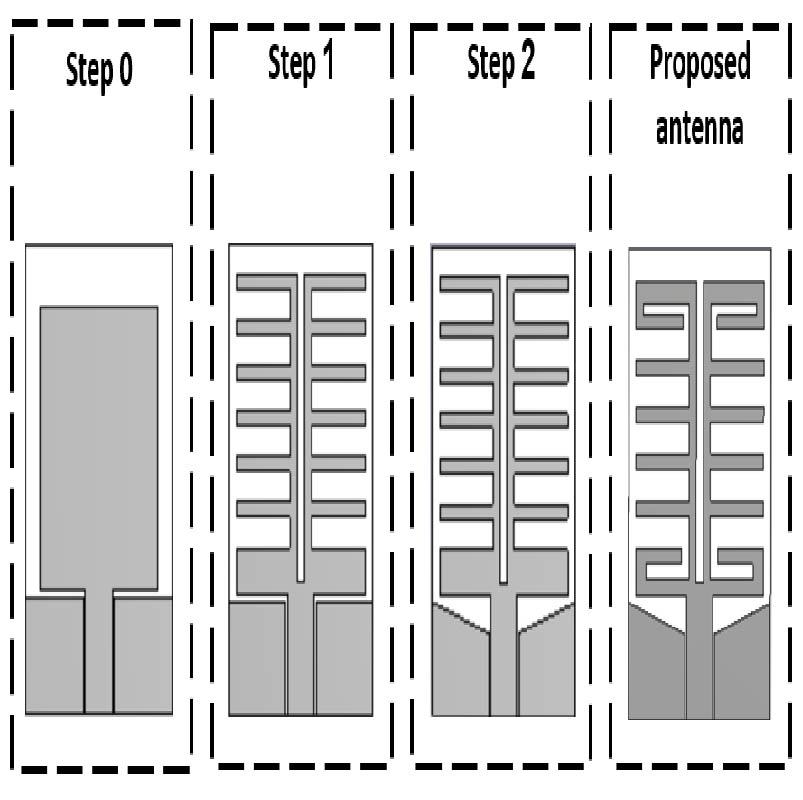
In this paper, a rectangular patch antenna that covers the band from 3.2 to 5.7 GHz to support 5G New Radio (NR) sub-6 GHz with high gain and efficiency is designed and implemented. Particle Swarm Optimization (PSO) algorithm is used to get the dimensions of the antenna and slots. The optimization goals are to reach the smallest dimensions of the antenna in the required bandwidth keeping scattering parameter at port 1 |S11| below -10 dB, a gain of 4 dBi or higher, and efficiency more than 90%, respectively. The resonance frequency of a microstrip patch is 4.45 GHz. PSO using the computer simulation tool (CST) software is used to design an antenna with desired frequency response and radiation characteristics for 5G New Radio (NR) sub-6 GHz. The antenna is designed over an FR-4 substrate with a noticeable reduction in cost, simplicity in design, and a small overall size of 23×15 mm2. The antenna is with the partial ground. The antenna has two parallel stubs and EL slots; the lengths of these slots control the desired bandwidth. A high agreement between the simulated and measured results is noticed.
5G Sub-6 GHz Wideband Antenna with PSO Optimized Dimensions
2023-10-31
PIER Letters
Vol. 113, 35-42
Differential Wideband Antenna on Organic Substrate at 240 GHz with a Differential Wirebond Package
Joachim Hebeler and Thomas Zwick
This letter investigates a differential, planar and wideband antenna on a commercial organic printed circuit board (PCB) substrate at 240 GHz with a novel packaging concept to integrate massive monolithical integrated circuits (MMICs). The antenna utilizes multiple series resonators to achieve a bandwidth of 75 GHz around 240 GHz. A novel differential bond wire package solution from chip to antenna feeds the differential antenna from an on-chip Marchand balun. The fabrication of the antenna and interconnect are analyzed, and potential improvements for future works are highlighted. Measurement proves the function of the designed package, which is competitive to the state of the art.
Differential Wideband Antenna on Organic Substrate at 240 GHz with a Differential Wirebond Package
2023-10-30
PIER C
Vol. 138, 191-203
Infrared Image Segmentation Method Based on DeepLabV3+ for Identifying Key Components of Power Transmission Line
Donglei Weng , Shuliang Dou , Haozhe Wang , Dawei Gong , Qun Wang and Sailing He
To improve the work efficiency of on-site inspection personnel in diagnosing faults of power transmission lines, in this paper we propose an infrared image segmentation method based on DeepLabV3+ for identifying key components of transmission line. We collected 556 infrared images of transmission lines in our own power supply system, and expanded the original data by data augmentation method. Based on the comparison of the DeepLabV3+ model with three different backbone networks, MobileNetV2 with the best performance is selected as the main backbone network. Compared with FCN, U-Net and SegNet, the test results show that DeepLabV3+ using MobileNetV2 (compared with ResNet50 and Xception) can segment the five types of key components in power transmission lines from infrared images more accurately and faster. The MIoU on the test set is 0.8624, which is better than the performance of FCN, U-Net and SegNet. This lays a foundation for improving the work efficiency of on-site inspection personnel and improving the continuous power supply capacity, stability and safe operation level of the power grid.
Infrared Image Segmentation Method Based on DeepLabV3+ for Identifying Key Components of Power Transmission Line
2023-10-29
PIER M
Vol. 120, 113-122
Design of a Hollow Dielectric Loading for Wideband Gain Enhancement of a Horn Antenna
Al-Moatasem Al-Hinaai , Anthony N. Caruso , Roy C. Allen and Kalyan C. Durbhakula
The far-field gain of commercial horn antennas primarily depends on aperture area and flare length. Traditionally, for every dBi of gain increment, the flare length should increase by 20% and the aperture area by 10%. External lens classes, such as gradient refractive index, concave, or Fresnel, are used to improve gain by ≤ 2 dBi, but at the cost of a volumetric increase by 75% in the range of 4.8-6 GHz. We propose a hollow dielectric loading (HDL) loaded in the flare section of the horn antenna. The shape and position of the HDL are optimized using an evolutionary algorithm to obtain the maximum gain from a conical corrugated horn antenna (CCHA) at boresight. The optimized design yielded a total volume 84% smaller than traditional external lenses while achieving 3.5 dBi peak gain improvement in the operating frequency range. We also observed an improvement in the electric field by 24% while retaining parity in the impedance bandwidth. A 3D-printed prototype of the optimized CCHA and the HDL is fabricated and measured. The measured and simulated results demonstrated good agreement with a maximum difference of 4%.
Design of a Hollow Dielectric Loading for Wideband Gain Enhancement of a Horn Antenna
2023-10-29
PIER B
Vol. 103, 55-73
Multi-Attribute Synergetic Decision-Making Algorithm for 5G Integrated Heterogeneous Wireless Network
Xiaoxin Wu , Chenwei Feng , Yaxi Yang and Silei Li
The next-generation communication network will be primarily based on the 5G networks, with multiple wireless Radio Access Technologies (RATs) coexisting. The factors influencing user experience are complex and diverse, making it difficult for any single wireless technology to meet all user needs. Most existing network selection algorithms focus on either the user side or the network side, leading to the problem of network load imbalance. Therefore, this paper proposes a Multi-Attribute Synergetic Decision (MASD) algorithm for 5G integrated heterogeneous wireless network. First, implement the pre-filtering of the candidate network set. Taking into account the diversity of user services, this algorithm focuses on Quality of Service (QoS), user preferences, and network load. Analytic Hierarchy Process (AHP) and Standard Deviation (SD) are used to calculate the weights of each attribute. Based on the synergetic theory, the entropy value of the candidate network system is obtained. Simulation results demonstrate that this algorithm effectively coordinates various factors to select the most suitable network for access. It reduces unnecessary handovers, avoids the ping-pong effect, and achieves load balancing to a certain extent.
Multi-attribute Synergetic Decision-making Algorithm for 5G Integrated Heterogeneous Wireless Network
2023-10-27
PIER Letters
Vol. 113, 25-34
Compact Broadband Dual-Polarized Antenna with Parasitic Patches
Sensen Han , Feng Shang and Xinwei Wang
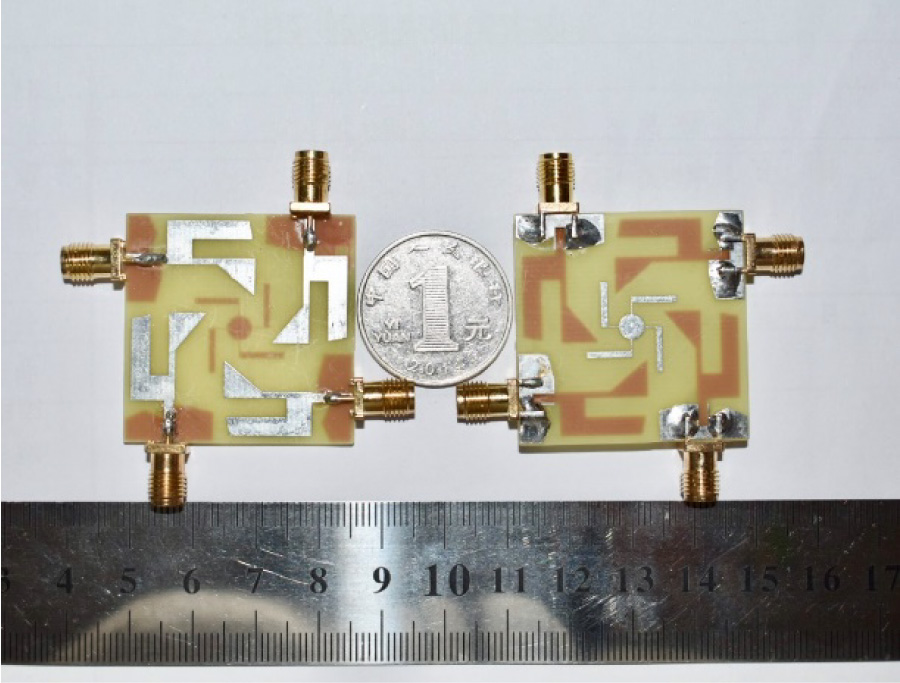
In this paper, a broadband compact dual-polarized antenna for base stations is proposed. This antenna consists of a pair of crossed dipoles, four triangular parasitic patches, four metal posts and a box reflector. The crossed dipoles are fed by two 50 Ω coaxial cables. The increase of four parasitic patches allows the resonant point to be generated at high frequencies to further widen the impedance bandwidth; the size of the parasitic patches is reduced to realize the reduction of the antenna radiator size; and the impedance matching is improved by cutting circular slots in the dipole arms. The measured results show that the proposed antenna is able to achieve a wide impedance bandwidth of 79% (1.67 to 3.87 GHz) with VSWR less than 1.6. A stable gain of 8-8.7 dBi and a half-power beamwidth (HPBW) of 60-78° are obtained at 2.2-3.65 GHz. In addition, the antenna radiator is very compact in size, only about 0.41λL × 0.41λL × 0.17λL, where λL is the longest operating wavelength.
Compact Broadband Dual-polarized Antenna with Parasitic Patches
2023-10-26
PIER C
Vol. 138, 175-189
A Novel Design Method for Unequal Coupled Line Dual-Band Wilkinson Power Divider
Puria Salimi , Mohsen Katebi Jahromi and Alireza Khoddam Astaneh Hossein
In this article, a new design approach for an unequal coupled transmission line dual-band Wilkinson power divider is presented. A parallel short or open circuit stub is considered at the input port for dual frequency response, and two resistors are connected in order to isolate the outputs. The method is based on an even-odd mode procedure. The main objective of this paper is to fabricate a dual band Wilkinson power divider in order to achieve higher dividing ratio, simple structure, and easier fabrication. First, the desired power divider is divided to two parts known as even and odd mode equivalent circuits. Then by analyzing the circuits, the characteristic impedances are calculated. Next, the coupled transmission lines dimensions are extracted. Afterward by using the calculated characteristic impedances, an error function is formulated, and by minimizing, the isolating resistors are obtained. To clarify the applicability of this method, several microstrip power dividers which operate at both 1 GHz and 2.3 GHz with dividing ratio equal to 1.2589 are designed and simulated with the assumption that relative permittivity is equal to 2.56. In order to demonstration the advantage of using coupled lines tow dividers, one by separated-lines and the other one by coupled-lines are designed and compared with each other. The results illustrate that while the coupled-line dividers have simpler structure, they have significantly similar frequency operation to separated-line ones. Then the designed structure fabricated on an FR4 substrate and S parameters are measured. The results show excellent agreement with simulation.
A Novel Design Method for Unequal Coupled Line Dual-band Wilkinson Power Divider
2023-10-26
PIER M
Vol. 120, 95-111
Wearable Dual-Band Frequency Reconfigurable Patch Antenna for WBAN Applications
Umar Musa , Shaharil Mohd Shah , Huda Bin Abdul Majid , Mohamad Kamal Abd Rahim , Muhammad Sani Yahya , Zainab Yunusa , Abubakar Salisu and Zuhairiah Zainal Abidin
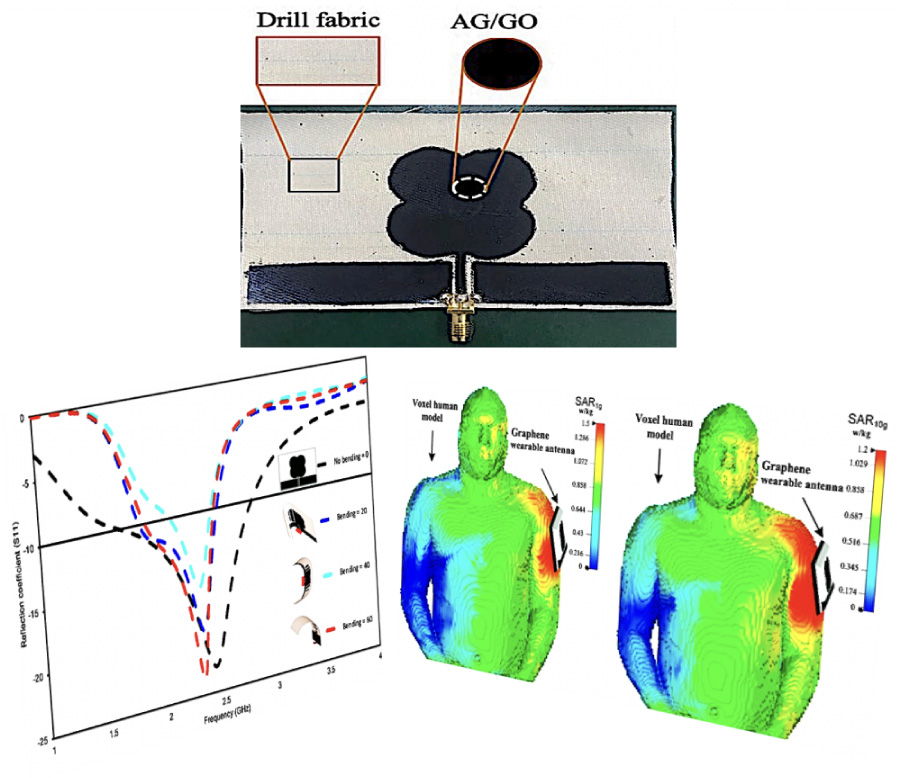
A wearable dual-band patch antenna is presented, which can adjust its frequency for WBAN applications. Frequency reconfiguration is achieved by the antenna through the utilization of the switching properties of a PIN diode. Produced using a Rogers Duroid material with semi-flexible properties, the antenna has a size of 0.33λ0 × 0.35λ0 × 0.012λ0. Initially resonating at 5.8 GHz, a slot in the shape of an inverted letter U is included to introduce a dual-band operation at 2.4 GHz. By controlling the PIN diode's ON and OFF states, the antenna can switch between single-band (ISM 5.8 GHz) and dual-band (ISM 2.4 GHz and 5.8 GHz) operations. The antenna exhibits a bi-directional radiation pattern at 2.4 GHz and a directional pattern at 5.8 GHz. In the ON state, the antenna achieves a peak gain and total efficiency of 4.84 dBi, 5.87 dBi, 92.5%, and 92.7% at 2.4 GHz and 5.8 GHz, respectively. In the OFF state at 5.8 GHz, a peak gain and total efficiency of 6.01 dBi and 91.8% are measured. To evaluate its suitability for WBAN applications, the antenna's performance is assessed by measuring SAR values on a human tissue model. At 2.4 GHz, the SAR values for 1/10 g of human tissue are 0.411/0.177 W/kg respectively. Similarly, at 5.8 GHz, the SAR values are 0.438/0.158 W/kg respectively. The SAR values comply with the established standards of the FCC and ICNIRP for both resonance frequencies for human tissue weighing 1/10 g. Overall, the antenna boasts a compact size, acceptable SAR values, and satisfactory gain and efficiency across all operating bands, surpassing previous works. It also benefits from a simplified design employing a single switch, and the antenna remains a suitable choice for WBAN applications considering its other advantageous characteristics mentioned above.
Wearable Dual-band Frequency Reconfigurable Patch Antenna for WBAN Applications
2023-10-25
PIER M
Vol. 120, 83-94
High-Eccentricity Orbit Synthetic Aperture Radar with Multi-Parameters Joint Agile Variation
Xuhang Lu , Wei Xu , Pingping Huang , Weixian Tan and Yaolong Qi
The variable orbit altitude and platform velocity in high-eccentricity orbit synthetic aperture radar (HEO SAR) increase the difficulty in obtaining effective radar echoes. In this letter, a new stripmap imaging mode with multi-parameter joint agile variation in HEO-SAR is proposed. First, the range side-looking angle is adjusted during the whole raw data acquisition interval according to the time-varying side-looking geometric relationship, while the pulse repetition frequency (PRF) is continuously changed to obtain uniform azimuth sampling due to the satellite velocity variation. Besides simultaneously adjusting the side-looking angle and the operated PRF, echo sampling start time and range sampling points are also continuously changed to decrease the echo data rate. According to the echo characteristics in HEO SAR, its corresponding imaging algorithm is presented, which includes range samples adjustment, azimuth resampling, cubic filtering, nonuniform Fourier fast transform (NUFFT) for nonlinear range cell migration correction (RCMC) and modified azimuth compression. A system design example with multi-parameters joint agile variation for the desired resolution of 3 m and the swath width of 30 km is given, while an imaging simulation experiments on point targets are carried out. Both simulation results of multi-parameters variation design and point targets imaging validate the proposed stripmap imaging mode with multi-parameters joint agile variation in HEO SAR.
High-eccentricity Orbit Synthetic Aperture Radar with Multi-parameters Joint Agile Variation