Search Results(13786)

2023-09-19
PIER C
Vol. 138, 1-12
Structural and Electromagnetic Shielding Effectiveness of Carbon-Coated Cobalt Ferrite Nanoparticles Prepared via Hydrothermal Method
Nur Amirah Athirah binti Zaini , Nur Iffah Zulaikha Azman , Ling Jin Kiong , Jose Rajan , Muhammad Hafiz Mazwir and Mohamad Ashry Jusoh
The rapid advancement of communication technology has led to an increase in electromagnetic interference (EMI), or electromagnetic (EM) pollution. This is a cause for concern, as EMI can disrupt communication services, damage electronic equipment, and pose health risks. Regulatory bodies are working to develop standards for the safe use of wireless devices, but the problem of EMI is likely to continue to grow as the number of Internet of Thing (IoT) devices continues to increase. To address this issue, this study investigated the effectiveness of carbon-coated cobalt ferrite nanoparticles as a potential material for electromagnetic shielding. The synthesis of cobalt ferrite (CoFe2O4) nanoparticles was successfully achieved using the co-precipitation method. Subsequently, a carbon coating was applied to the nanoparticles through a hydrothermal process using a 200 mL autoclave made of teflon-lined stainless steel. This process was carried out at a temperature of 180˚C for a duration of 12 hours, with a heating rate of 8˚C per minute. This study examined both uncoated and carbon-coated CoFe2O4 nanoparticles at various ratios of glucose to CoFe2O4 (1:1, 2:1, and 3:1) using techniques such as X-ray diffraction (XRD), field emission scanning electron microscopy (FESEM), and higher resolution transmission electron microscopy (HRTEM) analysis. The XRD analysis revealed distinct and well-defined peaks corresponding to CoFe2O4, indicating the successful synthesis of the nanoparticles. The crystallite size of the uncoated CoFe2O4 nanoparticles was measured to be 11.47 nm, while for the carbon-coated CoFe2O4, the average crystallite size was determined to be 14.15 nm through XRD analysis. The results obtained from the FTIR analysis were consistent with previous reports and confirmed the formation of spinel CoFe2O4 nanoparticles, as suggested by published data. The morphological and structural properties of the prepared samples were further characterized using FESEM and HRTEM analysis, which demonstrated uniformity in both particle size distribution and morphology. Overall, the research findings indicated that the structure and properties of CoFe2O4 nanoparticles were significantly influenced by the carbon coating process. Notably, the optimum ratio of carbon to CoFe2O4 was found to be 2:1, which resulted in the highest carbon thickness. The electromagnetic properties of the samples were evaluated using a vector network analyzer (VNA) and measured S-parameters in the frequency range of 8.2 to 12.4 GHz, known as the x-band region, suitable for radar applications. The sample with a carbon ratio of 2:1 exhibited the highest total shielding effectiveness (SE) of -17 dB at approximately 10 GHz. As a conclusion, the carbon-coated CoFe2O4 nanoparticles showed promising potential as an effective material for shielding against electromagnetic wave pollution, particularly when the carbon coating and filler composition reached an optimal point. Additionally, the shielding effectiveness performance of the sample could be further enhanced by incorporating a conductive polymer as an auxiliary material.
Structural and Electromagnetic Shielding Effectiveness of Carbon-coated Cobalt Ferrite Nanoparticles Prepared via Hydrothermal Method
2023-09-19
PIER C
Vol. 137, 263-275
Development of Novel and High Gain Microstrip Patch Antennas at Different Frequency Bands for 6G Applications
Niyaz Mahmud Sayem , Abul Kalam Muhammed Baki , Fahim Faysal , Sheikh Tanvi Mahmud , Ahmed Jubayer and Tawsif Ahmed Rifat
Wireless communications need antennas of different sizes, shapes, frequency-bands, bandwidths, and radiation patterns due to technical requirements, physical constraints, and FCC (Federal Communication Commission) regulations. For example, S-band antennas (2 GHz~4 GHz) are used in navigation, C-band antennas (4 GHz~8 GHz) used in Air-borne RADAR, X (8~12) band antennas used in Satellite communications, and millimeter wave (40 GHz and above) antennas used in autonomous vehicles. Ultrawide Band (UWB) antennas of different frequency bands have also applications in different fields such as medical imaging, radar imaging, software defined radios, surveillance, and health monitoring of different equipment. Microstrip patch antennas of different gains, bandwidths, shapes, and radiation patterns will play a vital role in different wireless applications of future 6G systems. In this paper, we have discussed different novel designs of patch antennas at different frequency bands: V-shaped patch antenna at 2.4 GHz, and hexagonal slotted half-circular patch antenna at 4.29 GHz. We have designed antennas of different shapes for different frequencies since some applications require UWB; some applications require narrow band but higher gain; and some applications require different gain/radiation patterns at the same frequency. We have designed a patch antenna at 2.4 GHz that can be used in Wi-Fi, and UWB patch at 4.29 GHz with omnidirectional radiation pattern that can be used in energy harvesting or biomedical applications. In this paper, we have also discussed the prototype development and testing results of the novel hexagonal slotted half-circular patch antenna at 4.29 GHz.
Development of Novel and High Gain Microstrip Patch Antennas at Different Frequency Bands for 6g Applications
2023-09-17
PIER M
Vol. 119, 63-73
Wideband Circularly Polarized Planar Antenna for X-Band Applications
May Abd Abo-Elhassan , Asmaa Elsayed Farahat and Khalid Fawzy Ahmed Hussein
A wide band circularly polarized planar antenna of high radiation efficiency is proposed in the present work for future generations of wireless communications requiring circular polarization in the X-band of the microwave spectrum. The main radiating part of the antenna is a rectangular turn-shaped strip that is capacitively loaded by two corner-shaped parasitic elements. The antenna is fed through coplanar waveguide (CPW) region whose ground structure is defected by etching two rectangular annular slots. The purposes of both the corner-shaped parasitic elements and the rectangular annular slots of the CPW ground plane are to increase the impedance matching and the 3 dB axial ratio (AR) bandwidth, and to enhance the antenna efficiency. The design is achieved through complete parametric study to find the optimum dimensions of the antenna. A prototype of the proposed antenna is fabricated for experimental assessment of its performance. The results obtained by both simulation and experimental measurements show that the impedance matching bandwidth is about 5.3 GHz (8-13.3 GHz); the 3 dB AR bandwidth is about 3.1 GHz (8-11.1 GHz); the maximum gain ranges from 4.5 to 5.5 dBi; and the radiation efficiency is higher than 98% over the operational frequency band.
Wideband Circularly Polarized Planar Antenna for X-band Applications
2023-09-17
PIER B
Vol. 103, 1-18
Optimizing 1D Dielectric Electromagnetic Bandgap (d-EBG) Structures Using Multistage Genetic Algorithm (MS-GA) and Considering Parameter Variations
Chouwei Guo , Yusheng Hu , Lijin He and Mengyuan Niu
An optimization method utilizing a multistage genetic algorithm (MS-GA) and considering parameter variations has been proposed to obtain optimal design of one-dimensional dielectric bandgap(1D D-EBG) structures with a few periods in small packaging power distribution networks. One-dimensional finite method (1D FEM) is used to improve computational efficiency and iteration speed. MS-GA consists of 3 stages: In stage 1, the population was initialized by Hamming distance, and the fitness was calculated to determine the number of EBG period. In stage 2, genetic manipulation and sensitivity analysis were used to improve local search ability and obtain preliminary results. In stage 3, cubic spline interpolation and local integral were used to reconstruct the fitness evaluation function considering parameter deviation, adjust the results and obtain the optimal parameters. Three optimized target frequency bands with center frequencies of 2.4 GHz, 3.5 GHz and 28 GHz were optimized, and Pearson coefficient was used to analyze the correlation between the parameters to better understand the influence of parameter deviation on the optimization results. The achieved results meet the optimization object within the allowable range of parameter errors, and the parameter constraints were successfully met for all three designs, with their final dimensions below 20 mm. Three-dimensional full-wave simulation software was used to simulate and analyze the stopband bands, and the simulation results were consistent with the calculation results.
Optimizing 1D Dielectric Electromagnetic Bandgap (D-EBG) Structures Using Multistage Genetic Algorithm (MS-GA) and Considering Parameter Variations
2023-09-16
PIER Letters
Vol. 112, 77-85
Mutual Coupling Reduction in UWB MIMO Antenna Using T-Shaped Stub
Kondapalli Venu Gopal and Yarravarapu Srinivasa Rao
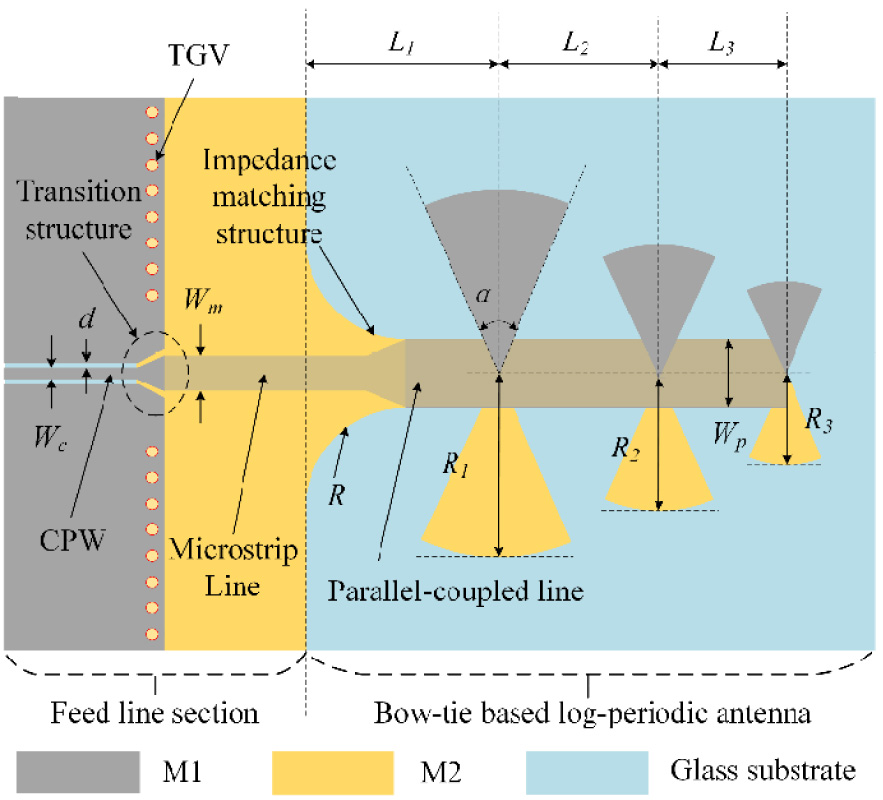
A 26 × 25 mm2 arbitrary-shaped antenna is constructed in this article, and it was expanded to 2 x 2 Multiple Input Multiple Output (MIMO) antenna. It has a range of 3.1 to 8.2 GHz. A T-shaped stub is employed in this instance to reduce the mutual coupling between the two ports. The effectiveness of the MIMO aerial is demonstrated using envelope correlation coefficient and radiation pattern. Additionally, it has been shown that simulated and measured results generally agree.
Mutual Coupling Reduction in UWB MIMO Antenna Using T-shaped Stub
2023-09-15
PIER C
Vol. 137, 251-262
Coupling Analysis of Multi-Physical Fields of Magnetic Gear Motor with Nonuniform Air-Gap Halbach Array Magnetization
Zhangtao Kui , Kun Yang , Weizhao Tang and Libing Jing
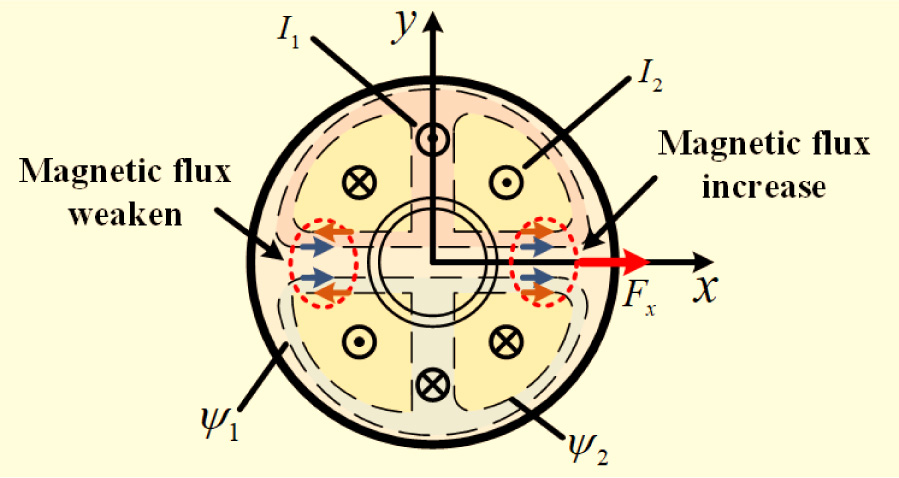
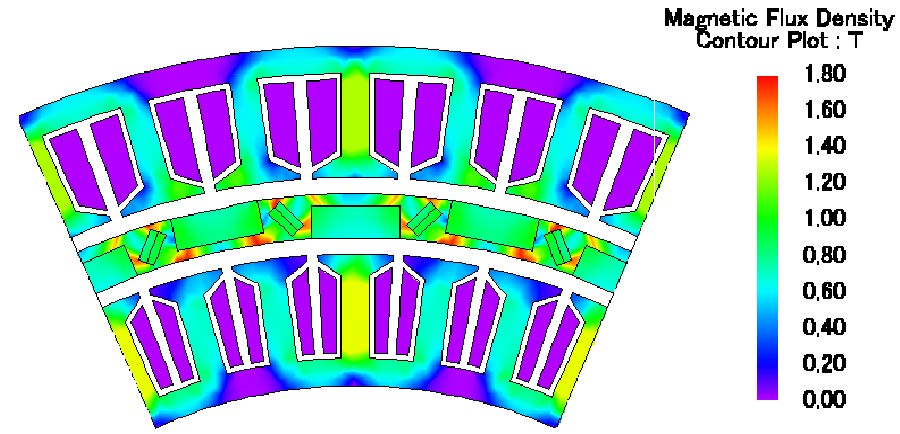
In this paper, a novel magnetic gear motor (MGM) with nonuniform air gap Halbach array magnetization is proposed to study the influence of temperature change on its electromagnetic performance. The inner PM adopts the Halbach array magnetization structure, which makes the inner rotor air gap have an uneven air gap structure, thereby improving the air gap flux density. In addition, the air gap magnetic field of MGM is analyzed by the finite element method (FEM), and the 3D model of the motor is established. The main losses of the motor, including copper loss, eddy current loss, and hysteresis loss are coupled to each component as a thermal source and studied by magneto-thermal coupling. The transient variation characteristics of loss distribution during MGM operation are comprehensively considered. The temperature variation of each component of the MGM with time during load operation is studied in detail. The results show that the temperature of the PM of the MGM is close to 91.8˚C when the rated load is running, and the PM of the motor does not undergo irreversible demagnetization.
Coupling Analysis of Multi-physical Fields of Magnetic Gear Motor with Nonuniform Air-gap Halbach Array Magnetization
2023-09-14
PIER C
Vol. 137, 235-249
Hybrid-Vector Model Predictive Flux Control for PMSM Considering Narrow Pulse
Qianghui Xiao , Zhi Yu , Wenting Zhang , Zhongjian Tang and Zhun Cheng
Multi-vector model predictive control (MPC) of permanent magnet synchronous motors (PMSM) has two issues: selecting the optimal voltage vector (VV) combination is very complicated, and multiple prediction calculations to minimize the cost function result in a heavy computational burden; applying a VV with a short duration may generate narrow pulses, while the effect of reducing torque ripples and stator current harmonics is not obvious. The hybrid-vector model prediction flux control (HV-MPFC) strategy considering narrow pulse suppression is proposed in this paper. First, the optimal VV combination is quickly identified by the sector where the stator flux error vector is located, which lowers the control complexity and computational burden. Secondly, by the relationship between the action time of three VVs and the set time threshold, the hybrid-vector strategy to switch among three VVs, two VVs, and a single VV is employed to prevent the generation of narrow pulses. Finally, experimental results show that, compared with the existing three-vector MPC strategy, the HV-MPFC strategy effectively suppresses the generation of narrow pulses and achieves smaller torque ripples and stator current harmonics at the same switching frequency.
Hybrid-vector Model Predictive Flux Control for PMSM Considering Narrow Pulse
2023-09-14
PIER M
Vol. 119, 51-62
Investigation on Performance of Four Port MIMO Antenna Using Electromagnetic Band Gap for 5G Communication
Govindarao Tamminaina and Ramesh Manikonda
In order to support 5G communication, this article suggests a small, four-port MIMO antenna with a G slot. This antenna has an electromagnetic band gap (EBG) in the shape of an S that is engraved on the substrate in the space between consecutive pairs of radiating patches. The recommended MIMO antenna is constructed from an FR4 substrate and measures 48x48x1.6 mm3. Between antenna elements 1 and 2, the integrated EBG structure of the MIMO antenna can reduce mutual coupling by 10.5 dB. The suggested four port G slot MIMO antenna with an S-shaped EBG structure displays the performance in terms of ECC less than 0.0002 and diversity gain larger than 9.99 with consistent frequency band extending from 3.3 GHz to 3.7 GHz. The proposed four port MIMO antenna is designed using HFSS software, and its simulation results are measured using anritsu combinational analyzer MS2037C vector network analyzer.
Investigation on Performance of Four Port MIMO Antenna Using Electromagnetic Band Gap for 5G Communication
2023-09-14
PIER M
Vol. 119, 37-50
Star Shaped Fractal Conformal MIMO Antenna for WLAN, Vehicular and Satellite Applications
Chiranjeevi Reddy Sereddy and Usha Devi Yalavarthi
A compact and novel star shaped fractal microstrip patch conformal MIMO antenna suitable for WLAN, vehicular communications (5.855-5.925 GHz) and Fixed Satellite Services (FSS) applications is proposed in this paper. Analysis of planar and conformal single element and four element MIMO antennas is presented. Proposed star shaped fractal MIMO antenna is prototyped on Polyamide substrate of geometry 104 x 30 x 0.4 mm3. It achieved an impedance bandwidth (S11 < -10 dB) of 3.7 GHz operating from 4.53-7.86 GHz. Radiation patterns and surface current distribution are investigated at 5.9 GHz and 7.3 GHz center frequencies. A peak gain of 5.42 dB and 4.86 dB are obtained at 5.9 GHz and 7.3 GHz respectively. Radiation efficiency is more than 98% and MIMO performance parameters are also analyzed. Proposed conformal MIMO antenna showsfine diversity performance for WLAN, vehicular and FSS communications.
Star Shaped Fractal Conformal MIMO Antenna for WLAN, Vehicular and Satellite Applications
2023-09-14
PIER M
Vol. 119, 25-35
H-Matrix Solver for the Acceleration of Boundary Integral Equation for Photonic Crystal Fiber
Jean-René Poirier , Julien Vincent , Priscillia Daquin , Ronan Perrussel and Han Cheng Seat
A waveguide mode solver based on boundary integral equation (BIE) method and matrix compression is developed in this study. Using an accurate discretization based on a Nystrom method and a kernel-splitting technique, the BIE method gives rise to three different formulations of a nonlinear eigenvalue problem. H-matrices are used in order to accelerate and increase the precision of the subsequent computations. Results from these investigations on a canonical photonic crystal fiber (PCF) chosen as an example demonstrate that the data sparse representation of the BIE discretization reduces the memory storage, as well as the assembly and solution times.
H-matrix Solver for the Acceleration of Boundary Integral Equation for Photonic Crystal Fiber
2023-09-13
PIER C
Vol. 137, 223-233
Study on Ultrasonic Propagation Characteristics of Partial Discharge in 10 kV XLPE Cable
Xiaohe Zhao , Liujie Wan , Jie Yang , Shiqiang Li and Wenxiang Shang
In XLPE cables, partial discharge (PD) is often accompanied by the generation of ultrasonic waves, which can be used to estimate the location and size of PD. Studying the propagation law of ultrasound along the cable is of great significance for establishing the mathematical model of PD and the layout method of ultrasonic detection terminal. This article adopted simulation and experiment to study the propagation law of PD ultrasound in cables. The results indicated that the propagation process of ultrasonic waves can be divided into three stages when ultrasonic waves propagate along the cables: the diffusion process with the characteristics of spherical waves, the propagation process which is rather similar to plane waves, and the transition process of both. When propagating along the cable, the ultrasonic amplitude attenuates and exhibits multi-peak characteristics as the distance increases. By analyzing the signal strength of the experimental results, it was found that the ultrasonic amplitude decays exponentially with propagation distance due to viscous heat loss of materials and the air gaps between cable layers, which provided a reference to the placement of distributed ultrasonic terminal for insulation weakness and design of spatial localization algorithm for PD.
Study on Ultrasonic Propagation Characteristics of Partial Discharge in 10 kV XLPE Cable
2023-09-13
PIER C
Vol. 137, 211-222
Design and Development of CPW-Fed Miniaturized MSA for Improved Gain, Bandwidth and Efficiency Using PRS
Ameet Mukund Mehta , Shankar B. Deosarkar and Anil Bapusa Nandgaonkar
A Coplanar Waveguide (CPW) fed antenna with a T-type slot and Partially Reflecting Surface (PRS) for gain, bandwidth, and efficiency improvement is presented. The antenna is miniaturized to get size reduction of 46.50%. The miniaturized antenna covers frequencies in C band. The presented antenna structure is easy to design and has size of 0.682λg x 0.99λg x 0.053λg. The PRS with parasitic patches is placed on top of the antenna at a distance of 0.25λg. The presented antenna design has a bandwidth of 4.42 GHz (Antenna~1) and 3.87 GHz (Antenna~2) with a percentage bandwidth of 75.81% and 59.58% respectively having average radiation efficiency above 90%. The gains obtained are 7.03 dBi and 6.12 dBi for Antenna~1 and Antenna~2. The gain has < 3 dB variation over the complete band. The obtained results support the design and make the antenna suitable for C band applications.
Design and Development of CPW-fed Miniaturized MSA for Improved Gain, Bandwidth and Efficiency Using PRS
2023-09-13
PIER C
Vol. 137, 199-209
Compact Wideband Four Elements MIMO Antenna for 5G Applications
Shubhangi Mangesh Verulkar , Alka Khade , Mahadu Trimukhe and Rajiv Kumar Gupta
A compact four-element multiple-input multiple-output (MIMO) antenna is proposed for 5G applications. The offset fed antenna structure is designed from a rectangular and semicircular monopole antenna. In this novel MIMO structure, the surface current and near fields of left element are mainly concentrated toward left and that of right element towards right, and thus high isolation is achieved between left and right elements even without using any isolation technique, whereas the little surface current at the nearby edges of top and bottom elements helps in achieving high isolation. The fabricated prototype has board dimensions of 0.374λ0×0.275λ0, where λ0 is the free-space wavelength at 3.3 GHz. The structure offers isolation > 20 dB between the elements over 3.3-6.3 GHz. The envelope correlation coefficient (ECC), diversity gain (DG), and mean effective gain (MEG) confirm to MIMO antenna specifications. The antenna offers stable nearly omnidirectional radiation patterns.
Compact Wideband Four Elements MIMO Antenna for 5G Applications
2023-09-12
PIER M
Vol. 119, 13-24
Dual-Band 4-Port Vivaldi MIMO Antenna for 5G mmWave Applications at 28/39 GHz
Golla Ramyasree and Nelaturi Suman
A compact new dual band 4-port Vivaldi MIMO (Multiple-Input-Multiple-Output) antenna is designed for 5G mmWave applications. The proposed MIMO antenna resonates at two frequencies 28 GHz and 39 GHz, and it has dimensions 22x22x0.79 mm3. The Vivaldi structure etched on ground plane acts as a defected ground structure (DGS). The proposed antenna is fabricated on Rogers RT/duroid 5880 material having 0.79 mm thickness and 2.2 dielectric material. For high frequency and broad band applications RT/duroid material is suited to maintain low dielectric loss, and it works in high temperature places also. For the proposed four port Vivaldi MIMO antenna, the isolation between any two antenna elements is obtained below -21.59 dB. The bandwidths achieved for two bands are 4.64 GHz (26.31-30.95 GHz) at 28 GHz resonant frequency and 2.69 GHz (38.35-41.04 GHz) at 39 GHz resonant frequency for 4-port MIMO antenna. The gain achieved at 28 GHz is 5.65 dB and at 39 GHz is 5.53 dB. It is possible to achieve MIMO performance parameters such as ECC < 0.003, DG = 10, CCL < 0.4 (bits/s/Hz), TARC < -10 dB, and MEG ratio is 1.01. Simulated and measured results are compared, and the antenna is designed using ansys HFSS tool.
Dual-band 4-port Vivaldi MIMO Antenna for 5G mmWave Applications at 28/39 GHz
2023-09-09
PIER C
Vol. 137, 185-198
Compact Dual-Polarized Reconfigurable MIMO Antenna Based on a Varactor Diode for 5G Mobile Terminal Applications
Qasim Hadi Kareem , Rana Ahmed Shihab and Hussien Hadi Kareem
With the rapid growth of wireless communication systems, there is a rising demand for multi-input multi-output (MIMO) antenna systems capable of adapting to various frequency bands and operating conditions. This paper presents an integrated design for MIMO antennas based on a varactor diode as a promising component for achieving frequency agility in the proposed system. A dual-polarized system is achieved by employing a combination of two antennas. One antenna is situated on the exterior surface of the side-edge frame, while the other is positioned on the substrate surface. The spatial configuration enables the creation of orthogonal polarization orientations, specifically vertical and horizontal polarizations. In each element, varactor diodes are positioned to provide reactive loading. By incorporating varactor diodes with a variable bias voltage (0.5-10 V) into the antenna design, the resonant frequency can be dynamically adjusted, allowing the antenna to operate across a wide range of frequencies (4.3 to 6.5 GHz) with more than 18 dB of mutual coupling in the working band. The presented reconfigurable antennas are printed on compact dimensions of 15 x 25 x 0.8 mm3 using a Rogers RT5880 material with a relative dielectric constant 2.2. Because of its flexible frequency range, extensive tuning range, small size, and planar structure, it is well-suited for various current and future wireless communication applications, including cognitive radio, software-defined radio, and next-generation wireless networks.
Compact Dual-polarized Reconfigurable MIMO Antenna Based on a Varactor Diode for 5G Mobile Terminal Applications
2023-09-08
PIER M
Vol. 118, 163-175
Deep Flux Weakening Control of IPMSM Based on d-Axis Current Error Integral Regulator
Zhixuan Yi , Xiangfei Li , Yang Yin , Junqin Liu and Kaihui Zhao
The deep flux weakening (FW) switching point of the interior permanent magnet synchronous motor (IPMSM) is difficult to track accurately. After entering the deep FW region, the current regulator is easily saturated, and the current following capability is poor. Aiming at these problems, a deep FW control of the IPMSM based on thed-axis current error integral regulator (DCEIR) is proposed. Firstly, the deep FW switching point is accurately calculated by using the maximum torque per volt (MPTV) as the limit of the d-axis current. Secondly, through the study of the voltage deviation, it is found that the q-axis regulating current is related to the DCEIR. On this basis, a new transformation relationship between d-axis current and q-axis current in the deep FW region is obtained. Finally, the simulation and experiment results are compared with the conventional negative d-axis current compensation method (NDCCM). It is verified that the proposed method can successfully restrain the saturation of the current regulator and enhance the current following capability in the deep FW region.
Deep Flux Weakening Control of IPMSM Based on D-axis Current Error Integral Regulator
2023-09-06
PIER M
Vol. 119, 1-12
Design of a Metasurface Inspired Circularly Polarized Dual-Band Compact Antenna for Biomedical Applications
Umhara Rasool , Javaid Ahmad Sheikh , Shazia Ashraf and Gh. Jeelani Qureshi
In this communication, a compact metasurface-based circularly polarized antenna with inverted L-shaped slots engraved in the ground is proposed for biomedical applications. The prospective antenna operates in the two frequency bands covering Medical Device Radio Service (Med Radio) and Industrial, Scientific, and Medicine (ISM) bands with center frequencies of 2.45 GHz and 4.1 GHz respectively. On mounting the prototype on the body, the impedance bandwidth of 14.4% and 42.5%, peak gain of 3.04 dB, and AR bandwidth of 0.3 GHz and 1.1 GHz in the two frequency bands (2.31-2.67 GHz and 3.28-5.04 GHz) are obtained respectively. For validating the prospective design, an antenna with the size of 0.264λ0 × 0.264λ0 × 0.014λ0 was fabricated on a Rogers RT/Duroid 6002 substrate and measurements were done in different scenarios. Link budget analysis of the device was also done for ensuring its communication ability.
Design of a Metasurface Inspired Circularly Polarized Dual-band Compact Antenna for Biomedical Applications
2023-09-05
PIER C
Vol. 137, 169-183
A Compact Four-Element Modified Annular Ring Antenna for 5G Applications
Chinnathambi Murugan and Thandapani Kavitha
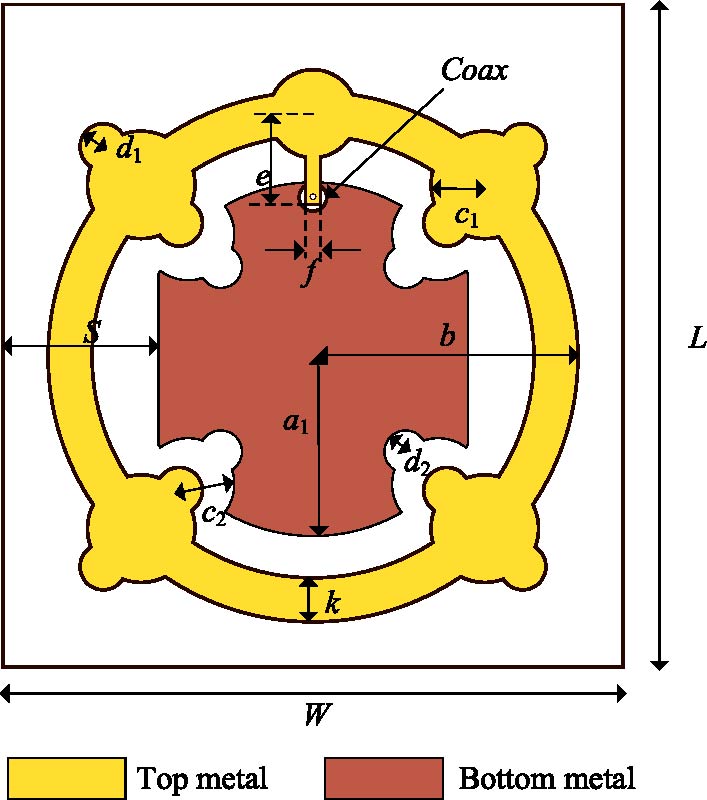
The article presents a low-profile quad-port dual-band printed antenna designed for 5G applications. The antenna is printed on a 58.6 mm x 58.6 mm FR4 substrate with a thickness of 0.8 mm. It operates in the 5G spectrum between 3.3 and 3.8 GHz, specifically in the n77 band, with a 10 dB bandwidth impedance. This flexible operating range allows the antenna to cover future frequency bands essential for 5G applications. The design of the antenna focuses on minimizing the distance between antenna components, which results in a significant improvement in isolation performance, greater than 14 dB. This improved isolation allows for a high radiation efficacy of 85% and an overall gain of approximately 4.8 dBi over the operating range. To evaluate the Multiple-Input Multiple-Output (MIMO) performance of the proposed antenna, the researchers developed additional MIMO metrics, including channel capacity, the Envelope Correlation Coefficient (ECC), and Channel Capacity Loss (CCL). These metrics help assess the antenna's ability to handle multiple signals and maintain good performance in MIMO systems. This study shows that the proposed antenna is suitable for a wide range of applications operating over multiple frequency bands. This makes it a promising candidate for 5G applications, as it covers the necessary frequency range and offers good MIMO performance. The antenna's low profile and compact size also make it suitable for various compact and portable 5G devices.
A Compact Four-element Modified Annular Ring Antenna for 5G Applications
2023-09-05
PIER M
Vol. 118, 151-161
Employing Machine Learning Models to Predict Return Loss Precisely in 5G Antenna
Rachit Jain , Vandana Vikas Thakery and Pramod Kumar Singhal
To meet 5G requirements, designing an optimal antenna is challenging due to numerous design factors. Conventional electromagnetic modeling simulators require excessive time and processing power during the antenna design process. Machine learning (ML), an innovative technology, can be used in the domain of antenna design with favorable performance and can resolve problems that the previous conventional methods cannot. The main goal of this work is to create an antenna that operates at 28 GHz, which is a significant 5G band for the 5G futuristic infrastructure revolution, and to predict the return loss of an antenna using some machine learning models like K-Nearest Neighbor (KNN), Extreme Gradient Boosting (XG-Boost), Decision Tree (DT) and Random Forest (RF). On comparing results, all models perform well with over 83% accuracy. However, the Random Forest model predicts return loss with higher accuracy at 90% and lower MSE and MAE values of 1.99 and 0.827, respectively. Moreover, this antenna holds potential for 5G applications and can be efficiently optimized using a machine learning approach, saving valuable time.
Employing Machine Learning Models to Predict Return Loss Precisely in 5G Antenna
2023-09-04
PIER C
Vol. 137, 155-168
Study on the Composite Scattering Characteristics of Ship Target on the Sea Surface with Its Wake
Tian-Ci Yang , Ye Zhao , Shao-Shuai Yu , Guo-Shan Wu , Xincheng Ren and Peng-Ju Yang
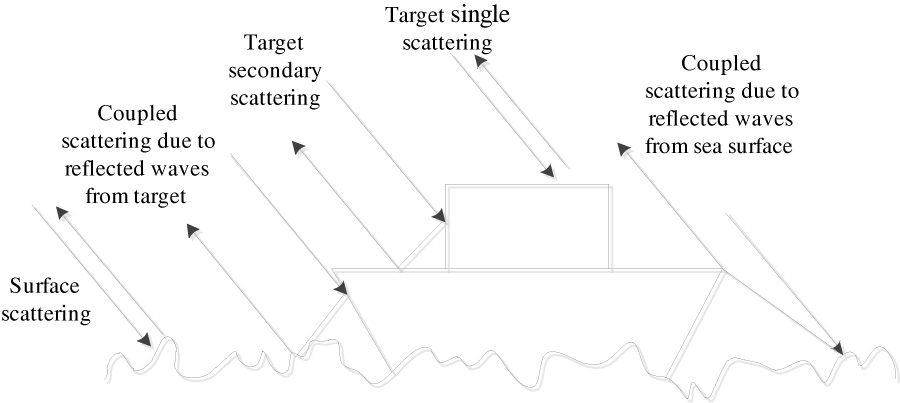
Ship's movement on the sea surface will produce wake extending for several kilometers. In order to study the electromagnetic scattering characteristics of the composite scene of sea surface, ship and wake, this paper combines geometric optics with physical optics (GO-PO), Kirchhoff approximation (KA) and facet scattering field model of sea surface to calculate the electromagnetic scattering characteristics of this composite scene. Firstly, the geometric model of the composite scene of sea surface and Kelvin wake is established by using Elfouhaily omnidirectional spectrum and classical ship wave generation theory. Secondly, the generated geometric overlay model of the wake and the sea surface is combined with the ship to generate a composite scene model of the sea surface, ship, and wake. Finally, the scattering echoes of sea surface and wake are calculated by KA and facet scattering field model of sea surface, and the scattering echoes of ship is calculated by GO-PO. On this basis, the electromagnetic characteristics of the composite scene of sea surface, ship and wake under different conditions are discussed. The research conclusion has certain reference value for the detection of ship and wake in complex sea conditions.
Study on the Composite Scattering Characteristics of Ship Target on the Sea Surface with Its Wake