Search Results(13786)

2023-08-20
PIER C
Vol. 136, 215-227
Tumor Detection Using Microstrip Patch Antenna Operating in FCC MBAN Band
Satheesh Rao , Ashish Singh , Anil Kumar Bhat and Ramya Shetty
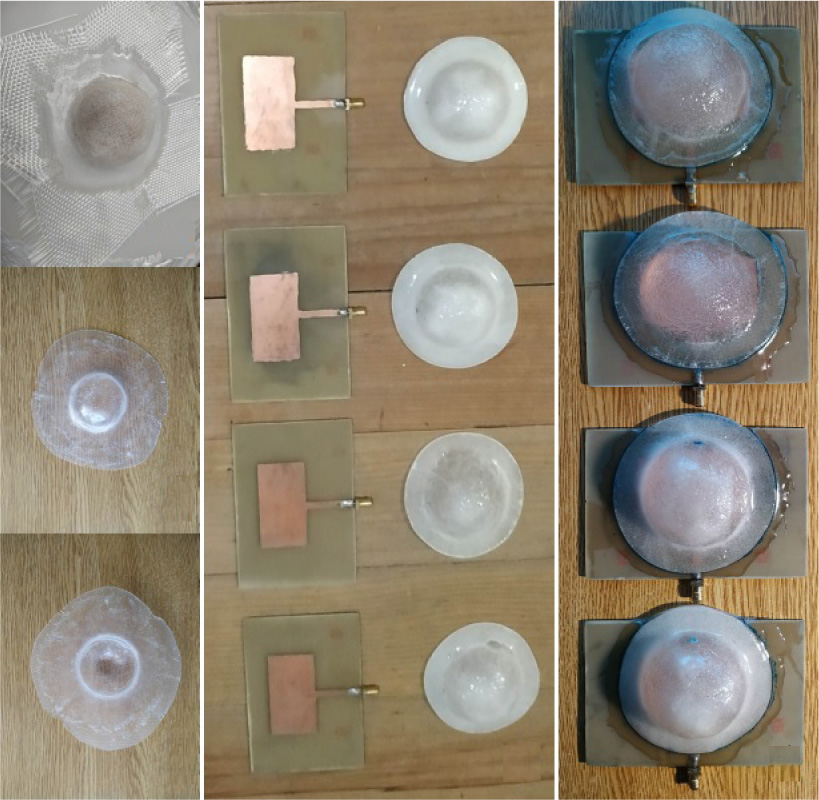
In this paper, a planar microstrip patch antenna operating in FCC MBAN for tumor detection is presented. The proposed antenna is constructed using a triangle-shaped patch with inset feeding. It is fabricated on an Arlon AD1000 substrate. Some of the parameters are assumed, and optimization is carried out to achieve greater performance. This prototype is placed on a human tissue mimicking model and simulated considering the cases of body model with tumor and without tumor. The designed antenna resonates at 2.37 GHz with 10 dB bandwidth of 3 MHz meeting the requirements specified by the FCC. Further, the introduction of a slot in the ground plane gives a half power beam width of 20.6° with directivity of 8 dB. This narrow beam is suitable for scanning application in microwave imaging. The fabrication of the antenna is carried out, and measurements are done to assess the performance of the antenna. Body phantom is created using petroleum jelly and mixture of wheat flour and water. The fabricated antenna is placed on the created model, and the variation in the resonant characteristics has been observed with the presence and absence of tumor.
Tumor Detection Using Microstrip Patch Antenna Operating in FCC MBAN Band
2023-08-20
PIER C
Vol. 136, 199-213
Uncertainty Quantification of Electromagnetic Exposure of Human Body with Medical Aortic Valve Stent Implants Under an EV-WPT Device
Tianhao Wang , Bo Li , Quanyi Yu , Yangyun Wu , Linlin Xu , Yaodan Chi and Baizhi Li
With the gradual popularization of high-power electric vehicle wireless power transfer (EV-WPT) applications, the safety issue of human exposure to electromagnetic fields leaked from EV-WPT devices has received considerable attention. In particular, careful attention should be devoted to human protection from electromagnetic field issues among people with medical implants. Considering the electromagnetic coupling between a human aortic valve metal stent (AVS) and the leakage field, this study establishes a numerical simulation model of the electromagnetic exposure of a human implanted with AVS to the leakage electromagnetic field of EV-WPT on the basis of human medical ethics. Given the existence of many uncertainties in actual WPT charging, which may cause damage to a human heart implanted with AVS, an orthogonal matching pursuit sparse generalized polynomial chaos expansion (OMP-sgPCE) method is developed to conduct an uncertainty quantification of the maximum induced electric field intensity (Emax) of a human heart implanted with AVS. Results indicate that the induced Emax obtained by this method can exceed the ICNIRP guideline limit and may seriously endanger human heart safety. This study also adopts the Sobol method to obtain the degree of influence of the coil group's spatial location parameters and the AVS geometric parameters on the induced Emax, thereby providing a reasonable theoretical basis and scientific guidance for the optimal design of EV-WPT devices and AVS.
Uncertainty Quantification of Electromagnetic Exposure of Human Body with Medical Aortic Valve Stent Implants under an EV-WPT Device
2023-08-20
PIER C
Vol. 136, 189-198
Dual Band MIMO Antenna with High Isolation for GSM and WLAN Applications
Alka Khade , Mahadu Trimukhe , Shubhangi Mangesh Verulkar and Rajiv Kumar Gupta
We propose a compact dual-band MIMO antenna for GSM 1800 MHz and WLAN applications. A novel single branch dual band antenna consisting of a quarter annular ring and an inverted U-shaped strip is designed by decreasing the electromagnetic coupling between higher order modes of an annular ring ultra-wideband (UWB) antenna, and a simple technique of slots and I and L-shaped stubs protruding from ground plane is employed to achieve high isolation. S11 < -10 dB over 1.704-1.934 GHz and 5.66-6.25 GHz frequency range and mutual coupling S12 < -20 dB and < -28 dB over the two bands are achieved. The radiation pattern, envelope correlation coefficient (ECC), total active reflection coefficient (TARC), diversity gain (DG), and mean effective gain (MEG) conform to MIMO specifications. The prototype antenna is fabricated on a 0.244λ0 × 0.17λ0 FR4 substrate, where λ0 is the free-space wavelength at 1.7 GHz. The antenna offers stable radiation patterns. The antenna is compact, simple to design, easy to fabricate, and low in cost. These characteristics depict the suitability of this antenna for portable wireless devices.
Dual Band MIMO Antenna with High Isolation for GSM and WLAN Applications
2023-08-20
PIER Letters
Vol. 112, 35-40
Design of Compact SIW Bandpass Filter with High Selectivity
Yudan Wu , Yingjie Yu , Ping Su , Xiang Zhang , Licong Wang and Shuaishuai Wang
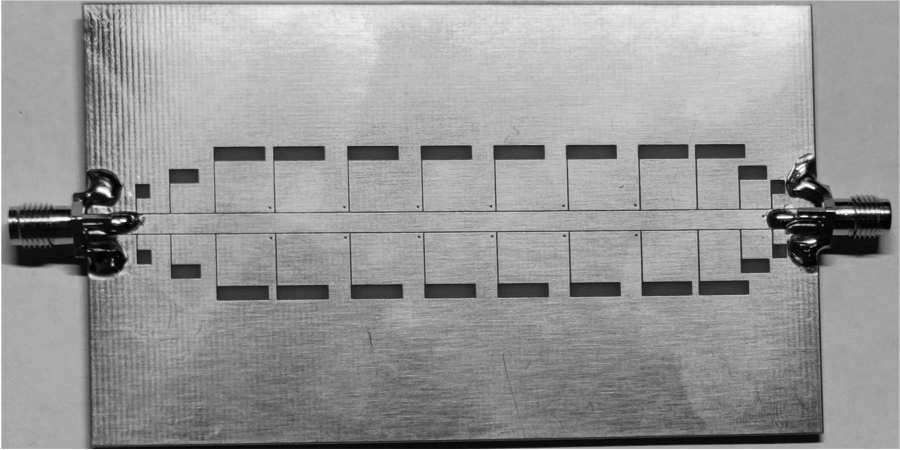
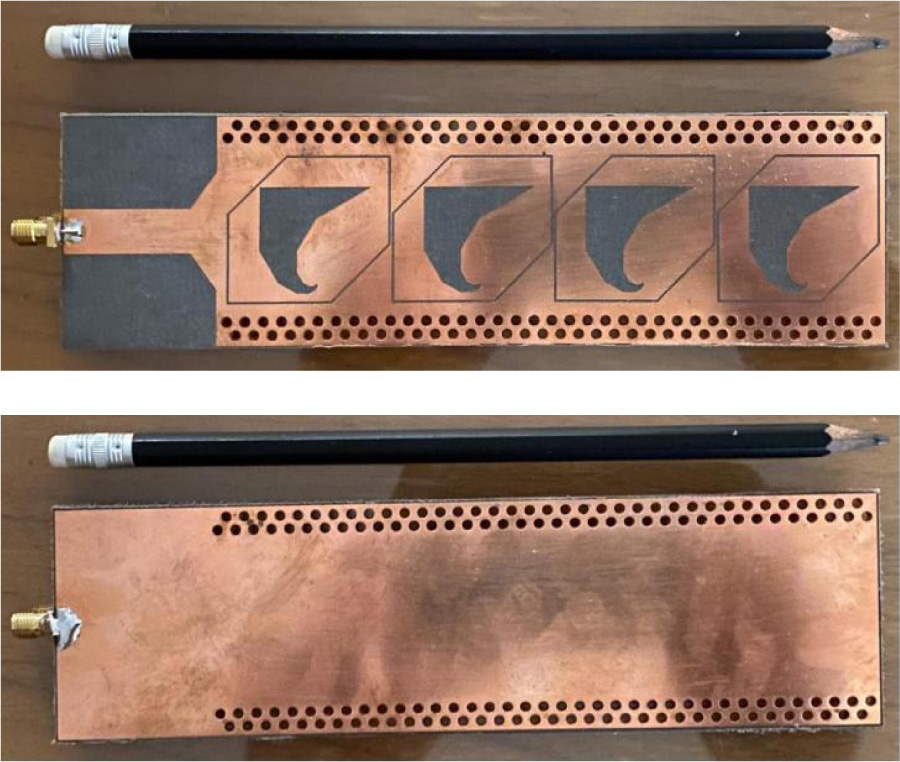
In this paper, a method of designing a SIW (Substrate Integrated Waveguide) bandpass filter with high selectivity is proposed. Four resonant cavities of the proposed filter are arranged in straight line. The microstrip gradient line is directly fed into the cavities. Two U-shaped slots are etched on the top face of each cavity which will result in the resonant modes reduced and the high modes of SIW cavity pushed far away from the dominant resonant mode. Thus the filter will have both the features of compact size and wide stopband. The center frequency of the filter is designed at 5.2 GHz. The measured results are highly matched with the simulated ones.
Design of Compact SIW Bandpass Filter with High Selectivity
2023-08-19
PIER C
Vol. 136, 175-187
Comparative Analysis of Auxiliary Teeth Flux Reversal PM Machines with Different Magnetization Modes
Kun Yang , Libing Jing , Zhangtao Kui and Zeyu Min
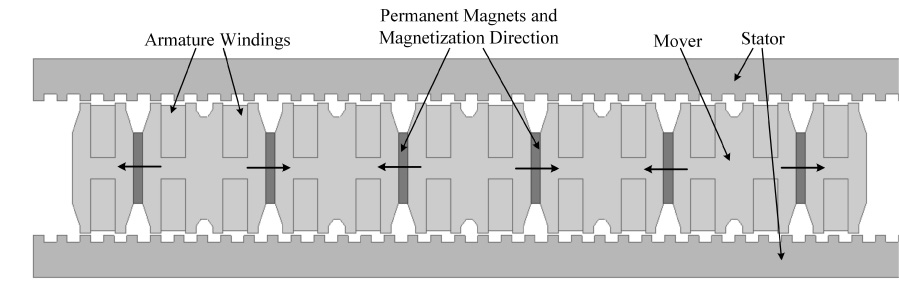
Flux reversal permanent magnet machine (FRPMM) has been widely used because of its high efficiency, simple structure and high fault tolerance. However, the torque of the FRPMM is restricted by its longer equivalent length of air gap. To further improve its torque density, this paper presents two novel FRPMMs with auxiliary teeth and different magnetization modes. Both machines use auxiliary teeth without permanent magnet (PM), and both machines have three PM blocks on each main tooth. The difference of two machines is that they have different order of arrangement of PM. The design parameters of two machines are optimized based on genetic algorithm (GA). Finally, the back EMF and torque of the two machines are compared with the conventional FRPMM to show the superiority of the two machines. At the same time, the other important performances of the two machines are compared and analyzed, and their respective advantages and disadvantages are obtained as a reference for selecting the respective appropriate application scenarios.
Comparative Analysis of Auxiliary Teeth Flux Reversal PM Machines with Different Magnetization Modes
2023-08-19
PIER Letters
Vol. 112, 27-34
A Novel Miniaturized Image Rejection Bandpass Filter Basing on Stepped-Impedance Resonators
Guangxiu Zhao , Chen Li , Minquan Li , Pingjuan Zhang , Yajing Yan , Xiaming Mo and Ziyun Tu
In order to meet the requirements for the suppression of mirror frequencies in the 5G RF front end, this paper proposes a novel miniaturized image rejection bandpass filter by loading Stepped-Impedance Resonators (SIR). By analyzing the relationship between the impedance ratio of a half-wavelength SIR and its electrical length, we have designed an improved second-order bandpass filter, which reduces the size by 34.3% compared to traditional five-order hairpin filters. In order to further enhance the performance of the filter, the use of a radial stub, as opposed to the traditional rectangular open stub, allows for the generation of a wider band transmission zero, which can be analyzed using lumped equivalent circuits. This integration improves the stopband rejection of the filter. The results show that the passband range is 5.35 GHz-6.64 GHz; the rejection in the stopband range 8.10 GHz-11.98 GHz is over 45 dB; and the size is only 0.385λg×0.295λg.
A Novel Miniaturized Image Rejection Bandpass Filter Basing on Stepped-impedance Resonators
2023-08-18
PIER B
Vol. 102, 131-149
The Effect of Magnet Pole Unequal Thickness on Axial Flux Motor Tooth Groove Torque
Jianwei Liang , Xinhua Wang , Peiyao Guo , Huan Liu , Xuchang Yuan and Dong Chen
To address the problems of torque ripple, vibration, and noise generated by cogging torque in a dual-stator single-rotor axial magnetic field permanent magnet motor, this article adopts an unequal thickness pole structure to reduce cogging torque. At first, the process of cogging torque generation is analyzed, followed by an examination of the mathematical formulation of cogging torque using the energy technique and the Fourier decomposition method. Then, the impacts of several pole optimization approaches on cogging torque reduction are then compared, and the findings are investigated using the finite element method to demonstrate the efficiency of the optimization method. The results show that the optimization effect of unequal thickness pole structure is the best. Lastly, the optimized motor's air-gap flux density, counter-electromotive force, harmonic content, and rotor mechanical strength were compared and studied to demonstrate that the unequal-thickness structure used in this research can increase motor performance. Finally, based on the determined motor parameters, experimental study of the prototype was carried out to verify the correctness of the motor structure and analysis.
The Effect of Magnet Pole Unequal Thickness on Axial Flux Motor Tooth Groove Torque
2023-08-17
PIER C
Vol. 136, 161-174
A Robust Model Predictive Current Control Strategy with Low Complexity for PMSM
Qianghui Xiao , Zhongjian Tang , Wenting Zhang , Zhi Yu and Zhun Cheng
Model predictive current control (MPCC) suffers from high computational effort, and control performance is affected by parameter mismatch. In this paper, a robust MPCC strategy with low complexity for permanent magnet synchronous motor (PMSM) is proposed, which reduces the computational complexity and improves robustness. First, a low-pass filter is used to obtain the current actual voltage, and the next-cycle voltage vector is obtained by angle compensation. And alternative voltage vectors (AVVs) are selected according to the location of the next-cycle voltage vector to reduce the control system computation. This part does not use motor parameters to avoid the influence of parameter changes. Then, the relationship between the current error and the input voltage and current sampling value is analysed. A low-complexity current prediction error compensation algorithm is designed to compensate the error caused by the mismatch of motor inductance and flux linkage, which enhances the robustness of the system. Finally, the experimental results demonstrate the correctness and effectiveness of the proposed strategy.
A Robust Model Predictive Current Control Strategy with Low Complexity for PMSM
2023-08-17
PIER C
Vol. 136, 151-160
Four Element MIMO Antenna for Wireless Body Area Network and Advanced Wireless Services Applications
Nelapati Ananda Rao and Lalitha Bhavani Konkyana
A Multi-Input Multi-Output (MIMO) dual-band antenna useful for advanced wireless services (AWSs) and wireless body area network (WBAN) applications is presented. To have dual bands of operation two techniques were used namely, Defective Ground Structure (DGS) and slotted patch. The lower operating band is spread over 108 MHz from 2.106 GHz to 2.214 GHz which covers AWS, UMTS, and LTE bands. The upper operating band is spread over 221 MHz from 4.141 GHz to 4.362 GHz which covers the WBAN band. The lower operating band is the result of perforation in the patch and inverted T-shaped ground, and the upper operating band is due to the two rectangular slots placed diagonal to each other in the patch and perforations in the ground. High isolation among MIMO elements is observed through a low Envelope Correlation Coefficient (ECC) of 0.0004. The design of a 2 × 2 MIMO antenna is realized using FR4 material with a size of 70 mm × 70 mm × 1.524 mm and Ansys HFSS tool. A high level of correlation between simulated and experimental results is observed which enables the presented MIMO antenna to be perfect for the proposed AWS and WBAN applications.
Four Element MIMO Antenna for Wireless Body Area Network and Advanced Wireless Services Applications
2023-08-16
PIER C
Vol. 136, 137-149
Super-Wideband Fractal Antenna for Future Generations of Wireless Communication
Mohamed Salah Fouad , Asmaa Elsayed Farahat , Khalid Fawzy Ahmed Hussein , Abdelhameed Abdelmoneim Shaalan and Mai F. Ahmed
A super-wideband (SWB) antenna of enhanced performance is proposed to cover the frequency band from 3 to 30 GHz. The proposed antenna can be regarded as a two-arm antenna of fractal structure. Each of the antenna arms can be viewed as composed of multiple merged wideband fractal elements. Each fractal element is a wide-flare metallic sector-shaped radiator with circular (arc-shaped) edges to enhance the bandwidth over which the antenna impedance is matched to 50 Ω-feeder. A novel SWB balun is proposed for feeding the two-arm antenna of its balanced structure through the conventional coaxial feeder of its unbalanced structure. For experimental assessment of its performance, the proposed antenna is fabricated and measured by a vector network analyzer (VNA). The experimental results come in agreement with the results obtained by the CST® simulator. It is shown that the proposed antenna has a ratio bandwidth (RBW) of 10:1, percentage bandwidth (%BW) of 164%, and bandwidth-dimension ratio (BDR) of 1952. The efficiency of radiation of the proposed antenna is shown to begreater than 98% over most of the operational frequency band.
Super-wideband Fractal Antenna for Future Generations of Wireless Communication
2023-08-16
PIER B
Vol. 102, 115-130
Clutter and Ambiguity Reduction Using 3-Dimensional Side-Looking Synthetic Aperture Radar
Colin D. Kelly , Traian V. Dogaru , Kyle A. Gallagher , Calvin D. Le , Brian R. Phelan and Ram M. Narayanan
Advancement in radar component technology has led to a reduction in the size, weight, and power consumption of radar systems. Experimental radar systems can now be integrated onto smaller, maneuverable platforms, such as small unmanned aerial vehicles (sUAVs). Integration onto rotor-based sUAVs enables data collection over novel synthetic apertures which can be optimized for different scenarios. The design, simulation, and experimentation of a light-weight, ultra-wideband synthetic aperture radar (SAR) is presented here that will be used for the detection of obscured surface targets. The approach outlined herein uses 3-dimensional (3-D) imagery to vertically resolve clutter from the target. A vertical-grid aperture is presented which yields vertical resolution. Point spread functions are derived for both linear and vertical-grid apertures. The analytical expressions are verified using simulations. Finally, experimental data is used to form 3-D imagery and demonstrate the importance of vertical resolution in the discrimination between scatterers above the ground, as well as clutter mitigation.
Clutter and Ambiguity Reduction Using 3-dimensional Side-looking Synthetic Aperture Radar
2023-08-15
PIER C
Vol. 136, 123-135
Balanced-to-Unbalanced Bagley Power Divider with Input-Reflectionless Filtering Characteristics
Qi Chen , Zhongbao Wang , Shipeng Zhao , Hongmei Liu and Shao-Jun Fang
A novel balanced-to-unbalanced (BTU) Bagley power divider (BPD) with input-reflectionless filtering characteristics is proposed. It features a balanced input port and three single-ended output ports, which is difficult to achieve by means of conventional BTU power dividers. The filtering characteristics are achieved by parallel coupled lines. To further improve the differential-mode filtering selectivity, stepped impedance resonators are applied to introduce two transmission zeros near the passband. The input-reflectionless characteristic in the bandstop region is achieved by loading absorptive branches. For verifying the proposed power divider topology, a prototype of microstrip BTU Bagley power divider operating at 1.0 GHz is designed and fabricated with 3-dB filtering bandwidth of 72%. Furthermore, 10-dB input-reflectionless bandwidth covers the full measurement frequency from 0 to 2.5 GHz. Good agreement between the simulation and measurement validated the proposed method.
Balanced-to-unbalanced Bagley Power Divider with Input-reflectionless Filtering Characteristics
2023-08-15
PIER Letters
Vol. 112, 17-25
A Wideband Harmonic Suppression Filtering Antenna with Multiple Radiation Nulls
Xinwei Chen , Qihao Zhuge , Guorui Han , Runbo Ma , Jinrong Su and Wenmei Zhang
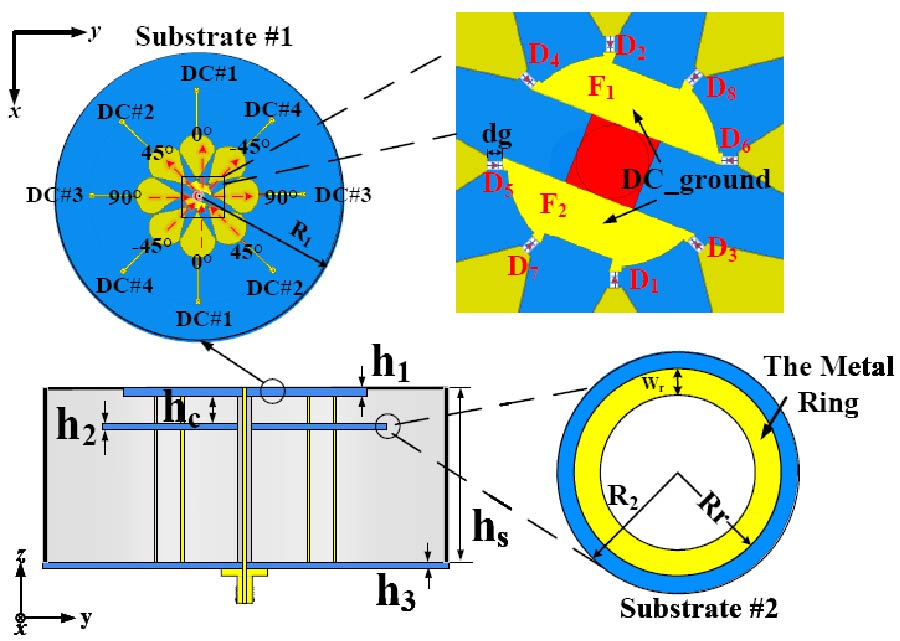
In this paper, a wide harmonic suppression filtering antenna with high selectivity is designed. The filtering antenna adopts dual-layer structures. By introducing four parasitic patches around the top driven patch, the impedance bandwidth is widened. Moreover, the current directions on the driven patch and the parasitic patches are opposite in some frequency, so that the radiation null is introduced. In addition, a rectangular split ring DGS is etched in the middle of the ground plane, the lower sideband radiation null is introduced. Two sets of dumbbell-shaped defected ground structures are etched on the ground plane of the intermediate layer. The high-order harmonics are suppressed, and another radiation null is introduced. The experimental results show that the antenna operates at 2.46-2.66 GHz; the relative bandwidth is 7.8%; the peak gain is 3.8 dBi; and the S11 is more than -3 dB at 3-13 GHz.
A Wideband Harmonic Suppression Filtering Antenna with Multiple Radiation Nulls
2023-08-15
PIER B
Vol. 102, 99-114
Diffraction of a Plane Electromagnetic Wave by a Circular Aperture in a Conducting Screen of Finite Thickness
Vladimir Serdyuk
The paper represents a rigorous solution to the problem of diffraction of a normally incident plane electromagnetic wave by a circular hole in a perfectly conducting screen of arbitrary thickness, obtained using the eigenmode technique with allowance for the presence of a plane dielectric layer on a thick substrate behind the screen, which can play a part of a radiation detector. The main goal of the work is to describe the effect of diffractionlensless focusing in circular apertures and to determine the conditions of its appearance in the near zone of small holes, when its radius, the thickness of a screen and a dielectric layer are of the order of the wavelength.
Diffraction of a Plane Electromagnetic Wave by a Circular Aperture in a Conducting Screen of Finite Thickness
2023-08-14
PIER
Vol. 178, 18-36
A Novel Noncontact Ku-Band Microwave Radiometer for Human Body Temperature Measurements
Hang Tian , Xiaodong Zhuge , Anyong Hu , Qingli Dou and Jungang Miao
In emergency departments and ICUs, a novel noncontact thermometer is urgently required to measure physical temperatures through common clothing to accomplish body temperature precise measurement for critical patients. Hence, a Ku band digital auto gain compensative microwave radiometer is proposed to get a higher theoretical temperature measurement sensitivity than a Dicke radiometer, benefit miniaturization design and reduce attenuation caused by common clothing. Meanwhile, a novel compensation method for receiver calibration is proposed to improve temperature sensitivity under non-ideal conditions, and the revised systematic calibration method is elaborated. Furthermore, in order to invert body physical temperatures through clothing, a microwave thermal radiation transmission model of clothed human body is constructed, and the microwave radiation apparent temperature equation of clothed human body is derived. Importantly, three groups of experiments are set up to confirm the designed radiometer's performance, especially the biological tissue temperature measurement. Results show that: 1) the designed radiometer has high temperature sensitivity and accuracy for unsheltered targets; 2) amplitude attenuation caused by cotton cloth for Ku band microwave is much smaller than that for infrared thermal radiation; 3) the designed radiometer can track physical temperatures of targets (such as water and swine skin tissue) sheltered or covered by cotton cloth relatively accurately. In conclusion, our designed Ku band microwave radiometer is certificated to have outstanding performance in temperature measurement for biological tissue through common clothing, which can be developed into a promising product in medical monitoring.
A Novel Noncontact Ku-band Microwave Radiometer for Human Body Temperature Measurements
2023-08-14
PIER C
Vol. 136, 113-121
Design of Ultra-Miniaturized Wearable Antenna for Bio-Telemetry Applications
Regalla Narendra Reddy , Nalam Venkata Koteswara Rao , Dasari Rama Krishna and Jeet Ghosh
In this paper, an ultra-miniaturized, planar dual-band wearable antenna is proposed for bio-telemetry applications. The proposed antenna covers the 433 MHz and 915 MHz Industrial, Scientific, and Medical (ISM) bands with a compact volume of 0.000000384λ03. The antenna consists of a meander line on the top side of the substrate, while the backside is loaded with an inductive grid structure to achieve miniaturization. Moreover, the absence of vias in the design of the antenna offers a significant benefit in terms of simplifying the fabrication process. The design approach considers the integration of other components for device-level architecture. The antenna exhibits stable performance when placed on different human body parts, such as the head and hand. The evaluated specific absorption rate (SAR) complies with the regulated human safety standard. Additionally, the link margin (LM) calculation shows that the antenna could establish a biotelemetry communication link at a distance of 20 meters.
Design of Ultra-miniaturized Wearable Antenna for Bio-telemetry Applications
2023-08-14
PIER C
Vol. 136, 101-112
Efficient Implementation of Aperture Fill Time Correction for Wideband Array Using the Low-Complexity Keystone Transform
Lin Wang , Yiyang Jiang , Yu Jiang , Baoli Tian and Mingwei Shen
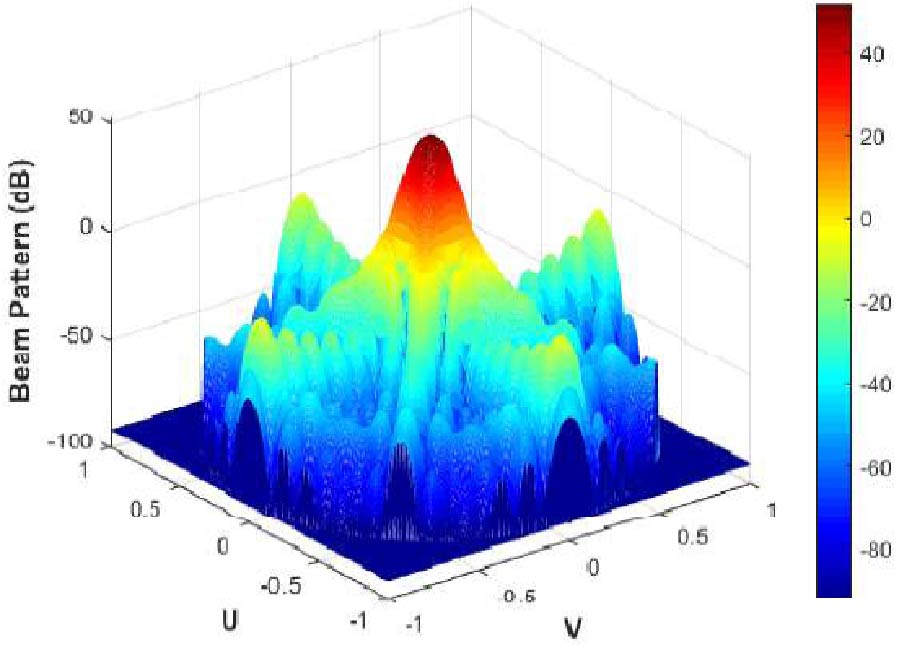
In order to remove the influence of the aperture fill time (AFT) for wideband array, the scaling principle of the Keystone (KT) transform is applied to eliminate the linear coupling between spatial domain and frequency domain of wideband array signal. However, the classic KT transform is implemented by interpolation Sinc which is difficult to apply in engineering and leads to the serious problem of insufficient data. To address this, a realization of the low-complexity KT transform is presented, and it is implemented using only the Chirp-z transform (CZT) and fast Fourier transforms (FFT). Additionally, an Autoregressive (AR) model is proposed to compensate the insufficient data for each range, and the order of AR is estimated by the rank of the signal covariance matrix. Simulation results demonstrate that the proposed algorithm significantly reduces computational burden and improves the performance of wideband array beamforming.
Efficient Implementation of Aperture Fill Time Correction for Wideband Array Using the Low-complexity Keystone Transform
2023-08-14
PIER C
Vol. 136, 87-99
High Gain Multiband Microstrip Antenna for LTE, WLAN, Amateur Radio, and Sub-6 GHz 5G Applications
Pradeep Reddy and Veeresh G. Kasabegoudar
This paper presents a novel gap coupled suspended multiband microstrip antenna suitable for wireless applications like long term evolution (LTE), wireless local area network (WLAN), Amateur radio, and Sub 6 GHz 5G wireless applications. The proposed antenna is a single layer geometry suspended in air that employs a gap-coupled feed with a parasitic strip for tuning the input impedance. The overall dimensions of the antenna are 41.4 mm x 39 mm x 3.12 mm. The presented antenna offers a total of six resonant frequencies centered at 1.70 GHz, 2.77 GHz, 3.03 GHz, 4.26 GHz, 4.58 GHz, and 5.64 GHz. Measured resonant frequencies fairly match the simulated values. Further, the gain values at these frequencies are 7.29 dBi, 6.10 dBi, 7.39 dBi, 5.39 dBi, 6.22 dBi, & 7.03 dBi, and the corresponding measured gain values are 6.92 dBi, 7.72 dBi, 4.88 dBi, 5.34 dBi, 4.25 dBi, and 6.51 dBi, respectively. Radiation patterns were measured at all these frequencies and found to have highly stable radiation characteristics except for slight asymmetry at the high frequency end of the operational band.
High Gain Multiband Microstrip Antenna for LTE, WLAN, Amateur Radio, and Sub-6 GHz 5G Applications
2023-08-13
PIER M
Vol. 118, 117-126
Characterization of the Shielding Effectiveness of Composite Materials Using Electromagnetic Methods Covering a Wide Frequency Range
Rassoul Mansour , Nabil Benjelloun and Moncef Kadi
Composite materials are being widely used in the automotive industry where they are progressively replacing metallic materials as structural parts for being robust and lightweight. Their complexity, often leading to lots of unknown behavioral effects when placed near the electronic systems present in vehicles, should be studied and treated. In the automotive industry, the shielding effectiveness of these materials should be considered as the most important parameter to be known in advance. Faurecia, one of the world's largest leading automotive suppliers, sought to assess the shielding effectiveness of their product such as dashboards and door trims. Their objective was to enhance the shielding effectiveness, thereby ensuring superior isolation and protection of electronic systems against electromagnetic interferences (EMI). Thus, this paper presents a novel method for characterizing the shielding effectiveness of various composites using two electromagnetic methods to cover a wide frequency range, starting from 10 Hz up to 8 GHz. The first method, based on loop antennas, was used to cover the low frequency range starting from 10 Hz up to 120 MHz. Frequencies between 100 KHz and 1.5 GHz were not discussed in this paper because of the many studies that already exist at this frequency range, using the coaxial transmission cell. The second method used for frequencies higher than 1.5 GHz, consists of ultra-wide band antennas (Vivaldi).
Characterization of the Shielding Effectiveness of Composite Materials Using Electromagnetic Methods Covering a Wide Frequency Range
2023-08-13
PIER B
Vol. 102, 81-98
Improved Non-Singular Fast Terminal Sensor-Less Sliding Mode Control of IPMSM Considering External Disturbance and Parameter Perturbation
Xiangfei Li , Junqin Liu , Kaihui Zhao , Yang Yin and Lihua Zou
A new non-singular fast terminal Sensor-less sliding mode control algorithm (INFTSMC) for IPMSM based on an improved extended sliding mode disturbance observer (IESMDO) is constructed to address the problem of degraded control performance of IPMSM because of uncertainties. Firstly, a mathematical model of IPMSM under parametric ingestion is developed, and a new control law for the speed loop is designed. Then, an improved non-singular fast terminal sliding mode speed controller (INFTSMC) based on a novel extended sliding mode disturbance observer (IESMDO) is designed, where an improved super-twisting control law is designed to speed up convergence, while IESMDO can accurately observe the unknown perturbed part F of the system in real-time relative to the sliding mode disturbance observer (SMO). Finally, high-order square root cubature Kalman-filter (CKF) combined with an adaptive estimator is proposed to accurately estimate the speed and rotor position of the motor in real-time. Through simulations and semi-physical experiments with PI and traditional NFTSMC, it is verified that the algorithm has better transient steady-state performance when external disturbances and parameter perturbation are added externally to the motor, which is conducive to improve the control effect of IPMSM.
Improved Non-singular Fast Terminal Sensor-less Sliding Mode Control of IPMSM Considering External Disturbance and Parameter Perturbation