Search Results(13786)

2023-08-11
PIER C
Vol. 136, 75-86
Asymmetric Flare Shape Patch MIMO Antenna for Millimeter Wave 5G Communication Systems
Jetendra Jakhar , Tejpal Jhajharia and Bharat Gupta
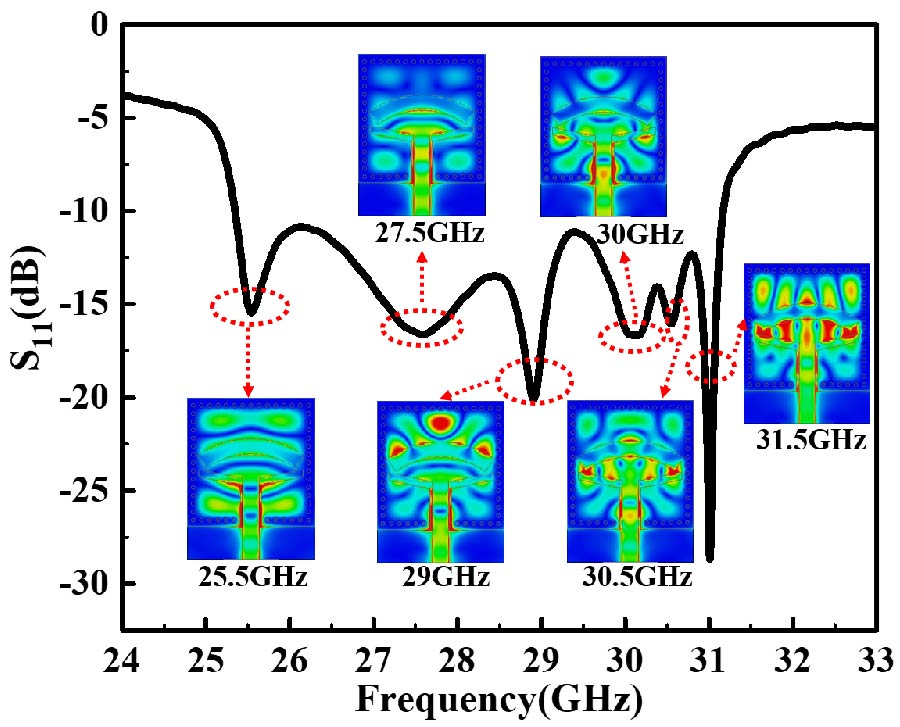
Today's 5G wireless communication evolution system demands millimeter wave frequency range antenna for its uses in several applications for future communication devices. A 2-port Asymmetric Flare-Shape Patch Multiple Input Multiple Output (MIMO) antenna for mm-wave communication system is designed and presented. The antenna structure is constructed on a Rogers RT Duroid 5880 dielectric substrate with 1.6 mm thickness, 2.2 dielectric constant, and 0.0009 loss tangent. The constructed MIMO structure has an overall size of 14×19.2 mm2. The proposed MIMO design has -10 dB return loss performance over a frequency range of 20-40 GHz with more than 20 dB isolation between antenna elements, which shows the low mutual coupling between antenna elements. The performance of the suggested MIMO antenna is reported in terms of return loss, gain, ECC, surface current, and radiation pattern. The simulated and measured MIMO antenna performance characteristics are in good agreement. The suggested design achieves more than 20 dB isolation and 8.17 dB gain with an ECC value lower than 0.0002, which meets the diversity performance of the MIMO design with two antenna elements. The proposed MIMO design is compact and the best choice for 5G mm-wave applications.
Asymmetric Flare Shape Patch MIMO Antenna for Millimeter Wave 5G Communication Systems
2023-08-11
PIER C
Vol. 136, 61-74
Study of SAR Data and Spatial Distribution in a Peace Lily Plant Model Under Different Electromagnetic Exposure Scenarios
Nibedita Mukherjee , Ardhendu Kundu and Monojit Mitra
Over the last three decades, the presence of electromagnetic radiation in the open environment has increased by many folds due to wide utilization of cellular data and voice communication over multiple wireless communication bands. Thus with the increased utilization of electromagnetic energy, several global as well as national electromagnetic exposure regulatory norms have been put in effect across geographical boundaries to safeguard humans from immediate effects of Radio Frequency radiation. Specific Absorption Rate (SAR) quantification is well established in literature to measure the rate of electromagnetic energy absorption by living objects (humans as well as plants) while external microwaves impinge on them. It should also be considered that plants do absorb fairly reasonable amount of electromagnetic energy mainly from cell tower and Wi-Fi antennas owing to high permittivity (ε'r) and conductivity (σ) of constituent tissues. However, it is indeed unfortunate that worldwide there are very limited concerns regarding electromagnetic energy absorptions in plants, fruits and flowers - thus, no electromagnetic exposure regulatory guidelines have yet been put in effect to safeguard plants, crops, fruits and flowers. Thus, it is absolutely necessary to quantify microwave energy absorption rates in various fruit, flower and plant models due to electromagnetic radiations from different sources. Later on, consequent biological responses in plants along with associated effects on ecosystem and fruit nutrition value should be investigated. With this motivation, electromagnetic energy absorption rates i.e. SAR values along with associated spatial distributions have been estimated in this article for a typical Peace Lily (Spathiphyllum wallisii) plant model considering different frequencies of exposure, directions of plane wave incidence and polarizations of incident wave. Peace Lily plant has been chosen for this investigation as it is known for air purifying capability and indoor usage - furthermore, the plant parts can easily be characterized and modelled for electromagnetic simulations. Plants are of asymmetric shapes with varied sizes. To represent the typical geometric shape considering the most practical observation, a three dimensional Peace Lily plant model has been designed using CST Microwave Studio electromagnetic solver. The model has been exposed to linearly polarized plane waves at three distinct frequencies (947.50 MHz, 1842.50 MHz and 2450 MHz) following Indian electromagnetic exposure regulatory guidelines - these frequencies are used for voice, data or Wi-Fi communications. Dielectric properties (εr) i.e. permittivity (ε'r) as well as loss tangent (tanδ) of different peace lily plant tissues have been characterized over a broad frequency band employing open ended coaxial probe measurement technique. Measured tissue dielectric properties (εr) have been fitted to the developed plant model to evaluate SAR data and spatial distributions. At each frequency, significant variations have been noted in magnitudes and positions of Maximum Local Point SAR (MLP SAR), 1 g averaged SAR and 10 g averaged SAR values for six different combinations of direction of arrival and incident wave polarization. Observations indicate different orders of change in MLP SAR, 1 g averaged SAR and 10 g averaged SAR values in the plant model even for same combination of frequency of exposure, power density, direction of arrival (plane wave) and polarization of incident wave. Data reported in this article can be considered as reference to investigate consequent physiological or molecular responses in plants and revise electromagnetic exposure regulatory policies to protect plants and the entire ecosystem.
Study of SAR Data and Spatial Distribution in a Peace Lily Plant Model under Different Electromagnetic Exposure Scenarios
2023-08-11
PIER C
Vol. 136, 51-60
Highly Selective UWB BPF with Dual Notched Bands Using Split Ring Resonator
Guangyong Wei , Yun Xiu Wang , Jie Liu , Yang Gao and Xiao Tao Yao
This paper proposes a dual notches ultra-wideband (UWB) bandpass filter (BPF) with high selectivity and wide stopband. It is composed ofa novel multi-mode resonator (MMR) known as a double-T-shaped open stub-loaded MMR, a pair of interdigital coupled lines, and folded split ring resonator. The MMR is designed to place the resulting resonant modes within the UWB passband, then add interdigital coupled lines to achieve strong coupling, resulting in a flat passband. Afterward, multiple complimentary folded split ring resonators (CFSRRs) and folded split ring resonators (FSRRs) are embedded into the designed basic UWB filter to develop dual notches at the desired frequency. The filter is simulated and manufactured using low-cost high-frequency dielectric substrate F4BM. The measurement results agree well with the simulation data. Multiple notches centered on 5.8 and 8 GHz effectively suppress unwanted signals from 5.8 GHz WLAN and 8 GHz satellite systems simultaneously. In addition, two transmission zeros on both sides of the passband are located at 2.7 GHz and 10.76 GHz, respectively, so that the sharp skirt selectivity is improved to 0.857. The measured filter can exhibit high sharp selectivity and wider stopband at the same time.
Highly Selective UWB BPF with Dual Notched Bands Using Split Ring Resonator
2023-08-11
PIER C
Vol. 135, 241-253
Optimization of Flux-Concentrating Consequent-Pole Permanent Magnet Fault Tolerant Vernier Rim-Driven Motor
Wangsong He , Jingwei Zhu , Zhe Wang , Jiubo Yue and Tianrui Zhao
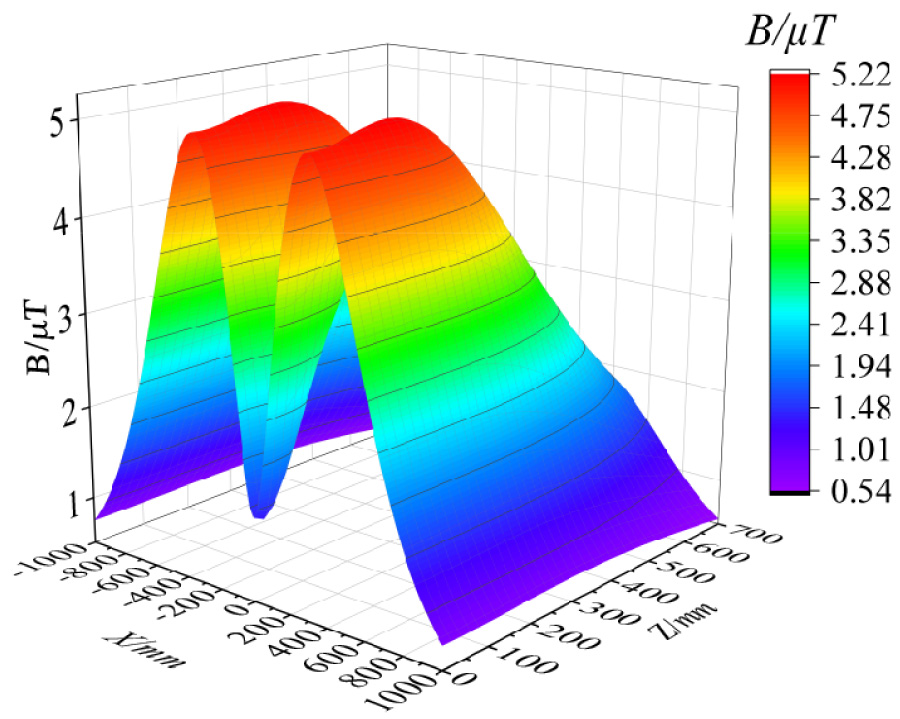
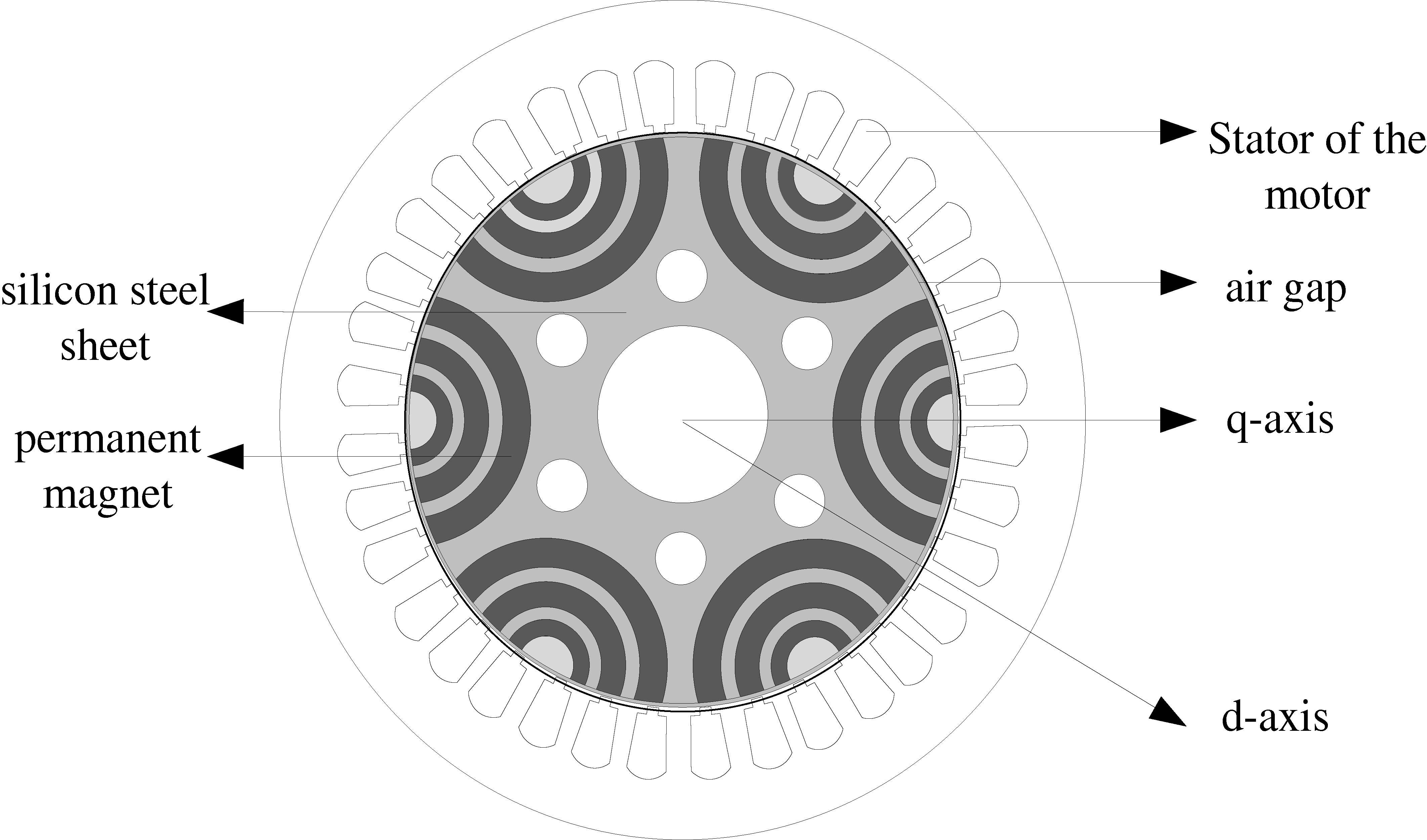
In view of the problems of excessive magnetic flux leakage of the traditional permanent magnet fault-tolerant vernier rim-driven motor, low utilization rate of permanent magnets and high price of permanent magnet materials, this paper proposes a flux-concentrating consequent-pole permanent magnet fault-tolerant vernier rim-driven motor structure. Firstly, combined with the magnetic field modulation theory, the no-load air gap magnetic density of the motor is analyzed, and the working principle of the multi-harmonic operation of the motor is explained according to the harmonic analysis. Secondly, parametric modeling is used to screen the critical structural parameters that can significantly affect electromagnetic performance of the motor, and the response surface method and sensitivity analysis are used to rank the sensitivity of the critical parameters. Then, the high-sensitivity parameters are first subjected to multi-objective optimization, and then adjusted according to the low-sensitivity parameters. Finally, the air gap magnetic density, back- EMF, cogging torque and permanent magnet numbers of the motor before and after optimization are compared and analyzed by finite element analysis. The results show that the flux-concentrating consequent-pole permanent magnet vernier rim-driven motor has higher torque density, less torque ripple and higher utilization of permanent magnets.
Optimization of Flux-concentrating Consequent-pole Permanent Magnet Fault Tolerant Vernier Rim-driven Motor
2023-08-10
PIER C
Vol. 136, 37-50
Miniaturized Low-Loss Band Pass Filter Based on Coupling Effect of Defective Structures for Ultra Broad Band Applications
Mani Divya Shree and Inabathini Srinivasa Rao
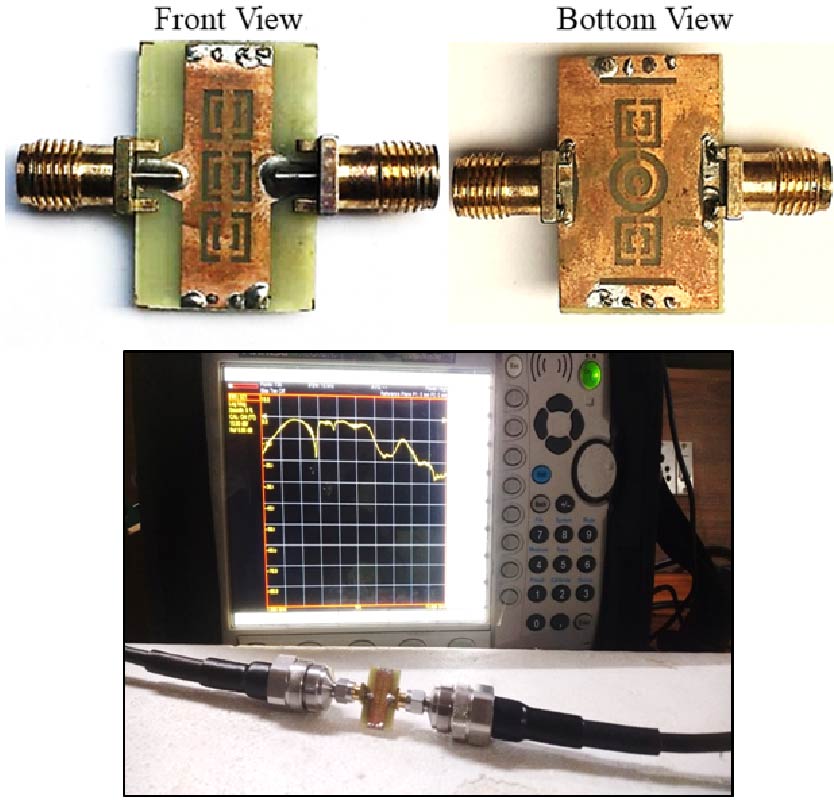
In this paper, a compact, symmetric, simple, and highly selective Ultra Broad Band (UBB) Band Pass Filter (BPF) is constructed on a low-loss Taconic dielectric substrate. The top layer of the BPF is loaded with three headphone-shaped Defected Microstrip Structures (DMSs) and four Open Circuit (OC) stubs whereas the bottom layer is etched with three star-shaped Defected Ground Structures (DGSs). The proposed BPF is designed and simulated using High-Frequency Structure Simulator (HFSS) software at f0. The proposed BPF shows 20 dB return loss and 0.4 dB insertion loss in the 3 dB passband covering 0.52 GHz to 17.1 GHz owing to 16.58 GHz Band Width (BW). Additionally, 10 dB and 25 dB upper stopband rejection is achieved with 1.3 GHz and 1 GHz BW respectively. Maximum group delay of the simulated filter is about 2.95 ns. The fabricated model transmits from 0.8 GHz to 17.4 GHz which in turn offers a 16.6 GHz BW at 3 dB level. The reflection coefficient of the fabricated filter is about -18 dB, and insertion loss varies from 0 dB to 0.72 dB inside the Transmission Band (TB) with a Fractional Band Width (FBW) of 178.5% and 3.35 ns maximum group delay. Moreover, the occurrence of Transmission Zeroes (TZs) and Reflection Poles (RPs) make the filter highly selective and low-loss (flatness). The measured results agree with the simulated outputs with slight deviations due to fabrication tolerances and connector loss. The size of the filter is 0.36λg * 0.36λg. Thus proposed filter is suitable for mobile phones, and satellite communication applications approximately covering L, S, C, X, and Ku frequency bands.
Miniaturized Low-loss Band Pass Filter Based on Coupling Effect of Defective Structures for Ultra Broad Band Applications
2023-08-10
PIER Letters
Vol. 112, 9-15
Polarization Switching in Fan-Beam Reflector-Backed Array Antenna
Osama Aziz , Muhibur Rahman and Mahdi Naghshvarianjahromi
A systematic technique for switching between horizontal and vertical polarizations is introduced. A fan-beam antenna array for base station applications employing a grounded reflector is implemented, and the proposed approach is implemented and validated on it. The antenna array is realized using planar monopole elementary elements against a non-parasitic reflector, which yields a desirable fan-beam pattern. The corresponding 3 dB H-plane beamwidth can be easily adjusted by changing the reflector height. Two versions of the antenna arrays are used to demonstrate suppression of unwanted asymmetrical modes in the current distribution yielding improved cross-polar isolation. The measured H-plane 3-dB beamwidth is approximately 127 degrees at 900 MHz and 124 degrees at 955 MHz. The corresponding side lobe level is almost -11.7 dB and -8.7 dB at 900 MHz, while the back lobe level of -9.3 dB and -11 dB at 955 MHz from measurements. The gain is within the acceptable level in both cases and compared with simulations that possess good agreement. By taking into account the antenna design and manufacturing aspects, such antennas will pave the way to be employed in OFDM reconfigurable antenna applications and Identification Friend or Foe (IFF).
Polarization Switching in Fan-beam Reflector-backed Array Antenna
2023-08-10
PIER B
Vol. 102, 61-80
Synthetic Aperture Radar Pulse Compression with Optimized Non-Linear Frequency Modulation
Asmaa O. Helmy , Ashraf Shouki Seliem Mohra and Khalid Fawzy Ahmed Hussein
The present paper proposes a novel technique to reduce the peak side lobe ratio (PSLR) in the time waveform of the synthetic aperture radar (SAR) pulse. The dependence of the instantaneous frequency on the time over the SAR pulse duration is formulated as an arbitrarily shaped piecewise linear (PWL) curve. The slopes of the linear segments of this curve are optimized to get the minimum PSLR of the received radar echo at the output of the SAR receiver. The particle swarm optimization (PSO) method is used to optimize the shape of the time-frequency curve to achieve the dual-objective of minimizing the PSLR of the received SAR echo and to realize the required pulse compression ratio (PCR). The slopes of the linear segments of the time-frequency curve are the control parameters that determine the position of each particle in the swarm. The proposed method can be considered as an optimized form of non-linear frequency modulation (NLFM) for SAR pulse compression. It is known that the conventional NLFM using second-order time-frequency curve results in a PSLR of -18 dB. The proposed method results in a PSLR of -45.6 dB and achieves a range resolution of 1.4 m. The developed PSO algorithm is shown to be computationally efficient and its iterations are fastly convergent such that a few iterations are enough to arrive at the steady state of the cost function. Finally, a SAR transceiver is proposed as a software-defined radio (SDR) in which the proposed SAR pulse compression technique is employed in the transmitter to generate the transmitted pulse and in the receiver to construct the transfer function of the matched filter (MF).
Synthetic Aperture Radar Pulse Compression with Optimized Non-linear Frequency Modulation
2023-08-09
PIER C
Vol. 136, 23-36
High Isolation Compact Two Port 5G MIMO Diversity Antenna with Asymmetrical Feed and Partial Ground Structure
Sanket Nirmal , Sumit Kumar and Richa Chandel
This paper presents a forthcoming compact high-performance two-element multiple-input-multiple-output (MIMO) diverse antenna for wireless-LAN 5 GHz band and sub-6 GHz 5G(NR) band. The proposed antenna consists of two symmetrical antenna elements with an inverted T-shaped ground structure. The antenna attributes such as S-parameters, realized gain, current distribution, and radiation patterns are studied. Additionally, MIMO performance is also investigated in terms of envelope correlation coefficient (ECC), diversity gain (DG), total active reflection coefficient (TARC), and multiplexing efficiency. The antenna covers the entire 5G band for wireless communication, with an effective band (-10-dB) of 2.92 to 5.72 GHz (provides bandwidth of 2.8 GHz). The obtained values indicate that measured performance is in reasonable agreement with simulated one. Additionally, efficiency and gain were around 95 % and above 3 dB across the band of interest respectively.
High Isolation Compact Two Port 5G MIMO Diversity Antenna with Asymmetrical Feed and Partial Ground Structure
2023-08-09
PIER C
Vol. 136, 13-22
Compact Reconfigurable Triple Bandstop Filter Using Defected Microstrip Structure (DMS)
Gomaa M. A. Eid , Abd-El-Hadi A. Ammar and Esmat A. F. Abdallah
In this paper, a low-profile triple-notched bandstop filter (BSF) is introduced. The proposed filter suppresses frequencies of Bluetooth (2.4 GHz), Wi-Max (3.5 GHz), and Wi-Fi (5.2 GHz) using three defected microstrip structures (DMSs). This BSF may be located in the feed line of an ultra-wideband (UWB) antenna. Consequently, not only the complexity is reduced, but also the area of the presented filter (24×10 mm2) is plummeted. Multiple rectangular slots are etched in the feed line to achieve multi-notch performance. Additionally, two dumbbell-shaped defected ground structures (DGSs) are etched in the ground plane to improve matching. Three PIN diodes are used to reconfigure the frequency response of the filter. By controlling the three diodes, the proposed filter can support six operating modes. The filter is simulated, optimized, fabricated, and measured to be suitable for cognitive radio applications. It achieves an insertion loss of (40, 29, and 24) dB and a rejection rate of (184, 215, and 277) dB/GHz at 2.4, 3.5, and 5.2 GHz, respectively. The simulated and measured results agree well.
Compact Reconfigurable Triple Bandstop Filter Using Defected Microstrip Structure (DMS)
2023-08-09
PIER C
Vol. 136, 1-12
A Novel Metamaterial-Inspired UWB and ISM Multiband Antenna for Wireless Communications: Design and Characteristic Mode Analysis
Leila Ghanbari , Asghar Keshtkar and Saughar Jarchi
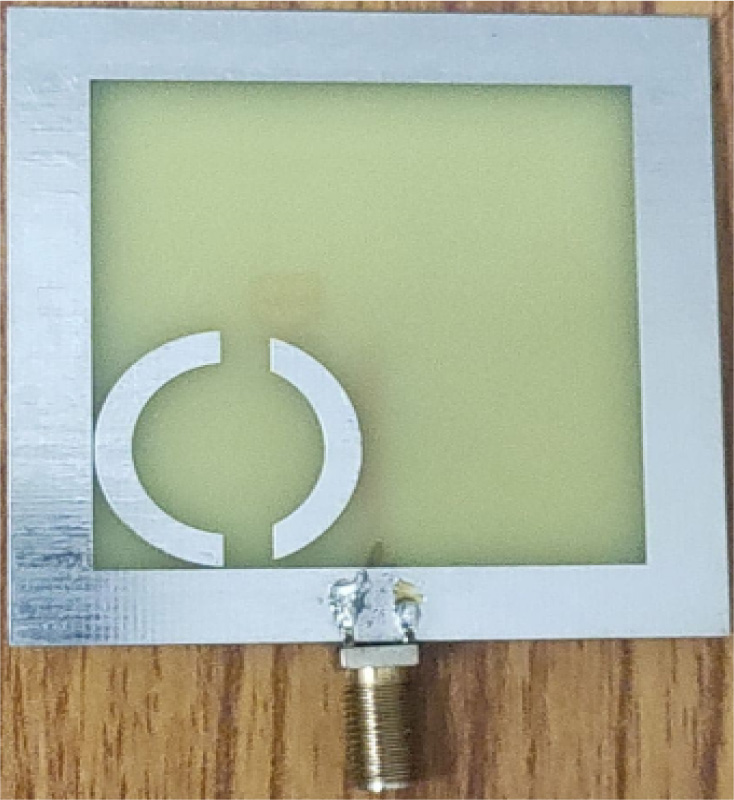
This article introduces a new planar multiband antenna inspired by metamaterials. The design incorporates a split-ring resonator (SRR) on a printed monopole antenna for ultra-wideband (UWB) communication, generating a new resonant frequency within the Industrial, Scientific, and Medical (ISM) frequency band. The effect of SRR-inspired slots was examined using characteristic mode analysis (CMA), revealing that the placement of the SRR on the antenna's radiating structure created multiple resonant modes. To improve impedance matching, the ground plane of the antenna was modified. The antenna was fed using a 50 Ω microstrip line. The proposed antenna was simulated and fabricated on an inexpensive FR4 substrate with a thickness of 1.6 mm, a dielectric constant of 4.4, and dimensions of 38×40 mm2. To validate the simulation results, the antenna parameters were measured. The results showed that the proposed antenna is capable of covering both the ISM frequency band (2.2-2.5 GHz) and the UWB frequency band (3-26 GHz). This makes it suitable for various wireless communication applications requiring UWB and ISM frequencies, offering a promising solution.
A Novel Metamaterial-inspired UWB and ISM Multiband Antenna for Wireless Communications: Design and Characteristic Mode Analysis
2023-08-08
PIER B
Vol. 102, 37-60
A Compact off-Set Edge Fed Odd-Symmetric Hybrid Fractal Slotted Antenna for UWB and Space Applications
Sanjay Singh , Atul Varshney , Vipul Sharma , Issa Tamer Elfergani , Chemseddine Zebiri and Jonathan Rodriguez
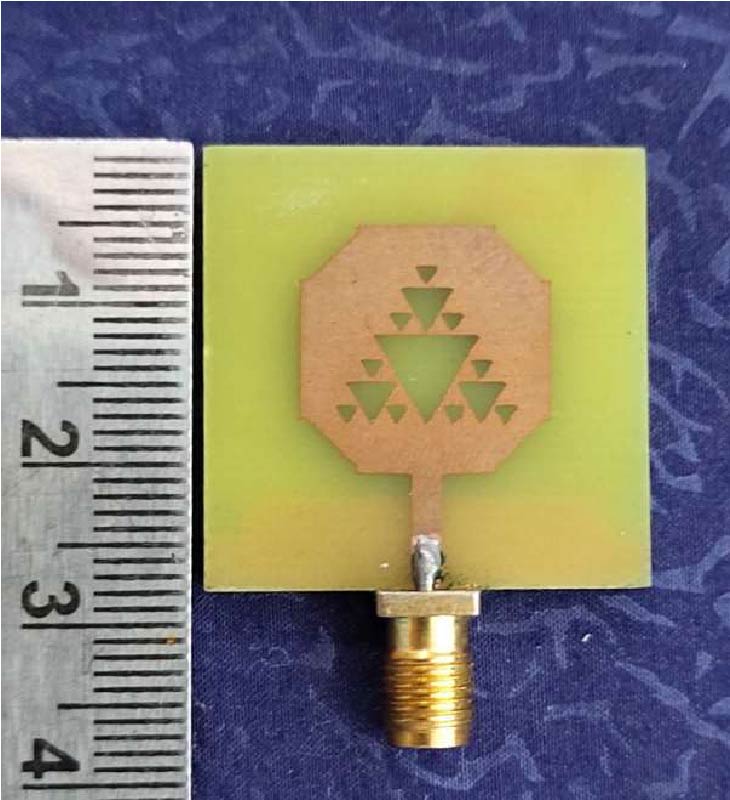
This article demonstrates the design development, fabrication, and testing of an off-set edge-fed monopole hybrid fractal antenna for ultra-wideband (UWB) applications at a design frequency of 3.2 GHz. The proposed monopole antenna is compact 38.12 mm × 38.42 mm, slotted, and uses a combination of two numbers of Koch plus Minkowski hybrid fractal technology. Antenna resonates at four frequencies i.e. quad tuned (3.2 GHz, 4.94 GHz, 7.21 GHz, and 10.10 GHz). The reflection coefficient, S11 < -10 dB obtained for the excellent UWB fractional bandwidth 119.55% (2.85 GHz to 11.32 GHz) is more than the standard FCC bandwidth (3.1 GHz-10.6 GHz). The antenna has gained 6.73 dBi at 3.49 GHz, 5.91 dBi at 5.52 GHz, 8.26 dBi at 6.81 GHz, and 8.02 dBi at 10 GHz with a maximum radiation efficiency of 89.81%. The main feature of the proposed work is that the antenna is circularly polarized in frequency bands 3.14 GHz-3.30 GHz (Axial ratio: 1.61 dB) and 9.07 GHz-9.45 GHz (Axial ratio: 2 dB) and elsewhere linearly polarized. A total of 16.37% antenna size miniaturization has been achieved with excellent UWB and S11 performance. The measured and simulated reflection coefficients are found in good agreement. Therefore the fabricated and tested antenna is well suitable for Wi-Max (3.3/3.5/5.5 GHz), ISM (5.725-5.875 GHz), WLAN (3.6/4.9/5.0/5.9 GHz), military band applications (radio location, fixed-satellite and mobile-satellite, S-band, C-band and X-band satellite communications, etc.), aeronautical radio navigation, radio astronomy, ITU-8, Sub-6 GHz band, and Radar applications.
A Compact Off-set Edge Fed Odd-symmetric Hybrid Fractal Slotted Antenna for UWB and Space Applications
2023-08-07
PIER C
Vol. 135, 227-240
EBG Integrated Metasurface Antenna for SAR Reduction
Kaliappan Kavitha , Selva Rajan Vijay Gokul , Sivakumar Yazhini , J. Mothilal Kanaka Durga and Raja Keerthana
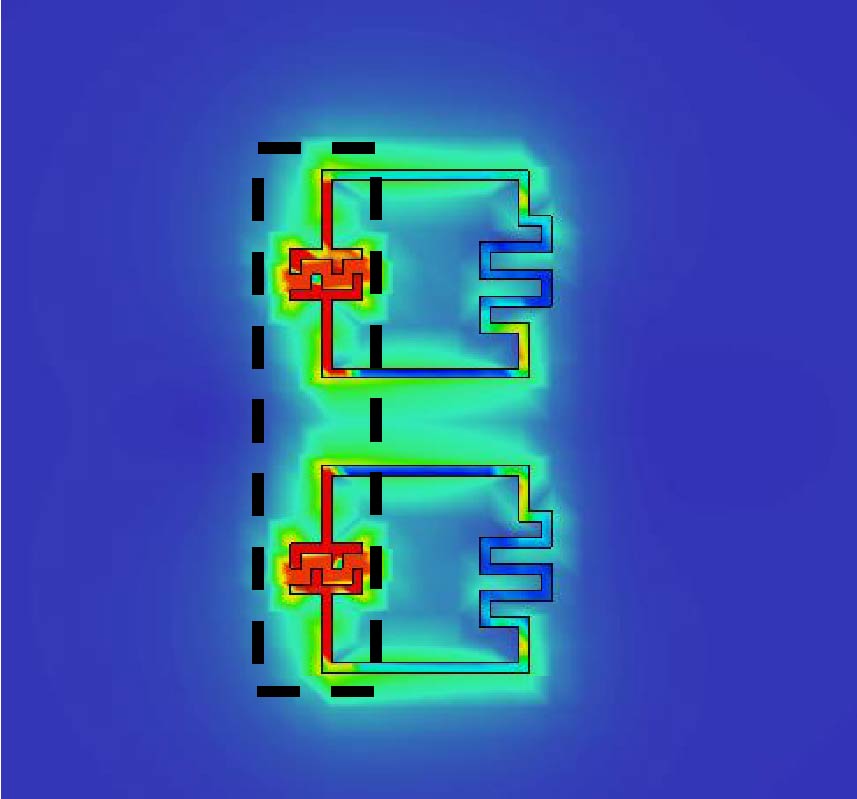
This research article presents an innovative design of a textile-based microstrip patch antenna with a metasurface for medical applications. The antenna is designed to operate at a frequency of 2.4 GHz, which is the frequency of the Industrial, Scientific, and Medical (ISM) band, to minimize the Specific Absorption Rate (SAR) in the human body. The design includes an Electromagnetic Band Gap (EBG) that is placed above a metasurface, which is made up of a periodic array of I-shaped structures. A foam layer is placed between the EBG and the antenna to improve performance. The use of textile-based materials in the antenna allows for flexibility and comfort when it is mounted on the human body. The integration of the metasurface in the antenna design allows for a more efficient transfer of energy from the antenna to the surrounding tissue, resulting in a reduction in the amount of energy absorbed by the body. The simulation of the antenna design is carried out using Computer Simulation Technology (CST), which provides accurate results for the performance of the antenna. After the implementation of the EBG array, the gain of the antenna is improved, resulting in better performance. The proposed antenna design achieved a SAR value of 0.077 W/kg over 1 gram of thigh tissue, which is well below the safety limit set by the International Commission on Non-Ionizing Radiation Protection (ICNIRP). This implies that the integrated design of the antenna can be safely used inmedical applications.
EBG Integrated Metasurface Antenna for SAR Reduction
2023-08-06
PIER C
Vol. 135, 211-226
Design, Analysis, of High Performance Antennas for 5G Communications Analysis Using WCIP
Anouar Mondir , Mohammed Ali Ennasar , Larbi Setti and Figuigue Mustapha
This article presents the recent advancements in utilizing metamaterials for the development of high-performance antennas in 5G communications. The focus is on negative refractive index metamaterials composed of two unit cells: a complementary infinite split ring resonator (CI-SRR) and a Hilbert fractal embedded in the ground plane. These metamaterials enable antenna size reduction while enhancing performance. The proposed antenna metamaterials offer improved antenna characteristics and precise control over physical dimensions, facilitating the creation of highly efficient devices with miniaturized antennas. Additionally, an antenna array 1×3 is incorporated to further enhance performance. The antenna design has a compact size of 40×33×1.57 mm2 and is fabricated using Rogers RT/Duroid 5880 material. The final broadband antenna exhibits a wide impedance bandwidth of 12.71% at 32 GHz, accompanied by a gain of 10.5 dBi. The comparison between wave concept iterative process (WCIP) calculations and measurements shows good agreement. The fabricated structure is thoroughly analyzed using a Keysight PNA network analyzer, demonstrating its successful operation and suitability for broadband applications.
Design, Analysis, of High Performance Antennas for 5G Communications Analysis Using WCIP
2023-08-05
PIER M
Vol. 118, 105-116
Highly-Selective Ridge Gap Waveguide Based Filters for Multi-Band Satellite Applications
Neetirajsinh Jaydeepsinh Chhasatia , Jitendra P. Chaudhari and Amit V. Patel
In this paper, a pioneering and innovative approach for multiple-band ridge gap waveguide (MB-RGW) based narrowband bandpass filter for satellite applications is presented. The MB-RGW represents a significant and emerging technological advancement within the domain of microwave and millimeter-wave engineering. It comprises a periodic structure that enables the propagation of electromagnetic waves along its axis. We have provided a detailed analysis of the MB-RGW, which includes its design, simulation, and experimental results. A prototype filter, designed according to specifications, was successfully produced with a fabricated circuit area measuring 42.25 mm × 76.25 mm × 8.8 mm. We demonstrate that the MB-RGW can achieve multiple bands with a single structure, making it a versatile and efficient device for a wide range of applications. We also present a detailed analysis of the factors that affect the performance of the MB-RGW, including the geometry of the ridge and the spacing between ridges. Our experimental results show that the MB-RGW can achieve high levels of attenuation and isolation, making it a promising candidate for use in microwave and millimeter-wave circuits and systems. The experimental results show S11 smaller than -20 dB over relative bandwidths, and S21 has a maximum of -0.6 dB. The proposed filter demonstrates four resonances at frequencies of 10.6 GHz, 12.6 GHz, 14.7 GHz, and 17.1 GHz, catering to mobile and fixed radio locations as well as satellite applications. It exhibits a fractional bandwidth of 0.44% at 3 dB in the X-Band and approximately 0.57% to 0.61% at 3 dB bandwidth in the Ku-band. The filter offers a compact, cost-effective, and easily implementable solution for satellite communication systems, including space operations, earth exploration, satellite TV broadcasting, and fixed satellite services (FSS). Overall, this paper provides a comprehensive overview of the MB-RGW and its potential for the use in a range of applications.
Highly-selective Ridge Gap Waveguide Based Filters for Multi-band Satellite Applications
2023-08-04
PIER C
Vol. 135, 195-210
An Improved Model-Free Sliding Mode Control Algorithm of Super-Twisting for SPMSM
Xiangfei Li , Junqin Liu , Kaihui Zhao , Yang Yin and Lihua Zou
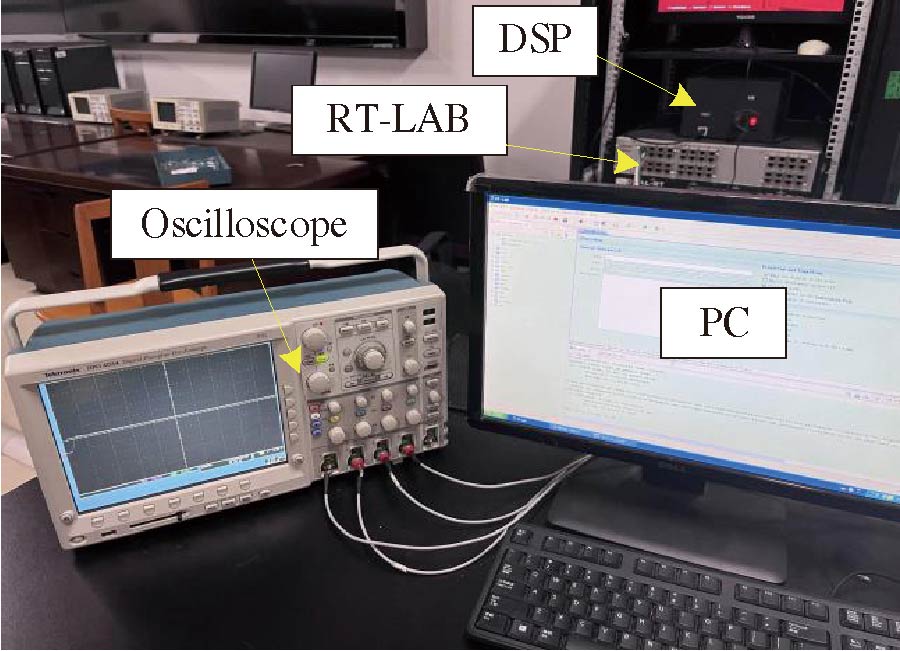
An improved model-free nonsingular fast terminal sliding mode control (IMFNFTSMC) algorithm based on super-twisting extended sliding mode disturbance observer (STESMDO) is proposed to address the problems of control performance degradation and system failure of surface-mounted permanent magnet synchronous motor (SPMSM) under complex operating conditions. Firstly, the mathematical model of SPMSM under parameter ingestion is established; secondly, a novel hyperlocal model is proposed to combine with variable exponential approach law and the nonsingular fast terminal sliding mode (NFTSM) surface to design the speed-loop IMFNFTSM controller to accelerate the system convergence while reducing the sliding mode jitter. To enhance the control accuracy, the super-twisting extended sliding mode disturbance observer (STESMDO) is designed to estimate and feed-forward compensate the system disturbance. Finally, the effectiveness and superiority of the designed algorithms are demonstrated by comparing the proposed method with PI and the conventional model-free nonsingular fast terminal sliding mode control algorithm (MFNFTSMC) through simulations and RT-Lab experiments.
An Improved Model-free Sliding Mode Control Algorithm of Super-twisting for SPMSM
2023-08-04
PIER C
Vol. 135, 181-193
A Compact Energy Harvesting RFID Tag for Smart Traffic Law Enforcement Systems
Shyama Wickramasinghe , Jeevani Windhya Jayasinghe , Gulam Alsath , Melaka Senadeera and Malathi Kanagasabai
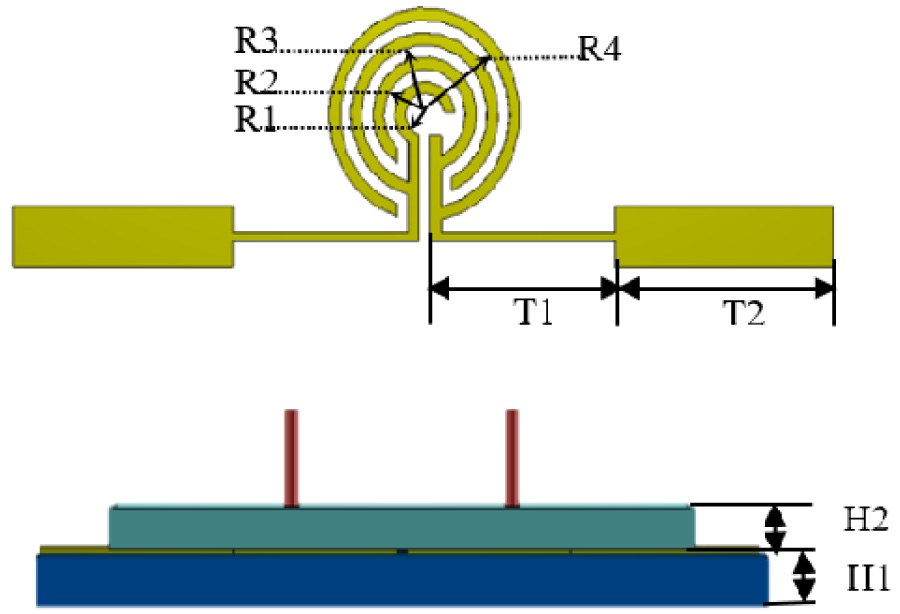
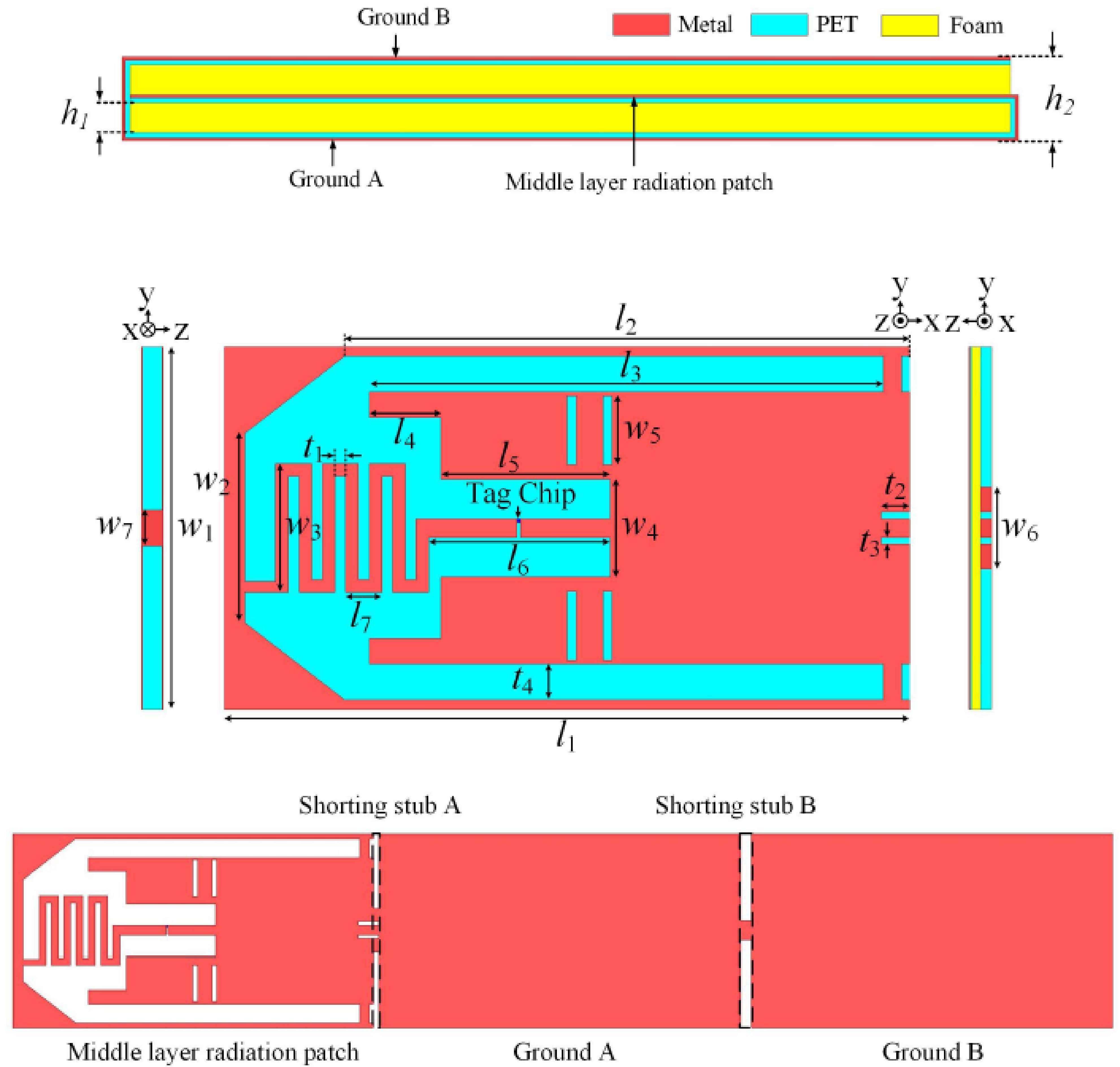
Currently, the inspection and verification of vehicle-related information are done by police inspectors using camera-based systems or manually. Though integrating video technology is more advantageous than manual operation, they do not perform accurately due to bad weather or driving styles. This paper presents the design of a compact, durable, battery-free, UHF RFID tag with enough memory to carry necessary information for automatic identification of traffic law enforcement applications. The vehicle owner can also be alerted when the tag is detected due to the visual indication facility. This tag's novel feature includes adapting a modified T-match structure to match the highly capacitive impedance of the chosen RFID sensor chip, i.e. Farsens Rocky100. In contrast to existing designs, the proposed tag contains no extra lumped components that necessitate an external impedance matching circuit. Instead, the input impedance was matched using an advanced T-match topology and by optimizing the antenna's geometrical features. Simulations were done in Ansys HFSS (High-Frequency Structure Simulator) whereas the dimensions of all the printed elements were fine-tuned using parametric optimization. The tag was fabricated on a low-cost FR4 substrate and measured. The tag with an overall size of 110 × 25 × 2.4 mm3 can be detected by a conventional UHF RFID reader within a range of about 0.2 m-1 m. Due to the loop configuration, the tag exhibits a confined detection range while operating well within short ranges.
A Compact Energy Harvesting RFID Tag for Smart Traffic Law Enforcement Systems
2023-08-04
PIER M
Vol. 118, 93-104
OAM Beam Generation, Steering, and Limitations Using an Intelligent Reflecting Surface
Rafal Hazim , Nidal Qasem and Ahmad Alamayreh
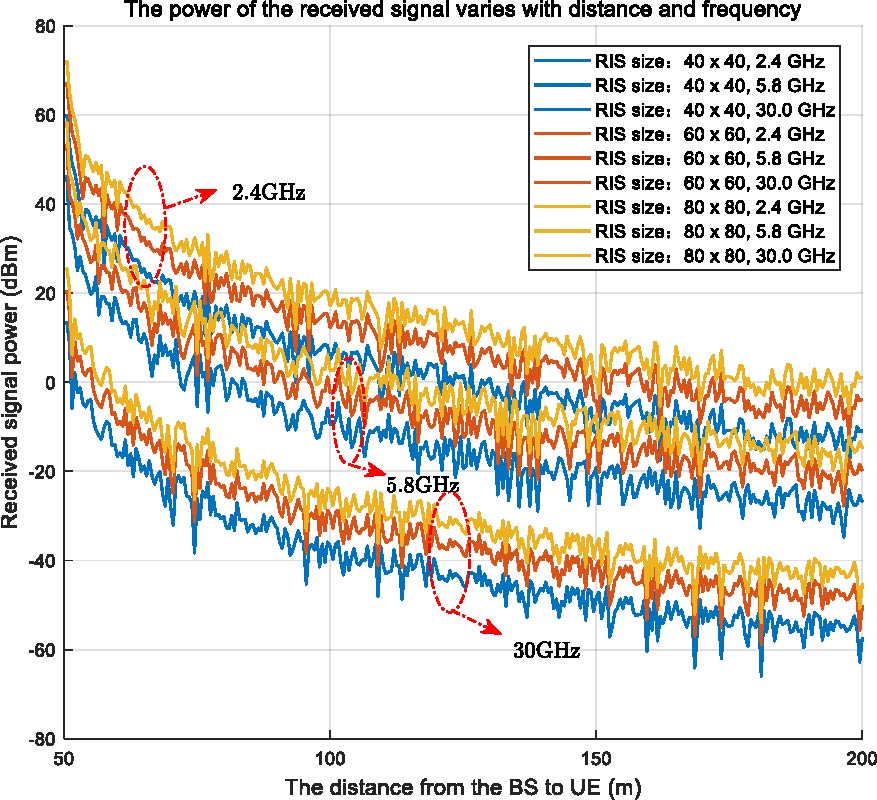
Orbital angular momentum (OAM) is a fundamental characteristic of electromagnetic waves and has gained significant attention in recent years because of its potential applications in various fields of radio and optics. Furthermore, the OAM has been proposed as a means to increase the spectral efficiency of wireless communication systems. By encoding multiple independent data streams on different OAM modes of electromagnetic waves, OAM communication systems can increase the amount of information that can be transmitted over a single radio frequency channel. In this paper, we developed a new method for steering the OAM wave using an intelligent reflective surface (IRS) that is suitable for the far field. Specifically, we designed the IRS coefficients to reflect and steer different multiplexed orders between different users based on OAM waves by controlling the IRS impedance, which can be fluctuated depending on the beam steering direction. Moreover, we investigated the physical limitations of the IRS by noting the relations between the number of transmitted modes, the IRS size, and the impedance values in the IRS. Each impedance element in the IRS consists of real and imaginary values, and the negative values in the real part are used as an indication for reaching the physical limit. One suggestion to decrease the negative real values is by using windowing to decrease the beam waist. The proposed method may enable the extended coverage of OAM wireless communication.
OAM Beam Generation, Steering, and Limitations Using an Intelligent Reflecting Surface
2023-08-04
PIER Letters
Vol. 112, 1-8
Quad Element Reconfigurable Radiation Pattern MIMO Antenna for Indoor Wireless Communication
Thangarasu Deepa and Thipparaju Rama Rao
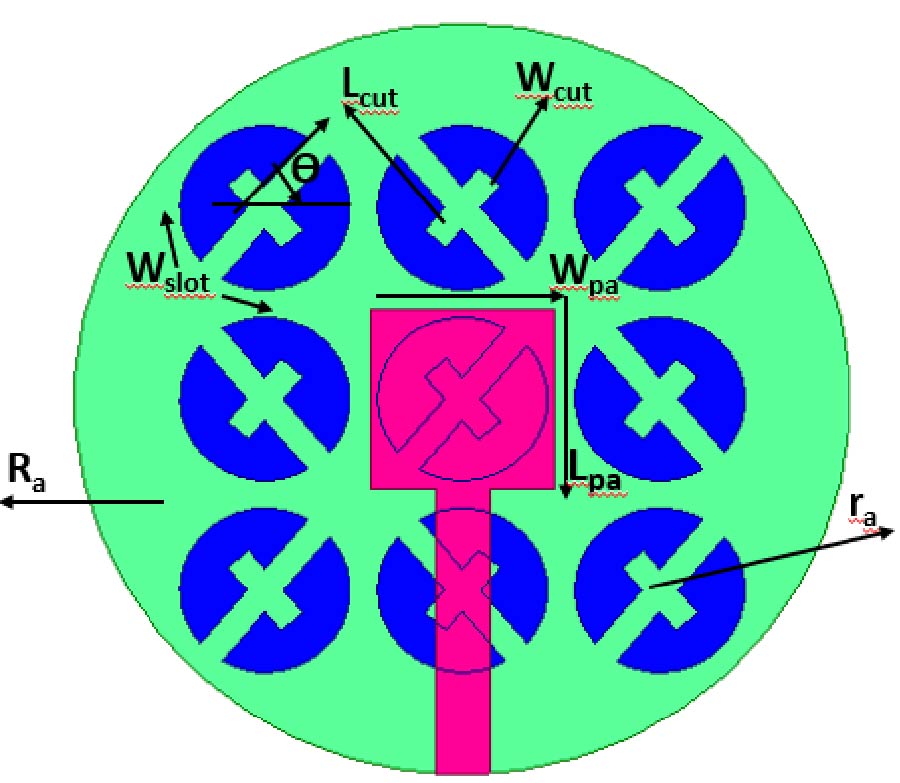
A quad-element reconfigurable radiation pattern Multiple Input Multiple Output (MIMO) antenna is designed for WLAN and 5G applications suitable for indoor wireless communications. Antenna system consists of four radiating elements that operate over triband frequencies 2.4, 3.5 and 5.5 GHz. Moreover, the pattern diversity is obtained by introducing two diagonally crossed slots in the radiator to steer the main beams of the antenna in eight different angular directions using eight PIN diodes. The overall physical dimension of the proposed antenna is about 0.55λ0 × 0.55λ0. In addition, an Acrylonitrile Butadiene Styrene (ABS) enclosure is designed, and the performance of the proposed antenna is evaluated. The measurement results show that the proposed antenna has an impedance bandwidth of 4.18%, 14.13%, and 28.5% at the said frequencies, respectively.
Quad Element Reconfigurable Radiation Pattern MIMO Antenna for Indoor Wireless Communication
2023-08-03
PIER B
Vol. 102, 19-35
Assessment of Human Exposure to High Frequency Fields Generated by Wireless Transmitters: A Simplified Analytical Model
Petra Rasic , Zoran Blazevic and Dragan Poljak
This work examines the effects of high frequency radio transmission on the human body. A magnetic point source is used to generate a signal that is transmitted through the human body at a specified distance. The study was conducted to evaluate the health effects of exposure to high frequency radiation, in relation to current density, induced electric field and specific absorption rate at frequencies of 6.78 MHz and 13.56 MHz. The results for both an equivalent cylinder and a realistic human body model were compared. The analytical method presumes a sinusoidal current distribution along the cylinder and introduces the approximations of field integrals. The numerical simulations by the commercial software FEKO confirmed the analytical results depicted in the paper. The study shows that maximum differences between the results of the proposed analytical model and human model (regardless being realistic or cylinder) are less than 10%. This is convenient because analytical methods can ensure fast estimations of the exposure standard limitations.
Assessment of Human Exposure to High Frequency Fields Generated by Wireless Transmitters: A Simplified Analytical Model
2023-08-02
PIER C
Vol. 135, 173-180
Application of Non-Embedded Uncertainty Analysis Methods in Worst Case Estimation of the EMC
Jinjun Bai , Xintao Geng and Xiaobing Niu
In recent years, the non-embedded uncertainty analysis method has been widely used in the field of Electromagnetic Compatibility due to its wide application range. In this paper, from the perspective of the practical application of uncertainty analysis methods, four non-embedded uncertainty analysis methods are applied to the worst-case estimation of Electromagnetic Compatibility, which are the Monte Carlo Method, Stochastic Collocation Method, Stochastic Reduced-Order Models, and Kriging surrogate model method. The performances of four uncertainty analysis methods in terms of computational accuracy, computational efficiency, and ability to deal with complex problems are compared in detail by using the parallel cable crosstalk prediction example in the existing literature and the uncertainty analysis example of self-constructed optimization test function, which provides a theoretical basis for uncertainty analysis method to guide the actual Electromagnetic Compatibility design.
Application of Non-embedded Uncertainty Analysis Methods in Worst Case Estimation of the EMC