Search Results(13786)

2023-07-23
PIER
Vol. 178, 1-12
Reservoir Computing and Task Performing through Using High-β Lasers with Delayed Optical Feedback
Tao Wang , Can Jiang , Qing Fang , Xingxing Guo , Yahui Zhang , Chaoyuan Jin and Shuiying Xiang
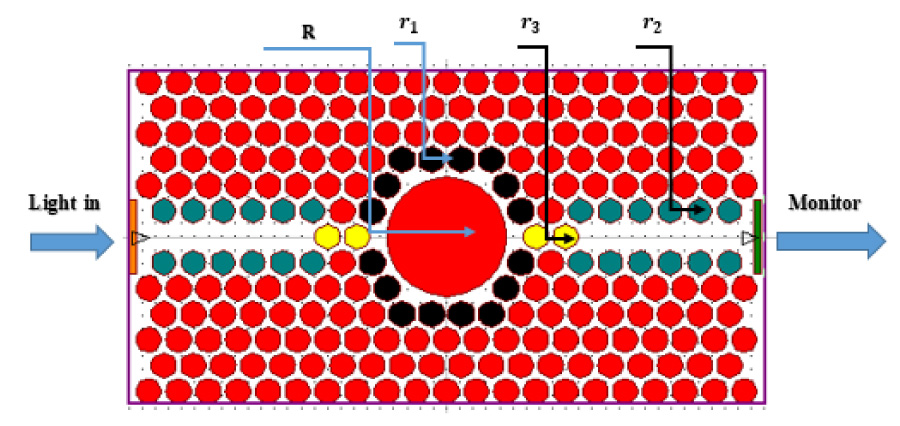
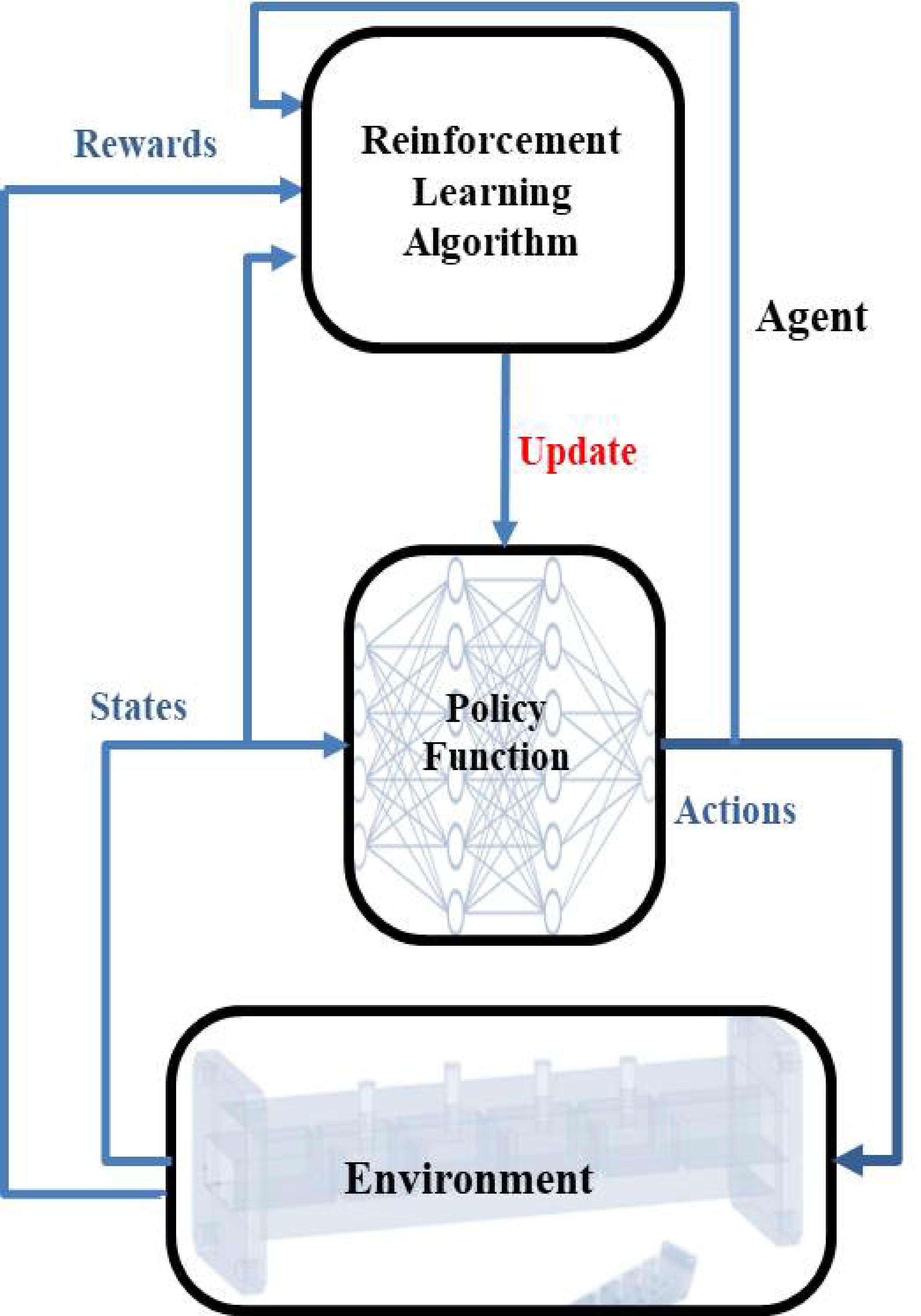
Nonlinear photonic sources including semiconductor lasers have been recently utilized as ideal computation elements for information processing. They supply energy-efficient way and rich dynamics for classification and recognition tasks. In this work, we propose and numerically study the dynamics of complex photonic systems including high-β laser element with delayed feedback and functional current modulation, and employ nonlinear laser dynamics of near-threshold region for the application in reservoir computing. The results indicate a perfect (100%) recognition accuracy for the pattern recognition task and an accuracy about 98% for the Mackey-Glass chaotic sequences prediction. Therefore, the system shows an improvement of performance with low-power consumption. In particular, the error rate is an order of magnitude smaller than previous works. Furthermore, by changing the DC pump, we are able to modify the number of spontaneous emission photons of the system, which then allows us to explore how the laser noise impacts the performance of the reservoir computing system. Through manipulating these variables, we show a deeper understanding on the proposed system, which is helpful for the practical applications of reservoir computing.
Reservoir Computing and Task Performing through Using High-β Lasers with Delayed Optical Feedback
2023-07-23
PIER B
Vol. 101, 137-154
A MIMO PIFA Loaded with CSRR-SRR Quadruplets for WLAN, ISM Band, and S-/C-Band Wireless Applications
Srujana Vahini Nandigama , Kunooru Bharath and Dasari Ramakrishna
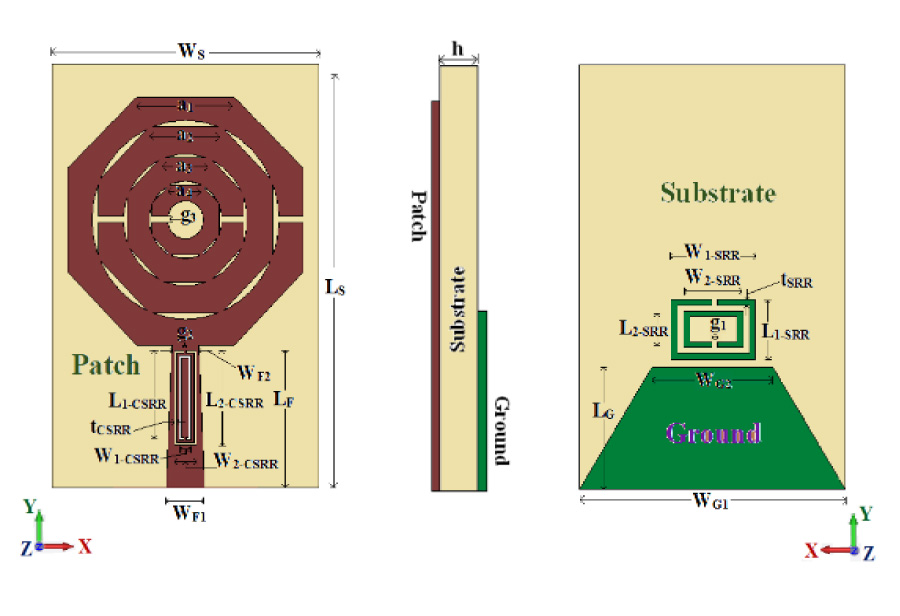
The article presents a multiband symmetrically placed two elements, inverted-F multiple inputs multiple outputs (MIMO) antenna for wireless LAN (WLAN), Industrial, Society and Medical (ISM) band, S-/C-band applications. Decoupling (S12 < -15 dB) between the two antenna elements of MIMO antenna is improved by introducing metallic vias at the top ends of the patch. The MIMO antenna has been fabricated and measured on a piece of low-cost, low-profile, FR-4 substrate. A combination of parasitic loading of 4-units (quadruplet) of square-split ring resonators (SRRs) and complementary split ring resonator (CSRR) cells have been used to achieve quad-bands for lower than -10 dB total active reflection coefficients and additionally to improve isolation between antenna elements. The paper also presents the tabularized and graphical investigations of the analyzed and measured resultant MIMO parameters like; envelope correlation coefficient (ECC), diversity gain (DG), total active reflection coefficients (TARC), MIMO-VSWR (voltage standing wave ratio), channel capacity loss (CCL), etc. and are found approximately close to each other with small acceptable errors. The other important parameters (reflection coefficients, radiation pattern, E-plane and H-plane polar plots, electric field vector (E) distribution, and current density vector (J) distribution) of the proposed antenna were also demonstrated and measured using a vector network analyzer (Agilent N5247A VNA) and 18 GHz Anechoic chamber in the microwave research laboratory. The MIMO (1×2) antenna is best suitable for Bluetooth/WLAN/Wi-Fi (2.45-2.57 GHz) and ISM band, FIXED, MOBILE, RADIO Location, Amateur & Amateur-satellite service (2.45 GHz) within impedance bandwidth (S11 < -10 dB) from 2.45-2.57 GHz lower band, and n46 (5.40-5.49 GHz) upper band.
A MIMO PIFA Loaded with CSRR-SRR Quadruplets for WLAN, ISM Band, and S-/C-band Wireless Applications
2023-07-22
PIER C
Vol. 135, 43-53
Design of Compact Wide-Beam Broadband Antenna for Wide-Angle Scanning Applications
Da Yu , Hongmei Liu , Shuo Li , Zhongbao Wang and Shao-Jun Fang
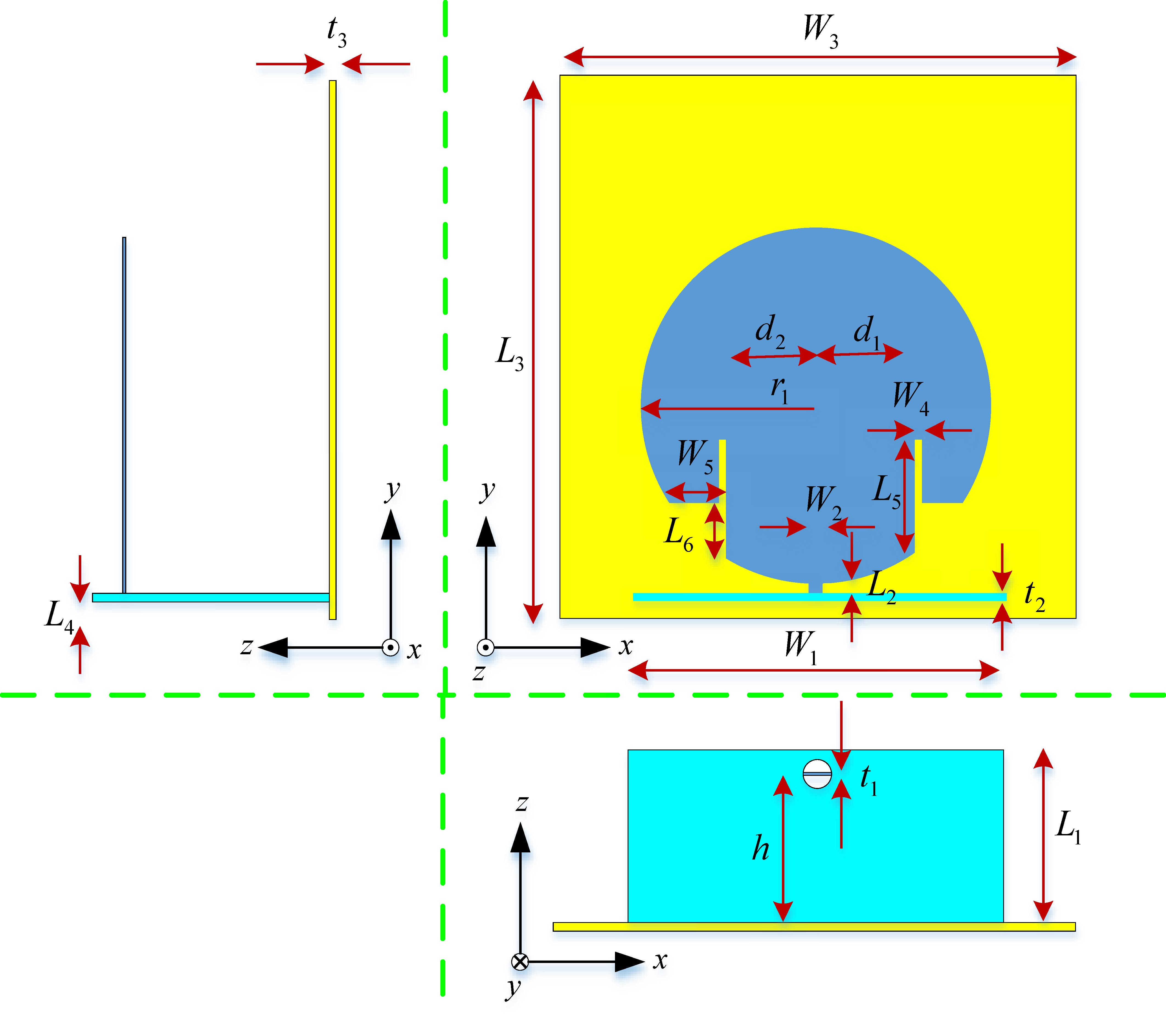
In this paper, a compact antenna with wideband and wide beam is proposed. It is composed of a rectangular patch etched on a substrate, a feeding probe, two metal columns, and a ground plane. By inserting air gap between the substrate and the ground, as well as using the coupled feeding, wide impedance bandwidth is obtained. By inserting two metal columns on the two sides of the patch for inducing longitudinal current, the HPBW of the antenna in the operation bandwidth can be widened. Design evolutions are provided for the proposed antenna, and main parameters are investigated for obtaining the adjusting rules. For validation, a prototype operating at 5.8 GHz is fabricated, where the dimension is only 0.31λ0 × 0.11λ0 × 0.11λ0. Measurement results show that a fractional bandwidth of 24% is achieved for |S11| < -10 dB. In this bandwidth, the measured gain is larger than 2.5 dBi with a maximum gain of 3.5 dBi. At E-plane, the measured HPBWs are in the range of 130°~190°, and the values are around 120° at H-plane.
Design of Compact Wide-beam Broadband Antenna for Wide-angle Scanning Applications
2023-07-21
PIER C
Vol. 135, 35-42
Quasi-Elliptic Triple Passband Filter Using Stub Loaded Step Impedance Resonator and Non-Resonating T Structure
Anirban Neogi and Jyoti Ranjan Panda
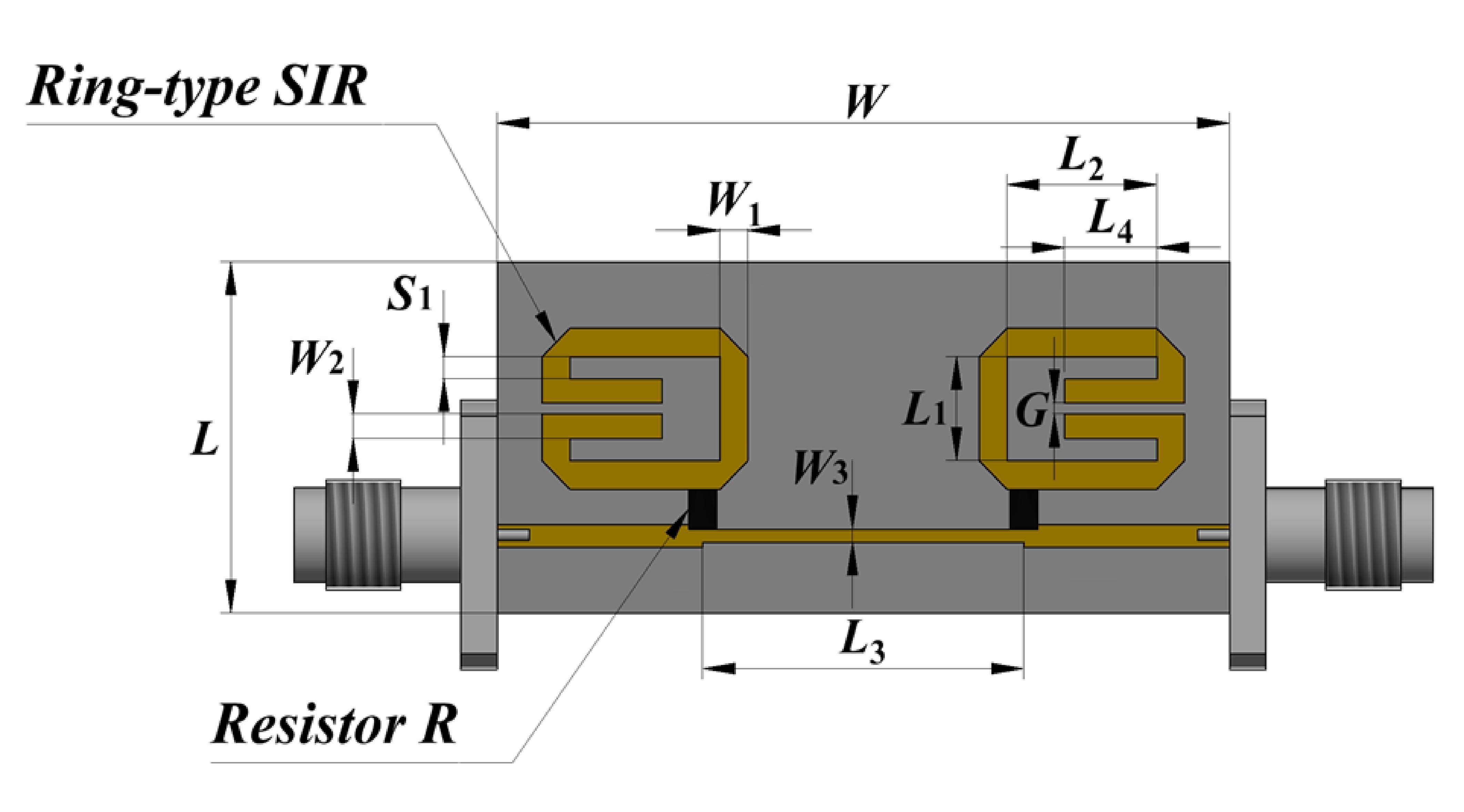
This article presents a simple method to introduce multiple Transmission Zeros in the stopbands of a triple passband Chebyshev filter and also suppress the spurious bands below a satisfactory level, so that it can be treated as a Quasi-Elliptic filter. A pair of Stub Loaded Step Impedance Resonators (SLSIRs) is used to produce the Chebyshev filter with central passbands at 2.5, 5.5, and 9 GHz. An asymmetric Non-Resonating T (NRT) structure is implemented on each of the SLSIR to achieve the improved skirt selectivity. Each non-resonating structure produces three Transmission Zeros (in total six). In addition to the satisfactory stopband performances, the Quasi-Elliptic triple band filter produces insertion losses of |0.4|, |0.6|, and |0.7| dB at three centre frequencies respectively. Simulation of the proposed filter is done using HFSS13 software, and to validate the simulation, a prototype is fabricated on an Arlon AD250 (Dielectric Constant 2.5, height 0.76 mm) substrate.
Quasi-elliptic Triple Passband Filter Using Stub Loaded Step Impedance Resonator and Non-resonating T structure
2023-07-20
PIER M
Vol. 118, 37-46
Optically Transparent Dual-Polarized Cross Dipole Antenna with Metal Mesh Film for 5G Applications
Haowei Xi , Xiao-Liang Ge , Kuiwen Xu , Jianhua Shen , Xianglong Liu and Su Xu
Optically transparent antennas have attracted increasing interest in recent years. However, the inherent ohmic loss of transparent conductor used in antennas will always introduce degradation of radiation efficiency. It is of most importance to find the optimization between the material loss and radiation efficiency. In this paper, we design and experimentally demonstrate a high-performance optically transparent dual-polarized cross dipole antenna over 3.4-3.8 GHz for 5G wireless communication based on the characteristic analysis of surface current distribution. By making current distribution uniform on the radiators and reducing the current on the ground, the mutual coupling between the elements is alleviated, and the radiation efficiency can be optimized. The proposed antenna is fabricated with 0.118-Ohm/sq meshed metal, and the optical transparency of antenna is 81%. The proposed antenna achieves a voltage standing wave ratio (VSWR) of less than 1.3, radiation efficiency of 72% (84% of pure copper) and a peak gain of 4.5 dBi (5.1 dBi of pure copper). Compared to current state-of-arts, the proposed antenna exhibits better performance of the figure of merit (FOM) in terms of the bandwidth, optical transparency and radiation efficiency. Our work paves the way to diverse application of beyond-5G wireless communication.
Optically Transparent Dual-polarized Cross Dipole Antenna with Metal Mesh Film for 5G Applications
2023-07-19
PIER
Vol. 177, 107-126
Remote Material Characterization with Complex Baseband FMCW Radar Sensors
Ahmed M. Hegazy , Mostafa Alizadeh , Amr Samir , Mohamed Basha and Safieddin Safavi-Naeini
This paper presents the theoretical basis and experimental validation for a technique to remotely characterize materials using FMCW radar sensors with complex baseband architecture. Our theoretical work proves that the magnitude and phase of the input reflection coefficient of a material can be accurately extracted from the baseband data of a complex-baseband FMCW radar. This complex reflection coefficient can be used to calculate the dielectric constant, loss tangent, thickness, and layer setup of a material with high accuracy due to the extra information obtained from the phase of the reflection coefficient. The analysis starts with a theoretical model for the complex reflection coefficient of a flat material slab suspended in air. We then introduce a formulation for the complex reflection coefficient existing in the complex baseband of an FMCW radar signal. We finally present the experimental testing preformed using TI mmWave radar on two different material samples and introduce the test results for extracting the material dielectric properties and thickness using three different extraction methods compared against nominal values from literature. The test results prove the high accuracy of our technique resulting from the utilization of both magnitude and phase information of the input refection coefficient, despite the relatively long free-space measurement distance and the multi-path reflections test environment.
Remote Material Characterization with Complex Baseband FMCW Radar Sensors
2023-07-19
PIER C
Vol. 135, 23-34
A 3 dB Compact UWB Hybrid Coupler for 5G Millimeter-Wave Applications
Mohamed Atef Abbas , Abdemegeed Mahmoud M. A. Allam , Abdelhamid Gaafar , Hadia El-Hennawy and Mohamed Fathy Abo Sree
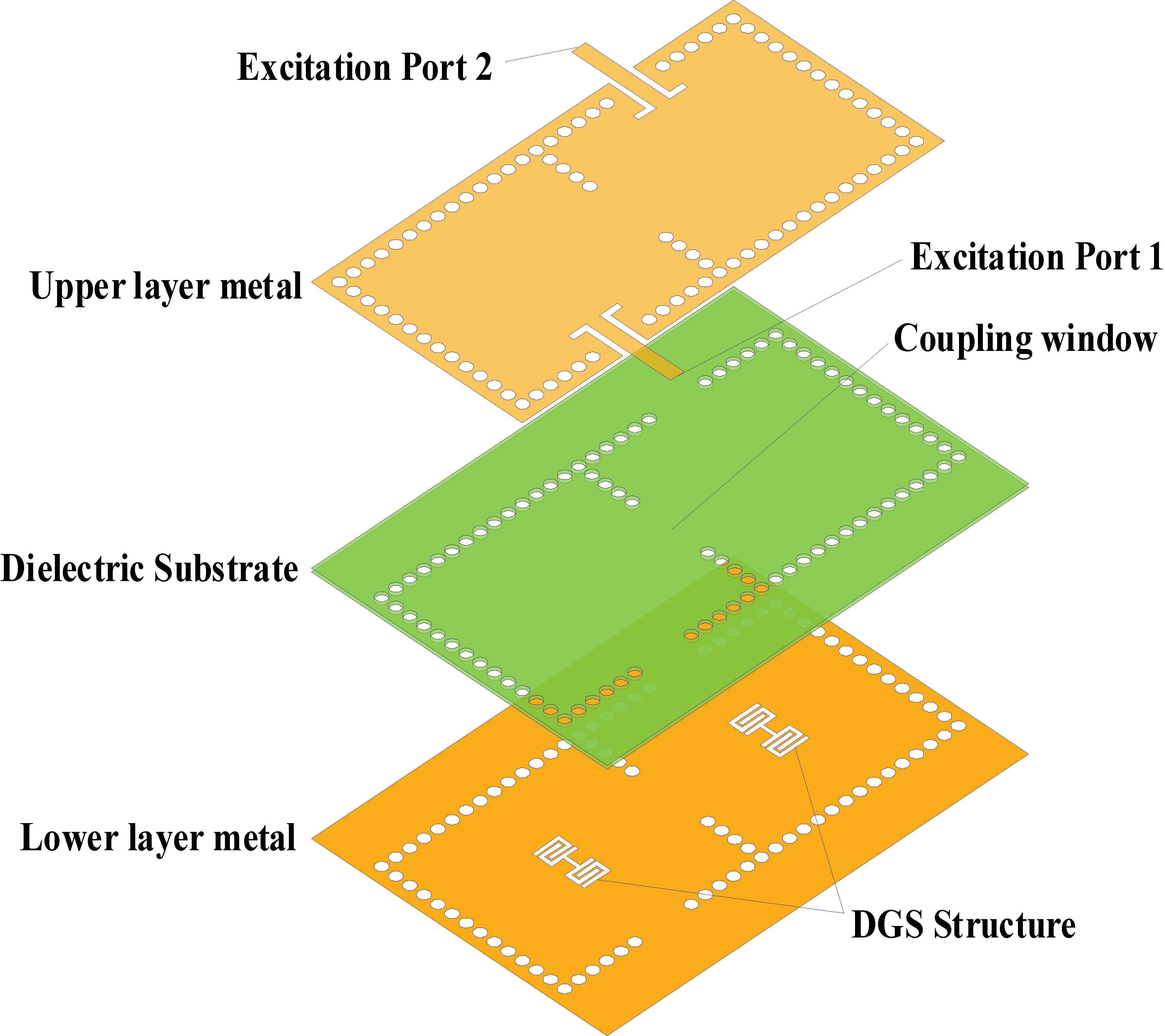
This paper presents a 3 dB compact Ultra-Wide-Band (UWB) Substrate Integrated Gap Waveguide (SIGW) based hybrid coupler suitable for 5G mm-wave applications. It is a key component in signal processing for wireless communication. It provides a way to control the power distribution of the signal along different ports. It could be used to achieve beamforming and adaptive antenna system. The design steps started with implementing a unit cell of the gap waveguide structure satisfying the required bandwidth of the coupler. A supercell is then implemented. A network of complete ridges is constructed. A further step is to design a coupling section which achieves the required power distribution along the coupling and isolated ports. This coupling section is implemented using a novel approach of inserting an elliptical slot with variable major and minor axes with a certain orientation that achieves the standard performance of a 3 dB directional coupler with 90° ± 5% phase shift. For precise adjustment of this amplitude and phase, vias are further added perpendicular to the major axis of the slot. Its dimension and location have to be optimized. The Finite-Integral-Time-Domain (FDTD) analysis method is adopted (CST Microwave Studio). In addition, another novel approach is developed on this coupler such that the transition and gap layer is implemented on the same PCB layer, which saves the number of layers to only two layers compared to the usual three layers used in literature. Also, using SIGW technology saves the collapse of the top ground layer on the ridge structure, and only plastic pins are used to fix the two layers. The proposed coupler is fabricated and tested, and the results show that it serves the majority of frequency bands employed in 5G systems in the USA and Canada.
A 3 dB Compact UWB Hybrid Coupler for 5G Millimeter-wave Applications
2023-07-19
PIER M
Vol. 118, 25-35
Moving Metallic Slab Illuminated by a Plane Wave: Theory and Numerical Analysis Using the Finite Difference Time Domain Method
Mohammad Marvasti and Halim Boutayeb
The response of a uniformly moving metallic slab to an electromagnetic plane wave, at normal incidence, is studied. The analysis is based on the application of boundary conditions to Maxwell's equations as a function of time. The Doppler effect and amplitude of the obtained reflected wave agree with the literature. Moreover, a transferred wave which has not been analyzed in the literature is demonstrated. The frequency shift and the amplitude of this wave are studied analytically with the same technique used for the reflected wave. The transfer of electromagnetic wave through the metallic slab is made possible by the presence of a static magnetic field inside the moving metallic slab, if the motion of the slab is opposite to the direction of propagation of the incident wave. The amplitude of the transferred wave is approximately 2v/c times the amplitude of the incidence wave, with v being the speed of motion and c the speed of light in vacuum. This amplitude is thus very small for non-relativistic speeds. The analytical results are validated by full-wave simulations based on the Finite Difference Time Domain method, where both reflected and transferred waves are demonstrated. Furthermore, numerical electric field and magnetic field distributions are presented at different time instants.
Moving Metallic Slab Illuminated by a Plane Wave: Theory and Numerical Analysis Using the Finite Difference Time Domain Method
2023-07-18
PIER Letters
Vol. 111, 93-102
High Sensitivity Passive Wireless Humidity Sensor Based on Polyvinyl Alcohol
Bo Wang , Fei Gao , Youwei Li , Ke Wang and Shengli Cao
A low cost and compact chipless Radio Frequency Identification (RFID) humidity sensor with the size of 18 * 18 * 0.5 mm3 is designed for environmental humidity monitor. The sensor consists of a circular resonator and a rectangular substrate, which utilizes the polyvinyl alcohol (PVA) humidity sensitive material for relative humidity (RH) sensing. The PVA humidity sensitive material covers the sensor surface. The working principle of the sensor is that the change of environmental humidity results in the changing of dielectric constant of PVA and thus shifting of the resonant frequency of the sensor. The real-time humidity can be observed by monitoring the resonant frequency. The simulation results show that the humidity sensing range of the designed humidity sensor is 21.9% RH~52.5% RH, corresponding to the resonant frequency range of the sensor from 2.76 GHz to 2.51 GHz with the total offset 250 MHz. The maximum humidity sensitivity was 23.08 MHz/% RH within the monitoring range. The designed humidity sensor has the advantages of low cost, compact and simple structure, which is suitable for humidity monitoring in various complex environments.
High Sensitivity Passive Wireless Humidity Sensor Based on Polyvinyl Alcohol
2023-07-17
PIER C
Vol. 135, 13-22
A Novel EBG Dual-Band Antenna Structure for X-Band and WLAN Applications
Loubna Rmili , Bousselham Samoudi , Adel Asselman and Sanae Dellaoui
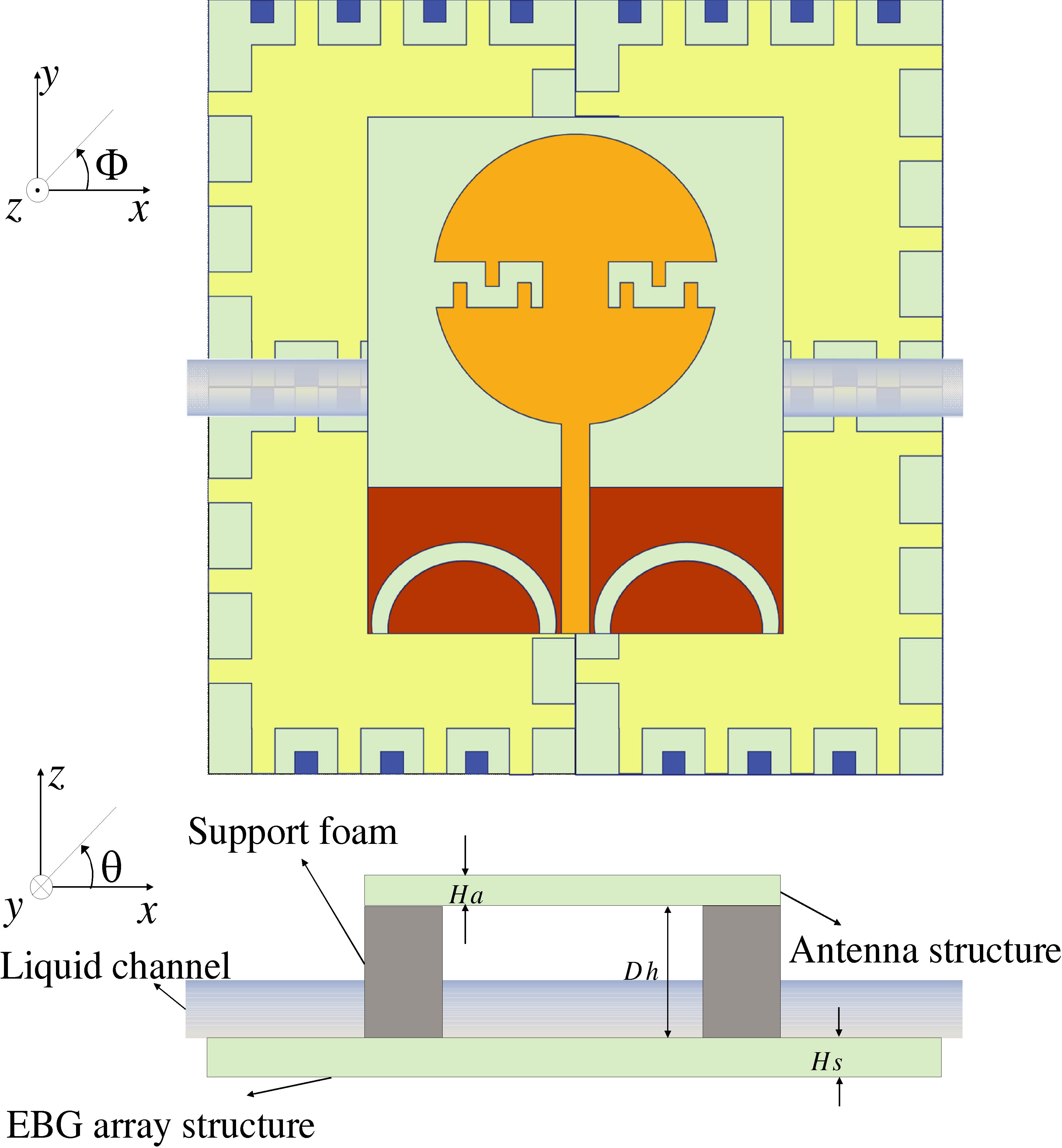
This paper presents a novel dual-band dielectric electromagnetic band gap (EBG) antenna that operates in both wireless local area network (WLAN) and X-band satellite applications. The proposed structure comprises new double EBG layers placed on the top face and fed by a coaxial probe. The design and parametric analysis of the band gap structure have been performed using Ansys HFSS simulation software. The measurement results are found in good agreement with the simulation results, indicating that the proposed antenna design is a promising solution for dual-band applications. As a result, we have found significant enhancement in gain up to 8.1 dB and 9.3 dB at both frequencies of 5 GHz and 9.8 GHz.
A Novel EBG Dual-band Antenna Structure for X-band and WLAN Applications
2023-07-17
PIER B
Vol. 101, 119-135
Element Thinning Using Discrete Cat Swarm Optimization for 5G/6G Applications
Sahiti Vankayalapati , Lakshman Pappula and Debalina Ghosh
An efficient method for designing narrow beams having minimum peak side lobe level (PSLL) and maintaining power efficiency (reducing active elements) for 5G/6G base stations with large antenna arrays is proposed. To ensure high efficiency in a multi-dimensional complex nonlinear optimization problem with several constraints thinning of antenna of antenna arrays is considered. For performing exhaustive search on the large number of feasible solutions a novel algorithm named discrete cat swarm optimization (DCSO) is usedand is a binary adaptation of real-valued cat swarm optimization (CSO). To testify the efficiency of DCSO a set of standard benchmarked multimodal functions are used. The proposed algorithmsexhibit heuristic nature, so the stability of the proposed method has been authenticated by using statistical test. Later the algorithm is applied to the optimization of a large planar antenna array (PAA) of size 10×20 (200 elements) to suppress the PSLL. Furthermore, the results of the synthesis are compared with literature marking low PSLL and convergence speed as pointers. The comparative results delineate the superiority of the DCSO over the existing discrete versioned traditional algorithms with respect to solution accuracy and speed of convergence. DCSO introducesa higher degree of flexibility to the field of binary-valued thinned antenna array synthesis problems.
Element Thinning Using Discrete Cat Swarm Optimization for 5G/6G Applications
2023-07-16
PIER C
Vol. 134, 249-261
Design of Three-Band Two-Port MIMO Antenna for 5G and Future 6G Applications Based on Fence-Shaped Decoupling Structure
Zhonggen Wang , Wanying Ren , Wenyan Nie , Weidong Mu and Chenlu Li
In this paper, a new design of a highly isolated tri-band antenna for 5G and future 6G applications is proposed. The overall dimensions of the proposed antenna are just 56.4 × 36.6 mm2; moreover, it contains two monopole antenna units and a defective ground. The tri-band characteristics of the antenna are achieved by improving the single antenna patch structure. The structure is improved based on the original T-shaped decoupling structure to create a fence-shaped decoupling structure consisting of an improved T-shaped and an improved rectangular structure. This will greatly improve isolation by efficiently absorbing the coupling current. Therefore, the proposed antenna system is designed and tested to reach the 5G dual bands of 3.38 GHz-3.61 GHz, 4.51 GHz-4.96 GHz, and the future 6G band of 6.06 GHz-7.51 GHz. The results show that, relative to other antennas, this antenna has an isolation degree in the operating band greater than 13.1 dB. In addition, the antenna has good radiation characteristics and an acceptable envelope correlation coefficient.
Design of Three-band Two-port MIMO Antenna for 5G and Future 6G Applications Based on Fence-shaped Decoupling Structure
2023-07-15
PIER B
Vol. 101, 101-117
A Uniform Additional Term Using Fock-Type Integral to Unify Edge Diffraction, Creeping Diffraction, and Reflection in Lit and Shadowed Regions
Xin Du and Jun-Ichi Takada
The uniform geometrical theory of diffraction (UTD) calculating edge diffraction, creeping diffraction, and reflection, has been widely used to predict the shadowing problems for the beyond 5th generation. The limitation of the previous work, which only discussed the relationship between edge diffraction and reflection in the lit region, has motivated the analysis of the difference between creeping diffraction and edge diffraction in the shadowed region. In this paper, as the difference between creeping diffraction and edge diffraction from a dielectric circular cylinder and an absorber screen, respectively, a novel additional term is derived based on the UTD in the shadowed region. In addition, a uniform additional term using the Fock-type integral is proposed to unify the formulations in the lit and shadowed regions. The proposed uniform additional term is validated by the UTD and exact solutions of a dielectric circular cylinder at millimeter-wave or sub-terahertz bands. From the discussion of the results, the proposal can not only unify the formulations in the lit and shadowed regions but also eliminate the fictitious interference. Through the proposal, we can separate the contribution of the shadowed Fresnel zone number (FZ) and boundary conditions (i.e., the surface impedance and polarization). The frequency characteristics of the shadowed FZ and boundary conditions are analyzed and simulated near a shadow boundary at a high frequency (10 GHz-100 GHz). The results imply that there is almost no dependency (less than 1 dB) on boundary conditions in the lit region while there are few dependencies (more than 1 dB) on boundary conditions in the shadowed region. This work attempts to unify three different propagation mechanisms, i.e., reflection, edge diffraction, and creeping diffraction, by using one formula.
A Uniform Additional Term Using Fock-type Integral to Unify Edge Diffraction, Creeping Diffraction, and Reflection in Lit and Shadowed Regions
2023-07-14
PIER C
Vol. 135, 1-11
Analysis and Fabrication of Conductive Strip and Paint-Based Hemispherical Helical Antennas on 3D Printed Structure
Purno Ghosh and Frances Harackiewicz
Fabrication of a non-planar helical antenna while maintaining mechanical stability and durability is always challenging. Moreover, impedance matching is an issue for helix-type antennas. To ease the fabrication challenge, the advantage of additive manufacturing is utilized. For achieving the self-matching, radiating spiral conductors in the forms of a strip and thick wire are used as two independent techniques. Consequently, a 3-turn hemispherical helical antenna (HHA) is chosen and analyzed by varying the width of the strip and the diameter of the wire. The better-performing HHA is again investigated including the effect of Poly-lactic acid (PLA) material-based supportive structure. The impacts of this extra support on antenna performance parameters are also investigated. At the initial step of fabrication, a 3-D printer is used to have the complete support structure. For ensuring the metallic part, copper strips and conductive paints are used as two different approaches. The measured data validates that both strip and wire-based HHA are self-matched. Circular polarization is obtained over wide frequency bands with axial ratio bandwidth (AR BW) of 35%. The maximum gain and beamwidths under 3-dB AR BW are 9.35 dBi and 118° respectively. The mechanically stable, low profile, and wideband circular polarization favored theuse of HHA in satellite communication.
Analysis and Fabrication of Conductive Strip and Paint-based Hemispherical Helical Antennas on 3D Printed Structure
2023-07-14
PIER C
Vol. 134, 237-247
A Fourth-Order Bandpass Filter with High Selectivity and Out-of-Band Suppression
Min-Ming Sun , Yun-Sheng Xu , Qiao Zhang , Chang Chen and Lingyun Zhou
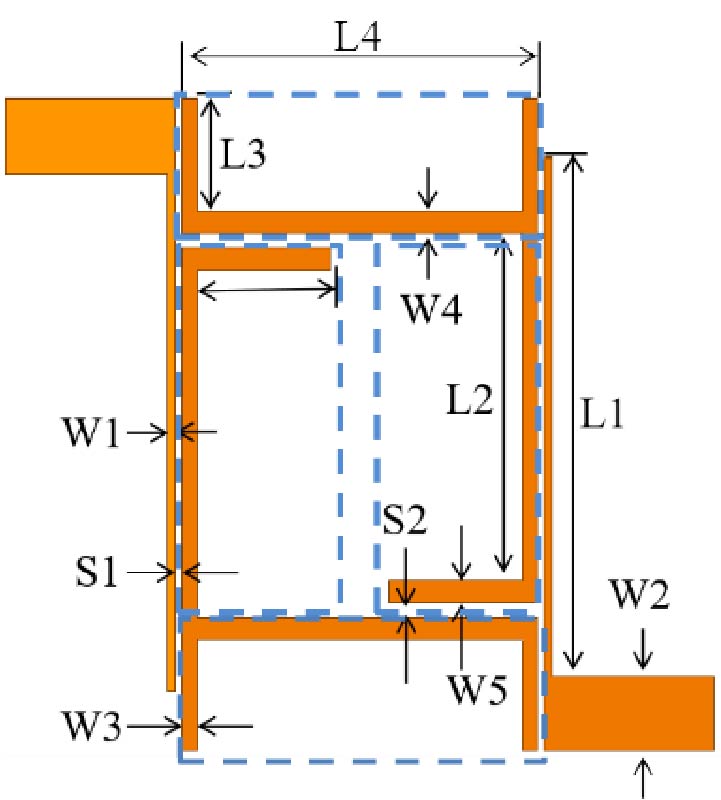
This paper presents a novel fourth-order bandpass filter with high selectivity and out-of-band suppression based on equivalent magnetic side wall cavities (MSWCs). By loading a via hole into an MSWC to produce a zero mode as a non-resonating node and using the dual MSWC modes TEM001 and TE100 as resonant modes, a modified doublet with two poles and two transmission zeros (TZs) can be formed. Three types of frequency response, either quasi-elliptic or asymmetric, can be obtained and designed flexibly. The TZs can be located on both sides of the passband or both on just one side. The mechanisms for generating the TZs are analyzed, and the adjustment of the TZ positions is discussed. The proposed four-pole quasi-elliptic filter with four TZs is a cascade of two such doublets with two different types of asymmetric response. It has been fabricated and measured to validate the design. Comparison is made with some previous work on substrate integrated waveguide filters. The developed filter is free from radiation and relatively compact among high order filters with multiple adjustable TZs based on cascaded cavities of the substrate integrated waveguide type.
A Fourth-order Bandpass Filter with High Selectivity and Out-of-band Suppression
2023-07-14
PIER Letters
Vol. 111, 85-91
Compact Ultra-Wideband Circularly Polarized Crossed-Dipole Antenna with Wide Angle Coverage
Chao Li , Ze-Hong Yan and Wei Hu
This letter presents a compact ultra-wideband circularly polarized (CP) crossed-dipole antenna with enhanced axial-ratio beamwidth (ARBW) and half-power beamwidth (HPBW). It consists of four modified arms which are fed by vacant-quarter phase delay rings to excite CP radiation. Four parasitic elements are utilized rotationally between the dipoles and the reflector. Not only does inducing vertical currents on the parasitic patches excite additional impedance resonance to realize an ultra-wideband operating, but also reinforced radiation is obtained to improve the ARBW and HPBW. The experimental results show that the proposed antenna realizes a -10 dB impedance bandwidth of 134.3%, and a 3 dB axial-ratio (AR) bandwidth of 115.0%, while holding a compact volume of 0.25λL × 0.25λL × 0.09λLL: wavelength at the lowest operating frequency). Furthermore, an HPBW and ARBW of more than 110° and 160° are realized within a broad operating band of 67.5% and 55.0%, respectively.
Compact Ultra-wideband Circularly Polarized Crossed-dipole Antenna with Wide Angle Coverage
2023-07-13
PIER C
Vol. 134, 223-236
Towards Validatinga Coaxial Transmission Cell for Dielectric Measurements on Liquids
Bayan Tallawi , Floriane Sparma , Eric Georgin and Pierre Sabouroux
Moisture measurement in industrial applications, both in liquid and solid materials, presents a significant challenge. In the field of biofuels, this becomes even more critical. Among the various approaches developed for this purpose, indirect electromagnetic techniques have emerged as a valuable tool for accurately estimating moisture content. These techniques utilize the complex dielectric permittivity ε as an intermediary parameter, which is influenced by the water content in the material. As a first step toward this purpose, a 1''5/8 two-port coaxial transmission cell, developed at LNE-CETIAT, was studied to make dielectric measurements on liquids. Characterization and validation steps were requested to demonstrate the accuracy of this cell. For this purpose, an intra-laboratory comparison has been performed first at LNE-CETIAT using the 1''5/8 cell and the EpsiMu® coaxial cell - a fully validated reference tool. Then, an inter-laboratory comparison with the Fresnel Institute has been performed using a coaxial probe and another EpsiMu®cell. The measurements were carried out under identical ambient conditions, using liquid reference materials. In this work, the performance of the developed cell in the frequency band [0,1-1,1] GHz has been validated, as well as the accuracy of the three electromagnetic techniques used. The results of the experiments confirm the effectiveness of the 1''5/8 cell developed at LNE-CETIAT for measuring the dielectric properties of liquids.
Towards Validatinga Coaxial Transmission Cell for Dielectric Measurements on Liquids
2023-07-13
PIER C
Vol. 134, 211-222
W-Shaped Eight-Port Wideband MIMO Antenna
Hussein Mohammed Naser , Oras Ahmed Shareef and Mahmood Farhan Mosleh
The main challenges of designing an antenna for modern wireless communication are size reduction and mutual coupling. An ultra-wideband (UWB) multiple input multiple outputs (MIMO) antennae with four elements is suggested by this paper. Each element has two ports with dual-polarized patches to reduce the result of reciprocal coupling, increase the capacity, and keep a proper size. A circular geometric shape is in front of the patch of the proposed antenna to reduce the impact of mutual coupling. The CST STUDIO 2019 program simulates the single antenna element and MIMO antenna using the four integrated elements, eight integrated ports, and an Fr-4 insulating layer in an area of (70 x 70) mm2. The MIMO antenna's operating frequency, which has a band of 2.85 (3.15-6) GHz at -10 dB, is 3.67 GHz while the operating frequency of a single antenna element, which has a band of 2.8 (3.1-5.9) GHz at -10 dB and a resonance return loss of -36 dB, is 3.64 GHz. The MIMO antennas obtained a diversity gain (DG) of about 10 with a good gain of about 8 dB while the envelope correlation coefficient (ECC) was equal to or less than 0.0001.
W-shaped Eight-port Wideband MIMO Antenna
2023-07-13
PIER B
Vol. 101, 85-100
Quasi-Stationary Approximation of Dynamic Inductive Wireless Power Transfer
Luiz Lisboa Cardoso , José Alberto , Andrés Nogueiras Meléndez and João L. Afonso
Dynamic Inductive Wireless Power Transfer (DIWPT), used for charging and powering electric vehicles (EVs), has been presented lately as a solution for increasing the distance range of electric vehicles and reducing the utilization of heavy and bulky battery systems. In most DIWPT designs, the voltage induced by the movement of the receiving coil over a time-varying magnetic field is neglected and never quantified. In this work, a simplified phasor expression for the total induced voltage on a coil that is moving in a sinusoidal time-variant magnetic vector field is developed. If no rotation is observed in the coil, a 90˚ out of phase voltage component proportional to the speed of the coil is added to the induced voltage that would be calculated if the coil was stationary. The phase of this voltage component is delayed or advanced with respect to the stationary induced voltage, according to whether the coil is moving into or out of a region of higher magnetic flux. Then, under some assumptions on the geometry of inductive coil configurations, it is possible to estimate the minimum induction frequency for which the quasi-stationary approximation can be considered. The resulting frequency value for a representative geometry is calculated, indicating that, for automotive applications, the relative error in the induced voltage is actually negligible, except in the vicinity of the points of zero-crossing in the magnetic flux, where the absolute value of the induced voltage is low anyway.
Quasi-stationary Approximation of Dynamic Inductive Wireless Power Transfer
2023-07-12
PIER C
Vol. 134, 197-209
Resistance Loaded UWB MIMO with Enhanced Isolation for S and C Band Applications
Aditi Sharma , Sumit Kumar Gupta , Robert Mark , Bhawna Shukla and Soma Das
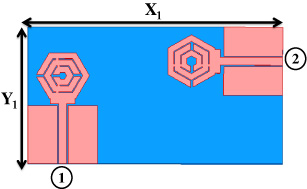
A hexagon-shaped fractal ultra-wideband (UWB) Multiple Input Multiple Output (MIMO) antenna is proposed in this paper for S (2 GHz to 4 GHz) and C (4 GHz to 8 GHz) band applications. The proposed design consists of two microstrip fed radiating elements of dimension 82 × 44 × 1.6 mm3. One rectangular stub and four resistance loaded stubs are introduced in the ground plane to reduce the mutual coupling between the radiators. These decoupling structures reduce the notches and enhance the isolation from -5 dB to -20 dB for the entire frequency range from 2.3 to 7.4 GHz. The performance characteristics and diversity parameters are also investigated which show the values of ECC < 0.004, DG > 9.96, CCL < 0.4 and MEG < 3 dB, and it is concluded that the proposed design is a good candidate for UWB MIMO. The proposed design is fabricated and tested which shows the close agreement between the simulated and measured results.
Resistance Loaded UWB MIMO with Enhanced Isolation for S and C Band Applications