Search Results(13786)

2023-06-28
PIER C
Vol. 134, 53-63
A Small-Scaled Super Wideband Circular Ring Fractal Antenna with High BDR for SHF Applications
Shobit Agarwal and Umair Rafique
This paper presents a miniaturized super wideband (SWB) antenna that has a high bandwidth dimension ratio (BDR). It is intended for use in microwave and millimeter-wave (mmWave) frequency applications. The designed antenna ensures low-dispersive behavior for both near- and far-field performance. The radiating element is composed of three circular rings that are interconnected by conical-shaped metal strips which lead to a fractal geometry. The design incorporates a partial ground plane and two parasitic patches located at the bottom and top sides of the substrate, respectively. The parasitic strips serve the purpose of enhancing impedance matching at lower frequency bands and reducing spurious radiation that may arise from the feed line. The proposed antenna has an overall size of 20×20 mm2 and exhibits an impedance bandwidth (IBW) of ≈57 GHz, spanning from 2.86 to beyond 60 GHz with a fractional bandwidth (FBW) of 181.8%, a ratio bandwidth (RBW) of 21:1, and a BDR of 5036. Furthermore, the peak gain value is observed to be ≈11 dBi, while the average gain within the operating range is ≈6 dBi. The proposed antenna design was also fabricated and tested, and experimental results show a reasonable agreement with the simulated data. This makes the antenna extremely suitable for energy harvesting applications in future fifth-generation (5G) and sixth-generation (6G) networks.
A Small-scaled Super Wideband Circular Ring Fractal Antenna with High BDR for SHF Applications
2023-06-28
PIER M
Vol. 117, 139-150
A Design Method of Compact Metasurface-Based Dual-Band Planar Lens Antennas for Multibeam Applications
Shucheng Ni , Xiang-Qiang Li , Jinran Yin , Qingfeng Wang and Jianqiong Zhang
A design method of compact dual-band multi-beam antennas is proposed by integrating a dual-band metasurface lens with a dual-band planar antenna array in this paper. The dual-band multi-beam antenna designed through this method has a compact configuration, low cost, and is easy to integrate with other devices for communication. The dual-band multi-beam function of the antenna by this method has been verified through a double-layer dual-band metasurface lens and a five-element dual-bandplanar antenna array. A dual-band meta-cell with relatively independent performance at 13 GHz and 23.5 GHz is designed to form the metasurface lens. Dual-band magnetoelectric (ME) dipole antenna is used as the feed antenna element. The simulated and tested results indicate that the lens antenna generates five independent beams at both 13 GHz and 23.5 GHz. Considering practical applications, solutions to improve antenna performance and reduce losses have also been proposed.
A Design Method of Compact Metasurface-based Dual-band Planar Lens Antennas for Multibeam Applications
2023-06-27
PIER C
Vol. 134, 39-52
Synthesis of Linear Antenna Array for Wireless Power Transmission
Hua Guo , Jiajie Li , Huiliang Hao , Peng Song , Lijian Zhang and Xiaodan Zhang
A new synthesis method of linear array antenna for wireless power transmission is introduced based on invasive weed algorithm in this paper. In order to improve the beam collection efficiency, the subarray division is carried out in the case of different azimuth angles and different numbers of array elements, respectively. Under the constraints of aperture size and minimum element spacing, the element positions, excitation coefficients and the element numbers of subarrays are optimized simultaneously. Compared with the optimization results obtained by other literature, it can be found that the proposed method in this paper can obtain a higher beam collection efficiency.
Synthesis of Linear Antenna Array for Wireless Power Transmission
2023-06-27
PIER M
Vol. 117, 129-138
Principal Component Analysis Accelerated the Iterative Convergence of the Characteristic Mode Basis Function Method for Analyzing Electromagnetic Scattering Problems
Zhonggen Wang , Fei Guo , Wenyan Nie , Yufa Sun and Pan Wang
According to the characteristic mode basis function method (CMBFM) in analyzing electrically large problems, blocking and extending lead to the problem of slow convergence in the iterative solution of a reduced matrix equation, and the characteristic mode basis function method combined with principal component analysis (CMBFM-PCA) is proposed in this study. The characteristic modes (CMs), calculated from each extended block, are subjected to PCA to enhance the orthogonality between them and improve the reduced matrix's condition number to facilitate its quick convergence through an iterative solution. The corresponding numerical calculations demonstrate that significant efficiency and accuracy are achieved by the proposed method.
Principal Component Analysis Accelerated the Iterative Convergence of the Characteristic Mode Basis Function Method for Analyzing Electromagnetic Scattering Problems
2023-06-27
PIER Letters
Vol. 111, 61-70
A Novel Dual-Band Series-Fed Antenna Array with Independently Controllable Beam Direction
Chen-Xi Wang and Dong Chen
In this paper, a novel dual-band series-fed array (SFA) has been proposed. By introducing a new dual-band series-fed network (SFN) consisting of uniform transmission lines (TLs) and C-sections, independent beam direction can be realized. The design procedure for the proposed dual-band SFA has also been presented in this paper. To validate the design method, a prototype antenna has been fabricated and measured. The experimental results verify the performance of the proposed dual-band SFA.
A Novel Dual-band Series-fed Antenna Array with Independently Controllable Beam Direction
2023-06-27
PIER B
Vol. 101, 17-44
Stabilization of Evanescent Wave Propagation Operators
Michael Andersson , Daniel Sjöberg and Gerhard Kristensson
This paper presents a stabilized scheme that solves the wave propagation problem in a general bianisotropic, stratified medium. The method utilizes the concept of propagators, i.e., the wave propagation operators that map the total tangential electric and magnetic fields from one plane in the slab to another. The scheme transforms the propagator approach into a scattering matrix form, where a spectral decomposition of the propagator enables separation of the exponentially growing and decaying terms in order to obtain a well-conditioned formulation. Multilayer structures can be handled in a stable manner using the dissipative property of the Redheffer star product for cascading scattering matrices. The reflection and transmission dyadics for a general bianisotropic medium with an isotropic half space on both sides of the slab are presented in a coordinate-independent dyadic notation, as well as the reflection dyadic for a bianisotropic slab with perfect electric conductor backing (PEC). Several numerical examples that illustrate the performance of the stabilized algorithm are presented.
Stabilization of Evanescent Wave Propagation Operators
2023-06-26
PIER C
Vol. 134, 27-38
Design of a Miniaturized Split-Ring Resonator Based UWB Notched Bandpass Filter
Piali Chakraborty , Jyoti Ranjan Panda , Arindam Deb , Sudhakar Sahu and Jibendu Sekhar Roy
A compact selective ultra-wideband bandpass filter primarily based on a multi-mode resonator is presented in this paper. A modified elliptical split-ring resonator (SRR) embedded in a variant of the ring resonator is employed to configure a microstrip ultra-wideband (UWB) triple-notched bandpass filter with improved in-band and out-of-band filter properties. Further, the bent inter-digital coupled lines with aperture at the backside are applied to overall filter size miniaturization apart from contributing tight coupling through the entire structure. The three notches facilitated by the modified elliptic SRR have gained the ability to suppress the wireless local area network (WLAN) (5.48 GHz), C band RADAR (7.68 GHz), X band RADAR (8.82 GHz) interfering signals profoundly within the UWB. Simultaneously, the other filter attributes likely a uniform forward transmission coefficient with minimum attenuation (0.46 dB~1.52 dB), a high skirt factor (0.88), a wide passband (6.52 GHz) with high fractional bandwidth (FBW) (103.16%), broad upper stopband (3.47 GHz), etc. together establish the proposed filter, suitable for practical UWB applications. The uniqueness of this design lies in the flexibility to configure the filter as either a double-notched or a triple-notched bandpass filter by altering only the aspect ratios of elliptical SRR. Simulated filter characteristics are compared with the results obtained by measuring the fabricated prototype, and a good accordance between the compared outcomes validates the design pertinence well.
Design of a Miniaturized Split-ring Resonator Based UWB Notched Bandpass Filter
2023-06-26
PIER C
Vol. 134, 11-25
A Novel Synthesis Method of a Sparse Rectangular Planar Receiving Array for Microwave Power Transmission
Jianxiong Li and Shuo Liu
A novel synthesis method of a sparse rectangular planar receiving array (SRPRA) to maximize the power transmission efficiency (PTE) for microwave power transmission (MPT) is proposed in this paper. The array element positions of the SRPRA are symmetrically distributed among different quadrants such that the array elements at symmetrical positions receive the same power, and the SRPRA adopts a sparse layout. This reduces the number of array elements and simplifies the complexity of the feeding network. An improved adaptive chaotic particle swarm optimization (IACPSO) algorithm is proposed for the optimization synthesis problem of the SRPRA. Through the optimization of the proposed IACPSO algorithm, the optimal element layout of the SRPRA can be obtained efficiently to get the maximum PTE. In addition, we conduct a series of simulation experiments to verify the advantages of the proposed SRPRA model and the effectiveness of the IACPSO algorithm. Firstly, we analyze the effects of different parameters on the synthesis results of the SRPRA. Secondly, comparing the results with those of the sparse random circular aperture array (SRCAA), it is demonstrated that the SRPRA synthesized with the IACPSO algorithm can obtain higher PTE with fewer elements and has a relatively simple feeding network. Finally, compared with the standard particle swarm optimization (SPSO) algorithm, the proposed IACPSO algorithm can effectively and stably obtain the synthesis results of the SRPRA under different parameters. Therefore, the SRPRA is suitable for creating an efficient MPT system.
A Novel Synthesis Method of a Sparse Rectangular Planar Receiving Array for Microwave Power Transmission
2023-06-26
PIER B
Vol. 101, 1-16
Defected Ground Structure Based High Gain, Wideband and High Diversity Performance Quad-Element MIMO Antenna Array for 5G Millimeter-Wave Communication
Ashok Kumar , Ashok Kumar and Arjun Kumar
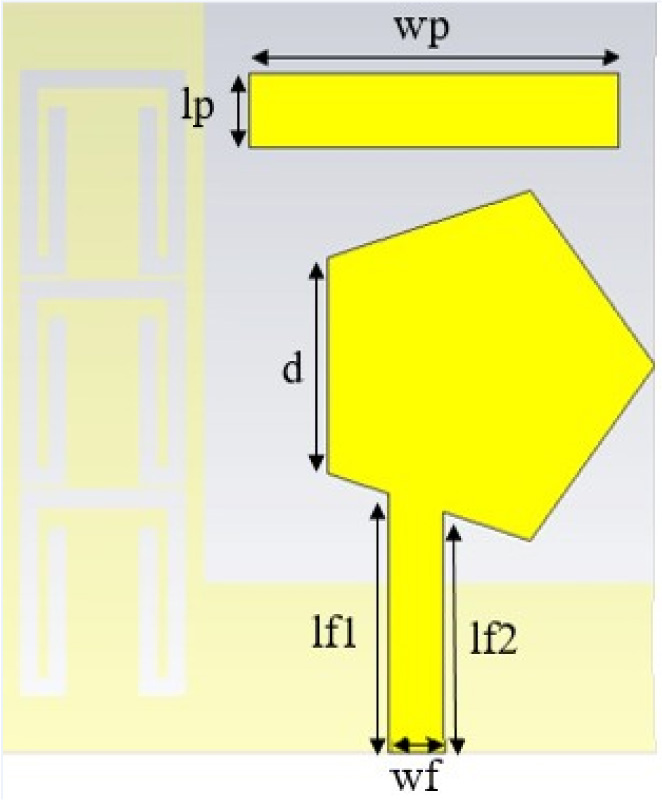
In this article, a planar compact grounded coplanar waveguide (GCPW)-fed 4-element multiple-input multiple-output (MIMO) antenna array with a defected ground structure (DGS) is demonstrated for fifth generation (5G) millimeter-wave (mmWave) communication. Each element of GCPW-fed mmWave MIMO antenna array contains a deformed pentagon-shaped radiating patch etched with a pair of identical circular slots in top surface and a DGS in bottom surface. To maintain low design complexity and compactness, a DGS is introduced and formed by embedding dual asymmetrical inverted T-shaped slots in the partial ground plane which enhance the gain and bandwidth of the antenna. The equivalent circuit model of the proposed DGS loaded GCPW-fed antenna is realized and presented. The proposed 4-element mmWave MIMO antenna array is realized by arranging the 4 identical antenna elements horizontally in a row with a distinct gap without any decoupling structure. It has the size of 1.02λ × 3.86λ × 0.021λ (at 25.66 GHz) and exhibits the measured bandwidth of 49.62% (25.30-42.0 GHz) with a peak gain of 12.02 dBi. Furthermore, the envelope correlation coefficient (ECC) < 0.0014, isolation > 24 dB between antenna elements, and channel capacity loss (CCL) < 0.29 bits/sec/Hz of the mmWave MIMO antenna array are attained over the entire mmWave frequency band.
Defected Ground Structure Based High Gain, Wideband and High Diversity Performance Quad-element MIMO Antenna Array for 5G Millimeter-wave Communication
2023-06-24
PIER Letters
Vol. 111, 55-60
Highly Packaged LTCC Coupler Using Vertically Stacked LC-Elements for 1 and 1.5 Tesla MRI Applications
Linzi Liu , Zheng Pan , Gang Shi and Bo Zhou
A highly packaged coupler using vertically placed inductors and capacitors (LC)-elements is proposed for 1 and 1.5 Tesla (T) magnetic resonance imaging (MRI) applications. The coupler is made on a 24-layer thickness low temperature co-fired ceramic (LTCC) substrate, and the full integration is reached by heaping up LC-elements in the vertical dimension. The coupler has a smallest reported size of only 0.0035 × 0.0021 × 0.001λg and a wide fractional bandwidth (FBW) of 44%. The measured in-band phase difference between the coupled and through ports and the amplitude imbalance are less than 91°±0.5° and 0.75 dB, respectively. Comparisons and discussions are also implemented.
Highly Packaged LTCC Coupler Using Vertically Stacked LC-elements for 1 and 1.5 Tesla MRI Applications
2023-06-24
PIER B
Vol. 100, 155-172
Wideband and Compact Regular Shape Microstrip Antennas Employing Rectangular Slots Cut Bow-Tie Shape Ground Plane
Amit A. Deshmukh , Abhijay Rane , Suraj Surendran , Yugantar Bhasin and Venkata A. P. Chavali
Wide bandwidth compact rectangular and equilateral triangular microstrip antennas employing slots cut bow-tie shape ground plane profile are proposed. Amongst all the designs, patch employing three rectangular slots cut bow-tie shape ground plane yields optimum results. Using the rectangular patch, against conventional ground plane design, increase in bandwidth by 20%, resonance frequency, substrate thickness, and patch area reduction by 32%, 0.034λg, and 61.12%, are respectively achieved. In equilateral triangular patch design, a three rectangular slots cut bow-tie shape ground plane configuration shows bandwidth increase by 30%, and substrate thickness, fundamental mode frequency, and patch size reduction by 0.027λg, 16.4%, and 36.28%, respectively. Proposed designs exhibit broadside radiation pattern with broadside gain of above 5 dBi.
Wideband and Compact Regular Shape Microstrip Antennas Employing Rectangular Slots Cut Bow-tie Shape Ground Plane
2023-06-23
PIER C
Vol. 133, 261-269
Broadband and High-Efficiency Reflective Linear Polarizer
Xiaojun Huang , Xiongwei Ma , Sihan Cui and Huanhuan Gao
In this paper, we propose a wideband linear polarizer that utilizes metamaterial and metasurface techniques to achieve highly efficient polarization conversion. The proposed polarizer achieves a polarization conversion ratio exceeding 90% at 11.7-16.0 GHz, as confirmed by both simulated and experimental results. The effects of geometric parameters, incidence angle, and polarization angle on the performance of the polarizer are analyzed, and it is demonstrated that the polarizer maintains an extremely high polarization conversion efficiency even under wide-angle incidence. The polarization conversion mechanism is elucidated through the examination of eigenmode and surface current distribution. This work holds significant promise for the control of electromagnetic waves, making it essential for upcoming engineering applications.
Broadband and High-efficiency Reflective Linear Polarizer
2023-06-21
PIER Letters
Vol. 111, 45-54
A Tri-Mode Hybrid Antenna for Quad-Band Applications
Wang Ren and Ping Yang
This paper presents a coplanar waveguide (CPW)-fed tri-mode hybrid antenna that is suitable for quad-band applications. The antenna design is compact, measuring only 30×30 mm2, and consists of a zeroth-order resonator (ZOR) antenna, a torch-shaped monopole antenna, and a T-shaped slot antenna. The most significant feature of this design is its ability to provide three independent working modes, making it a hybrid antenna. By incorporating a Composite Right/Left-Handed Transmission Line (CRLH-TL) unit cell, the first mode is excited as a ZOR antenna, corresponding to the lowest resonance at around 1.57 GHz. The second mode relies on the torch-shaped monopole antenna with two resonances at about 2.5 GHz and 3.5 GHz. The third mode employs the T-shaped slot antenna with a resonance at around 5.5 GHz. Experimental results demonstrate that the proposed antenna exhibits a wide and multi-band behavior with impedance bandwidths of 60 MHz (1.56-1.62 GHz), 210 MHz (2.30-2.51 GHz), 370 MHz (3.40-3.77 GHz), and 1100 MHz (5.05-6.15 GHz). This antenna can not only support the current GPS/WLAN/WiMAX systems but can also be considered as one element of a multiple-input-multiple-output (MIMO) antenna array for the fifth-generation (5G) mobile communication in the sub-6 GHz frequency range.
A Tri-mode Hybrid Antenna for Quad-band Applications
2023-06-20
PIER C
Vol. 134, 1-10
Planar Multi Notch Band Antenna in-Band Gain Enhanced by Epsilon-Near-Zero Non-Absorptive Metasurface
Priyanka Usha , Niraj Kumar and Krishnan Chitra
This paper presents the design, fabrication, and characterization of a novel single layer non- absorbing metasurface with a broadband epsilon near zero (ENZ) property and its application in-band gain enhancement of triple notch band ultra-wideband (UWB) antenna. The proposed metasurface is made up of non-resonant metamaterial unit cells consisting of half ring slots in a circular patch on an FR4 dielectric substrate. Metasurface with unit cells arranged in a 2×2 lattice pattern is suspended 4 mm above the triple notch band antenna. The transmission and reflection properties of the metamaterial unit cell are analysed and optimised to ensure the coherent transmission from the metasurface. The non-absorbing property of the metasurface results in the minimal loss of electromagnetic waves. The proposed antenna system with metasurface has a size of 28×28×7.2 mm3. The measured results of fabricated antenna are compared with the simulated ones and are in good match. The results show that the gain of the antenna was enhanced by 1.3 dB, 2.8 dB, and 4 dB at 5 GHz, 7 GHz, and 9 GHz, respectively.
Planar Multi Notch Band Antenna In-band Gain Enhanced by Epsilon-near-zero Non-absorptive Metasurface
2023-06-20
PIER M
Vol. 117, 119-128
A Circular Split Ring Resonator Absorber with Graphene Material for Terahertz Communication Applications
Nagandla Prasad , Pokkunuri Pardhasaradhi , Boddapati Taraka Phani Madhav , Yarlagadda Ramakrishna and Yepuri Aarthi Hasitha
In this research article, we propose a split ring resonator (SRR) based metasurface absorber based on graphene material. The performance of the graphene-based absorber at terahertz frequencies can be altered by varying the chemical potential of graphene material. Because of its excellent tunability and optical responsiveness at terahertz frequency, graphene-based metamaterials have been widely used in optoelectronic devices, sensors, filters, and many more. The proposed structure contains three layers namely graphene-based patch as a conductive layer, lossy silicon as a dielectric layer, and finally gold as a bottom conductive layer. The proposed unit cell resonates at three different absorption peak frequencies of 2.91 THz, 8.1 THz, and 9.61 THz with operating frequency bands at (2.66 THz to 3.12 THz), (7.71 THz-8.47 THz), and (9.57 THz-9.63 THz), respectively. The purpose of this research is to present a thorough investigation of graphene-based THz metamaterial absorbers, including modeling and verification of the structure through an equivalent circuit approach. It is very much beneficial to understand the conductive phenomenon of graphene material by tuning the Fermi chemical potential and achieve a high percent level of absorption for the corresponding absorption frequency bands.
A Circular Split Ring Resonator Absorber with Graphene Material for Terahertz Communication Applications
2023-06-20
PIER Letters
Vol. 111, 35-43
A Miniaturized Frequency Selective Rasorber with High Frequency Harmonic Suppression
Lei Deng , Shixing Yu and Na Kou
A frequency selective absorber for harmonic absorption (HA-FSR) is proposed in this paper. It consists of a miniaturized frequency selective surface (FSS) for harmonic suppression and a circuit analog absorber (CAA) for harmonic absorption. The frequency selective rasorber (FSR) unit is 6.7 mm × 6.7 mm (0.129λ × 0.129λ, where λ is the free space wavelength of 5.8 GHz). The simulation and measurement show that the HA-FSR can generate a transmission band from 4.51 GHz to 7.47 GHz and a -10 dB absorption band from 11.96 GHz to 22.31 GHz, which covers more than 3 times of the main passband harmonic band. In addition, the FSR has good polarization stability and angle stability within 30˚ of oblique incidences under both TE and TM polarizations, which can be applied to electromagnetic interference shielding field and low-observable platforms.
A Miniaturized Frequency Selective Rasorber with High Frequency Harmonic Suppression
2023-06-19
PIER
Vol. 177, 85-94
Terahertz Plasmonic Metagrating Design Simultaneously Enabling Broadband Extraordinary Transmission and Field Enhancement
Chi Wang , Shurun Tan , Xiao Lin , Hongsheng Chen and Fei Gao
Metagratings, consisting of subwavelength-aperture arrays (SAAs), provide a powerful platform to manipulate electromagnetic waves. Typical examples include extraordinary optic transmission (EOT) in the far field, and field enhancements (FEs) in the near field. These capabilities promise applications in beam steering and wave-matter interactions, but are not extended to broad bandwidth simultaneously. Here, we transplant the concept of broadband light harvesting devices from optic to terahertz frequency and by exploring one-dimensional arrays of spirally textured metallic cylinders supporting multiple designer localized surface plasmon resonances. Theoretical analysis reveals that the interaction between localized plasmons leads to the broadband THz EOTs in the far field as well as large field enhancements in the near field. The bandwidth of the EOT and the magnitude of field enhancements can be flexibly designed by changing the geometry of the plasmonic-like resonators. This design promises applications in THz broadband beam-steering, absorbers, and sensing, topological devices.
Terahertz Plasmonic Metagrating Design Simultaneously Enabling Broadband Extraordinary Transmission and Field Enhancement
2023-06-19
PIER C
Vol. 133, 251-260
Compact Ultrawideband Antenna Backed by an Artificial Magnetic Conductor
Khalid Moustafa Ibrahim , Eman M. Eldesouki and Ahmed Attiya
In this paper, a new artificial magnetic conductor (AMC) structure is proposed to enhance the performance of an ultra-wideband (UWB) antenna for wireless communication networks. A fractal configuration is used to introduce the UWB performance of the proposed antenna. The antenna is composed of a modified rectangular patch antenna with a tapered section fed by a coplanar waveguide (CPW) with a total size of 24×20×1.5 mm3 . The antenna is backed by an AMC. The proposed AMC unit consists of a square patch surrounded by four slotted square rings. This unit cell exhibits an in-phase reflection from 6.3 GHz to 10 GHz. The obtained bandwidth of the antenna with AMC is 110% from 3.2 GHz to 11 GHz which covers the entire UWB range. The peak gain of 7.2 dB is accomplished with a compact size of 40×40×6.5 mm3 , 0.95×0.95×0.15λo at 7.1 GHz. The proposed UWB antenna-AMC is fabricated and measured for verification.
Compact Ultrawideband Antenna Backed by an Artificial Magnetic Conductor
2023-06-19
PIER Letters
Vol. 111, 27-34
Novel Passive Intermodulation Measurement Platform for Planar Microwave Circuit
Junqiang Yang , Xiong Chen and Qianwen Chen
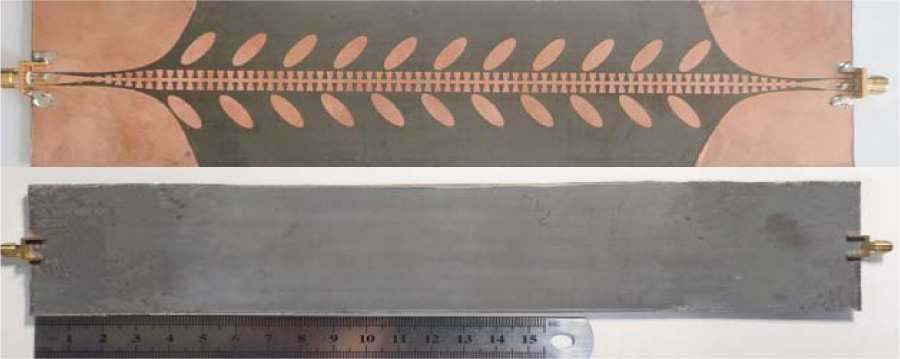
This paper presents a novel test platform for passive intermodulation measurement on planar microwave circuits using a filter design strategy. A finger planar band-pass filter is proposed and optimized to have an evenly distributed stimulation field on the surface. The layout is optimized with symmetrical coupling lines from two directions, and the feed line is with a tapered transformer. A pair of T-type resonators is adopted to improve the flatness of the field distribution. In the application of this test platform, print circuit boards with different layouts are tested, and the passive intermodulation difference of different layouts can be differentiated. As this platform is with open space, the device under test can be easily changed without suspending the passive intermodulation test system, which can be applied in the production line to speed up the production quality inspection.
Novel Passive Intermodulation Measurement Platform for Planar Microwave Circuit
2023-06-19
PIER B
Vol. 100, 133-154
Independent Control Over Passbands in Highly Selective and Compact Triple-Band Bandpass Filter Based on Substrate Integrated Waveguide
Soumit Samadder Chaudhury , Seema Awasthi and Rajat Kumar Singh
This paper proposes a method of independent control over each passband in a high performance triple bandpass filter, which is an essential requirement in the field of microwave communication systems. Individual techniques are presented here to control the excited modes that are responsible for the generation of triple passbands based on substrate integrated waveguide loaded with semi-circular mushroom resonators. Initially, a circular substrate integrated waveguide (CSIW) loaded with two cascaded semi-circular mushroom resonators (ScMRs) with distinct modifications and orientations in the schematic is employed to generate three passbands. The fundamental mode and next higher order mode of the entire resonator structure are utilized to generate three passbands, and distinct techniques of mode perturbations and variation in coupling strength are introduced to independently control the excited modes. Subsequently, the methods established to control the excited modes are employed to independently control the center frequencies (CFs) of three passbands. All those methods established to control the CFs of the three passbands are verified with experimental results which show good agreement with the simulated ones.
Independent Control over Passbands in Highly Selective and Compact Triple-band Bandpass Filter Based on Substrate Integrated Waveguide