Search Results(13786)

2023-07-11
PIER M
Vol. 118, 11-23
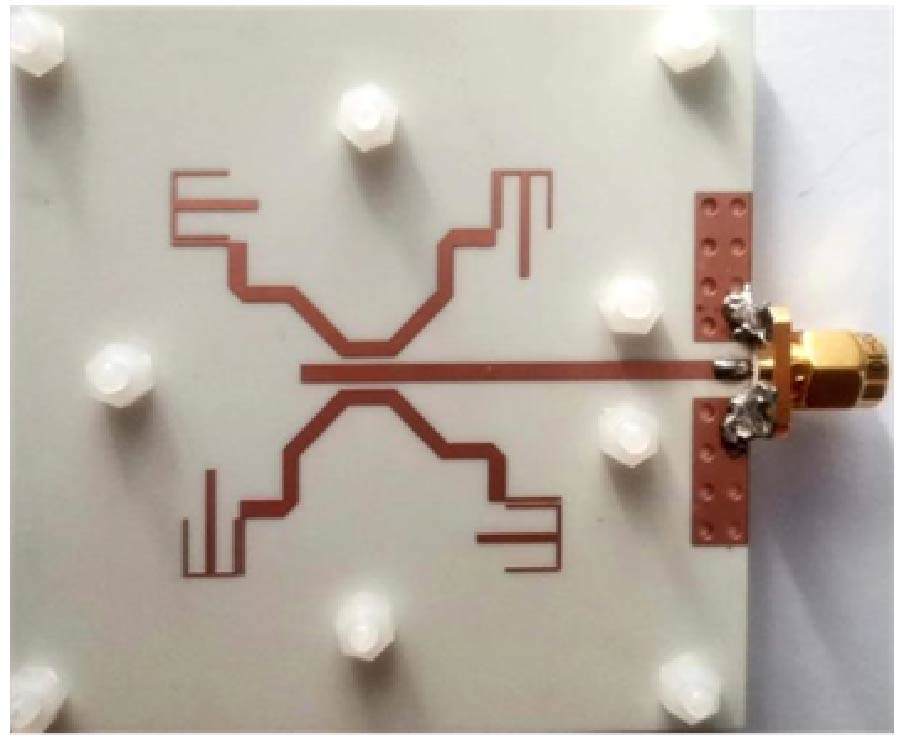
Four-Port UWB MIMO Vivaldi Antenna Based on Resistor and Radiant Patch Loading
Jingchang Nan , Huimei Zhang and Jv Huang
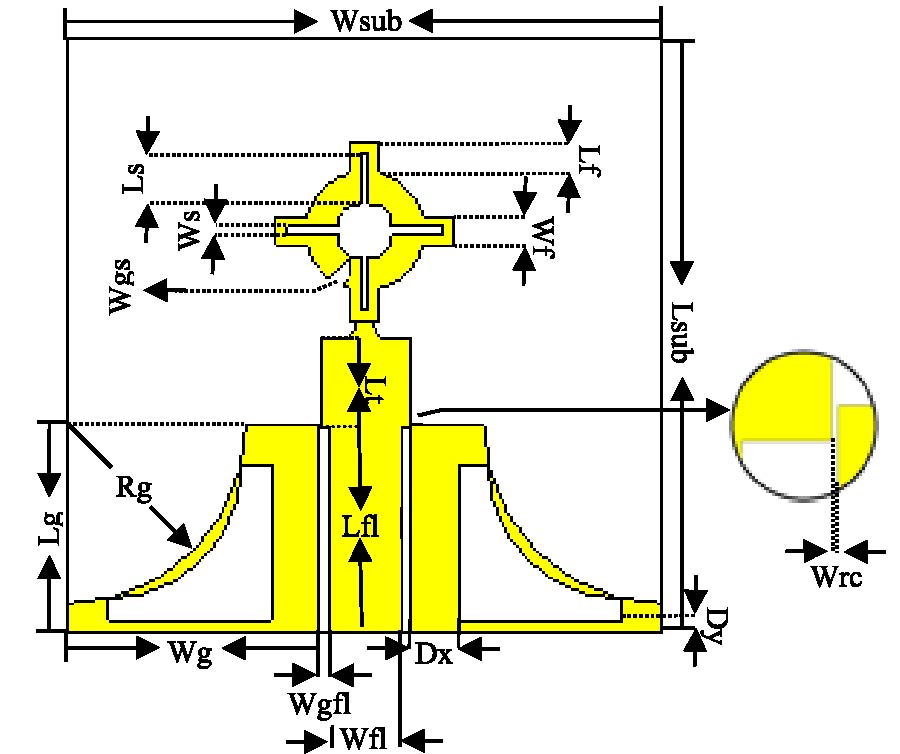
A four-port ultra-wideband (UWB) multi-input multi-output (MIMO) Vivaldi antenna loaded with resistance and rectangular radiation patch is designed and fabricated. The compact antenna consists of an improved ground and four microstrip feeders, with an overall size of 26 mm × 52 mm × 0.8 mm. The antenna adopts the resistance loading technology to absorb the excess electromagnetic waves in the low-frequency band and broaden the low-frequency bandwidth of the antenna. The rectangular radiation patch loading technique optimizes the main radiation direction and broadens the high-frequency bandwidth of the antenna. Meanwhile, T-slots and fence-type structures are etched on the ground plane, and I-stubs are added between microstrip feeders to reduce the antenna coupling and increase the isolation degree between the antenna ports. Simulation and experiments show that the impedance bandwidth of the MIMO antenna is 3.0~12.3 GHz; the isolation degree of the whole working bandwidth is higher than 15 dB; the envelope correlation coefficient (ECC) is smaller than 0.0125; and the increased diversity gain (DG) is more significant than 9.98 dBi. The antenna has good radiation performance and stable gain, which is suitable for applying the UWB MIMO system. This antenna has a particular reference significance for the research of the MIMO Vivaldi antenna.
Four-port UWB MIMO Vivaldi Antenna Based on Resistor and Radiant Patch Loading
2023-07-09
PIER C
Vol. 134, 181-195
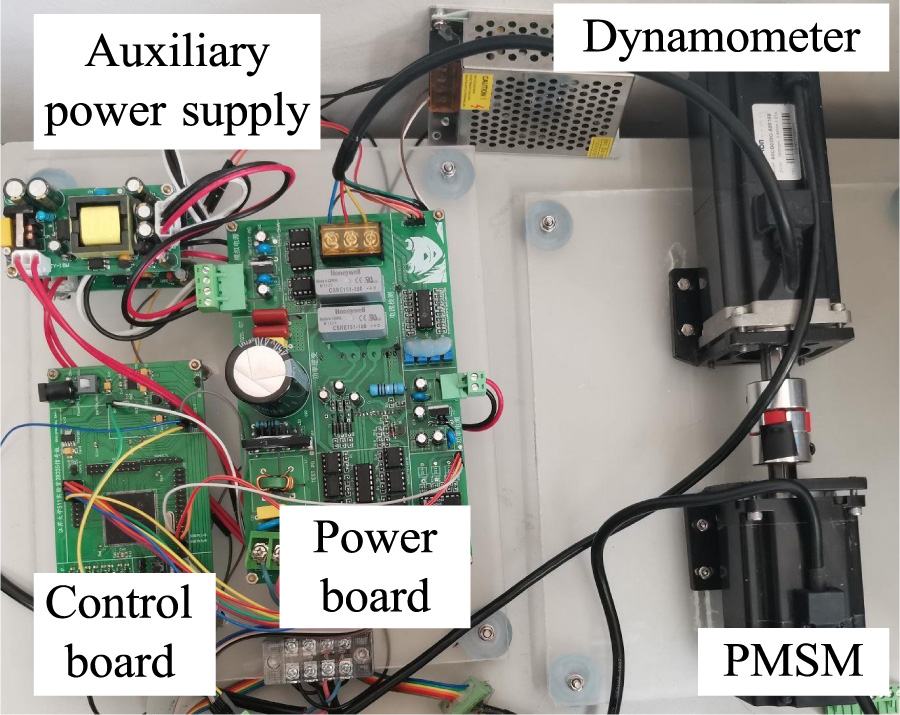
Identification of VNS-AGA Permanent Magnet Synchronous Wind Generator Parameters Considering Magnetic Saturation and VSI Compensation
Zhun Cheng , Chao Zhang and Yang Zhang
In order to solve the problem of the influence of magnetic saturation and voltage source inverter (VSI) nonlinear factors on the parameter identification of permanent magnet synchronous wind generator (PMSWG), a variable neighborhood search-adaptive genetic algorithm (VNS-AGA) based on magnetic saturation and VSI compensation is proposed in this paper. Considering the existence of magnetic saturation, a mathematical model of PMSWG considering magnetic saturation is established. The least square method is used to identify the inductance of dq axis. The influence of VSI nonlinear factors on the system is regarded as a disturbance voltage, which is used as an electrical parameter; the parameters of PMSWG are identified simultaneously; and voltage compensation is carried out. After the accurate distortion voltage compensation mathematical model and fitness function are established, GA and adaptive algorithm are combined to increase the diversity of the population. Then variable neighborhood search (VNS) strategy is introduced to search the optimal region. Experimental results show that the proposed method is more accurate and convergent after considering magnetic saturation and on-line identification and compensation of disturbance voltage.
Identification of VNS-AGA Permanent Magnet Synchronous Wind Generator Parameters Considering Magnetic Saturation and VSI Compensation
2023-07-09
PIER C
Vol. 134, 171-180
A TE-Mode Rectangular Microstrip Patch Antenna Excited by Coplanar L-Strip Feed
Matthew Adams and Maria Pour
This paper proposes a coplanar L-strip feeding technique to excite the dominant transverse electric (TE) mode in a rectangular microstrip patch antenna. To excite the TE mode, the patch and ground layers are composed of artificial magnetic conductor (AMC) unit cells, and the L-strip is fashioned so that it is coplanar with the AMC patch layer. Two TE-mode microstrip patch antennas are full-wave analyzed and fabricated, one in which the AMC patch is centered with respect to the ground plane and one in which the AMC patch is shifted laterally with respect to the ground plane to improve radiation pattern symmetry. Results from the fabricated antennas are discussed and compared to the simulations. The proposed antennas successfully excite the dominant TE10 mode while having at least 11% impedance bandwidth, 8 dBi gain, and stable broadside radiation patterns.
A TE-mode Rectangular Microstrip Patch Antenna Excited by Coplanar L-strip Feed
2023-07-09
PIER B
Vol. 101, 63-84
Performance Improvement of Antenna Using Metasurface: an Overview
Naresh Chandra Naik , Nibash Kumar Sahu , Bijay Kumar Ekka and Tapas Kumar Patra
This paper presents an in-depth review of the performance improvement of antennas using metasurface. Metasurface is a periodic arrangement of perfect electric conductors (PECs) on a metal-backed dielectric substrate that do not exist in nature and are able to manipulate the behavior of electromagnetic (EM) waves incident on it. The manipulations of EM waves improve the performances in terms of impedance bandwidth, gain, size, specific absorption rate (SAR), radar-cross-section (RCS), and polarization conversions. Consequently, numerous recent works on metasurface-inspired antenna design and their theoretical perspectives on performance enhancements are discussed. By adopting the discussed theories, novel metasurfaces are developed and proposed that analyze impedance-bandwidth enhancement, gain enhancement and SAR reduction. For designing the metasurfaces, initially a conventional rectangular unit cell (CRUC) is theoretically developed using transmission line model at 2.45 GHz. Following that, the CRUC-based metasurface is incorporated with a monopole antenna, which enhanced the impedance-bandwidth from 140 MHz to 320 MHz and the gain from 2.5 dB to 7.4 dB. On the body, the presence of the metasurface retains all the performances as free space, with a reduced 1 g SAR of 0.034 and 10 g SAR of 0.024 W/Kg.
Performance Improvement of Antenna Using Metasurface: An Overview
2023-07-08
PIER C
Vol. 134, 157-169
Integration of LTE and GNSS Antenna for Multiband Performance in Vehicular Application
Amruta A. Nikam and Rupali B. Patil
The paper proposes a antenna design that can serve as a comprehensive solution for covering 4G/5G cellular bands 850-1000 MHz, 1900 MHz, 2100-2700 MHz, 3300-4900 MHz, Global Navigation Satellite System (GNSS-L1) Band 1.56 GHz-1.61 GHz, V2X 5.850-5.925 GHz band which are appropriate for use in automobile applications. The proposed antenna is designed with respective polarization for cellular and GNSS applications, where the cellular antenna is linearly polarized, and the GNSS antenna is circularly polarized by chamfering the square patch. FR4 substrate material is used to construct the Long Term Evolution/4G (LTE) antenna. The optimization of the antennas ensures minimal coupling between them. The cellular antenna is designed using a hexagonal base with a modified ground plane to achieve the required cellular bands using a monopole (fractal design). The GNSS antenna is implemented on a PVC (Poly Vinyl Chloride) substrate. The measured results of S11 parameter show that the proposed design covers all the required 4G/5G bands with minimum S11 of -10 dB and a radiation pattern in the theta 60-90° range for cellular antenna, while the GNSS antenna has a zenith radiation pattern with axial ratio of <3 dB for theta angles in the 0-30° range and a mutual coupling of -15 dB. The fabricated antenna was measured to validate the simulated results of reflection coefficient, VSWR. All things considered, the suggested design is perfect for automobile applications to satisfy both satellite and mobile communication needs.
Integration of LTE and GNSS Antenna for Multiband Performance in Vehicular Application
2023-07-06
PIER C
Vol. 134, 143-155
Coplanar Fed Quad-Band Parasitic Patch Antenna for Ultra-Wide Band Wireless Application
Anil Kumar Bhat , Ashish Singh , Ramya Shetty and Satheesh Rao
In this article the design of an ultra-wideband coplanar monopole antenna with a microstrip parasitic patch having a dimension of 50 mm x 50 mm using a 1 mm thick RT-Duroid substrate (εr = 2.2) is explored for wireless applications. Five different coplanar antenna designs are presented, and one of the designs is proposed for fabrication. In simulation the proposed antenna has four resonant bands, 2.043-2.133 GHz, 5.821-7.89 GHz, 10.3-12.027 GHz, and 12.783-17.802 GHz, with a cumulative bandwidth of 8.905 GHz within 1-18 GHz. The proposed antenna is fabricated, tested and validated using Vector Network Analyzer. Fabricated antenna resonates at four different bands, 2.349-2.888 GHz, 5.767-7.926 GHz, 9.725-10.534 GHz and 13.862-16.021 GHz with resonant peaks at 2.529 GHz, 7.116 GHz, 10.084 GHz and 15.391 GHz frequencies respectively. Further the antenna has a cumulative Bandwidth of 5.666 GHz in 1-18 GHz band. Radiation efficiency is above 90% at the resonant band. The acquired results from simulation and measurement are in close match.
Coplanar Fed Quad-band Parasitic Patch Antenna for Ultra-wide Band Wireless Application
2023-07-06
PIER B
Vol. 101, 45-61
Experimental Investigation of Novel Frock-Shaped Miniaturized 4×4 UWB MIMO Antenna Using Characteristic Mode Analysis
Ankireddy Chandra Suresh and Thatiparthi Reddy
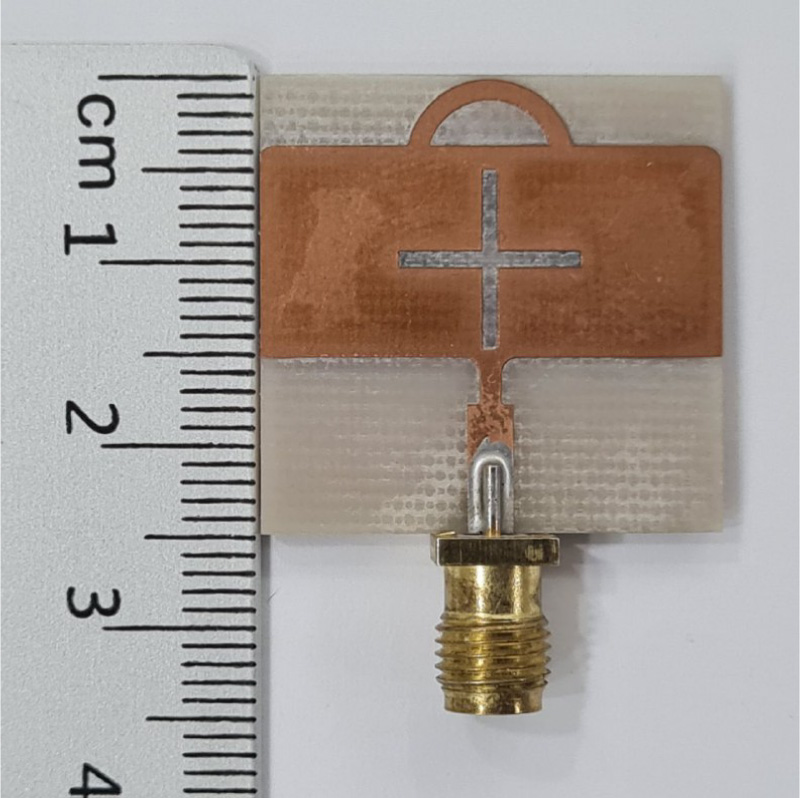
In this paper, a novel frock shaped four-port MIMO antenna is designed, and experimental results were verified for UWB applications. The four elements are placed orthogonal to each other to reduce mutual coupling. The proposed novel-shaped antenna is derived from a circular patch antenna. A series of modifications were made on a circular patch antenna to get desired single novelly shaped radiator. Inserting decoupling stubs in the Plus form between MIMO elements lessened mutual coupling. The entire designing procedure of the proposed four-port antenna was carried out by Characteristic Mode Analysis. The proposed model is printed on an Fr-4 substrate with dimensions of 40x40x1.6 mm3. This novel 4-port antenna is well-operated in the UWB range from 2.8 GHz to 11.4 GHz and bandwidth of 8.6 GHz. The novel shape radiators with good decoupling stubs produce a high impedance bandwidth of as 121.8%, radiation efficiency of 91%, high isolation 26 dB, and a gain of 6 dB in the operating band. The diversity parameters are enveloped correlation coefficient (ECC) less than 0.0011, diversity gain (DG) very near 10 dB, capacity channel loss of 0.28 bp/s/Hz, and mean effective gain of -3.1 dB. The experimental results of the antenna are verified with simulated ones and got good agreement between fabricated and simulated results.
Experimental Investigation of Novel Frock-shaped Miniaturized 4×4 UWB MIMO Antenna Using Characteristic Mode Analysis
2023-07-05
PIER C
Vol. 134, 131-141
Multi-Slot Antennas Excited by Novel Dual-Stub Loaded Microstrip Lines for 4G/5G Bands
Muhammad Mubasshir Hossain , M. M. Reazul Haque Tanmoy and Saeed I. Latif
This paper presents a low-profile, stub-loaded multi-slot antenna that operates across 850 MHz to 4500 MHz. Remarkably, the new design meets the call of covering wideband frequencies used by many 4G and 5G New Radio bands from UHF to C bands. The antenna consists of two wide slots on the ground plane. Each slot comprises a straight segment connected to a larger circular slot. A novel microstrip feed line loaded with dual circular stubs excites the multi-slot antenna. The slots and the feed lines are printed on each side of the dielectric substrate. This novel design offers pattern diversion capacity based on port excitation. Two prototypes were fabricated and tested to verify multiple simulation results including bandwidth, isolation, and group delays. A close consistent of measured and simulated results validates the design. Concurrently, good isolation between ports and nearly omnidirectional gain patterns are observed over the band. Further, the form factor of the proposed antenna makes it a suitable solution for modern 4G and 5G handheld devices.
Multi-slot Antennas Excited by Novel Dual-stub Loaded Microstrip Lines for 4G/5G Bands
2023-07-05
PIER M
Vol. 118, 1-10
Research and Design of a Dual-Band Reflective Foused Metasurface for Wireless Power Transfer
Bo Yin , Zhu Xu , Junhao Cong , Xiangdong Fu , Haibin Xu and Zhuoze Wu
To solve the problem of single working frequency of traditional reflective focused metasurface, a dual-band reflective focused metasurface is proposed, which can realize independent focusing characteristics at 7.25 GHz and 20.5 GHz. The metasurface unit is composed of metal elements combined by a split-ring resonant structure working at 7.25 GHz and an elliptical resonant structure working at 20.5 GHz in the same plane, dielectric substrate and ground. Dual-band independent control and 360° phase coverage are achieved by adjusting the dimensions of unit. The surface current distribution also verifies the rationality of the designed metasurface element. Based on the principle of quasi-optical path, a dual-band reflective focused metasurface with independent focusing characteristics is designed. Through full-wave simulation, the focusing efficiency at 7.25 GHz and 20.5 GHz is calculated by Poynting theorem, which are 56.9% and 57.5%, respectively. The proposed dual-band metasurface has the characteristics of simple structure and low profile without multi-layer stacking and metal through-holes.
Research and Design of a Dual-band Reflective Foused Metasurface for Wireless Power Transfer
2023-07-04
PIER M
Vol. 117, 163-175
Utilization of Pineapple Leaf in Fiber-Based Dielectric Composite Material and Its Elemental Composition Analyses
Nurhafizah Abu Talip Yusof , Rudraa Devi Giamasrow , Azahani Natasha Azman , Nor Hazwani Aziz , Norazwina Zainol and Mohamad Shaiful Abdul Karim
The growing demand for natural fibers in dielectric composite production has accelerated research into plant-based materials, particularly those derived from agricultural waste. Hence, this study attempts to evaluate the effect of processing factors and their elemental composition on the permittivity value of pineapple fiber-based dielectric composites. The dielectric composite was prepared following the randomized experimental conditions of two-level factorial analysis, and the permittivity value was measured using a G-band rectangular waveguide. The most significant factors affecting the permittivity value of the dielectric composites and the best condition were determined. The elemental composition of the dielectric composite was analyzed through an energy dispersive X-ray (EDX) analysis. The best conditions were obtained at a 1:10 ratio of pineapple leaves to distilled water, 50 minutes pulping times with a heating effect, and 5 g of pineapple leaf powder. The highest permittivity value of the composite was recorded at 3.31, with the heating effect as the most significant factor. The elemental analysis of the composite with the highest permittivity value presents that carbon was the dominant element in the composite at 78.05%. The obtained permittivity value exhibited by the composites shows that the pineapple leaf fiber-based dielectric composite could be a potential alternative as an antenna substrate.
Utilization of Pineapple Leaf in Fiber-based Dielectric Composite Material and Its Elemental Composition Analyses
2023-07-03
PIER
Vol. 177, 95-105
Transverse Orbital Angular Momentum of Spatiotemporal Optical Vortices
Miguel Angel Porras
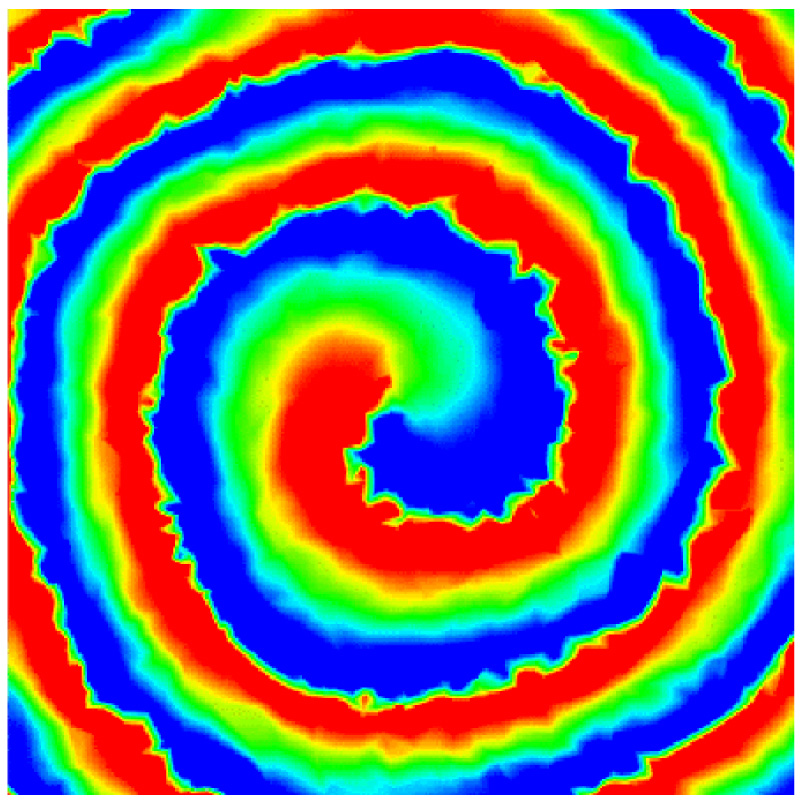
Spatiotemporal optical vortices (STOVs) are electromagnetic wave packets that transport a phase line singularity perpendicular to their propagation direction. We address the problem of the transverse orbital angular momentum (OAM) actually transported by STOVs propagating in free space or non-dispersive media, the most frequent experimental situation. An elliptically symmetric STOV of topological charge l and carrier frequency ω0 carries an intrinsic transverse OAM per unit energy γl/2ω0, where γ is the STOV ellipticity. Intrinsic stands for the OAM about a moving transverse axis passing permanently through the STOV center. For circular STOVs (γ = 1) this value is half the intrinsic longitudinal OAM of monochromatic light beams of the same charge and frequency. This result agrees with that in Phys. Rev. Lett. 127, 193901 (2021). The formula (γ+1/γ)l/2ω0 for the intrinsic transverse OAM in Phys. Rev. A 107, L031501 (2023) yields infinite values and is not conserved on propagation for particular STOVs. When STOVs propagate losing their elliptical symmetry, they preserve the intrinsic transverse OAM γl/2ω0 despite the phase singularity may split, the split singularities may disappear, or even change the sign of their topological charges. The total transverse OAM of a STOV about a fixed transverse axis crossing its center vanishes because the extrinsic transverse OAM is opposite to the intrinsic OAM, which may preclude applications such as setting particles into rotation, but STOVs could transmit their intrinsic OAM to the photons of other waves, as in nonlinear frequency conversion processes.
Transverse Orbital Angular Momentum of Spatiotemporal Optical Vortices
2023-07-03
PIER C
Vol. 134, 119-130
An Artificial Neural Network Based Target Angle Estimation Technique for FMCW MIMO Radars
Kudret Akçapınar , Naime Özben Önhon and Özgür Gürbüz
In this paper, an artificial neural network (ANN) based approach is proposed for the estimation of the target angle using Multiple Input Multiple Output (MIMO) radars operating in Frequency Modulated Continuous Wave(FMCW). The proposed technique operates in two stages, with the first stage being the formation of the range profile at each MIMO element via Discrete Fourier Transform (DFT) and the second stage being the estimation of the target azimuth angle via an artificial neural network. The range profile formed in the first stage is fed to the second stage as a single snapshot angle measurement. The performance of the proposed technique is apprised with other existing methods under different Signal-to-Noise Ratio (SNR) conditions and measurement model uncertainties. The simulations performed show that the learning capability of the model strongly hinges on SNR conditions, and the learning process is ameliorated as SNR in training data increases as anticipated. Under low SNR conditions, the proposed technique performs better than other techniques in terms of Mean Square Error (MSE). We have also shown that our solution remains unaffected by the model uncertainties as it fully relies on the calibration data, while the performance of the model-based angle estimation techniques dramatically degrades as the uncertainty in the underlying model grows.
An Artificial Neural Network Based Target Angle Estimation Technique for FMCW MIMO Radars
2023-07-03
PIER C
Vol. 134, 103-117
The Design of a Triple-Band h- and Dual C-Shaped Planar Dipole Antenna for a Drone Application
Watcharaphon Naktong , Amnoiy Ruengwaree , Suwat Sakulchat and Sommart Promput
This paper presents the study of an H- and dual C-shaped planar dipole antenna by adding and etching technique for the triple-band of drone operating frequencies. Tuning the frequency range was performed to cover the VOR standard of 108-118 MHz, the GS standard of 328.6-335.4 MHz and the DME standard of 962-1,231 MHz. The antenna structure was fabricated on a PCB of FR4 with a dielectric constant (εr) of 4.4 and thickness (h) of 1.6 mm (material with low cost, compact size, and easy to use). The reflection coefficient (S11) results of the simulation and measurement were in good agreement, which demonstrated the bandwidth frequencies of resonance frequency at 112 MHz (106-118 MHz), 331.50 MHz (323-401 MHz), and 1,087.50 MHz (920-1,301 MHz). The antenna gains were 1.73, 3.43, and 6.31 dBi, respectively, and the antenna radiation pattern was omnidirectional when it was used with H-plane. It was found in experiment that the proposed antenna could be installed in a drone with sending and receiving signals fittingly as desired. Furthermore, the proposed antenna is lightweight at just 0.4 kg, less than the original drone antenna (1.8 kg), and it does not require changing the antenna in each frequency range.
The Design of a Triple-band H- and Dual C-shaped Planar Dipole Antenna for a Drone Application
2023-07-03
PIER Letters
Vol. 111, 79-84
Beam-Pattern Control via Thinned Elements Strategy in Linear and Planar Phased Arrays
Jafar Ramadhan Mohammed
Reconfigurable antenna arrays play a major role in the current and future wireless communication systems due to their multifunctional capabilities and many other advantages. Conventionally, the array pattern reconfigurations were usually achieved by controlling the excitation amplitudes and phases of all or most of the array elements which are generally costly and complex methods. In this paper, a simple method for controlling the reconfigurability of beam-patterns of the linear and planar arrays is presented. It can be easily switched between narrow and wide beams using thinned-elements strategy. First, the array elements are divided into three groups based on their locations namely central, middle, and outer elements. Their amplitude weights are chosen to be unity, adaptive, and zero respectively. To add some desired constraints on the array beam-patterns such as limited sidelobe level and specified nulls placement, the excitation weights of the middle elements are optimized such that an abrupt change in the array taper is avoided. This also avoids an undesired change in the sidelobe pattern. A genetic algorithm is used to perform such optimization so that the produced beam-patterns are best matched to the desired ones. Moreover, the size of the thinned region controls the resulting beam width.
Beam-pattern Control via Thinned Elements Strategy in Linear and Planar Phased Arrays
2023-07-03
PIER Letters
Vol. 111, 71-78
Swarm UAV Defeat Modelling through Lifetime Distribution Analysis
Graham V. Weinberg and Mitchell M. Kracman
The problem of defeating a swarm of unmanned aerial vehicles (UAVs) is of considerable importance to the modern warfighter. In recent studies high power radio frequency (HPRF) directed energy weapons (DEWs) have been shown to be suitable for this purpose. Hence there is a need to develop mathematical modelling frameworks to quantify HPRF DEW performance, especially when they are operating in a wideband or ultrawideband mode. Consequently this paper introduces a novel mathematical model, based upon a new interpretation of UAV vulnerabilities to HPRF DEW, which permits performance assessment to be undertaken. The key to this is to view each UAV through its vulnerabilities to HPRF DEW energy at given frequencies and analyse its impact on the lifetime of each of the UAVs. This results in the definition of an appropriate stochastic process to count the number of UAVs still active in the swarm over a given time interval. Consequently this permits the determination of minimum HPRF DEW power levels at given frequencies in order to guarantee likelihood of defeat of the swarm before it reaches the HPRF DEW source. Hence the results in this paper will provide a novel framework for determining the specifications of an HPRF DEW's required power distribution over target vulnerabilities to ensure a desired level of system performance.
Swarm UAV Defeat Modelling through Lifetime Distribution Analysis
2023-07-02
PIER C
Vol. 134, 93-102
Generation of Spatially-Variant Anisotropic Metamaterials in 3D Volumetric Circuits
Asad U. H. Gulib , Jeremie Dumas , Cesar L. Valle , Edgar Bustamante , Daniele Panozzo and Raymond C. Rumpf
3D printing is revolutionizing manufacturing and is now being considered in the electronics industry. The creation of the first 3D volumetric circuit (3DVC) has created a way to make circuits smaller, lighter, into unconventional form factors and exploit physics like anisotropy more effectively than planar geometries can. While this is exciting, many problems mustbe solved to make 3DVCs a reality. One of these problems is electromagnetic interference and mutual coupling between components that are expected to be highly problematic in high-frequency 3DVCs. Spatially-variant anisotropic metamaterials (SVAMs) could be a solution to overcome this difficulty, but research in this area is not possible without a way to generate SVAMs around multiple components. In this paper, an algorithm is integrated into CAD software that can generate SVAMs for 3D circuits which will enable future studies of SVAMs.
GENERATION OF SPATIALLY-VARIANT ANISOTROPIC METAMATERIALS IN 3D VOLUMETRIC CIRCUITS
2023-07-01
PIER C
Vol. 134, 79-91
New Elliptical Miniaturized Antenna Using Concentric Open Rings for UWB Applications
Djamel Sayad , Chemseddine Zebiri , Huthaifa Obeidat , Issa Tamer Elfergani , Alaedine Amroun , Merih Palandoken , Mohamed Lamine Bouknia , Rami Zegadi and Jonathan Rodriguez
In this paper, a low-profile miniaturized microstrip monopole antenna with an overall size of 15 mm × 20 mm × 1.6 mm is developed and analyzed for Ultra-Wide Band (UWB) services. The proposed antenna is carefully designed, optimized and analyzed using HFSS 15 simulation software. A prototype of the design is realized and experimentally tested as proof of concept. The results are discussed and compared with literature. They show attractive radiating features for UWB applications. The proposed antenna consists of an elliptical patch printed on a low-cost FR-4 epoxy substrate with a modified ground plane. To achieve UWB characteristics, elliptical rings are etched on the conducting patch, and the ground plane is modified by adding an inverted L shaped strip and creating a semi-elliptical slot in the partial ground opposite to the feed line. The achieved ultra-wide band ranges from 3.1 to 18.1 GHz (141.51%).
New Elliptical Miniaturized Antenna Using Concentric Open Rings for UWB Applications
2023-07-01
PIER M
Vol. 117, 151-161
Design of a Beam-Steering Metamaterial Inspired LPDA Array for 5G Applications
Rania Eid A. Shehata , Moataza Hindy , Hamdi Elmekati and Ayman Mohamed Fekry Elboushi
This article presents the design and implementation of a beam-steering antenna array using a 4x4 Butler matrix feed network (BMN) for 5G applications. The proposed antenna array can achieve a gain of 14 dBi and a steering range of (+16º, -47º, +46.5º, -15.7º) to cover angular range extending from 45º to 135º. To achieve that, a simple, 4x4 Butler matrix etched on a single-layer microstrip structure is designed, optimized, and fabricated. The proposed design incorporates phase shifters, 3-dB couplers, and cross-over couplers. The proposed matrix is employed as a feeding network for 4-element wideband LPDA antenna array. The fabrication results of the feeding matrix and antenna array show very good agreement with the simulated results.
Design of a Beam-steering Metamaterial Inspired LPDA Array for 5G Applications
2023-07-01
PIER B
Vol. 100, 173-189
Deep Learning Based Modelling of Three-Dimensional Magnetic Field
Van Tai Nguyen , Steffen Bollmann , Michael Bermingham , Ha Xuan Nguyen and Matthew S. Dargusch
Computation of the magnetic field generated by permanent magnets is essential in the design and optimization of a wide range of applications. However, the existing methods to calculate the magnetic field can be time-consuming or ungeneralised. In this research, a deep learning-based fast-computed and generalised model of three-dimensional (3D) magnetic field is studied. The volumetric deep neural network model (V-Net) which consists of a contracting part to learn the geometrical context and an expanding part to enable the concise localization was applied. We synthetically generated the ground truth datasets from permanent magnets of different 3D shapes to train the V-Net. The accuracy and efficiency of this deep learning model are validated. Predicting on 50 random samples, the V-Net took 4.6 s with a GPU T4 and 23.2 s with the CPU whereas the others took a few hundreds to thousands of seconds. Therefore, the deep learning model can be potentially utilised to replace the other methods in the computation and study of the magnetic field for the design and optimization of magnetic devices (the codes used in this research are published openly in https://github.com/vantainguyen/3D_V-Net_MagneticField).
Deep Learning Based Modelling of Three-dimensional Magnetic Field
2023-06-28
PIER C
Vol. 134, 65-77
Complete Design Procedure of a Size Constrained Printed Planar Log-Periodic Dipole Antenna
Guilherme C. Vieira and Custodio Peixeiro
This paper describes the design, fabrication, and test of a printed planar log-periodic dipole antenna to be used as a standard gain antenna in simple, low frequency, anechoic chamber far-field antenna measurements. The design procedure is size constrained by the photolithographic printing circuit fabrication process. Maximum gain and an input reflection coefficient below -10 dB are envisaged for the frequency range 0.5-2.5 GHz. The antenna is printed on a low cost FR4 substrate, and a careful analysis, with optimization of all the antenna physical parameters namely: number, length, spacing and width of the dipoles, width of the feed line traces, feed line termination, feed balun, and substrate shape, is carried out. The good agreement obtained between numerical simulation and experimental results provides validation of the proposed antenna configuration and design procedure.
Complete Design Procedure of a Size Constrained Printed Planar Log-periodic Dipole Antenna