Search Results(13786)

2023-10-25
PIER M
Vol. 120, 69-82
Multi-Objective Optimal Design of Single-Phase Line-Starting Permanent Magnet Synchronous Motor Based on Response Surface Method
Shixiong Yin and Aiyuan Wang
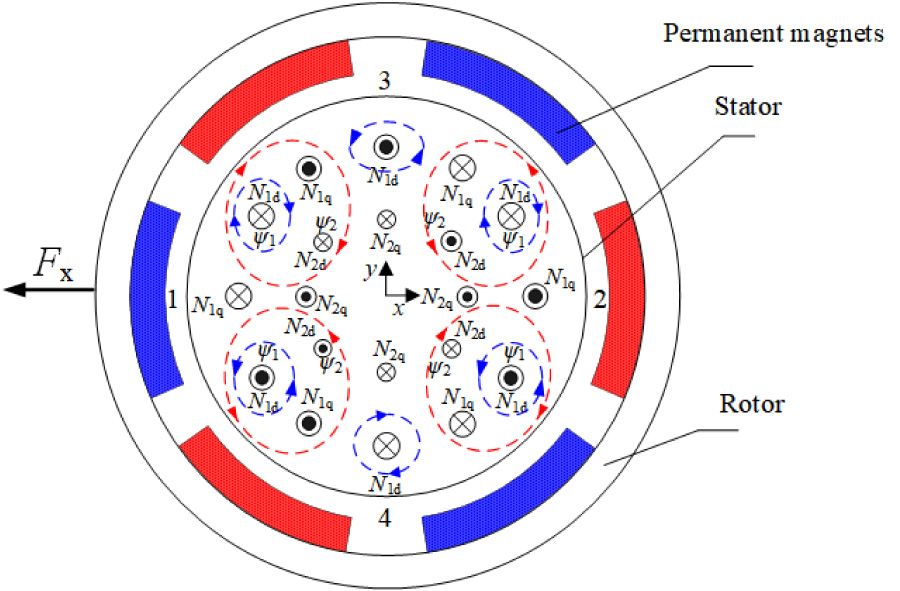
Single-phase asynchronous motors have an irreplaceable role in small production fields such as household appliances and office equipment. However, due to the existence of small single-phase asynchronous motors with low power factor, low efficiency, vibration and noise, and other problems, the performance of a single-phase asynchronous motor, including efficiency, power factor, and vibration noise has been unable to meet the increasing needs of people. In this paper, a single-phase line-starting permanent magnet synchronous motor (SPLSPMSM) for air compressor is designed with the core size of Y series three-phase asynchronous motor for reference. The operating capacitance, the number of turns of the main stator winding, the turns ratio of the main and auxiliary windings, and the permanent magnet size are selected as optimization variables, and the efficiency, power factor, and starting torque are the optimization objectives. A regression model was developed by the response surface method (RSM) to optimize the performance of the motor, and the reliability of the response surface experiment was verified. The results show that the performance of the optimized motor is improved in terms of rated operation and starting performance.
Multi-objective Optimal Design of Single-phase Line-starting Permanent Magnet Synchronous Motor Based on Response Surface Method
2023-10-23
PIER C
Vol. 138, 161-174
Compact Reconfigurable Patch Antenna for Wirelesss Applications
Prathipati Rakesh Kumar , Pamarthi Sunitha and Makkapati Venkata Prasad
A novel miniatured reconfigurable antenna for wireless applicationsusing defective ground structure is proposed and studied. This proposed antenna generates eight different frequencies, operating at 2 GHz (IMT), 2.3 GHz (UMTS), 2.5 GHz (Wi-Fi), 2.7 GHz (Radio astronomy), 2.9 GHz (Weather radar), 4.2 GHz (Radio altimeter), 4.4 GHz (Radio determination) and 5.5 GHz (Wi-MAX) while maintaining overall compact size of 24×33×1.6 mm3 using an FR-4 substrate having a permittivity of εr = 4.4. The proposed reconfigurable antenna consists of three switches in the slots of the patch along with rectangular defects on ground surface and a microstrip feed line. The lumped elements are used in place of three switches in the simulation to get tunable capacitance, which is responsible for frequency reconfigurability. It makes the antenna operate at eight useful bands. The structure shows the impedance bandwidths of 6.86%, 6.04%, 2.51%, and 2.73% with gains 5 dB, 4.8 dB, 6 dB, and 6.8 dB, respectively. The designed antenna can be easily integrated on the modern communication devices. A prototype of the designed antenna is fabricated, and simulation results are compared with measured values using PIN diode switches.
Compact Reconfigurable Patch Antenna for Wirelesss Applications
2023-10-22
PIER C
Vol. 138, 145-159
Three-Dimensional Imaging Method of Target Based on Time-Domain Sparse Representation of Multi-View SAR Data
Jinrong Zhong , Shengqi Liu and Xing Zhang
Three-dimension (3-D) images provide additional information of targets for automatic target recognition (ATR) and 3D scattering model generation. Methods based on sparse representations can reconstruct extreme resolution 3D images from sparse measurements, but suffer from the huge dimension of separable dictionaries. This paper presents a time-domain sparse representation method for 3-D target imaging from multi-view synthetic aperture radar (SAR) data, including a basic method and two improved ones. The time-domain framework uses time-domain responses to build a separable dictionary and a sparse representation model. In the time-domain framework, the basic approach is to transform the dictionary into a rather sparse matrix via a low-energy threshold that shrinks the spatial region of the 3D imaging based on multi-aspect 2D images. By exploiting the properties of multi-aspect SAR data in the time domain, one modification makes the sparse representation model more compact, leading to a reduction in dimension, and another additional modification splits a high-dimensional large-scale model into a set of very low-dimensional small-scale models. They overcome the curse of dimensionality and improve the efficiency of sparse representation-based 3D imaging to varying degrees. Experimental results show the effectiveness and great efficiency of the proposed method.
Three-dimensional Imaging Method of Target Based on Time-domain Sparse Representation of Multi-view SAR Data
2023-10-22
PIER M
Vol. 120, 55-67
A Novel Passive Millimeter Wave Image Noise Suppression Method Based on Pixel Non-Local Self-Similarity
Jin Yang and Yuehua Li
To solve the problem of mixed noise in a passive millimeter-wave (PMMW) imaging system that affects object detection, recognition, and classification, this paper proposes a blind denoising algorithm based on pixel non-local self-similarity (PNSS) prior to PMMW images. Firstly, an adaptive filtering algorithm is introduced, utilizing PNSS prior to estimating the noise intensity and improving the problem of noise residual caused by parameter uncertainty in traditional filtering processes. Secondly, a three-level joint denoising algorithm is developed, accompanied by an iterative regression algorithm to effectively filter the mixed noise in PMMW images while preserving image contours. Finally, the effectiveness of the proposed method is demonstrated through a comparison with patch similarity-based prior denoising methods and high-dimensional mixed noise denoising methods. Experimental results substantiate that the proposed PNSS blind denoising method successfully suppresses mixed noise in PMMW images, enhances subjective visual perception, and presents a novel approach for denoising under various PMMW imaging mechanisms.
A Novel Passive Millimeter Wave Image Noise Suppression Method Based on Pixel Non-local Self-similarity
2023-10-21
PIER M
Vol. 120, 41-54
Lateral Flow Immunoassay Strip Based on Confocal Raman Imaging for Ultrasensitive and Rapid Detection of COVID-19 and Bacterial Biomarkers
Chuan Zhang , Anqi Yang and Sailing He
Rapid and sensitive analysis of proteins in complex biological environments is crucial for the screening and defense against infectious diseases. Here, we show that the lateral flow immunoassay strip based on confocal Raman imaging can achieve immune analysis at pM and ~104 cfu/mL molecular level for the rapid detection of COVID-19 virus and bacteria. Fluorescent dyes of Alexa 647 were used as Raman markers in the Raman silent region of 1800 cm-1 and 2800 cm-1, and colloidal gold nanospheres were used to enhance the Raman signal. Raman imaging was performed with our self-developed confocal Raman microscopy for COVID-19 and Escherichia coli O157: H7 on lateral flow immunoassay strip. Compared to traditional colloidal gold test strips, the sensitivity of this technology has been significantly improved. This work will promote the widespread application of surface enhanced Raman detection for bacteria and virus, which is of great significance for in vitro screening and disease diagnosis.
Lateral Flow Immunoassay Strip Based on Confocal Raman Imaging for Ultrasensitive and Rapid Detection of COVID-19 and Bacterial Biomarkers
2023-10-19
PIER Letters
Vol. 113, 17-24
High-Gain Pencil-Beam Microstrip Antenna Array for Radar Application
Meenal Job , Ram Suchit Yadav , Mohd Gulman Siddiqui , Vishant Gahlaut and Upendra Narayan Mishra
For long-range communication, the directivity and gain of a millimeter wave antenna should be high. The aim of the paper is to design an antenna array that works at higher frequencies X/Ku-band (8-12 GHz)/(12-18 GHz) respectively for applications such as RADAR. This can be achieved by an array of antennas as single antenna cannot provide such high gain and directivity. The radiation pattern has directional pencil beam in which the frequency and gain plot is shown at 11.32 GHz. The maximum gain of 29.0994 dB has been achieved at 11.32 GHz frequency. The software High Frequency Structure Simulator (HFSS) has been used for simulation, and the simulated and measured results are found in agreement with each other
High-gain Pencil-beam Microstrip Antenna Array for RADAR Application
2023-10-17
PIER C
Vol. 138, 131-144
A Conformal Wearable Antenna Based on Artificial Magnetic Conductor for GPS Applications
Shuqi Wang and Yuqin Shi
In order to improve the efficiency and safety of emergency rescue operations, a wearable circularly polarized (CP) antenna suitable for GPS applications has been designed. It adopts a coplanar waveguide (CPW) feed structure, where the ground plane and radiation patch form an annular gap. The impedance bandwidth and axial ratio performance are enhanced by adjusting the amplitude and phase difference of the current distribution through two pairs of notches and open-circuit branches. When the single antenna is more than 20 millimeters away from the human body model, its CP radiation performance is acceptable, and the peak Specific Absorption Rate (SAR) also meets the required standards. To minimize the separation distance between the antenna and the human body, a 2×2 Artificial Magnetic Conductor (AMC) with in-phase reflection characteristics is integrated at the antenna's bottom as a reflector, which increases the antenna gain and reduces the SAR. Simulation and test results indicate that in the GPS L1 frequency band, the antenna achieves a gain greater than 7 dBi, an axial ratio less than 2 dB, a front-to-back ratio of 24 dB, and a peak SAR of 0.53 W/Kg, which is well below the standard limit of 1.6 W/Kg set by the Federal Communications Commission (FCC). Compared with other relevant antennas, this antenna features compact size, wide impedance bandwidth, and robust anti-interference capability, effectively improving the flexibility and compatibility of the wearable antenna, thereby meeting the demand for efficient and reliable positioning of rescuers.
A Conformal Wearable Antenna Based on Artificial Magnetic Conductor for GPS Applications
2023-10-16
PIER M
Vol. 120, 29-40
An Multilayer Metamaterial Inspired Antenna for in-Body and on-Body Application
Siddhant Goswami , Deepak C. Karia , Tapas Bhuiya and Vikalp Pratap Singh
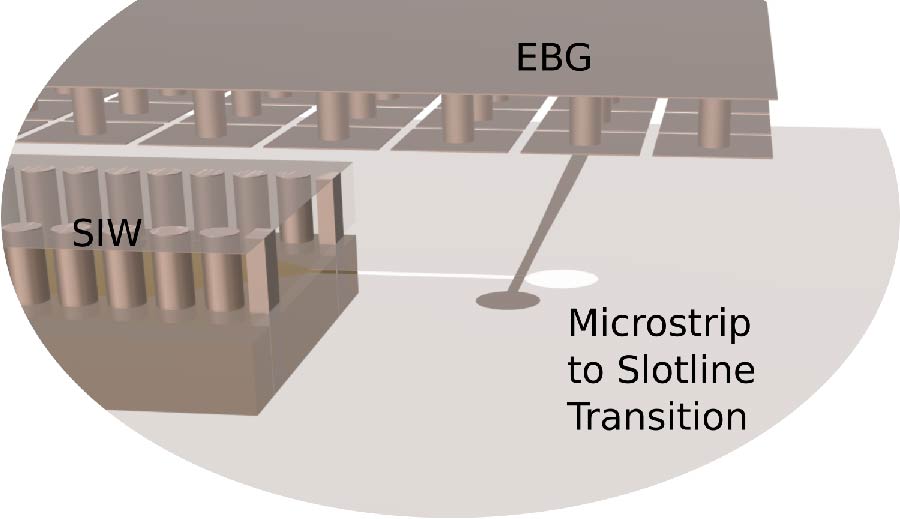
In this research work, a flexible metamaterial inspired antenna is proposed. The substrate is made of polyamide making it bendable. The stepwise detail analysis is discussed, and the antenna has two complimentary split resonators with circular ring placed in the ground plane. A superstrate along with an EBG structure is added in the final design. Mathematical modelling is done to prove metamaterial structure. To test the on-body results, first the permittivity of different fabrics is measured using DSL-01 (SES Instruments Pvt. Ltd). Phantom solution is required to test In-Body (Implantable) results.
An Multilayer Metamaterial Inspired Antenna for In-Body and On-Body Application
2023-10-14
PIER M
Vol. 120, 15-27
2-Port High Gain Millimeter-Wave MIMO Antenna for 5G Applications
Mingming Gao , Hongliang Niu , Jing Chang Nan , Wen Hui Liu and Chun Li Liu
In order to improve the distance of 5th Generation (5G) Mobile Communication Technology) millimeter-wave outdoor point-to-point relay transmission, a 2-port Multiple Input Multiple Output (MIMO) antenna with high gain and low sidelobe level characteristics is designed at 39 GHz. The antenna is designed using the Taylor synthesis method and slotting technology to increase the antenna gain and lower the sidelobe level. Loading hollow T-shaped branches reduces the mutual coupling between MIMO antennas. The measured results are basically in line with the simulation ones. The results show that the bandwidth of the antenna is 38.1 ~ 39.3 GHz; the isolation degree is more than 50 dB; the antenna gain is 25.75 dBi at 39 GHz; the E-plane and H-plane sidelobe levels are -20.5 dB and -20 dB, respectively. Furthermore, the Envelope Correlation Coefficient (ECC) is less than 0.022; the Diversity Gain (DG) is more than 9.89; and the radiation efficiency reaches 90% in the working frequency band. Therefore, this antenna can be used as a long-distance relay antenna in 5G millimeter-wave communication system with high gain and low sidelobe level characteristics based on meeting the requirements of the MIMO antenna.
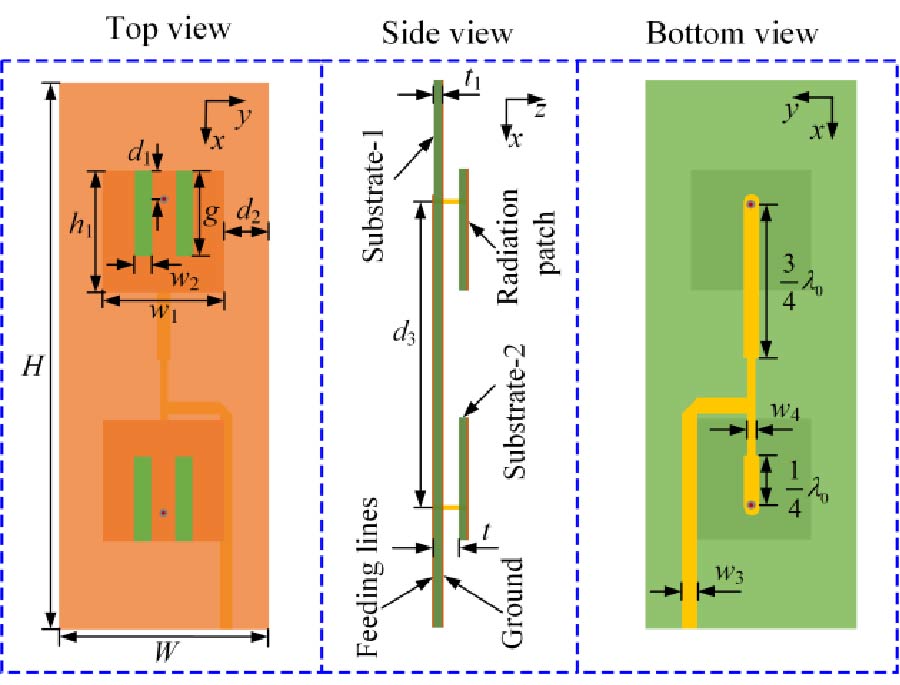
2-Port High Gain Millimeter-wave MIMO Antenna for 5G Applications
2023-10-14
PIER M
Vol. 120, 1-14
Impact of Phase Noise on Sidelobe Cancellation System Utilizing Distributed Phase-Lock-Loops
Qing Wang , Kang Luo and Huanding Qin
Phase noise is a common hardware impairment that affects the performance of beamforming systems. Therefore, analysis of its impact is of great practical interest. Although Sidelobe Cancellation (SLC) is a mature technique, existing analyses typically ignore the effect of phase noise, due to the shared assumption that the down-conversion circuits have a common local-oscillator (LO). However, when distributed phase-lock-loops (PLLs) are used, the impact of phase noise cannot be neglected. Therefore, this paper derives new mathematical models of performances, including signal-to-interference-plus-noise ratio (SINR) and beamforming gain. Exact and approximated analytical models are obtained, respectively. In addition, we propose an average beam pattern formula to replace the traditional beam pattern formula, to improve the consistency between beam null depth and the beamforming gain. The theoretical findings are verified through signal-level simulations.
Impact of Phase Noise on Sidelobe Cancellation System Utilizing Distributed Phase-Lock-Loops
2023-10-14
PIER B
Vol. 103, 37-53
A Torque Ripple Suppression Strategy for Hysteresis Segmented PWM-DITC Permanent Magnet Assisted Switched Reluctance Motor
Chaozhi Huang , Lixiang Dai , Yuliang Wu and Yanwen Sun
In the traditional Direct Instantaneous Torque Control (DITC) strategy for permanent magnet assisted switched reluctance motors, the hysteresis control mode during the commutation phase and the single-phase on-period is not smooth, resulting in excessive synthetic torque ripple. In this paper, we analyzed this problem, combined with the principle of hysteresis segmentation control and pulse width modulation (PWM), and proposed a hysteresis segmented PWM-DITC strategy. By analyzing the torque error changes in each division area of the inductor, the torque error is adjusted by the internal hysteresis loop during the commutation period and the single-phase on-period, so that the hysteresis control is smoother, and the torque ripple is reduced. At the same time, the linear model of rotor angle and inductance is established; the PWM voltage modulation calculation formula at both ends of the winding is calculated and derived; the hysteresis output signal at the commutation time and the single-phase on-time is optimized to further suppress the torque ripple. Finally, through simulation and experimental demonstration, the proposed hysteresis loop segmented PWM-DITC strategy can overcome the problem of unsmooth hysteresis control mode and can effectively suppress torque ripple.
A Torque Ripple Suppression Strategy for Hysteresis Segmented PWM-DITC Permanent Magnet Assisted Switched Reluctance Motor
2023-10-10
PIER M
Vol. 119, 189-201
A Quad-Band Low Power High Sensitive RF to DC Converter Circuit for RF Energy Harvesting Applications
Pavan Mehta and Anveshkumar Nella
In recent years, Radio Frequency Energy Harvesting (RFEH) has matured into a trustworthy and consistent method of obtaining ambient energy. For this energy to be utilized, it must be collected as efficiently over a broad range of frequencies as possible. In this regard, this article introduces a quad-band low-power, highly sensitive Radio Frequency (RF) to Direct Current (DC) signal converter circuit that operates at 1.5 GHz, 2.45 GHz, 3.6 GHz, and 5.5 GHz bands. The converter circuit is realized through single and dual-band converter circuit studies. These circuits comprise an impedance matching circuit, a voltage-doubler rectifier, a DC-pass filter with a resistive load of 5 kΩ, and a DC-DC voltage booster (LTC3108). The proposed quad-band converter circuit without a voltage booster gives a DC output voltage of 118 mV, 81 mV, 56 mV, and 24 mV at the four operational frequencies on a low input power of -25 dBm, respectively. A DC voltage of 3.3 V is obtained when the converter circuit is connected to a voltage booster. Maximum conversion efficiency achieved is 48% from four tones on a power input of -10 dBm. Circuit design steps, matching conditions, and performance parameters are presented using the Advanced Design System (ADS) and LTspice simulation tools.
A Quad-band Low Power High Sensitive RF to DC Converter Circuit for RF Energy Harvesting Applications
2023-10-08
PIER M
Vol. 119, 177-188
Mutual Coupling Reduction in UWB-MIMO Antenna Using Circular Slot EBG Structure
Raveendrababu Pakala and Dasari Ramakrishna
In this paper, a compact Ultra Wide Band (UWB) Multiple Input Multiple Output (MIMO) antenna using circular slots Electromagnetic Band Gap (EBG) structures operating in frequency band from 3.1 GHz to 10.6 GHz is presented. The size of this compact antenna is 26 × 33 mm2. In wireless communications, such as WLAN, 4G, and 5G, MIMO has become an essential element. However, the major limiting factor of MIMO systems is mutual coupling due to the smaller spacing between multiple antennas, which reduces spatial diversity, antenna gain and can also result in unwanted interference and cross-talk between antenna elements. To enhance antenna performance and reduce the mutual coupling, EBG structures are used. Incorporation of EBG structures in MIMO antenna eliminates surface wave propagation, which reduces the mutual coupling. In this work, the design of a dot notch shaped UWB-MIMO antenna with a circular slot EBG structure is proposed. Results presented here are simulated by using CST microwave software studio. From the results it can be observed that the proposed antenna has bandwidth of 3.1 GHz-10.6 GHz. It exhibits 6.72 dB peak gain and reduces the mutual coupling considerably, i.e., more than -28 dB.
Mutual Coupling Reduction in UWB-MIMO Antenna Using Circular Slot EBG Structure
2023-10-08
PIER Letters
Vol. 113, 1-6
Modeling and Design of CPW Spoof Surface Plasmon Polariton with Reduced Transversal Width
Rui-Feng Cao and Lin Li
In this paper, equivalent circuit models are first presented for characterizing the CPW SSPPs with etched slot. The asymptotic frequency and dispersion are investigated based on the theoretical model. And the analyses reveal that both the asymptotic frequency and dispersion curve can be manipulated by changing the inductance brought by the etched slots and the capacitance of the loaded capacitors. To validate the propagation performance, the proposed SSPP structure was fabricated and tested. The experimental results are consistent with the theoretical analysis, indicating that the designed SSPP structure possesses excellent low-pass filtering characteristics. Compared with traditional SSPP structures, the proposed structure exhibits a much narrower transversal width and does not require mode-conversion structures.
Modeling and Design of CPW Spoof Surface Plasmon Polariton with Reduced Transversal Width
2023-10-07
PIER C
Vol. 138, 117-129
A Printed Monopole Antenna for Next Generation Internet of Things: Narrow Band Internet of Things (Nb-IoT)
Sneha Bhardwaj , Praveen Kumar Malik , Tanvir Islam , Anita Gehlot , Sudipta Das and Sivaji Asha
This article introduces a planar monopole antenna specially designed for NB-IoT module devices. The preferred choice for Internet of Things (IoT) technology is the Narrow-Band Internet of Things (NB-IoT) due to its extensive coverage and low power consumption. NB-IoT is specifically designed for IoT applications. A circular patch antenna with dimensions of 30 mm×60 mm is fabricated, which is specifically tailored for the NB-IoT module. The antenna dimensions are meticulously chosen to ensure compatibility with the device module, considering the NB-IoT B1 (2100) and B3 (1800) frequency bands. Among various patch shapes, the circular design is preferred for its advantages over hexagon and square patches. The desired antenna configuration combines a square-slotted patch with a monopole ground plane, and it offers several advantages in terms of design simplicity, compact size, and characteristics such as broad bandwidth, acceptable gain, and high radiation efficiency. The design process employs HFSS Software and utilizes an FR4 substrate of 1.6 mm thickness. Operating at resonance frequencies of 2.1 GHz and 1.8 GHz, the antenna covers a broad frequency spectrum of 1100 MHz (1.5 to 2.6 GHz) with a fractional bandwidth of 53.65%. The suggested antenna achieves a peak gain of 3.3 dB and maximum radiation efficiency of 96% within its operating band. It exhibits an omnidirectional radiation pattern, meeting the specific requirements of NB-IoT technologies. Experimental measurements of the fabricated antenna validate the results achieved from the simulated data.
A Printed Monopole Antenna for Next Generation Internet of Things: Narrow Band Internet of Things (NB-IoT)
2023-10-07
PIER M
Vol. 119, 161-175
A Compact Low-Profile P-Shaped Wearable Antenna for Medical Application
Zainab Yunusa
This research article introduces a compact wearable antenna designed specifically for medical applications. The antenna underwent prototyping using a flexible Rogers Duroid RO3003TM material, featuring a small form factor measuring 35 × 32 × 0.5 mm3. In the initial phase of the design process, a basic P-shaped rectangular patch antenna was employed. However, during the first design iteration (Design 1), the antenna demonstrated a single resonance around 1.2 GHz, although it was not optimally matched at that frequency. To tackle this problem and achieve miniaturization involved the introduction of two rectangular patches positioned below the P-shaped patch known as Design 2. To further improve its performance, an inverted L-slot was incorporated. The frequency of operation for the antenna is 2.4 GHz, with a bandwidth measuring 25.2% ranging from (2.087-2.692) GHz. The measured radiation patterns demonstrate bidirectional properties in the E-plane and omnidirectional properties in the H-plane and maintain a high gain of 3.54 dBi and an efficiency of 91%. The SAR values are 0.018/0.013 Watt/kg on the chest. Similarly, the SAR values are 0.02/0.015 Watt/kg on the thigh, using 1/10 g of human tissue, which comply with the standards set by the FCC and the ICNIRP. Furthermore, the simulation and measurement under bending investigation and being close to the human body demonstrate excellent performance. Therefore, the suggested antenna holds significant potential as a compact solution for wearable medical applications.
A Compact Low-profile P-shaped Wearable Antenna for Medical Application
2023-10-05
PIER C
Vol. 138, 105-116
Method for Calculating True Value of Landslide Deformation Based on Micro Deformation Monitoring Radar
Yaolong Qi , Lei Zhang , Weixian Tan , Pingping Huang , Zhonggen Wei and Haikun Liu
Micro Deformation Monitoring Radar has been widely used in the field of surface deformation and displacement monitoring. However, limited by radar imaging geometry, the deformation measurement by existing radar technology can only extract the deformation and displacement of the target line of sight (LoS), which cannot directly reflect the actual deformation and displacement of the landslide direction and easily results in misjudgment or omission of the surface deformation monitoring information. In this paper, the relationship model and mapping between radar data and three-dimensional coordinate system were analyzed to perform three-dimensional analysis of the LoS displacement. Combined with the landslide displacement direction, the mapping angle between the LoS direction at any point in the observation area and the landslide direction was solved, and then the deformation displacement in the landslide direction was obtained by solving the LoS direction displacement. Finally, taking the measured data of one slope as the research object, the feasibility and accuracy of the method were analyzed and verified. The conclusion shows that the method proposed in this paper can be effectively applied to calculate the true value of landslide deformation.
Method for Calculating True Value of Landslide Deformation Based on Micro Deformation Monitoring Radar
2023-10-04
PIER M
Vol. 119, 143-160
AI-Based Fast Design for General Fiber-to-Waveguide Grating Couplers
Zhenjia Zeng , Qiangsheng Huang and Sailing He
Utilizing deep learning to replace numerical simulation solvers for electromagnetic wave propagation is a promising approach for the rapid design of photonic devices. However, to realize the advantages of deep learning for rapid design, it is essential to apply it to a general device structure. In this study, we propose a method that employs deep learning to assist in fast design of a general grating coupler structure. We use a modified 1D-ResNet18(1D-MR18) to predict the coupling efficiency of various grating couplers at different wavelengths. After comparing and selecting the optimal combination of learning rate, activation functions, and batch normalization size, the 1D-MR18 demonstrates remarkable accuracy (MSE: 2.18×10⁻⁵, R2: 0.969, MAE: 0.003). By integrating the 1D-MR18 with the adaptive particle swarm algorithm, we can efficiently design periodic and nonuniform grating couplers that meet various functional requirements, including single-wavelength grating couplers, multi-wavelength grating couplers, and robust grating couplers. The time for designing a single device is no more than 2 minutes, and the shortest is only 17 seconds. This novel approach of employing deep learning for the fast and efficient design from standard photonic device structures offers valuable insights and guidance for photonic devices design.
AI-based Fast Design for General Fiber-to-waveguide Grating Couplers
2023-10-04
PIER Letters
Vol. 112, 119-126
Efficient ADE-TLM Scheme for Modeling Drude Based Graphene in Terahertz Spectrum
Mohamed Moumou , Soufiane El Adraoui , Khalid Mounirh , Mohammed Kanjaa and Mohsine Khalladi
In this work, a novel time domain Transmission Line Matrix (TLM) algorithm with Symmetrical Condensed Node (SCN) is developed to model electromagnetic (EM) wave propagation through a single graphene layer in Terahertz (THz) spectrum. The intraband conductivity of graphene (assumed to follow the Drude model) is implemented in TLM method by using the Auxiliary Differential Equation (ADE) of conduction current density. The validity and stability of the obtained results demonstrates the effectiveness and precision of this new modeling technique named ADE-(SCN)TLM, and prove that this method is a powerful tool that can be used to model and simulate complex devices based on graphene sheet for terahertz applications (e.g., Electronics, optoelectronic, ect.).
Efficient ADE-TLM Scheme for Modeling Drude Based Graphene in Terahertz Spectrum
2023-10-03
PIER
Vol. 178, 63-81
Linear Sampling Method Imaging of Three-Dimensional Conducting Targets from Limited Apertures via Phase-Delay-Constrained Formulations
Matthew Burfeindt and Hatim F. Alqadah
The linear sampling method (LSM) is a qualitative inverse scattering technique for reconstructing the shape of a target. It has several beneficial qualities, including the avoidance of nonlinear optimization and simplified scattering approximations. However, it often struggles when sensors can only be placed on one side of the target. In this paper, we investigate two alternative LSM formulations for overcoming the limited-aspect challenge. The first, the phase-delay frequency variation LSM (PDFV-LSM), incorporates coherent processing across frequency to improve discrimination in the range direction. The second, the phase-encoded LSM (PE-LSM), enhances the PDFV-LSM approach with a receive-beamforming operation to decrease the complexity of the inverse problem. We apply both techniques to simulated data from three-dimensional targets and three-dimensional limited-aspect arrays. We generate three-dimensional reconstructions and compare them to reconstructions from both the conventional LSM and conventional backprojection-based processing. The results demonstrate superior reconstruction fidelity for either the PDFV-LSM, the PE-LSM, or both, across a wide variety of imaging scenarios due to finer range resolution. They also demonstrate trade-offs between the two enhanced LSM techniques, with the PE-LSM achieving better range resolution and robustness to noise and the PDFV-LSM achieving better lateral resolution.
Linear Sampling Method Imaging of Three-dimensional Conducting Targets from Limited Apertures via Phase-delay-constrained Formulations