Search Results(13786)

2023-12-16
PIER C
Vol. 139, 119-127
Design and Analysis of Wideband Cross Dipole Antenna with Bent Arms for Base Station Applications
Lakshminarayana Pollayi and Dasari Rama Krishna
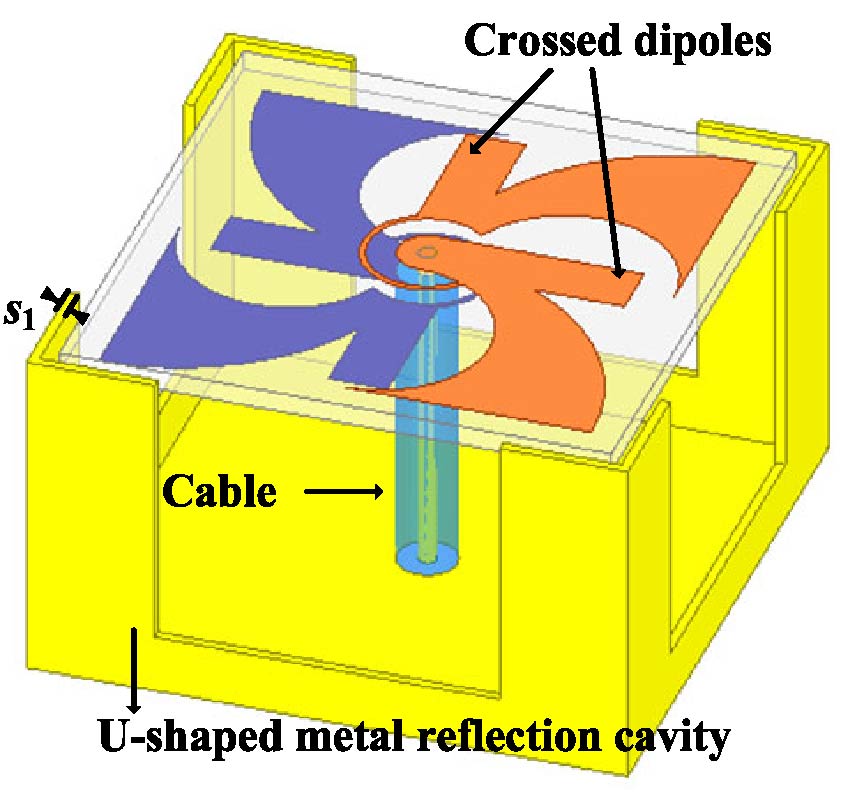
This paper presents a wideband dual slant polarized cross dipole antenna used to serve 2G/3G/4G/5G frequency bands. The proposed antenna model consists of two linearly polarized bent cross-dipole antennas, a cross-shaped director, and a metal reflector with walls in an open box manner. Bent dipole arms are etched on PCB to make the element compact. These cross dipoles are fed by hook-shaped wideband baluns. A cross director was placed on top of the cross dipole structure to achieve wideband impedance matching. The linearly polarized dipoles are placed orthogonally to achieve ±45° slant polarization. Two orthogonal polarizations were realized by exciting two input ports separately. A prototype has been fabricated, and measurements are carried out to validate the antenna performance. The measured results show that the antenna is well matched over the wide bandwidth, and the impedance bandwidth is ranging from 617 MHz to 990 MHz for VSWR<2, which is about 48%. The measured isolation between two orthogonal ports of the antenna was observed to be better than 33 dB. The radiation characteristics of the proposed model were stable, and the realized gain is in the range of 8.1±0.5 dBi. The values of the cross-polarization discrimination (XPD) are better than 20 dB at the boresight and 8 dB within ±60° directions. The proposed antenna model has advantages like wide impedance bandwidth, wide pattern bandwidth, stable radiation performance, simple structure, and a small overall size of 350 mm × 350 mm × 100 mm.
Design and Analysis of Wideband Cross Dipole Antenna with Bent Arms for Base Station Applications
2023-12-15
PIER M
Vol. 122, 97-105
Dispersion Analysis of a Planar Rectangular Tape Helix Slow Wave Structures Supported by Dielectric Rods
Naveen Babu and Nameesha Chauhan
The dispersion equation for a rectangular tape helix with four rectangular dielectric support rods has been deduced using precise boundary conditions employing field restricting functions. The dispersion equation is a much simplified conjoint expression obtained for axial and transverse directions derived by solving an infinite set of linear homogeneous simultaneous equations, represented as an infinite order matrix whose determinant is zero. Dispersion characteristics plotted from the simplified dispersion equation consist of the dominant and additional higher-order modes similar to an open rectangular slow wave structure (SWS), but with the existence of β0a(k0a) roots everywhere without the limitations of the forbidden region boundary. The phase velocity curves obtained for the corresponding mode of the dispersion characteristics exhibit comparable behavior to the free-space rectangular helix SWS, especially in the third ``allowed'' region, which offers a wider beam-wave interaction region with phase speed equivalent to the speed of light at higher operating frequencies. The numerically computed dispersion curves and their corresponding phase velocities were plotted. Similar dimensional variations of the structure with discrete support rods were simulated using three-dimensional simulation software. The dispersion characteristics obtained from the simplified dispersion equation along with the dimensional variation of the dielectric-loaded rectangular tape helix SWS determine the capability and limitations of such minuscule traveling wave tubes(TWTs) as planar TWTs suitable for fabrication using micro-machining techniques.
Dispersion Analysis of a Planar Rectangular Tape Helix Slow Wave Structures Supported by Dielectric Rods
2023-12-15
PIER M
Vol. 122, 85-95
Innovative Loaded Low-Profile Tri-Band MIMO Antenna System for Wi-Fi 7 Technology
Ahmad Yacoub and Daniel N. Aloi
A distinctive low-profile 2x2 MIMO antenna system for Wi-Fi 7 applications is presented in this paper that is compact, easily manufactured and with excellent performance. Because of its compact size and good RF performance, the design can be placed in hidden locations for various applications such as the automotive field in the front side mirrors or front dashboard, and consumer products in laptops and internet wireless routers. The proposed design can cover the entire tri-bands of Wi-Fi 7 (2400-2495 MHz, 5150-5895 MHz, 5945-7125 MHz) using a loaded low-profile Planar Inverted-F Antenna (PIFA) with distinct dimensions and slots across its geometry. The element design and the MIMO system is simulated and a properly made prototype was fabricated to present the results in terms of reflection coefficients, current distribution, combined radiation patterns, passive isolation, ports efficiencies, and Envelope Correlation Coefficient (ECC). The design shows relatively good RF properties across the entire three bands, hence making it an attractive solution to be used for Wi-Fi 7 technology to satisfy the needs of larger omnidirectional coverage area, wider channel bandwidth, and better transmission rates with low interference.
Innovative Loaded Low-profile Tri-band MIMO Antenna System for Wi-Fi 7 Technology
2023-12-14
PIER M
Vol. 122, 73-83
An Ultra-Wideband MIMO Antenna Based on Dual-Mode Transmission Line Feeding for Wireless Communication
Xianjing Lin , Gengtao Huang and Yao Zhang
An ultra-wideband (UWB) MIMO antenna based on dual mode transmission line feeding for wireless communication is proposed in this article. The general method of realizing a UWB MIMO antenna is using different shapes of monopoles acting as a MIMO antenna element, while the ultra-wideband character of the proposed MIMO antenna is mainly obtained by the use of a dual-mode transmission line in the coplanar waveguide (CPW) feeding line, which offers a novel method. The proposed MIMO antenna element is a rose-shaped monopole fed by a CPW feeding line. Compared to the traditional monopole, a rose-shaped monopole can introduce several extra resonant frequencies, and the impedance bandwidth can be improved. Besides, a dual-mode transmission line (DMTL) is introduced by adding specific stubs to the CPW feeding line. Arranging the stubs at the half wavelengths of the desired frequencies, mode transformation can be accomplished, and additional resonant modes can be generated. As a result, the impedance bandwidth can be further broadened. Results show that the fractional impedance bandwidth of the proposed UWB antenna element is 165.5% (2.59 GHz to 26.61 GHz). Then, the UWB antenna is applied to design a 4-element MIMO antenna. By loading four u-typed decoupling structures at the center of the MIMO antenna, the port-to-port isolation of the MIMO antenna can be increased to 20 dB within a wide bandwidth, especially 25.3 dB at the higher band (14-25 GHz). The proposed UWB MIMO antenna is manufactured and tested. Experimental results show that the impedance bandwidth covers 2.40 GHz to 25 GHz (165%). The diversity gain (DG) of the antenna in the operating band is about 10; the envelope correlation coefficient (ECC) is less than 0.002; and the radiation efficiency ranges from 85% to 95% in the whole working band. The design is a preferable candidate for MIMO systems.
An Ultra-wideband MIMO Antenna Based on Dual-mode Transmission Line Feeding for Wireless Communication
2023-12-14
PIER Letters
Vol. 115, 33-37
LTCC-Packaged Branch-Line Coupler Using Capacitance Improved Capacitor for VHF-Band Applications
Shunjie Yu , Bo Zhou , Gang Shi and Shanwen Hu
A compact branch-line coupler is proposed with capacitance improved capacitor (CIC) using low-temperature co-fired ceramic (LTCC) packaged technology. The proposed CIC is constructed for higher capacitance without any size increment by further separated horizontal finger pads on VIC. The area of the coupler is only 10.3 × 9.4 × 1 mm3, which is equivalent to 0.0041 × 0.0035 × 0.0004λg3. The application frequency band covers maritime and aircraft navigation in the very high frequency (VHF)-band. The measured in-band S11, S21, S31 and S41 are better than -15, -4.1, -2.2 and -18 dB from 47 to 67 MHz, respectively. And the measured phase difference between the coupled and through ports is within 90±0.2°, which presents an excellent linear characteristic.
LTCC-packaged Branch-line Coupler Using Capacitance Improved Capacitor for VHF-band Applications
2023-12-13
PIER C
Vol. 139, 107-118
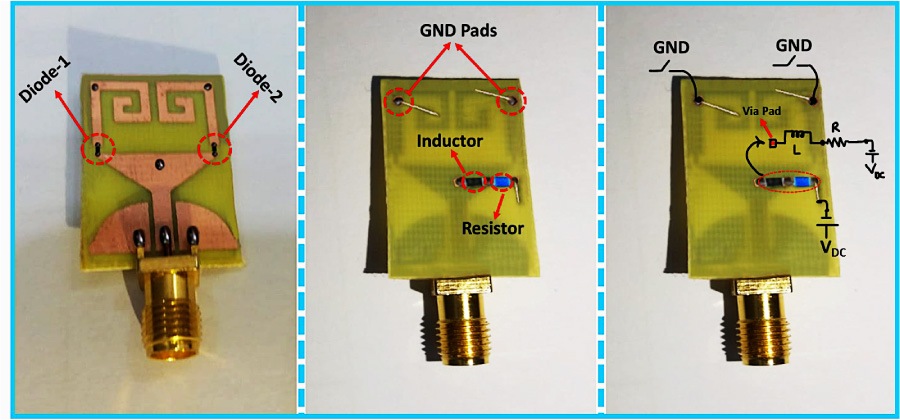
Design of Wide Notched-Band Circular Monopole Ultra-Wideband Reconfigurable Antenna Using PIN Diodes Switches
Annu Tiwari , Dinesh Yadav , Purnima Sharma and Manish Varun Yadav
This communication presents the design of a circular monopole ultra-wideband (UWB) reconfigurable antenna with wide notched-band of 1 GHz which ranges from 5 to 6 GHz in UWB. The design involves a circular monopole antenna with embedded three thin slots (two vertical and one horizontal) and one rectangular slot at the top edge. The three p-i-n diodes are inserted in between vertical slots to control the flow of surface current in ON/OFF states. As a result, in all diodes' ON and OFF states, the designed antenna shows switching of its resonance in whole UWB to wide notched band UWB applications. The CST-microwave studio software is used to simulate the structure in time domain. The full modeling of reported reconfigurable antenna that includes reactive effects of the diode is achieved by ADS circuit simulator.
Design of Wide Notched-band Circular Monopole Ultra-wideband Reconfigurable Antenna Using PIN Diodes Switches
2023-12-13
PIER M
Vol. 122, 63-72
Non-Singular Fast Terminal Sliding Mode Control Torsional Vibration Suppression for PM Synchronous Transmission System of EVs
Ning Jia , Kaihui Zhao , Yuying Lv and Xiangfei Li
To suppress the torsional vibration caused by the omission of couplings and dampers during flexible power transmission in the permanent magnet (PM) synchronous drive system of pure electric vehicles (EVs), this paper presents a non-singular fast terminal sliding mode control (NFTSMC) torsional vibration suppression strategy based on a sliding mode disturbance observer (SMDO). First, a PM synchronous drive system is simplified as a two-inertia model, and a mathematical model is established. Then, an NFTSMC controller of the load-side speed feedback is designed to suppress torsional vibration. Meanwhile, an SMDO is designed to estimate the load disturbance, and the estimated value is fed back to the controller to perform feedforward compensation. The robustness of the system is improved, and the effect of the load disturbance on the system is reduced. The results of the simulations and experiments show that the presented NFTSMC based on SMDO strategy has a strong torsional vibration suppression effect comparing to PI control and conventional sliding mode control.
Non-singular Fast Terminal Sliding Mode Control Torsional Vibration Suppression for PM Synchronous Transmission System of EVs
2023-12-13
PIER Letters
Vol. 115, 27-32
A Miniaturized Frequency Selective Surface for GSM Shielding by Utilizing a Spiral Handshake Structure
Xian-Jun Sheng , Chen Gu , Ning Liu , Hongwei Wang and Xiangyan Liu
This paper aims to design a compact frequency selective surface (FSS) for electromagnetic shielding in the 1.8 GHz band of GSM, ensuring that the stopband width covers the target frequency range in both simulations and actual measurements. The primary focus of this paper is to design a compact FSS with good miniaturization for real-world applications. The proposed FSS structure is a single-layer double-sided structure. The regression models reflecting the mapping relationship between the resonant frequency and the structural parameters are established to guide the design. An equivalent circuit model (ECM) is presented to clearly explain the working mechanism of the FSS. The unit size is only 0.038λ0, where λ0 is the wavelength of the resonant frequency in free space. In addition, the proposed FSS provides stable performance under oblique angles of incidence for both TE and TM polarizations. An FSS prototype has been manufactured for verification.
A Miniaturized Frequency Selective Surface for GSM Shielding by Utilizing a Spiral Handshake Structure
2023-12-12
PIER C
Vol. 139, 95-105
Performance Evaluation of Thinning on Multifunctional Array Antennas
Polepalli SaiVinay
The array covers the L-band and S-band range frequencies used for multifunctional applications and operate between 1.61 GHz and 2.492 GHz. The quad frequency antenna resonates at four frequencies 1.176 GHz, 1.575 GHz, 1.6 GHz, and 2.492 GHz, which cover the L-band and S-band frequencies. The configurations of both antennas are layered patches. Performance measurements of the two antenna arrays have been compared, including side lobe level, return loss, and gain. Both the antennas are fabricated using affordable, easily accessible FR4 Epoxy. By implementing thinning for both array antennas, gain values are observed, and good performances are obtained.
Performance Evaluation of Thinning on Multifunctional Array Antennas
2023-12-12
PIER M
Vol. 122, 53-62
Tensor-Based Robust Adaptive Beamforming for Multiple-Input Multiple-Output Radar Under Random Mismatch Scenarios
Ju-Hong Lee and Wei-Chi Lee
Adaptive beamforming for multiple-input multiple-output (MIMO) radar systems suffers from performance deterioration under the scenarios with multiple random mismatches. This paper explores the theory of tensor algebra and exploits the inherent multidimensional structure of data matrix received by MIMO radar systems. For dealing with the beamforming problem induced by multiple random mismatches including steering vector error, mutual coupling, sensor position error, and coherent local scattering, we develop a robust method based on a third-order tensor in conjunction with a gradient-based optimization process. The proposed method captures the multidimensional structure information embedded in the data matrix received by a MIMO radar and produces appropriate estimates for transmit and receive signal direction vectors required for beamforming. Using a third-order tensor helps to alleviate the effect of the multiple random mismatches in the tensor data domain. The gradient-based optimization process further enhances the capabilities of the third-order tensor in estimating transmit and receive signal direction vectors for adaptive beamforming of a MIMO radar. The main computational complexity of the proposed method is dominated by a trilinear alternating least squares algorithm and the well-known gradient-based algorithm. The proposed method provides better performance than the existing robust methods. Simulation results are presented to confirm the effectiveness of the proposed method.
Tensor-based Robust Adaptive Beamforming for Multiple-Input Multiple-Output Radar under Random Mismatch Scenarios
2023-12-12
PIER M
Vol. 122, 41-52
Ultra-Wideband Antenna with Quintuple Band Notches Integrated with Metamaterials
Sapna Arora , Sharad Sharma and Rohit Anand
An elliptical monopole planar antenna for ultra-wideband (UWB) with penta-band-notched characteristics is presented. The frequency band rejection at 3.7 GHz to 4.2 GHz for C-band satellite communication and 5.15 GHz to 5.35 GHz for lower Wireless local area network (WLAN) is achieved by etching two elliptical split ring resonators (ESRRs) in the radiating patch. Dual notches at INSAT (4.5 GHz-4.7 GHz) and upper WLAN band (5.725 GHz-5.825 GHz) are created by special type of metamaterial, i.e., a two via double slot type EBG structure. Then, ITU band (7.95 GHz-8.55 GHz) is suppressed by adding a step impedance resonator (SIR) near the feed line. The proposed antenna is designed over a low cost FR4 material substrate, has a miniaturized size of 0.317λ × 0.317λ × 0.007λ, and possesses the impedance bandwidth from 2.5 GHz to 11 GHz. The band notch behaviour of antenna at specific frequencies is explained by mathematical model and justified with numerically simulated surface current distribution and impedance plot. Constant gain with the peak value of 3 dB is measured for UWB except notch bands. Also, this antenna has application in S(1.97-2.69 GHz), LTE(450 MHz-3.8 GHz), C(3.4-7.025 GHz), X(7.25-8.44 GHz), Ku(10.7-14.5 GHz) bands. The proposed antenna structure is a promising candidate for wireless technology.
Ultra-wideband Antenna with Quintuple Band Notches Integrated with Metamaterials
2023-12-12
PIER M
Vol. 122, 31-39
Solving Electromagnetic Wave Scattering Using Artificial Neural Networks
Mohammad Ahmad
Electromagnetic wave scattering (EMWS) is one of the complexities in electromagnetism. Traditionally, three numerical methods are used to solve this problem which are finite element method, finite difference method, and method of moments. Recently, artificial neural networks (ANNs) have gained popularity as tools to solve different problems in a wide variety of disciplines, including electromagnetism. This paper shows that the second ordinary differential equation that represents EMWS from one-dimensional, two-dimensional, and three-dimensional inhomogeneous mediums and deals with complex numbers can be solved using ANN. This is done by reducing the error between the trail solution at the output of the ANN and the second ordinary differential equation that represents the scattered field. The results from solving classical examples using the suggested approach are accurate.
Solving Electromagnetic Wave Scattering Using Artificial Neural Networks
2023-12-12
PIER M
Vol. 122, 21-30
Design of a Single-Layer C/X Dual-Band Reflectarray Antenna with Low Cross-Polarization
Li Liu , Yufeng Liu , Zhiyuan Yang and Liping Han
A single-layer reflectarray antenna working at C- and X-bands is designed in this paper. The proposed reflectarray element is mainly composed of three square rings. Four phase delay lines are attached to the outer ring to obtain the phase shift at C-band, and the inner two square rings are utilized to extend the phase range at X-band. The phase shift of the element reaches up to 375° and 560° at 5.9 GHz and 10.4 GHz, respectively. The cross-polarization level of the reflectarray is effectively suppressed by using a mirror symmetric element arrangement. To experimentally validate the proposed design, a center-fed dual-band prototype reflectarray with the size of 180 mm×180 mm is designed, fabricated, and tested. The measured peak gains are 16.5 dBi at 6.2 GHz and 17.1 dBi at 10.3 GHz, respectively. Besides, the measured 1-dB gain bandwidth is 9.15% (5.83-6.37 GHz) at the lower band and 3.27% (10.12-10.46 GHz) at the upper band, respectively. 16Dual-band shared aperture reflectarray and patch antenna array for s- and ka-bandsSerup, Daniel Edelgaard and Pedersen, Gert Frolund and Zhang, Shuai2340-2345SerupDaniel EdelgaardGert Frolund Pedersen, Shuai ZhangIEEE Transactions on Antennas and Propagation7023402345
Mar.2022journal10.1109/TAP.2021.31111713
Moreover, the cross polarizations at both bands are under -21 dB.
Design of a Single-layer C/X Dual-band Reflectarray Antenna with Low Cross-polarization
2023-12-12
PIER Letters
Vol. 115, 19-25
Wideband Capability in Embedded Stacked Rectangular Dielectric Resonator Antenna for X-Band Applications
Jihad Ben Yamoun and Noura Aknin
This paper introduces a novel design of an embedded stacked Rectangular Dielectric Resonator Antenna (RDRA). The antenna structure incorporates two distinct materials, namely PLA (Polylactic Acid) and Alumina, possessing dielectric constants of 3.45 and 9.9, respectively. A coaxial probe is employed to feed the antenna, enabling efficient signal transmission. The simulated results indicate the presence of two distinct resonance frequencies, which are 9.4 GHz and 10.6 GHz. Furthermore, the simulated antenna exhibits a maximum gain of 7.7 dB at 10.6 GHz, while demonstrating a wideband characteristic spanning approximately 22.7% of the frequency band between 8.75 GHz and 11 GHz on the measurement. The design and simulation of the RDRA are carried out using CST 2020 microwave studio, ensuring accurate and reliable results. The proposed antenna configuration is well suited for X-band applications such as radar and satellite systems.
Wideband Capability in Embedded Stacked Rectangular Dielectric Resonator Antenna for X-band Applications
2023-12-08
PIER
Vol. 178, 103-110
Generalized Phase Retrieval Model Based on Physics-Inspired Network for Holographic Metasurface (Invited Paper)
Lei Jin , Jialei Xie , Baicao Pan and Guoqing Luo
Phase holographic metasurfaces encode the phase profiles of holograms in metasurfaces formed by the meta-atom arrays, and accurately modulate the field distribution in desired region. Iterative optimization methods or data-driven learning methods are used to retrieve the phase profile under the given physical setups, such as working wavelength λ, metasurfaces' period ∆x, and image distance Z. However, those methods usually repeat the optimization or training process to retrieve the phase profile for different physical setups. Here, we propose a generalized phase retrieval model (GPRM) based on physics-inspired network to retrieve the phase profile from the input λ, ∆x, Z, and desired image without retraining the neural network. The GPRM consists of deep neural network (DNN), parabolic phase, and Fresnel diffraction propagation, which is able to generate phase profile with high reconstruction quality in extraordinary broadband, such as visible, terahertz, and microwave region. By combining with corresponding meta-atom pool, the proposed method has great potential to design versatile meta-devices for image display, data encoding, and beam shaping. Furthermore, the proposed method accelerates the design of Fresnel phase hologram, which can cooperate with programmable metasurfaces to realize dynamic three-dimensional or full-color display.
Generalized Phase Retrieval Model Based on Physics-inspired Network for Holographic Metasurface (Invited paper)
2023-12-08
PIER C
Vol. 139, 87-94
Performance Enhancement of High-Gain STDA Antennas with Reflector for 4G LTE and Sub-6 GHz 5G Applications: Design, Measurement, and Analysis
Mohd Wasim , Shelej Khera , Tanvir Islam , Praveen Kumar Malik , Sivaji Asha and Sudipta Das
The paper focuses on the design, measurement, and performance analysis of a high-gain cross-orthogonal series fed two dipole antenna (STDA) arrays with side-wall reflectors. The antenna is specifically designed for 4G Long Term Evolution (LTE) and sub-6 GHz 5G band applications. The designed antenna is capable of operating at multiple frequencies aiming to support 4G LTE and the sub-6 GHz 5G application bands. To improve the radiation characteristics and prevent coupling effects in the presence of side-wall reflectors, parasitic strip pair directors are included in the antenna design. Furthermore, the performance of the designed STDA is evaluated by forming different array configurations, such as 2×1, 2×2, and 2×3 arrays. The various array configurations are proposed to investigate the effect of the projected array arrangements on the radiation pattern, impedance bandwidth, and gain characteristics. The results of the measurements show that the radiation characteristics of the antenna has improved significantly. The proposed antenna operates at six distinct frequencies for S11≤-10 dB. The operating frequencies at 1.8, 2.35, and 2.6 GHz can be utilized for LTE and 3.2, 4.2, and 5.2 GHz can support sub-6 GHz 5G bands. The antenna is characterized by its compact size, measuring around 89 mm × 71 mm, while still achieving high gain of 12.3 dB for single STDA element with parasites and with reflector. These results emphasize the importance of the proposed design, which incorporates parasitic strip pair directors and side-wall reflectors. This design methodology plays a crucial role in enhancing the performance of the prescribed STDA array for both 4G LTE and sub-6 GHz 5G applications.
Performance Enhancement of High-gain STDA Antennas with Reflector for 4G LTE and Sub-6 GHz 5G Applications: Design, Measurement, and Analysis
2023-12-08
PIER Letters
Vol. 115, 15-18
Research on Multi-Rgion Compensation Plasma Device
Yutian Li , Yingying Wang , Zhanrong Zhou , Xiaofang Shen , Chao Ma , Yiming Chen and Guoqing Zhang
Conventional solid-state plasma devices encounter limitations in terms of the concentration and distribution uniformity of solid-state plasma, which adversely affects their microwave characteristics and overall antenna system performance. In this study, we propose a novel heterogeneous SPIN diode with multi-region compensation effects aimed at addressing this challenge. By incorporating SiGe regions within the intrinsic region of the device, we enhance the carrier injection ratio, effectively compensating for the rapid attenuation of solid-state plasma. As a result, a high-concentration and uniformly distributed solid-state plasma region is achieved within the SPIN diode, surpassing a concentration threshold of 1×1018 cm-3 within the intrinsic region. Through extensive simulations utilizing Sentaurus TCAD software, we demonstrate notable improvements in plasma concentration, distribution uniformity, and other key electrical parameters compared to traditional devices. The presented findings mark significant advancements in the realm of silicon-based plasma devices and hold promise for reconfigurable antenna systems.
Research on Multi-rgion Compensation Plasma Device
2023-12-07
PIER C
Vol. 139, 79-86
A Low-Profile, Size-Reduced, High Gain, Circularly Polarized Anti-Jam Global Positioning System Antenna Array
Grant Evans , Jack Nemec , Victor Obi and Sungkyun Lim
A high gain, circularly polarized array antenna is proposed with low profile and compact size using T-shaped top loading, t-matching, and a reflector. Composed of 4 individual elements, the array has a -3-dB impedance bandwidth of 1.39% (1.564-1.586 GHz) and a 3-dB axial ratio beamwidth of 79° (-42°-37°) in measurement. The front-to-side ratio of the total realized gain pattern is 27.1 dB and the front-to-back ratio is 25.5 dB. The peak realized gain is 11.0 dBi in the forward (+z) direction. The proposed antenna is a good candidate for functioning as an anti-jam antenna in global positioning system, helping to block out jamming signals coming from the horizontal (90° and 270°) planes.
A Low-profile, Size-reduced, High Gain, Circularly Polarized Anti-jam Global Positioning System Antenna Array
2023-12-07
PIER B
Vol. 104, 51-68
Advanced Analysis of Radar Cross-Section Measurements in Reverberation Environments
Corentin Charlo , Stéphane Méric , François Sarrazin , Elodie Richalot , Jérome Sol and Philippe Besnier
Reverberation chambers (RCs) were recently reported as a low-cost alternative to anechoic chambers (ACs) to perform radar cross-section (RCS) pattern measurements. The method consists i, using transmitting and receiving antennas pointing towards a target under test placed on a rotating mast. As a classical RCS characterization, the echo signal is analysed based on two measurements with and without the target in the RC. In the hypothesis of an ideal diffuse field generated in the RC, this signal difference appears as the echo signal hidden in a Gaussian noise. In case of a point-like backscattering target, observing this signal over a given frequency bandwidth allows the identification of the target response as a sinusoidal signal over this bandwidth whose period is related to the antenna-target distance measured from the measurement calibration plane positions. Therefore, the extraction of the magnitude of this sinusoidal signal requires a proper estimation of this distance. Furthermore, a sinusoidal regression processing relies on the approximation of a constant envelope over the selected frequency bandwidth, imposing some restrictions. In this paper, we introduce a two-step method that consists in identifying the most appropriate distance according to the target's orientation before estimating the magnitude of the sinusoidal signal. We highlight the improvement of RCS estimation on a point-like back-scattering target compared to the one-step procedure applied so far. In addition, it is shown that the analysis performed regarding the estimated distance provides a physical insight into the position of the equivalent backscattering point.
Advanced Analysis of Radar Cross-section Measurements in Reverberation Environments
2023-12-07
PIER B
Vol. 104, 35-50
Effect of via-Array Side Walls on the Characteristics of SIW Resonator with Novel Design Equations
Samar M. Azab , Abdelhameed Abdelmoneim Shaalan , Khalid Fawzy Ahmed Hussein and Asmaa Elsayed Farahat
The present work proves by both simulation and experimental work that the most common empirical formulas available in the previous publications for the design of substrate-integrated waveguide (SIW) cavities are incorrect in most cases. Moreover, the present work provides correct and exact design equations that are examined by both simulation and experimental work. In planar circuit structures, rectangular waveguide and resonators are commonly integrated within a dielectric substrate to produce what is known as SIW structures. For ease of fabrication and embedding into the dielectric substrate, the closed (solid) side walls of the rectangular waveguides and resonators are replaced by metallic via arrays. The main concern of the present paper is to investigate the effects of such replacement on the performance of a SIW resonator through simulation as well as experimental work. The limiting constraints on the relative dimensions of such via arrays including the diameter of the vias and the spacing between them are numerically and experimentally investigated to ensure proper operation of the SIW resonator regarding the radiation loss due to leakage from the openings of the resonator side walls. The effects of the via array dimensions on the resonant frequency, radiation loss, and quality factor (Q-factor) of the resonator are evaluated. For this purpose, two models of the rectangular resonator embedded in the dielectric substrate are designed to operate at 10 GHz. The first model is an ideal box-shaped resonator of solid side walls whereas the other model is the conventional SIW resonator with via-array side walls. The two types of the substrate embedded resonators are fed through a microstrip line. The resonant frequency, losses, and Q-factor of the two resonator models are compared to each other taking the box-shaped resonator as a reference because of its ideal structure to evaluate the performance of a conventional SIW resonator. The two types of resonator are fabricated for comparison through experimental measurements. The empirical design equations that are commonly available in literature to calculate the effective dimensions of the SIW resonator are investigated by comparison with the exact simulation results and shown to be incorrect in most cases. More accurate and reliable design equations are proposed in the present work. The results of the proposed design equations are compared to the simulation results showing excellent accuracy and shown to be more reliable than those available in literature.
Effect of Via-array Side Walls on the Characteristics of SIW Resonator with Novel Design Equations