Search Results(13798)

2013-05-05
PIER
Vol. 139, 479-498
Applications of the Discrete Green's Function in the Finite-Difference Time-Domain Method
Tomasz P. Stefanski
In this paper, applications of the discrete Green's function (DGF) in the three-dimensional (3-D) finite-difference time-domain (FDTD) method are presented. The FDTD method on disjoint domains was developed employing DGF to couple the subdomains as well as to compute the electromagnetic field outside these subdomains. Hence, source and scatterer are simulated in separate subdomains and updating of vacuum cells, being of little interest from a user point of view, can be avoided. In the developed method, the field radiated by a single subdomain is computed as a convolution of DGF with equivalent current sources measured over two displaced Huygens surfaces. Therefore, the computed electromagnetic field is compatible with the FDTD grid and can be applied as an incident wave in a coupled total-field/scattered-field (TFSF) subdomain. In the developed method, the DGF waveforms are truncated using the Hann's window and windowing parameters assuring accuracy of computations are pointed out. The error of the field computations varies between -90 dB and -40 dB depending on the DGF length and excitation waveform. However, if the DGF length is equal to the number of iterations in a simulation, the presented DGF applications return the same results as the direct FDTD method.
APPLICATIONS OF THE DISCRETE GREEN'S FUNCTION IN THE FINITE-DIFFERENCE TIME-DOMAIN METHOD
2013-05-05
PIER
Vol. 139, 445-478
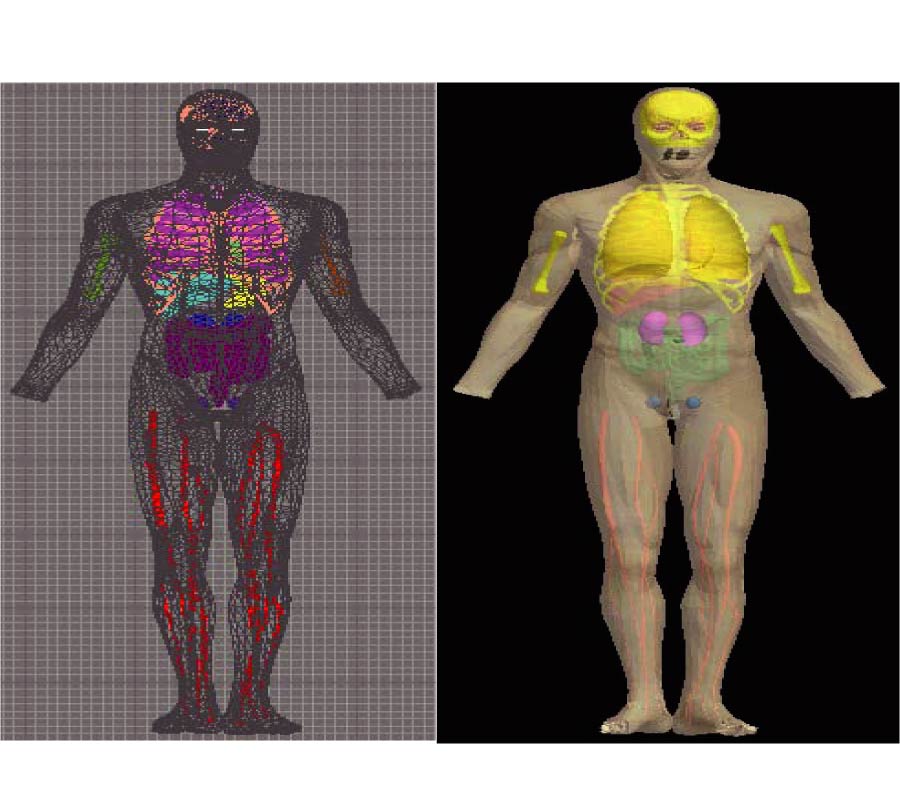
Exposure Optimization in Indoor Wireless Networks by Heuristic Network Planning
David Plets , Wout Joseph , Kris Vanhecke and Luc Martens
Due to the increased use of indoor wireless networks and the concern about human exposure to radio-frequency sources, exposure awareness has increased during recent years. However, current-day network planners rarely take into account electricfield strengths when designing networks. Therefore in this paper, a heuristic indoor network planner for exposure calculation and optimization of wireless networks is developed, jointly optimizing coverage and exposure, for homogeneous or heterogeneous networks. The implemented exposure models are validated by simulations and measurements. As a first novel optimization feature, networks are designed that do not exceed a user-defined electric-field strength value in the building. The influence of the maximally allowed field strength, based on norms in different countries, and the assumed minimal separation between the access point and the human are investigated for a typical office building. As a second feature, a novel heuristic exposure minimization algorithm is presented and applied to a wireless homogeneous WiFi and a heterogeneous WiFi-LTE femtocell network, using a new metric that is simple but accurate. Field strength reductions of a factor 3 to 6 compared to traditional network deployments are achieved and a more homogeneous distribution of the observed field values on the building floor is obtained. Also, the influence of the throughput requirement on the field strength distribution on the building floor is assessed. Moreover, it is shown that exposure minimization is more effective for high than for low throughput requirements and that high field values are more reduced than low field values.
EXPOSURE OPTIMIZATION IN INDOOR WIRELESS NETWORKS BY HEURISTIC NETWORK PLANNING
2013-05-05
PIER
Vol. 139, 423-444
An Investigation on Numerical Characterization of Scattering from Target in a Dielectric Rough Soil Surface
Yu Liang , Xiang-Hua Zeng , Li-Xin Guo and Zhen-Sen Wu
Based on the Propagation-Inside-Layer Expansion (PILE) and the Forward-Backward method (FBM), the composite scattering from the target below a dielectric rough soil surface using the extended PILE (EPILE) combined with the Forward-Backward method (FBM) is studied. The accuracy and efficiency of the EPILE+FBM for this specific type of composite scattering is researched by comparing with the method of moments (MOM), the influences of the target size, target depth, target horizontal distance, the rms height, the correlation length, the incident angle and the soil moisture content, etc, to the bistatic scattering coefficient (BSC) are also investigated.
AN INVESTIGATION ON NUMERICAL CHARACTERIZATION OF SCATTERING FROM TARGET IN A DIELECTRIC ROUGH SOIL SURFACE
2013-05-01
PIER Letters
Vol. 40, 19-28
Compact Coplanar Waveguide (CPW)-Fed Tunable Wideband Resonant Antennas Using Metamaterial Transmission Line
Long Zheng , Guangming Wang and Lin Geng
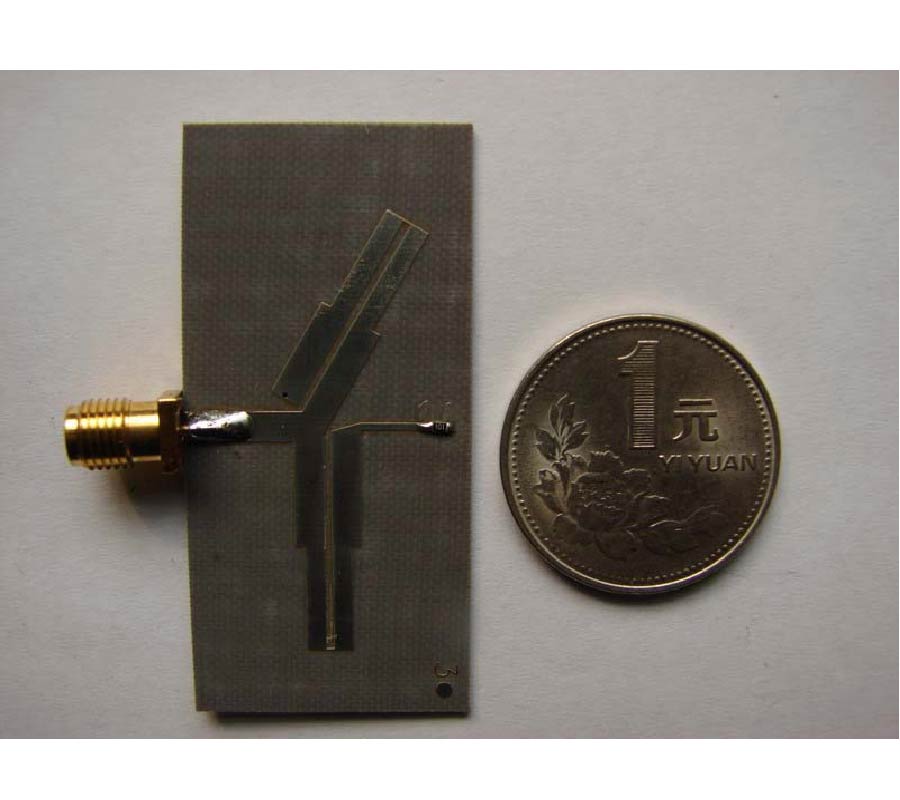
A wideband resonant antenna loaded with coplanar waveguide (CPW) epsilon negative transmission metamaterial line (ENG MTL) unit cells is proposed. The CPW geometry provides high design freedom, and the metamaterial resonant antenna is designed on a CPW single layer where vias are not required. The novel ENG unit cell on a vialess single layer simplifies the fabrication process. The dispersion analysis of the metamaterial unit cell reveals that increasing right hand capacitance and left hand inductance can decrease the half-wavelength resonance frequency, thus reducing the electrical size of the proposed antenna. Based on the proposed ENG MTL unit cell the wideband antenna is verified by a commercial EM simulator HFSS11 and developed. Comparing the measured performances with those resonant antennas, it is noticed that the proposed antenna achieves high bandwidth and further size reduction, higher efficiency and easier manufacturing. The realized antenna has a compact size of 0.32λ0 × 0.20λ0 × 0.012λ0 (26.6 mm × 16.8 mm × 1 mm) at 3.65 GHz, and operates over the frequency ranges 3.38-4.23 GHz suitable for WiMAX applications. Good agreement between the simulated and measured results is obtained.
COMPACT COPLANAR WAVEGUIDE (CPW)-FED TUNABLE WIDEBAND RESONANT ANTENNAS USING METAMATERIAL TRANSMISSION LINE
2013-05-01
PIER Letters
Vol. 40, 9-18
Compact Dual-Band Circularly-Polarized Antenna with C-Slots for CNSS Application
Maowen Wang , Baopin Guo and Zekun Pan
A novel compact single-feed circularly-polarized (CP) microstrip patch antenna is proposed for CNSS dual-band application. The antenna comprises a square patch with embedded four symmetrical C-slots parallel to the edges and a slit in the center. The dual resonance frequencies (1616 MHz and 2492 MHz) can be separately controlled by the square patch and the C-slots. The CP characteristics is mainly achieved by adjusting the slit length. The antenna has a low profile and a small size. Details of design and results for the proposed antenna are presented and discussed.
COMPACT DUAL-BAND CIRCULARLY-POLARIZED ANTENNA WITH C-SLOTS FOR CNSS APPLICATION
2013-05-01
PIER Letters
Vol. 40, 1-8
Symmetric Coupled Composite Right-/Left-Handed Transmission Line in Common-/Differential-Mode Operation
Young Kim and Seokhyun Sim
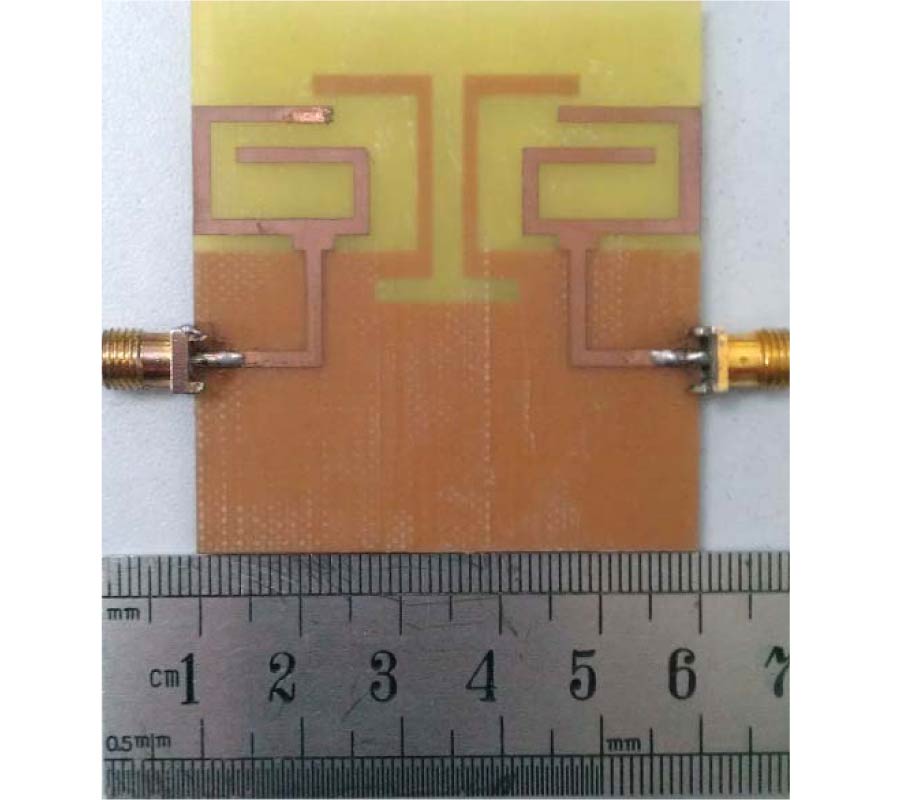
In this paper, a novel four-port symmetric coupled composite right-/left-handed (CRLH) transmission line in common-/differential-mode operation is introduced. The symmetric metamaterial structure is based on a unit-cell which under a differential-mode excitation behaves like a CRLH metamaterial with bandpass filter characteristics. In contrast, the CRLH metamaterial is below the cut-off frequency under a common-mode excitation. To validate these features, a five-cell four-port symmetric CRLH-TL is simulated, fabricated, and measured, and the obtained results verify the bandpass filter features of the structure under differential-mode excitation.
SYMMETRIC COUPLED COMPOSITE RIGHT-/LEFT-HANDED TRANSMISSION LINE IN COMMON-/DIFFERENTIAL-MODE OPERATION
2013-05-01
PIER Letters
Vol. 39, 199-205
Materials' Insertion Loss at Three Frequency Bands
Bazil Taha-Ahmed , Ignacio Alvarez Calvo and Jose Luis Masa-Campos
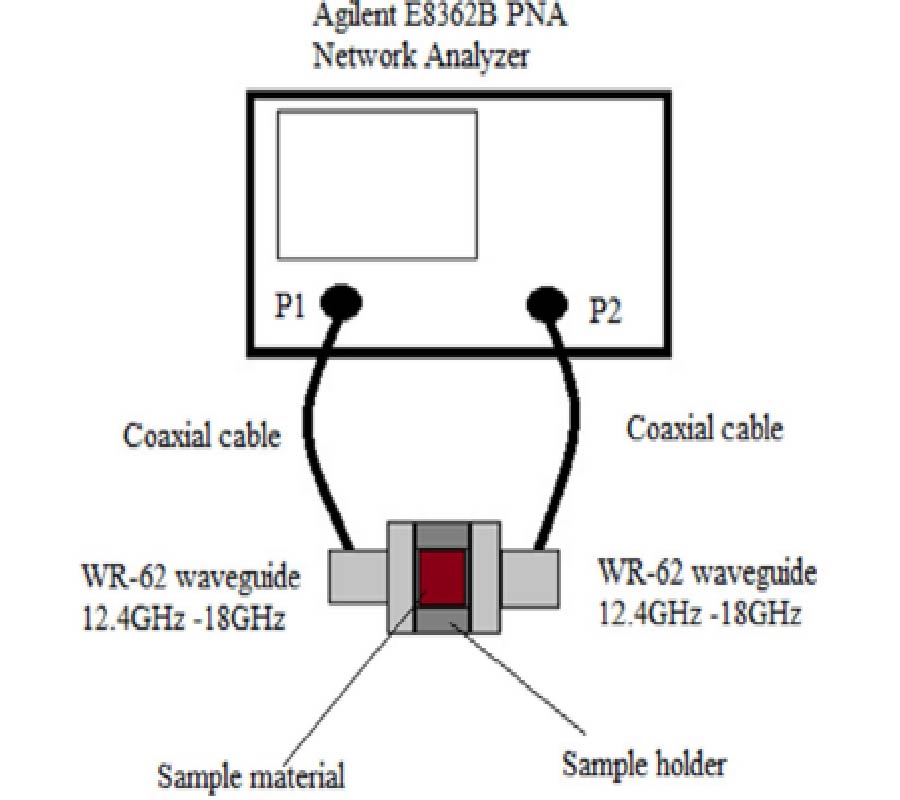
The insertion loss of different materials is measured at 2.4, 3.3 and 5.5 GHz bands. Directive antennas with a nominal gain of 19 dB are used in the measurement campaign. The height of the antennas has been selected to have the minimum possible reflection from around surfaces. Thick concrete wall, thick concrete column and tree's insertion loss are measured. It is noticed that the insertion loss increases with the increment of the operating frequency. For tress, the insertion loss for the leafless tress is 6 to 10 dB lower than the deciduous trees.
MATERIALS' INSERTION LOSS AT THREE FREQUENCY BANDS
2013-05-01
PIER
Vol. 139, 407-422
Domain Decomposition FE-BI-MLFMA Method for Scattering by 3D Inhomogeneous Objects
Hong-Wei Gao , Ming-Lin Yang and Xin-Qing Sheng
The hybrid finite element-boundary integral-multilevel fast multipole algorithm (FE-BI-MLFMA) is a powerful method for calculating scattering by inhomogeneous objects. However, the conventional FE-BI-MLFMA often suffers from iterative convergence problems. A non-overlapping domain decomposition method (DDM) is applied to FE-BI-MLFMA to speed up the iterative convergence. Furthermore, a preconditioner based on absorbing boundary condition and symmetric successive over relaxation (ABC-SSOR) is constructed to further accelerate convergence of the DDM-FE-BI-MLFMA. Numerical experiments demonstrate the efficiency of the proposed preconditioned DDM-FE-BI-MLFMA.
DOMAIN DECOMPOSITION FE-BI-MLFMA METHOD FOR SCATTERING BY 3D INHOMOGENEOUS OBJECTS
2013-05-01
PIER
Vol. 139, 389-406
A Novel Multi-State Integrated RF MEMS Switch for Reconfigurable Antennas Applications
Ali Pourziad , Saeid Nikmehr and Hadi Veladi
A novel multi-state RF MEMS switch for microstrip antenna applications is presented. The proposed switch exhibits seven different states of operation, has a very simple DC biasing mechanism and can be integrated with antenna structure. Based on these properties, this switch may find its usage in multifunction reconfigurable antennas. To exhibit this application, it is employed in the reconfiguration mechanism of a U-slotted antenna. In different states of the switch, the antenna resonates at different frequencies. All the standard frequency bands of the wireless communication services with some additional frequency bands is covered with this reconfigurable U-slotted antenna. Moreover, the proposed antenna structure is a cost-effective solution since it comprises a commonly used FR4 substrate. The switch is integrated with antenna structure on the same substrate. A prototype of the designed antenna was fabricated and tested for performance verification of the proposed switch and antenna.
A NOVEL MULTI-STATE INTEGRATED RF MEMS SWITCH FOR RECONFIGURABLE ANTENNAS APPLICATIONS
2013-05-01
PIER
Vol. 139, 373-387
Efficient Classification of Low-Resolution Range Profiles of Automobiles Using a Combination of Useful Features
Joo-Ho Jung and Sang-Hong Park
The range profile (RP) of an automobile is derived by compressing the wideband radar signal, and it can be utilized for the classification and thus contribute to lane change and collision avoidance. However, the limited radar bandwidth due to the cost and the system complexity impedes the successful classification. This paper proposes an efficient method to construct an efficient feature vector of the automobile RP through combined use of the central moment, the information on the maximum-minimum and the peak information. Simulation results using the five automobile models composed of point scatterers and a simple nearest neighbor classifier prove that the proposed method improves the classification result, especially in the multi-aspect classification.
EFFICIENT CLASSIFICATION OF LOW-RESOLUTION RANGE PROFILES OF AUTOMOBILES USING A COMBINATION OF USEFUL FEATURES
2013-04-30
PIER
Vol. 139, 353-372
Modeling and Multi-Objective Design Optimization of Quasi-Continuous High Magnetic Field Systems
Huan Li and Hongfa Ding
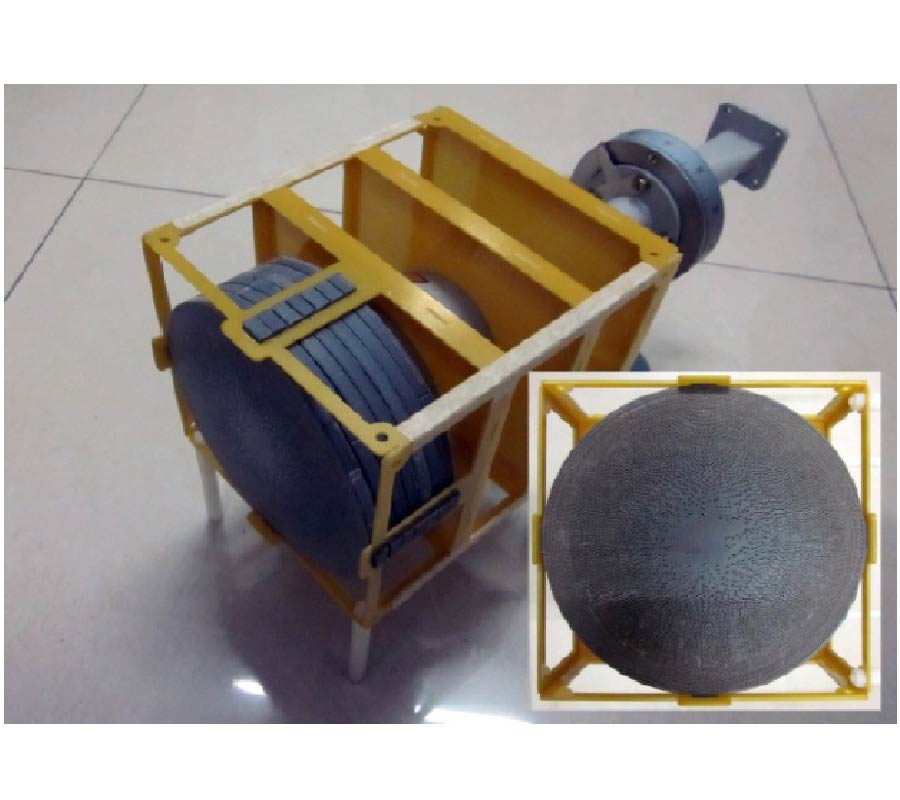
This paper proposes a coupling model of the Quasi-Continuous High Magnetic Field (QCHMF) systems that incorporates the electrical, thermal and mechanical dynamics of the magnet system and the power supply system. The design of QCHMF systems is formulated as a five-objective optimization problem and a scoring system based on preference of the designer is adopted to classify the Pareto points of the optimization problem. An optimized mono-coil 50 T/100 ms QCHMF system is designed with a 67.5 MW rectifier of the Wuhan National High Magnetic Field Center (WHMFC), which is taken as an example to verify the proposed model and optimization method. Detailed simulation models of the optimized QCHMF system are built in Matlab and Comsol and the results agree well with the designed technical specifications. The proposed model and optimization method are generic which can be applied to other QCHMF systems with minor modifications.
MODELING AND MULTI-OBJECTIVE DESIGN OPTIMIZATION OF QUASI-CONTINUOUS HIGH MAGNETIC FIELD SYSTEMS
2013-04-30
PIER
Vol. 139, 335-352
Using Wavelet Entropy to Distinguish Between Humans and Dogs Detected by UWB Radar
Yan Wang , Xiao Yu , Yang Zhang , Hao Lv , Teng Jiao , Guohua Lu , Wen Zhe Li , Zhao Li , Xijing Jing and Jianqi Wang
When using ultra-wide band (UWB) radar to detect targets in various conditions, identifying whether the target buried under building debris or in bad visibility conditions is a human or an animal is crucial. This paper presents the application of the wavelet entropy (WE) method to distinguish between humans and animal targets through brick wall and in free space at a certain distance. In the study, WE, WE change, and WE of the related range points were estimated for the echo signals from five humans and five dogs. Our findings indicate that the entropy or degree of disorder in the energy distribution of the human target was much lower than that of the dog, and the waveform of the human's entropy was smoother than that of the dog. In addition, the body micro motions of humans are much more ordered than those of dogs. WE can be employed as a quantitative measure for recognizing invisible targets and may be a useful tool in the UWB radar's practical applications.
USING WAVELET ENTROPY TO DISTINGUISH BETWEEN HUMANS AND DOGS DETECTED BY UWB RADAR
2013-04-30
PIER
Vol. 139, 317-334
New Development of Two-Step Processing Approach for Spotlight SAR Focusing in Presence of Squint
Yajun Mo , Yun-Kai Deng , Yun-Hua Luo , Bing-Ji Zhao and He Yan
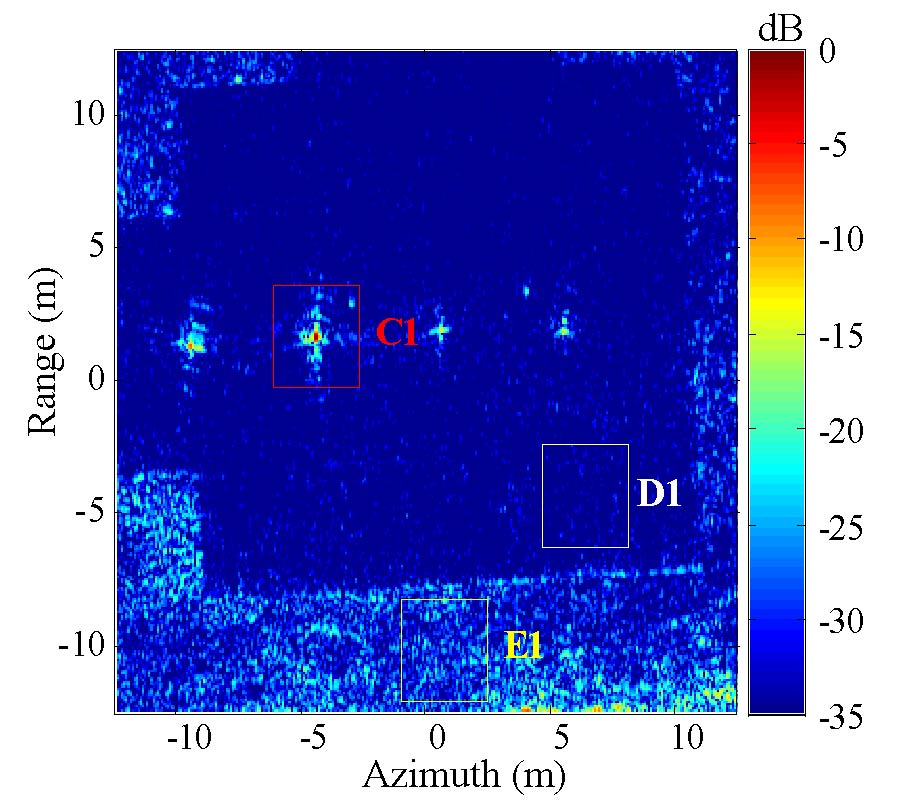
This paper analyzes the azimuth spectrum folding problem which arises from the dependence of the Doppler centroid on range frequency in squinted spotlight synthetic aperture radar (SAR). Based on the analysis, a novel approach for squinted spotlight SAR is proposed in this paper. In this approach, an azimuth preprocessing step including a deramping operation and an operation of azimuth spectrum replicating and filtering is introduced to eliminate spectrum folding problem. Then, a modified Range Migration Algorithm (RMA) is adopted to process the preprocessed data. This approach extends the focusing capacity of traditional two-step processing approach from broadside spotlight SAR to squinted case. Moreover, this approach is e±cient due to a limited azimuth data extension to resolve the spectrum aliasing problem. Experimental results on simulated raw data validate the proposed approach.
NEW DEVELOPMENT OF TWO-STEP PROCESSING APPROACH FOR SPOTLIGHT SAR FOCUSING IN PRESENCE OF SQUINT
2013-04-30
PIER
Vol. 139, 303-315
A Compact Quad Band-Notched UWB Monopole Antenna Loaded One Lateral L-Shaped Slot
Zi Han Wu , Feng Wei , Xiao-Wei Shi and Wen-Tao Li
A novel compact microstrip-fed planar monopole antenna with quad-notched bands is presented. The proposed antenna is based on one rectangular-stepped-patch. To achieve the higher resonance over the 12 GHz, one lateral L-shaped structure is embedded in the ground. By inserting four U-shaped slots in the radiation patch, quad band-notched properties in the WiMAX (3.3-3.6 GHz), INSAT(4.5-4.8 GHz), lower WLAN (5.15-5.35 GHz) and higher WLAN (5.725-5.825 GHz) are obtained. Experimental results indicate that the designed UWB antenna can obtain broadband matched impedance values, good frequency selectivity over the notched bands, relatively flat group delay and nearly omni-directional transmission characteristics across the UWB frequencies. More importantly, the quad-notched bands can be reconfigurable by shorting the corresponding U-shaped slots.
A COMPACT QUAD BAND-NOTCHED UWB MONOPOLE ANTENNA LOADED ONE LATERAL L-SHAPED SLOT
2013-04-29
PIER B
Vol. 51, 291-306
Analysis of Electromagnetic Field Coupling to Microstrip Line Connected with Nonlinear Components
Hui Yan , Liping Yan , Xiang Zhao , Haijing Zhou and Kama Huang
An analysis method for electromagnetic field coupling to microstrip line connected with nonlinear components is proposed in this paper. Different from the published work, not only the voltage and current response of the nonlinear component connected to the transmission line (TL) can be obtained, but also the power transmitted from this nonlinear component to the next one at both the fundamental frequency and harmonics can be predicted. The proposed method suitably combines the classical field-to-TL coupling theory and the nonlinear large-signal scattering parameters on the basis of a black box model in frequency-domain. Then this method is experimentally validated by a laboratory system including a microstrip line connected with a simple nonlinear component constituted by the anti-paralleled HSMS-282C Schottky diodes pair welded to a 50 Ω microstrip line. The calculated results using the proposed method show good agreement with the measured data.
ANALYSIS OF ELECTROMAGNETIC FIELD COUPLING TO MICROSTRIP LINE CONNECTED WITH NONLINEAR COMPONENTS
2013-04-29
PIER C
Vol. 39, 193-207
Switched-Beam Antenna for Wireless Sensor Network Nodes
Luca Catarinucci , Sergio Guglielmi , Luigi Patrono and Luciano Tarricone
Directional and switched-beam antennas in wireless sensor networks are becoming increasingly appealing due to the possibility to reduce transmission power and consequently extend sensor node lifetime. In this work a reconfigurable beam-steering antenna is proposed for Wireless Sensor Network applications in the ISM band (f=2.4-2.4835 GHz). The proposed radiating structure consists of a vertical half-wave dipole antenna and eight microstrip antennas composed of a rectangular two-element patch antenna array. These microstrip antennas have a directional radiation pattern in the azimuth plane with a HPBW of nearly 60 degrees. A control circuit consisting of a transmission line, RF-switches and a 4:16 multiplexer has been designed in order to dynamically switch among nine radiation patterns, eight directional and one omnidirectional. Simulations and experimental results, referred to a low-cost realization on a FR4 substrate with a thickness of 1.6 mm, demonstrate appreciable performance.
SWITCHED-BEAM ANTENNA FOR WIRELESS SENSOR NETWORK NODES
2013-04-29
PIER
Vol. 139, 289-301
A Novel Power Divider Integrated with SIW and DGS Technology
Zhaosheng He , Jingye Cai , Zhenhai Shao , Xiang Li and Yong Mao Huang
In this paper, a novel power divider integrated with substrate integrated waveguide (SIW) and defected ground structures (DGS) techniques is proposed to provide both power dividing and filtering functions. The SIW technique holds advantages of low profile, low-lost, mass-production, easy fabrication and fully integration with planar circuits. By integrating with defected ground structures (DGS) technique, the size and cost of system can be effectively reduced as the proposed power divider has a function of filtering which leads to reduction of one filter. In order to verify the design approach, the proposed power divider with equal power divisions at the center frequency of 8.625 GHz is fabricated and measured. The measured results demonstrate that the insertion loss is less than 1.2 dB and the input return loss less than 16 dB across the bandwidth of 1.4 GHz (FBW is 16%). Moreover, the imbalances of the amplitude and phase are less than 0.3 dB and 0.5 degree, respectively.
A NOVEL POWER DIVIDER INTEGRATED WITH SIW AND DGS TECHNOLOGY
2013-04-28
PIER B
Vol. 51, 269-289
Electromagnetic Media with No Dispersion Equation
Ismo Veikko Lindell and Alberto Favaro
It has been known through some examples that parameters of an electromagnetic medium can be so de ned that there is no dispersion equation (Fresnel equation) to restrict the choice of the wave vector of a plane wave in such a medium, i.e., that the dispersion equation is satis ed identically for any wave vector. In the present paper, a more systematic study to define classes of media with no dispersion equation is attempted. In addition to the previously known examples, a novel class of Case 1 media with no dispersion equation is seen to emerge through the analysis making use of coordinate-free four-dimensional formalism in terms of multivectors, multiforms and dyadics.
2013-04-28
PIER B
Vol. 51, 247-268
Fields in Fractional Parallel Plate d'b', dB' and d'b Waveguides
Samina Gulistan , Farhat Majeed and Aqeel Abbas Syed
D′B′, DB′ and D′B boundary conditions are used to investigate the resulting field patterns inside a parallel plate waveguide. The D′B′ boundary conditions are accomodated by assigning the behavior of perfect magnetic conductor (PMC) for transverse electric mode (TE) and that of perfect electric conductor (PEC) for transverse magnetic (TM) mode, to the boundary, respectively. Likewise, DB′ boundary conditions are incorporated by assuming the behavior of boundary as PMC for both the TE mode and TM mode. Finally D′B boundary conditions are realized by assigning PEC characteristic to the boundary for both TE and TM modes. A general wave propagating inside the parallel plate waveguide is assumed and decomposed into TE and TM modes for the purpose of analysis. Fractional curl operator has been used to study the fractional parallel plate D′B′, DB′ and D′B waveguides for different values of fractional parameter α. Behavior of the field patterns in the waveguides are studied with respect to the fractional parameter α describing the order of the fractionalization.
FIELDS IN FRACTIONAL PARALLEL PLATE D'B', DB' AND D'B WAVEGUIDES
2013-04-28
PIER Letters
Vol. 39, 181-198
Truncated Rhombus-Like Slotted Antennas with Aperture Coupling Technique
Suzilawati Muhamud-Kayat , Mohd Tarmizi Ali , Mohd Khairul Mohd Salleh , Mohd Hazri Mohd Rusli , Nurulazlina Ramli and Hafiza Alias
This paper presents two novel designs of truncated rhombus-like slotted antenna (TRLSA) based on aperture-coupled feeding technique. In conventional antennas, different patch dimensions are required to accommodate different frequencies which normally result in bigger antenna structures. Therefore, this paper proposes a unique structure of `zig-zag' slot embedded on two different antennas to achieve two different resonant frequencies but of the same patch dimensions. An analysis on design transformation which includes comparative simulation results of two reference antennas and TRLSAs has also been presented to provide better understanding on the design concept. CST Microwave Studio software has been used for design simulations and optimizations. The simulation and measurement results of TRLSAs are also presented. The results confirm that the antennas can operate at two different frequencies, 5.3 GHz and 5.8 GHz with the same patch dimensions by integrating the "zig-zag" slot at two different orientations in x- and y-axis respectively. Hence, size reduction is achieved for lower frequency patch which gives a great advantage for future development of a frequency reconfigurable antenna in an array configuration.
TRUNCATED RHOMBUS-LIKE SLOTTED ANTENNAS WITH APERTURE COUPLING TECHNIQUE