Search Results(13798)

2013-05-25
PIER C
Vol. 40, 119-130
Compact CPW-Based Zeroth-Order Resonant Antenna with Interleaving CRLH Unit Cells
Yu-Jen Chi and Fu-Chiarng Chen
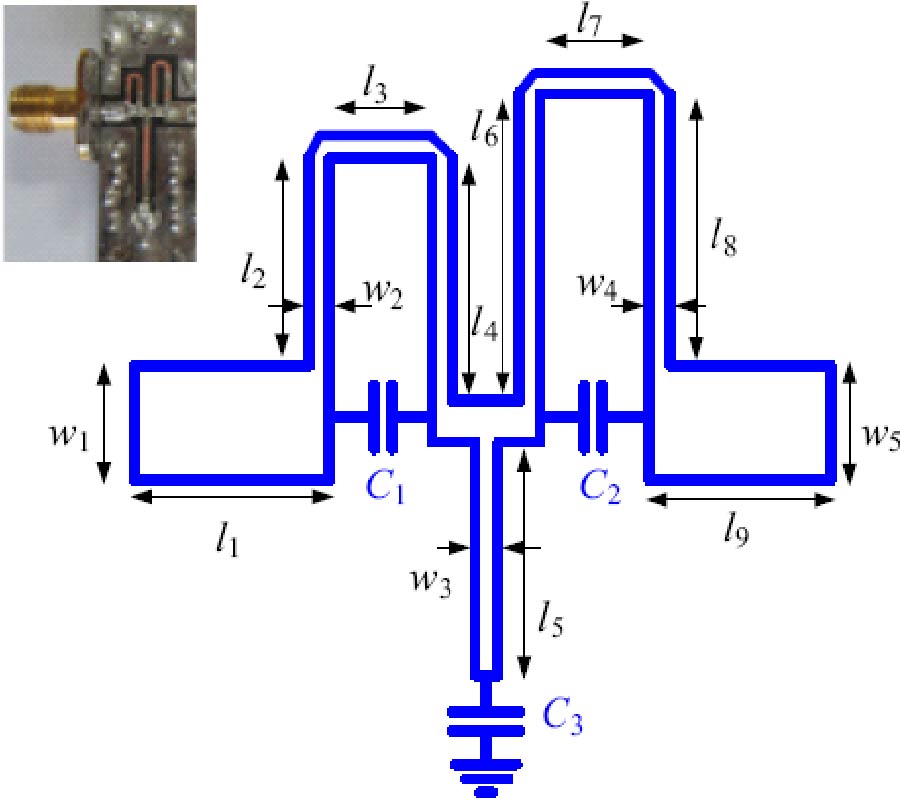
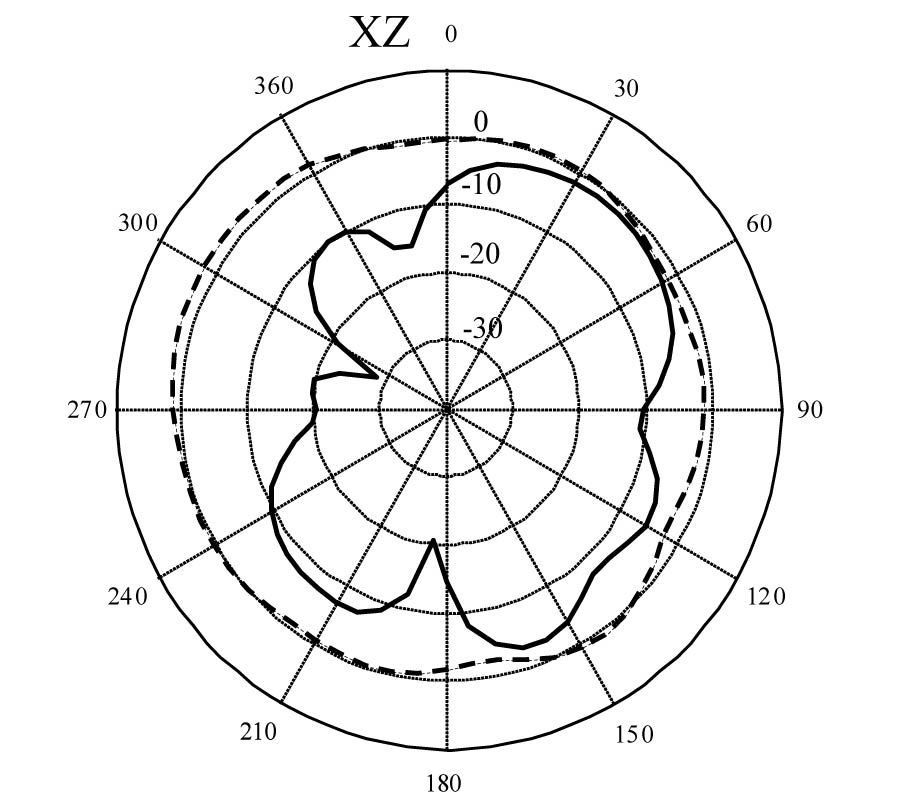
This paper proposes a compact zeroth-order resonant (ZOR) antenna with improved gain and efficiency. The proposed CRLH unit cell is based on the coplanar waveguide (CPW) structure. The proposed ZOR antenna is designed for a 2.45 GHz frequency band, and it has the characteristic of monopolar radiation. Shunt inductance is implemented by microstrip short-circuit stubs, and a metal-isolator-metal (MIM) capacitator provides series capacitance, where a large capacitance can be achieved in a small footprint. The proposed antenna comprises two interleaving composite right-/left-handed CRLH unit cells, where the size of one unit cell is measured at only 0.12λ0 x 0.098λ0. Because the field is loosely confined within the CPW-based unit cell, a good antenna peak gain of 2.03 dBi, and a radiation efficiency of over 68% is achieved when fabricated on a thin substrate. The proposed antenna did not require an additional matching network, reducing the total antenna footprint. This paper presents antenna parameters such as the return loss, radiation pattern, antenna gain, and radiation efficiency to validate the proposed design, which achieved good simulation results.
COMPACT CPW-BASED ZEROTH-ORDER RESONANT ANTENNA WITH INTERLEAVING CRLH UNIT CELLS
2013-05-25
PIER C
Vol. 40, 105-117
Broadband Circularly Polarized Dielectric Resonator Antenna with Annular Slot Excitation
Zheng Zhang , Xiao-Ming Wang , Yong-Chang Jiao and Zibin Weng
A broadband circularly polarized (CP) cylindrical dielectric resonator antenna (DRA) is presented. The DRA is excited by an L-shaped microstrip feed line through the coupling of an annular slot in the ground plane. The broadband CP radiation is achieved by using two CP radiators, DRA and annular slot. Broadband impedance match is obtained by introducing an impedance transformer. The optimal configuration offers a 3-dB axial ratio bandwidth of 15.9%, from 6.22 to 7.28 GHz, and a 10-dB impedance bandwidth of 21.3%, from 5.78 to 7.16 GHz. The measured results for the constructed prototype are also exhibited and discussed.
BROADBAND CIRCULARLY POLARIZED DIELECTRIC RESONATOR ANTENNA WITH ANNULAR SLOT EXCITATION
2013-05-24
PIER B
Vol. 52, 79-97
Slot Design for Dynamic Iron Loss Reduction in Induction Machines
Sana Jelassi , Raphael Romary and Jean-Francois Brudny
The goal of this paper is to present a semi analytical method which makes it possible the calculation of the dynamic iron losses in a three phase induction machine taking the slotting effect into account. The particularity of this method is that it allows the distinction of the stator and the rotor slot openings contribution in the dynamic and, consequently, in the total iron losses. This analytical study shows that a convenient choice of the stator and the rotor slot openings leads to an iron loss reduction, due to the cancellation of particular flux density slotting harmonics. Theoretical results are confirmed numerically.
SLOT DESIGN FOR DYNAMIC IRON LOSS REDUCTION IN INDUCTION MACHINES
2013-05-24
PIER Letters
Vol. 40, 119-127
Design of a Compact Dual Band Antenna for Wireless Communications
Hui Zhao , Xiao-Kuan Zhang , Chun-Yang Wang and Jian-Gang Liang
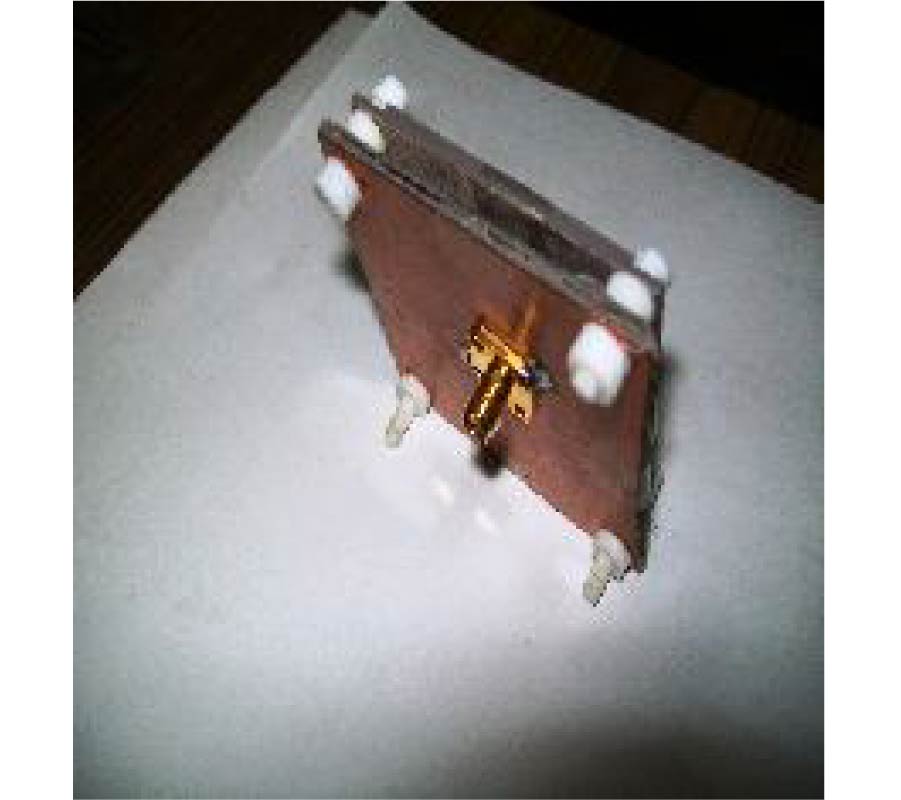
A compact and planar dual band antenna for wireless communication is presented. The impedance bandwidth of the proposed antenna can cover Bluetooth (2.4-2.484 GHz) and ultrawideband (UWB: 3.1-10.6 GHz) bands. It is composed of a semi-bevelled-rectangle patch and a bended L-shaped strip and fed by a microstrip line. The antenna is built on a FR4 substrate with only 21×35 mm surface area included the ground plane. Details of the antenna design and the measured results included voltage standing wave ratio, radiation patters, peak gain, etc. are presented and discussed.
DESIGN OF A COMPACT DUAL BAND ANTENNA FOR WIRELESS COMMUNICATIONS
2013-05-23
PIER B
Vol. 52, 57-78
Wave Packets Scattered by Non-Periodic Bragg-Type Layered Structures
Valentyn Borulko , Oleg O. Drobakhin and Dmitry V. Sidorov
The time delay, space shift and widening of wave packet transmitted and reflected by structures with Bragg mirrors have been investigated. The specific structures such as Bragg mirrors, resonators, and structures with chirp variation of thickness of the ``period'' have been considered. The calculation has been carried out under the conditions that carrier frequency, and incidence angle is in the vicinity of the Bragg resonance. Integral (mass center) and differential (group) estimates of the delay time and space shift have been compared. The conditions for the appearance of anomalous (negative) mass center delay or mass center shift (Goos-Hänchen shift) of the reflected wave packet have been determined. The shape transformations of the wave packet illuminating periodic and quasiperiodic apodized Bragg reflectors have been under consideration. Spatial apodization of permittivity contrast yields much smaller shape deformation of the transmitted wave packet upon incidence at angles and carrier frequency near the edges of reflection band, as well in Bragg reflection band, in comparison with phenomena in similar periodic structures. The values of group delay for layered structures with a small chirp variation of optical (electrical) thickness of the period along longitudinal coordinates have been experimentally obtained in microwave range.
WAVE PACKETS SCATTERED BY NON-PERIODIC BRAGG-TYPE  LAYERED STRUCTURES
2013-05-23
PIER C
Vol. 40, 93-103
Guided-Mode Resonance Filter Compensated to Operate on a Curved Surface
Raymond C. Rumpf , Marvin Gates , Carrie L. Kozikowski and William A. Davis
Guided-mode resonance filters (GMRFs) are highly compact structures that can produce a strong frequency response from a single thin layer of dielectric. When a GMRF is formed onto a curved surface, the local angle of incidence varies over the aperture of the device and the overall performance significantly degrades. In the present work, we spatially varied the grating period of a curved GMRF to perfectly compensate for the local angle of incidence. The performance of the curved device actually surpassed that of a flat device because it also compensated for the spherical wave front from the source. This paper summarizes our design process and experimental results obtained around 25 GHz.
GUIDED-MODE RESONANCE FILTER COMPENSATED TO OPERATE ON A CURVED SURFACE
2013-05-23
PIER C
Vol. 40, 83-92
SIW 2D Planar Array with Four Cross Slots Radiator and Tuning Vias
Pablo Sanchez Olivares , Jose Luis Masa-Campos , Jorge Ruiz-Cruz and Bazil Taha-Ahmed
A Substrate Integrated Waveguide (SIW) planar array is presented using a right handed circularly polarized (RHCP) element with four crossed tilted radiating slots. In addition, a pair of metallic tuning vias is included to really improve the reflection of longest slots. A corporate feeding network over SIW has been designed for distributing the input signal to 128 radiating elements, divided into 8 progressive wave linear arrays of 16 elements each. The designed planar array has been manufactured and measured to verify the antenna performance. 25.5 dB gain, 2.33 dB axial ratio, as well as 85% radiation efficiency values have been experimentally achieved at 17 GHz. A 3% usable bandwidth (16.75-17.25 GHz) is obtained due to the typical frequency main beam tilt dispersion in the elevation plane of the progressive wave arrays.
SIW 2D PLANAR ARRAY WITH FOUR CROSS SLOTS RADIATOR AND TUNING VIAS
2013-05-23
PIER M
Vol. 31, 29-43
On the Success of Electromagnetic Analytical Approaches to Full Time-Domain Formulation of Skin Effect Phenomena
Jose Antonio Marinho Brandao Faria and Malcolm Stuart Raven
Maxwell equations can be used to formulate an analytical full time-domain theory of skin effect phenomena in circular cylindrical conductors without any detour into the frequency domain. The paper shows how this can be done and concomitantly provides the means to determine the time-varying per unit length voltage drop along the conductor from a given time-varying conductor current. The developed relationship between voltage and current is not very complicated and led the authors to examine the reasons why it has never been utilized in transient analysis, nor given special emphasis in the literature. Those reasons are thoroughly examined and the conclusion is that the conditions required for the application of a purely time-domain skin effect theory are very restrictive.
2013-05-22
PIER
Vol. 140, 91-104
The Accurate Fourth-Order Doppler Parameter Calculation and Analysis for Geosynchronous SAR
Bingji Zhao , Xiangyang Qi , Hongjun Song , Wenjun Gao , Xiaolei Han and Run Pu Chen
This paper presents a new approach to calculate the accurate fourth-order Doppler parameters for Geosynchronous Synthetic Aperture Radar (Geo-SAR). To get exact calculation results, the Earth is modeled as an ellipsoid and the relative motion between the sensor in an elliptical orbit and the rotating Earth is analyzed. The J2, J3 and J4 orbital perturbation items and attitude steering are analyzed. Ignoring the perturbation force would produce errors of the Doppler parameters for spaceborne SAR because it can influence the six orbital elements. Since the Doppler parameters are related to the antenna beam pointing directions and influenced by attitude of SAR platform, the calculation results before and after attitude steering are shown. Furthermore, the Doppler parameter properties during the whole orbital periods of Geo-SAR are compared with those of Low-Earth-Orbital SAR (Leo-SAR). Finally, the effects on Doppler parameters stemmed from the radar beam pointing accuracy are analyzed.
THE ACCURATE FOURTH-ORDER DOPPLER PARAMETER CALCULATION AND ANALYSIS FOR GEOSYNCHRONOUS SAR
2013-05-22
PIER
Vol. 140, 63-89
Imaging Enhancement of Stepped Frequency Radar Using the Sparse Reconstruction Technique
Bo Pang , Dahai Dai , Shiqi Xing , Yongzhen Li and Xuesong Wang
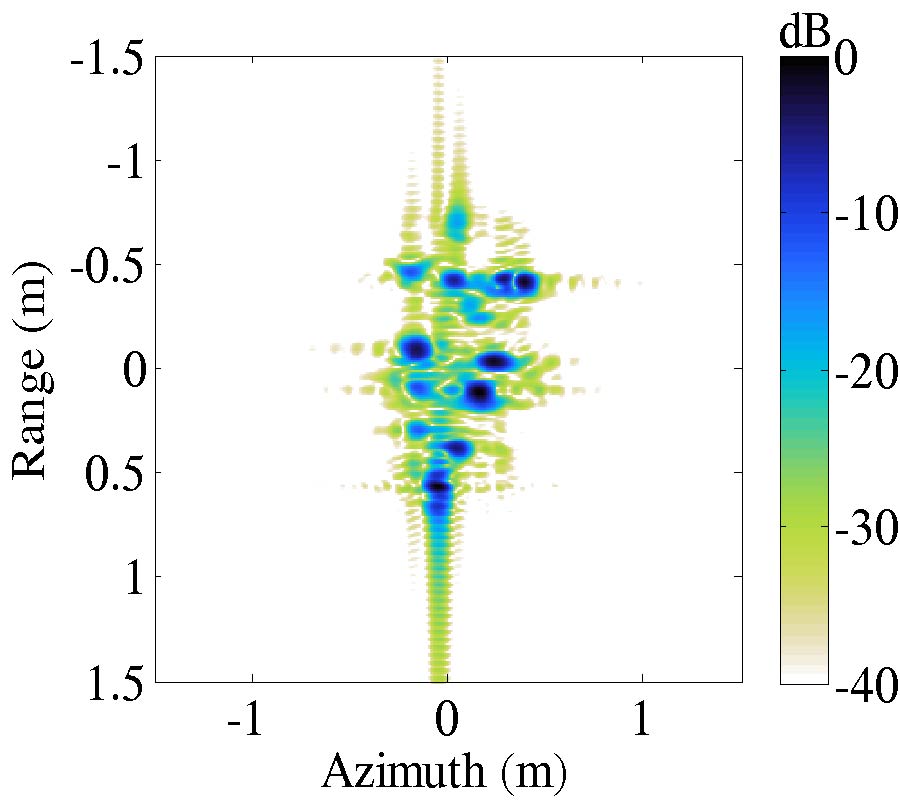
Based on the observation that sparsity assumption is well satisfied in the synthetic aperture radar (SAR) imaging applications, there is increasing interest in utilizing compressive sensing (CS) in SAR imaging. However, there are still several problems which should be concerned in CS-based imaging approaches. Firstly, inevitable noise and clutter challenge the performance of CS algorithms. Secondly, the super-resolving ability of CS algorithms is not sufficiently exploited in most cases. Thirdly, nonideal characteristics of mutual coherence affect the performance of CS algorithms in complex scenes. In this paper, a novel CS imaging framework is proposed for the purpose of improving the imaging performance of stepped frequency SAR. Meanwhile, a super-resolving imaging algorithm is proposed based on the nonquadratic optimization technique. Simulated and rail SAR measured data are applied to demonstrate the effectiveness of the novel framework with the proposed super-resolving algorithm. Experimental results validate the superiority of this method over previous approaches in terms of robustness in low SNR, better super-resolving ability and improved imaging performance in complex scenes.
IMAGING ENHANCEMENT OF STEPPED FREQUENCY RADAR USING THE SPARSE RECONSTRUCTION TECHNIQUE
2013-05-22
PIER
Vol. 140, 43-62
Sparse Autofocus Recovery for Under-Sampled Linear Array SAR 3-D Imaging
Shun-Jun Wei and Xiao-Ling Zhang
Linear array synthetic aperture radar (LASAR) is a promising radar 3-D imaging technique. In this paper, we address the problem of sparse recovery of LASAR image from under-sampled and phase errors interrupted echo data. It is shown that the unknown LASAR image and the nuisance phase errors can be constructed as a bilinear measurement model, and then the under-sampled LASAR imaging with phase errors can be mathematically transferred into sparse signal recovery by solving an ill-conditioned constant modulus linear program (ICCMLP) problem. Exploiting the prior sparse spatial feature of the observed targets, a new super-resolution sparse autofocus recovery algorithm is proposed for under-sampled LASAR 3-D imaging. The algorithm is an iterative minimize estimation procedure, wherein it converts the ICCMLP into two independent convex optimal problems, and joints l1-norm reweights least square regularization and semi-definite relax to find the optimal solutions. Simulated and experimental results confirm that the proposed method outperforms the classical autofocus techniques in under-sampled LASAR imaging.
SPARSE AUTOFOCUS RECOVERY FOR UNDER-SAMPLED LINEAR ARRAY SAR 3-D IMAGING
2013-05-22
PIER
Vol. 140, 31-42
An Approach for Multi-Band Bandpass Filter Design Based on Asymmetric Half-Wavelength Resonators
Xiuping Li and Huisheng Wang
This paper presents that the extra passband with two transmission zeros can be obtained by adding shunt open stubs to the asymmetric half-wavelength resonators structure. By using this method, a fourth or even higher passband with good selectivity and compact size can be obtained. Dual-band, tri-band and quad-band bandpass filters are demonstrated by using this method. The measured bandwidth is 80/180 MHz for the dual-band, 60/180/180 MHz for the tri-band and 130/360/170/70MHz for the quad-band filter, respectively. The measured insertion loss for the dual-band, tri-band and quad-band filter is less than 2.7 dB, 2.5 dB and 2.9 dB at the center frequency. All the simulated results and the measured results agree well.
AN APPROACH FOR MULTI-BAND BANDPASS FILTER DESIGN BASED ON ASYMMETRIC HALF-WAVELENGTH RESONATORS
2013-05-22
PIER
Vol. 140, 1-30
Directional Antennas for Cognitive Radio: Analysis and Design Recommendations
Noman Murtaza , Rajesh-Kumar Sharma , Reiner S. Thoma and Matthias A. Hein
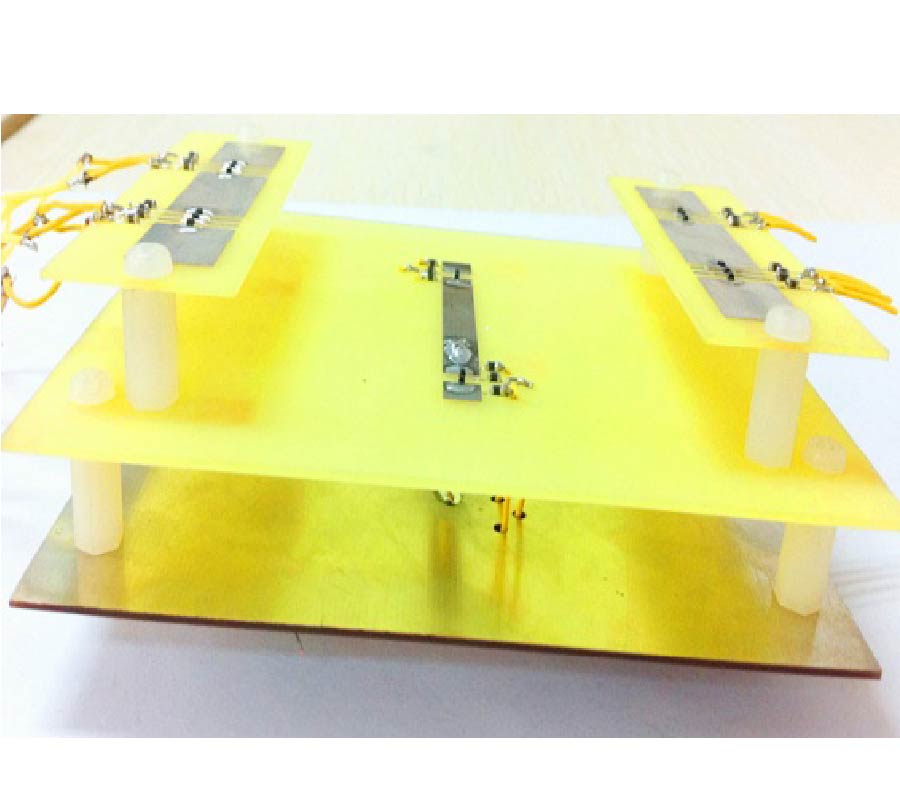
Cognitive radio technology proposes the utilisation of under-utilised spectrum resources which may include time, frequency, geographical location, direction, polarisation et cetera. Frequency is the conventional spectrum resource, considered to be exploited for cognitive radio, especially in the field of antenna design. We address the unconventional directional resource for cognitive radio, from antenna design perspective. The design concept of a multi-band compact array, capable of providing separate and simultaneous access to frequency and directional resources, is presented. The initial explorations are carried out for three frequency resources (bands) and three directional resources, providing nine degrees-of-freedom altogether. Laboratory version of the proposed antenna system is then used to gain proof-of-principle through line-of-sight measurements in an over-the-air test-bed, followed by static outdoor measurements in a multipath scenario. At the end, simulations are performed for arbitrary arrays in heterogeneous propagation scenarios to study the influence of antenna radiation pattern on the availability of directional opportunity. Recommendations are made for possible antenna design based on the simulation results.
DIRECTIONAL ANTENNAS FOR COGNITIVE RADIO: ANALYSIS AND DESIGN RECOMMENDATIONS
2013-05-21
PIER B
Vol. 52, 37-56
A Design of Miniaturized Ultra-Wideband Printed Slot Antenna with 3.5/5.5 GHz Dual Band-Notched Characteristics: Analysis and Implementation
Mohamed Mamdouh Mahmoud Ali , Ayman Ayd Ramadan Saad and Elsayed Esam Mohamed Khaled
A design and analysis of a novel proximity-fed printed slot antenna with 3.5/5.5 GHz dual band-notched characteristics are presented. To obtain an ultra-wideband (UWB) response, a circular patch with a rectangular conjunction arm is etched concentrically inside a ground plane aperture. The antenna is proximity-fed by a microstrip line with an open shunt stub on the other side of the substrate. The designed antenna satisfies a -10 dB return loss requirement in the frequency band from 2.7 to 17 GHz. In order to obtain dual band-notched properties at 3.5 and 5.5 GHz, an open ring slot is etched off the circular patch and a π-shaped slot is etched off the microstrip feeding line, respectively. A curve fitting formulation is obtained to describe the influences of the notched resonators on the corresponding notched frequencies. The proposed antenna is designed, simulated and fabricated. The measured data show a good agreement with the simulated results and the equivalent circuit results through the use of a modified Vector Fitting technique for a rational function approximation. The proposed antenna provides almost omnidirectional radiation patterns, relatively flat gain and high radiation efficiency over the entire UWB frequency excluding the two rejected bands.
A DESIGN OF MINIATURIZED ULTRA-WIDEBAND PRINTED SLOT ANTENNA WITH 3.5/5.5 GHZ DUAL BAND-NOTCHED CHARACTERISTICS: ANALYSIS AND IMPLEMENTATION
2013-05-21
PIER B
Vol. 52, 19-36
Parasitic Capacitance Cancellation of Integrated cm Filter Using BI-Directional Coupling Ground Technique
Hui-Fen Huang and Mao Ye
This paper introduces a method for canceling the parasitic capacitance of integrated common mode (CM) filter by optimizing the layout of ground winding. Firstly, the CM filter with positive or negative coupling between the ground and inductor winding is researched, respectively. Then, the two coupling polarizes are combined to form the bi-directional coupling, simulation and measured results show bi-directional coupling ground can effectively improve the high frequency (HF) filtering performance. The equivalent circuits are given to demonstrate the cancellation mechanism, and modelling is derived for the design of ground winding. To further validate the application of proposed technique, CM noise and input/output signals for PFC (Power Factor Correction) converter with bi-directional coupling ground CM filter is simulated. The noise spectrums show conductive interference at high frequencies is effectively suppressed and meets the required electromagnetic interference (EMI) standard.
PARASITIC CAPACITANCE CANCELLATION OF INTEGRATED CM FILTER USING BI-DIRECTIONAL COUPLING GROUND TECHNIQUE
2013-05-21
PIER C
Vol. 40, 69-81
Wi-Fi Energy Harvester for Low Power RFID Application
Samuel Siong Boon Hong , Rosdiazli B. Ibrahim , Mohd Haris Md Khir , Mohd Azman Zakariya and Hanita Daud
In recent years, active Radio Frequency Identification (RFID) tags have crossed into ultra low power domain. With obvious advantages over passive tags, a setback for active tag growth is the need for battery replacement and limited operational life. Battery life could be extended by scavenging surrounding Wi-Fi signals using rectenna architecture which consists of a receiving antenna attached to a rectifying circuit. A seven stage Cockroft-Walton voltage multiplier optimized for low input power (below 0 dBm) is proposed. Prototype was fabricated on RT/Duroid 5880 (RO5880) printed circuit board (PCB) substrate with dielectric constant and loss tangent of 2.2 and 0.0009 respectively. Experimental results show that 2 V output voltage can be harvested from an operating frequency of 2.48 GHz with -9 dBm (0.13 mW) sensitivity with 1.57 mm board thickness.
WI-FI ENERGY HARVESTER FOR LOW POWER RFID APPLICATION
2013-05-21
PIER C
Vol. 40, 53-68
On the Design of Ultra Wide Band Rectangular Slot Antenna Excited by a Flared Microstrip Feed Line
Rajas Khokle , Raj Kumar and Raghupatruni Ram Krishna
A rectangular slot antenna for UWB applications is proposed in this paper. The slot is designed in stepped configuration and is excited by an L-shaped microstrip line flared at the end. The measured impedance bandwidth (-10 dB) from 3 GHz to 27 GHz is achieved. The radiation patterns are bidirectional in the E plane and omnidirectional in the H plane with the measured peak gain around 5 dBi throughout the band. The experimental results are in good agreement with the simulated results. A detail parametric study is done for the flare angle and the flare width to axis ratio and their effect on the impedance bandwidth and the reflection coefficient is described.
ON THE DESIGN OF ULTRA WIDE BAND RECTANGULAR SLOT ANTENNA EXCITED BY A FLARED MICROSTRIP FEED LINE
2013-05-21
PIER C
Vol. 40, 37-52
Direction Estimation of Correlated/Coherent Signals by Sparsely Representing the Signal-Subspace Eigenvectors
Zhi-Chao Sha , Zhangmeng Liu , Zhitao Huang and Yiyu Zhou
This paper addresses the problem of direction-of-arrival (DOA) estimation of correlated and coherent signals, and two sparsity-inducing methods are proposed. In the first method named L1-EVD, the signal-subspace eigenvectors are represented jointly with well-chosen hard thresholds attached to the representation residue of each eigenvector. Then only the eigenvector corresponding to the largest eigenvalue is reserved for DOA estimation via sparse representation, which aims at highly correlated signals, and a method named L1-TEVD (TEVD: Truncated EVD) is proposed. Simulation results show that, L1-EVD and L1-TEVD both surpass L1-SVD in DOA estimation performance and computation efficiency for highly correlated and coherent signals.
DIRECTION ESTIMATION OF CORRELATED/COHERENT SIGNALS BY SPARSELY REPRESENTING THE SIGNAL-SUBSPACE EIGENVECTORS
2013-05-21
PIER
Vol. 139, 779-797
Dual-Band Differential Filter Using Broadband Common-Mode Rejection Artificial Transmission Line
Armando Fernandez-Prieto , Jesus Martel-Villagran , Francisco Medina , Francisco Mesa , Shilong Qian , Jia-Sheng Hong , Jordi Naqui and Ferran Martin
A new balanced dual-band bandpass filter with strong commonmode rejection is presented in this paper. Common-mode rejection is provided by a section of a periodic microstrip differential line that behaves as a low-pass filter under common-mode operation. In contrast, the differential line exhibits very good all-pass behavior under differential mode operation. This structure is combined with a differential dual-band bandpass filter based on embedded resonators. Simulations and experiments confirm that the combined structure has good common-mode rejection within the passbands of the dual-band differential filter.
DUAL-BAND DIFFERENTIAL FILTER USING BROADBAND COMMON-MODE REJECTION ARTIFICIAL TRANSMISSION LINE
2013-05-21
PIER
Vol. 139, 761-777
Dual Fed Distributed Amplifier with Controlled Termination Adjustment
Narendra Kumar , Ernesto Limiti and Claudio Paoloni
A new circuit and technique to extend bandwidth performance while preserving improvement on efficiency performance over the one attainable by conventional distributed amplifier (DA) is presented. The theoretical analysis is described in detail, and a test vehicle is realized to demonstrate the effectiveness of the proposed method. Output power of ~29 dBm, gain of 10 dB, covering a bandwidth from 100 to 800 MHz, PAE of 20-45% is experimentally demonstrated. The result is compared with measured result of conventional DA, a significant improvement of bandwidth and efficiency are achieved.
DUAL FED DISTRIBUTED AMPLIFIER WITH CONTROLLED TERMINATION ADJUSTMENT