Search Results(13798)

2013-06-04
PIER
Vol. 140, 313-325
Nanoparticles with Aggregation-Induced Emission for Monitoring Long Time Cell Membrane Interactions
Hao Cheng , Wei Qin , Zhen Feng Zhu , Jun Qian , Anjun Qin , Ben Zhong Tang and Sailing He
We perform the long time monitoring of nanoparticle-cell membrane interaction with high spatial and temporal resolution. The 2,3-bis(4-(phenyl(4-(1,2,2-triphenylvinyl) phenyl)amino)phenyl) fumaronitrile (TPE-TPA-FN) is doped in organically modified silica (ORMOSIL) to be a biocompatible nanoprobe, which displays an aggregation-induced emission (AIE) effect. Photobleaching resistance of this synthesized nanoparticle is tested and compared with its similar counterpart, which proves its superiority and capability of long term fluorescence emission. We utilize the objective-based total internal reflection microscopy combined with the living cell incubation platform to investigate the cell uptake process of this nanoparticle in real time.
NANOPARTICLES WITH AGGREGATION-INDUCED EMISSION FOR MONITORING LONG TIME CELL MEMBRANE INTERACTIONS
2013-06-04
PIER
Vol. 140, 297-311
Simple, Taylor-Based Worst-Case Model for Field-to-Line Coupling
Sjoerd T. Op 't Land , Mohamed Ramdani , Richard Perdriau , Marco Leone and Mhamed Drissi
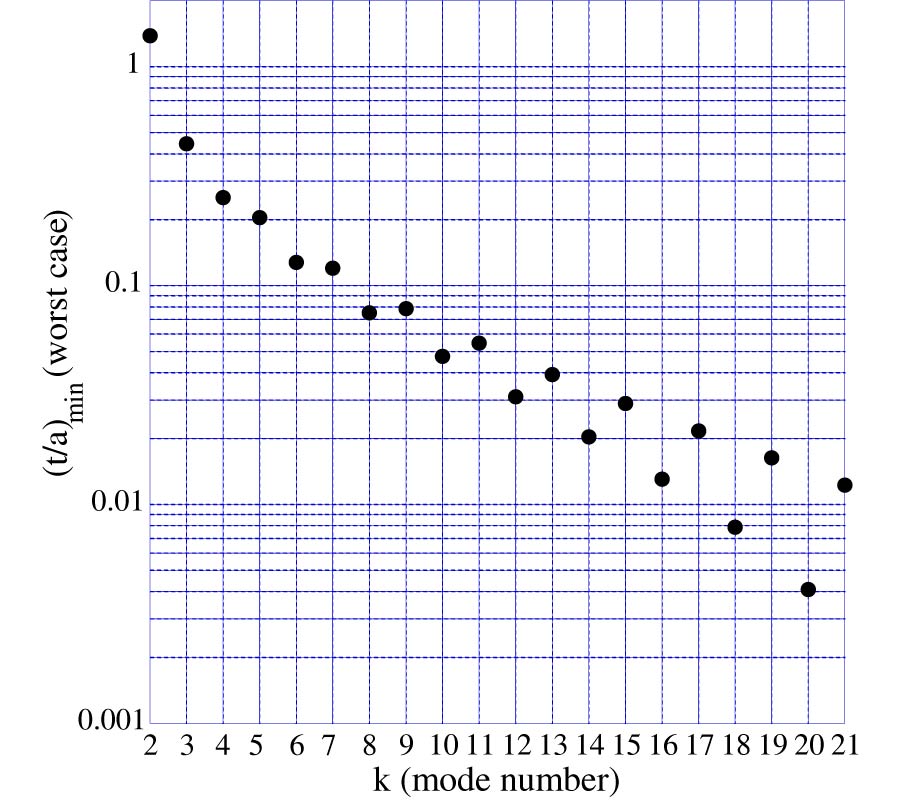
To obtain Electromagnetic Compatibility (EMC), we would like to study the worst-case electromagnetic eld-induced voltages at the ends of Printed Circuit Board (PCB) traces. With increasing frequencies, modelling these traces as electrically short no longer suffices. Accurate long line models exist, but are too complicated to easily induce the worst case. Therefore, we need a simple analytical model. In this article, we predict the terminal voltages of an electrically long, two-wire transmission line with characteristic loads in vacuum, excited by a linearly polarised plane wave. The model consists of a short line model (one Taylor cell) with an intuitive correction factor for long line effects: the modified Taylor cell. We then adapt the model to the case of a PCB trace above a ground plane, illuminated by a grazing, vertically polarised wave. For this case, we prove that end-fire illumination constitutes the worst case. We derive the worst-case envelope and try to falsify it by measurement in a Gigahertz Transverse Electromagnetic (GTEM) cell.
SIMPLE, TAYLOR-BASED WORST-CASE MODEL FOR FIELD-TO-LINE COUPLING
2013-06-04
PIER
Vol. 140, 277-295
Optimization for Brain Activity Monitoring with Near Infrared Light in a Four-Layered Model of the Human Head
Zefei Guo , Fuhong Cai and Sailing He
We describe a four-layered model for near infrared light propagation in a human head based on the Monte Carlo method. With the use of three-dimensional voxel-based media discretization, photon migration in the brain is analyzed by both the time-of-flight measurement and the spatial sensitivity profile. In the measurement of brain activity, the selection of light wavelength and the distance between the source and the detector have a great influence on the detected signal. In this study, we compare the detected signals from the detectors with different source-detector spacing at wavelengths of 690 nm, 800 nm and 1300 nm, and find that in our model, the wavelength of 1300 nm is more appropriate for the measurement of brain activity because the signals at 1300 nm get better detection sensitivity and spatial resolution. Source-detector spacing is also optimized.
OPTIMIZATION FOR BRAIN ACTIVITY MONITORING WITH NEAR INFRARED LIGHT IN A FOUR-LAYERED MODEL OF THE HUMAN HEAD
2013-06-03
PIER C
Vol. 40, 243-256
Accurate Magnetic Flux Measurements in Electromagnetic Rail Launchers
Roberto Ferrero , Mirko Marracci and Bernardo Tellini
This paper deals with the measurement of the magnetic flux generated by the armature of electromagnetic rail launchers linked with external pick-up loops. In particular we discuss possible methods to experimentally evaluate measurement uncertainty when the magnetic flux is obtained by numerical voltage integration. These methods aim at an approximate identification of the correlation among voltage samples introduced by the analog-to-digital converter, only based on the available measurements without requiring additional tests and instruments. An estimate of this correlation allows to better evaluate the overall measurement uncertainty, thus providing the applicability limits of the proposed inductive technique and contributing to a better understanding of the current and force distribution in the armature.
ACCURATE MAGNETIC FLUX MEASUREMENTS IN ELECTROMAGNETIC RAIL LAUNCHERS
2013-06-03
PIER C
Vol. 40, 229-242
Wide Beamwidth Quadifilar Helix Antenna with Cross Dipoles
Wei-Xin Lin and Qing-Xin Chu
A simple and novel method for increasing the gain at low elevation angle and widening the beamwidth of quadrifilar helix antenna (QHA) is presented. By adding cross dipoles as a reflector, the right hand circular polarization (RHCP) gain at 5° elevation angle (theta=85°) increases by about 1.4 dB. Parametric studies are performed to explore the performance improvements. An antenna for CNSS (Compass Navigation Satellite System, 2.492 GHz) application is realized based on the studies. The RHCP gain at 5° elevation angle is about 0.6 dB, and 3dB beamwidth is greater than 220°. 10 dB impedance bandwidth is more than 24%, and 3dB axial ratio bandwidth is more than 32%. Measured results are presented to validate the proposed method.
WIDE BEAMWIDTH QUADIFILAR HELIX ANTENNA WITH CROSS DIPOLES
2013-06-03
PIER M
Vol. 31, 117-127
Improved Immunity Measurement of a Microcontroller to Conducted Continuous Wave Interference
Fayu Wan , Jun-Xiang Ge , Yong Zhou and Bing Yu
This paper discusses an improved in-situ immunity measurement test bench of a microcontroller -PIC18F458 to conducted continuous wave interference (CWI). The updated measurement algorithm gives more accurate measurement result. Compared with normal failure criterion, the DC shift failure criterion is adopted because it gives better description of the immunity behavior of the microcontroller. Finally, the susceptibility results are explained in detail.
IMPROVED IMMUNITY MEASUREMENT OF A MICROCONTROLLER TO CONDUCTED CONTINUOUS WAVE INTERFERENCE
2013-06-03
PIER
Vol. 140, 263-276
Numerically Efficient Technique for Metamaterial Modeling (Invited Paper)
Ravi Kumar Arya , Chiara Pelletti and Raj Mittra
In this paper we present two simulation techniques for modeling periodic structures with three-dimensional elements in general. The first of these is based on the Method of Moments (MoM) and is suitable for thin-wire structures, which could be either PEC or plasmonic, e.g., nanowires at optical wavelengths. The second is a Finite Difference Time Domain (FDTD)-based approach, which is well suited for handling arbitrary, inhomogeneous, three-dimensional periodic structures. Neither of the two approaches make use of the traditional Periodic Boundary Conditions (PBCs), and are free from the difficulties encountered in the application of the PBC, as for instance slowness in convergence (MoM) and instabilities (FDTD).
NUMERICALLY EFFICIENT TECHNIQUE FOR METAMATERIAL MODELING (Invited Paper)
2013-05-31
PIER C
Vol. 40, 217-227
A Novel Dual-Polarized Dipole Antenna with Compact Size for Wireless Communication
Ying Liu , Hao Yi , Hu Liu and Shu-Xi Gong
A novel dual-polarized dipole antenna with compact size is presented for wireless communication applications. The proposed antenna is composed of a dual-polarized cross dipole, a small-sized tapered reflector, a square patch director, and an octagon ring as a parasitic element. Low VSWRs (<1.5) are achieved in aimed operating band of 2500-2690 MHz at both ports, which can cover the LTE2600 frequency band. High port isolation (>38 dB) and symmetric broadside radiation patterns are also achieved. Two dual-polarized reference antennas are also developed. Contrast results show that the proposed antenna can obtain improved radiation patterns compared with the reference antennas. Moreover, the proposed antenna is very compact in size (0.52λ0×0.52λ0×0.32λ0, λ0 refers to the center frequency of operating band), which achieves about 20% size reduction than Ref 2. Experimental results are also carried out to verify the simulation analysis.
A NOVEL DUAL-POLARIZED DIPOLE ANTENNA WITH COMPACT SIZE FOR WIRELESS COMMUNICATION
2013-05-31
PIER C
Vol. 40, 201-215
Compact Bandpass Filter with Wide Stopband Using Rectangular Strips, Asymmetric Open-Stubs and L Slot Lines
Fang Xu , Mi Xiao , Zongjie Wang , Jiayang Cui , Zhe Zhu , Mu Ju and Jizong Duan
A novel slot-line filter with stop-band up to 30 GHz is proposed in this paper, and the theoretical analysis is illustrated in detail. This filter is designed on a Rogers RT/duroid 5870 substrate. The rectangular micro-strips can generate transmission zero to give a great suppression for the spurious response around 5f0 while the L slot lines can create transmission zeros to suppress the spurious response around 7f0, 9f0 and 11f0. f0 is 2.43 GHz in this paper and represents the center frequency of the main passband. The compact size of this novel filter is 23.7 mm * 14.725 mm (0.152λ * 0.103λ (λ is the working wavelength of this filter)). Besides, the external quality factor of this filter can be as high as about 29.6. To demonstrate the transmission function, the compact filter has been fabricated and the measured results show the feasibility of this structure.
COMPACT BANDPASS FILTER WITH WIDE STOPBAND USING RECTANGULAR STRIPS, ASYMMETRIC OPEN-STUBS AND L SLOT LINES
2013-05-31
PIER C
Vol. 40, 187-199
Dual Band-Notched Monopole Antenna with Multi-Resonance Characteristic for UWB Wireless Communications
Naser Ojaroudi Parchin and Mouhammad Ojaroudi
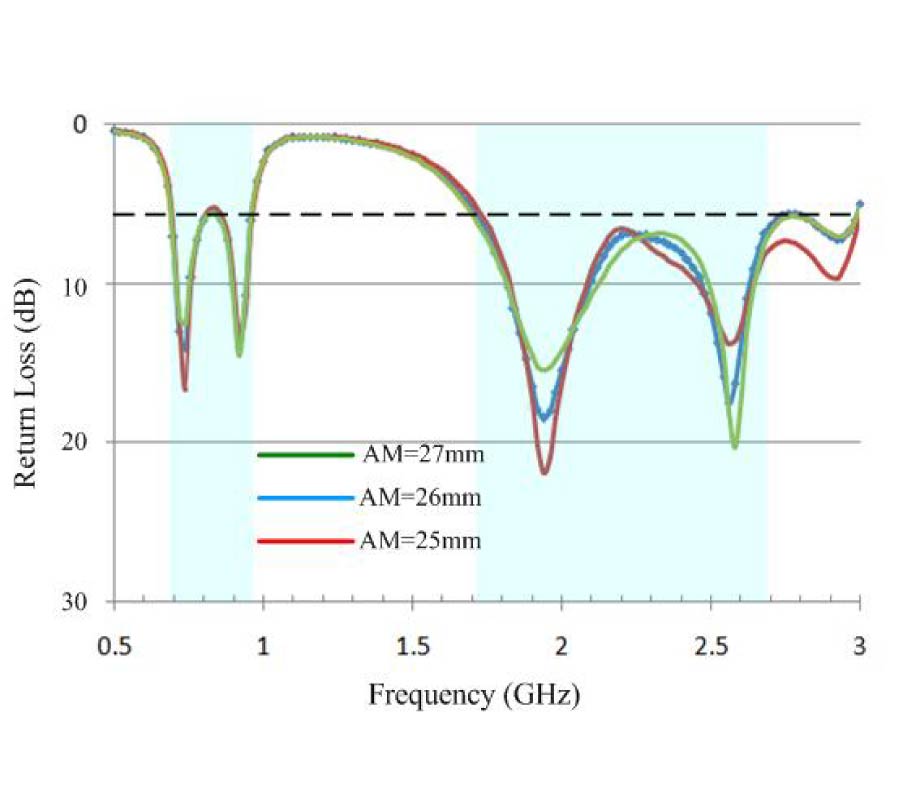
In this manuscript, a novel design of ultra-wideband (UWB) monopole antenna with dual frequency band-stop performance is proposed. The proposed antenna consists of an ordinary square radiating patch with a pair of rotated T-shaped slits, and a modified ground plane with an inverted Ω-shaped and a pair of rectangular-ring slots. In the presented structure, by cutting a pair of rectangular-ring slots in the ground plane, additional resonances are excited and hence much wider impedance bandwidth can be produced, especially at the higher band that the antenna provides a wide usable fractional bandwidth of more than 140% (2.8-17.5 GHz). In order to generate single band-notched characteristic, we cut a pair of rotated T-shaped slits in the square radiating patch. Finally, by inserting an inverted Ω-shaped slot in the ground plane, a dual band-notched function is achieved. The measured results reveal that the presented dual band-notch monopole antenna offers a very wide bandwidth with two notched bands, covering all the 5.2/5.8 GHz WLAN, 3.5/5.5 GHz WiMAX and 4 GHz C bands. The designed antenna has a small size of 12×18 mm2. Good return loss, antenna gain and radiation pattern characteristics are obtained in the frequency band of interest. Simulated and measured results are presented to validate the usefulness of the proposed antenna structure for UWB applications.
DUAL BAND-NOTCHED MONOPOLE ANTENNA WITH MULTI-RESONANCE CHARACTERISTIC FOR UWB WIRELESS COMMUNICATIONS
2013-05-31
PIER
Vol. 140, 241-261
Electronically Reconfigurable Beam Steering Antenna Using Embedded RF PIN Based Parasitic Arrays (Erppa)
Thennarasan Sabapathy , Mohd Faizal Bin Jamlos , Raad Badlishah Ahmad , Muzammil Jusoh , Mohd Ilman Jais and Muhammad Ramlee Kamarudin
In this paper, an electronically reconfigurable beam steering antenna using embedded RF PIN switches based parasitic array (ERPPA) is proposed for modern wireless communication systems that operate at 5.8 GHz frequency. In the proposed antenna, a single driven element is fed by a coaxial probe, while each of the two parasitic elements is integrated with an RF PIN switches that embedded inside the substrate. In the conventional reconfigurable antennas, the RF PIN switches are mounted on narrow slots created on the top or bottom layer of the radiator/parasitic elements, which could lead to the dimensional changes of the antenna and degrade the performance in terms of beam steering and return loss. However, this research proposes an exclusive solution where the RF PIN diodes at parasitic elements are embedded inside the substrate thus no additional slots have to be created to mount the SMCs on the antenna. In this regard, the proposed antenna is highly competent to eliminate the intermodulation effect generated by the RF PIN diodes and the other passive elements associated with the PIN diodes. In this research, extensive investigations revealed that the parasitic element dimension and the selection of RF PIN switches significantly influence the antenna's beam steering capability. Adopting certain ON/OFF condition of the embedded RF switches, three beam-steering angles of -30°, 0° and +30° are achieved in the xz-plane, with measured peak gains at θ = -30°, 0° and +30° are 6.5 dBi, 6.5 dBi and 4.9 dBi, respectively. The fabricated antenna with Taconic substrate provides a good agreement with the simulation result. Furthermore, the performance of ERPPA is further tested by outdoor measurement using a wireless bridging system to verify the functionality of the designed antenna at the angles of -45°, -30°, -15°, 0°, 15°, 30° and 45°. The analysis with the switched diversity combining scheme has demonstrated that a maximum diversity gain approximately of 12 dBi is offered by the proposed antenna. With a compact dimension of 32 mm by 76 mm, the proposed antenna is a potential candidate in point-to-point wireless applications such as WIFI application.
ELECTRONICALLY RECONFIGURABLE BEAM STEERING ANTENNA USING EMBEDDED RF PIN BASED PARASITIC ARRAYS (ERPPA)
2013-05-31
PIER
Vol. 140, 227-239
Asymmetric Transmission of Linearly Polarized Waves and Dynamically Wave Rotation Using Chiral Metamaterial
Furkan Dincer , Cumali Sabah , Muharrem Karaaslan , Emin Unal , Mehmet Bakir and Utku Erdiven
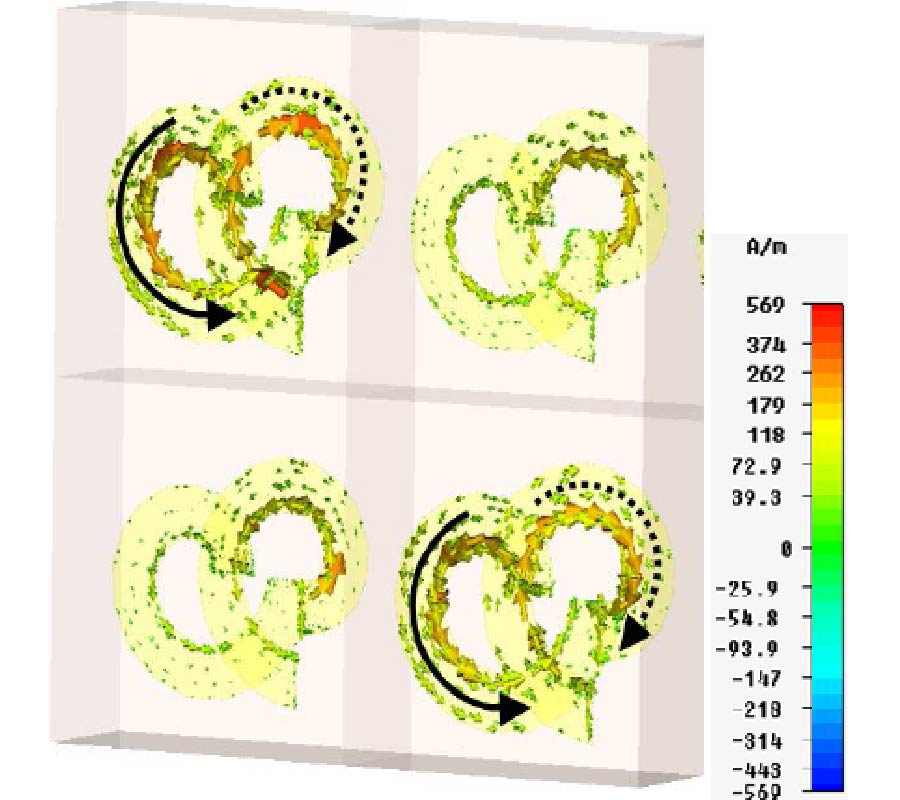
The asymmetric transmission of the linearly polarized waves at normal incidence through the lossy anisotropic chiral structure is demonstrated. The proposed chiral metamaterial structure is composed of bi-layered discontinuous cross-wire-strips, and it is utilized in order to realize polarization rotation. Firstly, the theoretical relations between the incident polarization and the polarization rotation are derived using transmission matrices. Secondly, a strong and dynamically asymmetric transmission of linearly polarized electromagnetic wave through the chiral metamaterial has been demonstrated for microwave region, both by simulation and experimentally. The experiment results are in good agreement with the simulation ones. It can be seen from the results that the proposed chiral metamaterial structure can be used to design novel polarization control devices for several frequency regions.
ASYMMETRIC TRANSMISSION OF LINEARLY POLARIZED WAVES AND DYNAMICALLY WAVE ROTATION USING CHIRAL METAMATERIAL
2013-05-30
PIER Letters
Vol. 40, 191-200
Compact Reconfigurable HMSIW Bandpass Filter Loaded by CSRR
Zhudan Wang , Feng Wei , Li Zhang and Xiao-Wei Shi
A reconfigurable half-mode substrate integrated waveguide (HMSIW) bandpass filter (BPF) loaded by complementary split-ring resonator (CSRR) is investigated. The proposed HMSIW-CSRR structure allows the implementation of a forward-wave passband propagating below the characteristic cutoff frequency of the waveguide. By changing the effective capacitance to ground of the CSRR, frequency tuning of the resonator is observed without other external circuit. The proposed filter exhibits improved selectivity due to the employment of the pseudo-S defected structure to generate transmission zero at the low stopband. To verify the presented design method, the predicted compact reconfigurable filter, tuned between 3.6 GHz and 4.5 GHz with insertion loss less than 3.6 dB and return loss better than 17 dB, is fabricated based on the standard printed circuit board process. The measured results are in good agreement with the simulation.
COMPACT RECONFIGURABLE HMSIW BANDPASS FILTER LOADED BY CSRR
2013-05-30
PIER Letters
Vol. 40, 181-190
Tri-Band Slotted F-Shaped Antenna with Dual-Polarization Characteristics for WLAN/WiMAX Applications
Jin Yao , Fu-Shun Zhang , Xue Qiang Jiao and Hao Bai
A tri-band slotted F-shaped antenna with dual-polarization characteristics for wireless applications is presented. The crooked gap and F-shaped monopole are optimized to achieve tri-band operation of 2.4, 3.5 and 5.8 GHz with -10 dB impedance bandwidths of 20%, 14.1%, and 13.6%, respectively. Furthermore, by properly inserting an F-shaped strip on the wide-slot ground, the circular polarization (CP) with a 19% (3.3-4 GHz) 3dB axial ratio bandwidth is obtained. The proposed antenna has a compact dimension of 42×40×1.6 mm3. A prototype of the antenna is fabricated and tested, and an agreement with simulated results is obtained.
TRI-BAND SLOTTED F-SHAPED ANTENNA WITH DUAL-POLARIZATION CHARACTERISTICS FOR WLAN/WIMAX APPLICATIONS
2013-05-30
PIER M
Vol. 31, 103-116
Design of a Low Sidelobe 4D Planar Array Including Mutual Coupling
Quanjiang Zhu , Shiwen Yang , Ruilin Yao and Zai-Ping Nie
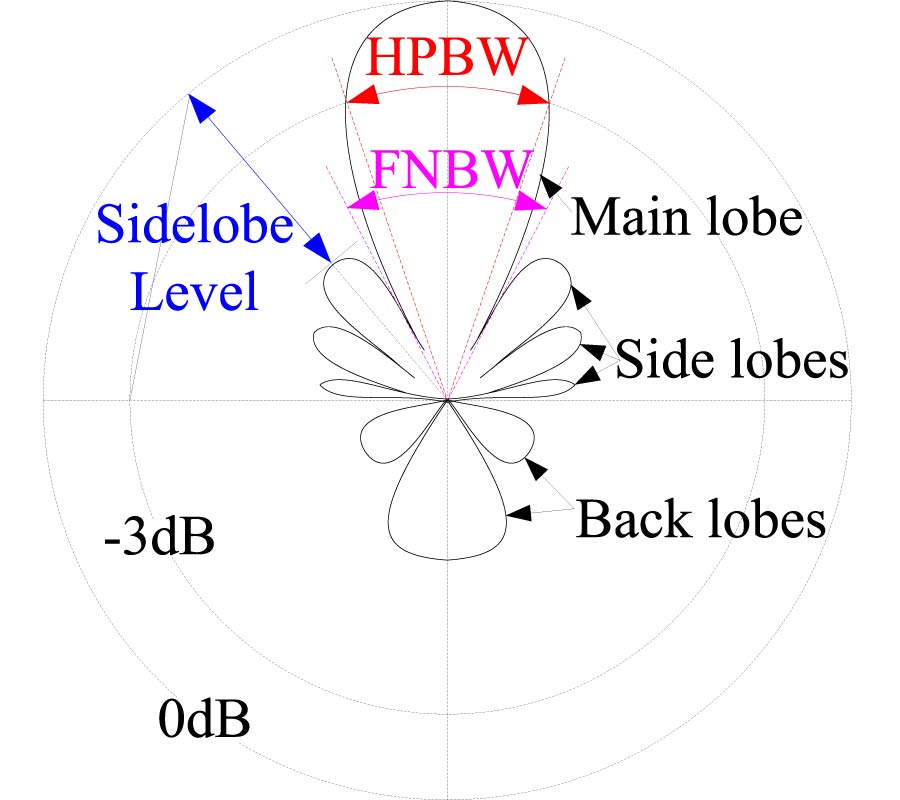
An efficient approach is presented for the design of a low sidelobe four-dimensional (4D) planar antenna array, taking into account mutual coupling and platform effect. The approach is based on the combination of the active element patterns and the differential evolution (DE) algorithm. Different from linear and circular arrays, the mutual coupling compensation in a planar array is more complicated since it requires numerous data of the active element patterns in different azimuth planes. In order to solve this problem, a useful interface program is developed to get these data from commercial software HFSS automatically. Also different from conventional low sidelobe arrays with tapered amplitude excitations, the low sidelobe in the 4D array is realized using time-modulation technique under uniform static amplitude and phase conditions. The DE algorithm is used to optimize the time sequences which are equivalent to the complex excitations in conventional arrays. Both computed results and simulated results in HFSS show that a -30 dB sidelobe pattern can be synthesized in a 76-element planar array with an octagonal ground plane and a radome, thus verifying the proposed approach.
DESIGN OF A LOW SIDELOBE 4D PLANAR ARRAY INCLUDING MUTUAL COUPLING
2013-05-30
PIER M
Vol. 31, 85-101
Aircraft-Lightning Electrodynamics Using the Transmission Line Model Part I: Review of the Transmission Line Model
Sanmugasundaram Thirukumaran , Paul Ratnamahilan Polycarp Hoole , Ramiah Harikrishnan , Jeevan Kanesan , Kandasamy Pirapaharan and Samuel Ratnajeevan Herbert Hoole
This work presents a self-consistent and self-contained model to study and analyze aircraft-lightning electrodynamics. In this paper we review the well developed and reported transmission line model of the cloud-to-ground (CG) lightning return stroke. Subsequently, the incorporation of a circuit model of the aircraft into the return stroke model is considered. The direct hit characteristics of aircraft body lightning currents for both CG and GC (ground-to-cloud) are important when designing protection, shielding and filtering systems for airborne electronic and electrical systems within the aircraft system. Moreover, the model will allow design of aircraft structure and geometry to minimize energy dissipation into the aircraft structure and systems. Basic electromagnetic theory is used to show the validity of considering the return stroke as a transverse magnetic wave along a transmission line. A distributed transmission line model for the aircraft and the return stroke channel of the lightning is used to simulate the return strokes of CG and GC flashes. The effects of the aircraft geometry with sharp edges are included in the computation of aircraft capacitance values, both distributed as well as lumped values. The paper compares electric currents, channel voltages, the rate of change of current and the frequency spectrum along the lightning channel of the return strokes for CG and GC flashes with aircraft attached to the channel.
AIRCRAFT-LIGHTNING ELECTRODYNAMICS USING THE TRANSMISSION LINE MODEL PART I: REVIEW OF THE TRANSMISSION LINE MODEL
2013-05-30
PIER M
Vol. 31, 71-83
A Hybrid Method of Scattering from a Dielectric Target Above a Rough Surface: TE Case
Lin Li , Tian Lin Dong and Qingxia Li
A hybrid method, combining analytic Kirchhoff approximation (KA) and numerical method of moments (MoMs), is developed to solve the two-dimensional (2D) scattering problem of a dielectric target with arbitrary cross section above a moderate perfect electric conductor (PEC) rough surface under TE-polarized tapered wave incidence. The induced current on the rough surface is analytically expressed using the KA method, which depends on the tapered incident wave and the field illuminating by current distribution on the target, leaving only unknown induced current on the target. So the electric field integral equations of the induced currents on the target only can be derived; it allows a substantial reduction of computation time and memory requirement. Furthermore, for different secondary scattering of the underlying rough surface, different truncations of the rough surface are taken to speed up computation of the scattering contribution from the rough surface to the target. Making use of Monte Carlo realization, bistatic scattering from a cylindrical target above a PEC rough surface is well simulated to test validity and efficiency of the proposed method. Numerical results from the hybrid method have good agreements with those from the conventional method of moments. However, the computational time and the memory requirements have been greatly reduced.
A HYBRID METHOD OF SCATTERING FROM A DIELECTRIC TARGET ABOVE A ROUGH SURFACE: TE CASE
2013-05-30
PIER
Vol. 140, 213-226
Novel Symmetrical Coupled-Line Directional Coupler Based on Resonant-Type Composite Right-/Left-Handed Transmission Lines
Yanbing Ma , Huai-Wu Zhang and Yuanxun Li
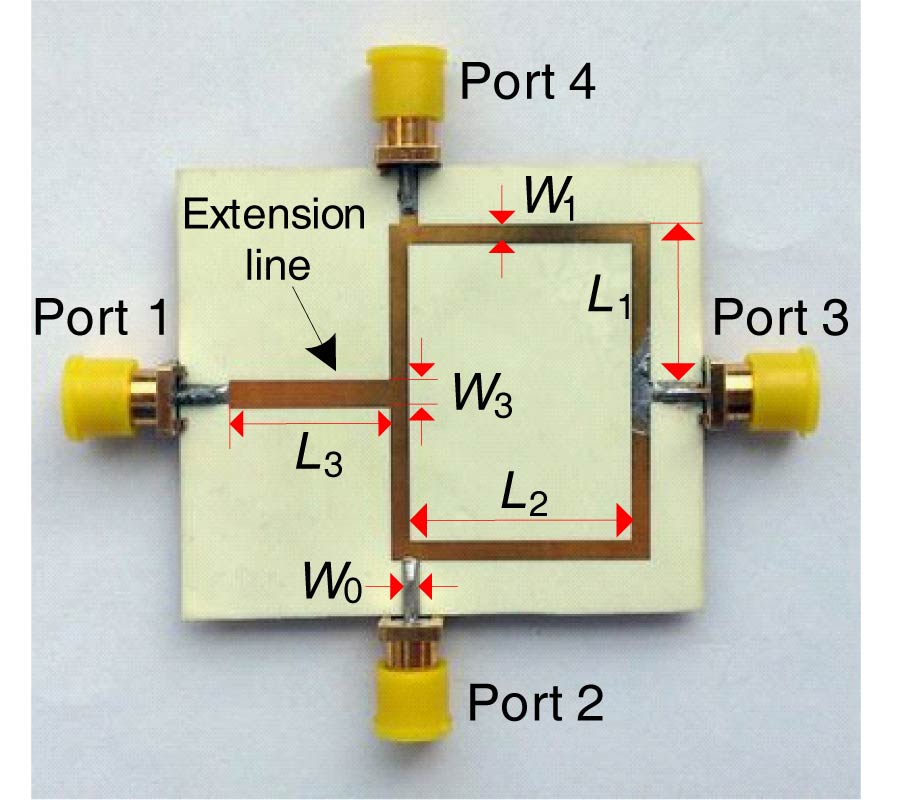
A novel kind of symmetrical backward-wave coupled-line coupler with arbitrary coupling level is proposed in this paper which is based on resonant-type composite right-/left-handed transmission lines (CRLH TLs). First, an equivalent circuit model and procedure for circuit parameters extraction are presented to reveal the inherent nature of the unit cell of the CRLH coupler. Then a CRLH TL composed of four cascaded unit cells is demonstrated to point out the way to achieve balanced condition. At last, even/odd modes analysis based on full-wave simulation is employed to explain the operating principle of the coupler. Both quasi 0-dB and 3-dB CRLH couplers are demonstrated experimentally. The quasi 0-dB backward coupling is achieved over the range from 1.69 GHz to 2.19 GHz (-3 dB bandwidth in measurement), which represents the fractional bandwidth 25.8%. The maximum coupling coefficient 0.52 dB is obtained at 1.96 GHz, where the directivity and isolation is 20.8 dB and 21.3 dB, respectively. The 3-dB couplers shows an amplitude balance of 2 dB and quadrature phase balance of 90±5 degree over the fractional bandwidth of around 11.4%, from 1.99 to 2.23 GHz.
NOVEL SYMMETRICAL COUPLED-LINE DIRECTIONAL COUPLER BASED ON RESONANT-TYPE COMPOSITE RIGHT-/LEFT-HANDED TRANSMISSION LINES
2013-05-30
PIER
Vol. 140, 199-212
A Leaky Wave Slot Antenna Array Using Single Metal Layer with Azimuthally Omnidirectional Pattern
Yue Li , Zhijun Zhang and Zhenghe Feng
This paper proposes a leaky wave slot antenna array for azimuthally omnidirectional coverage. Slot elements were arranged in cascade and series-fed by a coplanar waveguide (CPW). The most important novelty of this paper is that the whole array, including all the radiating elements and feeding structures, was arranged on a single metal layer. This simple structure has the merits of easy fabrication and low cost, especially at higher frequencies, such as millimeter wave band. Moreover, the proposed antenna array was folded around a center-hollowed columnar substrate to achieve omnidirectional radiation pattern in the azimuthal plane, with the gain variation less than 1.1 dB, which is similar to previous omnidirectional antenna array. In this paper, a prototype of the proposed antenna array at 2.3 GHz was built and tested to validate the design strategy. The measured results, including S parameters, radiation patterns, and gain, were found to agree well with the simulation ones.
A LEAKY WAVE SLOT ANTENNA ARRAY USING SINGLE METAL LAYER WITH AZIMUTHALLY OMNIDIRECTIONAL PATTERN
2013-05-29
PIER C
Vol. 40, 175-186
Closed-Form Pdf for Multiuser TR-UWB Systems Under Gaussian Noise and Impulsive Interference
Djamel Abed , Salah Redadaa and Smail Tedjini
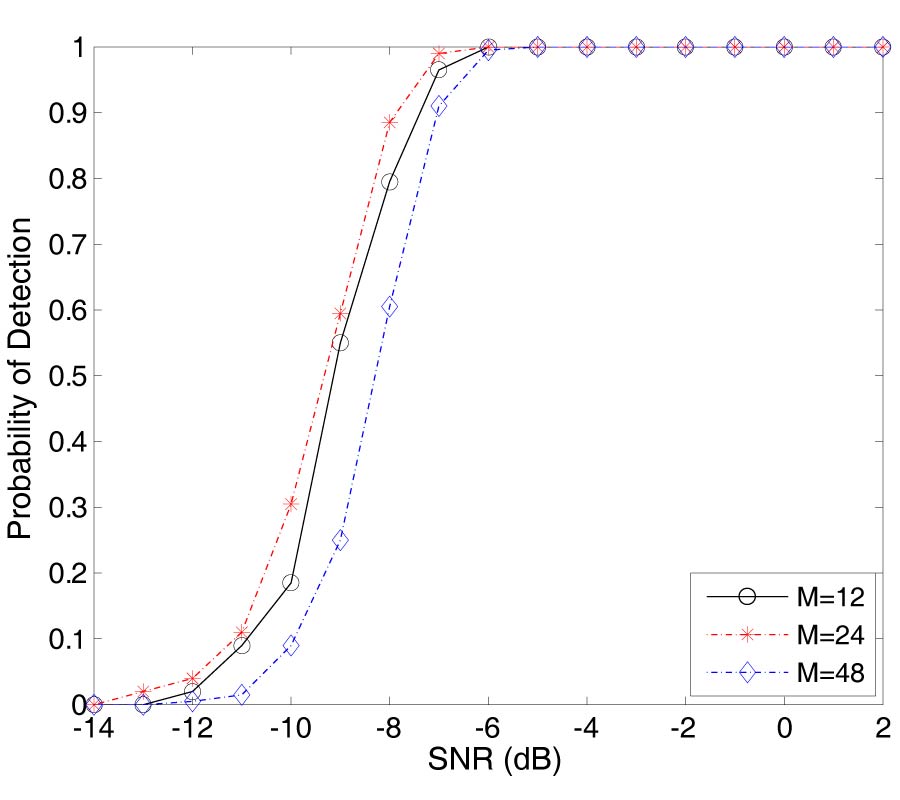
In most existing transmitted-reference ultra-wideband (TR-UWB) communication systems, receivers use the standard Gaussian approximation (SGA) for multiuser interference (MUI). It is an assumption used in most conventional multiuser systems, where the MUI tends to a Gaussian process by the central limit theorem, and convergence is relatively fast with respect to the number of users. However, for TR-UWB systems which are developed for short-range applications, we have a small number of active users. In this case, significant performance degradation is found in TR-UWB receivers due to the impreciseness of SGA. In this paper, we show that the Middleton class-A model is a more appropriate statistical model for MUI modeling in TR-UWB systems than the often used SGA. A closed-form expression for the probability density function (PDF) of the TR-UWB system under MUI, Gaussian noise and impulsive alpha-stable interference is developed. All these analytical results are confirmed by numerical simulations.
CLOSED-FORM PDF FOR MULTIUSER TR-UWB SYSTEMS UNDER GAUSSIAN NOISE AND IMPULSIVE INTERFERENCE