Search Results(13798)

2013-06-30
PIER B
Vol. 52, 383-403
An UWB Fractal Antenna with Defected Ground Structure and Swastika Shape Electromagnetic Band Gap
Nagendra Kushwaha and Raj Kumar
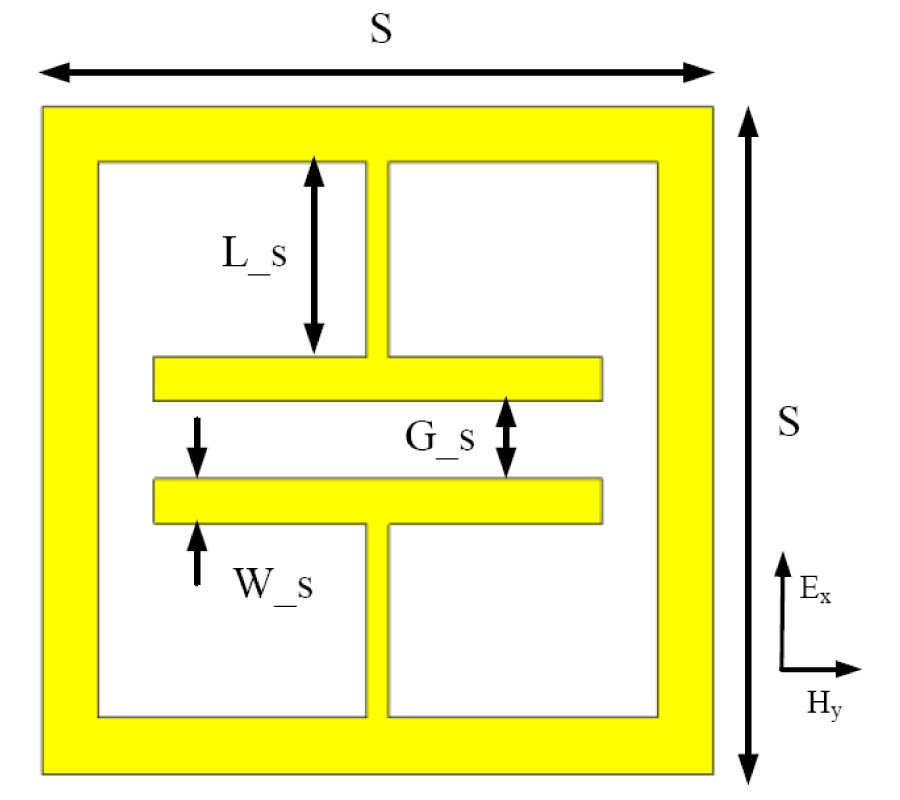
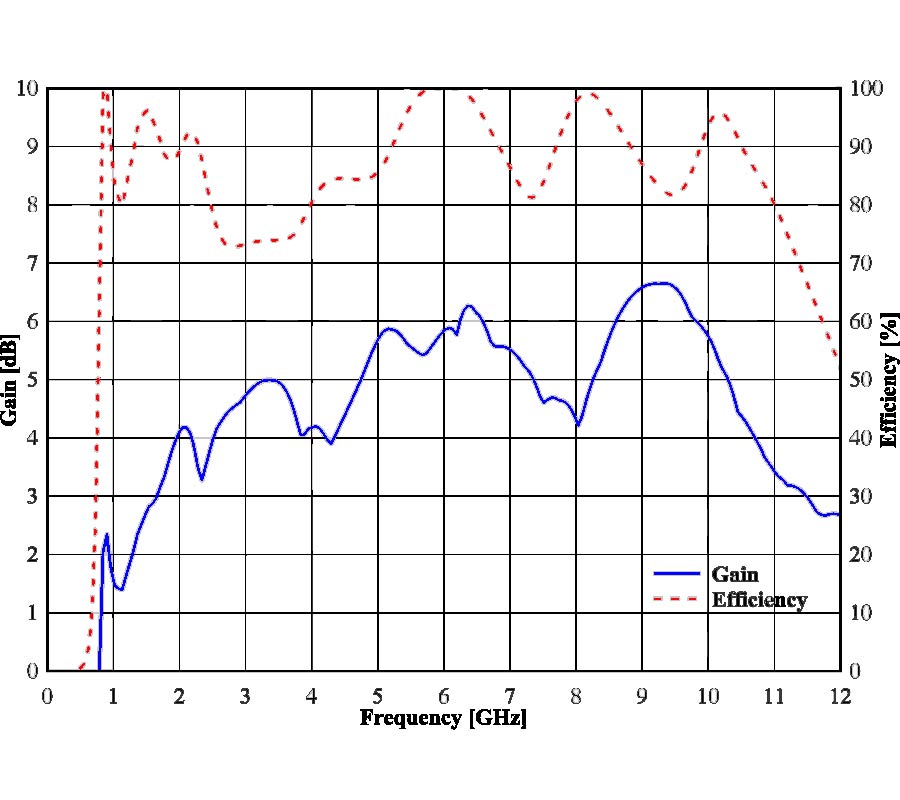
In this paper, an ultra wideband antenna employing a defected ground structure is presented. The radiating element is a circular patch on which a fractal based geometry is inscribed in the form of slots and excited by a tapered feed-line for impedance matching. The antenna has an impedance bandwidth of 8.2 GHz (117% at centre frequency of 7 GHz) and a peak gain around 6 dB. To improve the impedance bandwidth and gain, a Swastika shape Electromagnetic band gap (EBG) structure is proposed. The unit cell of the proposed EBG has a compact size of 3 mm × 3 mm and is obtained by introducing discontinuities in the outer ring of the Cross-Hair type EBG. The stop band (-20 dB) achieved with this EBG is 3.6 GHz (7.5 GHz-11.1 GHz) which is 1.6 GHz more than that achieved by a standard mushroom-type EBG of the same size and same number of elements. After application of the proposed EBG, there is an improvement of 12% in the impedance bandwidth while the peak gain increases by about 2-3 dB. The radiation of the antenna shows a dumb-bell shaped pattern in the E-plane and Omni-directional pattern in the H-plane. All the measured results are in good agreement with simulated results.
AN UWB FRACTAL ANTENNA WITH DEFECTED GROUND STRUCTURE AND SWASTIKA SHAPE ELECTROMAGNETIC BAND GAP
2013-06-30
PIER M
Vol. 31, 215-229
Combined Method for Simulating Electron Spectrum of δ-Doped Quantum Wells in n-Si with Many-Body Corrections
Christian Castrejon-Martinez , Volodymyr V. Grimalsky , Luis Manuel Gaggero-Sager and Svetlana V. Koshevaya
The combined method to investigate the electron spectrum of single n-type d-doped quantum wells in silicon is proposed. It is based on computing the electron potential energy by means of the Thomas-Fermi method at finite temperatures; then the obtained electron potential energy is applied to the iteration procedure with solving the Schrodinger equations for the electron spectrum and the Poisson one for the potential energy. The many-body corrections to the electron spectrum in the quantum well also have been investigated. The combined method demonstrates a rapid convergence. It is shown that that the simple TF method gives a good approximation for the electron potential energy and for the total electron concentration within the well.
COMBINED METHOD FOR SIMULATING ELECTRON SPECTRUM OF δ-DOPED QUANTUM WELLS IN N-SI WITH MANY-BODY CORRECTIONS
2013-06-29
PIER M
Vol. 31, 199-214
Conductor Fusing and Gapping for Bond Wires
Kenneth Chien-Ying Chen , Larry Kevin Warne , Yau Tang Lin , Robert L. Kinzel , Johnathon D. Huff , Michael B. McLean , Mark W. Jenkins and Brian M. Rutherford
In this paper, fusing of a metallic conductor is studied by judiciously using the solution of the one-dimensional heat equation, resulting in an approximate method for determining the threshold fusing current. The action is defined as an integration of the square of the wire current over time. The burst action (the action required to completely vaporize the material) for an exploding wire is then used to estimate the typical wire gapping action (involving wire fusing), from which gapping time can be estimated for a gapping current greater than a factor of two over the fusing current. The test data are used to determine the gapped length as a function of gapping current and to show, for a limited range, that the gapped length is inversely proportional to gapping time. The gapping length can be used as a signature of the fault current level in microelectronic circuits.
CONDUCTOR FUSING AND GAPPING FOR BOND WIRES
2013-06-28
PIER B
Vol. 52, 363-382
Reduction of Numerical Dispersion of Adi-FDTD Method with Quasi Isotropic Spatial Difference Scheme
Yilong Zhang , Donglin Su and Feijiao Liu
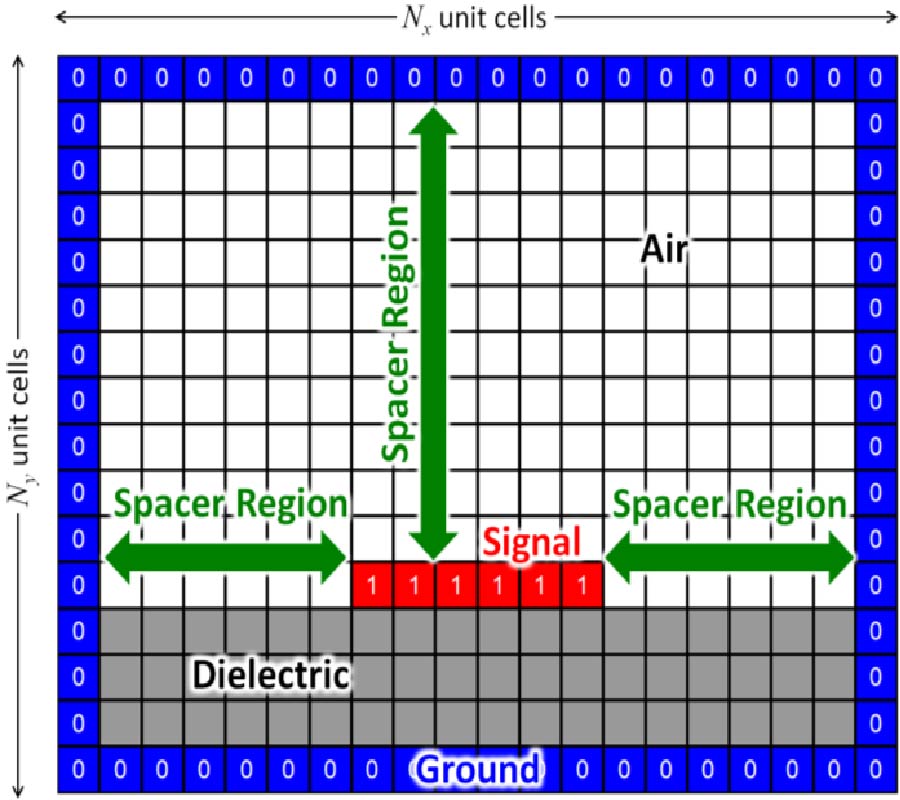
In this paper, the difference scheme of the alternating-direction-implicit finite-difference time-domain (ADI-FDTD) method is replaced by the quasi isotropic (QI) spatial difference scheme to improve its numerical dispersion characteristics. The unconditional stability advantage of QI-ADI-FDTD is analytically proven and numerically verified. The numerical dispersion of the novel method can be dramatically reduced by choosing proper weighting factor. An example is simulated to demonstrate the accuracy and efficiency of the proposed method.
REDUCTION OF NUMERICAL DISPERSION OF ADI-FDTD METHOD WITH QUASI ISOTROPIC SPATIAL DIFFERENCE SCHEME
2013-06-28
PIER B
Vol. 52, 347-362
Mutual Coupling Calibration for Electromagnetic Vector Sensor
Lanmei Wang , Guibao Wang and Cao Zeng
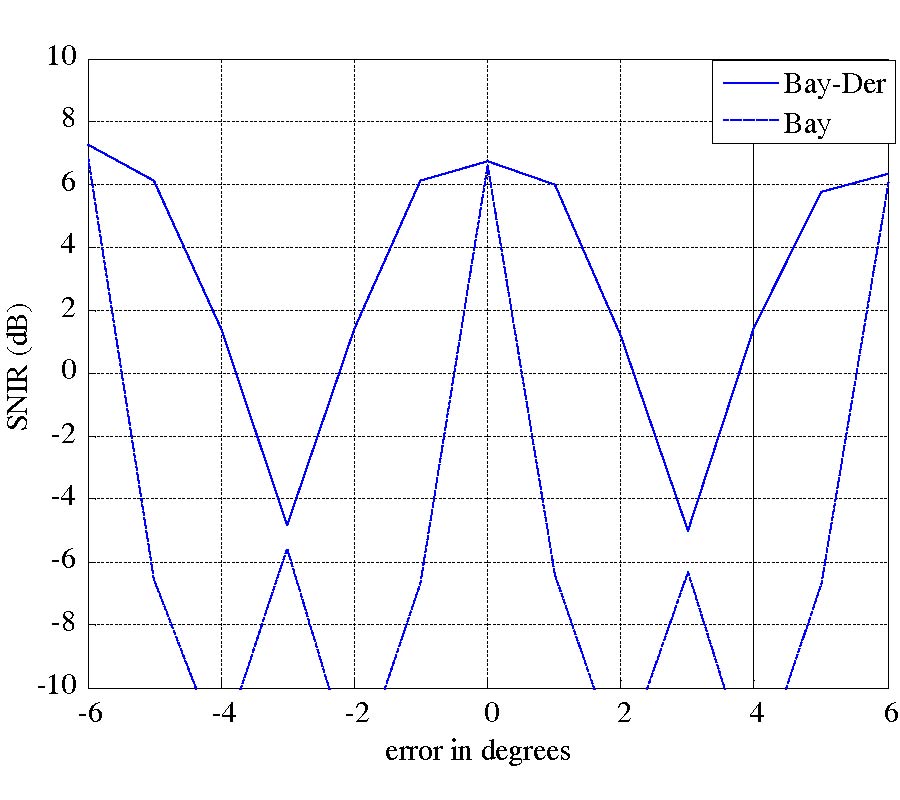
A subspace self-calibration ESPRIT algorithm for mutual coupling across an electromagnetic vector sensor is proposed in this paper. By introducing an auxiliary array element, the mutual coupling is calibrated. The whole array's mutual coupling matrix can be obtained simultaneously. A mathematic model for mutual coupling across the six collocated antennas of an electromagnetic vector sensor is established. And the solution of mutual coupling matrix was transformed into the solution of several matrix elements. The Cramer-Rao Lower Bound (CRLB) is also derived in the end of this paper to verify the efficacy of the proposed algorithm. The simulation results demonstrate that this approach is correct and effective.
MUTUAL COUPLING CALIBRATION FOR ELECTROMAGNETIC VECTOR SENSOR
2013-06-28
PIER
Vol. 140, 681-717
The Design of an Optical Time Steered Antenna Based on a New Integrated True Time Delay Unit
Amedeo Capozzoli , Claudio Curcio and Giuseppe D'Elia
In the framework of wide-band and ultra wide-band array antennas, an Optical Time Steered Antenna (OTSA) is presented, by considering the design strategies of a new True Time Delay (TTD) Control Unit in the Beam Forming Network (BFN). The unit has high reliability, low crosstalk, low switching time and potential low cost, being based on a low cost technology. Furthermore, due to its compactness and modularity, it can be easily grouped with other ones to make a control unit of large arrays. Different strategies and working configurations of the TTD control unit are presented as a trade-off among hardware complexity, insertion loss reduction and beam control capability. The design of an OTSA prototype is discussed by considering a realistic model simulating the behavior of a real world antenna and accounting for unavoidable non-realities, such as random, periodic and systematic errors introduced by each device exploited in the OTSA as well as mutual coupling between radiating elements. An optimal trimming strategy, able to compensate at best for BFN errors and based on the use of suitably located trimmers, is presented. Among other cases, to enlighten the potentialities of the OTSA, an all optical architecture providing a difference beam squint free pattern is also proposed.
THE DESIGN OF AN OPTICAL TIME STEERED ANTENNA BASED ON A NEW INTEGRATED TRUE TIME DELAY UNIT
2013-06-27
PIER C
Vol. 41, 137-150
Compact Microstrip Dual-Mode Dual-Band Bandpass Filters Using Stubs Loaded Coupled Line
Xin Xu and Wen Wu
This paper presents two novel dual-mode dual-band bandpass filters (BPFs) by using stubs loaded coupled line. The analytical equations of their transmission poles and transmission ze-ros are given by the classical even-/odd-mode method. Design rules for two dual-band BPFs are al-so given, which shows the easily tuned passband frequency locations and in-band performance. As examples, two dual-mode dual-band BPFs, dual-band filter A with central frequencies (CFs) at 3.5/6.8 GHz and -3 dB fractional bandwidth (FBW) of 14%/10%, while dual-band filter B with CFs at 2.4/6.8 GHz and -3 dB FBW of 43%/16% are designed, fabricated and measured. Good agree-ment can be observed between the simulations and measurements. These two filters exhibit simple design procedures, simple physical topology, low insertion losses, good return losses, high isolation and compact sizes.
COMPACT MICROSTRIP DUAL-MODE DUAL-BAND BANDPASS FILTERS USING STUBS LOADED COUPLED LINE
2013-06-27
PIER C
Vol. 41, 121-135
Bandwidth Improvement of a Compact Quadrature Hybrid Coupler with Harmonic Rejection Using Lumped Elements
Yu Ye , Ling-Yun Li , Jian-Zhong Gu and Xiao-Wei Sun
A compact quadrature hybrid coupler with harmonic suppression adopting lumped-element band-stop resonator is proposed aiming for bandwidth improvement. Conventionally, harmonic rejection is realized by three band-stop resonators in lumped hybrid design. The using of three band-stop resonators can realize better harmonic suppression while exhibiting narrower frequency response. So as to improve operation bandwidth performance, the number of band-stop resonator applied in this proposed topology is minimized to one. Trading off with acceptable reduction in harmonic rejection, the proposed hybrid can enlarge working bandwidth with fewer lumped devices. Detailed design and theoretical analysis are presented and the expressions of lumped elements with dependence of rejected harmonic frequency are obtained. To validate the analysis, three 2.45 GHz couplers are fabricated on an FR-4 printed circuit board. The experimental results exhibit 27.3%, 26.9% and 23.3% operation bandwidth with better than 16 dB, 17 dB, and 21 dB harmonic suppressions at 4.9 GHz, 6.1 GHz, and 7.35 GHz, respectively. Less than 0.8 dB amplitude imbalance and 2° phase error are achieved over the whole operation frequency for the all three couplers, which are matched well with theoretical analysis.
BANDWIDTH IMPROVEMENT OF A COMPACT QUADRATURE HYBRID COUPLER WITH HARMONIC REJECTION USING LUMPED ELEMENTS
2013-06-27
PIER C
Vol. 41, 111-120
A Corner-Fed Square Ring Antenna with an L-Shaped Slot on Ground Plane for GPS Application
Bau-Yi Lee , Wen-Shan Chen , Yu-Ching Su and Fa-Shian Chang
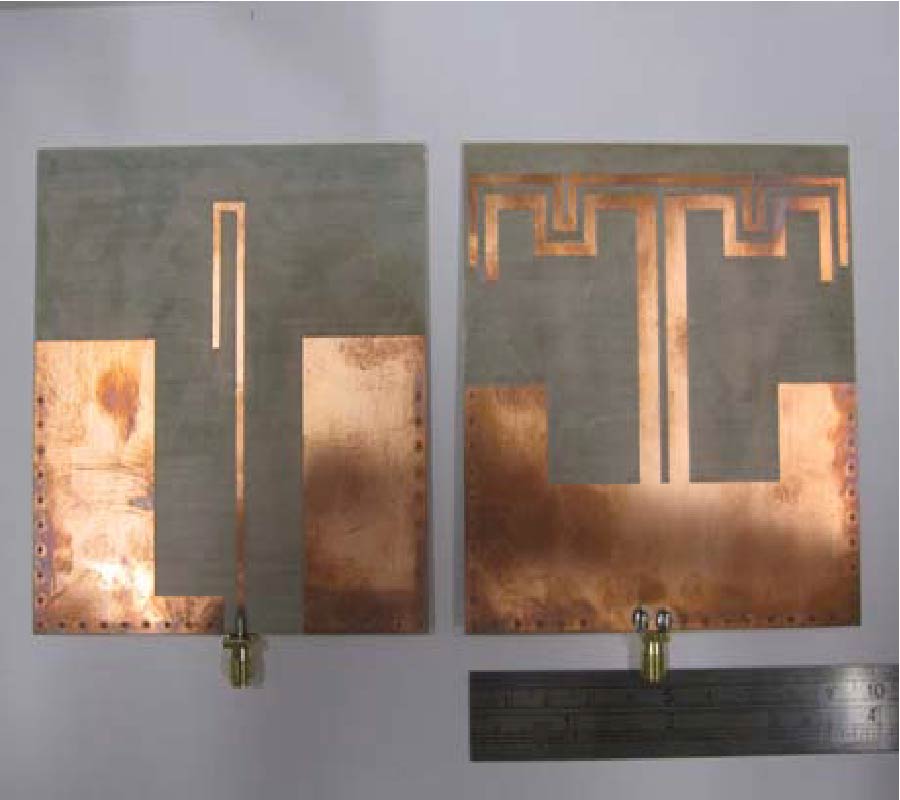
This paper proposes a square ring patch antenna for GPS L1 band application. The square ring patch located on the center of an FR4 substrate was truncated a square to guide two resonant modes. The dimensions of the truncated square located on the center of the patch controls the antenna's frequency band. Larger truncated square creates longer resonant path that decreases the resonant band. To achieve the CP radiation patterns, the corner-fed method and a truncated L-shaped slot on the ground plane are applied. After the size of the truncated L-shaped slot is optimized, the currents of Eθ and Eφ are around 90° shifts that make the antenna's AR lower than 3 dB. By switching the positions of the feed point and the L-shaped slot, both RHCP and LHCP can be obtained individually. Beside the CP operation, the proposed design also has advantages of planar structure, simple design, low cost, and good performances.
A CORNER-FED SQUARE RING ANTENNA WITH AN L-SHAPED SLOT ON GROUND PLANE FOR GPS APPLICATION
2013-06-27
PIER Letters
Vol. 41, 77-86
Broadband CPW-Fed Circularly Polarized Antenna with an Irregular Slot for 2.45 GHz RFID Reader
Lu Chen , Xueshi Ren , Ying-Zeng Yin and Zedong Wang
A coplanar waveguide-fed slot antenna with wideband circular polarization characteristic is presented. The proposed antenna consists of an irregular slot with a stair-shaped edge and an L-shaped feed line. The stair-shaped edge can improve the circular polarization of the antenna. The simulated and measured results show that the antenna has an impedance bandwidth (VSWR < 2) about 1040 MHz (42%@2.47 GHz) and an axial ratio (AR) bandwidth (AR < 3 dB) about 640 MHz (25.8%@2.48 GHz) for 2.45 GHz RFID applications. The RHCP gain in the main radiation direction varies between 2.3 dBi and 3.8 dBi.
BROADBAND CPW-FED CIRCULARLY POLARIZED ANTENNA WITH AN IRREGULAR SLOT FOR 2.45 GHZ RFID READER
2013-06-27
PIER M
Vol. 31, 189-198
Simplified Modeling and Measurement Procedures for Electromagnetic Launchers Performances Evaluation
Hocine Menana
In this work, Simplified modeling and measurement procedures for capacitive driven electromagnetic launchers using magnetic armatures are presented. The modeling strategy is based on a successive solving of the circuit equation coupled to a 2D finite element (FEM) magnetostatic computation and the mechanical equation of the armature motion. This leads to a considerable time and memory space saving compared to a time domain magnetodynamic problem computation. The armature velocity is determined through the analysis of the time variation of the induced voltage, due to the armature remanent magnetization, in an auxiliary coil placed at the launcher extremity. The modelling and measurement strategies are implemented and tested on a laboratory developed coil-gun prototype. Modelling and measurement results are provided.
SIMPLIFIED MODELING AND MEASUREMENT PROCEDURES FOR ELECTROMAGNETIC LAUNCHERS PERFORMANCES EVALUATION
2013-06-27
PIER
Vol. 140, 653-680
Circularly Arced Koch Fractal Multiband Multimode Monopole Antenna
Daotie Li and Jun-Fa Mao
Circularly arced Koch fractal curve (CAKC) is originally proposed. Then, a novel wire dipole is formed with Ki-iterated CAKC. The dipole is experimentally studied for fractal electrical characteristics revealing. It manifests many unique properties, such as multiband resonance at odd times of half-wavelength. In particular, it unprecedentedly presents normal mode (0.5.λ) and axial mode (1.5.λ) simultaneously. Thus, K2 CAKC wire is configured into folded monopole with circular disc ground for omni-directional and directive radiation. Five matched bands (S11≤-10 dB) are obtained within 1 GHz-10 GHz, of which f1=1.31 GHz, f2=3.14 GHz, f3=3.63 GHz, f4=4.65 GHz, and f5=7.71 GHz. Compared with conventional wire monopole (0.25.λ), this fractal monopole shows 31% height reduction. It has dipole-like patterns at f1 and f2, endfire patterns at f3 and f4 with high gain (10 dBi), and off-endfire patterns at f5. Moreover, the fractal antenna possesses compactness, lightweight, simplicity, and low cost. So, it is an attractive candidate for multiband and multifunction antennas, such as satellite antennas, of which omni-directional normal mode and directive axial mode are needed for beaconing and communication respectively.
CIRCULARLY ARCED KOCH FRACTAL MULTIBAND MULTIMODE MONOPOLE ANTENNA
2013-06-26
PIER B
Vol. 52, 327-345
On the Mixed Scattering Mechanism Analysis of Model-Based Decomposition for Polarimetric SAR Data
Wen Yang , Hui Song , Gui-Song Xia and Xin Xu
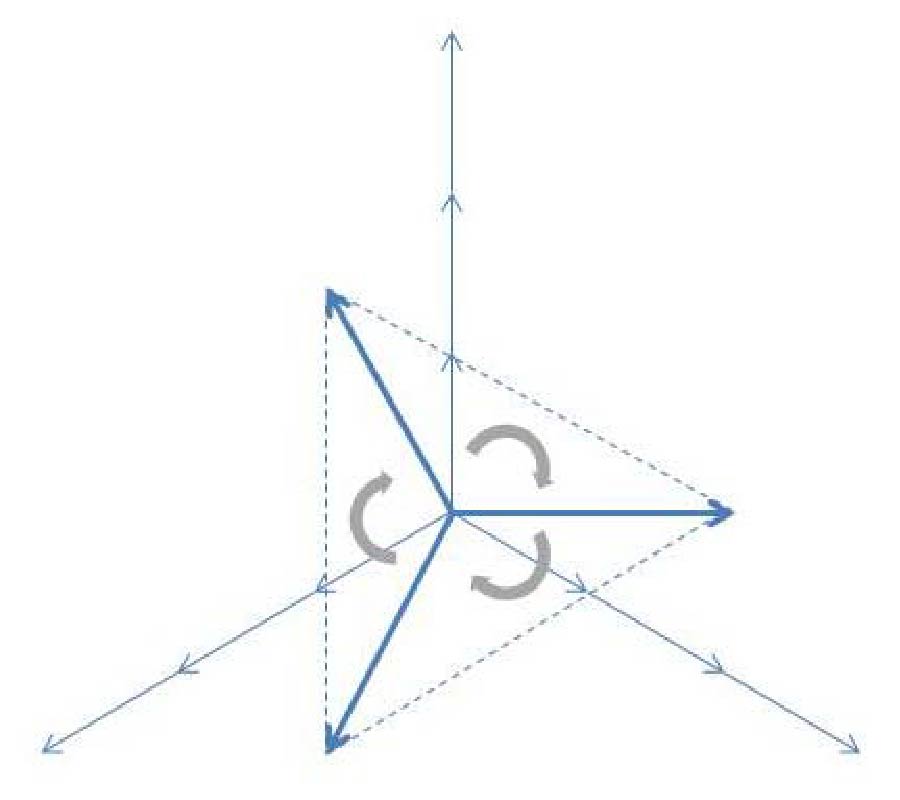
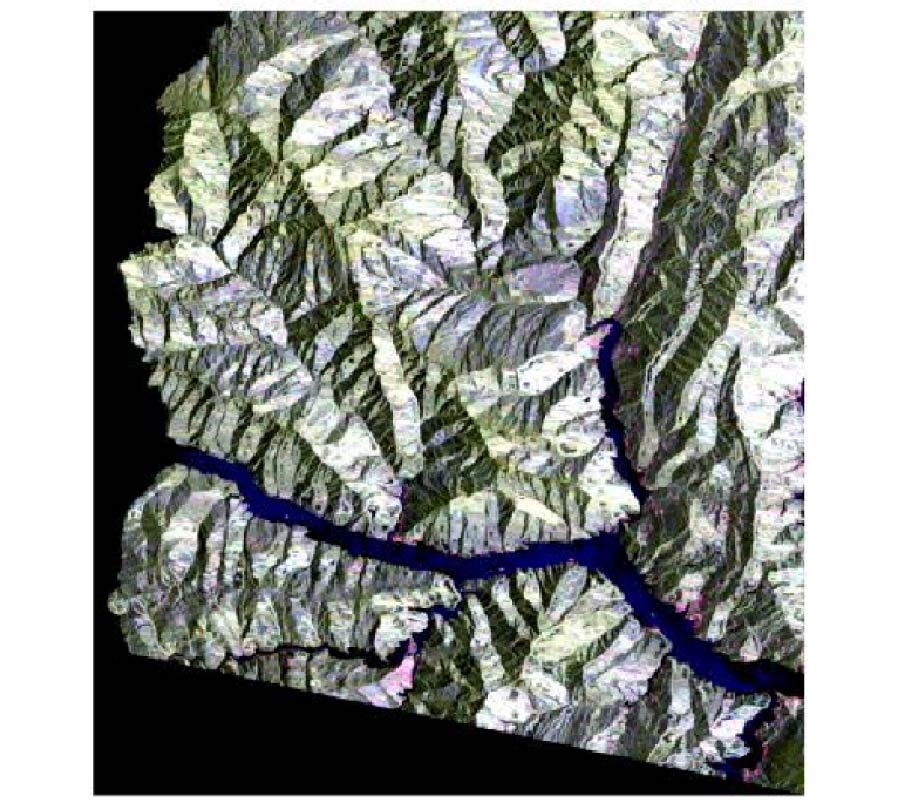
This paper introduces a simple but effective scattering mechanism identification scheme for analyzing mixed scattering mechanisms obtained by model-based decomposition. Using the normalized scattering vector, each pixel is represented by a point in a standard 2-simplex in R3. Seven scattering category centers are represented by the three vertices, the three midpoints of sides and the centroid of the 2-simplex. The scattering category partitioning problem is then solved by minimizing the Euclidean distance between the image pixels and these category centers. The proposed scattering mechanism identification scheme is finally used for data analyzing and unsupervised classification. Experiments on AIRSAR and E-SAR L-band PolSAR images demonstrate the effectiveness of the proposed method.
ON THE MIXED SCATTERING MECHANISM ANALYSIS OF MODEL-BASED DECOMPOSITION FOR POLARIMETRIC SAR DATA
2013-06-26
PIER M
Vol. 31, 171-188
The RFI Suppression Method Based on Stft Applied to SAR
Tengfei Zhao , Yongsheng Zhang , Lin Yang , Zhen Dong and Diannong Liang
Improved radio frequency interference suppression method based on short time Fourier transform applied to synthetic aperture radar is proposed in this paper. The radio frequency interference, including narrow-band interference and wide-band interference, are analyzed in time frequency domain. The interference is identified at instantaneous frequency spectrum by a novel threshold criterion in time frequency domain, and then an adaptive gain coefficient is determined for instantaneous frequency spectrum at every certain time. The gain coefficient can keep the useful signal correctly during interference suppression. In the end, the performance of the proposed method is demonstrated by the experiment based on the real synthetic aperture radar data adding the interference.
THE RFI SUPPRESSION METHOD BASED ON STFT APPLIED TO SAR
2013-06-26
PIER
Vol. 140, 633-652
Fractal Koch Multiband Textile Antenna Performance with Bending, Wet Conditions and on the Human Body
Mohd Ezwan Bin Jalil , Mohamad Kamal Abd Rahim , Noor Asmawati Binti Samsuri , Noor Asniza Murad , Huda Abdul Majid , Kamilia Kamardin and Muhamad Azfar Abdullah
A multiband Fractal Koch dipole textile antenna is proposed for wearable applications. The antenna is designed to operate at 0.9 GHz, 2.45 GHz and 5.8 GHz. Denim materials as the substrate are selected aiming to obtain robustness, flexible and lightweight textile antenna. The antenna model is designed, simulated, optimized and analyzed using Microwave Studio CST software. Two types of multiband antenna prototypes are fabricated and evaluated with different conducting elements (Shield It fabric and copper foil tape). Antenna performance is observed in term of return loss, bandwidth, radiation pattern and realized gain. Three different comprehensive analyses are taking into considerations which are measurement antenna with different bending sizes, on-body measurement and under wet condition. The antenna performances are evaluated based on resonant frequency (fo) and bandwidth (BW). The antennas performance with bending on the human body (arm & forearm) is compared and investigated. A suitable placement on the body has been discovered between chest and backside of human body. The antennas have also been tested under wet conditions to ensure the stable characteristic under the influence of water.
FRACTAL KOCH MULTIBAND TEXTILE ANTENNA PERFORMANCE WITH BENDING, WET CONDITIONS AND ON THE HUMAN BODY
2013-06-26
PIER
Vol. 140, 613-631
A New EFIE Method Based on Coulomb Gauge for the Low-Frequency Electromagnetic Analysis
Xiaoyan Y. Z. Xiong , Li Jun Jiang , Wei E. I. Sha and Yat-Hei Lo
To solve the low-frequency breakdown inherent from the electric field integral equation (EFIE), an alternative new form of the EFIE is proposed by using the Coulomb-gauge Green's function of quasi-static approximation. Different from the commonly adopted Lorentz-gauge EFIE, the Coulomb-gauge EFIE separates the solenoidal and irrotational surface currents explicitly, which captures inductive and capacitive responses through electrodynamic and electrostatic Green's functions, respectively. By applying existing techniques such as the loop-tree decomposition, frequency normalization, and basis rearrangement, the Coulomb-gauge EFIE also can remedy the low-frequency breakdown problem. Through comparative studies between the Lorentz-gauge and Coulomb-gauge EFIE approaches from mathematical, physical and numerical aspects, the Coulomb-gauge EFIE approach shows the capability of solving low-frequency problems and achieves almost the same accuracy and computational costs compared to the Lorentz-gauge counterpart.
A NEW EFIE METHOD BASED ON COULOMB GAUGE FOR THE LOW-FREQUENCY ELECTROMAGNETIC ANALYSIS
2013-06-26
PIER
Vol. 140, 599-611
Features of the Gouy Phase of Nondiffracting Beams
Pablo Vaveliuk , Oscar Martinez Matos and Gustavo Adrian Torchia
It is shown how the linear Gouy phase of an ideal nondiffracting beam of ±(k-kz)z form, with kz being the projection of the wavevector of modulus k of the plane wave spectrum onto the propagation axis z, is built from a rigorous treatment based on the successive approximations to the Helmholtz equation. The so much different families of nondiffracting beams with a continuum spectrum, as Bessel beams, Mathieu beams and Parabolic ones, as well as nondiffracting beams with a discrete spectrum, as kaleidoscopic beams, have an identical Gouy phase, which fully governs the beam propagation dynamics. Hence, a real beam whose Gouy phase is close to that linear Gouy phase in a given range, will have nondiffracting-like properties on such a range. These results are applied to determine the effective regime in which a physically realizable beam can be treated as a nondiffracting one. As an fruitful example, the Gouy phase analysis is applied to fully establish the regime in which a Helmholtz-Gauss beam propagates with nondiffracting-like properties.
FEATURES OF THE GOUY PHASE OF NONDIFFRACTING BEAMS
2013-06-26
PIER
Vol. 140, 589-598
Creation of Super-Resolution Non-Diffraction Beam by Modulating Circularly Polarized Lightwith Ternary Optical Element
Jingsong Wei , Yikun Zha and Fuxi Gan
In order to obtain a super-resolution non-diffraction beam, we propose a fast searching method to design a ternary optical element combined with the circularly polarized light. The optimized results show that a beam with a spot size of 0.356λ and depth of focus of 8.28λ can be achieved by focusing with an oil lens of numerical aperture NA = 1.4 and refractive index of oil n = 1.5. The analysis reveals that the spot size of transverse component is 0.273λ, indicating that the super-resolution effect mainly comes from the transverse component. The spot size inside the media can theoretically reach down to 0.273λ because the spot size inside the media is mainly determined by the transverse component.
CREATION OF SUPER-RESOLUTION NON-DIFFRACTION BEAM BY MODULATING CIRCULARLY POLARIZED LIGHTWITH TERNARY OPTICAL ELEMENT
2013-06-21
PIER
Vol. 140, 563-588
Modeling and Optimization Research for Dynamic Transmission Process of Balise Tele-Powering Signal in High-Speed Railways
Linhai Zhao and Ying Jiang
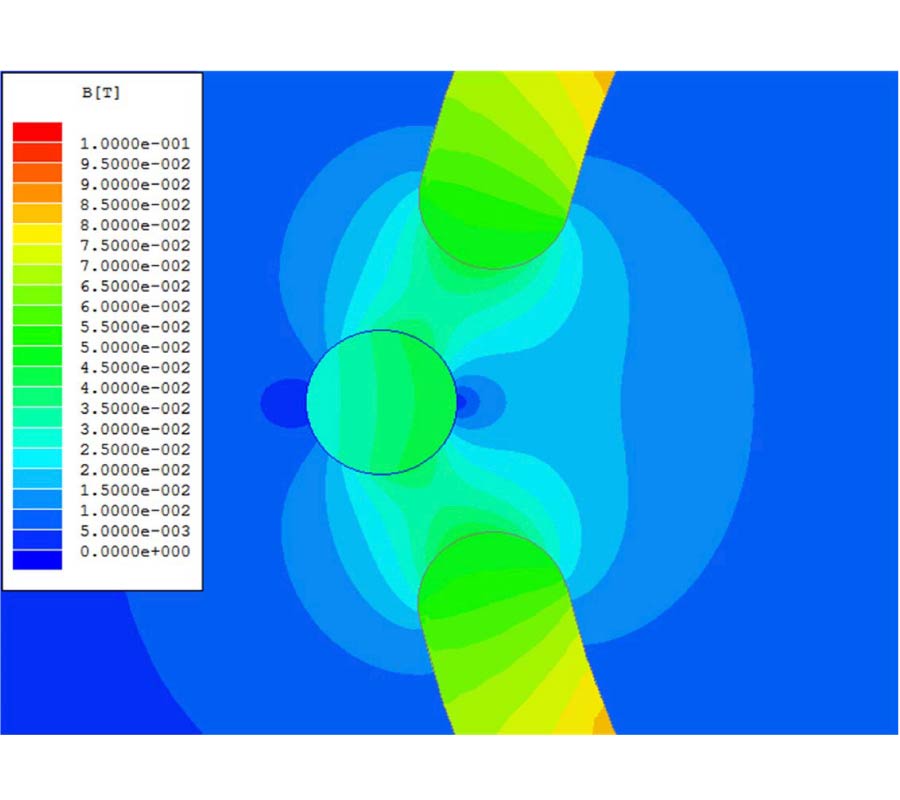
As key components of the train control system, balise and Balise Transmission Module (BTM) cooperate with each other and fulfill the ground-train information transmission to ensure the safety and reliability of train operation. Aiming at the requirements for future developments of high-speed railway, this paper builds the model for the dynamic transmission process of the balise tele-powering signal using finite element method and electromagnetic field theory, respectively. The paper analyzes the change law of the magnetic flux density distribution within the balise receiving antenna, and derives expressions for the balise induced voltage amplitude envelope based on train speed. Then, the paper carries out the performance optimization to the existing balise system from two perspectives of the balise mounting style and the BTM mounting height. Experiments show that the proposed optimization measures can substantially enhance the system's adaptability to the ever-increasing train operation speed from the existing 448 km/h to 523 km/h. Furthermore, a potential optimization scheme with respect to the BTM mounting angle which enables huge promotion of the system performance is also discussed and proposed.
MODELING AND OPTIMIZATION RESEARCH FOR DYNAMIC TRANSMISSION PROCESS OF BALISE TELE-POWERING SIGNAL IN HIGH-SPEED RAILWAYS
2013-06-20
PIER
Vol. 140, 545-562
Finite Ground CPW-Fed UWB Antenna Over the Metallic Cylindrical Surfaces
Rafal Lech , Wojciech Marynowski and Adam Kusiek
The investigation of finite ground coplanar fed ultra-wideband (UWB) antenna and the influence of its curvature and the proximity of planar and circular metalic screen on the reflection coefficients and radiation characteristics is presented. The antenna is composed of two circular coplanar strips which enclose slot aperture of similar shape and is designed on a thin and flexible substrate which allows its bending. The antenna configuration has been modeled and experimentally tested, showing good performance in 2-15 GHz frequency with return losses less than -10 dB. It is shown that the bending of antenna does not significantly affect its performance. The existence of metalic screen deteriorates its radiation pattern and reflection coefficient, however with the correct choice of the distance between screen and antenna the required level of return losses can be provided.
FINITE GROUND CPW-FED UWB ANTENNA OVER THE METALLIC CYLINDRICAL SURFACES