Search Results(13798)

2013-07-18
PIER B
Vol. 53, 147-186
Variational Electrodynamics of Atoms
Jayme De Luca
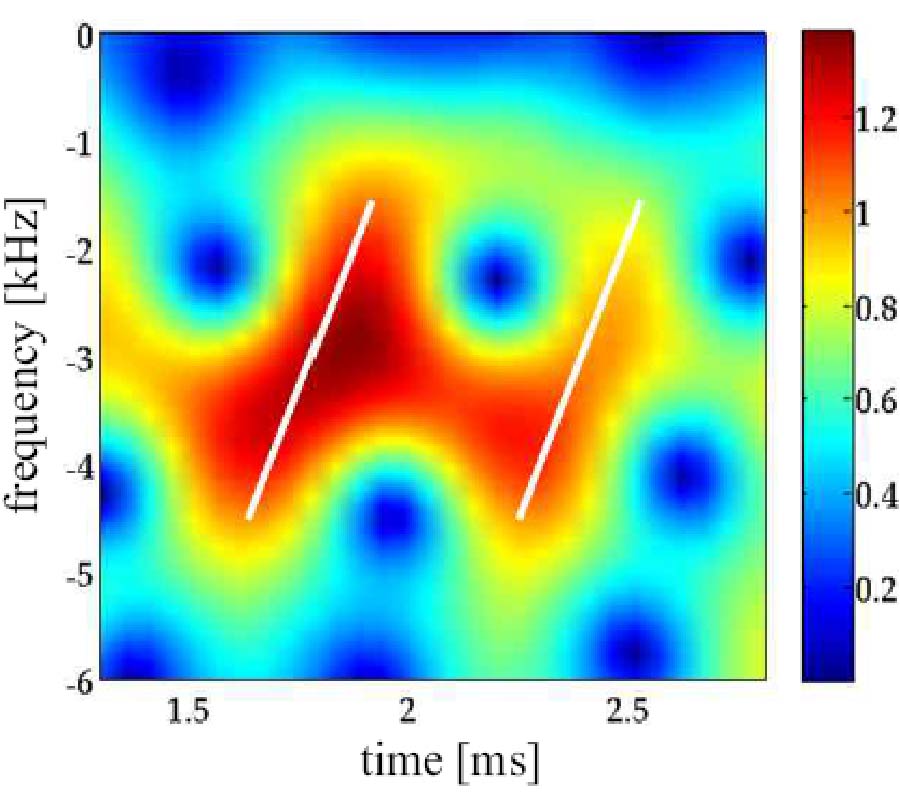
We generalize Wheeler-Feynman electrodynamics with a variational problem for trajectories that are required to merge continuously into given past and future boundary segments. We prove that the boundary-value problem is well posed for two classes of boundary data and the well-posed solution in general has velocity discontinuities, henceforth a broken extremum. Along regular segments, broken extrema satisfy the Euler-Lagrange neutral differential delay equations with state-dependent deviating arguments. At points where velocities are discontinuous, broken extrema satisfy the Weierstrass-Erdmann corner conditions that energies and momenta are continuous. Electromagnetic fields of the finite trajectory segments are derived quantities that can be extended to a bounded region B of space-time. Extrema with a finite number N of velocity discontinuities have extended fields defined in B with the possible exception of N spherical surfaces, and satisfy the integral laws of classical electrodynamics for most surfaces and curves inside B. As an application, we study the hydrogenoid atomic model with mass ratio varying by three orders of magnitude to include hydrogen, muonium and positronium. For each model we construct globally bounded trajectories with vanishing far-fields using periodic perturbations of circular orbits. Our model uses solutions of the neutral differential delay equations along regular segments and a variational approximation for the head-on collisional segments (spikes). Each hydrogenoid model predicts a discrete set of finitely measured neighbourhoods of periodic orbits with vanishing far-fields right at the correct atomic magnitude and in quantitative and qualitative agreement with experiment and quantum mechanics. The spacings between consecutive discrete angular momenta agree with Planck's constant within thirty-percent, while orbital frequencies agree with a corresponding spectroscopic line within a few percent.
VARIATIONAL ELECTRODYNAMICS OF ATOMS
2013-07-18
PIER C
Vol. 42, 83-94
A Simple UWB Antenna with Dual Stop-Band Performance Using Rectangular Slot and Strip Line Ended Up Shorting PIN
Mohammad Akbari , Meghdad Khodaee , Saman Zarbakhsh and Reza Gholami
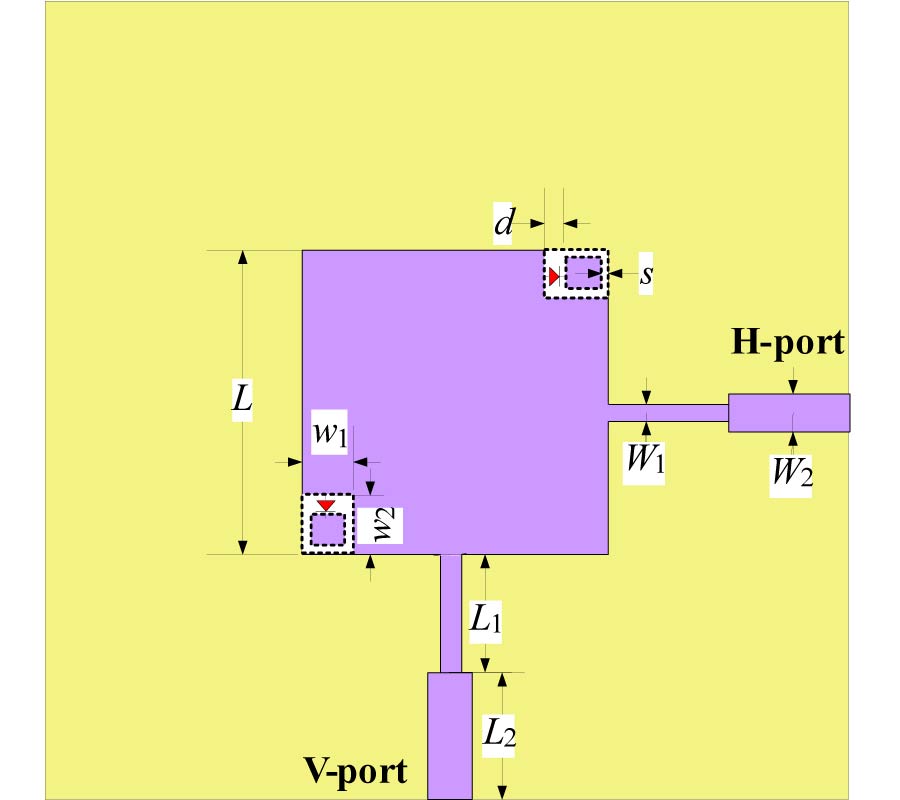
This paper presents a new rectangle-slot antenna for ultra wideband applications with 3.5/5.5 GHz dual stop-band characteristics. The antenna contains a simple square radiating patch and a rectangle-slot ground plane, which provides a wide bandwidth from 2.6 GHz up to 14.1 GHz. In order to obtain dual stop-band properties at 3.5 and 5.5 GHz, a rectangularshaped slot is etched off the ground plane, and a strip line ended up a shorting pin is applied, respectively. The antenna is simple in configuration and has a compact dimension of 20×22 mm2. The proposed antenna is designed, simulated and fabricated. The measured results exhibit a acceptable agreement with the simulated data. The antenna provides nearly omnidirectional radiation patterns, relatively flat gain over the entire UWB frequency excluding the two stop bands.
A SIMPLE UWB ANTENNA WITH DUAL STOP-BAND PERFORMANCE USING RECTANGULAR SLOT AND STRIP LINE ENDED UP SHORTING PIN
2013-07-18
PIER
Vol. 141, 291-307
A Shaped-Beam Series-Fed Aperture-Coupled Stacked Patch Array Antenna
Lei Qiu , Sheng-Shui Wang , Hui-Ying Qi , Fei Zhao , Shun-Lian Chai and Jun-Jie Mao
A shaped-beam series-fed aperture-coupled stacked patch array antenna at X-band is presented. To improve the array bandwidth, two-port aperture-coupled stacked patch antennas, which are suitable for the series-fed array configuration, are presented as the radiating elements. To offer the pattern design and optimization progresses more flexibility, a uniformly spaced array configuration is applied in the shaped-beam pattern design, instead of the conventional nonuniformly spaced array configuration. The experimental results show that, in a 7.6% bandwidth, the main beam shape of the array maintains in good agreement with the design goal, and the side lobe level maintains lower than -18 dB.
A SHAPED-BEAM SERIES-FED APERTURE-COUPLED STACKED PATCH ARRAY ANTENNA
2013-07-18
PIER
Vol. 141, 267-289
Properties of Anisotropic Photonic Band Gaps in Three-Dimensional Plasma Photonic Crystals Containing the Uniaxial Material with Different Lattices
Hai Feng Zhang , Shaobin Liu and Xiang-Kun Kong
In this paper, the properties of anisotropic photonic band gaps (PBGs) in three-dimensional (3D) nomagnetized plasma photonic crystals (PPCs) composed of anisotropic dielectric (the uniaxial material) spheres immersed in uniform nomagnetized plasma background with various lattices including the diamond, face-centered-cubic (fcc), body-centered-cubic (bcc) and simple-cubic (sc) lattices, are theoretically investigated by the plane wave expansion (PWE) method. The equations for calculating the anisotropic PBGs in the first irreducible Brillouin zone are theoretically deduced. The anisotropic PBGs and a flatbands region can be obtained as the uniaxial material introduced into 3D PPCs. The PPCs with diamond lattices consisting of isotropic dielectric have the larger PBGs compared to PPCs doped by the uniaxial material since its low symmetry structure. Furthermore, the PPCs with fcc, bcc, sc lattices will not exhibit a complete PBG unless the uniaxial material is introduced. The influences of the ordinary-refractive index, extrordinary-refractive index, filling factor and plasma frequency external magnetic field on the properties of anisotropic PBGs for 3D PPCs with fcc, bcc, sc lattices are investigated in detail, respectively, and some corresponding physical explanations are also given. The numerical results show that the anisotropy can open partial band gaps in 3D PPCs with fcc, bcc, sc lattices, and the complete PBGs can be obtained compared to 3D PPCs doped by the conventional isotropic dielectric. It also is shown that the anisotropic PBGs can be tuned by the ordinary-refractive index, extrodinary-refractive index, filling factor and plasma frequency, respectively. The complete PBGs can be obtained by introducing the uniaxial material as 3D PPCs are with high-symmetry lattices. This also provides a way to design the tunable devices.
PROPERTIES OF ANISOTROPIC PHOTONIC BAND GAPS IN THREE-DIMENSIONAL PLASMA PHOTONIC CRYSTALS CONTAINING THE UNIAXIAL MATERIAL WITH DIFFERENT LATTICES
2013-07-17
PIER C
Vol. 42, 67-82
Fast Synthesis of Large Planar Arrays Using Active Element Pattern Method and Fine-Grained Parallel Micro-Genetic Algorithm
Ling-Lu Chen , Cheng Liao , Lei Chang , Haijing Zhou and Han Yu Li
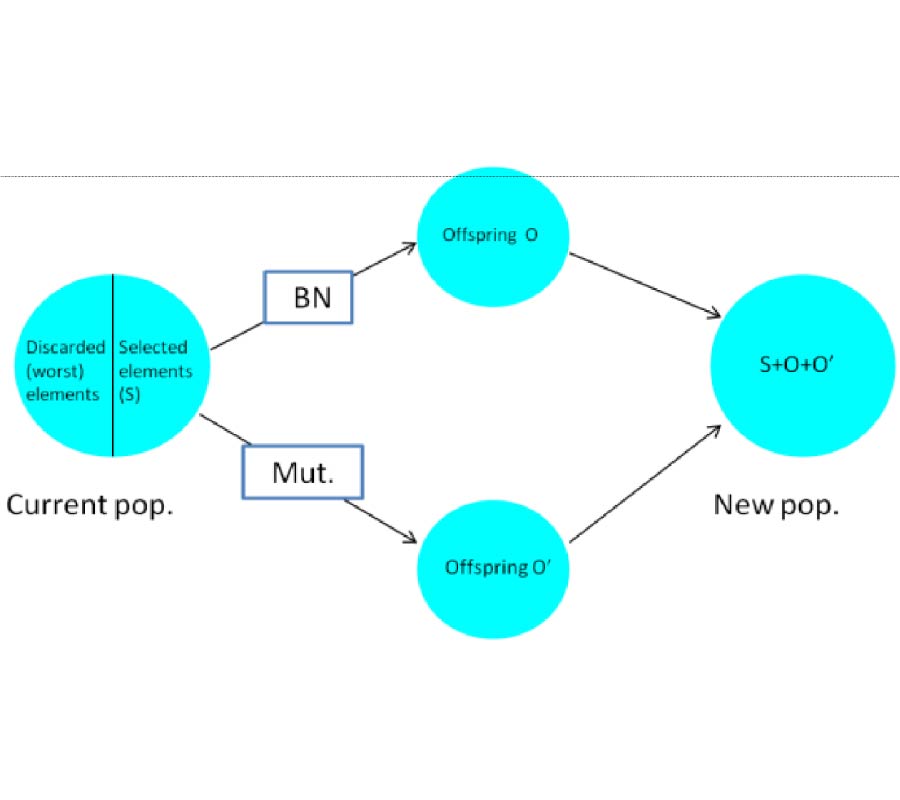
A radiation pattern synthesis technique for large planar arrays with active element pattern (AEP) method and fine-grained parallel micro-genetic algorithm (FGPMGA) is presented. Based on the AEP method, the mutual coupling between array elements can be taken into account. Analysis problems of large rectangular and triangular grid planar arrays are divided into small linear array problems. And for a multiple concentric circular ring array, we only need to obtain one-sixth of all AEPs. So computational cost is greatly reduced. Large planar arrays with low side lobe level (SLL) can be achieved via optimizing the excitation amplitudes and phases. In order to reduce the global optimization time, the FGPMGA is used. This technique is applied to design 256-element rectangular grid, 200-element triangular grid and 4-circle 60-element concentric circular ring E-shaped patch antenna arrays. The radiation patterns calculated by the AEP method show good agreements with those by using CST Microwave Studio.
FAST SYNTHESIS OF LARGE PLANAR ARRAYS USING ACTIVE ELEMENT PATTERN METHOD AND FINE-GRAINED PARALLEL MICRO-GENETIC ALGORITHM
2013-07-17
PIER Letters
Vol. 41, 125-134
Design of Several Power Dividers Using CPW-to-Microstrip Transition
Mao-Ze Wang , Fu-Shun Zhang , Jian Sun , Ke Chen and Bin Wen
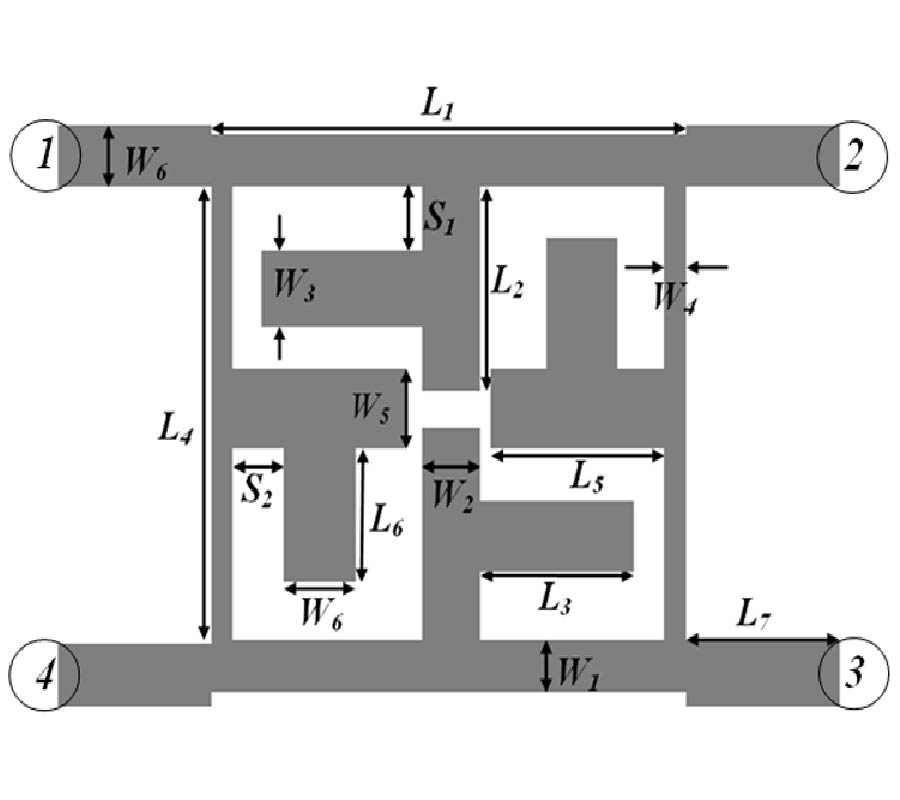
Based on the theory of microstrip-to-slotline transition, a series of power dividers using CPW-to-microstrip transition is developed. These power dividers can be made to be coplanar or non-coplanar structure, and the phase difference between the two output ports can be flexibly achieved in phase or out of phase. Two microstrip feed lines couple the energy from the two slots of the CPW with equal magnitude, thus realizing CPW-to-microstrip transition. An in-phase power divider and an out-of-phase one are designed, fabricated and measured. The measured results show that the power dividers provide good return loss, low insertion loss, and stable phase between the two output ports over the operating frequency band.
DESIGN OF SEVERAL POWER DIVIDERS USING CPW-TO-MICROSTRIP TRANSITION
2013-07-17
PIER Letters
Vol. 41, 113-123
A Novel UWB Octagonal Semi-Ring Antenna with CPW-Wing-Shaped Ground Plane
Majid Rafiee , Mohd Fadzil Ain and Md. Shahar Aftanasar
In this paper, an ultra-wideband (UWB) monopole printed antenna with wing-shaped coplanar waveguides (CPW) feeder is proposed, in which the wing-shaped CPW feeder is used to increase the impedance bandwidth. A CPW-fed antenna is used in this design for its simple structure, compact size and ease of integration with microwave circuits. The proposed antenna is fabricated on Durion Roger R4003c, 22×41 mm2 substrate and measured. The simulated and measured results show that the antenna operates between 2.04 to 11.67 GHz. The unique wing-shaped CPW feeding structure causes a significant increase on the bandwidth of the proposed antenna compared to the present patch antennas. Also it removes unwanted ripples from the return loss and improves antenna's pattern.
A NOVEL UWB OCTAGONAL SEMI-RING ANTENNA WITH CPW-WING-SHAPED GROUND PLANE
2013-07-16
PIER C
Vol. 42, 55-66
Independently-Tuned Dual-Band Filter Using Varactor-Loaded Resonators
Xiu Zhang , Li Gao , Yunfei Cao , Xiao-Lan Zhao and Yong Ding
This paper presents a high-selectivity dual-band bandpass filter with independently-tunable passband frequencies. A tap-coupled structure is utilized to feed the two resonators at lower passband and a coupling structure is used to feed the two resonators at the upper passband. Two pairs of varactor-loaded resonators operating within two different frequency ranges, allow the independent passband frequency tuning. Using this configuration, it is convenient to tune the center frequency of each passband, while the responses of the other passband remain unaltered. Source-load coupling is realized to generate transmission zeros, resulting in high skirt-selectivity. The transmission zeros move synchronously with the passbands, ensuring sharp roll-off rate for all tuning states. To verify the proposed idea, a demonstration microstrip tunable bandpass filter is implemented. The simulated and measured results are presented.
INDEPENDENTLY-TUNED DUAL-BAND FILTER USING VARACTOR-LOADED RESONATORS
2013-07-15
PIER B
Vol. 53, 127-145
Efficient Radio Propagation Prediction Algorithm Including Rough Surface Scattering with Improved Time Complexity
Abu Sulaiman Mohammad Zahid Kausar , Ahmed Wasif Reza , Kamarul Ariffin Noordin , Mohammad Jakirul Islam and Harikrishnan Ramiah
Precise modeling of radio propagation is necessary for experiencing the benefits of wireless technology for indoor environments. Among many modeling techniques, the ray tracing based prediction models become popular for indoor wireless radio propagation characterization. Though the ray tracing models are popular, their key deficiency is the slower performance. In this paper, an accelerated technique for three dimensional ray tracing using Adelson-Velski and Landis (AVL) tree data structure is introduced. Here, the AVL tree data structure is coupled with the concepts of quadrant eliminating technique (QET) and nearest neighbor finder (NNF) for optimization and fast characterization of indoor wireless communication. Surface intersection scheme (SIS) is also introduced for optimizing the ray-object intersection time. The AVL tree is used for the effective handling of the objects and environments relative information. The QET technique decreases the ray tracing time by omitting unnecessary object, while NNF decreases the ray-object intersection time by finding the nearest object in an efficient technique. For the validation of the superiority of the proposed technique, a detailed comparison is made with the existing techniques. The comparison shows that the proposed technique has 81.69% lower time consumption than the existing techniques.
EFFICIENT RADIO PROPAGATION PREDICTION ALGORITHM INCLUDING ROUGH SURFACE SCATTERING WITH IMPROVED TIME COMPLEXITY
2013-07-15
PIER C
Vol. 42, 39-53
Integrated Bluetooth/IMT-E and UWB Planar Antenna Using Scrlh Resonator to Reject WLAN and WiMAX Interferences
Hoang The Viet , Quyet Nguyen-Manh , Dong Hyun Lee and Hyun Chang Park
A novel printed monopole antenna covering 2.4-2.484 GHz (Bluetooth), 2.5-2.69 GHz (IMT-E) and 3.1-10.6 GHz (UWB) frequency bands is presented. The entire frequency bands are obtained by a modified U-shaped radiator and a modified ground plane. To prevent possible interference between UWB systems and other existing wireless systems such as WLAN and WiMAX, a SCRLH resonator structure is placed next to the feed line. Characteristics of the Bluetooth and IMT-E bands are further enhanced by two quarter-wavelength strips added on each side of the radiator. The proposed antenna can be easily printed on a 1.6-mm-thick FR4 substrate with dimensions of 30 × 41 mm2. Simulation and experimental results show that the antenna yields an impedance bandwidth of 2.3-2.8 and 3-12 GHz with -10 dB reflection coefficient, except for the dual notched bands of 3.2-3.6 for WiMAX and 4.9-6.1 GHz for WLAN. The electrical characteristics in frequency and time domain show suitability of this antenna for use in UWB systems.
INTEGRATED BLUETOOTH/IMT-E AND UWB PLANAR ANTENNA USING SCRLH RESONATOR TO REJECT WLAN AND WIMAX INTERFERENCES
2013-07-15
PIER C
Vol. 42, 29-38
Application of Bionics in Frequency Selective Surface Design and Antenna Radar Cross Section Reduction
Wen Jiang , Tao Hong and Shu-Xi Gong
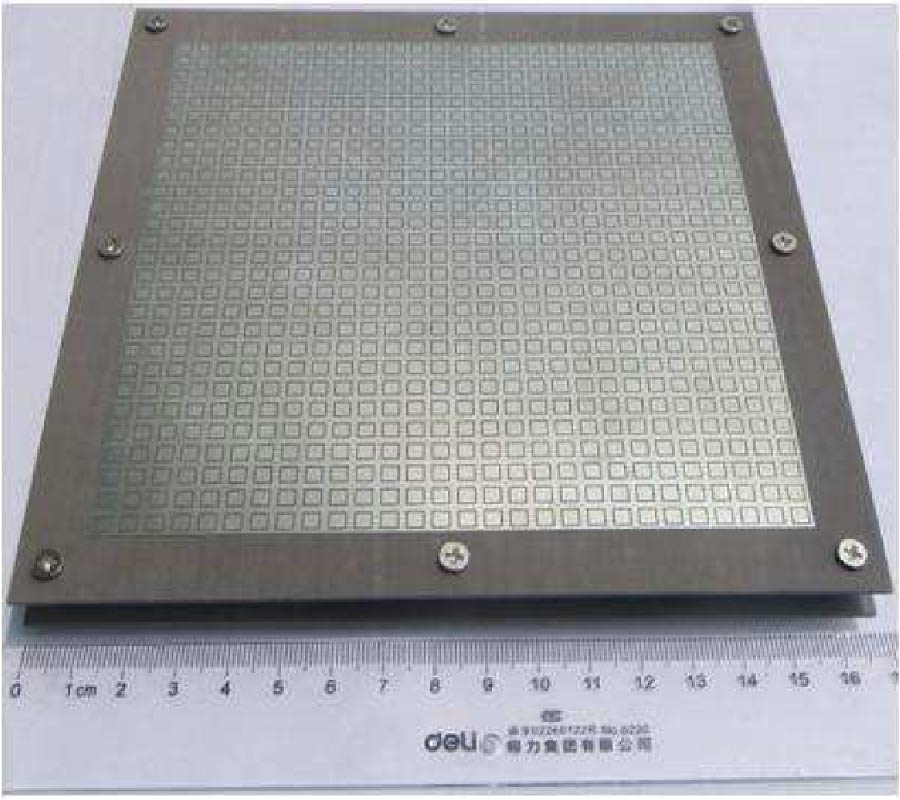
Bionics principle is applied to frequency selective surface (FSS) design in this paper. To authenticate the method, a novel bionic and miniaturized FSS is proposed by use of a model of alternate phyllotaxis. The simulated and measured results show that the proposed FSS has a much smaller size and maintains other FSS-related performances. To study the applications of the novel bionic FSS in practice, it is used for the ground plane of an antenna array to reduce the antenna radar cross section (RCS). Compared to a reference antenna, the antenna with bionic FSS has lower RCS and favorable radiation performance. Hence, applying bionics principle to FSS design and antenna RCS reduction is proved feasible, which will serve as a good candidate for the future design of FSS and antennas with or without a requirement of RCS control.
APPLICATION OF BIONICS IN FREQUENCY SELECTIVE SURFACE DESIGN AND ANTENNA RADAR CROSS SECTION REDUCTION
2013-07-15
PIER C
Vol. 42, 13-28
Quasi-Elliptic Wideband Bandpass Filters Using Stubs Loaded Anti-Parallel Coupled-Line
Xin Xu and Wen Wu
This paper presents a new type of wideband bandpass filter (BPF) with quasi-elliptic frequency response by using proposed stubs loaded anti-parallel coupled-line. With different loads, the proposed stubs loaded anti-parallel coupled-line has different numbers of transmission zeros (TZs). These TZs are symmetrical along the designing frequency f0. By using a quarter-wavelength parallel coupled-line to connect two proposed stubs loaded anti-parallel coupled-line, three wideband BPFs centered at f0 = 1.575 GHz with quasi-elliptic frequency response are successfully designed. Good agreements between the simulations and measurements can be observed. The measured results also exhibits that the fabricated BPFs have the merits of low in-band insertion loss, good in-band return loss, sharp passband selectivity and high out-of-band rejection.
QUASI-ELLIPTIC WIDEBAND BANDPASS FILTERS USING STUBS LOADED ANTI-PARALLEL COUPLED-LINE
2013-07-15
PIER C
Vol. 42, 1-11
Characterization of Lossy SIW Resonators Based on Multilayer Perceptron Neural Networks on Graphics Processing Unit
Giandomenico Amendola , Giovanni Angiulli , Emilio Arnieri , Luigi Boccia and Domenico De Carlo
In recent years, Artificial Neural networks (ANNs) have been intensively employed to build smart model of microwave devices. In this paper a characterization of lossy SIW resonators by means of Multilayer Perceptron Neural Networks (MLPNNs) on Graphics Processing Unit (GPU), is presented. Once properly selected and trained, a MLPNN can evaluate the lossy SIW resonator's resonant frequency fr and the pertaining quality factor Q at a shorter time than the full-wave rigorous model. In this way, fast parametric models of SIWstructures to employ for the design and optimization of microwave devices, exploiting the computational power of GPUs, can be obtained.
CHARACTERIZATION OF LOSSY SIW RESONATORS BASED ON MULTILAYER PERCEPTRON NEURAL NETWORKS ON GRAPHICS PROCESSING UNIT
2013-07-15
PIER C
Vol. 41, 255-265
Design of a Compact Tri-Band Power Divider with Unequal Outputs
Hai-Jin Zhou , Hua-Feng Wu , Guo-Zhong Lei and Yun-Zhu Ma
In this paper, we present a new design of a compact tri-band unequal power divider, which is composed of a circular-coupling power divider and a triple-band resonator. The unequal power dividing characteristic is realized by two circular shaped microstrip lines coupled through a circular shaped slot. The triple-band resonator, which comprises a conventional half-wavelength resonator, a short stub and an open stub, deals with the triple-bandpass performance. The proposed tri-band power divider with 1:1.6 output power ratios working at 3.4 GHz, 4.2 GHz, and 5.25 GHz is simulated and fabricated, and good agreements between the simulated and measured results are observed.
DESIGN OF A COMPACT TRI-BAND POWER DIVIDER WITH UNEQUAL OUTPUTS
2013-07-15
PIER M
Vol. 32, 43-55
Single-Nanoweb Suspended Twin-Core Fiber for Optical Switching
Xiaowei Ma and Daru Chen
A novel suspended twin-core fiber (STCF) based on a single-nanoweb structure for optical switching is proposed. The singlenanoweb structure of the STCF is an ultrathin glass membrane (nanoweb) suspended in air and adhered to the inner ring of a glass fiber capillary, which substantially provides a built-in transducing mechanism to boost the pressure-induced index change in the fiber core region of the STCF. Two fiber cores locate symmetrically in the center of the nanoweb, resulting to the mode coupling for the guiding light in the STCF. Optical and mechanical properties of the proposed STCFs under different pressure force are numerically investigated. Optical switching based on the STCF is achieved by controlling the pressure force applied to the STCF. Our simulations show that optical switching from one core to the other in the STCF is realized based on a low switching force of only 8 N. The performances of the optical switching based on STCFs with different structure parameters are presented.
SINGLE-NANOWEB SUSPENDED TWIN-CORE FIBER FOR OPTICAL SWITCHING
2013-07-15
PIER M
Vol. 32, 27-41
Magneto-Kinematical and Electro-Kinematical Fields
Vladimir Alexander Leus
The problem of the motion of a magnetic field due to the motion of a permanent magnet has been subject of scientific controversy for many decades. However, the similar question, pertaining to the motion of an electric field due to the motion of a permanent charge, has been neglected by the scientific community, tacitly admitting this specific purely kinematical phenomenon. Such an evidently skew position is under theoretical consideration on an experimental ground. It is shown a profound symmetry between electro-kinematics on the one hand and magneto-kinematics on the other, and also the radical dissimilarity of both from electrodynamics.
MAGNETO-KINEMATICAL AND ELECTRO-KINEMATICAL FIELDS
2013-07-15
PIER M
Vol. 32, 13-25
A Duality Between Metamaterials and Conventional Materials in Multilayered Anisotropic Planar Structures
Maryam Heidary , Ali Abdolali , Mohammad Mahdi Salary and Hossein Mirzaei
Consider a plane wave incident on a multilayered planar anisotropic structure composed of conventional materials and metamaterials and surround by two half-spaces. In this paper, we aim to prove three theorems which indicate a kind of duality in these structures. Assume an arbitrarily polarized plane wave obliquely incident on the structures. Theorem 1: Assume that an arbitrarily polarized plane wave is obliquely incident on the structure. Now each layer is filled with by dual media according to the interchanges DPS ↔ DNG and ENG ↔ MNG. Then, the reflection (R) and transmission (T) coefficients of the structure become the complex conjugates of their counterparts. Consequently, the reflected power and transmitted power from the structure are the same for the two dual cases of anisotropic media. Theorem 2: If the interchanges DPS ↔ DNG and ENG ↔ MNG are made in all the layers except in the half spaces on the two sides of the multilayer structure (which is more realizable), then the reflection coefficients become complex conjugates and the reflected power remains the same. Theorem 3: If the structure is backed by a perfect electric conductor and the media interchanges DPS ↔ DNG and ENG ↔ MNG are made in the layers, then the reflection coefficients of the two dual structures become complex conjugates of each other, and the reflected powers are equal. Independent of wave frequency, the number of layers, their thickness, and the type of polarization, these theorems hold true in case of any change in any of these conditions. In the last section, some examples are provided to verify the validity of the proposed theorems.
A DUALITY BETWEEN METAMATERIALS AND CONVENTIONAL MATERIALS IN MULTILAYERED ANISOTROPIC PLANAR STRUCTURES
2013-07-15
PIER M
Vol. 32, 1-11
Multiresolution Time Domain Scheme Using Symplectic Integrators
Zheng Sun , Li-Hua Shi , Xiang Zhang and Yinghui Zhou
We incorporate high-order symplectic time integrators into multiresolution time domain (MRTD) schemes. The stability and numerical dispersion analysis are presented. The proposed scheme preserves the symplectic structure of Maxwell's equations and can be easily implemented in program codes. Compared to Runge-Kutta (RK)-MRTD, the suggested scheme is more accurate in long-term simulations and requires less computational resource.
MULTIRESOLUTION TIME DOMAIN SCHEME USING SYMPLECTIC INTEGRATORS
2013-07-15
PIER
Vol. 141, 249-266
A Novel Synthesis Procedure for Ultra Wideband (UWB) Bandpass Filters
Sohail Khalid , Peng Wen Wong and Lee Yen Cheong
In this paper a novel synthesis procedure is presented to achieve optimum solution for UWB filter parameters. It is found that the narrowband approximation is not valid for any arbitrary powered rational type filtering function. For wider bandwidths frequency dependent terms have significant effects on the frequency response. Hence, extracted filtering function cannot be mapped to generalize Chebyshev polynomials. This paper will provide exact synthesis procedure for step impedance resonators (SIR's) type UWB bandpass filters. To validate the synthesis procedure prototypes are designed and fabricated. Simulated and measured results show good agreement with proposed theory.
A NOVEL SYNTHESIS PROCEDURE FOR ULTRA WIDEBAND (UWB) BANDPASS FILTERS
2013-07-13
PIER
Vol. 141, 233-248
New Dielectric 1-d EBG Structure for the Design of Wideband Resonator Antennas
Naizhi Wang , Chong Zhang , Qingsheng Zeng , Naiqiang Wang and Jia-Dong Xu
In this paper, we propose a method to use 1-D dielectric slabs, instead of metallic Frequency Selective Surfaces (FSSs), to produce Partially Reflective Surfaces (PRSs) with positive reflection phase gradients. The structure is realized by a single kind of dielectric substrate. It is modeled as cascaded transmission lines and then analyzed by virtue of the Smith Chart from the perspective of impedance transformation. A PRS designed by this approach is then applied to the realization of a wideband EBG resonator antenna operating at Ku band which is fed by a slot-coupled patch antenna. The calculated results indicate that the antenna possesses a relative 3 dB gain bandwidth of 22%, from 14.1 GHz to 17.6 GHz, with a peak gain of 17 dBi. The impedance bandwidth for the reflection coefficient (S11) less than -10 dB, is from 14 GHz to 17.7 GHz, well covering the 3 dB gain bandwidth. A prototype has been fabricated and measured, and the experimental results well validate the simulation. The design method developed here is significantly effective, and can be easily adopted for antenna designs at other frequencies.
NEW DIELECTRIC 1-D EBG STRUCTURE FOR THE DESIGN OF WIDEBAND RESONATOR ANTENNAS