Search Results(13798)

2013-07-29
PIER
Vol. 141, 463-478
Novel Triangular Metamaterial Design for Electromagnetic Absorption Reduction in Human Head
Mohammad Rashed Iqbal Faruque and Mohammad Tariqul Islam
In this paper, a novel triangular metamaterial (TMM) structure, which exhibits a resounding electric response at microwave frequency, is developed by etching two concentric triangular rings of conducting materials. A finite-difference time-domain method in conjunction with the lossy-Drude model was used in this study. Simulations were performed using the CST Microwave Studio®. The technique of specific absorption rate (SAR) reduction is discussed, and the effects of the position of attachment, the distance, and the size of the metamaterials on the SAR reduction are explored. The performance of the novel TMMs in cellular phones was also measured in the cheek and the tilted positions using the COMOSAR system. The TMMs achieved a 50.82% reduction for 1 gm SAR. These results provide a guideline to determine the triangular design of metamaterials with the maximum SAR reducing effect for a cellular phone.
NOVEL TRIANGULAR METAMATERIAL DESIGN FOR ELECTROMAGNETIC ABSORPTION REDUCTION IN HUMAN HEAD
2013-07-28
PIER
Vol. 141, 443-461
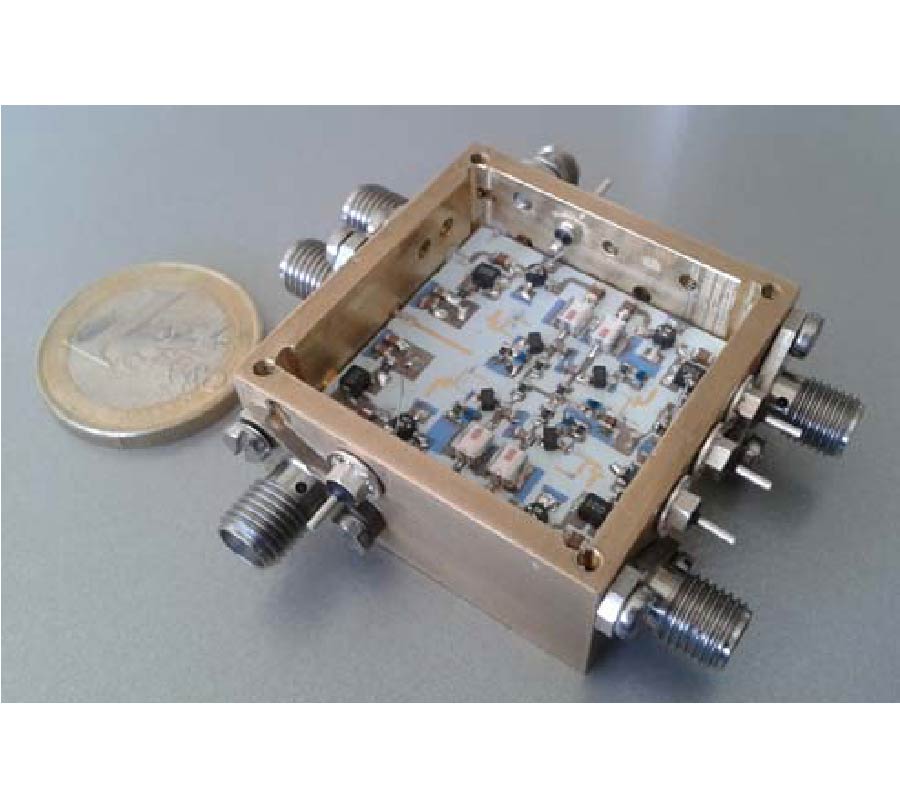
A Dual-Band RF Energy Harvesting Using Frequency Limited Dual-Band Impedance Matching
Phirun Kim , Girdhari Chaudhary and Yongchae Jeong
In this paper, a novel dual-band RF-harvesting RF-DC converter with a frequency limited impedance matching network (M/N) is proposed. The proposed RF-DC converter consists of a dual-band impedance matching network, a rectifier circuit with a villard structure, a wideband harmonic suppression low-pass filter (LPF), and a termination load. The proposed dual-band M/N can match two receiving band signals and suppress the out-of-band signals effectively, so the back-scattered nonlinear frequency components from the nonlinear rectifying diodes to the antenna can be blocked. The fabricated circuit provides the maximum RF-DC conversion efficiency of 73.76% and output voltage of 7.09 V at 881 MHz and 69.05% with 6.86 V at 2.4 GHz with an individual input signal power of 22 dBm. Moreover, the conversion efficiency of 77.13% and output voltage of 7.25 V are obtained when two RF waves with input dual-band signal power of 22 dBm are fed simultaneously.
A DUAL-BAND RF ENERGY HARVESTING USING FREQUENCY LIMITED DUAL-BAND IMPEDANCE MATCHING
2013-07-26
PIER C
Vol. 42, 137-148
Wideband CPW-Fed Circularly Polarized Antenna with Modified Feeding Line and Symmetric Ellipse-Aperture
Xi Li , Yi Wang , Ai-Qin Li and Lin Yang
This paper presents a new design for wide slot circularly polarized (CP) antenna (WSCPA). The proposed design possesses much larger return loss bandwidths and CP bandwidths than existing WSCPA. The main features of the antenna structure include a modified CPW feeding line and a wide and symmetric ellipse-aperture along the diagonal axis. By properly tuning axial ratio of ellipse-aperture and parameters of feeding line, wideband return loss and CP radiations can be achieved. The measured bandwidths of 10-dB return loss and 3-dB axial ratio (AR) are as large as 112.5% (2.1-7.5 GHz) and 109% (2.3-7.8 GHz), respectively. The improvement process of the AR and S11 properties is completely presented and discussed in this paper.
WIDEBAND CPW-FED CIRCULARLY POLARIZED ANTENNA WITH MODIFIED FEEDING LINE AND SYMMETRIC ELLIPSE-APERTURE
2013-07-26
PIER Letters
Vol. 41, 159-166
A FSS with Stable Performance Under Large Incident Angles
Tao Ma , Hang Zhou , Yuan Yang and Bo Liu
In this paper, we propose a novel frequency selective surface (FSS) with stable performance under large incident angles. The FSS is composed of hexagon metallic lines and hexagon patches. Using such a hexagon arrangement, the periodicity size could be miniaturized and thus the FSS unit cell is compact. The composite FSS has an excellent stability under large incident angles. In the passband 10.58-11.06 GHz, the insertion loss is still less than -1 dB for both TE and TM polarizations, even under incident angle up to 85 degree. Both the design procedure and experimental results of the novel FSS are presented and discussed.
A FSS WITH STABLE PERFORMANCE UNDER LARGE INCIDENT ANGLES
2013-07-26
PIER
Vol. 141, 431-441
Study of High Efficiency Novel Folded Waveguide Traveling-Wave Tube with Sheet Electron Beam
Yan Hou , Jin Xu , Shaomeng Wang , Zhi-Gang Lu , Yan-Yu Wei and Yu-Bin Gong
A novel double-ridge loaded folded waveguide (FWG) traveling-wave tube (TWT) amplifier for sheet electron beam working at 140 GHz is proposed in this paper. The dispersion relation and interaction impedance characteristics have been analyzed based on the equivalent circuit method. The transmission properties and nonlinear interaction are investigated. The simulation results reveal that the double-ridge loaded FWG-TWT with sheet electron beam can make full use of relatively large electronic fields, and the average output power can be over 110 W at 140 GHz when the electron beam voltage and the current of the sheet beam are set to 12.7 kV and 150 mA, respectively. Meanwhile, the maximum gain and interaction efficiency can reach 34 dB and 12%, respectively. Compared with the traditional FWG-TWT, the novel FWG-TWT has the advantages of much higher efficiency and bigger output power.
STUDY OF HIGH EFFICIENCY NOVEL FOLDED WAVEGUIDE TRAVELING-WAVE TUBE WITH SHEET ELECTRON BEAM
2013-07-26
PIER
Vol. 141, 415-430
Near-Field or Far-Field Full-Wave Ground Penetrating Radar Modeling as a Function of the Antenna Height Above a Planar Layered Medium
Anh Phuong Tran , Frédéric André , Christophe Craeye and Sébastien Lambot
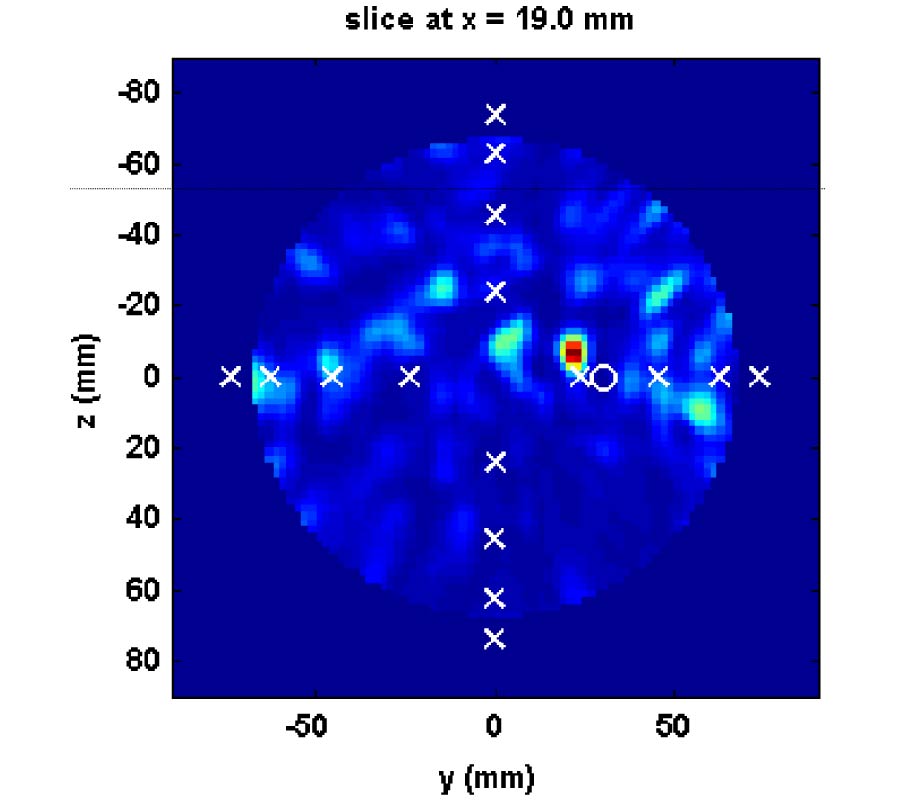
The selection of a near-field or far-field ground-penetrating radar (GPR) model is an important question for an accurate but computationally effective characterization of medium electrical properties using full-wave inverse modeling. In this study, we determined an antenna height threshold for the near-field and far-field full-wave GPR models by analyzing the variation of the spatial derivatives of the Green's function over the antenna aperture. The obtained results show that the ratio of this threshold to the maximum dimension of the antenna aperture is approximately equal to 1.2. Subsequently, we validated the finding threshold through numerical and laboratory experiments using a homemade 1-3 GHz Vivaldi antenna with an aperture of 24 cm. For the numerical experiments, we compared the synthetic GPR data generated from several scenarios of layered medium using both near-field and far-field antenna models. The results showed that above the antenna height threshold, the near-field and far-field GPR data perfectly agree. For the laboratory experiments, we conducted GPR measurements at different antenna heights above a water layer. The near-field model performed better for antenna heights smaller than the threshold value (≈29 cm), while both models provided similar results for larger heights. The results obtained by this study provides valuable insights to specify the antenna height threshold above which the far-field model can be used for a given antenna.
NEAR-FIELD OR FAR-FIELD FULL-WAVE GROUND PENETRATING RADAR MODELING AS A FUNCTION OF THE ANTENNA HEIGHT ABOVE A PLANAR LAYERED MEDIUM
2013-07-26
PIER
Vol. 141, 403-414
Evolution of Cos-Gaussian Beams in a Strongly Nonlocal Nonlinear Medium
Ying Guan , Li-Xin Zhong , Khian-Hooi Chew , Hao Chen , Qiyang Wu and Rui Pin Chen
The dynamical properties of cos-Gaussian beams in strongly nonlocal nonlinear (SNN) media are theoretically investigated. Based on the moments method, the analytical expression for the root-mean-square (RMS) of the cos-Gaussian beam propagating in a SNN medium is derived. The critical powers that keep the RMS beam widths invariant during propagation in a SNN medium are discussed. The RMS beam width tends to evolve periodically when the initial power does not equal to the critical power. The analytical solution of the cos-Gaussian beams in SNN media is obtained by the technique of variable transformation. Despite the difference in beam profile symmetries and initial powers, a cos-Gaussian beam always transforms periodically into a cosh-Gaussian beam during propagation, and the transformation between the two beams revives after a propagation distance.
EVOLUTION OF COS-GAUSSIAN BEAMS IN A STRONGLY NONLOCAL NONLINEAR MEDIUM
2013-07-25
PIER M
Vol. 32, 73-82
Analysis of Shielding Effectiveness of Enclosures with Apertures and Inner Windows with TLM
Jianhong Hao , Peihua Qi , Jie-Qing Fan and Yongqing Guo
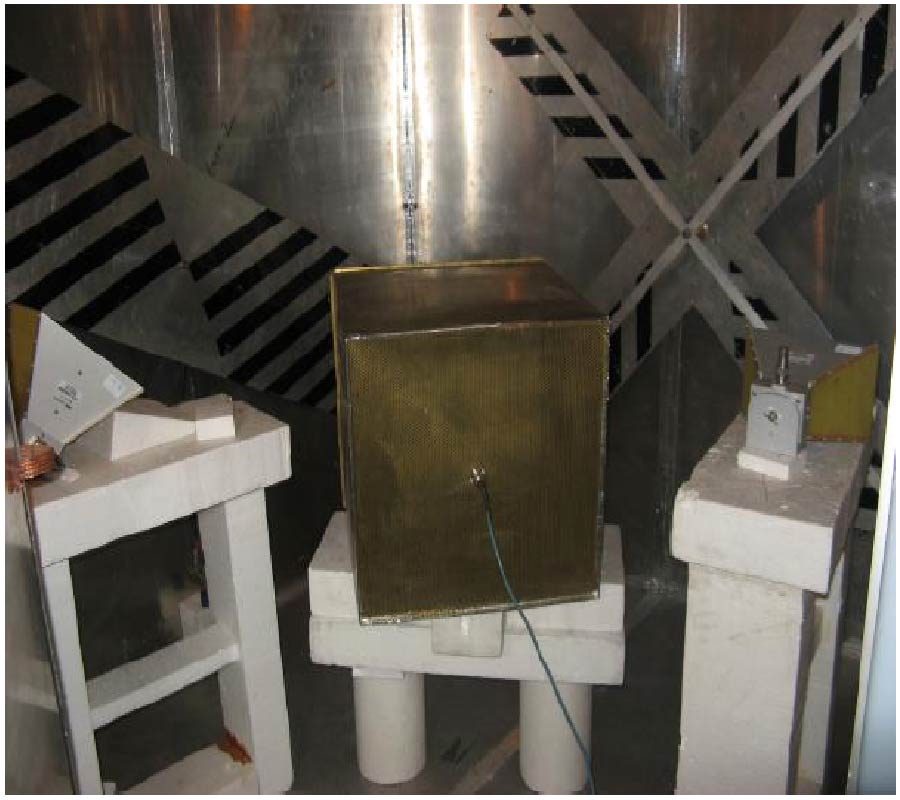
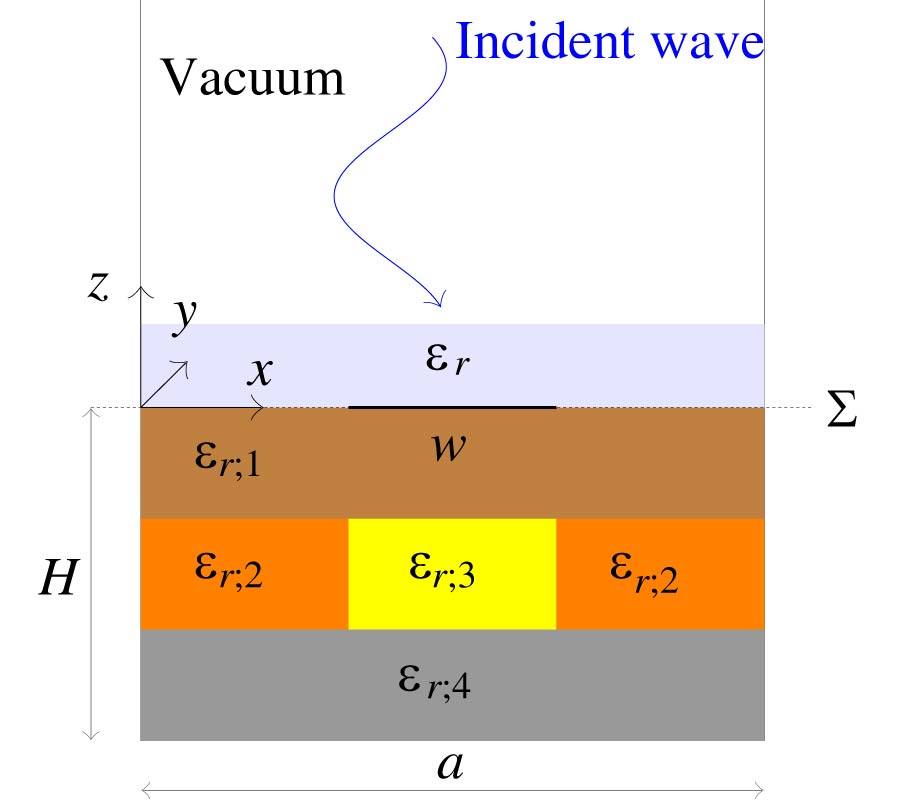
Derivation is presented for analysing the shielding effectiveness of an enclosure with apertures and inner windows with Transmission Line Method (TLM). Theoretical values of shielding effectiveness are in good agreement with the simulation results. Results indicate that the capacitive window lowers the resonance frequency while the inductive window enhances the resonance frequency, and both of them improve the shielding effectiveness of the enclosure. The effects of location of the inner windows is discussed. Moreover, the present method can also be used in the condition that the enclosure has both inductive and capative windows.
ANALYSIS OF SHIELDING EFFECTIVENESS OF ENCLOSURES WITH APERTURES AND INNER WINDOWS WITH TLM
2013-07-25
PIER
Vol. 141, 383-401
High-Resolution Imaging Based on Coherent Processing for Distributed Multi-Band Radar Data
Feiyang He and Xiaojian Xu
A coherent processing method for subband signals of distributed multi-band radar data is proposed and tested. The method uses de-noising cross-correlation (DNCC) algorithm and statistical method to obtain phase incoherent parameters (ICP) between subband signals. After compensating the phase ICP, a coherence function is defined and combined with statistical method to find amplitude ICP. Finally, data fusion method via two-dimensional gapped-data state space approach (2-D GSSA) is applied to subband signals and high-resolution imaging of target is achieved. The advantage of this method lies in that it can be used to process subband signals of different bandwidth and different gaps between them. To validate our work, electromagnetic calculation target and real target measured in microwave chamber are analyzed and used for testing different mutual-coherence and data fusion algorithms. Experimental results demonstrate the superiority of the proposed method over previous approaches in terms of improved imaging quality and performance.
HIGH-RESOLUTION IMAGING BASED ON COHERENT PROCESSING FOR DISTRIBUTED MULTI-BAND RADAR DATA
2013-07-24
PIER C
Vol. 42, 125-135
Neurocomputational Analysis of Coaxial Fed Stacked Patch Antennas for Satellite and WLAN Applications
Satish Kumar Jain and Shobha Jain
This paper presents a neural network based technique for the analysis of various stacked patch antennas, those can be applied for satellite and wireless local area network (WLAN) applications. In order to show the diversity of artificial neural network (ANN) modeling technique, two different trained neural networks were developed with different number of antenna geometrical parameters as inputs. These trained networks locate the operational resonance frequencies with their bands for stacked patch antennas (SPA) operating in the X-Ku (8 GHz-18 GHz) bands and WLAN bands (2 GHz-6 GHz). These frequency bands are useful for satellite communication and indoor wireless communication applications respectively. First ANN model takes design (geometrical) parameters of antenna like lower patch dimension, upper patch dimension, and height of air gap, as a input, whereas other NN model includes feed point location also as a input. The validity of the network is tested with the simulations results obtained from the full-wave Method of Moment (MoM) based IE3D and few experimental results obtained in the laboratory.
NEUROCOMPUTATIONAL ANALYSIS OF COAXIAL FED STACKED PATCH ANTENNAS FOR SATELLITE AND WLAN APPLICATIONS
2013-07-24
PIER C
Vol. 42, 109-124
A Novel Design of LTE Smart Mobile Antenna with Multiband Operation
Sheng-Ming Deng , Ching-Long Tsai , Jiun-Peng Gu , Kwong-Kau Tiong and Kuo-Wei Liu
An LTE smart mobile antenna with multiband operation is proposed to work in the bands of LTE, GSM, DCS, PCS, PHS, UMTS, Bluetooth, and WLAN. Compared with those reported in the literature, the proposed antenna features a simple and straightforward design procedure, which is composed of three easy steps. Firstly, A three-dimensional meandering monopole antenna is constructed along the edge of a rectangular PCB to act as the main radiator, resulting in the bands of LTE, DCS, and PCS, PHS, and UMTS. Secondly, a shorted stub is fabricated to excite the GSM band, and also to improve the impedance matching in the bands of LTE and GSM. Finally, the second shorted stub is added to radiate in the band of WLAN. The numerical results show that the -6 dB return-loss bandwidths are from 0.7 GHz to 0.985 GHz (0.285 GHz, 34%) in the lower band and from 1.64 GHz to 2.535 GHz (0.895 GHz, 43%) in the higher band. The corresponding measured data are from 0.7 GHz to 1.03 GHz (0.33 GHz, 38%) in the lower band and from 1.64 GHz to 2.55 GHz (0.91 GHz, 43%) in the higher band. The measured antenna gains are about 2 to 3 dBi in the lower and higher bands, respectively.
A NOVEL DESIGN OF LTE SMART MOBILE ANTENNA WITH MULTIBAND OPERATION
2013-07-24
PIER Letters
Vol. 41, 149-158
A Novel Pattern and Frequency Reconfigurable Microstrip Parasitic Array
Qiaona Qiu , Shu-Xi Gong , Yun-Xue Xu , Yu Cao , Pei Duan and Cheng Chen
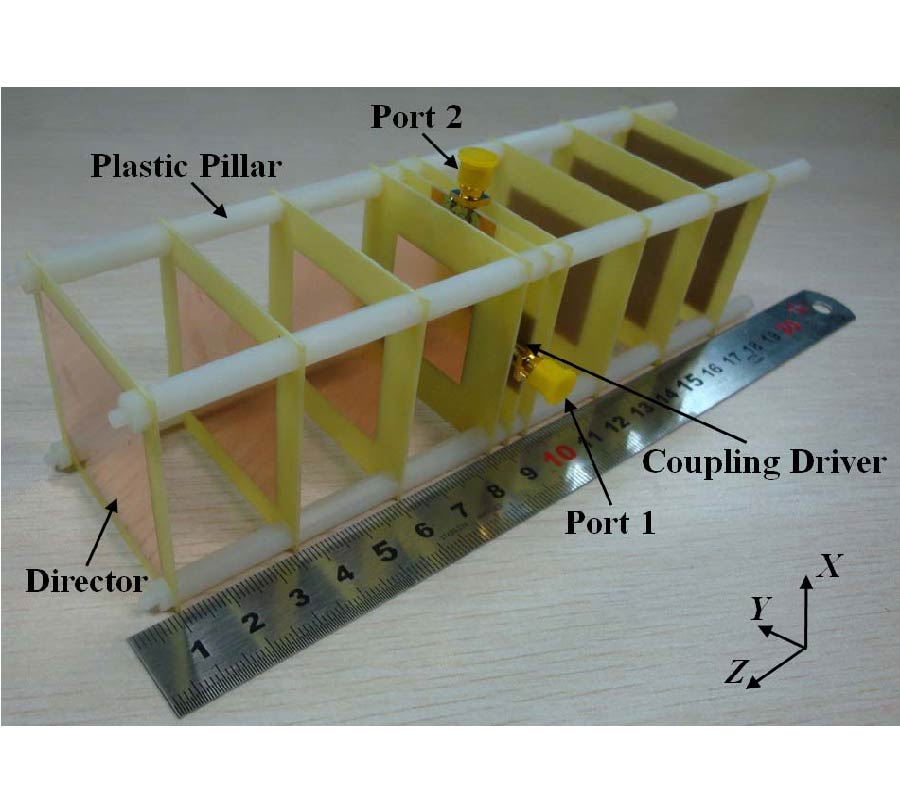
In this paper, a novel pattern reconfigurable microstrip parasitic array is proposed, which is similar to the microstrip Yagi antenna. The antenna is printed on a dielectric substrate and has a probe feeding center strip with two parasitic strips on both sides of a higher plane. The driven patch is equipped with four RF PIN diodes by which we can change the antenna's state and vary its frequency at 2.1 GHz, 2.4 GHz and 2.6 GHz respectively. Each of the parasitic patches is equipped with six switched connections symmetrically which is utilized as a director or a reflector for pattern reconfiguration. Compared with conventional antenna, the proposed antenna combines both radiation pattern reconfiguration and frequency reconfiguration together, and by raising the plane of the dielectric substrate of the parasitic patch, the tilt angel of this antenna's maximum radiation direction is lager and the gain is higher.
A NOVEL PATTERN AND FREQUENCY RECONFIGURABLE MICROSTRIP PARASITIC ARRAY
2013-07-24
PIER M
Vol. 32, 57-72
Reconstruction of Microwave Absorption of Multiple Tumors in Heterogeneous Tissue for Microwave-Induced Thermo-Acoustic Tomography
Jinguo Wang , Zhiqin Zhao , Jian Song , Zai-Ping Nie and Qing Huo Liu
Time-of-flight (TOF) has been used to estimate sound velocity (SV) distribution of heterogeneous tissue to relieve the effect of acoustic heterogeneity in microwave-induced thermo-acoustic tomography (MITAT). Accurately picking the TOFs is significantly important to ensure high accuracy SV images, which greatly help to reconstruct the microwave absorption distribution accurately. However, current methods for picking the TOFs are designed for single source case. For breast tumor detection in MITAT, these methods become ineffective or even fail at the situation where multiple tumors are embedded in a normal breast tissue. In order to accurately reconstruct the microwave absorption properties of tumors in heterogeneous tissue in MITAT, an efficient method for picking tumors' TOFs is proposed. Combining the advantages of the wavelet transform and Akaike information criterion (AIC), the proposed method introduces a concept of separate extraction of TOFs. It can efficiently and accurately pick the TOFs of different tumors from the measured data in MITAT. Using the TOFs picked by the proposed method can efficiently help to reduce the effect of acoustic heterogeneity and greatly improve the accuracy and the image contrast of reconstructed microwave absorption properties. Some numerical simulations are given to demonstrate the effectiveness and feasibility of the proposed method in this paper.
RECONSTRUCTION OF MICROWAVE ABSORPTION OF MULTIPLE TUMORS IN HETEROGENEOUS TISSUE FOR MICROWAVE-INDUCED THERMO-ACOUSTIC TOMOGRAPHY
2013-07-24
PIER
Vol. 141, 369-382
A Fast Simulation Method of Silicon Nanophotonic Echelle Gratings and Its Applications in the Design of on-Chip Spectrometers
Jun Song , Linchun Chen and Bojun Li
Due to their very high integration density, echelle grating spectrometers based on silicon nanophotonic platforms have received great attention for their applications in many areas, such as optical sensors, optical communications, and optical interconnections. The design of echelle gratings requires an effective modeling and simulation technique. Though we have used a boundary integral method to accurately analyze the polarization-dependent performance of the echelle grating, it is complicated and time-consuming for the simulation due to its large size and aperiodic structure. In the present paper, we will present a faster simulation method for the grating with twice total internal reflection facets based on a modified Kirchhoff-Huygens principle with the influence of the Goos-Hachen shift considered. On the one hand, the presented simulation results agree well with our previous results obtained by the boundary integral method when the shift can accurately be calculated using a FDTD method. On the other hand, the biggest advantage of the new method over the existing methods is that it can also provide an insightful physical explanation for many numerical results. Finally, we will effectively apply the present method to design an on-chip spectrometer with very low noise floor.
A FAST SIMULATION METHOD OF SILICON NANOPHOTONIC ECHELLE GRATINGS AND ITS APPLICATIONS IN THE DESIGN OF ON-CHIP SPECTROMETERS
2013-07-23
PIER B
Vol. 53, 187-203
Efficient Strip-Mode SAR Raw Data Simulator of Extended Scenes Included Moving Targets
Liang Yang , Weidong Yu , Yun-Hua Luo and Shichao Zheng
An accurate and efficient SAR raw data generator is of considerable value for testing system parameters and the imaging algorithms. However, most of the existing simulators concentrate on the raw signal simulation of the static extended scenes and targets. Actually the raw signal simulator of the moving targets is highly desired to quantitatively support the application of the ground moving targets indication. The raw data simulation can be exactly realized in the time domain but not efficient especially when simulating an extended scene. As for the issues, the analytical expression for the 2-D signal spectrum of moving targets with constant acceleration is derived and a fast raw data simulation method in the 2-D frequency domain based on inverse ω-k algorithm is proposed in this paper, where the inverse STOLT interpolation is applied to simulate the range-azimuth couple. So it is more efficient than the time domain one by making use of Fast Fourier Transform (FFT). Simulation results for a man-made scene and a real SAR scene are provided to demonstrate its validity and effectiveness.
EFFICIENT STRIP-MODE SAR RAW DATA SIMULATOR OF EXTENDED SCENES INCLUDED MOVING TARGETS
2013-07-23
PIER
Vol. 141, 347-367
Structure Preserving SAR Image Despeckling via L0-Minimization
Gang Liu , Wen Yang , Gui-Song Xia and Mingsheng Liao
In this paper, we propose a new method for Synthetic Aperture Radar (SAR) image despeckling via L0-minimization strategy, which aims to smooth homogeneous areas while preserving significant structures in SAR images. We argue that the gradients of the despeckled images are sparse and can be pursued by L0-norm minimization. We then formularize the despeckling of SAR images as a global L0 optimization problem with ratio-of-average operations. Namely, the number of pixels with ratio-of-average that are unequal to one is controlled to approximate prominent structures in a sparsity-control manner. Finally, a numerical algorithm is also employed to solve the L0 optimization problem. In contrast with existing SAR image despeckling approaches, this strategy is applied without necessity to consider the local features or structures. The performance of our method is tested on high resolution X-band SAR images. The experimental results show the effectiveness of the proposed method in SAR image filtering. It outperforms many typical despeckling techniques in terms of the equivalent-number-of-looks and the edge- preserve-index. It also has some advantages compared with the existing state-of-the-art despeckling filters.
STRUCTURE PRESERVING SAR IMAGE DESPECKLING VIA L0-MINIMIZATION
2013-07-22
PIER
Vol. 141, 327-346
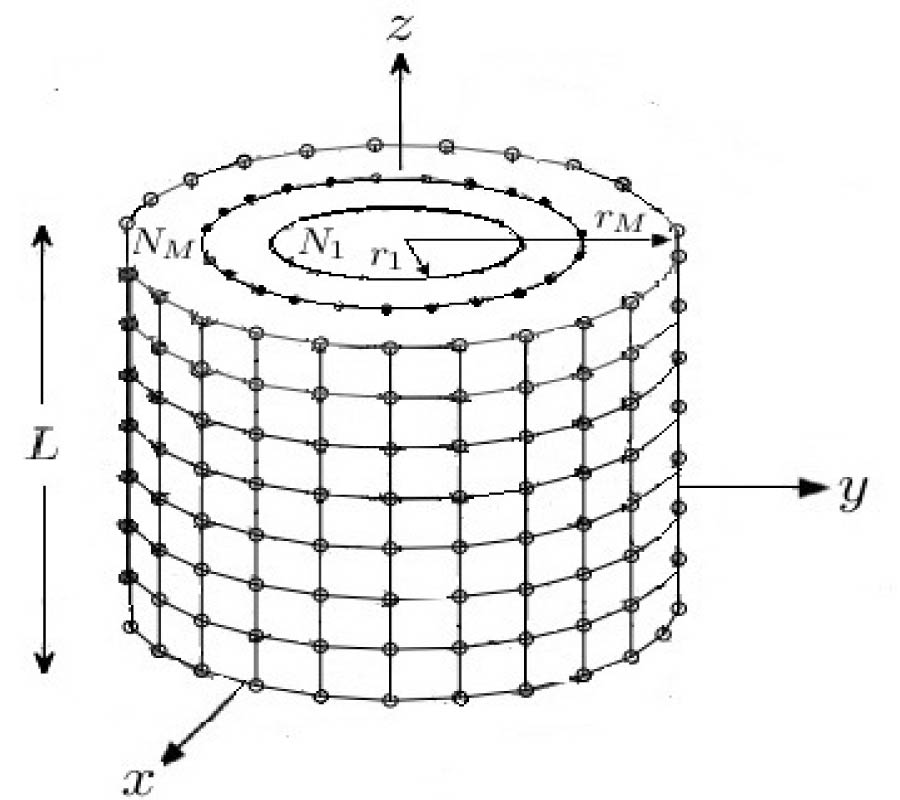
A Near-Field 3D Circular SAR Imaging Technique Based on Spherical Wave Decomposition
Biao Zhang , Yiming Pi and Rui Min
A near-field three dimensional imaging algorithm for circular SAR is proposed in this paper. It adopts the theory of spherical wave decomposition to transform Green function to a superposition of plane wave components. Using this relation, the image-reconstruction can be implemented in frequency domain instead of in spatial domain, which simplifies the solving process of target reflectivity function, and allows for the target to be near to the radar. Through compensating phase factor and filtering at each elevation, we firstly get the ground CSAR signal of each elevation in frequency domain. Then, performing two dimensional inverse nonuniform fast Fourier transform and accumulating the results of all azimuth angles, the reconstructed two dimensional image corresponding to an elevation is achieved. Finally, using reconstructed image datum of all elevation, the three dimensional image of target is obtained. To demonstrate the imaging performance of our method, numerical simulations and experiments are conducted. By comparing the results with the focusing operator algorithm and the back-projection algorithm, it is found that the proposed algorithm is more efficient and can obtain a good imaging performance.
A NEAR-FIELD 3D CIRCULAR SAR IMAGING TECHNIQUE BASED ON SPHERICAL WAVE DECOMPOSITION
2013-07-22
PIER
Vol. 141, 309-325
A Simulation Study of Flaw Detection for Rail Sections Based on High Frequency Magnetic Induction Sensing Using the Boundary Element Method
Qian Zhao , Jianna Hao and Wuliang Yin
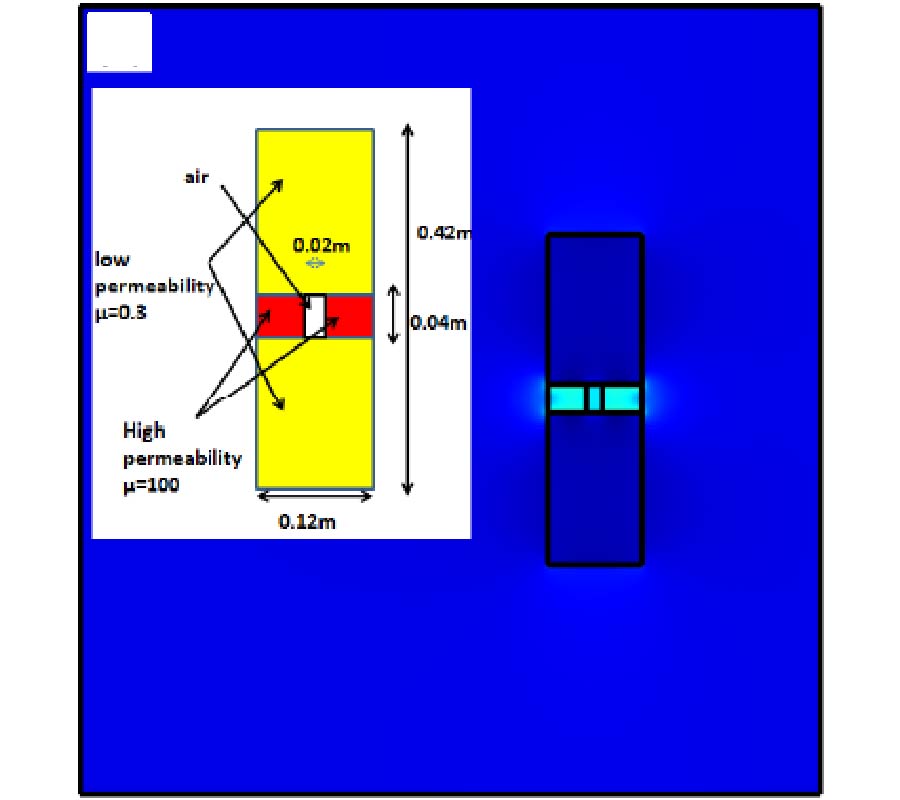
Damage on rail increasingly originates from the surface of the rail as a result of for example rolling contact fatigue (RCF). This is a major concern for track operators, who operate test regimes for flaw detection and monitoring. The paper aims to assess the feasibility of applying electromagnetic (EM) simulation techniques to high frequency magnetic induction sensing of flaws in a section of rail head using the Boundary element method (BEM). When the driving frequency is significantly high (~MHz), the rail with high conductivity can be treated as perfect electric conductors (PEC) with negligible errors. In this scenario, BEM based on scalar potential and integral formulations becomes an effective way to analyze this kind of scattering problems since meshes are only required on the surface of the object. A simple high frequency magnetic induction sensing system was chosen to inspect the surface flaw of the rail. Different kinds of flaws were tested with different sensor configurations. The simulations were carried out using an algorithm the authors have developed in MATLAB. The paper provides new insights into the application of magnetic induction sensing technique using BEM in non-destructive testing. Based on the simulation and mathematical analysis, hardware system can be built to verify the proposed detection strategy.
A SIMULATION STUDY OF FLAW DETECTION FOR RAIL SECTIONS BASED ON HIGH FREQUENCY MAGNETIC INDUCTION SENSING USING THE BOUNDARY ELEMENT METHOD
2013-07-19
PIER C
Vol. 42, 95-108
A Novel Two-Layer Stacked Microstrip Antenna Array Using Cross Snowflake Fractal Patches
Wei Jin , Xiaoqing Yang , Xueyao Ren and Kama Huang
In this paper, a novel approach was used to design two-layer stacked high gain microstrip antenna array with improved bandwidth and high aperture efficiency. Cross Snowflake fractal microstrip patches were employed as radiation elements. Varieties of antenna arrays with different fractal iterations were optimized by using the Genetic Algorithm (GA) associated with 3D full-wave Finite Element Method (FEM) in order to investigate the influence of the Cross Snowflake fractal radiators. As compared with the conventional square patches, the Cross Snowflake fractal configuration provides extremely high flexibility to achieve a wideband performance and maintains higher aperture efficiency at operating frequency band. A prototype antenna with 2 x 2 Cross Snowflake radiators was fabricated and measured. Both simulated and measured results show that the proposed antenna has some promising performances to be more specially, the measured impedance bandwidth is 22.9% (from 5.18 GHz to 6.52 GHz) when S11<10 dB; the simulated gain is 12.0 dBi and its corresponding aperture efficiency is up to 87.4% at the working frequency 5.8 GHz.
A NOVEL TWO-LAYER STACKED MICROSTRIP ANTENNA ARRAY USING CROSS SNOWFLAKE FRACTAL PATCHES
2013-07-19
PIER Letters
Vol. 41, 135-148
MEMS Compatible Sever for 220 GHz Ultra Wide Band Twta: Design and Particle-in-Cell Analysis
Anisullah Baig , Larry R. Barnett , Diana Gamzina and Neville C. Luhmann, Jr.
We report a MEMS (micro-electro-mechanical systems) compatible distributed loss type sever design for the 220 GHz double vane half period staggered traveling-wave tube amplifier (TWTA) [1]. The cold test simulations for a full TWT model including input/output couplers and broadband tapered vane transitions incorporating the sever, predicted a return loss (S11) of < -10 dB in the pass band (205 GHz-275 GHz) while an insertion loss/isolation (S21) of < ~-27 dB. The return loss of the TWT circuit did not degrade by the inclusion of the sever (< -10 dB) while still maintaining a good isolation (S21) for the RF signal. Particle-In-Cell (PIC) simulation analysis for the full 220 GHz TWT circuit (a) without sever and (b) with sever was conducted. With the inclusion of the sever, the TWTA showed generally a stabilized output response for all cases. The maximum power from the long sever case was ~25 W for Pin ~50 mW and the gain was ~27 dB. The reverse power was decreased to ~30 mW. For the short sever, the PIC results were even better with a maximum output power of ~62 W and a gain of ~30.92 dB with a reduced reverse power of ~5 mW for an input power of 50 mW at 220 GHz. The FFT spectrum of the RF signal at the output port also showed a spectrally pure waveform at 220 GHz.
MEMS COMPATIBLE SEVER FOR 220 GHZ ULTRA WIDE BAND TWTA: DESIGN AND PARTICLE-IN-CELL ANALYSIS