Search Results(13798)

2013-08-13
PIER B
Vol. 53, 333-354
Target Detection from Microwave Imaging Based on Random Sparse Array and Compressed Sensing
Ling Huang and Yi-Long Lu
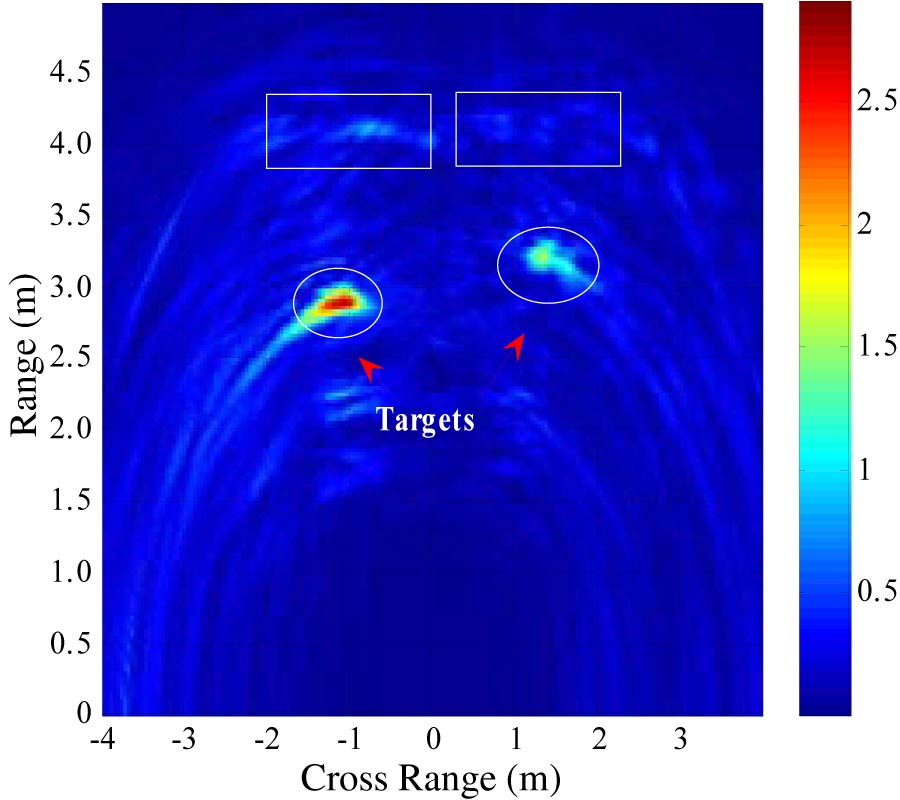
This paper proposes an imaging scheme using a random sparse array (RSA) structure for radar target detection using compressed sensing (CS). The array collects sparse measurements with less collection time and data storage. Two schemes of the RSA are considered, random SAR mode and random array mode. Performances of both static and moving target detections are investigated. Performance of RSA with CS is compared with that using full SAR data with conventional back-projection (BP) method for static target detection and full uniform linear array (ULA) data with conventional beamforming (CBF) method for moving target detection. Simulation and real experimental tests are provided to verify the proposed target imaging scheme. Results show that RSA imaging with CS can perform better than normal SAR and ULA with conventional imaging methods. However, when environment is complicated and background too noisy, CS may have degraded performance.
TARGET DETECTION FROM MICROWAVE IMAGING BASED ON RANDOM SPARSE ARRAY AND COMPRESSED SENSING
2013-08-13
PIER M
Vol. 32, 157-167
An Efficient Scheme for Analysis of Electromagnetic Scattering from Target and Environment Composite Model
Min Wang , Jialin Chen and Yanjie Cao
We present an efficient scheme for the analysis of electromagnetic scattering from target and environment composite model. In this scheme, the whole computed domain is divided into a target part and an environment part, and each part is formulated by different integral equations. The two parts are solved one by one until the relative residual error is less than a given value. Compared with conventional solution with pure electric field integral equation (EFIE), the proposed scheme has a better convergence and lower memory requirement. Additionally, the multilevel fast multipole algorithm (MLFMA) is utilized to accelerate the computations of matrix vector product. Simulated radar-cross-section (RCS) results of several examples demonstrate its validity and efficiency.
AN EFFICIENT SCHEME FOR ANALYSIS OF ELECTROMAGNETIC SCATTERING FROM TARGET AND ENVIRONMENT COMPOSITE MODEL
2013-08-12
PIER
Vol. 141, 751-768
Orbital Angular Momentum Density of an Elegant Laguerre-Gaussian Beam
Guoquan Zhou and Guoyun Ru
Based on the method of the vectorial angular spectrum, an analytical expression of the electric field of an elegant Laguerre-Gaussian beam in free space is derived beyond the paraxial approximation, and the corresponding magnetic field is obtained by taking the curl of the electric field. By using the expressions for the electromagnetic fields, the expression of the orbital angular momentum density of the elegant Laguerre.Gaussian beam is derived, which is applicable to both the near and far fields. The effects of the three beam parameters on the distribution of the orbital angular momentum density of the elegant Laguerre-Gaussian beam are studied. The distribution of the orbital angular momentum density of the elegant Laguerre-Gaussian beam is also compared with that of the standard Laguerre-Gaussian beam. The result shows that the distribution of the orbital angular momentum density of the elegant Laguerre-Gaussian beam is more simple and centralized than that of the standard Laguerre-Gaussian beam.
ORBITAL ANGULAR MOMENTUM DENSITY OF AN ELEGANT LAGUERRE-GAUSSIAN BEAM
2013-08-09
PIER Letters
Vol. 42, 13-22
Omnidirectional Reflection Extension in a One-Dimensional Superconducting-Dielectric Binary Graded Photonic Crystal with Graded Geometric Layers Thicknesses
Zhaohong Wang , Chen Guo and Wei Jiang
The Omnidirectional reflection characteristics of one-dimensional (1D) superconducting-dielectric binary graded photonic crystals (PhCs) are studied by using transfer matrix method. The influences of thickness changing rate, numbers of periods, incident angles are analyzed. And the omnidirectional photonic band gaps are extended markedly in the 1D thickness-graded superconducting-dielectric PhC.
OMNIDIRECTIONAL REFLECTION EXTENSION IN A ONE-DIMENSIONAL SUPERCONDUCTING-DIELECTRIC BINARY GRADED PHOTONIC CRYSTAL WITH GRADED GEOMETRIC LAYERS THICKNESSES
2013-08-09
PIER
Vol. 141, 739-749
Understand and Realize an ``Invisible Gateway'' in a Classical Way
Xianqi Lin , Yuan Jiang , Jun Ye Jin , Jia Wei Yu and Sailing He
We create an invisible gateway simply by putting electric and magnetic superscatterers in a metallic waveguide. The characteristics of the electric and magnetic resonators are analyzed in a metallic hollow waveguide, and the dual-mode superscattering property is discussed in detail to broaden the bandwidth of the invisible gateway. Good agreement is achieved between the simulation and measurement for such an invisible gateway. The present work help readers understand easily how an invisible gateway works (or makes sense) in a classical way without using any complex metamaterial or complicated method of transformation optics.
UNDERSTAND AND REALIZE AN ``INVISIBLE GATEWAY'' IN A CLASSICAL WAY
2013-08-09
PIER
Vol. 141, 727-737
A Coupled-Fed Antenna for 4G Mobile Handset
Jin Dong , Yong-Chang Jiao , Zibin Weng , Qiaona Qiu and Yuyu Chen
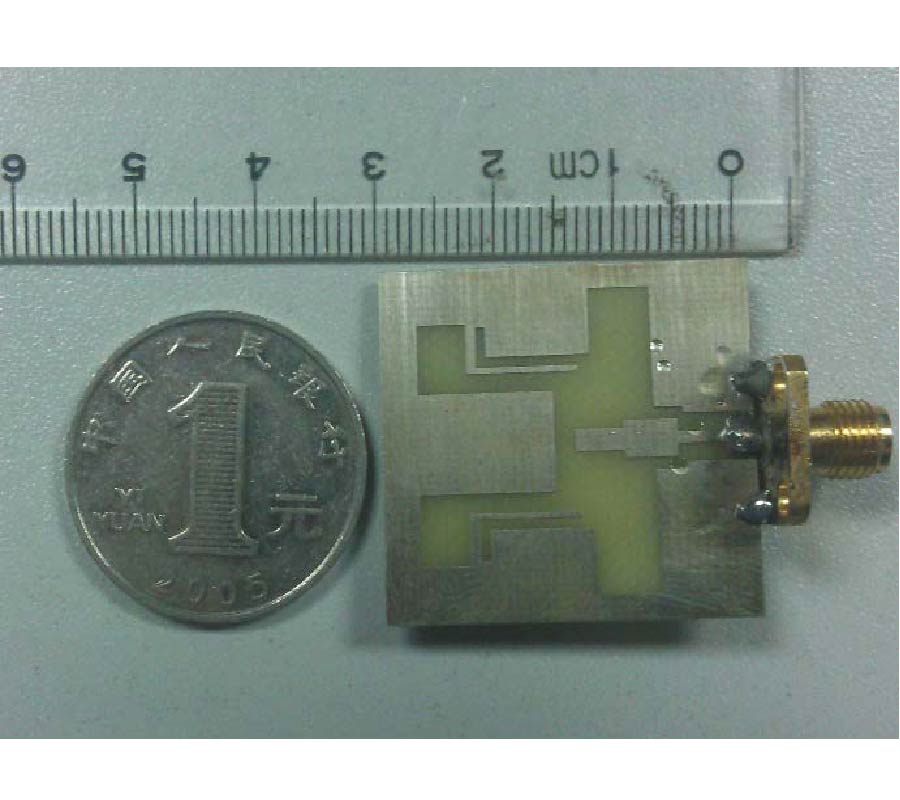
A novel coupled-fed antenna with compact branch-structure for 4G mobile phone is proposed in this paper. In the proposed design, a driven monopole strip and coupled branch-strips are developed to produce different operation band. The prototype of the proposed antenna was fabricated, tested and discussed. Simulation and measurement results reveal that the proposed antenna can provide two wide frequency bands (698~960 MHz, and 1710~2690 MHz), which covers multi-band for LTE700/GSM850/GSM900/DCS1800/PCS1900/UMTS/LTE2300/LTE2500. The proposed antenna with compact size of 34×12×6.5 mm3 is suitable for today's mobile phone application.
A COUPLED-FED ANTENNA FOR 4G MOBILE HANDSET
2013-08-09
PIER
Vol. 141, 711-726
Complete Propagation Model Structure Inside Tunnels
Ke Guan , Zhangdui Zhong , Bo Ai , Ruisi He , Binghao Chen , Yuanxuan Li and Cesar Briso-Rodriguez
In this paper, a complete model structure for propagation inside tunnels is presented by following the segmentation-based modeling thought. According to the concrete propagation mechanism, totally five zones and four dividing points are modeled to constitute three channel structures corresponding to large-size users and small-size users. Firstly, the propagation characteristics and mechanisms in all the zones are modeled. Then, from the view point of the propagation mechanism, the criterion of judging the type of a user is analytically derived. Afterwards, all the dividing points are analytically localized as well. Finally, a panorama covering all the propagation mechanisms, characteristics, models, and dividing pints for all types of users is presented for the first time. This panorama is very useful to gain a comprehensive understanding of the propagation inside tunnels. Validations show that by using the analytical equations in this paper, designers can easily realize a fast network planning for all types of users in various tunnels at different frequencies.
COMPLETE PROPAGATION MODEL STRUCTURE INSIDE TUNNELS
2013-08-09
PIER
Vol. 141, 693-710
Novel Miniaturized Koch Pentagonal Fractal Antenna for Multiband Wireless Applications
Omar Masood Khan , Zain Ul Islam , Imran Rashid , Farooq Ahmad Bhatti and Qamar Ul Islam
A novel reduced size three band Koch Pentagonal fractal antenna is presented. The proposed antenna uses pentagonal shape for the basic fractalization combined with inner sides etched with Koch fractal pattern of the first iteration providing reduction in the overall size of the antenna. For higher order of iterations, more size reduction is achieved, producing equal number of radiation bands. Optimization is done for achieving radiations in the S, C and X bands. Ansoft HFSS, CST Microwave Studio and Solid Works are used for the 3D Modeling, S11 frequency optimization and radiation pattern calculations. The proposed third iteration fractal configuration is fabricated on Rogers RT5870, and measured results are presented. Size reduction up to 43.26 percent in terms of its overall size and 75.18 percent in terms of copper cladding remaining is achieved for the third iteration proposed fractal antenna in comparison to pentagonal patch antenna operating in the first resonant frequency band.
NOVEL MINIATURIZED KOCH PENTAGONAL FRACTAL ANTENNA FOR MULTIBAND WIRELESS APPLICATIONS
2013-08-07
PIER B
Vol. 53, 315-331
A Novel Multi-Way Power Divider Design with Arbitrary Complex Terminated Impedances
Jiuchao Li , Yuan'an Liu , Shulan Li , Cuiping Yu , Yongle Wu and Ming Su
A simple and analytical design methodology for a novel multi-way Bagley Polygon power divider with arbitrary complex terminated impedances is proposed in this paper. The design parameters including electrical lengths and characteristic impedances can be obtained by the provided closed-form mathematical expressions when complex terminated impedances are known. Moreover, for convenient test, we design an impedance transformer to transform the complex impedance into real impedance using an extension line, and especially a reflection coefficient chart to solve it. Four special cases of 3-way Bagley Polygon power divider operating at 2.4 GHz are fabricated and measured with different condition complex terminated impedances for the purpose of verification. Excellent agreement between simulation and measurement results proves the validity of the design method. The presented Bagley Polygon power divider exhibits 180° phase difference between any two adjacent output ports and 0° phase difference between two symmetrical output ports and is suitable for multi-antenna and differential antenna system. Furthermore, simple layouts lead to convenient design procedure and easy fabrication.
A NOVEL MULTI-WAY POWER DIVIDER DESIGN WITH ARBITRARY COMPLEX TERMINATED IMPEDANCES
2013-08-06
PIER B
Vol. 53, 291-314
Fault Prediction of Deep Bar Cage Rotor Induction Motor Based on FEM
Basil Saied and Ahmed Jadaan Ali
The paper aims to investigate the use of the Finite Element Method for electrical and mechanical faults detection in three-phase squirrel cage, induction machines. The features of Finite Element Method are significant, which consider the physical mapping of stator winding and rotor bar distribution. Therefore, modeling of the faults in stator winding, rotor bars and air-gap eccentricity will be predicated in more accurate way. In comparison with conventional methods such as coupling method, the Finite Element Method considers the complex machine geometry, material type of the bar, current and the flux distributions within the electrical machines. As a result, the air-gap eccentricity and the broken bars can be modeled effectively using this approach. Motor current signature analysis has been used to give a decision about the fault occurrence. For the broken rotor bar, frequency of the sideband components around the fundamental is used to indicate the presence of fault. However, the sideband frequencies cannot be used to recognize the stator winding short circuit and eccentricities faults, where the harmonics have approximately the same frequency over the spectrum. The amplitude of the sideband harmonic components have been used to differentiate between them. It has been found that the inter-turn short circuit faults have a sideband harmonic component with amplitude greater than that in the case of the air-gap eccentricity faults. Also current paper introduce the detection of broken rotor bars based on stator current envelope technique.
FAULT PREDICTION OF DEEP BAR CAGE ROTOR INDUCTION MOTOR BASED ON FEM
2013-08-05
PIER
Vol. 141, 671-692
New Triangular Mass-Lumped Finite Elements of Degree Six for Wave Propagation
William Alexander Mulder
Mass-lumped continuous finite elements allow for explicit time stepping with the second-order wave equation if the resulting integration weights are positive and provide sufficient accuracy. To meet these requirements on triangular and tetrahedral meshes, the construction of higher-degree elements for a given polynomial degree on the edges involves polynomials of higher degrees in the interior. The parameters describing the supporting nodes of the Lagrange interpolating polynomials and the integration weights are the unknowns of a polynomial system of equations, which is linear in the integration weights. To find candidate sets for the nodes, it is usually required that the number of equations equals the number of unknowns, although this may be neither necessary nor sufficient. Here, this condition is relaxed by requiring that the number of equations does not exceed the number of unknowns. This resulted in two new types elements of degree 6 for symmetrically placed nodes. Unfortunately, the first type is not unisolvent. There are many elements of the second type with a large range in their associated time-stepping stability limit. To assess the efficiency of the elements of various degrees, numerical tests on a simple problem with an exact solution were performed. Efficiency was measured by the computational time required to obtain a solution at a given accuracy. For the chosen example, elements of degree 4 with fourth-order time stepping appear to be the most efficient.
NEW TRIANGULAR MASS-LUMPED FINITE ELEMENTS OF DEGREE SIX FOR WAVE PROPAGATION
2013-08-05
PIER
Vol. 141, 659-670
Coherent Anti-Stokes Raman Scattering Microscopy by Dispersive Wave Generations in a Polarization Maintaining Photonic Crystal Fiber
Jinhui Yuan , Guiyao Zhou , Hongzhan Liu , Changming Xia , Xinzhu Sang , Qiang Wu , Chongxiu Yu , Kuiru Wang , Binbin Yan , Ying Han , Gerald Farrell and Lantian Hou
The polarization maintaining photonic crystal fiber (PM-PCF) with two zero dispersion wavelengths is designed and fabricated by the improved stack-and-draw technology in our laboratory. The broadband blue-shifted and red-shifted dispersive waves (DWs) are efficiently generated from soliton self-frequency shift (SSFS) along the slow axis of PM-PCF. By optimizing the pump parameters and the fiber length, the polarized DWs centered in the normal dispersion region can be used as the pump and Stokes pulses for the high resolution coherent anti-Stokes Raman scattering (CARS) microscopy. Moreover, it is demonstrated that the widely tunable relevant CARS wavelengths can be obtained by adjusting the pump wavelength. The CARS microscopy based on DWs can find important applications in detecting the biological and chemical samples with the C=N, S-H, C-H, and O-H stretch vibration resonances of 2100 to 2400 cm-1, 2500 to 2650 cm-1, 2700 to 3000 cm-1, and 3000 to 3750 cm-1.
COHERENT ANTI-STOKES RAMAN SCATTERING MICROSCOPY BY DISPERSIVE WAVE GENERATIONS IN A POLARIZATION MAINTAINING PHOTONIC CRYSTAL FIBER
2013-08-05
PIER
Vol. 141, 645-657
Multi-Band Circular Polarizer Using Archimedean Spiral Structure Chiral Metamaterial with Zero and Negative Refractive Index
Liyun Xie , Helin Yang , Xiaojun Huang and Zhenjun Li
A novel multi-band circular polarizer is proposed by using a bilayered chiral metamaterial (CMM). The unit cell of the CMM is composed of four Archimedean spiral structures, which are twisted 90° to each other in the upper and bottom layers. When a linearly polarized wave incidents on this circular polarizer, the simulation result shows that the transmission of right circularly polarized (RCP) wave can be obtained at 14.28 GHz and 15.96 GHz, while the transmission of left circularly polarized (LCP) wave is emitted at 15.3 GHz and 16.88 GHz. The retrieval results reveal that the effective refractive index of the CMM closes to zero or negative at the vicinity of four resonances. The experimental results are in good agreement with the numerical results.
MULTI-BAND CIRCULAR POLARIZER USING ARCHIMEDEAN SPIRAL STRUCTURE CHIRAL METAMATERIAL WITH ZERO AND NEGATIVE REFRACTIVE INDEX
2013-08-05
PIER
Vol. 141, 619-643
Microwave: Effects and Implications in Transdermal Drug Delivery
Anuar Nor Khaizan and Tin Wui Wong
This study investigated transdermal drug delivery mechanisms of pectin and pectin-oleic acid (OA) gels and their effects on skin barrier treated by microwave. Hydrophilic pectin-sulphanilamide gels, with or without OA penetration enhancer, were subjected to drug release and skin permeation studies. The skins were untreated or microwave-treated, and characterized by infrared spectroscopy, raman spectroscopy, thermal, electron microscopy and histology techniques. Unlike solid film, skin treatment by microwave at 2450 MHz demoted drug permeation especially from OA-rich pectin gel. The pectin-skin binding was facilitated by gel with freely soluble pectin molecules instead of solid film with entangled chains. It was promoted when microwave fluidized stratum corneum into structureless domains, or OA extracted endogenous lipid fraction and formed separate phases within intercellular lipid lamellae. This led to a remarkable decrease in transdermal drug permeation. Microwave-enhanced transdermal delivery must not be implemented with pectin gel. In skin treated by microwave, the penetration enhancer in gel can act as a permeation retardant.
MICROWAVE: EFFECTS AND IMPLICATIONS IN TRANSDERMAL DRUG DELIVERY
2013-08-05
PIER
Vol. 141, 607-618
Removal of JEM Signal by Accurate Estimation of Initial Parameters of Chirplet Basis Functions
Joo-Ho Jung , Kyung-Tae Kim and Sang-Hong Park
The inverse synthetic aperture radar (ISAR) image can be very effective in target recognition because it provides 2-D image that uses frequency data measured at various observation angles. However, the jet engine modulation (JEM) that can occur in the received signal due to the rotation of the blade in the engine may result in image blurring in cross-range direction. In this paper, we propose an efficient method of removing JEM signals by using the existing chirplet basis function and an efficient method to estimate the initial values of the four parameters of the chirplet. Simulations using the measured data provided clear ISAR image of a real Boeing747 aircraft.
REMOVAL OF JEM SIGNAL BY ACCURATE ESTIMATION OF INITIAL PARAMETERS OF CHIRPLET BASIS FUNCTIONS
2013-08-05
PIER
Vol. 141, 591-605
Ultra Wide Band Response of an Electromagnetic Wave Shield Based on a Diode Grid
Yangjun Zhang , Mengqing Yuan and Qing Huo Liu
This paper investigates Ultra Wide Band (UWB) response of a self-actuated electromagnetic wave shield based on a diode grid both in frequency and time domain. The investigation is first carried out on a shield valid for an incident wave polarized at a specific direction only, then extended to a shield effective for an incident wave polarized at an arbitrary direction. In the frequency domain, two linear analysis methods are used to study the properties of the diode grid over the frequency range from 0.01 to 10 GHz. One method is the microwave network analysis. Another is simulating the diode grid by a linear equivalent circuit instead of a diode. In the time domain, the property of the shield is studied with respect to a broadband impulse, where the diode is described by its SPICE circuit model including the nonlinear property. The results show that the diode grid works well as a self-actuated electromagnetic power selective surface (PSS) in a certain frequency range. The diode grid is strongly frequency dependent. The operating frequency band relies on the reactive elements in the diode grid. In order to extend the operating frequency to a high band, smaller cell size and smaller junction capacitance should be employed.
ULTRA WIDE BAND RESPONSE OF AN ELECTROMAGNETIC WAVE SHIELD BASED ON A DIODE GRID
2013-08-05
PIER
Vol. 141, 577-590
Free-Space and on-Metal Dual-Band Tag for UHF-RFID Applications in Europe and USA
Ferran Paredes , Gerard Zamora , Simone Zuffanelli , Francisco Javier Herraiz-Martinez , Ferran Martin and Jordi Bonache
In this paper, we present an UHF-RFID tag mountable on metallic surfaces and capable to operate in the assigned frequency bands in Europe (866-869 MHz) and USA (902-928 MHz). Due to the proximity of these frequency bands, the dual-band functionality can be achieved through a perturbation method applied to a single band tag designed to operate at the intermediate frequency. The tag consists of an integrated circuit, an impedance matching network (where the perturbation method is applied) and a patch antenna. The considered antenna has been chosen because it has high efficiency over metallic surfaces. The whole tag has been analyzed, designed and finally fabricated. The read ranges measured in free-space are 9.5 m and 7.5 m at the European and USA frequency bands, respectively. By placing the tag on a metal surface, the read ranges increase up to 14 m and almost 11 m, respectively.
FREE-SPACE AND ON-METAL DUAL-BAND TAG FOR UHF-RFID APPLICATIONS IN EUROPE AND USA
2013-08-03
PIER C
Vol. 42, 205-212
Optimal Polarization Design for Direction Finding Using MIMO Electromagnetic Vector-Sensor Array
Guimei Zheng and Bai-Xiao Chen
In this paper, transmitter polarization optimization is firstly proposed to improve the accuracy of azimuth-elevation arrival angles estimation within MIMO electromagnetic vector-sensor array (EMVA). Minimizing of Cramer-Rao bound is used as cost function for the optimal design of transmitting signal polarization. Computer simulation results verify that the optimal polarization design provides increased estimation accuracy of direction finding in MIMO-EMVA, compared with that of using fixed polarization of transmitting signal. Moreover, the optimal polarization design retains all advantages of using fixed polarization of transmitting signal for MIMO-EMVA direction finding.
OPTIMAL POLARIZATION DESIGN FOR DIRECTION FINDING USING MIMO ELECTROMAGNETIC VECTOR-SENSOR ARRAY
2013-08-03
PIER C
Vol. 42, 191-203
Conducted Emission Measurement of a Cell Phone Processor Module
Fayu Wan , Jun-Xiang Ge and Mengxiang Qu
This paper discusses a conducted emission measurement of a cell phone integrated circuit. The industry standard measurement method is used to compare the measurement result to the defined limit line. A data analysis method-short time fast Fourier transform (STFFT) is presented to help to analyze the result. The data consistency and repeatability is also analyzed.
CONDUCTED EMISSION MEASUREMENT OF A CELL PHONE PROCESSOR MODULE
2013-08-02
PIER B
Vol. 53, 267-290
A Multi-Beam Model of Antenna Array Pattern Synthesis Based on Conic Trust Region Method
Tiao Jun Zeng and Quanyuan Feng
In this paper, we propose a multi-beam model for antenna array pattern synthesis( AAPS) problem. The model uses a conic trust region algorithm (CTRA) similarly proposed in this paper to optimize its cost function. Undoubtedly, whole algorithm efficiency ultimately lies on the CTRA, thereof, we propose a method to improve the iterative algorithm's efficiency. Unlike traditional trust region methods that resolve sub-problems, the CTRA efficiently searches a region via solving a inequation, by which it identifies new iteration points when a trial step is rejected. Thus, the proposed algorithm improves computational efficiency. Moreover, the CTRA has strong convergence properties with the local superlinear and quadratic convergence rate under mild conditions, and exhibits high efficiency and robustness. Finally, we apply the combinative algorithm to AAPS. Numerical results show that the method is highly robust, and computer simulations indicate that the algorithm excellently performs AAPS problem.
A MULTI-BEAM MODEL OF ANTENNA ARRAY PATTERN SYNTHESIS BASED ON CONIC TRUST REGION METHOD