Search Results(13798)

2013-05-29
PIER Letters
Vol. 40, 171-179
A Compact Stacked Circularly Polarized Annular-Ring Microstrip Antenna for GPS Applications
Kang Ding , Tongbin Yu and Qiao Zhang
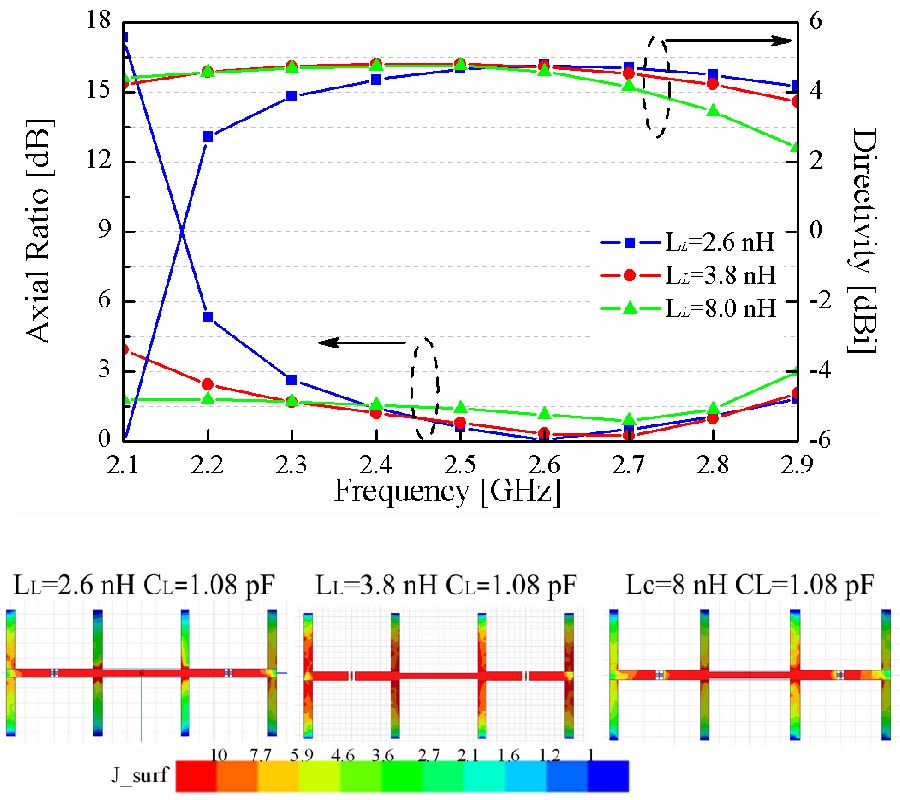
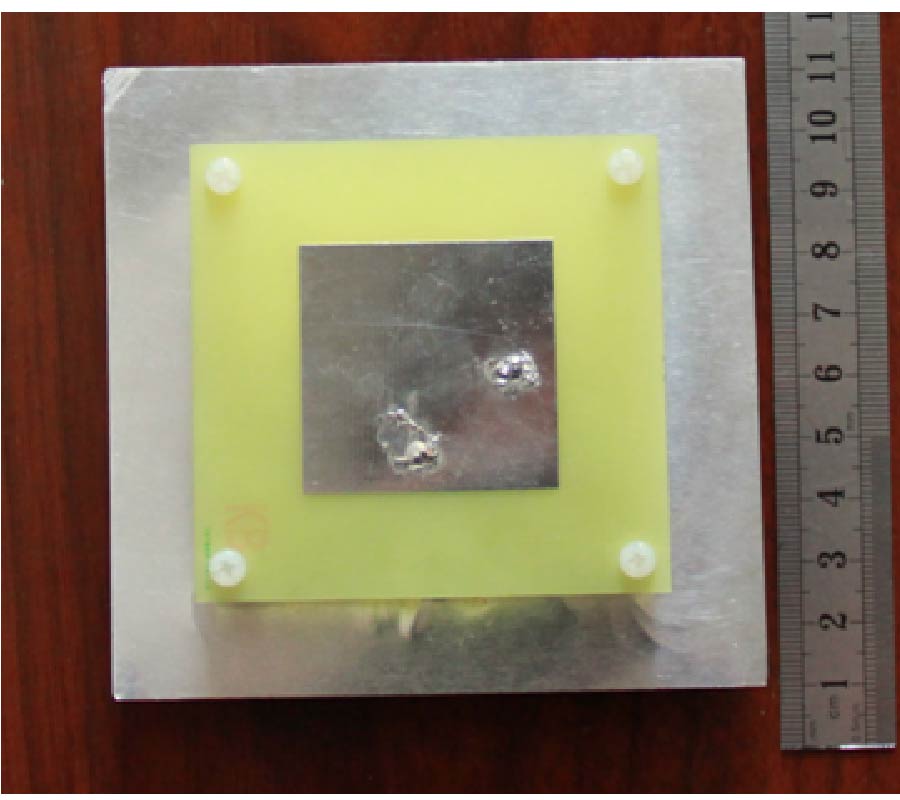
A novel design of circularly polarized (CP) annular-ring microstrip antenna (ARMSA) working in TM11 mode is presented. The CP radiations of the proposed antenna are implemented by a 90° branch-line hybrid coupler placed at the inner part of the ARMSA. Since the ARMSA has narrow bandwidth and high-input impedance, a circular parasitic patch suspended above the ring is employed for not only improving the impedance matching and bandwidth, but enhancing the performances of axial ratio (AR). Due to the utilizing of parasitic patch and circular hybrid, the measured results are shown to attain a 10-dB return loss bandwidth of 31.2% (1300-1780 MHz) and a 3-dB AR bandwidth of 19.2% (1360-1650 MHz) respectively. The CP gain is 8.2 dB at 1.575 GHz. The proposed antenna is low profile and has a simple structure, therefore, it can be a good candidate for GPS portable terminal applications.
A COMPACT STACKED CIRCULARLY POLARIZED ANNULAR-RING MICROSTRIP ANTENNA FOR GPS APPLICATIONS
2013-05-29
PIER Letters
Vol. 40, 163-170
A Novel Wideband Bandpass Filter Using Triple-Mode Slotline Ring Resonator
Bo Jiang , Lei Zhu and Dong Chen
A novel wideband bandpass filter on a triple-mode slotline ring resonator is proposed in this letter. By attaching two stubs with different lengths and/or widths to the symmetric plane of a slotline ring resonator, the frequencies of first three resonant modes can be rearranged towards quasi-equal separation. By feeding this slotline resonator using the microstrip feed lines at positions with an angle of 90° to the symmetrical plane, these three resonant modes can be simultaneously raised up, aiming to form up a wide passband. Meanwhile, a wide upper-stopband can be realized by setting the lengths of two stubs unequally. After the principle of an initial wideband filter is described, a prototype of compact filter with internally-loaded stubs is designed with fractional bandwidth of 66% at center frequency of 3.0 GHz. Measured results well validate the predicted ones.
A NOVEL WIDEBAND BANDPASS FILTER USING TRIPLE-MODE SLOTLINE RING RESONATOR
2013-05-29
PIER C
Vol. 40, 159-174
A Derived Physically Expressive Circuit Model for Electrically Small Radiating Structures
Lap-Kun Yeung and Ke-Li Wu
Recently, a new radiation model for the partial element equivalent circuit (PEEC) technique has been proposed. This model makes use of the concept of generalized complex inductance to account for the radiation effect and preserve the (quasi-)static condition for the capacitance. Therefore, PEEC models with the radiation effect included consists of real-valued capacitors but complex-valued inductors. In this paper, a method for deriving a concise and physically intuitive equivalent circuit from such a radiating PEEC model is presented. The method is based on the Y-to-Δ transformation to eliminate all "unimportant" internal circuit nodes and results in an equivalent circuit with only a few nodes left. The equivalent circuit for a short electric dipole is first derived analytically to offer a simple explanation to the basic principles. The proposed method is then applied to several practical and electrically small antennas for more detailed demonstrations. Numerical results obtained from these examples suggest that a physically intuitive circuit model can potentially be derived for arbitrary radiating multi-conductor structures, showing the method is useful for analysis and design of modern integrated and electrically small antennas.
A DERIVED PHYSICALLY EXPRESSIVE CIRCUIT MODEL FOR ELECTRICALLY SMALL RADIATING STRUCTURES
2013-05-29
PIER Letters
Vol. 40, 153-162
Miniaturized Hybrid Branch Line Couplers Based on a Square-Split Resonator Loading Technique
Lamia Al-Khateeb
In this paper, new miniaturized hybrid branch line couplers loaded by square-split ring resonators are proposed. This loading technique increases the electrical length of transmission lines by patterning the ground plane under the conductor trace in microstrip lines with the complementary, dual-behavior, configuration of square-split ring resonators. Each branch is loaded by one resonator in the first coupler and by two resonators in the second coupler. Hence, compact sizes of 9.29 mm × 9.57 mm, and 8.88 mm × 9.11 mm, or equivalently 0.2λg × 0.2λg and 0.19λg × 0.19λg, respectively, are obtained at the operation frequency, 2.4 GHz. This corresponds to 66.14% and 60.18% of a conventional structure's area, respectively. Moreover, the new designs can suppress higher harmonic components due to the bandstop response of the square-split resonators at their resonant frequency while maintaining similar measured performance compared to the conventional branch-line hybrid coupler. Measured and simulated responses are in very good agreement which validates the proposed structures and technique. This technique can also be applied to minimize the size of other microwave circuits.
MINIATURIZED HYBRID BRANCH LINE COUPLERS BASED ON A SQUARE-SPLIT RESONATOR LOADING TECHNIQUE
2013-05-29
PIER C
Vol. 40, 143-158
A Novel Wide-Stopband Bandstop Filter with Sharp-Rejection Characteristic and Analytical Theory
Liming Liang , Yuan'an Liu , Jiuchao Li , Shulan Li , Cuiping Yu , Yongle Wu and Ming Su
A novel bandstop filter with wide-stopband performance is proposed and discussed in this paper. This circuit configuration includes two-section coupled lines and three open-circuit transmission-line stubs. Due to the symmetry of this proposed structure, closed-form equations for scattering parameters are investigated. Transmission zeros and poles location for different circuit parameters are discussed, and the corresponding design curves are given. In order to verify this new filter circuit structure and its corresponding design theory, several typical numerical examples are designed, calculated and illustrated. Furthermore, a practical wideband bandstop filter with -20 dB fractional bandwidth of 94% centered at 3 GHz with sharp rejection characteristics is fabricated to validate the theoretical prediction. The measured frequency response of the filter agrees excellently with the predicted result.
A NOVEL WIDE-STOPBAND BANDSTOP FILTER WITH SHARP-REJECTION CHARACTERISTIC AND ANALYTICAL THEORY
2013-05-29
PIER C
Vol. 40, 131-141
A Compact Microstrip Slot Antenna with a Pair of Inverted L-Strips and Elliptical-Arc-Shaped Stub for WLAN/WiMAX Applications
Liang Dong , Zhi-Ya Zhang , Guang Fu and Meng Su
A novel compact microstrip slot antenna applied to WLAN/WiMAX applications is presented.The proposed antenna consists of a trapezoid and ellipse slot, a pair of symmetrical inverted L-strips, an elliptical-arc-shaped stub and a monopole radiator.By adjusting the dimensions and positions of these structures, the antenna can effectively generate three different resonances to cover the WLAN/WiMAX bands while maintaining small size and simple structure.Based on this concept,a prototype of the proposed antenna has been successfully fabricated and measured.The experimental and numerical results show that the antenna has impedance bandwidth with 10 dB return lossof 360 MHz (2.33-2.69 GHz) and 2630 MHz (3.24-5.87 GHz), which can cover both the WLAN 2.4/5.2/5.8 GHz bands and the WiMAX 2.5/3.5/5.5 GHz bands. In addition, good monopole-like radiation characteristics with sufficient antenna gains are obtained over the operating bands.
A COMPACT MICROSTRIP SLOT ANTENNA WITH A PAIR OF INVERTED L-STRIPS AND ELLIPTICAL-ARC-SHAPED STUB FOR WLAN/WIMAX APPLICATIONS
2013-05-29
PIER M
Vol. 31, 59-69
Dual-Band Terahertz Chiral Metamaterial with Giant Optical Activity and Negative Refractive Index Based on Cross-Wire Strucure
Fang Fang and Yongzhi Cheng
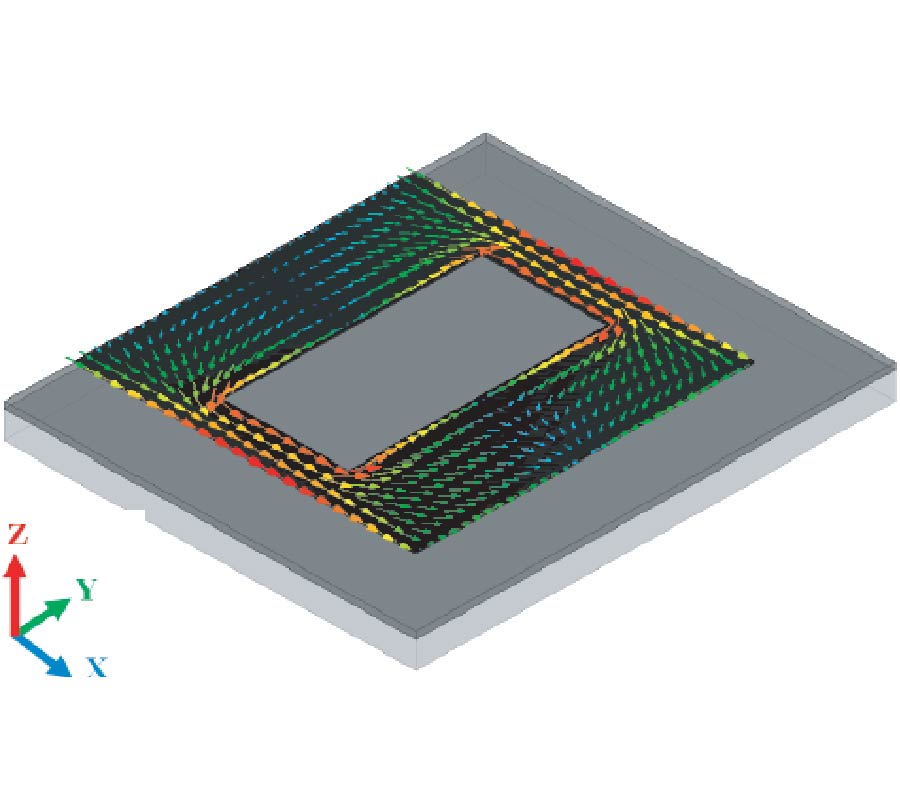
In this paper, a dual-band chiral metamaterial (CMM) based on cross-wire structure is proposed and studied numerically. It exhibits dual-band giant optical activity and negative refractive index in terahertz region. The surface current distributions are calculated to explain original physics. The further numerical results show that the effective frequency bands of the CMMs can be independent adjusted easily by changing the structure geometrical parameter. The designed dual-band terahertz CMMs offer flexibility in the investigation of novel terahertz device application.
DUAL-BAND TERAHERTZ CHIRAL METAMATERIAL WITH GIANT OPTICAL ACTIVITY AND NEGATIVE REFRACTIVE INDEX BASED ON CROSS-WIRE STRUCURE
2013-05-29
PIER
Vol. 140, 181-197
Estimating the Reduction of Radiated Emissions from Tft-Lcd Panel Using Network Analyzer with a Bulk Current Injection Probe
Cheng-Yu Ho , Kai-Syuan Chen , Tzyy-Sheng Horng and Jian-Ming Wu
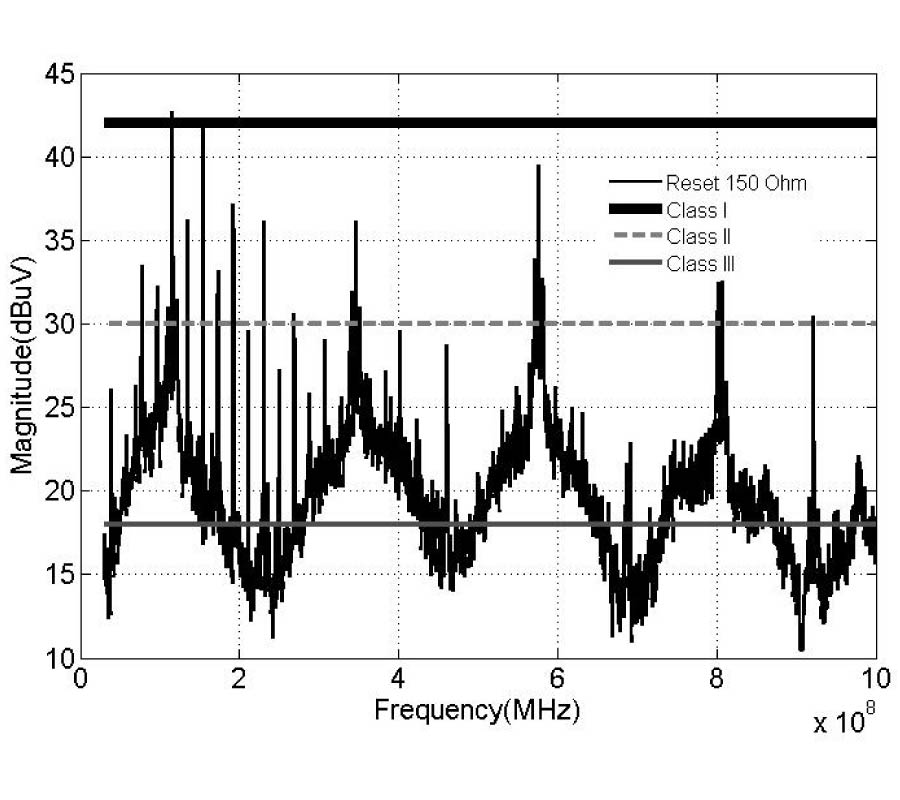
A network analyzer with a bulk current injection (BCI) probe is proposed to measure the common-mode conversion coefficient for DC supply loops on a driver PCB of thin film transistor-liquid crystal display (TFT-LCD) panel. The proposed technique is used to predict the common-mode radiated emission caused by the DC supply loops, which highly correlates with the radiated emission measurements obtained for the TFT-LCD panel in a fully anechoic chamber (FAC). The proposed technique is also successful to estimate the reduction of a specific peak in the radiated emission spectrum by shielding the DC supply loops on a driver PCB of TFT-LCD panel. Electromagnetic simulation and equivalent-circuit modeling approaches are developed to confirm the common-mode radiation mechanism in this study.
ESTIMATING THE REDUCTION OF RADIATED EMISSIONS FROM TFT-LCD PANEL USING NETWORK ANALYZER WITH A BULK CURRENT INJECTION PROBE
2013-05-29
PIER
Vol. 140, 169-179
Controlled Radiation from Dielectric Slabs Over Spoof Surface Plasmon Waveguides
Oscar Quevedo-Teruel
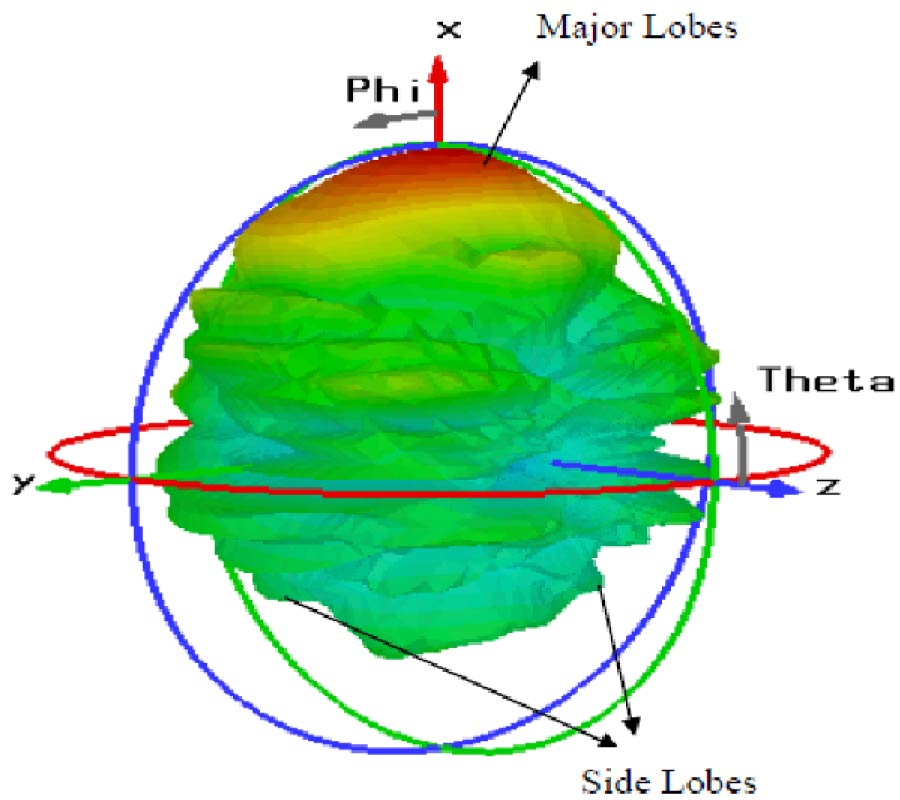
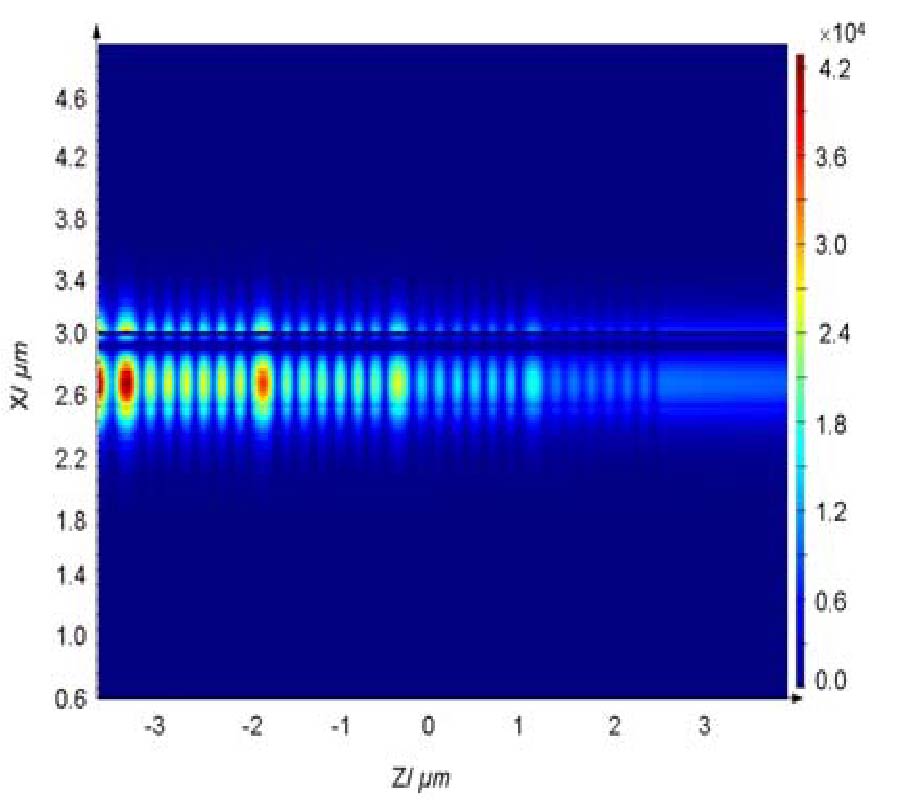
The radiation characteristics of dielectric slabs over a transmission waveguide, based on the concept of spoof surface plasmons, are studied in this paper. The proposed structure can be used to control the radiation over a wide band of operation, whilst retaining low Side Lobe Levels (SLLs) and cross-polarization. Leaky modes, broadside radiation and directive beams at fixed angles can all be obtained using various configurations (utilising homogeneous or gradient index dielectric slabs). The proposed antenna design has attractive performance for THz detectors and transmitters.
CONTROLLED RADIATION FROM DIELECTRIC SLABS OVER SPOOF SURFACE PLASMON WAVEGUIDES
2013-05-29
PIER
Vol. 140, 147-167
The Improvement of Array Antenna Performance with the Implementation of an Artificial Magnetic Conductor (AMC) Ground Plane and in-Phase Superstrate
Raimi Dewan , Sharul Kamal Bin Abd Rahim , Siti Fatimah Ausordin and Teddy Purnamirza
This paper discusses performance improvement with the integration of an artificial magnetic conductor (AMC) into array antennas. An AMC with defected ground structure (DGS) was designed to construct the AMC ground plane and in-phase superstrate. The two distinguishable structures were integrated into an array antenna, which serves as a reference antenna at 5.8 GHz. The impedance bandwidth (BW) of the reference antenna significantly improved to 287% when integrated with an AMC ground plane and with 37% reduced size. On the other hand, the integration of in-phase superstrate effectively enhances the gain and BW of the reference antenna by 1 dBi and 44%, respectively. The effects of air gaps on the reference antenna with both the AMC ground plane and in-phase superstrate are discussed. The antenna performance factors, such as return loss and radiation pattern, are also discussed for the reference antenna, the reference antenna with the AMC ground plane, and the reference antenna with in-phase superstrate, respectively. There is satisfactorily good agreement between the simulation and measurement results. The proposed antenna is useful in WLAN (5.15-5.35 GHz and 5.725-5.825 GHz) and WiMAX (5.725-5.825 GHz) applications.
THE IMPROVEMENT OF ARRAY ANTENNA PERFORMANCE WITH THE IMPLEMENTATION OF AN ARTIFICIAL MAGNETIC CONDUCTOR (AMC) GROUND PLANE AND IN-PHASE SUPERSTRATE
2013-05-29
PIER
Vol. 140, 131-146
Analytical Design and FEM Verification of a Novel Three-Phase Seven Layers Switched Reluctance Motor
Alireza Siadatan , Seyed Ebrahim Afjei and Hossein Torkaman
The purpose of this paper is to propose analytical and finite element method (FEM) designs of a novel three-phase Seven Layers Switched Reluctance Motor (SLSRM) for the applications which dictated by the performance with the total torque per volume as a key marker indicator. The introduced motor consists of seven magnetically independent stator layers, which each layer includes a set of 4 by4 stator/rotor poles. In this SLSRM, the three layers are energized together to produce high torque and also decrease the torque ripple in comparison with the one layer conventional SRM. Since each layer has its independent phase in the motor, the isolation problem of coils and cooling troublesome existing in conventional SRMs is solved. In addition, these types of SLSRM have some other advantages, like simpler configuration, cooling in easier way, etc. Firstly an analytical design is carried out to illustrate the design procedure and then three-dimensional (3-D) magneto static simulation analysis of the SLSRM and the one layer SRM is performed using 3-D FEM, to obtain and verify the flux-linkage, flux density and torque profiles. Also, the proposed motor is compared with a conventional one layer SRM with a same size and volume.
ANALYTICAL DESIGN AND FEM VERIFICATION OF A NOVEL THREE-PHASE SEVEN LAYERS SWITCHED RELUCTANCE MOTOR
2013-05-27
PIER B
Vol. 52, 165-184
Null Placement and Sidelobe Suppression in Failed Array Using Symmetrical Element Failure Technique and Hybrid Heuristic Computation
Shafqat Ullah Khan , Ijaz Mansoor Qureshi , Fawad Zaman and Aqdas Naveed
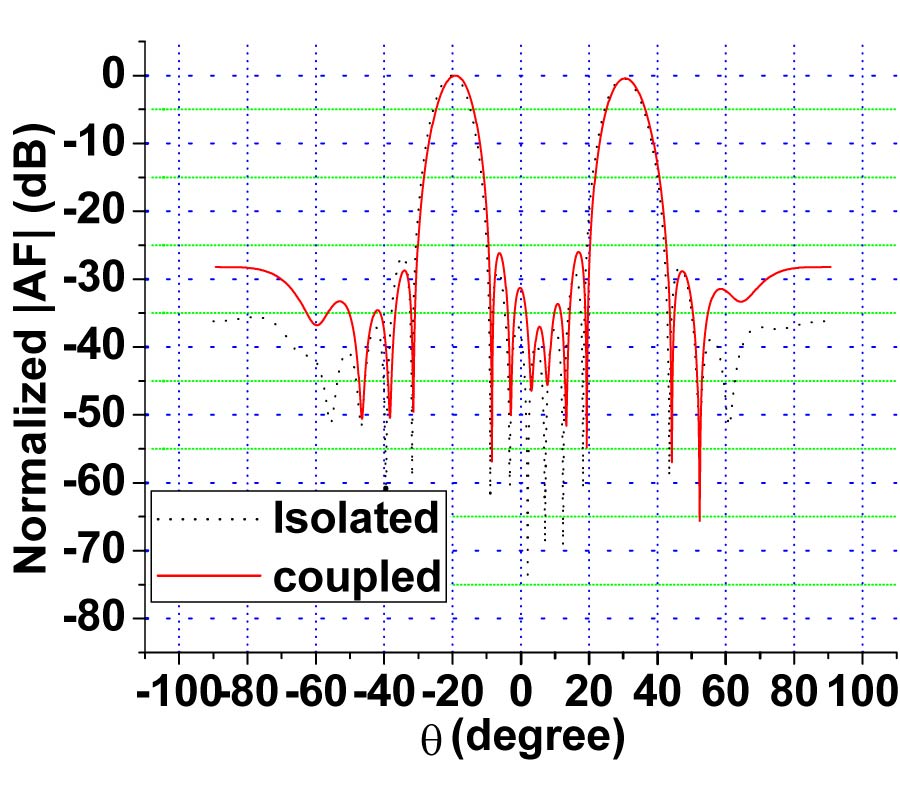
In this paper, we have addressed three major problems of uniform linear array in case of a sensor failure at any position. We assume that sensor position is known. The problems include increase in sidelobe levels, displacement of nulls and diminishing of null depth. The desired null depth is achieved by making the weight of symmetrical counterpart element passive. Genetic algorithm (GA) along with pattern search (PS) is used for reduction of sidelobe levels, and adjustment of nulls. Fitness function minimizing the error between the desired and estimated beam pattern along with null constraints is used. Simulation results for diversified scenarios have been given to demonstrate the validity and performance of the proposed algorithm.
NULL PLACEMENT AND SIDELOBE SUPPRESSION IN FAILED ARRAY USING SYMMETRICAL ELEMENT FAILURE TECHNIQUE AND HYBRID HEURISTIC COMPUTATION
2013-05-27
PIER
Vol. 140, 105-129
Artificial Magnetic Materials Synthesis with Generic Metallic Broken Loops
Ali Kabiri and Omar M. Ramahi
We propose a methodic approach to design Artificial Magnetic Materials (AMM) with desired magnetic properties. The design procedure is defined based on a novel formulation for characterizing AMMs. The employed formulation expresses the effective permeability and the magnetic loss tangent (MLT) in terms of the geometrical and physical parameters of the inclusions. The method comprised four steps. In the first step, the feasibility of the design is checked through a set of constraints. The second and third steps provide an iterative procedure to capture the desired magnetic properties. Finally, the geometrical elements, i.e., the area and perimeter of inclusions, are calculated. The technique is applied to design of an AMM structure based on Rose curve resonators. The design based on the proposed methodology is verified by the numerical simulation of the AMM.
ARTIFICIAL MAGNETIC MATERIALS SYNTHESIS WITH GENERIC METALLIC BROKEN LOOPS
2013-05-26
PIER B
Vol. 52, 139-163
A Novel Compressed Sensing Based Method for Space Time Signal Processing for Airborne Radars
Jing Liu , Chong Zhao Han , Xiang Hua Yao and Feng Lian
Space time adaptive processing (STAP) is a signal processing technique for detecting slowly moving targets using airborne radars. The traditional STAP algorithm uses a lot of training cells to estimate the space-time covariance matrix, which occupies large computer memory and is time-consuming. Recently, a number of compressed sensing based STAP algorithms are proposed to detect moving target in strong clutter situation. However, the coherence of the sensing matrix is not low due to the high resolution of the DOA (direction of arrival)-Doppler plane, which does not guarantee a good reconstruction of the sparse vector with large probability. Consequently, the direct estimation of the target amplitude may be unreliable using sparse representation when locating a moving target from the surrounding strong clutter. In this study, a novel method named similar sensing matrix pursuit is proposed to reconstruct the sparse radar scene directly based on the test cell, which reduces the computing complexity efficiently. The proposed method can efficiently cope with the deterministic sensing matrix with high coherence. The proposed method can estimate the weak elements (targets) as well as the prominent elements (clutter) in the DOA-Doppler plane accurately, and distinguish the targets from clutter successfully.
A NOVEL COMPRESSED SENSING BASED METHOD FOR SPACE TIME SIGNAL PROCESSING FOR AIRBORNE RADARS
2013-05-26
PIER B
Vol. 52, 117-137
Analysis of the Cyclotron Radiation from Relativistic Electrons Interacting with a Radio-Frequency Electromagnetic Wave
Christos Tsironis
The emission of electromagnetic radiation from charged particles spiraling around magnetic fields is an important effect in astrophysical and laboratory plasmas. In theoretical modeling, issues still not fully resolved are, among others, the inclusion of the recoil force on the relativistic electron motion and the detailed computation of the radiation power spectrum. In this paper, the cyclotron radiation emitted during the nonlinear interaction of relativistic electrons with a plane electromagnetic wave in a uniform magnetic field is examined, by analyzing the radiated power in both time and frequency domain. The dynamics of the instantaneous radiation and the emitted power spectrum from one particle, as well as from monoenergetic electron ensembles (towards a picture of the radiation properties independent of the initial conditions) is thoroughly studied. The analysis is performed for several values of the wave amplitude, focusing near the threshold for the onset of nonlinear chaos, in order to determine the alteration of the radiation in the transition from regular to chaotic motion.
ANALYSIS OF THE CYCLOTRON RADIATION FROM RELATIVISTIC ELECTRONS INTERACTING WITH A RADIO-FREQUENCY ELECTROMAGNETIC WAVE
2013-05-26
PIER B
Vol. 52, 99-115
Switchable Microwave Band-Stop to All Pass Filter Using Stepped Impedance Resonator
Amine Adoum Bakhit and Peng Wen Wong
Electronically switchable microwave filters are attracting more attention for research and development because of their importance in increasing the capability of wireless communication and cognitive radios. In this paper, novel switchable microwave band-stop to all pass filters are designed by using stepped impedance resonator. Commercially available Pin diodes are used in order to allow the fastest switching between band-stop and all pass responses. The theoretical analysis is presented in this paper, and its feasibility has been experimentally verified with a micro-strip prototype. The design was also characterized by measuring the filter performance with increasing power levels of 20, 15, 10, 5, and 0 dBm. The results have shown that the switchable filter is immune to power saturation effects. Nonlinear measurements at higher power levels are also performed and the switchable filter produced low power inter-modulation product. The main advantage of this filter is its capability to switch between band-stop and all pass mode of operation. Other advantages include being small in size, and low in cost.
SWITCHABLE MICROWAVE BAND-STOP TO ALL PASS FILTER USING STEPPED IMPEDANCE RESONATOR
2013-05-26
PIER Letters
Vol. 40, 141-151
Design of Wireless Power Transfer Systems Using Magnetic Resonance Coupling for Implantable Medical Devices
Farid Jolani , Jeetkumar Mehta , Yiqiang Yu and Zhizhang (David) Chen
Efficient and compact wireless power transfer (WPT) systems are proposed and designed for recharging small implantable medical devices. They use the magnetic resonance coupling scheme to transfer power over a relatively large distance. The receiver resonator coil and the load loop are designed in correspondence to size restriction of implantable devices. The dimensions of the coils are optimized and effective values of the lumped capacitors are investigated and fine-tuned for efficiency enhancement. Three design configurations of the WPT system, each consisting of two coils at the transmitter and two coils at the receiver, are designed and fabricated. The transfer efficiency is measured over different transmission distances and with different orientation angles of the receiver coils. The measurement results show good agreements with the simulations and illustrate that the proposed WPT systems exhibit nearly omnidirectional radiation performance. Furthermore, the receiver coils are implanted inside of a biological object to show the power can be transferred effectively.
DESIGN OF WIRELESS POWER TRANSFER SYSTEMS USING MAGNETIC RESONANCE COUPLING FOR IMPLANTABLE MEDICAL DEVICES
2013-05-26
PIER Letters
Vol. 40, 129-139
Co-Design of a Compact Dual-Band Filter-Antenna for WLAN Application
Wei-Jun Wu , Qi-Feng Liu , Qi Zhang and Jing-Ya Deng
A co-designed compact dual-band filter-antenna suitable to be embedded inside a wireless access point (AP) in the 2.45/5.2-GHz wireless local area network (WLAN) bands is presented. The proposed filter-antenna comprises a loop-loaded dual-band monopole radiator and a microstrip dual-band pseudo-interdigital bandpass filter. The monopole consists of a uniform width monopole, two identical capacitively loaded magnetic resonators and a top loaded loop. The two magnetic resonators are loaded at the center of the monopole for dual-band operation and the rectangular loop loaded at the top is involved for miniaturization. Instead of using the traditional 50Ω interfaces, the impedance between the filter and antenna is optimized to improve the performance. The filter-antenna and the system circuit board of an AP share the same substrate and ground plane. In this case the design can fully integrate the circuit board of the AP into an internal filter-antenna solution. The proposed filter-antenna provides good selectivity and rejection in out of band regions and omni-directional radiation patterns within the two desired bands. The measured results show good agreement with the simulated ones.
CO-DESIGN OF A COMPACT DUAL-BAND FILTER-ANTENNA FOR WLAN APPLICATION
2013-05-26
PIER M
Vol. 31, 45-58
Time Reversal for Soft Faults Diagnosis in Wire Networks
Lola El Sahmarany , Laure Berry , Nicolas Ravot , Fabrice Auzanneau and Pierre Bonnet
Time-reversal (TR) invariance of the wave equation in lossless transmission line (TL) is here introduced as an improvement for fault-detection techniques in wire networks. This new approach is applied to reflectometry in wire diagnosis. To test the efficiency of this method, the reverse time algorithm simulated with FDTD (Finite Difference Time Domain) is developed in a one dimension space. It uses a new signal processing and an adapted signal to the wire under test for diagnosing the fault in the wire. In addition the interest of the convolution product between the incident signal and the output signal from this reverse time method will be also shown and applied in this paper. Through numerical simulations and experimental results measured on coaxial cable, the benefits of this method have been illustrated.
TIME REVERSAL FOR SOFT FAULTS DIAGNOSIS IN WIRE NETWORKS
2013-05-26
PIER
Vol. 139, 799-819
Ultrasensitive Switching Between Resonant Reflection and Absorption in Periodic Gratings
Nikolay Komarevskiy , Valery Shklover , Leonid Braginsky and Christian V. Hafner
Guided-Mode Resonance (GMR) effects in transparent periodic gratings possess a number of remarkable phenomena. GMRs exhibit strong features in the optical spectrum, i.e. dips, peaks, cusps, and may attain extremely high Q-factors. In some cases resonant reflection with the efficiency equal to unity can be observed. We demonstrate that the introduction of small losses in the structure can drastically modify its optical response by causing strong absorption resonances. Unity reflection in loss-free structures can be almost completely converted into unity absorption peaks as soon as very small losses are introduced. Even thin absorbing films in the structure (or in its vicinity) can lead to such strong resonant absorption effects. The resonances may exhibit a negligible spectral shift, but a significant variation in the magnitude when losses are slightly altered, which is highly attractive for sensor and switch applications. Absorption peaks experience a resonant behavior with respect to both frequency and material losses. We show that the width of the absorption peaks decreases and approaches the width of the reflection peaks, as losses decrease. Thus, high-Q resonances can be observed. The absorption resonances also possess strong angular dependence; they may split and significantly increase in magnitude for a slightly inclined incidence. We elucidate the resonant reflection/absorption effects theoretically and provide numerical examples.
ULTRASENSITIVE SWITCHING BETWEEN RESONANT REFLECTION AND ABSORPTION IN PERIODIC GRATINGS