Search Results(13798)

2013-05-13
PIER
Vol. 139, 611-626
A New Conical-Trajectory Polar Format Algorithm for Spotlight Bistatic SAR
Yan Wang , Jingwen Li , Bing Sun , Jie Chen and Huaping Xu
The Polar Format Algorithm (PFA) is suitable for spotlight synthetic aperture radar (SAR) image focusing either in monostatic or bistatic cases. The classic linear-trajectory PFA complete data correction in wavenumber domain, converting data from the polar format to the rectangular format. However, the two-dimension processing (either using interpolation or chirp-z transform) introduces heavy computational load, which limits its real-time applications. This study presents a conical-trajectory PFA for bistatic SAR, in which the transmitter and receiver are designed to fly on conical surfaces, to simplify image formation procedures via eliminating the necessity of range processing. Moreover, the conical-trajectory PFA provides a space-invariant range resolution to simplify the SAR image comprehension. A spotlight forward-looking bistatic missile guidance application was simulated for the algorithm validation and performance analysis.
A NEW CONICAL-TRAJECTORY POLAR FORMAT ALGORITHM FOR SPOTLIGHT BISTATIC SAR
2013-05-13
PIER
Vol. 139, 599-610
Pmm-GA Method to Synthesize Quasi-Optical Frequency Selective Surface on Sio2 Substrate
Bu Gang Xia , Jin Meng , De Hai Zhang and Jin Sheng Zhang
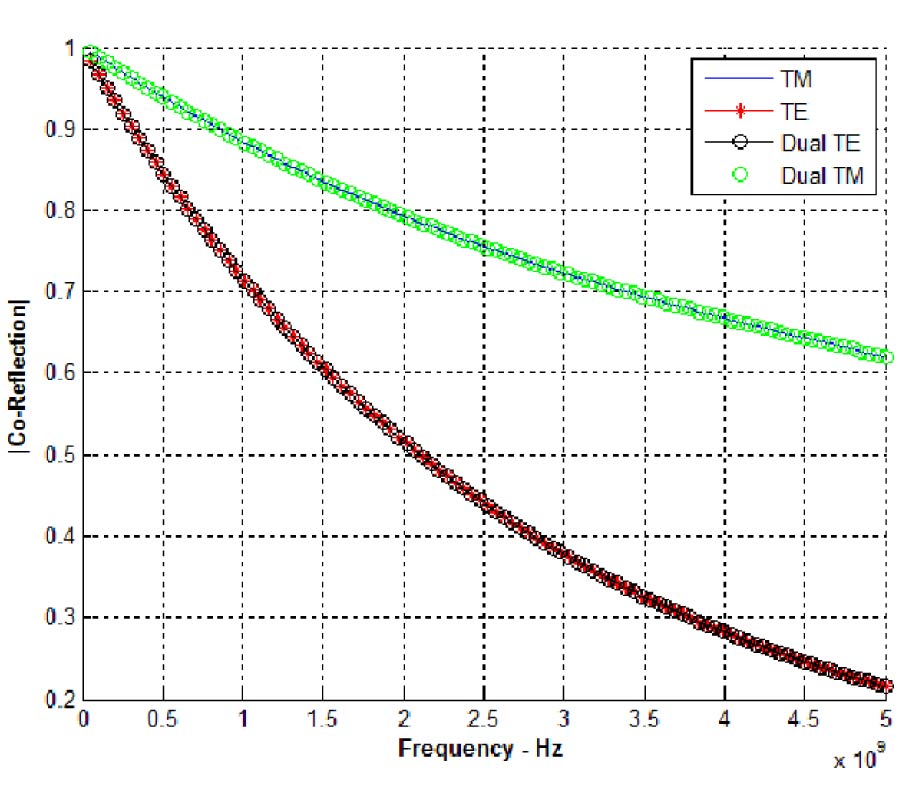
A satellite-borne frequency selective surface (FSS) for atmospheric sensing application is presented. This brand new type of band-pass filter has an operating frequency at 183 GHz, which is a typical frequency on H2O absorption line. Comprising an ultra-thin gilding layer and a SiO2 substrate layer, this complex periodic component exhibits an extremely low insertion loss (< 0.22 dB) and high isolation (> 20 dB) between closely spaced frequency channels of 45° incident wave. Periodic Method of Moment (PMM) approach is applied to determine the initial geo-metrical parameters of FSS unit cell, and the optimization approach based on the Genetic Algorithm (GA) enables us to obtain the requisite spectral response and transmission characteristics for both TE and TM polarization. The experimental results show that the proposed PMM-GA technique is effective for analyzing space-borne FSS at millimeter wave range.
PMM-GA METHOD TO SYNTHESIZE QUASI-OPTICAL FREQUENCY SELECTIVE SURFACE ON SiO<sub>2</sub> SUBSTRATE
2013-05-12
PIER Letters
Vol. 40, 61-69
A Compact Triple-Band Fork-Shaped Antenna for WLAN/WiMAX Applications
Liang Xu , Zhen-Yu Xin and Jun He
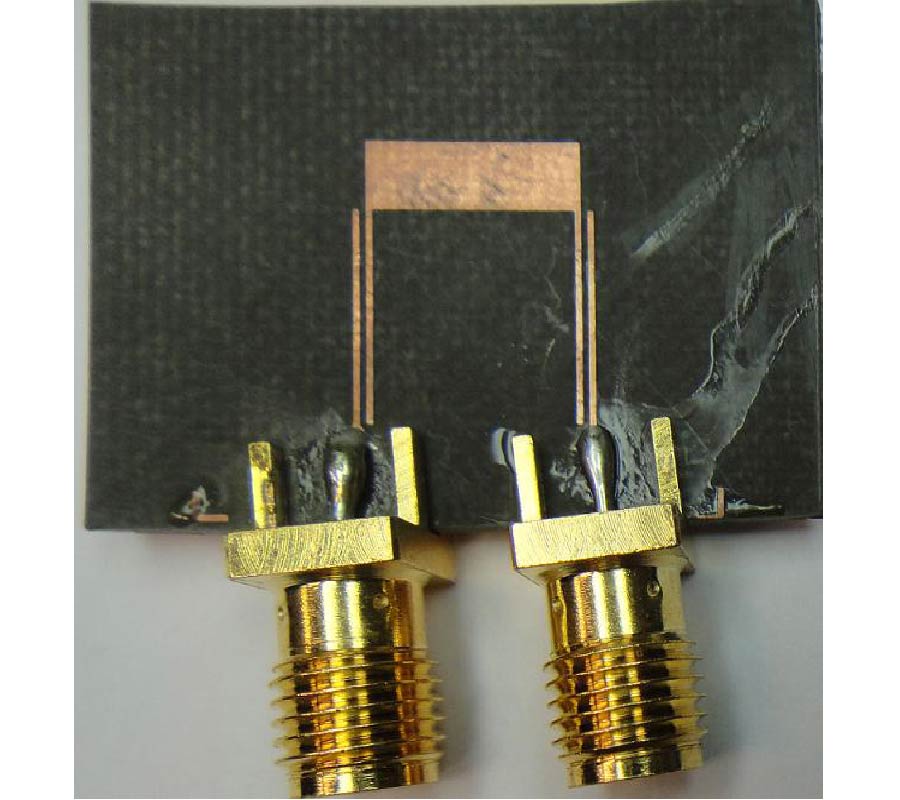
A novel triple-frequency fork-shaped antenna for WLAN/WiMAX applications is proposed and investigated in this paper. The presented antenna is simply composed of three radiating elements viz. Stub1, Stub2, Stub3. By adjusting the lengths of the three stubs, three desired resonant frequencies can be achieved and adjusted independently. Experimental results show that the antenna impedance bandwidths for S11 ≤ -10 dB are 2.4-2.65 GHz, 3. 3.3-4.05 GHz, and 5-5.98 GHz, covering the 2.4/5.2/5.8 GHz WLAN bands and 2.5/3.5/5.5 GHz WiMAX bands. Furthermore, nearly omni-directional radiation patterns over the operating bands have been obtained.
A COMPACT TRIPLE-BAND FORK-SHAPED ANTENNA FOR WLAN/WIMAX APPLICATIONS
2013-05-11
PIER Letters
Vol. 40, 49-60
One-Step Leapfrog Adi-FDTD Method for Lossy Media and Its Stability Analysis
Jian-Yun Gao and Hong-Xing Zheng
A one-step leapfrog alternating-direction-implicit finite-difference time-domain (ADI-FDTD) method for lossy media is presented. Different from the method provided by others, the proposed method is originated from the conventional ADI-FDTD method instead of considering the leapfrog ADI-FDTD method as a perturbation of the conventional explicit FDTD method. Its unconditional stability is analytically proven through a method that combines the von Neumann method with the Jury criterion. In addition, its unconditional stability and computational efficiency are verified through numerical experiments.
ONE-STEP LEAPFROG ADI-FDTD METHOD FOR LOSSY MEDIA AND ITS STABILITY ANALYSIS
2013-05-11
PIER C
Vol. 39, 255-264
A Novel Circular Polarization RFID Reader Antenna with a Multi-Bending Feeding Strip for Handheld Applications
Yuan-Chih Lin , Wen-Shan Chen , Bau-Yi Lee , Tzu-Chen Hung and Chii-Ruey Lin
This paper proposes a novel corner-fed Circular Polarization (CP) reader antenna for handheld Ultra-High Frequency (UHF) Radio Frequency Identification (RFID) application. The CP mechanism is accomplished by a multi-bending feeding strip located at corner of a high dielectric constant (K = 60) ceramic substrate. By using the high dielectric substrate, the dimension of the proposed antenna can be effectively reduced to 27 × 27 × 4 mm3, which consists of a top radiating patch, an antenna ground plane, a coupling multi-bending feeding strip, and a SMA connector for RF input. The top radiating patch is printed on the top surface of the ceramic substrate and the antenna ground plane is formed on the opposite side. The central frequency of resonant band can be easily controlled by adjusting the size of the top radiating patch. By optimizing the coupling feeding mechanism, not only impedance matching can be achieved for bandwidth operation in Taiwan's UHF RFID band, but also two orthogonal field components with 90° phase difference for circular polarization are obtained. In addition, the proposed antenna is placed on an 80 × 80 × 0.8 mm3 FR4 system ground plane for reducing hand holding effect.
A NOVEL CIRCULAR POLARIZATION RFID READER ANTENNA WITH A MULTI-BENDING FEEDING STRIP FOR HANDHELD APPLICATIONS
2013-05-10
PIER
Vol. 139, 577-597
Implementation and Application of the Spherical MRTD Algorithm
Yawen Liu , Yi-Wang Chen , Pin Zhang and Xin Xu
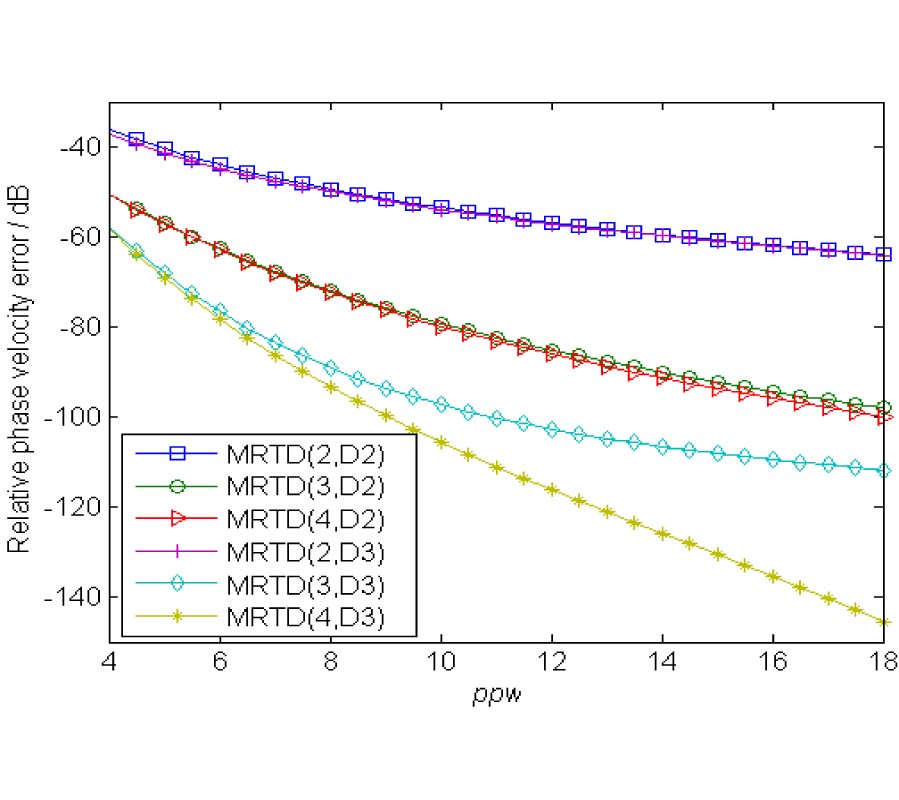
This paper illustrates an explicit multiresolution time-domain (MRTD) scheme based on Daubechies' scaling functions with a spherical grid for time-domain Maxwell's equations. The stability and dispersion property of the scheme are investigated and it is shown that larger cells decrease the numerical phase error, which makes it significantly lower than FDTD for low and medium discretizations. Moreover, this technique is applied to the modeling of an air-filled spherical resonator, and numerical results demonstrate the effectiveness of the proposed algorithm.
IMPLEMENTATION AND APPLICATION OF THE SPHERICAL MRTD ALGORITHM
2013-05-09
PIER C
Vol. 39, 237-254
Aperture-Coupled Frequency-Reconfigurable Stacked Patch Microstrip Antenna (Frspma) Integrated with PIN Diode Switch
Nurulazlina Ramli , Mohd Tarmizi Ali , Azita Laily Yusof , Suzilawati Muhamud-Kayat and Hafiza Alias
In this paper, a new Frequency-Reconfigurable Stacked Patch Microstrip Antenna (FRSPMA) with a new coupling method applied in an aperture-coupled technique controlled by the switching circuit is presented. This antenna uses a combination of aperture-coupled technique and stacked patch in order for the radiating elements to increase the bandwidth. Two shapes (Ishape and H-shape) and sizes of aperture slots are etched onto the ground with a purpose to couple the energy between feedline and stacked patch. One PIN diode switch is integrated in the feed network to control the length of the feedline. A variation of the feedline length controls the selected aperture slots to be active. The waves from the selected activated aperture slots will radiate to particular radiating patch (top or bottom patch) and achieve the frequency reconfigurability. When the switch is in ON mode, the antenna has a capability to configure its operating frequency at 2.6 GHz and at 3.5 GHz during the OFF mode. Besides that, the air gap is used to improve and avoid any coupling problem between the aperture slots and both of the two patches. Improper alignment between the aperture slots and patches will interfere waves radiating from aperture slots to the particular patch. In addition, the proposed antenna produces a high gain of more than 5 dB during ON or OFF modes respectively. The simulated results are compared with measured results.
APERTURE-COUPLED FREQUENCY-RECONFIGURABLE STACKED PATCH MICROSTRIP ANTENNA (FRSPMA) INTEGRATED WITH PIN DIODE SWITCH
2013-05-09
PIER
Vol. 139, 559-575
A Hybrid Computer-Aided Tuning Method for Microwave Filters
Yong-Liang Zhang , Tao Su , Zhi-Peng Li and Chang-Hong Liang
A hybrid tuning method for microwave filters is presented in this paper. This novel tuning technique is based on the combination of the Cauchy method and aggressive space mapping (ASM) technique. Cauchy method is applied to determine the characteristic polynomials of the filter's response, then the parameters (coupling matrix) of the low-pass prototype is extracted from the characteristic polynomials. The aggressive space mapping is used to optimized the fine model to guarantee that each step of a tuning is always in the right direction. The validity is verified by two examples. One deals with the four-resonator cross-coupled filter and the other one is an direct coupled six-resonator filter.
A HYBRID COMPUTER-AIDED TUNING METHOD FOR MICROWAVE FILTERS
2013-05-09
PIER
Vol. 139, 539-558
Cylindrical Microstrip Array Antennas with Slotted Strip-Framed Patches
Alexander Svezhentsev , Volodymyr Vitalievich Kryzhanovskiy and Guy Vandenbosch
A cylindrical microstrip array antenna with 5 pairs of coupled slotted strip framed patches is analyzed. The patches are proximity-fed by a cylindrical microstrip line. In order to extract the reflection coefficient from the standing wave pattern on the microstrip line, its length is about 5 wavelengths. To the best of the authors' knowledge proximity-fed cylindrical arrays have not been analyzed before using a rigorous MOM model that takes into account all electromagnetic couplings between patches and feeding line. The paper consists of three parts. The first part describes a plane wave excitation of the cylindrical microstrip structure. It introduces some innovating theoretical developments, like the improvement of the asymptote for the spectral Green's function and the explicit surface wave contribution. The second part calculates the radar cross section of the cylindrical microstrip structure with single and coupled slotted strip framed patches. The resonant frequencies, and the amplitude and phase of the current distribution are analysed. The third part describes a design for a proximity-fed array of 5 coupled slotted strip framed patches. It gives the reflection coefficient, current distribution on the patches, and radiation pattern. A very low level of cross polarization (< -40 dB) is achieved. It is shown that the resonant frequencies of the cylindrical array and its planar analogue lie very close to each other. This is due to the common nature of the low frequency slot resonance for the slotted strip framed patch.
CYLINDRICAL MICROSTRIP ARRAY ANTENNAS WITH SLOTTED STRIP-FRAMED PATCHES
2013-05-08
PIER B
Vol. 51, 367-388
Focusing, Power Tunneling and Rejection from Chiral and/or Chiral Nihility/Nihility Metamaterials Layers
Syed Touseef Hussain Shah , Faiz Ahmad , Nayyar Abbas Shah , Aqeel Abbas Syed and Qaisar Abbas Naqvi
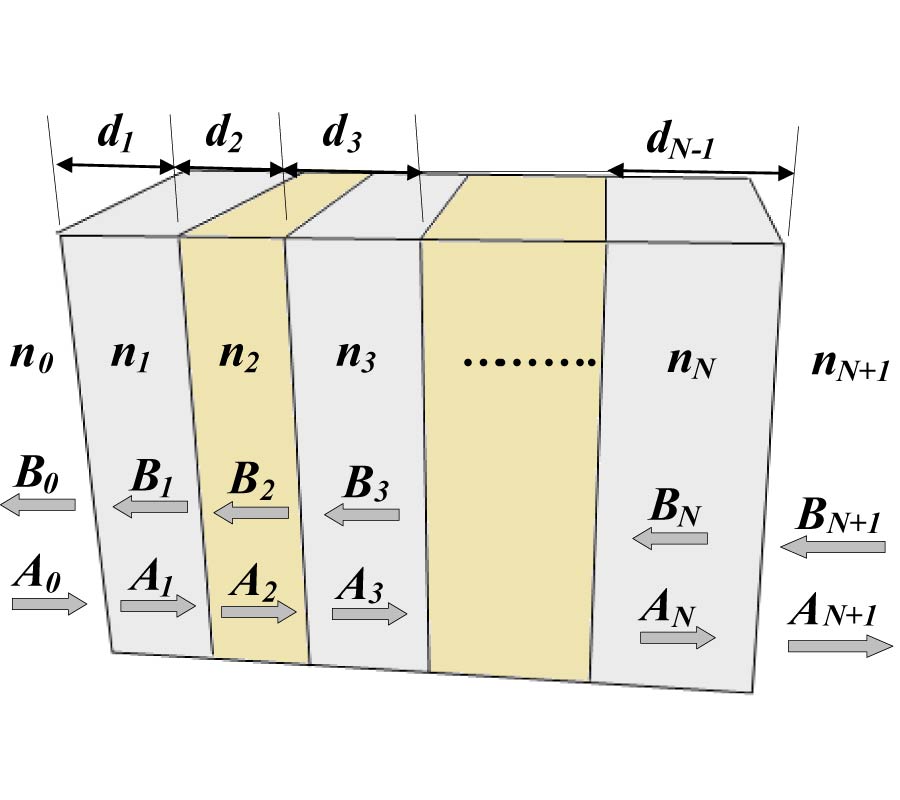
Focusing of electromagnetic plane wave from a large paraboloidal reflector, composed of layers of chiral and/or chiral nihility metamaterials, has been studied using Maslov's method. As a first step, the transmission and reflection of electromagnetic plane wave from two parallel layers of chiral and/or chiral nihility metamaterials are investigated using transfer matrix method. The effects of change of angle of incidence, chirality parameters and impedances of layers are noted and discussed. Special cases by taking extreme values of permittivity of second layer, while assuming value of corresponding chirality equal to zero, are also obtained for validating the methodology. These special cases are equivalent to reflection from a perfect electric conductor backed chiral layer and nihility backed chiral layer, respectively. Results of reflection from parallel layers have been utilized to study focusing from a large paraboloidal reflector. The present study, on focusing from a paraboloidal reflector, not only unifies already published work by various researchers but also provides better understanding of the problem.
FOCUSING, POWER TUNNELING AND REJECTION FROM CHIRAL AND/OR CHIRAL NIHILITY/NIHILITY METAMATERIALS LAYERS
2013-05-08
PIER Letters
Vol. 40, 39-48
A Wideband Differential Bandpass Filter Based on T-Shaped Stubs and Single Ring Resonator
Hui Wang , Wei Kang , Guo Yang and Wen Wu
A wideband differential bandpass filter (BPF) with differential mode passband and common mode suppression is proposed and implemented on microstrip lines for wideband application in this letter. The initial BPF is similar to a single ring resonator with two unequal feed lines which have 180o separation and T-shaped stubs are loaded on the ring resonator to form an improved one for better performances. The lengths and widths of these stubs can be adjusted to produce a highly selectivity under the differential mode and improved attenuation under the common mode. This simple, compact structure is easy for construct without any coupling structure. Finally, a microstrip differential wideband BPF is designed, simulated, fabricated, and measured. The presented differential BPF has a 3-dB fractional bandwidth (FBW) of 38% for the differential mode and insertion loss greater than 17 dB for common mode. Good agreement between simulated and measured results is obtained.
A WIDEBAND DIFFERENTIAL BANDPASS FILTER BASED ON T-SHAPED STUBS AND SINGLE RING RESONATOR
2013-05-08
PIER C
Vol. 39, 225-236
Design of a Novel Broadband EMC Double Ridged Guide Horn Antenna
Tenigeer , Ning Zhang , Jing-Hui Qiu , Peng-Yu Zhang and Yang Zhang
An improved double ridged horn antenna (DRHA) is proposed in this paper. By adding the dielectric lens at the aperture of the horn, radiation pattern distortion arising in the high frequency band of conventional DRHA is improved, which leads to higher radiation gain. Meanwhile, ridge slot loading contributes to better impedance matching characteristic, broadening the impedance bandwidth efficiently. The improved antenna is fabricated and measured, with the measured results consist with the simulation perfectly, which proved the viability of the improvement.
DESIGN OF A NOVEL BROADBAND EMC DOUBLE RIDGED GUIDE HORN ANTENNA
2013-05-08
PIER M
Vol. 30, 253-269
Modeling of the Direct Lightning Strike on a Towers Cascade Equipped with Its Protections
Lotfi Boufenneche , Bachir Nekhoul , Kamal Kerroum , Khalil El Khamlichi Drissi and Dragan Poljak
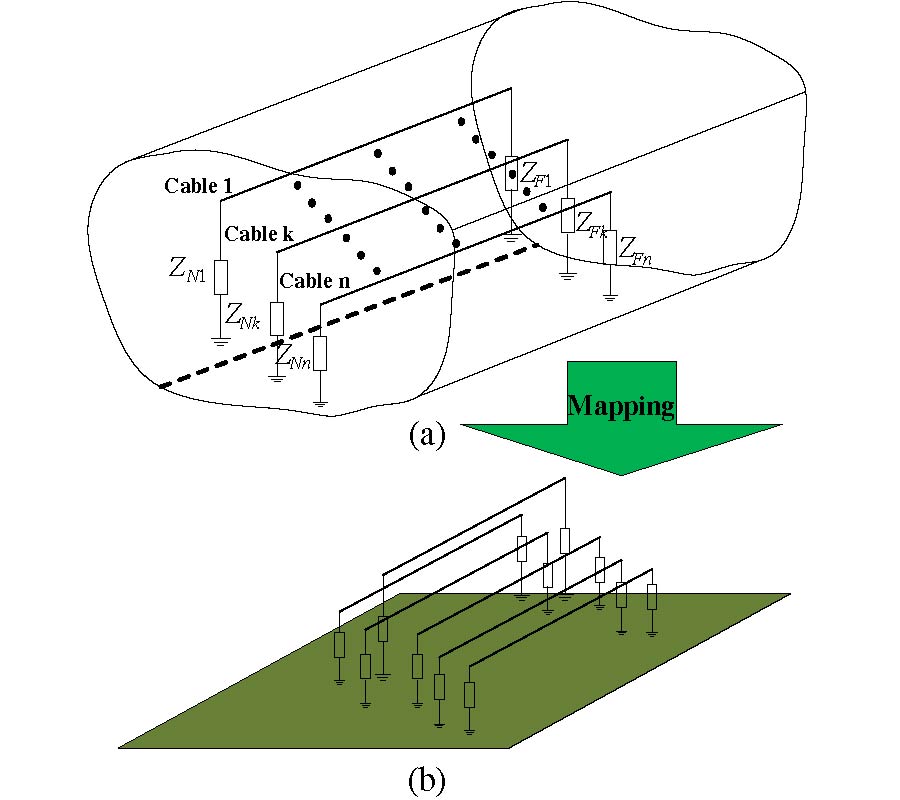
In this paper, a direct time domain approach based on the corresponding transmission lines equations and Finite Difference Time Domain (FDTD) method is proposed to analyze a direct lightning strike to a cascade of transmission line towers. The proposed model deals with a real case of towers being connected by ground wires and equipped with grounding systems with different topologies, as well(vertical or horizontal conductor buried in the ground, crow's feet in the ground...). In particular, this work realistically represents the tower geometry and accounts for the propagation phenomena along the tower and between the towers. The proposed direct time domain approach deals with rather complex electrical devices (towers, ground wires and grounding systems), but at the same time requires very low computational cost and also provides relatively simple implementation. Some illustrative computational examples related to some engineering applications are given in the paper.
MODELING OF THE DIRECT LIGHTNING STRIKE ON A TOWERS CASCADE EQUIPPED WITH ITS PROTECTIONS
2013-05-08
PIER M
Vol. 30, 239-252
Collocated Sibc-FDTD Method for Coated Conductors at Oblique Incidence
Lijuan Shi , Lixia Yang , Hui Ma and Jianning Ding
A collocated surface impedance boundary condition (SIBC)-finite difference time domain (FDTD) method is developed for conductors coated with lossy dielectric coatings at oblique incidence. The method is based on the collocated electric and magnetic field components on the planar interface between two media, and rational approximation for tangent function of surface impedance formulation is adopted. In contrast to the traditional SIBC-FDTD implementation which is approximated with the magnetic field component on the boundary located at half-cell distance from the interface and half time step earlier in time, the collocation approach is more accurate for both magnitude and phase of reflection coefficient. By the comparison with exact results, the proposed model is numerically verified in the frequency domain for both parallel polarization plane wave and vertical polarization plane wave at varying oblique angles of incidence.
COLLOCATED SIBC-FDTD METHOD FOR COATED CONDUCTORS AT OBLIQUE INCIDENCE
2013-05-08
PIER
Vol. 139, 517-538
Elimination of Cruptolestes Ferrungineus S. in Wheat by Radio Frequency Dielectric Heating at Different Moisture Contents
Bijay  Shrestha , Daeung Yu and Oon-Doo Baik
Radio frequency (RF) dielectric heating was tested to control Cryptolestes ferrungineus S. in the bulk wheat samples (ca.152 g, dia. = 50 mm, ht.= 100 mm) at the MCs (%, w. b.) of 12, 15, and 18 using a pilotscale RF heater (1.5 kW, 27.12MHz) in the batch mode. When the temperature of the hottest spot (geometric center) of the sample, TH was at 80°C, all the adult insects were found dead at the cold spots, near bottom-wall, at 50.7°C to 56.0°C depending up on the wheat MCs. The temperatures of the insect-slurries higher than that of the bulk wheat by 0.8°C to 15.1°C indicated the selective heating of the insects. The mortalities of adult insects were almost constant within the quarantine period, QP1 (5 wk). The elapsed time during QP1 had a significant effect only on the insects' mortalities with the wheat at 12% MC. The wheat MC had only marginal significance on the absolute mortalities of insects. The larvae were completely destroyed at temperatures between 55°C and 60°C. The complete mortality of all life stages (eggs, larvae, pupae, and adults) of the insect was achieved at TH = 80°C without any emergence of the insects during QP2 (8 wk). The RF treatment enhanced the germination of the wheat kernels at 12% MC while it was decreased by 2% to 33% depending up on the wheat MC, and the treatment temperature. Temperature had no significant effect on the falling numbers, and the yields of flour, bran, and shorts, and the peak-bandwidth and the MC of the wheat, and the flour protein values. The means of the mixing-development-time deferred from the controls mostly for the wheat at 15% MC and TH = 70°C, and 18% MC and TH = 70°C and 80°C. The mean-peak-height and the color values varied between 4% and 16%, and 3% and 6% off the controls depending up on the temperatures. The uniform temperature of 60°C should be enough to control all life stages of the insect completely with a little or no changes in the important product quaities and germination of the wheat at MCs safe for the storage. Future research mainly focused on better estimation of the insect-to-grain electric field intensities is essential.
ELIMINATION OF CRUPTOLESTES FERRUNGINEUS S. IN WHEAT BY RADIO FREQUENCY DIELECTRIC HEATING AT DIFFERENT MOISTURE CONTENTS
2013-05-07
PIER Letters
Vol. 40, 29-38
A Novel Dual-Band Passband Filter with Controllable Center Frequencies and Bandwidths
Zhi-Peng Li , Tao Su , Yong-Liang Zhang and Chang-Hong Liang
A high-order dual-band bandpass filter using novel combined stub-loaded resonators (CSLRs) is presented in this paper. The key merits of the filter configuration are that the center frequency and also the bandwidth of each passband can be controlled conveniently. Moreover, it can build the high-order dual-band bandpass filters using the proposed resonators because of the sufficient coupling through the four symmetric stubs. A fifth-order dual-band bandpass filter designed at 2.5/3.5 GHz was built and tested. The measurement and simulation results agree very well, demonstrating the validity of the method.
A NOVEL DUAL-BAND PASSBAND FILTER WITH CONTROLLABLE CENTER FREQUENCIES AND BANDWIDTHS
2013-05-07
PIER M
Vol. 30, 225-238
An Analytic Expression for Near-Field Angular Glint Prediction of Radar Sensor Using Far-Field Scattering Centers Models
Jianpeng Fan , Shijie Fan , Hongqi Fan and Huaitie Xiao
As an important signature of the radar target, the angular glints effects on radar sensor mainly arise at close distance, especially at target near field. However, the current prediction methods of angular glint are mostly based on the far field condition. This paper presents a prediction technique of near field angular glint based on the scattering center model to solve this problem. Firstly, the near field backscattering is represented based on far-field scattering center model. Then by solving the derivative of the backscattering phase vs. the position vector of the observer, including incident angles and range, we get the exact expression of angular glint at near field. Next, the exact expression is approximated and simplified in the range of terminal guidance. Finally, the factors affecting near-field angular glint are analyzed using numeric simulation, and the error comparison between the exact and approximate expression is also provided. It is concluded that the expression in [1] is the approximation of ours at far field under certain polarization, and the simplified expression has a well precision in the range of terminal guidance. All these results provide the theoretical basis for the prediction of near field angular glint and its signature research.
AN ANALYTIC EXPRESSION FOR NEAR-FIELD ANGULAR GLINT PREDICTION OF RADAR SENSOR USING FAR-FIELD SCATTERING CENTERS MODELS
2013-05-06
PIER B
Vol. 51, 307-328
A Free-Space Method for Complex Permittivity Measurement of Bulk and Thin Film Dielectrics at Microwave Frequencies
Zaiki Awang , Fatimah Audah Mohd Zaki , Noor Hasimah Baba , Ahmad Sabirin Zoolfakar and Raudah Abu Bakar
A free-space, non-destructive method for measuring the complex permittivity of a double-layer bulk dielectrics and thin film oxide layers at microwave frequencies have been developed. The method utilizes a spot-focusing antenna system in conjunction with a vector network analyzer in the range of 18-26 GHz. The bulk dielectric was measured using the Transmission Method and Metal-Backed Method, while the Metal-Backed Method was used to investigate the thin films. Both types of samples were sandwiched between two quarter-wavelength Teflon plates to improve the mismatch at the frequencies of measurement. The thin film sample arrangement was backed by an additional metal plate. The double-layer bulk dielectric samples were Teflon-PVC and Plexiglas-PVC, while the thin film samples consisted of SiO2 layers of different thicknesses grown on doped and undoped Si wafer substrates. The relative permittivity obtained for PVC ranged between 2.62 to 2.93, while those for Plexiglas exhibited values between 2.45 to 2.63. The relative permittivity of SiO2 deposited on these wafers was between 3.5 to 4.5. All these values were in good agreement with published data The advantage of the method was its ability to measure the dielectric properties of the films at the mid-frequency band irrespective of the substrate type used. Simulations of the measurement setup were carried out using CST Microwave Studio and the simulation results agreed closely with the measurements.
A FREE-SPACE METHOD FOR COMPLEX PERMITTIVITY MEASUREMENT OF BULK AND THIN FILM DIELECTRICS AT MICROWAVE FREQUENCIES
2013-05-05
PIER C
Vol. 39, 209-224
A Coplanar Waveguide Fed Ultra Wideband Hexagonal Slot Antenna with Dual Band Rejection
Tapan Mandal and Santanu Das
In this paper a printed regular hexagonal slot antenna with a hexagonal stub fed by a coplanar waveguide line has been considered for ultra wide bandwidth. This antenna is then modified to obtain dual band rejection. The Wireless Local Area Network (WLAN) and Wireless Microwave Access (WiMAX) band rejections are realized by incorporating a C-shape slot within the exciting stub as well as a couple of Z-shape open circuit stubs symmetrically inserted at the edge of the slot. The length and width of the C-shape slot and Z-shape stub offer sufficient freedom for selecting and shifting the notch bands. Magnitude of S11, impedance, gain and radiation characteristics of them are studied and discussed here. From the measured results, it has been observed that the impedance bandwidth, defined by magnitude of S11 ≤ -10 dB, reaches a value of 8.18 GHz (2.96~11.14 GHz) except dual frequency stop bands of 3.28-3.7 GHz and 5.1-5.90 GHz. From the experimental results, it is observed that the radiation patterns are omnidirectional in the H-plane and dipole in nature in the E-plane. The antenna gain varies from 4.8 dB to 5.3 dB over the whole operating band excluding the notch bands. Surface current distributions are used to analyze the effects of the C-slot and Z-shape stub. Measured group delay has very small variation within the operating band except notch bands and hence the proposed antenna may be suitable for UWB applications.
A COPLANAR WAVEGUIDE FED ULTRA WIDEBAND HEXAGONAL SLOT ANTENNA WITH DUAL BAND REJECTION
2013-05-05
PIER
Vol. 139, 499-516
Sliding Scattering Center Model for Extended Streamlined Targets
Kun-Yi Guo , Qi-Feng Li , Xin-Qing Sheng and Marina Gashinova
The knowledge of amplitude and location of sliding scattering centers is necessary for low detectable streamlined targets in many applications, such as precise estimation of shape or velocity of targets, and also target tracking and recognition. Based on the thorough analysis of scattering characteristics, the scattering center features of streamlined targets are presented which demonstrate the dependence of location and amplitude on the target orientation relative to the radar. Then based on these features, an accurate scattering center model for streamlined targets is proposed. The parameters of this model is estimated by genetic algorithm, and then the given model with estimated parameters is validated by full wave numerical method allowing precise backscattered data computation.
SLIDING SCATTERING CENTER MODEL FOR EXTENDED STREAMLINED TARGETS