Search Results(13800)

2012-10-08
PIER
Vol. 132, 463-478
A Detached Zero Index Metamaterial Lens for Antenna Gain Enhancement
Fan-Yi Meng , Yue-Long Lyu , Kuang Zhang , Qun Wu and Joshua Le-Wei Li
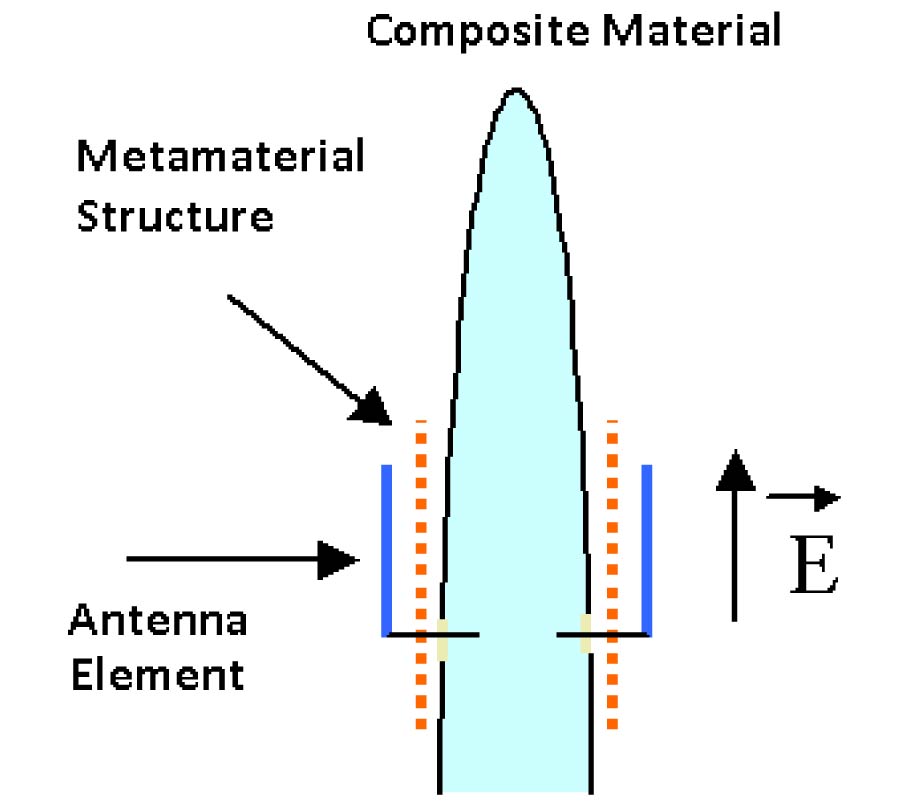
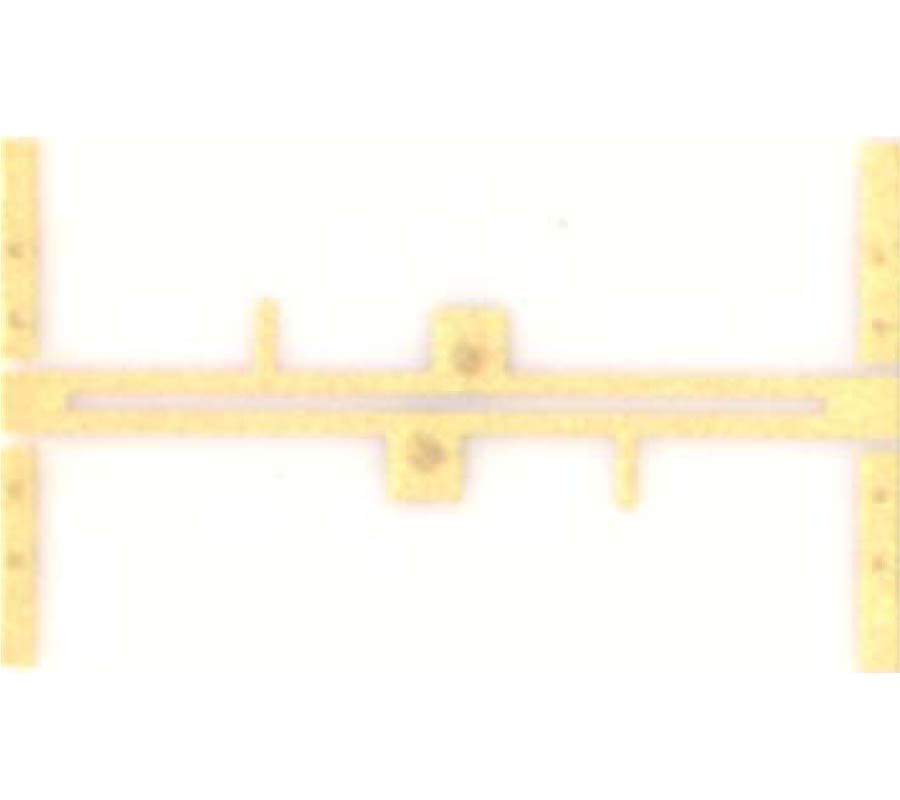
In this paper, a detached zero index metamaterial lens (ZIML) consisting of metal strips and modified split ring resonators (MSRRs) is proposed for antenna gain enhancement. The effective permittivity and permeability of the detached ZIML are designed to synchronously approach zero, which leads the ZIML to having an effective wave impedance matching with air and near-zero index simultaneously. As a result, neither does the detached ZIML need to be embedded in horns aperture nor depends on auxiliary reflectors in enhancing antenna gain, which is quite different from conventional ZIMLs. Moreover, the distance between antenna and the detached ZIML slightly affect the gain enhancement, which further confirms that the ZIML can be detached from antennas. Simulated results show that the effective refractive index of the detached ZIML is near zero in a broad frequency range where the effective relative wave impedance is close to 1. The detached ZIML is fabricated and tested by placing it in front of an H-plane horn antenna. One finds that evident gain enhancement is obtained from 8.9 GHz to 10.8 GHz and the greatest gain enhancement reaches up to 4.02 dB. In addition, the detached ZIML can also work well at other frequencies by adjusting its geometric parameters to scale, which is demonstrated by designing and simulating two detached ZIMLs with center frequencies of 2.4 GHz and 5.8 GHz, respectively.
A DETACHED ZERO INDEX METAMATERIAL LENS FOR ANTENNA GAIN ENHANCEMENT
2012-10-05
PIER B
Vol. 44, 383-403
1-d Inversion of Triaxial Induction Logging in Layered Anisotropic Formation
Zhijuan Zhang , Ning Yuan and Ce Richard Liu
In this paper, we present a one-dimensional (1-D) inversion algorithm for triaxial induction logging tools in multi-layered transverse isotropic (TI) formation. A non-linear least-square model based on Gauss-Newton algorithm is used in the inversion. Cholesky factorization is implemented to improve the stability and the reliability of the inversion. Zero-D inversion is conducted at the center of each layer to provide a reasonable initial guess for the best efficiency of the inversion procedure. Cross components are used to provide sufficient information for determining the boundaries in the initial guess. It will be illustrated that using all the nine components of the conductivity/resistivity yield more reliable inversion results and even faster convergence than using only the diagonal components. The resultant algorithm can be used to obtain various geophysical parameters such as layer boundaries, horizontal and vertical resistivity, dipping angle and rotation angle etc. from triaxial logging data automatically without any priori information. Several synthetic examples are presented to demonstrate the capability and reliability of the inversion algorithm.
1-D INVERSION OF TRIAXIAL INDUCTION LOGGING IN LAYERED ANISOTROPIC FORMATION
2012-10-05
PIER C
Vol. 33, 145-156
A 2.45 GHz Reentarnt Coaxial Cavity for Liguid Sterilization Based on Non-Thermal Microwave Effect
Yuling Zhang , Bao-Qing Zeng and Hai Zhang
According to the intracellular electromanipulation model, bacteria can be killed at as high as 106 V/m electrical fields on microwave band. We designed and constructed a modified microwave coaxial cavity resonator for liquid sterilization. The cavity could concentrate the field on a very small area, and the liquid can pass it in milliseconds. The bacteria can be killed by the very high field, but with a slight temperature increase. The designed resonator is simulated and analyzed by the electromagnetic simulation code, the results indicated that when the input power reaches 100 W, the electric field on the area of liquid can reach 106 V/m. Preliminary experimental results indicated that when the input power was 100W, the bactericidal rate was > 90%, and the temperature of the liquid only increased 8.6°C.
A 2.45 GHZ REENTARNT COAXIAL CAVITY FOR LIGUID STERILIZATION BASED ON NON-THERMAL MICROWAVE EFFECT
2012-10-05
PIER
Vol. 132, 443-461
Kalman Filter for Removal of Scalloping and Inter-Scan Banding in Scansar Images
Mahboob Iqbal , Jie Chen , Wei Yang , Pengbo Wang and Bing Sun
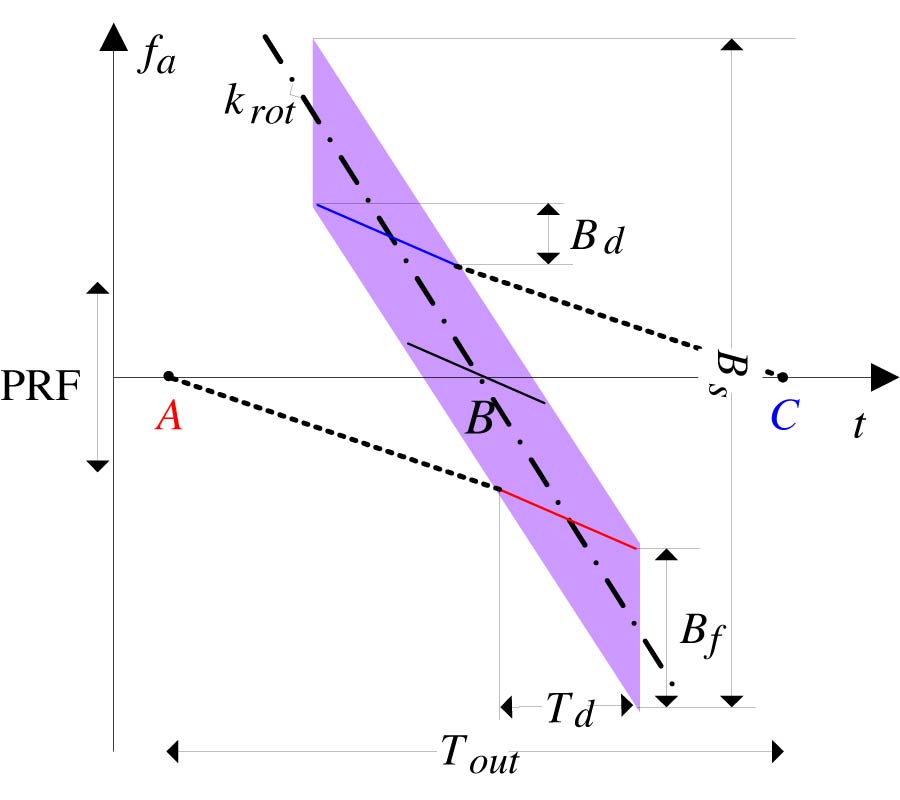
Spaceborne synthetic aperture radar (SAR) plays more and more important role in Earth observation science, especially with ScanSAR mode which provides wide-swath coverage with moderate resolution. However, scalloping and inter-scan banding (ISB) are two major artifacts, which signi cantly degrade the quality of ScanSAR images. In this paper, a novel technique for removal of scalloping and ISB in ScanSAR images is proposed. Scalloping and ISB artifacts are modeled by two-dimensional gain and o set parameters varying as function of both azimuth time and range position. The gain and o set parameters can be split into azimuth and range components. The variations of gain/o set with respect to azimuth and range positions would represent scalloping and ISB artifacts respectively. In the proposed technique, recursive and minimum mean square error (MMSE) estimates of azimuth gain/o set parameters are found out by using Kalman lter for each azimuth location in a subswath by considering corresponding range samples as observation vector. Subsequently, range gain/o set parameters causing ISB artifacts are estimated by using Kalman lter for each range positions by considering azimuth samples as observation vector. The MMSE estimates of gain/o set parameters are used to directly remove scalloping and ISB artifacts. The proposed scheme was applied on simulated as well as calibrated real ScanSAR images. The experimental results exhibited the potential of proposed technique to be used as post processing tool for enhancing ScanSAR image quality.
KALMAN FILTER FOR REMOVAL OF SCALLOPING AND INTER-SCAN BANDING IN SCANSAR IMAGES
2012-10-05
PIER
Vol. 132, 425-441
Retrieval of Effective Electromagnetic Parameters of Isotropic Metamaterials Using Reference-Plane Invariant Expressions
Ugur Cem Hasar , Joaquim Jose Barroso , Cumali Sabah , Ibrahim Yucel Ozbek , Yunus Kaya , Deniz Dal and Tolga Aydin
Three different techniques are applied for accurate constitutive parameters determination of isotropic split-ring resonator (SRR) and SRR with a cut wire (Composite) metamaterial (MM) slabs. The first two techniques use explicit analytical calibration-dependent and calibration-invariant expressions while the third technique is based on Lorentz and Drude dispersion models. We have tested these techniques from simulated scattering (S-) parameters of two classic SRR and Composite MM slabs with various level of losses and different calibration plane factors. From the comparison, we conclude that whereas the extracted complex permittivity of both slabs by the analytical techniques produces unphysical results at resonance regions, that by the dispersion model eliminates this shortcoming and retrieves physically accurate constitutive parameters over the whole analyzed frequency region. We argue that incorrect retrieval of complex permittivity by analytical methods comes from spatial dispersion effects due to the discreteness of conducting elements within MM slabs which largely vary simulated S-parameters in the resonance regions where the slabs are highly spatially dispersive.
RETRIEVAL OF EFFECTIVE ELECTROMAGNETIC PARAMETERS OF ISOTROPIC METAMATERIALS USING REFERENCE-PLANE INVARIANT EXPRESSIONS
2012-10-05
PIER
Vol. 132, 403-424
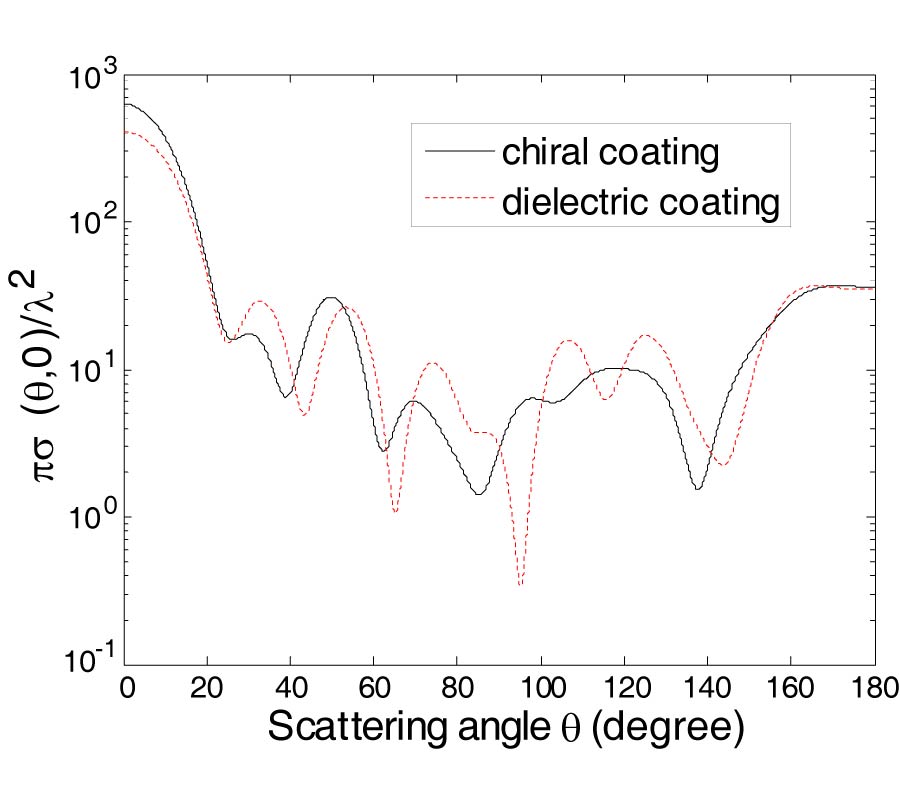
Scattering of an Arbitrarily Oriented Dipole Field by a Circular Disk with Surface Impedance
Allah Ditta Ulfat Jafri , Qaisar Abbas Naqvi , Aqeel Abbas Syed and Kohei Hongo
The scattering of an arbitrarily oriented dipole field by a circular disk with surface impedance is investigated by using the method of Kobayashi Potential (KP method). The dual integral equations (DIE) are produced during formulation of the problem. The solution of the DIEs is constructed in terms of set of functions which satisfy the boundary conditions as well as required edge conditions. At this stage, we applied the discontinuous properties of Weber Schafheitlins integral and vector Hankel transform. After applying the projection, the resulting expressions are reduced to the matrix equations for the expansion coefficients. The matrix elements are given in terms of the infinite integrals. The far field patterns for the scattered wave are computed for different incident angles, disk sizes and surface impedances for ρ−, Φ− and z−directed dipole field excitation. To validate the results we have obtained the results based on the physical optics approximation and their comparison shows that they quite reasonably match.
SCATTERING OF AN ARBITRARILY ORIENTED DIPOLE FIELD BY A CIRCULAR DISK WITH SURFACE IMPEDANCE
2012-10-03
PIER Letters
Vol. 35, 73-81
Compact Microstrip Lowpass Filter with Sharp Roll-off and Wide Stopband Using Semicircle Ended Stub Resonator
Mohsen Hayati , Hessam Aldin Memari and Hamed Abbasi
In this paper, a semicircle ended stub resonator, cascaded to a modified radial patch to design a compact lowpass filter with sharp roll-off and wide stopband is proposed. This filter has 3 dB cutoff frequency at 1.54 GHz. The transition band is only 0.26 GHz from 1.54 GHz to 1.8 GHz with corresponding attenuation levels of -3 dB and -20 dB respectively. Maximum insertion loss is 0.1 dB in the passband, and the stopband bandwidth with the attenuation level better than -20 dB is extended from 1.8 GHz up to 13.93 GHz. So, a wide stopband is achieved. The proposed filter is designed, fabricated and measured, where there is a good agreement between the simulation and measurement results. The results show that a roll-off rate of 65.4 dB/GHz together with a relative stopband bandwidth of 154% with the suppression level of -20 dB is obtained while achieving a high figure of merit (FOM) of 23509.
COMPACT MICROSTRIP LOWPASS FILTER WITH SHARP ROLL-OFF AND WIDE STOPBAND USING SEMICIRCLE ENDED STUB RESONATOR
2012-10-03
PIER C
Vol. 33, 133-144
A SRR-Based Near Field RFID Antenna
Xiao-Zheng Lai , Ze-Ming Xie , Qi-Qiu Xie and Jian-Wen Chao
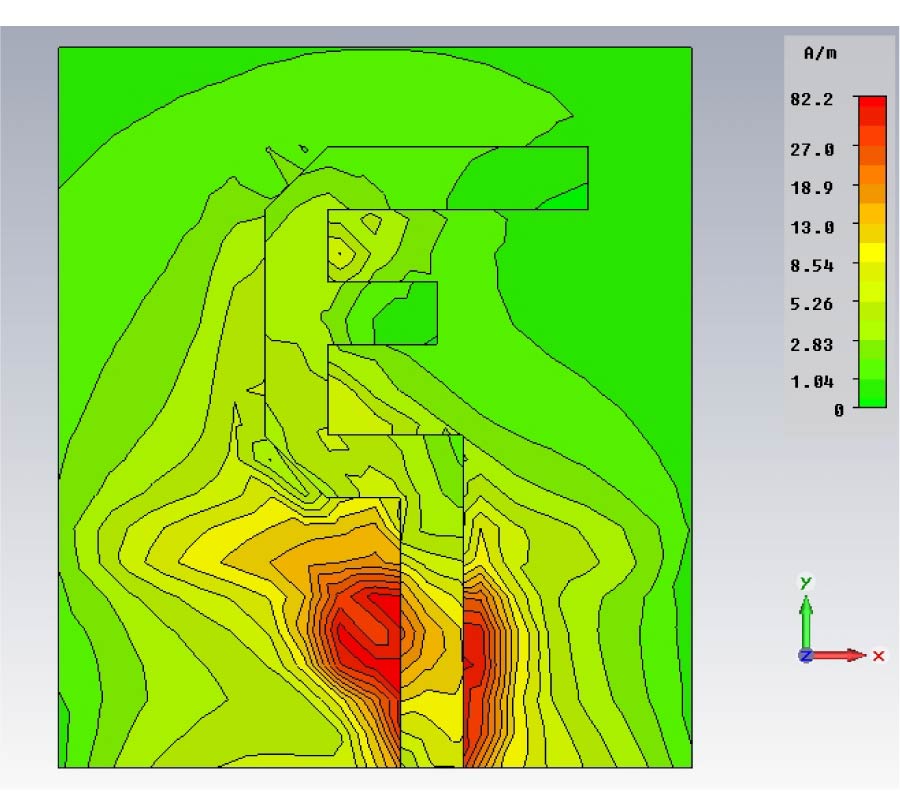
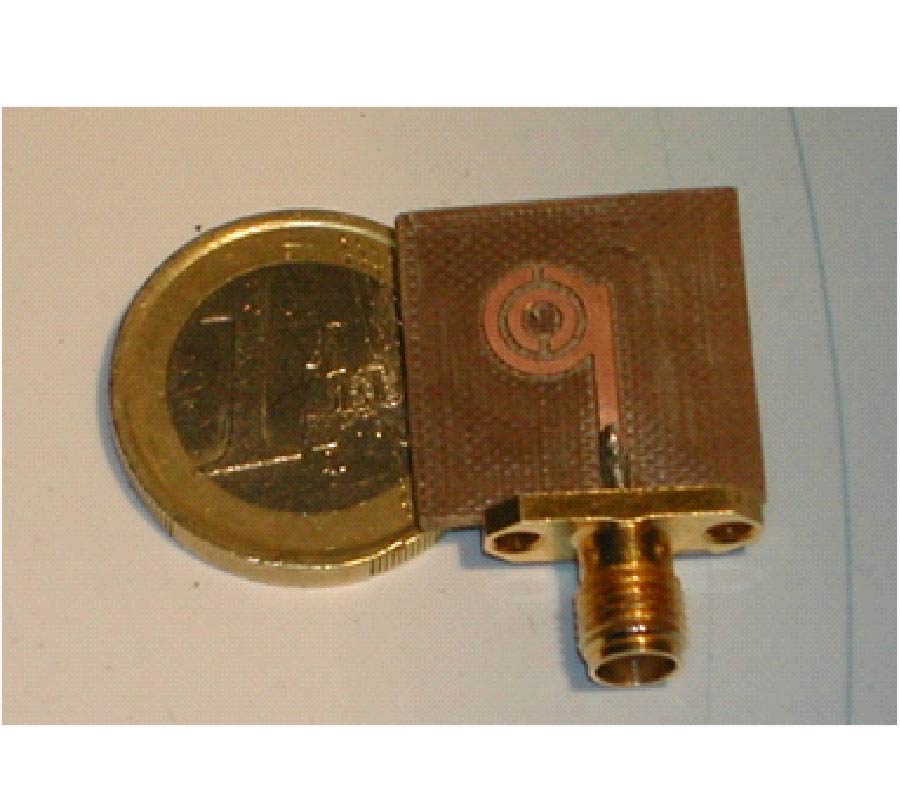
In this paper, a compact near field reader antenna is proposed for ultra-high frequency (UHF) radio frequency identification (RFID) applications. The antenna structure is composed of two split-ring-resonators (SRRs) and miniaturized to a special small size of 25 * 25 * 1:6mm³. The measured bandwidth of antenna prototype is 13 MHz (914.5-927.5 MHz) with reflection coefficient less than -10 dB, which covers the China RFID band II (920-925 MHz). Simulation shows that the proposed antenna achieves a strong and uniform magnetic field distribution in the near field region, and the reading range is up to 42 mm with near field RFID tag. Through modifying the parameters of SRRs, the antenna can operate on different UHF RFID bands (Europe band, China band I&II etc.).
A SRR-BASED NEAR FIELD RFID ANTENNA
2012-10-03
PIER C
Vol. 33, 123-132
Compact Planar Microstrip Crossover for Beamforming Networks
Bassem Henin and Amin M. Abbosh
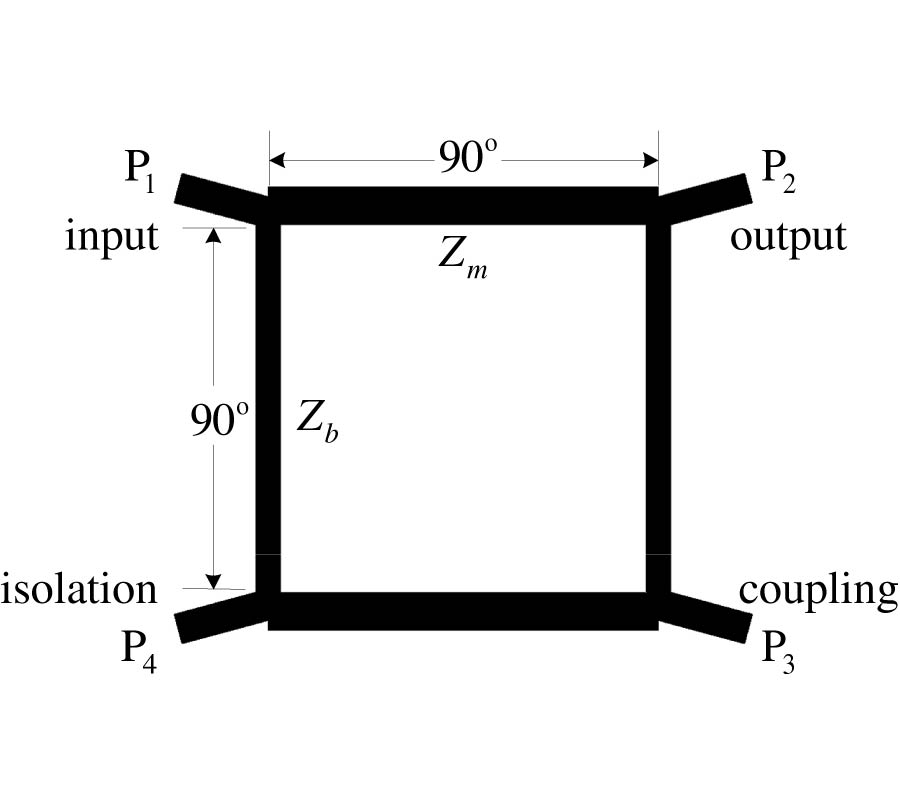
The design of a fully planar microstrip crossover for beamforming networks is presented. The design starts by using a conventional half-wavelength square patch and two sets of orthogonal feeding lines. Rectangular and circular slots are introduced on the square patch in order to reduce the required area of the patch by 82%. The proposed crossover is fabricated and tested for performance confirmation. The measured data shows less than 1 dB insertion loss, more than 13 dB isolation, and around 0.1 ns deviation in the group delay across 12% fractional bandwidth. The proposed crossover is suitable for planar Butler matrix which is a key component in beamforming networks.
COMPACT PLANAR MICROSTRIP CROSSOVER FOR BEAMFORMING NETWORKS
2012-10-03
PIER C
Vol. 33, 109-121
Design of Leaky Wave Antenna with Composite Right-/Left-Handed Transmission Line Structure for Circular Polarization Radiation
Masahiko Ishii , Takeshi Fukusako and Arokiaswami Alphones
This paper presents a design procedure for the generation of circular polarization (CP) from the composite right/left handed (CRLH) transmission line-(TL) with a coupled inter-digit structure and an inductive stub. The Ex and Ey components are generated from the parallel stubs and the fingers, respectively. The 90°-phase difference can be obtained by optimizing the dimension of the unit cell. In addition, the suitable amplitude ratio of |Ex| and |Ey| for CP generation is obtained by selecting a suitable position of the CRLH-TL between both edges of the ground. As a result, a CP with a measured bandwidth of 30.5% for an axial ratio (AR) of < 3 dB in the boresight direction is obtained. Using the behavior in both the left-handed (LH) and right-handed (RH) frequency regions, a scanning angle of the main beam of approximately 30° can be obtained by varying the frequency between 2.58 GHz and 2.99 GHz. Furthremore, the principle of CP generation is discussed.
DESIGN OF LEAKY WAVE ANTENNA WITH COMPOSITE RIGHT-/LEFT-HANDED TRANSMISSION LINE STRUCTURE FOR CIRCULAR POLARIZATION RADIATION
2012-10-03
PIER
Vol. 132, 389-402
Soft-Focusing in Anisotropic Indefinite Media through Hyperbolic Dispersion
Sara Wheeland , Alireza V. Amirkhizi and Sia Nemat-Nasser
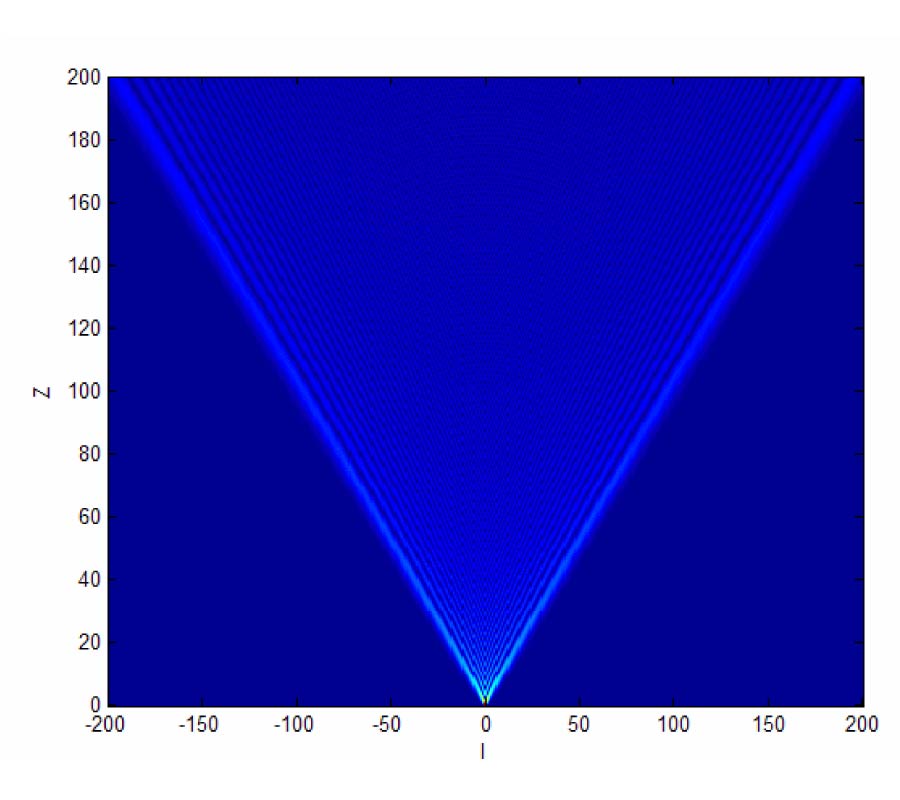
Materials that exhibit negative refraction may have many novel applications. We seek to evaluate the possibility of soft-focusing of microwave signals using a medium with an indefinite (hyperbolic) anisotropic permittivity tensor. We fabricated a 147 mm thick and 220 mm wide Styrofoam sample with an embedded array of 12-gauge brass wires of 6.35 mm lattice spacing. Two single-loop antennas were used to approximately generate a transverse magnetic (TM) point source and the associated detector. Using an Agilent 8510C Vector Network Analyzer (VNA), the frequency spectrum was scanned between 7 and 9 GHz. Relative gain or loss measurements were taken at equal spatial steps behind the sample. A scanning robot was used for automatic scanning in the x, y, and z directions, in order to establish the focusing patterns. The signal amplitudes measured in the presence and absence of the sample were compared. The robot was controlled using LabVIEW1, which also collected the data from the VNA and passed it to MATLAB2 for processing. A soft focusing spot was observed when the antennas were placed in two different symmetric configurations with respect to the sample. These results suggest a method for focusing electromagnetic waves using negative refraction in indefinite (hyperbolic) anisotropic materials.
SOFT-FOCUSING IN ANISOTROPIC INDEFINITE MEDIA THROUGH HYPERBOLIC DISPERSION
2012-10-02
PIER
Vol. 132, 369-388
Design and Validation of a TEM Cell Used for Radiofrequency Dosimetric Studies
Cora Iftode and Simona Miclaus
A Transverse Electromagnetic Mode (TEM) cell is one interesting alternative for studies of biological effects of radiofrequency radiation at reduced scale (in vitro studies). Controlled and well-characterized exposure conditions are essential for a concluding investigation: the biological sample has to be exposed to a uniform incident electromagnetic wave and the dose of absorbed radiation has to be precisely determined and correlated with the effect. Unfortunatelly, many times experimental dosimetry is either unavailable or unappliable, so that a pre-characterised and validated experimental set-up is mostly valuable. In this regard, the main objective of present work was to experimentally validate a computational model of an own-built TEM cell designed for bioelectromagnetic experiments in frequency range of 100MHz-1GHz. For validation, three significant parameters were investigated comparatively, by measurements and by computation: scattering parameters; incident electric field distribution; absorbed power in a set of liquid samples. By using the finite integration technique (FIT) method implemented by the commercial code CST Microwave Studio, and by using a vector network analyzer in the experimental approach, we validated the designed TEM cell and characterized it successfully. The second objective was a dosimetric study of four different liquid samples loaded in the cell. We used the absorption coefficient (AC) which may be assimilated to the specific absorption rate (SAR) of energy deposition in the whole sample volume. AC was shown to converge in experiment and simulation up to 800MHz for all samples. AC didn't depend directly upon sample's volume (even if, frequently, greater volumes showed higher absorption) but rather upon the internal field distribution in the sample, distribution that mostly depends on the frequency and on the dimensions of the liquid samples.
DESIGN AND VALIDATION OF A TEM CELL USED FOR RADIOFREQUENCY DOSIMETRIC STUDIES
2012-10-02
PIER
Vol. 132, 347-368
Spatial Correlation of Multiple Antenna Arrays in Wireless Communication Systems
Ju-Hong Lee and Ching-Chia Cheng
This paper investigates the spatial correlation characteristics of multiple antenna arrays deployed in wireless communication systems. First, we derive a general closed-form formula for the spatial correlation function (SCF) of a multiple antenna array with arbitrary array configuration under uniform signal angular energy distribution. Based on this formula, we then explore the characteristics of the SCF for several multiple antenna arrays with different array geometries. It is found that a multiple antenna array with a three-dimensional (3-D) array geometry can reduce the magnitude of its SCF and hence, improve the ergodic channel capacity (ECC) of wireless communication systems. Accordingly, we present a method to find the optimum 3-D antenna array geometry for maximizing the ECC of a wireless communication system. This method develops a novel objective function to incorporate with a particle swarm optimization (PSO) for solving the resulting optimization problem. Simulation results are provided for confirming the validity and the effectiveness of the proposed method.
SPATIAL CORRELATION OF MULTIPLE ANTENNA ARRAYS IN WIRELESS COMMUNICATION SYSTEMS
2012-10-02
PIER
Vol. 132, 315-345
Performance Analysis of Radar Target Recognition Using Natural Frequency: Frequency Domain Approach
Joon-Ho Lee , Sung-Woo Cho , Sang-Hong Park and Kyung-Tae Kim
We consider the performance analysis of natural frequency-based radar target recognition in the frequency domain. Based on the probability density function (PDF) of some quantity consisting of the projections of the frequency response onto the column spaces of the matrices constructed using the natural frequencies of the specific targets, we propose to analytically calculate the probability of the correct classification, where the PDF is obtained from the inverse Fourier transform of the characteristic function. The scheme is validated by comparing the performance using the analytic method with that using the Monte-Carlo simulation.
PERFORMANCE ANALYSIS OF RADAR TARGET RECOGNITION USING NATURAL FREQUENCY: FREQUENCY DOMAIN APPROACH
2012-10-01
PIER B
Vol. 44, 367-382
Parameter Identifiability of Monostatic MIMO Chaotic Radar Using Compressed Sensing
Meng Yang and Gong Zhang
Compressed sensing (CS) has attracted significant attention in the radar community. The better understanding of CS theory has led to substantial improvements over existing methods in CS radar. But there are also some challenges that should be resolved in order to benefit the most from CS radar, such as radar signal with low signal to noise ratio (Low-SNR). In this paper, we will focuses on monostatic chaotic multiple-input-multiple-output (MIMO) radar systems and analyze theoretically and numerically the performance of sparsity-exploiting algorithms for the parameter estimation of targets at Low-SNR. The novelty of this paper is that it capitalizes on chaotic coded waveform to construct measurement operator incoherent with noise and singular value decomposition (SVD) to suppress noise. In order to improve the robustness of azimuth estimation, interpolation method is applied to construction of sparse bases. The gradient pursuit (GP) algorithm for reconstruction is implemented at Low-SNR. Finally, the conclusions are all demonstrated by simulation experiments.
PARAMETER IDENTIFIABILITY OF MONOSTATIC MIMO CHAOTIC RADAR USING COMPRESSED SENSING
2012-10-01
PIER B
Vol. 44, 345-365
Using Optimized Eccentricity Rexolite Lens for Electrical Beam Steering with Integrated Aperture Coupled Patch Array
Aki Karttunen , Jussi Saily , Antti E. I. Lamminen , Juha Ala-Laurinaho , Ronan Sauleau and Antti V. Räisänen
Design and measurement results of a beam-steering integrated lens antenna at 77 GHz are presented. An 8-element LTCC aperture coupled patch antenna feed array with a switching network is used to electrically steer the main beam in H-plane. A 100-mm diameter Rexolite (εr = 2.53) lens is simulated and tested. The eccentricity of the lens is optimized in an earlier work with ray-tracing simulations for improved beam-steering properties compared to the conventional extended hemispherical and elliptical lenses. The beamsteering properties including scan loss, main-beam width and direction, side-lobe levels, directivity, and cross-polarization are analyzed in detail with both simulations and radiation pattern measurements. As expected, the results show that the side-lobe and cross-polarization levels are not predicted accurately with large feed offsets using the ray-tracing simulations. Nevertheless, it is shown that the lens shape can be successfully optimized with the simple and fast ray-tracing simulations. The measured half-power beam-width at 77 GHz is 2.5°±0.2° up to the largest tested beam-steering angle of 30°. The optimized eccentricity low permittivity lens results in smaller scan loss than the conventional lenses.
USING OPTIMIZED ECCENTRICITY REXOLITE LENS FOR ELECTRICAL BEAM STEERING WITH INTEGRATED APERTURE COUPLED PATCH ARRAY
2012-10-01
PIER B
Vol. 44, 327-343
Analysis of Axially Magnetized Permanent Magnet Bearing Characteristics
Siddappa Iranna Bekinal , Anil Tumkur Ramakrishna and Soumendu Jana
The use of permanent magnets as bearings has gained attention of researchers nowadays. The characteristics of forces and moments have to be analysed thoroughly for the proper design of permanent magnet bearings. This paper presents a mathematical model of an axially magnetized permanent magnet bearing (ring magnets) using Coulombian model and a vector approach to estimate the force, moment and stiffness. A MATLAB code is developed for evaluating the parameters. Furthermore, it is extended to analyse stacked ring magnets with alternate axial polarization. The proposed model is validated with the available literature. Comparison of force and stiffness results of the present model with the results of three dimensional (3D) finite element analysis using ANSYS shows good agreement. Finally, the cross coupled stiffness values in addition to the principal stiffness values are presented for elementary structures and also for stacked structures with three ring permanent magnets.
ANALYSIS OF AXIALLY MAGNETIZED PERMANENT MAGNET BEARING CHARACTERISTICS
2012-10-01
PIER C
Vol. 33, 95-108
Remarks on the Measurement of Static Permittivity through a Classical Description
Bernardo Tellini and Mauro Bologna
In this paper the concept of static electric permittivity and its measurement are discussed. A classical description of polarization via a harmonically bound charge model is revisited and the evolution of the polarization concept in the presence of free electrons is shown. Various electrostatic problems are defined under ideal conditions. The measurement procedures for characterizing the static permittivity of dielectrics and conductors via the measurement of induction-electric field, charge-potential difference and electrostatic energy variation are discussed. Two basic experiments with a lossy dielectric are described. In one case we reach an electrostatic equilibrium with an indeterminate solution. In the other case we define a magnetostatic problem. Finally, we comment on the case of a laboratory experiment remarking on the proper use of the low-frequency limit of dielectric constant and showing experimental results performed on a supercapacitor.
REMARKS ON THE MEASUREMENT OF STATIC PERMITTIVITY THROUGH A CLASSICAL DESCRIPTION
2012-10-01
PIER C
Vol. 33, 81-94
A Novel Lpi Method of Radar's Energy Control
Zhenkai Zhang and Jian-Jiang Zhou
A novel radar energy control strategy based on an improved Interacting Multiple Model Particle Filter (IMMPF) tracking method is presented in this paper. Firstly, the IMMPF tracking method is improved by increasing the weight of the particle which is close to the system state and updating the model probability of every particle. Based on this improved IMMPF method, an energy control method for Low Probability of Intercept (LPI) is then presented, which controls the emission time and power of radar according to the target's range and radar cross section (RCS), under the condition of constant detection probability. The tracking accuracy and LPI performance are demonstrated in the Monte Carlo simulations. The results are validated through the comparisons with other methods.
A NOVEL LPI METHOD OF RADAR'S ENERGY CONTROL
2012-10-01
PIER M
Vol. 26, 127-141
Uncertainty Minimization in Permittivity Measurements in Shielded Dielectric Resonators
Eduardo Paez , Marco A. Azpurua , Ciro Tremola and Roberto Callarotti
In this paper we present a novel general methodology which ensure a minimum uncertainty in the measurement of the real part of the permittivity of a material measured using cylindrical shielded dielectric resonators. The method is based on the fact that for any given value of the dielectric permittivity there is an optimal radius of the cylindrical dielectric rod sample. When the dielectric rod sample has the optimum radius, the width of the coverage interval associated to the real part of the dielectric permittivity measurement result --- for a given confidence level --- is reduced due to a lower sensitivity of the dielectric permittivity to be measured versus the variations in the resonant frequency. The appropriated radius of a given sample under test is calculated using Monte Carlo simulations for a specific mode and a specific resonant frequency. The results show that the confidence interval could be reduced by one order of magnitude with respect to its maximum width predicted by the uncertainty estimation performed using the Monte Carlo method (MCM) as established by the supplement 1 of the Guide to the Expression of Uncertainty in Measurement (GUM). The optimum radius of the sample under examination is fundamentally determined by the electromagnetic equations that describe the measurement and does not depend specifically of the sources of uncertainty considered.
UNCERTAINTY MINIMIZATION IN PERMITTIVITY MEASUREMENTS IN SHIELDED DIELECTRIC RESONATORS