Search Results(13800)

2012-10-01
PIER
Vol. 132, 297-314
Evaluation of the Zigbee Transmission Repetition Mechanism in the Variably-Loaded Reverberation Chamber
Kamil Staniec
The purpose of this paper is to provide both qualitative and quantitative assessment of one of the methods for providing reliable transmission in the ZigBee system. After intensive research on the time delay spread in a variably loaded reverberation chamber, this facility was then used to measure the Packet Error Rate under multipath conditions ranging from an unloaded to an overloaded chamber case. In all measurements, the key parameter was the number of allowed packet repetitions (retries). Eventually, recommendations were given regarding the optimal use of retries and their impact on ZigBee performance under different multipath scenarios obtained in the reverberation chamber and related to particular propagation environments to which these conditions are typical.
EVALUATION OF THE ZIGBEE TRANSMISSION REPETITION MECHANISM IN THE VARIABLY-LOADED REVERBERATION CHAMBER
2012-10-01
PIER
Vol. 132, 275-296
Frequency Scanning Based Radar System
Yuri Alvarez-Lopez , Cebrian Garcia-Gonzalez , Carlos Vazquez-Antuna , Samuel Ver-Hoeye and Fernando Las Heras Andres
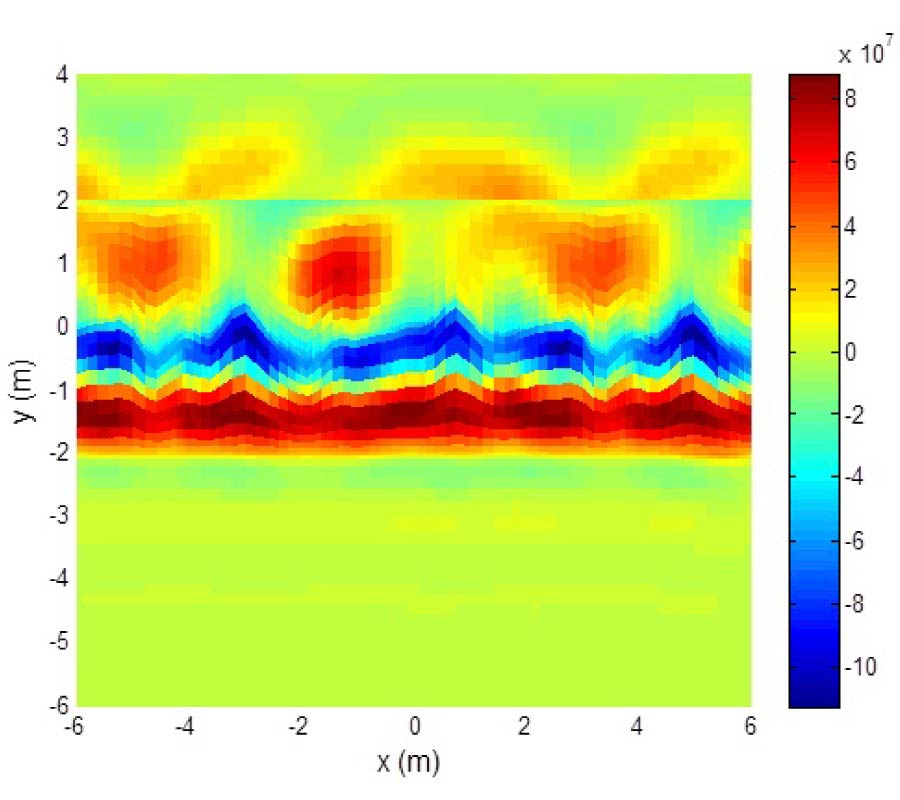
A novel imaging technique based on a frequency scanning antenna array is presented. The method is conceived to provide angular information in range-based radar systems which do not allow mechanical or electronic beam steering. The beam steering is changed with the frequency, which requires a novel scattered field data processing scheme/algorithm to recover the SAR image. System features, advantages and limitations are discussed, presenting simulation and measurement results which show the system capabilities to resolve the range and angular position of the objects.
FREQUENCY SCANNING BASED RADAR SYSTEM
2012-10-01
PIER
Vol. 132, 255-274
Reducing the Power Consumption in Wireless Access Networks: Overview and Recommendations
Margot Deruyck , Willem Vereecken , Wout Joseph , Bart Lannoo , Mario Pickavet and Luc Martens
Due to growing importance of wireless access and the steeply growing data volumes being transported, the power consumption of wireless access networks will become an important issue in the coming years. This paper presents a model for this power consumption and investigates three base station types: macrocell, microcell, and femtocell base stations. Based on these models, the coverage effectiveness of the three base station types is compared and the influence of some power reducing techniques such as sleep modes and MIMO (Multiple Input Multiple Output) is evaluated.
REDUCING THE POWER CONSUMPTION IN WIRELESS ACCESS NETWORKS: OVERVIEW AND RECOMMENDATIONS
2012-09-30
PIER M
Vol. 26, 115-126
Zero-Dispersion Shifted Optical Fiber Design Based on GA and Cd Optimization Methods
Somaye Makouei and Zia Koozekanani
In this paper, the RII depressed core triple clad based structure as Zero-dispersion Shifted optical fiber is optimized to obtain small pulse broadening factor (small dispersion and its slope) and low bending loss suitable for long haul communications. The proposed structures allow reducing the dispersion, its slope and the bending loss. The Genetic Algorithm (GA) and the Coordinate Descent (CD) technique are used for the optimization. The suggested design approach involves a special cost function which includes dispersion, its slope, and bending loss impacts. The proposed algorithm and structure have inherent potential to obtain large effective area and extend tolerance of bending loss simultaneously. Meanwhile, an analytical method is used to calculate the dispersion and its slope. In the meantime, the thermal stabilities of the designed structures are evaluated.
ZERO-DISPERSION SHIFTED OPTICAL FIBER DESIGN BASED ON GA AND CD OPTIMIZATION METHODS
2012-09-29
PIER B
Vol. 44, 309-326
Ultra-Wideband Shorted Patch Antennas Fed by Folded-Patch with Multi Resonances
Hossein Malekpoor and Shahrokh Jam
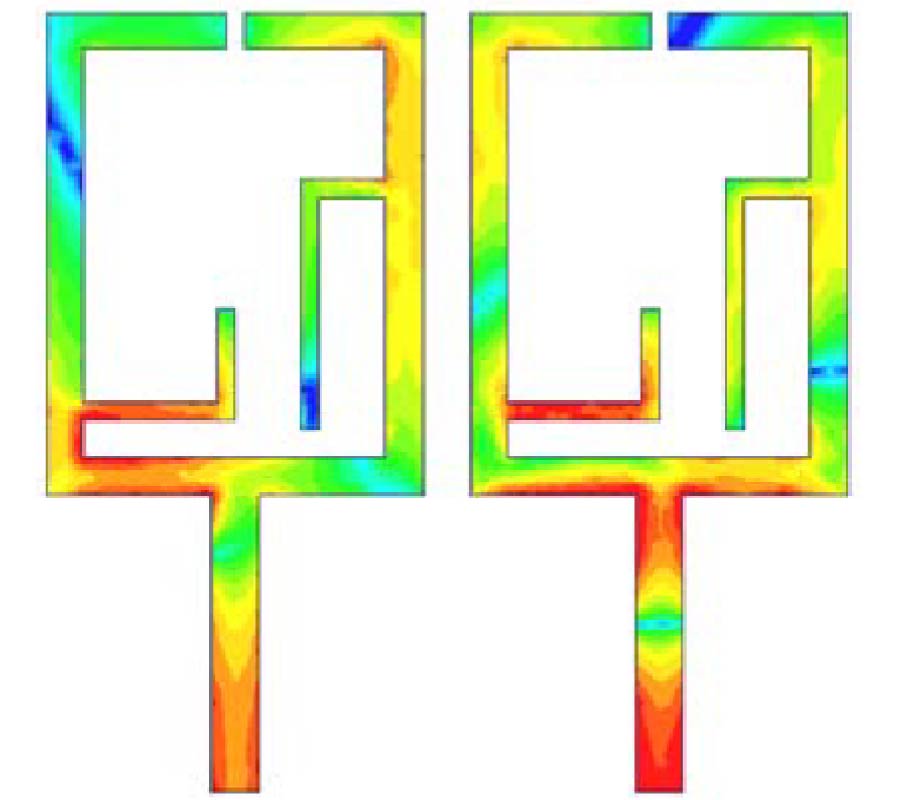
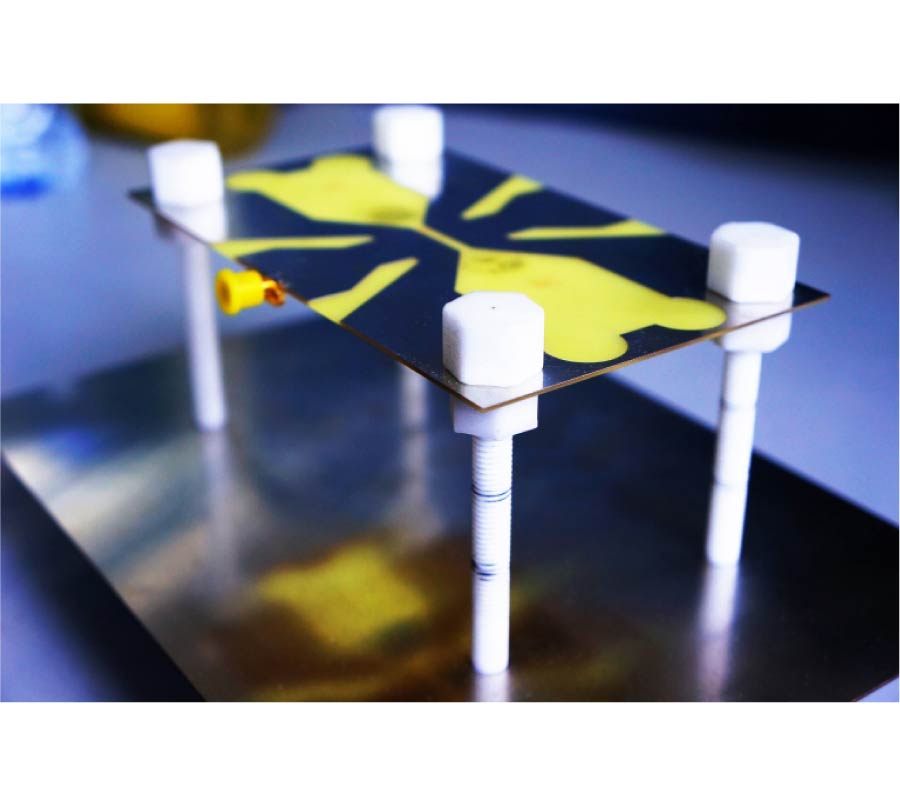
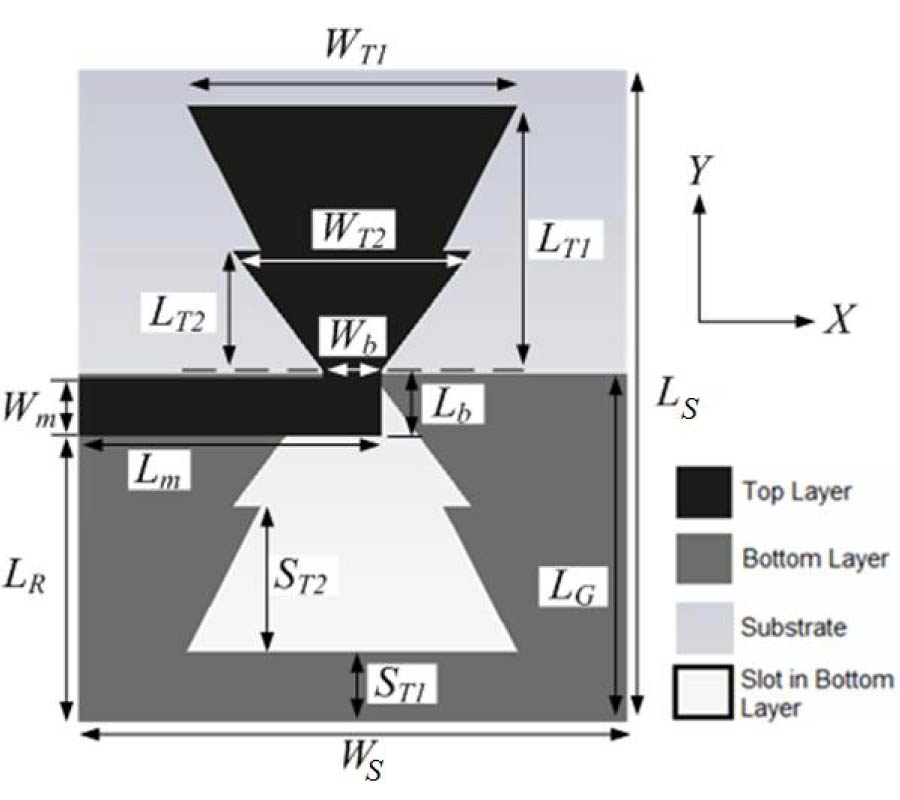
Novel designs of probe-fed broadband shorted patch antennas for ultrawideband (UWB) applications are presented in this paper. In these designs, unequal resonance arms fed by a folded patch produce multi resonances to broaden the impedance bandwidth. In the first design, the antenna consists of an asymmetric Eshaped patch, a folded-patch feed and shorting pins. This antenna is achieved by four adjacent resonances with the measured -10 dB impedance bandwidth of 76.18%. The pins are utilized to miniaturize the size of the patch. By introducing a folded ramp-shaped feed in the similar structure with the first design, a wider bandwidth with the five resonances is obtained. This improved design introduces an antenna with an impedance bandwidth of more than 110% and a considerable size reduction compared to the first antenna. The antennas present resonance tuning ability within the impedance bandwidth by varying the length of unequal arms. In addition, parametric studies are performed by investigating the effects of different key parameters on obtaining optimal designs of the proposed antennas.
ULTRA-WIDEBAND SHORTED PATCH ANTENNAS FED BY FOLDED-PATCH WITH MULTI RESONANCES
2012-09-29
PIER B
Vol. 44, 283-307
Deployment Concepts for Overhead High Voltage Broadband Over Power Lines Connections with Two-Hop Repeater System: Capacity Countermeasures Against Aggravated Topologies and High Noise Environments
Athanasios G. Lazaropoulos
This paper extends the existing transmission and capacity analysis in order to investigate the broadband potential of overhead high-voltage/broadband over power lines (HV/BPL) connections where a single repeater is additively deployed between their existing transmitting and receiving ends (overhead HV/BPL connections with two-hop repeater system). The contribution of this paper is three-fold. First, the broadband performance of various overhead HV/BPL connections with two-hop repeater system has been studied with regard to their cumulative capacity. The analysis and relevant simulations validate the potentially excellent communications medium of overhead HV/BPL channels over a 25 km repeater span well beyond 100 MHz in terms of cumulative capacity. In addition, through the deployment of two-hop repeater systems, apart from the upsurge of cumulative capacity, overhead HV/BPL connections become more adaptive to different capacity requirements. Second, it is found that overhead HV/BPL network capacity performance depends drastically on factors such as the overhead HV grid topology and the noise characteristics. Through the deployment of two-hop repeater systems, capacity losses due to existing aggravated overhead HV/BPL topologies and high noise environments are significantly reduced. Third, the numerical results reveal the importance of considering as suitable mitigation technique the deployment of overhead HV/BPL connections with two-hop repeater system. Except for the low-cost and quick technology upgrade of existing overhead HV/BPL networks, this mitigation technique may permit the future broadband exploitation of overhead HV/BPL networks and their interoperability with other broadband technologies.
DEPLOYMENT CONCEPTS FOR OVERHEAD HIGH VOLTAGE BROADBAND OVER POWER LINES CONNECTIONS WITH TWO-HOP REPEATER SYSTEM: CAPACITY COUNTERMEASURES AGAINST AGGRAVATED TOPOLOGIES AND HIGH NOISE ENVIRONMENTS
2012-09-29
PIER C
Vol. 33, 67-79
Design and Analysis of a Novel CPW-Fed Koch Fractal Yagi-Uda Antenna with Small Electric Length
Shu Lin , Xi Liu and Xin-Ru Ma
A novel Koch fractal printed Yagi-Uda antenna fed by coplanar waveguide (CPW) is proposed and analyzed. The antenna has first-order Koch fractal monopoles, and the monopoles' ground plane acts as the ground plane of the antenna. The radiation characteristics of the antenna are simulated by CST Microwave Studio® and explained by the simulated results. The antenna's currents distribution becomes more uniform after being fractal, which is conducive to increasing antenna's radiation directivity. The proposed Koch fractal Yagi-Uda antenna has an operating band of 885-913 MHz (relative bandwidth 3.1%) with the center frequency of 900 MHz. The total antenna size is 171 mm×85 mm (0.51λ×0.25λ) and the length in the antenna's polarization direction is only 25% of the wavelength corresponding to the center frequency. Compared to traditional Yagi-Uda antenna, the proposed antenna can achieve a 50% miniaturization effect.
DESIGN AND ANALYSIS OF A NOVEL CPW-FED KOCH FRACTAL YAGI-UDA ANTENNA WITH SMALL ELECTRIC LENGTH
2012-09-29
PIER
Vol. 132, 233-254
Statistical Mid-Level Features for Building-Up Area Extraction from Full Polarimetric SAR Imagery
Wen Yang , Ying Liu , Gui-Song Xia and Xin Xu
This paper addresses the problem of designing statistical features for the extraction of building-up areas (BAs) from highresolution polarimetric synthetic aperture radar (PolSAR) imagery. The idea is to represent a building-up area by the distribution of its mid-level components, called intermediates, which are statistical patterns unsupervisedly learnt from PolSAR images. More precisely, by analyzing the structural properties and the polarimetric characteristics exhibited in various terrain types, we propose two kinds of midlevel features for small regions: the cluster based statistical feature (CSF) and the scattering mechanism based statistical feature (SMSF). In detail, for the CSF, the intermediates are the K-mean clusters with Wishart distance of the PolSAR images; for the SMSF, the intermediates are the scattering mechanism categories obtained by relying on a four-component decomposition with deorientation of the PolSAR images. In contrast with existing features for describing BAs, the proposed features, i.e., CSF and SMSF, capture more complex context information of BAs. We compare the proposed features with those based on the Gaussian Markov random field (GMRF) models, which have been proven to be suitable for BAs mapping. Experimental results on RADARSAT-2 datasets demonstrate the effectiveness of the proposed features.
2012-09-28
PIER Letters
Vol. 35, 63-72
High-Isolation and Wide-Band 180º Hybrids Based on Electronically Tunable Lumped-Element Filters
Iñaki Gurutzeaga , Ane Insausti , Egoitz Celayeta and Beatriz Sedano
A new high isolation lumped-element 180º hybrid, using electronically adjustable filters with varactor diodes, are proposed. This design is very simple and is based on only two configurable low order (N = 2) filters. Due to the limited tuning frequency range of varactor diodes, maximum near-octave frequency coverage of 2.5-5 GHz was planned in the high isolation hybrid. An impressive simulated typical isolation in the range of >60dB was achieved. One of the typical applications of developed hybrids could be the conversion of 70MHz IF to microwave frequencies, with broadband mixers in single-conversion converters, and with very high LO rejection (>60 dB).
HIGH-ISOLATION AND WIDE-BAND 180º HYBRIDS BASED ON ELECTRONICALLY TUNABLE LUMPED-ELEMENT FILTERS
2012-09-28
PIER C
Vol. 33, 55-66
Compact Printable Orientation Independent Chipless RFID Tag
Md Aminul Islam , Yixian Yap , Nemai C. Karmakar and Akm Azad
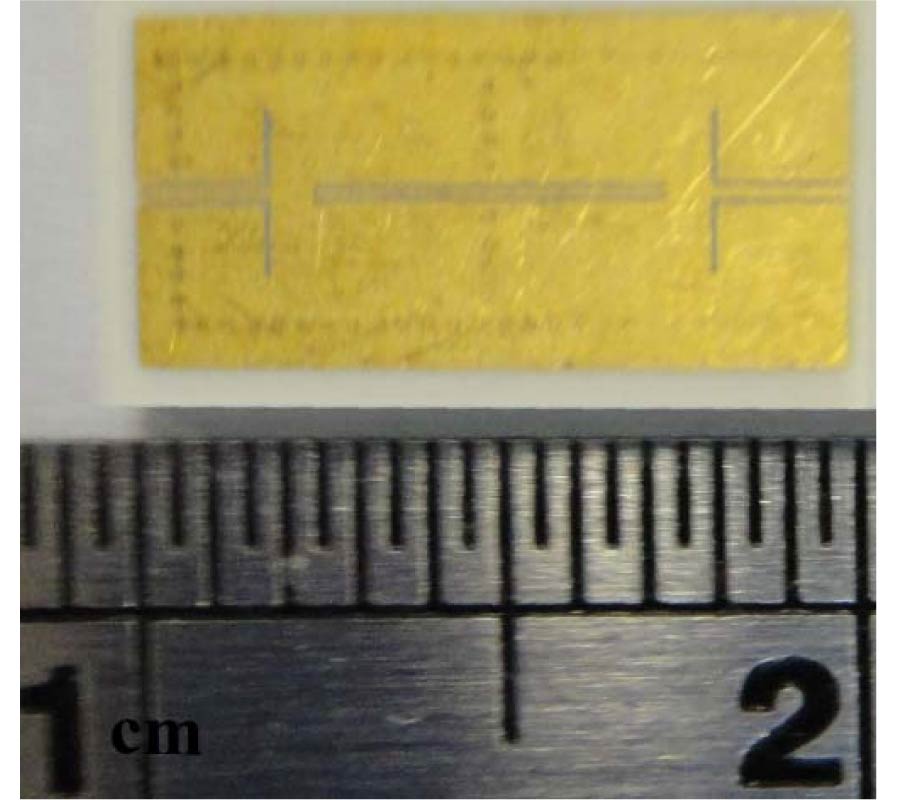
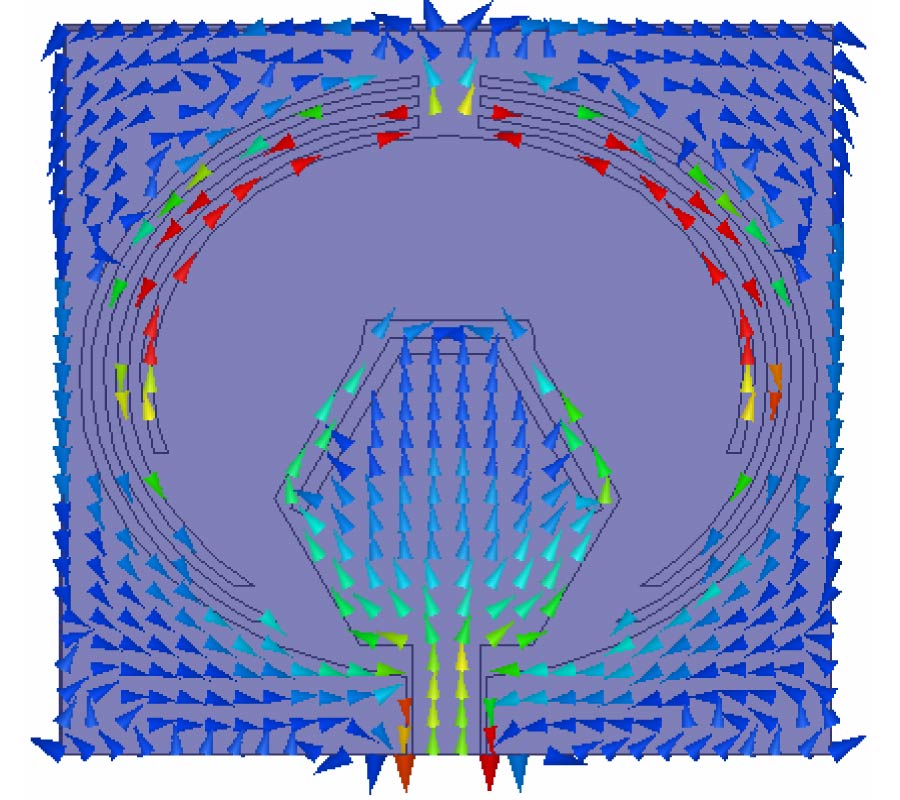
A novel design concept of a compact printable orientation independent chipless RFID tag is presented. The tag consists of a circular patch loaded with multiple slot ring resonators. This symmetric frequency domain based tag has the advantage to be read from any orientation with the reader antennas. The tag can be read in close proximity by chipless RFID tag reader with waveguide(s) and also can be read in both near field and far-field of the RFID tag reader with antennas. This tag does not have a ground plane and has higher data density compared to the existing printable chipless tags. The usability of this single sided tag in close proximity is verified by waveguide measurements for both proximity applications such as on ID access cards, item level tagging etc. and slot reading application such as on banknotes, credit cards etc.
COMPACT PRINTABLE ORIENTATION INDEPENDENT CHIPLESS RFID TAG
2012-09-28
PIER C
Vol. 33, 43-53
Compact Base Station Antennas Using Metamaterials
Xing Liu , Shah Nawaz Burokur , Andre De Lustrac , Guy Sabanowski and Gerard Pascal Piau
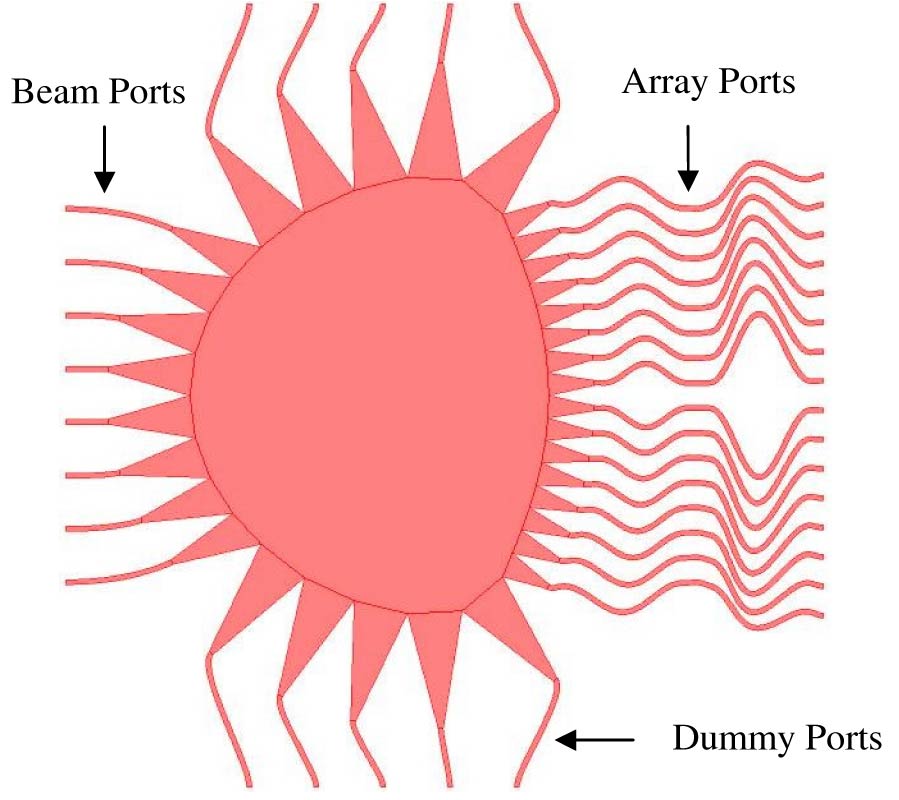
The paper deals with the modelling, practical implementation and characterization of a directional antenna controllable through 360° in the [2-2.5 GHz] frequency band. The antenna is composed of a central omnidirectional broadband monopole feed surrounded by a metamaterial made of one or two controllable layers of metallic strips printed on a dielectric substrate, which can be electrically continuous or discontinuous. Following the electrical state of these strips, the metamaterial can be reflective or transparent. Then by controlling the distribution of reflective and transparent regions of the latter metamaterial around the central feed, a directional emission having an angular beamwidth lower or equal to 60° and controllable through 360° is produced in the UMTS and WIFI frequency bands, demonstrating the wideband operation of this antenna.
COMPACT BASE STATION ANTENNAS USING METAMATERIALS
2012-09-27
PIER B
Vol. 44, 261-282
Electromagnetic Field of Arbitrarily Oriented Coil Antennas in Complex Underground Environment
Ning Yuan , Ce Richard Liu and Xiaochun Nie
In this paper, a finite-difference based method is presented to simulate the electromagnetic field generated by arbitrarily-oriented coil antennas in three-dimensional (3-D) complex underground media. The media have multiple layers in both the vertical and horizontal direction and can be fully anisotropic. The developed finite-difference method uses a staggered grid to approximate a vector equation in terms of the scattered electric field. The resultant linear sparse matrix is solved iteratively using a generalized minimal residual (GMRES) algorithm and an incomplete LU precondition technique is applied to improve the convergence behavior of the linear equation, thus accelerate the solution. The developed algorithm is validated by numerical examples and then applied to the simulation and study of the popular triaxial induction tools in electrical well logging engineering for anisotropy detection.
ELECTROMAGNETIC FIELD OF ARBITRARILY ORIENTED COIL ANTENNAS IN COMPLEX UNDERGROUND ENVIRONMENT
2012-09-27
PIER C
Vol. 33, 29-41
Compact Half-Mode Substrate Integrated Waveguide (HMSIW) Filter with Dual-Mode Microstrip Resonator
Min Zhou , Meng-Xia Yu , Jun Xu , Xiao-Chuan Zhang and Mao-Yan Wang
A novel fourth-order half-mode substrate integrated waveguide (HMSIW) filter with dual-mode microstrip resonator is presented. The dual-mode resonator is etched on the top metal layer of HMSIW cavity, so the size can be reduced greatly. The filter has compact size and wide stopband in comparison with conventional SIW filters. Microstrip resonators and cavity resonators are integrated in one filter to achieve the goal of smaller size and better performance. Two filter samples are designed and fabricated, with good agreement between the measured and the simulated S-parameters.
COMPACT HALF-MODE SUBSTRATE INTEGRATED WAVEGUIDE (HMSIW) FILTER WITH DUAL-MODE MICROSTRIP RESONATOR
2012-09-27
PIER M
Vol. 26, 101-114
Ground Plane Contribution in Wireless Handheld Devices Using Radar Cross Section Analysis
Jaume Anguera and Aurora Andujar
The ground plane of wireless handheld devices plays a significant role in the electromagnetic behavior determining bandwidth, efficiency, and radiation patterns. Therefore, it is necessary to determine the frequency region where the ground plane can be better excited, especially for low frequencies where the performance of the radiating system is critical due to size limitations with respect to the operating wavelength. A fast method based on the radar cross section (RCS) is presented for computing the frequency at which the ground plane can be excited. The proposal is applied to three typical wireless platforms: a handset phone, a smartphone, and a clamshell phone. The method is compared with characteristic mode analysis and the results demonstrate a very good agreement in the resonant frequency prediction. Complex platforms using metallic strips and slots in the ground plane are analyzed using RCS which gives physical insight into the electromagnetic performance.
GROUND PLANE CONTRIBUTION IN WIRELESS HANDHELD DEVICES USING RADAR CROSS SECTION ANALYSIS
2012-09-27
PIER
Vol. 132, 215-232
Sub-Millimeter Wave Frequency Scanning 8 X 1 Antenna Array
Rene Camblor-Diaz , Samuel Ver-Hoeye , Carlos Vazquez-Antuna , George Roberto Hotopan , Miguel Fernandez-Garcia and Fernando Las Heras Andres
In this work, a sub-millimeter wave frequency scanning 8 x 1 element antenna array is presented for its use in a terahertz imaging system operating in the 220-330 GHz frequency band. The antenna array is formed by eight open ended waveguides, a phase-shifting network implemented with WR-3 rectangular waveguides and a power divider. Dielectric rods are used to improve the radiation patterns at large beam-steering angles. Prototypes of antenna arrays with and without the dielectric rods have been manufactured and experimentally characterized. A beam-steering range greater than 40° has been obtained for a frequency sweep between 270 GHz and 330 GHz.
SUB-MILLIMETER WAVE FREQUENCY SCANNING 8 x 1 ANTENNA ARRAY
2012-09-27
PIER
Vol. 132, 199-213
Evolution Towards a New Lspr Particle: Nano-Sinusoid
Daryoush Mortazavi , Abbas Z. Kouzani and Ladislau Matekovits
This paper proposes a novel nano-sinusoid particle to be employed in enhanced localized surface plasmon resonance (LSPR) bio-sensing devices. Numerical investigations are carried out to demonstrate advantages offered by the proposed nano-particle on LSPR enhancement over other nano-particles including noble nano-triangles and nano-diamonds. Although nano-triangles exhibit high concentration of the electric field near their tips, when illuminated with a light polarized along the tip axis, they present only one hot spot at the vertex along the polarization direction. To create a structure with two hot spots, which is desired in bio-sensing applications, two nano-triangles can be put back-to-back. Therefore, a nano-diamond particle is obtained which exhibits two hot spots and presents higher enhancements than nano-triangles for the same resonant wavelength. The main drawback of the nano-diamonds is the fluctuation in their physical size-plasmon spectrum relationships, due to a high level of singularity as the result for their four sharp tip points. The proposed nano-sinusoid overcomes this disadvantage while maintaining the benefits of having two hot spots and high enhancements.
EVOLUTION TOWARDS A NEW LSPR PARTICLE: NANO-SINUSOID
2012-09-27
PIER
Vol. 132, 177-198
Surface Waves Radiation by Finite Arrays of Magnetoelectric Resonators
Camille Jouvaud , Abdelwaheb Ourir and Julien de Rosny
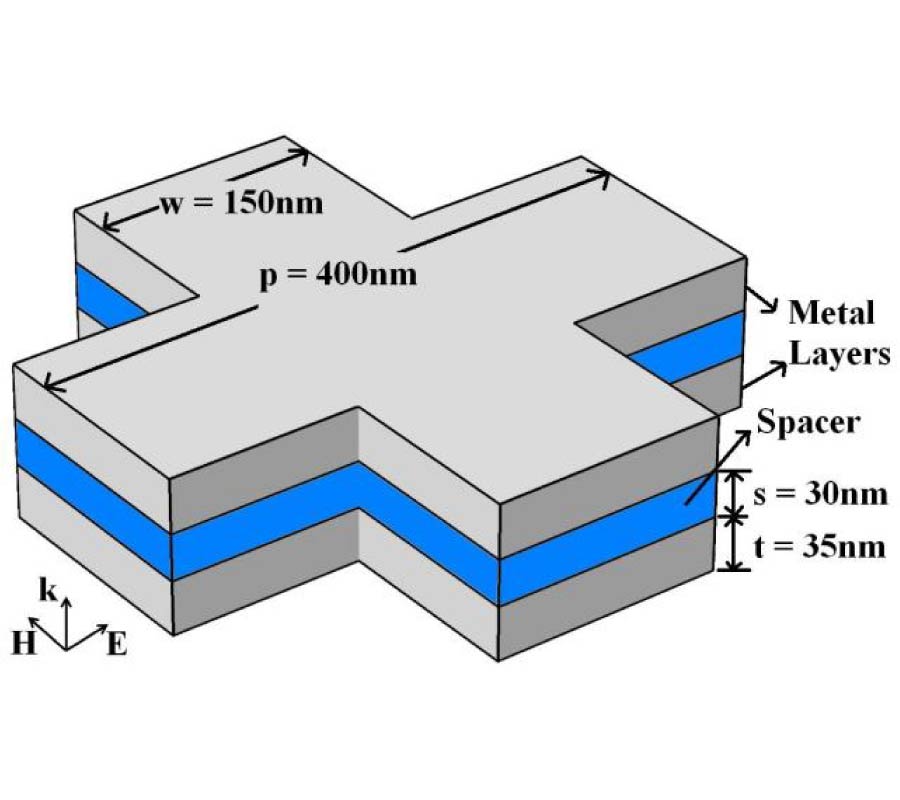
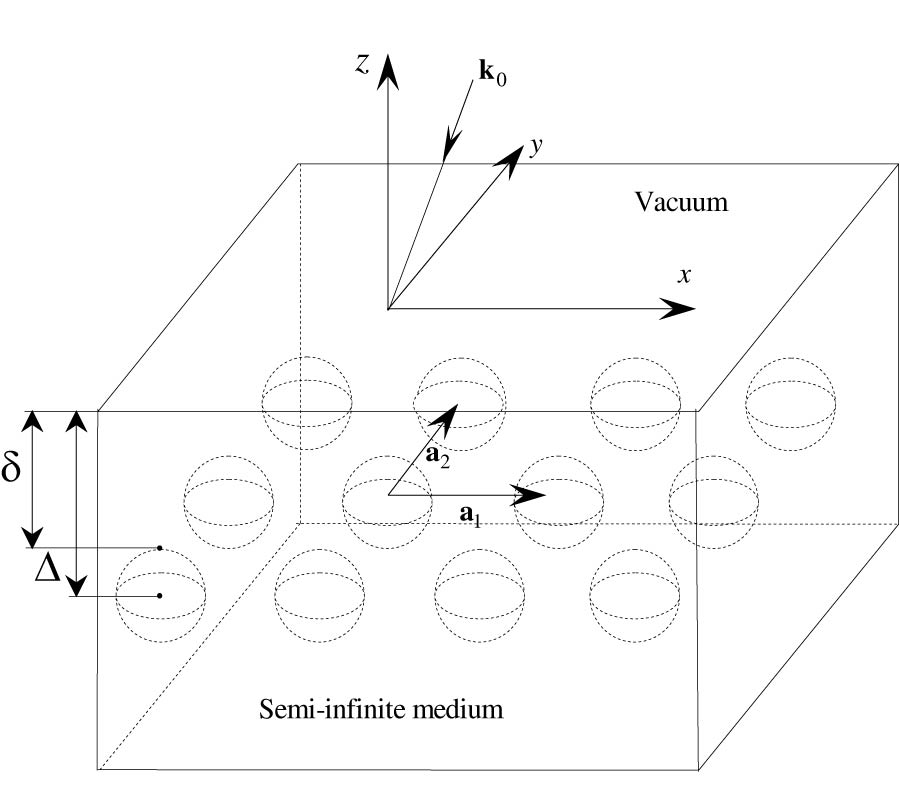
We study the propagation of waves on infinite and finite size arrays made of subwavelength magnetoelectric resonators. We propose an analytical study where each magnetoelectric resonator is modelled simultaneously by an electric and a magnetic dipole. We show how near field coupling and wavenumber quantification due to the finite size of the structure induce a frequency splitting of the resonator fundamental mode. We theoretically demonstrate that despite a spatial period of the waves smaller than half wavelength (in vacuum), the structure can efficiently emits radiations. An analytic expression of the Q factor associated to the radiation losses is proposed. To correctly estimate this factor, we show that not only near but also far field interaction terms between the dipoles must to be considered.
SURFACE WAVES RADIATION BY FINITE ARRAYS OF MAGNETOELECTRIC RESONATORS
2012-09-27
PIER
Vol. 132, 159-175
Transient Resistance Analysis of Large Grounding Systems Using the FDTD Method
Run Xiong , Bin Chen , Jian-Jun Han , Yan-Yu Qiu , Wen Yang and Qiang Ning
In this work, a new method has been proposed for the finite-difference time-domain (FDTD) analysis of the transient grounding resistance (TGR) of large grounding systems. To calculate the TGR, a coarse grid has been occupied to model the earthing conductor, the CPML is chose to truncate the computational domain, and parallel implementation is involved to overcome the memory limit of the serial FDTD. With this model, the effect of the earthing conductor number and topology structure, the buried depth, and the ground permittivity and conductivity on the TGR is tested to find an optimized program to decrease the TGR of the lightning protection grounding systems.
TRANSIENT RESISTANCE ANALYSIS OF LARGE GROUNDING SYSTEMS USING THE FDTD METHOD
2012-09-26
PIER B
Vol. 44, 241-259
Radar Target Detection Using Hidden Markov Models
Serdar Tugac and Murat Efe
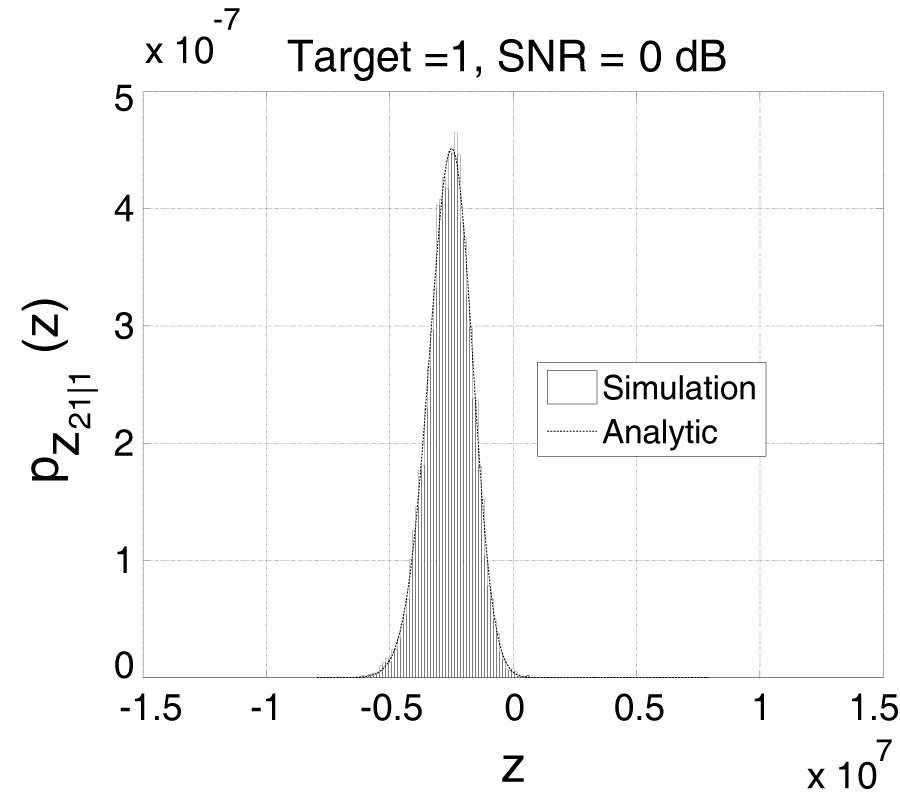
Standard radar detection process requires that the sensor output is compared to a predetermined threshold. The threshold is selected based on a-priori knowledge available and/or certain assumptions. However, any knowledge and/or assumptions become inadequate due to the presence of multiple targets with varying signal return and usually non stationary background. Thus, any fixed predefined threshold may result in either increased false alarm rate or increased track loss. Even approaches where the threshold is adaptively varied will not perform well in situations when the signal return from the target of interest is too low compared to the average level of the background. Track-before-detect (TBD) techniques eliminate the need for a detection threshold and provide detecting and tracking targets with lower signal-to-noise ratios than standard methods. However, although TBD techniques eliminate the need for detection threshold at sensor's signal processing stage, they often use tuning thresholds at the output of the filtering stage. This paper presents a Hidden Markov Model (HMM) based target detection method that avoids any thresholding at any stage of the detection process. Moreover, since the proposed HMM method is based on the target motion models, the output of the detection process can easily be employed for manoeuvring target tracking.
RADAR TARGET DETECTION USING HIDDEN MARKOV MODELS
2012-09-26
PIER B
Vol. 44, 223-239
Analytical Method for Coupling Calculations of Rotated Iris Coupled Resonator Cavity
Rajesh Kumar , Pitamber Singh , Manmohan Singh Bhatia and Girish Kumar
Iris type waveguide to cavity couplers are used to couple power to particle accelerator cavities. Waveguide to cavity coupling for arbitrarily oriented rectangular iris is analyzed using Bethe's small hole coupling theory. Magnetic moment of rotated iris is obtained by defining its dyadic magnetic polarizability. Power radiated by magnetic moment into the incoming waveguide is used for coupling calculations at arbitrary angle. A close agreement is found between the proposed theory, simulations and microwave measurements.
ANALYTICAL METHOD FOR COUPLING CALCULATIONS OF ROTATED IRIS COUPLED RESONATOR CAVITY