Search Results(13800)

2012-09-26
PIER C
Vol. 33, 17-28
Prototype Ultra Wideband Radar System for Bladder Monitoring Applications
Martin O'Halloran , Fearghal Morgan , Daniel Flores-Tapia , Dallan Byrne , Martin Glavin and Edward Jones
The aim of this study is to address the management of urinary problems by detecting changes in the volume of urine within the human bladder using low cost, low power, wearable Ultra Wideband (UWB) sensors and signal processing techniques. The paper describes experiments on the classication of six three-layer dielectrically representative bladder phantoms, mimicking a range of muscle and bladder wall-to-wall distances. The process involves the illumination of the bladder with a UWB pulse. Due to the dielectric contrast between urine and bladder wall tissue at microwave frequencies, an electromagnetic reection is generated at both the anterior and posterior bladder wall. These reflections are recorded, the salient features are extracted and processed by a classification algorithm to estimate the volume of urine present in the bladder. To evaluate the prototype system, a number of physical bladder phantoms were constructed, each mimicking bladders of different volumes. Principal Component Analysis (PCA) was applied and the processed features were classified by a k-nearest neighbour learning algorithm to estimate the state of the bladder (small, medium or full). The paper describes the bladder phantom prototype systems and the experimental setup. Results illustrate detection of phantom bladder states with an accuracy of up to 91%.
PROTOTYPE ULTRA WIDEBAND RADAR SYSTEM FOR BLADDER MONITORING APPLICATIONS
2012-09-26
PIER C
Vol. 33, 1-15
ISM Band Rectenna Using a Ring Loaded Monopole
Giuseppina Monti , Laura Corchia and Luciano Tarricone
This paper proposes a rectifying antenna (rectenna) for operation in the ISM (Industrial, Scientific and Medical) band centered at 2.45 GHz. It consists of a modified circular monopole loaded with a rectangular ring and a half-wave rectifier. Numerical and experimental data are reported and discussed. From measurements, it is demonstrated that, when the power density incident on the monopole is 155 μW/cm², the device here presented exhibits values of the RF-to-DC conversion efficiency higher than 30 % in the frequency range 2.35-2.5 GHz with a maximum of about 50 % at 2.45 GHz.
ISM BAND RECTENNA USING A RING LOADED MONOPOLE
2012-09-26
PIER M
Vol. 26, 85-100
Electromagnetic Characteristics of Conformal Dipole Antennas Over a PEC Sphere
Javad Soleiman-Meiguni , Manouchehr Kamyab and Ahmad Hosseinbeig
Rigorous mathematical Method of Moments (MoMs) for analyzing various radiating spherical structures is presented in this paper by using Dyadic Green's Functions (DGFs) in conjunction with Mixed Potential Integral Equation (MPIE) formulation. With the aid of linear Rao-Wilton-Glisson (RWG) triangular basis functions and by converting spherical DGFs to Cartesian DGFs, a conformal dipole antenna in free space and over a Perfect Electric Conductor (PEC) sphere is analyzed. The characteristics of such antennas are computed by applying multilayer spherical DGFs and asymptotic approximation methods. Mutual couplings between elements of a conformal dipole antenna array in free space and over a conducting sphere are also investigated. Good agreement between the computational results obtained by the proposed methods and those obtained from commercial simulator packages shows accuracy and high convergence speed of the presented methods.
ELECTROMAGNETIC CHARACTERISTICS OF CONFORMAL DIPOLE ANTENNAS OVER A PEC SPHERE
2012-09-26
PIER
Vol. 132, 149-158
Spectrum of Cherenkov Radiation in Dispersive Metamaterials with Negative Refraction Index
Gennadiy Burlak
We numerically studied the spectrum of Cherenkov optical radiation by a nonrelativistic anisotropic electron bunch crossing 3D dispersive metamaterial. A practically important case when such a medium is described by Drude model is investigated in details. In our theory only parameters of a metamaterial are fixed. The frequency spectrum of internal excitations is left to be defined as a result of the numerical simulation. It is found that a periodic field structure coupled to plasmonic excitations is arisen when the dispersive refractive index of a metamaterial becomes negative. In this case the reversed Cherenkov radiation is observed.
SPECTRUM OF CHERENKOV RADIATION IN DISPERSIVE METAMATERIALS WITH NEGATIVE REFRACTION INDEX
2012-09-25
PIER M
Vol. 26, 69-84
Computation of the Modes of Elliptic Waveguides with a Curvilinear 2D Frequency-Domain Finite-Difference Approach
Alessandro Fanti , Giuseppe Mazzarella , Giorgio Montisci and Giovanni Andrea Casula
A scalar Frequency-Domain Finite-Difference approach to the mode computation of elliptic waveguides is presented. The use of an elliptic cylindrical grid allows us to take exactly into account the curved boundary of the structure and a single mesh has been used both for TE and TM modes. As a consequence, a high accuracy is obtained with a reduced computational burden, since the resulting matrix is highly sparse.
COMPUTATION OF THE MODES OF ELLIPTIC WAVEGUIDES WITH A CURVILINEAR 2D FREQUENCY-DOMAIN FINITE-DIFFERENCE APPROACH
2012-09-25
PIER M
Vol. 26, 55-68
Resolution of Multiple Concealed Threat Objects Using Electromagnetic Pulse Induction
Abdulbast Elgwel , Stuart William Harmer , Nicholas John Bowring and Shaofei Yin
The detection and identification of conducting objects using electromagnetic pulses to excite circulating eddy currents within the object is demonstrated by numerical simulation using a finite element time domain electromagnetic solver. The ability to discriminate between objects is based on the decay rate of the induced currents in the object, typically ~ 100 μS. The decay rates are different for a wide variety of everyday objects, allowing threat objects such as handguns, grenades and knives to be discriminated from benign objects such as mobile phones handsets, watches, keys, etc. Crucially, the time constant characterising an object depends only upon the electrical properties of the object (conductivity) and the shape and size of the object; the orientation of the object is irrelevant. This aspect independence of temporal current decay rate forms the basis of a potential object detection and identification system. By application of an algorithm based on the generalized pencil of function method, the authors demonstrate the ability to effectively count and indentify multiple objects carried in close proximity providing that the objects do not have very similar time constants and that signal to noise ratio is high.
RESOLUTION OF MULTIPLE CONCEALED THREAT OBJECTS USING ELECTROMAGNETIC PULSE INDUCTION
2012-09-25
PIER
Vol. 132, 129-148
First-Principle Analysis for Electromagnetic Eigen Modes in an Optical Metamaterial Slab
Masanobu Iwanaga
Electromagnetic (EM) eigen modes in a fishnet metamaterial (MM) slab have been comprehensively analyzed in an experimental configuration, based only on precise solutions of Maxwell equations. The EM eigen modes were directly detected from light-absorption peaks. Each mode was explicitly characterized by the dispersion diagram and EM field distributions. It was consequently found that the modes were classfied into either inner modes inside the slab or a mode at the interface with the surrounding media. The symmetric properties of the inner modes were clarified using group theory. The interface mode was found to come from surface plasmon polariton at flat metal/insulator interface. The present analysis procedure is generally applicable to MM slabs and enables to clarify the properties without models or assumptions, which have been usually used in MM studies.
FIRST-PRINCIPLE ANALYSIS FOR ELECTROMAGNETIC EIGEN MODES IN AN OPTICAL METAMATERIAL SLAB
2012-09-24
PIER B
Vol. 44, 191-221
Cellular System Information Capacity Change at Higher Frequencies Due to Propagation Loss and System Parameters
Kwashie Amartei Anang , Predrag B. Rapajic , Ruiheng Wu , Lawal Bello and Titus Ikechukwu Eneh
In this paper, mathematical analysis supported by computer simulation is used to study cellular system information capacity change due to propagation loss and system parameters (such as path loss exponent, shadowing and antenna height) at microwave carrier frequencies greater than 2 GHz and smaller cell size radius. An improved co-channel interference model, which includes the second tier co-channel interfering cells is used for the analysis. The system performance is measured in terms of the uplink information capacity of a time-division multiple access (TDMA) based cellular wireless system. The analysis and simulation results show that the second tier co-channel interfering cells become active at higher microwave carrier frequencies and smaller cell size radius. The results show that for both distance-dependent: path loss, shadowing and effective road height the uplink information capacity of the cellular wireless system decreases as carrier frequency fc increases and cell size radius R decreases. For example at a carrier frequency fc = 15.75 GHz, basic path loss exponent α = 2 and cell size radius R = 100, 500 and 1000 m the decrease in information capacity was 20, 5.29 and 2.68%.
CELLULAR SYSTEM INFORMATION CAPACITY CHANGE AT HIGHER FREQUENCIES DUE TO PROPAGATION LOSS AND SYSTEM PARAMETERS
2012-09-24
PIER M
Vol. 26, 39-53
Influence of the Plasma Column Cross-Section Non-Circularity on the Excitation of the Azimuthal Surface Waves in Electron Cyclotron Frequency Range by Annular Electron Beam
Igor O. Girka , Volodymyr Girka and Ivan Viktorovych Pavlenko
The initial stage of interaction between an annular beam of electrons, which rotate along Larmor orbits in the gap between a localized plasma column and a metal waveguide with a circular cross-section of its walls, and the electromagnetic waves of the surface type, is studied theoretically. These waves are extraordinary polarized; they propagate along the azimuthal angle across an axial external steady magnetic field in the electron cyclotron frequency range. The numerical analysis shows that changing the shape of the plasma filling cross section leads to corrections to the eigen frequency of the surface waves but does not cause a disruption of the resonance beam-wave instability development. Moreover, the conditions are found when appropriate choice of the shape can lead to increasing the instability growth rate by dozens of percent.
INFLUENCE OF THE PLASMA COLUMN CROSS-SECTION NON-CIRCULARITY ON THE EXCITATION OF THE AZIMUTHAL SURFACE WAVES IN ELECTRON CYCLOTRON FREQUENCY RANGE BY ANNULAR ELECTRON BEAM
2012-09-24
PIER
Vol. 132, 113-128
Double Periodic Composite Right/Left Handed Transmission Line Based Leaky Wave Antenna by Singular Perturbation Method
Manisha D. Mujumdar , Cheng Jin and Arokiaswami Alphones
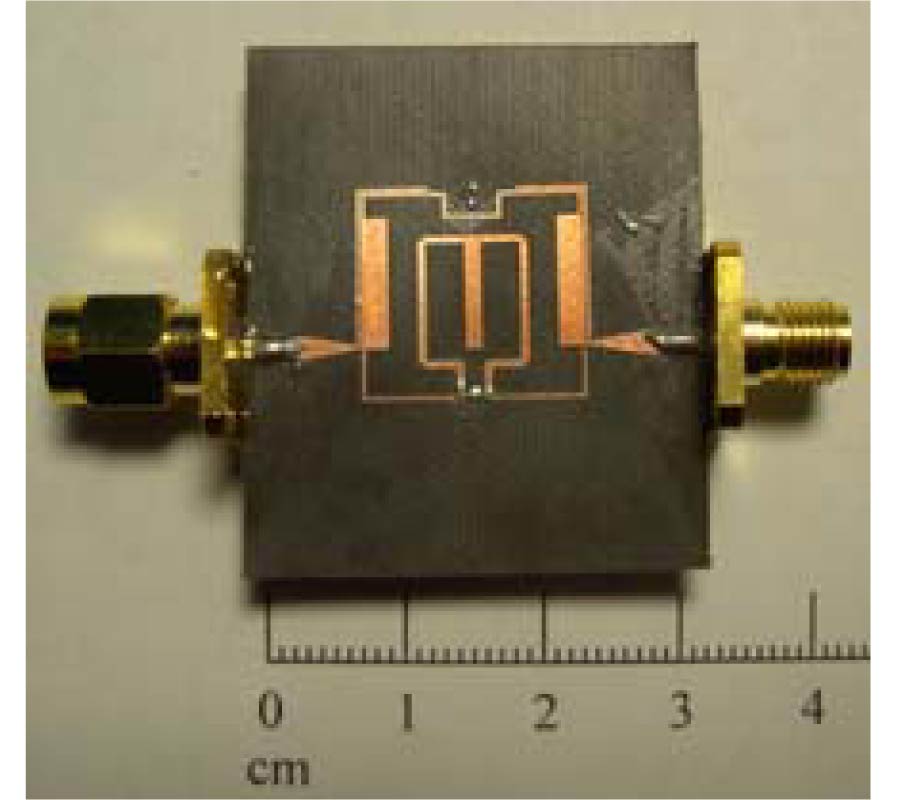
The paper proposes a Composite Right/Left Handed double periodic transmission line structure with both inductance and capacitance loaded. The structure exhibits leaky wave radiation and hence can be considered for LWA applications. We have theoretically obtained dispersion characteristics using Singular perturbation method. Also, the radiation efficiency has been obtained for different modulation indices. A novel leaky wave radiation has been obtained below the left handed passband with narrow bandwidth. The proposed structure has been fabricated on FR4 substrate and measured. The simulated and measured results seem to be in good agreement.
DOUBLE PERIODIC COMPOSITE RIGHT/LEFT HANDED TRANSMISSION LINE BASED LEAKY WAVE ANTENNA BY SINGULAR PERTURBATION METHOD
2012-09-23
PIER
Vol. 132, 91-111
Smart Prototyping Techniques for UHF RFID Tags: Electromagnetic Characterization and Comparison with Traditional Approaches
Luca Catarinucci , Riccardo Colella and Luciano Tarricone
Over the last few years, the active and growing interest in Radiofrequency Identification (RFID) technology has stimulated a conspicuous research activity involving design and realization of passive label-type UHF RFID tags customized for specific applications. In most of the literature, presented and discussed tags are prototyped by using either rough-and-ready procedures or photolithography techniques on rigid Printed Circuit Boards. However, for several reasons, such approaches are not the most recommended, in particular they are rather time-consuming and, moreover, they give rise to low quality devices in one case, and to cumbersome and rigid tags in the other. In this work, two alternative prototyping techniques suitable for cost-effective, time-saving and highperformance built-in-lab tags are introduced and discussed. The former is based on the joint use of flexible PCBs and solid ink printers. The latter makes use of a cutting plotter to precisely shape the tag antenna on thin copper sheets. Afterwards, a selection of tags, designed and manufactured by using both traditional and alternative techniques, is rigorously characterized from the electromagnetic point of view in terms of input impedance and whole tag sensitivity by means of appropriate measurement setups. Results are then compared, thus guiding the tag designer towards the most appropriate technique on the basis of specific needs.
SMART PROTOTYPING TECHNIQUES FOR UHF RFID TAGS: ELECTROMAGNETIC CHARACTERIZATION AND COMPARISON WITH TRADITIONAL APPROACHES
2012-09-21
PIER C
Vol. 32, 259-269
Active Negative Inductor Based on Magnetic Flux
Daniel D. Stancil
An active circuit is described that exhibits the equivalent reactance of a negative inductor. In contrast with previous techniques based on negative impedance converters, the negative inductance is produced by generating an opposing time-varying magnetic flux. The new circuit also enables the inductance to be electronically varied between negative and positive values, can enhance the Q, and defaults to a conventional positive inductor in the event of active component failure. The performance of a prototype with an inductance of -0.344 mH and operating over the frequency range 1-40 kHz is described.
ACTIVE NEGATIVE INDUCTOR BASED ON MAGNETIC FLUX
2012-09-21
PIER C
Vol. 32, 245-258
Displacement Measurement Using a Two-Probe Implementation of Microwave Interferometry
Aleksei V. Doronin , Nikolai B. Gorev , Inna F. Kodzhespirova and Evgeny N. Privalov
This paper presents a two-probe implementation of microwave interferometry for displacement measurement at an unknown reflection coefficient. Theoretically, the proposed technique gives the exact value of the displacement for reflection coefficients (at the location of the probes) no greater r than 1/√2 and in the general case determines it to a worst-case accuracy of about 4.4% of the operating wavelength. Its experimental verification has demonstrated reasonable measurement accuracy for displacements several times as great as the operating wavelength (in real-time measurements at a free-space wavelength of 3 cm for a peak-to peak vibration amplitude of 15 cm, the maximum error in the determination of the instantaneous relative displacement and the peak-to-peak amplitude was about 3 mm and about 1 mm, respectively).
DISPLACEMENT MEASUREMENT USING A TWO-PROBE IMPLEMENTATION OF MICROWAVE INTERFEROMETRY
2012-09-21
PIER C
Vol. 32, 233-243
A Novel Compact UWB Textile Button Antenna
Song-Tao Yu , Ying Liu , Wen Jiang , Shu-Xi Gong and Tao Hong
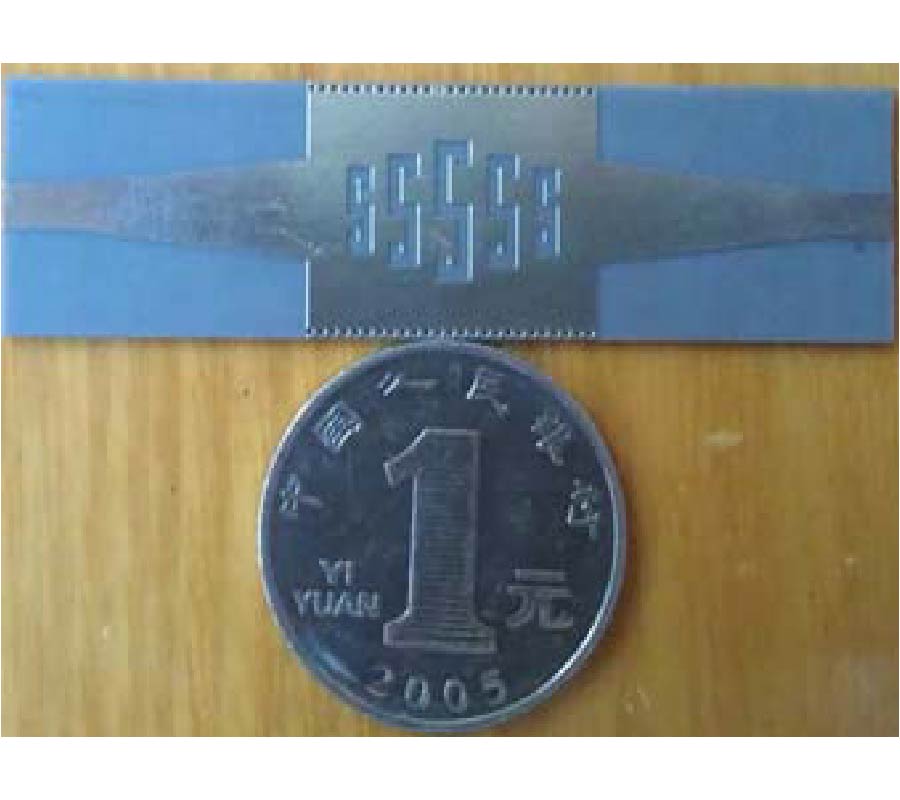
A novel compact textile antenna with the appearance of a button on clothing for body-centric wireless communications systems (BWCS) is presented. The antenna is placed on a textile substrate and fed by a coaxial line through the ground plane. The operating bandwidth of the antenna has met the requirement of the UWB communication system. The effects of the human body on S11 and S21 are presented and discussed in detail. The proposed antenna has good omni-directional radiation patterns and stable H-plane radiation patterns. The measured results show that the antenna is suitable for BWCS.
A NOVEL COMPACT UWB TEXTILE BUTTON ANTENNA
2012-09-21
PIER
Vol. 132, 71-90
Experimental Validation of a TDR-Based System for Measuring Leak Distances in Buried Metal Pipes
Andrea Cataldo , Giuseppe Cannazza , Egidio De Benedetto and Nicola Giaquinto
In this paper, the experimental validation of a time domain reflectometry (TDR)-based method for pinpointing water leaks in underground metal pipes is presented. The method relies on sensing the local change in the dielectric characteristics of the medium surrounding the leak point. The experimental validation of the method was carried out through measurements performed on a pilot plant (experimental case P1) and through on-the-field measurements performed on two `already-installed pipes', i.e., already operating and connected to the water distribution system (experimental cases P2 and P3). For the pilot plant, different leak conditions were imposed and the corresponding TDR responses were acquired and analyzed. For the onthe-field measurements, TDR measurements were performed on pipes for which a leak-detection crew had preliminarily individuated the possible presence of leaks (through traditional leak-detection methods). Finally, in view of the practical implementation of the proposed TDR-based leak-detection system, a data-processing procedure (which gives an automatic evaluation of the position of the leak) is also presented.
EXPERIMENTAL VALIDATION OF A TDR-BASED SYSTEM FOR MEASURING LEAK DISTANCES IN BURIED METAL PIPES
2012-09-21
PIER
Vol. 132, 49-69
Design of RF Energy Harvesting System for Energizing Low Power Devices
Norashidah Md. Din , Chandan Kumar Chakrabarty , Aima Bin Ismail , Kavuri Kasi Annapurna Devi and Wan-Yu Chen
Electromagnetic energy harvesting holds a promising future for energizing low power electronic devices in wireless communication circuits. This article presents an RF energy harvesting system that can harvest energy from the ambient surroundings at the downlink radio frequency range of GSM-900 band. The harvesting system is aimed to provide an alternative source of energy for energizing low power devices. The system design consists of three modules: a single wideband 377 Ω E-shaped patch antenna, a pi matching network and a 7-stage voltage doubler circuit. These three modules were fabricated on a single printed circuit board. The antenna and Pi matching network have been optimized through electromagnetic simulation software, Agilent ADS 2009 environment. The uniqueness of the system lies in the partial ground plane and the alignment of induced electric field for maximum current flow in the antenna that maximizes the captured RF energy. The design and simulation of the voltage doubler circuit were performed using Multisim software. All the three modules were integrated and fabricated on a double sided FR 4 printed circuit board. The DC voltage obtained from the harvester system in the field test at an approximate distance of 50 m from GSM cell tower was 2.9 V. This voltage was enough to power the STLM20 temperature sensor.
DESIGN OF RF ENERGY HARVESTING SYSTEM FOR ENERGIZING LOW POWER DEVICES
2012-09-21
PIER
Vol. 132, 25-48
A Matrix Splitting DDM Based on Sve-BI for Multiple Conducting Bodies Coated by Thin Layer Dielectric
Lin Lei , Jun Hu and Haoquan Hu
A matrix splitting domain decomposition method based on hybrid shell vector element-boundary integral (MSDD-SVE-BI) for three dimensional electromagnetic scattering from multiple conducting bodies coated by thin layer dielectric is proposed. In the framework of domain decomposition, the whole computational domains are divided into a lot of sub-SVE-domains and boundary element domains. For conducting body coated with thin-layer dielectric, the shell vector element is used instead of traditional tetrahedral elements to reduce the number of unknowns. Further, a block Gauss-Seidel type pre-conditioner is applied to attain fast matrix splitting formulation for the matrix connecting surface electric field and surface magnetic field. By this method, only sub-matrix inversion is required in the SVE-BI method, the computational time for connecting matrix can be reduced greatly. Several numerical examples prove the accuracy and efficiency of the present method.
A MATRIX SPLITTING DDM BASED ON SVE-BI FOR MULTIPLE CONDUCTING BODIES COATED BY THIN LAYER DIELECTRIC
2012-09-20
PIER B
Vol. 44, 163-190
Dirac Dispersion and Zero-Index in Two Dimensional and Three Dimensional Photonic and Phononic Systems (Invited Paper)
Che-Ting Chan , Xueqin Huang , Fengming Liu and Zhi Hong Hang
We show that by applying accidental degeneracy, we can obtain a triply-degenerate state at the zone center in the band diagram of two dimensional (2D) photonic crystal. The dispersion near the zone center comprisestwo linear bands and an additional flat band crossing at the same frequency. If this triply-degenerate state is formed by the degeneracy of monopole and dipole excitations, we show that the system can be mapped to an effective medium with permittivity and permeability equal to zero.While "Dirac cone" dispersions can only be meaningfully defined in 2D systems, the notion of a Dirac point can be extended to three dimensional (3D) classical wave systems. We show that a simple cubic photonic crystal composed of core-shell spheres exhibitsa 3D Dirac-like point at the center ofthe Brillouin zone at a finite frequency. Using effective medium theory, we can map our structure to an isotropiczero refractive index material inwhich the effective permittivity and permeability are simultaneously zero at the Dirac-like point frequency (ωD). The Dirac-like point is six-fold degenerate and is formed by the accidental degeneracy of electric dipole and magnetic dipole excitations, each with three degrees of freedom. We found that 3D Dirac-like pointsat can also be found in simple cubic acoustic wave crystals.Different from the case in the photonic system,the 3D Dirac-like points at \overrightarrow{k}= 0 in acoustic wave systemis four-fold degenerate, and is formed by the accidental degeneracy of dipole and monopole excitations. Using effective medium theory, this acoustic wave system can also be described as a materialwhich hasboth effective mass density and reciprocal of bulk modulus equal to zero at ωD. For both the photonic and phononic systems, a subset of the bands has linear dispersions near the zone center, and they give rise to equi-frequency surfaces that are spheres with radii proportional to (ω - ωD).
DIRAC DISPERSION AND ZERO-INDEX IN TWO DIMENSIONAL AND THREE DIMENSIONAL PHOTONIC AND PHONONIC SYSTEMS (Invited Paper)
2012-09-20
PIER B
Vol. 44, 137-161
A Novel Nonuniform Subgridding Scheme for FDTD Using an Optimal Interpolation Technique
Gyusub Kim , Ercument Arvas , Veysel Demir and Atef Elsherbeni
Finite-Difference Time-Domain (FDTD) subgridding schemes can significantly improve efficiency of various electromagnetic circuit simulations. However, numerous subgridding schemes suffer from issues associated with stability, efficiency, and material traverse capability. These issues limit general applicability of FDTD subgridding schemes to realistic problems. Herein, a robust nonuniform subgridding scheme is presented that overcomes those weaknesses. The scheme improves simulation accuracy with the aid of greatly increased stability margin and an optimal interpolation technique. It also improves simulation efficiency by allowing the use of time step factors as close as the Courant-Friedrichs-Lewy (CFL) limit. In addition, latetime stability and general applicability are verified through practical microstrip circuit simulation examples.
A NOVEL NONUNIFORM SUBGRIDDING SCHEME FOR FDTD USING AN OPTIMAL INTERPOLATION TECHNIQUE
2012-09-20
PIER B
Vol. 44, 117-135
Study on the Stability and Numerical Error of the Four-Stages Split-Step FDTD Method Including Lumped Inductors
Yong-Dan Kong , Qing-Xin Chu and Rong-Lin Li
The stability and numerical error of the extended four-stages split-step finite-difference time-domain (SS4-FDTD) method including lumped inductors are systematically studied. In particular, three different formulations for the lumped inductor are analyzed: the explicit, the semi-implicit, and the implicit schemes. Then, the numerical stability of the extended SS4-FDTD method is analyzed by using the von Neumann method, and the results show that the proposed method is unconditionally-stable in the semi-implicit and the implicit schemes, whereas it is conditionally stable in the explicit scheme, which its stability is related to both the mesh size and the values of the element. Moreover, the analysis of the numerical error of the extended SS4-FDTD is studied, which is based on the Norton equivalent circuit. Theoretical results show that: 1) the numerical impedance is a pure imaginary for the explicit scheme; 2) the numerical equivalent circuit of the lumped inductor is an inductor in parallel with a resistor for the semi-implicit and implicit schemes. Finally, a simple microstrip circuit including a lumped inductor is simulated to demonstrate the validity of the theoretical results.
STUDY ON THE STABILITY AND NUMERICAL ERROR OF THE FOUR-STAGES SPLIT-STEP FDTD METHOD INCLUDING LUMPED INDUCTORS