Search Results(13800)

2012-09-11
PIER B
Vol. 43, 295-311
The Verification of Chaotic Characteristics of Radar Angular Glint
Jin Zhang and Jungang Miao
In this paper, we present the chaotic verification for angular glint of complex radar target. Angular glint is a key factor in the generation loss probability in radar detections, and the intrinsic physical characteristic and suppression techniques of glint have been a hot topic in radar signal analysis. In this paper, the radar angular glint samples of a typical complex target are calculated by the Greco method based on Phase Gradient method. The simulated glint series fit the prerequisites of chaos for deterministic, nonlinear generation and no regularities in time domain, therefore the analysis the chaotic traits is required. We propose the design of chaotic verification flow, which is proved to be efficient and effective by the experiment of Lorenz Attractor signal model, and the details have been explained. The algorithm flow begins with the determination of optimum time lag and minimum embedding dimension, and is followed by the time-delay reconstruction in phase space. The results are presented with three qualitative verification results of attractor geometry, Poincare section and principal component analysis and two quantitative results of correlation dimension and largest Lyapunov exponent for the glint series. With comparison with results obtained by Lorenz attractor, the chaotic traits of angular glint data are verified. Therefore, the paper has proposed new possible reduction and prediction ideas to refrain angular glint in the digital processing unit of radar receiver in the future.
THE VERIFICATION OF CHAOTIC CHARACTERISTICS OF RADAR ANGULAR GLINT
2012-09-11
PIER Letters
Vol. 34, 169-176
Localized Dual-Side Mushroom Ground Plane Structure for the SSN Suppression in Multilayer Pcbs
Jianjie Li , Jun-Fa Mao , Siwei Ren and Hao-Ran Zhu
A novel dual-side mushroom ground plane (DMGP) structure is proposed for the noise suppression in high-speed multilayer printed circuit boards (PCBs). The proposed method is localized suppression technique where a dual-side mushroom structure is placed below the noise-sensitive device. In multilayer PCBs with DMGP, noise between two ports with large or small ports spacing can be minimized effectively, which is flexible for the layout of mixed-signal system. Wideband noise suppression is achieved for the fabricated boards even though the port spacing is only 3.5 mm.
LOCALIZED DUAL-SIDE MUSHROOM GROUND PLANE STRUCTURE FOR THE SSN SUPPRESSION IN MULTILAYER PCBS
2012-09-11
PIER C
Vol. 32, 151-165
Compact Dual-Band Printed Diversity Antenna for WiMAX/WLAN Applications
Ling Xiong and Peng Gao
A compact dual-band multiple-input-multiple-output (MIMO)/diversity antenna is proposed. This antenna is designed for 2.4/5.2/5.8 GHz WLAN and 2.5/3.5/5.5 GHz WiMAX applications in portable mobile devices. It consists of two back-to-back monopole antennas connected with a T-shaped stub, where two rectangular slots are cut from the ground, which significantly reduces the mutual coupling between the two ports at the lower frequency band. The volume of this antenna is 40 mm * 30 mm * 1 mm including the ground plane. Measured results show the isolation is better than -20 dB at the lower frequency band from 2.39 to 3.75 GHz and -25 dB at the higher frequency band from 5.03 to 7 GHz, respectively. Moreover, acceptable radiation patterns, antenna gain, and envelope correlation coefficient are obtained. These characteristics indicate that the proposed antenna is suitable for some portable MIMO/diversity equipments.
COMPACT DUAL-BAND PRINTED DIVERSITY ANTENNA FOR WIMAX/WLAN APPLICATIONS
2012-09-11
PIER
Vol. 131, 243-258
Interferometric Time Reversal MUSIC for Small Scatterer Localization
Raffaele Solimene , Angela Dell'Aversano and Giovanni Leone
The problem of localizing small scatterers (in terms of wavelength) by Time Reversal-MUSIC (TR-MUSIC) algorithm is addressed. In particular, we focus on uniqueness problems that might arise for certain far zone configurations when noise corrupts data. These lead to reconstructions affected by ghost targets from which it is difficult to discern actual targets. In order to remedy such a drawback, data obtained at multiple frequencies are employed. In detail, a new multi-frequency version of TR-MUSIC is introduced. It consists in mixing reconstructions obtained at different frequencies. Numerical analysis shows that this method outperforms classical TR-MUSIC as well as its multi-frequency implementation already present in literature.
INTERFEROMETRIC TIME REVERSAL MUSIC FOR SMALL SCATTERER LOCALIZATION
2012-09-10
PIER Letters
Vol. 34, 157-167
Compact Multiband Transversal Bandpass Filters with Multiple Transmission Zeroes
Xiaowu Zhan , Zong-Xi Tang , Hanli Liu , Yunqiu Wu and Biao Zhang
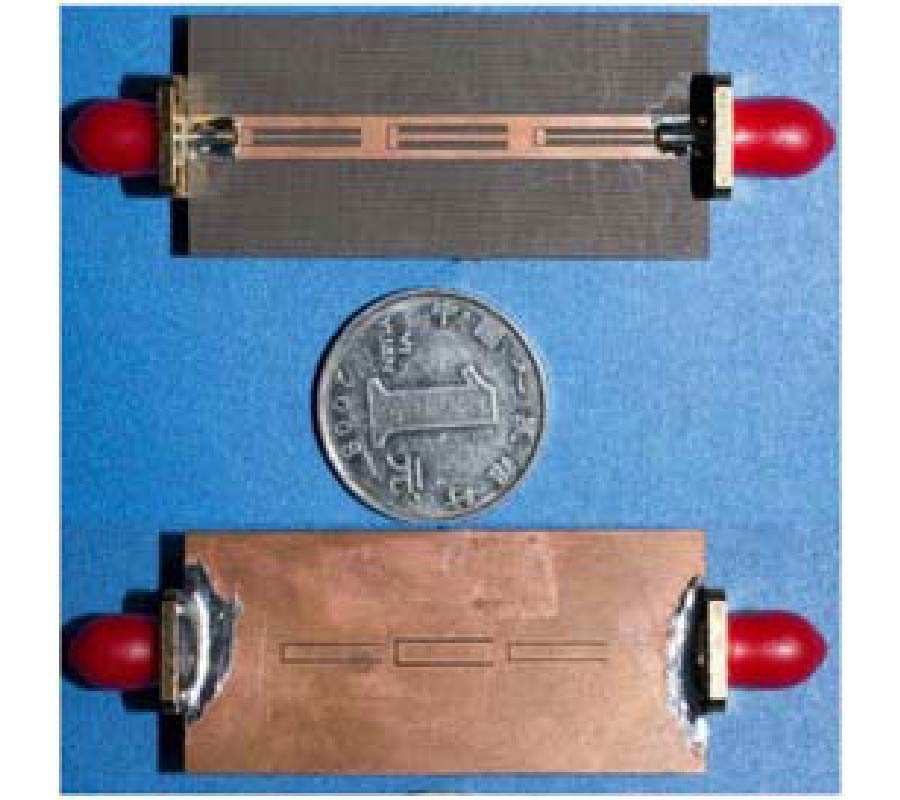
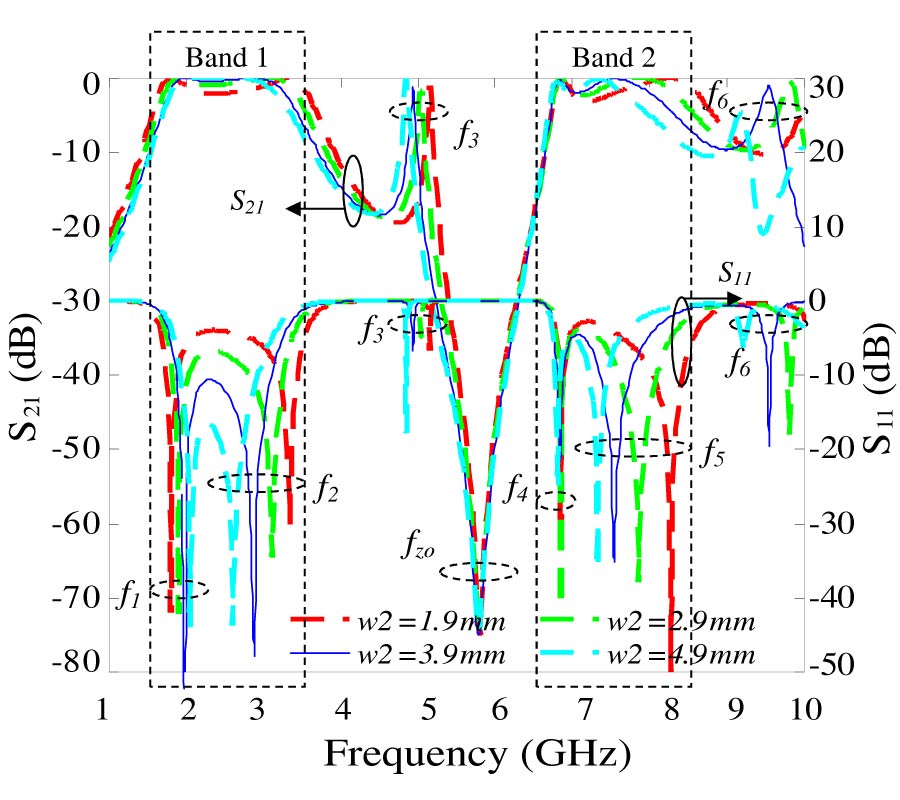
Novel compact multiband microstrip transversal bandpass filters (BPF) using short-circuited or open-circuited stub-loaded half-wavelength resonators (SLR) are presented. The dual-band BPF consists of two SLRs and two T-shaped feedlines, and the tri-band BPF can be implemented by a simple reconfiguration of adding one resonator above the original circuit of the dual-band BPF. Multiple transmission zeroes are created to improve the selectivity of the filters. Furthermore, the high degree of design freedom is obtained for every passband of dual- or triple-band BPF is achieved by independent resonators and independent signal paths. To verify the proposed concept, two dual-band bandpass filters (filter I and II) and one tri-band bandpass filter (filter III) are designed and fabricated. Both theoretical and measured results are presented, with good agreements.
COMPACT MULTIBAND TRANSVERSAL BANDPASS FILTERS WITH MULTIPLE TRANSMISSION ZEROES
2012-09-10
PIER Letters
Vol. 34, 147-156
Analysis of a Small UWB Filter with Notch and Improved Stopband
Abu Nasar Ghazali and Srikanta Pal
A microstrip based Ultra-Wideband (UWB) Bandpass Filter (BPF) with a notch at WLAN and simultaneously improved stopband till 18 GHz is proposed. Meander shaped Defected Ground Structures (DGS) are used to implement the notch (which can be increased in width and number) within the passband and double U-shaped DGS present under the input and output feeding lines are used to attain the suppressed stopband. Experimental results are in good agreement with the simulated data.
ANALYSIS OF A SMALL UWB FILTER WITH NOTCH AND IMPROVED STOPBAND
2012-09-09
PIER C
Vol. 32, 139-149
A Compact Tri-Band Antenna Design Using Boolean Differential Evolution Algorithm
Dong Li , Fu-Shun Zhang and Jian-Hong Ren
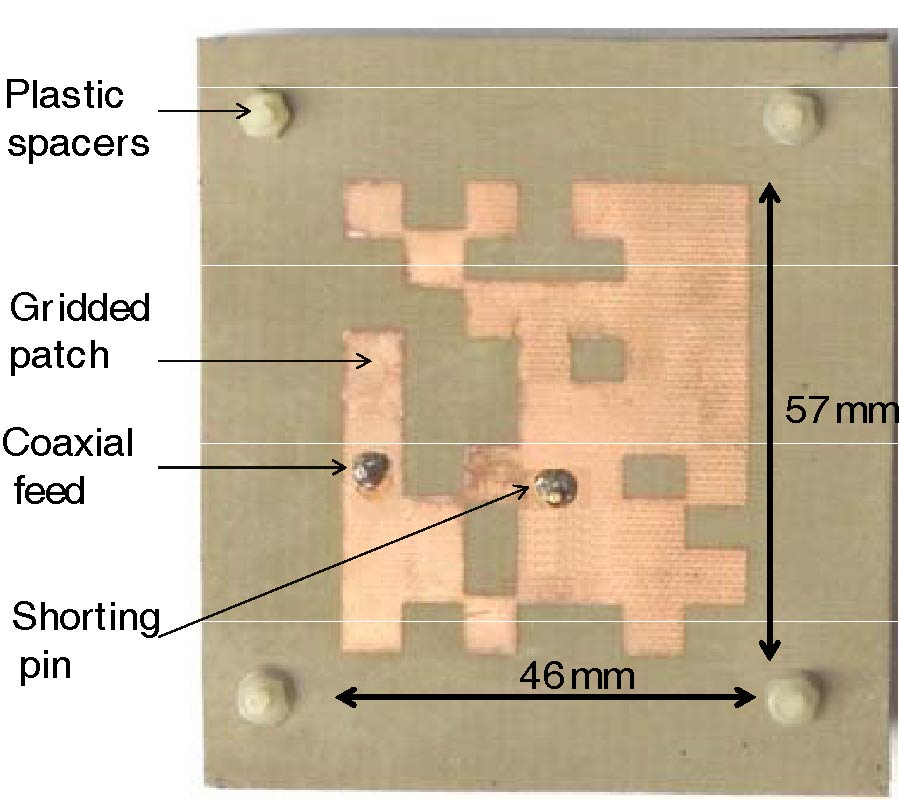
A compact tri-band slot antenna based on a mesh-grid structure, which is suitable for WLAN/WiMAX applications, is presented. The proposed antenna is optimized by a Boolean differential evolution algorithm (BDE). Then an experimental prototype is fabricated and measured. Results of simulation and measurements indicate that the proposed antenna has |S11|<-10dB in the three chosen frequency bands from 2.35 to 2.85 GHz, from 3.1 to 4.4 GHz and from 4.8 GHz to 5.85 GHz, which covers WLAN bands (2.4/5.2/5.8 GHz) and the WiMAX bands (2.5/3.5/5.5 GHz), respectively. In addition, good radiation performances such as omnidirectional and doughnut-shaped directivity and reasonable gain over the operating bands have been obtained. This example also demonstrates the applicability of the BDE/MOM optimization algorithm to efficient and in potential automated method for the antenna design.
A COMPACT TRI-BAND ANTENNA DESIGN USING BOOLEAN DIFFERENTIAL EVOLUTION ALGORITHM
2012-09-09
PIER
Vol. 131, 227-241
An Alternative Range Migration Correction Algorithm for Focusing Moving Targets
David M. Kirkland
This paper presents a method for focusing a moving target in single channel SAR data utilizing a novel technique for range migration correction. The First Order Keystone transform is first applied to remove the range-walk of the moving target signature. A search procedure based on maximizing a contrast cost function is then employed to determine the phase correction which compensates for the remaining range curvature. Finally an adaptive notch filter is used to construct an estimate of the azimuth compression filter necessary to focus the moving target. An experimental result is provided for airborne SAR data to demonstrate the performance of the approach.
AN ALTERNATIVE RANGE MIGRATION CORRECTION ALGORITHM FOR FOCUSING MOVING TARGETS
2012-09-09
PIER
Vol. 131, 211-225
Theory and Experiment of a Compact Waveguide Dual Circular Polarizer
Chao Chang , Sarah Church , Sami Tantawi , Patricia Larkoski , Matthew Sieth and Kiruthika Devaraj
A new compact and wide-band waveguide dual circular polarizer at Ka-band is presented and tested in this paper. This compact structure is composed of a three-port polarizing diplexer and a circular polarizer realized by a simple pair of large grooves. The polarizing diplexer includes two rectangular waveguides with a perpendicular H-plane junction, one circular waveguide coupled in E-plane. A cylindrical step and two pins are used to match this structure. For a LHCP or RHCP wave in the circular port, only one specific rectangular port outputs power and the other one is isolated. The accurate analysis and design of the circular polarizer are conducted by using full-wave electromagnetic simulation tools. The optimized dual circular polarizer has the advantage of compact size with a volume smaller than 1.5λ³, broad bandwidth, uncomplicated structure, and is especially suitable for use at high frequencies such as Ka-band and above. The prototype of the polarizer has been manufactured and test, the experimental results are basically consistent with the theories.
THEORY AND EXPERIMENT OF A COMPACT WAVEGUIDE DUAL CIRCULAR POLARIZER
2012-09-09
PIER
Vol. 131, 195-210
Miniaturized Dual-Band Matching Technique Based on Coupled-Line Transformer for Dual-Band Power Amplifiers Design
Shun Li , Bihua Tang , Yuan'an Liu , Shulan Li , Cuiping Yu and Yongle Wu
This study presents a novel miniaturized dual-band coupled-line impedance transformer. This dual-band matching technique uses the characteristics of coupled-line and dual-band stubs to realize matching arbitrary complex impedance to arbitrary complex impedance at two arbitrary uncorrelated frequencies. Especially, it satisfies the demand of dual-band matching at two relatively closed operating frequencies (n= f2 / f1 ≤ 1.2), and occupy a very small circuit area with inherent DC-Block function. The proposed synthesis approach is validated by the design and fabrication of a 30 W gallium nitride (GaN)-based class-AB power amplifier (PA) for GSM and WCDMA at 1800 MHz and 2140 MHz. The PA's output matching network based on the proposed structure can accurately match 50 Ω to the ideal load impedances of the transistor at two designed frequency simultaneously and has 20% and 15% bandwidth for which the reflection coefficient magnitudes are less than 0.1, respectively.
MINIATURIZED DUAL-BAND MATCHING TECHNIQUE BASED ON COUPLED-LINE TRANSFORMER FOR DUAL-BAND POWER AMPLIFIERS DESIGN
2012-09-09
PIER
Vol. 131, 185-194
Investigation of Bandwidth Enhancement in Volumetric Left-Handed Metamaterials Using Fractals
Teofilo Max De la Mata Luque , Naga Ravi Kanth Devarapalli and Christos Christodoulou
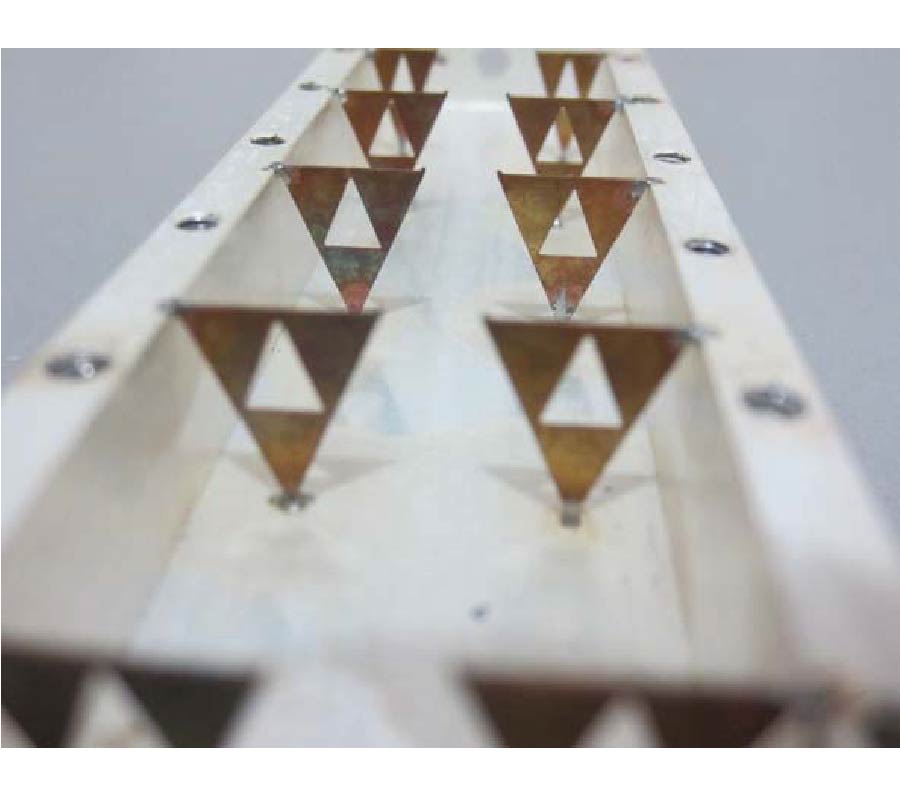
Volumetric left-handed metamaterials made up of an array of split-ring resonators (SRRs) and wires exhibit negative index of refraction in a very narrow bandwidth due to the resonant nature of SRRs. We investigate the possible bandwidth enhancement by adding resonances to the system using fractals. The operating bandwidth of the system is increased when the additional resonances are placed close enough to each other. The Sierpiński-carpet fractal pattern is chosen as the distribution for the SRRs. The principle is demonstrated through simulations, and prototypes are fabricated and tested to verify consistency with simulations.
INVESTIGATION OF BANDWIDTH ENHANCEMENT IN VOLUMETRIC LEFT-HANDED METAMATERIALS USING FRACTALS
2012-09-07
PIER B
Vol. 43, 279-294
Description of Multiply Connected Regions with Induced Currents Using T-T0 Method
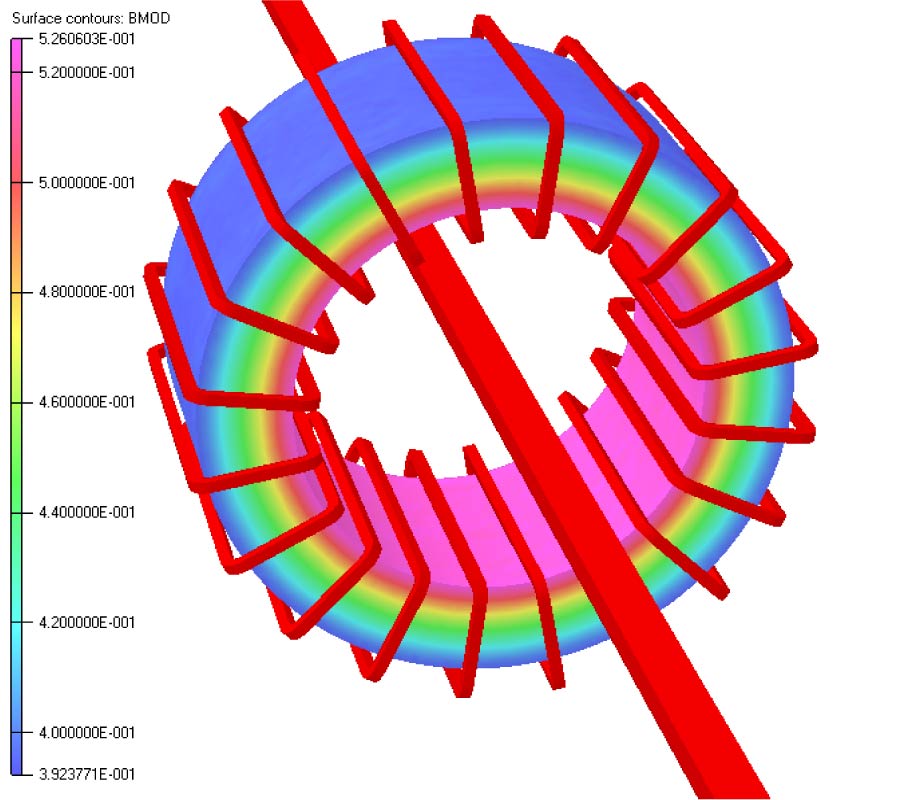
Rafal M. Wojciechowski , Cezary Jedryczka , Wojciech Szelag and Andrzej Demenko
The paper presents the description of multiply connected conducting regions (MCCR) in the finite elements space. In order to define induced currents distribution in multiply connected regions, an innovative method of combined vector potentials T and T0 has been suggested. The equations of T-T0 method have been presented. Moreover, the relations describing sources for the field of induced currents in the discussed regions have been given. The proposed method has been applied to solve Problem No. 7 of the International TEAM Workshops. The selected results of calculation have been compared with the measurement results.
DESCRIPTION OF MULTIPLY CONNECTED REGIONS WITH INDUCED CURRENTS USING <I>T</I>-<I>T</I><sub>0</sub> METHOD
2012-09-07
PIER M
Vol. 26, 11-22
Quadratic Frequency Modulated Thermal Wave Imaging for Non-Destructive Testing
Ghali Venkata Subbarao and Ravibabu Mulaveesala
Thermal non-destructive testing and evaluation of glass fibre reinforced plastic materials has gained more importance in aerospace industry due to low weight and high strength capabilities in severe environmental conditions. More recently, pulse compression favorable non-stationary excitation schemes have been exhibiting reliable defect detection capabilities in infrared non-destructive testing. This paper introduces a novel infrared non-destructive testing method based on quadratic frequency modulated thermal wave imaging with pulse compression for charactierization of glass fibre reinforced plastic materials. Defect detection capability of the proposed method has been experimentally validated using a glass fiber reinforced plastic (GFRP) sample with embedded Teflon inserts. Experimental results proved the enhanced depth resolution capability of the proposed excitation method as compared to the linear frequency modulation with pulse compression.
QUADRATIC FREQUENCY MODULATED THERMAL WAVE IMAGING FOR NON-DESTRUCTIVE TESTING
2012-09-06
PIER B
Vol. 43, 255-277
General 2-d Transient Eddy Current Force Equations for a Magnetic Source Moving Above a Conductive Plate
Nirmal Paudel , Subhra Paul and Jonathan Z. Bird
When a magnetic source is moved and/or oscillating above a conductive linear plate a traveling time varying magnetic field is created in the airgap. This field induces eddy currents in the plate that can simultaneously create normal and tangential forces. The transient fields and the forces created by the magnetic source are modeled using a novel 2-D analytic based A-Φ method in which the presence of the source field is incorporated into the boundary conditions of the plate. The analytic based solution is obtained by using the spatial Fourier transform and temporal Laplace transform. The performance of the method is compared with a 2-D transient finite element model with a Halbach rotor source field. The derived transient force equations are written in a general form so that they can be applied to any magnetic source.
GENERAL 2-D TRANSIENT EDDY CURRENT FORCE EQUATIONS FOR A MAGNETIC SOURCE MOVING ABOVE A CONDUCTIVE PLATE
2012-09-06
PIER Letters
Vol. 34, 137-146
A Novel Triband Circluar Ring Patch Antenna with a Symmetrical Door-Shaped Strip for WLAN/WiMAX Applicaions
Jun Wang , Ying-Zeng Yin , Jiao-Jiao Xie , Shuan-Long Pan , Jun Hui Wang and Xu Lei
In this paper, a novel circular ring patch antenna with tri-band operation is proposed for satisfying WLAN and WiMAX applications simultaneously. The proposed antenna consists of a circular ring patch, a straight strip and a door-shaped strip, all of which are printed on the top side of the substrate. The straight strip embedded in the rectangular slot is aimed to obtain resonant mode at 5.5GHz. With the use of a door-shaped strip symmetrically with the microstrip feed line, the proposed antenna can operate in three separate bands. The proposed antenna has been fabricated and tested. The numerical and experimental results exhibit the designed antenna operates over triple frequency ranges, and the 10 dB return loss bandwidths of the proposed antenna are 570 MHz (2.27-2.84 GHz), 470 MHz (3.35-3.82 GHz) and 1720 MHz (4.84-6.56 GHz), which can fulfill both the WLAN bands (2.4-2.484 GHz, 5.15-5.35 GHz, and 5.725-5.825 GHz) and the WiMAX bands (2.4-2.6 GHz, 3.4-3.6 GHz, and 5.25-5.85 GHz). In addition, a design evolution and a parametric study of the proposed antenna are presented to provide information for designing, modifying, and optimizing such an antenna. At last, the proposed antenna has an unusual advantage of omnidirectional radiation characteristics and stable gain over the whole operating bands.
A NOVEL TRIBAND CIRCLUAR RING PATCH ANTENNA WITH A SYMMETRICAL DOOR-SHAPED STRIP FOR WLAN/WIMAX APPLICAIONS
2012-09-06
PIER Letters
Vol. 34, 123-135
Regional Variability of Rain DROP Size Distribution Model in India
Anurag Vidyarthi , Bhajan Singh Jassal , Ravi Gowri and Ashish Kumar Shukla
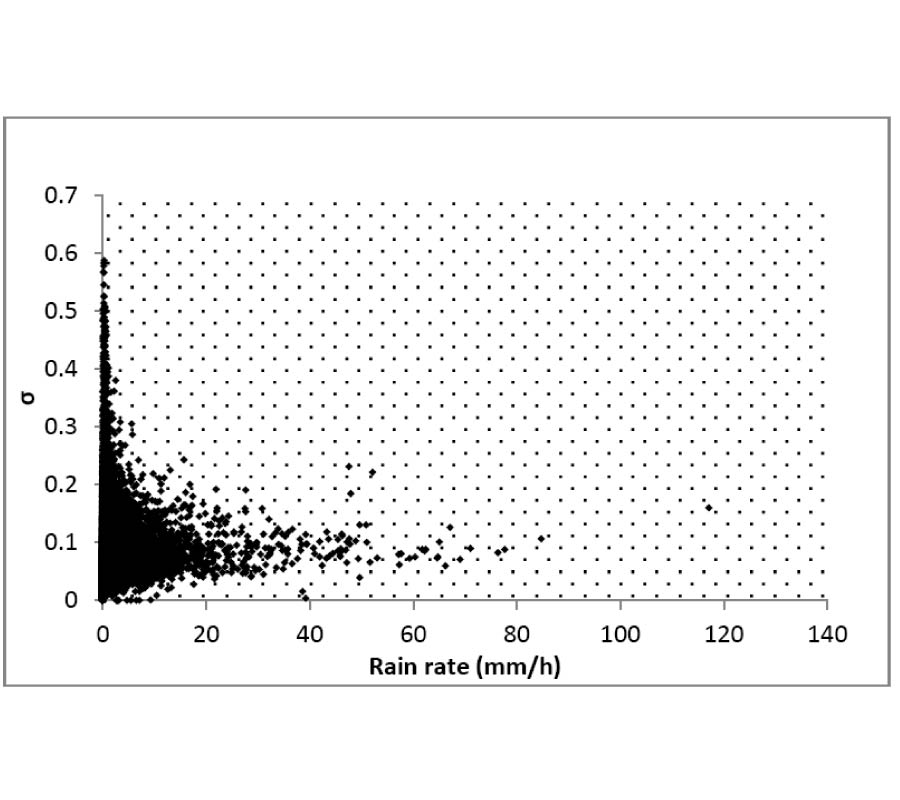
Present study shows the development of integrated rain drop size distribution (DSD) model and gives a comparative study with DSDs of different regions in India. This work is useful for estimation of rain induced attenuation. Rain data of five different regions (Ahmedabad, Shillong, Thiruvananthapuram, Kharagpur and Hasan) was used for this work. Attenuation characteristics are different for different regions because DSD varies according to the climatic conditions. Development of DSD model for each location is not feasible. It is a demand to develop a integrated DSD model which gives the tolerable error in DSD for different regions, so that, it can be adjusted in fade margin of the communication system. The result of this work shows the good correlation between the proposed integrated DSD model and DSDs of different regions.
REGIONAL VARIABILITY OF RAIN DROP SIZE DISTRIBUTION MODEL IN INDIA
2012-09-06
PIER C
Vol. 32, 123-137
Improving Ccd Performance by the Use of Local Fringe Frequencies
Azzedine Bouaraba , Dirk Borghys , Aichouche Belhadj-Aissa , Marc Acheroy and Damien Closson
Coherent Change Detection (CCD) using multi-temporal Synthetic Aperture Radar (SAR) is one of the most important applications of remote sensing technology. With the advent of high-resolution SAR images, CCD has received a lot of attention. In CCD, the interferometric coherence between two SAR images is evaluated and analyzed to detect surface changes. Unfortunately, the sample coherence estimator is biased, especially for low-coherence values. The consequence of this bias is the apparition of highly coherent pixels inside the changed area. Within this context, the detection performance will considerably degrade, particularly when using high resolution SAR data. In this paper, we propose a new CCD method based on cleaning of coherence inside changed areas, which is characterized by high Local Fringe Frequencies (LFF) values, followed by a space-averaged coherence method. According to the proposed method, the results obtained with Cosmo-SkyMed (CSK) SAR data show an enhancement of change detection performance of about 6% while preserving subtle changes.
IMPROVING CCD PERFORMANCE BY THE USE OF LOCAL FRINGE FREQUENCIES
2012-09-06
PIER M
Vol. 26, 1-9
Analysis of Multiple Wedges Electromagnetic Wave Absorbers
Ibrahim Catalkaya and Sedef Kent
To improve the reflection performance of absorbers used in anechoic chambers, several different electromagnetic wave absorber geometries similar to conventional wedge absorber structures are proposed in this study. Design basics are examined by using the reflection and absorption of electromagnetic waves. The return loss characteristics of each absorber structure which is illuminated by a TE polarized plane wave have been obtained using well-known simulation software for several incidence angles. Comparisons of the simulation results of the conventional wedge and proposed absorbers are presented. The results show that new absorber shapes provide better absorption characteristics than a conventional wedge across almost all frequency ranges, and especially for normal and near normal incidence cases.
ANALYSIS OF MULTIPLE WEDGES ELECTROMAGNETIC WAVE ABSORBERS
2012-09-06
PIER
Vol. 131, 169-184
Transmission through Twisted Clad Liquid Crystal Optical Fibers
Pankaj Kumar Choudhury
The paper presents an analytical investigation of three-layer twisted clad liquid crystal fiber in respect of its power propagation characteristics. The fiber under consideration has dielectric non-magnetic materials in its core and inner clad sections, whereas the outermost clad is made of radially anisotropic liquid crystal material. Twist in the fiber is introduced in the form of superfine helical turns at the interface of the core and the inner clad regions with specified values of pitch angle. Results demonstrate large confinement of optical power in the outermost liquid crystal section. Further, the angle of twist is seen to have its pronounced effect on controlling the flow of power as it exhibits the ability of governing the propagation characteristics of the medium. The observed propagation feature is attributed to the radial anisotropy of the liquid crystal outer region as well as the amount of twist introduced, and attracts useful applications of such complex fiber structures in evanescent field optical sensing and other coupling devices primarily used in integrated optics.
TRANSMISSION THROUGH TWISTED CLAD LIQUID CRYSTAL OPTICAL FIBERS
2012-09-06
PIER
Vol. 131, 153-167
Complex Photonic Band Structures in a Photonic Crystal Containing Lossy Semiconductor Insb
Tsung-Wen Chang , Jin-Jei Wu and Chien-Jang Wu
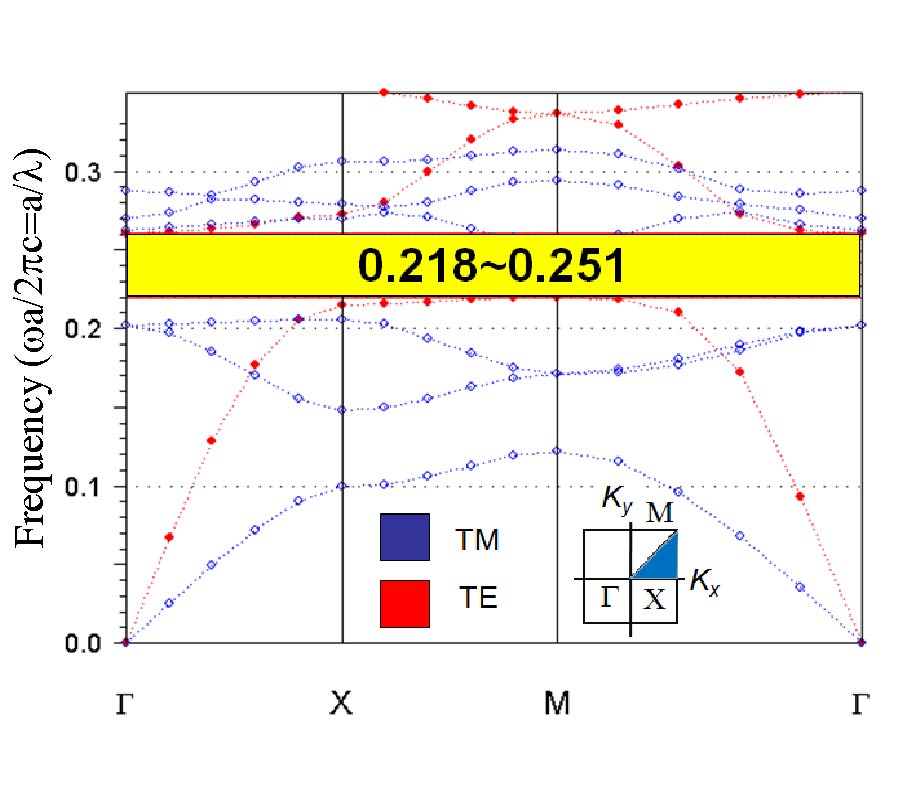
In this work, complex photonic band structure (CPBS) in a semiconductor-dielectric photonic crystal (SDPC) operating at terahertz frequencies are theoretically investigated. The SDPC is air/(S/D)N/air where the dielectric layer D is SiO2, the semiconductor layer S is an intrinsic semiconductor InSb, and N is the number of periods. Using the experimental data for the strongly temperature-dependent plasma frequency and damping frequency for InSb, we calculate the CPBS for the infinite SDPC at distinct operating temperatures. The CPBS is then compared with the calculated transmittance, reflectance, and absorptance as well in the finite SDPC. Based on the calculated CPBS, the role played by the loss factor (damping frequency), in InSb is revealed. Additionally, from the calculated transmittance spectra, we further investigate the cutoff frequency for the SDPC. The dependences of cutoff frequency on the number of periods and the filling factor of semiconductor layer are numerically illustrated.
COMPLEX PHOTONIC BAND STRUCTURES IN A PHOTONIC CRYSTAL CONTAINING LOSSY SEMICONDUCTOR INSB