Search Results(13800)

2012-08-20
PIER Letters
Vol. 34, 43-51
Compact Triple-Frequency Planar Monopole Antenna for WiMAX/WLAN Applications
Ling Xiong , Peng Gao and Shi Xiong Han
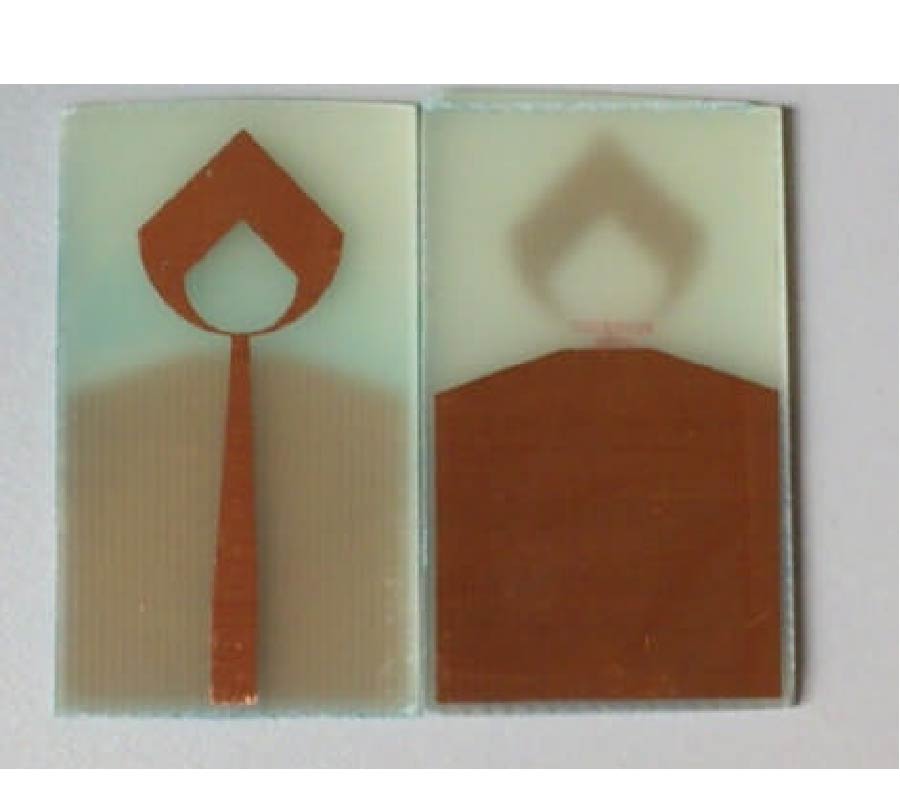
A low-profile microstrip planar monopole antenna with triple-band operation for WiMAX and WLAN applications is proposed. The antenna has a simple structure which consists of a rectangular radiation patch with an L-shaped slot and an inverted L-shaped stub extending from the ground plane. By etching an L-shaped slot on the rectangular radiation patch, the antenna can excite two resonant modes. The third resonant mode is introduced by extending an inverted L-shaped stub from the ground plane. The designed antenna has a small overall size of 17*30 mm2. A prototype is designed, fabricated, and then measured. The experimental and simulation results show good impedance bandwidth, radiation pattern and stable 9gain across the operating bands.
COMPACT TRIPLE-FREQUENCY PLANAR MONOPOLE ANTENNA FOR WIMAX/WLAN APPLICATIONS
2012-08-20
PIER
Vol. 130, 411-428
Mixed-Mode Impedance and Reflection Coefficient of Two-Port Devices
Carrillo Tomas Carrasco , Cordoba Javier Sieiro , José Mª Lopez-Villegas , Neus Vidal , Reinier Gonzalez-Echevarría and Moreno Elisenda Roca
From the point of view of mixed-mode scattering parameters, Smm, a two-port device can be excited using different driving conditions. Each condition leads to a particular set of input reflection and input impedance coefficient definitions that should be carefully applied depending on the type of excitation and symmetry of the two-port device. Therefore, the aim of this paper is to explain the general analytic procedure for the evaluation of such reflection and impedance coefficients in terms of mixed-mode scattering parameters. Moreover, the driving of a two-port device as a one-port device is explained as a particular case of a two-port mixed-mode excitation using a given set of mixed-mode loads. The theory is applied to the evaluation of the quality factor, Q, of symmetrical and non-symmetrical inductors.
MIXED-MODE IMPEDANCE AND REFLECTION COEFFICIENT OF TWO-PORT DEVICES
2012-08-20
PIER
Vol. 130, 389-409
A Novel Compact Split Ring Slotted Electromagnetic Bandgap Structure for Microstrip Patch Antenna Performance Enhancement
Md. Shahidul Alam , Mohammad Tariqul Islam and Norbahiah Misran
A novel design of an electromagnetic bandgap (EBG) structure based on the uniplanar compact EBG (UCEBG) concept is proposed in this paper. The structure is realized by inserting split-ring slots inside two reversely connected rectangular patches, which is known as a split-ring slotted electromagnetic bandgap (SRS-EBG) structure. The bandgap properties of the EBG structure are examined by the suspended microstrip line and finite element methods (FEM). The achieved bandgaps have widths of 4.3 (59.31%) and 5.16 GHz (38.88%), which are centered at 7 and 13 GHz, respectively. The SRS-EBG is applied to enhance the performance of a single-element microstrip patch antenna (at 7 GHz) and a two-element array (at 13 GHz) configuration. A wider bandwidth is obtained with a better reflection coefficient level for the single element antenna; a reduction in mutual coupling of more than 20.57 dB is obtained for the array design. In both cases, the gain and radiation characteristics are improved. The results are verified by measuring the fabricated lab prototype, and a comparison with the computed results showed good agreement.
A NOVEL COMPACT SPLIT RING SLOTTED ELECTROMAGNETIC BANDGAP STRUCTURE FOR MICROSTRIP PATCH ANTENNA PERFORMANCE ENHANCEMENT
2012-08-19
PIER Letters
Vol. 34, 31-41
Dual-Wideband, Multi-Monopole-Antenna System with a Triangular-Cylinder Shielding Wall for Wireless, Surveillance-Camera Applications
Fa-Shian Chang , Wei-Chieh Chen and Saou-Wen Su
A multi-monopole-antenna system capable of generating two wide operating bands with good input matching by a voltage standing wave ratio (VSWR) of 1.5 to cover the 2.4 GHz (2400-2484 MHz), 5.2 GHz (5150-5350 MHz), and 5.8 GHz (5725-5825 MHz) bands for wireless local area network (WLAN) applications is introduced. The design mainly comprised three, metal-plate, monopole antennas symmetrically located on a main, hexagonal, ground plane and backed by vertical, step-shaped grounds protruding thereon. The step-shaped grounds not only facilitated the attaining of wide impedance bandwidth but also good port isolation. In addition, directional antenna radiation was also produced. Further, a triangular-cylinder shielding wall was placed in the center of the main ground plane for integration of the wireless, surveillance-camera module into the proposed antenna system. Details of the design prototype are described and discussed in the article.
DUAL-WIDEBAND, MULTI-MONOPOLE-ANTENNA SYSTEM WITH A TRIANGULAR-CYLINDER SHIELDING WALL FOR WIRELESS, SURVEILLANCE-CAMERA APPLICATIONS
2012-08-19
PIER
Vol. 130, 369-388
An Mr Brain Images Classifier via Principal Component Analysis and Kernel Support Vector Machine
Yudong Zhang and Lenan Wu
Automated and accurate classification of MR brain images is extremely important for medical analysis and interpretation. Over the last decade numerous methods have already been proposed. In this paper, we presented a novel method to classify a given MR brain image as normal or abnormal. The proposed method first employed wavelet transform to extract features from images, followed by applying principle component analysis (PCA) to reduce the dimensions of features. The reduced features were submitted to a kernel support vector machine (KSVM). The strategy of K-fold stratified cross validation was used to enhance generalization of KSVM. We chose seven common brain diseases (glioma, meningioma, Alzheimer's disease, Alzheimer's disease plus visual agnosia, Pick's disease, sarcoma, and Huntington's disease) as abnormal brains, and collected 160 MR brain images (20 normal and 140 abnormal) from Harvard Medical School website. We performed our proposed methods with four different kernels, and found that the GRB kernel achieves the highest classification accuracy as 99.38%. The LIN, HPOL, and IPOL kernel achieves 95%, 96.88%, and 98.12%, respectively. We also compared our method to those from literatures in the last decade, and the results showed our DWT+PCA+KSVM with GRB kernel still achieved the best accurate classification results. The averaged processing time for a 256x256 size image on a laptop of P4 IBM with 3 GHz processor and 2 GB RAM is 0.0448 s. From the experimental data, our method was effective and rapid. It could be applied to the field of MR brain image classification and can assist the doctors to diagnose a patient normal or abnormal in some degree.
AN MR BRAIN IMAGES CLASSIFIER VIA PRINCIPAL COMPONENT ANALYSIS AND KERNEL SUPPORT VECTOR MACHINE
2012-08-17
PIER M
Vol. 25, 211-222
Infrared Omni-Directional Mirror Based on One-Dimensional Birefringent-Dielectric Photonic Crystal
Maitreyi Upadhyay , Suneet Awasthi , Sanjeev Srivastava and Sant Ojha
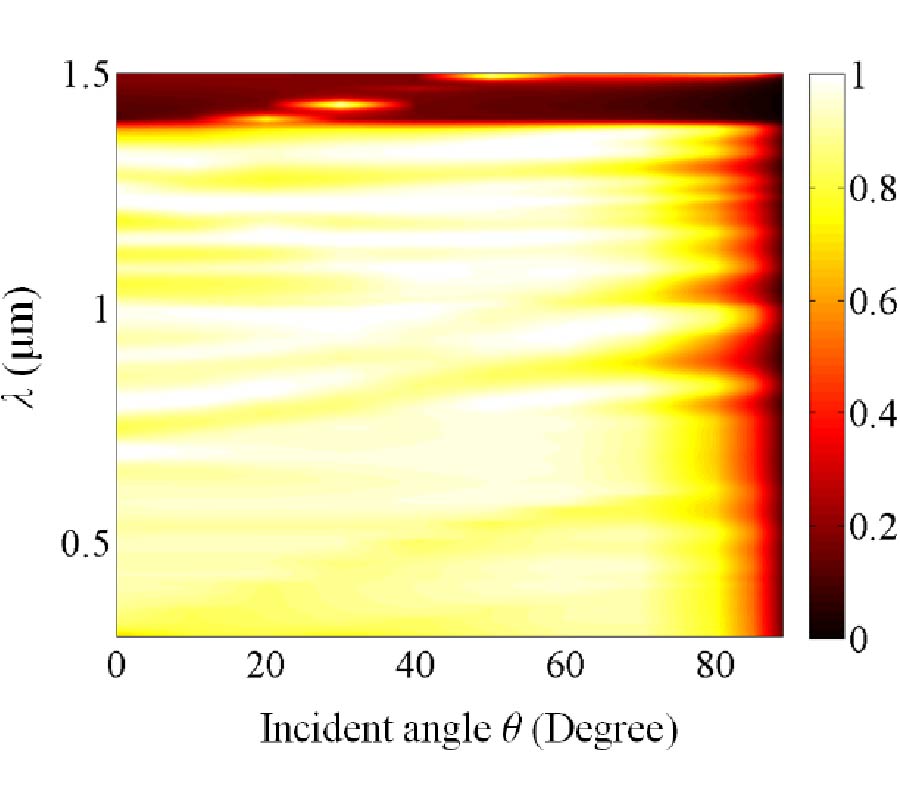
In the present communication, we have theoretically investigated and studied the reflection properties of one-dimensional birefringent-dielectric photonic crystal (1D BDPC) structure consisting alternate layers of BD material. From the analysis of the reflectance spectra it is found that 100% reflection region for both TE- and TM-mode can be enhanced significantly in comparison with 1D dielectric-dielectric photonic crystal (DDPC). In order to obtain the reflection spectra of the proposed structure we have used the transfer matrix method (TMM). The structure proposed by us, has a wider omnidirectional reflection (ODR) range in comparison to conventional all dielectric photonic crystals (PCs). The width of ODR can be enlarged by considering the suitable choice of lattice parameters.
INFRARED OMNI-DIRECTIONAL MIRROR BASED ON ONE-DIMENSIONAL BIREFRINGENT-DIELECTRIC PHOTONIC CRYSTAL
2012-08-17
PIER
Vol. 130, 347-368
System-on-Chip 36.8 GHz Radiometer for Space-Based Observation of Solar Flares: Feasibility Study in 0.25 μm SiGe BiCMOS Technology
Luca Aluigi , Luca Roselli , Stephen M. White and Federico Alimenti
This paper deals with a feasibility study for a System-on-Chip (SoC) mmwave radiometer devoted to space-based observation of solar flares and operating in the Ka-band. The radiometer has been designed in 250 nm SiGe BiCMOS process. The circuit integrates a three stages differential LNA with 37.2 dB gain and 4.8 dB noise figure at 36.8 GHz and a differential square-law detector based on HBTs, featuring a 96 mV/μW responsivity. The full radiometer achieves, potentially, a NETD of 0.1 K for 1 s integration time in Dicke mode. This work represents the first study of such an integrated instrument for Ka-band space-based observation of solar flares.
SYSTEM-ON-CHIP 36.8 GHZ RADIOMETER FOR SPACE-BASED OBSERVATION OF SOLAR FLARES: FEASIBILITY STUDY IN 0.25 μm SIGE BICMOS TECHNOLOGY
2012-08-17
PIER
Vol. 130, 319-346
Short Range Propagation Model for a Very Wideband Directive Channel at 5.5 GHz Band
Bazil Taha-Ahmed , David Fernandez Campillo and Jose Luis Masa-Campos
In this work, the propagation loss of three short range directive channels at 5.5 GHz is measured using different directive antennas and a Vector Network Analyzer (VNA). Results are given for a channel bandwidth of 300 MHz which will be the future channel bandwidth of IEEE 802.11 ac system. It has been noted that the multipath induced fading tends to have Normal Distribution at low distance between the transmitting and the reception antennas. At higher distances, it tends to have Normal distribution plus Rayleigh one. Channel Impulse response (CIR) is also measured indicating that the main contribution is due to the direct ray and the one reflected from the floor. The human being obstruction causes an extra propagation loss of 2 to 10 dB depending on its distance from the transmitting antenna.
SHORT RANGE PROPAGATION MODEL FOR A VERY WIDEBAND DIRECTIVE CHANNEL AT 5.5 GHZ BAND
2012-08-17
PIER
Vol. 130, 281-317
Finite Data Performance Analysis of Lcmv Antenna Array Beamformers with and Without Signal Blocking
Yen Lin Chen and Ju-Hong Lee
A linearly constrained minimum variance (LCMV) antenna array beamformer using finite data samples suffers from slow convergence when the received array data contain the desired signal. It has been reported that signal blocking techniques speed up the convergence rate and increase the robustness of LCMV antenna array beamformers. However, the reason of this improvement has not been explored in the literature. Moreover, the existing formulas for the output signal-to-interference-plus-noise ratio (SINR) are too rough to realize the influence of signal blocking techniques on the performance. In this paper, we show that the correlation due to finite samples causes the redundant component (termed as the cross weight) embedded in the weight vector of a LCMV beamformer even if the signal sources and noise are independent. The cross power results from the cross weight degrades the performance when the sample size is small. In contrast, the cross weight and cross power can be fully eliminated when a signal blocking technique is used. The theoretical results presented in this paper provide a comprehensive description on the effectiveness and the price of using signal blocking for antenna array beamforming. Simulation results are also given for confirming the validity of the theoretical results.
FINITE DATA PERFORMANCE ANALYSIS OF LCMV ANTENNA ARRAY BEAMFORMERS WITH AND WITHOUT SIGNAL BLOCKING
2012-08-16
PIER Letters
Vol. 34, 21-29
Coplanar Printed Monopole Antenna Using Coaxial Feedline for DTV Application
Chien-Yuan Pan , Jhih-Hao Duan and Jen-Yea Jan
This article presents a coplanar printed monopole antenna for digital television (DTV) in the UHF band (470-862 MHz) application. The antenna structure consists of a meander loop monopole for radiation, a step-shaped ground plane for impedance matching, and a 50-mini coaxial feedline for excitation. The meander loop monopole and step-shaped ground plane are printed on the same side of a substrate with an area of 15×170 mm2. The measured impedance bandwidth for 2.5:1 voltage standing wave ratio (VSWR) is 550 MHz (465-1015 MHz, 74%), covering the DTV band. In addition, the proposed antenna shows a real reception performance on a notebook computer. The reception results for audio and video signals exhibit stable characteristics.
COPLANAR PRINTED MONOPOLE ANTENNA USING COAXIAL FEEDLINE FOR DTV APPLICATION
2012-08-16
PIER Letters
Vol. 34, 9-19
Design and Analysis of a Circular Polarization Microstrip Antenna with Koch Fractal Edges
Shu Lin , Li-Zhuo Wang , Yudie Wang , Xue-Ying Zhang and Hong-Jun Zhang
A circular polarization microstrip antenna with a single feeding point is designed in this paper. The microstrip patch has a structure of Koch fractal edges, and the circular polarization is realized by inspiring two degenerate modes that are orthogonal to each other. The software CST MWS® is used to simulate the designed antenna. The simulation results indicate that circular polarization radiation could be achieved though feeding at one of the diagonal lines of the patch by a probe. Antennas considering substrate medium loss are also simulated, and the results are approximate to those with ideal substrates. According to the simulated results of the surface currents at the edges of the patch, an equivalent line current radiation model is proposed to describe the radiation characteristics of the designed antenna. A circular polarization microstrip antenna is fabricated and tested. The simulated, calculated, and the measured results agree well. The designed antenna operates at 1.575 GHz, with an impedance bandwidth of 3% for VSWR < 2, the gain of the antenna is 2.6 dB, and the axial ratio in the maximum radiation direction is 2.7 dB.
DESIGN AND ANALYSIS OF A CIRCULAR POLARIZATION MICROSTRIP ANTENNA WITH KOCH FRACTAL EDGES
2012-08-15
PIER
Vol. 130, 257-279
Atmospheric Propagation at 100 and 300 GHz: Assessment of a Method to Identify Rainy Conditions During Radiosoundings
Gustavo Adolfo Siles Soria , Jose M. Riera , Pedro Garcia del Pino and Jordi Romeu
The influence of atmospheric gases and tropospheric phenomena becomes more relevant at frequencies within the THz band (100 GHz to 10 THz), severely affecting the propagation conditions. The use of radiosoundings in propagation studies is a well established measurement technique in order to collect information about the vertical structure of the atmosphere, from which gaseous and cloud attenuation can be estimated with the use of propagation models. However, some of these prediction models are not suitable to be used under rainy conditions. In the present study, a method to identify the presence of rainy conditions during radiosoundings is introduced, with the aim of filtering out these events from yearly statistics of predicted atmospheric attenuation. The detection procedure is based on the analysis of a set of parameters, some of them extracted from synoptical observations of weather (SYNOP reports) and other derived from radiosonde observations (RAOBs). The performance of the method has been evaluated under different climatic conditions, corresponding to three locations in Spain, where colocated rain gauge data were available. Rain events detected by the method have been compared with those precipitations identified by the rain gauge. The pertinence of the method is discussed on the basis of an analysis of cumulative distributions of total attenuation at 100 and 300 GHz. This study demonstrates that the proposed method can be useful to identify events probably associated to rainy conditions. Hence, it can be considered as a suitable algorithm in order to filter out this kind of events from annual attenuation statistics.
ATMOSPHERIC PROPAGATION AT 100 AND 300 GHZ: ASSESSMENT OF A METHOD TO IDENTIFY RAINY CONDITIONS DURING RADIOSOUNDINGS
2012-08-14
PIER B
Vol. 43, 53-72
Performance Enhancement of the RFID Epc Gen2 Protocol by Exploiting Collision Recovery
Danilo De Donno , Luciano Tarricone , Luca Catarinucci , Vasileios Lakafosis and Manos M. Tentzeris
Maximizing the Radio Frequency Identi cation (RFID) performance is one of the main challenges in application domains, such as logistics and supply chain management, where the undesired effect of Tag collisions can significantly degrade the speed of the inventory process. The dominating UHF EPC Class-1 Generation-2 (EPC Gen2) protocol only specifies collision avoidance algorithms but makes no provision for collision resolution. In this paper, performance enhancement of the EPC Gen2 standard exploiting Tag collision recovery is demonstrated, for the first time, in real time with measurements. Three simple and effective approaches to handle successful Tag acknowledgments of recovered collided packets are proposed and implemented on a software-defined Reader and programmable Tags. The attained benefits over the conventional EPC Gen2 MAC scheme are significant: the throughput per time slot is increased by 72% while the overall time required to inventory the Tag population is reduced by 26%. The effectiveness of the proposed approach and the validity of the achieved results are confirmed by the good agreement with simulations reported in the literature.
PERFORMANCE ENHANCEMENT OF THE RFID EPC GEN2 PROTOCOL BY EXPLOITING COLLISION RECOVERY
2012-08-14
PIER C
Vol. 32, 81-94
Random Step Frequency CSAR Imaging Based on Compressive Sensing
Lingjuan Yu and Yunhua Zhang
Circular synthetic aperture radar (CSAR) imaging based on compressive sensing with random step frequency (RSF) as transmitted signal is introduced. CSAR is capable of obtaining both two-dimensional high resolution image and three-dimensional image due to a circular collection trajectory. RSF signal shares good characteristics of noise signals including ``thumbtack-shape" ambiguity function, low probability of interception, and strong anti-jamming capability. As a result, CSAR adopting RSF signal can make use of advantages of both CSAR and RSF signal. Compressive sensing is a new data acquisition and reconstruction theorem for sparse or compressible signals, which needs fewer samples to reconstruct signals than traditional Nyquist theorem. Simulation results show that both two-dimensional and three-dimensional targets can be well reconstructed from few samples by applying compressive sensing to RSF CSAR imaging.
RANDOM STEP FREQUENCY CSAR IMAGING BASED ON COMPRESSIVE SENSING
2012-08-14
PIER C
Vol. 32, 65-80
Null Steering Beamformer Using Hybrid Algorithm Based on Honey Bees Mating Optimisation and Tabu Search in Adaptive Antenna Array
Omar Kaid Omar , Fatima Debbat and Amine Boudghene Stambouli
In this article, a new hybrid algorithm based on Honey Bees Mating Optimization (HBMO) combined with the Tabu Search (TS) for null steering beamformer in adaptive antenna array is presented. The proposed method HBMO/TS is applied to a set of random cases to estimate the excitation weights of an antenna array that steer the main lobe towards a desired signal, place nulls towards several interference signals and achieve the lowest possible value of side lobe level. Moreover, the proposed algorithm is tested and compared with two other wellknown approaches that are the Least Mean Squares (LMS) and Genetic Algorithm (GA). The abovementioned methods have been performed considering uniform linear antenna array and achieved by controlling only the phase of each array element. Results obtained prove the effectiveness of our proposed approach HBMO/TS.
NULL STEERING BEAMFORMER USING HYBRID ALGORITHM BASED ON HONEY BEES MATING OPTIMISATION AND TABU SEARCH IN ADAPTIVE ANTENNA ARRAY
2012-08-14
PIER M
Vol. 25, 197-209
Electromagnetic Scattering from a Multilayered Surface with Lossy Inhomogeneous Dielectric Profiles for Remote Sensing of Snow
Kaijun Song , Xiaobing Zhou and Yong Fan
A multilayered backscattering model for a lossy medium has been presented in this paper. This multilayered model has been used to calculate the total surface reflection coefficients of a snow pack for both horizontal and vertical co-polarizations. The total surface reflection coefficients include contributions from both surface and volumetric backscattering. The backscattering coefficients calculated by this model were compared with in situ measurements on dry and wet snow. Results show that good agreements are obtained between the model and measurements for the co-polarization modes, especially for the snow with less liquid water content.
ELECTROMAGNETIC SCATTERING FROM A MULTILAYERED SURFACE WITH LOSSY INHOMOGENEOUS DIELECTRIC PROFILES FOR REMOTE SENSING OF SNOW
2012-08-14
PIER
Vol. 130, 241-256
Design and Fabrication of Wideband Archimedean Spiral Antenna Based Ultra-Low Cost ``Green'' Modules for RFID Sensing and Wireless Applications
Yasar Amin , Qiang Chen , Li-Rong Zheng and Hannu Tenhunen
A parametric analysis is performed for a wideband Archimedean spiral antenna in recognition of an emerging concept to integrate RFID along with several applications by using a single antenna. The antenna is fabricated using state-of-the-art inkjet printing technology on various commercially available paper substrates to provide the low-cost, flexible RF modules for the next generation of "green" electronics. The effects on electromagnetic characteristics of the planar Archimedean spiral antenna, due to the use of paper are investigated besides other parameters. The proposed antenna is evaluated and optimized for operational range from 0.8-3.0 GHz. It exhibits exceptional coverage throughout numerous RFID ISM bands so do for other wireless applications.
DESIGN AND FABRICATION OF WIDEBAND ARCHIMEDEAN SPIRAL ANTENNA BASED ULTRA-LOW COST ``GREEN'' MODULES FOR RFID SENSING AND WIRELESS APPLICATIONS
2012-08-14
PIER
Vol. 130, 225-240
Reconstruction of Microwave Absorption Properties in Heterogeneous Tissue for Microwave-Induced Thermo-Acoustic Tomography
Jinguo Wang , Zhiqin Zhao , Jian Song , Xiaozhang Zhu , Zai-Ping Nie and Qing Huo Liu
Aiming to efficiently overcome the acoustic refraction and accurately reconstruct the microwave absorption properties in heterogeneous tissue, an iterative reconstruction method is proposed for microwave-induced thermo-acoustic tomography (MITAT) system. Most current imaging methods in MITAT assume that the heterogeneous sound velocity (SV) distribution obeys a simple Gaussian distribution. In real problem, the biological tissue may have several different inclusions with different SV distribution. In this case, the acoustic refraction must be taken into account. The proposed iterative method is consisted of an iterative engine with time reversal mirror (TRM), fast marching method (FMM) and simultaneous algebraic reconstruction technique (SART). This method utilizes TRM, FMM and SART to estimate the SV distribution of tissue to solve the phase distortion problem caused by the acoustic refraction effect and needs little prior knowledge of the tissue. The proposed method has great advantages in both spatial resolution and contrast for imaging tumors in acoustically heterogeneous medium. Some numerical simulation results are given to demonstrate the excellent performance of the proposed method.
RECONSTRUCTION OF MICROWAVE ABSORPTION PROPERTIES IN HETEROGENEOUS TISSUE FOR MICROWAVE-INDUCED THERMO-ACOUSTIC TOMOGRAPHY
2012-08-13
PIER Letters
Vol. 34, 1-8
A Further Investigation on the Performance of the Broadside Coupled Rectangular Split Ring Resonators
Taha Ahmed Elwi
In this paper, a numerical study based on the Finite Element Method (FEM) formulation of Ansoft's High Frequency Structure Simulator (HFSS) is reported to investigate the performance of a conformal Broadside Coupled Rectangular Split Ring Resonators (BC-SRR) of negative effective permeability around a resonant frequency of 1.27 GHz for non-linear polarization applications. The size of the BC-SRR is 15 mm x 15 mm x 0.8 mm on a polyimide substrate with a relative permittivity of 3.5 and a loss tangent of 0.004. The performance of the BC-SRR is characterized in terms of reflection and transmission spectra, effective relative permittivity and permeability, and the dispersion diagram for both flat and twisted profiles. The flat BC-SRR operates over the frequency range from 1.2615 to 1.2842 GHz. The twisted BC-SRR inclusions are investigated at 90°. It has been found that the resonant frequency is changed to 1.1064 GHz and bandwidth becomes from 1.08 GHz to 1.0537 GHz for the twisted profile. Moreover, it is found that the unit cell of the twisted BC-SRR profile is based on two BC-SRRs inclusions. Furthermore, it is found that the twisted profile exhibits negative relative permittivity and permeability simultaneously.
A FURTHER INVESTIGATION ON THE PERFORMANCE OF THE BROADSIDE COUPLED RECTANGULAR SPLIT RING RESONATORS
2012-08-13
PIER Letters
Vol. 33, 197-205
Millimeter-Wave Elliptical Lens Antenna for Fan-Beam Monopulse Applications
Changzhou Hua , Xidong Wu , Nan Yang and Wen Wu
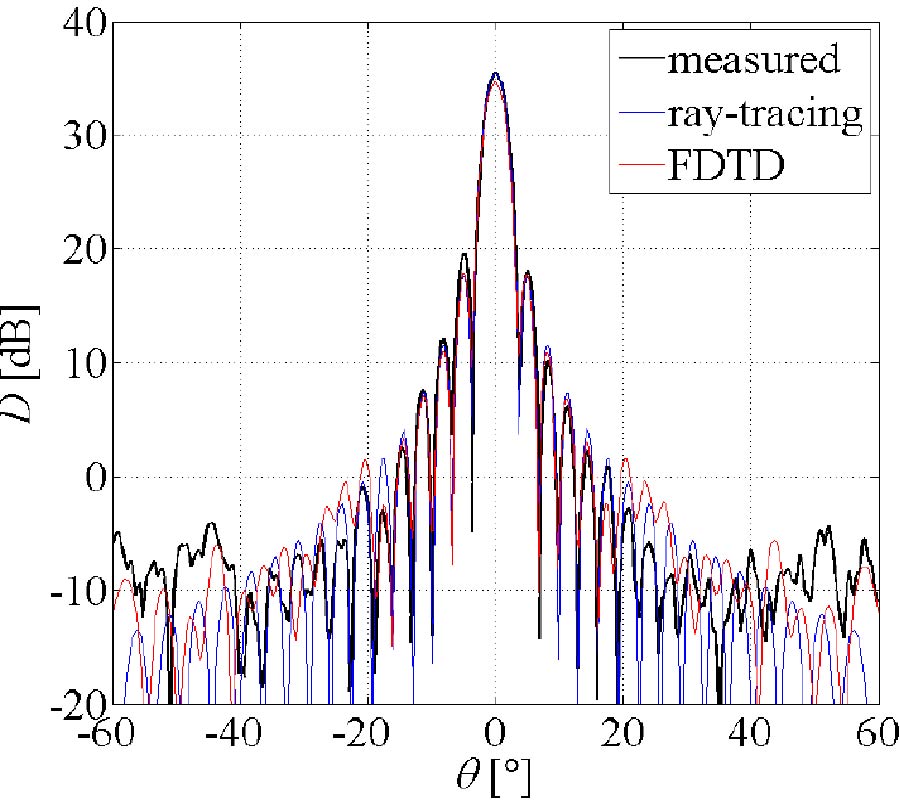
A novel two-dimensional elliptical lens monopulse antenna at millimeter-wave frequencies is presented using the technique of dielectric-filled parallel plates where TE10 mode propagates. A cavity-backed aperture-coupled elliptical patch antenna array with sum/difference ports is located at the back of the elliptical lens as a feeding antenna. The lens antenna is designed, fabricated and tested at 35 GHz. Measurements show clean and symmetrical fan-beam patterns are realized for both the sum and the difference beams. The measured 3-dB E- and H-plane beamwidths of the sum pattern are 5.3° and 37°, respectively. A gain of 16.7 dBi is realized for the sum beam (86% radiation efficiency), while a deep null of -32.4 dB is achieved for the difference beam. In addition, a 10-dB impedance bandwidth of 7.1% is measured for both the sum and difference beams.
MILLIMETER-WAVE ELLIPTICAL LENS ANTENNA FOR FAN-BEAM MONOPULSE APPLICATIONS