Search Results(13800)

2012-09-05
PIER C
Vol. 32, 109-122
Wideband Microwave Crossover Using Double Vertical Microstrip-CPW Interconnect
Yifan Wang , Amin M. Abbosh and Bassem Henin
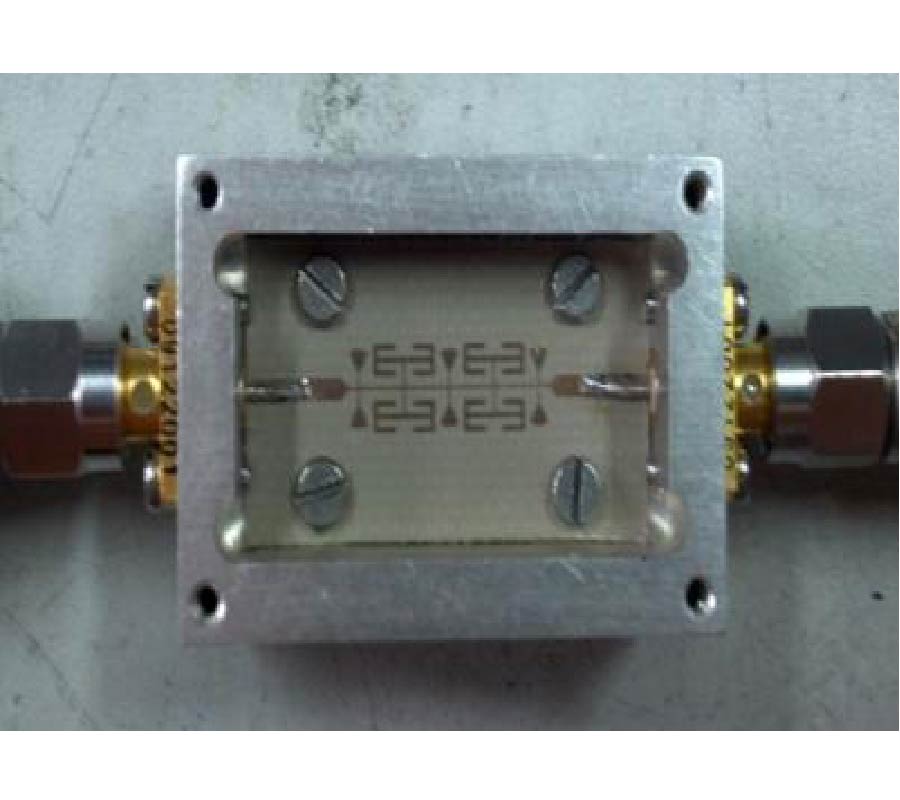
The paper presents the design of a novel ultra-wideband microwave crossover for the use in microstrip circuits. The proposed structure includes a double microstrip-coplanar waveguide (CPW) vertical interconnect in single-layer substrate technology which allows an inclusion of a finite-width coplanar waveguide (CPW) on the top side of the substrate to achieve the required cross-link. The presented design is verified using the full-wave electromagnetic simulator Ansoft HFSS v.13 and experimental tests. The obtained experimental results show that in the frequency band of 3.2-11 GHz, the crossover has an isolation of 20 dB accompanied by insertion losses of no more than 1.5 dB.
WIDEBAND MICROWAVE CROSSOVER USING DOUBLE VERTICAL MICROSTRIP-CPW INTERCONNECT
2012-09-05
PIER M
Vol. 25, 269-281
Electromagnetic Propagation and Absorbing Property of Ferrite-Polymer Nanocomposite Structure
Harun Bayrakdar
We have synthesis ferrite-polymer nanocomposite structures, theoretically and experimentally investigated electromagnetic propagation, absorption properties of these nanocomposite materials at 8-20 GHz in microwave guides. The microwave properties of the samples were investigated by transmission line method, and reflection loss of -59.60 dB was found at 12 GHz for an absorber thickness of 2 mm. These nanocomposites may be attractive candidates for microwave absorption materials.
ELECTROMAGNETIC PROPAGATION AND ABSORBING PROPERTY OF FERRITE-POLYMER NANOCOMPOSITE STRUCTURE
2012-09-05
PIER M
Vol. 25, 255-268
Self-Collimation Effect in Two-Dimentional Photonic Crystal Based on Optofludic Technology
Majid Ebnali-Heidari , Farnaz Forootan and Akbar Ebnali-Heidari
We propose an optofluidic based on two-dimensional (2D) rod-type silicon photonic crystal (PhC) waveguide that supports self-collimation effect over a large frequency and angle range without any defect or nano-scale variation in the PhC geometry. By analyzing the equi-frequency counter (EFC) of a triangular rod PhC-bands, we verify the optimum band of the structure which is suitable for self-collimation of light beams. By varying the refractive index of fluid being infiltrated into the background of PhC, we perform a systematic study of optofluidic self-collimation of light beams to achieve a wide range of angles and low loss of light. By means of selective microfluidic infiltration and remarkable dispersion properties, we show that it is possible to design auto-collimatator and negative refraction devices based on self-collimation effect with high transmission. We use the plane wave method (PWM) for analyzing the EFC and the finite difference time domain (FDTD) method for simulating the transmission properties.
SELF-COLLIMATION EFFECT IN TWO-DIMENTIONAL PHOTONIC CRYSTAL   BASED ON OPTOFLUDIC TECHNOLOGY
2012-09-05
PIER
Vol. 131, 135-152
A Simple Local Approximation FDTD Model of Short Apertures with a Finite Thickness
Run Xiong , Bin Chen , Yunfei Mao , Bo Li and Qi-Feng Jing
This paper brings forward a simple local approximation finite-difference time-domain (FDTD) method for the analysis of short apertures with a finite thickness. By applying the equivalence principle together with a simple local approximation, the varying field distribution is accurately derived. The updating equations for the slot field can be derived by casting the field distributions into the contour paths containing the aperture. The method has been applied to two problems and the results are compared with the high-resolution standard FDTD simulation and the measurement results. The accuracy of the proposed method is verified from the comparison of both the field distribution and the time-domain and frequency-domain slot coupling results. It is demonstrated that the local approximation is highly efficient and timesaving, and the present method is stable, numerically and computationally efficient.
A SIMPLE LOCAL APPROXIMATION FDTD MODEL OF SHORT APERTURES WITH A FINITE THICKNESS
2012-09-05
PIER
Vol. 131, 117-134
Reducing the Array Size for DOA Estimation by an Antenna Mode Switch Technique
Shih-Chieh Cheng and Kun-Chou Lee
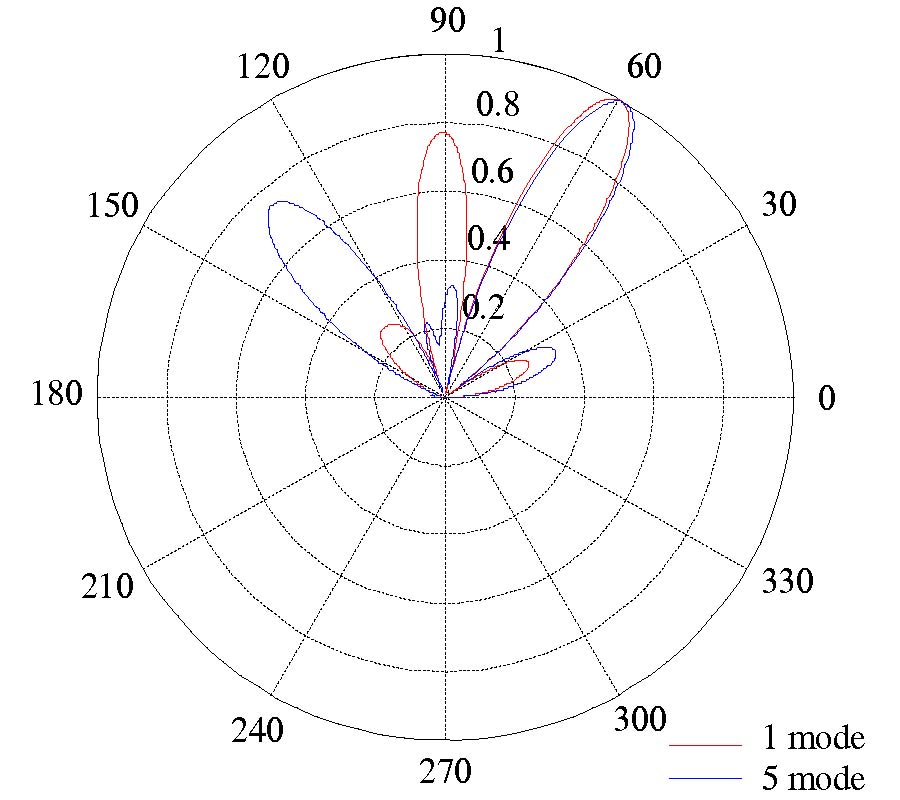
In this paper, an antenna-mode-switch technique is proposed to reduce the array size for the DOA (direction-of-arrival) estimation. Conventional DOA estimation requires many elements of antenna array to achieve high resolution, and then suffers from large array size. To improve such disadvantages, this paper proposes an antenna-mode-switch technique to reduce the required number of array elements. Numerical simulation shows that the required number of array elements will be greatly reduced by using the proposed technique. Furthermore, the bow-tie antenna design for implementing the proposed antenna-mode-switch technique is also given. The result proves that high-resolution and accurate properties of such a practical antenna design is very close to those of the ideal antenna mode.
REDUCING THE ARRAY SIZE FOR DOA ESTIMATION BY AN ANTENNA MODE SWITCH TECHNIQUE
2012-09-05
PIER
Vol. 131, 99-115
Two-Phase Low Conductivity Flow Imaging Using Magnetic Induction Tomography
Hsin-Yu Wei and Manuchehr Soleimani
Magnetic Induction Tomography (MIT) is a new and emerging type of tomography technique that is able to map the distribution of all three passive electromagnetic properties, however most of the current interests are focusing on the conductivity and permeability imaging. In an MIT system, coils are used as separate transmitters or sensors, which can generate the background magnetic field and detect the perturbed magnetic field respectively. Through switching technique the same coil can work as transceiver which can generate field at a time and detect the field at another time. Because magnetic field can easily penetrate through the non-conductive barrier, the sensors do not need direct contact with the imaging object. These non-invasive and contactless features make it an attractive technique for many applications compared to the traditional contact electrode based electrical impedance tomography. Recently, MIT has become a promising monitoring technique in industrial process tomography, for example MIT has been used to determine the distribution of liquidised metal and gas (high conductivity two phase flow monitoring) for metal casting applications. In this paper, a low conductivity two phase flow MIT imaging is proposed so the reconstruction of the low contrast samples (< 6 S/m) can be realised, e.g. gas/ionised liquid. An MIT system is developed to test the feasibility. The system utilises 16 coils (8 transmitters and 8 receivers) and an operating frequency of 13 MHz. Three dierent experiments were conducted to evaluate all possible situations of two phase flow imaging: 1) conducting objects inside a non-conducting background, 2) conducting objects inside a conducting ackground (low contrast) and 3) non-conducting objects inside a conducting background. Images are reconstructed using the linearised inverse method with regularisation. An experiment was designed to image the non-conductive samples inside a conducting background, which is used to represent the size varying bubbles in ionised solution. The temporal reconstruction algorithm is used in this dynamic experiment to improve the image accuracy and noise performance.
TWO-PHASE LOW CONDUCTIVITY FLOW IMAGING USING MAGNETIC INDUCTION TOMOGRAPHY
2012-09-04
PIER Letters
Vol. 34, 111-122
Prediction of Multiple Magnetic Dipole Model Parameters from Near Field Measurements Employing Stochastic Algorithms
Nikolaos C. Kapsalis , Sarantis-Dimitrios J. Kakarakis and Christos N. Capsalis
In this paper, the problem of predicting far field magnitude from near field measurements of an equipment under test (EUT) is studied. Firstly, a multiple magnetic dipole model is developed to simulate the magnetic behavior of the EUT. The parameters of the model (dipoles positions and magnetic moments) are calculated using the values of the near field applying the Particle Swarm Optimization (PSO) algorithm. For the evaluation of the method, extended simulations were conducted, producing theoretical values and distorting them with noise, and then the developed algorithm was used to create the proper model. Finally, the theoretical results are compared to the field assessments the proper models produced.
PREDICTION OF MULTIPLE MAGNETIC DIPOLE MODEL PARAMETERS FROM NEAR FIELD MEASUREMENTS EMPLOYING STOCHASTIC ALGORITHMS
2012-09-04
PIER
Vol. 131, 81-97
Electromagnetic Design and Analysis of Double-Rotor Flux-Modulated Permanent-Magnet Machines
Chunhua Liu and Kwok-Tong Chau
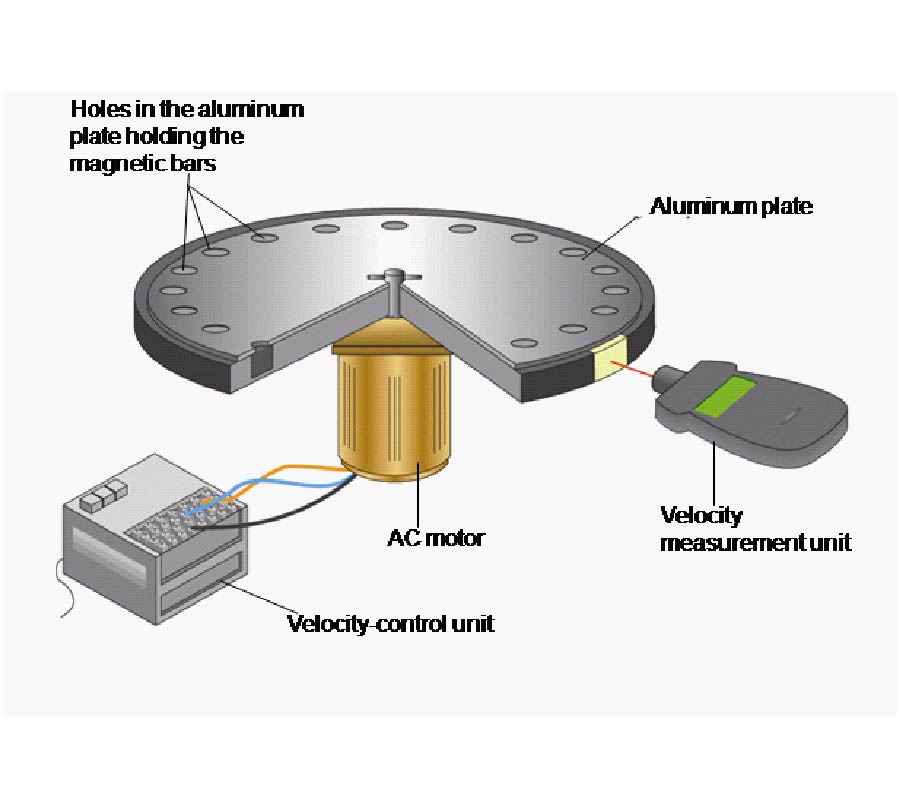
Two double-rotor flux-modulated permanent-magnet (DR-FMPM) machines are proposed for direct-drive applications, including the DR coaxial magnetic-geared (CMG) type and the DR PM vernier (PMV) type. The key of the DR-CMG type is to utilize two modulation rings for obtaining the desired magneticgearing effect, whereas the key of the DR-PMV type is to utilize the flux-modulation poles and fractional-slot concentrated-winding arrangement for achieving the magnetic-gearing effect. Thus, both proposed machines are able to directly connect their rotors with two different rotating loads. Their rotating speeds can also be independently controlled by two sets of armature windings. The proposed machines are designed and then analyzed by using the time-stepping finite element method. The corresponding results confirm the validity of the proposed machine design.
ELECTROMAGNETIC DESIGN AND ANALYSIS OF DOUBLE-ROTOR FLUX-MODULATED PERMANENT-MAGNET MACHINES
2012-09-04
PIER
Vol. 131, 63-80
Multi-Phase Synchronous Motor Solution for Steering Applications
Arthur R. Matyas , Karoly A. Biro and Daniel Fodorean
This paper presents the analysis of a six-phase permanent magnet synchronous machine dedicated for electrical power steering system applications. The motor design is briefly described, as well as the construction of the studied motor. The study is validated by finite element method and via experimental results. Some simulated results prove the machine's capability to work in faulty conditions. The machines performances are validated experimentally though scalar control.
MULTI-PHASE SYNCHRONOUS MOTOR SOLUTION FOR STEERING APPLICATIONS
2012-09-03
PIER
Vol. 131, 45-62
Measurements and Evaluations of Multi-Element Antennas Based on Limited Channel Samples in a Reverberation Chamber
Xiaoming Chen
In this paper, evaluations of diversity gains and capacities of multi-element antenna based on limited channel samples in a reverberation chamber (RC) are studied. It is shown that, for a large antenna array, the classical sample estimation based on finite channel samples tends to underestimate its diversity gain and capacity. An improved (yet slightly more complicated) eigenvalue estimation method is applied in both diversity gain and capacity calculations, which effectively alleviates the estimation bias. The findings of the present paper are applicable for measurements where the maximum independent channel samples per antenna element are limited. Apart from simulations, we also evaluate the performances of the classical and improved eigenvalue estimators based on measurements in a RC. Based on the results of this paper, the performance of the RC measurement (with limited samples) for multi-element antennas can be readily enhanced.
MEASUREMENTS AND EVALUATIONS OF MULTI-ELEMENT ANTENNAS BASED ON LIMITED CHANNEL SAMPLES IN A REVERBERATION CHAMBER
2012-09-03
PIER
Vol. 131, 19-44
A Study of the EMC Performance of a Graded-Impedance, Microwave, Rice-Husk Absorber
Muhammad Nadeem Iqbal , Mohd Fareq Bin Abd Malek , Suzanna Harun Ronald , Muhammad Shafiq Bin Mezan , Khairudi Mohd Juni and Rogayah Chat
Biomass used for energy, whether it is extracted from forest residues or agricultural waste, contributes in many areas, such as power production, the construction industry, and also as a major source of different organic and inorganic compounds in the petrochemical industry. In recent years, research has identified a very remarkable use of agricultural waste, especially rice husks, as a microwave absorber in a pyramidal shape. However, absorbers built in this shape are fragile and require a very high degree of care, especially near the access panels, doors, and high traffic areas of the anechoic facility. This paper presents the results of a detailed experimental investigation of a more-robust, new design that is based on the concept of impedance or dielectric grading of rice-husk material. The absorber was fabricated using multiple layers of rice-husk material with increasing dielectric loss along the incident wave propagation axis. This type of fabrication technique provides more robust design of the microwave, rice-husk absorber with less thickness, as compared to the geometricallytapered, pyramid, or wedge absorbers. Free-space transmission and radar cross section (RCS) methods have been used, to study the electromagnetic compatibility (EMC) performance over the frequency range of 4-8 GHz. After the receiving equipment was calibrated by the thrureflect-line (TRL) calibration technique, the experiments were performed inside the anechoic chamber. The performance of the absorber was evaluated by incorporating the effects of circular-hole perforation, cross-polarized seams, and different metallic back plates. The proposed absorber demonstrated good performance (< -10 dB) for normal and 60° off the normal incident angles over the frequency range of 4-8 GHz. Reflectivity performance also was found to be comparable to one of the commercially-available absorbers.
A STUDY OF THE EMC PERFORMANCE OF A GRADED-IMPEDANCE, MICROWAVE, RICE-HUSK ABSORBER
2012-09-03
PIER
Vol. 131, 1-17
Automated RFID-Based Identification System for Steel Coils
Myungsik Kim and Kwangsoo Kim
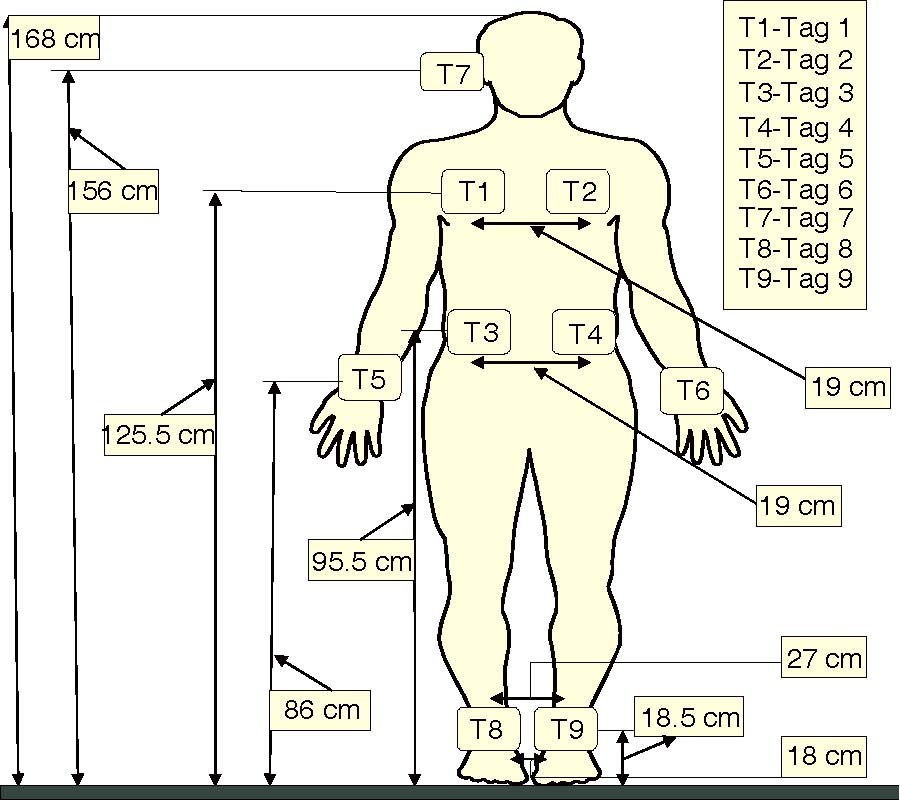
This paper describes the radio frequency identification(RFID)-based steel coil identification system for supply chain management in the steel and iron industry. During crane operation, coil information is automatically updated by reading an RFID tag which is attached to the coil. One of the technical challenges associated with the RFID-based coil identification is the fall of the identification performance due to neighboring metallic objects. In order to cope with this problem, a system was developed in two directions. First, an effective tag attachment method considering the work process and the environmental conditions was proposed. Second, an antenna case was developed to improve the reading performance by minimizing the influence from the attached surface and focusing the RF signal to the target tag. The simulation and experimental results at the POSCO steel company verify that the proposed system can sense the target RFID tag successfully.
AUTOMATED RFID-BASED IDENTIFICATION SYSTEM FOR STEEL COILS
2012-09-03
PIER
Vol. 130, 601-617
Determination of Dielectric Property of Construction Material Products Using a Novel RFID Sensor
Rattapong Suwalak , Chuwong Phongcharoenpanich , Danai Torrungrueng and Monai Krairiksh
This paper presents a concept, by which radio frequency (RF) tags are employed as remotely read dielectric-property sensors to determine qualities of some construction material products (CMPs); e.g., light weight concrete (LWC), mortar specimens and concrete. Using the dependency of the read range of the passive RF identification (RFID) sensor system on the electromagnetic properties of CMPs near or in contact with RFID tags, the qualities of CMPs can be determined through their estimated dielectric properties. Theoretical formulation is provided, and numerical simulations are performed for optimal design of passive RFID tag antennas suitable for RFID sensors and for read-range calculations. In addition, a series of measurements is performed to measure read ranges of the passive RFID sensor system for an LWC as an example of CMPs, and these measured read ranges will be processed appropriately to inversely determine the dielectric constant of the LWC under test, which in turn provides information on its qualities. It is found that the novel RFID sensor can be employed to determine the dielectric properties of the LWC under test with reasonable accuracy.
DETERMINATION OF DIELECTRIC PROPERTY OF CONSTRUCTION MATERIAL PRODUCTS USING A NOVEL RFID SENSOR
2012-09-03
PIER
Vol. 130, 581-600
Evaluation of Lightning Return Stroke Current Using Measured Electromagnetic Fields
Mahdi Izadi , Mohd Zainal Abidin Ab Kadir , Chandima Gomes and Vernon Cooray
The lightning return stroke current is an important parameter for considering the effect of lightning on power lines. In this study, a numerical method is proposed to evaluate the return stroke current based on measured electromagnetic fields at an observation point in the time domain. The proposed method considers all field components and the full wave shape of the current without the use of a special current model as a basic assumption compared to previous methods. Furthermore, the proposed algorithm is validated using measured fields obtained from a triggered lightning experiment. The results show a good agreement between the simulated field based on the evaluated currents from the proposed method and the corresponding measured field at a remote observation point. The proposed method can determine current wave shapes related to a greater number of lightning occurrences compared to the direct measurement of the current.
EVALUATION OF LIGHTNING RETURN STROKE CURRENT USING MEASURED ELECTROMAGNETIC FIELDS
2012-09-01
PIER B
Vol. 43, 239-253
Electromagnetic Analysis of a Modular Flux-Switching Permanent-Magnet Motor Using Finite-Element Method
Wenxiang Zhao , Ming Cheng , Jinghua Ji and Ruiwu Cao
This paper proposes a new 3-phase flux-switching permanent-magnet (FSPM) motor, termed as modular FSPM (M-FSPM) motor, for high reliability applications. Due to PMs in the stator, the proposed motor offers high efficiency, simple and robust rotor structure, and good thermal dissipation conditions. The key is the new motor topology which incorporates the concept of fault-tolerant teeth to provide the desired decoupling among phases. By using finite element method, the proposed M-FSPM motor is analyzed as compared with the existing fault-tolerant FSPM (FT-FSPM) motor. The results show that the proposed M-FSPM motor not only retains the merits of high power density, strong mechanical integrity, good immunity from thermal problem and high torque capability, but also offers lower torque ripple, higher average torque and lower cost than the existing FT-FSPM motor. A proposed M-FSPM motor is designed and built for exemplification. Experimental results of the prototype are given to confirm the validity of the proposed motor.
ELECTROMAGNETIC ANALYSIS OF A MODULAR FLUX-SWITCHING PERMANENT-MAGNET MOTOR USING FINITE-ELEMENT METHOD
2012-09-01
PIER Letters
Vol. 34, 101-110
Reconfigurable Slot Antennas with Circular Polarization
Chuen-Ching Wang , Li-Ting Chen and Jeen-Sheen Row
A new design for circularly-polarized (CP) slot antennas is first described. The antenna is a combination of a shorted square-ring slot and an L-shaped linear slot, and its CP operation frequency can be easily tuned under the condition that the slot area is unchanged. Based on the CP design, two reconfigurable slot antennas are then developed. One is a frequency reconfigurable antenna, whose CP operation frequency can be switched between two adjacent frequencies. The other is a polarization reconfigurable antenna, whose polarization can be switched between two orthogonal CP senses. The two reconfigurable antennas are realized using PIN diodes. Details of the designs and experimental results are shown.
RECONFIGURABLE SLOT ANTENNAS WITH CIRCULAR POLARIZATION
2012-08-30
PIER Letters
Vol. 34, 91-100
A Wideband Trapezoidal Dielectric Resonator Antenna with Circular Polarization
Shadi Danesh , Sharul Kamal Abdul Rahim and Mohsen Khalily
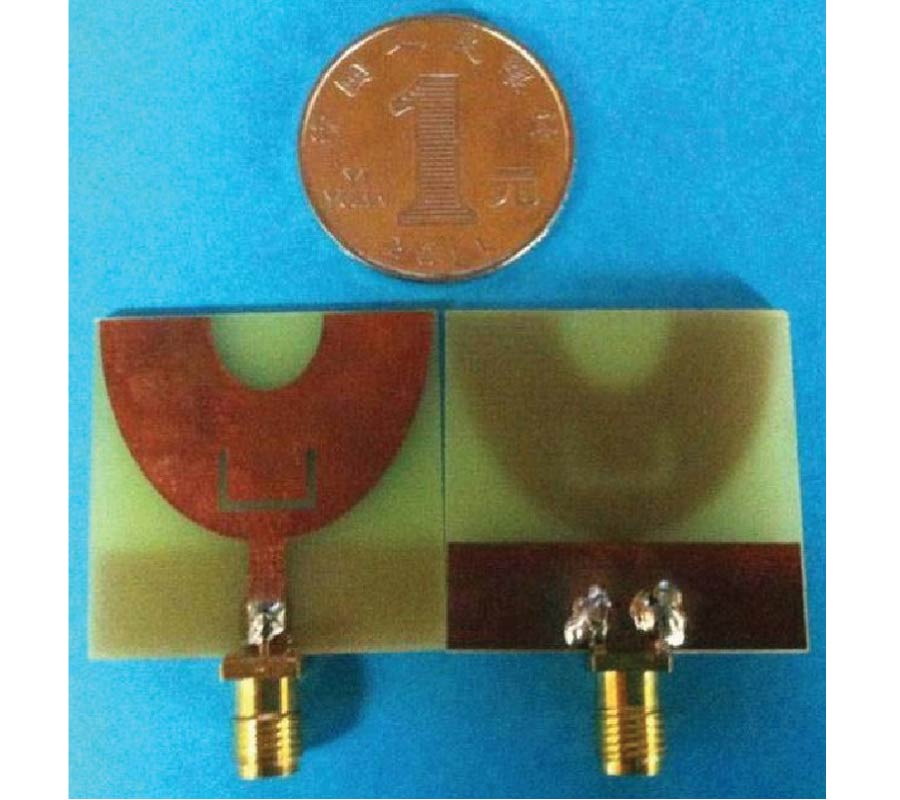
A new design of a circularly-polarized (CP) trapezoidal dielectric resonator antenna (DRA) for wideband wireless application is presented. A single-layered feed is used to excite the trapezoidal shaped dielectric resonator to increase resonant frequency and axial ratio. Besides its structure simplicity, ease of fabrication and low-cost, the proposed antenna features good measured impedance bandwidth, 87.3% at 4.21GHz to 10.72 GHz frequency bands. Moreover, the antenna also produces 3-dB axial ratio bandwidth of about 850 MHz from 5.13 GHz to 6 GHz. The overall size of DRA is 21 mm x 35 mm, which is suitable for mobile devices. Parametric study and measurement results are presented and discussed. Very good agreement is demonstrated between simulated and measured results.
A WIDEBAND TRAPEZOIDAL DIELECTRIC RESONATOR ANTENNA WITH CIRCULAR POLARIZATION
2012-08-30
PIER
Vol. 130, 563-579
An Adaptive Method to Focusing in an Unknown Scenario
Lorenzo Crocco , Loreto Di Donato , Domenica A. M. Iero and Tommaso Isernia
The problem of field focusing radiated onto a target location in an unknown scenario is considered. In particular, we devise an adaptive procedure in which first an image of the unknown region where the target point is located is formed via LSM. Then, the LSM result is used also to define the excitations coefficients for the array elements needed to focus the field. This novel approach to focusing is described and tested with numerical examples.
AN ADAPTIVE METHOD TO FOCUSING IN AN UNKNOWN SCENARIO
2012-08-28
PIER Letters
Vol. 34, 83-90
K-Band Harmonic Dielectric Resonator Oscillator Using Parallel Feedback Structure
Yicheng Du , Zong-Xi Tang , Biao Zhang and Ping Su
A novel K-band harmonic dielectric resonator oscillator (DRO) is presented. Two identical parallel feedback DROs constitute a symmetric structure by sharing the same dielectric resonator (DR). As a result of this special structure, the odd frequency output components offset while the even harmonic frequency components superimposed at the output port. Odd and even mode analysis method is used in theoretical analysis. As the experimental results shown, the fundamental frequency is 9.45 GHz and the output power at the second harmonic frequency of 18.9 GHz is 9.45 dBm. The suppression of fundamental frequency is about 15.5 dBc. A phase noise of -97 dBc/Hz@100 KHz and -78 dBc/Hz@10 KHz is achieved at the output frequency.
K-BAND HARMONIC DIELECTRIC RESONATOR OSCILLATOR USING PARALLEL FEEDBACK STRUCTURE
2012-08-23
PIER B
Vol. 43, 211-238
A Macrobasis Function Model for Characterizing Finite Large-Area Metamaterials
Davood Ansari Oghol Beig and Hossein Mosallaei
An acceleration technique for the MoM solution of large-area metamaterial arrays is proposed that relies on numerical extraction of the modal profile associated with the individual array elements followed by projection of the global system equations onto a judiciously constructed reduced solution space. To further enhance the performance of the underlying MoM computations an IE-FFT engine is developed that is adapted for the underlying JMCFIE formulation and higher order quadrilateral discretization. A number of large-area metamaterial arrays are solved and the computational statistics are presented to reflect the advantage of the the proposed methodology.
A MACROBASIS FUNCTION MODEL FOR CHARACTERIZING FINITE LARGE-AREA METAMATERIALS