Search Results(13800)

2012-10-25
PIER C
Vol. 34, 41-52
A Three-Band T-Junction Power Divider Based on Artificial Transmission Lines
Giuseppina Monti , Rosa De Paolis and Luciano Tarricone
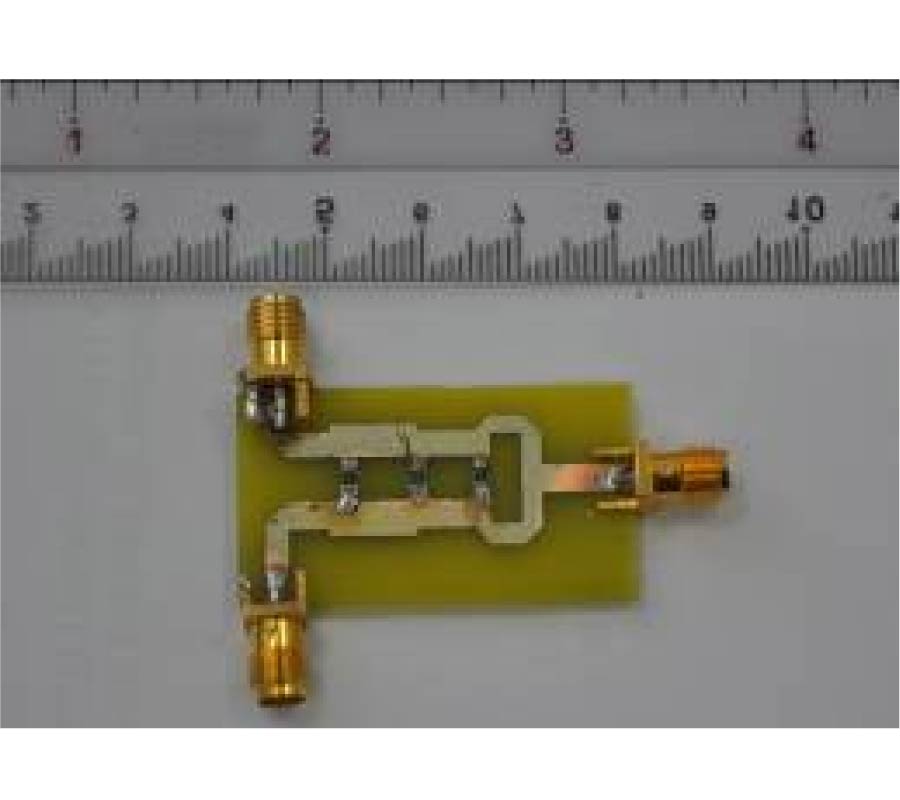
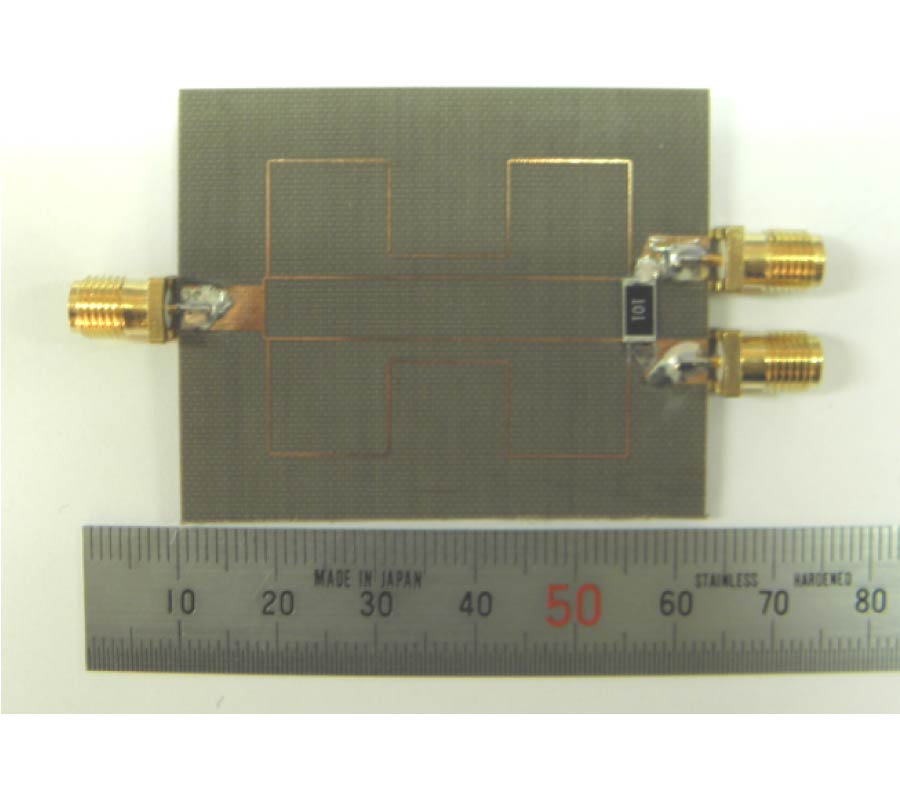
Based on the Composite Right/Left-Handed (CRLH) Transmission Line (TL) approach this paper presents a 3-band T-Junction power divider. The proposed design strategy uses a stub-loaded TL for the right-handed portion of the line; this way, with respect to a conventional CRLH line, one more degree of freedom is available. Experimental and numerical results referring to a prototype using surface-mount capacitors and inductors are reported and discussed. It is demonstrated that the artificial transmission line (ATL) here presented is an optimum candidate for designing high-added value microwave devices. Furthermore, based on the use of metal-insulator-metal capacitors and short circuited stubs, a monolithic implementation is also proposed.
A THREE-BAND T-JUNCTION POWER DIVIDER BASED ON ARTIFICIAL TRANSMISSION LINES
2012-10-25
PIER M
Vol. 26, 237-249
A Quasi-Analytical Model for Remote Field Eddy Current Inspection
Antonino Musolino , Rocco Rizzo and Ernesto Tripodi
The Remote Field Eddy Current (RFEC) method is widely used to inspect both ferrous and nonferrous metal tubes when internal access is the only possible way of inspection. An axisymmetric quasi-analytical model is presented in this paper in order to simulate the behavior of a RFEC system during its operation. The proposed model, based on the application of the Fourier Transform in space, is able to take into account the finite length of the excitation coil, fed by an AC current, and the relative movement between the RFEC system and the wall tube. Numerical simulations based on integral formulations and experimental measurements were used to validate the proposed quasi-analytical model.
A QUASI-ANALYTICAL MODEL FOR REMOTE FIELD  EDDY CURRENT INSPECTION
2012-10-25
PIER
Vol. 133, 331-346
Theoretical Analysis of Sub-Wavelength Light Propagation through the Double-Chain Silver Nanorings
Yuan-Fong Chau and Wayne Yang
Surface plasmon resonance effects on a system consisting of the double-chain silver nanorings are numerically investigated by means of the finite element method with three-dimensional calculations. The numerical results for resonant wavelengths corresponding to different light polarizations, pair numbers, illumination wavelengths, charge distribution and the permittivities filled inside the dielectric holes are reported as well. Results show that the double-chain silver nanorings exhibit tunable plasmon resonances in the near field zone that are not observed for the silver nanodisks of the same volume. The resonance wavelength is redshifted as the filling medium in dielectric holes increases, which is attributed to a longer effective optical path. It can be verified that the proposed structure (e.g., twelve pairs or more pairs) is pertinent to the functionality of long range of wave guiding and also show promise for applications in nanooptical devices, sensing, and surface-enhanced spectroscopy, due to their strong and tunable plasmon resonance.
THEORETICAL ANALYSIS OF SUB-WAVELENGTH LIGHT PROPAGATION THROUGH THE DOUBLE-CHAIN SILVER NANORINGS
2012-10-24
PIER B
Vol. 45, 147-164
Information Theoretic Criterion Based Clutter Reduction for Ground Penetrating Radar
Muhammad Mohsin Riaz and Abdul Ghafoor
Singular value decomposition and information theoretic criterion based clutter reduction is proposed for ground penetrating radar imaging. The scheme is capable of discriminating target, clutter and noise subspaces. Information theoretic criterion is used with conventional singular value decomposition to nd target singular values. Proposed scheme works also for extracting multiple targets in heavy cluttered images. Simulation results are compared on the basis of mean square error, peak signal to noise ratio and visual inspection.
INFORMATION THEORETIC CRITERION BASED CLUTTER REDUCTION FOR GROUND PENETRATING RADAR
2012-10-24
PIER B
Vol. 45, 117-146
Isogeometric Shape Optimization for Electromagnetic Scattering Problems
Dang Manh Nguyen , Anton Evgrafov and Jens Gravesen
We consider the benchmark problem of magnetic energy density enhancement in a small spatial region by varying the shape of two symmetric conducting scatterers. We view this problem as a prototype for a wide variety of geometric design problems in electromagnetic applications. Our approach for solving this problem is based on shape optimization and isogeometric analysis. One of the major difficulties we face to make these methods work together is the need to maintain a valid parametrization of the computational domain during the optimization. Our approach to generating a domain parametrization is based on minimizing a second order approximation to the Winslow functional in the vicinity of a reference parametrization. Furthermore, we enforce the validity of the parametrization by ensuring the non-negativity of the coefficients of a B-spline expansion of the Jacobian. The shape found by this approach outperforms earlier design computed using topology optimization by a factor of one billion.
ISOGEOMETRIC SHAPE OPTIMIZATION FOR ELECTROMAGNETIC SCATTERING PROBLEMS
2012-10-24
PIER B
Vol. 45, 101-116
A Microstrip Antenna with a Reconfigurable Pattern for RFID Applications
Giuseppina Monti , Laura Corchia and Luciano Tarricone
This paper presents a low-cost pattern-reconfigurable microstrip antenna. The proposed design strategy uses a slotted patch antenna on a bi-layer structure as basic element of a switched parasitic array. Reconfigurability is obtained by means of PIN diodes used to vary the resonance frequency of the parasitic patches. Experimental results referring to a prototype consisting of an array of three elements optimized for the Ultra High Frequency (UHF) band of Radio Frequency IDentification (RFID) systems are presented and discussed. It is demonstrated that the proposed antenna exhibits a main beam that can be reconfigured into three different directions.
A MICROSTRIP ANTENNA WITH A RECONFIGURABLE PATTERN FOR RFID APPLICATIONS
2012-10-24
PIER B
Vol. 45, 83-99
Torque on a Moving Electric/Magnetic Dipole
Alexander L. Kholmetskii , Oleg V. Missevitch and Tolga Yarman
We derive an expression for the torque exerted on an electric/magnetic dipole moving in an electromagnetic field, which contains two new velocity-dependent terms that to our knowledge were not reported before. A physical meaning of various torque components is discussed in terms of Lorentz force law and hidden momentum contribution.
TORQUE ON A MOVING ELECTRIC/MAGNETIC DIPOLE
2012-10-24
PIER B
Vol. 45, 57-82
A Partial Coherent Physical Model of Third and Fourth Stokes Parameters of Sastrugi Snow Surfaces Over Layered Media with Rough Surface Boundary Conditions of Conical Scattering Combined with Vector Radiative Transfer Theory
Wenmo Chang and Leung Tsang
In this paper, a partial coherent approach is used to study the third and fourth Stokes parameters in passive microwave remote sensing of Sastrugi snow surface over layered snow structures. The incoherent part of the model consists of using radiative transfer theory for the snow layers. The coherent part of the model is using numerical solutions of Maxwell equations to derive the bistatic scattering and transmission coefficients of conical scattering by sastrugi surfaces which have large heights and large slopes. We then use the rough surface boundary conditions of conical scattering from the coherent part, in the incoherent radiative transfer equations. The radiative transfer equations are then solved iteratively that includes multiple interactions between the layered structures and the rough surfaces. Simulation results indicate that large third and fourth Stokes parameters are obtained because of the coupling of large angle transmissions of the rough surfaces with the internal reflections of layered structures. The partial coherent approach also eliminates the coherent interference patterns in angular variations from multiple reflections of layer boundaries that were present in the fully coherent approach.
A PARTIAL COHERENT PHYSICAL MODEL OF THIRD AND FOURTH STOKES PARAMETERS OF SASTRUGI SNOW SURFACES OVER LAYERED MEDIA WITH ROUGH SURFACE BOUNDARY CONDITIONS OF CONICAL SCATTERING COMBINED WITH VECTOR RADIATIVE TRANSFER THEORY
2012-10-24
PIER C
Vol. 34, 29-39
A Wideband Quadrature Power Divider/Combiner and Its Application to an Improved Balanced Amplifier
Jose Luis Olvera Cervantes , Alonso Corona-Chavez , Ricardo Arturo Chavez-Perez , Humberto Lobato-Morales , Jorge Rodrigo Ortega Solis and José-Luis Medina-Monroy
In this paper a novel broadband quadrature power divider and its robust design method are presented. The QPD consists of a two-section power divider in combination with a 90-degree differential phase shifter. The two-section power divider is calculated to provide equal power split, high output port isolation, and good return loss at all three ports. The differential phase shifter consists of a composed right/left handed transmission line and pure-right handed transmission line named CRLHu-TL and PRHd-TL, respectively. The CRLHu-TL is divided into two parts; one of them consists of a pure-left handed section whose parasitic pad effects are represented by means of a pure right handed section named PRHp. On the other hand, the PRHd-TL is composed by a microstrip transmission line of characteristic impedance 50Ω and electrical length 50° and two sections equivalents to PRHp. The proposed circuit is applied to develop a broadband balanced amplifier with measured fractional bandwidth (FBW) of 124.4% at the center frequency of 2 GHz.
A WIDEBAND QUADRATURE POWER DIVIDER/COMBINER AND ITS APPLICATION TO AN IMPROVED BALANCED AMPLIFIER
2012-10-24
PIER C
Vol. 34, 13-27
Analysis of Band-Notched UWB Printed Monopole Antennas Using a Novel Segmented Structure
Ke Zhang , Tao Wang and Lianglun Cheng
A novel segmented structure is proposed as a versatile approach to reject certain band of UWB printed monopole antennas (PMAs). To validate the effectiveness of the proposed structure, three UWB PMAs with typical circular, beveled rectangular and regular hexagonal patch shapes are selected and investigated. Good agreement between simulation and measurement shows that, by segmenting every selected patch into three parts, intensive coupling occurs between the center patch and the side patches at the target frequency, and consequently the band-notched function in IEEE 802.11a WLAN band is obtained. The measured radiation properties of these antennas are also presented and discussed. Moreover, a pair of equivalent lumped circuit models is presented, which provides a physical correlation between the notch band behaviors and the control parameters. The input impedance of the antennas calculated by the equivalent circuit models agree very well with the HFSS simulated results.
ANALYSIS OF BAND-NOTCHED UWB PRINTED MONOPOLE ANTENNAS USING A NOVEL SEGMENTED STRUCTURE
2012-10-23
PIER Letters
Vol. 35, 155-164
Compact Triple-Band Antenna Using Defected Ground Structure for WLAN/WiMAX Applications
Tuo Wang , Ying-Zeng Yin , Jian Yang , Yong-Li Zhang and Jiao-Jiao Xie
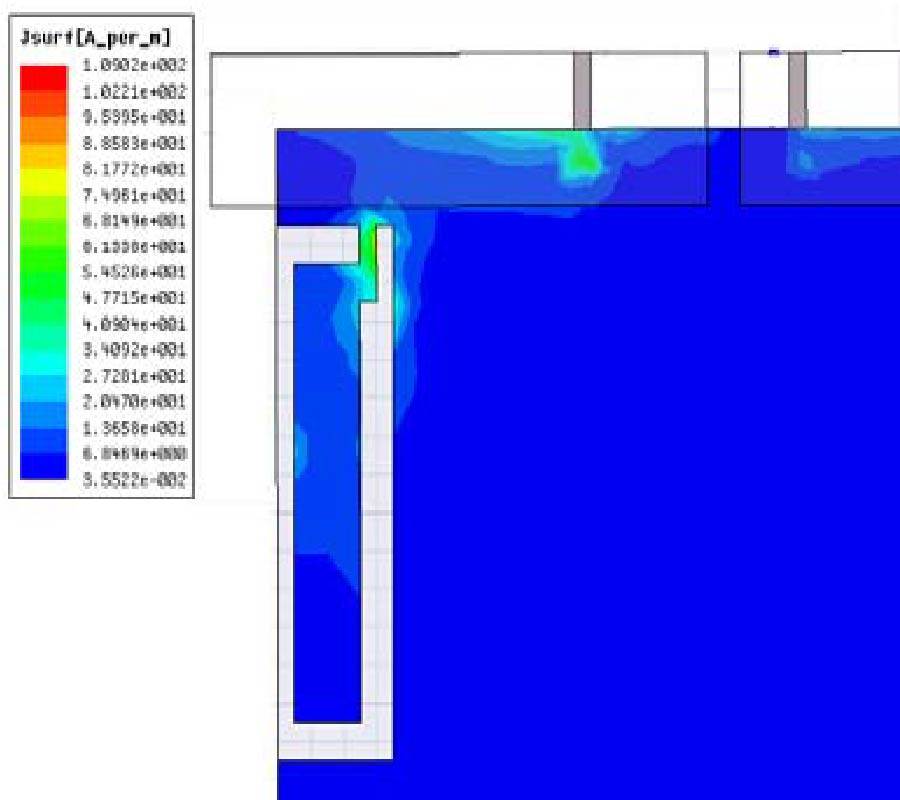
A novel triple-band microstrip-fed planar monopole antenna with defected ground structure (DGS) is proposed for WLAN and WiMAX applications. The proposed microstrip-fed antenna consists of a rectangular patch, dual inverted L-shaped strips and a defected ground. The designed antenna can generate three separate resonances to cover both the 2.4/5.2 GHz WLAN bands and the 3.5 GHz WiMAX bands while maintaining a small overall size of 20 mm × 27 mm. A prototype is experimentally tested, and experimental results show that the antenna gives good radiation patterns and enough antenna gains over the operating bands.
COMPACT TRIPLE-BAND ANTENNA USING DEFECTED GROUND STRUCTURE FOR WLAN/WIMAX APPLICATIONS
2012-10-22
PIER M
Vol. 26, 225-236
Exact Closed Form Formula for Self Inductance of Conductor of Rectangular Cross Section
Zygmunt Piatek and Bernard Baron
In this paper, self inductance for a conductor with rectangular cross section is investigated. Using the threedimensional Fredholm's integral equation of the second kind with weakly singular kernel we obtain an equation for the complex voltage drop in the conductor. Self impedance appearing in the equation is expressed in the form of integral relation for any current density distribution. The imaginary part of this impedance divided by angular frequency is the self inductance of a conductor of any shape and finite length. In the case of direct current (DC), low frequency (LF) or thin strip conductor of rectangular cross section the formulae for the self inductances are given for any length and for length much greater than the other dimensions.
EXACT CLOSED FORM FORMULA FOR SELF INDUCTANCE OF CONDUCTOR OF RECTANGULAR CROSS SECTION
2012-10-22
PIER
Vol. 133, 309-329
Experimental Demonstration of Pulse Shaping for Time-Domain Microwave Breast Imaging
Adam Santorelli , Magdalena Chudzik , Evgeny Kirshin , Emily Porter , Aintzane Lujambio , Israel Arnedo , Milica Popović and Joshua D. Schwartz
We experimentally demonstrate a low-cost hardware technique for synthesizing a specific electromagnetic pulse shape to improve a time-domain microwave breast imaging system. A synthesized broadband reflector (SBR) filter structure is used to reshape a generic impulse to create an ad-hoc pulse with a specifically chosen frequency spectrum that improves the detection and imaging capabilities of our experimental system. The tailored pulse shape benefits the system by improving the level of signal detection after transmission through the breast and thus permits higher-resolution images. We report on our ability to use this technique to detect the presence of tumours in realistic breast phantoms composed of varying quantities of glandular tissue. Additionally, we provide a set of images based on this experimental data that demonstrates the increased effectiveness of the system using the SBR-shaped pulse in the localisation and identification of the embedded tumour.
EXPERIMENTAL DEMONSTRATION OF PULSE SHAPING FOR TIME-DOMAIN MICROWAVE BREAST IMAGING
2012-10-22
PIER
Vol. 133, 285-307
Three-Dimensional SAR with Fixed Transmitter and Its Scattering Explanation
Jun Shi , Ke-Fei Liao and Xiao-Ling Zhang
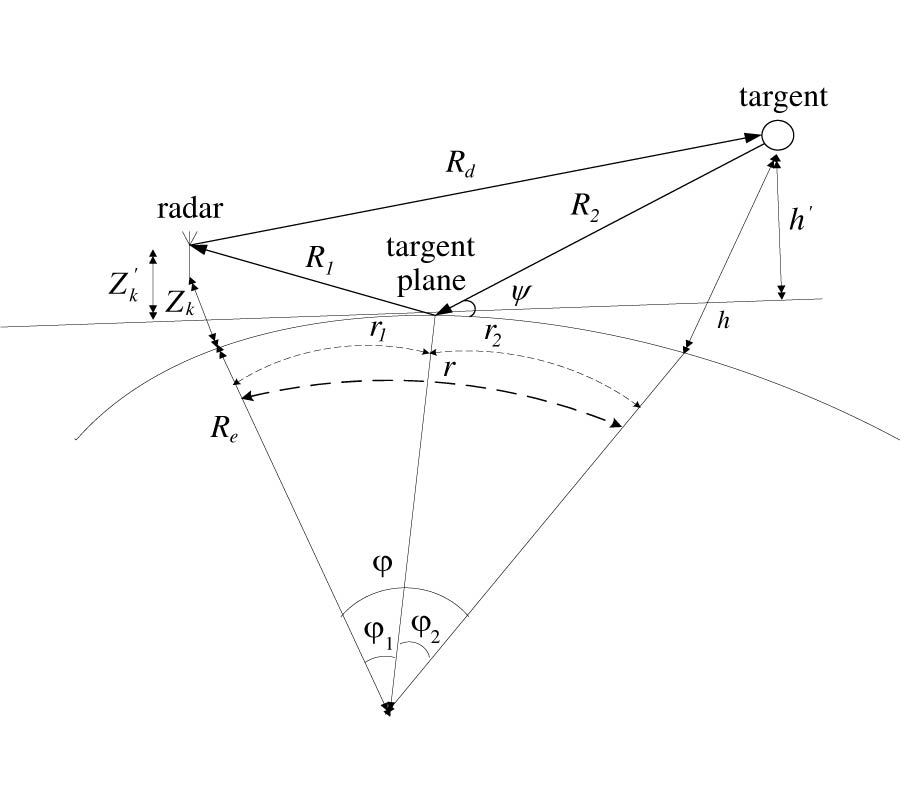
During the experimental data processing, we find that corner reflectors cannot be focused properly using 3-D SAR with a moving transmitter due to the phase reversal phenomenon based on the phase history analysis, i.e. the phases at different observation angles might shift rad, and the echoes cancel, rather than accumulate, to each other. To overcome this defect, 3-D SAR with fixed transmitter is designed. Since the geometry of the transmitter and targets remains unchanged during the observation session, the coherence of echoes is well preserved. The mechanism of 3-D SAR with fixed transmitter can accurately be explained using the Stratton-Chu equation. For perfect conductor, the 3-D image is related to the electric current density. For general dielectric medium, the 3-D image is related to the electric current density, magnetic current density and directional vector of scatterer. Experimental results show that one can focus corner reflectors and cavity-shaped objects by fixing the transmitter, which might fail for the traditional 3-D SAR because of the phase reversal phenomenon.
THREE-DIMENSIONAL SAR WITH FIXED TRANSMITTER AND ITS SCATTERING EXPLANATION
2012-10-22
PIER
Vol. 133, 259-283
Fast GPU-Based Interpolation for SAR Backprojection
Amedeo Capozzoli , Claudio Curcio and Angelo Liseno
We introduce and discuss a parallel SAR backprojection algorithm using a Non-Uniform FFT (NUFFT) routine implemented on a GPU in CUDA language. The details of a convenient GPU implementation of the NUFFT-based SAR backprojection algorithm, amenable to further generalizations to a multi-GPU architecture, are also given. The performance of the approach is analyzed in terms of accuracy and computational speed by comparisons to a ``standard", parallel version of the backprojection algorithm exploiting FFT+interpolation instead of the NUFFT. Different interpolators have been considered for the latter processing scheme. The NUFFT-based backprojection has proven significantly more accurate than all the compared approach, with a computing time of the same order. An analysis of the computational burden of all the different steps involved in both the considered approaches (i.e., standard and NUFFT backprojections) has been also reported. Experimental results against the Air Force Research Laboratory (AFRL) airborne data delivered under the ``challenge problem for SAR-based Ground Moving Target Identification (GMTI) in urban environments" and collected over circular flight paths are also shown.
FAST GPU-BASED INTERPOLATION FOR SAR BACKPROJECTION
2012-10-19
PIER B
Vol. 45, 37-56
A Study on the Effects of Rain Attenuation for an X-Band Satellite System Over Malaysia
Siva Priya Thiagarajah and Thinagaran Nizanthi
In this paper, the effect of rain attenuation on the FSS allocation in the 7250- 7750 MHz in the Space-to-Earth direction is studied for a satellite at 78.5°E longitude. A simulation model based on the ITU-R P618-10 rain model is used to predict the rain attenuation in the C-, Ku- and X-bands in 15 different locations with varying rainfall intensities of between 145-300 mm/hr in East and West Malaysia. The simulations assume a 1.8 m receive antenna with 65% aperture efficiency, QPSK modulation and use of either vertical or horizontal polarization. The downlink centre frequencies used in this study are 4200 MHz, 7750 MHz and 11200 MHz for C-, X- and Ku-bands respectively. The average free-space path loss calculated for each band is used to estimate the signal attenuation due to rain and the corresponding Eb/N0 (dB) is computed at varying rain intensities. The results show that when using vertical receive polarization, all 15 locations of study with a rainfall intensity of up to 200 mm/hr could receive the X-band signal. At 200mm/hr rain intensity in the horizontal receive, most of the X-band links could achieve the threshold Eb/No of 7.68 dB with a ULPC adjustment of approximately 1.5dB where required. At 300 mm/hr rain intensity, video signals in the X-bands were no longer receivable in both polarizations. At 145 mm/hr rain intensity, only one location with high satellite elevation and greater height above mean sea level maintained the Ku-band link in the horizontal receive. In the vertical receive, the Ku-band link was receivable at all locations at 145 mm/hr but were no longer receivable at 200 mm/hr. The study concluded that the elevation angle towards the satellite is a major factor in determining the quality of the signal in the X-band. The other factors that affected the receive Eb/No was the polarization, depth of rain and height of the earth station above mean sea level. In comparison to the Ku-band, the X-band was able to maintain a good quality satellite link in rain intensities of up to 200 mm/hr in the vertical receive. The results indicate that there is high potential for the use of X-band to provide for video transmission over Malaysia in spite of the high rain intensities.
A STUDY ON THE EFFECTS OF RAIN ATTENUATION FOR AN X-BAND SATELLITE SYSTEM OVER MALAYSIA
2012-10-19
PIER B
Vol. 45, 19-35
Design Considerations for Radio Frequency Energy Harvesting Devices
Domenico Pavone , Aniello Buonanno , Michele D'Urso and Francesco Della Corte
Radio Frequency Energy harvesting is a research topic of increasing interest, related to sustainability, which could become a promising alternative to existing energy resources. The paper will show all the activities addressed to design a wideband system to recover wideband energy from electromagnetic sources present in the environment. The main idea is to develop battery-free wireless sensors able to capture the available energy into the mentioned bandwidth. The final goal is to realize self-powered Wireless Networks based on Ultra Lower Power - ULP sensors minimizing the need of dedicated batteries. This last feature is particularly attractive in different kind of applications, ranging from military to civil cases. A first system prototype is shown and discussed. Conclusion follows.
DESIGN CONSIDERATIONS FOR RADIO FREQUENCY ENERGY HARVESTING DEVICES
2012-10-19
PIER Letters
Vol. 35, 145-153
Applying Effective Medium Theory in Characterizing Dielectric Constant of Solids
Sucheng Li , Ruirui Chen , Shahzad Anwar , Weixin Lu , Yun Lai , Huanyang Chen , Bo Hou , Fengran Ren and Bangming Gu
We present a simple approach to measure the dielectric constant of solid materials. In this approach, the powder for the solid under investigation is mixed with the oil at a specific volume fraction. By measuring the oil and the mixture, the permittivity of the inclusion, i.e. the solid, can be accurately derived from the Maxwell-Garnett effective medium theory. With this method, the strict requirements for the solid shape and surface flatness in the conventional measuring configurations can be waved off, and meanwhile the broadband permittivity can be obtained. This method also enables the permittivity measurement on a level of single particle, in an average sense, for materials in natural powder form. The demonstrations on alumina, glucose, and pearl show this approach is valid and robust.
APPLYING EFFECTIVE MEDIUM THEORY IN CHARACTERIZING DIELECTRIC CONSTANT OF SOLIDS
2012-10-19
PIER Letters
Vol. 35, 135-144
Design, Simulation and Measurement of a Dual Linear Polarization Insensitive Planar Resonant Metamaterial Absorber
Sepideh Fallahzadeh , Keyvan Forooraghi and Zahra Atlasbaf
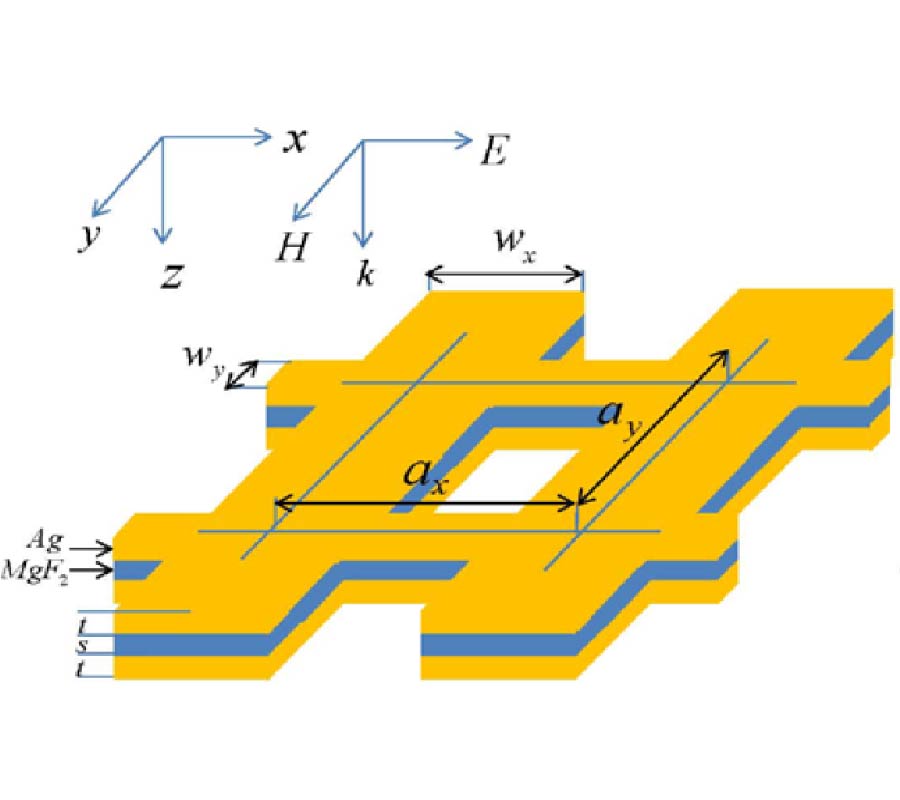
In this paper, we introduce a highly electric-field-coupled (ELC) metamaterial planar absorber in microwave frequency range. The structure is a one layer dual linear polarization insensitive absorber, which is designed by utilizing properly arranged resonant structure with orthogonal polarization sensitivity. In addition, this metamaterial absorber operates over a wide angular range, from 0° to 65° with more than 95% absorption peak. Absorption peak occurs at the frequency of 10.05 GHz with 98% magnitude with FWHM about 5%. In addition to simulation, the theoretically results are verified by measurement, and test results generally agree with simulation ones. The dielectric spacer loss tangent for higher absorption peak and broader bandwidth has been investigated too, and the optimum value for the best absorber structure performance has been obtained.
DESIGN, SIMULATION AND MEASUREMENT OF A DUAL LINEAR POLARIZATION INSENSITIVE PLANAR RESONANT METAMATERIAL ABSORBER
2012-10-19
PIER C
Vol. 34, 1-12
Microstrip Wideband Bandpass Filter with Six Transmission Zeros Using Transversal Signal-Interaction Concepts
Shujian Xue , Wenjie Feng , Haotian Zhu and Wenquan Che
A high-selectivity microstrip wideband bandpass filter with six transmission zeros using transversal signal-interaction concepts is proposed. A fifth-order wide passband with six transmission zeros (0-2f0, f0 is center frequency of the passband) can be realized two transmission paths. The bandwidth and locations of the transmission zeros can be adjusted conveniently by changing the characteristic impedances of open stub and coupling coefficients of the open/shorted coupled lines. A prototype of planar wideband bandpass filter with 3 -dB fractional bandwidth 43.3% (2.33-3.63 GHz) is designed and fabricated. The measured and simulated results both indicate good performances of high selectivity and wideband harmonic suppression.
MICROSTRIP WIDEBAND BANDPASS FILTER WITH SIX TRANSMISSION ZEROS USING TRANSVERSAL SIGNAL-INTERACTION CONCEPTS