Search Results(13800)

2012-11-07
PIER C
Vol. 34, 165-181
Experimental Investigation of Ultra Wideband Diversity Techniques for on-Body Radio Communications
Qammer Hussain Abbasi , Mohammad Khan , Sidrah Liaqat , Muhammad Kamran , Akram Alomainy and Yang Hao
This paper presents an experimental investigations and analyses of ultra-wideband antenna diversity techniques and their effect on the onbody radio propagation channels. Various diversity-combining techniques are applied to highlight; how the overall system performance may be enhanced. Diversity gain is calculated for five different on-body channels and the impact of variation in the spacing between diversity branch antennas is discussed, with an emphasis on mutual coupling, correlation and power imbalance. Results demonstrate the repeatability and reliability of the analysis with error variations as low as 0.8 dB. The study highlights the significance of diversity techniques for non-line-of-sight propagation scenarios in body-centric wireless communications.
EXPERIMENTAL INVESTIGATION OF ULTRA WIDEBAND DIVERSITY TECHNIQUES FOR ON-BODY RADIO COMMUNICATIONS
2012-11-07
PIER
Vol. 133, 535-554
A New Method for Non-Line-of-Sight Vital Sign Monitoring Based on Developed Adaptive Line Enhancer Using Low Centre Frequency UWB Radar
Wen Zhe Li , Zhao Li , Hao Lv , Guohua Lu , Yang Zhang , Xijing Jing , Sheng Li and Jianqi Wang
The physiological parameters monitoring of human target are considered to be a meaningful and challenging task in non-line-of-sight (NLOS) scenes such as rescue of trapped survivors in post-disaster. In this paper, a new method based on developed adaptive line enhancer (DALE) is proposed to monitor vital signs via ultra-wideband (UWB) radar with centre frequency of 400 MHz. The validity of this new method is proved by means of two experiments with different positions of human target. The good results demonstrate that this new method can be used for vital sign monitoring including respiration and heartbeat through the obstacle. Furthermore, the motion responses due to respiration and heartbeat in different body positions are also discussed.
A NEW METHOD FOR NON-LINE-OF-SIGHT VITAL SIGN MONITORING BASED ON DEVELOPED ADAPTIVE LINE ENHANCER USING LOW CENTRE FREQUENCY UWB RADAR
2012-11-07
PIER
Vol. 133, 515-534
Critical Review of the Modified Winding Function Theory
Luis Serrano-Iribarnegaray , Pedro Cruz-Romero and Antonio Gomez-Exposito
The Modified Winding Function Theory (MWFTh), regarded as a very powerful and general theory, has been extensively used for the last 15 years. This paper performs an in-depth review of the mathematical and physical framework on which the MWFTh is based, showing that it is indeed very well suited to analyse machines with small air gaps of arbitrary shape. However, contrary to what is usually stated in the literature, it is also proved that its general formulae fail when applied to large air gaps. This major finding is deduced from two different approaches, both of which are later reinforced by numerical examples. In spite of that, there is an important industrial field (diagnosis techniques of salient-pole synchronous machines eccentricities) in which very good theoretical results are reported by applying the MWFTh to these large air-gap machines. This issue is addressed and clarified in the paper.
CRITICAL REVIEW OF THE MODIFIED WINDING FUNCTION THEORY
2012-11-06
PIER B
Vol. 45, 369-393
A Novelistic Fractal Antenna for Ultra Wideband (UWB) Applications
Mounissamy Levy , Sumanta Bose , Anh Van Dinh and Dhamodharan Sriram Kumar
Fractal arrays are used to increase the bandwidth of the antenna and to reduce grating lobes. The frequency range from 3.1 to 10.6 GHz is specially allocated for the UWB applications. In this paper, a novel antenna based on fractal concepts for ultra wideband (UWB) applications is analyzed, designed, fabricated and tested. Further the antenna is analyzed using the emerging fractal concepts and transmission line method (TLM). The proposed antenna has a good gain bandwidth with broadside radiation pattern. This design is suitable for 3D IC inter-chip and intra-chip communication, and medical imaging applications. This is called Levy's antenna.
A NOVELISTIC FRACTAL ANTENNA FOR ULTRA WIDEBAND (UWB) APPLICATIONS
2012-11-06
PIER M
Vol. 27, 1-10
RCS Characterization of Stealth Target Using X2 Distribution and Lognormal Distribution
Weiqiang Shi , Xiao-Wei Shi and Le Xu
The radar backscatter from complex targets, such as aircrafts and ships, tends to vary rapidly with aspect or time. To describe the radar cross section distribution characteristics of such targets, statistic terms are often used. In this paper, we first give a brief introduction of distribution and lognormal distribution model. And complete form of lognormal distribution is proposed which can be used when ratio of mean to median is less than 1 as stealth targets. The significance of the parameters is discussed in detail aiming to find a characterization standard. As an example, the statistic characteristics of the radar cross section data of a stealth aircraft are analyzed with Swerling 1, 3 distribution, distribution and lognormal distribution. The applicability of the distributions is shown with error-of-fit and test of goodness of fit.
RCS CHARACTERIZATION OF STEALTH TARGET USING <I>X</I><sup>2</sup> DISTRIBUTION AND LOGNORMAL DISTRIBUTION
2012-11-06
PIER
Vol. 133, 495-513
The Use of a Human Body Model to Determine the Variation of Path Losses in the Human Body Channel in Wireless Capsule Endoscopy
Md. Rubel Basar , Mohd Fareq Bin Abd Malek , Khairudi Mohd Juni , Mohd Iskandar Mohd Saleh , Mohd Shaharom Idris , Latifah Mohamed , Norshafinash Saudin , Nur Adyani Mohd Affendi and Azuwa Ali
Presently, wireless capsule endoscopy (WCE) is the sole technology for inspecting the human gastrointestinal (GI) tract for diseases painlessly and in a non-invasive way. For the further development of WCE, the main concern is the development of a high-speed telemetry system that is capable of transmitting high-resolution images at a higher frame rate, which is also a concern in the use of conventional endoscopy. A vital task for such a high-speed telemetry system is to be able to determine the path loss and how it varies in a radio channel in order to calculate the proper link budget. The hostile nature of the human body's channel and the complex anatomical structure of the GI tract cause remarkable variations in path loss at different frequencies of the system as well as at capsule locations that have high impacts on the calculation of the link budget. This paper presents the path loss and its variation in terms of system frequency and location of the capsule. Along with the guideline about the optimum system frequency for WCE, we present the difference between the maximum and minimum path loss at different anatomical regions, which is the most important information in the link-margin setup for highly efficient telemetry systems in next-generation capsules. In order to investigate the path loss in the body's channel, a heterogeneous human body model was used, which is more comparable to the human body than a homogenous model. The finite integration technique (FIT) in Computer Simulation Technology's (CST's) Microwave Studio was used in the simulation. The path loss was analyzed in the frequency range of 100 MHz to 2450 MHz. The path loss was found to be saliently lower at frequencies below 900 MHz. The smallest loss was found around the frequency of 450 MHz, where the variation of path loss throughout the GI tract was 29 dB, with a minimum of -9 dB and a maximum of -38 dB. However, at 900 MHz, this variation was observed to be 38 dB, with a minimum of -10 dB and a maximum of -48 dB. For most positions of the capsule, the path loss increased rapidly after 900 MHz, reaching its peak at frequencies in the range of 1800 MHz to 2100 MHz. During examination of the lower esophageal region, the maximum peak observed was -84 dB at a frequency of 1760 MHz. The path loss was comparatively higher during examination of anatomically-complex regions, such as the upper intestine and the lower esophagus as compared to the less complex stomach and upper esophagus areas.
THE USE OF A HUMAN BODY MODEL TO DETERMINE THE VARIATION OF PATH LOSSES IN THE HUMAN BODY CHANNEL IN WIRELESS CAPSULE ENDOSCOPY
2012-11-05
PIER B
Vol. 45, 353-368
Indoor Localization in the Presence of RSS Variations via Sparse Solution Finding and Dictionary Learning
Wei Ke and Lenan Wu
In the received signal strength (RSS) based indoor wireless localization system, RSS measurements are very susceptible to the complex structures and dynamic nature of indoor environments, which will result in the system failure to achieve a high location accuracy. In this paper, we investigate the indoor positioning problem in the existence of RSS variations without prior knowledge about the localization area and without time-consuming off-line surveys. An adaptive sparsity-based localization algorithm is proposed to mitigate the effects of RSS variations. The novel feature of this method is to adjust both the overcomplete basis (a.k.a. dictionary) and the sparse solution using a dictionary learning (DL) technology based on the quadratic programming approach so that the location solution can better match the actual RSS scenario. Moreover, we extend this algorithm to deal with the problem of positioning targets from multiple categories, a novel problem that few works have ever concerned before. Simulation results demonstrate the superiority of the proposed algorithm over some state-of-art environmental-adaptive indoor localization methods.
INDOOR LOCALIZATION IN THE PRESENCE OF RSS VARIATIONS VIA SPARSE SOLUTION FINDING AND DICTIONARY LEARNING
2012-11-05
PIER C
Vol. 34, 151-164
Novel Wideband Tunable Resonator and the Application to Frequency-Agile Bandpass and Bandstop Filters
Ya-Lin Ma , Wenquan Che , Jian-Xin Chen and Jinrong Mao
In this paper, a novel end-loaded quarter-wavelength resonator is investigated for the designs of wideband tunable bandpass filter (BPF) and bandstop filter (BSF). The novelty of the resonator lies in that two varactors are added to the two ends of the resonator, and then its resonant frequency can be bi-directionally tuned. As a result, the theoretical frequency tuning range can be significantly extended to approximately double that of the conventional tunable quarter-wavelength resonator. For demonstration, the proposed resonator is applied to design wideband tunable BPF and BSF. As expected, the tuning ranges are 52.4% and 53.5% for the BSF and BPF, respectively. Good agreement can be observed between the simulated and measured results.
NOVEL WIDEBAND TUNABLE RESONATOR AND THE APPLICATION TO FREQUENCY-AGILE BANDPASS AND BANDSTOP FILTERS
2012-11-05
PIER M
Vol. 26, 279-287
Effects of Microwave Frequency on Electron Energy Distribution Function and Air Breakdown Using the Fluid Model
Pengcheng Zhao , Cheng Liao , Wenbin Lin and Ju Feng
The non-equilibrium electron energy distribution function (EEDF) obtained via solving the Boltzmann equation is introduced into the fluid model, and the effects of the microwave frequency on the EEDF and air breakdown are investigated. Numerical simulations show that the breakdown threshold of the fluid model with the non-equilibrium EEDF agrees well with that of the reported experiments. The microwave frequency plays an important role on the shape of the non-equilibrium EEDF at low pressures. The breakdown time at the low pressures predicted by the Maxwellian EEDF is shorter than that from the non-equilibrium EEDF in low-frequency oscillating fields, while matches the latter in high-frequency oscillating fields.
EFFECTS OF MICROWAVE FREQUENCY ON ELECTRON ENERGY DISTRIBUTION FUNCTION AND AIR BREAKDOWN USING THE FLUID MODEL
2012-11-05
PIER
Vol. 133, 477-493
Wideband Millimeter-Wave Cavity-Backed Bowtie Antenna
Shi-Wei Qu and Kung Bo Ng
Although many directive antennas operating in a narrow band of millimeter (mm) waves were reported, e.g., antennas for 60-GHz wireless local area network (WLAN), their wideband counterparts are still unpopular. Cavity-backed antennas (CBAs) are widely developed and reported in microwave frequency bands, but few literatures can be found about mm-wave CBAs in spite that their many properties are quite suitable for mm-wave applications. This paper presents a wideband unidirectional CBA with a bowtie exciter, operating in a frequency band of 40 ~ over 75 GHz, and it is carefully analyzed in terms of influences of all antenna components on radiation patterns, broadside gains, and reflection coefficients. Then, the antenna prototype is built by generic printed circuit board (PCB) technologies, and measurements prove the validity of simulations.
WIDEBAND MILLIMETER-WAVE CAVITY-BACKED BOWTIE ANTENNA
2012-11-03
PIER B
Vol. 45, 337-352
Generation of Low Frequency Electromagnetic Wave by Injection of COLD Electron for Relativistic and Non- Relativistic Subtracted BI-Maxwellian Distribution with Perpendicular ac Electric Field for Magnetosphere of Uranus
Rama Pandey and Rajbir Kaur
Effect of cold electron beam for Whistler mode waves have been studied for relativistic and non- relativistic subtracted bi-Maxwellian distribution and in the presence of perpendicular AC electric field to magnetic field by using the method of characteristic solutions and kinetic approach. The detailed derivation and calculations has been done for dispersion relation and growth rate for magnetosphere of Uranus. Parametric analysis has been done by changing plasma parameters: thermal velocity, ac frequency, temperature anisotropy etc. The effect of AC frequency on the Doppler shifting frequency and comparative study of relativistic and non- relativistic effect on growth rate are analyzed. The new results using subtracted bi-Maxwellian distribution function are found and discussed in relation to bi-Maxwellian distribution function. It is seen that the effective parameters for the generation of Whistler mode wave are not only the temperature anisotropy but also the relativistic factor, AC field frequency, amplitude of subtracted distribution and width of the loss-cone distribution function which has been discussed in result and discussion section.
GENERATION OF LOW FREQUENCY ELECTROMAGNETIC WAVE BY INJECTION OF COLD ELECTRON FOR RELATIVISTIC AND NON- RELATIVISTIC SUBTRACTED BI-MAXWELLIAN DISTRIBUTION WITH PERPENDICULAR AC ELECTRIC FIELD FOR MAGNETOSPHERE OF URANUS
2012-11-03
PIER
Vol. 133, 459-475
Sparse Time-Frequency Representation Based Feature Extraction Method for Landmine Discrimination
Yuming Wang , Qian Song , Tian Jin , Yunfei Shi and Xiao-Tao Huang
Low-frequency ultra-wideband synthetic aperture radar is a promising technology for landmine detection. According to the scattering characteristics of body-of-revolution (BOR) along with azimuth angles, a discriminator based on Bayesian decision rule is proposed, which uses sequential features, i.e. double-hump distance. First, the algorithm estimates the target scatterings in all azimuth angles based on regions of interest. Second, sequential aspect features are extracted by sparse time-frequency representation. Third, the distributions of features are obtained by training samples, and then the posterior probability of landmine class is computed as an input to the classifier adopting Mahalanobis distance. The experimental results indicate that the proposed algorithm is effective in BOR target discrimination.
SPARSE TIME-FREQUENCY REPRESENTATION BASED FEATURE EXTRACTION METHOD FOR LANDMINE DISCRIMINATION
2012-11-02
PIER Letters
Vol. 36, 1-7
Improved Motion Compensation for Wide-Beam Wide-Swath Airborne SAR
Shaoshi Yan , Yueli Li , Tian Jin , Zhi-Min Zhou and Dao Xiang An
In order to gain consistent focusing quality all over the imaging region for wide-beam wide-swath airborne synthetic aperture radar (SAR), higher motion compensation (MoCo) accuracy at the edge of the swath is needed. In this letter, an improved MoCo approach is proposed, and its performance is validated by using simulated data, as well as real data collected by a P-band SAR system.
IMPROVED MOTION COMPENSATION FOR WIDE-BEAM WIDE-SWATH AIRBORNE SAR
2012-11-01
PIER B
Vol. 45, 309-335
Oblique Incidence Design of Meander-Line Polarizers for Dielectric Lens Antennas
Marco Letizia , Benjamin Fuchs , C. Zorraquino , Jean-Francois Zurcher and Juan Mosig
A method to design planar multilayer meander-line polarizers is given. The proposed procedure is based on transmission line circuit theory and on full-wave unit cell analysis in frequency domain. The hybrid combination of those two techniques paves the way for the polarizer design process and avoids heavy full-wave optimizations. This procedure is originally aimed for polarizers acting on lens antennas and is suitable for plane waves impinging with arbitrary angles on the polarizer. To validate the proposed method, two polarizers have been manufactured in Ka-band, one for normal and one for oblique incidence. Designs, prototypes and measurements made on a complete Ka-band lens antenna subsystem are shown in this paper.
OBLIQUE INCIDENCE DESIGN OF MEANDER-LINE POLARIZERS FOR DIELECTRIC LENS ANTENNAS
2012-11-01
PIER B
Vol. 45, 291-308
Target Classification with Low-Resolution Surveillance Radars Based on Multifractal Features
Qiusheng Li and Weixin Xie
The multifractal characteristics of return signals from aircraft targets in conventional radars offer a fine description of dynamic characteristics which induce the targets' echo structure; therefore they can provide a new way for aircraft target classification and recognition with low-resolution surveillance radars. On basis of introducing the mathematical model of return signals from aircraft targets in conventional radars, the paper analyzes the multifractal characteristics of the return signals as well as the extraction method of their multifractal features by means of the multifractal analysis of measures, and puts forward a multifractal-feature-based classification method for three types of aircraft targets (including jet aircrafts, propeller aircrafts and helicopters) from the viewpoint of pattern classification. The analysis shows that the conventional radar return signals from the three types of aircraft targets have significantly different multifractal characteristics, and the defined characteristic parameters can be used as effective features for aircraft target classification and recognition. The results of classification experiments validate the proposed method.
TARGET CLASSIFICATION WITH LOW-RESOLUTION SURVEILLANCE RADARS BASED ON MULTIFRACTAL FEATURES
2012-11-01
PIER Letters
Vol. 35, 191-199
Dual Composite Right/Left-Handed Leaky-Wave Structure for Dual-Polarized Antenna Application
Lin Geng , Guang-Ming Wang , Hui-Yong Zeng and Ming-Wei Chui
An effective development of a dual composite right/left-handed (D-CRLH) leaky-wave (LW) structure for dual-polarized antenna application is presented. The dual-polarized antenna consists of a two-section 3 -dB rat-race hybrid and two symmetrical substrate integrated waveguide lines. Each of the waveguide lines is periodically loaded with 15 transverse slots and 15 longitudinal slots. The dual-polarization capability and D-CRLH LW property of the antenna are analyzed and discussed. The S-parameters and gain patterns are presented for the antenna. Measured results are consistent with the simulated ones. The proposed LW antenna shows some desirable merits, such as the simplicity in design, low-cost fabrication, multi-band operation, flexible radiation directions and dual-polarization capability.
DUAL COMPOSITE RIGHT/LEFT-HANDED LEAKY-WAVE STRUCTURE FOR DUAL-POLARIZED ANTENNA APPLICATION
2012-11-01
PIER C
Vol. 34, 139-150
Three Element Dual Segment Triangular Dielectric Resonator Antenna for X-Band Applications
Anshul Gupta , Ravi Kumar Gangwar and Surya Singh
A wideband dual segment three element triangular dielectric resonator antenna (TDRA) has been proposed for applications in X-band. Proposed antenna has been fabricated and tested. The simulation study of the antenna is carried out using Ansoft HFSS simulation software. The simulation results for input characteristics and radiation patterns of the proposed antenna are compared with corresponding experimental results at the resonant frequency. The simulation results are in agreement with measurements. The return loss-frequency characteristics of the proposed antenna are also compared with those of single element, and three element TDRAs.
THREE ELEMENT DUAL SEGMENT TRIANGULAR DIELECTRIC RESONATOR ANTENNA FOR X-BAND APPLICATIONS
2012-11-01
PIER C
Vol. 34, 123-138
Wideband Reconfigurable Log Periodic Patch Array
Mohamad Rijal Hamid , Peter S. Hall and Peter Gardner
This paper presents a novel wideband to narrow band reconfigurable log periodic aperture coupled patch array. The wide to narrow band reconfiguration is realized by closing a selected group of slot apertures, to deactivate the corresponding group of patches. The patches are fed with a modulated meander line through aperture slots. A wideband mode from 7 - 10 GHz and three selected narrow band modes at 7.1, 8.2 and 9.4 GHz are demonstrated. Potentially, the number of sub bands can be increased or decreased as can the bandwidth of the sub bands by selecting a specific number of active elements. To verify and demonstrate the proposed design method, a prototype has been developed with ideal switches. Very good agreements between the measured and simulated results are presented.
WIDEBAND RECONFIGURABLE LOG PERIODIC PATCH ARRAY
2012-11-01
PIER M
Vol. 26, 267-277
Evaluation and Measurement of the Doppler Spectrum in a Reverberation Chamber
Xiaoming Chen
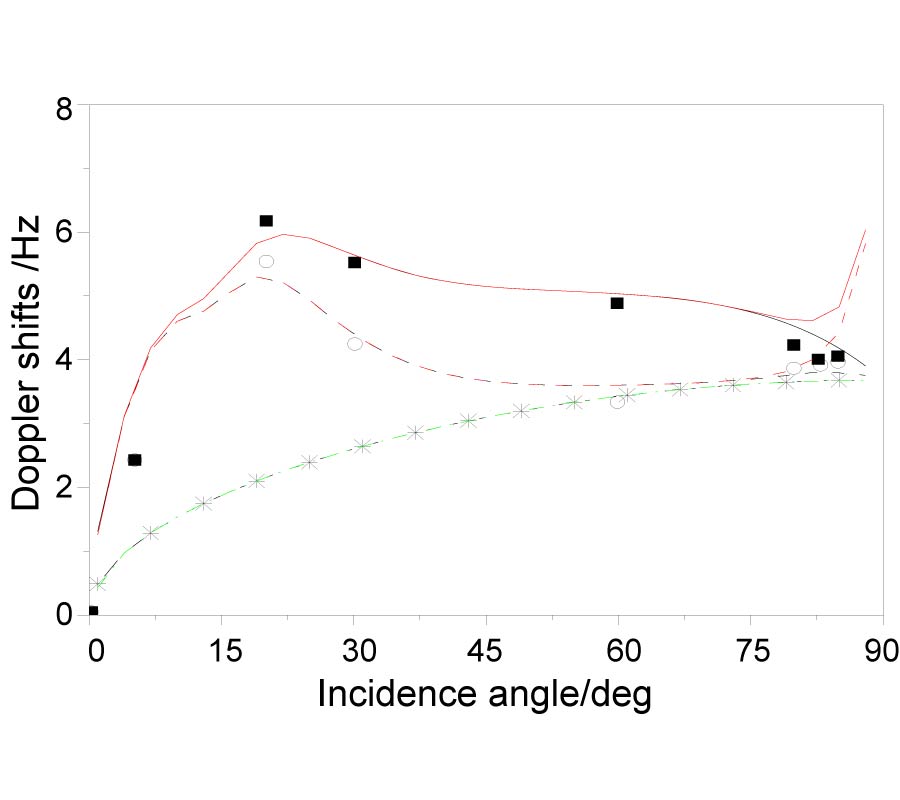
In this paper, the measurement of the Doppler spectrum in a reverberation chamber (RC) is investigated. The estimation performance of the Doppler spectrum in the previous work is reformulated and analyzed. It is found that the previous RC Doppler spectrum evaluation is an inconsistent estimation. An improved method for evaluating the Doppler spectrum is presented, which makes use of the frequency stirring technique to enhance the estimation performance. In addition, the RC loading effect on the Doppler spectrum is investigated in this paper as well. Measurements are performed in a RC, based on which the Doppler spectrum is evaluated. It is shown that the improved method results in a smaller estimation variance and that the Doppler spread decreases with increasing RC loading.
EVALUATION AND MEASUREMENT OF THE DOPPLER SPECTRUM IN A REVERBERATION CHAMBER
2012-11-01
PIER
Vol. 133, 443-458
Design and 3-D Particle-in-Cell Simulation of a 140 GHz Spatial-Harmonic Magnetron
Nasrin Nasr Esfahani , Majid Tayarani and Klaus Schunemann
Design and 3-D numerical simulation of a 140 GHz spatialharmonic magnetron (SHM) are presented. The effect of geometrical parameters of the side resonators of the anode block on the output power are considered using the results of a theory based on a single harmonic approximation approach. This theory enables the determination of the optimum geometrical parameters of the side resonators. SHM design evaluation is carried out via numerical simulations performed with a 3-D particle-in-cell (PIC) code embedded in CST-Particle Studio. Simulations of the SHM are performed without artificial RF priming and without assuming restrictive assumptions on the mode of operation or on the number of harmonics to be considered. Thus in our simulations the electromagnetic oscillations grow naturally from noise. The results of time evolved electron flow simulations and gradual formation of a single frequency RF oscillation are presented. The presented SHM shows stable operation in the π /2-1-mode at 140 GHz over a range of DC anode voltages extending from 11.3 kV to 11.5 kV and for an axial magnetic flux density equal to 0.79 T. RF Output power of the SHM varies from 2 kW to 11 kW over these voltages with a maximum efficiency of around 6.8%.
DESIGN AND 3-D PARTICLE-IN-CELL SIMULATION OF A 140 GHz SPATIAL-HARMONIC MAGNETRON