Search Results(13800)

2012-11-14
PIER M
Vol. 27, 75-81
Characterization of a Sub-mm Wave Frequency Selective Surface on a Periodically Perforated Silicon Substrate
Angel Colin
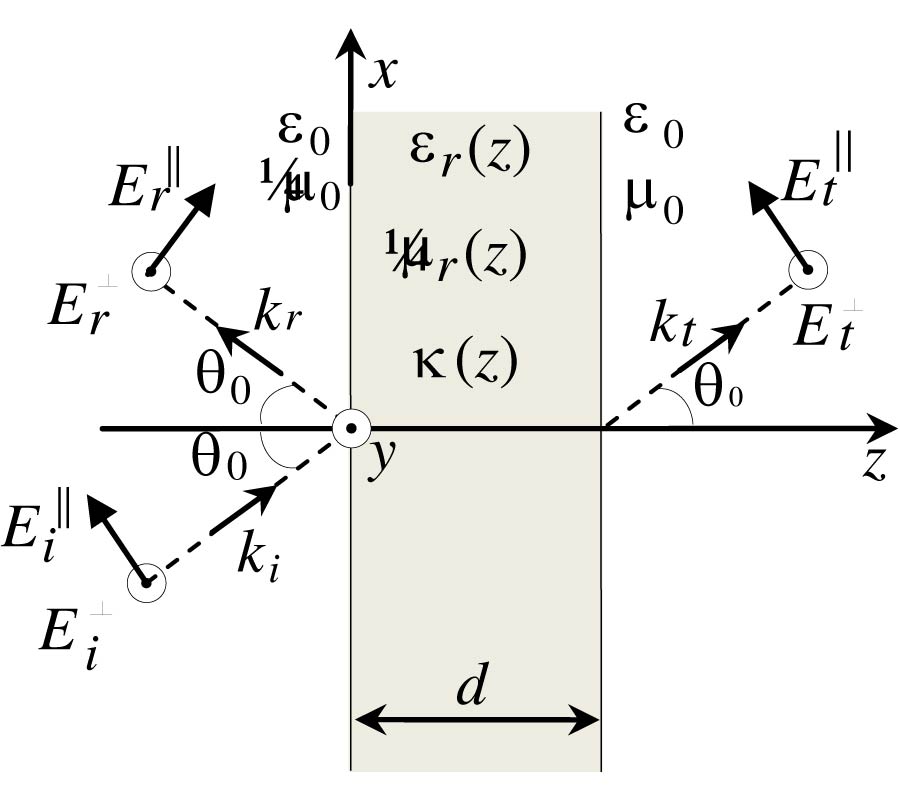
We carried out measurements of optical transmission through a Frequency Selective Surface (FSS) on a silicon substrate perforated periodically with square cavities of 1 mm2. The substrate is covered on one side with a thin film (1 μm thick) of silicon-nitride, thus forming a membrane for each cavity. The measurements were taken using a Martin-Puplett Interferometer over a spectral range from 100 to 650 GHz, providing a maximum transmission value of around 40% at 480 GHz. Analytical and computed results are also presented for comparison purposes.
CHARACTERIZATION OF A SUB-MM WAVE FREQUENCY SELECTIVE SURFACE ON A PERIODICALLY PERFORATED SILICON SUBSTRATE
2012-11-14
PIER M
Vol. 27, 59-73
NUFFT-Accelerated Plane-Polar (Also Phaseless) Near-Field/Far-Field Transformation
Amedeo Capozzoli , Claudio Curcio and Angelo Liseno
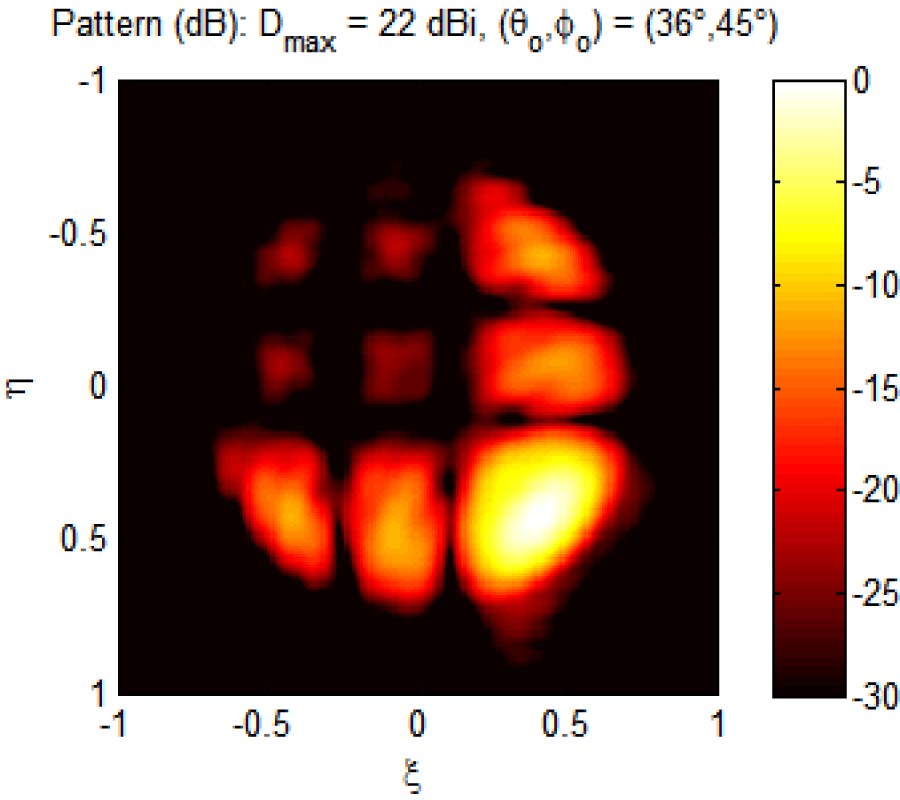
The paper introduces the use of Non-Uniform Fast Fourier Transform (NUFFT) routines in ``complex'' (i.e., amplitude and phase) and phaseless Near-Field/Far-Field transformations. The use of those routines results computationally very convenient when non-regular field sampling prevents the use of standard FFTs. The attention is focused on a plane-polar acquisition geometry. Numerical and experimental results show the effectiveness of the developed algorithms.
NUFFT-ACCELERATED PLANE-POLAR (ALSO PHASELESS) NEAR-FIELD/FAR-FIELD TRANSFORMATION
2012-11-14
PIER
Vol. 134, 47-62
A Novel Compact Dual-Frequency Coupled-Line Transformer with Simple Analytical Design Equations for Frequency-Dependent Complex Load Impedance
Yongle Wu , Weinong Sun , Sai-Wing Leung , Yinliang Diao and Kwok-Hung Chan
In order to perfectly match arbitrary frequency-dependent complex load impedances at two uncorrelated frequencies, a novel coupled-line impedance transformer without transmission-line stubs is proposed in this paper. This transformer mainly features small size, wide bandwidth, simple analytical design method, and easy planar implementation. The transformer simply consists of a coupled-line section and an additional transmission-line section. Due to the usage of a coupled-line section, the theoretical synthesis of the proposed transformer becomes very simple when compared with previous transformers and the total size of the planar circuit without deterioration of operating bandwidth becomes small. Furthermore, several numerical examples are presented to demonstrate the flexible dual-frequency matching performance. Finally, the profile of matching frequency-dependent complex load impedance at two arbitrary frequencies has been examined by simulation and measurement of two microstrip generalized T-junction power dividers. Good agreement between the calculated results and measured ones justifies this proposed transformer and the design theory.
A NOVEL COMPACT DUAL-FREQUENCY COUPLED-LINE TRANSFORMER WITH SIMPLE ANALYTICAL DESIGN EQUATIONS FOR FREQUENCY-DEPENDENT COMPLEX LOAD IMPEDANCE
2012-11-14
PIER
Vol. 134, 23-46
An Improved Scheme for Parameter Estimation of g° Distribution Model in High-Resolution SAR Images
Jianghua Cheng , Gui Gao , Wenxia Ding , Xishu Ku and Jixiang Sun
Statistical modeling of Synthetic Aperture Radar (SAR) images is of great importance for speckle noise filtering, target detection and classification, etc. Moreover, it can provide a comprehensive understanding of terrain electromagnetics scattering mechanism. Over the past three decades, many sophisticated models have been developed for SAR images, such as Rayleigh, Gamma, K and G, etc. The G° distribution is a special form of the G model, which can model the speckle fluctuations of many classes of objects like homogeneous, heterogeneous and extremely heterogeneous ones, and is widely used in SAR images interpretation. However, as many improvements have been performed on SAR sensors, the traditional parameter estimation methods of the G° distribution may be not sufficient, notably in high resolution SAR images. They cannot arrive at a solution frequently when modeling regions in high resolution SAR images, especially the extremely homogeneous regions. In order to deal with this problem, this paper proposes an improved parameter estimation scheme of the G° distribution, which combines the classical moment estimation with the mellin transform. To quantitatively assess the fitting precision of the proposed method, we adopt the Kullback-Leibler (KL) distance, Kolmogorov-Smirnov (KS) test and Mean Square Error (MSE) as similarity measurements. The advantage of this proposed parameter estimation method becomes evident through the analysis of a variety of areas (ground, vegetation, trees and buildings) in two high resolution SAR images.
AN IMPROVED SCHEME FOR PARAMETER ESTIMATION OF G° DISTRIBUTION MODEL IN HIGH-RESOLUTION SAR IMAGES
2012-11-13
PIER B
Vol. 46, 23-40
Hybrid Multi-Phased Particle Swarm Optimization for through-Wall Shape Reconstruction and Wall Parameters Estimation
Ji-Liang Cai , Chuang-Ming Tong and Wei-Jie Ji
When particle swarm optimization(PSO) technique is used for the inverse scattering problems, it will take unbearably long time for the final solution, especially when the PSO algorithm traps into the premature convergence. To overcome this problem, a hybrid multi-phased particle swarm optimization algorithm (HMPPSO) is proposed. By adopting the small swarm size strategy and the idea of ``sub swarms'' working cooperatively and alternatively with ``optimal swarm'' into the MPPSO, the HMPPSO can converge quickly with much less fitness function evaluation times, thus will reduce the reconstruction time. After the HMPPSO is validated by the numerical simulations on benchmark functions, the wall parameters (permittivity, conductivity, and thickness) together with target shape parameters (approximated by the trigonometric serials) with 20 dB additive Gaussian white noise are successfully reconstructed by HMPPSO using multi-frequency, multi-view/single-illumination scattering fields calculated by MOM.
HYBRID MULTI-PHASED PARTICLE SWARM OPTIMIZATION FOR THROUGH-WALL SHAPE RECONSTRUCTION AND WALL PARAMETERS ESTIMATION
2012-11-13
PIER B
Vol. 46, 1-22
Wilocsim: Simulation Testbed for WLAN Location Fingerprinting Systems
Chamal Sapumohotti , Mohamad Yusoff Alias and Su Wei Tan
This paper introduces a novel simulation testbed for investigating WLAN indoor localization systems. This testbed referred to as WiLocSim consists of a novel beacon received signal strength (RSS) simulator which provides realistic modeling of beacon signal characteristics such as multipath propagation, measurement noise and body loss. Each component of the simulator is individually modelled and verified prior to integration. In addition, the capabilities of the testbed are demonstrated using two variants of the nearest neighbour classification based indoor localization algorithm. Unlike conventional measurement based performance evaluation, the proposed testbed provides a reproducible environment for accurate evaluation and analysis of indoor localization systems. More importantly, it significantly reduces the high labour cost typically required in measurement based testbed.
WILOCSIM: SIMULATION TESTBED FOR WLAN LOCATION FINGERPRINTING SYSTEMS
2012-11-13
PIER Letters
Vol. 36, 41-55
Compact Dual Band-Reject UWB Antenna with Sharp Band-Edge Frequency
Dhanasingh Thiripurasundari and Daniel Sudakar Emmanuel
A microstrip line fed dual band-reject ultra wideband antenna with sharp band edge frequency of 3.1-10.6 GHz is presented. The antenna consists of a rectangular patch on the front side and a partial ground plane at the rear. A step is cut on the bottom edge of the patch for impedance matching. A split ring slot etched on the radiating patch rejects WiMAX (3.3-3.75 GHz) band, and a pair of inverted S-shaped slot in the partial ground plane rejects WLAN (5-6 GHz) band. In order to eliminate the radiation outside the FCC specified 3.1-10.6 GHz band, a rectangular slot is etched on the ground plane below the feed line. The antenna exhibits UWB band width of 109% except for the notch band. The radiation characteristics are consistent throughout the band. The performance of the antenna is analyzed both in the frequency domain and time domain to assess its suitability for ultra wideband communication. Pulse distortion of the antenna is investigated for both Rayleigh and Gaussian source pulse excitation.
COMPACT DUAL BAND-REJECT UWB ANTENNA WITH SHARP BAND-EDGE FREQUENCY
2012-11-13
PIER M
Vol. 27, 41-57
Determination of the Convex Hull of a Radiating System in a Heterogeneous Background
Amedeo Capozzoli , Giuseppe D'Elia and Pietro Vinetti
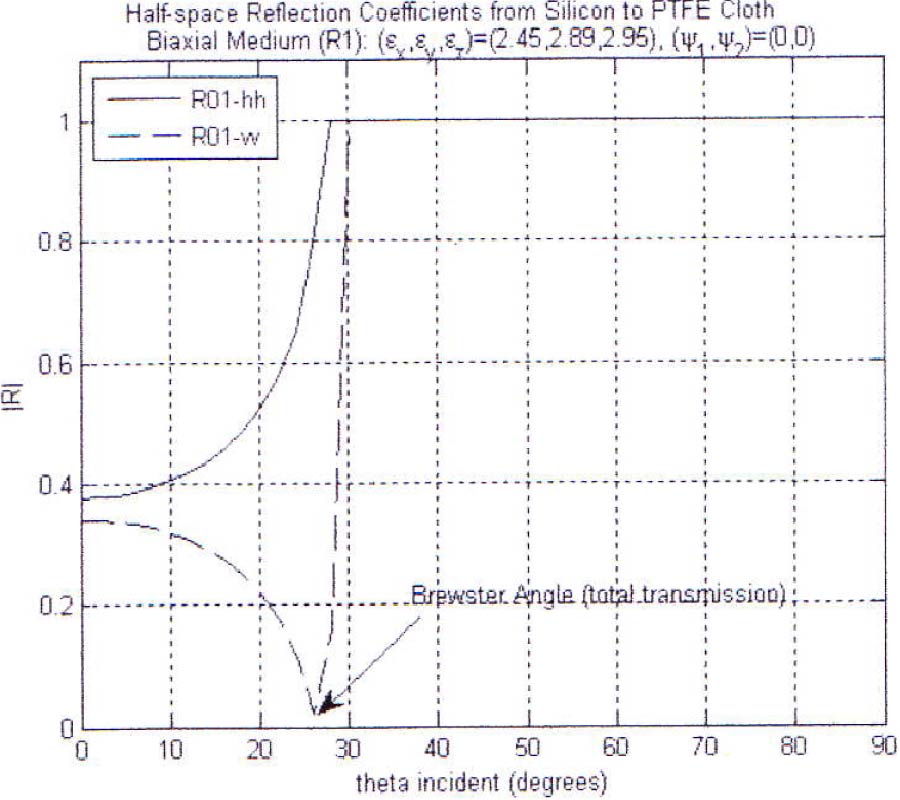
Recently, referring to a homogeneous background, a new technique estimating the minimum convex hull of a source/scattering system from the radiated/scattered electromagnetic field data has been presented. In this paper, the approach is extended to the inhomogeneous background case by considering the source/scattering system and the observation domain embedded in two different homogeneous media. The underlying theory has been properly reformulated to account for the refraction phenomenon arising at the electromagnetic discontinuities boundaries by considering a 2D geometry. The performances of the technique have been estimated by means of a numerical analysis whose main representative results are presented and discussed in the paper.
DETERMINATION OF THE CONVEX HULL OF A RADIATING SYSTEM IN A HETEROGENEOUS BACKGROUND
2012-11-13
PIER
Vol. 134, 1-22
Dielectric Characterization of the Yeast Cell Budding Cycle
Jose Luis Sebastian Franco , Aranzazu Sanchis Otero , Jose Roldan Madronero and Sagrario Munoz San Martin
We combine experimental electrorotation data and the numerical analysis of the electrorotation chamber and cell to electrically characterize the Saccharomyces cerevisiae yeast budding cell cycle and to obtain the electrical parameters of the cell. To model the yeast cell we use spherical and doublet-shaped geometries with a four layered structure: cytoplasm, membrane, inner and outer walls. To derive the geometrical and electrical parameters of the yeast model we use the finite element method to calculate the yeast rotational velocity spectrum and apply the least-square method to fit the calculated values to experimental data. We show that the calculated yeast electrorotation spectra undergo significant changes throughout its budding cycle and that the calculated spectra fit experimental data obtained for 0% (start) and 50% representative budding stages very well. The analysis also shows the small variation of the rotation crossover frequency within a full span of the yeast growth cycle. As an application of this work, we apply the Maxwell-Wagner formalism to obtain the dielectric spectra of truly synchronized yeast suspensions.
DIELECTRIC CHARACTERIZATION OF THE YEAST CELL BUDDING CYCLE
2012-11-12
PIER B
Vol. 45, 395-413
Analytical Model for Electromagnetic Radiation by Bare-Wire Structures
Mohamed Chaaban , Khalil El Khamlichi Drissi and Dragan Poljak
This paper presents a simple analytical model to estimate the radiated field for broadband Power line communication (PLC) or metallic wire structures. In our approach, we avoid to discretize the line and compute the current for each segment (dipole). We consider only near and far end currents and their derivatives (voltages) to express analytically the radiated electromagnetic field. The case of multiple conductor power line is considered with simplified hypothesis: cables are not insulated and the surrounding media is homogenous. The basic electromagnetic equations are formulated and applied to the line to provide analytical expressions able to compute fields in near and far zones which is not usually treated. The main purpose of this paper is to provide an analytical model applied to bare wires corresponding to classical outdoor transmission lines. The advantage of this method is that we do not need to know the current along the line to calculate the radiated fields; therefore, in our study we use only the currents and voltages at the terminations. The calculation time is strongly reduced compared to dipoles conventional method. Results obtained from the proposed closed-form formulation agree with Feko simulation. For indoor configurations, cables are usually insulated and the surrounding media is no more homogeneous; this case is treated with a generalized approach and will be proposed in future paper.
ANALYTICAL MODEL FOR ELECTROMAGNETIC RADIATION BY BARE-WIRE STRUCTURES
2012-11-12
PIER Letters
Vol. 36, 31-40
Design of Dual-Feed Dual-Polarized Microstrip Antenna with High Isolation and Low Cross Polarization
Kang Luo , Wei-Ping Ding , Yong-Jin Hu and Wen-Quan Cao
A broadband dual-feed dual-polarized microstrip antenna with low cross polarization and high isolation is presented. The dual-orthogonal linearly polarized mode is excited by two different feed mechanisms from a single circular radiating patch. One of the two modes is excited by a pair of L-shaped probes with a 180° phase differences, and the other is excited by an H-shaped aperture. The proposed design has a very simple antenna structure with a wide input impedance bandwidth (23.25% for Port1 and 35% for Port2) and also its two input port isolation is found to be as low as -40 dB. Measured results of the fabricated antenna prototypes are also carried out to verify the simulation analysis.
DESIGN OF DUAL-FEED DUAL-POLARIZED MICROSTRIP ANTENNA WITH HIGH ISOLATION AND LOW CROSS POLARIZATION
2012-11-12
PIER C
Vol. 34, 195-202
Low-Insertion Loss PIN Diode Switches Using Impedance-Transformation Networks
Mingming Liu , Rong-Hong Jin , Jun-Ping Geng and Xianling Liang
Two SPDT switches that have low insertion loss with impedance-transformation networks are presented. The proposed SPDT switches are comprised of two shunt PINs and two quarter-wavelength microstrip lines together with impedance transformation networks, which canceled the capacitance effect at off-state and the inductance effect at on-state simultaneously. The simulated insertion loss performance is less than 0.3 dB and the fabricated ones exhibit on-state low insertion loss of 0.5 dB within the range of 4.6-4.8 GHz.
LOW-INSERTION LOSS PIN DIODE SWITCHES USING IMPEDANCE-TRANSFORMATION NETWORKS
2012-11-12
PIER
Vol. 133, 591-605
Nonlocal Effects on Surface Enhanced Raman Scattering from Bimetallic Coated Nanoparticles
Yang Huang and Lei Gao
We study the surface enhanced Raman scattering (SERS) from bimetallic core-shell nanoparticles by taking into account the nonlocal effect. The Gersten-Nitzan model is applied to investigate SERS from a molecule adsorbed on the nonlocal bimetallic nanoparticle. Numerical results show that there are two enhanced SERS peaks for bimetallic coated nanoparticles, and nonlocal effects will lead to less enhancement and blue-shift of SERS peaks. In addition, unusual resonant electric-field patterns are found in the nonlocal gold core in comparison with those in the local case. Our investigation is helpful for understanding some details of SERS schemes in nano-optics and plasmonics when nonlocal effects are considered.
NONLOCAL EFFECTS ON SURFACE ENHANCED RAMAN SCATTERING FROM BIMETALLIC COATED NANOPARTICLES
2012-11-09
PIER Letters
Vol. 36, 21-30
The Simulation and Experiment of a UWB Printed Dipole Antenna
Jia Lu , Shu Lin , Yu Tian , Liwen Jing , Meng-Qian Liu and Zhihua Zhao
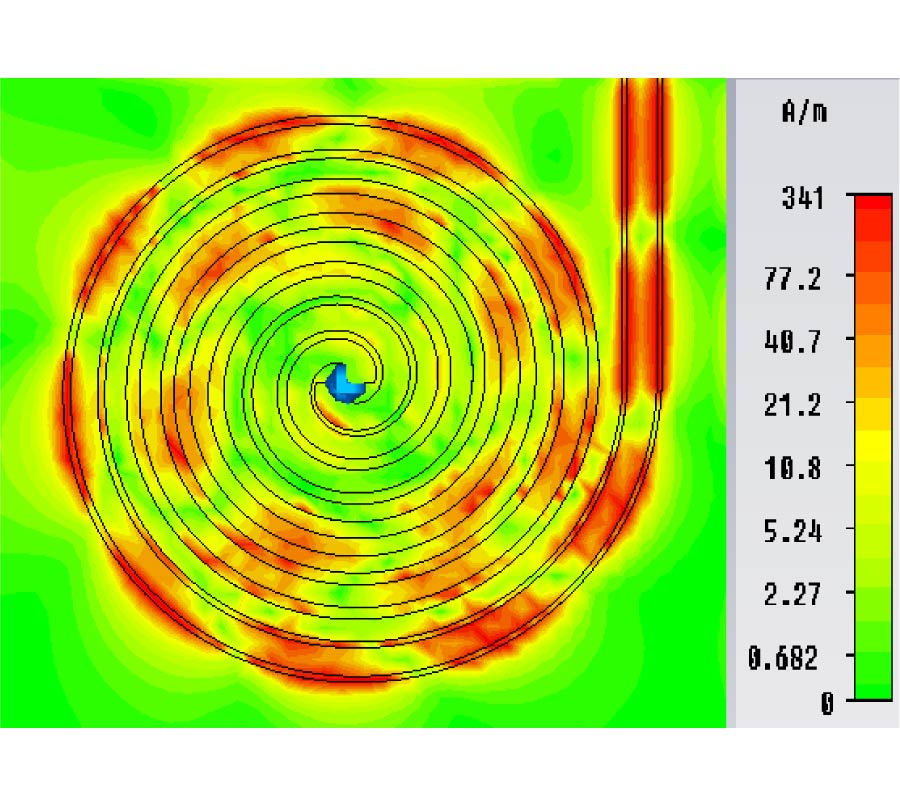
An ultra-wideband (UWB) printed antenna fed by balanced microstrip is proposed. This antenna is in the structure of symmetrical dipoles, each of which consists of 3 semicircular metal patches. The antenna has been simulated by CST MICROWAVE STUDIO® software and tested. Both the simulation and experimental results indicate that the proposed antenna obtains an ultra-wide bandwidth of 2.8-16.3 GHz, when VSWR is less than 2. The experimental results of the directional diagrams indicate that the proposed antenna acquires a balance feed within the whole working band. The analysis of the surface current on the radiators indicates that the proposed antenna has a radiation mode of standing wave current in low frequency and traveling wave current in high frequency. The length of the antenna on polarization direction is 0.315 times of the maximum working wavelength, which shows that the antenna is well miniaturized.
THE SIMULATION AND EXPERIMENT OF A UWB PRINTED DIPOLE ANTENNA
2012-11-09
PIER C
Vol. 34, 183-194
A Novel Tri-Mode Bandwidth Tunable Filter with Harmonic Suppression
Ding-Hong Jia , Quanyuan Feng , Xiao-Guo Huang and Qian-Yin Xiang
In this paper, a novel bandwidth reconfigurable bandpass filter is proposed. Based on a varactor loaded tri-mode resonator consisted of one constant odd mode and two independent varactor-tuned even modes, each passband edge of the proposed filter can be freely adjusted. By varying the reverse bias voltage applied to the varactor diode that is connected to the resonator, the bandwidth can be controlled conveniently. The resonant frequencies and Transmission Zeros (TZs) are derived and verified by both theoretical analysis and simulation. Stepped Impedance Resonator (SIR) is introduced to optimize the harmonic suppression. Finally, the measurement of the fabricated filter shows a fractional bandwidth tuning range of 11.4-32.0 % with a center frequency of 1.75 GHz, a quite low insertion loss of 0.4-1.1 dB, and wideband harmonic suppression up to 6 GHz. The measurement and simulated results show good agreement.
A NOVEL TRI-MODE BANDWIDTH TUNABLE FILTER WITH HARMONIC SUPPRESSION
2012-11-09
PIER M
Vol. 27, 27-39
The Unfolding of Bandgap Diagrams of Hexagonal Photonic Crystals Computed with FDTD
Bartlomiej Salski
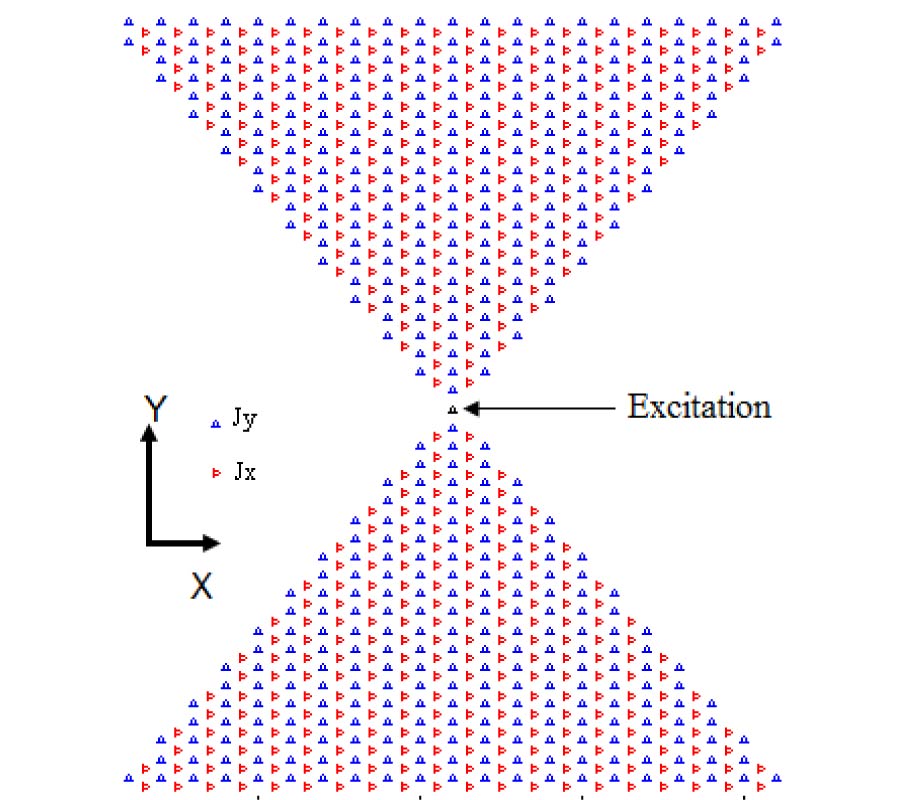
The application of the finite-difference time-domain method with rectangular periodic boundary conditions to the analysis of a hexagonal photonic crystal results in a folded bandgap diagram. The aim of this paper is to introduce a new unfolding method, which allows unambiguously determining the position of the modes in a wave-vector space by taking the advantage of the fast Fourier transform of modal field distributions. Unlike alternative solutions, it does not require any modifications of the FDTD method and is based solely on the postprocessing of the simulation results. The proposed method can be applied to any non-rectangular lattice types, such as hexagonal, face-centered cubic or body-centered cubic.
THE UNFOLDING OF BANDGAP DIAGRAMS OF HEXAGONAL PHOTONIC CRYSTALS COMPUTED WITH FDTD
2012-11-09
PIER
Vol. 133, 571-590
Hermetic Implantable Antenna Inside Vitreous Humor Simulating Fluid
Hans Permana , Qiang Fang and Wayne Rowe
Retinal prosthesis system is currently being developed in various places around the world. This system involved data transfer between an implanted antenna inside an eyeball and an external camera that is located just in front of the eyeball. While there are plenty of publications about the stimulating electrodes or the processing unit of the system itself, very limited amount has been published regarding the wireless communication link between the two antennas despite the fact that the electromagnetic wave will propagate through a complex medium in the form of Vitreous Humor. This paper will discuss about the constraints associated with implanting an antenna into an eyeball. An antenna design and simulation was performed with the aid of High Frequency Structure Simulator (HFSS) and its Finite Element Method (FEM) mathematical solver in the operating frequency of 402-405 MHz. The antenna, which was a 4 layer microstrip antenna, was positioned at the centre of a spherical model filled with homogeneous Vitreous Humor material. Antenna performances that include return loss, bandwidth, gain, radiation pattern, and SAR value are analysed and compared against those of other implantable antennas operating in Medical Implant Communication Service (MICS) band. Free space and simulating fluid measurements were also conducted on the fabricated antenna to validate the simulation results. It was concluded that the fabricated antenna was able to produce the similar performance to the simulation results and hence at the same level as the other antennas operating in material with lower dielectric constants and conductivities.
HERMETIC IMPLANTABLE ANTENNA INSIDE VITREOUS HUMOR SIMULATING FLUID
2012-11-08
PIER M
Vol. 27, 11-26
Numerical Investigation on Dynamic Radar Cross Section of Naval Ship Considering Ocean Wave-Induced Motion
Kookhyun Kim , Jin-Hyeong Kim , Yun-Hwan Kim and Dae-Seung Cho
In design phase of naval ships, the effectiveness of RCS reduction means such as shaping, shielding and applying radar absorbing materials is assessed quantitatively via several times of numerical analyses. During the process, in general, the numerical analyses have been carried out only for the static case not considering ship motions in actual ocean environments in spite that ocean waves induce the ship motion of the object naval ship and distort RCS measures. In this study, the dynamic RCS characteristics of the naval ship considering the ocean wave-induced motion have been numerically investigated. For this purpose, a dynamic RCS analysis procedure so called ``quasi-static approach'' has been adopted for considering the time varying ship motion. The results for two types of naval ships, a stealthy and a non-stealthy ship, show that the RCS of the object naval ships could be reduced or increased in mean value by the ship motion due to the ocean wave, compared to the static RCS value, and also the measures are considerably affected by the various parameters, type of object ship, significant wave height and incident angle of ocean wave, and incident angle of radar wave.
NUMERICAL INVESTIGATION ON DYNAMIC RADAR CROSS SECTION OF NAVAL SHIP CONSIDERING OCEAN WAVE-INDUCED MOTION
2012-11-08
PIER
Vol. 133, 555-570
Compact and High Isolation Microstrip Diplexer for Broadband and WLAN Application
Hong-Wei Deng , Yong-Jiu Zhao , Yong Fu , Ji Ding and Xiao-Jun Zhou
In this paper, a compact and high isolation microstrip diplexer is designed for broadband and wireless local area network (WLAN) application, simultaneously. The bandpass filter (BPF) for broadband channel is formed by three-coupled-line structure and two short stubs with different size loaded in 50 feed lines, and the BPF for WLAN channel consists of two coupling quarter-wavelength resonators (QWR) and one open stub loaded in short parallel-coupling feed structure. Multiple transmission zeros can be generated due to their intrinsic characteristics, so the broadband BPF with sharp skirt and wide upper-stopband performance and the WLAN BPF with sharp roll-off and lower-stopband characteristic can be realized. The tapped stub not only can generate transmission zeros to deepen the stopband, but also can connect other BPF as an its part without deterioration of in-band performance. Hence, a compact microstrip diplexer combines of two BPFs without the extra junction matching network. The mutual loading effect approximately equivalent to a coupled short QWR can also generate new transmission zero at the passband edge to improve the isolation. A microstrip diplexer with the 3 dB fractional bandwidth (FBW) of 80% for broadband channel and 5% for WLAN channel is designed and fabricated. Good agreement between the simulated and measured results is observed.
COMPACT AND HIGH ISOLATION MICROSTRIP DIPLEXER FOR BROADBAND AND WLAN APPLICATION
2012-11-07
PIER Letters
Vol. 36, 9-19
Artificial Magnetic Conductors on Wideband Patch Antenna
Gnanam Gnanagurunathan and Krishnasamy Selvan
The use of Artificial Magnetic Conductor (AMC) as a reflector in a printed antenna is known to improve the antenna's radiation characteristics. This work investigates the implementation of AMC as a reflector on a wideband planar monopole antenna. The investigation is confined to a basic square unit cell of AMC with four possible variations. The AMC structures are constructed with square cells which have either similar square cells or a Perfect Electric Conductor (PEC) as the back plane. These same structures are also fabricated with vias. The impedance bandwidth, gain and power pattern are simulated and measured over the measured -10 dB impedance bandwidth of 3 GHz to 10 GHz. The outcome of the investigation is that, for the antenna element and AMC structures considered in this study, a gain enhancement of up to 6 dB can be achieved with the AMC structures. In addition, introduction of vias is observed not to influence gain, though it improves cross-polarization levels by 3 dB to 5 dB for AMC constructed of squares backed by PEC.
ARTIFICIAL MAGNETIC CONDUCTORS ON WIDEBAND PATCH ANTENNA