Search Results(13800)

2012-11-24
PIER
Vol. 134, 227-246
Limits of Negative Group Delay Phenomenon in Linear Causal Media
Miodrag Kandic and Greg E. Bridges
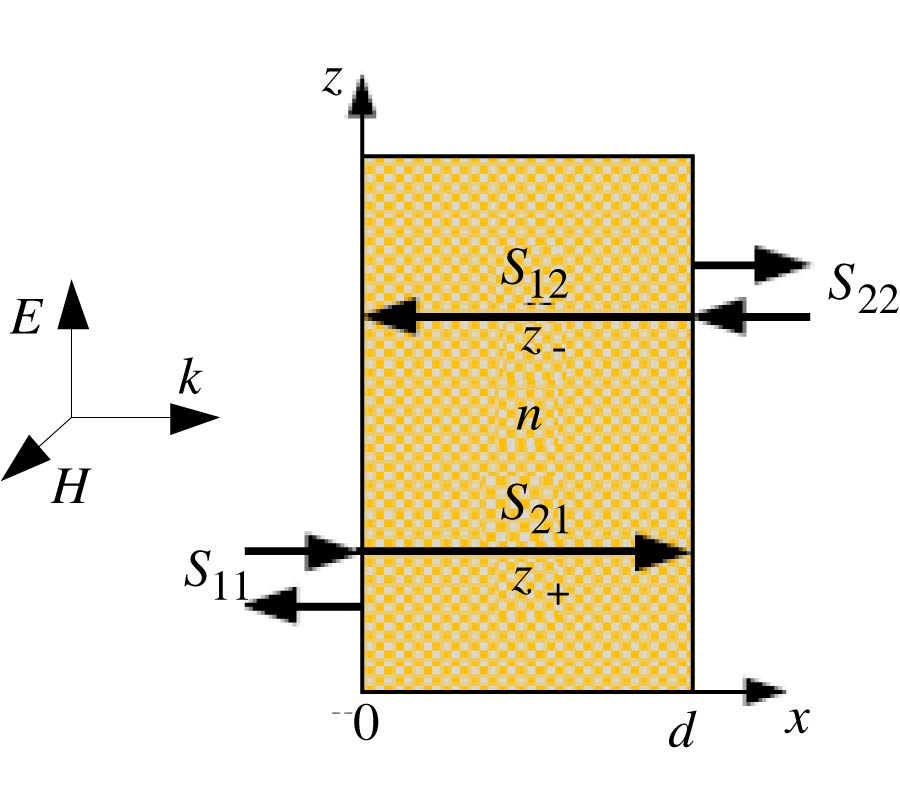
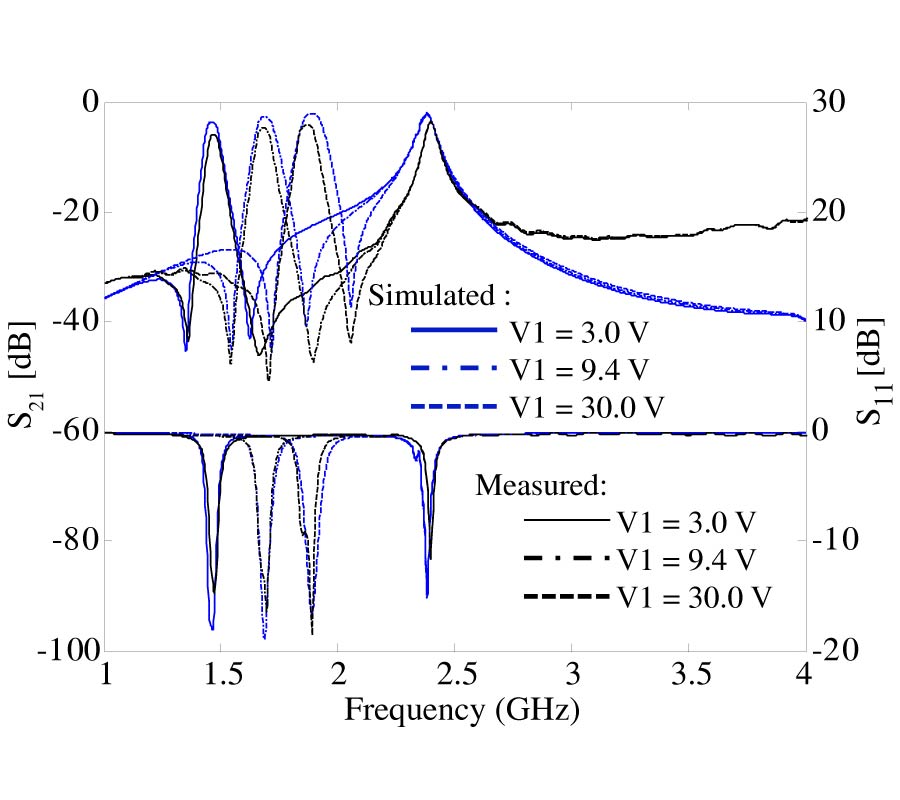
Asymptotic limits of Negative Group Delay (NGD) in linear causal media satisfying Kramers-Kronig relations are investigated. Even though there is no limit on the NGD-bandwidth product of a linear medium, it is shown that the out-of-band to center frequency amplitude ratio, or out-of-band gain, increases with the NGD-bandwidth product, and is proportional to the amplitude of undesired transients when waveforms with defined "turn on/off" times propagate in the media. The optimal causal dispersion characteristic exhibiting NGD is obtained through Kramers-Kronig relations, which maximizes the NGD-bandwidth product as a function of the out-of-band gain. It is shown that the NGD-bandwidth product has an upper asymptotic limit proportional to the square root of the logarithm of the maximum out-of-band gain. The derived NGD-bandwidth upper asymptotic limit of the optimally engineered causal dispersion characteristic is validated with two examples of physical media, a Lorentzian dielectric medium, and an artificially fabricated loaded transmission line medium.
LIMITS OF NEGATIVE GROUP DELAY PHENOMENON IN LINEAR CAUSAL MEDIA
2012-11-24
PIER
Vol. 134, 209-226
SAR Image Despeckling by Selective 3D Filtering of Multiple Compressive Reconstructed Images
Mahboob Iqbal , Jie Chen , Wei Yang , Pengbo Wang and Bing Sun
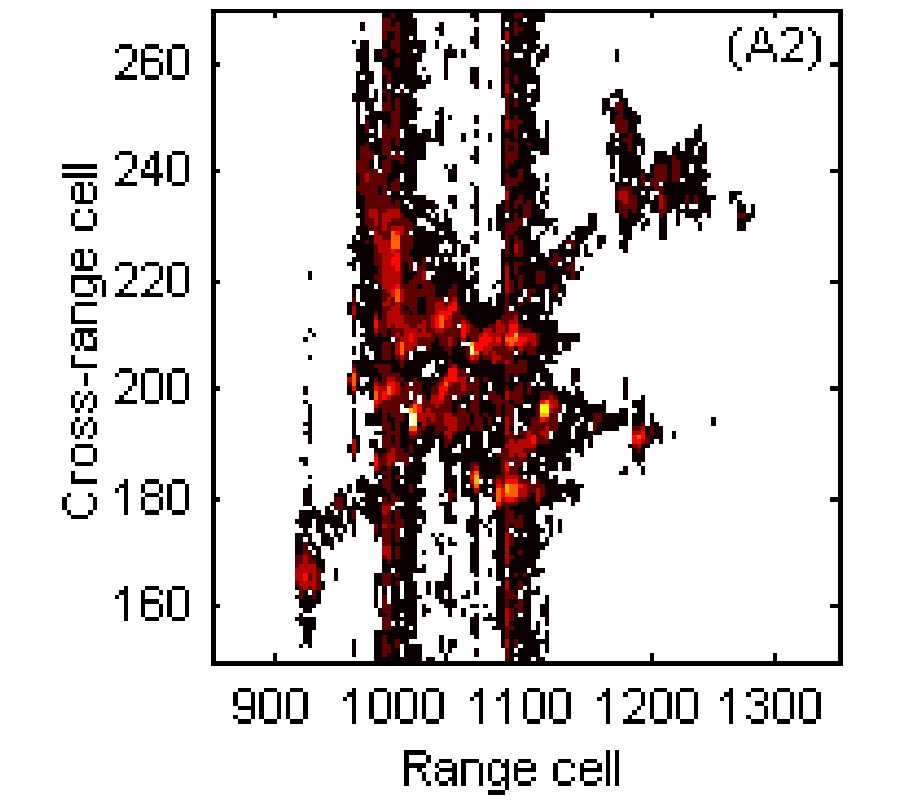
A despeckling technique based on multiple image reconstruction and selective 3-dimensional filtering is proposed. Multiple SAR images are reconstructed from a single SAR image by employing compressive sensing (CS) theory. In order to obtain multiple images from single SAR image, multiple subsets of pixels are selected from input SAR image by imposing restriction that each subset has at least 20% different pixels than any other subset. These subsets are taken as measurement vectors in CS framework to obtain multiple SAR images. A despeckled image is obtained by employing selective 3-dimensional filtering to multiple reconstructed SAR image. The proposed technique is tested on single look complex TerraSAT-X data set, and experimental results exhibit that the proposed technique outperformed benchmark despekling methods in terms of visual quality and despeckling quality metrics.
SAR IMAGE DESPECKLING BY SELECTIVE 3D FILTERING OF MULTIPLE COMPRESSIVE RECONSTRUCTED IMAGES
2012-11-24
PIER
Vol. 134, 189-208
Development of a New Approach for High-Quality Quadrupling Frequency Optical Millimeter-Wave Signal Generation Without Optical Filter
Nael Ahmed Al-Shareefi , Syed Idris Syed Hassan , Mohd Fareq Bin Abd Malek , Razali Ngah , Syed Alwee Aljunid , Rashid Ali Fayadh , Jaafar Adhab and Hasliza A. Rahim
In this paper, we propose a new approach to generate quadrupling-frequency optical millimeter-wave (mm-wave) signal with carrier suppression by using two parallel Mach-Zehnder modulators (MZMs) in Radio-over-fiber (RoF) system. Among the numerous properties of this approach, the most important is that a filterless optical mm-wave at 60 GHz with an optical sideband suppression ratio (OSSR) as high as 40 dB can be obtained when the extinction ratio of the MZM is 25 dB. Simplicity and cost-effectiveness have made this approach a compelling candidate for future wave-division-multiplexing RoF systems. Theoretical analysis is conducted to suppress the undesired optical sidebands for the high-quality generation of frequency quadrupling mm-wave signal. The simulation results show that a 60 GHz mm-wave is generated from a 15 GHz radio frequency (RF) oscillator with an OSSR as high as 40 dB and an radio frequency spurious suppression ratio (RFSSR) exceeding 35 dB without any optical or electrical filter when the extinction ratio of the MZM is 25 dB. Furthermore, the effect of the non-ideal RF-driven voltage as well as the phase difference of RF-driven signals applied to the two MZMs on OSSR and RFSSR is discussed and analyzed. Finally, we establish a RoF system through simulation to verify the transmission performance of the proposed scheme. The Q-factor performance and eye patterns are given.
DEVELOPMENT OF A NEW APPROACH FOR HIGH-QUALITY QUADRUPLING FREQUENCY OPTICAL MILLIMETER-WAVE SIGNAL GENERATION WITHOUT OPTICAL FILTER
2012-11-24
PIER
Vol. 134, 169-187
Generalized Analytical Design of Broadband Planar Baluns Based on Wire-Bonded Multiconductor Transmission Lines
Juan-Jose Sanchez-Martinez and Enrique Marquez-Segura
A novel generalized design procedure of broadband planar baluns based on wire-bonded multiconductor transmission lines (MTL) is presented hereby based on analytical equations. The proposed balun consists of two parts. The first one is an in-phase power divider, which equally splits the input power through its two outputs. The later are two MTLs with wire bonding between alternate conductors configured to introduce +90 and -90 degrees phase shift respectively, so that the balanced output signal has a 180 degree phase difference. In that sense, new closed-form design equations in order to calculate the design parameters of both multiconductor elements are obtained. These equations allow the proper dimensions of both MTLs to be computed irrespective of both the number of conductors and the coupling factor, and therefore, to determine the performance of the balun. The design procedure for wire-bonded MTL baluns has been assessed by means of full-wave electromagnetic simulations and by experimental work. In addition, the very good agreement between the theoretical results and measurements makes possible to define a time-saving design methodology.
GENERALIZED ANALYTICAL DESIGN OF BROADBAND PLANAR BALUNS BASED ON WIRE-BONDED MULTICONDUCTOR TRANSMISSION LINES
2012-11-24
PIER
Vol. 134, 151-168
Scalar Potential Depolarizing Dyad Artifact for a Uniaxial Medium
Michael John Havrilla
A scalar potential formulation for a uniaxial anisotropic medium is succinctly derived through the exclusive use of Helmholtz's theorem and subsequent identification of operator orthogonality. The resulting formulation is shown to be identical to prior published research, with the notable exception that certain scalar potential fields not considered in previous work are rigorously demonstrated to be unimportant in the field recovery process, thus ensuring uniqueness. In addition, it is revealed that both a physically expected and unexpected depolarizing dyad contribution appears in the development. Using a Green's function spectral domain analysis and subsequent careful application of Leibnitz's rule it is shown that, for an unbounded homogeneous uniaxial medium, the unexpected depolarizing dyad term is canceled, leading to a mathematically and physically consistent and correct theory.
SCALAR POTENTIAL DEPOLARIZING DYAD ARTIFACT FOR A UNIAXIAL MEDIUM
2012-11-24
PIER
Vol. 134, 133-150
Design and Characterization of a W-Band Power-Combined Frequency Tripler for High-Power and Broadband Operation
Zhenhua Chen and Jinping Xu
We report on the design, simulation and characterization of a solid-state W-band in-phase power-combined frequency tripler. In order to increase the output power of the frequency tripler without sacrificing efficiency and bandwidth, two mirror-image tripler circuits with four UMS® Schottky varistor diode chips are designed and mounted in a waveguide block, which includes a compact double-probe power divider at the input waveguide and a Y-junction power combiner at the output waveguide, respectively. Each circuit chip features four anodes on a 50 mil thick Rogers RT/duroid 5880 substrate. The tripler has 1.2~3.8 % conversion efficiency measured across the 75~110 GHz band when driven with 24 dBm of input power at room temperature. With the input power of 27 dBm, 5.5~11 dBm of saturated output power is produced over 75~110 GHz. Suppression of undesired harmonics is greater than 17 dB.
DESIGN AND CHARACTERIZATION OF A W-BAND POWER-COMBINED FREQUENCY TRIPLER FOR HIGH-POWER AND BROADBAND OPERATION
2012-11-24
PIER
Vol. 134, 111-131
Link Budget of Magnetic Antennas for Ingestible Capsule at 40 MHz
Fatiha El Hatmi , Marjorie Grzeskowiak , Stephane Protat and Odile Picon
Magnetic antennas are suitable in short range medical in-body applications because they are less perturbed in the presence of the human tissues comparing to electrical antennas. After a preliminary study on magnetic antennas designed separately at 40 MHz with a matching system, a link budget between a spiral coil ingestible capsule transmitter antenna and a square coil onbody receiver antenna has been established in the presence of the human body. The efficiency (ratio of received power to transmitted power) of the magnetic induction link through a homogeneous human body (muscle) is equal to 0.6 % when the TX (transmitter) capsule is in front of the RX (receiver) antenna. If the transmission channel is a three-layered human body (muscle / fat / skin) the performances of the inductive link can be enhanced and the efficiency reaches 0.8 %. These performances can be improved (up to 1 %) when the dimensions of the receiver antenna increase. Consequently, the power consumption can be reduced and hence the battery life of the wireless capsule increases. Additionally, when the TX antenna is located randomly at an arbitrary orientation and position, the efficiency of the magnetic induction link can be improved by orienting the RX antenna parallel and perpendicularly to the human body surface.
LINK BUDGET OF MAGNETIC ANTENNAS FOR INGESTIBLE CAPSULE AT 40 MHZ
2012-11-21
PIER C
Vol. 34, 239-251
Behavioral Modeling of RF Power Amplifiers with Memory Effects Using Orthonormal Hermite Polynomial Basis Neural Network
Xiao-Hui Yuan and Quanyuan Feng
Behavioral modeling technique provides an efficient and convenient way to analyze and predict the performance of the RF power amplifiers (PAs) in system-level, and thus helps to constructe a suitable predistorter to linearize the PA system. To accurately describe the nonlinear dynamic characteristics of PAs, an orthonormal Hermite polynomial basis neural network (OHPBNN) is utilized to represent the PAs behavioral model, which outperforms, mainly in respect of modeling accuracy, the classic feedforward neural network using sigmoid activation functions. In addition, we apply an adaptive algorithm to determine the appropriate memory depth of PA behavioral model. Simulation results show that the proposed model provides more accurate prediction of the PAs output signal compared with classic neural network models.
BEHAVIORAL MODELING OF RF POWER AMPLIFIERS WITH MEMORY EFFECTS USING ORTHONORMAL HERMITE POLYNOMIAL BASIS NEURAL NETWORK
2012-11-21
PIER M
Vol. 27, 119-128
Statistical Power Measurement Unit for an 8 mm-Band Two Dimensional Synthetic Aperture Interferometric Radiometer Bhu-2D
Cheng Zheng , Xianxun Yao , Anyong Hu and Jungang Miao
An 8 mm-band two-dimensional Synthetic Aperture Interferometric Radiometer (SAIR) called BHU-2D has been developed by Electromagnetics Engineering Laboratory of Beihang University. The radiometer could obtain images in realtime benefiting from the adoption of a 1bit/2level FPGA-based correlator array. The correlator array requires a group of Power Measurement Units (PMUs) to denormalize the correlation coefficients into visibility function samples. The design and implementation of the PMU in BHU-2D is presented in this paper. The PMU adopts a novel method based on probability statistics. The principle and quantitative error analysis of this power measurement method is presented. In order to verify the principle of the design, a sample board is manufactured and a series of validation experiments have been conducted. Measurement results have proved that the performance of the PMU could meet the requirements of SAIR systems. The PMU has been applied to BHU-2D and the result is satisfactory.
STATISTICAL POWER MEASUREMENT UNIT FOR AN 8 MM-BAND TWO DIMENSIONAL SYNTHETIC APERTURE INTERFEROMETRIC RADIOMETER BHU-2D
2012-11-21
PIER
Vol. 134, 95-109
Turn a Highly-Reflective Metal into an Omnidirectional Broadband Absorber by Coating a Purely-Dielectric Thin Layer of Grating
Feng Zhang , Liu Yang , Yi Jin and Sailing He
We show that a metal can be turned into a broadband and omnidirectional absorber by coating a purely-dielectric thin layer of grating. An optimal design for such an absorber is proposed by putting a dielectric slot waveguide grating (SWG) on the metallic substrate. The SWG consists of two germanium nanowires (Ge NWs) separated by a sub-100 nm slot in each period. Average absorption reaches 90% when the incident angle varies between 0° and 80° over a broad wavelength range from 300 nm to 1400 nm. Multiple optical mechanisms/effects, namely, diffraction, waveguiding in the high-index Ge NWs and low-index air slot, Fabry-Perot resonances as well as surface plasmon polaritons (SPPs), are identified to govern the absorption characteristics of the present absorber. The designed absorber with such a dielectric grating is easier to fabricate as compared with other absorbers with metallic structures, and has potential applications in e.g. solar cells and photodetectors.
TURN A HIGHLY-REFLECTIVE METAL INTO AN OMNIDIRECTIONAL BROADBAND ABSORBER BY COATING A PURELY-DIELECTRIC THIN LAYER OF GRATING
2012-11-21
PIER
Vol. 134, 79-94
Hierarchical Interpolative Decomposition Multilevel Fast Multipole Algorithm for Dynamic Electromagnetic Simulations
Xiao-Min Pan and Xin-Qing Sheng
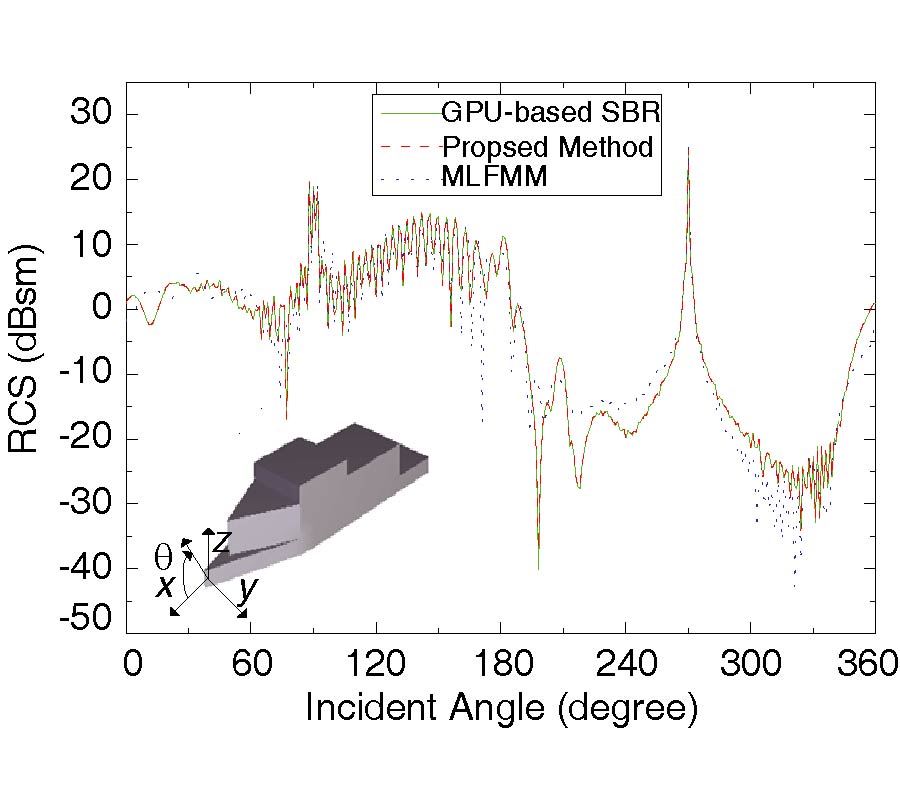
A hierarchical interpolative decomposition multilevel fast multipole algorithm (ID-MLFMA) is proposed to handle multiscale, dynamic electromagnetic problems. The hierarchical scheme to conduct the ID skeletonization and to implement the matrix vector multiplication is discussed. A strategy to improve the efficiency of ID skeletonization is developed. The hierarchical ID-MLFMA are investigated by numerical experiments on complex targets, demonstrating the capability of the hierarchical ID-MLFMA.
HIERARCHICAL INTERPOLATIVE DECOMPOSITION MULTILEVEL FAST MULTIPOLE ALGORITHM FOR DYNAMIC ELECTROMAGNETIC SIMULATIONS
2012-11-21
PIER
Vol. 134, 63-78
Reduction of Internal Reflections in Integrated Lens Antennas for Beam-Steering
Aki Karttunen , Juha Ala-Laurinaho , Ronan Sauleau and Antti V. Räisänen
The conventional integrated lens antennas (ILAs) for beam steering suffer from internal reflections that deteriorate the scanning properties. The internal reflections are known to affect side lobes, cross-polarisation level, input impedance of the feed, and mutual coupling. In this paper, ILAs are designed to exhibit very low reflection loss, i.e., to minimize the internal reflections. Wide ranges of realistic relative permittivities of the lens and of the feed element directivities are considered. It is shown that with any permittivity and with any feed directivity it is possible to design the lens shape in such a way that the reflection loss is low, for moderate beam-steering angles, without resorting to a complicated matching layer. The gain, directivity, beam-width, and the resulting distance between the feed elements are compared for all the designed lenses.
REDUCTION OF INTERNAL REFLECTIONS IN INTEGRATED LENS ANTENNAS FOR BEAM-STEERING
2012-11-20
PIER C
Vol. 34, 227-237
A New Broadband Microstrip Quadrature Hybrid with Very Flat Phase Response
Adelaide Ladu and Giampaolo Pisano
A new broadband microstrip branch-line quadrature hybrid with very flat phase response is presented. The device is made by cascading four branch-line couplers with arbitrary power division. The novel design is based on the microstrip transposition of a broadband waveguide polariser [4]. Across a 32% bandwidth centred at 9.3 GHz, the RL and the IL are respectively -15 dB and -3 dB/-4 dB; the phase difference is very flat, i.e. 90°±1.5°.
A NEW BROADBAND MICROSTRIP QUADRATURE HYBRID WITH VERY FLAT PHASE RESPONSE
2012-11-20
PIER M
Vol. 27, 109-117
A Method Based on Particle Swarm Optimization to Retrieve the Shape of Red Blood Cells: A Preliminary Assessment
Federico Caramanica
The particle swarm optimization (PSO) algorithm, a global optimization technique based on cooperative swarming strategy, has been used to solve inverse scattering problem for red flood cells (RBCs) and detect possible anomalies. The inverse scattering problem is recast as an iterative optimization one by definiing a suitable cost function.With this method is possible to estimate the morphological parameters of a red blood cell and to distinguish healthy RBCs from diseased ones. This work lays the basis for a new approach to make diagnosis. Preliminary numerical experiments show the potential effectiveness and the reliability of the proposed method as diagnostic tools.
A METHOD BASED ON PARTICLE SWARM OPTIMIZATION TO RETRIEVE THE SHAPE OF RED BLOOD CELLS: A PRELIMINARY ASSESSMENT
2012-11-19
PIER C
Vol. 34, 215-226
A Novel Microstrip Grid Array Antenna with Both High-Gain and Wideband Properties
Pan Feng , Xing Chen , Xueyao Ren , Changjun Liu and Kama Huang
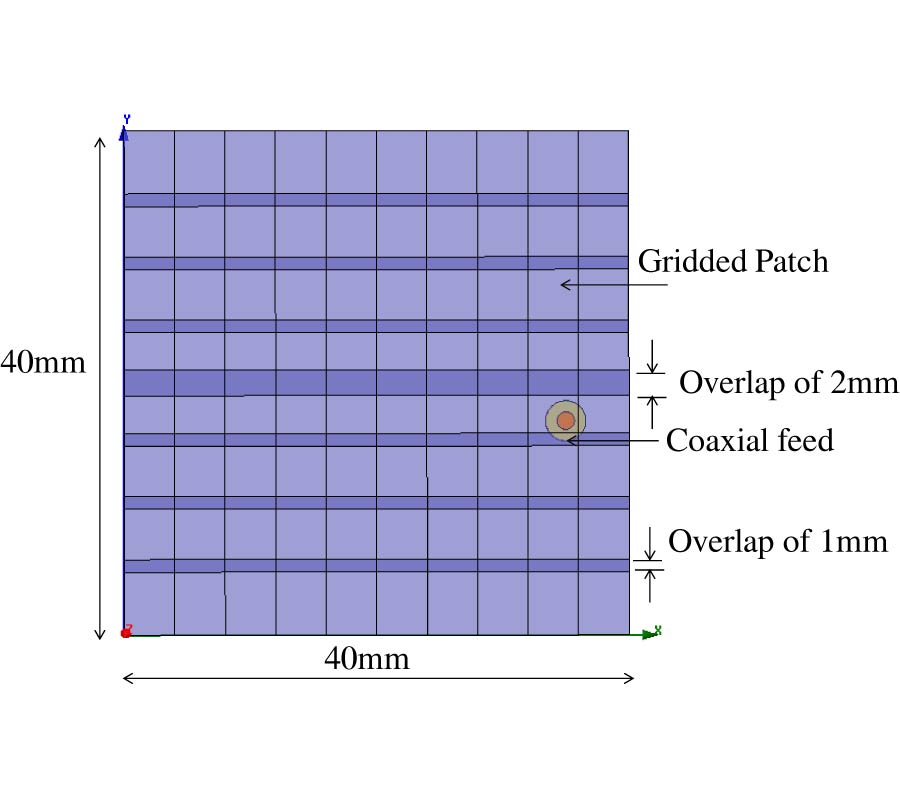
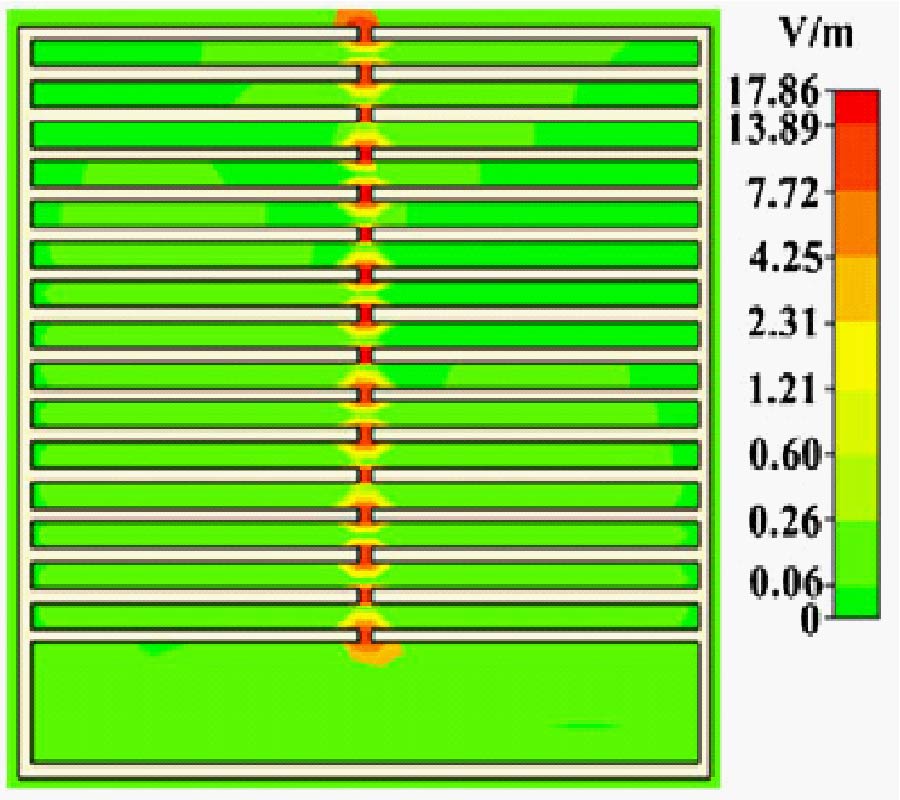
A novel microstrip grid array antenna that is simultaneously high in gain and wide in bandwidth is proposed. To enhance its bandwidth, the antenna adopts elliptically shaped and variably dimensioned radiation elements as well as a linearly tapered ground plane, and is optimized by a parallel genetic algorithm (GA) on a cluster system. A prototype antenna was fabricated and tested. Results of simulation and measurement agree well and show the antenna exhibits encouraging properties, e.g., a maximum gain of approximately tely 15.1 dBi at 5.8 GHz; the |S11| ≤ 10 dB bandwidth and the 3dB gain-drop bandwidth are 25.6% (from 5.03 GHz to 6.51 GHz) and 27.6% (from 5.0 GHz to 6.6 GHz), respectively, of the center frequency, both of which are much wider than that of conventional microstrip grid array antennas. Moreover, the overlap between the antenna's impedance bandwidth and the gain bandwidth results in a wide effective operating frequency bandwidth of 25.6%, which is the largest so far achieved for microstrip grid-array antennas.
A NOVEL MICROSTRIP GRID ARRAY ANTENNA WITH BOTH HIGH-GAIN AND WIDEBAND PROPERTIES
2012-11-15
PIER B
Vol. 46, 41-57
TR Adjoint Imaging Method for Mitat
Guoping Chen , Xin Wang , Jinguo Wang , Zhiqin Zhao , Zai-Ping Nie and Qing Huo Liu
Most of the current imaging methods in microwave induced thermoacoustic tomography (MITAT) system assume that the heterogeneous sound velocity (SV) and density distribution are given or subject to Gaussian distribution. These situations generally are not satisfied. To improve multi-targets thermoacoustic sources imaging quality in a heterogeneous tissue, an iterative TR adjoint imaging method is proposed. The proposed iterative TR adjoint method can reconstruct thermoacoustic sources from the measured data even if the prior heterogeneous information of the tissue is unknown. This method estimates misfit between synthesized and observed measured signals, and iteratively updates supposed model parameters which give the heterogeneous tissue structure. In this iterative procedure, error kernels of SV, density and the approximate point source position information can be obtained independently. After the time of flight (TOF) convergence criterion is reached, a regular time reversal (TR) method with updated model will give out the final imaging result. The proposed TR adjoint imaging method is based on strictly theoretical derivation, and some simulations are presented to validate the method.
TR ADJOINT IMAGING METHOD FOR MITAT
2012-11-15
PIER Letters
Vol. 36, 57-65
Compact Asymmetric Inverted Cone Ring Monopole Antenna for UWB Applications
Su Sandar Thwin
A new printed monopole antenna configuration, asymmetric inverted cone ring monopole antenna, is proposed. The proposed antenna which has the size of 23.6 mm x 40 mm, is fabricated on a low-cost FR4 substrate that has the relative permittivity (εr) of 4.4 and substrate thickness of 1.6 mm to operate in the UWB band (3.1 GHz to 10.6 GHz) released by Federal Communications Commission (FCC) in 2002. It gives an ultra-wide impedance bandwidth of VSWR ≤ 2 from 2.9 GHz to 35 GHz (169.4%) for numerical result and from 3.1 GHz to 31.1 GHz (163.74%) for experimental result. Moreover, it exhibits omni-directional radiation patterns with acceptable gain across the whole operation band, which meets the requirements of UWB applications. The parameters which affect the performance of the antenna characteristics are investigated in this paper. The simulated results have a good agreement with the measured ones, and the proposed antenna shows that it is a very good candidate for UWB operations.
COMPACT ASYMMETRIC INVERTED CONE RING MONOPOLE ANTENNA FOR UWB APPLICATIONS
2012-11-15
PIER M
Vol. 27, 97-107
Vector Mode Analysis of Optical Waveguides by Quadratic Spline Collocation Method
Jianwei Mu , Haibo Liang , Xun Li , Bin Xu and Wei-Ping Huang
We present an accurate, efficient numerical analysis for vector modes of dielectric optical waveguide structures with an arbitrary refractive index profile using a quadratic spline collocation method (QSCM). The unknown weights of the polynomials are determined by forcing the errors at the collocation points to be zero. Consequently, the original second order differential equation is converted to a set of algebraic equations which can be solved by matrix techniques. The proposed QSCM method demonstrates better performance than the standard finite-difference method of the same convergence rate in terms of grid size with the same degree of computational complexity.
VECTOR MODE ANALYSIS OF OPTICAL WAVEGUIDES BY QUADRATIC SPLINE COLLOCATION METHOD
2012-11-15
PIER M
Vol. 27, 83-95
A Fast Volume-Surface Integral Equation Solver for Scattering from High-Contrast Materials
Xiaoqiao Deng , Chang Qing Gu , Bingzheng Xu and Zhuo Li
This paper presents a generalized volume-surface integral equation (GVSIE) to solve electromagnetic (EM) scattering of high contrast inhomogeneous materials. Then the method of moments (MoM) is employed to solve the GVSIE. The GVSIE technique where the domain is represented by a corresponding uniform background medium coupled with a variation, together representing the overall inhomogeneity, is solve by the method of moments (MoM) using Schaubert-Wilton-Glisson (SWG) and Rao-Wilton-Glisson (RWG) basis functions. The adaptive cross approximation (ACA) algorithm combined with the equivalent dipole-moment (EDM) method are extended to reduce memory and CPU time. A highly effective preconditioning strategy is presented to solve the system of equations without any increase in the computational complexity. Experiments on several problems representative of scattering simulations are given to illustrate the potential of the above proposed techniques for solving EM scattering involving high contrast applications.
A FAST VOLUME-SURFACE INTEGRAL EQUATION SOLVER FOR SCATTERING FROM HIGH-CONTRAST MATERIALS
2012-11-14
PIER C
Vol. 34, 203-213
Broadband Single-Fed Single-Patch Circularly Polarized Microstrip Antenna
Feng Xu , Xueshi Ren , Ying-Zeng Yin and Shou-Tao Fan
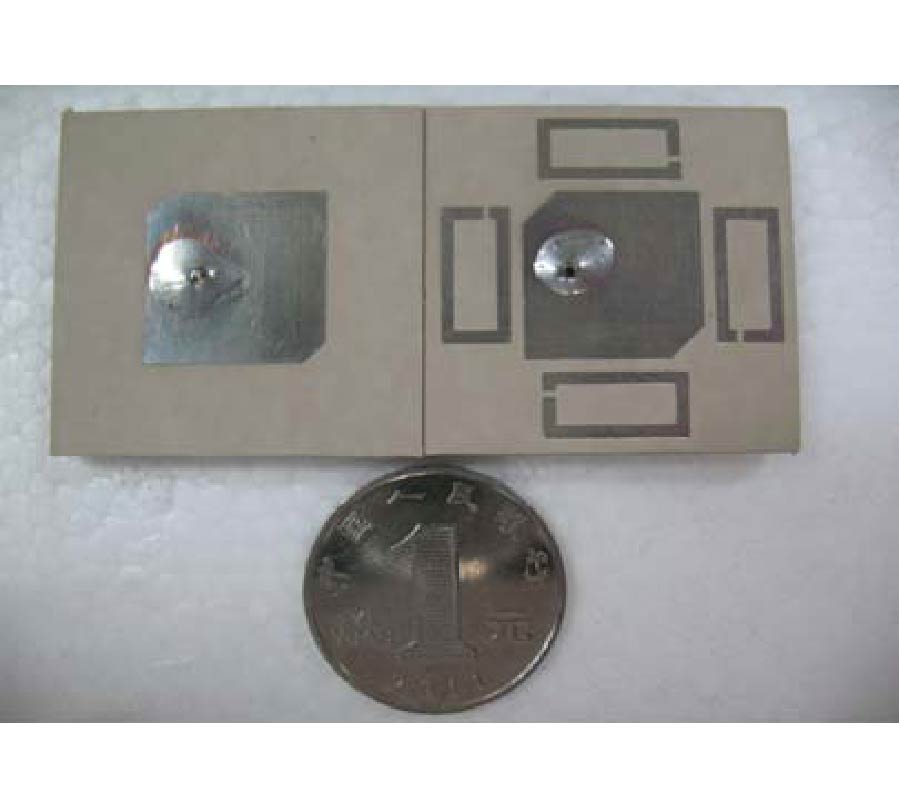
The paper demonstrates a novel antenna which can achieve a broad impedance bandwidth and circularly polarized bandwidth with a suspended corner-truncated square patch and a new probe-fed rectangular strip. By incorporating a probe-fed rectangular strip inside a high substantial cavity (~ 0.144λ0), a broad impedance bandwidth (VSWR < 2.0) of 770 MHz (31.43%) is achieved. To obtain a good circularly polarized (CP) bandwidth overlap with the impedance bandwidth, two stubs with optimized lengths are loaded with the non-radiating edges of the corner-truncated square patch symmetrically. Measured results show that the CP antenna features a wide operating bandwidth of 10% ranging from 2.41 GHz to 2.66 GHz (VSWR < 1.5 and axial ratio < 3 dB) and that of 22.45% ranging from 2.31 GHz to 2.86 GHz (VSWR < 2 and axial ratio < 6 dB) and good radiation patterns with cross-polarization level (LHCP) lower than the co-polarization level (RHCP) by more than 20 dB at the broadside direction. The average gain of this antenna is recorded as about 8.16 dBi across the operating bandwidth.
BROADBAND SINGLE-FED SINGLE-PATCH CIRCULARLY POLARIZED MICROSTRIP ANTENNA