Search Results(13802)

2011-02-03
PIER
Vol. 113, 269-284
Non-Uniform Transmission Line Transformers and Their Application in the Design of Compact Multi-Band Bagley Power Dividers with Harmonics Suppression
Khair Ayman Al Shamaileh , Abdullah Mazen Qaroot and Nihad I. Dib
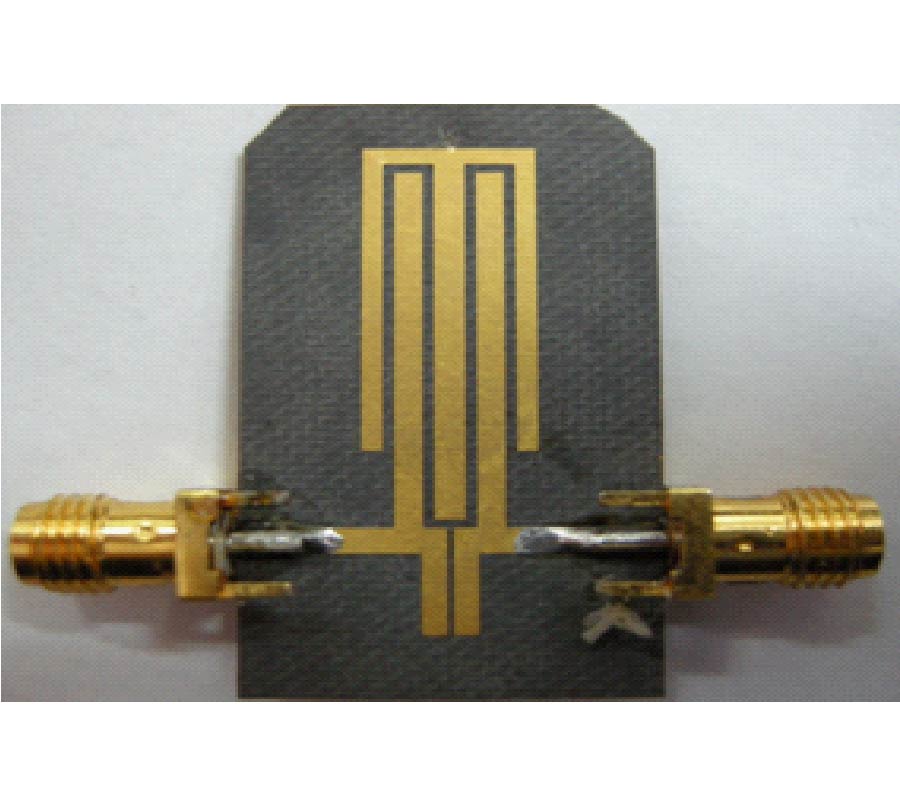
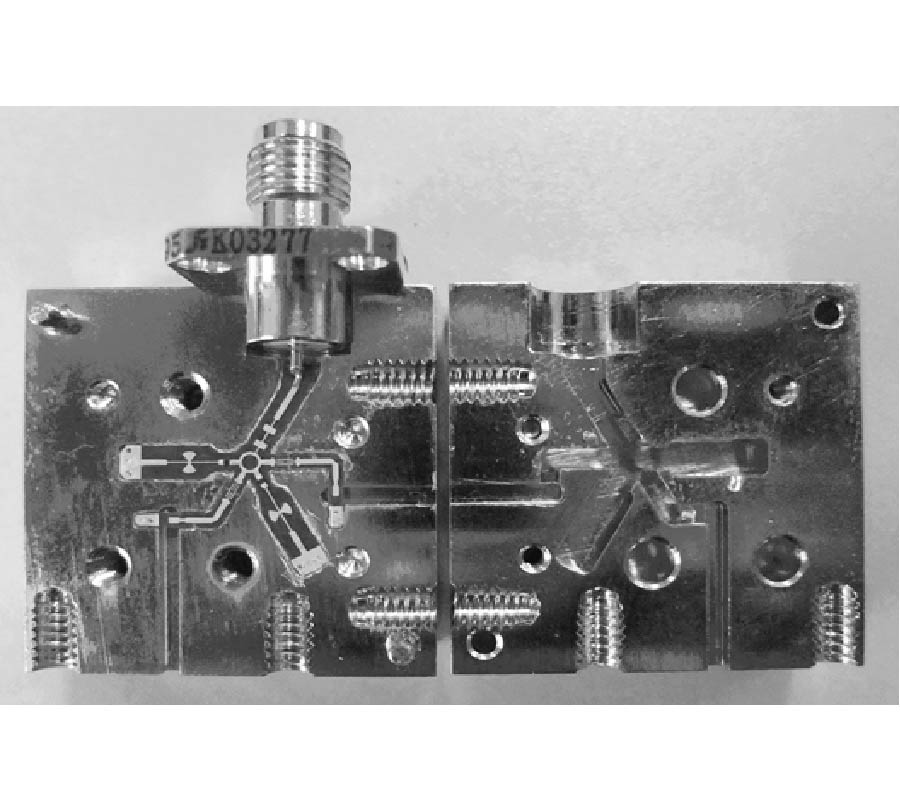
In this paper, the application of compact non-uniform transmission line transformers (NTLTs) in suppressing and controlling the odd harmonics of the fundamental frequency is presented. A design example showing the complete suppression of the odd harmonics of the fundamental frequency is given. In addition, several compact NTLTs are designed showing the possibility of controlling the existence of a fundamental frequency's odd harmonics. Moreover, multi-band operation using NTLTs is investigated. Specifically, a design example of a miniaturized triple-frequency NTLT is introduced. Based on these compact NTLTs, a 3-way triple-frequency modified Bagley power divider (BPD) with a size reduction of 50%, and a 5-way modified BPD with harmonics suppression and size reduction of 34%, are designed. For verification purposes, both dividers are simulated using the two full-wave simulators IE3D and HFSS. Moreover, the modified 5-way BPD with harmonics suppression is fabricated and measured. Both the simulation and measurement results validate the design approach.
NON-UNIFORM TRANSMISSION LINE TRANSFORMERS AND THEIR APPLICATION IN THE DESIGN OF COMPACT MULTI-BAND BAGLEY POWER DIVIDERS WITH HARMONICS SUPPRESSION
2011-02-03
PIER
Vol. 113, 251-267
Very Compact Full Differential Bandpass Filter with Transformer Integrated Using Integrated Passive Device Technology
Sung-Mao Wu , Chun-Ting Kuo and Chien-Hsun Chen
In this study, a very compact, second-order, full differential bandpass filter is presented. To achieve compact circuit area and system-in-package (SiP) applications, the transformer structure is integrated using integrated passive device (IPD) technology on a glass substrate. The coupled resonator synthesis method is used to achieve the bandpass filter design and suitably adjust the tapped feed-lines to obtain good impedance match at all ports. The area (1.27 mm×1.27 mm) of the bandpass filter is effectively reduced, and the performance, as measured by insertion loss (2.5 dB) and CMRR (>30 dB), is still acceptable with such a compact area. Most importantly, this full differential bandpass filter is also suitable for SiP applications, as other studies implemented using glass IPD technology have demonstrated.
VERY COMPACT FULL DIFFERENTIAL BANDPASS FILTER WITH TRANSFORMER INTEGRATED USING INTEGRATED PASSIVE DEVICE TECHNOLOGY
2011-02-02
PIER B
Vol. 28, 111-128
A Strip-Map SAR Coherent Jammer Structure Utilizing Periodic Modulation Technology
Qingfu Liu , Shiqi Xing , Xuesong Wang , Jian Dong and Dahai Dai
After being modulated by a periodic signal, the pulse compression result of the modulated LFM (Linear Frequency Modulation) may have many isolated and sharp peaks. According to this phenomenon, we developed a strip-map SAR (Synthetic Aperture Radar) jammer which modulated both the SAR's fast and slow time LFMs with periodic waveforms. This kind of jamming can forge isolated and bright points in the SAR image, and may confuse the SAR's image processing. The structure of this kind of jammer is simple and easy to be designed comparing to that of a traditional jammer utilizing the coherent jamming. Also it only needs much lower transmitted power than a noise jammer. Finally, the jamming experiences were conducted by utilizing a railway SAR, and the SAR imaging results showed the effectiveness of this kind of jamming.
A STRIP-MAP SAR COHERENT JAMMER STRUCTURE UTILIZING PERIODIC MODULATION TECHNOLOGY
2011-02-02
PIER Letters
Vol. 20, 147-156
Single-Feeding Circularly Polarized TM21-Mode Annular-Ring Microstrip Antenna for Mobile Satellite Communication
Xi Chen , Guang Fu , Shu-Xi Gong , Ya-Li Yan and Zhi-Ya Zhang
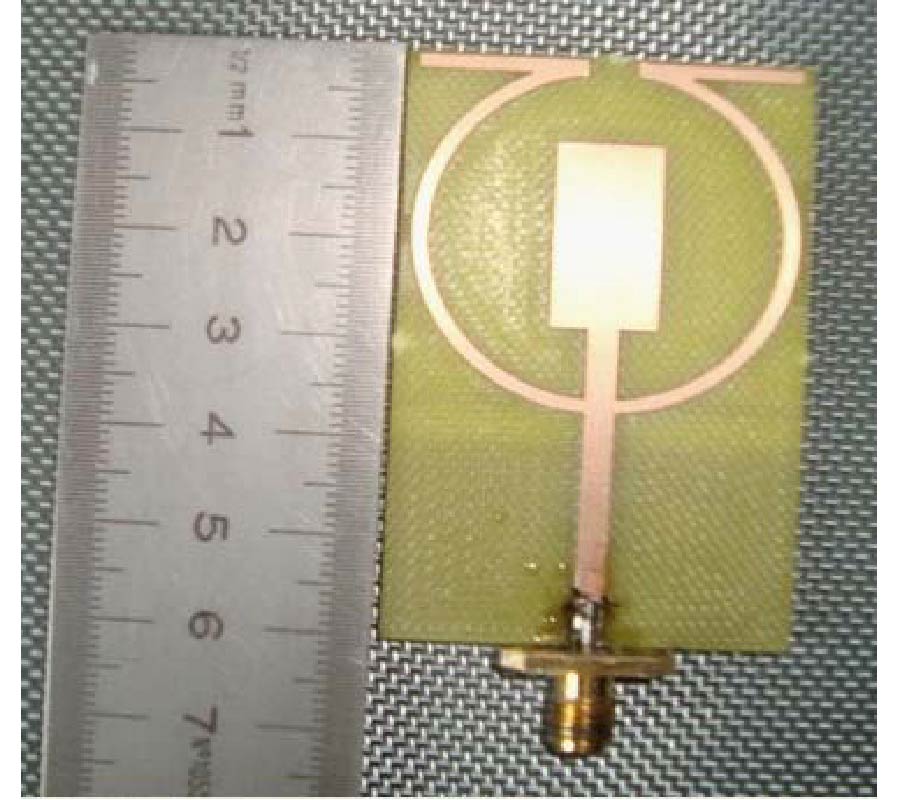
A novel TM21-mode circularly polarised (CP) annular-ring microstrip antenna (ARMSA) is presented. The annular ring is designed working at TM21 mode, and conical radiation pattern is obtained. At the inner of annular ring, a simple ring-shaped feeding line is arranged to implement impedance matching and CP operation. Therefore, the antenna has good impedance and CP performance, as well as a compact structure. The measured results indicate that the antenna has high low-elevation gains and omnidirectional azimuth coverage. The peak gain reaches 4.3 dBic at elevation angle of 47°, and in the range of 10°-70°, the gain is above 0 dBic. The impedance bandwidth for S11≤-10 dB is 2.3% at 1.601GHz. The proposed antenna can be used in mobile earth-station equipment for satellite positioning and communication systems in global or local.
SINGLE-FEEDING CIRCULARLY POLARIZED TM21-MODE ANNULAR-RING MICROSTRIP ANTENNA FOR MOBILE SATELLITE COMMUNICATION
2011-02-02
PIER Letters
Vol. 20, 137-145
A Wideband Planar Dipole Antenna with Parasitic Patches
Rui Zhang , Guang Fu , Zhi-Ya Zhang and Qi-Xuan Wang
This paper presents a novel wideband planar dipole antenna with parasitic patches. Of which, acting primarily as directors, the parasitic elements aim to improve the radiation patterns in terms of gain especially at the higher frequencies. For verification, the proposed novel structure was fabricated and measured. The proposed antenna is well-matched with achieved VSWR<2 and has a good radiation performance across the entire operating frequency range of 3-8 GHz.
A WIDEBAND PLANAR DIPOLE ANTENNA WITH PARASITIC PATCHES
2011-02-02
PIER
Vol. 113, 227-249
Electromagnetic Tunneling in Lossless Trilayer Stacks Containing Single-Negative Metamaterials
Eva Cojocaru
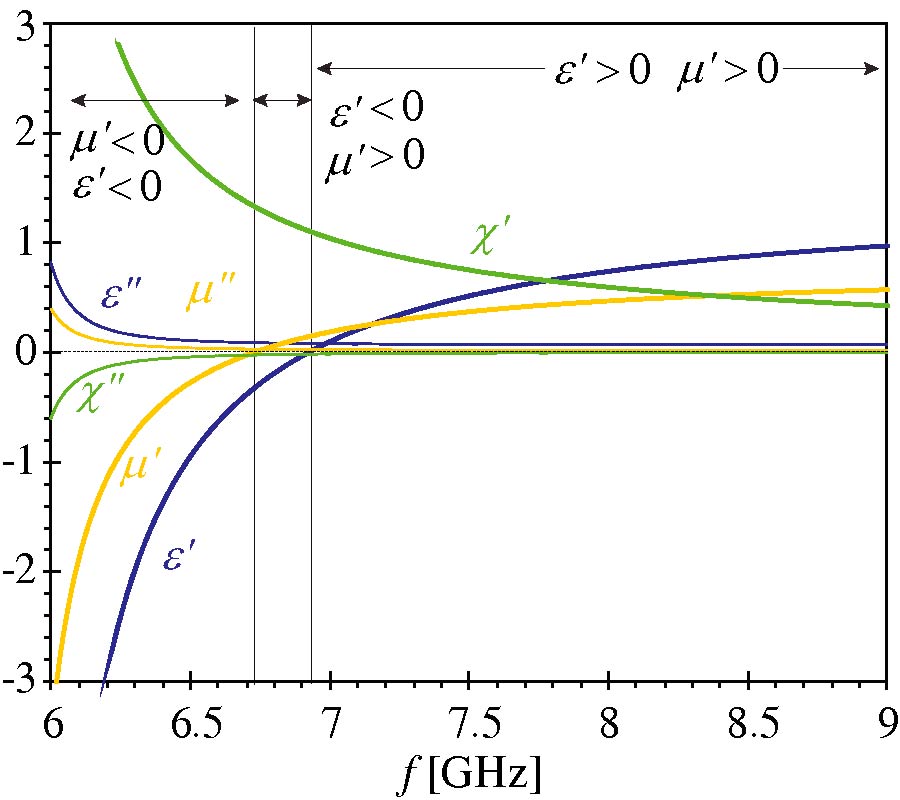
We analyze the transverse-electric wave propagation through lossless trilayer stacks containing single-negative (SNG) materials in which only one of the two material constants, permittivity (epsilon) or permeability (mu), is negative. We consider the following combinations: ENG/MNG/ENG, ENG/DPS/MNG, DPS/ENG/DPS, and ENG/DPS/ENG, where ENG refers to epsilon-negative, MNG to mu-negative, and DPS to double-positive media. The transfer matrix formalism is applied. Although the waves are evanescent in the SNG media, combining the SNG layers or the SNG and DPS layers, leads to some unusual features, such as the complete tunneling. Since the symmetrical trilayer is equivalent to a single homogeneous layer, the complete tunneling conditions are easily predicted analytically for the trilayer stacks, and we show that in most of cases, they are rather well applicable to the respective bilayer stacks. The field and the Poynting vector distributions are studied in different trilayers and, in some cases, in the respective bilayers. In particular, we show that the complete tunneling is facilitated theoretically in the electrically thin stacks. Similar results could be obtained for the transverse-magnetic waves and the respective dual combinations by using the duality principle.
ELECTROMAGNETIC TUNNELING IN LOSSLESS TRILAYER STACKS CONTAINING SINGLE-NEGATIVE METAMATERIALS
2011-02-02
PIER
Vol. 113, 211-226
Numerical Analysis of Enhanced Transmission through a Single Subwavelength Aperture Based on Mie Resonance Single Particle
Lei Kang , Veronique Sadaune and Didier Lippens
We numerically demonstrate that the transmission through a deep subwavelength (λ0/20) aperture in a metal plate could be greatly enhanced owing to the resonance effects of a high permittivity (κ) dielectric cube tightly coupled to the aperture. The transmission enhancement originates from the confinement and re-radiation of the electromagnetic energy impinging onto the high κ cube which operates in the 1st Mie resonance mode, and behaves as an ultra-small magnetic dipole antenna. The complex permittivity of the cube governs the operating frequency and the enhancement in terms of bandwidth and transmissivity maximum. Additionally, based on the isotropic response of the high κ cube with dimensions comparable to the aperture size, the almost independence of the enhancement properties on the illumination polarization and incidence angle was assessed.
NUMERICAL ANALYSIS OF ENHANCED TRANSMISSION THROUGH A SINGLE SUBWAVELENGTH APERTURE BASED ON MIE RESONANCE SINGLE PARTICLE
2011-02-02
PIER
Vol. 113, 195-210
Microstrip Realization of Trisection Synthesis with Frequency-Dependent Admittance Inverter
Ching-Luh Hsu and Jen-Tsai Kuo
Frequency-dependent admittance (J-) inverter is incorporated in synthesis of microstrip trisection filters to achieve a quasi-elliptic function response. In the admittance matrix of the lowpass prototype, certain coupling is modeled by a constant J-inverter multiplied by the complex frequency variable s. Direct synthesis of three lowpass prototypes is presented. Based on the standard lowpass to bandpass transformation, coupled microstrip resonators with both electric and magnetic coupling are devised to implement the J-inverter with desired frequency-dependent characteristics. Tapped-line input/output is used and several transmission zeros can be created in the upper and lower rejection bands. In experiments, a third-order filter with four zeros, a fourth-order circuit with three zeros, and a fourth-order filter with five zeros are designed and fabricated. Measured results are compared with the simulation responses to validate the theory.
MICROSTRIP REALIZATION OF TRISECTION SYNTHESIS WITH FREQUENCY-DEPENDENT ADMITTANCE INVERTER
2011-02-02
PIER
Vol. 113, 179-194
Photonic Crystals & Metamaterial Filters Based on 2D Arrays of Silicon Nanopillars
Haider Butt , Qing Dai , Timothy D. Wilkinson and Gehan A. J. Amaratunga
Highly dense two-dimensional periodic arrays of nano-scaled silicon pillars present interesting photonic band gaps and the capacity to act as photonic crystals which can mould, manipulate and guide light. We demonstrate finite element modelling of silicon pillars based photonic crystals and their effective use in applications like waveguides, optical power dividers, multiplexers and switches. The optical wave propagation through these structures was thoroughly simulated and analysed, confirming their high efficiency. The band gaps studied through the plane wave expansion method are also presented. Later the fabrication of highly periodic two-dimensional arrays of silicon pillars through the process of etching is also explained. The arrays with pillar radius of 50 nm and lattice constant of 400 nm were successfully utilised as photonic crystal waveguides and their measured results are reported. Moreover, the silicon nanopillars sputtered with noble metals can also display artificial optical properties and act as metamaterials due to the mutual plasmonic coupling effects. We report the theoretical results for the silicon nanopillars based metamaterial high-pass filter.
PHOTONIC CRYSTALS & METAMATERIAL FILTERS BASED ON 2D ARRAYS OF SILICON NANOPILLARS
2011-02-01
PIER
Vol. 113, 161-177
Calculation and Optimization of Electromagnetic Resonances and Local Intensity Enhancements for Plasmon Metamaterials with Sub-Wavelength Double-Slots
Lin Han , Shuqi Chen , Axel Schulzgen , Yong Zeng , Feng Song , Jian-Guo Tian and Nasser Peyghambarian
We propose two metamaterials with sub-wavelength double-slots --- single-side double-slot metamaterial and double-side double-slot metamaterial. The dependence of the electromagnetic resonances and local intensity enhancements on the structural parameters is studied by the finite-difference time-domain technique and the finite element method. Results show that the central-arm of a double-slot structure strongly influences frequency and local intensities at both high- and low-frequency resonances. Very strong field localization can be achieved at the high-frequency resonance and its particular distribution can be well controlled by the width of the central-arm. A double-side double-slot structure can be utilized to separately enhance the high-frequency resonance, while suppressing the low-frequency resonance. The simulation results are discussed in terms of plasmon resonances.
CALCULATION AND OPTIMIZATION OF ELECTROMAGNETIC RESONANCES AND LOCAL INTENSITY ENHANCEMENTS FOR PLASMON METAMATERIALS WITH SUB-WAVELENGTH DOUBLE-SLOTS
2011-01-31
PIER Letters
Vol. 20, 129-136
Broadband Microstrip Antennas Using Coplanar Feed-Line
Hai-Hua Wang , Ke Yang , Zhen-Ya Lei and Cun-Long Li
This paper proposes two novel broadband microstrip antennas using coplanar feed-line. By feeding the patch with a suitable shape of the coplanar line in the slot of the patch, the broadband character is achieved. Compared with the antenna fed by a U-shaped feed-line, the antenna with L-shaped feed-line not only has wider bandwidth but also achieves the circular polarization character. The measured bandwidths of 25% and 34% are achieved, and both of the antennas have good radiation characteristics in the work band.
BROADBAND MICROSTRIP ANTENNAS USING COPLANAR FEED-LINE
2011-01-31
PIER M
Vol. 17, 1-11
Optical Absorption Enhancement in Solar Cells via 3D Photonic Crystal Structures
Jiun-Yeu Chen , Eric Li and Lien-Wen Chen
Light concentrating structures with three-dimensional photonic crystals (3D PhCs) for solar cell applications are investigated via simulation. The 3D opal PhCs are suggested as an intermediate layer in the concentrator system for solar cells. It is found that the light absorption is significantly enhanced due to the adding of diffractive effects of PhCs to the concentrator. Three types of PhCs are considered in four scenarios to verify the absorption enhancement by such a light concentrating structure. Our calculations show that the face-centered cubic PhC can create an absorbing efficiency superior to the others under a specified lattice orientation pointing to the sun, which results in an enhancement factor of 1.56 in absorption for the 500--1100 nm spectral range.
OPTICAL ABSORPTION ENHANCEMENT IN SOLAR CELLS VIA 3D PHOTONIC CRYSTAL STRUCTURES
2011-01-31
PIER M
Vol. 16, 245-259
Floating Interpolation Stencil Topology-Based Ie-FFT Algorithm
Jiliang Yin , Jun Hu , Zai-Ping Nie , Xiang Feng and Shiquan He
The integral equation fast Fourier transform (IE-FFT) is a fast algorithm for 3D electromagnetic scattering and radiation problems based on the interpolation of the Green's function. In this paper, a novel floating interpolation stencil topology is used to improve the IE-FFT algorithm. Compared to the traditional interpolation stencil topology, it can further reduce the storage and CPU time for the IE-FFT algorithm. The reduction is especially significant for volume integral equations. Furthermore, the accuracy of the algorithm is still good though the near-interaction element numbers are reduced. Finally, some numerical results including perfectly electric conductors, dielectric objects, composite conducting and dielectric objects are given to demonstrate the performance of the present method.
FLOATING INTERPOLATION STENCIL TOPOLOGY-BASED IE-FFT ALGORITHM
2011-01-31
PIER M
Vol. 16, 235-244
Wideband Dispersion Analysis of Waveguide Geometries Using Finite Sampled Data
Hamid Heidar and Ahad Tavakoli
Wideband analysis of frequency dispersive geometries is a challenge in inverse scattering problems. Waveguide duct is an important case in aerial targets with dominant returns. Its dispersive behavior affects the range profile analysis due to occurrence of unwanted range extension. A new high frequency analysis using model based parameter estimation (MBPE) approach is presented. A group delay criteria derived from the nonlinear scattering phase response represents the duct length. Wideband sparse measured frequency domain samples of various waveguides are used as inputs to the model. Comparison is made with joint time-frequency analysis (JTFA) and inverse fast Fourier transform (IFFT) results.
WIDEBAND DISPERSION ANALYSIS OF WAVEGUIDE GEOMETRIES USING FINITE SAMPLED DATA
2011-01-31
PIER M
Vol. 16, 225-234
Computation of the RCS of 3D Conductor with Arbitrary Shape by Using Piecewise Sibc and Forward Backward Iterative Scheme
Afif Bouzidi and Taoufik Aguili
In this paper, we propose a computational method for computing RCS of 3D conductor, by using piecewise surface impedance boundary conditions and forward backward iterative scheme. In our previous work, we have reported a numerical method combining Rytov's perturbation method and level set technique to construct a piecewise surface impedance, we showed that by using level set technique, we could model an arbitrarily shaped conductor by a piecewise distribution of low- and high-order SIBCs. The method proposed in this article postulates the use of local "buffer regions" to suppress spurious edge effects introduced by the abrupt termination of each SIBC and ensure stability of RCS computing.
COMPUTATION OF THE RCS OF 3D CONDUCTOR WITH ARBITRARY SHAPE BY USING PIECEWISE SIBC AND FORWARD BACKWARD ITERATIVE SCHEME
2011-01-31
PIER
Vol. 113, 143-160
Broadband Complex Permittivity Measurement of Low Loss Materials Over Large Temperature Ranges by Stripline Resonator Cavity Using Segmentation Calculation Method
Yang Zhou , En Li , Gaofeng Guo , Yuanci Gao and Tao Yang
A system has been developed for measuring the complex permittivity of low loss materials at frequencies from 500 MHz to 7 GHz and over a temperature range up to 1500°C using stripline resonator cavity method. Details of the design and fabrication of the cavity were discussed. Particular features related to high-temperature operation were described. An improved resonance method at high temperature for determining complex dielectric properties of low-loss materials was developed. The calculation process was given by a physical model of the stripline resonator cavity at high temperature. The paper brought forward the method of segmentation calculation according to the temperature changes over the cavity, which matched the actual situation of high temperature measurements. We have verified the proposed method from measurements of some typical samples with the available reference data in the literature.
BROADBAND COMPLEX PERMITTIVITY MEASUREMENT OF LOW LOSS MATERIALS OVER LARGE TEMPERATURE RANGES BY STRIPLINE RESONATOR CAVITY USING SEGMENTATION CALCULATION METHOD
2011-01-28
PIER C
Vol. 19, 179-189
Bandwidth Enhancement and Miniaturization of Dielectric Resonator Antenna for 5.8 GHz WLAN
K. K. Gebril , Sharul Kamal Bin Abd Rahim and Amuda Yusuf Abdulrahman
This paper presents the design of Dielectric Resonator Antenna (DRA) operating at 5.8 GHz, using the techniques of Two Segments DRA (TSDRA) and High-Aspect Ratio Structure. The aim of the paper is to reduce the size of the DRA while still maintaining its large impedance bandwidth. The requirements for WLAN applications are carefully taken into considerations in the design of the proposed structure. Comparison has been made between the proposed design and single layer DRA (SLDRA); and it has been found that former has better performances than the later.
BANDWIDTH ENHANCEMENT AND MINIATURIZATION OF DIELECTRIC RESONATOR ANTENNA FOR 5.8 GHZ WLAN
2011-01-28
PIER
Vol. 113, 127-141
Hybrid Tangential Equivalence Principle Algorithmwith MLFMA for Analysis of Array Structures
Hanru Shao , Jun Hu , Zai-Ping Nie , Guo Han and Shiquan He
In this paper, a novel technique is proposed to solve the electromagnetic scattering by large finite arrays by combining the tangential equivalence principle algorithm (T-EPA) with multilevel fast multipole algorithm (MLFMA). The equivalence principle algorithm (EPA) is a kind of domain decomposition scheme for the electromagnetic scattering and radiation problems based on integral equation (IE). For the array with same elements, only one scattering matrix needs to be constructed and stored. T-EPA has better accuracy than the original EPA. But the calculating for the impedance matrix in T-EPA is still time consuming. MLFMA is proposed to speed up the matrix-vector multiplication in T-EPA. Numerical results are shown to demonstrate the accuracy and efficiency of the proposed technique.
HYBRID TANGENTIAL EQUIVALENCE PRINCIPLE ALGORITHM
WITH MLFMA FOR ANALYSIS OF ARRAY STRUCTURES
2011-01-28
PIER
Vol. 113, 111-126
Synthesis of Multi-Step Coplanar Waveguide-to-Microstrip Transition
Sandra Costanzo
A synthesis procedure is developed in this paper for the design of N-step coplanar waveguide-to-microstrip transitions. An equivalent circuit approach is adopted to model the structure in terms of N cascaded ABCD matrices relative to the N coplanar waveguide sections forming the transition. A constrained optimization problem is formulated as the minimum finding of a proper functional to accurately determine the transition dimensions by imposing an upper bound to the return loss within a prescribed frequency band. An iterative N-step procedure is developed to find the optimization problem solution. Numerical results on millimeter-wave transition configurations are provided to demonstrate the effectiveness of the proposed synthesis method. A back-to-back transition prototype with N=3 sections is then fabricated and characterized in terms of measured S-parameters to experimentally demonstrate a return loss better than 10 dB in the frequency range from 1 GHz up to 40 GHz.
SYNTHESIS OF MULTI-STEP COPLANAR WAVEGUIDE-TO-MICROSTRIP TRANSITION
2011-01-28
PIER
Vol. 113, 103-110
Multi-Band and Polarization Insensitive Metamaterial Absorber
Liang Huang and Hongsheng Chen
The design and realization of a multi-band and polarization insensitive metamaterial absorber is presented. The structure with thickness 1.1 mm consists of six close rings which distribute in two metallic layers separated by FR4 substrates. Experimental results show that over 93.3% absorption can be achieved in this metamaterial absorber at multiple frequency bands (more than two). Due to the rotational symmetric pattern of the metamaterial, the performance of the absorber is insensitive to the polarization of the incident waves, indicating the superiority of the structure in the application.
MULTI-BAND AND POLARIZATION INSENSITIVE METAMATERIAL ABSORBER