Search Results(13802)

2011-02-19
PIER
Vol. 114, 89-111
Calibration of Spaceborne Linearly Polarized Low Frequency SAR Using Polarimetric Selective Radar Calibrators
Jie Chen , Shaun Quegan and Xunjun Yin
Spaceborne synthetic aperture radar (SAR) systems operating at lower frequencies, such as P-band, are significantly affected by Faraday rotation (FR) effects. This paper presents a novel algorithm for measuring system errors (channel imbalance and cross-talk) in the presence of Faraday rotation for spaceborne polarimetric SAR data. It uses four polarimetric selective calibrators (four polarimetric active radar calibrators [PARCs] or possibly two PARCs and two gridded trihedrals). Theoretical analysis and simulations demonstrate that the optimized calibration scheme puts tight constraints on the accuracy of the associated Faraday rotation if the cross-talk is to be accurately measured. There are also strong constraints on the allowable signal-to-noise ratio and average polarimetric noise associated with the calibration devices. The analysis suggests that, unless the calibration sites are at the magnetic equator, independent measurements of total electron content (TEC) from a direct ground-satellite line-of-sight dual-frequency system are also needed.
CALIBRATION OF SPACEBORNE LINEARLY POLARIZED LOW FREQUENCY SAR USING POLARIMETRIC SELECTIVE RADAR CALIBRATORS
2011-02-18
PIER
Vol. 114, 67-88
Theoretical Foundation for the Method of Connected Local Fields
Sin-Yuan Mu and Hung-Wen Chang
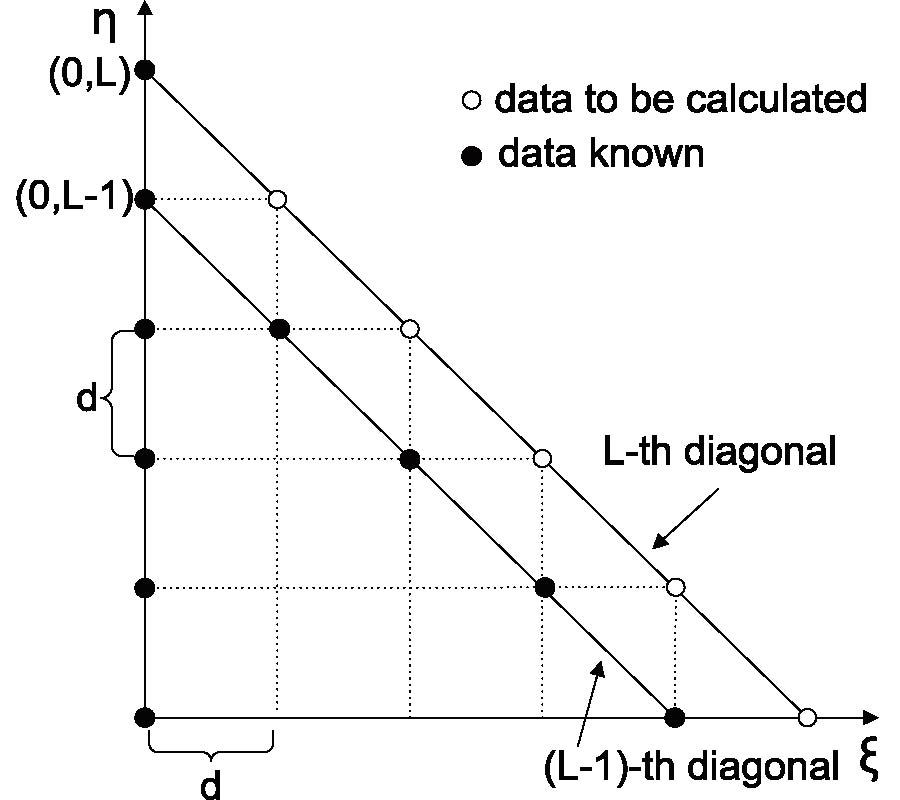
The method of connected local fields (CLF), developed for computing numerical solutions of the two-dimensional (2-D) Helmholtz equation, is capable of advancing existing frequency-domain finite-difference (FD-FD) methods by reducing the spatial sampling density nearly to the theoretical limit of two points per wavelength. In this paper, we show that the core theory of CLF is the result of applying the uniqueness theorem to local EM waves. Furthermore, the mathematical process for computing the local field expansion (LFE) coefficients from eight adjacent points on a square is similar to that in the theory of discrete Fourier transform. We also present a theoretical analysis of both the local and global errors in the theory of connected local fields and provide closed-form expressions for these errors.
THEORETICAL FOUNDATION FOR THE METHOD OF CONNECTED LOCAL FIELDS
2011-02-18
PIER
Vol. 114, 51-66
Electromagnetic Scattering of the Field of a Metamaterial Slab Antenna by an Arbitrarily Positioned Cluster of Metallic Cylinders
Constantinos Valagiannopoulos
The operation of a slab antenna with low-index metamaterial substrate is affected by a cluster of metallic cylinders positioned in the near-field area. A semi-analytical solution of the defined boundary value problem is obtained based on the small size of the rods. Several different configurations are found to possess beneficial features concerning the total radiated power and the angle of directive emission. The deduced diagrams are independently validated and discussed, revealing certain conclusions.
ELECTROMAGNETIC SCATTERING OF THE FIELD OF A METAMATERIAL SLAB ANTENNA BY AN ARBITRARILY POSITIONED CLUSTER OF METALLIC CYLINDERS
2011-02-17
PIER Letters
Vol. 21, 31-40
A Novel Dual-Band Bandpass Filter Using Generalized Trisection Stepped Impedance Resonator with Improved Out-of-Band Performance
Xiaofeng Sun and Eng Leong Tan
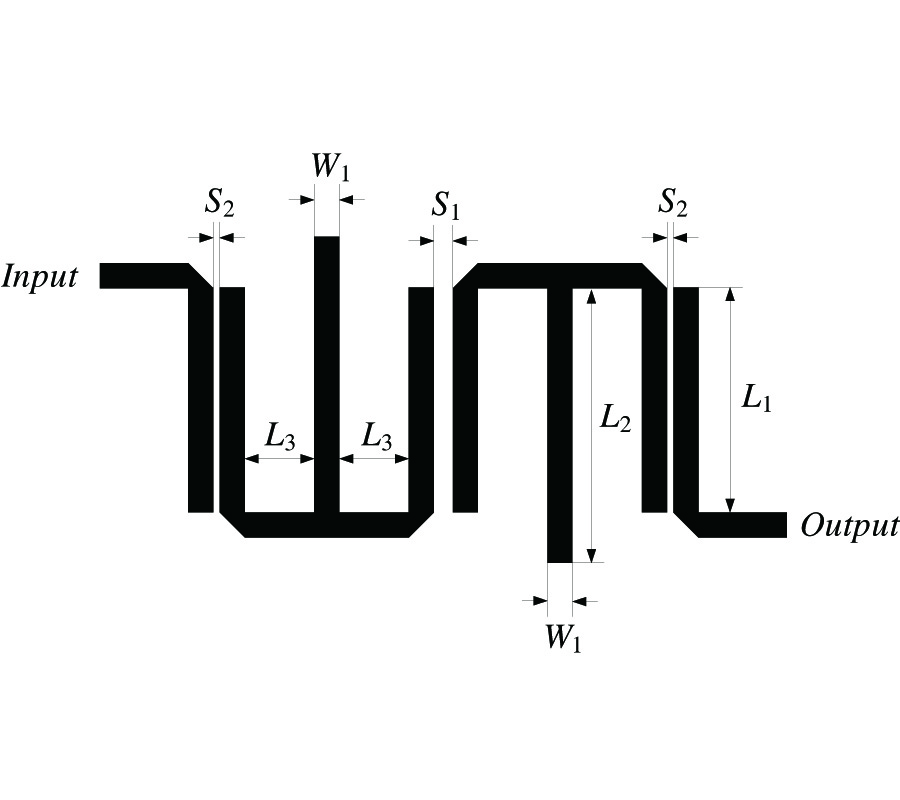
This paper presents the synthesis of a novel dual-band bandpass filter with improved out-of-band performance. The proposed circuit is constructed by cascading a dual-band filter using trisection stepped impedance resonators (SIRs) and an L-C ladder lowpass filter using open-circuited stubs. The dual-band trisection SIR can provide the desired dual-band response, and the lowpass filter can improve the out-of band performance by suppressing the harmonics and spurious responses. The proposed filter has been fabricated and measured. Simulation and measurement results are found to be in good agreement.
A NOVEL DUAL-BAND BANDPASS FILTER USING GENERALIZED TRISECTION STEPPED IMPEDANCE RESONATOR WITH IMPROVED OUT-OF-BAND PERFORMANCE
2011-02-17
PIER C
Vol. 20, 1-15
A Simple Strategy to Tackle Mutual Coupling and Platform Effects in Surveillance Systems
Gabriella Bernardi , Maurizio Felaco , Michele D'Urso , L. Timmoneri , Alfonso Farina and Ettore Flavio Meliado
This paper presents an optimal power pattern synthesis procedure able to tackle the mutual coupling and platform effiects even for electrically large arrays. The novelty of the approach is due to its capability to account in the synthesis procedure for two different aspects at the same time: the coupling between the array radiating elements and the coupling between these elements and the array platform. The mutual coupling evaluation is based on the active element pattern method, and the active element pattern is numerically computed. The kind of synthesis problems here addressed belongs to the class of convex optimization problems. Therefore, the solution is found by means of very efficient convex programming tools, without requiring global optimization schemes, thus saving time and costs. The extension of the overall tool to adaptive arrays is also considered.
A SIMPLE STRATEGY TO TACKLE MUTUAL COUPLING AND PLATFORM EFFECTS IN SURVEILLANCE SYSTEMS
2011-02-17
PIER M
Vol. 17, 73-86
Effects of Dielectric Heterogeneity in the Performance of Breast Tumour Classifiers
Raquel Cruz Conceicao , Martin O'Halloran , Martin Glavin and Edward Jones
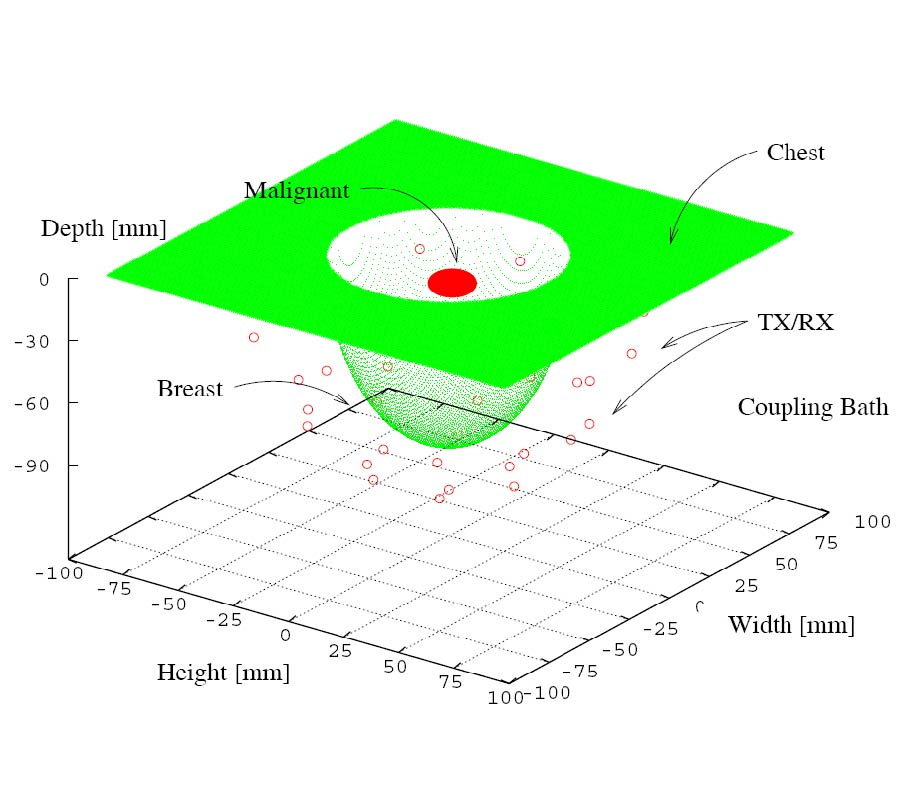
Breast cancer detection using Ultra Wideband Radar has been thoroughly investigated over the last decade. This breast imaging modality is based on the dielectric properties of normal and cancerous breast tissue at microwave frequencies. However, the dielectric properties of benign and malignant tumours are very similar, so tumour classification based on dielectric properties alone is not feasible. Therefore, classification methods based on the Radar Target Signature of tumours need to be further developed to classify tumours as either benign or malignant. Several studies have addressed the issue of tumour classification based on the size, shape and surface texture of the tumour. In general, these studies examined the performance of classification algorithms in primarily dielectrically homogeneous breast models. These relatively simplistic models do not provide a realistic test platform for the evaluation of tumour classification algorithms. This paper examines the classification of tumours under realistic dielectrically heterogeneous conditions. Four different heterogeneous scenarios are considered, with varying levels of heterogeneity and complexity. In this paper, the performance and robustness of tumour classification algorithms under these realistic conditions are examined and discussed.
EFFECTS OF DIELECTRIC HETEROGENEITY IN THE PERFORMANCE OF BREAST TUMOUR CLASSIFIERS
2011-02-17
PIER
Vol. 114, 33-49
Electromagnetic Scattering from a Corn Canopy at L and C Bands
Yang Du , Wen-Zhe Yan , Jian-Cheng Shi , Zengyuan Li and Er-Xue Chen
Extraction of vegetation water content and soil moisture from microwave observations requires development of a high fidelity scattering model. A number of factors associated with the vegetation canopy and the underlying bare soil should be taken into account. In this paper, we propose an electromagnetic scattering model for a corn canopy which includes coherent effect due to the corn structure and takes advantage of recently advanced scattering models for dielectric cylinder of finite length, for thin dielectric disk with elliptical cross section, and for rough surface. The model results are validated at both L and C bands. At C band we acquired some RADARSAT-2 data of several test fields of corn canopy in Jiangsu Province, China, in 2009, and carried out simultaneous measurement campaigns to collect the in situ ground truth. A comparison is made between theory and RADARSAT-2 data. At L band because high quality AIRSAR measurement data are available along with detailed ground truth in the literature, a comparison is also made between theory and AIRSAR data.
ELECTROMAGNETIC SCATTERING FROM A CORN CANOPY AT L AND C BANDS
2011-02-16
PIER Letters
Vol. 21, 19-29
A High-Ratio Bandwidth Square-Wave-Like Bandpass Filter by Two-Handed Metamaterials and Its Application in 60 GHz Wireless Communication
Tsung-Yu Huang and Ta-Jen Yen
By enabling both cavity modes and plasmonic resonance together in the designed two-handed metamaterial, we demonstrate a square-wave-like (SWL) bandpass filter with high-ratio bandwidth (HRB). Our results show that this metamaterial-based bandpass filter possesses high-ratio bandwidth of 30 GHz centered at 92 GHz, excellent transmittance beyond 87.5 %, sharp transition within 1.0 GHz from -3 dB to -20 dB as upper and lower band edge transitions, and dual-band behavior. Such an HRBSWL bandpass filter can be scalable and readily applicable for the commercialized unlicensed 60 GHz spectra with a bandwidth exceeding 7 GHz, solving the challenge of conventional passive bandpass filters to allow wide bandwidths and great quality factors simultaneously.
A HIGH-RATIO BANDWIDTH SQUARE-WAVE-LIKE BANDPASS FILTER BY TWO-HANDED METAMATERIALS AND ITS APPLICATION IN 60 GHZ WIRELESS COMMUNICATION
2011-02-16
PIER C
Vol. 19, 235-243
Compact Open-Ended L-Shaped Slot Antenna with Asymmetrical Rectangular Patch for UWB Applications
Kun Song , Ying-Zeng Yin , Shou-Tao Fan and Bo Chen
A novel compact open-ended L-shaped slot antenna with asymmetrical rectangular patch is demonstrated and designed for UWB applications. With the open-ended L-shaped slot and an asymmetrical rectangular patch fed by the micro-strip line, multiple resonant frequencies are excited and merged to form a measured widen operating bandwidth of 3.01~11.30 GHz with 10 dB return loss. The fractional bandwidth can be enhanced from previous 32% (3~4.15 GHz) to 112% (3~10.66 GHz) among three different antenna types in simulations. The details and vital parameters of the proposed slot antenna are also illustrated. In addition, the proposed slot antenna exhibits a small size of 22×25 mm2, which makes it an excellent candidate for UWB systems and portable applications.
COMPACT OPEN-ENDED L-SHAPED SLOT ANTENNA WITH ASYMMETRICAL RECTANGULAR PATCH FOR UWB APPLICATIONS
2011-02-16
PIER
Vol. 114, 17-32
Extended Wavenumber Domain Algorithm for Highly Squinted Sliding Spotlight SAR Data Processing
Deming Guo , Huaping Xu and Jingwen Li
Image formation from squinted sliding spotlight synthetic aperture radar (SAR) is limited by azimuth spectral folding and severe two dimension coupling. This paper presents an Extended Wavenumber Domain Algorithm (WDA) for highly squinted sliding spotlight SAR data processing. This algorithm adopts azimuth deramping approach to overcome the azimuth spectral folding phenomenon. The chirp rate for azimuth deramping and the principle of choosing pulse repetition frequency (PRF) is presented to accommodate the characteristic of Doppler history. Subsequently, the full focusing is implemented by WDA. Instead of the conventional Stolt mapping in WDA, a modified Stolt mapping is introduced in order to enlarge the range extension of focused image and enable to update the Doppler parameters along range. To confirm the correctness of the implementation of modified Stolt mapping and the azimuth position of target in focused image, related compensation terms are developed. Point target simulation results are presented to validate the effectiveness of extended WDA to process highly squinted sliding spotlight SAR data.
EXTENDED WAVENUMBER DOMAIN ALGORITHM FOR HIGHLY SQUINTED SLIDING SPOTLIGHT SAR DATA PROCESSING
2011-02-15
PIER
Vol. 114, 1-15
Ultrawideband Antenna Excited by a Photomixer for Terahertz Band
Belen Andres-Garcia , Luis Enrique Garcia-Munoz , Daniel Segovia-Vargas , I. Camara-Mayorga and R. Gusten
An end-fire linear tapered slot antenna is presented in the terahertz band. The operation frequency goes from 0.6 THz to 2 THz, with symmetric radiation patterns from 1 THz to 1.7 THz, and gains up to 15 dB. The gaussicity of the beam is over 80% in the whole operation band and an efficiency at 1THz of 85%. This antenna gives enough directivity avoiding the use of a typical substrate lens, which introduce 30% of losses. This new design is a good candidate for new applications in the THz range in Radioastronomy and Imaging.
ULTRAWIDEBAND ANTENNA EXCITED BY A PHOTOMIXER FOR TERAHERTZ BAND
2011-02-14
PIER Letters
Vol. 21, 11-18
Dual-Wideband Monopole Loaded with Split Ring for WLAN Application
Wei-Jun Wu , Ying-Zeng Yin , Shaoli Zuo , Zhi-Ya Zhang and Wei Hu
This paper presents a novel monopole antenna which uses split ring loading in order to achieve a dual-wideband operation for WLAN (2.4/5.2/5.8 GHz) application. By adjusting the split ring position and its natural resonant frequency, the proposed antenna can produce more than 1 GHz wideband match in the 5 GHz band. According to the measured results, the bandwidth with reflection coefficient less than -10 dB is about 715 and 1017 MHz in the two bands. Good radiation patterns are also achieved. The dimensions of the monopole loaded with split ring are 27.2mm×16.2mm×1mm, which is suitable for a hallway antenna or ceiling mount antenna of WLAN application.
DUAL-WIDEBAND MONOPOLE LOADED WITH SPLIT RING FOR WLAN APPLICATION
2011-02-14
PIER Letters
Vol. 21, 1-9
A Study of 15°-75°-90° Angles Triangular Patch Antenna
Melad Marzouq Olaimat and Nihad I. Dib
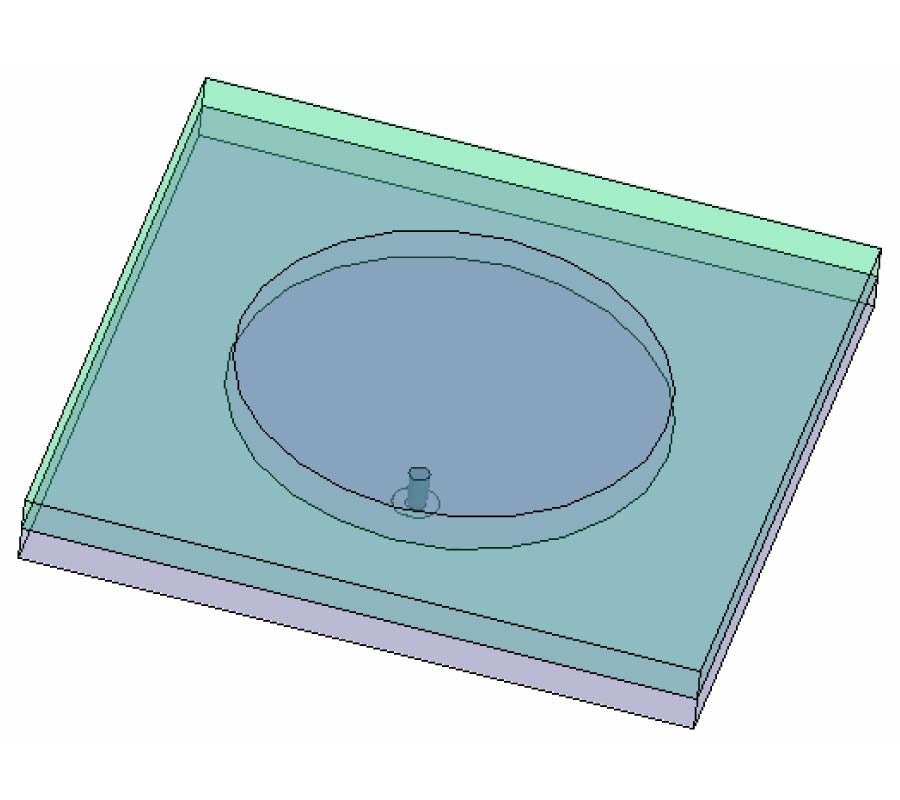
In this paper, a triangular patch antenna (TPA) with 15°-75°-90° angles is studied. The simulation results, using the full wave simulator, IE3D, for this TPA shape are compared with those for the equilateral triangular patch antennas (ETPA), the right angle isosceles triangular patch antenna (RAITPA), the 30°-60°-90° TPA and 30o-30o-120° TPA. It is found that for the same resonant frequency, the 15°-75°-90° TPA occupies the least area among these triangular shapes. In an attempt to verify the simulation results, a 15°-75°-90° TPA operating at 900 MHz is designed, fabricated, and measured. The measured value for the resonance frequency is very close to the value obtained by simulation. Finally, a 15°-75°-90° TPA with a shorting pin is investigated. As expected, a miniaturized patch is obtained by loading a shorting pin at the tip of the patch.
A STUDY OF 15°-75°-90° ANGLES TRIANGULAR PATCH ANTENNA
2011-02-14
PIER M
Vol. 17, 59-71
Accurate Modeling of Coupling Junctions in Dielectric Covered Waveguide Slot Arrays
Giuseppe Mazzarella and Giorgio Montisci
This paper investigate the near-field interaction between the coupling slot and the radiating ones in a dielectric-covered waveguide slot array environment. This interaction can strongly affect the array aperture distribution and input match, mainly when each radiating guide contains few slots or the slot offsets are small. We propose a full-wave Method of Moments approach, taking also into account the waveguide wall thickness, to evaluate this interaction. The use of entire domain basis functions allows to get a small and well-conditioned linear system. The results presented in this paper show that the coupling due to high-order modes in the region of the junction can significantly modify the radiating slot voltage, mainly when the offset is small, and also the array input match, though to a lesser extent.
ACCURATE MODELING OF COUPLING JUNCTIONS IN DIELECTRIC COVERED WAVEGUIDE SLOT ARRAYS
2011-02-14
PIER
Vol. 113, 429-441
Improved Differential Evolution Strategy for Antenna Array Pattern Synthesis Problems
Rui Li , Le Xu , Xiao-Wei Shi , Na Zhang and Zhi-Qing Lv
An Improved Differential Evolution (IDE) algorithm is proposed for optimization problems. With the novel mutant operation adopting sub-optimal individual, the convergence of Differential Evolution (DE) algorithm is accelerated without increasing the risk of premature. Five typical test functions are minimized using DE and IDE algorithms, and the results show the superior performance of IDE algorithm. Furthermore, the algorithm is applied to pattern synthesis of two antenna arrays. Broad nulls are formed in radiation pattern of a linear array to suppress broad-band interferences. In a microstrip patch array, the sidelobe level of array is decreased about 12.9 dB and the mainlobe can scan to the desired angle.
IMPROVED DIFFERENTIAL EVOLUTION STRATEGY FOR ANTENNA ARRAY PATTERN SYNTHESIS PROBLEMS
2011-02-14
PIER
Vol. 113, 413-428
Spiking Neural Networks for Breast Cancer Classification in a Dielectrically Heterogeneous Breast
Martin O'Halloran , Brian McGinley , Raquel Cruz Conceicao , Fearghal Morgan , Edward Jones and Martin Glavin
The considerable overlap in the dielectric properties of benign and malignant tissue at microwave frequencies means that breast tumour classification using traditional UWB Radar imaging algorithms could be very problematic. Several studies have examined the possibility of using the Radar Target Signature (RTS) of a tumour to classify the tumour as either benign or malignant, since the RTS has been shown to be influenced by the size, shape and surface texture of tumours. The main weakness of existing studies is that they mainly consider tumours in a 3D dielectrically homogenous or 2D heterogeneous breast model. In this paper, the effects of dielectric heterogeneity on a novel Spiking Neural Network (SNN) classifier are examined in terms of both sensitivity and specificity, using a 3D dielectrically heterogeneous breast model. The performance of the SNN classifier is compared to an existing LDA classifier. The effect of combining conflicting classification readings in a multi-antenna system is also considered. Finally and importantly, misclassified tumours are analysed and suggestions for future work are discussed.
SPIKING NEURAL NETWORKS FOR BREAST CANCER CLASSIFICATION IN A DIELECTRICALLY HETEROGENEOUS BREAST
2011-02-12
PIER B
Vol. 28, 235-251
Fuzzy Weight Controller Based Cell-Site Diversity for Rain Fading Mitigation in Lmds Networks in the Tropics
Thennarasan Sabapathy , Su Wei Tan and Teong Chee Chuah
Local multipoint distribution service (LMDS) is a broadband wireless access technology that operates at microwave frequencies above 25 GHz. However, severe attenuation due to excessive rain in tropical regions presents a major challenge for achieving reliable communication over such frequencies. To overcome this problem, cell-site diversity (CSD) can be deployed in cellular-type LMDS networks. In this paper, we address the problem of reliable communication for LMDS networks in heavy rain regions by proposing a fuzzy weight controller based cell-site diversity (FWC-CSD) scheme. Rain cells are randomly simulated in an LMDS network to analyze the system performance using the proposed FWC-CSD scheme. Simulation results show that the proposed scheme yields improved performance in terms of average outage probability and throughput while maintaining the overall quality of service.
FUZZY WEIGHT CONTROLLER BASED CELL-SITE DIVERSITY FOR RAIN FADING MITIGATION IN LMDS NETWORKS IN THE TROPICS
2011-02-12
PIER B
Vol. 28, 219-234
Contrast Enhanced Beamforming for Breast Cancer Detection
Dallan Byrne , Martin O'Halloran , Martin Glavin and Edward Jones
The early identification of malignant tissue is one of the most significant factors in the successful treatment of breast cancer. Microwave imaging is an emerging breast screening modality based on the dielectric contrast between normal and cancerous tissues at microwave frequencies. When the breast is illuminated with an Ultrawideband (UWB) microwave pulse, the dielectric contrast between normal and cancerous tissues generates electromagnetic reflections. These reflected signals, containing tumor backscatter, are spatially focused using a beamformer which can compensate for attenuation and phase effects as the signal propagates through the breast. However, recent studies have shown the breast to be a dielectrically heterogeneous entity. High levels of heterogeneity reduce the dielectric contrast between normal and cancerous tissue, limiting the effectiveness of beamforming algorithms. One possible method to assist in the diagnoses of cancer in a heterogeneously dense breast is the use of contrast agents. Contrast agents modify the dielectric properties of a malignant tumor site in order to increase the dielectric contrast with fibroglandular tissue. In this paper, a number of beamforming algorithms are applied to MRI-derived models with endogenous and contrast enhanced malignant tissue properties. Two contrast agents are applied to heterogeneously dense breast phantoms and simulations are carried out prior and post contrast agent delivery. A range of tumor diameters are simulated and a number of beamforming algorithms are applied to the simulated data. The resulting differential scans are then compared across a range of appropriate metrics.
CONTRAST ENHANCED BEAMFORMING FOR BREAST CANCER DETECTION
2011-02-12
PIER Letters
Vol. 20, 185-195
Analysis on Shielding Performance of Metallic Rectangular Cascaded Enclosure with Apertures
Gang Wu , Xingang Zhang , Zhi-Qiang Song and Bo Liu
A full-wave approach is proposed to evaluate the shielding performance of metallic rectangular double-stage cascaded enclosures with apertures. The analysis has been carried out by means of the mode-matching technique and the mixed potential integral equation solved with the Method of Moments. The effects of the dimension of enclosures, the orientation of apertures, the polarization direction of the incident wave, the aperture thickness and the high-order modes propagating in enclosures are taken into account. The accuracy of the proposed approach is validated by comparing with other methods and numerical simulation results can derive some conclusions: the shielding performance of cascaded enclosures is better than that of single-stage enclosures, the shielding effectiveness can be improved with increasing the distance between stages in the range, and the shielding performance of the double-stage enclosure with parallel-pattern apertures in horizontal polarization case is better than that in vertical polarization case.
ANALYSIS ON SHIELDING PERFORMANCE OF METALLIC RECTANGULAR CASCADED ENCLOSURE WITH APERTURES
2011-02-12
PIER M
Vol. 17, 43-57
Multi-Scale Approach for the Electromagnetic Simulation of Finite Size and Thick Frequency Selective Surfaces
Euloge Budet Tchikaya , Fadi Khalil , Farooq Ahmad Tahir and Herve Aubert
The scattering analysis from metallic Grid FSS consisting of rectangular perforations on a thick metallic screen illuminated by an oblique incident plane wave is presented. The grid structure is analyzed using Scale Changing Technique (SCT) which is based on the partition of the grid-plane into planar sub-domains defined at various scalelevels. Electromagnetic interaction between subsequent scales is modeled by mutually independent Scale-Changing Networks and finally the complete structure is simply represented by a cascade of these networks. Very good agreement is obtained between simulation results from SCT and the Finite Element Method (FEM) when computing the reflection/transmission coefficients and electromagnetic field backscattered by thick and finite size frequency selective surfaces. The computation time is significantly reduced when using SCT-based software compared with the FEM simulation tool.
MULTI-SCALE APPROACH FOR THE ELECTROMAGNETIC SIMULATION OF FINITE SIZE AND THICK FREQUENCY SELECTIVE SURFACES